DEMOGRAPHIC RESEARCH
VOLUME 28, ARTICLE 45, PAGES 1339-1372
PUBLISHED 26 JUNE 2013
http://www.demographic-research.org/Volumes/Vol28/45/ DOI: 10.4054/DemRes.2013.28.45
Research Article
A Bayesian semiparametric multilevel survival
modelling of age at first birth in Nigeria
Ezra Gayawan
Samson B. Adebayo
© 2013 Ezra Gayawan & Samson B. Adebayo.
This open-access work is published under the terms of the Creative Commons Attribution NonCommercial License 2.0 Germany, which permits use, reproduction & distribution in any medium for non-commercial purposes, provided the original author(s) and source are given credit.
1 Introduction 1340
2 Data 1343
3 Statistical analysis 1347
3.1 Geo-additive hazard model 1347
3.2 Bayesian prior probability distribution 1349
3.3 Model diagnostics 1351
4 Data analysis and results 1351
4.1 Data analysis 1351
4.2 Results 1352
4.2.1 Trend and fixed effects 1354
4.2.2 Baseline and nonlinear effects 1357
4.2.3 Spatial effects 1359
4.2.4 Random effects 1361
5 Discussion of results and conclusion 1363
6 Acknowledgements 1366
A Bayesian semiparametric multilevel survival modelling of age at
first birth in Nigeria
Ezra Gayawan1 Samson B. Adebayo2
Abstract
BACKGROUND
The age at which childbearing begins influences the total number of children a woman bears throughout her reproductive period, in the absence of any active fertility control. For countries in sub-Saharan Africa where contraceptive prevalence rate is still low, younger ages at first birth tend to increase the number of children a woman will have thereby hindering the process of fertility decline. Research has also shown that early childbearing can endanger the health of the mother and her offspring, which can in turn lead to high child and maternal mortality.
OBJECTIVES
In this paper, an attempt was made to explore possible trends, geographical variation and determinants of timing of first birth in Nigeria, using the 1999 – 2008 Nigeria Demographic and Health Survey data sets.
METHODS
A structured additive survival model for continuous time data, an approach that simultaneously estimates the nonlinear effect of metrical covariates, fixed effects, spatial effects and smoothing parameters within a Bayesian context in one step is employed for all estimations. All analyses were carried out using BayesX – a software package for Bayesian modelling techniques.
RESULTS
Results from this paper reveal that variation in age at first birth in Nigeria is determined more by individual household than by community, and that substantial geographical variations in timing of first birth also exist.
1 Corresponding Author. Department of Mathematical Sciences, Redeemer’s University, Redemption City,
Nigeria. E-mail: [email protected].
2
COMMENTS
These findings can guide policymakers in identifying states or districts that are associated with significant risk of early childbirth, which can in turn be used in designing effective strategies and in decision making. These findings can also point in the direction of effective utilisation of scarce resources: a major challenge to those effecting interventions in developing countries.
1. Introduction
Early life events have a strong tendency to influence later ones. The timing of first birth is known to impact both demographic and non-demographic phenomena in the life course of women (Taniguchi 1999, Mirowsky and Ross 2002). In sub-Saharan Africa, the timing of first birth has strong effects on both individual and aggregate levels of fertility, as well as broader implications for women’s roles and social changes in general. In the absence of any effective contraceptive, or where contraception is only being used for spacing, but not for limiting, fertility, the total number of children a woman bears is principally a function of the age at which childbearing begins (Gyimah 2003). This is, however, not always the case in developed countries, where the pervasiveness of low fertility norms and increasing use of modern contraceptives mean that young women who gave birth early in life avoid childbearing later (Grindstaff, Balakrishnan, and Dewit 1991). Early childbearing can interrupt a young woman’s education and also limit her opportunity in modern economy. Women who begin childbearing early in life spend less time preparing for their careers, limiting them to low social economic status and ultimately reinforcing fertility. Early childbearing also endangers the health of the mother and her offspring and contributes to high child and maternal mortality. It also exposes young women to a high risk of HIV infection, due to lack of bargaining power with their partners (generally older and often HIV positive) in regard to the use of condoms.
established that the strength of association between the inverse relationship of timing of first birth and fertility has weakened over time (Balakrishnan et al. 1988, Wineberg 1988, Grindstaff, Balakrishnan, and Dewit 1991). Timing of first birth is no longer a significant determinant of completed fertility in these places.
The second stage involves the adoption of contraception and a change in fertility behaviour (Ngalinda 1998). Population policies and corresponding strategies for implementing such policies in Nigeria have focused on lowering fertility rates by encouraging family planning. The first stage of fertility transition, age at first birth, has received little attention, however.
Researchers have shown much interest in proximate determinants of fertility in sub-Saharan Africa (Makinde-Adebusoye and Ebigbola 1992, Foote, Hill, and Martin 1993, Cleland, Onuoha, and Timaeus 1994, Cohen 1998, Makinde-Adebusoye 2001, Caldwell and Caldwell 2002, Norville, Gomez, and Brown 2003, Baschieri and Hinde 2007, Kazembe 2009). One major reason is that, by the standards of the rest of the world, fertility levels in African countries are still high (Caldwell and Caldwell, 2002). This continued high fertility means that the number of people in need of health, education, and economic empowerment and other services has been on the increase. The result is developmental problems related to economic growth and poverty, as well as maternal and child health (Shen and Willianson 1999, Birdsall, Kelley, and Sinding 2003, Adebayo et al. 2013). The majority of these researchers concentrate on other determinants of fertility but ignore the timing of first birth. Their argument is that childbearing only occurs within marriage. This might be true for populations where there are strong proscriptions of female premarital sexual activity and a great majority of brides are virgins. African sexual patterns are very different from this. It is characterized by widespread premarital sexual relation for both males and females (Caldwell, Orubuloye, and Caldwell 1992, Gayawan et al. 2010). In a study in Ekiti, Southwest Nigeria, Orubuloye, Caldwell and Caldwell (1991) found that four-fifths of urban women and two-thirds of rural women were not virgins at marriage. This scenario is not likely to have been different if this study had been extended to other parts of the country. This pattern, coupled with low rates of contraception in Nigeria, contribute to a continuing high rate of birth outside of marriage. It is desirable to consider age at first birth as a fertility determinant. The analysis of age at first birth among women in Nigeria is the aim of this article.
would be required, and this might result in an unstable estimate with high standard errors (Adebayo 2004). Therefore, flexible semi-parametric models that jointly model spatial effects, nonlinear or time-varying effects of covariates, as well as linear fixed effects, are required.
In demographic studies, event histories are usually modelled using Cox proportional hazard function (Santow and Bracher 1994, Baschieri and Hinde 2007). This function assumes that time is measured on a continuous scale and is based on proportional hazard assumption. Event histories are obtained in demographic surveys of women in which information is given in retrospect, making it subject to error. Older or less educated respondents, for instance, are less likely to recall with accuracy the actual dates of events, or facts such as age at first giving birth. As a result, events that occurred at different periods could be reported as having occurred at the same time resulting in large numbers of tied survival times. Estimation of the model with such heavily tied survival times would generally result in inconsistent estimators (Prentice and Gloeckler 1978). Breaking ties by slight adjustment introduces accuracy bias into the data. Another approach which has been adopted to study age at first marriage by Manda and Meyer (2005), childhood mortality by Adebayo and Fahrmeir (2005) and Kandala and Gebrenegus (2006) among others, is to use such event history data as discrete-time analysis, but this approach has also been found to result in loss of information (Kneib 2006). A possible way out of this problem is to assume that an event occurs over an interval of time (Kneib 2006). Within the interval-censoring framework, the heavily tied survival times are incorporated by introducing larger intervals for the heaped observations.
2007). In addition, this approach allows flexible nonparametric modelling of the (log-) baseline hazard rate, as it is expected that the hazard will change smoothly between time points. Hidden patterns such as peaks and bumps may be established, which would not have been possible within parametric models.
A number of studies that have been carried out using survey data in Nigeria have reported significant random effect at community and family levels (Uthman 2008, Uthman and Kongnyuy 2008, Agho et al. 2011). Others have investigated the role of spatially distributed factors. Adebayo (2004) studied spatial variations in breastfeeding initiation in Nigeria; Kandala, Nwakeze, and Kandala (2009) studied the spatial distribution of female genital mutilation in Nigeria; Uthman (2008) looked at the geographical variation and contextual effects on age of initiation of sexual intercourse among Nigerian women; Adebayo et al. (2011), considered possible geographical variations in multiple sexual partnering in Nigeria. However, to the best of our knowledge, studies on spatial patterns of timing of first birth in Nigeria have not been undertaken. Taking advantage of the available geo-referenced data in the NDHS, this study acknowledges the hierarchical nature of the NDHS data set, and simultaneously models for any spatial variation in the data.
The data used in this study are described in Section 2. We describe the methodology for data analysis in Section 3, while results are presented and discussed in Sections 4 and 5, respectively.
2. Data
This study is based on data from the 1999, 2003 and 2008 NDHS. The Demographic and Health Survey (DHS) is conducted in many developing countries by Measure DHS (www.measuredhs.com) to provide cross-sectional information on demographic and health indicators, including information on fertility and family planning, knowledge and current use of contraception methods, as well as sexually transmitted diseases. The survey is designed to provide this information at national, regional, and state or district levels, for both urban and rural areas. The standard methodology with which the surveys are being carried out permits comparisons of indicators across years, and across all countries where it is conducted. The data sets utilized in this paper allows us to study trends in timing of first birth in Nigeria between 1999 and 2008.
the list of enumeration areas, while households to participate in the survey were selected at the second stage. One of the eligibility criteria for the female component of the survey is that respondents must be in the age range 15-49 years. The 2008 survey was a significant improvement on the 1999 and 2003 surveys in scope and content. Whereas 34,070 households were selected and successfully interviewed in the 2008 survey, 7,225 households in 2003 and 7,647 households in 1999 were selected and interviewed. Of these, the response rates for the eligible women in the households were 92%, 95% and 97%, for the 1999, 2003 and 2008 surveys respectively.
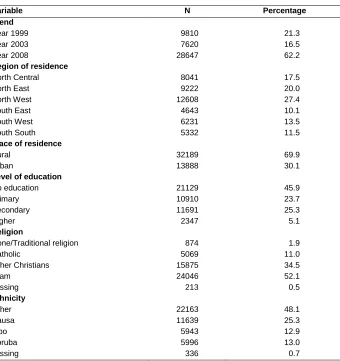
Table 1: Empirical frequencies of variables included in the analyses
Variable N Percentage
Trend Year 1999 Year 2003 Year 2008 9810 7620 28647 21.3 16.5 62.2
Region of residence
North Central North East North West South East South West South South 8041 9222 12608 4643 6231 5332 17.5 20.0 27.4 10.1 13.5 11.5
Place of residence
Rural Urban 32189 13888 69.9 30.1
Level of education
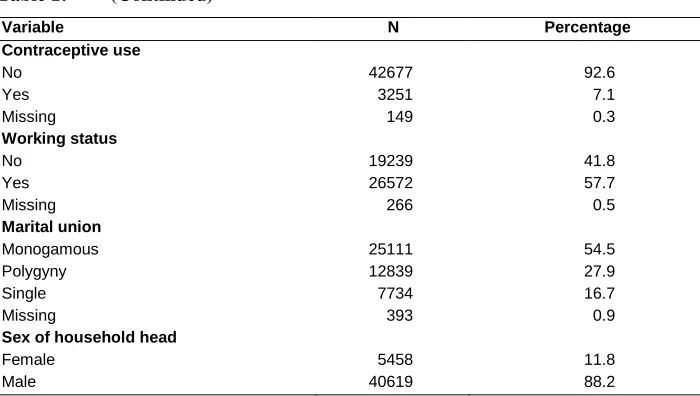
Table 1: (Continued)
Variable N Percentage
Contraceptive use No Yes Missing 42677 3251 149 92.6 7.1 0.3 Working status No Yes Missing 19239 26572 266 41.8 57.7 0.5 Marital union Monogamous Polygyny Single Missing 25111 12839 7734 393 54.5 27.9 16.7 0.9
Sex of household head
Female Male 5458 40619 11.8 88.2
Figure 1: Map of Nigeria showing the 36 states and Federal Capital Territory, Abuja
3. Statistical analysis
3.1 Geo-additive hazard model
Let
v
ibe observed covariates. The standard approach for analyzing the impact of thecovariates on the survival times is the Cox proportional hazard model, where the multiplicative structure
is assumed for the hazard rate. In equation (1),
is a vector of regression coefficients and 0
t is the baseline hazard rate. In the classical approach, 0
t is unspecified, andestimation of the regression coefficients is based on the partial likelihood. This model is, however, based on the proportional hazard assumption. In addition, while allowing for a flexible baseline hazard rate, the Cox model assumes a parametric form for all covariates, which may be too restrictive in realistically complex applications. Moreover, it does not incorporate spatial correlations. Re-parameterizing the baseline hazard rate through g0log
0
t
and partitioning covariates into groups of different types, Hennerfeind, Brezger and Fahrmeir (2006) and Kneib and Fahrmeir (2007) extended the Cox model to a semi-parametric hazard rate model, thusi
t exp
i
t
i1,2,,n (2)where i
t is a geo-additive predictor of the form
J j K k gi i spat ik ik k ij j ii t v g t f x f x x f s b
1 1
0 '
,
. (3)
In equation (3), fj
xij is the non-linear effect of continuous covariates xj,
ik lk
k x x
f , is an interaction term between two covariates and fspat
s is the spatial effect. The vector of the linear effects is denoted
while bg, g
1,...,G
are uncorrelated individual or group-specific frailties. In a further step, Kneib (2006) proposed an extended geo-additive Cox model that combines the ability to deal with arbitrary combinations of left, right, and interval censoring schemes. The geo-additive version also relaxes the proportional hazard assumption by allowing all covariates to be (piecewise constant) time varying. See Fahrmeir and Kneib (2011) for further details and other extensions of the model.The predictor (3) can be expressed in matrix notation. Let η
1,...,i,...,n
'denote the predictor vector, and let gl
gl
t1,...,gl
tn
' denote the vector ofevaluations of functions gl
t , fj
fj
x1j,...,fj
xnj
' the vector of evaluations of thefunctions fj
xj , fspat
fspat
s1,...,fspat
sn
' the vector of spatial effects and
bg1,...,bgn
'
b the vector of uncorrelated random effects. These vectors can be expressed as a matrix product of a design matrix Z and vector of parameters β, i.e.
1 1 *
l Zβ
p p 1
1β Zβ
Z Vλ
η ... . (5)
Under the common assumption of non-informative censoring and conditional
independence, the likelihood of
'
,
1'
,...,
p'
for an interval-censored observation is given by
ul
j T
T T
i t dt t dt
L exp 1 exp
0 . (6)
3.2 Bayesian prior probability distribution
An entirely Bayesian approach was used to estimate smooth effect functions and model parameters, as developed in Fahrmeir and Lang (2001) and Lang and Brezger (2004). We assigned appropriate priors for all parameters and priors. Diffuse priors were assumed for the fixed effect parameters. For the baseline effect, g0
t and nonlineareffects, fj
xij Bayesian P-spline3 prior based on Lang and Brezger (2004) and Brezgerand Lang (2006) was assumed. The P-splines prior allows for nonparametric estimation of f as a linear combination of basis function (B-splines)
m
t t tB z
z p
1
(7)
where Bt
z are B-splines and the coefficients t are further defined to follow asecond order Gaussian random walk smoothness priors
1 2 1
2 2
j j
3
with i.i.d. errors t ~N
0,2 . The variance2
controls the smoothness of f. Assigning a weakly informative inverse Gamma prior 2~
,IG , with very small, it is estimated jointly with the basis function coefficients.
Random effects
bgi were modelled by assuming exchangeable normal priors,
2, 0
~ b
ij N
b , where b2 is a variance component that incorporates over-dispersion and
heterogeneity. For the spatial effects fspat
s , we chose a Gaussian Markov randomfield prior, which is commonly used in spatial statistics, see Besag, York and Mollie (1991). It is given as
st s s
spat spat spat N N t f N s t t f s f 2 2 , ~ , ; |
where Ns is the number of adjacent sites and ts denotes that site t is a neighbour of
site s. The prior defines areas as neighbours if they share a common boundary and neighbouring areas are assumed to have similar patterns. The (conditional) mean of
sfspat is an average of function evaluations fspat
t of neighbouring sites t. Again, τ2controls the amount of spatial smoothness.
In order to be able to estimate the smoothing parameters for nonlinear and spatial effects, highly dispersed but proper hyper-priors are assigned to them. Hence, for all variance components, an inverse gamma distribution with hyper-parameters a and b is
chosen, e.g. 2~IG
a,b . Standard choices for the hyper-parameters are a=1 and b=0.005 or a=b=0.001.evidence of convergence. Detailed numerical methods of implementing survival time models are described in the reference manual of BayesX (Belitz et al. 2009).
3.3 Model diagnostics
Model diagnostics were based on the Deviance Information Criterion (DIC) (Spiegelhalter et al. 2002) given by DICD
pD, where Dis the posterior meanof the deviance, measuring how well a model fits the data, and pD is the effective
number of parameters measuring model complexity. The DIC is analogous to the Akaike information criterion (AIC) and the Bayesian information criterion (BIC). It is useful in situations involving complex hierarchical models in which it is difficult to compute the actual number of parameters being used, especially when the models
contain nonparametric and random effect components. Small values of D
indicate good fit while small values of pD indicate a parsimonious model. The model with thelowest DIC is therefore considered as best.
4. Data analysis and results
4.1 Data analysis
In order to understand the influence of both observed covariates and unobserved heterogeneity on timing of first birth in Nigeria, six hazard models of different specifications were fitted. The fitted models are defined as follows:
M1: ig0
t t1t2fspat
siM2: ig0
t fspat
si b1ib2iM3: ig0 t t1t2vi'f1age_sexf2 agef3age_gapf4age*age_gapfspat si M4: ig0
t t1t2vi'f1
age_sex
f2
age f3
age_gap
f4
age*age_gap
fspat
si b1iM5: ig0 t t1t2vi'f1age_sexf2 agef3age_gapf4age*age_gapfspat si b2i M6: ig0
t t1t2vi'f1
age_sex
f2
age f3
age_gap
f4
age*age_gap
fspat
si b1ib2iIn these models, g0
t is the baseline hazard function; t1 and t2 are the dummysetting 1999 as the reference category;
v
i
is the vector of fixed effect factors; andf(age), f(age_sex), f(age_gap) and f(age*age_gap) are smooth functions of age, age at first sexual intercourse, age gap, and the interaction effect of age and age gap, respectively. The household and community random effects are b1i and b2 , respectively.
In model M1, we modelled the dependence of age at first birth on year of study and
spatial effect. Our goal was to assess any possible trend or geographic aspect affecting timing of first birth in Nigeria, without taking any variables into account. Model M2
examines the effects of unobserved community and household random effects and possible geographical variations due to these unobserved heterogeneities on age at first birth. All covariates described in Section 2 were included in model M3 without
adjusting for any random effect. This model was used to assess the gains of fitting a model with random effects. In addition to all covariates, household random effects were included in model M4 while community random effects were controlled for in model
M5. With these, we could assess the residual variation at the household and community
levels. Finally, in model M6, we controlled for both community and household random
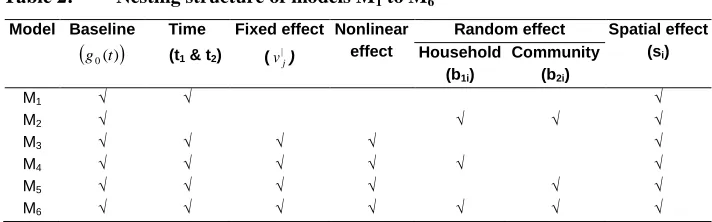
effects in addition to all covariates in model M3. Table 2 summarises the structure of
nesting for the models.
Table 2: Nesting structure of models M1 to M6 Model Baseline
g0(t)
Time (t1 & t2)
Fixed effect ( |
j
v )
Nonlinear effect
Random effect Spatial effect (si)
Household (b1i)
Community (b2i)
M1 √ √ √
M2 √ √ √ √
M3 √ √ √ √ √
M4 √ √ √ √ √ √
M5 √ √ √ √ √ √
M6 √ √ √ √ √ √ √
4.2 Results
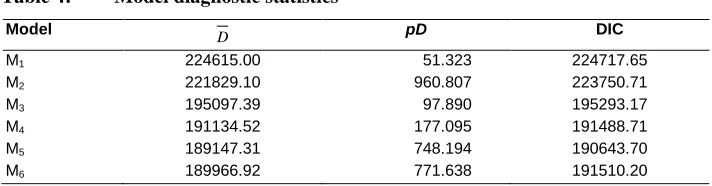
ended with this number. The corresponding mean numbers of children for these women are 6.62 and 2.62 respectively, a difference of 4.0. Table 4 presents model diagnostics statistics for all the fitted models. It is clear from the Table that model M5 that
incorporates community random effects in addition to all other covariates performed best when compared with all other models. Comparing models M4 and M6 shows that
model M4 was relatively better than M6 simply because inclusion of community random
effect in M6 increased model complexity (pD = 771.638), which offset the gains made
in the goodness of fit. Discussions of results will be based on models M1, M2 and M5
only. Model M1 was selected for discussion because it was meant to examine
geographical variation in crude age at first birth without taking into account any variable except year of study. Model M2 was selected because the effects of unobserved
community and household random effects and possible geographical variations due to these unobserved heterogeneities on timing of first birth were examined. Model M5 was
chosen because it provides the best fit.
Table 3: Percentage distribution and mean of children ever born (CEB) by age at first birth
Age at first birth
Children ever born Total %
Mean CEB
Sample size
1 2 3 4 5 6 ≥ 7
< 15 2.5 8.5 13.3 14.5 14.0 11.8 35.4 100 6.62 2708
15 5.4 13.0 13.8 13.1 13.3 10.7 30.7 100 5.23 2710
16 9.0 16.4 14.7 13.5 12.3 8.7 25.4 100 4.74 3030
17 11.1 17.2 13.3 14.4 11.3 10.7 22.0 100 4.56 3275
18 11.2 14.0 18.5 15.3 12.0 9.9 19.1 100 4.36 2940
19 12.5 14.7 20.0 14.7 11.3 8.0 18.8 100 4.26 2569
20 11.3 17.5 17.3 14.1 12.5 8.4 18.9 100 4.24 2287
21 10.5 21.2 19.1 14.8 10.5 8.5 15.4 100 4.00 2056
22 11.6 22.6 18.0 15.0 10.3 7.5 15.0 100 3.98 1564
23 14.6 20.4 17.8 12.3 11.9 8.8 14.2 100 3.86 1239
24 14.9 20.7 20.2 13.3 10.5 7.4 13.0 100 3.78 1071
25 14.2 22.7 21.2 12.1 9.5 8.1 12.2 100 3.70 854
Table 4: Model diagnostic statistics
Model
D pD DIC
M1 224615.00 51.323 224717.65
M2 221829.10 960.807 223750.71
M3 195097.39 97.890 195293.17
M4 191134.52 177.095 191488.71
M5 189147.31 748.194 190643.70
M6 189966.92 771.638 191510.20
4.2.1 Trend and fixed effects
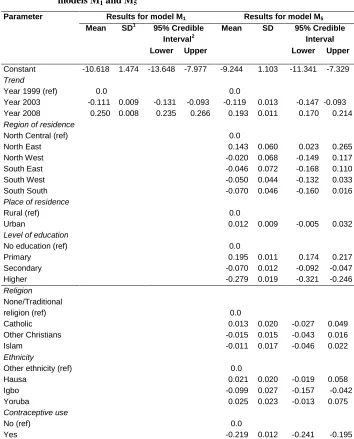
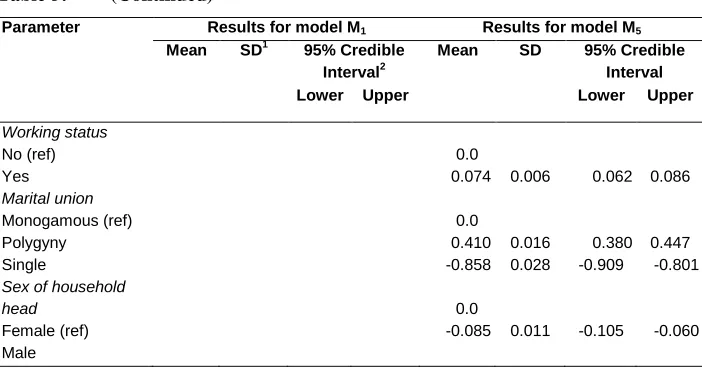
Table 5 presents results of fixed effects of models M1 and M5. Presented are the
Table 5: Estimates of posterior means of the fixed effect parameters for models M1 and M5
Parameter Results for model M1 Results for model M5
Mean SD1 95% Credible Interval2
Mean SD 95% Credible Interval
Lower Upper Lower Upper
Constant -10.618 1.474 -13.648 -7.977 -9.244 1.103 -11.341 -7.329
Trend
Year 1999 (ref) Year 2003 Year 2008 0.0 -0.111 0.250 0.009 0.008 -0.131 0.235 -0.093 0.266 0.0 -0.119 0.193 0.013 0.011 -0.147 0.170 -0.093 0.214
Region of residence
North Central (ref) North East North West South East South West South South 0.0 0.143 -0.020 -0.046 -0.050 -0.070 0.060 0.068 0.072 0.044 0.046 0.023 -0.149 -0.168 -0.132 -0.160 0.265 0.117 0.110 0.033 0.016
Place of residence
Rural (ref) Urban
0.0
0.012 0.009 -0.005 0.032
Level of education
No education (ref) Primary Secondary Higher 0.0 0.195 -0.070 -0.279 0.011 0.012 0.019 0.174 -0.092 -0.321 0.217 -0.047 -0.246 Religion None/Traditional religion (ref) Catholic Other Christians Islam 0.0 0.013 -0.015 -0.011 0.020 0.015 0.017 -0.027 -0.043 -0.046 0.049 0.016 0.022 Ethnicity
Other ethnicity (ref) Hausa Igbo Yoruba 0.0 0.021 -0.099 0.025 0.020 0.027 0.023 -0.019 -0.157 -0.013 0.058 -0.042 0.075 Contraceptive use No (ref) Yes 0.0
Table 5: (Continued)
Parameter Results for model M1 Results for model M5
Mean SD1 95% Credible Interval2
Mean SD 95% Credible Interval
Lower Upper Lower Upper
Working status No (ref) Yes Marital union Monogamous (ref) Polygyny Single 0.0 0.074 0.0 0.410 -0.858 0.006 0.016 0.028 0.062 0.380 -0.909 0.086 0.447 -0.801
Sex of household head
Female (ref) Male
0.0
-0.085 0.011 -0.105 -0.060
1
Standard deviation
2
Bayesian credible intervals are different from frequentist confidence intervals in some ways, including (i) their interpretations, with a given probability that the true parameter lies in a related credible interval, unlike in the frequentist approach where this probability for any interval can be only 0 or 1; and (ii) incorporation of problem-specific contextual information from the prior distribution making the credible intervals generally narrower, as opposed to confidence intervals being based only on the data (Spiegelhalter, Abrams, and Myles 2004).
employment status (Cleland, Onuoha, and Timaeus 1994, Cohen 1998). A similar surprising result was obtained by Kazembe (2009) in his study of fertility levels among Malawian women. As for the type of marital union the women belong to, findings revealed that, whereas women respondents that were not married at the period of the survey show evidence of lower risk of bearing their first child, there is an evidence of higher risk for those in polygamous homes when compared with women respondents in monogamous homes. Also, a significantly lower risk was obtained for women respondents who belong to the households headed by men than to those headed by women.
4.2.2 Baseline and nonlinear effects
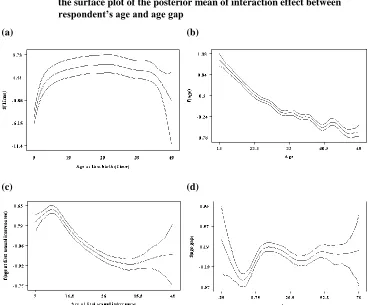
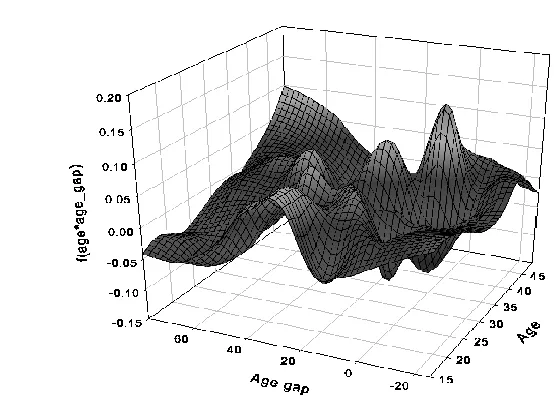
Figure 2: Nonlinear effect of (a) age at first birth (baseline effect), (b)
respondent’s age, (c) age at first sexual intercourse, and (d) age gap; with their corresponding 95% credible intervals. Also included (e) is the surface plot of the posterior mean of interaction effect between respondent’s age and age gap
(a) (b)
Figure 2: (Continued) (e)
4.2.3 Spatial effects
Spatial effects of models M1, M2 and M5 are shown in Figure 3(a-f). The left panel of
the Figure (Figure 3(a, c & e)) shows the posterior means while the right panel (Figure 3(b, d & f)) displays the corresponding map of location of 95% credible interval, which is used to assess the significance of the spatial effect. From this, states with white colour are significantly associated with higher risk of first birth (i.e. the 95% credible interval lie on the positive side); states with black colour are significantly associated with lower risk (the 95% credible interval lie on the negative side) while the risk is not significant in states with grey colour (the 95% credible interval includes zero). An interesting North-South spatial pattern was noticed in models M1 and M2 (Figure
risks while Lagos, Jigawa, Taraba and Zamfara states are associated with significantly low risks.
Figure 3: Nonlinear spatial effects (a) for model M1 and (b) its corresponding
map of location of 95% credible interval; (c) for model M2 and (d) its
corresponding map of location of 95% credible interval; (e) for model M5 and (f) its corresponding map of location of 95% credible
interval
(a) (b)
(c) (d)
Risk significantly high (95% credible interval lie on the positive side)
Risk not significantly high (95% credible interval include zero)
Figure 3: (Continued)
(e) (f)
4.2.4 Random effects
Figure 4: Kernel density estimates for (a) community random effect and (b) household random effect for model M2
(a)
0
.5
1
1
.5
D
en
si
ty
-1 -.5 0 .5 1
mean
(b)
0
10
20
30
40
D
en
si
ty
-.1 -.05 0 .05 .1
5. Discussion of results and conclusion
The age at which childbearing begins influences the total number of children a woman bears throughout her reproductive period, in the absence of any active fertility control. For countries in sub-Saharan Africa, where the prevalence rate of contraception is still low, younger age at first birth tends to increase the number of children a woman will have, thereby hindering the process of fertility decline (Gupta and Mahy 2003, Gyimah 2003). A number of factors at both individual and community levels have been identified to influence timing of first birth. In this paper, geo-additive survival modeling, a technique that permits simultaneously modelling of fixed, nonlinear, heterogeneity and spatial effect within a single framework, was adopted to examine the timing of first birth in Nigeria. Six models of different specifications were employed for this purpose. Estimation was based on Bayesian hierarchical approach. Model performance was ascertained using deviance information criterion (DIC).
Ethnicity, religion and marital union are among the socio-cultural determinants considered in this study. Previous studies in Nigeria have associated urban marital patterns, ethnicity-specific practices, and religion with high risk of births (Isiugo-Abanihe, Ebigbola, and Adewuyi 1993, Makinde-Adebusoye 2001). Kollehlon (2003) for instance, found that among currently married women, the net fertility of Hausa-Fulani and Yoruba women is lower than that of other women, while that of the Igbo women is higher. Findings on ethnicity in this study confirm the existence of ethnic differentials in risk of first birth in Nigeria. Influence of religion on reproductive related behaviour is reflected in the differences in attitude, belief, and norms regarding birth control and value of children. Similar to findings by Caldwell and Caldwell (1987) where some religions are linked with higher fertility, we found the risk of first birth to be higher among the Catholic women than among those in other religions in Nigeria. It has been argued that Catholic doctrine is pronatalist by favouring large families and rejecting modern methods of birth control, while the Moslems have preference for early and universal marriage (Lucas 1980, Ngalinda 1998). Since the parametric estimate for none of the religious groups was, however, found to be significant, it is expected that as societies develop, reproduction-related behaviour among religious groups in Nigeria would converge, as it has be discovered to do in Ghana (Addai 1999).
Turning to type of marital union, women who are married to men with multiple wives are expected to be much younger than their partners because a husband’s age is higher with each additional wife. This exposes the young women to risk of childbirth. It has, however, been argued that in most African societies, polygyny enhances child spacing whereas pregnancies are more frequent in monogamous unions (Ngalinda 1998). With this argument, women in polygamous unions may start childbearing early, but over all, bear fewer children than their counterparts in monogamous unions. On the contrary, women married to the same man may compete to bear children, particularly as in most African societies, women assume low status at marriage, which is elevated by attainment of high fertility. The net effect of polygyny on childbirth can, therefore, be viewed from either direction.
need to be reversed and enabling environment suitable for sexually active adolescents and young women, the majority of which are singles, to access contraceptives should be created. This would encourage contraceptive use and, in turn, delay the birth of the first child. Sex education could also be introduced into the school curriculum at primary, secondary and higher education levels.
The estimated pattern of the baseline effect, which remains flat after the initial steady rise indicates that risk of bearing a first child is the same for all women after the age of 13 years. This study reveals that the relationship between age at first sexual intercourse and marriage (for those whose first sexual intercourse occurred in marriage), is positively related with age at first birth. The nonlinear relationship found between the timing of first birth and the continuous covariates considered in this study is an indication that an assumption of linear dependence of these variables would have led to spurious findings, which can misinform policymakers. The structured additive technique allows us to specify the predictor structure in a flexible way such that all relationships between them could be estimated. The steady reduction in the risk of bearing a first child with age at first sexual intercourse is not biologically unusual. Delaying first sexual intercourse might increase age at first birth and hence reduce fertility. However, it may not be plausible to formulate policy aimed at delaying first sexual intercourse in Nigeria. With the existing widespread premarital sexual activities, early age at first birth will continue to be a problem, unless the use of contraceptives to delay first birth is strongly encouraged among adolescents.
for households in which the woman is much older than the household head, as in this case she might be the one in control of the house.
Findings from the spatial effects study obviously reveal that age at first birth varies significantly according to geographical locations, i.e., states, in Nigeria. However, after taking into account other relevant determinants, only two states possess higher risk in comparison to others. Surprisingly, none of the two is from the northern part of the country. Analysis of the fixed effects study also reveals a substantial difference among the six geopolitical regions. States in the North East region are associated with significant higher risk of first birth compared to the results of other regions in the country.
In conclusion, the targeted reduction in fertility levels, as contained in recent population policy of Nigeria, can be achieved, if policymakers can broaden the means of achieving this to include a target increase in timing of first birth. While it is more difficult to envision direct policies and programs to increase age at which childbearing begins, delaying first marriage, encouraging women to spend more years in school, as well as encouraging the use of family planning methods by all women of reproductive age, irrespective of their marital status, remain the potentially significant link for delaying first birth. In terms of policy, targeting communities with intervention programmes may not necessarily benefit individual families in lowering levels of fertility. A campaign that is geared towards individual families would achieve a better result. Scarce resources have been identified as a major challenge in implementation of necessary intervention strategies in sub-Saharan African countries, including Nigeria. Findings from this paper will permit policymakers with means of allocating the meagre resources to states where they are crucially needed.
6. Acknowledgements
References
Abiodun, O.M., and Balogun, O.R. (2009). Sexual activity and contraceptive use among young female students of tertiary educational institution in Ilorin, Nigeria. Contraception 79(2): 146–149. doi:10.1016/j.contraception.2008. 08.002.
Addai, I. (1996). Ethnic fertility differentials in Ghana and their consequences [PhD Dissertation]. Edmonton, Alberta, Canada: University of Alberta.
Addai, I. (1999). Ethinicity and contraceptive use in Sub-Saharan Africa: The case of Ghana. Journal of Biosocial Science 31(1): 105-120.
Adebayo, S.B. (2004). Bayesian geoadditive modelling of breastfeeding initiation in Nigeria. Journal of Applied Econometrics 19(2): 267-281. doi:10.1002/jae.732.
Adebayo, S.B., and Fahrmeir, L. (2005). Analysing child mortality in Nigeria with geoadditive discrete-time survival models. Statistics in Medicine 24(5): 709-728.
doi:10.1002/sim.1842.
Adebayo, S.B., Fahrmeir, L., Seiler, C., and Heumann, C. (2011). Geoadditive latent variable modeling of count data on multiple sexual partnering in Nigeria.
Biometrics 67(2): 620-628. doi:10.1111/j.1541-0420.2010.01492.x.
Adebayo, S.B., Gayawan, E., Ujuju, C., and Ankomah, A. (2013). Modelling geographical variations and determinants of use of modern family planning methods among women of reproductive age in Nigeria. Journal of Biosocial Science 45(1): 57-77.
Agho, K.E., Dibley, M.J., Odiase, J.I., and Ogbonmwan, S.M. (2011). Determinants of exclusive breastfeeding in Nigeria. BMC Pregnancy & Childbirth 11(2).
doi:10.1186/1471-2393-11-2.
Balakrishnan, T.R., Rao, K.V., Krotki, K.J., and Lapierre-Adamcyk, E. (1988). Age at first birth and lifetime fertility. Journal of Biosocial Science 20(2): 167-174.
Baschieri, A. and Hinde, A. (2007). The proximate determinants of fertility and birth intervals in Egypt: An application of calendar data. Demographic Research 16(3): 59-96. doi:10.4054/DemRes.2007.16.3.
Besag, J., York, Y., and Mollie, A. (1991). Bayesian image restoration with two applications in spatial statistics (with discussion). Annals of the Institute of
Statistical Mathematics 43(1): 1-20. doi:10.1007/BF00116466.
Birdsall, N., Kelley, A.C., and Sinding, S. (2003). Population matters: Demographic change, economic growth, and poverty in the developing world. Oxford: University Press London.
Brezger, A. and Lang, S. (2006). Generalized structured additive regression based on Bayesian P-splines. Computational Statistics and Data Analysis 50(4): 967-991.
doi:10.1016/j.csda.2004.10.011.
Caldwell, J.C. and Caldwell, P. (1987). The cultural context of high fertility in sub-Saharan Africa. Population and Developmental Review 13(3): 409-437.
doi:10.2307/1973133.
Caldwell, J.C. and Caldwell, P. (2002). The fertility transition in South Africa. Paper presented at Fertility and the Current South African Issues of Poverty, HIV/AIDS and Youth, Department of Social Development, South Africa and Human Sciences Research Council Pretoria, South Africa, 24th October 2002.
Caldwell, J.C., Orubuloye, I.O., and Caldwell, P. (1992). Fertility decline in Africa: A new type of transition? Population and Developmental Review 18(2): 211-242.
doi:10.2307/1973678.
Cleland, J., Onuoha, N., and Timaeus, I. (1994). Fertility change in sub-Saharan Africa: A review of evidence. In: Locoh, T. and Hertrich, V. The onset of fertility
transition in Sub-Saharan Africa. Liège: Ordinal editions: 1-20.
Cohen, B. (1998). The emerging fertility transition in sub-Saharan Africa. World
Development 26(8): 1431–1461. doi:10.1016/S0305-750X(98)00058-8.
Eilers, P.H.C. and Marx, B.D. (1996). Flexible smoothing with B-splines and penalties.
Statistical Science 11(2): 89-121. doi:10.1214/ss/1038425655.
Esere, M.O. (2006). HIV/AIDS awareness of in-school adolescents in Nigeria: Implications for adolescence sexuality. Journal of Psychology in Africa 16(2): 255-258.
Esere, M.O. (2008). Effect of sex education programme on at-risk sexual behaviour of school-going adolescents in Ilorin, Nigeria. African Health Science 8(2): 120-125.
Fahrmeir, L. and Lang, S. (2001). Bayesian inference for generalized additive mixed models based on Markov random field priors. Journal of the Royal Statistical
Society C (Applied Statistics) 50(2): 201-220. doi:10.1111/1467-9876.00229.
Foote, K.A., Hill, K.H., and Martin, L.G. (1993). Demographic change sub-Saharan Africa population dynamics of sub-Saharan Africa. Washington: National Academy Press.
Gayawan, E., Adebayo, S.B., Ipinyomi, R.A., and Oyejola, B.A. (2010). Modeling fertility curves in Africa. Demographic Research 22(10): 211-236. doi:10.4054/ DemRes.2010.22.10.
Grindstaff, C., Balakrishnan, T.R., and Dewit, D. (1991). Educational attainment, age at first birth and lifetime fertility: An analysis of Canadian fertility survey data. The Canadian Review of Sociology and Anthropology 28(3): 324-339.
doi:10.1111/j.1755-618X.1991.tb00158.x.
Gupta, N. and Mahy, M. (2003). Adolecent childbearing in sub-Saharan Africa: Can increase schooling alone raise ages at first birth? Demographic Research 8(4): 93-106. doi:10.4054/DemRes.2003.8.4.
Gyimah, S.O. (2003). A cohort analysis of the timing of first birth and fertility in Ghana. Population Research and Policy Review 22(3): 251-266.
Hennerfeind, A., Brezger, A., and Fahrmeir, L. (2006). Geoadditive survival models. Journal of the American Statistical Association 101(475): 1065-1075.
doi:10.1198/016214506000000348.
Isiugo-Abanihe, U.C., Ebigbola, J.A., and Adewuyi, A.A. (1993). Urban nuptiality patterns and marital fertility in Nigeria. Journal of Biosocial Science 25(4): 483-498. doi:10.1017/S0021932000021866.
Kandala, N.-B. and Gebrenegus, G. (2006). A geo-additive Bayesian discrete-time survival model and its application to spatial analysis of childhood mortality in Malawi. Quality & Quantity 40(6): 935-957. doi:10.1007/s11135-005-3268-6.
Kandala, N., Nwakeze, N., and Kandala, S.N.I.I. (2009). Spatial distribution of female genital mutilation in Nigeria. The American Journal of Tropical Medicine and
Hygiene 81(5): 784-792. doi:10.4269/ajtmh.2009.09-0129.
Kneib, T. (2006). Mixed model based inference in geoadditive hazard regression for interval-censored survival times. Computational Statistics and Data Analysis 51(2): 777-792. doi:10.1016/j.csda.2006.06.019.
Kneib, T. and Fahrmeir, L. (2007). A mixed model approach for geoadditive hazard regression. Scandinavian Journal of Statistics 34(1): 207-228. doi:10.1111/ j.1467-9469.2006.00524.x.
Kollehlon, K.T. (2003). Ethnicity and fertility in Nigeria. Biodemography and Social
Biology 50(3-4): 201-221. doi:10.1080/19485565.2003.9989072.
Lang, S. and Brezger, A. (2004). Bayesian P-Splines. Journal of Computational and
Graphical Statistics 13(1): 183-212. doi:10.1198/1061860043010.
Lucas, D. (1980). Fertility. In: Lucas, D., McDonald, P., Young, E., and Young, C.
Beginning Population Studies. Canberra: Australian National University: 45-59.
Maitra, P. (2004). Effect of socioeconomic characteristics on age at marriage and total fertility in Nepal. Journal of Health, Population and Nutrition 22: 84-96.
Makinde-Adebusoye, P. (2001). Social-cultural factors affecting fertility in Sub Saharan Africa. Paper presented at the workshop on prospects for fertility decline in high fertility countries, Population Division, Department of Economic and Social Affairs, UN Secretariat, New York, July 9-11 2001.
Makinde-Adebusoye, P. and Ebigbola, J. (1992). Socio-cultural factors affecting fertility and family planning in Nigeria. Federal Republic of Nigeria: Implementing the National Policy on Population.
Manda, S. and Meyer, R. (2005). Age at first marriage in Malawi: A Beyesian multilevel analysis using a discrete time-to-event-model. Journal of the Royal
Statistical Society A 168(2): 439-455. doi:10.1111/j.1467-985X.2005.00357.x.
Martin, T.C. (1995). Women's education and fertility: Results from 26 demographic and health surveys. Studies in Family Planning 26(4): 187-202. doi:10.2307/ 2137845.
Martin, T.C. and Juarez, F. (1995). The impact of women’s education and fertility in Latin America: Searching for explanations. International Family Planning
Perspective 21(2): 52-57. doi:10.2307/2133523.
Maxwell, N.L. (1987). Influence on the timing of first child bearing. Contemporary
Mboup, G. and Saha, T. (1998). Fertility levels, trend and differentials. DHS Comparative Studies, No. 28.
Mirowsky, J. and Ross, E.C. (2002). Depression, parenthood, and age at first birth.
Social Science and Medicine 54(8): 1281-1298. doi:10.1016/S0277-9536(01)
00096-X.
Ngalinda, I. (1998). Age at first birth, fertility and contraception in Tanzania [PhD Dissertation]. Berlin: Department of Demography, Philosophical Faculty III, Humboldt University of Berlin.
Norville, C., Gomez, R., and Brown, R.L. (2003). Some causes of fertility rates movements. University of Waterloo, Institute of Insurance and Pension Research. (Research report 03-02). http://www.stats.uwaterloo.ca/stats_ navigation/IIPR/2003Reports/03-02.pdf.
Orubuloye, I.O., Caldwell, J.C., and Caldwell, P. (1991). Sexual networking in the Ekiti District of Nigeria. Studies in Family Planning 22(2): 61-73. doi:10.2307/ 1966777.
Otoide, V.O., Oronsaye, F., and Okonofua, F.E. (2001). Why Nigerian adolescents seek abortion rather than contraceptives: Evidence from focus group discussions.
International Family Planning Perspective 27(2): 77-81. doi:10.2307/2673818.
Prentice, R.L., and Gloeckler, L.A. (1978). Regression analysis of grouped survival data with applications to breast cancer data. Biometrics 34(1): 57-67.
doi:10.2307/2529588.
Santow, G. and Bracher, M. (1994). Change and continuity in the formation of first marital unions in Australia. Population Studies 48(3): 475-496. doi:10.1080/ 0032472031000147986.
Shen, C. and Willianson, J.B. (1999). Maternal mortality, women’s status and economic dependency in less developed countries: A cross national analysis. Social
Science and Medicine 49(2): 197-214. doi:10.1016/S0277-9536(99)00112-4.
Spiegelhalter, D.J., Abrams, K.R., and Myles, J.P. (2004). Bayesian Approaches to Clinical Trials and Health-Care Evaluation (Statistics in Practice). John Wiley and Sons.
Spiegelhalter, D.J., Best, N.G., Carlin, B.P., and Van der Linde, A. (2002). Bayesian Measures of Model Complexity and Fit (with Discussion). Journal of the Royal
Takyi, B.K. and Addai, I. (2002). Effects of ethinicity on the oneset of parenthood in a developing country: Some evidence from the early 1990s. Journal of Comparative Family Studies 33(1): 57-71.
Taniguchi, H. (1999). The timing of childbearing and women's wages. Journal of
Marriage and Family 61(4): 1008-1019. doi:10.2307/354020.
Uthman, O.A. (2008). Geographical variations and contextual effects on age of initiation of sexual intercourse among women in Nigeria: A multilevel and spatial analysis. International Journal of Health Geographics 7(27).
doi:10.1186/1476-072X-7-27.
Uthman, O.A. (2008). A multilevel analysis of the effect of household wealth inequality on under-five child under-nutrition: Evidence from the 2003 Nigeria Demographic and Health Survey. The Internet Journal of Nutrition and Wellness 6(2).
Uthman, O.A. and Kongnyuy, E.J. (2008). A multilevel analysis of effect of neighbourhood and individual wealth status on sexual behaviour among women: Evidence from Nigeria 2003 Demographic and Health Survey. BMC
International Health and Human Rights 8(9). doi:10.1186/1472-698X-8-9.
Wineberg, C.F. (1988). Education, age at birth and the timing of fertility in the United States: Recent trends. Journal of Biosocial Science 20(3): 157-165.
Zhang, W. and Steele, F. (2004). A semiparametric multilevel survival model. Journal
of the Royal Statistical Society (Series C) 53: 387-404.