World Maritime University
The Maritime Commons: Digital Repository of the World
Maritime University
World Maritime University Dissertations Dissertations
2002
Marine ecosystems and the role of marine
protected areas as sustainable development
strategies
Usen Asuquo Umana
World Maritime University
Follow this and additional works at:http://commons.wmu.se/all_dissertations Part of theEnvironmental Studies Commons
This Dissertation is brought to you courtesy of Maritime Commons. Open Access items may be downloaded for non-commercial, fair use academic purposes. No items may be hosted on another server or web site without express written permission from the World Maritime University. For more
Recommended Citation
Umana, Usen Asuquo, "Marine ecosystems and the role of marine protected areas as sustainable development strategies" (2002).
World Maritime University Dissertations. 198.
WORLD MARITIME UNIVERSITY
Malmö, SwedenMARINE ECOSYSTEMS AND THE ROLE OF
MARINE PROTECTED AREAS AS
SUSTAINABLE DEVELOPMENT STRATEGIES
By
UMANA, USEN ASUQUO
FEDERAL REPUBLIC OF NIGERIAA dissertation submitted to the World Maritime University in partial fulfilment of the
requirements for the award of the degree of
MASTER OF SCIENCE
in
MARITIME AFFAIRS
(MARITIME ADMINISTRATION)
2002
DECLARATION
I certify that all the material in this dissertation that is not my own work has been identified, and that no material is included for which a degree has previously been conferred on me.
The contents of this dissertation reflect my own personal views, and are not necessarily endorsed by the University.
………(Signature
………(Date)
Supervised by: Dr. Moira L. McConnell Professor of maritime Affairs World Maritime University Malmö, Sweden
Assed by:
ACKNOWLEDGEMENTS
My profound gratitude goes to my supervisor Professor Dr Moira McConnell (a
former WMU Professor) for her constructive and encouraging suggestions
throughout my work on this Dissertation. I also extend my unalloyed gratitude to my
internal examiner, Mr John Liljedahl.
I must also thank my course Professor Proshanto Kumar Mukherjee, for his
acceptance and belief in my capability to handle this research work. Again, I am
grateful to other faculty professors, research assistants and staff of WMU, for their
support and useful discussions, most especially Associate Professor Jan-Åke Jönsson
and former Associate Professors Dick Hodgson and Robert McFarland. I am grateful
to Lecturer, Inger Battista, for proof reading the dissertation. I must also thank the
WMU Library staff, Susan Wangeci-Eklow and Cecilia Denne for their untiring
efforts and assistance in searching for materials.
I would like to thank Dr Lawrence Etim and the Institute of Oceanography,
University of Calabar, Nigeria for nominating me for the studies. Dr Udeme I. Enin
of the same Institute is also acknowleged for his untiring efforts in answering my
question relating to the Nigerian case study. I appreciate and thank the Committee of
Deans of the University of Calabar for granting me a leave for the study period of 17
months.
I appreciate the financial support of IMO-Norway Technical Co-operation
Fellowship Programme without which this work would not have been completed.
I also wish to express my sincere gratitude to my course-mates whose lively
discussions have helped to ease the work.
ABSTRACT
Title of Dissertation: Marine ecosystems and the role of marine protected
areas as sustainable development strategies.
Degree: MSc.
The Marine ecosystems are used for a very wide range of human activities, from
recreation to food and mineral production and transport. Each of these uses poses a
serious threat to the ecosystems thereby affecting the productivity, ecosystem health,
stability and biodiversity.
In this Dissertation, the threats to marine ecosystems are categorized as land-based
and ocean-based. Land-based threats relate to habitat destruction and pollution
including eutrophication, sewage, synthetic organic chemicals and heavy metals.
Tourism and recreational activities, climate change and increased radiation belong to
this group. The ocean-based threats on the other hand include the consequences of
fishing and over-exploitation of fisheries, impacts of shipping activities including the
introduction of harmful organisms from ship ballast water, anti fouling and
associated pollution, seabed mining, and the impacts of marine scientific research.
Marine protected areas (MPAs) hold promise as one rational and practical way of
managing ocean resources for sustainability and conservation of marine and coastal
ecosystems and biodiversity. This Dissertation discusses the roles, legal framework
or concepts and implementation issues of MPAs for the effective management of
coastal and marine resources especially at national levels. The roles of MPAs as
sustainable strategies are seen to include the maintenance of biodiversity; protection
of endangered and threatened species; conservation of habitats; ecosystems and
maintenance of ecological processes; enhancing fisheries (management); providing
opportunities for education and research; conservation of cultural heritage; enhancing
The Dissertation focuses on Nigeria as a case study with the consideration of
establishing an MPA for sustainable use of its coastal and marine resources. The
coastal zone of Nigeria has numerous valuable ecosystems such as estuaries and
mangroves. These ecosystems with their associated habitats play an important role
in protecting biodiversity and in Nigeria’s economy. The coastline is under pressure
from human activities like shipping, oil exploration and exploitation, construction of
ports, terminals and harbours and fishing. Integrated Coastal and Ocean
Management (ICOM) or Coastal Zone Management (CZM) is outlined as an
important regime and the establishment of MPAs may be an aspect of ICOM process
or may serve as a triggering event that promote the designation of ICOM.
TABLE OF CONTENTS
Declaration ii
Acknowledgement iii
Abstract iv
Table of Contents vi
List of Tables x
List of Figures xi
List of Abbreviations xii
CHAPTER 1 INTRODUCTION
1.1. Introduction 1
1.1. Research objectives and methodology 7
CHAPTER 2 THREATS TO MARINE ECOSYSTEMS
2.1. Introduction 8
2.2. Land-based threats to marine ecosystems 8
2.2.1. Introduction 8
2.2.2. Habitats destruction and degradation 9
2.2.3.1. Coral reefs 9
2.2.3.2. Mangroves 11
2.2.3.3. Alteration of coastline and watersheds 11
2.2.3. Pollution
2.2.3.1. Eutrophication 13
2.2.3.2. Sewage 14
2.2.3.3. Chemical pollution 15
2.2.3.4. Onshore oil activities 15
2.2.3.5. Heavy metals 16
2.2.4. Tourism and recreational activities 17
2.3. Ocean- based threats to marine ecosystems
2.3.1. Introduction 18
2.3.2. Consequences of fishing and over-exploitation of
fisheries 19
2.3.3. Impacts of shipping activities 22
2.3.3.1. Introduction of harmful organisms 22
2.3.3.2. Anti fouling 24
2.3.3.3. Oil pollution 25
2.3.3.4. Air pollution 26
2.3.4. Seabed mining 27
2.3.5. Impacts of marine scientific research 28
CHAPTER 3 MARINE PROTECTED AREAS
3.1. Introduction 30
3.2. Definitions and categories of Marine Protected Areas 30
3.3. Concepts of Marine Protected Areas 33
3.3.1. UNCLOS 1982 33
3.3.2. UNCED 1992 34
3.3.3. UNESCO man and biosphere (1976) 35
3.3.4. Convention on Biological Diversity 37
3.3.5. Special Areas and PSSAs under MARPOL 73/78 38
3 3.6. UNEP Regional seas programme 40
3.3.7. National MPAs 41
3.4. The need for marine protected areas
3.4.1. Introduction 44
3.4.2. Roles of marine protected areas 44
3.4.2.1. Maintenance of biological diversity 44
3.4.2.2. Protecting of specific endangered and
threatened species 45
3.4.2.4. Conserving habitats, ecosystems and
maintaining ecological processes 46
3.4.2.5. Providing opportunity for education and
scientific research 46
3.4.2.6. Conservation of cultural heritage 47
3.4.2.7. Enhancing recreation & tourism potentials 47
3.5. Preleminary development process of MPAs 48
3.5.1. Geographic information system (GIS) 50
3.5.2. Remote sensing 51
3.5.3. Participatory Rural Assessment 51
3.5.4. Education and outreach 52
3.5.5. Scientific contributions 53
3.5.6. Restoration 54
3.5.7. Integrated Coastal and Ocean Management 55
3.6. Operational criteria for MPA site selection
3.6.1. Biogeograpghic criteria 56
3.6.2. Ecological importance 56
3.6.3. Naturalness 56
3.6.4. Economic & Social factors 57
3.6.5. Scientific research and education 58
3.6.6. International or national importance 58
3.6.7. Practicality/feasibility factors 58
3.6.8. Duality or Replication 59
3.6.9. Regional criteria 59
CHAPTER 4. NIGERIA: A CASE STUDY
4.1. Introduction 60
4.2. The Coast of Nigeria 61
4.3. Nigerian Maritime Zones 63
4.3.2. Contiguous Zone 64
4.3.3. Exclusive Economic Zone 65
4.3.4. Continental Shelf 66
4.4. Coastal uses in Nigeria
4.4.1. Oil industries 67
4.4.2. Fishing and Aquaculture 67
4.4.3. Shipping 68
4.4.4. Cables and Pipelines 68
4.4.5. Scientific Research
4.4.6. Tourism 69
4.4.7. Mining activities 69
4.4.8. Conservation of nature 70
4.5. Conflicts and Interactions among coastal
uses in Nigeria 71
4.6. Cross River Estuary: A Proposed MPA site for
Nigeria 74
CHAPTER 5 RECOMMENDATIONS AND CONCLUSIONS
5.1. Recommendations 77
LIST OF TABLES
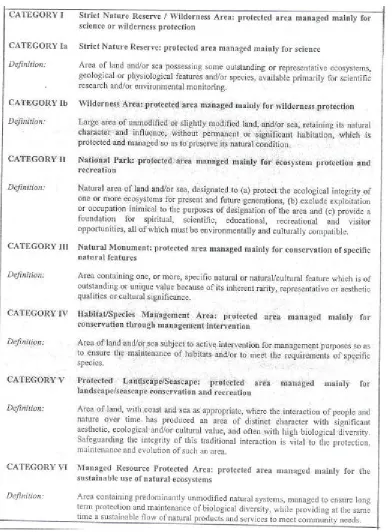
Table 1 Definitions of the IUCN protected area management categories 32
LIST OF FIGURES
Figure 1 Physiographic setting and the distribution of ecological zones along the
Nigerian coastline 62
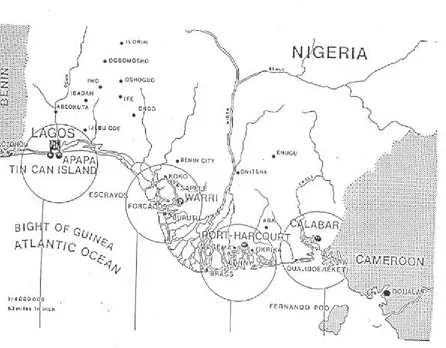
Figure 2 Map of Nigeria showing the location ports and oil terminals 70
LIST OF ABBREVIATIONS
ABP Associated British Port
COA Canada’s Ocean Act
AOA Australia’s Ocean Policy
ATP Adenisine Tri-Phosphate
BOD Biochemical Oxygen De
CBD Convention on Biological Diversity
CFCs Chloroflurocarbons
CIESIN Centre for International Earth Science Information Network
COP Conference of Parties
CORDI Coral Reef Degradation in the Indian Ocean
CRAN Coral Reefs Network
CSD Commission on Sustainable Development
EEZ Exclusive Economic Zone
EIA Environmental Impact Assessment
ENS Environmental News Service
ENSO El-Nino Southern Oscillation
FAO Food and Agricultural Organisation
FRN Federal Republic of Nigeria
GBRMP Great Barrier Reef Marine Park
GCRMN Global Coral Reef Monitoring Network
GEF Global Environment Facility
GESAMP Joint Group of Experts on the Scientific Aspects of Marine
Environmental Protection
GIS Geographic Information System
GPA Global Programme of Action
ICES International Council for the Exploration of the Sea
ICOM Integrated Coastal and Ocean Management
ICRIN International Coral Reef Information Network
ICRI International Coral Reef Initiative
IOC International Oceanographic Commission
ISA International Seabed Authority
IUCN World Conservation Union
MAB Man and Biosphere
MARPOL International Convention on the Prevention of Pollution from Ships
MPAs Marine Protected Areas
MSY Maximum Sustainable Yield
NFZ No Fishing Zone
NGOs Non-Governmental Organisations
NOAA National Oceanic Atmospheric and Administration
NRC National Research Council
PAHs Policyclic Aromatic Hydrocarbons
PCBs Polychlorinated Biphenyls
PSSAs Particularly Sensitive Sea Areas
RAMSAR Convention on Wetlands of International Importance
SPAs Specially Protected Areas
SPAMI Specially Protected Area of Mediterranean Importance
TBT Tributyl Tin
UNCED United Nations Conference on Environment and Development
UNCLOS United Nations Convention on the Law of the Sea
UNDP United Nations Development Programme
UNEP United Nations Environmental Programme
UNESCO United Nations Educational, Scientific and Cultural Organisation
UVB Ultra Violet Light
CHAPTER ONE
INTRODUCTION
The measures taken under Part XII (on the protection and the preservation
of the marine environment) “shall include those necessary to protect and
preserve rare or fragile ecosystems as well as the habitat of depleted,
threatened or endangered, species and other forms of marine life”.
(UNCLOS 1982, Articl194 (5))
1.1. Introduction
Historically, the marine ecosystems were seen to be impervious to harm from human
activity. Today, the situation is quite different, it is universally well accepted that the
oceans are vulnerable to the same threats experienced in the terrestrial ecosystems
such as extinction and habitat loss (Robert and Hawkins, 1999). According to
Snelgrove (1998), recent studies indicated that biodiversity is probably more
abundant in the marine ecosystems than terrestrial.
The idea of coastal and Marine Protected Areas (MPAs) has been advanced as a
possible solution to the conservation and sustainability of marine ecosystems and
biodiversity (Salm, Clark & Siirila, 2000). In the case of terrestrial degradation, the
establishment of protected areas, where human activities were restricted, restored the
habitat and species diversity.
The United Nations Food and Agriculture Organisation (FAO) defines ecosystem as
a functioning, interacting system composed of living organisms, and their
as an ecosystem to a microscopic colony of organisms and its immediate surrounding
(FAO, 1999a). Moreover, the 1992 Convention on Biological Diversity (CBD)
defines an ecosystem as “a dynamic complex of plant, animals and micro-organism
communities and their non-living environment interacting as a functional unit” (CBD,
1992, Article 2). In the words of Schramm &Hubert (1996)
an ecosystem is a system formed by the interaction of a community of
organisms with their environment. By this definition, an ecosystem may be a
small array of microbes on the underside of a leaf on the bottom or as large as
all of the interacting biotic and abiotic components in the Pacific Ocean
(Schramm & Hubert, 1996, p. 6).
It is interesting to note that sometimes the definition of ecosystem is very dependent
on the context, interest and the boundaries to be drawn from it.
In recent years, there has been so much concern and the recognition of the
deteriorating situation of marine ecosystems that produces the world’s living
resources. Nevertheless, marine ecosystems are subjected to increasing stress or
threats from pollution such as waste disposal, excessive nutrients from agricultural
lands (eutrophication), habitat destruction, degradation and loss, over-fishing,
introduction of invasive or harmful organisms to mention just a few (National
Research Council (NRC), 2001). The main factor that is responsible for the
numerous threats is an increased human population density (coastal urbanisation) in
coastal areas leading to over utilization of coastal resources. The Joint Group of
Experts on the Scientific Aspects of Marine Environmental Protection (GESAMP)
currently estimate that 37-44% of the world population lives within 100-150 km of
the coast (GESAMP, 2001).
The above threats are interlinked or interact with each other making effective
management of resources a problem. For instance, in the establishment of a tourist
resort, mangroves are cut down for the construction work. This will alter the
coastline and can cause serious erosion. However, the tourist resort or hotel while
discharge into the environment. The impacts will be extended to the destruction of
coral reefs and finally loss of the resources.
Estuaries and lagoons, mangroves, coral reefs, wetlands and beaches are very
important marine ecosystems. Each ecosystem has numerous functions in the marine
environment. Estuaries are one of the richest biomass on the planet because of high
carbon fixing rates and nutrients loading and transport of organic matter to the sea by
tidal current. Coastal lagoons and estuaries are very productive habitat. They are
nursery grounds for juvenile fish stocks, spawning and feeding grounds for most
commercial species. Other benefits include recreation, aesthetics and harbour
construction (Salm, Clark & Siirila, 2000).
Similarly, mangrove ecosystems protect the coast from erosion, storm surges, and
strong winds such as tsunamis in volcanic active regions. They maintain water
quality by trapping silt from rivers and filtering out pollutants (buffer zone).
Mangroves are rich habitats for animals and plants species such as crustaceans,
molluscs, fishes and birds. These organisms constitute part of the coastal resource.
A very important ecological function of mangrove is the production of nutrients for
sea life through their fallen leaf litter and detrital matter. This is often circulated
around the sea by tidal currents. Mangroves also play the role of nurturing juvenile
species from other habitats like estuaries and lagoons. Birds, mammals, monkeys,
reptiles are prominently found in mangrove forest (Clark, 1997).
Coral reefs have a very high economic value in terms of income from tourist
attraction and support the abundance of marine edible species of fish, and lobster.
They are also valuable for scientific research and for harvest of ornamental products.
Fishing using explosives still occurs and has a major impact especially on coral reefs
where it is not properly protected. This activity destroys reef ecosystems sustaining
both fish and other reef dependent species. In the Philippines, India, and other parts
of South East Asia, use of dynamite, cyanide and fishing for aquarium industries
create serious problems and threatens coral ecosystems. Coral serves as substratum
the coast from waves. The balance between accretion rates due to growth of corals,
hydrocorals/coral lime algae and erosion resulting from mechanical
activities/bio-erosion determines the development of reefs. Explosives also result in waste and
by-catch. Fishing has direct impact on reef when gear trawls on the substratum. The
effect can be indirect if the relationship between the invertebrate communities that
are responsible for accretion and bio-erosion is altered (Michael et al, 2001).
Beaches and wetlands provide good opportunities for tourism developments and
scientific research, species protection e.g. seals, birds, reptiles rest, breed and feed on
beaches. Other important functions of wetland include the following:
1). Production (primary and secondary) that sustains plants and animals population
living in the wetlands;
2). Wetlands act as a permanent sink for sediments, organic carbon and store water
temporarily. This storage function is important in hydrological purpose of
watersheds in terms of flood control, geomorphological processes e.g. control of
coastal erosion, accumulation of organic carbon and maintaining genetic resources;
3). The bio-geochemical dynamics of wetlands is seen in filtering and cleaning
water e.g. removal of toxic substances from water. This is an important function by
providing tertiary treatment of sewage and reducing pollution from agricultural waste;
4). It serves as a link to others ecosystems. Water movement, nutrients and organic
matter between wetlands and other ecosystems are necessary for the maintenance of
food chains, migration routes and other linkages that support productivity, ecosystem
health and resources that humans depend upon. It is the significance of these
linkages that led to the protection of wetlands through the Convention on Wetlands
of Importance especially as Waterfowl Habitat (RAMSAR Convention);
5). Wetlands provide buffering functions that protect life, property and economy of
local coastal dwellers and nations. They regulate surface water flow and ground
water recharge. Again, wetlands are seen to reduce the peaks of flooding water and
controls flows in rivers and buffer the coast from storm surges and winds.
especially in developing countries. The Nigerian marine ecosystem is not exempted
from these coastal pressures. Activities such as shipping, industries for oil
exploration and exploitation, ports/harbours constructions, fishing and other
conflicting issues are directly damaging most valuable components of ecosystems.
The situation therefore requires a new management regime and also a means of
protecting and restoring these unique ecosystems. One option is the establishment of
MPAs at strategic locations of the coastal environment to reduce the stress on
biodiversity and ensure sustainability of the system (Salm, Clark & Siirila, 2000;
NRC, 2001). The current trend in protecting marine ecosystems is directed towards
positive measures of conserving marine life and their habitats.
The 1992 United Nation Conference on Environment and Development (UNCED) in
Rio de Janeiro focussed on the principle of sustainable development. The States
defined sustainable development “as meeting the needs of the present generation
without compromising the ability of future generation to meet theirs and introduced
the concept of precautionary approach” (CSD, 1993). Agenda 21, the document
produced by UNCED emphasized protection of marine ecosystems and the use of
resources as being interlinked and requires integrated management and designation
of protected areas for sustainable use of marine resources. It also identified the need
to respond to threats to the environment from anthropogenic activities. This led to
the United Nations Convention on Law of the Sea (UNCLOS), a framework
Convention adopted in 1982. In this international instrument reference is made to
the protection of ecosystem features. UNCLOS establishes framework
conservational measures to protect and conserve rare and fragile ecosystems as well
as their habitats from depletion.
The 1992 United Nations Convention on Biodiversity (CBD) is the overriding
convention in this respect. The CBD and the Jakarta Ministerial Statement on the
Implementation of CBD (Jakarta Mandate on Coastal and Marine Biodiversity) as
adopted during the second meeting of the Conference of Parties to the CBD (COP),
held in Jakarta in November 1995, involves the establishment of protected areas for
Parties to the Convention (Jakarta Mandate on Coastal and Marine Biodiversity,
1995). It is also part of the International Maritime Organization’s (IMO) work
programme to initiate the establishment of protected areas for sustainable resources.
IMO has adopted Resolution 927 (22) containing a set of Guidelines for the
Designation of Special Area, and Identification of Particularly Sensitive Areas that
require special protection from damage by shipping activities.
In order to fulfil to any international responsibilities States must enact their domestic
legislation and policy implementing the obligation of international convention.
Examples of countries national legislation include the Canada’s Oceans Act (COA)
and Australia’s Ocean Policy (AOP). Canada’s Oceans Act provides for the
sustainability and integrated management of fisheries between users of the
ecosystems. The establishment of marine protected areas is emphasized in Canada’s
Oceans Act (COA, 1996, Article 35). Australian Ocean Policy (AOP) also sets out a
plan for sustainable and integrated management of marine ecosystems,
environmental protection and biodiversity conservation. The Act requires permit
from fishers to ensure ecological sustainability (AOP, 1998, Article 4). This
initiative has strengthened the concept of MPA’s and ecosystem ‘health and
integrity’ (Sainbury & Sumaila, 2001).
This Dissertation examines these international instruments along side with regional
and local actions and initiative to manage ecosystem through protected areas. It then
examines whether MPAs could be used in Nigeria.
1.2. Research objectives and methodology
The objectives of this Dissertation include the following:
1). To provide an overview of the range of threats to the integrity of coastal and
marine ecosystems.
2). To consider the role marine protected areas play as sustainable strategies for
marine ecosystems and biological resources.
4). To examine the situation of Nigeria with respect to marine ecosystems and issues
relating to the implementation of MPAs as conservation tool in Nigeria.
5). To recommend and suggest strategies or framework for national, and local
authorities in Nigeria, which have to deal with planning and management of marine
resources, to prevent extinction and maintaining ecological integrity and processes in
the sea.
The methodology adopted in this dissertation is primarily library research of
literature review, journals, periodicals, electronic and other academic publications
plus personal experience in marine research. Moreover, exchange of views,
discussions, interviews with experts and scholars through personal email was also
adopted in acquiring information.
This Dissertation is presented in five (5) Chapters.
Chapter one is the present introductory. It introduces the complexities of the threats
to marine ecosystems and importance of various ecosystems (habitats) to the
economic, social and culture of the world and outlines the issues of each Chapter.
Chapter two provides an overview of threats to marine ecosystems and introduces the
idea of Marine Protected Areas (MPAs) as important management option for
sustainability and conservation of marine biological resources.
Chapter three explains the concept of Marine Protected Areas (MPAs) for effective
implementation especially at national level independently. This Chapter also
discusses the role of MPAs and issues relating to implementation.
Chapter four presents Nigeria as a case study and considers the need for the
establishment of MPAs to conserve its biological resources to achieve sustainable
development.
Finally, Chapter five, the conclusion, provides suggestions and recommendations for
CHAPTER TWO
THREATS TO MARINE ECOSYSTEMS
2.1. Introduction
This Chapter reviews and analyses the threats to marine ecosystems from two main
categories or sources. The first one is the land based threats to marine ecosystems
e.g. habitat destruction while the second category is referred to as ocean based threats
e.g. over-fishing. Both of these are presented in a more detailed form in Sections 2.2
and 2.3. It is important to note that these two categories overlap with each other
thereby making it difficult to separate them. The distinction in this case is artificial
and is made only for the purposes of this discussion. This implies that for proper
management, there should be overall integration or regulation and institutional
arrangements between land and ocean activities.
2.2. Land based threats to marine ecosystems
2.2.1. Introduction
The land-based threats to marine ecosystems are presented from five categories. Of
these habitat destruction is the most serious threats where mangroves, estuaries, coral
reefs and wetlands are being seriously destroyed through unsustainable practices.
Other threats resulting from land-based activities are pollution including
eutrophication, sewage, synthetic organic chemicals, heavy metals, radioactive waste
and thermal pollution as well as oil and atmospheric deposition (air pollution) from
onshore industries e.g. refineries. Tourism and recreational activities; climate change
To find a solution to these intensive problems for coastal systems, the Global
Programme of Action for the protection of the marine environment from land based
activities (GPA) and the Washington Declaration were adopted in 1995 by the
European Union and 108 other countries (UNEP, 2002). The United Nation
Environmental Programmes (UNEP) was designated as a coordinating body and
secretariat. The secretariat promotes implementation of the GPA at national and
regional level through the regional seas programmes and internationally. The
various tasks of the GPA include amongst others assessment of programme activities,
regional reviews and organisation of workshops.
2.2.2. Habitat destruction and degradation
The destruction and degradation of habitat is the most serious threat to marine
ecosystems and their biological diversity. These impacts are seen in almost all the
important ecosystems of the oceans such as coral reefs, mangroves and others.
2.2.2.1. Coral reefs
According to Bryant et al (1998) damage to coral reefs is due to careless coastal
developmental activities through dredging and alteration of the coastline. For
example siltation and sedimentation caused by soil erosion from inland deforestation
and developments such as aquaculture are destroying the coral reef off St. Lucia
(Sladek-Nowlis et al 1997). There are some destructive industrial practices such as
mining of coral off Indonesian and Sri Lankan coasts and fishing using dynamite off
Tanzania and South East Asia (Guard & Masaiganah, 1997). Similar damage is also
occurring in the Caribbean.
Explosive fishing on coral reefs especially where it is not properly protected has
major impacts on the ecosystems. This activity destroys the ecosystems of the reef
sustaining both fish and other reef dependent species. In the Philippines, India and
other parts of South East Asia, the use of dynamite, cyanide and fishing for aquarium
serves as substratum for primary production and habitats for invertebrates including
fishes and protects the coast from waves. The balance between accretion rates due to
growth of corals, hydrocorals/coral lime algae and erosion resulting from mechanical
activities and bio erosion determines the development of corals. Explosive fishing
also results in waste and affect species other than the target species (by-catch). The
effect of fishing on corals can be indirect if the relationship between the invertebrate
communities that are responsible for accretion and bio erosion is altered (Michael et
al., 2001).
In response to the degradation of this productive and diverse natural habitat and the
recognition given to these natural resources at the UNCED or Earth Summit in 1992
a number of nations, international organisations and institutions, and
non-governmental organisations (NGOs) have started an International Coral Reef
Initiative (ICRI). ICRI attempts to support communications and projects focussing at
improving the management of the systems through shared responsibilities and
encourage other interested nations to join. The United States Agency for
International Development, Department of Commerce- National Oceanic
Atmospheric and Administration (NOAA) and the United States department of States
were the first to launch an International Coral Reef Initiative (ICRI). ICRI is
comprised of three operational units plus a regional unit.
1). Global Coral Reef Monitoring Network (GCRMN). This body is responsible for
the coordination and assessment of the extent of use and damage to corals at various
locations to assist management. The body is also in charge of raising awareness
between stakeholders and providing ways of preventing the damage to coral reefs.
2). International Coral Reef Information Network (ICRIN). It is the duty of this
particular unit to handle and circulate all necessary information with regards to status
of corals for education and public awareness for proper conservation. The unit also
maintains and creates concern among public for the health of coral reefs.
3). Coral Reefs Action Network (CRAN). This is made up of ICRI members,
designed for implementation of ICRI framework for action. It has the responsibility
4). Coral Reef Degradation in the Indian Ocean (CORDIO). This is a regional
network. It is created to respond to coral reef degradation in the Indian Ocean
especially the extensive coral bleaching event of 1998 (ICRI, 2002).
2.2.2.2. Mangrove forests
The destruction of mangrove is equally occurring at an alarming rate. This loss is
caused by the conversion of mangrove habitats to fish and shrimp farms especially in
South America e.g. Ecuador (GESAMP, 1996). The threat has had serious impact on
fisheries. Mangroves are vital for breeding and as nurseries for fish juvenile,
crustaceans, molluscs and a primary source of shrimp larva to stock the farms.
Habitat loss reduces the availability of feeding grounds, productivity and growth at
the juvenile stage plus reduction in the entire productive success. Other problems
associated with the mangrove destruction are severe erosion along the coast and loss
of coastline leading to severe coastal flooding. Loss of coral reefs and mangrove
habitats are most significant with regards to loss of biodiversity.
2.2.2.3. Alteration of coastline and watersheds
Wetlands, estuaries, and sea grass beds are identified to be nursery grounds for
coastal fisheries. Estuaries pose conflicting interest in terms of industrial
development, harbour construction, shipping, fishing, tourism and the need for
protection. The degree of habitat degradation needs to be assessed and monitored
over space and time. These coastal developments involving dredging of river
channels for ports or building of shore reception facilities for ship generated waste,
sand mining, construction of jetties, beach improvement and resorts to attract tourists
and coastal aquaculture will result in the destabilization and alteration of the coast
and watershed due to erosion and sedimentation (GESAMP, 2001).
This threat is a global problem. Examples can be seen even in the developed world.
Developments such as the plans by Associated British Port (ABP) to construct a
Dibden Bay will have a severe negative impact on the coast and watershed
(Environmental News Service, 2000). To the environmentalists and Friends of the
Earth, Dibden Bay is an international wildlife haven due to its diversity especially
among birds. The proposed site is in close proximity to Southampton water, a
designated Special Protected Area (SPA) of European importance (Bird Directives)
due to wintering and migratory birds use of this habitat. Friends of the Earth
summarized the impact of such project in the region to include among others total
loss of the marshland area, mudflats, and biological communities. Others include
dredging leading to coastal erosion and variation in tidal flow and distribution of
sediments (Environmental News Service, 2000).
Dredging increases the turbidity of water thus reducing light penetration to the
bottom of the sea. Photoplanktons and benthos will suffer losing light or being
covered with silt. Coral reefs have been smothered in the Philippines, Sri Lanka and
other countries in South East Asia by similar developments. Another important
effect of dredging is siltation of rivers and lagoons. A typical example of lagoon
silted up by sediment is Korlea lagoon in Ghana while Angalleli River, Wari in
Nigeria are suffering from excessive sediment load.
Deltas are formed as a result of the deposition of sediments on the coast by rivers and
its tributaries. Hinterland activities like construction of dams has changed and
altered this sequence leading to retreating or receding coastline and alteration of
watersheds. In Nigeria, two major dams had been constructed on the River Niger at
Kainji and Jebba for hydroelectricity generation and irrigation of agricultural lands.
These projects have starved the coastal areas of the required sediments and nutrients.
The result is reflected on a very intensive erosion problem at various locations e.g.
Brass, Forcados and Ibeno, all along the Nigerian coastline (Niger Delta). Dam
construction or re-routing of river obstructs and blocks migration routes of fish
species between fresh and salt water e.g. diadromous and salmon. This habitat
disturbance will affect those species of fish that spawn in pure fresh water
grass beds are in progress in the regional seas programmes through Integrated
Coastal and Ocean Management (ICOM) and the establishment of protected areas.
2.2.3. Pollution
Pollution is a serious problem in the marine environment and pollutants take a
variety of forms. The different forms relating to land-based category are
eutrophication, sewage, synthetic organic chemicals and heavy metals.
2.2.3.1. Eutrophication
This is land-based source of pollution threat to the marine ecosystems. It is defined
as the process of nutrient enrichment that stimulates algal blooms, primary
production and excessive growth of macrophites (Wu, 1999). The primary cause of
the problem is excessive nutrients usually from agricultural run off and/ or sewage
discharged into coastal waters. According to Wu, eutrophication is significantly
expanding and it is occurring in almost every coastal state and there is a tendency for
constant increase of this problem for to the following reasons (Wu, 1999).
1). There is a continuous input of nitrogen in coastal waters. This is because the
sources which include the atmospheric fallout and discharge are significant, both
are non point sources and not easy to control.
2). Agricultural activities and irrigation practices are increasing with the
corresponding increase in run off of nutrients to the sea.
3). Aquaculture or mariculture activities are increasing in coastal areas especially in
South America (Ecuador) and South East Asia. This will keep input of nutrients
in the ecosystem high.
4). Increasing volume of untreated wastewater from the growing population and
tourist resorts around the coastal areas (Wu, 1999).
The effects of eutrophication are many, starting from the alteration of species
composition in the water including benthos communities. This may result in local
changes in biodiversity. More severe consequences are experienced when the
environment. This results in massive mortalities of marine organisms and sensitive
fish species over large area of the ecosystem. For example, a great number of benthic
organisms were lost or extinct due to oxygen depletion in the Gulf of Mexico at one
time. The problem started when excess nutrients from the Mississippi River flushed
into the Gulf of Mexico creating a large hypoxia zone of about 18000 km2 (Rabalais
et al, 1999; Resenberg, 2001). Some fast moving organisms were able to move away
from the area while their homes were no longer available. The effect is that there
will be reduction in production.
Phytoplankton blooms also minimize or prevent light from reaching the bottom of
the sea. In this situation, light dependent ecosystems such as corals and seagrass beds
will deteriorate or completely die away. Evidence of decrease in Seechi depth due to
nutrient load and turbidity increases to coastal waters has been indicated for the
Baltic Sea and the northern Gulf of Mexico (Rabalais et al, 1999; Elmgren & Lawson
(2001). It further enhances the rapid growth of benthos species of seaweeds that
overwhelm coral and ends up smothering them leading to species extinction
(GESAMP, 2001). Other effects that have been linked to eutrophication are
explosive bloom of toxic or harmful algae known as ‘red tides’ or ‘brown tides’
(Laroche et al, 19997; GESAMP, 2001; Rabalais, 2002). Whitledge et al (1999)
believes that the bloom will increase the mortality of zooplankton and larval fish as
well as posing a significant risk to human health through the food chain.
2.2.3.2. Sewage
Sewage discharge to coastal waters from tourist resort centres or ships increase
nutrients in the ecosystem. The effect is that it destroys fisheries, recreation potential
and tourism leading to economic loss. Where toxic algal biomass is high e.g. in
sewage and nutrient enriched coastal areas, the risks of gastrointestinal disease like
cholera and typhoid are high (GESAMP, 2001). The disease is often caused as a
result of eating infected fish or bathing in the water. Bonsdorff et al (1999) observes
in phytoplankton biomass, decrease in water transparency by large-scale changes in
species diversity of both benthic and fish communities.
2.2.3.3. Chemical pollution
Synthetic organic chemicals such as chlorinated or brominated compounds (PCBs),
organophoshates (PAHs) and organo metals including pesticides are persistent in the
environment and have toxic effect on marine organisms. Polychlorinated Biphenyls
(PCBs) and Polycyclic Aromatic Hydrocarbons (PAHs) cause birth defects,
reproductive and chromosomal problems in marine organisms (Oceanlink, 2002).
The sources of PCBs to the marine environment include old electrical equipment like
transformers and hydraulic fluids. PAH on the other hand originates from oil spills,
road runoff and burning wood and coal. For example, in the vicinity of the Sea
Express oil spill in Wales (1996), the fish and shellfish fisheries were closed down.
This was a precaution taken to prevent people from buying the contaminated fish for
consumption. There was an intensive monitoring which reveals that fish and
crustacean only absorbed a little concentration of PAHs while mollusc assimilated a
large quantity of oil in them. This implies that filter feeders accumulate oil and the
corresponding contaminants than other organisms with different type of feeding
(Law et al., 1999). Pesticides like DDT increase respiration and decrease protein
content in shrimp (Reyes et al, 1996). This chemical reaches the marine environment
through surface run off from agricultural lands. Dioxins, another form of pesticide
originates from the paper bleaching process and herbicides. It causes chromosonal
aberrations in marine life (Oceanlink, 2002).
2.2.3.4. Pollution from onshore oil activities
These include oil spill from transfer points, pipelines from land-based exploitation or
refineries waste and effluent. The pollutants will reach the marine environment
through surface run-off or air deposition in the case of nitrogen and sulphur dioxide
2.2.3.5. Heavy metals:
These may occur naturally in the environment from weathering of rocks through
which the water traversed or is introduced by anthropogenic activities or even
volcanic activity. The impact can only cause much concern in the affected locality
with high concentration. Shilts and Coker indicate that trout fishery in a remote area
was closed down because of high concentration of mercury from natural sources i.e.
geology of the place (Shilts & Coker, 1995). Copper, lead and Iron are required in
living organisms at low concentrations to grow properly. Basically, they are for the
manufacture of enzymes and protein that carries out critical metabolic functions e.g.
chlorophyll contains magnesium while haemoglobin in the blood contains iron.
Although copper is required in the least concentration, it is very toxic at high
concentration. The metal interferes with the functioning of cell membranes. The
interference is with the binding power and permeability of other important metals in
the organism. Copper binds to the thiol (-SH) groups of enzymes thereby disrupting
the conformation and proper functioning of the biomolecules. Moreover, the toxicity
of copper can affect organelles by interfering with the mitochondral electron
transport, ATP production, respiration and photosynthetic process in the chloroplasts.
Copper also posed the same threats to both marine vertebrate and invertebrate
species (Oceanlink, 2002).
Conversely, cadmium, lead and mercury are toxic at the least concentration and have
no biological function (Shilts & Coker, 1995; Richardson, 2001). The toxicity of the
metals varies from one organism to another. Planktons are especially susceptible to
metal contamination. Toxic impacts on phytoplankton include the following:
1). Reduction in chlorophyll content of the plants;
2). There will be increase in cell permeability resulting in loss of certain ions like
potassium;
3). There will also be cessation of growth and development of the plankton;
2.2.4. Tourism and recreational activities
Tourism and recreation activities will also stress coastal ecosystems. The most
significant threats are those of habitat destruction and decline of water quality and
sewage discharge. Sewage discharge creates serious human health problems as well
as an impact on biota (Clark, 1998). Mangroves are cut down for the building of
new tourist resort and settlements. This will lead to alteration of coastline, erosion
and reduce the diverse communities inhabiting the forest. The resort during
operation depending on the number of tourists may threaten coral reef due to sewage
generation and trampling on coral.
2.2.5. Climate change and increased radiations
Sea level rise is the most documented effect of global climate change. This has great
impact on the low-lying countries of Tuvalu and Kiribati in the Pacific and
Bangladesh. Wetlands habitats in these areas are vulnerable to the threat, being
reproductive site for marine organisms. Schutz-Baldes (2000) indicates that other
consequences of atmospheric change to the oceans and coastal waters include higher
water temperature (especially top layer), alteration of the deep sea circulation,
shifting of ocean front and current, changes in sea water composition as a result of
altered gas exchange with the atmosphere and changes in marine biosphere. Global
warming of coastal oceans has caused a serious impact on corals. In 1998, there was
an increase of 3-5o C above the normal temperature of the Indian Ocean with
massive bleaching and mortality of some corals (Wilkinson et. al, 1999). Similar
incidents have been recorded in other areas of Sri Lanka and Kenya.
Between 1997 and 1998, El Nino Southern Oscillation (ENSO) recorded the highest
occurrence of regional wide spread bleaching of corals. ENSO induced rise in water
temperature may not have been responsible for the entire impact of bleaching (Anon,
1999, Wilkinson, 1998). This has significant negative impacts on tourism with
potential depletion in fish stock and coastal erosion problems in the affected areas.
decrease in productivity of important commercial stock. A typical example is the
reduction of herring and capelin stock in the Bering Sea (NRC, 1996). As remedial
measures, an international instrument, the Framework Convention on Climate
Change and the Kyoto Protocol has been adopted. These instruments govern the
emission of greenhouse gases such as carbon dioxide, methane, and most importantly
Chlorofluorocarbon (CFCs) from both developed and developing countries. It
requires the reduction of the gas emissions by an average of 5% below 1990 levels
during the period 2008-2012.
As a result of ozone depletion due to excessive greenhouse gases in the atmosphere,
UV-B radiation (ultraviolet light) is increasing greatly especially at the poles
(GESAMP, 2001). The effect of ultraviolet radiation is on the top few metres of the
ocean. It is affecting phytoplankton in the surface water thereby reducing
productivity and inhibiting the growth and reproductive process. Phytoplankton is a
food source for fish fingerlings and fry. The eggs and larva of fishes are threatened.
Photoplanktons are the primary producers of the open ocean. This means that they
supply the energy for the higher animals in the oceanic food web. They also supply a
large component of the earth’s oxygen. There has also been concern about the
impacts of UV-B radiation on production of algae (diatoms) in coastal waters, sandy
beaches and mudflats. This aspect is calling for more research to ascertain the
effects on ecosystems and organisms.
2.3. Ocean based threats to marine ecosystems
2.3.1. Introduction
The degradation of the marine ecosystem emanating from sea based activities include
consequences of fishing and over-exploitation of fisheries; impact of shipping such
as the introduction of invasive species from ship ballast water; anti fouling e.g. TBT,
oil and air pollution, seabed and sand mining, impacts of marine scientific research,
in the oceans. The primary agencies are International Maritime Organisation (IMO),
Food and Agricultural Organisation of the United Nations (FAO), International
Oceanographic Commission of UNESCO and International Seabed Authority (ISA).
The IMO has a mandate to regulate shipping, navigation and to protect the marine
environment by developing standards and conventions to regulate the shipping
activities and prevention of pollution from ships. FAO is the organisation in charge
of nutrition, food and agriculture. FAO relates to the oceans in the sense that
agriculture includes fisheries. The organisation is concerned with the capture
fisheries and aquaculture i.e. living resources of the oceans. IOC of UNESCO is
concerned with marine scientific research and capacity building for the proper
management of the oceans. ISA is involved with monitoring and control of seabed
beyond the limit of national jurisdiction. In other words, ISA is in charge of the
management of the non-living resources of the seabed.
2.3.2. Consequences of fishing and over-exploitation of fisheries
The consequences of fishing and over-exploitation of fisheries remain a serious
ocean based threat to marine ecosystems. Fishing has both direct and indirect
impacts on marine ecosystems (FAO, 2001). Direct impacts of fishing on marine
ecosystems include over-fishing, mortality on non-targeted species (by catch and
discards) and physical impact of fishing operations and vessel movements on the
seabed and benthic organisms. The indirect effects are mortality of marine
organisms other than fish due to lost gear (ghost fishing), competition and predation,
and the impact of dumping discards and organic detritus (FAO, 2001; Goni, 1998).
The effect of over-fishing on commercial targeted species changes the size
distribution leading to loss of genetic diversity as well as having impact on the
existing food chain within ecosystems (Goni, 1998; Kaiser & Jennings, 1998). FAO
regards the world’s fish resources as either, fished to capacity, over-fished or
recovering from over-fishing (FAO, 1997 & 1999). This implies that the fishing
always greater than 50 percent of the standing stocks (target species) per year. The
mortality is extremely high considering the fact that the rate of exploitation for
Maximum Sustainable Yield (MSY) of some stock is 15-20 percent per year
(Rosenberg, 2001). This is a global problem and needs serious attention for
sustainable use of marine resources. For example in the Grand Banks of Eastern
Canada, stocks of cod were declined to the extent that the fishery was closed down
and many people lost their jobs (GESAMP, 2001). Goni has clearly indicated that
changes in fish species composition will affect other species such as sea birds and
mammals that are dependent on fish. The same author indicates that
over-exploitation of fisheries, especially the slow growing species with low reproductive
cycle can become completely extinct locally or regionally e.g. bottom-living fish like
elasmobranch of the Northeast Atlantic (Goni, 1998).
Most fishing techniques or gears are not selective e.g. bottom trawling. These results
in catches of non-targeted species are usually undersized of the species targeted.
Such incidental catches by trawling cause serious mortality in fisheries, including
birds and sea turtles. The increase in mortality of young fish species means decrease
in commercially available fish in future. The harvest of a particular component in
the ecosystem will directly affect another. Shrimp fishery in the United States
impacted directly on the fishery for red snapper due to by-catch of the young ones
during shrimping in the Gulf of Mexico (NOAA, 1999).
The physical impact of fishing on the sea floor and benthic organisms is a threat to
the marine ecosystem. Trawling for benthic fish greatly affects the habitat and
species other than the target fish. Trawling destroys the benthic life of molluscs and
echinoderms especially on the soft ocean floor. Here, the ecological processes that
maintain marine productivity and diversity are also disrupted. For instance, the
worms living at the bottom mud of the sea have a critical role in mixing and filtering
sediments thereby preventing the sediment forming rocks. This process is known as
bio-perturbation (Agardy, 1997). The sediments re-suspension into the water column
Michael et al (2001) observed that the re-suspension of the sediment due to bottom
trawling will release nutrients, contaminants accumulated in the sediment, expose
anoxic layers, increase turbidity and Biological Oxygen Demand (BOD) and smother
feeding and respiratory organs of marine organisms. Sediment/water interface is an
area of benthic primary production. According to Michael et al (2001), large areas of
the Posidonia Oceanica meadows in the Mediterranean have been subjected to
intensive trawling activities causing reduction in littoral primary production. This
may reduce species abundancy or can even lead to extinction. However, because
there is no area free from trawling in that vicinity, investigations cannot be
conducted. Michael et al (2001) suggests that designation of trawl free zone where
by comparison of the effects of trawling with trawled areas in the Mediterranean can
be assessed.
By-catch is thrown back into the sea thus excluding fishing mortality of this nature
from the landing estimates. This contributes to the waste of valuable resources (Goni,
1998; Rosenberg, 2001). There has been a serious effort made to reduce this
problem by zoning practices and development of selective fishing gears. The main
reason for such practices in commercial fisheries is because of market demand and
regulations. Regulations are binding and prohibit undersized fishing. Each fisher
has a quota and to avoid exceeding his or her quota, the fisher discards small ones to
enable them to catch the target species. Market economics in fisheries also accounts
for the worldwide discard practices.
The indirect effect of fishing caused by lost gear is referred to as ghost fishing. This
accidental loss of gear, dumping or abandonment impact negatively on marine
organisms by entangling fish, seabirds or mammals leading to death (Goni, 1998).
The effluent from aquaculture sector of fisheries is a source of pollution in the
marine environment. The most frequently observed effects in the receiving water
ranged from eutrophication to increased bacteria counts, lowered oxygen content of
2.3.3. Impacts of shipping
There are various types of harmful impacts to marine ecosystems emanating from
shipping activities. These range from the introduction of invasive or harmful aquatic
organisms from ballast water; anti-fouling e.g. TBT; oil (or Hazardous and Noxious
Substances, HNS) and related air pollution.
2.3.3.1. Introduction of invasive or harmful aquatic organisms
The words harmful aquatic organisms are used internationally with alien species,
exotic, nuisance, hitchhiker, invaders or non-indigenous species. The terms refer to
species of organisms which normally are not harmful in their living habitat are
established, cause destruction, significantly displace or change the ecology of the
native habitat into which they are introduced (Kraiem, 2000; GESAMP, 2001).
Examples are jellyfish, crabs, molluscs, toxic dinoflagelates, bacteria, plankton and
fish. Coastal waters are prone to the deliberate introduction of alien species. This
can be escaped species introduced for aquaculture or discharged into the system from
ship ballast water. In many countries introduction of alien species internationally
requires licensing but this is not checked properly. The primary focus concerning
this problem is ship ballast water. Ballast is defined as “any solid or liquid placed in
a ship to increase the depth of submergence of the vessel in the water (the draft), to
change the trim, to regulate the stability or to maintain stress loads within accepted
limits” (NRC, 1996; Kraeim, 2000, p.2).
Ballast water including sediment is taken in by seagoing vessels outside the port
where cargo is discharged for stability of the vessel to withstand the perils of the sea.
During this exercise the harmful organisms can be taken into the ship with the water.
Regulation 13 in Annex 1 of the MARPOL Convention provides the minimum
capacity and location of ballast tanks for tankers. This is for the purpose of safe
operation and not to ballast in the cargo tanks contaminated with hydrocarbon
assigned cargo. For example, Very Large Crude Carriers (VLCC) carry about
140,000 tonnes of ballast (i.e. 30 % of the ship deadweight). Sediments in the water
may contain cysts of dinoflagellates or larva of some other organisms. Three
thousand species have been the estimated figure of organisms transported daily from
one coastal region to another. Most of them are harmful to the native species, disturb
nutrient balance, spread pathogens and severely disrupt the entire ecosystem
(Gollasch, 1997; GESAMP, 2001).
GESAMP (1997a) indicates that Ctenophore Mnemiopsis Leidyi (jellyfish) that was
introduced from North America to the Black Sea has the most damaging effect of
such transfer to marine ecosystems. The species alter trophic web and cause high
reduction in commercial fisheries stock in the area. According to Ambrosa (1999),
the Round Goby (Neogobius Melanostomus) was introduced to the Great Lakes from
the Black and Caspian Seas. Round Goby feeds on the native species of mussels.
This fish is said to be very aggressive. It damages eggs, juvenile fishes and perch in
the ecosystem (IMO, 1999a). Another example can be seen in Northern Africa,
where more than 250 species were introduced to the Mediterranean from the Red Sea
due to the opening of the Suez Canal. The jellyfish species from the Red Sea
successfully displaced the native fish of commercial important, reduced catch per
unit effort, clogged water intake pipes of coastal power plants and finally reduced the
tourism potential of the Mediterranean (Agardy, 1997).
Ballast water species transfer is a global problem and therefore requires an
international approach to address this crisis. IMO has adopted Resolution A 868 (20),
Guidelines for the control and management of ships ballast water to reduce the
transfer of harmful aquatic organisms and pathogens. An industry organisation,
Intertanko has developed a Model Ballast Water Management Plan to complement
the IMO resolution. Other international agreements that address the management
and control of alien species include UNCLOS (Article 196) and the International
Council for the Exploration of the Sea Code of Practice on the introduction and
transfer of marine organisms. Few specific measures and obligations to harness
harmful aquatic organisms problems have also been articulated in regional and global
recommend exchange of ballast water at open sea and developing a convention to
control the introduction of harmful organisms. However, IMO in collaboration with
UNDP and GEF has embarked on the Globallast programme to assist developing
countries to minimize the transfer of harmful organisms.
2.3.3.2. Anti fouling
Organic chemicals are known to interfere with female oestrogen hormones and
endocrine disruption e.g. Tributyl Tin (TBT), herbicide in ships anti-fouling paints.
Anti-fouling system is defined as “a coating, paint, surface treatment, surface, or
device that are used on the ship to control or prevent attachment of unwanted
organisms (IMO, 2001, Article 3 (2)). The convention on Anti-Fouling Paints as a
control measure prohibits ship from applying or re-applying organotin compounds on
their hulls or external parts, surfaces or even to bear coating that forms a bridge to
such compounds (IMO, 2001, Article 5 of annex 1). This chemical induces imposex
in snails thereby terminating reproduction in marine gastropods. Imposex has been
reported in gastropods in areas with high marine transportation and activities.
The chemicals, in addition to terminating reproduction also cause decrease and
species extinction (Cadee et al, 1995; Wu, 1999). In the words of Trans et al (1996),
there is potential risk of mortality in fish and zooplankton. This problem was
observed during and after a clean up operation around marinas. The impact of TBT
also relates to reduction in the immune efficiency response in fish. Grinwis et al
exposes flounder to the same maximum concentration of TBT found in nature. He
observes that the organisms were dead between 7-12 days. The mortalities according
to the author was related to gill lesion, reduced immune function and lower volume
of thymus (Grinwis et al., 1998). Reduction in the immune efficiency has also been
verified in shellfish through exposure of the organism to TBT. Again, exposure
increased the susceptibility of oysters to a parasite pathogen called perkinsus marinus
2.3.3.3. Oil pollution
The sources of oil pollution are many. These include accidental oil (and HNS) and
operational discharges from ships during loading and discharging operations.
However, oil spills also result from offshore flow stations. Collisions and
groundings of large oil tankers at sea have been a major source too. Major oil spills
in the world such as Exxon Valdez (1989), Sea Express (1996) and Amoco Cadiz
have had tremendous effects on the marine ecosystems. Impacts of oil are dependent
on the quantity of oil spill, type and its properties (e.g. viscosity and solubility)
oceanographic conditions such as currents, waves, winds, temperature and
geomorphology of the coast (IMO, 2001).
Oil on the surface of the water contaminates birds, mammals, sea turtles and other
swimming organisms on the surface of the water. Marine organisms are dependent
on quality of primary production from phytoplankton for food. During a spill
incident, plankton communities are seriously destroyed thereby reducing primary
productivity and this will change growth rate and reproduction rate in many species.
The extent of destruction is determined by the type and concentration of oil dissolved
in water. Some of the spill oil may sink to the sea bottom depending on the specific
gravity. The impact in this case will be on benthic organisms and spawning grounds
for herring and other habitats.
The degree and persistence of oil in the intertidal zone is subject to geomorphology
of the coast, sediment type and the residence time of oil in the sediment. Steep,
rocky profiles have the capacity of deflecting waves and keep the floating oil away
from shore. The same profile (i.e. steep) with gravel or coarse grain sandy sediments
tends to accumulate and retain pollutants longer than fine grain and low profile
beaches (IMO, 2001). In the latter case, the compact nature of the beach retards the
penetration of spilled oil. It therefore means that the oil will remain on the surface
and can be cleaned up naturally by waves and tidal currents with minimum impacts
pollutants may penetrate the sediments and have longer residence time causing more
damage to marine life.
Oil tends to persist in the ecological zones of sheltered lagoons and tidal flats, salt
marshes and mangrove swamps. Biota are contaminated and smothered especially at
the initial stage of an oil spill. Mangrove ecosystems will experience defoliation,
death of seedlings and mortalities of invertebrate communities and fish inhabiting the
ecosystem. Mangrove roots retain massive sediments and if the roots decompose due
to oil impact, the sediments will be released. The threat will be covering corals and
other creatures that are intolerant to siltation.
2.3.3.4. Air pollution
The pH of rainwater under normal conditions will not fall below 5.5. When the pH
drops below 5.5, the precipitation becomes acidic. These have serious negative
impacts on ecosystems including damage to mangrove forest and other living
resources such as fish (USEPA, 2002). The United States Environmental Protection
Agency (USEPA) provides that scientist has confirmed acid precipitation to be
caused by the release of acidic gases like SO2, NO2 and Hcl into the atmosphere. In
general, the sources of these gases include fossil fuel comb ustion by ships, air craft
to mention just a few (USEPA, 2002). Incineration at sea from ships is another
important source of air pollution. As the means of controlling the emission of the
gases, special sulphur oxide emission coastal areas are established with more
stringent rules to reduce air pollution from ships in that particular area (MARPOL
73/78, Annex vi). This means that the fuel quality used in this area must not have
SO2 above 1.5 percent m/m compared to the global maximum limit of 4.5 percent
m/m. The Baltic Sea area is an example of the area designated as a SOx emission