This is an open access journal, and articles are distributed under the terms of the Creative Commons Attribution-Non Commercial-ShareAlike 4.0 License, which allows others to remix, tweak, and build upon the work non-commercially, as long as appropriate credit is given and the new creations are licensed under the identical terms.
Effect of targeted temperature method on the ICU length of
stay for traumatic severe brain injury patients
EA Hassan
1*, AE Alhadidy
1, T Elgohary
1, KH Farouk
1, Akram Henein
21Critical Care Department, Faculty of Medicine, Cairo University, Cairo, Egypt,2Critical Care Department, Faculty of Medicine, Almansoura University, Egypt.
Correspondence: Emadeldin Abdelaziz Moustafa Hassan, Kasr Ainy University Hospital, Faculty of Medicine, Cairo University, Egypt. E_mail: [email protected]
ABSTRACT
Background and aims: Traumatic brain injury (TBI) is a major cause of death and disability worldwide. This study aimed to evaluate the role of targeted temperature method (TTM) on decreasing ICU length of stay in severe TBI patients. Patients and Methods: This study involved 40 patients with severe TBI who were divided into two groups; group A which included twenty patients who were treated according to ICU standard care of brain injury, and group B which included other twenty patients who had the same care along with TTM application, in an open label study. Results: (TTM) group had significant (P= 0.021) shorter ICU stay compared to standard care group. Treatment with hypothermia, also showed non-significant (P= 0.38) improvement in the neurological outcome after 24 hours initiating the (TTM). The initiation of (TTM) showed significant effect (p<0.05) regarding metabolic profile including less hypokalaemia, thrombocytopenia, and hyperglycaemia. No difference was reported between the two groups regarding the mortality or the risk of pulmonary infection. Conclusion: The TTM causes significant decrease in length of ICU stay, but regarding neurological outcome in patients with severe TBI, there was no statistically significant amelioration. TTM is proved to be a safe intervention.
Keywords: Severe, targeted temperature method, Traumatic brain injury, length of stay
Introduction
Advances in Knowledge
1. Many researchers have studied the use of TTM post cardiac arrest but it is still an optional choice for TBI patients [1], and its use has not been proven in large
Randomised Control Trials yet [2, 3] .
2. In this investigation, the authors tried to maximize the care for these TBI patients, by using TTM to minimise secondary traumatic brain injury. This was proven to give many financial and prognostic advantages.
3. Although, this study was conducted on a small number of patients, the authors think it would refresh old-new issues about the use of TTM in TBI, especially in this area.
Application to Patient Care
1. The main purpose of this study was to improve the care of patients in order to decrease the sequalae of brain injury. 2. In Critical Care Department, Cairo University, the use of
TTM was applicable and welcomed, to see better results 3. The researchers standardized their own protocol
according to standard updated guidelines and applied it strictly with a thorough observation.
4. In this study, TTM was a part of the standard care for selected patients, and the researchers believed it was so beneficial.
Introduction
Traumatic brain injury (TBI) is one of the major causes of death and severe disability among patients with this injury worldwide. Management of TBI includes rapid resuscitation, and prevention of secondary insult guided by intracranial pressure (ICP) monitoring. [4-7]
Brain ischemia is a complex process at the level of the brain cells that starts immediately after the injury till 72 hours or longer, through this period, hypothermia can be applied. TTM can slow the metabolism of the brain and decrease the glucose and oxygen consumption. It also inhibits caspase enzyme activation, and decreases the excitatory neuro-transmitters. [8] and reduces
Access this article online
Website: www.japer.in E-ISSN: 2249-3379
How to cite this article:
EA Hassan, AE Alhadidy, T Elgohary, KH Farouk,
Akram Henein. Effect of targeted temperature method on the ICU length of stay for traumatic severe brain injury patients. J Adv Pharm Edu Res 2019;9(1):1-5.EA Hassan, et al.: Effect of targeted temperature method on the ICU length of stay for traumatic severe brain injury patients
the cerebral metabolism and cerebral blood volume. [9]
(TTM) has adverse effects such as shivering, sepsis, coagulopathy, cardiac arrhythmia, electrolytes and metabolic disturbances, but large trials showed that these drawbacks are infrequent. TTM can be beneficial post cardiac arrest. [10, 11] The
aim of this work was to evaluate the role of TTM on the ICU length of stay for these patients. [12] Christos Lazaridis and
colleagues in 2015 postulated that, the length of ICU stay is an important and effective measure of health care in TBI, but the researches in this field are not enough yet. [13]
Methodology
Subjects: This study started on 1/1/2016 and continued till 31/10/2016 in Critical Care Department, Faculty of Medicine, Cairo University. The study was approved by the ethical committee of the Critical Care Department and all subjects gave a written consent to participate in the study.
Inclusion criteria: Patient aged >18 years, with severe TBI, admitted within 72 hours of injury with GCS <9 and Computerized Axial Tomography (CAT) scan showing oedema and/or contusions and hematomas were enrolled. Traumatic brain injury with GCS below 9 was considered severe.
Exclusion criteria: Patients were excluded if their age was less than 18 years (n= 3), the presence of any coagulopathy (n= 5), uncontrolled bleeding (n= 3), patients having refractory shock with organ failure (n= 4), patients with severe metabolic acidosis (n= 5), patients with chronic kidney diseases (n= 3) patients with cancers (n= 2) and non-volunteers (n= 1)
Randomization: All the 40 patients with clinical diagnosis of severe TBI were randomized to either standard care (Group A, n=20) or standard care with TTM (Group B, n=20) using double blinded study. Treatment with TTM was administered according to a standard protocol.
Neuromonitoring included GCS, and motor response scores for every patient were included in the study. Richmond agitation sedation scale (RASS)was applied for patients with a target of (-3 to -4 score). [14]
Temperature measurements through oesophageal probe were obtained continuously and in correlation with the reading that was measured from the screen of the cooling machine, which was used to control the patients’ body temperature. The patients’ temperature monitoring was continued.
Management: In both groups, standard care for TBI included Basic ICU supportive care.
TTM: The target was body core temperature of (32-34 °C) within 4 hours and maintain it for 48 hours from time of cooling initiation, through applying cooling pads connected to the cooling machine. Moreover, ventilatory settings, the electrolytes, coagulation profile, glucose level and platelets count were monitored, and the needed intervention was applied. The three phases included first, Induction phase
where Patients were kept sedated and paralyzed. Required temperature was achieved through applying the cooling pads.
Second, Maintenance phase (after reaching 33°C) where Patients were kept sedated paralyzed for 48 hours. Adjustment for temperature was done through cooling blanket guided by the display screen of the cooling machine as shown in figure 1. Third,
Re-warming phase asduring this time, the re-warming with rate of 1 °C per 4 hours was initiated, and the fluid resuscitation had to be used if needed to compensate for hypotension that might happen during re-warming.
The two groups were compared according to the following measurements: first, the neurological outcome assessment as it was guided by the clinical improvement, and the patients were classified into these categories: (a) Complete recovery, (b) Disability with different grades, (c)Vegetative state, and (d) Death; Second, the length of ICU stays; and Third, mortality rate.
Arctic circle clinical education medivanc.com
Figure 1: Diagram showing the screen display of the temperature management system.
End points of the study:
It included the discharge from the ICU, death and the ventilator dependent state.
Statistical analysis
The researchers used standard statistical analysis including the SPSS version 23 in the current study. The data were codedusing the statistical package SPSS version 23. [15, 16]
Results
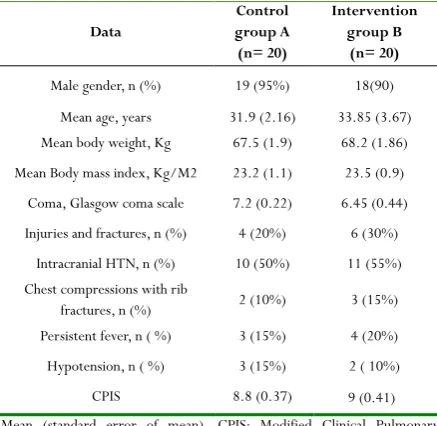
infection table (1), the two groups didn’t differ statistically regarding the incidence of VAP. TTM had a significant effect on decreasing the length of ICU stay compared to those on the control group (see Table 2).
Complications during
initiation of
hypothermia and rewarming
During the initiation of TTM, seven patients (35%) reported complications like (hyperglycaemia, hypokalaemia, bradycardia, hypotension, thrombocytopenia and increased INR) and thirteen patients (65%) didn’t experience any complications (Figure 2).
In the study group, during rewarming phase, five patients (25%) experienced complications including (hyperkalaemia, bradycardia, hypoglycaemia, thrombocytopenia and hypotension), and fifteen patients (75%) didn’t show any complications (Figure 3).
Figure 2: Pie chart showingcomplications during the initiation phase of hypothermia in the study group.
Figure 3 : Pie chart complications during rewarming.
Table 1: Demographic, clinical data at baseline and complications in the intervention and control group.
Data
Control group A (n= 20)
Intervention group B
(n= 20) Male gender, n (%) 19 (95%) 18(90)
Mean age, years 31.9 (2.16) 33.85 (3.67) Mean body weight, Kg 67.5 (1.9) 68.2 (1.86) Mean Body mass index, Kg/M2 23.2 (1.1) 23.5 (0.9)
Coma, Glasgow coma scale 7.2 (0.22) 6.45 (0.44) Injuries and fractures, n (%) 4 (20%) 6 (30%)
Intracranial HTN, n (%) 10 (50%) 11 (55%) Chest compressions with rib
fractures, n (%) 2 (10%) 3 (15%) Persistent fever, n ( %) 3 (15%) 4 (20%) Hypotension, n ( %) 3 (15%) 2 ( 10%) CPIS 8.8 (0.37) 9 (0.41) Mean (standard error of mean), CPIS: Modified Clinical Pulmonary Infection Score
Table 2: Stay (in days) in the intensive care unit in both groups.
Control
group Intervention group value P Length of ICU stay (in days) 13.90 (1.96) 8.25 (1.28) 0.021 Mean (standard error of mean), ICU=Intensive care unit.
Discussion
TTM is a method for controlling, monitoring, and lowering the body temperature with the aim of preserving the cerebral blood flow that might be disturbed due to the brain injury. Some clinical studies showed the benefit of TTM in patients with traumatic brain injuries. [17-19] On the other hand, other studies
didn’t recommend this method as a standard care. [20]
In the current study, TTM proved to improve the neurological outcomes, nevertheless, no statistical significance was found for this improvement without statistical significance. Similarly, Jiang et al, in 2000, reported an improved neurological outcome rate in brain injury patients [21], and this was partially in agreement with
the results of this study, so both studies denoted that; the use of hypothermia as a rescue therapy can improve neurological outcomes in these patients. Conversely, Clifton and others in 2011 reported that neurological outcome did not improve on using TTM in these patients which was not in agreement with the results of this study. [22]. The variation in the effect of TTM on
neurological outcome between the current study and the mentioned studies could be due to the variations in timing of initiation of hypothermia, the duration of treatment, and the duration of follow up. Sydenham et al., in 2009, in a study postulated that the longer the duration of treatment and the longer the follow up period, the better would be the outcome.
[23]
In this study, the mortality rate was less in patients treated with
hypokaemi a 15% HYPERGLYC
EMIA
10 % BRADYCARDIA
5% hypotensio
n 10%
high INR 5% thrombocyt
openia 10 % no
complicatio ns 65%
complications during initiation of hypothermia
hperglycemia
hypokalemia
bradyardia
hypotension
high INR
thrombocytop enia , high INR no
complications
hypoglyce mia
5%
hyperkale mia
5% BRADYCARDIA
5%
HYPOTENS ION
5%
thrombocy topenia,
5%
no complicati
ons 75%
EA Hassan, et al.: Effect of targeted temperature method on the ICU length of stay for traumatic severe brain injury patients
TTM compared with the others who did not, but this was statistically insignificant. In agreement with the current study, Jiang and colleagues obtained almost the same results in 2000 [21].
Surprisingly, Harris and others in 2009 had different results where they concluded that, TTM increased mortality in the same category of patients [24] . In a systematic review by Georgio and Manara in
2013 [25], it was reported that there was a delineated effect of TTM
on mortality in patients with TBI with safety profile of TTM. From the previous studies, it can be summarized that neurological outcome and mortality rate are not the main targets of treatment methods using targeted temperature.
The main concern of this study was to try to shorten the ICU length of stay which was evident in TTM treated patients. A similar study done by Storm et al., in 2008 proved the same results regarding the survivors of cardiac arrest patients with neurological sequalae who received TTM, that had shorter ICU stay. [26]
Excessive hypothermia induced diuresis and excess potassium loss which led to hypokalaemia in some cases. In agreement with the current study, TTM has been shown to be associated with significant hypokalaemia, like in the study by Kirkegaard et al, in 2012who reported that serum potassium levels decreased significantly during cooling, and 76% of patients reached values of <3.5mEql/L (mild hypokalaemia). [27]
TTM did not increase the risk of coagulopathy or thrombocytopenia (though the mean platelets count significantly dropped) during this study with the resultant low incidence of haemorrhage either intra-cranial or systemic, and this agreed with a large systemic review done by Fox and others in 2010. [28]
Regarding the incidence of VAP, the two groups did not differ statistically even though it happened in some cases. Sydenham et al., in 2009 had almost similar results [23]. On the other hand,
Fox and others in 2010 revealed the significant incidence of VAP in patients treated with TTM [28]. In this study, the researchers
assumed that these differences may be explained by the versatility in using treatment protocols between different ICUs. The authors recommend involving larger number of patients in future studies to add more information and values to using TTM in severe TBI, and also establish local TTM protocol for ICU for management of TBI in its severe forms.
Limitations of this study
Limitations of the current study were mostly related to the shortage of cost and resources availability, specially limited number of studied patients combined with other co morbidities.
Conclusion
From the current study, it can be concluded that, TTM significantly shortened the length of stay in those patients who have been exposed to TBI especially those classified as suffering from a severe form of injury, compared with those who did not have the TTM protocol. TTM has been proved to be a safe intervention. These all would encourage different ICU care facilities to emphasize the earlier use of TBI.
Financial Support Issues
There was no organization body offering special funds or sponsorship to the present study.
Conflicts of Interest
None of the sharing authors claimed any conflict of interest
.
References
1. Guidelines for the management of severe traumatic brain injury. J Neurotrauma. 2007; 24 Suppl 1: S1-106. doi: 10.1089/neu. 2007.9999
2. Nielsen N, Wetterslev J, Cronberg T, Erlinge D, Gasche Y, Hassager C, et al. Targeted temperature management at 33 °C versus 36 °C after cardiac arrest. N Engl J Med. 2013; 369(23):2197–206. doi:10.1056/NEJMoa1310519.
3. Polderman KH, Varon J. Interpreting the results of the targeted temperature management trial in cardiac arrest. Ther Hypothermia Temp Manag. 2015. doi:10.1089/ther.2014.0031.
4. Goldstein L, Diaz-Arrastia R. Traumatic Brain Injury and Risk of Suicide. JAMA 2018; 320:554-6.
5. Carney N, Totten AM, O'Reilly C, Ullman JS, Hawryluk GW, Bell MJ, et al. Guidelines for the management of severe traumatic brain injury, fourth edition. Neurosurgery 2017; 80:6-15.
6. Villa F, Citerio G. Intracranial pressure monitoring. Oxford Textbook of Neurocritical Care 2016:107. 7. Andrews PJ, Sinclair HL, Rodríguez A, Harris B, Rhodes
J, Watson H, Murray G. Therapeutic hypothermia to reduce intracranial pressure after traumatic brain injury: the Eurotherm3235 RCT. Health Technol Assess. 2018 Aug; 22(45):1-134.
8. Siesjo BK, Bengetson F. Calcium, excitotoxins, and neuronal death in brain. Ann NY Acad Sci 1998; 568:234-51.
9. Olah E, Poto L, Hegyi P, Szabo I, Hartmann P, Solymar M, Petervari E, Balasko M, Habon T, Rumbus Z, Tenk J, Rostas I, Weinberg J, Romanovsky AA, Garami A. Therapeutic Whole-Body Hypothermia Reduces Death in Severe Traumatic Brain Injury if the Cooling Index Is Sufficiently High: Meta-Analyses of the Effect of Single Cooling Parameters and Their Integrated Measure. J Neurotrauma 2018 Oct 15; 35(20): 2407-2417. 10. Akca O. Complications of hypothermia. In: Mayer SA,
Sessler DI (eds). Therapeutic hypothermia, NY: Marcel Dekker; 2005: p.179-210.
12. Yokobori S, Yokota H. Targeted temperature management in traumatic brain injury. J Intensive Care 2016; 4:28.
13. Christos Lazaridis, MD, Ming Yang, MS, Claudia S, and Robertson, MD. Predictors of Intensive Care Unit Length of Stay and Intracranial Pressure in severe Traumatic Brain Injury. Journal of Critical Care. 2015 dec; 30 (b): 1258-1262.001: 10.1016 J-Jacc.2015.08.003
14. Sessler CN, Gosnell MS, Grap MJ, Brophy GM, O'Neal PV, Keane KA, et al. The Richmond Agitation-Sedation Scale: validity and reliability in adult intensive care unit patients. Am J Repir Crit Care Med 2002; 166: 1338-44. 15. Chan YH. Biostatistics102: Quantitative Data – Parametric & Non-parametric Tests. Singapore Med J 2003; 44: 391-6.
16. Chan YH. Biostatistics 103: Qualitative Data –Tests of Independence. Singapore Med J 2003; 44: 498-503. 17. Dietrich WD, Alonso O, Busto R, Globus MY-T,
Ginsberg MD. Post-traumatic brain hypothermia reduces histopathological damage following concussive brain injury in the rat. Acta Neuropathol 1994; 87(3):250-8. 18. Jiang JY, Lyeth BG, Kapasi M, Jenkins L, Povlishock J.
Moderate hypothermia reduces blood-brain barrier disruption following traumatic brain injury in the rat. Acta Neuropathol 1992; 84(5):495-500.
19. Gu X, Wei ZZ, Espinera A, et al. Pharmacologically induced hypothermia attenuates traumatic brain injury in neonatal rats. Exp Neurol 2015; 267(0):135-42.
20. Harris B, Andrews PJ, Murray GD, Forbes J, Moseley O. Systematic review of head cooling in adults after traumatic brain injury and stroke. Health Technol Assess 2012;16(45):1-175.
21. Jiang JY, Yu M, Zhu C. Effect of long-term mild hypothermia therapy in patients with severe traumatic brain injury: 1-year follow-up review of 87 cases. J Neurosurg 2000; 93:546-9.
22. Clifton GL, Valadka A, Zygun D, Coffey CS, Drever P, Fourwinds S, et al. Very early hypothermia induction in patients with severe brain injury (the National Acute Brain Injury Study: Hypothermia II): a randomised trial. Lancet Neurol 2011; 10:131-9.
23. Sydenham E, Roberts I, Alderson P. Hypothermia for traumatic head injury (Review). Cochrane Library 2009; 4:7.
24. Harris OA, Muh CR, Suries MC, Pan Y, Rozycki G, Macleod J. et al. Discrete cerebral hypothermia in the management of traumatic brain injury: a randomized controlled trial. J Neurosurg 2009; 110:1256-64.
25. Georgiou A, Manara A. Role of therapeutic hypothermia in improving outcome after traumatic brain injury: a systematic review. Br J Anaesth 2013; 110:357-67. 26. Storm C, Steffen I, Schefold C, Krueger A, Oppert M,
Jörres A, et al. Mild therapeutic hypothermia shortens intensive care unit stay of survivors after out-of-hospital cardiac arrest compared to historical controls. Crit Care 2008; 12 (3):R78. doi: 10.1186/cc6925.
27. Kirkegaard H, Soeholm H. Serum Potassium Changes During Therapeutic Hypothermia After Out-of-Hospital Cardiac Arrest—Should It Be Treated? Ther Hypothermia Temp Manag 2012; 2: 30-6.