The Tetris Model of Resolving Information Needs
within the Information Seeking Process
Max L. Wilson
Mixed Reality Lab, School of Computer Science University of Nottingham
Nottingham, UK
[email protected]
ABSTRACT
Theoretical abstractions, of many different aspects of search, have played a crucial role in driving research into human information seeking and retrieval forward. From models of the Information Seek-ing Process, to how we perceive search systems, these models help us to 1) conceptually formalise and separate aspects of the model’s focus, 2) communicate more clearly about these aspects, 3) create hypotheses for subsequent research, and 4) produce implications for future systems. Implicit in these four aspects is that models and theories should have a focus and a purpose. After clarifying the relationships between models, theories, and meta-theories, this perspectives paper introduces the Tetris Model of Resolving Infor-mation Needs within the InforInfor-mation Seeking Process, the purpose of which is to better represent the behaviours around the Human Computer Interaction with Information Retrieval, which are often confounded within stage-based models of the Information Seeking Process. In particular, the possible sequence of actions performed by a searcher are typically linearly aligned from left-to-right, and thus imply a temporal progression. The differing focus of the Tetris model is to better capture the temporal experience of searching, by removing the implied progression of left-to-right. The aim of this perspectives paper, therefore, is to introduce this new Tetris Model, such that it can be used to formalise people’s interactive experiences in a new way, so that we can more clearly communicate about them, create hypotheses from the model, and consider novel design implications based upon it.
CCS Concepts
•Information systems→Users and interactive retrieval;
Keywords
Information Seeking Process; Information Need; Theory; Model
1.
INTRODUCTION
There have been many theories and models of information re-trieval, information seeking, and information behaviour (including, in fact, a model of how these three are related [58]. The focus of
Permission to make digital or hard copies of all or part of this work for personal or classroom use is granted without fee provided that copies are not made or distributed for profit or commercial advantage and that copies bear this notice and the full citation on the first page. Copyrights for components of this work owned by others than the author(s) must be honored. Abstracting with credit is permitted. To copy otherwise, or republish, to post on servers or to redistribute to lists, requires prior specific permission and/or a fee. Request permissions from [email protected].
CHIIR ’17, March 7–11, 2017, Oslo, Norway.
© 2017 Copyright held by the owner/author(s). Publication rights licensed to ACM. ISBN 978-1-4503-4677-1/17/03. . . $15.00
DOI:http://dx.doi.org/10.1145/3020165.3020169
one book, for example, was purley to catalogue the many theories from Information Science into one publication [17]. These theo-ries and models play a crucial role in research, allowing us to 1) communicate more clearly about search (e.g. [31]), 2) formalise our understanding (e.g. [8]), 3) create hypotheses or explain re-search findings (as surveyed by Pettigrew & McLechnie [35]), and 4) produce implications for design (e.g. [6, 20, 56]). Many of the theories mentioned in this paper have been produced by people in our community, but its also an acceptable practice to consider whether theories from outside of our research area may also help us to develop new understandings or explanations for observed results (e.g. [6]).
By their vary nature, models are reductionist abstractions of the reality we are observing or recording. We typically categorise possi-ble behaviours into reasonapossi-ble numbers of major groups [9], such that we can examine them separately, but not have to do so for an infinite number of situations. We might also define typical relation-ships between categorisations [31], so that systems can expect what users might do next. Whatever the aim of the model or theory, and regardless of what they are trying to communicate, they help us to understand something a little better, but necessarily the level of ab-straction means that they cannot encapsulate all of the reality. This also means, however, that having theories and producing models means that we can critique them [22] (although these can lead to some rather interesting and very public debates [7, 23]).
One common (but inevitable) limitation to models of the Informa-tion Seeking Process (ISP), is that in defining the possible stages that users can go through, they cannot so easily define the actual process likely to be experienced by the searcher. Perhaps most evident in this is the well known and popular model of the ISP produced by Marchionini [31] in Figure 1. Marchionini’s figure is typically cited for the key stages, shown left-to-right, that a user would go through. Most interesting for this paper, about Marchionini’s figure however, is the sheer number of back-arrows (its perhaps an interesting chal-lenge to find a pair of boxes that arenotconnected by a back arrow). While Marchionini’s ISP model is highly effective at conveying the key stages a searchermustprogress through, its left-to-right presen-tation implies a temporal progression that a searcherwillprogress through; the back-arrows are there of course to highlight that its not normalto go straight in that order, but that other paths are possible, if not more normal.
Figure 1: The Information Seeking Process provided by Marchionini, from [31]
of theories, models, and frameworks, before surveying a range of different theories in our research community. I then present the Tetris model, before concluding with a discussion of what it can tell us about search, whilst considering what it cannot tell us.
2.
RELATED WORK
I have not, so far, been especially clear on the use oftheories andmodels, or indeed how they relate toprinciples,metatheories andframeworks, if not many more similar terms. In honesty, nor do I wish to go into these in depth, which could be an academic endeavor of its own. To set a cursory pretext, however, a theory, in general, is a perhaps complex but particular principle that we believe to hold true across many circumstances; Information Theory [44], Activity Theory [28], and Information Foraging Theory [36] are a few examples. Information Foraging Theory, for example, ex-plains how information is found in much the same way that animals forage for food, involving several principles such as an effort vs cost tradeoff. Whether or not the creators of a theory are explicitly aware of it, theories typically come from a certain pespective on interpreting the real world; Hjørland discusses meta-theoretical per-spectives in more detail for a reader that would like a philosphical challenge [21]. Models (in our discipline at least), however, are usually smaller specific abstractions used within theories to repre-sent a point. Typically tabular or graphical, models encapsulate an idea into a single metaphor or representation such that they can be portrayed, discussed, and even tested. In more algorithmic parts of Computer Science and Information Retrieval, models are often explicitly implemented to show that they produce more accurate results (e.g. tfidf [46], BM25 [40], language models [37] etc.) In Human-Computer Interaction with Information Retrieval (HCIR), we are more likely to create conceptual models of human behaviours, and create experiments or build systems to support them [9]. Finally, frameworks are typically an application of a theory or model that somebody takes as a guide to frame their work. One might take the principles of Activity Theory as a framework for designing future research (e.g. [28]), or likewise might use Information Foraging Theory to design a new search user interface widget [49]. Similarly, Wilson et al [57] used Belkin’s model of search situations [9] and Bates’ taxonomy of tactics [2] as a framework for predicting user interaction with search user interfaces. In practice, these terminolo-gies are often used informally or incorrectly within literature, and the boundaries between can become arguable; it is not the aim of this perspective paper to discuss these concepts in detail nor the correct use of them.
2.1
Models of Interactive Information Retrieval
There are of course both many models and theories that could be discussed, and many ways to approach them. Bigger surveys oftheories [17] and their uses in research [35] have been produced. In this paper, I will review a few that are most relevant to the Tetris Model of the ISP being presented here.
2.1.1
Levels of Granularity
Search can be modelled at very tiny levels of Information Re-trieval actions, and at very grand levels of process. A key set of theories has been to break categorise and separate the levels being discussed into: Information Behaviour, Information Seeking Be-haviour, and Information Search Behaviour [58]. The benefit of separating these levels, is that other models can be specific about which granularity they are concerned with. Jarvelin & Ingwersen used similar levels to describe how each level motivates the levels within, and to specify which evaluation criteria should be used to measure success at each level [25]. Elsweiler et al considered that their model worked only for work contexts and further extended their model to describe the difference between work behaviours at each level and casual behaviours at each level [15]. Overall, its common for theories and models to be focusing on one these levels, if not describing the relationship between them. Research into creat-ing realistic Work Tasks [10], for example, focuses on the need for information retrieval to be motivated by real information seeking tasks, which are in turn realistically motivated by how the result of seeking will be actually used in a Work Task.
2.1.2
Information Behaviour
At a very high level, information seeking is considered as only one of many information behaviours. Godbold [19] produced a model that highlighted that informaiton behaviour also includes creating information, avoiding informaiton, destroying information and much more. A nice example outside of information seeking is information encountering [16], which describes how people might encounter information without trying to find it. Formalisations of the reasons that Information Behaviour exists, include Dervin’s model of the sensemaking gap [12], which highlights a few points including the existance of a gap, the need to take action to cross it, and the cost involved in doing so. Belkin’s formalisation of the Anomalous State of Knolwedge [8] further describes the implciations of knowledge gaps and the motivations to resolve them as information needs. Another of Wilson’s models encapsulates each of these in a little more detail, highlighting activating mechanisms for e.g. choosing to seek information [58]. Each of these models aim to convey some important aspect of the reasons why we search (or not) for information, to help us make predictions about human behaviour, or to interpret the outcomes of information seeking with more clarity.
2.1.3
Information Search Process
for example, highlights the key stages that a user progresses through [31] but using finer-grained language that implies stages of a smaller information retrieval process. In a similar way, Ellis [14] describes some of the key activities that searchers embark on during an ISP, including: Chaining, Browsing, Monitoring, Differentiating, Ex-tracting and Varifying. With a different aim to convey the user motivations and emotions, and describing larger endeavours into researching, Kuhlthau’s model highlights a series of major phases that searchers go through [27]: Initiation of project, Selection of topic, Exploration of ideas, Formulation of the key information needs, Collection of results relating to them, and Presentation of what they have found. Her model highlights levels of e.g. anxiety and clarity as they move through these stages. Whether explicitly mentioned or not, knowing such emotions and phases has inspired much subsequent work on estimating frustration in search [34] and to support confidence in the trustworthyness of search results [43]. As mentioned above, without taking away from the value that these well known models provide, they (like all models) have limi-tations in what they convey. In particular, these examples imply a linear left-to-right progression and the back-arrows in Marchionini’s model are an attempt to compensate for this implication. Instead, Spink visualises information seeking as a sequence of information retrieval cycles rather than a linear progression of one retrieval episode [47], where each cycle involves both the use of a search tactic, and the relevant judgement of what is found. Taking the non-linear concept further, Bates’ Berrypicking Model is a well known example that specifically highlights that we collect infor-mation from many different places as we exploring inforinfor-mation, especially when browsing [3]. Bate’s model aimed to convey that resolving an information need is often achieved by collecting and piecing together separate bits of information found in those multiple locations. Likewise, Forster’s nonlinear model conceptualises this as searcher having a paint pallette, using information seeking activities as necessary to achieve the bigger picture they are looking for [18]. Other models focus differently on the type of searching situa-tion that develops these informasitua-tion seeking episodes. Marchionini more recently identified many types of search episode, but broke them down into three major categories:Lookup,Learn, and Inves-tigate[32], with the aim of highlighting that they can be treated differently. Belkin broke down seeking into 16 situations, based on four binary dimensions including problem clarity and knowledge of the target result [9], before using them as a framework to build a system to handle them each differently. It could be said that the left-to-right stages describe a straightforwardlookup, and that all the back-arrows describe all the deviations that we largely describe as Exploratory Search [52]. In order to model all the types of situations that Exploratory Search tasks might involve, Wildemuth & Freund modeled a strong set of dimensions that can be used as a framework for designing tasks for experiments [54].
2.1.4
Aspects of the Search Process
[image:3.612.345.527.50.266.2]A final set of key models break down the different aspects, or fac-tors, that are at play during search. Saracevic identified several key layers involved in searching, from both the user side and the system side [42]. A user has motivations, strategies to use, and actions to achieve them, where as a system has the document collection, the algorithm to retreive them, and the interface to present them. Bates later broke these down into many more levels [5], having already highlighted that the amount of automation in a system could be stud-ied at each level [4]. Jarvelin and Ingwersen identify 9 key aspects to any searching situation: including the data, the algorithms, the user interface, the dimensions of the searcher themselves, the tasks, and indeed the searchers perceptions of the tasks [25]. Ingwersen
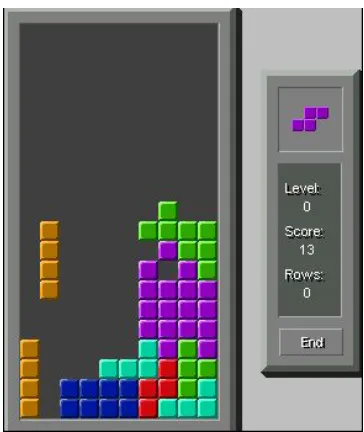
Figure 2: Example Tetris interface. Unedited image ©joefoodie, taken from:https://flic.kr/p/AQDh2
also produced a useful cognitive model (perhaps best represented with the clouds in [24]) that focused specifically on this issue of perception, highlighting that information seeking behaviour depends on what they know about the possible results, what they know about how the retrieval algorithm works, what they know about the user interface features, and so on.
2.2
Summary
There are many more models and theories that could be described that relate to HCIR, but there are two key takeaways from those noted above: 1) models are created to convey a particular understand-ing: the factors that affect user behaviour, the aspects of retrieval system, the users perception of those aspects, the levels of searching behaviour, the evaluation criteria for levels of searching behaviour, and so on. 2) that there is a gap in explaining how information needs, the retrieval of both known and unknown information, and the resolution of information needs, all relate to each other through the ISP. The aim of the Tetris Model of ISP, described below, is to model how these issues relate, and help elaborate on why and when e.g. users take the back-arrows in Marcionini’s model.
3.
THE TETRIS MODEL
The aim of this section is to propose that the aim of the game of Tetris, perhaps taken (for now) without the fun-creating aspects of time pressure, is a valuable model for understanding how searchers resolve information needs during the Information Seeking Process (ISP). In particular, the aim is to remove the notion of progress-ing from left-to-right through stages, in order to tie progess to the resolution of information needs instead.
3.1
A Recap of Tetris
which pieces descend increases, so that the user has less time to a) work out where to place the piece, and b) move and orientate the piece accordingly.
We are not the first to consider Tetris within academic purposes. Kirsh and Maglio [26], for example, have studied the difference between epistemic and pragmatic actions performed by users, as the speed of the game increases, to learn more about perception and reaction protocols. Further, Veksler and Gray used a Tetris-based task set to measure learning [50].
3.2
Introducing the Tetris Model
As an overview of how we use this Tetris analogy, the game win-dow itself is considered to be a working space for an information need. The pieces already at the bottom of the game window, making up incomplete horizontal lines, represent acurrent information need or Anomalous State of Knowledge [8]. The depth of the incomplete horizontal lines represents the depth or complexity of the current information need, and determines the amount of information needed to resolve the information need (perhaps demanding more explroa-tory learning and investigating). Being aware of these unresolved lines is paralleled to recognising that you have an information need; something captured in many models. Arriving, descending pieces in the game are considered asnew pieces of informationthat the user finds from searching, or simply encounters [16]. The user is hoping that these new bits of information found will resolve an information need, fitting into their gaps in knowledge, but may not fit completely (patrially resolving the information need), or may not fit at all (per-haps creating new information gaps). Any completed lines of the game are resolved information needs, and thus removed from the working space, and a score value incremented, which represents the cumulative amount of knowledge a searcher has about this topic.
In this model, we considerprogressas resolving gaps in knowl-edge (completing lines), rather than by going through a series of stages. At this point, we are ignoring the time pressure that adds the ‘fun’ to Tetris, but highlight that progress is not going through a series of stages, but in resolving information needs. We are also breaching the randomness of pieces entering a game of Tetris, con-sidering that although users could incidentally encounter informa-tion, they might purposefully look for therightpieces.
The different stages, captured in other ISP Models, that searches may be in are identified by the state of the game. If a new piece of information arrives into an empty window, then a user has a new information need to resolve (typically the first stage of every ISP model). If the user chooses to begin a new information seeking episode, they are trying to clear that new piece of information from the board. As the user can see what information need they have, they can construct an idea of what remaining pieces they would like to find and encounter. As the user analyses search results, new pieces arrive in the window of the game, and hopefully help to resolve the information need. As the pieces arrive, the user has to analyse how and where they fit into their developing knowledge on the topic. These new pieces, however, may not directly resolve the need, and deepen the number of lines that need resolving, causing the searcher to reformulate their information needs. As the pieces do fit together, however, the user is able to reflect on the state of the game. When the lines have been cleared, the user can consider that they have resolved their information need.
3.3
Applications of the Tetris Model
In the following subsections, I further explain the Tetris Model, beginning with three diverse examples that represent different com-plexities of information needs, taken from the broad categories described by Marchionini [32]: Lookup, Learn, and Investigate.
3.3.1
Lookup Example
A simple lookup has been shown to be a regular part of everyday life, when a simple problem is identified (caused by the arrival of new piece of information), described easily, found quickly, and therefore resolved with ease. This scenario, portrayed in Figure 3.a), can be represented easily by the first three pieces of a game each being made up of simple bits of information. Each block can be laid side by side, horizontally, so that they make up an entire line and the problem is removed. That is, the original problem, the first piece, was simple and, given the empty game window, created a shallow information need. Equally, the searcher came across the appropriate information to resolve the need easily. The newly found information fits simply, without further deepening the information need, and the line (or information need) is resolved. Overall the IS episode was quickly resolved and the screen, until a new problem piece arrives, is entirely empty.
3.3.2
Learning Example
In learning examples, an original information need may appear to be relatively simple, such as needing to buy a camera. The next piece found, however, indicates that more is to be learned before a final camera can be chosen, such as the difference between metering modes and ISO capabilities. The new pieces of information confound the chance of resolving the problem in a single line, and deepen the problem space to a number of Tetris lines (Figure 3.b). Consequently, more information must be sought to resolve any or, hopefully, all of the lines. It is possible, however, for this deepened information need to be completely solved with a single final piece, by clearing several lines at once (Figure 3.c). Alternatively, each of the lines may be resolved one at a time with successive pieces.
3.3.3
Investigate
Investigating is represented by tasks such as planning, analysis, synthesis, and evaluation, where the complexity lies in the initial problem pieces, such as a multi-faceted problem, or a poorly defined information need. If the initial problem piece has a complex shape (Figure 3.d), then the information need can only be resolved by several pieces. The depth of the problem, unlike Learning examples, is controlled by the complexity of the earlier rather than the later pieces. This does not exclude, however, the later pieces from in-creasing the complexity of the problem, as investigating may often include learning (Figure 3.e).
3.4
Taking the Model Further
be-Figure 3: Example information seeking states, where (a) is a simple lookup task resolved easily; (b) is a learning example where the information need was deepend by the second bit of information; (c) presents a deep information need being eventually solved with one piece; (d) shows a more complex initial information need for investigation; (e) shows an investigation need getting even deeper; and (f) represents excess information found that is surplus to solving the information need.
fore one day resolving something that they did not complete before. This may occur when new pieces of information need to be checked, or first understood before the original problem can be resolved.
4.
DISCUSSION
In this section, I reflect on the advantages, limitations, and pos-sible uses of this model in terms of the four values that models can provide, as noted in the introduction: 1) formalising our under-standing of the search process, 2) commuicating about the search process, 3) creating hypotheses for future research, and 4) drawing implications for design.
4.1
Formalising and Communicating
An important concern for any new model is what is its focus and thus what novel insight does it provide. The main insight provided by the Tetris model is in tying the progression of a search episode, and the complexity of the behaviour in the search episode, to the depth and complexity of an information need, rather than in the progression through certain behaviours. This is particularly important because, as a community, we are grappling with the Exploratory Search agenda, to design support for more complex searching to resolve more complex information needs. In particular, research into Exploratory Search in our community often conflates
various scenarios and task factors [54], where one study might set a task involving comparison, and another simply sets a task focused on multi-part problem, but both call them ‘an exloratory search task’. The Tetris Model may help to facilitate the discussion of these different types of tasks more clearly in a way that would be harder to do with stage-based models.
[image:5.612.144.463.55.397.2]4.2
Opportunities for Future Research
In contrast to the life-long learning example, there are topics that individuals have learned about in the past, but have many blocks still to resolve. If the user is not actively seeking, one way or another, in those topic areas, then these games can be considered on pause. Un-pausing may, therefore, occur as new information arrived through passive information encountering [16], or if the searcher actively engages in a new search episode. There is opportunity, based on this model, to further explore research questions about a) activation causes, b) search resumption, and c) multi-session searching.
Conversely, one open research question for the Tetris model is to decide if users are able to fail ISP-Tetris for certain information problems, as they reach maxima in their understanding of topics. In Tetris, failing is indicated by the stack of unresolved, incom-plete, lines filling the available vertical space allocated to the game. Although a maximum vertical space doesnt have a direct parallel in our understanding of the cognitive aspects of search, we can draw parallels with when searchers give up on their task, because it seems unresolvable. Perhaps individuals who fail to understand hard problems have reached their vertical limit on reasonable effort to resolve complex gaps in their knowledge, despite having resolved some set of lines in the past. This gives us an opportunity to, again, consider surprise discovery of information that does suddenly re-solve a knowledge gap and make a complex information need seem achievable [11]. Similarly, the model gives us opportunity to further consider the role of effort and satisficing during search [51].
One interesting area of research into information seeking is the role that existing knowledge plays on search formulation [53] and on relevance judgements and the correctness of found information [41]. The interesting research questions lie around the impact that incomplete prior knowledge has on assessing whether new informa-tion correctly resolves an informainforma-tion need. Answer correctness, or a measure of an answers strength, is often used in studies of search-ing behaviour, whilst also trysearch-ing to measure pre- and post-search knowledge on a topic [55]. The Tetris Model may help to draw new finer-grained questions about the sequence in which information is found during search.
One final element of the Tetris game that is not covered by this model, is that of the increasing speed at which pieces descend as time progresses. This element of speed is added to the game to introduce both challenge and enjoyment. In real life, however, in-formation seeking is often performed under time pressures such as deadlines or medical emergencies. Similarly, many user studies impose an element of time on their information seeking tasks. Users are often timed as they carry out the tasks, and most analyses as-sume that improvements in task completion time make their system better. In some respects this is true, if the system in question is producing pieces that will fit together nicely to resolve a problem, then they have supported the users by not accidentally deepening the information need. If the original challenge is more exploratory or investigative, however, then time pressure may make it harder for searchers to fit new pieces in with the unresolved lines. Indeed, many studies involving exploratory search tasks explicitly remove time pressure in order to measure value gain from the system, and are even investigating the benefits of slower search response times providing better and more relevant information to fill information needs [48]. Consequently, time and effort tradeoffs are a current concern in information retrieval research [45, 1], and aspects like hover time and dwell time are examined for what the imply about relevance of results [29]. So although, in general, we have not included time pressure in the Tetris Model, there are interesting questions about the implications of time than can be explored in future research.
4.3
Possible Implications for Design
This concept of depth for an information need, rather than se-quenctial stages, is a fairly novel way of thinking about the ISP, and so may immediately have consequences for new designs of search systems. For example, the model poses the question of whether, instead of tracking the stage at which a user is currently at, a system could track the level of depth and detail that the user is currently at. There is very little need, for example, to provide a growing overview of a domain if the user simply performs a short look-up. A space for synthesising information, however, would be very useful as the users information need deepens. Marchionini and White [33] report on previous research that has shown, for example, that automatically trying to create a synthesised view of a domain allowed users to perform Learning and Investigative tasks significantly faster, but provided no significant benefit for look-up tasks. Research has also shown, however, that shown at the wrong time, search user interface features can actually impede straight forward searching [13]. Google appears to share this sentiment, by typically placing recommended query refinementsafterthe first ten results rather than upfront in the search process. Some interfaces exist that sup-port different depths of search, however they have typically been designed from the progressive models. We have yet to see, to the authors knowledge, a system designed specifically from the view of depth or complexity of information need, rather than progression through stages. One research opportunity above is to examine the consequence of finding information before earlier information gaps are resolved. Early research, for example, has examined showing you what you’ve seen already [38], what new information can be found [49], and whether information can be presented in order of need rather than relevance [39]. Each of these are interesting ap-proaches that could be developed further by considering the design of a search user interface from the point of view of the information need, depth and complexity.
4.4
Limitations of the Model
There are, as with any model, limitations to what the Tetris Model captures and represent. As noted above, it does not capture the activities that searchers may perform like ISP models from Mar-chionini and Ellis, just the reason for trying to find information and effect of having found information. This is of particular im-portance, because in real life, new information does not arrive to us randomly, but we take actions (captured in other ISP models) to influence the information we encounter. We aim, as it were, to find a square piece when we have a square hole in our knowledge. Further, when we search, or enounter information, we are likely to come across information we already know. The description of the model above implies that arriving, descending pieces arenewpieces of information; the model therefore does not capture or represent what happens when we encounter information that we already know. We may also encounter information that we do not need, and these do not necessarily deepen our Information Need. Together, these aspects mean that the random allocation of incoming pieces in the game does not clearly represent what determines the information we encounter, but it is true that we may not find the information we hoped for, and will likely enounter many other pieces of information along the way. The Tetris analogy also implies that we have to resolve higher lines before we can resolve lower information needs, but this is not enforced in real life.
5.
CONCLUSIONS
the relevance and utility of the information found or encountered to resolve it. Unlike most models of Information Seeking, which usually try to reduce the process to a single progression across stages, the Tetris model describes a progression separately from spatial presentation, implying that progression is instead temporal and about resolving gaps in knowledge. This means that the Tetris Model directly captures the freeflowing movement between defining an information need, searching for more information, and integrating this into existing knowledge. Further, by making the depth of the problem analogous to the current depth of the unresolved lines in the game, the model allows for any new information in the process to both resolve and/or deepen the problem. The examples of lookup, learning, and investigating above have shown the versatility of the Tetris model for describing diverse searching scenarios. Further, the discussion has identified its potential strengths, as well as how these strengths might be used to direct future research and support the design of future search interfaces.
As identified in the introduction, the purpose of any model is to help us structure what we do know, communicate effectively, hypothesise about research, and draw new implications for, in this case, how people resolve information needs within the Information Seeking Process. In turn these new avenues of research can support or strengthen our models, through identifying and resolving limi-tations, so that they may again inform new ideas. My hope is that the Tetris Model described above helps to formalise our commu-nities understanding of the search process, especially in regards to Human-Computer Intreaction with Information Retrieval (HCIR) around dynamic Exploratory Search conditions.
6.
ACKNOWLEDGEMENTS
Thank you to everyone that over time has given me comments on this idea, and encouraged me to submit this paper.
Data access statement:There is no dataset underlying this model.
7.
REFERENCES
[1] L. Azzopardi, D. Kelly, and K. Brennan. How query cost affects search behavior. InProceedings of the 36th international ACM SIGIR conference on Research and development in information retrieval, pages 23–32. ACM, 2013.
[2] M. J. Bates. Information search tactics.Journal of the American Society for information Science, 30(4):205–214, 1979.
[3] M. J. Bates. The design of browsing and berrypicking techniques for the online search interface.Online review, 13(5):407–424, 1989.
[4] M. J. Bates. Where should the person stop and the information search interface start?Information Processing &
Management, 26(5):575–591, 1990.
[5] M. J. Bates. The cascade of interactions in the digital library interface.Information Processing & Management,
38(3):381–400, 2002.
[6] M. J. Bates. What is browsing-really? a model drawing from behavioural science research, 2007.
[7] M. J. Bates. Birger hjørland’s manichean misconstruction of marcia bates’ work.Journal of the American Society for Information Science and Technology, 62(10):2038–2044, 2011.
[8] N. J. Belkin. Anomalous states of knowledge as a basis for information-retrieval.Canadian Journal of Information Science-Revue Canadienne Des Sciences De L Information, 5(MAY):133–143, 1980.
[9] N. J. Belkin, C. Cool, A. Stein, and U. Thiel. Cases, scripts, and information-seeking strategies: On the design of interactive information retrieval systems.Expert systems with applications, 9(3):379–395, 1995.
[10] P. Borlund. The iir evaluation model: a framework for evaluation of interactive information retrieval systems. Information research, 8(3), 2003.
[11] L. S. Connaway, T. J. Dickey, and M. L. Radford. â ˘AIJif it is too inconvenient i’m not going after it:â ˘A˙I convenience as a critical factor in information-seeking behaviors.Library & Information Science Research, 33(3):179–190, 2011. [12] B. Dervin, L. Foreman-Wernet, and E. Lauterbach.
Sense-making methodology reader: Selected writings of Brenda Dervin. Hampton Pr, 2003.
[13] A. Diriye, A. Blandford, and A. Tombros. Exploring the impact of search interface features on search tasks. In International Conference on Theory and Practice of Digital Libraries, pages 184–195. Springer, 2010.
[14] D. Ellis. A behavioural model for information retrieval system design.Journal of information science, 15(4-5):237–247, 1989.
[15] D. Elsweiler, M. L. Wilson, and B. Kirkegaard Lunn. Chapter 9 understanding casualleisure information behaviour.New Directions in Information Behaviour, Emerald Group Publishing, Bingley, pages 211–241, 2011.
[16] S. Erdelez. Information encountering: a conceptual framework for accidental information discovery. InProceedings of an international conference on Information seeking in context, pages 412–421. Taylor Graham Publishing, 1997.
[17] K. E. Fisher and L. McKechnie.Theories of information behavior. Information Today, Inc., 2005.
[18] A. Foster. A nonlinear model of information-seeking behavior. Journal of the American society for information science and technology, 55(3):228–237, 2004.
[19] N. Godbold. Beyond information seeking: towards a general model of information behaviour.Information research, 11(4):9, 2005.
[20] M. Hearst.Search user interfaces. Cambridge University Press, 2009.
[21] B. Hjørland. Theory and metatheory of information science: a new interpretation.Journal of documentation, 54(5):606–621, 1998.
[22] B. Hjørland. The importance of theories of knowledge: Browsing as an example.Journal of the American Society for Information Science and Technology, 62(3):594–603, 2011. [23] B. Hjørland. Theoretical clarity is not’manicheanism’: A
reply to marcia bates.Journal of information science, page 0165551511423169, 2011.
[24] P. Ingwersen and K. Järvelin.The turn: Integration of information seeking and retrieval in context, volume 18. Springer Science & Business Media, 2006.
[25] K. Järvelin and P. Ingwersen. Information seeking research needs extension towards tasks and technology.Information Research: An International Electronic Journal, 10(1):n1, 2004.
[26] D. Kirsh and P. Maglio. Reaction and reflection in tetris. 1992. [27] C. C. Kuhlthau. Inside the search process: Information
seeking from the user’s perspective.Journal of the American society for information science, 42(5):361, 1991.
consciousness: Activity theory and human-computer interaction, pages 17–44, 1996.
[29] C. Liu, R. W. White, and S. Dumais. Understanding web browsing behaviors through weibull analysis of dwell time. In Proceedings of the 33rd international ACM SIGIR conference on Research and development in information retrieval, pages 379–386. ACM, 2010.
[30] B. Mackay and C. Watters. Exploring multi-session web tasks. InProceedings of the SIGCHI Conference on Human Factors in Computing Systems, pages 1187–1196. ACM, 2008. [31] G. Marchionini.Information seeking in electronic
environments. Cambridge university press, 1995. [32] G. Marchionini. Exploratory search: from finding to
understanding.Communications of the ACM, 49(4):41–46, 2006.
[33] G. Marchionini and R. White. Find what you need, understand what you find.International Journal of Human [# x02013] Computer Interaction, 23(3):205–237, 2007.
[34] A. Marcovitz and Y. Levy. Frustration in protein–dna binding influences conformational switching and target search kinetics. Proceedings of the National Academy of Sciences,
108(44):17957–17962, 2011.
[35] K. E. Pettigrew and L. E. McKechnie. The use of theory in information science research.Journal of the American Society for Information Science and Technology, 52(1):62–73, 2001. [36] P. Pirolli and S. Card. Information foraging in information
access environments. InProceedings of the SIGCHI conference on Human factors in computing systems, pages 51–58. ACM Press/Addison-Wesley Publishing Co., 1995. [37] J. M. Ponte and W. B. Croft. A language modeling approach
to information retrieval. InProceedings of the 21st annual international ACM SIGIR conference on Research and development in information retrieval, pages 275–281. ACM, 1998.
[38] P. Qvarfordt, S. Tretter, G. Golovchinsky, and T. Dunnigan. Searchpanel: framing complex search needs. InProceedings of the 37th international ACM SIGIR conference on Research & development in information retrieval, pages 495–504. ACM, 2014.
[39] K. Raman, P. N. Bennett, and K. Collins-Thompson. Toward whole-session relevance: exploring intrinsic diversity in web search. InProceedings of the 36th international ACM SIGIR conference on Research and development in information retrieval, pages 463–472. ACM, 2013.
[40] S. E. Robertson, S. Walker, S. Jones, M. M.
Hancock-Beaulieu, M. Gatford, et al. Okapi at trec-3.NIST SPECIAL PUBLICATION SP, 109:109, 1995.
[41] I. Ruthven, M. Baillie, and D. Elsweiler. The relative effects of knowledge, interest and confidence in assessing relevance. Journal of Documentation, 63(4):482–504, 2007.
[42] T. Saracevic. The stratified model of information retrieval interaction: Extension and applications. InProceedings of the Annual Meeting-American Society for Information Science, volume 34, pages 313–327. LEARNED INFORMATION (EUROPE) LTD, 1997.
[43] J. Schwarz and M. Morris. Augmenting web pages and search results to support credibility assessment. InProceedings of the SIGCHI Conference on Human Factors in Computing Systems, pages 1245–1254. ACM, 2011.
[44] C. E. Shannon and W. Weaver.A mathematical theory of communication. University of Illinois Press, 1949.
[45] M. D. Smucker and C. L. Clarke. Modeling user variance in time-biased gain. InProceedings of the Symposium on Human-Computer Interaction and Information Retrieval, page 3. ACM, 2012.
[46] K. Sparck Jones. A statistical interpretation of term specificity and its application in retrieval.Journal of documentation, 28(1):11–21, 1972.
[47] A. Spink. Study of interactive feedback during mediated information retrieval.Journal of the American Society for Information Science, 48(5):382–394, 1997.
[48] J. Teevan, K. Collins-Thompson, R. W. White, S. T. Dumais, and Y. Kim. Slow search: Information retrieval without time constraints. InProceedings of the Symposium on
Human-Computer Interaction and Information Retrieval, page 1. ACM, 2013.
[49] K. Umemoto, T. Yamamoto, and K. Tanaka. Scentbar: A query suggestion interface visualizing the amount of missed relevant information for intrinsically diverse search. In Proceedings of the 39th International ACM SIGIR Conference on Research and Development in Information Retrieval, SIGIR ’16, pages 405–414, New York, NY, USA, 2016. ACM. [50] V. D. Veksler and W. D. Gray. State definition in the tetris
task: Designing a hybrid model of cognition. InICCM, pages 394–395, 2004.
[51] C. Warwick, J. Rimmer, A. Blandford, J. Gow, and G. Buchanan. Cognitive economy and satisficing in information seeking: A longitudinal study of undergraduate information behavior.Journal of the American Society for Information Science and Technology, 60(12):2402–2415, 2009.
[52] R. W. White and R. A. Roth. Exploratory search: Beyond the query-response paradigm.Synthesis Lectures on Information Concepts, Retrieval, and Services, 1(1):1–98, 2009.
[53] B. M. Wildemuth. The effects of domain knowledge on search tactic formulation.Journal of the american society for information science and technology, 55(3):246–258, 2004. [54] B. M. Wildemuth and L. Freund. Assigning search tasks
designed to elicit exploratory search behaviors. In Proceedings of the Symposium on Human-Computer Interaction and Information Retrieval, page 4. ACM, 2012. [55] M. J. Wilson and M. L. Wilson. A comparison of techniques
for measuring sensemaking and learning within
participant-generated summaries.Journal of the American Society for Information Science and Technology,
64(2):291–306, 2013.
[56] M. L. Wilson. Search user interface design.Synthesis lectures on information concepts, retrieval, and services, 3(3):1–143, 2011.
[57] M. L. Wilson, m. c. schraefel, and R. W. White. Evaluating advanced search interfaces using established
information-seeking models.Journal of the American Society for information Science and Technology, 60(7):1407–1422, July 2009.
![Figure 1: The Information Seeking Process provided by Marchionini, from [31]](https://thumb-us.123doks.com/thumbv2/123dok_us/8591023.371016/2.612.109.499.53.165/figure-information-seeking-process-provided-marchionini.webp)