Western University Western University
Scholarship@Western
Scholarship@Western
Electronic Thesis and Dissertation Repository
7-20-2011 12:00 AM
Welfare Regimes: The Welfare of the Old in Comparative
Welfare Regimes: The Welfare of the Old in Comparative
Perspective
Perspective
Mehmet Fatih AysanThe University of Western Ontario
Supervisor Roderic Beaujot
The University of Western Ontario Graduate Program in Sociology
A thesis submitted in partial fulfillment of the requirements for the degree in Doctor of Philosophy
© Mehmet Fatih Aysan 2011
Follow this and additional works at: https://ir.lib.uwo.ca/etd Part of the Politics and Social Change Commons
Recommended Citation Recommended Citation
Aysan, Mehmet Fatih, "Welfare Regimes: The Welfare of the Old in Comparative Perspective" (2011). Electronic Thesis and Dissertation Repository. 196.
https://ir.lib.uwo.ca/etd/196
This Dissertation/Thesis is brought to you for free and open access by Scholarship@Western. It has been accepted for inclusion in Electronic Thesis and Dissertation Repository by an authorized administrator of
WELFARE REGIMES: THE WELFARE OF THE OLD IN
COMPARATIVE PERSPECTIVE
(Thesis format: Integrated Article)
by
Mehmet Fatih Aysan
Graduate Program in Sociology
A thesis submitted in partial fulfillment of the requirements for the degree of
Doctor of Philosophy
The School of Graduate and Postdoctoral Studies The University of Western Ontario
London, Ontario, Canada
ii
THE UNIVERSITY OF WESTERN ONTARIO School of Graduate and Postdoctoral Studies
CERTIFICATE OF EXAMINATION
Supervisor
______________________________ Prof. Roderic Beaujot
Examiners
______________________________ Prof. Tracey Adams
______________________________ Prof. Wolfgang Lehmann
______________________________ Prof. Bruce Morrison
______________________________ Prof. John Myles
The thesis by
Mehmet Fatih Aysan
entitled:
Welfare regimes: The welfare of the old in comparative perspective
is accepted in partial fulfillment of the requirements for the degree of
Doctor of Philosophy
______________________ _______________________________
iii
ABSTARCT
Populations have faced significant challenges due to globalization, demographic ageing, and
new social risks. These challenges have brought noteworthy pressures for pension systems,
particularly as the large baby boom cohorts begin to exit the labour market. This thesis
considers the recent developments in pension systems in OECD countries in light of path
dependency associated with a four-fold welfare regime typology—namely the Social
Democratic, the Liberal, Continental, and Southern European regimes. This thesis shows that
pension regimes mainly follow a welfare regime typology based on differential responsibility
for welfare distribution on the part of the market, the state, the family, and local actors.
This thesis takes the form of three distinct, though logically-interrelated, manuscripts.
The following issues have been particularly examined in this research. First, the thesis
examines the distribution of welfare with special emphasis on the elderly. Second, it
examines the question of path dependency of pension policy characteristics across OECD
countries. Third, it discusses the outcomes of welfare distribution and pension policies
especially with reference to gender and generations.
Based on OECD data, Chapter 2 scrutinizes the differential pension policies, and
places 19 OECD countries into a welfare regime typology that characterizes institutional
similarities and differences. This chapter confirms that the institutional characteristics of
welfare regimes matter despite the convergence that might be expected from economic and
demographic changes. Analysing the conceptual foundation of previous research, Chapter 3
iv
in light of a path dependency approach. This chapter concludes that there is no single path for
pension reform. While there are some variations, welfare states mostly follow their
traditional paths, which differ across welfare regime groups. Examining the Turkish welfare
regime, Chapter 4 discusses the welfare of the old with special focus on the pension system.
This chapter highlights the roles of the state, the family, the market, and local actors in
welfare distribution, with particular emphasis on the state. This chapter concludes that in
spite of noteworthy pension reforms seeking to achieve a fair pension system for all groups,
the Turkish pension system has still some inequality problems in terms of gender and
generations.
Key words: Welfare Regime, Welfare State, Pension Systems, Population Ageing,
v
CO-AUTHORSHIP STATEMENT
Chapter 3, Welfare Regimes for Ageing Populations: No Single Path for Reform, has been
published in the Population and Development Review, 35(4), pp. 701-720, in 2009. Roderic
vi
DEDICATION
To my family;
my grandparents Mazlum and Cevriye Akay,
my mother Selma Aysan,
my father Nuri Aysan,
my brothers Necati and Faruk Aysan,
my dearest sister Betul Aysan,
my wife Ummugulsum Aysan,
and my daughter Betul Aysan
vii
ACKNOWLEDGEMENT
This thesis owes its existence to the patience, support, and love of many people. I would like
to start by thanking Prof. Roderic Beaujot my advisor, my mentor, my career counsellor, and
my editor. There are few people who can fill those entire characteristics, and I am very
fortunate to have such a wonderful advisor. I also would like to acknowledge my committee
members: John Myles, Bruce Morrison, Tracey Adams, and Wolfgang Lehmann. I much
appreciate their excellent comments on the thesis and for further work in this area. I am
enormously grateful for support and encouragement of Wolfgang Lehmann. I also would like
to express my gratitude to my professors and colleagues who supported me during my PhD
studies at Western: Rajulton Fernando, Andrea Willson, Tom Murphy, and Zenaida
Ravanera. I am also grateful to the graduate affairs assistant, Denise Statham, for her
continuous support at every stage of the PhD program.
I would especially like to thank some of my friends: Darren Rainhard, Secil Erdogan,
Muhammad Raza, Amir Erfani, Eric Tenkorang, Alper and Neslihan Turan, Tamer and Filiz
Celik, Mustafa Ozturk, Erden Ertorer, Erol Tas, and Ramazan Aras. I also would like to
thank the International Development Research Centre (IDRC) and Population Change and
Lifecourse Cluster (PCLC) for their support for my research.
An academic work, particularly PhD research, necessitates hard work, commitment,
and sacrifice. I am very fortunate to have a wonderful family that supports me in various
viii
my father Nuri Aysan, my brothers Necati and Faruk Aysan, and my sister Betul Aysan. My
dearest sister Betul and my grandmother Cevriye, you will always be in our prayers and
hearts. Finally, I would like to thank my wife Ummugulsum Aysan for all of the above and
ix
TABLE OF CONTENTS
Title Page ... i
Certificate of Examination ... ii
Abstract ... iii
Co-authorship Statement...v
Dedication ...vi
Acknowledgements ... vii
Table of Contents ...ix
List of Tables... xiii
List of Figures ...xv
List of Appendices...xvi
List of Abbreviations ...xvii
Chapter 1 - Introduction...1
1.1 Study Objectives and Research Questions ...3
1.2 Research Method and Data ...4
1.3 Background, Concepts, and Literature Review ...5
1.3.1 Definitions: Welfare, Welfare State, Social Policy ...5
x
1.3.3 Welfare Regime...12
1.3.4 Classifying Welfare Regimes...14
1.4 Thesis Outline...20
1.5 References ...23
Chapter 2 - Pension Regimes And Inequalities Across OECD Countries... 27
2.1 Abstract ...27
2.2 Appendices ...29
Chapter 3 - Welfare Regimes for Ageing Populations: No Single Path for Reform.36 3.1 Understanding the Recent Problem ...39
3.1.1 Demography of Ageing...39
3.1.2 Labour Market and Retirement ...43
3.2 Different Regimes, Similar Policies?...46
3.2.1 The Liberal Regime ...49
3.2.2 The Social Democratic Regime...54
3.2.3 The Continental European Regime...56
3.2.4 The Southern European Regime...59
3.3 Discussion: No Universal Public Policy for Ageing ...62
3.4 References ...65
xi
4.1 Introduction ...69
4.2 Highlighting the General Characteristics of the Turkish Welfare Regime ...72
4.2.1 The Family ...74
4.2.2 Local Actors and NGOs...81
4.2.3 The Market ...84
4.2.4 The State ...86
4.2.4.1 The Turkish State: Moderate Role ...86
4.2.4.2 Patronage and Populism: A Way of Welfare Distribution ...89
4.3 The Welfare of the Old and Pension Policies in Turkey ...92
4.3.1 The Welfare of the Old: The Family ...93
4.3.2 The welfare of the Old: Local Actors and NGOs...95
4.3.3 The Welfare of the Old: The Market ...96
4.3.4 The Welfare of the Old: The State...98
4.3.4.1 Pension Regime in Turkey ... 102
4.3.4.2 International Organizations and Reform Demands ... 109
4.3.4.3 Transformation of the Turkish Welfare Regime and Pension Reforms after 1999... 111
xii
4.3.4.3.2 Pension Reforms ... 113
4.3.4.4 Pension Problems in Turkey: Intergenerational Justice and Gender Inequalities... 116
4.3.4.4.1 Intergenerational Justice... 116
4.3.4.4.2 Gender Inequalities ... 120
4.4 Conclusion... 124
4.5 References ... 128
4.6 Appendices ... 134
Chapter 5 – Conclusion...138
5.1 References ...150
Copyright Form ...153
xiii
LIST OF TABLES
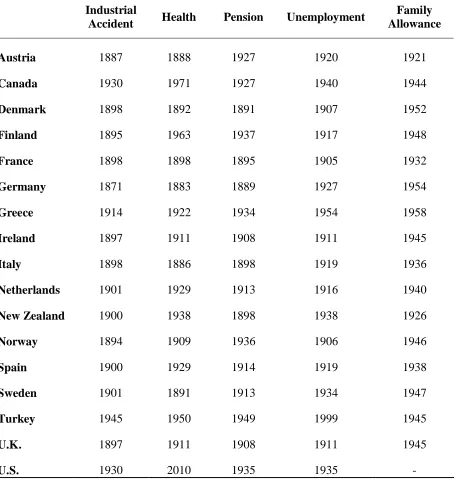
Table 1.1 Introduction of Major Social Policy Programs in Some OECD
Countries 8
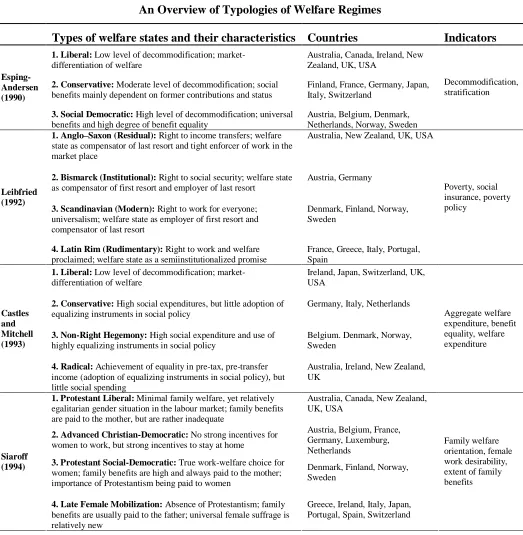
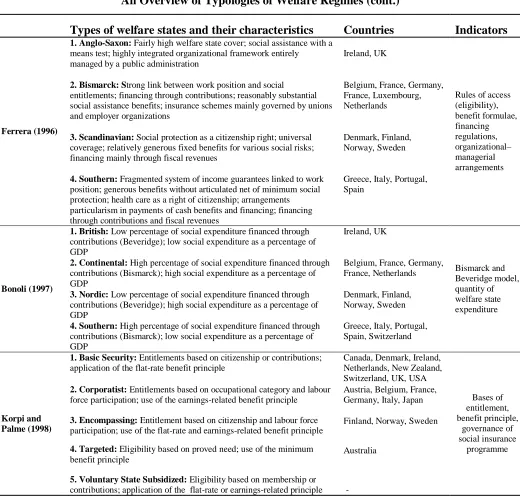
Table 1.2 An Overview of Typologies of Welfare Regimes 17
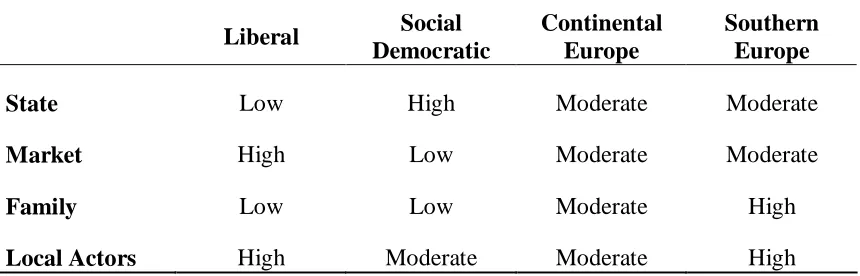
Table 1.3 Relative Priority of Actors in Welfare Distribution 18
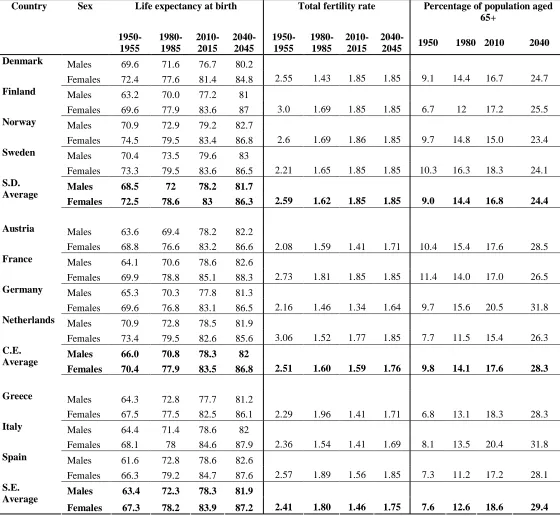
Table 3.1 Life Expectancy, Total Fertility, and Proportions Aged 65+
By Sex in Selected OECD Countries Representative 41
Table 3.2 Labour Force Participation Rates (in Percent) at Ages 55–64
by Sex in Selected OECD Countries Representative of Four
Welfare Regimes, 1970–2005 44
Table 3.3 Characteristics of Pension Reforms within Four Welfare Regimes:
Relative Priority of Components of Social Risk Management and
Pension Reform Agenda 48
Table 3.4 Total Public Expenditure and Public Pension Expenditure as a Percent
of GDP, Net Replacement Rates, and Average Effective Age of
Retirement in Selected OECD Countries Representative of Four
Welfare Regimes 53
Table 4.1 Unpaid Work by Gender across OECD over the period
1998-2009, in minutes per day 76
Table 4.2 Urban Labour Force Participation by Age and Gender, Turkey,
1990-2010 79
Table 4.3 Distribution of Women by Various Economic Sectors, Turkey,
1990-2010 80
Table 4.4 Development of Private Pension Schemes, Turkey,
xiv
Table 4.5 Percentage of the Insured People in the Whole Population,
Turkey, 1950-2010 99
Table 4.6 Insured People in Three Social Security Institutions, Turkey,
1970-2005 104
Table 4.7 Unemployment Rates by Age and Sex, Turkey,
1990-2010 106
Table 4.8 Budgetary Transfers to Social Security Institutions, Turkey,
1998-2010 108
Table 4.9 Public Pension Expenditures in OECD countries,
1990-2007 112
Table 4.10 Percentage of Labour Force (employed and unemployed) in Social
xv
LIST OF FIGURES
Figure 4.1 Source of pension income for people aged 65+
in Turkey, in 2005 101
xvi
LIST OF APPENDICES
Box 2.A.1 List of Pension Regime Variables 29
Table 2.A.1 Factor Loadings for Institutional Pension Characteristics 30
Table 2.A.2 Cluster Membership for Women According to Institutional
Pension Characteristics 31
Table 2.A.3 Distances between Final Cluster Centres by Institutional
Pension Characteristics 31
Table 2.A.4 Institutional Variables for Men 32
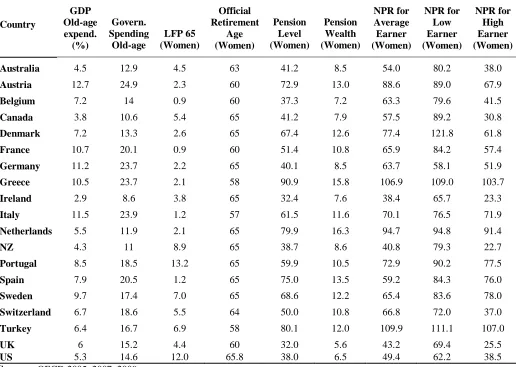
Table 2.A.5 Institutional Variables for Women 33
Table 2.A.6 Outcome Variables for Men 34
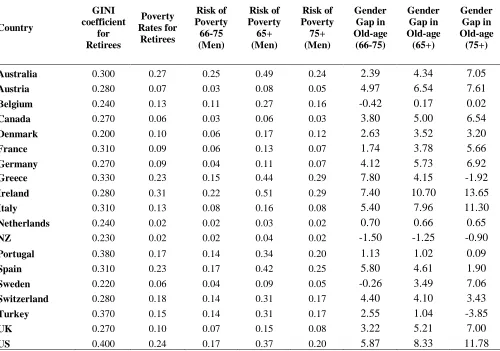
Table 2.A.7 Outcome Variables for Women 35
Box 4.A.1 General Characteristics of the Recent Turkish
Pension System 134
Table 4.A.1 Revenues and Expenditures of Social Security Institutions 136
Figure 4.A.1 Summary of Responses to Questions on “Child Needs
a Home with Father and Mother” 137
Figure 4.A.2 Summary of Responses to Questions on “Marriage
xvii
LIST OF ABBREVIATIONS
Bağ-Kur The Social Security Institution of Craftsmen Tradesmen and Other
Self-Employed People
ES Retirement Fund
EU European Union
GDP Gross Domestic Product
IMF International Monetary Fund
NGOs Non-governmental organizations
OECD Organization for Economic Co-operation and Development
PAYG Pay-as-you-go
SOP State Planning Organization
SSK Social Insurance Institution
TURKSTAT Turkish Statistic Institute
TUSEV Third Sector Foundation of Turkey
TUSIAD The Turkish Industry and Business Association
UN United Nations
US United States
1
CHAPTER 1
INTRODUCTION
Our world, particularly the industrialized countries, has faced various social and
economic challenges in the beginning of the 21st century. One of the most significant
challenges that afflicts state budgets and increases financial concerns, is the increasing
number of elderly in industrialized countries. The considerable declines in mortality and
fertility have given rise to a gradual increase in the ratio of older to younger people in the
population. The decline in fertility brought “ageing at the bottom,” with smaller numbers
of young people (Caldwell and Schindlmayr 2003; McDonald 2006), while the mortality
improvements at older ages have contributed to “ageing at the top” (Legare 2001;
Beaujot and Kerr 2004; Bongaarts 2006). According to the United Nations population
projections (2011), the world’s population 65 and older is projected to almost triple by
the second half of the 21st century, from about 524 million in 2010 to 1.51 billion in 2050
in the medium variant. The population under 15, however, is expected to increase by only
3 percent during the same period, from 1.85 billion to 1.91 billion.
Demographic ageing is partly a product of both success and failure of the
welfare state. It is a success of the welfare state because important improvements in
healthcare and state involvement in social services led to sharp falls first in the infant
mortality and then in old-age mortality. Over the 19th and 20th centuries, life expectancy
2 mortality rates and increase in the life expectancy at birth resulted in demographic ageing
at the top. It was partly a failure of the welfare state because some states such as Italy and
Greece were not able to provide social and economic resources that help couples to attain
their intended number of children. In addition to cultural changes (Lesthaeghe 1995) and
increase in women’s education levels (McDonald 2006), social policies also affect
fertility rates (see for example, Del Boca and Wetzels 2008). The significant gap between
intended and achieved fertility rates might be evidence for a lack of adequate state
support in childcare (Beaujot and Wang 2010).
The continuing change in the demographic structure of the world’s population
poses significant challenges to societies, economies, and families, in terms of meeting the
needs of the various sectors of the population. In addition to demographic challenges,
economic fluctuations brought new risks to societies through their effects on
unemployment rates and pay-as-you-go (PAYG) pension systems. In this circumstance,
the welfare state and the distribution of welfare in a society have become significant
discussion topics in academic and policy circles.
It seems to me, there are two main research topics to understand social and
demographic trends in welfare of societies. The first topic is demographic ageing and its
challenges to social welfare. The second research topic is the distribution of welfare in
ageing societies. This thesis mainly focuses on welfare distribution in ageing populations
3 1.1. Study Objectives and Research Questions
The main purpose of this thesis is to make a contribution to the welfare state literature
focusing on ageing and pension policies. This thesis first seeks to examine the
distribution of welfare with special emphasis on the elderly. Second, it aims to examine
the question of path dependency of pension policy characteristics, using quantitative
OECD data (Chapter 2), analysing conceptual foundation of previous research (Chapter
3), and examining Turkish pension reforms as a case study (Chapter 4). By comparing
various OECD countries, their differential pension characteristics can be placed in a
typology that helps to understand similarities and differences. Third, this thesis discusses
the outcomes of welfare distribution and pension policies especially by reference to
gender and generations. Turkey, which has a social security deficit despite its young
population, was chosen to understand particular pension characteristics in welfare
distribution. This study shows that pension variations across OECD countries support a
four-fold welfare regime typology. Welfare regimes largely follow their institutional
paths in their pension policies despite the convergence that might be expected from
similar demographic and economic challenges.
In light of these objectives, this thesis seeks to answer the following research
questions. How is welfare distributed in a society? What are the main pillars in the
production of welfare? What are the variations among different welfare states? While
there are some demographic similarities in ageing populations across countries, are they
following similar pension policy paths? As some claim, are all of the different welfare
regimes becoming liberal due to neo-liberal globalization or is there some
4 welfare regimes need reconstruction with new clusters? What are the similarities and
differences in terms of pension policies among these countries? How do pension
inequalities, especially with regard to gender and generation, vary across welfare
regimes?
1.2. Research Method and Data
The methodology to be used in analyzing the welfare of the old in the various regimes
depends on quantitative secondary data and previous studies on welfare states and
pension policies. Since this is a cross-national comparative research, I will use mostly
comparative data on pension policies, labour market, and demographic indicators from
the Organization for Economic Co-operation and Development (henceforth OECD) and
the Turkish Statistic Institute (henceforth TURKSTAT).
The OECD data are used to create selected variables and to perform cluster
analyses in the second chapter. Considerable institutional differences among countries
make it difficult to obtain accurate and comparable data on pension policies. However,
the availability of cross-national OECD data on pension policies and labour markets
make it possible to compare pension policies in different welfare regimes (Castles 2008).
In particular, the three volumes of Pensions at a Glance (OECD 2005, 2007, 2009) have
been used to obtain the data for this research. Details of data, variables, and methodology
will be discussed in the methodology section of the second chapter.
Since the third chapter focuses on theoretical and conceptual discussions
regarding the welfare state, the family, ageing, and pension policies, descriptive statistics
5 market characteristics are invoked. In addition to evaluating the analyses of other
researchers, my research objectives will be realized through studying the cross-national
pension reforms and the associated OECD reports, and analyzing the way in which the
costs and benefits of the pension systems have been distributed across population groups.
The fourth chapter is a case study on the welfare of the old in Turkey. OECD and
TURKSTAT data will be used to understand the transformation of the Turkish welfare
regime, family structure and pension policies. Pension reform drafts, strategic plans for
various state departments, such as Social Security Institution and State Planning
Organization will also be invoked in order to understand the rationale behind pension
reforms.
1.3. Background, Concepts, and Literature Review
1.3.1. Definitions: Welfare, Welfare State, Social Policy
In order to understand the dynamics that affect the distribution of welfare and social
policy variations among countries, the term welfare should first be examined. Welfare is
defined as the condition of being or doing well. In other words, it is the well-being of
individuals’ health, happiness, safety, and prosperity (for discussions, see Spicker 2000).
The concept “welfare” is used when some action is necessary in order to enhance
reasonable and adequate life for individuals (Marshall 1998: 701). Therefore, the term
welfare not only includes a minimum level of income, but also education, housing,
employment, and healthcare. Welfare can be distributed by different actors, such as
families, religious organizations, voluntary organizations, and governments. Since
6 of welfare is mostly employed in the public policy arena. Therefore, the bulk of welfare
research focuses on the state and state provisions.
There is no commonly agreed understanding of the welfare state. According to
Pierson (2007), in a narrow sense, the welfare state refers to state provisions to meet the
welfare needs of society through social services and income transfers. In a broader sense,
the welfare state is a society in which the state is involved in the process of redistribution
(Pierson 2007). The term social policy is another significant concept, when the welfare
state and its provisions are considered. Social policies often refer to government
programs which aim to achieve social harmony among social groups. Marshall (1964),
one of the prominent figures in the welfare state literature, explains social policy with
regard to state actions having a direct effect on the welfare of people through social
services and income benefits. Beland (2010: 28) emphasizes five chief social policy areas
achieved by the welfare state: i) work, and unemployment, ii) pensions, iii) health care,
iv) housing, and v) family benefits.
1.3.2. History of the Welfare State
According to some researchers, the roots of the welfare state may be traced back to the
early 19th century. For Pierson (2007: 106), “welfare states tended to emerge in societies
in which capitalism and the nation state were both already well established and these
pre-existing economic and state formations have themselves prescribed the limits of
subsequent welfare state development”. Rosanvallon (2004: 20-21), however, criticizes
researchers who consider the welfare state as peculiar to the 19th and 20th centuries and
7 go back to the emergence of nation states in Europe. Contrary to Rosanvallon (2004), a
significant number of researchers agree on the emergence of the welfare state after the
Second World War (Pierson 2007: 105). However, it is more accurate to assume the
emergence of the modern welfare state in the late 19th century. In order to solve mainly
the problems of employees and to regulate labour markets, an organized system of state
welfare provision was first introduced by Bismarck in Germany. The introduction of
industrial accident provisions in 1871 in Germany was the first social service,
demonstrating the state’s role in the management of social risks. Health services in 1883
and pension system in 1889 followed the provisions for industrial accidents. In addition
to these social services, unemployment compensation and family allowances were
8 Table 1.1.
Introduction of Major Social Policy Programs in Some OECD Countries
Industrial
Accident Health Pension Unemployment
Family Allowance
Austria 1887 1888 1927 1920 1921
Canada 1930 1971 1927 1940 1944
Denmark 1898 1892 1891 1907 1952
Finland 1895 1963 1937 1917 1948
France 1898 1898 1895 1905 1932
Germany 1871 1883 1889 1927 1954
Greece 1914 1922 1934 1954 1958
Ireland 1897 1911 1908 1911 1945
Italy 1898 1886 1898 1919 1936
Netherlands 1901 1929 1913 1916 1940
New Zealand 1900 1938 1898 1938 1926
Norway 1894 1909 1936 1906 1946
Spain 1900 1929 1914 1919 1938
Sweden 1901 1891 1913 1934 1947
Turkey 1945 1950 1949 1999 1945
U.K. 1897 1911 1908 1911 1945
U.S. 1930 2010 1935 1935 -
Sources: Pierson 2007: 110; US Social Security Administration, 2010,
9 Historically, the management of social risks does not have to be related to unemployment
or old-age risk as we understand them in modern times. Providing life security for people
or forming general rules and laws could be important duties of a state seeking the
management of social risks. However, as Esping-Andersen (1999: 33) states, “until the
20th century, most risks were not considered social, that is, a matter of state”. In the 20th
century, we witnessed noteworthy improvements in dealing with social risks, such as
social services and health care over the life-course. However, new social risks, which
were not considered social risks before, were emerging, such as old-age and
environmental problems. As Peloquin (et al. 2011: 1) asserted, “the pattern of risk and
risk perceptions is not constant” and our perception of social risks change over time. For
example, while insecurity and famine were the most important social risks for many
centuries, the main social risks for industrialized countries in the 21st century may be
poor health, unemployment, disability, and old-age.
In the second half of the 20th century, due to the state’s ability to manage social
risks through its institutions and resources, the modern state became an important player.
While the modern welfare state emerged in the late 19th century in Germany, it became
institutionalized after the Second World War with Keynesian economic policies and
Beveridge’s full employment and social security targets.
While the rationale behind the emergence of the modern welfare state is different
according to various ideologies (for different ideologies and explanations see Mullard
and Spicker 1998; Pierson 2007) the state emerged as an active player in welfare
distribution in the mid 20th century. It could be argued that the state’s significant
10 in post-war societies. The state’s noteworthy role continued, even increased, in an
economic and social atmosphere based on high economic growth and mass employment
in the second half of the 20th century. Hence, the modern state took substantial
responsibility for addressing social risks. It sought to cope with social problems and risks
that were previously managed by families. The increasing role of the state in the
production of welfare meant that families played a lesser role in the distribution of
welfare. However, in history, the family and local actors were the main players in welfare
distribution, with production and redistribution based in the household.
At the end of the 20th century, however, according to Pierson (2007) the welfare
state was challenged by three main factors—globalization, demographic changes, and
new social risks. For many researchers, socio-economic challenges and financial
problems often led to claims of a “crisis” of the welfare state as a result of financial
problems (O’Connor 1973), growing social expenditures (OECD 1981), contradictions of
the welfare state (Offe 1984), and globalization (Mishra 1999).
According to Ferrera and Rhodes (2000), the erosion of the ideological consensus
and economic crises have led to recasting of the European welfare states. Economic
globalization has generated a debate on neo-liberal convergence as states are increasingly
cutting their social expenditures and people are increasingly relying on the market for
social services. Moreno and Palier (2004) argued that the Continental and Southern
European welfare states have transformed into semi-sovereign political structures with
neo-liberal ideas. Privatization of the social services and individualization of social risks
are main markers of the neo-liberalization process. The convergence approach asserts that
11 a process of neo-liberal convergence of welfare states in Europe. Hence, the extent to
which welfare regimes are stable and path dependent is under debate due to mainly
neo-liberalization process in various welfare regimes.
According to institutionalist perspective, however, the transformation of welfare
states is largely a product of earlier institutionalized features; and changes are constrained
by existing institutional arrangements (Myles and Pierson 2001). The path dependency
approach was used to highlight the effects of economic and political institutions on
political changes in history. Institutional thinkers argue that political institutions
constructed earlier in history have significant impacts on policy making process at later
points in time (Jochem 2007). While the economics literature on path dependency played
an important role in Pierson’s (2001) and Mahoney’s (2000) works, other institutionalists
(for example, Thelen 2004) focus on new mechanisms of institutional change such as
including layering and conversion, in path dependency discussions (Boas 2007: 34).
However, most of them agree with the idea that the transformation of welfare regimes is
largely a product of earlier institutionalized features; and changes are constrained by
existing institutional arrangements (Mahoney 2000; Myles and Pierson 2001; Thelen
2004).
Contrary to other researchers, who assert there is a radical change in the welfare
state, Esping-Andersen (1996) claims that since the welfare state institutionalized over a
long period of time, it is resistant to change. For example, due to the extensive pension
programs in industrialized countries, radical pension reforms face considerable social and
political resistances (Myles and Pierson 2001; Myles 2002). Hence, as Esping-Andersen
12 It could be argued that in contrast to the “golden age” of the welfare state in the
1960s, which was based on high economic growth, full employment, and stable social
institutions, it is more difficult for the state to cope with new challenges such as
globalization, demographic changes, and new social risks in the 21st century.
Consequently, one outcome is for the welfare state to further collaborate with other
welfare actors—the market, the family, and local actors—in the distribution of welfare.
Therefore, rather than a “welfare state crisis” or “welfare state retrenchment”, the new era
could be defined as a restructuration of the function of welfare distribution among
welfare actors—the market, the family, and local actors. This restructuration process
necessitates the detailed consideration of other welfare actors.
1.3.3. Welfare Regime
The focus on public expenditures is insufficient to understand the welfare distribution in
contemporary societies (Esping-Andersen 1990: 2-3). Contrary to the concept of the
“welfare state”, which is narrowly associated with public expenditures, the term “welfare
regime” focuses on not only public expenditures, but also the market, the family, and
local actors in welfare distribution. In the welfare regime approach, societies are grouped
not only in terms of how their social policies are constructed through welfare actors, but
also in terms of how different welfare regimes influence social institutions, such as the
family and local actors (Esping-Andersen 1990).
The welfare regime conceptualization is an effort to classify different welfare
groups through analyses based on political economy and cross-national comparison.
13 pattern of state social policies and programmes, usually distinguishing social assistance,
social insurance and universal citizenship modes of distributing benefits in cash and in
kind; (ii) the wider pattern of welfare provisioning in society, usually in terms of the
division of responsibility between the state, the market, and the household.” The first
feature of welfare regimes resembles the definition of the welfare state concept, while the
second feature has a broader meaning which emphasizes the role of other welfare actors
in welfare distribution. Hence, focusing on societies and social actors helps us better
understand the welfare mix of societies and allows for a broader cross-national
comparative analysis. In addition, the welfare regime approach could assist us in
understanding state-society relations throughout history as well as contemporary
developments in social policy literature. Using the concept of the welfare regime denotes
the fact that state, economy, and society are systematically intertwined in welfare
distribution. Hence, this thesis aims to achieve a broader comparative study which takes
into consideration about 20 OECD countries with special emphasis on the welfare of the
old in welfare regimes.
Esping-Andersen (1999) asserts that there are three actors—namely, the state, the
market and the family—in the management of social risks. In order to widen the welfare
state literature, Esping-Andersen (1990) first used the term “welfare state regime” or
“welfare regime” and he considered other welfare actors in his analyses. However,
similar to most welfare state researchers, he generally focuses on state policies rather than
on the social characteristics of welfare regimes. Contrary to many welfare state studies,
this thesis emphasizes the role of four main welfare actors—the family, the market, the
14 importance of local actors as a fourth pillar in welfare distribution. It seems to me that
local actors play important roles in meeting the welfare needs of individuals through
non-governmental organizations (NGOs), non-profit organizations, religious institutions,
neighbourhood or kin groups. For example, while there is an emphasis on churches,
charities, and private agencies for the welfare of the individual in the U.S.,
neighbourhood and kin groups play considerable roles together with families in welfare
distribution in Turkey. However, there are few studies examining the influence of local
actors in welfare distribution (Aspalter 2002).
1.3.4. Classifying Welfare Regimes
Welfare state researchers have mostly preferred to focus on class and political institutions
in social policy discussions (Marshall 1964; O’Connor 1973; Offe 1984). Despite the
importance of these dynamics in the welfare state discussions, there are other dynamics
such as families, local actors, and gender that have noteworthy impacts on welfare
distribution. For example, while earning and caring roles in families may be heavily
influenced by the characteristics of the welfare state, the characteristics of families may
also influence social and economic policies of the welfare state. These variations along
different welfare regimes show the importance of groupings of welfare regimes.
As illustrated in Table 1.2, the classification of welfare states occupies much
research attention (Esping-Andersen 1990; Leibfried 1992; Castles and Mitchell 1993;
Ferrera 1996; Bonoli 1997; Korpi and Palme 1998; Trifiletti 1999). Titmuss (1974) is
among the first researchers who classified welfare states by using a three-fold typology—
15 institutional redistributive model. Subsequently, Esping-Andersen (1990, 1999) is the one
who has extensively influenced welfare state discussions through using a comparative
approach in welfare regime clustering. It is difficult to find a study comparing welfare
states or social policies in different countries that does not refer to his study, entitled The
Three Worlds of Welfare Capitalism (Arts and Gelissen 2002). In this book,
Esping-Andersen (1990) constructed today’s best-known three-fold typology of welfare states—
the Social Democratic, the Liberal, and the Corporatist—based on 18 OECD countries in
the 1980s.
According to Esping-Andersen (1990: 2-3), traditional analyses of the welfare
state centering on public expenditures are inadequate, and his conceptualization which
emphasizes de-commodification, social stratification, and employment, offers an
alternative and broader approach to welfare state literature. The concept of
de-commodification refers to interference of the state with the economy so that a person can
maintain his or her life without dependence on the market (Esping-Andersen 1990:
21-22). Social stratification demonstrates that the welfare state not only attempts to mitigate
social inequalities, but also recreates a system of stratification (Esping-Andersen 1990:
23). This stratification is an active force in the ordering of social relations and the welfare
system
Despite Esping-Andersen’s significant influence on comparative social policy
analysis, there have been significant critiques of his methodology (Powell and Barrientos
2004) and three-fold typology (Leibfried 1992; Castles and Mitchell 1993; Ferrera 1996;
Korpi and Palme 1998; Scruggs and Allan 2006). Even though some of these studies
16 classification in terms of pension policies in the 2000s. Hence, one of the purposes of this
thesis is to make a contribution to the further development and operationalisation of
Esping-Andersen’s welfare regime by using OECD data on pension and social
expenditure.
The study of pension reforms in the light of welfare regime typology is helpful in
understanding the diversity of experiences among different societies and the historical
embeddedness of existing welfare groups. This approach helps to clarify whether
different welfare states are really being dismantled and whether the liberal group has
become dominant in the last decades. It is important to scrutinize both the political
process and the policy profile of pension reforms in studying the characteristics of
pension systems and their change (Jochem 2007).
A welfare regime typology based on “ideal types”, is useful for mapping the field
of social policy (Beland 2010: 40) and has some explanatory value for comparative
political sociology. Contrary to Esping-Andersen’s “ideal world” of welfare states, there
are additional variations among welfare states, and the “real world’” of welfare states is
likely to show more complex and hybrid forms (Arts and Gelissen 2002: 139). Having
this in mind, in this thesis I will use a four-fold typology of welfare regime—the Social
Democratic, the Liberal, the Continental European and the Southern European. It seems
appropriate to classify the South European countries as a separate cluster due to the
strong role of the family and moderate role of the state in welfare distribution. In this
thesis, in addition to Italy, Greece, Spain, and Portugal, Turkey is classified within the
Southern European welfare regime. Turkey has revealed significant similarities with
17 of social assistance, and patronage. Different welfare regimes and variations within
groups will be elaborated in the next chapters.
Table 1.2.
An Overview of Typologies of Welfare Regimes
Types of welfare states and their characteristics Countries Indicators
1. Liberal: Low level of decommodification; market-differentiation of welfare
Australia, Canada, Ireland, New Zealand, UK, USA
2. Conservative: Moderate level of decommodification; social benefits mainly dependent on former contributions and status
Finland, France, Germany, Japan, Italy, Switzerland
Esping-Andersen (1990)
3. Social Democratic: High level of decommodification; universal benefits and high degree of benefit equality
Austria, Belgium, Denmark, Netherlands, Norway, Sweden
Decommodification, stratification
1. Anglo–Saxon (Residual): Right to income transfers; welfare state as compensator of last resort and tight enforcer of work in the market place
Australia, New Zealand, UK, USA
2. Bismarck (Institutional): Right to social security; welfare state as compensator of first resort and employer of last resort
Austria, Germany
3. Scandinavian (Modern): Right to work for everyone; universalism; welfare state as employer of first resort and compensator of last resort
Denmark, Finland, Norway, Sweden
Leibfried (1992)
4. Latin Rim (Rudimentary): Right to work and welfare proclaimed; welfare state as a semiinstitutionalized promise
France, Greece, Italy, Portugal, Spain
Poverty, social insurance, poverty policy
1. Liberal: Low level of decommodification; market-differentiation of welfare
Ireland, Japan, Switzerland, UK, USA
2. Conservative: High social expenditures, but little adoption of equalizing instruments in social policy
Germany, Italy, Netherlands
3. Non-Right Hegemony: High social expenditure and use of highly equalizing instruments in social policy
Belgium. Denmark, Norway, Sweden
Castles and Mitchell (1993)
4. Radical: Achievement of equality in pre-tax, pre-transfer income (adoption of equalizing instruments in social policy), but little social spending
Australia, Ireland, New Zealand, UK
Aggregate welfare expenditure, benefit equality, welfare expenditure
1. Protestant Liberal: Minimal family welfare, yet relatively egalitarian gender situation in the labour market; family benefits are paid to the mother, but are rather inadequate
Australia, Canada, New Zealand, UK, USA
2. Advanced Christian-Democratic: No strong incentives for women to work, but strong incentives to stay at home
Austria, Belgium, France, Germany, Luxemburg, Netherlands
3. Protestant Social-Democratic: True work-welfare choice for women; family benefits are high and always paid to the mother; importance of Protestantism being paid to women
Denmark, Finland, Norway, Sweden
Siaroff (1994)
4. Late Female Mobilization: Absence of Protestantism; family benefits are usually paid to the father; universal female suffrage is relatively new
Greece, Ireland, Italy, Japan, Portugal, Spain, Switzerland
18 Table 1.2.
An Overview of Typologies of Welfare Regimes (cont.)
Types of welfare states and their characteristics Countries Indicators
1. Anglo-Saxon: Fairly high welfare state cover; social assistance with a means test; highly integrated organizational framework entirely managed by a public administration
Ireland, UK
2. Bismarck: Strong link between work position and social entitlements; financing through contributions; reasonably substantial social assistance benefits; insurance schemes mainly governed by unions and employer organizations
Belgium, France, Germany, France, Luxembourg, Netherlands
3. Scandinavian: Social protection as a citizenship right; universal coverage; relatively generous fixed benefits for various social risks; financing mainly through fiscal revenues
Denmark, Finland, Norway, Sweden
Ferrera (1996)
4. Southern: Fragmented system of income guarantees linked to work position; generous benefits without articulated net of minimum social protection; health care as a right of citizenship; arrangements particularism in payments of cash benefits and financing; financing through contributions and fiscal revenues
Greece, Italy, Portugal, Spain
Rules of access (eligibility), benefit formulae, financing regulations, organizational– managerial arrangements
1. British: Low percentage of social expenditure financed through contributions (Beveridge); low social expenditure as a percentage of GDP
Ireland, UK
2. Continental: High percentage of social expenditure financed through contributions (Bismarck); high social expenditure as a percentage of GDP
Belgium, France, Germany, France, Netherlands
3. Nordic: Low percentage of social expenditure financed through contributions (Beveridge); high social expenditure as a percentage of GDP
Denmark, Finland, Norway, Sweden
Bonoli (1997)
4. Southern: High percentage of social expenditure financed through contributions (Bismarck); low social expenditure as a percentage of GDP
Greece, Italy, Portugal, Spain, Switzerland Bismarck and Beveridge model, quantity of welfare state expenditure
1. Basic Security: Entitlements based on citizenship or contributions; application of the flat-rate benefit principle
Canada, Denmark, Ireland, Netherlands, New Zealand, Switzerland, UK, USA
2. Corporatist: Entitlements based on occupational category and labour force participation; use of the earnings-related benefit principle
Austria, Belgium, France, Germany, Italy, Japan
3. Encompassing: Entitlement based on citizenship and labour force participation; use of the flat-rate and earnings-related benefit principle
Finland, Norway, Sweden
4. Targeted: Eligibility based on proved need; use of the minimum benefit principle
Australia
Korpi and Palme (1998)
5. Voluntary State Subsidized: Eligibility based on membership or contributions; application of the flat-rate or earnings-related principle -
Bases of entitlement, benefit principle, governance of social insurance programme
Source: Arts and Gelissen 2002: 143-144; 149-150.
Following the four-fold typology, Table 1.3 presents the priority of the welfare actors in
19 the market in welfare distribution, with lower responsibility on the part of the state and
the family. In this regime there are modest universal transfers, modest social insurance
plans, and a focus on means-tested assistance. The chief role of the state is to restore the
self-sufficiency of the individual and the family, and to deter dependency on the state. In
the Social Democratic welfare regime, the state plays the key role rather than the market,
the family and the local actors in meeting the social needs of citizens. This regime
promotes a high standard of social equality where all people are incorporated under one
universal system. The Continental European countries reflect a strongly conservative and
corporatist tradition. The main characteristics of this regime are the emphasis on the
preservation of status differentials, and the institutionalization of rights attached to class
and status rather than citizenship. The Continental welfare regime is, hence, criticized as
being paternalistic, hierarchical, and gender biased. Contrary to the Liberal welfare
regime, the state plays a relatively active role in the welfare distribution. In the Southern
European welfare regime, the family remains the key actor in welfare distribution, while
the state plays a moderate role. Populism and patronage are two indirect welfare
distribution mechanisms used by governments to get voters’ political support in the
elections. In addition to the family, local actors have relatively higher roles in welfare
20 Table 1.3.
Relative Priority of Actors in Welfare Distribution
Liberal
Social Democratic
Continental Europe
Southern Europe
State Low High Moderate Moderate
Market High Low Moderate Moderate
Family Low Low Moderate High
Local Actors High Moderate Moderate High
Source: Author’s judgments as elaborated in the text.
1.4. Thesis Outline
This thesis takes the form of three distinct, though logically interrelated manuscripts
supported by introduction and conclusion chapters. The relevant literature and
methodology of the studies are discussed in each chapter, as are the policy implications.
A general discussion and concluding remarks are presented in the conclusion chapter.
The second chapter, entitled “Pension regimes and inequalities across OECD
countries” will appear in the forthcoming book, entitled Ageing Populations in
Post-Industrial Democracies, published by Routledge Publishing House. This chapter aims to
place pension policy discussions in a welfare regime context. By comparing 19 OECD
countries, this chapter first examines the question of the path dependency of pension
policy characteristics, using OECD data on pension systems. Secondly, it analyzes the
differential pension policies, and places countries into a welfare regime typology that
characterizes the institutional similarities and differences across OECD countries.
Finally, unlike the existing body of knowledge on pension policy typologies, this chapter
21 chapter shows that the institutional characteristics of welfare regimes still matter despite
the convergence that might be expected from economic and demographic changes. In
addition, it is important to consider gender and generations in describing patterns of
pension systems and inequalities within and across welfare regimes. This chapter shows
that compared to other welfare regimes, gender inequalities are less serious in the Social
Democratic welfare regime where there is higher social spending for women and the
young. Generational inequalities are more serious in the Southern European welfare
regime compared to other groups with high youth unemployment (aged 20-24) rates and
old-age expenditures.
The third chapter, entitled “Welfare regimes for ageing populations: No single
path for reform” was published in the December 2009 volume of Population and
Development Review. This chapter examines recent trends in pension policies in OECD
countries in light of both demographic ageing and path dependency associated with the
welfare regime typology—namely the Social Democratic, the Liberal, the Continental
European, and the Southern European regimes. These regime types represent different
responsibilities assumed for social security on the part of the market, the state, and the
family. While there are significant differences in labour market characteristics, the
demographic similarities in ageing bring similar pressures for pension reforms across
OECD countries. These reforms address fiscal issues in state pensions, typically by
increasing the length of the working life, placing more of the pension responsibility on
individuals, or converting to defined-contribution approaches. This chapter shows that
there is no single path for pension reform. While there are some variations, welfare states
22 The fourth chapter entitled “The Welfare of the old: The Turkish welfare regime
and Turkish pension policies,” is a case study on the welfare of the old in Turkey and the
Turkish welfare regime. Welfare regimes of newly industrializing countries and their
responses to challenges of population ageing and pension systems are generally
overlooked in the study of the welfare state literature. The Turkish case, which has not
been very well studied, is an interesting example due to Turkey’s young population but
high old-age expenditures. This chapter highlights the roles of the state, the family, the
market, and local actors in welfare distribution, with particular emphasis on pension
policies. Furthermore, it examines whether a neo-liberal economic process leads the
Turkish welfare regime to adopt the characteristics of the Liberal welfare regime. There
are two main objectives in this chapter. First, it aims to highlight major characteristics of
the Turkish welfare regime and its pension policies. That is, it seeks to examine how the
welfare regime has evolved in view of actors representing the interests of state, market,
family, and local actors. Second, it aims to analyze the ways in which the Turkish welfare
regime and its pension policies are affecting the welfare of the old across gender and
generations. That is, it seeks to scrutinize how the pension system and its transformation
are affecting equity across gender and generations. This chapter shows that despite
important pension reforms seeking to achieve a fair pension system for all groups, the
Turkish pension system has still some inequality problems in terms of generations and
genders. The main problem for generational equality is the lack of well-paid standard
jobs for the young, while the main problem for gender equality is gendered division of
23 1.5. References
Arts, W. and J. Gelissen. 2002. “Three worlds of welfare capitalism or more? A state-of the-art report,” Journal of European Social Policy 12(2): 137—158.
Aspalter, C. (ed.). 2002. Discovering the Welfare State in East Asia. Westport Conn.: Praeger.
Beaujot, R. and D. Kerr. 2004. Population Change in Canada.Second Edition. Toronto: Oxford University Press.
Beaujot, R. and J. Wang. 2010. “Low fertility in Canada: The Nordic model in Quebec and the U.S. model in Alberta,” Canadian Studies in Population 37(3-4): 411— 443.
Beland, D. 2010. What is Social Policy: Understanding the Welfare State. Polity Press.
Boas, T. C. 2007. “Conceptualizing Continuity and Change: The composite-standard model of path dependence,” Journal of Theoretical Politics 19(1): 33—54.
Bongaarts, J. 2006. “How long will we live?” Population and Development Review 32(4): 605—625.
Bonoli, G. 1997. “Classifying welfare states: A two-dimension approach,” Journal of Social Policy 26(3): 351—372.
Caldwell, J. C. and T. Schindlmayr. 2003. “Explanations of the fertility crisis in modern societies: A search for commonalities,” Population Studies 57(3): 241—263.
Castles, F. G. 2008. “What welfare states do: A disaggregated expenditure approach,” Journal of Social Policy 38 (1): 45—62.
Castles, F. G. and D. Mitchell. 1993. Families of Nations: Patterns of Public Policy in Western Democracies. Brookfield VT: Dartmouth.
Del Boca D. and C. Wetzels. 2008. Social Policies, Labour Markets and Motherhood: A Comparative Analysis of European Countries. Cambridge: Cambridge
University Press.
Esping-Andersen, G. 1999. Social Foundations of Postindustrial Economies. New York: Oxford University Press.
________. (ed.). 1996. Welfare States in Transition: National Adaptations in Global Economies, London; Thousand Oaks. Calif.: Sage.
24 Ferrera, M. 1996. “The southern model welfare in Europe,” Journal of European Social
Policy 6(1): 17—37.
Ferrera, M. and M. Rhodes. (eds.). 2000. Recasting European Welfare States. London: Frank Cass.
Gough, I. 2001. “Globalization and regional welfare regimes: The East Asian case.” Global Social Policy 1(2): 166—180.
Jochem, S. 2007. “Pension Reform: Beyond Path dependency?” in J. Clasen, N. A. Siegel (eds.), Investigating Welfare State Change: The Dependent Variable Problem Comparative Analysis. Edward Elgar Publishing, pp. 261—281.
Korpi, W., and J. Palme. 1998. “The paradox of redistribution and strategies of equality: Welfare state institutions, inequality, and poverty in the Western countries,” American Sociological Review 63: 661—87.
Legare, J. 2001. “Ageing and social security program reforms: Canada in international perspective,” Canadian Journal of Policy Research 2(2): 111—119.
Leibfried, S. 1992. “Towards a European welfare state? On integrating poverty regimes into the European community,” in Z. Ferge and J. E. Kolberg (eds.), Social Policy in a Changing Europe. Frankfurt am Main: Campus Verlag.
Lesthaeghe, R. J. 1995. “The Second Demographic Transition in Western Countries: An Interpretation,” in K.O. Mason and A.M. Jensen, (eds.) Gender and Family Change in Industrialized Countries, Oxford: Clarendon.
Mahoney, J. 2000. “Path Dependence in Historical Sociology,” Theory and Society 29(4): 507—548.
Marshall, G. 1998. Oxford Dictionary of Sociology. Oxford University Press.
Marshall, T. H. 1964. Class, Citizenship, and Social Development. New York: Doubleday and Company.
McDonald, P. 2006. “Low fertility and the state: The efficacy of policy,” Population and Development Review 32(3): 485—510.
Mishra, R. 1999. Globalization and the Welfare State. Cheltenham, UK; Northampton, MA: E. Elgar.
Moreno, L. and B. Palier. 2004. “The Europeanization of welfare: Paradigm shifts and social policy reforms,” Paper presented at the ESPAnet Conference, 9th-11th September, 2004, St Anthony’s College, Oxford.
25 Mullard, M. and P. Spicker. 1998. Social Policy in a Changing Society. London:
Routledge.
Myles, J. 2002. “A new social contract for the elderly,” in G. Esping-Andersen (ed.), Why We Need a New Welfare State. Oxford: Oxford University Press: 130—172.
Myles, J. and P. Pierson. 2001. “The comparative political economy of pension reform,” in P. Pierson (ed.), The New Politics of the Welfare State. Oxford: Oxford University Press, pp. 305—333.
O’Connor, J. 1973. The Fiscal Crisis of the State. London: St Martins Press.
Offe, C. 1984. Contradictions of the Welfare State. London: Hutchinson Education.
OECD. 2009. Pensions at a Glance: Retirement-income Systems in OECD Countries. Paris: OECD.
_______. 2007. Pensions at a Glance Public Policies across OECD Countries. Paris: OECD.
_______. 2005. Pensions at a Glance Public Policies across OECD Countries. Paris: OECD.
_______. 1981. Welfare State in Crisis. Paris: OECD.
Peloquin, D., J. Kunz, and N. Gaye. 2011. “The role of communities in the social management of risk: A conceptual framework,” Horizons: Policy Research Initiative. February.
Pierson, C. 2007. Beyond the Welfare State? The New Political Economy of Welfare. The Pennsylvania State University Press.
Pierson, P. (ed.). 2001. The New Politics of the Welfare State. Oxford: Oxford University Press.
Powell, M. and A. Barrientos. 2004. “Welfare regimes and the welfare mix,” European Journal of Political Research 43: 83—105.
Rosanvallon, P. 2004. Refah Devletinin Krizi. Ankara: Dost Publishing House.
Spicker, P. 2000. The Welfare State: A General Theory. Sage Publications.
Scruggs, L. and J. Allan. 2006. “Welfare-state decommodification in 18 OECD countries: A replication and revision,” Journal of European Social Policy 16(1): 55—72.
26 Titmuss, R. M. 1974. Social Policy: An Introduction. London: George Allen and Unwin
LTD.
Trifiletti, R. 1999. “Southern European welfare regimes and the worsening position of women,” Journal of European Social Policy 9(1): 49—64.
United Nations. 2011. World Population Prospects: The 2010 Revision Population Database. <<http://esa.un.org/unpd/wpp/index.htm>>.
27
CHAPTER 2
PENSION REGIMES AND INEQUALITIES ACROSS OECD
COUNTRIES
Chapter 2 has been removed because of copyright restrictions. This chapter will appear in
the forthcoming book by editors Pieter Vanhuysse and Achim Goerres, entitled Ageing
Populations in PostIndustrial Democracies, in 2011 (London: Routledge,
9780415603829).
Publisher link: http://www.routledge.com/books/details/9780415603829/
2.1. Abstract
Socio-economic challenges and the need to reform welfare programs have often led to
claims of a ‘crisis’ of the welfare state as a result of growing new social expenditure
demands (O’Connor 1973; OECD 1981; Mishra 1984; Offe 1984). For other researchers,
the contemporary trends in welfare state development represent retrenchment, and
pension reforms across OECD countries are the key indicators of this development
(Brown 1988; Starke 2006; Meyer 1998; Green-Pedersen 2002; Häusermann 2010).
Contrary to the neo-liberal convergence thesis, however, some studies show that while
the demographic and economic challenges are similar across OECD countries, different
28 their institutional paths (Esping-Andersen 1999, 2002; Pierson 2001; Castles 2004;
Aysan and Beaujot 2009; Busemeyer 2009; Tepe and Vanhuysse 2009).
By comparing 19 OECD countries, this chapter first examines the question of the
path dependency of pension policy characteristics with recent quantitative data. Secondly,
using cluster analysis techniques, it places countries into a typology that characterizes the
institutional similarities and differences across OECD countries. This chapter looks at the
outcomes of pension policies especially by reference to gender and generations. This
study shows that the institutional characteristics of welfare regimes still matter for
inequalities and other outcomes in spite of the convergence that might be expected from
29 2.2. Appendices
Box 2.A.1.
List of Pension Regime Variables
1. Institutional variables
Public expenditure for old
Old-age expenditure in % of GDP, (2003-2005). OECD 2010a, OECD 2010b.
Government spending on old-age, (2003-2005). OECD 2010a, OECD 2010b.
Labour force participation and retirement age
Labour force participation rate for men 65 and over, (2004-2008). OECD 2010a.
Official retirement age for men, (2002 -2007). OECD 2006.
Pension wealth and pension replacement
Weighted average pension level for men, (2005-2009). OECD 2005, OECD 2007, OECD 2009.
Weighted average pension wealth for men, (2005-2009). OECD 2005, OECD 2007, OECD 2009.
Net pension replacement rate for average earner men, (2005-2009). OECD 2005, OECD 2007, OECD 2009.
Net pension replacement rate for low earner men, (2005-2009). OECD 2005, OECD 2007, OECD 2009.
Net pension replacement rate for high earner men, (2005-2009). OECD 2005, OECD 2007, OECD 2009.
2. Outcome variables
Poverty and inequality
Gini coefficient for retirement age population after taxes and transfers (%). OECD 2010a.
Poverty rates for retirement age group, mid-2000s. OECD 2008.
Risk of relative poverty rate of men age (66-75), mid-2000s. OECD 2008.
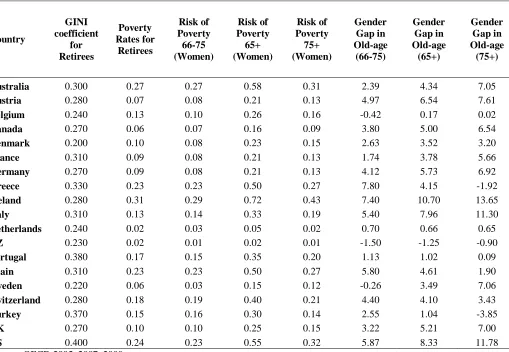
30 Risk of relative poverty rate of men age (above 75), mid-2000s. OECD 2008.
Gender inequality
Gender gap in old-age poverty (66-75), mid-2000s. OECD 2009.
Gender gap in old-age poverty (above 65), mid-2000s. OECD 2009.
Gender gap in old-age poverty (above 75), mid-2000s. OECD 2009.
Table 2.A.1.
Factor Loadings for Institutional Pension Characteristics
Variables Factors
1 2 3
Old-age expenditure in % of GDP 0.883
Government spending on old-age 0.927
Labour force participation rate for men 65+ 0.819
Official retirement age for men 0.704
Pension level for men 0.921
Pension wealth for men 0.862
Net pension replacement rate for average earner men 0.885
Net pension replacement rate for low earner men 0.889
31 Table 2.A.2.
Cluster Membership for Women According to Institutional Pension
Characteristics
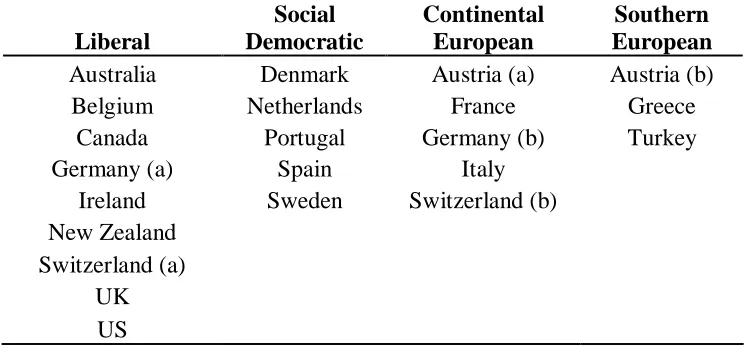
Liberal
Social Democratic
Continental European
Southern European Australia Denmark Austria (a) Austria (b)
Belgium Netherlands France Greece
Canada Portugal Germany (b) Turkey
Germany (a) Spain Italy
Ireland Sweden Switzerland (b) New Zealand
Switzerland (a) UK
US
Notes: a) Hierarchical cluster analysis
b) k-means cluster analysis
This table is comparable with Table 2.1.
Table 2.A.3.
Distances between Final Cluster Centres by Institutional Pension
Characteristics
Cluster Liberal Social
Democratic
Continental European
Southern European
Liberal 3.85 3.36 6.04
Social Democratic 3.85 2.59 3.08
Continental European 3.36 2.59 3.81
Southern European 6.04 3.08 3.81
Note: The final cluster centres reflect the features of the typical country for each cluster. The greater
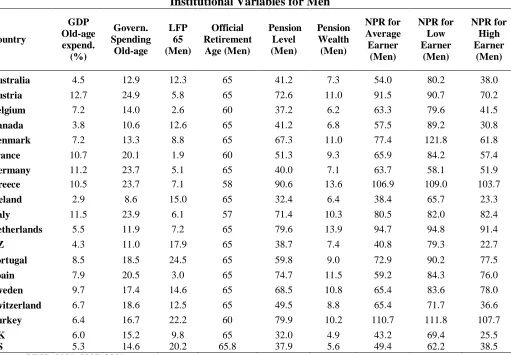
32 Table 2.A.4.
Institutional Variables for Men
Country GDP Old-age expend. (%) Govern. Spending Old-age LFP 65 (Men) Official Retirement Age (Men) Pension Level (Men) Pension Wealth (Men) NPR for Average Earner (Men) NPR for Low Earner (Men) NPR for High Earner (Men)
Australia 4.5 12.9 12.3 65 41.2 7.3 54.0 80.2 38.0
Austria 12.7 24.9 5.8 65 72.6 11.0 91.5 90.7 70.2
Belgium 7.2 14.0 2.6 60 37.2 6.2 63.3 79.6 41.5
Canada 3.8 10.6 12.6 65 41.2 6.8 57.5 89.2 30.8
Denmark 7.2 13.3 8.8 65 67.3 11.0 77.4 121.8 61.8
France 10.7 20.1 1.9 60 51.3 9.3 65.9 84.2 57.4
Germany 11.2 23.7 5.1 65 40.0 7.1 63.7 58.1 51.9
Greece 10.5 23.7 7.1 58 90.6 13.6 106.9 109.0 103.7
Ireland 2.9 8.6 15.0 65 32.4 6.4 38.4 65.7 23.3
Italy 11.5 23.9 6.1 57 71.4 10.3 80.5 82.0 82.4
Netherlands 5.5 11.9 7.2 65 79.6 13.9 94.7 94.8 91.4
NZ 4.3 11.0 17.9 65 38.7 7.4 40.8 79.3 22.7
Portugal 8.5 18.5 24.5 65 59.8 9.0 72.9 90.2 77.5
Spain 7.9 20.5 3.0 65 74.7 11.5 59.2 84.3 76.0
Sweden 9.7 17.4 14.6 65 68.5 10.8 65.4 83.6 78.0
Switzerland 6.7 18.6 12.5 65 49.5 8.8 65.4 71.7 36.6
Turkey 6.4 16.7 22.2 60 79.9 10.2 110.7 111.8 107.7
UK 6.0 15.2 9.8 65 32.0 4.9 43.2 69.4 25.5
US 5.3 14.6 20.2 65.8 37.9 5.6 49.4 62.2 38.5