© 2018 IJSRCSEIT | Volume 3 | Issue 5 | ISSN : 2456-3307
Graph Based Region Merging Algorithm for Image Segmentation
L. Shajiya1, Dr. S. Rajasekaran2
1M.Tech Student, Department of ECE, Madanapalle Institute of Technology and Science, Madanapalle, Andhra
Pradesh, India
2Professor, Department of ECE, Madanapalle Institute of Technology and Science, Madanapalle, Andhra
Pradesh, India
ABSTRACT
This paper addresses the problem of segmentation of a image into small cells. We characterize a predicate for estimating the evidence for a restriction between regions making use of a graph primarily based portrayal of the image. We then build up a efficient segmentation calculation in light of this predicate, and demonstrate that in spite of this algorithm settles on covetous choices it produces divisions That fulfill international homes. We observe the algorithm to picture segmentation utilizing two numerous styles of neighborhood building in constructing the graph, and outline the consequences with both authentic and synthetic pics. The calculation maintains running in time nearly direct inside the quantity of graph edges and is moreover rapid in practice. An important feature for the method is its potential to hold detail in low-fluctuation photo areas at the same time as brushing off factor of interest in excessive-variability regions. In this paper in preference to following the normal approach for co-naming various photos, the department performs on every individual photo. Our proposed paintings relies upon at the video co-division making use of surf indicator. Our exploratory final results turns out to be better whilst contrasted with the other condition of craftsmanship strategies.
Keywords : Image Segmentation, Clustering, Perceptual Organization, Graph Algorithm, Surf Detection
I. INTRODUCTION
The issues of image segmentation and grouping stay remarkable problems for computer vision. Since the season of the Gestalt development in brain science, it has been realized that perceptual grouping assumes an effective part in human visual observation. An extensive variety of computational vision issues could on a basic level make great Usage of segmented images, have been such segmentations dependably and correctly computable. For instance intermediate stage imaginative and prescient troubles, for example, stereo and movement estimation require a proper region of help for correspondence obligations. Spatially non-uniform areas of aid can be recognized by way of the usage of Segmentation techniques.
More elevated issues, as an example, recognition and photo ordering can also make usage of segmentation outcomes in coordinating, to cope with problems, which include, partition and recognition by using components.
1. Capture perceptually imperative groupings or regions, which regularly reflect global parts of the picture.
2. Be highly productive, running in time about straight in the quantity of picture Pixels. To be of practical use, we believe that segmentation techniques should maintain running at speeds like part identification or different low-level visual processing strategies, which means nearly direct time and with low constant factors.
We additionally demonstrate that other versatile criteria, closely identical with the One created right here, result in problems that are computationally tough(NP hard).We currently swing to a straightforward engineered case delineating a part of the non-local image attributes stuck with the aid of our segmentation technique. Consider the image seemed inside the higher left of Figure. A first rate many human beings will country that this picture has three wonderful regions: a rectangular-molded intensity incline in the left 1/2, a steady energy vicinity with a gap on the proper 1/2, and a excessive-inconstancy square district in the consistent locale. This case outlines a few perceptually important homes that we receive ought to be stuck by a segmentation calculation.first, generally changing intensities should not the only one be judged as proof for different regions. Such wide variety in intensity happens both in the ramp on the left and in the high changeability region on the right. Along these lines, it isn't sufficient to accept that regions have almost constant or gradually fluctuating intensities.
The technique that we present in measures the proof for a limit between two areas by looking at two quantities: one in view of intensity contrasts over the boundary, and the other based on power contrasts between neighboring pixels inside every locale. Naturally, the intensity contrasts over the limit of two areas are perceptually essential in the event that they are substantial with respect to the intensity
differences inside no less than one of the regions. We build up a basic algorithm which figures segmentation's utilizing this idea.
II. RELATED WORK
We adopt a chart based strategy to division. On account of picture division, the components in V are pixels and the weight of an edge is some measure of the disparity between the two pixels associated by that edge we consider specific edge sets and weight capacities for picture segmentation. However, the plan here is autonomous of These definitions. In different words, any segmentation is induced by a subset of the rims in E. There are one of a kind processes to calculate the high-quality of segmentation but whilst all is stated we need the components in a element to be similar, and components in diverse segments to be exceptional. This implies edges between vertices in a similar part must have commonly low weights, and edges between vertices in diverse segments need to have higher weights.
Pairwise Region Comparison Predicate
The place examination predicate evaluates if there's verify for a limit among a pair or components by checking if the difference among the segments, Dif (C1;C2), is large relative to the internal difference inside as a minimum one of the components, Int(C1) and Int(C2). A threshold feature is utilized to control how much the difference between segments must be bigger than least inner difference. For example, it is possible to have the segmentation approach prefer elements of precise shapes, with the aid of characterizing which is large for segments that don't some favored form and little for ones that do. This could make the segmentation calculation aggressively merge segments that aren't of the preferred shape. Such a form want can be as frail as who prefer segments that are not long and thin (e.G., utilising a share of location to region) or as sturdy as preferring segments that suit a specific shape model. Note that the after you have end result of this will now not completely be segments of the preferred form, besides for any neighboring parts one in every of them would be of the favored shape.
III. METHODOLOGY
The circulate process of the proposed method is as in line with the subsequent First the Input recall as
The statistics video approach incorporates multiple planning steps. To begin with the banner is digitized with the resource of an easy to-advanced converter to deliver a difficult, computerized data movement. By specific characteristic of composite video, the luminance and chrominance are then remoted;This is not simple for S-video resources. Next, the chrominance is demodulated to deliver shading assessment video records. Presently, the facts may be changed to trade sparkle, comparison, submersion and tone.
k-Means Clustering
K-implies grouping is a way for vector quantization, at the beginning from hail installing place, that is unavoidable for p.C. Exam in records mining. Okay-implies accumulating hopes to area n discernments into k applicationsIn which every belief has a place with the closest mean, filling in as a model of the collection. This results in an allocating of the records area into Voronoi cells. applied and be a part of swiftly to a territory perfect. These are all around just like the need increment remember blends of Gaussian tendencies through strategies for an iterative refinement method used by the 2 calculations. In like way, they each utilize group focuses to demonstrate the information; anyhow, okay-construes accumulating has a tendency to discover social activities of in each manner that clearly topics vague spatial diploma, even as the want expansion instrument permits gatherings to have obvious shapes.
The estimation has a loose relationship to the okay-nearest neighbor classifier a famous device getting to know method for portrayal that is from time to time stirred up for k-Suggests in mild of the okay in the name. One can comply with the 1-nearest neighbor classifier at the bundle facilities have been given through the usage of okay-plans to gather new records into the present packs. This is known as nearest centroid classifier or Rocchio estimation. 1. Instate kind of corporation adequate and recognition.
pixel of a photo the usage of the connection given beneath
3. Appoint every one of the pixels to the closest recognition in view of separation d.
4. After the sum of what pixels had been consigned, recalculate new characteristic of in the use of the affiliation given underneath.
5. Repeat the methodology until the moment that it satisfies the power or screw up esteem.
6. Reshape the p.C. Pixels into image. Despite the reality that ok-indicates has the enormous desired attitude of being definitely no longer difficult to realize, it has a couple of boundaries. The concept of the remaining grouping results is relying upon the subjective assurance of starting centroid. Thus, if the essential centroid is discretionarily picked, it's going to get differing end result for exceptional starting center pastimes. Along those strains, the simple awareness Can be effectively picked with the purpose that we get our want division. What's extra, moreover, computational multifaceted nature is every other time period which we need to don't forget whilst arranging the K-nearest clustering. It relies upon on the quantity of statistics additives, style of agencies and quantity of emphasis.
Video Object Co division
Question based totally co-division as a co-warranty chart in which regions with closer view like traits are favored whilst moreover talking to intra-video and among video area coherence. To manipulate special leading edge part gadgets, we increase the co-selection outline show right into a proposed multi-kingdom guarantee chart demonstrate that updates the divisions of various inquiries typically. The objective of image co-department is to collectively bit a selected inquiry from no less than images, and it's far mentioned that every one image incorporate that dissent. There are further more a couple of co department methodologies that lead the co-department of uproarious photograph accumulations.
Object discovery
Video question disclosure has beginning overdue been extensively taken into consideration, in each unsupervised or weakly controlled settings. A proposed an inactive problem version for unsupervised query disclosure in recordings with the aid Of becoming a member of PLSA with Probabilistic Data Association channel. A factor appear through merging a phrase co-occasion in advance into LDA for beneficial disclosure of topical video devices from a association of key casings. The attracted human tuned in to It's absolutely customized strategy to soak up a category-specific query indicator from sadly clarified true money owed. Tuytelaars contemplated the unsupervised questions disclosure strategies, besides with the consideration on nevertheless images. Then once more, our video dissent exposure is expert with the aid of multiplying top notch pixel stage marks to diagram level via a Spatial-MI Boosting count.
Surf flow field
depend on subordinates of the limit with appreciate to place, and (ii) systems in mild of neighborhood, which depend on finding the adjoining maxima and minima of the restriction. With the later wording used as a piece of the sphere, these discoverers can in like way be suggested as hobby factor directors, or alternatively interest location administrators(see additionally hobby point acknowledgment and corner disclosure).
SURF makes use of rectangular-fashioned channels as a Decide of Gaussian smoothing. (The SIFT technique uses fell channels to apprehend scale-invariant trademark facilities, wherein the refinement of Gaussians is registered on rescaled pictures legitimately.) Filtering the picture with a rectangular is impressively swifter if the vital photograph is used:
( ) ∑ ∑ ( )
SURF uses a blob identifier in context of the Hessian cross phase to discover inspirations driving hobby. The determinant of the Hessian move vicinity is utilized as a measure of near to change across the point and focuses are picked wherein this determinant is maximal. Rather than the Hessian-Laplacian locator via Schmid, SURF moreover makes use of the determinant of the Hessian for selecting the scale, as is in like manner executed through Lundeberg. Given a factor p= (x, y) in a photo I, the Hessian grid H (p, σ) at point p and scale σ, is:
( ) ( ( )
( )
( )
( )
)
Dissent setting apart is the direction towards distributing an automatic imageinto extraordinary sections (units of pixels, generally known as notable-pixels). The goal of division is to beautify and moreover change the depiction of a picture into some thing this is more vital and more sincere to split
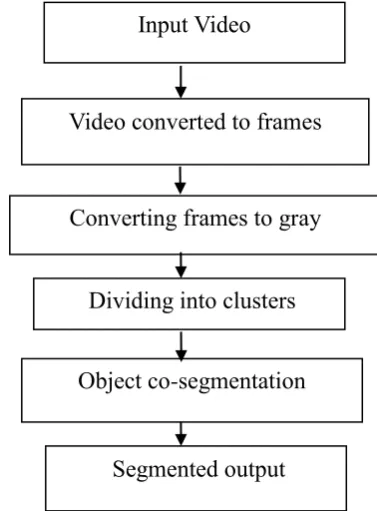
Figure 1: Block Diagram of Proposed Method
Object partitioning Jaccard similarity
The Jaccard record, normally delivered Intersection over Union and the Jaccard closeness coefficient (at the beginning conceived coefficient de comminute with the aid of Paul Jaccard), is an estimation used for differentiating the likeness and organized collection of check units. The Jaccard coefficient measures equivalence between limited instance sets.
IV. RESULTS
Figure 1 : Input Video
Input Video
Video converted to frames
Converting frames to gray
Dividing into clusters
Object co-segmentation
Figure 2 : Lack Joint Information Between The Video,Video segmentation And Video Object
Co-segmentation
Figure 3: Video Object Cosegmentation
Figure 4: Object Discovery
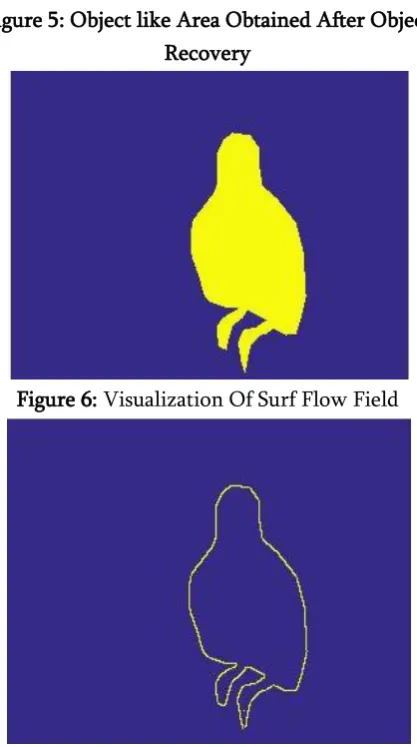
Figure 5: Object like Area Obtained After Object Recovery
Figure 6: Visualization Of Surf Flow Field
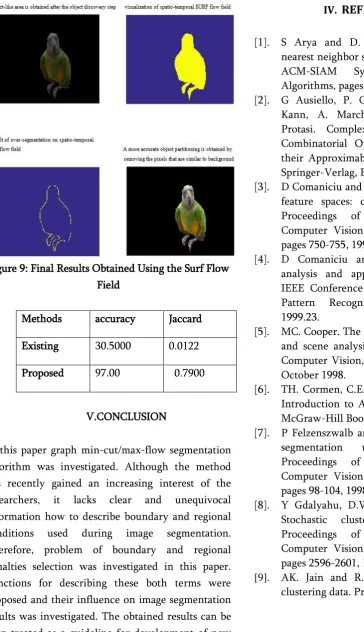
Figure 7: Over Segmentation On Surf Flow Field
Figure 9: Final Results Obtained Using the Surf Flow Field
Methods accuracy Jaccard
Existing 30.5000 0.0122
Proposed 97.00 0.7900
V.CONCLUSION
In this paper graph min-cut/max-flow segmentation algorithm was investigated. Although the method has recently gained an increasing interest of the researchers, it lacks clear and unequivocal information how to describe boundary and regional conditions used during image segmentation. Therefore, problem of boundary and regional penalties selection was investigated in this paper. Functions for describing these both terms were proposed and their influence on image segmentation results was investigated. The obtained results can be then treated as a guideline for development of new boundary and regional constrains for graph min-cut/ max-flow segmentation.
IV.
REFERENCES
[1]. S Arya and D. M. Mount. Approximate nearest neighbor searching. Proc. 4th Annual
ACM-SIAM Symposium on Discrete
Algorithms, pages 271-280, 1993.
[2]. G Ausiello, P. Crescenzi, G. Gambosi, V. Kann, A. Marchetti Spaccamela and M. Protasi. Complexity and Approximation. Combinatorial Optimization Problems and their Approximability Properties, to appear, Springer-Verlag, Berlin.
[3]. D Comaniciu and P. Meer. Robust analysis of feature spaces: color image segmentation. Proceedings of IEEE Conference on Computer Vision and Pattern Recognition, pages 750-755, 1997.
[4]. D Comaniciu and P. Meer. Mean shift analysis and applications. Proceedings of IEEE Conference on Computer Vision and Pattern Recognition, pages 1197-1203, 1999.23.
[5]. MC. Cooper. The tractability of segmentation and scene analysis. International Journal of Computer Vision, vol 30, no 1, pages 27-42, October 1998.
[6]. TH. Cormen, C.E. Leiserson and R.L. Rivest. Introduction to Algorithms. The MIT Press, McGraw-Hill Book Company, 1990.
[7]. P Felzenszwalb and D. Huttenlocher. Image segmentation using local variation. Proceedings of IEEE Conference on Computer Vision and Pattern Recognition, pages 98-104, 1998.
[8]. Y Gdalyahu, D.Weinshall and M.Werman. Stochastic clustering by typical cuts. Proceedings of IEEE Conference on Computer Vision and Pattern Recognition, pages 2596-2601, 1999.