Meson electromagnetic form factors
Stanislav Dubniˇcka1,aand Anna Z. Dubniˇckov´a2,b
1 Institute of Physics, Slovak Academy of Sciences, Bratislava, Slovak Republic 2 Department of Theoretical Physics, Comenius University, Bratislava, Slovak Republic
Abstract. The electromagnetic structure of the pseudoscalar meson nonet is completely described by the sophisticated Unitary&Analytic model, respecting all known theoretical
properties of the corresponding form factors.
1 Introduction
All hadrons are compound of constituent quarks. As a consequence in EM interactions they manifest a non-point-like structure, completely described by scalar functions Fi(t), called electromagnetic (EM) form factors (FFs), where t is squared momentum transferred by the virtual photonγ∗. If Mγ∗→M ⇒
Fi(t) are called elastic FFs. If Mγ∗→A′orγ⇒Fi(t) are called transition FFs.
According to SU(3) classification there are scalar meson, pseudoscalar meson, vector meson and tensor meson [1] multiplets to be bound states of light quarks u,d,s. For a description of their EM structure we use Unitary&Analytic (U&A) model [2], which is a consistent unification of pole and continuum contributions, depends on effective tinthresholds and the coupling constant ratios ( fM MV/fV) as free parameters. In order to determine them numerically one needs a comparison of the U&A model with some experimental data. Therefore, farther our attention is concentrated only to the nonet of pseu-doscalar mesonsπ−,π0,π+, K−, K0, ¯K0, K+,η,η′, for which abundant experimental information exists.
2 First generally
Since pseudoscalar mesons M have spin 0−there is only one FF Fi(t) completely describing their EM
structure, which is defined by the parametrization
<p2|Jµ(0)|p1>=eFM(t)(p1+p2)µ. (1)
of the matrix element of the EM current.
Making use of the transformation Jµ(x) and also the one-particle state vectors<p2|and|p1>with
regard to all three discrete C,P,T transformations simultaneously then FM(t)=−FM¯(t) e.g. Fπ+(t)= −Fπ−(t); FK+(t) =−FK−(t); FK0(t) =−FK¯0(t). From the latter it follows for true neutral pseudoscalar mesons π0, η, η′Fπ0(t)=Fη(t)=Fη′(t)≡0 for all values from the interval−∞<t<+∞.
3
U&A
model of meson EM FFs
There is a general belief that all EM FFs are analytic in t-plane, besides branch points i.e. cuts on the positive real axis.
a e-mail:[email protected]
b e-mail:[email protected] DOI: 10.1051/
C
Owned by the authors, published by EDP Sciences, 2012 epjconf 20123/ 701003
which automatically respects the asymptotic behavior of pseudoscalar meson EM FFs
FM(t)|t|→∞∼t−1 (3)
as predicted by the constituent quark model of hadrons.
Afterwards the V MD model is unitarized by an incorporation of two-cut approximation of the analytic properties of EM FFs with the help of the non-linear transformation
t=t0+
4(tin−t0)
[1/W(t)−W(t)]2, (4)
where t0is the square-root branch point corresponding to the lowest possible threshold, tin is an ef-fective square-root branch point simulating contributions of all higher relevant thresholds given by the unitarity condition and
W(t)=i q
(tin−t0 t0 )
1/2+(t−t0 t0 )
1/2−q(tin−t0 t0 )
1/2−(t−t0 t0 )
1/2
q (tin−t0
t0 )
1/2+(t−t0 t0 )
1/2+q(tin−t0 t0 )
1/2−(t−t0 t0 )
1/2
(5)
is the conformal mapping of the four-sheeted Riemann surface into one W-plane, to be just inverse to the previous non-linear transformation.
As a result every term m2V m2
V−t
in V MD representation is factorized
m2r m2
r −t
=
1−W2 1−W2
N
2
(WN−Wr0)(WN+Wr0)(WN−1/Wr0)(WN+1/Wr0) (W−Wr0)(W+Wr0)(W−1/Wr0)(W+1/Wr0)
into the asymptotic term (1−1−WW22 N
)2completely determining the asymptotic behavior∼t−1of EM FF and
into a resonant term (WN−Wr0)(WN+Wr0)(WN−1/Wr0)(WN+1/Wr0)
(W−Wr0)(W+Wr0)(W−1/Wr0)(W+1/Wr0) , for|t|→ ∞turning out to real constant. The subindex ”0” means that still stable vector-mesons are considered.
Generally, one can prove if m2
r−Γr2/4<tin⇒Wr0=−Wr0∗ and if m
2
r−Γ2r/4>tin⇒Wr0=1/Wr0∗, which together with an introduction of the non-zero width of resonances by a formal substitution m2
r →(mr−iΓr/2)2lead to the U&A model of meson EM structure
FP[W(t)]=
1−W2 1−W2
N
2
×
×
X
i
(WN−Wi)(WN−Wi∗)(WN−1/Wi)(WN−1/Wi∗) (W−Wi)(W−Wi∗)(W−1/Wi)(W−1/Wi∗)
( fiPP/fi)+
+X
j
(WN−Wj)(WN−W∗
j)(WN+Wj)(WN+W
∗
j) (W−Wj)(W−W∗
j)(W+Wj)(W+W
∗
j)
( fjPP/fj)
.
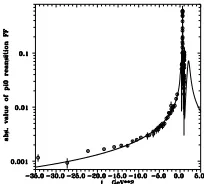
Fig. 1. Analytic properties of charged pions EM FFs and prediction of pion EM FF behavior by U&A model.
4 Now one by one
Charged pionsπ±: The analytic properties of Fπ(t) are presented in Fig.1. In comparison with
expres-sion FP[W(t)] there is additional left-hand cut on the II.Riemann sheet.
The latter is explained by the following way. Starting from the elastic unitarity condition for Fπ(t)
1
2i{Fπ(t+iε)−F ∗
π(t+iε)}=A1∗1 (t+iε).Fπ(t+iε) one can derive the expression for pion EM FF on the II.Riemann sheet [Fπ(t)]II=
Fπ(t) 1+2iA1 1(t)
where A1
1(t) is the P-wave isovectorππ-scattering amplitude, the
analytic properties of which consist of right-hand unitary cut 4m2π <t<∞and of left-hand dynamical cut−∞<t <0. Taking into account the fact that the contribution of any cut in Pad´e approximation can be represented by alternating zeros and poles on the place of the cut then we do it in U&A model of Fπ[W(t)].
From the same elastic unitarity condition andδ1
1(t)q→0 ∼a 1 1q
3one gets the threshold behavior of
ImFπ(t) to be transformed into 3 threshold conditions ImFπ(t)q=0 = dImFdqπ(t)
q=0 =
d2ImF
π(t)
dq q=0 ≡ 0, which reduce a number of ( fvππ/fv) as free parameters.
Taking into account both these notes and also the normalization explicitly one gets the U&A pion EM FF model [3]
Fπ[W(t)]=
1−W2 1−W2
N
2
(W−Wz)(WN−Wp) (WN−Wz)(W−Wp)
×
×
(WN−Wρ)(WN−W∗
ρ)(WN−1/Wρ)(WN−1/Wρ∗) (W−Wρ)(W−W∗
ρ)(W−1/Wρ)(W−1/Wρ∗)
( fρππ/fρ)+
+ X
v=ρ′,ρ′′
(WN−Wv)(WN−W∗
v)(WN+Wv)(WN+Wv∗) (W−Wv)(W−W∗
v)(W+Wv)(W+Wv∗)
( fvππ/fv)
with ( fρ′ππ/fρ′)=
Nρ′′ |Wρ′′ |4
Nρ′ |Wρ′ |4−
Nρ′′ |Wρ′′ |4
− Nρ′′ |Wρ′′ |4+(1+2
Wz.Wp
Wz−Wp.Re[Wρ(1+|Wρ|−2)])Nρ
Nρ′ |Wρ′ |4−
Nρ′′ |Wρ′′ |4
( fρππ/fρ)
and ( fρ′′ππ/fρ′′)=1−
Nρ′′ |Wρ′′ |4
Nρ′ |Wρ′ |4−
Nρ′′ |Wρ′′ |4
+[ Nρ′′ |Wρ′′ |4+(1+2
Wz.Wp
Wz−Wp.Re[Wρ(1+|Wρ|−2)])Nρ
Nρ′ |Wρ′ |4−
Nρ′′ |Wρ′′ |4
−1]( fρππ/fρ).
Due to theρ−ωinterference effect one has to carry out the fit of existing data by| Fπ[W(t)]+
R.eiφ m2ω
m2
ω−t−imωΓω |withφ=arctg
mρΓρ
m2
ρ−m2ω.
FK0(t)], FK+(t)=Fs K(t)+F
v
K(t), F v K(t)=
1
2[FK+(t)−FK0(t)], FK0(t)=FKs(t)−FvK(t) from where the normalizations Fs
K(0) = F v K(0) =
1
2; FK+(0) = 1; FK0(0) = 0; follow. The
specific 6 resonance (ρ, ω, φ, ρ′, φ′, ρ′′) U&A model of the kaon EM structure has the form [4]
FKs[V(t)]=
1−V2
1−V2
N 2 1 2
(VN−Vω)(VN−V∗
ω)(VN−1/Vω)(VN−1/Vω∗) (V−Vω)(V−V∗
ω)(V−1/Vω)(V−1/Vω∗)
+ +
(VN−Vφ)(VN−V∗
φ)(VN−1/Vφ)(VN−1/V
∗
φ) (V−Vφ)(V−V∗
φ)(V−1/Vφ)(V−1/Vφ∗) −
−(VN−Vω)(VN−V
∗
ω)(VN−1/Vω)(VN−1/Vω∗) (V−Vω)(V−V∗
ω)(V−1/Vω)(V−1/Vω∗)
( fφKK/fφ)+ (6)
+
(VN−Vφ′)(VN−V∗
φ′)(VN−1/Vφ′)(VN−1/V∗
φ′)
(V−Vφ′)(V−V∗
φ′)(V−1/Vφ′)(V−1/V∗
φ′)
−
−(VN−Vω)(VN−V
∗
ω)(VN−1/Vω)(VN−1/Vω∗) (V−Vω)(V−V∗
ω)(V−1/Vω)(V−1/Vω∗)
( fφ′KK/fφ′)
FvK[W(t)]=
1−W2 1−W2
N 2 1 2
(WN−Wρ)(WN−Wρ∗)(WN−1/Wρ)(WN−1/Wρ∗)
(W−Wρ)(W−Wρ∗)(W−1/Wρ)(W−1/Wρ∗)
+ +
(WN−Wρ′)(WN−W∗
ρ′)(WN−1/Wρ′)(WN−1/W∗
ρ′)
(W−Wρ′)(W−W∗
ρ′)(W−1/Wρ′)(W−1/W∗
ρ′)
−
−(WN−Wρ)(WN−W
∗
ρ)(WN−1/Wρ)(WN−1/Wρ∗) (W−Wρ)(W−W∗
ρ)(W−1/Wρ)(W−1/Wρ∗)
( fρ′KK/fρ′)+ (7)
+
(WN−Wρ′′)(WN−W∗
ρ′′)(WN−1/Wρ′′)(WN−1/W∗
ρ′′)
(W−Wρ′′)(W−W∗
ρ′′)(W−1/Wρ′′)(W−1/W∗
ρ′′)
−
−(WN−Wρ)(WN−W
∗
ρ)(WN−1/Wρ)(WN−1/Wρ∗) (W−Wρ)(W−W∗
ρ)(W−1/Wρ)(W−1/Wρ∗)
( fρ′′KK/fρ′′)
.
Both functions are analytic in the whole complex t-planes besides two cuts on the positive real axis, generated by t0s = 9m2π and tins in FKs[V(t)] and by tv
0 = 4m 2
π and tvin in F v
K[W(t)]. They are real on the whole real negative axis up to positive values ts
0 =9m 2
π and tv0 =4m 2
π, respectively, automatically normalized to 1/2 with ImFs
K(t),0 and ImF v
K(t) ,0, starting from 9m
2
πand 4m2π, respectively, as it is required by the unitarity conditions. They possess complex conjugate pairs of poles on unphysical sheets of the Riemann surface, corresponding to considered vector-mesons with quantum numbers of the photon.
A simultaneous reproduction of all existing kaon EM FF data by the U&A models is presented in Fig.2 and the following values of free parameters of the model have been determined (mρ,Γρ, mω,Γω are fixed at the TABLE values) qs
in = p
(ts
in−9)/9 =2.2326[mπ]; q v in =
p (tv
Fig. 2. Prediction of of charge and neutral kaon EM FFs behavior by U&A model.
mφ=7.2815[mπ]; mρ′ =10.3940[mπ];Γφ=0.03733[mπ];Γρ′=1.6284[mπ];
( fφKK/fφ)=0.4002; ( fρ′KK/fρ′)=−.3262;
mφ′=11.8700[mπ]; mρ′′ =13.5650[mπ];Γφ′=1.3834[mπ];Γρ′′ =3.3313[mπ];
( fφ′KK/fφ′)=−.04214; ( fρ′′KK/fρ′′)=−.02888 What aboutπ0,η,η′:
They are true neutral particles and then their elastic EM FFs Fπ0(t)=0; Fη(t)=0; Fη′(t)=0 i.e.
these particles are point-like according to EM interactions.
However, one can define nonzero single FF for eachγ∗ → γP transition by a parametrization of
the matrix element of the EM current< P(p) | JE M
µ | 0 >= εµναβpνǫαkβFγP(q2) withǫα to be the
polarization vector ofγ, andεµναβis antisymmetric tensor. The transition FFs are related to corresponding cross sections
σtot(e+e−→Pγ)=πα
2
6 (1−
m2 P t )
3 |F
Pγ(t)|2
giving experimental data on Fπ0γ(t),Fηγ(t) and Fη′γ(t) in t>0 region.
A straightforward calculation of FPγ(t) in QCD is impossible. One has to construct sophisticated phenomenological models.
In a construction of the U&A model it is again suitable to split FPγ(t) into two terms depend-ing on the isotopic character of the photon FPγ(t) = FI=0
Pγ (t)+F I=1
Pγ(t) where F I=0
Pγ (t) is saturated by isoscalar vector-mesonsω, φ, ω′, φ′etc. and FI=1
Pγ (t) is saturated by isovector vector-mesonsρ, ρ
′, ρ′′
etc. However, there is a question how many vector-meson resonances have to be taken into account. It is prescribed by the existing data interval on the corresponding FF in t>0 region.
The data onπ0γtransition FF allow to consider all 3 ground state vector mesons,ρ(770),ω(782),
φ(1020) and alsoω′(1420) andρ′(1450), in order to construct automatically normalized U&A models.
With the aim of obtaining comparable results, the same number of resonances is considered also forηandη′.
In the analysis the resonance parameters are fixed at the TABLE values, the normalization of FFs
are FPγ(0)=αm2
P q
Γ(P→γγ)
πmP whereΓ(P→γγ) are fixed at the world averaged values from TABLE. The FPγ(t) FFs are analytic in t - plane besides the cut from t =m2π0 up to+∞. Then the U&A model of FPγ(t) takes the form [5]
FI=0
Pγ[V(t)]=
1−V2
1−V2 N
2
1
2FPγ(0)H(ω
′)+[L(ω)−H(ω′)]aω+[H(φ)−H(ω′)]aφ}
FI=1
Pγ[W(t)]=
1−W2
1−W2 N
2
{1
2FPγ(0)H(ρ
′)+[L(ρ)−H(ρ′)]a
ρ}
with L(ω)=(VN−Vω)(VN−Vω∗)(VN−1/Vω)(VN−1/Vω∗) (V−Vω)(V−Vω∗)(V−1/Vω)(V−1/Vω∗) ; H(i)=
(VN−Vi)(VN−V∗i)(VN+Vi)(VN+Vi∗)
(V−Vi)(V−V∗
i)(V+Vi)(V+V
∗
i)
; i=φ, ω′
L(ρ)=(WN−Wρ)(WN−W ∗
ρ)(WN−1/Wρ)(WN−1/Wρ∗) (W−Wρ)(W−Wρ∗)(W−1/Wρ)(W−1/Wρ∗) ; H(ρ
′)=(WN−Wρ′)(WN−Wρ∗′)(WN+Wρ′)(WN+Wρ∗′)
(W−Wρ′)(W−W∗
ρ′)(W+Wρ′)(W+W ∗ ρ′)
and the normalization points V(0)=VN, W(0)=WN. The model depends on 5 free parameters ts
in,t v
in,aj = ( fγP j/fj), j = ρ,ω, φdetermined in an optimal description of existing data.
Fig. 3. Prediction ofπ0γtransition EM FF behavior by U&A model.
Fig. 4. Prediction ofηγandη′γtransition EM FFs behavior by U&A model.
qs
in=5.5210±0.0084; q v
in =5.61220±0.1414; aω=0.0063±0.0013; aρ=0.0212±0.0006; aφ=−.0004±0.0001;χ2/nd f =121/75=1.61
forη: see Fig.4 qs
in=6.7104±0.0190; q v
in =5.5006±0.0632; aω=0.0002±0.0014; aρ=0.0250±0.0013; aφ=−.0020±0.0003;χ2/nd f =52/52=1.00
forη′: see Fig.4
qins =5.5366±0.0891; qvin =7.7554±0.0158; aω=−.1134±0.0078; aρ=0.1241±0.0026; aφ=0.0098±0.0091;χ2/nd f =59/50=1.18
5 Conclusions
We have investigated EM structure of pseudoscalar mesons to be described by the corresponding EM FFs. Since there is no possibility to describe the latter in the framework of QCD, the universal U&A models have been elaborated.
More or less successful description of all existing data on the whole complete nonet of pseu-doscalar mesons π−,π0, π+, K−, K0, ¯K0, K+,η,η′ has been achieved in space-like and time-like regions simultaneously.
The support of the Slovak Grant Agency for Sciences VEGA under Grant No.2/0009/10 is ac-knowledged.
References
1. K.Nakamura et al., (Particle Data Group), J. Phys G37 (2010) 075021 2. S.Dubnicka, A.Z.Dubnickova, Acta Phys. Slovaca 60 (2010) 1 3. S.Dubnicka,πN Newsletter 11 (1995) 167