Electronic Thesis and Dissertation Repository
6-24-2013 12:00 AM
Causes of Post Stroke Falls Along the Care Continuum:
Causes of Post Stroke Falls Along the Care Continuum:
Implications for Improving Patient Safety
Implications for Improving Patient Safety
Mona MadadyThe University of Western Ontario Supervisor
Aleksandra Zecevic
The University of Western Ontario
Graduate Program in Health and Rehabilitation Sciences
A thesis submitted in partial fulfillment of the requirements for the degree in Master of Science © Mona Madady 2013
Follow this and additional works at: https://ir.lib.uwo.ca/etd
Part of the Cardiovascular Diseases Commons, Neurology Commons, and the Other Rehabilitation and Therapy Commons
Recommended Citation Recommended Citation
Madady, Mona, "Causes of Post Stroke Falls Along the Care Continuum: Implications for Improving Patient Safety" (2013). Electronic Thesis and Dissertation Repository. 1331.
https://ir.lib.uwo.ca/etd/1331
This Dissertation/Thesis is brought to you for free and open access by Scholarship@Western. It has been accepted for inclusion in Electronic Thesis and Dissertation Repository by an authorized administrator of
(Thesis format: Monograph)
by
Mona Madady
Graduate Program in Health & Rehabilitation Sciences – Health and Aging
A thesis submitted in partial fulfillment of the requirements for the degree of
Master of Science
The School of Graduate and Postdoctoral Studies Western University
London, Ontario, Canada
$3.6 billion for the Canadian healthcare system and lost productivity due to premature death and
long-term disability. Falls are a frequent occurrence at all stages of post-stroke recovery and can
have significant negative impacts. Although information about the incidence and risk factors of
falling among stroke survivors is available, considerably less is known about the specific factors
contributing to falls and the circumstances surrounding these adverse events. The purpose of this
project was to identify similarities between systemic factors of falls in stroke survivors across the
continuum of care. Sixty-eight stroke survivors were enrolled and monitored for falls for six
months post-stroke. A total of 22 falls across the care continuum were investigated using the
Systemic Falls Investigative Method (SFIM). Comprehensive data were collected through
multiple interviews, document reviews, environmental scans, and re-creation of events. These
data were entered into the SFIM Database to produce falls reports. The guiding framework in
data reduction and analysis was the Swiss Cheese Model of Accident Causation. Using
within-case and across-within-case analyses, a total of 755 contributing factors were identified and grouped
into patterns. Patterns were reported with prevalence rates of 100%, 80-99% and 60-79%.
Patterns unique to a particular setting were also reported. When considering falls prevention
programs in post-stroke rehabilitation and community re-integration, it is important to address
not only stroke-specific health causes of falls (for example, poor balance, poor judgment), but
also latent system-wide components (for example, inadequate supervision, insufficient
community support) that affect stroke survivor’s safety.
Keywords
Stroke, falls, accident investigations, systems approach, Swiss Cheese Model, human error,
safety deficiencies, stroke rehabilitation, patient safety.
I would like to acknowledge the guidance and support provided by Dr. Aleksandra Zecevic and
Dr. Alan Salmoni. Your patience, encouragement and insights kept me going throughout this
learning process, without you this project would not have been possible.
To Dr. Bryan Young and Eileen Britt, I extend my thank you for your support and stroke
knowledge and your assistance in navigating the acute care and stroke rehabilitation settings.
To the girls of the SFIM research group, I could not have done this without you. A special thank
you to Mahboubeh Mehrjoo for your endless hours triangulating and Michelle Dellamora for
keeping me company on long, cold winter nights while we completed never-ending revisions.
Finally, to all participating organizations, thank you for letting us in and giving us a glimpse of
the world of caring for a stroke survivor.
Funding for this project was provided by the Ontario Stroke Network.
Dedication
Most of all, I would like to thank my family: my sister, brother and especially my parents for
their continual support. They push me to be better every day and it is to them that I dedicate this
experience. Last but not least, my loyal companions, Maddy, Pippa and Pasha, for never leaving
my side.
Abstract ... ii
Acknowledgments ... iii
Table of Contents ... iv
List of Tables... vii
List of Figures ... viii
List of Appendices ... ix
Chapter 1 ... 1
1 Introduction ... 1
1.1 Stroke ... 2
1.1.1 Stroke Subtypes ... 3
1.1.2 Consequences of Stroke ... 5
1.2 Falls after stroke ... 7
1.2.1 Prevalence and Consequences ... 7
1.2.2 Circumstances and risk factors: Review of the literature ... 9
1.3 Systems approach to the investigation of falls in stroke survivors ... 13
1.4 Systemic Falls Investigative Method (SFIM) ... 14
1.5 Study purpose and objectives... 15
Chapter 2 ... 17
2 Methods ... 17
2.1 Case study research ... 17
2.2 Procedure ... 18
2.2.1 Setting and recruitment ... 18
2.2.2 Participants ... 19
2.3 Data Collection... 21
2.4 Systemic Falls Investigative Method ... 22
2.4.1 SFIM Database... 27
2.5 Data Analysis ... 27
3.1 Characteristics of the faller ... 28
3.2 Characteristics of secondary participants and secondary sources of information 34 3.3 Characteristics of falls investigated ... 37
3.4 Narrative case summaries ... 42
3.4.1 Case 16336 (Acute care setting) ... 42
3.4.2 Case 18303 (Stroke rehabilitation setting) ... 45
3.4.3 Case 17918 (Community setting) ... 47
3.5 Identified contributing factors ... 50
3.6 Results of content analysis ... 50
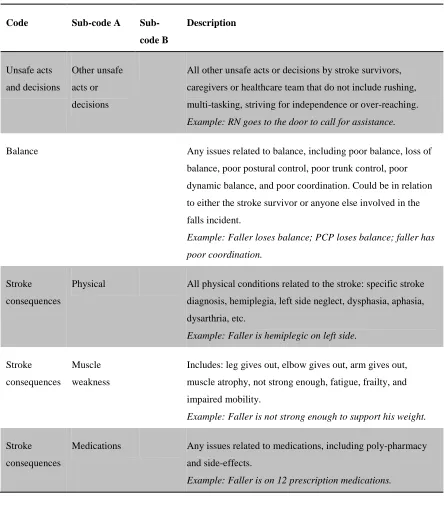
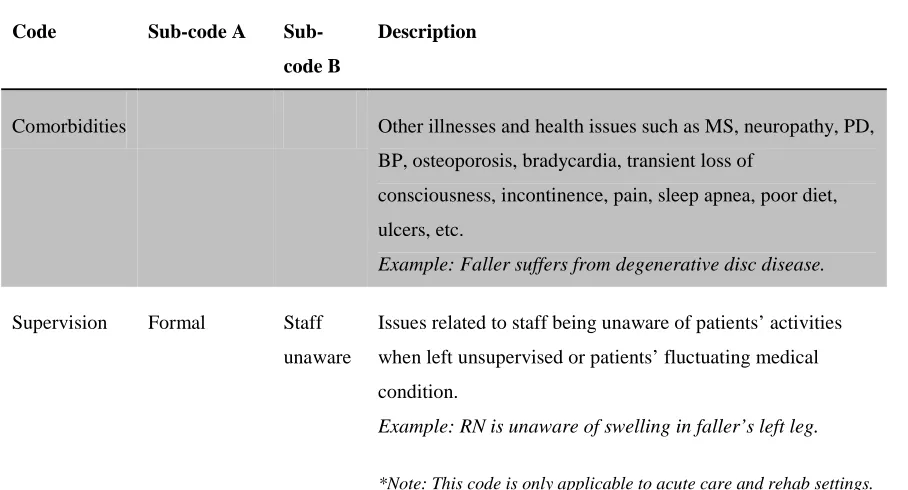
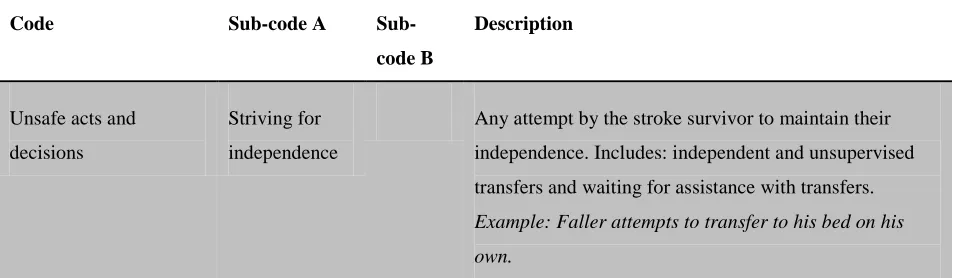
3.6.1 Coding list formation ... 51
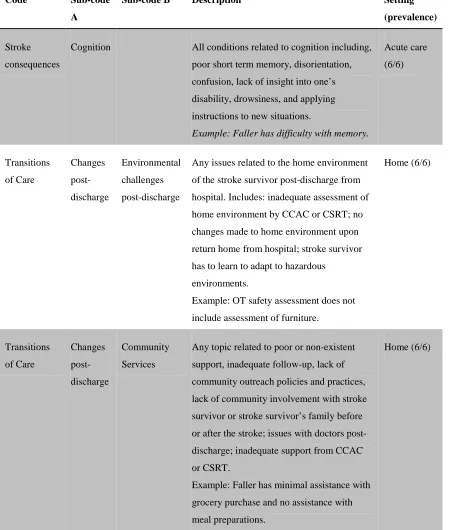
3.6.2 Factors contributing to falls in stroke survivors with 100% prevalence across all settings ... 51
3.6.3 Factors Contributing to Falls in Stroke Survivors with 80-99% Prevalence Across Settings... 53
3.6.4 Factors Contributing to Falls in Stroke Survivors with 60-79% Prevalence Across Settings... 55
3.6.5 Factors Contributing to Falls in Stroke Survivors Unique to a Particular Setting ... 58
Chapter 4 ... 61
4 Discussion ... 61
4.1 Contributing factors by prevalence ... 61
4.1.1 Factors contributing to falls with 100% prevalence ... 61
4.1.2 Factors contributing to falls with 80-99% prevalence ... 62
4.1.3 Factors contributing to falls with 60-79% prevalence ... 62
4.1.4 Factors contributing to falls unique to a particular setting ... 66
4.2 More than just risk factors ... 68
4.3 Review of study purpose and objectives ... 70
4.4 Implications for improving patient safety ... 71
4.5 Limitations ... 72
4.6 Future Directions ... 74
Chapter 5 ... 75
Appendices ... 84
Appendix A: UWO Research Ethics Board Approval ... 84
Appendix B: Lawson Approval ... 85
Appendix C: CRIC Approval………....86
Appendix D: Letter of Information-Stroke Survivor ... 87
Appendix E: Consent Form-Stroke Survivor ... 89
Appendix F: Letter of Information-Generic ... 90
Appendix G: Consent Form-Generic ... 92
Appendix H: Mini Mental State Exam... 93
Appendix I: Stroke Survivor Contact Information Form ... 96
Appendix J: Consolidated Codes ... 97
Appendix K: Full Case Reports ... 107
Curriculum Vitae ...464
Table 1: Primary Participant Demographics for Falls Investigated Using the SFIM ... 30
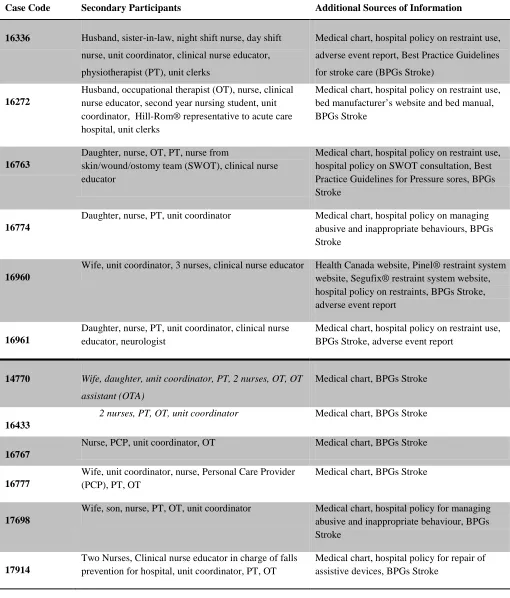
Table 2: Summary of Secondary Sources of Information for Each Investigation ... 35
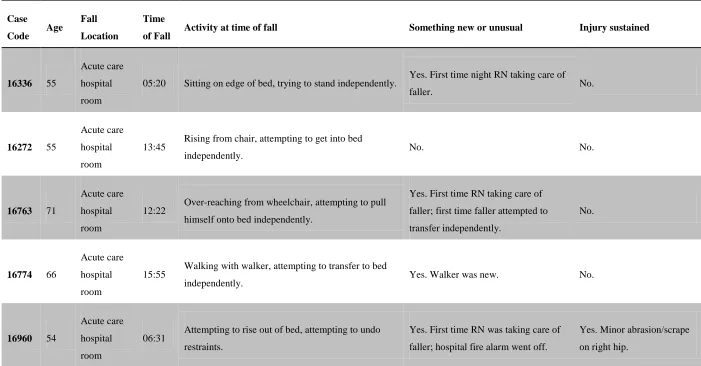
Table 3: Characteristics of 22 Investigated Falls ... 38
Table 4: Factors Contributing to Falls (100% Prevalence) ... 52
Table 5: Factors Contributing to Falls (80-99% Prevalence) ... 54
Table 6: Factors Contributing to Falls (60-79% Prevalence) ... 56
Table 7: Contributors to Falls Unique to a Particular Setting ... 59
Figure 2: Pathways to Stroke Recovery ... 7
Figure 3: Adapted Version of the Swiss Cheese Model of Accident Causation for SFIM
©Aleksandra Zecevic 2007 ... 26
Appendix A: UWO Research Ethics Board Approval………84
Appendix B: Lawson Approval………...85
Appendix C: Clinical Research Impact Committee Approval……….86
Appendix D: Letter of Information-Stroke Survivor………...87
Appendix E: Consent Form-Stroke Survivor………...88
Appendix F: Letter of Information-Generic……….90
Appendix G: Consent Form-Generic………92
Appendix H: Mini Mental State Exam……….93
Appendix I: Stroke Survivor Contact Information Form……….96
Appendix J: Consolidated Codes………...97
Appendix K: Full SFIM Case Reports………107
Chapter 1
1
Introduction
Strokes are one of the leading causes of adult disability in developed countries
(Batchelor, Mackintosh, Said, & Hill, 2012; Mackay, & Mensah, 2004). In Canada, there are
approximately 50,000 new stroke cases each year, and in 2009 there were 315,000 stroke
survivors, living with the long-term effects (Goeree, Blackhouse, Petrovic, & Salama, 2005). In
2000, strokes cost $3.6 billion for the Canadian healthcare system and lost productivity due to
premature death and long-term disability. In 2005-2006, strokes were cited as the main reason
for 38,341 hospitalizations (Public Health Agency of Canada (PHAC), 2011). Due to advances in
medicine, and specifically in acute stroke management, incidences in stroke-related mortality
have decreased. However, due to the aging of the population, the number of people surviving a
stroke has increased. Consequently, individuals are more likely to be living with functional
impairments and disabilities due to stroke (Clarke, Marshall, Black, & Colantonio, 2002).
Strokes can lead to physical, cognitive, and psychological impairments that require some form of
rehabilitation (Batchelor, Hill, Mackintosh, & Said, 2010). In 2005-2006, 41.7% of individuals
hospitalized for stroke were discharged home, 39.5% were transferred to another facility, and
18.3% died in hospital (PHAC, 2011).
In all stages of recovery after stroke, falls are a major potential adverse event (Batchelor
et al., 2012), with advanced age further compounding the risk. The incidence of stroke survivors
experiencing a fall at all levels of the continuum of care is higher than for other patient
populations. Between 14%-65% of stroke survivors experience a fall while in hospital, and 73%
experience a fall within the first six months post-discharge to home (Batchelor et al., 2010). Falls
frequency in the stroke population is especially high after discharge from acute care and stroke
rehabilitation. Falls in stroke patients may result in serious injury such as head trauma and
fractures (Batchelor et al., 2010). They are also associated with an increased length of stay in
hospital, increased health care costs, and an increased chance of discharge to a long-term care
facility instead of to the community. In addition, fallers have an increased fear of falling,
Although researchers agree that stroke survivors are at an especially high risk for falls
(Czernuszenko, & Czlonkowska, 2009; Kerse et al., 2008; Teasell, McRae, Foley, & Bhardwaj,
2002;), previous studies have only focused on incidence and risk factors of falling among stroke
survivors, with considerably less attention given to specific contributing factors of falls and the
circumstances surrounding the adverse event. Understanding specific factors that lead to falls
allows immediate, targeted intervention. Identification of the multitude of contributing factors
that led to the event allows blame to be taken away from the person who fell and be redirected to
investigating gaps in the system that may otherwise have been overlooked. Using a systems
approach to look at not only intrinsic and extrinsic factors related to the faller, but also everyone
and everything surrounding the incident that are considered potential safety barriers, allows for
clear identification of the contributing factors of falls in stroke survivors. Identification of
reasons why stroke survivors fall allows for targeted intervention and prevention strategies,
allowing for an increase in safety within the healthcare system and in the community. This study
employs a systemic investigative tool to accurately identify specific factors and reasons that led
to falls in stroke survivors in three distinct settings along the stroke continuum of care, with the
hope that the resulting comprehensive case study reports will guide future improvements in
safety.
1.1
Stroke
Stroke, a life-threatening and debilitating event, is a form of cardiovascular disease affecting
the blood supply to the brain (Goeree et al., 2005). The proper functioning of nerve cells within
the brain requires a continuous supply of blood, oxygen, and glucose. When this supply is
impaired, either by a blockage or a rupture of blood vessels, brain cells stop functioning or die,
leading to permanent damage (Brass, 1992). The human brain represents only 2% of the body’s
weight, yet uses about 25% of the body’s oxygen supply and 70% of the body’s glucose supply.
Unlike muscles, the brain is unable to store nutrients and it therefore requires a constant supply.
An interruption of this supply for as little as four minutes can lead to permanent brain damage,
1.1.1 Stroke Subtypes
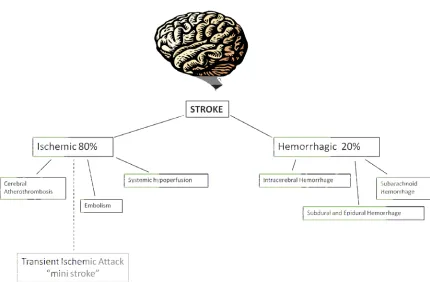
Strokes can be divided into two broad categories: ischemic and hemorrhagic. An
ischemic stroke is the result of a blood clot interrupting the blood flow to the brain. These blood
clots or narrowing of the arteries, also known as atherosclerosis, are caused by fatty substances,
cholesterol, cellular waste products, calcium, blood clotting material, and scar tissue (Heart and
Stroke Foundation of Canada-Statistics website, n.d.). Approximately 80% of strokes are
classified as ischemic. Within the category of ischemic strokes, there are several subcategories.
The first subtype of ischemic stroke is known as cerebral atherothrombosis (also known as large
artery disease), which is caused by a clot or thrombus blocking blood flow in an artery. The term
cerebral infarction is used if the blood clot results in death of brain tissue (Brass, 1992). A
second type of ischemic stroke is known as a cerebral embolism or embolic stroke. An embolus
refers to a blood clot that has formed in one part of the body (usually in the heart) and has broken
loose and traveled to a blood vessel elsewhere in the body. When the blood clot reaches blood
vessels within the brain, it causes an embolic stroke. Embolic strokes are the most common type
of ischemic strokes (Brass, 1992). A third type of ischemic stroke is systemic hypoperfusion, or a
general decrease in blood supply, mainly due to problems in cardiac pump or loss of blood
(Caplan, 2009).
Hemorrhagic strokes account for approximately 20% of all strokes. Hemorrhagic strokes
are caused by a rupture of a blood vessel, which leads to bleeding into either the brain itself
(intracerebral hemorrhage) or the space surrounding the brain (subarachnoid hemorrhage)( Heart
and Stroke Foundation of Canada-Statistics website, n.d.). A history of hypertension, diabetes,
and atherosclerosis is thought to lead to weakened blood vessels in the brain. This in turn can
cause small blood vessels at the base of the brain to leak and cause an intracerebral hemorrhage
(Brass, 1992). A subarachnoid hemorrhage occurs when the bleeding takes place between the
brain and the skull, usually caused by an aneurysm or a vascular malformation. The blood is
quickly dispersed within the spinal fluid pathways surrounding the brain (Caplan, 2009). Both
these types of hemorrhagic strokes are caused by problems with the integrity of the blood
vessels, including aneurysms and arteriovenous malformations. Aneurysms are weakened
portions of the blood vessels, which fill with blood and bulge, ready to rupture with increased
blood pressure or trauma. Arteriovenous malformations are congenital defects in the blood
Stroke Foundation of Canada-Statistics website, n.d.). Other forms of hemorrhagic strokes
include subdural and epidural hemorrhages, caused by head trauma, whereby injured blood
vessels lead to the slow accumulation of blood (hematoma) within different layers of the
surrounding brain tissue (Caplan, 2009). Lastly, it is important to discuss a “mini stroke” or a
transient ischemic attack (TIA), which often leads to a full stroke. A TIA is often passed off as
nothing due to the fact that it is a temporary decrease in blood flow that resolves quickly. Most
people do not seek medical attention for a TIA; however, a third of all people who experience a
TIA will go on to suffer a stroke (Brass, 1992). Figure 1 shows the breakdown of the subtypes of
stroke.
1.1.2 Consequences of Stroke
Depending on the type, severity, and location of the stroke, the effects of stroke can vary
and can lead to a range of impairments and disabilities (Caplan, 2009). The brain is divided into
three major regions: the cerebrum, the cerebellum, and the brain stem. Strokes occurring in the
cerebrum can affect movement, sensation, speech and language, eating and swallowing, vision,
cognitive processes, such as thinking, reasoning, memory and judgment, perception and
orientation, sexual function, and the regulation of emotions. The cerebrum is composed of right
and left hemispheres. Strokes occurring in the right hemisphere can cause left-sided weakness
(hemiparesis), paralysis (hemiplegia), sensory impairment, a lack of insight into or denial of the
impairments created by the stroke (also known as “left neglect”), visual problems such as the
inability to see the left visual field of each eye (homonymous hemianopsia), problems with
spatial and depth perception and directions, the inability to recognize body parts or find objects,
memory problems, and finally behavioural problems such as a lack of concern, impulsivity,
inappropriateness, and depression (Caplan, 2009; Wexner Medical Centre, n.d.). A left
hemisphere stroke can lead to right-sided weakness (hemiparesis); paralysis (hemiplegia);
problems with speech such as the articulation of words (dysarthria) and understanding language
(aphasia); the inability to see the right visual field of each eye (homonymous hemianopsia); an
impaired ability to organize, reason, or analyze items; to do math, read, write, or learn new
information; memory problems; depression; cautiousness; and hesitancy (Caplan, 2009).
The cerebellum is responsible for the coordination of muscle action and control, as well
as fine motor control and balance. Therefore, strokes occurring in this region of the brain are
considered severe and can impact the ability to walk, control coordination, and balance (ataxia).
Strokes in this region can also cause dizziness, headaches, nausea and vomiting. Strokes in the
cerebellum are, however, less common than strokes in the cerebrum (Brass, 1992).
Finally, the most severe types of strokes occur in the brain stem. Strokes in this region of
the brain often lead to death or coma, because the brain stem is responsible for basic life
sustaining functions such as heartbeat, blood pressure, and breathing (Wexner Medical Centre,
Recovery from a stroke begins with hospitalization, diagnostic testing, prevention
strategies, and planning for the next level of care. In order to prevent prolonged hospitalization
and introduce appropriate rehabilitation quickly, quantitative assessment tools are used by
clinicians upon admission to assess the severity of stroke and to streamline access to
rehabilitation. One of the tools used to assess severity of stroke is the National Institute of Health
Stroke Scale (NIHSS), which includes the assessment of level of consciousness, visual fields,
facial palsy, motor strength, sensation, language, ataxia, dysarthria, and inattention (Schlegel et
al., 2003). Another common tool used to assess recovery of activities of daily living (ADLs) is
the Functional Independence Measure (FIM). The Montreal Cognitive Assessment (MoCA) is
also commonly used in stroke patients to assess mild cognitive impairment. It is a stronger and
more sensitive measure than the Mini Mental State Exam (MMSE), another commonly used tool
for the assessment of cognitive impairment (Godefroy et al., 2011). MoCA assesses attention,
executive functions, memory, language, conceptual thinking, calculations, visuospatial skills,
and orientation (Zeltzer & Marvin, StrokEngine, n.d.).
The path a stroke patient takes on the road to recovery varies from patient to patient and
is often dependent on many factors, including age, severity of stroke and deficits caused by the
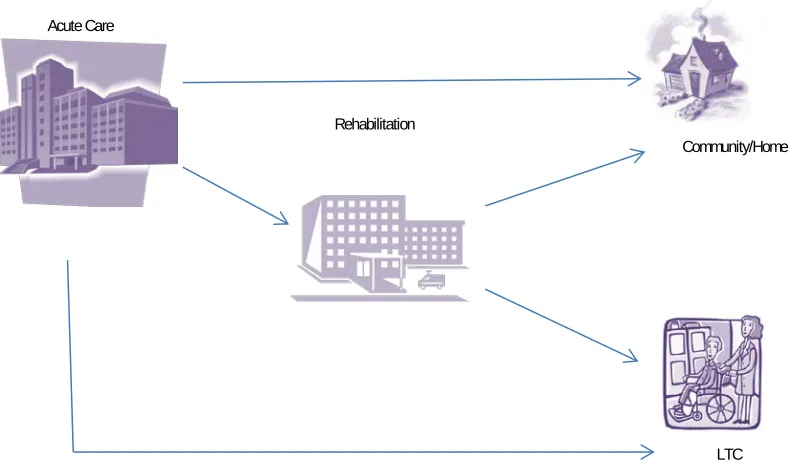
stroke, cognitive impairment, family support, and social situation. The continuum of care in
stroke recovery and the varying pathways is illustrated in figure 2. Regardless of where a patient
is within the continuum of post stroke care, the number one medical complication that affects
patients in all stages of stroke care is falls (Weerdesteyn, de Niet, van Duijnhoven, & Geurts,
Figure 2 Pathways to Stroke Recovery
1.2
Falls after stroke
1.2.1 Prevalence and Consequences
Individuals who have survived a stroke are at a high risk for falls in all stages of the
continuum of care (Weerdesteyn et al., 2008). According to the World Health Organization
(WHO), a fall occurs when a person inadvertently experiences a loss of balance and lands on
a lower level (WHO, 2012). Among individuals aged 65 and over, approximately 28-35%
fall each year, with an increase to 30-50% of individuals falling in a long-term care facility
(WHO, 2012). However, among the stroke population, the falls’ incidence rates varies
between 14-65% during hospitalization and 37-73% during the first six-months post
discharge (Batchelor et al., 2012). The large variability in these rates is attributed to
differences in hospital length of stay (Weerdesteyn et al., 2008). Recurrent falls are also more
common among stroke survivors than the general population (Batchelor et al., 2012). Community/Home
LTC Acute Care
Approximately 20-57% of community-dwelling stroke survivors experience recurrent falls
compared to 15% in the general elderly population (Batchelor et al., 2012; Doherty &
Crossen-Sills, 2009).
One of the major consequences of falls is hip fractures. Stroke survivors are four times
more likely to sustain a hip fracture than the general population (Andersson, Seiger &
Appelros, 2013). Due to impaired motor abilities and hemiparesis, stroke survivors tend to
fall on the affected side (Batchelor et al., 2012) and are less likely to break their fall by
extending their arms. Bone resorption is also common after stroke, further increasing the
chances of hip fractures (Andersson et al., 2013). Approximately 20-30% of stroke survivors
are unable to get up independently after a fall, further increasing the chances for
complications such as hypothermia or dehydration. Other physical consequences of a fall
among stroke survivors include head trauma, increased admission to a long-term care facility,
increased hospital length of stay, increased healthcare use, and death (Schmid et al., 2010).
In addition to the physical consequences of falls, stroke survivors and their families can
also face significant psychosocial consequences, including fear of falling, social deprivation,
depression, and caregiver burden (Weerdesteyn et al., 2008). Fear of falling can lead to
physical activity restriction and consequently deconditioning. Among stroke survivors who
have experienced a fall, 44% report limiting their activities due to a fear of falling
(Weerdesteyn et al., 2008). As a result of a fear of falling, stroke survivors may also become
socially isolated. In turn, this reduction in social activity and dependence on others can have
a negative effect on care givers (Weerdesteyn et al., 2008). Informal care givers of stroke
survivors (usually family members) play an integral part of the recovery process. The
well-being and quality of life of these informal care givers is directly linked to the care recipient’s
recovery. Therefore, when a stroke survivor experiences fear of falling, this fear
inadvertently affects the quality of life of the care provider (Batchelor et al., 2012).
Furthermore, the restriction of activity and socialization and the negative impact on the
quality of life of the care provider can also lead to depression in the stroke survivor.
Depression is not only a risk factor for falls but also a consequence of recurrent falling
(Weerdesteyn et al., 2008). Falls are a common consequence of stroke and can have a
informal care providers. The risk of falling for stroke survivors is multi-factorial and is
usually the result of a combination of numerous contributing factors. At all stages of stroke
recovery, it is important to identify the causes and contributing factors of falls in order to
guide appropriate prevention strategies.
1.2.2 Circumstances and risk factors: Review of the literature
Understanding why, where, and when stroke survivors fall is important in preventing falls
and the subsequent consequences of falls. The circumstances or contributing factors that
surround a fall can be distinct in different settings, and while falls occur at all stages of the
continuum of care in stroke recovery, studies suggest that the transition between settings is
critical (Batchelor et al., 2012). Studies have shown that people with stroke are more likely to
fall in the first few weeks of rehabilitation and the first two months after discharge home (Aizen,
Shugaev, & Lenger, 2007; Rabadi, Rabadi, & Peterson, 2008). Although fall risk has been
studied closely in the post-stroke rehabilitation phase, fewer studies have looked at post-stroke
falls in the acute hospital setting before discharge to stroke rehabilitation or home. Schmid et al.
(2010) found that 5% of patients who had suffered an ischemic stroke fell in the acute care
setting. They also reported that stroke severity, a history of anxiety, and a loss of functional
status were associated with falls. According to their findings, Schmid et al. (2010) suggest that
resources should be allocated to anyone with an NIHSS ≥ 8. Falls in the acute care stage have
been reported to occur during the day in either the patient’s room or bathroom (Tutuarima, Van
der Meulen, De Haan, Van Straten, & Limburg, 1997). Similar findings have been reported for
stroke rehabilitation.
Incidences of falls in inpatient rehabilitation settings are higher than in acute care
(Batchelor et al., 2012; Good, Bettermann, & Reichwein, 2011) and have been studied more
extensively. The proportion of patients who fall in the stroke rehabilitation setting ranges from
8.7% to 39%, with 1.9-6.9% resulting in a fracture (Czernuszenko, & Czlonkowska, 2009). In a
retrospective cohort study, Teasell et al. (2002) reported a rate of 37% of stroke patients
experiencing at least one fall and 19% experiencing at least two falls. In this study it was found
They found no difference in stroke type, location, or gender between fallers and non-fallers, but
fallers were more likely to be apraxic (the inability to carry out learned purposeful movements)
and have cognitive deficits (Teasell et al., 2002).
A large prospective observational study (a total of 1155 patients; of whom 252 fell)
conducted in Poland found that falls occurred in 16% of patients during stroke inpatient
rehabilitation but that only 1.2% of falls resulted in a fracture (Czernuszenko, & Czlonkowska,
2009). Czernuszenko and Czlonkowska (2009) found that two-thirds of falls happened in the first
two weeks after admission and that the incidence rate for a first fall was highest during the first
week of rehabilitation. Also, a patient who fell once was two times more likely to experience a
second fall. Most falls in this study occurred during the day, between 6 am to 8 pm, with
incidence rates peaking between 11 am to 1 pm. It was also found that most falls took place in
the patient’s room or bathroom, and patients often fell during activities such as transfers (34%),
while sitting (24%), and during position changes such as from sitting to standing or standing to
sitting (13%). The authors reported that in 24 cases, inadequate or insufficient staff assistance
resulted in a fall; in 3 cases patients slid on a wet floor; and in 3 cases falls occurred due to
inadequate assistance by visitors (Czernuszenko, & Czlonkowska, 2009). Finally, it was reported
that the risk of falls increased with the increasing efficiency of rehabilitation, that is, patients
with better functional gain were more likely to fall. Falls also occurred in patients who were
older, had a longer length of stay in the rehabilitation unit, had left-sided motor deficits, had
neglect, and who were on anti-depressant medications. The authors did not find any association
between falls and gender, visual and sensory deficits, aphasia, or left-sided or bilateral paresis,
but they did report a relationship between poor performance in Activities of Daily Living
(ADLs) and fall risk. Czernuszenko and Czlonkowska (2009) recommend that tools measuring
ability to perform ADLs be used to screen for patients at high risk for falls. Suzuki et al. (2005)
found that patients with lower motor sub-scores on the FIM on admission had a higher risk of
falls and repeat falls.
In an integrative review, Campbell and Matthews (2010) looked at 14 studies reporting
risk factors for falls in stroke rehabilitation. They concluded that, according to the evidence,
stroke-specific deficits put an individual at greater risk for falls during stroke rehabilitation.
impaired performance on ADLs were at highest risk for falls during stroke rehabilitation
(Campbell & Matthews, 2010). Other studies looking at risk factors for falls in stroke
rehabilitation have reported that patients engage in risky behaviours such as performing activities
that they were advised not to perform without supervision, such as independently transferring
(Aizen et al., 2007; Nyberg, & Gustafson, 1995). Batchelor et al. (2012) argued that this remains
a challenge for stroke rehabilitation, because restricting activity in order to keep a patient safe
can hinder motivation, mobility, independence, and recovery.
Finally, within the community, it has been reported that incidence of falls is highest in the
first two months after discharge home from rehabilitation (Batchelor et al., 2012). In a
longitudinal study, 231 stroke survivors were recruited before discharge from stroke
rehabilitation and interviewed monthly by telephone for 1-32 months regarding falls incidence.
The study found that 18% of participants fell in the first month while 56% reported a loss of
balance (near fall) and less than 10% fell after month five. At least one third of participants
reported a loss of balance (near fall) each month (Wagner, Phillips, Hunsaker, & Forducey,
2009). The authors acknowledged that, because their study only followed stroke survivors who
were discharged home (rather than a long-term care facility), the participants likely had higher
functional status and were younger, possibly affecting the incidence of falls post-discharge
(Wagner et al., 2009). In a similar study conducted in Auckland, New Zealand, 1104 stroke
survivors were followed for a period of six months, 37% reported at least one fall, 8% of who
sustained a fracture. It was found that the majority of falls occurred indoors while at home, and
factors associated with falls included depressive symptoms, disability, a history of falls, and
older age. Injurious falls occurred more frequently in female stroke survivors and in participants
who were dependent before the stroke. Higher levels of activity and normal cognition were
factors negatively associated with falls in this population (Kerse et al., 2008). Alemdaroglu,
Ucan, Topcuoglu, and Sivas (2012) followed 66 stroke patients from discharge for a period of
six months and found that 36% of patients fell within this six month period. They found that
patients with left hemispheric stroke showed a four times greater risk of falling within the six
month period. Batchelor et al. (2012) suggested that, when considering fall risk for community
dwelling stroke survivors, it is important to consider the home environment and how the stroke
In summary, there is currently very limited evidence on what causes falls in stroke
survivors throughout the continuum of care. Previous studies have addressed incidence rates and
have uncovered potential risk factors that may or may not lead to a fall. These studies have tried
to identify risk factors by comparing fallers to non-fallers. The most identified risk factor is
dependence in ADLs. Other risk factors include disease-related deficits, such as problems with
balance and gait, depression, and cognitive deficits (Weerdesteyn et al., 2008). There is also very
limited evidence on what works to prevent falls in the stroke population, because many of the
guidelines for falls prevention in this group are based on falls prevention evidence from the
general elderly population (Bathelor et al., 2012). Additionally, the majority of studies used
retrospective chart reviews as a way of identifying risk factors for falls in stroke patients.
Although advantages to using retrospective chart reviews as a research method include the
ability to access large amounts of data at a low cost and the ability to study associations over
long periods of time, there are limitations to this research method. Limitations include
incomplete or missing data, difficulty in interpreting or verifying information, and variability in
the quality of documented information by the health care personnel and the researcher collecting
the data (inter-rater reliability) (Gregory, & Radovinsky, 2012). Furthermore, the use of
retrospective chart reviews runs the risk of hindsight bias, whereby what was known before an
incident is overestimated. That is, researchers may suspect that individuals directly involved in
1.3
Systems approach to the investigation of falls in stroke
survivors
Although the risk factors associated with falls in the elderly population in general, and the
stroke population in particular, has been extensively studied, these risk assessment studies
have focused mainly on the characteristics of the faller, an approach known as a
person-centered approach (Zecevic et al., 2009). A person-person-centered approach focuses on sharp-end
factors, or the failures directly related to the individual involved in an adverse event.
However, in addition to sharp-end factors, an adverse event (in this case, a fall), also involves
blunt-end or latent factors. Blunt-end factors are those latent, system-wide factors that are not
directly in the control of the individuals involved. However, through the intertwining and
dynamic interactions of contributing factors, these latent, system-wide factors contribute to
the adverse event by affecting the actions and decisions of persons involved (Henriksen,
Dayton, Keyes, Carayon, & Hughes, 2008). According to Reason (2000), human error results
when mental or physical action plans fail and the wrong outcome is achieved. Latent factors
such as the work environment, heavy workload, or the structure of an organization are
embedded in a system and can worsen over time until the right circumstance arises and an
active error occurs (an adverse event such as a fall) (Henriksen et al., 2008). A system is
broadly defined as the interaction between a person and the physical and social environment
within which that person resides (Zecevic et al., 2009). Many latent factors may exist as an
organization continues to adapt and change over time. However, the number of hazards and
risks can be greatly reduced if the causes are targeted. “In doing so, the path between active
failures when the error occurred would be traced to the latent defects in the organization,
indicating leadership, processes, and culture. Then, if organizational factors (e.g., latent
factors) become what they should be, few active causes of accidents will come about”
(Henriksen et al., 2008, p. 25).
In order to identify contributing factors of accidents, it is necessary to identify safety
deficiencies that contributed to falls using a systems approach to human error and accident
investigation. In a systems approach, it is an accepted fact that humans commit errors for a
pose the greatest threat to safety, because it is these latent errors that lead to operator or
human errors (IOM, 1999; Zecevic et al., 2009). “Latent errors are difficult for the people
working in the system to see since they may be hidden in computers or layers of management
and people become accustomed to working around the problem” (IOM, 1999, p. 65). In a
systems approach to falls investigations, the underlying causes or latent factors that resulted
in a fall are seen as deeply embedded in the system. The failure to address these latent factors
can make the whole system prone to future failures. Discovering and addressing latent factors
has a greater effect on making a system safer than only addressing and often blaming active
human failures (IOM, 1999). “Solutions in the systems approach accept that we cannot
completely change the human condition but we can change the conditions in which humans
operate” (Zecevic et al., 2009, p. 686). Understanding why stroke survivors fall throughout
the continuum of care requires a systems approach, because even a seemingly single event
such as a fall is the result of the convergence of multiple contributing factors.
1.4
Systemic Falls Investigative Method (SFIM)
Modeled after the Transportation Safety Board of Canada’s Integrated Safety
Investigation Methodology (ISIM), the Systemic Falls Investigative Method provides a falls
investigator the tools, techniques, and framework for analyzing falls occurrences to better
understand the contributing factors, safety deficiencies, and causes that led to the event
(Zecevic, Salmoni, Lewko, & Vandervoort, 2007). The SFIM is a six step method developed
specifically for the investigation of falls in the elderly population. Although the SFIM was
created primarily to investigate falls in community-dwelling seniors, the creators of this tool
believe that it can be adapted to more structured settings such as hospitals and long-term care
facilities and to specific subgroups of the population (such as stroke survivors) (Zecevic et
al., 2007). The SFIM has been used in the past to investigate falls in the community,
rehabilitation hospitals, as well as long-term care facilities and nursing homes (Zecevic, Halligan, Kothari, Kloseck, Salmoni & SFIM workgroup, 2010; Zecevic, Li, Davy, Halligan, & Kothari, 2010). However, it has not yet been used to study falls in stroke survivors.
about the fall; developing a sequence of events and identifying the safety significant events; analysis of the safety significant events to identify error types using Generic Error Modeling System (GEMS); putting into context the identified unsafe acts, conditions and decisions using an abbreviated version of the Swiss Cheese Model; summarizing the contributing factors to identify safety deficiencies; and developing safety action suggestions (Zecevic et al., 2007). The SFIM will be discussed in more detailed in the next chapter (Methods). This method is a
multidisciplinary investigative method, highly attuned with the multi-factorial nature of falls in the stroke population.
1.5
Study purpose and objectives
A fall is a common adverse event at all stages in the stroke continuum of care. Past studies
have focused on risk factors in order to identify high risk patients and have heavily relied on a
person-centred approach. A person-centred approach is not appropriate for the study of falls
because falls occur in an intricate, interlinked system with multiple players. Using a systems
approach to better understand the many contributing factors that lead to a fall allows targeted
interventions and the potential to greatly increase the safety of the system within which these
stroke survivors function. The purpose of this study was to identify systemic factors of falls in
stroke survivors as they transitioned through the stages in the continuum of care, from acute care
to rehabilitation to community re-integration or long-term care. Specifically of interest for this
research study were the factors that contribute to falls in the various settings, leading to the
following research questions:
1. Are there factors contributing to falls that are similar across all settings?
2. Are there factors contributing to falls that are unique to a particular setting?
For the purposes of this study, factors that were similar across all settings had two cut-off points:
they were considered similar if they appeared across 80-100% of the cases in all settings; they
were considered a frequent contributor to falls if they appeared in 60-79% of the cases in all
settings. Factors that appeared in only one setting were noted as being unique to that particular
Specific objectives for this study were to:
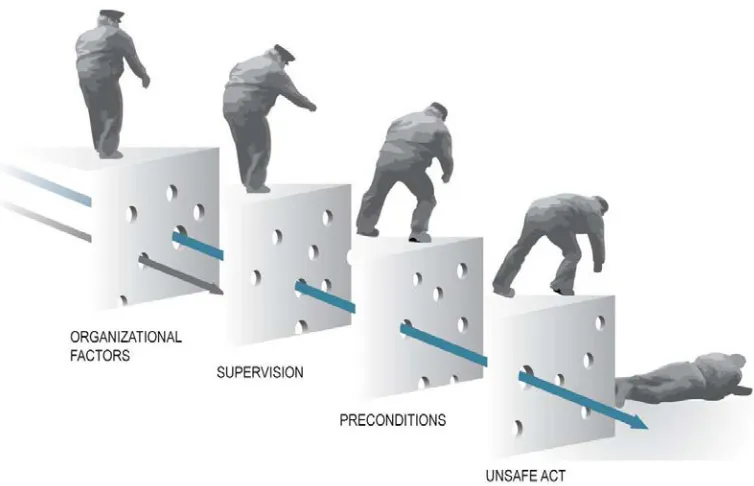
• Conduct a prospective case series study using the SFIM to identify safety deficiencies
at the four levels of the Swiss Cheese Model of Accident Causation.
• Provide evidence on how the system-wide latent factors combine with the actions of
people at the sharp end to cause falls in stroke survivors in all three settings.
• Analyze these fall reports to identify patterns of contributing factors specific to stroke
survivors.
Chapter 2
2
Methods
2.1
Case study research
To better understand the phenomenon of falls within the context of stroke recovery, a
prospective case series study was conducted using the SFIM data collection tool. Yin (2009)
defines case study research as “an empirical inquiry that investigates a contemporary
phenomenon in depth and within its real life context, especially when the boundaries between
phenomenon and context are not clearly evident” (p. 18). He goes on to say that case study
research “relies on multiple sources of evidence, with data needing to converge in a triangulating
fashion” (p. 18). A case can be a person or several persons, an intervention, an institution, a
process, a program, or an event (Salminen, Harra, & Lautamo, 2006). In this study, a case was
the fall incident. Multiple viewpoints, multiple methods of inquiry, and multiple data sources
were used for data collection to answer “how” and “why” questions about the phenomenon of
falls. Case study research can be helpful in relating theory to practice. It is an especially useful
approach when studying problems with a practical implication, such as those found in healthcare
safety (Salminen et al., 2006). Case study research does not include large samples, and
therefore, it is impossible to generalize case study findings to a population. Instead, it has been
suggested that case study research can provide referencing and transferability of conclusions to
similar situations. Case studies may provide real life examples to others experiencing a similar
incident (Salminen et al., 2006). Case study research has also been criticized for its subjectivity
and biased data collection, analysis, and conclusions. However, various techniques such as
member checking, comparing views, considering counter-instances, and triangulation can be
used to alleviate or minimize biases and subjectivity (Salminen et al., 2006). Triangulation is the
use of multiple sources of data to confirm a finding. Each finding needs to have as many
confirmations from different sources as possible (Stake, 2006). Triangulation can also mean the
use of multiple methods of data collection, and the use of multiple researchers in data collection
and data analysis (Salminen et al., 2006).
Case study research is often an intensive and time-consuming process because data is
phenomenon under investigation. “To fulfill the criteria for scientific research, case study
research requires a systematic process of data collection and analysis, high-level ethical
decision-making and good reporting” (Salminen et al., 2006, p. 7).
In the present study, all investigations were completed by the researcher and three research
assistants. All investigations were completed under the supervision of the creator of the SFIM
data collection tool, and all sources of data were triangulated using at least three sources. In
addition, reflective journaling, as well as reflective discussions with the supervisor, members of
the SFIM research team, and members of the advisory committee were utilized in an attempt to
ensure trustworthiness and rigor during the research process (Baxter, & Jack, 2008).
2.2
Procedure
2.2.1
Setting and recruitment
In order to better understand the factors contributing to falls in stroke survivors
throughout their recovery, falls investigations took place in three distinct settings across the
stroke care continuum: an acute care neurology unit, a stroke inpatient rehabilitation unit, and in
the homes of the stroke survivors once they were discharged from either acute care or inpatient
rehabilitation. Before commencement of the study, management teams from the two
participating hospitals were contacted to collaborate on this research project. They readily agreed
to take part and assist with participant recruitment. The management teams acted as gatekeepers
and played a critical role in identifying stroke patients who had had a fall. From the acute care
hospital, one unit manager, one unit coordinator, one clinical nurse educator, and one neurologist
agreed to assist not only with participant recruitment but also with familiarizing the study
investigators with the unit staff, environment, culture, and policies and practices. Similarly, the
unit coordinator at the inpatient rehabilitation unit took on the role of gatekeeper at the
rehabilitation setting. Partnering with these centers allowed us to accurately capture and
investigate falls in stroke survivors through the continuum. Although this study was originally
designed to investigate falls in the long-term care (LTC) setting as well, the LTC facilities where
study participants were sent refused to participate in the study. Therefore, all investigations
Finally, it is important to mention that partners within the community, such as the Community
Care Access Centre (CCAC) and the Community Stroke Rehabilitation Team (CSRT) also
provided us with valuable information and served as major players in our investigations
throughout the care continuum. Ethics approval for this study was obtained from the UWO
Research Ethics Office and Lawson Health Research Institute/Clinical Research Impact
Committee (Appendix A-C).
The path to recovery varies for each stroke survivor and is largely dependent on the
severity and location of the stroke. All stroke survivors start off in an acute care hospital, the
starting and recruitment point in this study. From there, some continue onto the inpatient stroke
rehabilitation setting and, once they are deemed ready, they are discharged back into the
community (either home or a LTC facility). Others, who are not severely disabled by their
stroke, are able to return home or to a LTC facility after acute care.
2.2.2
Participants
2.2.2.1
Primary participants
The primary participants in this study were the stroke survivors who experienced a fall at
any of the three settings. From December 2011 to November 2012, all patients who had suffered
from a stroke and who were admitted to the neurology inpatient unit were screened for inclusion
into the study. All patients who had suffered from an ischemic stroke, a hemorrhagic stroke, or a
transient ischemic attack (TIA) were identified upon admission. Before approaching patients for
consent, the investigative team spoke with the patient’s healthcare team to confirm the diagnosis,
get a better understanding of the cognitive state of the individual, as well as to learn about their
prognosis. Once the healthcare team confirmed the stroke diagnosis and agreed that they were
suitable for the study, the investigative team approached the patient with a letter of information
and consent form (Appendix D-E). In cases where the patient was unable to provide his/her
consent due to cognitive impairment, the substitute decision maker was asked to give consent.
Upon receiving consent, participants were monitored for a period of six months. Patients were
recruitment process, due to the acuteness of the illness, a firm diagnosis was often not confirmed
until many diagnostic tests were completed. Therefore, at times patients who were thought to
have suffered from a stroke were later found to have, in actuality, suffered from a different
neurological disorder and had to be excluded from the study. Patients were also excluded from
the study if they were not willing to sign the written consent form.
If a fall occurred within either hospital setting or community setting within the six month
period, the stroke survivor was enrolled into the study and a falls investigation was conducted.
When an adverse event took place in the hospital, unit coordinators and managers received an
adverse event report form, filled out by staff who had witnessed the event or were directly
involved. Once the gatekeepers received these adverse event reports, they immediately contacted
the study investigative team to inform us of a fall. Once participants were discharged back into
the community, they were placed on a weekly call list. These participants were contacted by
telephone twice a week to inquire about any falls or near falls while at home.
2.2.2.2
Secondary sources of information
In addition to interviewing the stroke survivor, individuals who were directly or indirectly
involved in the fall incident were also interviewed. These individuals included family members
and hospital staff such as nurses, doctors, physiotherapists, occupational therapists, personal
support providers, managers, and coordinators. All secondary participants were approached for
consent to participate in the investigations (Appendix F-G). Any additional sources of
information, such as policies, government documents, manufacturer manuals, and best practice
guidelines, were also used in the investigations. Many of the secondary sources of information
were identified during weekly data analysis meetings with the SFIM investigative team.
2.2.2.3
SFIM Research team
The SFIM investigative team consisted of six researchers: the original creator of the
SFIM tool, Dr. A. Zecevic, an occupational therapist also working on a similar study using the
SFIM, and four graduate research assistants. All members of the team were trained on the use of
the SFIM tool and the SFIM database during a two-day long training session conducted by Dr.
analyze the data gathered. These brainstorming sessions led to the generation of more questions,
which directed the path of the investigations. Primary investigators for each case would then
continue with the investigation with a new set of ideas and questions to further explore. This
process was repeated until it was felt that the investigation had reached a conclusion and a
significant amount of detail had been gathered.
2.3 Data Collection
The Systemic Falls Investigative Method (SFIM) was used as the data collection tool for this study. The SFIM has been used in the past to investigate falls in the community, rehabilitation hospitals, as well as long-term care facilities and nursing homes (Zecevic, Halligan et al., 2010; Zecevic, Li et al., 2010). It has been shown to be an effective tool for the identification of systemic contributing factors and causes of falls. A two-day SFIM training workshop was held in October 2011. During this workshop five researchers were trained on how to use the SFIM data collection tool and the web-based SFIM database. Four separate presentations on the study purpose and objectives were given to the staff at the acute care setting in November 2011. Two additional presentations were presented to the staff at the inpatient stroke rehabilitation unit.
Recruitment of study participants began December 2011. Stroke survivors in the inpatient
acute care hospital were identified through either the admissions binder or the electronic patient
records system and approached for consent.
Sixty-eight stroke patients from the acute care hospital provided informed consent and
hence were recruited into the study. These patients were monitored for falls and followed
through their progression in stroke recovery. A neon-coloured sticker, informing staff of the
patient’s recruitment into the falls study, was placed on the patient chart or nurse’s Kardex (a
card-filing patient information system that allows for quick referencing to patient medical
information for nursing care). This sticker also provided the investigator’s telephone number in
case of a fall.
The unit coordinators at each hospital received adverse event reports when an adverse
event took place. If the adverse event was a fall, the coordinators informed the study investigator
investigations to take place in a very timely manner, permitting the research team to gather more
accurate information. Weekly telephone calls were also made to recruited patients who had been
discharged home or to LTC to learn of any falls that had taken place in the previous week in the
community setting.
After learning of a fall, the study investigator informed other members of the team. Two
or three members of the team then traveled to the site of the fall and initiated an investigation.
Prior to beginning the investigation, the investigator either approached the patient for consent, if
consent had not already been obtained, or revisited consent to participating in the study, just in
case participants had changed their minds. Once consent was obtained, the Mini-Mental State
Exam (MMSE) (Appendix H) was completed or the score was collected from the patient’s
hospital records. Next, a participant contact form was filled out (Appendix I) for the purposes of
weekly telephone calls. If a MMSE score was missing, researchers recorded the MoCA score.
2.4 Systemic Falls Investigative Method
The Systemic Falls Investigative Method is a data collection and integration tool that is
divided into six steps (Zecevic et al., 2009). The first two steps involve a continuous, iterative
process of reflexivity, triangulation, and generation of further questions. This process continues
until the data collected has sufficient depth and detail to provide an accurate summary of the
event, represented in a sequence of events. The six steps of the SFIM are as follows:
The objective of the interview was to collect data using the F-SHEL framework:
F—facts about the fallers; includes their physical, physiological, psychological and psychosocial characteristics;
S—software; includes training, policies and procedures, manuals, and/or checklists that were in place, either for the care procedures of the faller or for any equipment that was in use;
H—hardware; includes equipment used, mobility aids, transfer aids, bath aids, layout of items, display screens, and footwear used by individuals involved at the time of the fall;
E—faller’s environment; includes internal conditions such as lighting, temperature, noise, floor conditions and external environment such as weather, and community conditions/particularities;
L—liveware surrounding the faller; includes the other people involved, witnesses, healthcare providers and agencies, other family members, peoples’ attitudes, social networks, and communication.
All interviews were audio recorded unless the person being interviewed requested not to be recorded. In addition, photos were taken of the environment where the fall took place and any pertinent aids used at the time. All information gathered from the interviews and chart reviews was taken back to the research office where two researchers recreated the event. Initial interviews with any identified participant took an average of 30-120 minutes. During step one, the faller’s past medical history, medications, and any other relevant information pertaining to the fall was also collected.
The sequence of events was then revised and confirmed through additional data collection, and the events that were safety-significant were identified. Safety significant events (SSEs) were acts and decisions that directly contributed to the adverse event. SSEs were determined by answering the following questions about each event in the sequence:
• Was this task undesirable? • Was this task non-standard?
• Was this task linked or potentially linked to another undesirable event? • Was this task one of alternative actions or options available?
If the answer was ‘yes’ to any of the questions, the act was classified as a SSE. Each SSE was then examined more closely by asking further questions regarding the “why”. For example: Why was this task undesirable? The “why” questions uncovered further need for data collection and led to interviews with additionally identified secondary participants, further observations, or further review of additional data sources, such as written materials on policies or medical records. Follow-up interviews were completed at the hospitals, over the phone, or by email, depending on the participants’ preferences and the nature of the information required. Once additional information was collected and the sequence of events clarified, the SFIM research group reviewed the description of the final sequence of events for thoroughness and depth. The description of the sequence of events was reviewed by the research group an average of two times, but often times three to four times, before all members were satisfied. A narrative
summary of the fall was then written by the investigator and the de-identified data were entered into the SFIM database. Data in the SFIM database is de-identified and stripped of any personal identifiers and assigned a unique code. The SSEs were further analyzed in step three.
Step three: Generic Error Modeling System (GEMS). In the SFIM, unsafe acts and decisions are analyzed further using the Generic Error Modeling System (GEMS) (Reason, 1987). This system of modeling human error was used to determine:
• the mindset of the person at the time of the event
• if the error was skill-based, rule-based, or knowledge-based
• which failure mode corresponded to a skill-based slip or lapse: inattention or
• which failure mode corresponded to a rule-based or knowledge-based mistake:
misapplication of good rules, application of a bad rule, biases, or heuristics?
• which failure modes corresponded to a knowledge-based adaptation: biases or heuristics?
More detailed description of GEMS analysis is available in Reason (1987). The GEMS analysis was completed by A. Zecevic for all cases as part of a larger study, and the results will not be presented in this study.
Figure 3 Adapted Version of the Swiss cheese Model of Accident Causation for SFIM © Aleksandra Zecevic 2007
Step five: Identifying Safety Deficiencies and Risk Assessment. A within-case study analysis was conducted to identify the unsafe conditions and underlying factors.
Step six: Development of safety actions. The final step in SFIM investigative process is to develop safety actions. The job of the SFIM investigator was to find what went wrong and
inform those directly involved with patient safety either in the hospital setting (Quality care
control team or unit managers) or community service providers (Community Care Access Centre
and Community Stroke Rehabilitation Team). Knowledge translation activities involve the
2.4.1
SFIM Database
All information collected as part of the falls investigation was de-identified and entered into a web-based database. Information entered into the database included facts about the faller and the fall, as well as a chronological sequence of events. Information about the faller and the fall was inputted into appropriate boxes. Several variables and rating scales (normally found in the fallers’ medical records) were also part of the data input process (e.g., MoCA scores, FIM scores, MMSE scores, and rate of falls). The database automatically generates sequence of events diagrams based on the
information provided by the investigators and full case reports which include the Swiss cheese tables. Full case reports can be seen in Appendix K.
2.5 Data Analysis
Data analysis occurred in two stages. The first was a within-case analysis that took place
during the SFIM investigation process, as described above. The data collected from interviews
and other sources were reviewed and discussed with members of the SFIM research team. This
allowed for multiple perspectives, generation of hypothesis, and formulation and expansion of
the list of contributing factors. Each contributing factor was further analyzed for placement
within the Swiss Cheese Model of Accident Causation. Upon completion of the investigation, a
secondary reviewer thoroughly reviewed the final report and sequence of events of each case
study for accuracy, consistency, coherence, and quality.
The second phase of data analysis focused on similarities and patterns between case
studies. Twenty-two tables of contributing factors were analyzed using content analysis. This
process involved four researchers and two cycles of analysis. The first stage of this analysis
involved line by line coding of the Swiss cheese tables, independently completed by four
researchers. These codes were then amalgamated into a single coding list and all researchers met
to discuss the final code list, to establish consensus, and to ensure that the list was exhaustive and
that each code was clearly defined (French, Reynolds, & Swain, 2001). Once the amalgamated
coding list was completed, two researchers independently re-coded all contributing factors. Some
minor discrepancies were noted and the code list was slightly adjusted and definitions clarified to
Chapter 3
3
Results
In total, 68 stroke survivors were recruited from the acute care stroke unit. From these 68
consented participants, 28 falls occurred by 25 participants, four participants were excluded
because they were transferred to hospitals outside the research area, and 2 falls were excluded
due to insufficient data. These two falls occurred in LTC facilities and investigations
commenced, however, for unknown reasons, the LTC facilities declined to participate in the
study and investigations had to be terminated. Therefore, a total of 22 falls by 21 stroke survivors
(one participant fell twice: once in acute care and once in inpatient stroke rehabilitation) were
investigated. The breakdown of these case study investigations were as follows: six in acute care,
ten in the rehabilitation unit, and six in the community. All six cases from the community setting
took place within the fallers’ homes.
In this section an overview of the faller’s characteristics are presented, as well as
characteristics of secondary sources of information and characteristics of the investigated falls.
Next, three case report narrative summaries and conclusions are presented, one from each
setting. Finally, an overview of the contributing factors is given, followed by a presentation of
codes that were similar across all settings and those that were unique to a particular setting.
3.1
Characteristics of the faller
In total 22 falls investigations were completed. One participant experienced two falls in
separate locations, each of which was investigated as a separate case study.
Participants ranged in age from 43 to 98 years, with an average age of 66 years. Table 1
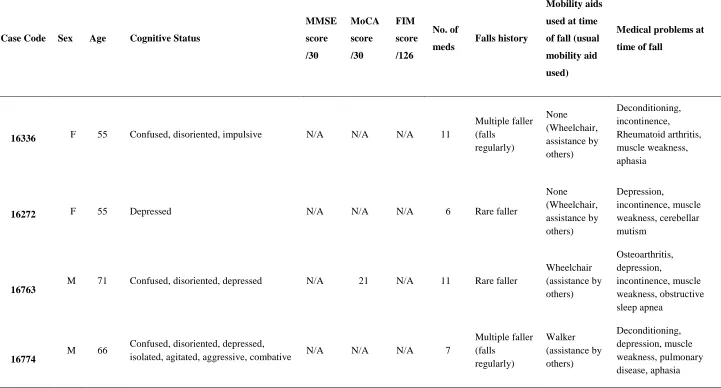
describes characteristics of the fallers, grouped together based on location of fall (first six
from acute care, next ten from stroke rehabilitation, and the final six from home). Each faller
is identified with a unique database code number. Overall, there were 14 males (one
participant fell twice) and seven females included in the study. Eleven suffered from
confusion at the time of the fall; nine were clinically diagnosed with depression; one suffered
from dementia; and five were noted as having high levels of agitation. Eleven participants
widowed, and two were single. Only one faller self-identified as having a fear of falling.
Fifteen fallers had to use a wheelchair; seven fallers suffered from osteoarthritis and one
from rheumatoid arthritis; ten suffered from muscle deconditioning; seven had Type 2
diabetes; and two suffered from regular dizzy spells. Seven suffered from incontinence,
nineteen from general muscle weakness, nine from regular pain, one from Parkinson’s
disease, and two from seizures. An average of ten medications was prescribed to each
Table 1 Primary Participant Demographics for Falls Investigated using the SFIM
Case Code Sex Age Cognitive Status
MMSE score /30 MoCA score /30 FIM score /126 No. of
meds Falls history
Mobility aids
used at time
of fall (usual
mobility aid
used)
Medical problems at
time of fall
16336 F 55 Confused, disoriented, impulsive N/A N/A N/A 11
Multiple faller (falls regularly) None (Wheelchair, assistance by others) Deconditioning, incontinence, Rheumatoid arthritis, muscle weakness, aphasia
16272 F 55 Depressed N/A N/A N/A 6 Rare faller
None (Wheelchair, assistance by others) Depression, incontinence, muscle weakness, cerebellar mutism
16763 M 71 Confused, disoriented, depressed N/A 21 N/A 11 Rare faller
Wheelchair (assistance by others) Osteoarthritis, depression, incontinence, muscle weakness, obstructive sleep apnea 16774
M 66 Confused, disoriented, depressed,
isolated, agitated, aggressive, combative N/A N/A N/A 7
16960 M 54
Confused, disoriented, agitated,
aggressive, combative N/A N/A N/A 9
Rare faller (fell only this one time in the past year)
None (Wheelchair, assistance by others)
Muscle weakness, pain, multiple sclerosis
16961 M 84 Confused, disoriented, depressed N/A N/A N/A 11
Occasional
faller (fell
more than
once in past
year) None (Walker) Depression, incontinence, muscle weakness, Parkinson’s disease, aphasia 14770
M 66 Confused, disoriented, had difficulty
finding words 16 22 18 27
Occasional faller Wheelchair (assistance by others) Anxiety, muscle weakness, osteoarthritis, deconditioning, pain 16433
M 50
Agitated, combative, aggressive, frustrated, alert and oriented, isolated and depressed
23 14 44 5 Rare faller
Wheelchair (assistance by others) Deconditioning, depression, incontinence, muscle weakness, pain
16767 M 62
Normal, alert, oriented, inconsistently
follows commands 27 24 54 13 Rare faller
Wheelchair (assistance by others) Deconditioning, depression, muscle weakness 16777
M 54 Normal, alert, oriented, impulsive,
depressed N/A 24 56 9
Occasional faller Wheelchair (assistance by others) Depression, muscle weakness, pain, multiple sclerosis
17698 M 57
Confused, disoriented, agitated,
aggressive, combative N/A N/A N/A 17