C h arm and th e V ir tu a l P h o to n
at H E R A and a G lob al
T racking T rigger for Z E U S
Benjamin John West
U C L
University College London
A ugust 2001
ProQ uest Number: U 642447
All rights reserved
INFORMATION TO ALL U SE R S
The quality of this reproduction is d ep en d en t upon the quality of the copy subm itted.
In the unlikely even t that the author did not sen d a com plete manuscript
and there are m issing p a g e s, th e se will be noted. Also, if material had to be rem oved,
a note will indicate the deletion.
uest.
ProQ uest U 642447
Published by ProQ uest LLC(2015). Copyright of the Dissertation is held by the Author.
All rights reserved.
This work is protected against unauthorized copying under Title 17, United S ta tes C ode.
Microform Edition © ProQ uest LLC.
ProQ uest LLC
789 East E isenhow er Parkway
P.O. Box 1346
A b str a c t
P revious m easu rem en ts a t ZEUS have d e m o n stra te d suppression of p h o to n s tru c tu re like effects due to b o th th e v irtu a lity of th e p h o to n , an d th e presence of charm . In th is thesis asp ects of th ese two m easu rem en ts have been com bined in o rd er to determ in e w h eth er th ese tw o suppressions are in d e p en d en t.
T h e m easu rem en t was m ad e w ith th e ZEUS d e te c to r a t H E R A in th e k in em atic region 0 < < 5 • 10^ GeV^ using d ijet events co n tain in g a D* m eson. E vents having two or m ore je ts w ith large tran sv erse energies were selected using th e lo n g itu d in ally in v a rian t k r alg o rith m in th e la b o ra to ry fram e. T h e d ijet cross section was m easu red as a fu n ctio n of th e fractio n al m o m en tu m of th e p h o to n p a rtic ip a tin g in th e d ijet p ro d u c tio n , , an d of
T he ra tio of low to high cross sections was fo und n o t to change significantly w ith
Q^. T h is is in m ark ed c o n tra st to previous m e asu re m en ts w hich did n o t require a D*,
d em o n stra tin g for th e first tim e th a t th e observed suppressions of th e low cross section d ue to non-zero p h o to n v irtu a lity an d due to ch arm are n o t in d e p en d en t. T h e ra tio was also com p ared to th e p red ictio n s of lead in g-o rd er pQ C D . C alcu latio n s which included e ith e r a resolved v irtu a l p h o to n in th e D G L A P evolution schem e or used C C F M ev olution gave a b e tte r d escrip tio n of th e d a ta th a n a D G L A P calcu latio n w ith no p h o to n stru c tu re .
To m y family and friends
“W ritin g a b ook is an u n d e rta k in g far m ore horrific th a n I ’d ever im agined. N ot only m u st th e w rite r com e u p w ith several te n s of th o u s a n d s of w ords, n o t all of th e m th e sam e, b u t he or she m u st arran g e th e m in an o rd er th a t m akes some so rt of sense to th e first tim e read er. I t ’s no use s ta rtin g you r b oo k ‘Linford C hristie s te p p e d in to th e horse-box bem u sed by th e wall of m u sh ro o m s w hich sto o d grinn ing a t th e b ack ’ if you have no in ten tio n of ta k in g these ideas any fu rth er. To s ta r t a book w ith th is sentence, b u t th e n ta k e your eye off th e b all for a m om ent an d end u p w ritin g a tw e n ty -th o u sa n d w ord guide to P olish w ar m em o rials, deserves th e hig hest criticism . I t ’s a fa u lt th a t to o k m e m any m o n th s of p ractice to avoid.
O th ers have been less m eticulous. I ’m surely n o t th e only one to have noticed th a t W ill H u tto n ’s otherw ise a d m ira b ly w ritte n econom ics b estseller The State W e ’re In
opens w ith th e sentence ‘T h is book has been carefully g rad ed so th a t you can begin w ith one or two elem en tary dishes yet soon be able to set o u t a full T h ai m eal w ith all its unique flavours.’ N or is th e re any e a rth ly e x p la n a tio n o th e r th a n sheer a u th o ria l incom peten ce for a few stra y lines in S tep h en H aw k in g’s A Br ie f History of Ti me w hich, a t th e end of a b rillia n t e x p lan atio n of th e sym b iotic relatio n sh ip betw een q u a n tu m th e o ry an d relativity, seductively h in tin g a t a unified th e o ry of gravity, sud denly continue:
B evin let o u t a gasp of asto n ish m en t an d playful p leasu re a t th e P ro fesso r’s rem ark s. ‘O oh boy,’ she yelped, like a c at. ‘Tell it to me one m ore tim e, ’cos I ’m on fire, p a rtic le m a n !’ She rem em b ered now th e ir curiously in te rru p te d lovem aking from th e p revious n ig h t an d resolved to h am m er th e d o o r sh u t th is tim e.
T h e rem ain in g n in e ty pages rev ert to a discussion of p a rtic le /w a v e d u a lity w ith in lig h t em issions.
C on sistency is th erefore a p rereq u isite for even th e m o st vaguely co m p eten t s ta b a t a b o o k .”
A cknow ledgm ents
O ver th e la st th re e years I have been fo rtu n a te enough to w ork w ith m an y excellent people, w ith o u t w hom th is thesis w ould n o t have been possible. For help w ith m y analysis, I w ould like to th a n k Jo n B u tte rw o rth for his advice an d m o tiv atio n th ro u g h o u t; M ark Hayes for teach in g m e th e basics; L eonid G ladilin for his know ledge of all th in g s heavy flavoured; Jo Cole for h er advice on D*s in DIS; A lex T a p p e r for his extensive know ledge of DIS an d g enerosity in sh arin g it; M a tt L ight w ood for his h a rd w ork rep ro d u cin g m y analysis; an d R ic h ard H all-W ilton for con tin u in g w here I left off. For all his h a rd w ork on th e G T T , b o th before an d afte r I jo in ed th e effort, I owe a g reat deal to M ark S u tto n . T h e p ro d u c t of our c o llab o ratio n is so m eth in g I th in k we can b o th be p ro u d of. I w ould also like to th a n k Stew B oogert for m an y ran d o m physics con versations w hich helped b o th m y u n d e rsta n d in g an d enth usiasm .
F o rtu n ately , th e re has been m uch m ore to my life th a n ju s t w ork d u rin g m y P h D , a n d for th a t I owe m any people th a n k s. In p a rtic u la r I w ould like to th a n k Alex F erguson for being a good friend an d h ou sem ate; A nn W h ittle for th e tim e we h ad to g e th er; K ate E vans for listen in g an d being a good friend; B e th P u rse for stay in g close even w hen far away; Stew B oogert for being a good cook, h o st an d m ate; A lex T a p p e r for m any enjoyable ho urs in bars; R od W alker for his c itru s th e o ry of life; E lain e M cLeod for enjoyable conversations, b o th hom e an d ab ro ad ; R icardo G onçalo for bein g a g reat n eig h b o u r a n d friend; C laire G w enlan for th e m an y chats; an d Jo n B u tte rw o rth for bein g m ore th a n ju s t a supervisor.
C on ten ts
I Charm and th e virtual p hoton at H E R A
19
1
H E R A and th e ZEUS d etecto r
20
1.1 T h e H E R A a c c e l e r a t o r ... 20
1 . 2 T h e ZEUS d e t e c t o r ...2 1 1.3 T h e C e n tra l T racking D etecto r (C T D ) ... 22
1.4 ZEUS c a lo r im e tr y ... 23
1.5 T h e lu m in o sity m o n ito r ...24
1.6 T h e ZEUS trig g er system ... 25
2
Q C D and
epIn teraction s
27
2.1 P ro to n s tru c tu re ... 282.1 .1 T h e naive q u ark p a rto n m odel ... 30
2.1.2 T h e Q C D im proved q u ark p a rto n m o d e l ...31
2.2 E vo lu tio n e q u a t io n s ...33
2.2.1 B F K L e v o lu tio n ...34
2.2.2 C C F M e v o l u t i o n ... 35
2.3 P h o to n s t r u c t u r e ... 36
2.3.1 H ard p h o t o p r o d u c t i o n ... 38
2.3.2 P h o to n s tru c tu re f u n c ti o n s ... 39
2.4 V irtu a l p h o to n s t r u c t u r e ... 41
2.4.1 E x p e rim e n ta l r e v i e w ... 42
2.5 H eavy flavour p r o d u c ti o n ... 43
2.5.1 E x p e rim e n ta l r e v i e w ... 44
3 K in em a tic reco n stru ctio n
47
3.1 R eco n stru c tio n of y an d ... 47A cknow ledgm ents
O ver th e la st th re e years I have been fo rtu n a te enough to w ork w ith m an y excellent people, w ith o u t w hom th is thesis w ould n o t have been possible. For help w ith m y analysis, I w ould like to th a n k Jon B u tte rw o rth for his advice an d m o tiv atio n th ro u g h o u t; M ark Hayes for teach ing m e th e basics; Leonid G ladilin for his know ledge of all th in g s heavy flavoured; Jo Cole for h er advice on D*s in DIS; Alex T a p p e r for his extensive know ledge of DIS an d generosity in sh arin g it; M a tt L ightw ood for his h a rd w ork rep ro d u cin g m y analysis; an d R ich ard H all-W ilto n for co n tin u in g w here I left off. For all his h a rd w ork on th e G T T , b o th before an d afte r I jo in ed th e effort, I owe a g reat deal to M ark S u tto n . T h e p ro d u c t of our co llab o ratio n is so m eth in g I th in k we can b o th be p ro u d of. I w ould also like to th a n k Stew B o og ert for m an y ran d o m physics con versations w hich h elp ed b o th m y u n d e rsta n d in g a n d enth usiasm .
F o rtu n ately , th e re has been m uch m ore to m y life th a n ju s t work d u rin g m y P h D , an d for th a t I owe m any people th an k s. In p a rtic u la r I w ould like to th a n k A lex Ferguson for bein g a good friend an d h o u sem ate; A nn W h ittle for th e tim e we h ad tog eth er; K a te E vans for listen in g an d being a good friend; B eth P u rse for stay in g close even w hen far away; Stew B oogert for b ein g a good cook, host an d m a te; Alex T a p p e r for m an y enjoyable h ours in bars; R o d W alker for his citru s th e o ry of life; E laine M cLeod for enjoyable conversations, b o th hom e an d abro ad; R icard o G onçalo for being a g re a t neig h b o u r an d friend; G laire G w enlan for th e m any chats; a n d Jo n B u tte rw o rth for bein g m ore th a n ju s t a superv iso r.
C ontents
I Charm and th e virtual photon at H E R A
19
1
H E R A and th e ZEUS d etecto r
20
1 .1 T h e H E R A a c c e l e r a t o r ...20
1 .2 T h e ZEUS d e t e c t o r ...2 1 1.3 T h e C e n tra l T racking D etec to r (C T D ) ...22
1.4 ZEUS c a lo r im e tr y ... 23
1.5 T h e lu m in o sity m o n ito r ... 24
1.6 T h e ZEUS trig g er system ... 25
2
Q CD and
epIn teraction s
27
2.1 P ro to n s tru c tu re ... 282.1 .1 T h e naive q u a rk p a rto n m o d e l ...30
2.1.2 T h e Q C D im proved q u ark p a rto n m o d e l ...31
2.2 E vo lu tio n e q u a t io n s ...33
2.2.1 B F K L e v o lu tio n ...34
2.2.2 C C F M e v o l u t i o n ... 35
2.3 P h o to n s t r u c t u r e ... 36
2.3.1 H ard p h o t o p r o d u c t i o n ... 38
2.3.2 P h o to n s tru c tu re f u n c ti o n s ... 39
2.4 V irtu a l p h o to n s t r u c t u r e ...41
2.4.1 E x p e rim e n ta l r e v i e w ...42
2.5 H eavy flavour p r o d u c ti o n ...43
2.5.1 E x p e rim e n ta l r e v i e w ...44
3 K in em a tic reco n stru ctio n
47
3.1 R eco n stru c tio n of y a n d ... 47Contents
3.1.2 Jacq u et-B lo n d el m e t h o d ...48
3.2 J e t r e c o n s tr u c tio n ...48
3.2.1 Cone a l g o r i t h m ...49
3.2.2 C lu sterin g a l g o r i t h m ...50
3.3 r e c o n s t r u c t i o n ...51
4 E ven t selectio n
53
4.1 D efinition of th e cross s e c t i o n s ...534.2 O nline event s e le c tio n ...54
4.2.1 F irs t Level T rig ger (FL T ) ... 54
4.2.2 Second Level T rig ger (SLT) ... 55
4.2.3 T h ird Level T rigger ( T L T ) ... 55
4.2.4 Efficiency o f th e trig g e r c h a i n ... 56
4.3 Offline event s e le c tio n ...58
4.3.1 C o r r e c t i o n s ... 58
4.3.2 K in em atic s e l e c t i o n ... 59
4.3.3 D* r e c o n s tr u c tio n ...60
4.4 B ackground E s t i m a t i o n ... 61
5
E ven t description and correction
63
5.1 M onte C arlo s im u la tio n ... 635.1.1 M onte C arlo s a m p l e s ...63
5.2 C om parison of d a t a a n d M onte C a r l o ...64
5.3 A cceptance co rrectio n ... 67
5.4 S tu d y of sy ste m a tic u n c e rta in tie s on th e r a t i o ... 70
5.4.1 U n certa in ties arisin g from calo rim eter q u a n t i t i e s ... 70
5.4.2 U n certa in ties arisin g from trac k in g q u a n titie s ...71
5.4.3 U n certa in ties arisin g from th e M onte C arlo d escrip tio n . . . . 72
5.4.4 In itia l s ta te r a d i a t i o n ...73
6
R e su lts and D iscu ssio n
75
6 . 1 C o m parison to LO pQ C D p r e d i c t i o n s ...756 . 2 Im p licatio n s for ... 77
6.3 C om parison to ra tio w ith o u t a D* ta g ... 78
Contents
II
A global tracking trigger for ZEUS
83
7
T h e upgrades to H E R A and th e ZEUS d etecto r
84
7.1 I n t r o d u c t i o n ...84
7.2 H E R A ... 85
7.3 S traw T u be Tracker ( S T T ) ...8 6 7.4 M icro V ertex D etecto r ( M V D ) ... 87
7.4.1 B arrel s e c t i o n ...8 8 7.4.2 Forw ard s e c t i o n ... 90
8
T h e G T T algorithm
91
8.1 E x istin g C T D - S L T ...918.1.1 Segm ent f in d i n g ... 91
8.1.2 V ector h it f i n d i n g ...93
8.1.3 Track f i n d i n g ...93
8.1.4 E vent vertex d e te rm in a tio n ... 95
8.2 M o tiv atio n for a G T T ...96
8.2.1 Im provem ents to th e C T D - S L T ... 96
8.2.2 Heavy fiavour tag g in g a t th e S L T ...97
8.3 T h e G T T alg o rith m ... 97
8.3.1 Segm ent f i n d i n g ... 98
8.3.2 A xial track f i n d i n g ... 98
8.3.3 z track f in d in g ...100
8.3.4 E vent vertex d e te rm in a tio n ... 106
8.4 F u tu re w o r k ... 107
8.4.1 Second pass of z-tra ck f i n d i n g ...108
8.4.2 D ealing w ith non-ideal w a f e r s ...108
8.4.3 Secondary vertex f i n d i n g ... 109
9 P erform an ce o f th e G T T
111
9.1 M V D sim u latio n ... I l l 9.2 E ven t s a m p l e ...1 1 2 9.3 T rack r e s o l u t i o n s ... 1169.3.1 p t resolution ...117
Contents
9.3.3 77 r e s o l u t i o n ... 119
9.3.4 ztrack r e s o l u t i o n ... 119
9.4 T rack e f f ic ie n c y ... 120
9.5 E vent v e r t e x ...122
9.6 L a t e n c y ... 123
III
Sum m ary
125
A M on te Carlo event gen erators
129
A .l H E R W I G ...130A .2 P Y T H I A ... 131
A .3 A R O M A ... 131
A .4 C A SC A D E ...131
B D erivation o f Errors
133
B .l P u r i t y ...133B.2 Efficiency ...134
B.3 C orrection f a c t o r ...134
C M ath s o f th e G T T a lgorith m
136
C .l C o n strain ed r-cj) tra c k f i t ... 136C.2 U n co n strain ed r-cf) tra c k f i t ...137
C.3 Intersectio n of an ax ial tra c k w ith a stereo w ire in z - s ... 138
List o f Figures
1.1 T h e H E R A accelerato r chain (left) an d delivered lu m in o sity from
1992-2000 (rig h t)...20
1 . 2 O verview of th e ZEUS d e te c to r...21
1.3 x -y view of th e C T D show ing th e w ire lay ou t (left) a n d a C T D d rift cell (rig h t)...2 2 1.4 C ut-aw ay view of an F C A L m o d u le... 23
1.5 T h e L um inosity M o n ito r...24
1.6 T h e ZEUS d a ta acq u isitio n an d trig g er s y ste m ... 25
2 . 1 K inem atics of a deep in elastic s c a tte rin g e v e n t...28
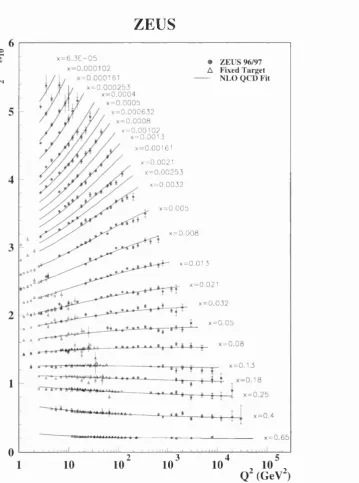
2 . 2 T h e NC and CC cross sections as a fu nctio n of m easu red a t H ER A . 29 2.3 vs. for fixed x. T h e fix ed -targ et resu lts from N M C , BCD M S, an d E665 and th e ZEUS NLO Q C D fit are also sh o w n ... 32
2.4 S chem atic re p re se n ta tio n of th e ap p licab ility of various evolution eq u atio n s across th e {x, Q^) p la n e ... 34
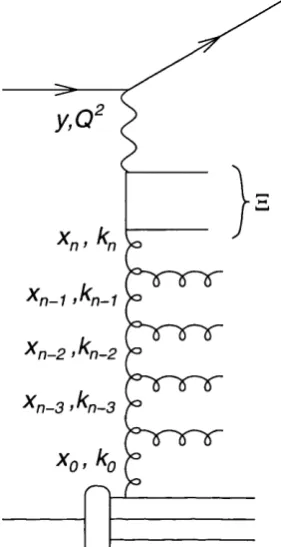
2.5 S chem atic re p re se n ta tio n of th e gluon la d d er a n d q u a rk box E... 35
2.6 T h e to ta l p h o to n -p ro to n cross se c tio n ... 37
2.7 E xam ples of lead in g -o rd er processes resu ltin g in tw o je ts; (a) Q CD C o m p to n , (b) boson gluon fusion, (c) fiavour ex c ita tio n from th e p ro to n , (d) gluon gluon fusion, (e) a n d (f) fiavour ex c ita tio n from th e p h o to n ... 38
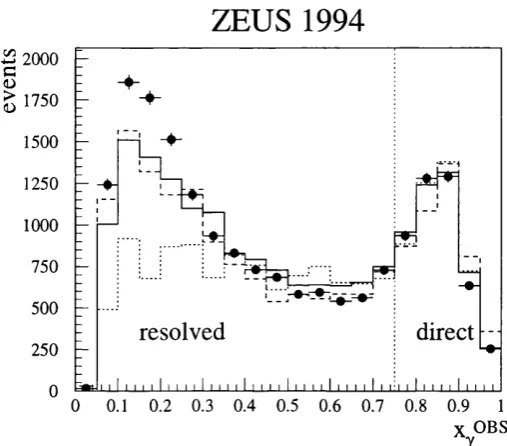
2.8 T h e d is trib u tio n in d ijet events for d a ta (black d ots) com pared w ith H ER W IG w ith a n d w ith o u t M P I (solid line a n d d o tte d line), an d P Y T H IA w ith M P I (dashed line) M onte C arlo g e n e ra to rs ...39
Figures
2 . 1 1 D ifferential cross sections for D* p ro d u c tio n in DIS. T h e open
(shaded) b an d shows th e resu lt of an N LO Q C D c alcu la tio n using P eterso n (R A P G A P ex tra c te d ) fra g m e n ta tio n (left). as a fu nctio n of x a n d (rig h t)... 45 2.12 T h e differential cross section da/dri^* for p h o to p ro d u c tio n co m p ared
to several N LO calcu lations (left). T h e differential cross section
d a / d x ^ ^ for d ijets w ith an asso ciated D* (right) co m p ared to LO
(u pp er) an d N LO (lower) p re d ic tio n s...46 3.1 y an d reso lu tio ns using th e electron a n d Ja c q u e t B londel m e th o d s. 49 3.2 J e t Et an d rj reso lutio ns for GAL cell je ts using th e K T G L U S alg o rith m . 51 3.3 reso lu tio n in p h o to p ro d u c tio n an d D IS ... 52 4.1 T L T Efficiency for d a ta (points) an d M onte C arlo (b a n d s )... 57 4.2 Box c u t app lied to th e sc a tte re d e le c tro n ... 59 4.3 H ad ro n level in G eV for events p assin g all d e te c to r level cuts. . . 60 4.4 Signals for th e 1996-2000 d a ta , th e line shows th e re su lt of an
un bin n ed fit to th e signal an d th e h isto g ra m th e w rong charge b ackg rou nd e s tim a te ... 61 5.1 C om p ariso n of d a ta (p oints) an d P Y T H IA M onte C arlo (h isto g ram )
^obs d is trib u tio n s in P H P an d DIS ev en ts... 65 5.2 C o m pariso n of d a ta (points) an d M onte C arlo (h isto g ram ) for event,
je t an d D* p ro p erties of th e events en terin g th e cross section m e a su re m e n t...6 6
5.3 P u rity , efficiency an d correctio n fa c to r show n for th e unfo ld in g pro ced u re as a fun ctio n of x^^ for each reg io n ...6 8
5.4 Low an d high cross sections for events w ith a D* as a fu n ctio n of Q^. E rro rs are sta tis tic a l only... 69 5.5 R a tio of low to high x^^ cross sections for events w ith a D* as a
fu n ctio n of Q^. E rro rs are s ta tis tic a l only... 70 5.6 S y stem a tic u n c e rta in tie s due to th e k in e m atic cu ts as a fu n ctio n of
3:°^ . T h e sh ad ed b an d shows th e s ta tis tic a l erro r on th e ce n tra l ra tio v alu e... 71 5.7 S y stem a tic u n c e rta in tie s due to th e D* as a fu n ctio n of . T h e
sh ad ed b a n d shows th e s ta tis tic a l erro r on th e cen tral ra tio value. . . 72 5.8 S y stem a tic U n certa in ties due to th e M onte C arlo as a fu n ctio n of
. T h e sh ad ed b an d shows th e s ta tis tic a l erro r on th e ce n tra l ra tio v alu e... 73 6.1 R a tio o f low to high cross sections for events w ith a D* co m p ared
Figures
6 . 2 P re d ic te d ra tio of low to high for events co n tain in g a D*, w ith
7
an d w ith o u t D* cu ts (left) for H E R W IG /S aS ID . M onte C arlo h a d ro n level p t{D*) and ri[D*) d istrib u tio n s p re d ic te d by H E R W IG /S aS ID
for events passing all o th e r h a d ro n level cu ts ( r ig h t)... 79
6.3 R a tio of low to high events w ith a D* co m pared to th e 7 p red ictio n s of th e S a S lD p h o to n s tru c tu re fu n ctio n for th e ra tio w ith o u t a D* tag . T h e u p p e r edge of th e b an d rep resen ts th e exp ected ra tio for th e full D* ph ase sp ace ... 80
6.4 R a tio of low to high for events co n tain in g a D* in th e LA B an d 7*p fram es (left). C hange in r]{D*) an d 77-^^* w hen b o o stin g to th e Y p fram e (rig h t)... 82
7.1 A n exploded view of th e S traw T u b e T rack er...8 6 7.2 A cross section of an S T T lay er...87
7.3 A cross sectional view of th e M V D ... 87
7.4 3D an d 2D views of th e b arrel section of th e M V D ...8 8 7.5 Top view of a la d d e r...8 8 7.6 Side view of a m o d u le ... 89
7.7 S chem atic d ia g ra m of a h alf m o d u le ...89
7.8 P a r tia l cross section of a sensor w ith tw o re a d o u t s tr ip s ...89
7.9 3D an d 2D views of th e forw ard section of th e M V D ...90
8 . 1 A xial segm ent ghost am b ig u ity ...92
8.2 P a tte r n recognition in a strip d e te c to r w ith two h its ...97
8.3 S tereo segm ent ghost am b ig u ity... 98
8.4 S chem atic d ia g ra m of th e r-4> tra c k fin d in g ...99
8.5 T h e (j) residuals of th e closest M V D h its to e x tra p o la te d tra c k d u rin g th e M VD r-cf) m a tch in g s ta g e ... 100
8 . 6 S chem atic d ia g ra m of th e z - s tra c k fin d in g ... 101
8.7 T h e d istrib u tio n of %^/nseg for su p erlay er 9, 7, 5 an d 3 tra c k s ... 102
8 . 8 T h e z-segm ent residuals of th e seg m ent end p o in ts w ith resp ect to th e e x tra p o la te d tra c k p o sitio n d u rin g th e stereo segm ent finding. From th e top: sup erlay er 5, 7 a n d 9 tracks; from left to rig ht: th e e x tra p o la te d po sitio n s in su p erlay er 2, 4 an d 6. T h e d ash ed (solid) h isto g ra m shows th e residuals (w ith o u t) using th e M VD w afer guide p o sitio n ... 104
8.9 T h e z residuals of th e closest M V D h its to e x tra p o la te d tra c k d u rin g th e M V D z m a tch in g stag e for su p erlay er 9 tra c k s ... 105
Figures 9.1 Pt, t], Ztrack a n d m u ltip licity d is trib u tio n s of th e M onte C arlo used to
evalu ate th e G T T ... 112 9.2 E vent displays show ing th e offline (u p p er) a n d G T T (lower) track s
for th e sam e MG e v e n t... 114 9.3 E vent displays show ing th e offline (u p p er) a n d G T T (lower) track s
for a busy MG e v e n t...115 9.4 Pt, ÿ, rj, a n d Ztrack residuals for G T T tra c k s ... 116 9.5 Pt reso lu tio n as a fun ctio n of p t, p, ztrack, an d event m u ltip licity for
G T T an d offline tra c k s ... 117 9.6 0 reso lu tio n as a fun ction o f p ^ , P, Ztrack, an d event m u ltip licity for
G T T an d offline tra c k s ... 118 9.7 p resolutio n as a fu n ctio n of p, Ztrack, an d event m u ltip licity for
G T T an d offline tra c k s ... 119 9.8 Ztrack ic so lu tio n as a fu nction of p t, p, Ztrack, an d event m u ltip licity
for G T T a n d offline tra c k s ... 120 9.9 T rack finding efficiency as a fu n ctio n of p t, p, Ztrack, an d event
m u ltip licity for G T T an d offline tra c k s ... 121 9.10 T rack finding efficiency as a fun ctio n of p t, p, ztrack, an d event
m u ltip licity for ax ial G T T trac k s a n d full G T T trac k s w ith an d w ith o u t a second p a s s ...1 2 1
9.11 G T T an d offline event Zytx reso lutio n an d efficiency... 122 9.12 T h e laten cy o f th e G TD only a lg o rith m on d a ta a fte r a G E L T accept
tak en d u rin g th e 2000 ru n n in g p erio d (left) an d of th e G T D + M V D alg o rith m on d ije t M onte G arlo (rig h t)... 124 9.13 A real cosm ic event reco n stru c ted by th e G T T using G TD an d M VD
in fo rm atio n in A u g u st 2001... 127 9.14 G T T (G T D O nly) event vertex d is trib u tio n for real d a ta afte r G ELT
List o f Tables
5.1 G en e ra te d M C su b sa m p le s... 64
5.2 L O -D IR an d L O -R E S n o rm alisatio n s for P Y T H IA an d H E R W IG . . . 65 9.1 T able showing p t, </>, p, an d Ztrack reso lu tio n s for C T D -S L T , G T T ,
Part I
C hapter 1
H E R A and th e ZEUS d etector
1.1
T h e H E R A accelerator
H E R A
W est Hall (HERA-B!
OOBIS
South Hall (ZEUS!
HERA lum inosity 1992 - 2000
2000
e
•a<u
2
1999 s*
20
,1998 .1994
50 100 150 200
D a y s of running
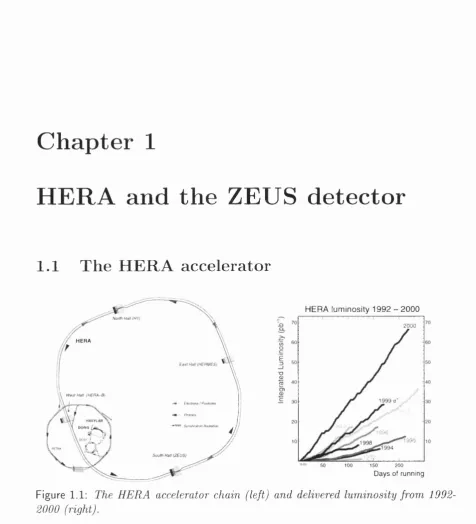
Figure 1.1; The HERA accelerator chain (left) and delivered luminosity from 1992-2000 (right).
T he H ER A (H adron E lektron Ring Anlage) accelerator is th e w orld’s first, an d only, e^p collider. H ER A is located in H am burg, G erm any, and has been providing lum inosity to th e colliding beam experim ents H I and ZEUS since 1992. T he H ER A ring, to g e th er w ith th e injection chain, is shown in Eigure 1.1. T he leptons and p ro to n s are accelerated in two sep arate m achines which use conventional and su p erco n d u ctin g m ag nets respectively.
In the p ro to n injection system , H~ ions are accelerated to 50MeV using a linear accelerator. T h e electrons are then strip p e d off, to yield p ro to n s which are passed to th e DES Y HI p ro to n synchrotron where they are accelerated to 7.5 GeV in 11
C h ap ter 1 1.2 The ZEUS detector are passed to th e P E T R A accelerator, w here th ey are accelerated to 40 G eV and injected into th e H ER A p ro to n m achine. T his process continues u ntil H ER A is filled w ith 210 bunches, which are th en accelerated to th e H ER A o p eratio n proton energy^ using conventional radio frequency cavities. T h e p ro to n beam is focused and guided by su p ercon ductin g qu adru po le and dipole m agnets.
L epton injection com m ences w ith LIN A C S’s I and II which accelerate lepton beam s to 220 and 450 MeV respectively. T hese are th e n tran sferred to th e D ESY II synch rotro n and accelerated to 7.5 G eV before being injected into th e P E T R A II storage ring in bunches w ith 96 ns spacing. T he beam is then accelerated to 14 GeV and injected into th e H ER A lepton m achine. A fter it is filled w ith 210 bunches the beam is accelerated to th e o p eratin g energy of 27.52 GeV, using b o th conventional and su p erco n d u ctin g cavities.
1.2
T h e Z E U S d e te c to r
OverView o f t h e Z E U S D E J E C I O R 2 0 0 0 ( I o p v i e w c u t
- 1 0 m
5m 0 -5m
Figure 1.2; Overview of the Z EU S detector.
T he ZEUS d etecto r, shown in Figure 1.2, is a general p urpose m agn etic d etecto r, w ith nearly h erm etic calorim etric coverage. A d etailed d escription of th e ZEUS d etecto r can be found elsewhere [1]. A brief o utlin e of the co m pon ents which are m ost relevant for th is analysis is given below.
C h apter 1 1.3 The Central Tracking Detector (CTD)
f ie ld w ire s h a p e r w ire
— g u a r d w ire
— g r o u n d w ire
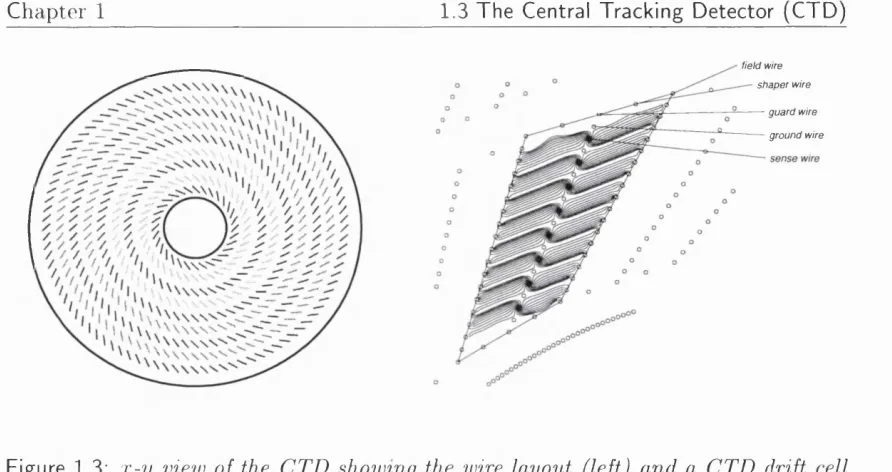
Figure 1.3; x- y view of the C T D showing the wire layout (left) and a C T D drift cell (riyht).
1.3
T h e C entral Tracking D e te c to r (C T D )
T h e C T D [2] is a cyliiiclrical d rift cham ber, which o p erates in a m agn etic field of 1.43T, provided by a thin su perco ndu cting coil. T he C T D consists 72 cylindrical d rift cham ber layers, organised in 9 superlayers, covering the p o lar angle range 15°- 164°. A superlayer contains betw een 32 and 96 d rift cells, each com prising eight sense wires oriented in a plane a t 45° to the radial line from th e cham ber axis. T he d rift field is a t a Lorentz angle of 45° to the radial axis so th a t th e d rift electrons follow rad ially transverse p a th s which is im p o rta n t in left-right am big uity breaking. W ires in the odd num bered “ax ial” superlayers run parallel to th e z axis^, w hereas wires in th e even num bered “stereo ” superlayers are a t a sm all stereo angle ( ~ ± 5 °), allow ing b o th r-cf) and z co o rd in ates to be accu rately m easured. T he nom inal resolution for full length track s in th e C T D is 180 y m in r — ( f ) an d % 2 m m in z. T he first th ree axial layers are also in stru m en ted w ith a z-by -tim in g system w hich estim ates th e p ositio n of a h it along a wire from th e pulse arrival tim es at each end of th e cham ber. T h e resolution using th is m e th o d is ~ 4 cm and it is pred o m in an tly used for trigg er purposes.
T h e transverse m om entum resolution for full length tracks is (j(p t) /p t = 0.0058pr@ 0.0065 © 0.0014/pT, w ith p r in GeV [3].
C hapter 1 1.4 ZEUS calorimetry
1.4
ZEU S ca lo rim etry
te n s io n s tr a p ^ |
T he high-resolution iira n iu m -sc in tilla to r calorim eter (CAL) [4] consists of th ree p arts: th e forw ard (FC A L ), th e barrel (BCAL) and th e rear (RCA L) calorim eters. Each p a rt is subdivided transversely into tow ers an d lo ng itud in ally into one electrom agnetic section (EM C) and either one (in RCA L) or two (in BCAL and ECAL) hadronic sections (HAC). T he sm allest su bdivision of th e calorim eter is called a cell. Each HAC cell is approxim ately 2 0x2 0 cm and each EM C cell is approx im ately 5 x 2 0 cm (in BCA L and FCAL) or 1 0 x 2 0 cm (in RCA L). T he read o u t is perform ed by two p ho to m u ltip liers (coupled to th e scin tillato r by w avelength shifters) per cell; th e p air ensuring the m easurem ent to be in d ep en d en t of the im p act point of the particles. A typical FCA L m odule w ith EM C and HAC divisions can be seen in F igure 1.4.
T h e EM C is th e inner section of the tower, w ith two hadronic sections (H A C l and HAC2) ou tside this. T he a lte rn a tin g layers of De- ])leted U ranium and scin tillato r can also be seen. T he unequal res])onse, due to hadronic showers l)roducing fewer p ho to ns th a n electrom agnetic showers for a p article of th e sam e energy, is com p en sated by th e uran iu m , which absorbs neu tro n s from the hadro nic shower and em its pho ton s which can then be d etected by th e photo m ultipliers. By choosing a suital)le thickness of uran iu m , th e sam e num ber of ph otons are pro duced for hadronic an d electrom agnetic showers of th e sam e energy. T h is is im p o rta n t in the re co n stru ctio n of je ts w hich are com posed of b o th electrom agnetic and had ron ic com ponents in an unknow n prop o rtio n . T h e CAL energy resolu tions, as m easured u n d er te st beam conditions,
are a { E ) / E = 0 . 1 8 \ / Ê for electrons and a { E ) / E = 0 .3 5 \Æ ’ for h adro ns { E in GeV). A ssociated w ith th e CAL are several subcom ponents, designed to im prove the energy resolution or p article identification pro perties of th e calorim eter, two of which are relevant to this analvsis.
P A R T IC L E
HAC lo w e r S ilicon d e te c to r s c in tilla to r p la te
ZEUS FCAL MODULE
C h apter 1 1.5 The luminosity monitor
Presam pler
T h e P resam p ler [5] is a th in segm ented layer of scin tillato r on th e inner face of th e calorim eter. T his can be used to estim ate th e am o u n t of showering, and hence energy loss, th a t a p article has undergone while passing th ro u g h th e dead m a teria l before th e CAL.
SRTD
T h e Sm all-angle R ear Tracking D etector (SRTD ) [6], is designed to m easure
electrons scattered a t sm all angles and im prove th e m easurem en t of th e ir position and energy. T he SR TD is located on th e face of th e R CA L, aro u n d th e beam pipe, covering th e p o lar angle region 16 2 °-1 7 0 °. T his region is p articu la rly im p o rta n t because it is th e region in which m ost DIS electrons are scattered . T he SRTD consists of two layers of hnely segm ented silicon strip s, resulting in a tracking resolution of a b o u t 3m m , com pared to 1cm in the calorim eter. T he SRTD also
provides a m easu rem en t of the am ou nt of showering before th e CAL wliich can be used to correct th e energy o btained from th e calo rim eter.
1.5
T h e lu m in o sity m o n ito r
Luminosity Monitor
BU
# 0
BU BU BU
10 20
lumi-e
lumi-Y
30 40 50 60 70 80 90 100 110 (m )
Figure 1.5: The Luminosity Monitor.
C h ap ter 1 1.6 The ZEUS trigger system
Event Builder
TLT Processor
TLT Processor Local
SLT
TLT Processor Local FLT
GSLT Distribution
GFLT
GSLT
Com ponent Processor
Com ponent Processor Com ponent Processor C om ponent Processor
Optical Link /
Mass Storage
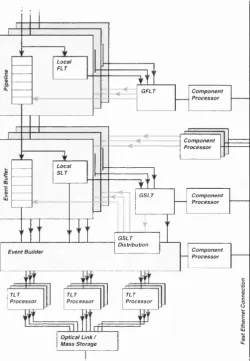
Figure 1.6: The ZEUS data acquisition and trigger system.
p h o to n is perform ed by two se])arate detectors. T h e p h o to n d e te c to r is situ a te d close to the beam pipe betw een 104 and 107 m from th e in te ra c tio n point, in the electron direction. T he electron d etecto r is situ a ted 34 m from th e in teractio n point. B oth d etecto rs are based on le a d -sc in tilla to r sandw ich calo rim eters w ith an energy resolution of a { E ) / E = 0 .1 8 \Æ .
1.6
T h e Z E U S trig g er sy ste m
T h e nom inal bunch crossing ra te of th e H ER A accelerator is ~ 10 MHz which poses challenges for th e D a ta A cQ uisition (DAQ) and trigg er system s. T h e in teractio n ra te is d o m in ated by in teractio n s betw een the p ro to n beam an d resid ual gas, “beam gas” , which co n trib u tes a b o u t lO-lOOkHz, w hilst th e ra te w ritte n to ta p e for ep
C h ap ter 1 1.6 The ZEUS trigger system To reduce th e ra te to less th a n ~ 1 0 Hz w hilst efficiently selecting ep events, ZEUS
uses a th re e stag e trig g er system [7] show n in F ig u re 1.6.
T h e r a te is in itia lly reduced to ~ 1 kHz by th e F irs t Level T rigger (FLT) w hich is a h ard w are based trig g er. Each co m pon ent used a t th e F L T has its own F L T an d sto res th e d a ta in a pip eline aw aiting a decision. T h e decision is m a d e w ith in ~ 2 /zs of th e b u n ch crossing an d passed onto th e G lobal F irs t Level T rigger (G FL T ) w hich th e n m akes a final decision in 4.4 /is, p assing th e decision back to th e com po nen t read o u t.
E ven ts w hich pass th e F L T proceed on to th e Second Level T rigger (SLT). T h e SLT is a softw are based trig g er ru n on a netw ork of tra n s p u te rs, designed to reduce th e r a te by ap p ro x im ate ly a facto r of ten. A nalogously to th e F L T , each co m p onen t can have its own SLT, w hich passes decisions onto th e G lobal Second Level T rigger
(G SL T).
E ach co m p o n en t th e n passes th e filtered events to an event b u ild er w hich fills th e d a ta s tru c tu re for th e T h ird Level T rigger (T L T ). T h e T L T ru n s a crude version of th e full reco n stru c tio n softw are an d is able to m ake decisions concerning global event p ro p erties, je t p ro p erties an d event kinem atics. T h e event ra te is now reduced to a m an ag eab le ~ 1 Hz. T h e final stag e is to tra n sfe r th e events by an o p tical fibre
C hapter 2
Q C D and
ep
Interactions
T h e in teractio n s of q uark s a n d gluons are described by Q u a n tu m C h ro m o d y n am ics (Q C D ), a n o n -ab elian gauge th e o ry based on th e SU(3) colour sy m m e try group. T h e qu ark s, each in th ree colours, in te ra c t by th e exchange of electrically n e u tra l vector bosons, gluons, w hich form a colour o c te t. T h e gluons are n o t colour n e u tra l an d th u s th e y them selves in te ra c t strongly. A consequence of th is p ro p e rty is asy m p to tic freedom , w hich s ta te s th a t th e in te ra c tio n s tre n g th of tw o coloured o b je c ts decreases
th e shorter th e d istan ce betw een th em . T h e effective s tro n g coupling co n sta n t th e n d epen ds on th e scale a t w hich th e Q C D process occurs. T h e lead in g-order so lu tio n of th e ren o rm a lisatio n group eq u atio n gives
= /3oln(QVA2) ’ (2.1)
w here deno tes th e scale a t w hich as is p ro b ed an d A is a Q C D cutoff p a ra m e te r. T h e p a ra m e te r is re la te d to th e n u m b er of q u ark flavors in th e theory, N f , by
^ 0 = 1 1 — 0^ / - (2-2) Since th e know n n u m b er of flavors is six, /3o > 0, th e co up ling c o n s ta n t becom es sm aller th e larger th e scale Q^. T h e p ro p e rty of a sy m p to tic freedom has been proven rigorously an d allows p red ic tio n s for th e p ro p erties of s tro n g in te ra c tio n s to be m ade in th e p e rtu rb a tiv e Q C D (pQ C D ) regim e, in w hich is sm all. O ne such exam ple is th e p ro d u c tio n of jets^ in a n n ih ila tio n a t L E P in w hich ~ M |. A t lower scales as becom es large m a k in g p e rtu rb a tiv e calcu latio n s u n reliab le an d acc u rate
C h ap ter 2 2.1 Proton structure p red ic tio n s can n o t be m ade. For exam ple, th e d is trib u tio n of th e “p a rto n s ” b o u n d in h ad ro n s, can n o t be calcu la ted from first principles.
Q C D h as been te ste d in d e p th in th e p e rtu rb a tiv e regim e an d describes th e d a ta very well [8]. However, because th e observables are based on h a d ro n s r a th e r th a n th e
p a rto n s to w hich p e rtu rb a tiv e calculations ap p ly th e precision achieved in te stin g Q C D is lower th a n in th e case of electrow eak in te ra c tio n s a n d a d e ta ile d ex p erim en tal know ledge of th e s tru c tu re o f h ad ro n s is essential.
2.1
P r o to n s tr u c tu r e
l { k )
^ V»(<J)
N (P )
X (P x )
Figure 2.1: Ki nema ti cs of a deep inelastic scattering event.
T h e s tru c tu re of th e p ro to n is stu d ied in deep inelastic le p to n -h a d ro n sc a tte rin g (D IS), shown in F ig u re 2.1. Tw o d istin c t classes of s c a tte rin g exist, n e u tra l cu rren t (N O ), w here th e exchanged boson is a 7* or a Z®, an d ch arged c u rre n t (C C ), w here
th e exchanged boson is a W ^ . If th e incom ing a n d o u tg o in g le p to n fo u r-m o m en ta are lab eled by an d /c'^, th e m o m en tu m of th e ta rg e t h a d ro n by an d th e four- m o m en tu m tra n sfe r by — k'^, th e n th e s ta n d a rd DIS variab les are defined as follows:
Q ' = - g ' , (2.3)
(2.4) jy = P - q = M ( E ' - E ) , (2.5)
Q" Q"
^ 2v 2 M ( E ' - E ) ’ (2.6)
C h a p te r 2 2.1 Proton structure
I
Î
10 10 10 10 10 10 10 10* HI e^p NC 94-00 prelim. A H I e p NC
□ ZEUS e^p NC 99-00 prelim, o ZEUS e p NC 98-99 prelim. -- SM e^p NC (CTEQ5D) — SM e p NC (CTEQ5D)
<r HI e^p CC 94-00 prelim. A H I e p C C
□ ZEUS e+p CC 99-00 prelim, o ZEUS e p CC 98-99 prelim. -- SM e*p CC (CTEQ5D) - SM e p CC (CTEQ5D) y <0.9
J I I I I I I I ] I I I I I I I
10 10
(GeVh
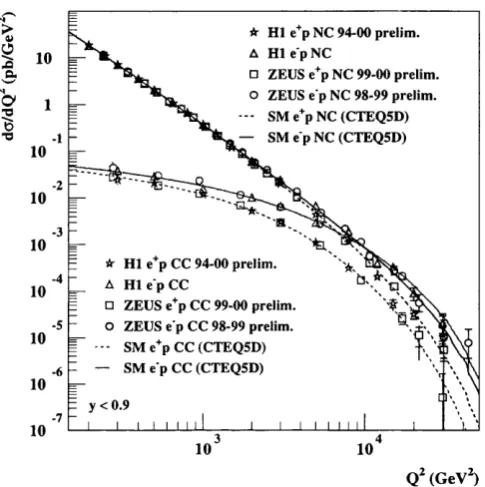
Figure 2.2; The N C and C C cross sections as a function of measured at HERA.
w here th e energy variables refer to th e h ad ro n rest fram e, M is th e p ro to n m ass, is th e in v a rian t m ass of th e exchanged boson, x is th e B jorken scaling variable, an d
y is th e fractio n al energy tra n s fe r in th e h ad ro n rest fram e. T h e in v a rian t m ass of th e to ta l system is given by:
s = ( P + k)' 2 P - k = 9 l
x y (2.8)
so th a t a t fixed s only tw o of th e th re e in v arian ts x, y a n d are actu ally in d e p en d en t.
T h e N C an d CC cross sections, show n in F igure 2.2, can b e d escrib ed in te rm s of “s tru c tu re fu n ctio n s” , Fi, w hich p aram eterise th e s tru c tu re of th e p ro to n ta rg e t as seen by th e v irtu a l boson. For N C sc a tte rin g th e do ub le-differen tial cross section is
47ro;^
d x d Q “^ xQ^
U sing th e rela tio n F l = F2 — 2xF\ th is reduces to
(Fcj^p 4 7 r o ;2
U + F 2 -
y^Fi
=F
Y^xFz
(2.9)
(2 .10)
dxdQ"^ xQ^
w here th e helicity dependence of th e electrow eak in te ra c tio n s is co n tain ed w ith in
C h ap ter 2 2.1 Proton structure
F2 is th e generalised s tru c tu re fu n ctio n of 7 an d exchange, F l is th e lo n g itu d in a l s tru c tu re function, an d F3 is th e p a rity v io latin g te rm arisin g from exchange.
Since F3 is sm all for « M | it is neglected in all fu rth e r discussions here. A d etaile d d erivatio n of all th ese te rm s is given, for ex am ple, in [9].
2.1.1
The naive quark parton m odel
T h e form of th e cross sections given above is com p letely general, all th e physics d e ta il is contained in th e s tru c tu re functions. A priori th ese m ig h t be exp ected to be com plicated fun ctio ns o f p an d reflecting th e co m plexity of th e inelastic s c a tte rin g process. However, in 1969, B jorken p re d ic te d th a t in th e deep inelastic region^ th e s tru c tu re fu n ctio n s should “scale” , i.e. becom e fu n ctio n s n o t of an d
1/ in d ep en d en tly b u t only of th e ir ra tio Q'^/u. T h is p re d ic te d scaling was confirm ed
by resu lts from SLAC [1 0].
F ey n m an gave an in tu itiv e ex p lan atio n of B jo rk en ’s a rg u m e n ts in his p a rto n m odel [1 1], in w hich th e p ro to n is assum ed to be com posed of point-like o bjects, called p arto n s. T h e inelastic sc a tte rin g of th e le p to n off th e p ro to n is th e n described as th e elastic sc a tte rin g of th e lep to n off a p a rto n within th e p ro to n . T h e ep
cross section is th e n given by th e incoherent sum of th e e le c tro n -p a rto n sc a tte rin g processes.
If a p a rto n of m ass m , c arry in g a fractio n, of th e to ta l p ro to n m o m en tu m is stru ck , conservation of fo u r-m o m en tu m im plies ^
t ) ^ r n ^ = {^p + q f =
V -
g
T h e B jorken scaling variable, x, th e n has a sim ple in te rp re ta tio n as th e fractio n of th e lo n g itu d in a l p ro to n m o m en tu m , carried by th e p a rto n in th e h a rd sc a tte r. W ith in th e p a rto n m odel th e s tru c tu re fu n ctio n s are given by
(2.12)
i
f i W = (2.13)
u 00 but f v finite.
C h ap ter 2 2.1 Proton structure w here are th e p a rto n charges an d fi {x) are th e p a rto n d en sity fu n ctio n s w hich can be in te rp re te d as th e p ro b ab ility of finding a p a rto n i w ith m o m en tu m fractio n
X in th e p ro to n . F2 a n d Fi are connected by th e C allan -G ro ss re la tio n
2 j ;F iW (2.14)
w hich is a d irect consequence of th e assu m p tio n th a t p a rto n s are m assless, sp in -1/2,
n o n -in teractin g p a rtic le s an d im plies th a t Fl is zero.
T h ro u g h m easu rem en ts a t SLAC an d in u N sc a tte rin g [12], th ese p a rto n s were asso ciated w ith th e q u ark s of th e G ell-M ann a n d Zweig an d th e m odel becam e th e q u a rk p a rto n m odel (Q P M ).
2.1.2
T he Q C D im proved quark parton m odel
If th e p ro to n consisted solely of charged q u arks th e sum of th e ir m o m e n ta w ould be equal to th a t of th e p ro to n , i.e.
1
f dx f i { x ) x = 1. (2.15)
* 0
However, ex p erim en tally th is value was found to be % 0.5 [13]. T h is im plies th a t th e re are also electrically n e u tra l p articles w ith in th e p ro to n w hich ca rry ~ 50% of its m om en tu m . T h ese p articles are identified w ith gluons, th e gauge bosons of Q C D . D irect evidence for th e existence of th ese gluons, was prov ided in 1979 via th e observatio n of 3 -jet events in e+ e" an n ih ila tio n a t D E S Y [14].
In th is Q C D im proved Q P M , th e assu m p tio n th a t th e tran sv erse m o m en tu m of th e p a rto n s is zero, in th e in fin ite m o m en tu m fram e, no longer holds. A q u a rk can em it a gluon an d acquire a larg e tran sv erse m o m en tu m k r w ith p ro b a b ility p ro p o rtio n a l to CKg d k ‘^ / k ^ a t large kx- T h is in teg ral ex tend s u p to th e k in em atic lim it, ^ a n d gives rise to c o n trib u tio n s p ro p o rtio n a l to CKg log w hich b reak scaling. T h is was ex p erim en tally confirm ed by th e observ ation of a lo g a rith m ic depend en ce on of F2( x , Q ‘^) an d w as one of th e first m a jo r successes of p e rtu rb a tiv e Q C D .
F ig u re 2.3 shows th e la te s t m easu rem en t of th e x an d depen dence of F2 from
ZEUS, clearly show ing th ese scaling v iolatio ns [15]. A t large values of x, w here th e valence q uark s d o m in a te , F2 (and hence th e q u a rk density ) can be seen to fall w ith
increasing A t low x, w here th e n u m b er of “sea” q u ark s an d gluons is larg er, F2
C hapter 2 2.1 Proton structure
ZEUS
CJD O
0
x = 6 .3 E - 0 5 x = 0 .0 0 0 1 0 2
( = 0 .0 0 0 1 6 1
x = 0 .0 0 0 2 5 3 x = 0 .0 0 0 4
x = 0 .0 0 0 5 ( = 0 .0 0 0 6 3 2
x = 0 .0 0 0 8
.00102
.0 0 1 3 1.00161
0.0021 .0 0 2 5 3
0 .0 0 3 2
x = 0 .0 0 5
• Z E U S 96/97 A F ixed T arget - N L O Q C D Fit
x = 0 .0 0 8
x = 0 . 0 1 3
x = 0.021
x = 0 .0 3 2
l _ x = 0 .0 5
x = 0 .0 8
x = 0 . 13
*- i , > j i x = 0 .1 8
x = 0 .2 5
x = 0 .4
x = 0 .6 5
1 0 1 0^ 1 0^ l o '' , l o C
(GeV^)
C hapter 2 2.2 Evolution equations
2.2
E v o lu tio n e q u a tio n s
T h e facto risatio n theo rem of collinear (m ass) sin g u la rities [16] s ta te s th a t, in a general h ard collision (i.e. a sc a tte rin g process involving a large tra n sfe rre d m o m en tu m )$> A^) of incom ing hadrons, all lo n g -d istan ce (n o n -p ertu rb ativ e) effects can be facto rised in to universal (p rocess-ind ep end en t) p a rto n densities th u s leading to a p e rtu rb a tiv e ly calculable dependence on th e h a rd sc a tte rin g scale called p a rto n evolution. T h is dependence arises b ecau se a q u ark seen a t a scale
Q l as carrying a fractio n Xq of th e p ro to n m o m en tu m can be resolved in to m ore qu arks and gluons, having x < xq, w hen th e scale is increased.
O ne set of p a rto n evolution equ ations derived on th e basis of th e collinear facto risatio n th e o re m are th e D o k sh itzer-G rib o v -L ip ato v -A ltarelli-P arisi (D G L A P ) evolution eq u atio n s [17]. T h e D G L A P eq uation s describe th e way th e q u ark q an d gluon g m o m en tu m d is trib u tio n s in a h ad ro n evolve w ith th e scale of th e in te ra c tio n Q '.
d q i ( x , Q ‘^)
dlogQ^
d g { x , Q ‘^) dlogQ^
^ f dy y
X
1
^
f dy2 % y V
+
givi Q )Pqg
-X
Y ^ g i { y , Q ^ ) Pgq ( - ) + 9 { y , Q ^ ) P g g ( - )
(2,16)
,{ 2 .1 7 )
w here qi{x,Q^) is th e q u ark density fu nction, for each q u a rk flavour i an d g { x , Q ‘^)
is th e gluon den sity function. T h e “sp littin g fu n c tio n s” Pjk rep resen t th e p ro b ab ility of a p a rto n k o f m o m en tu m fractio n y e m ittin g a p a rto n j of m o m en tu m fraction x. T h is p ro b ab ility will depend on th e n u m b e r of sp littin g s allow ed in th e ap p ro x im atio n . G iven a specific facto risatio n a n d ren o rm a lisatio n schem e, th e sp littin g functio ns Pjk are o b ta in ed in Q C D by p e rtu rb a tiv e expansion in CKg,
y j \ y J 27t \ y
T h e tru n c a tio n a fte r th e first two term s in th e ex p an sio n defines th e n e x t-to - leading order (N LO ) D G L A P evolution. T his ap p ro ac h assum es th a t th e d o m in a n t co n trib u tio n to th e evolution com es from su b seq u en t p a rto n em issions w hich are stron gly ordered in tran sv erse m o m en ta th e la rg e st co rresp o n d in g to th e p a rto n in te ra c tin g w ith th e probe.
A t sm all X, higher order co n trib u tio n s to th e s p littin g fu n ctio n s of th e form
C hapter 2 2.2 Evolution equations
High density
region
CCFM
Unconventional DGLAP
Modified BFKL
DGLAP
£ n
Figure 2.4: Schematic representation of the applicability of various evolution equations across the (x, Q^) plane.
P(n) ~ —In
X n —1
X
will be enhanced, spoiling th e convergence of (2.18). T h u s th e conventional D G L A P eq u ations m ay be in a d e q u a te a t low x an d m u st e ith e r be m odified or an a lte rn a tiv e set of evolution eq u atio n s used. F igure 2.4 shows th e ex pected regions of ap p licab ility of various alte rn a tiv e s across th e (x, plane. T h e B F K L an d C C F M evolution equ ations, w hich are based on a g en eralisatio n of th e co llinear facto risatio n theo rem called k r facto risatio n [18] w ill now be discussed.
2.2.1
BFK L evolution
T h e B alitsk y -F ad in -K u raev -L ip ato v (B F K L ) [19] evo lutio n e q u a tio n allows th e resu m m atio n of term s w ith a lead in g (a^ In a;)" in th e ex pan sio n of E q u a tio n (2.18), in d e p en d en t of In T h is involves considering th e ev olution of a gluon d istrib u tio n w hich is n o t in teg rate d over /c^, since b reaking th e asso ciatio n to leading In im plies th a t th e gluon la d d er need n o t be ordered in hr- T h e u n in te g ra te d gluon den sity is rela ted to th e m ore fam iliar gluon d is trib u tio n by
2
C h ap ter 2 2.2 Evolution equations
y,Q
Figure 2.5: Schematic representation of the gluon ladder and quark box 5 . T h e B F K L eq u atio n th en describes th e ln (l/a :) evolution of th e u n in te g ra te d gluon density:
dÇ{x, k f )
(2.20)
d l n { l / x )
T his evolution corresponds rou gh ly to cascades w ith em issions stro n g ly o rdered in
X w ith no re stric tio n on h r
-In o rd er for th e B F K L eq u atio n to m ake prediction s, e.g. of F2, th e gluon la d d er
m u st b e convoluted w ith th e q u ark box (F igure 2.5) according to th e h r fa c to risa tio n theorem :
1
F2{x,Q^) = [ ~ [ (2.2 1)
J y J i^T V
2.2.2
C C FM evolution
C h a p te r 2 2.3 Photon structure ev o lu tio n eq u atio n s a tte m p t to be app licab le across th e w hole k in e m atic p lan e by su m m in g m ore general classes of d iag ram s. T hey are based on th e idea of coherent gluon ra d ia tio n , w hich leads to an g u lar ordering of gluon em issions in th e gluon la d d e r such th a t 6i > 9i-\ w here 6i is th e it h gluon m akes to th e original d irection . O u tsid e th is an g u lar region th e re is d estru ctiv e interference such th a t m ulti-g lu o n c o n trib u tio n s vanish to leading-order. A n g u lar o rdering im plies o rd erin g in k r / E of th e g luon ladd er. Because of an g u lar o rdering, th e u n in te g ra te d gluon d is trib u tio n in C C F M depen ds on th e m axim u m allowed angle, in ad d itio n to th e m o m en tu m fractio n x an d th e transv erse m o m en tu m of th e p ro p a g a to r gluon. T h is e x tra scale can be ta k en to be th e scale Q of th e pro be, lead ing to a scale d ep en d e n t gluon d en sity
A t sm all T, w here A becom es in d e p en d en t of an d o rdering m k T / E does n o t im ply o rd e rin g in th e in tegral eq u atio n for A { x , k^, can be a p p ro x im ate d by th e B F K L eq u atio n . However, a t m o d e ra te x, k r o rd erin g is im plied an d th e D G L A P e q u a tio n for th e in teg rate d gluon d is trib u tio n g[x^ Q ^)is recovered. Cross sections can th e n be calcu lated according to th e k r facto risatio n th eo rem by co nvoluting th e u n in te g ra te d gluon d ensity w ith th e off-shell boson gluon fusion m a trix elem ent, d,
cr = y*
dk^dXgA{xg, kT^Q)^i'y*9* ^(2.22)
2.3
P h o to n str u c tu r e
T h e D IS cross section, given in E q u a tio n (2.9), is d o m in a te d by th e exchange of very low v irtu a lity ph otons. T h e lifetim e of these p h o to n s varies as ^ E ^ j Q ^ w hich a t v ery low v irtu a litie s can be long co m p ared to th e ch a ra c te ristic tim e of th e h a rd subprocess. T h e electron beam can th e n be considered a source of ap p ro x im ate ly m assless, collinear, p h o to n s an d an ep collider effectively becom es a 7p collider. T h e
to ta l cross section, <7^ , can th e n be facto rised into c o n trib u tio n s from th e to ta l 7p
cross section an d som e flux facto r /g_>.y(p) w hich is th e p ro b a b ility of finding a p h o to n w ith energy E^ = yE^ inside th e electron. In th e lim it -4 - 0, th e p h o to n s
can only be tran sv ersely polarised, an d to a good ap p ro x im atio n
Chapter 2 2.3 Photon structure
^ 220
DL98
ALLM97 PDG96
180
-140
20 0
100
170
200 210 220
100
Figure 2.6: The total photon-pj'oton cross section.
1 + (1 - v Y _ c ^ - y Q 2rnin
(2.24) where = rjLjy'^/{l — y) is th e kiiieniatic lower bound. T h is is known as the equivalent ph oton app ro xim ation (EPA ). N eglecting the Q'^ dependence of th e 7p
interaction and in teg ratin g over photon v irtu alities from th e lower kin em atic lim it to some m axim um , , yields
a 1 + (1 - _ 2-^ ~
1-
Q
2
m i n
(2.25)
^ z/ \ Q L
which is th e W eizsacker-W illiam s approx im atio n (W W A) [21].
Chapter 2 2.3 Photon structure
(a)
(b)
(c)
(d) _
(e)
,
(f)
Figure 2.7: Examples of leading-order processes resulting in two jets; (a) QCD Compton, (h) boson gluon fusion, (c) flavour excitation from the proton, (d) gluon gluon fusion, (e) and (f) ft,avour excitation from the photon.
2.3.1
Hard photoproduction
At leading-order, h ard photop rod iictio n processes, such as those in F igure 2.7, can he s])lit into two classes; “d ire c t” , where the p h oton takes p a rt d irectly in the h ard sc a tte r (Figures 2 .7(a)-(c)), and “resolved” , where a p a rto n from th e p ho to n takes p art in th e h ard sc a tte r (Figures 2.7(d)-(f)) and th e s c a tte r can be viewed as having resolved the s tru c tu re of th e photon.
These two classes of events can be sep arated based on th e knowledge of th e fraction of th e p h o to n ’s m om entum p a rtic ip a tin g in th e h a rd sc a tte r, x^. For th e LO Q C D diagram s shown in F igure 2.7, energy and m om entu m conservation yield
E m p a r i o n s _ ^ p a r t o n3
p a r to n s T ^
“ 2 yE , '
where yEf, is th e in itial ph oto n energy. For direct events, th is is one and for resolved events it is less th a n one. By sum m ing over je ts in stead of p a rto n s can be tra n sla te d into an exp erim entally m easurable ciuantity, , and E q u atio n (2.26) becomes:
y.obs _ C ^ j e t s T_________ 0 7^
C hapter 2 2.3 Photon structure
ZEUS 1994
2000
> 1750 1500 1250
1000
750 500
resolved
direct
250
Figure 2.8: The distribution in dijet events f or data (black dots) compared with HE RW IG with and without M P I (solid line and dotted line), and P Y T H I A with M P I
(dashed line) Monte Carlo generators.
w here th e sum ru ns over th e two highest tran sv erse energy je ts an d is th e fractio n of th e p h o to n ’s m o m en tu m en terin g th e d ijet system .
T h e ab ility to s e p a ra te d irect an d resolved events using 2;°^^ was d e m o n stra te d in [22]. F ig u re 2.8 shows th e th e m easured d istrib u tio n to g e th e r w ith th e pred ictio n s of two LO M onte C a rlo ’s. D irect events (filled h isto g ram ) are stro n g ly peaked a t x^^^ > 0.75 an d th e resolved a t x°^^ < 0.75.
Beyond lead in g-o rd er th e sep aratio n betw een d irec t a n d resolved is am biguous; th e processes in F igu res 2.7(d) an d (e), classed as th e resolved p ro d u c tio n of two je ts a t LO could be considered as th e d irect p ro d u ctio n of th re e je ts a t N LO . T h e te rm s direct an d resolved are th e n only defined a t lead ing -order, beyond th is th e y d ep en d on th e facto risatio n scale an d can th u s have no physical m eaning. T h e definition of , however, is valid a t all orders an d it rem a in s a pow erful to o l to id en tify
“p h o to n s tru c tu re like” effects.
2.3.2
P h o to n stru cture functions
C h ap ter 2 2.3 Photon structure
%
10 10 10 10
Q- ((;eV-) Figure 2.9: Feynman diagram f o r e^y diagram with a virtual photon, j * , probing an
on-shell photon, 7 (left). S um ma r y of current results on jRj (right).
p h o to n w ith v irtu ality^ ^ 0 produ cing a final s ta te e X is given by,
^ [ ( 1 + (1 - VŸ) m - , Q^) - y ^ m - , Q ') ] (2.2 8)
As in ep sc a tte rin g th e s tru c tu re function can be w ritte n in te rm s of th e p a rto n den sities
F i( ï , = 2ï y ] e ] qj { x , Q^), (2.29) w here th e sum run s over all q u ark flavours, i, o f charge a n d th e facto r of tw o accounts for q uark s a n d an ti-q u ark s. T hese p a rto n d en sities obey a set of inhom ogeneous evolution e q u atio n s [24]:
dqj{x,Q'^)
. X
0^5(Q^)
f
dlogQ^ ^ ^ 2tt J y (2.30)
d g ( x , Q ‘^) a s { Q ‘^) f d^
y
dlogQ ' 27T + Pgg 9 {y, Q^) (2.31)
'^This is the nom enclature used in two-photon interactions at LEP. Unfortunately, at HERA, denotes the virtuality of the probed photon and the scale of the probing interaction is ~