University of South Carolina
Scholar Commons
Theses and Dissertations
2017
Governing Terrorism through Preemption: A
Comparative Analysis of Radicalization in Three
Western Liberal Democracies
Derek M.D. Silva University of South Carolina
Follow this and additional works at:https://scholarcommons.sc.edu/etd
Part of theSociology Commons
This Open Access Dissertation is brought to you by Scholar Commons. It has been accepted for inclusion in Theses and Dissertations by an authorized administrator of Scholar Commons. For more information, please [email protected].
Recommended Citation
GOVERNING TERRORISM THROUGH PREEMPTION: A COMPARATIVE ANALYSIS OF RADICALIZATION IN THREE WESTERN LIBERAL
DEMOCRACIES
by
Derek M.D. Silva
Bachelor of Arts
University of Ontario Institute of Technology, 2012
Master of Arts Carleton University, 2014
Submitted in Partial Fulfillment of the Requirements
For the Degree of Doctor of Philosophy in
Sociology
College of Arts and Sciences
University of South Carolina
2017
Accepted by:
Mathieu Deflem, Major Professor
Andrea K. Henderson, Committee Member
Carla A. Pfeffer, Committee Member
Wadie E. Said, Committee Member
DEDICATION
For Ali, Gilmour, and Gator.
Gilmour, you were my best friend and true companion. I will never, ever forget the
memories we shared as a family. You will live on in my heart forever. Rest in peace my
ACKNOWLEDGEMENTS
First and foremost, I would like to thank former Canadian Prime Minister Stephen
Harper, whose now infamous proclamation against “committing sociology” when
considering issues of terrorism was in many ways the impetus for this project and my
entire graduate research career.
More importantly, I would like to express my sincerest of thanks to my Major
Professor, mentor, and friend, Dr. Mathieu Deflem, whose guidance over the past three
years has taught me invaluable lessons in how to provide mentorship and stimulate
academic growth through critical engagement with your own work. The lessons I have
learned from Dr. Deflem will undoubtedly follow me for the rest of my professional
career.
I would also like to thank my committee members, Andrea Henderson, Carla
Pfeffer, and Wadie Said, for their input, feedback, and support throughout the completion
of this project.
To my former advisors, Nicolas Carrier and Arshia Zaidi, thanks kindly for
believing in my work and advocating for me on numerous occasions. Without the
support, I would not be in a position to complete this project.
I would also like to thank Steven Hutchinson for being an instrumental source of
Lamble and the staff at Birkbeck College, University of London for housing me in the
United Kingdom while I completed portions of this project.
To my colleagues in sociology and criminology at USC and Carleton University,
not least of which include Brian Clarke, Rhys Williams, Justin Tettrault, Alex Castleton,
Alex Luscombe, Anna Rogers, Adrienne Dues, Calley Fisk, and Zachary Butler, thanks
for welcoming critical and important theoretical and conceptual discussions which have
helped this project greatly.
I must also acknowledge the financial and institutional resources afforded to me
by the Social Sciences and Humanities Research Council of Canada, the Department of
Sociology, and the Graduate School at the University of South Carolina. More
specifically, I would like to sincerely thank Anne Hodasi and Alicia Hope for assisting
me with my countless requests for administrative guidance.
To Ali and Lee, words do not exist that would accurately reflect my gratitude for
continuous friendship and encouragement. Finally, to my family, especially my Mom and
ABSTRACT
In recent years, issues related to terrorism and counterterrorism are increasingly being
understood through the construct of ‘radicalization.’ At its most basic level, radicalization
is most often conceptualized as a transition from “normal,” conventional political,
religious or otherwise ideological beliefs towards extremist views and ultimately
violence. The process is now adopted by governmental officials and politicians, police
authorities, journalists, and even scientists to justify various forms of governmental
intervention, such as policing, social and public policy, education, and surveillance.
Notably missing from the scholarly literature is a distinctly sociological understanding of
the implications of the proliferation of radicalization discourse in contemporary society.
Considering the relative absence of sociological research on radicalization as a construct,
this project develops a theoretical perspective based on insights from the sociology of
social control to explore the emergence and genesis of radicalization discourse and its
social implications.
In particular, this study engages with theories of governmentality, literature within
critical policing studies and the othering paradigm traced back to the work of Edward
Said, to explore the global diffusion of radicalization discourses across three Western
liberal democracies – the United States, United Kingdom, and Canada – from 1969 to the
and investigate the material practices of risk, security, and policing for which such
discourses give rise. Following the analysis of thousands of publicly available
governmental and non-governmental documents, this study finds that not only has
radicalization become a dominant framework for understanding terrorism, but that
modern discursive labeling mechanisms associated with preemption disproportionately
affect certain cultural and ethnic minorities. The data illustrate this trend across social
institutions in all three countries. The findings also highlight how notions of risk and
security are increasingly embedded in the daily lives of citizens through discourses of
radicalization in order to more efficiently govern the threat of terrorism. The study
therefore broadens sociological and criminological debates on processes of social
exclusion, social control, and cultural change in the context of terrorism and highlights
some of the ways in which social distance is constructed and represented in the public
TABLE OF CONTENTS
Dedication ... iii
Acknowledgements ... iv
Abstract ... vi
List of Tables ... ix
List of Figures ... xi
Chapter 1: Introduction ... 1
Chapter 2: Theoretical Framework ... 9
Chapter 3: Methodology ... 24
Chapter 4: The New Politics of Terror ... 43
Chapter 5: Seeing Radicalization Through Law ... 85
Chapter 6: Discourses of Radicalization in the Public Sphere ... 107
Chapter 7: Scientific Discourses and Radicalization ... 147
Chapter 8: The Policing of Radicalization ... 174
Chapter 9: Conclusion ... 224
LIST OF TABLES
Table 4.1: References to Religions in Major Reports on Terrorist Threats ... 57
Table 4.2: Use of The Term ‘Radicalization’ in Major Governmental Communications Pre- and Post-2000 ... 63
Table 4.3: References to Islam in National Security Strategies ... 75
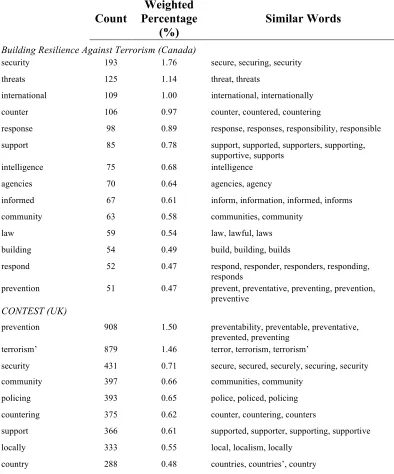
Table 4.4: Top Themes Referenced in Counterradicalization Strategies ... 76
Table 4.5: References to Religions in Counterradicalization Frameworks ... 78
Table 5.1: Federal Case Law References to Islam and ... Radicalization by Country ... 101
Table 5.2: References to Religions in Federal Case Law ... 101
Table 6.1: Number of Sources and Coding References ... 117
Table 6.2: Top 10 Words Referenced in Canadian Newspapers, 1969-2016 ... 122
Table 6.3: Top 10 Words Referenced in UK Newspapers, 1969-2016 ... 124
Table 6.4: Top 10 Words Referenced in US Newspapers, 1969-2016 ... 126
Table 6.5: References Using the "Radicalization of" Strategy in Canadian Newspapers ... 128
Table 6.6: References using the "radicalization of" strategy in UK Newspapers... 130
Table 6.7: References Using the "Radicalization of" Strategy in US Newspapers ... 131
Table 6.8: Comparison of Themes Pre- and Post-2000 in Newspapers by Country ... 138
Table 7.2: Funded Government Research Projects and Citations in
Governmental Counterradicalization Strategies since 2007 ... 166
Table 7.3: References to Academic Scholarship in News Media ... 167
Table 8.1: Primacy of Counterradicalization Policing Techniques and Logics ... 203
LIST OF FIGURES
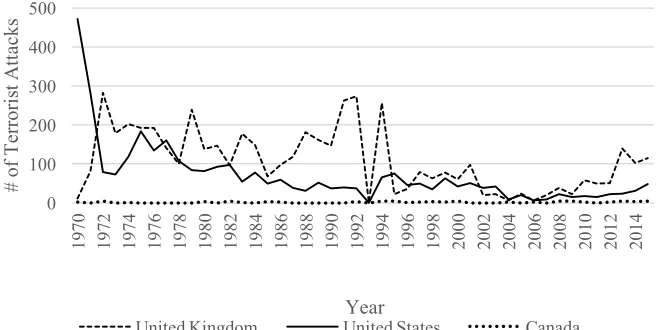
Figure 4.1: Number of Terrorist Attacks in Each Country, 1970-2015 ... 58
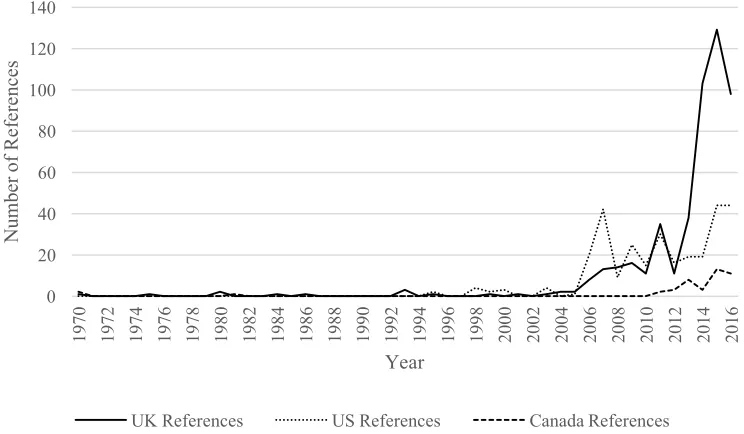
Figure 4.2: References to “Radicalization” in Political Debates ... 61
Figure 4.3: References to “Radicalization” and Islam in Congressional and Parliamentary Debates ... 79
Figure 5.1: Federal Case Law References to Islam and Radicalization ... 100
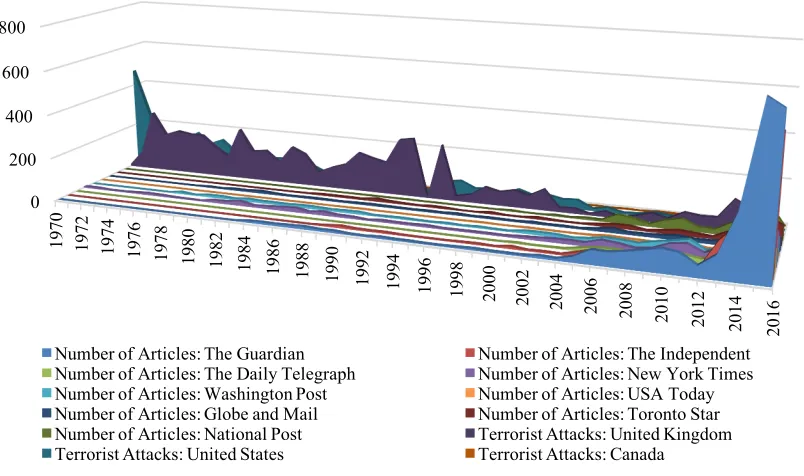
Figure 6.1: Number of Articles Referencing 'Radicalization' vs. Number of Terrorist Attacks, 1970-2016 ... 122
Figure 7.1: References to Radicalization and Islam in Academic Publications ... 149
Figure 8.1: Percentage Distribution of Funding for Prevent Policing Initiatives ... 181
Figure 8.2: National Police Chiefs’ Council Anti-Terrorist Hotline PSA ... 192
Figure 8.3: Structural Mapping of Counterradicalization Programs ... 205
CHAPTER 1
INTRODUCTION
I think that in terms of radicalization…Our security agencies work with each other and with others around the globe to track people who are threats to Canada and to watch threats that may evolve…I think, though, this is not a time to commit sociology, if I can use an expression…
- Canadian Prime Minister Stephen Harper
In 2012, following the foiled plot to derail a VIA passenger train travelling from Toronto
to New York, former Canadian Prime Minister Stephen Harper unknowingly set an
undergraduate student studying criminology outside of Toronto on a path towards
understanding the ways in which we, as social beings, comprehend terrorism and the
practices of counterterrorism which now proliferate our daily lives. His disregard for the
value of sociological insight in matters related to counterterrorism challenged those, like
me, interested in exploring the social dynamics of terrorism and, in particular, the myriad
counterterrorism interventions which now proliferate our airports, schools, universities,
hospitals, religious institutions, and community organizations. Meanwhile, his official
evocation of the concept of radicalization stood out as an assault to the very core of
knowledge production processes that might produce such theories of individual
trajectories towards political violence – for pathways to unconventional behaviors and
activities seem quite explicitly in the purview of scientific discourse. This paradoxical
understanding of radicalization thus spurned questions related to how the concept is
use it? How has radicalization become such a dominant framework for understanding
terrorism that a Prime Minister of a major Western liberal democracy is adopting it?
What are some of the social implications of the development of radicalization as a central
concept for understanding transitions towards political violence? While the former
Canadian Prime Minister did not know at the time of his remark, and likely would not
have cared, it was his undermining of the value of sociological insight that gave an
impetus to the present work.
Since the tragic events of September 11, 2001, terrorism has become a central
theme of concern for academics, government officials, and policymakers alike. While
there has been much terrorism-related research conducted in various social sciences, it
was not until quite recently that scholarly studies of terrorism and related issues have also
been taken up in sociology (Deflem 2010, 2015). Recent work by American sociologists
Mathieu Deflem (2004, 2010), Austin Turk (2004), and Donald Black (2004), and
internationally by Domenico Tosini (2007), Lorne Dawson (2010), and Ulrich Beck
(2002), have contributed to the development of the study of terrorism as a new specialty
area within the sociological community. Scholars have addressed important questions
related to terrorism in modern societies by focusing on diverse issues such as policing
(Bonino 2012; Grabosky 2008; Greene 2011), globalization (Ericson 2007), surveillance
(Lyon 2003, 2007), intelligence (Hutchinson 2014), and criminalization (Pieth 2006).
With some notable exceptions, much of this work conceives of terrorism as a form of
behavior or activity (exceptions include Beck and Miner 2013; Deflem 2010; Hutchinson
2014; Oliverio and Lauderdale 2005). Most of the existing literature on terrorism thus
arrangements of counterterrorism strategies, and thus fail to problematize how terrorism
and related phenomena come to be socially constructed. Relatively less attention has been
paid to the symbolic, cultural, discursive, and linguistic frames by which society’s
influential institutions come to communicate about, intervene upon, and shape
understandings of terrorism related phenomena.
One novel framework for understanding terrorism focuses on the concept of
‘radicalization.’ Since the early 2000s, a growing body of literature has emerged which
seeks to understand how individuals and groups shift from relatively moderate and
accepted political, religious, or ideological beliefs to radical extremist views and violent
activities (Gartenstein-Ross and Grossman 2009; Koehler 2017; Sageman 2004; Silber
and Bhatt 2007). Often referred to as radicalization, this process has received increasing
political, legal, and popular media attention. Perhaps nothing has heightened the attention
paid to radicalization discourse more than the tragic events that took place in Boston
(April 15, 2013), Paris (January 7, 2015), and Brussels (March 22, 2016), and the media
frenzies that ensued. Particularly salient in this respect has been the dominance of
governmental discourses which postulate a process whereby individuals and groups
become indoctrinated into extremist activities in order to formulate counterradicalization
policy and law enforcement strategies. These discourses typically evoke
conceptualizations of radicalization to justify various forms of governmental intervention,
such as policing, social and public policy, education, and surveillance.
While the psychological and practical aspects related to the transitional matrix
from conventional political and religious beliefs to violence has been widely addressed
has emerged as a dominant discursive framework for understanding terrorism. Notably
missing from the literature is a distinctly sociological understanding of the implications
of radicalization discourse in contemporary society. Considering the relative absence of
sociological research on radicalization as a construct, this project will develop a
theoretical perspective based on insights from the sociology of social control to explore
the emergence and genesis of radicalization discourse and its social implications. In
particular, I engage with theories of governmentality, othering, and discourse analysis to
explore the global diffusion of radicalization discourses throughout dominant institutions
and illustrate how practices of governing terrorism disproportionately impact certain
individuals and groups preemptively identified as risky. I also examine some of the
sociohistorical shifts related to the governance of terrorism. Here I investigate how
counterterrorism has transitioned from a reactive logic based predominantly on military,
law, and security, to a proactive, preemptive style of governance founded on notions of
risk that attempt to make unknowable futures known. This discursive shift related to
counterradicalization, as I shall illustrate, has now spread throughout the social system to
entrench our schools and universities, local law enforcement agencies, and community
organizations, and these discourses help construct the very notion of radicalization used
to disproportionately label certain individuals and groups as a risky.
In the following chapters, I explore how three Western liberal democracies have
come to manage the problem of terrorism through the identification, intervention, and
suppression of individuals and groups who are judged to be at risk of radicalization.
Many scholars argue that post-9/11 counterterrorism strategies, designed to increase
activities are insufficient, on their own, for dealing with the threat (Hutchinson and
O’Malley 2007; Lyon 2003; Pieth 2006). Many governments agree, as anti-terrorism
policies in several Western countries have been significantly re-articulated around
pre-empting radicalization, here understood as strategies which aim to intervene at an early
stage in the development of radical or extreme political views to the manifestation of
violence. However, relatively little research has been conducted on the pattern and causes
of this shift towards radicalization preemption. This dissertation therefore investigates the
complex and interrelated processes that have presupposed and influenced this new way of
thinking about terrorism and practices of counterterrorism.
I highlight how the project situates the dynamics of radicalization as part of a
broader trend toward governance through preemption. This study will thus contribute to
an important emerging body of work on theorizing this new mode of governance. From
an empirical standpoint, this study examines ways in which radicalization has been, and
is being, problematized and addressed in three different countries: The United States,
United Kingdom, and Canada. These countries were selected because of their political,
social, and cultural synergies as well as substantial policy transfer between them (see
Monaghan 2014). In the following chapters, I will discuss how I explore the
radicalization framework empirically, and outline methods of textual analysis, discourse
analysis, and case-study analysis which will be employed to investigate political archives,
debates, and reports, legislation and case law, news media, and academic texts related to
radicalization. These sources will be used to examine the proliferation of discourses
about radicalization and how such frames lead to the emergence of practices that seek to
Structure of the Dissertation
The following eight chapters present the theoretical and methodological perspectives and
approaches adopted in this study, and provide empirical data and analysis to unpack some
of the sociostructural implications of the diffusion of radicalization discourses throughout
the public sphere.
In Chapter Two, I outline the key theoretical frameworks used to explore the shift
towards governing terrorism through preemption. In this chapter, I engage with broad
theoretical traditions advanced in the sociology of social control, including the
well-established notion of governmentality developed by French social philosopher Michel
Foucault, theories of governance through practices of preemptive intervention, and the
analytic approach to society as structural systems developed by German sociologist
Niklas Luhmann.
Chapter Three highlights the methodological approaches utilized in the empirical
chapters which follow. In this chapter, I outline how the study adopts a broadly abductive
comparative-historical approach which utilizes critical discourse and content analysis and
case studies to explore the structural conditions for which counterradicalization, as an
overarching governmental logical, emerges in Western liberal democracies. I also sketch
out the ways in which this project approaches methodological pluralism, utilizing
methodological triangulation, to explore a diverse corpus of data.
In the next four chapters, I discuss various dimensions of radicalization discourse,
more specifically political, legal, media, and scientific conceptualizations. Chapter Four
counterterrorism more generally. Through an analysis of official government documents
related to counterterrorism, congressional and parliamentary debates, and high-ranking
governmental speeches, this chapter argues that counterterrorism strategies throughout
the West have been significantly rearticulated around notions of counterradicalization,
and practices of surveillance, intelligence gathering, and policing, rather than the more
reactive, military understandings which have been relied upon by past governments.
In Chapter Five, I explore legal communications related to counterterrorism to
explore questions related to how law, and the legal system more generally, understands
and constructs radicalization as a legal element. Through an in-depth analysis of legal
decisions making use of the concept of radicalization, I argue that law is able to
creatively adopt extra-juridical radicalization discourses to legitimize legal
decision-making on issues of terrorism and criminality. I also maintain that law’s adoption of
ambiguous definitions of radicalization are reflective of its own biases and discriminatory
practices towards cultural and ethnic minorities. I thus advance established notions of
related to legal violence and exclusionary mechanisms.
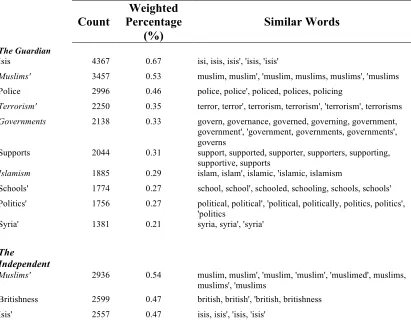
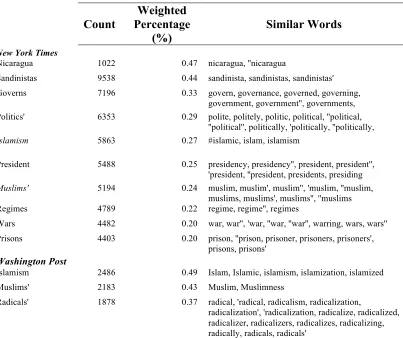
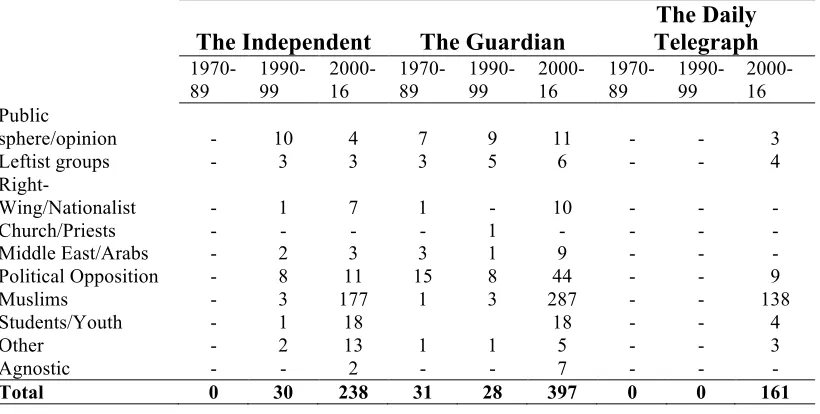
Chapter Six examines the proliferation of media discourses about radicalization
through the analysis of nine high-profile newspapers, three from each of the United
States, United Kingdom, and Canada, to highlight how media conceptualizes issues
related to radicalization and counterradicalization. In total, 8,072 newspaper articles are
analyzed within traditions of content and discourse analysis to advance the argument that
radicalization discourses in the cultural apparatus, reflected by media coverage, have
increasingly focused on cultural and ethnic minorities, most notably Muslims. This
radicalization, from a concept denoting political opposition to a symbol of religious
opposition to Western liberal democracies. I further argue that our cultural
representations of radicalization influence public understandings of a variety of issues
related to risk, security, surveillance, and policing.
In Chapter Seven, I explore scientific discourses about radicalization and related
issues and highlight how the scientific system adopts a very narrow definition of the
concept. I further illustrate how scientific discourses related to radicalization are taken up
in other social systems and how such adoption is indicative of a preoccupation with
framing Muslims in terms of ‘risky’ identities.
In the final empirical chapter, I ground the findings from the previous four
chapters in a case-study analysis of three counterterrorism policing programs which have
emerged in each of the United States, Canada, and the United Kingdom. I thus explore
the New York Police Department’s Community Affairs Bureau, the Calgary Police
Service’s ReDirect Program, and the City of London Police’s Muslim Contact Unit, to
highlight how changing political, legal, cultural, and scientific understandings of
counterterrorism, around notions of governance through preemption, influence the
material practices of law enforcement officials. As a sociology of terrorism policing, this
chapter represents the first attempt to draw out connections between broad
understandings of radicalization and the practices of police aimed at countering such
CHAPTER 2
THEORETICAL FRAMEWORK
The theoretical perspective adopted in this research is rooted in the tradition of the
sociology of social control, specifically the governmentality framework associated with
French philosopher Michel Foucault and its relevance for theories of preemption. A brief
literature review of existing research on radicalization will help situate my perspective.
Literature Review on Radicalization, Deradicalization, and Counterradicalization
As noted by Della Porta (1995), “radicalization” emerged in academic discourse during
the 1970s as a term to describe the interactive and processual dynamics associated with
the formation of violent, most often clandestine, social movement groups. Here,
radicalization denoted the actual manifestation of violence and focused on its
differentiation and escalation vis-à-vis form and intensity (Della Porta and LaFree 2012).
Since then, however, the concept of radicalization and the related term ‘radicalism’ have
become more prominent in research on terrorism seeking to explain individual-level
processes influencing transitions toward violence and memberships in violent groups.
Outside of sociology, researchers have identified different ‘risk factors’ or ‘soft
pressures’ which steer individuals and groups toward radicalization and, ultimately,
terrorist activity (Aly 2015; Gartenstein-Ross and Grossman 2009; Bartlett, Birdwell, and
King 2010; McCauley and Moskalenko 2008, 2013; Waldmann 2009). Some studies
radicalization (Ali 2015; Bjørgo 2004; Bjørgo and Horgan 2009; Cronin 2009; Horgan
2009; LaFree and Miller 2008). Others approach radicalization and deradicalization as
psychological processes and thus search for causes that may form the basis of
government interventions (King and Taylor 2011; Kruglanski, Gelfand, and Bélanger
2014). Much of this body of work seeks to identify a generalizable trajectory from
conventional political beliefs towards violence at the individual level, on ideological and
psychological processes, and on producing case studies of extremist groups disconnected
from particular social and political contexts (Della Porta and LaFree 2012). As such,
much of this research is largely etiological and approaches ‘radicalization’ as an
unproblematic and taken for granted concept.
Some scholars have problematized counterradicalization governance strategies in
other disciplines. Most notable in this respect is the work of political scientist Lasse
Lindekilde (2012a) who argues that Danish counterradicalization policies are oriented
around “logics of repressive liberalism” (p. 123) – that is, radical identities can be
prevented by disciplining those with counter-liberal identities into liberal (read:
productive) democratic citizens. By situating Danish counterradicalization policies and
practices in relation to neoliberal governance strategies, Lindekilde (2012a)
simultaneously problematizes the logic of Denmark’s radicalization policies whilst
illustrating how targeted populations (i.e., the Muslim community) demonstrate
skepticism about the effectiveness of the measures. While Lindekilde’s (2012a) analysis
is based on in-depth interviews and fieldwork, it focuses solely on the perceived impact
of counterradicalization policies. It was therefore not within the study’s scope to
counterradicalization policies rather than grounding the explanations and logics for such
strategies in particular social, political, and cultural contexts.
Others working in areas such as international relations and global politics have
also interrogated the logic of radicalization which underpins modern counterterrorism
efforts (Birt 2008; Heath-Kelly 2013; Martin 2014). This body of work, mostly focusing
on counterradicalization efforts in the British context and drawing on theories of
governmentality, have highlighted some of the disciplinary practices embodied in state
engagement with Muslim communities. A dominant theme of academic discourse has
been the focus on counterterrorism policies as indicative of an overall trend towards
securitization of the state’s interaction with ‘risky’ communities (Pantazis and Pemberton
2009; McGhee 2008). The Prevent strategy, for these scholars, creates a context of
security and integration policies while increasing state control of Muslims across areas of
social, cultural and religious life (Birt 2008; O’Toole et al. 2016). Charlotte Heath-Kelly
(2013), for instance, argues that the invention of the concept ‘radicalization’ and related
discourses about pathways to terrorist activity has led to the adoption of a series of
practices which render certain communities as ‘risky’ through the application of
‘vulnerability indicators.’
Radicalization is therefore a series of discourses that perform the function of risk
governance within the British counterterrorism apparatus. While these studies have
contributed to our understanding of the dynamic, constructed, and often paradoxical
nature of radicalization discourses, they are most often grounded in the empirical study of
a jurisdictionally isolated location or single government policy (i.e., the Prevent strategy
within the realm of public policy or security studies. The present study, by contrast, aims
to approach radicalization discourses in a more topographical way. In other words, this
project aims to explore the transformation of counterterrorism discourses, practices, and
policies, around the logic of radicalization throughout the social system.
Sociologists, on the other hand, have yet to pay much attention to radicalization
practices and strategies as a topic of research (Della Porta and LaFree 2012). Yet, there
are some notable recent exceptions, such as Jeffrey Monaghan’s (2014) work on
Canadian counterradicalization practices and Therese O’Toole and colleagues’ (2016)
exploration of UK counterterrorism policies, which offer sociological analyses of the
implications of counterradicalization strategies. This body of work moves beyond the
study of specific policies and governmental practices to explore the interconnectivity of
radicalization discourses within social systems and answer questions related to how those
discourses are linked with practices external to the policy development process.
Jeffrey Monaghan (2014) eschews a one-size-fits-all model of radicalization to
address the emergence of governance practices aimed at countering radicalization as a
dynamic and complex process affecting a variety of individuals and groups. He engages
with surveillance theories to argue that counterradicalization practices are not reflective
of the current context of violent extremism, but rather they are premised on abstractions
of an ominous and threating Islam. The author thus raises questions of what he calls the
“dubious categories and motives in contemporary practices of the ‘war on terror’”
(Monaghan 2014: 485). Monaghan (2014) highlights some of the implications for
is reflective of overall shifts in penal discourse surrounding notions of preemption rather
than punishment.
In other contexts, Monaghan (2015) has also focused on Canadian
counterradicalization policy transfer in penal settings, arguing, from a criminal justice
standpoint, that Canada is what he calls a “norm-taker” of counterradicalization policies –
that in the context of transnational counterradicalization policy transfer, Canada is a net
importer of the “best-practices” (p. 394). While approaching Canada as “norm taker”
might be premature and, as this project will demonstrate, empirically inaccurate, this
research does highlight problematic and often contingent nature of counterradicalization
discourses and illustrates how related practices may lead to what he calls a “security
trap,” or how counterradicalization practices have diffused to such an extent that all may
be captured in a ‘net’ of security. Additionally, Monaghan (2014) seems to overlook the
potential for whatever gains and positive contributions of such practices in providing
security (p. 487). In line with a common critique of the field of surveillance studies (see
Deflem and McDonough 2015), Monaghan’s research approaches counterradicalization
practices and policies as inherently negative and focuses solely on their menacing
characteristics. As such, there remains a scarcity of scholarship on governance strategies
that accounts for the multiple logics, contradictions, and inconsistencies involved in
counterradicalization practices.
In the UK, Therese O’Toole and colleagues (2016) draw on theories of
governmentality to highlight the disciplinary nature of state engagement with Muslims
through the UK’s counterradicalization strategy known as Prevent. The authors maintain
because of its often contradictory, incoherent, and contested practices. They suggest that
the governance-as-discipline model in the governmentality literature may not completely
capture the contested practices of governing through the Prevent strategy, and that while
disciplinary mechanisms are still at work, actors across governance arenas do not
necessarily comply with all of its logics (O’Toole et al. 2016).
In other words, the authors argue that governance practices are often “messier”
than many scholars suggest and highlight the possibility that actors may not align with
the logics of the governance framework (Birt 2008; McGhee 2008; O’Toole et al. 2016:
15). This critique opens up new ways of thinking about Prevent as not only a form of
discipline but also a set of contested practices that engage with actors in different
governance arenas in unexpected, contradictory, and sometimes paradoxical ways. This
work is therefore a useful theoretical springboard for the present study. Approaching
counterradicalization as a set of contested governmental practices, this dissertation
explores how the logic has been constructed and adopted by a variety of actors within the
social system.
As the use of the concept of radicalization has increased in academic and popular
discourse (Heath-Kelly, Baker-Beall, and Jarvis 2015; Kundnani 2015) and has been the
basis of numerous governmental and law enforcement interventions, so too has the need
to understand the historical, cultural, and social contexts by which the concept takes
shape, transforms, and both constitutes and is constitutive of innovative logics aimed at
governing terrorism. While the psychological and practical aspects related to the
transitional matrix from conventional political and religious beliefs to violence has been
discursive framework for understanding terrorism and its implications across society.
Notably missing, then, is a distinctly sociological understanding the implications of the
radicalization framework in contemporary society. Considering the relative absence of
sociological research on radicalization, this project will develop a theoretical perspective
based on insights from the sociology social control – in particular Michel Foucault’s
notion of governmentality – to explore the emergence and genesis of the framework and
its social implications.
Theoretical Perspective: Governing Terrorism Through Preemption
The proposed research is theoretically based on two traditions in the in the sociology of
law and social control: 1) Michel Foucault’s framework of governmentality, which refers
to the complex and interrelated processes of how collectivities come to be governed and
2) theories of governance through preemption.
Governmentality
Theoretical contributions in the sociology of social control have been relied upon
in studies of terrorism, but have yet to make substantial contributions to the study of
radicalization. Within the sociology of terrorism, scholars have drawn upon the work of
Max Weber (1922) and Michel Foucault (1977) to examine the role of policing as a
mechanism of social control deployed against terrorism (see Deflem 2004, 2010). In this
context, policing extends beyond conventional understandings of the practices and
activities of the police and is conceived as one of the most important forms of social
policing activities as part of broader social changes in the post-9/11 world (De Guzman
2002; Turk 2013).
In studies of radicalization, however, little attention has as yet been paid to
policing. Relevant sociological investigations have approached counterradicalization
strategies in terms of the actual activities of police institutions and the practices involved
therein (see Akbar 2013; Monaghan 2014), but have not focused specifically on
counterradicalization policing as a new governing logic. This research points to some of
the important implications relating to the policing of radicalization vis-à-vis transnational
policy transfer, human rights, security, and surveillance, but underpins the relative lack of
sociological work that currently exists on the topic. In addition, policing is but one form
of social control. It is thus important to investigate the policing of radicalization in
relation to other influential aspects of social control such as legal structures, intelligence
and surveillance, economic policy, and culture.
Engaging with theoretical perspectives that conceive of policing as part of a
broader context of social control would, I argue, contribute to a more complete
understanding of the radicalization framework and its implications across society. One
such perspective is developed in Michel Foucault’s (1991a) later work on the
transformation and evolution of rationales of social control, which he labeled
governmentality. Foucault’s ideas of governmentality are extended from in his theory of
disciplinary power (Deflem 1997), outlined in Discipline and Punish (1977), which
posits that practices of correction, oriented at the normalization of subjects in prison,
have gradually spread throughout all of society. The perspective of governmentality
capable of fulfilling governmental needs. According to Foucault (1991b),
governmentality, also referred to as the “art of government,” entails the organized
practices through which all aspects of thought and action of members of a population are
rendered governable. In other words, governmentality focuses on representations of
social problems, the logics, means, and rationalities of remedy, and how these
representations and remedies effect constructions of subjectivity. Social control, for
Foucault, it is not simply a matter of the control of crime, but it is a myriad of
power-knowledge systems that combine with a series of techniques, practices, and technologies
to ensure the maintenance of government rationalities and thus the security of the nation
(Walters 2012). In this way, governmentality can be approached as a lens to explore the
heterogeneous discursive and material elements that develop as part of a logic of
governing terrorism through preemption.
Although Foucault focused on the analysis of prisons and punishment, his ideas
about governmental power provide an ideal backdrop for which to consider modern
techniques of governance (see Dean 2010; Rose and Miller 1992), including modern
counterradicalization strategies. Positioning their analyses of political power beyond the
state, scholars from the Foucauldian tradition have noted already that the global ‘war on
terror’ has led to the emergence of a myriad of new risk-based governmental techniques
which seek to manage the risk of terrorism as part of a broader shift toward governance
through preemption (Amoore and de Goede 2008a, 2008b; de Goede 2008a). In line with
neoliberal mechanisms of social control that characterize much of the developed world,
these strategies work to intervene in the daily lives of various populations and groups in
towards preemption has been read in the context of migration (Amoore 2006), risk
(Aradau and Van Munster 2007), legal exceptionalism (Said 2015), surveillance (Amoore
and de Goede 2005), citizenship (Salter 2008), uncertainty (Ericson 2007),
criminalization (Garland 2001; Simon 2007), and policing (Bonino 2012; Ventura,
Miller, and Deflem 2005).
Theorizing Governance Through Preemption
Based on the governmentality framework, this project approaches radicalization
discourse as a new form of governmental power aimed at governing populations through
preemption. Studies of preemption and counterterrorism form part of an emergent body
of work seeking to establish linkages and continuities between the governmentality
literature and Ulrich Beck’s (2002) notion of the risk society (see de Goede 2008b;
Amoore and de Goede 2008a). Aradau and Van Munster (2007), for instance, adapt
Beck’s macro-sociological thesis that maintains all practices of security can be reduced to
one form of risk to argue that the ‘war on terror’ is a novel type of governmentality that
reconfigures risk based on elements of ‘precaution.’ The authors contend that new
conceptualizations of risk as ‘precautionary risk’ is governmental inasmuch as it provides
a set of logics, practices, and technologies that deal with social problems, most notably
terrorism.
In this way, counterterrorism policies, such as the targeting of Muslim
communities by counterterrorism measures or executive detention of suspected terrorists,
can be viewed as a function of a so-called “dispositif of risk” – a heterogeneous
constellation of both discursive and material elements of precautionary governance
‘war on terror’ is the framework of radicalization, which has its own assemblage of
diverse rationales and practices which aim to govern terrorism through preemption. The
proposed study will thus explore the heterogeneous logics, rationalities, practices, and
technologies that have developed and transformed historically in order to deal with
emergent problems of terrorism through preemption. As such, this project is informed by,
and contributes to, the governmentality literature on terrorism and counterterrorism
measures.
The term preemption has been used in criminological research on management
practices associated with terrorism. Richard Ericson (2008), for example, used the term to
illustrate how preemptive security measures, enacted to deal with terrorism, require a
reconfiguration of law which he calls “counter law” (Ericson 2008). Counter law,
according to Ericson (2008), acts in the form of ‘law against law,’ in which “new laws
are enacted and new uses of existing law are invented to erode or eliminate traditional
principles, standards, and procedures of criminal law that get in the way of preempting
imagined sources of harm” (Ericson 2008: 57). He further suggests that terrorism
reconfigures law around “surveillant assemblages” (Ericson 2008: 57; Haggerty and
Ericson 2000), or constellations of surveillance practices that result in the abstraction of
human subjects from their territorial contexts and separates subjects into a series of
“discrete flows” (Haggerty and Ericson 2000: 605).
As an expansion of Giorgio Agamben’s (2005) “state of exception,” Ericson
(2008) highlights how the logic of preemptive security has led to the erosion of
traditional legal standards, principles, and procedures to the extent that it has resulted in
structures aimed at facilitating preemptive security, however he fails to account for the
complex and heterogeneous developments which led to the emergence of those legal
structures in the first place. In other words, Ericson (2008) proclaims that the state of
preemption has become the rule, yet assumes that the rule is determined by particular
legal structures. In this way, he fails to account for how law takes shape and transforms
within particular social, political, and historical contexts. The proposed study will aim to
examine questions of legal preemption by exploring the relationship between sovereignty
and the rule of law and problematizing sovereignty as a central modality of power
(Foucault 1977).
The developing body of research on risk and counterterrorism law highlights how
the notion of preemption has become a key way of theorizing governance. Particularly
salient in this respect is the emergence of policing strategies aimed at intervening before
individuals engage in criminal activity (Bonino 2012; Grabosky 2008). These so-called
community-policing projects are not new (Stenson 1993), but they are increasingly being
relied upon in counterterrorism policing under the framework of countering radicalization
(Akbar 2013). Despite the attention paid to preemptive policing strategies, little
sociological attention has been paid to the policing of radicalization in analyses of
preemption. This dissertation will thus be informed by, and contribute to, this important
scholarly work by analyzing how preemption has emerged as a novel framework for
practices which seek to govern the problem terrorism and how radicalization discourses
are objects through which these practices are further transformed and refined. By
investigating strategies, techniques, practices, and technologies involved in preemptive
in counterradicalization rationales without reducing developments to a single
propositional explanation. Instead, radicalization will be approached in terms of the
specific historical, political, and institutional contexts through which it emerged and
developed as an innovative mechanism of social control.
Said’s Orientalism and the Othering of Muslim Communities
Added to the theoretical perspective of governmentality outlined above is the
influential work of legal scholar Edward Said (1978, 1981). In his highly influential book
Orientalism (1978), Said transformed the ways that we conceptualize traditional power
relations between the mostly Christian West and Islamic East. In it Said offers a critique
of the inaccurate cultural representations that form the basis of the ‘Occident’ (the
Western world) perceptions of the ‘Orient’ (the East). Said (1978) broadly defines
Orientalism at the intersection of three levels: (1) Orientalism is an academic discipline;
it is a set of ‘objective’ ideas whose function is to build an edifice of knowledge about the
Orient; (2) Orientalism is, as Said puts it, a “style of thought based on an ontological and
epistemological distinction made between ‘the Orient’ and ‘the Occident’” (Said 1978:
2); and (3) Orientalism is the corporate institution that holds authority over, makes
statements about, and discursively configures the Orient (Said 1978: 2).
In other words, Orientalism is a Western style of thought used to maintain
hegemonic power over the East. Furthermore, as Said argues, Western Occident
scholarship has been quite successful in maintaining power over the Orient because it is
the emergence of that scholarship that constructed the concept of the Orient in the first
place. On the basis of these three characteristics, the West is able to create distinctions
Occident produces false perceptions of Islamic cultures, including the assumption that
that “Islam remained forever the Orientalist’s idea (or type) of cultural effrontery,
aggravated by the fear that Islamic civilization originally (as well as contemporaneously)
continued to stand somehow opposed to the Christian West” (Said 1978: 42).
Sociologists, anthropologists, and criminologists have engaged with Said’s
perspective to explore the proliferation of counterterrorism practices throughout society
and highlight how they disproportionately impact Muslim populations living in Western
jurisdictions (see O’Toole et al. 2016; Poole 2002; Poole and Holohan 2011). While this
perspective has been highly influential in media studies, it has yet to be fully developed
as a critical tool for exploring the host of discursive mechanisms put in place in a variety
of social contexts to further marginalize individuals and groups. To this end, I adopt
Said’s Orientalist perspective as a critical analytic perspective that is complimentary to
Foucault’s ideas on governmentality and the governance through preemption framework.
Said’s Orientalism is an exploration of Western representations of the East,
thereby contributing to discourses of the West’s power and authority over the Eastern
world. Certain chapters of this study recognizably contribute to this discourse by
epistemologically grounding its analysis in American news media coverage of Islamic
fundamentalism (most notable Chapter Six). While scholars have proclaimed that this
perspective is by nature Eurocentric (Khatib 2006), this study does not assume that such a
relationship exists. Rather, this research explores the strategies by which Western
representations might work to ‘other’ the Islamic community. This project does thus not
make use of the terms Orientalism/Islam or East/West, as mutually exclusive monolithic
of how influential discourses are formed in very strategic ways about particular cultural
groups. My aim is to identify the hegemonic discourses which are constructed,
restructured, and transformed and which influence popular imaginaries of the Islamic
community. I also seek to empirically demonstrate how the construct of radicalization has
emerged as a proxy for specific issues associated with Islamic cultures and how it is
deployed to conceal practices which would otherwise be considered discriminatory,
CHAPTER 3
METHODOLOGY
This dissertation seeks to address a number of important issues related to the governance
of terrorism and related phenomena. The project is guided by the central question: How
have distinct Western liberal democracies come to manage the problem of terrorism
through discourses of radicalization? I hypothesize that the shift to managing terrorism
through preemption is part of broader historical, cultural, and political developments
resulting in the emergence of a variety of governance strategies aimed at preventing
social problems by acting on uncertain futures. As more than simply descriptions of how
counterradicalization emerged as a governmental framework, this study will explore how
radicalization has been deployed in various domains as a guiding logic that rationalizes
and justifies material and discursive elements resulting in the permanent realignment of
traditional forms of preemptive intervention vis-à-vis terrorism.
In other words, this study pays particularly close attention to how the underlying
logic of radicalization discourse has permeated influential social institutions such as
politics, law, media, and science, and how that logic is connected to a series of novel
counterterrorism practices that work to preemptively deter terrorism before it takes place.
This study thus aims to address important questions related to the diffusion of
radicalization discourses throughout political, cultural, academic, and legal discourses,
1. How has ‘radicalization’ come to be understood and represented throughout the
cultural apparatus?
2. What legal frameworks have been put in place to deal with legal problems related
to radicalization? In what socio-political contexts do these legal frameworks
emerge? And how do these emergent legal frameworks differ from reactive
anti-terrorism policies which have been deployed in the past?
3. How is ‘radicalization’ understood and constructed by nation-states and formal
governments? How is this similar, or dissimilar, to legal and cultural
understandings of the concept?
4. In what ways has the scientific system contributed to our understandings of the
concept or ‘radicalization’ in the public sphere? In what ways have
counterradicalization discourses in the academic system been adopted by media,
government, law, and politics, and how have these discourses contributed to the
reorientation of antiterrorism policy around notions of preemption?
In addition to exploring how radicalization has emerged as a set of conceptual
tools used to frame diverse practices seeking to prevent terrorism, this study seeks to
investigate how radicalization comes to be discursively (re)constructed in politics, law,
culture, and science. Subsequently, one of the aims of this research is to interrogate
power relationships between influential institutions and the procedures, practices, and
apparatuses that are involved in the production of discourses and knowledge about
radicalization. To put it differently, this dissertation explores the social, institutional and
historical conditions under which authorized statements about radicalization are
that this study does not give ontological or epistemological primacy to questions of who
is authorized to make truth claims. Instead, I aim to connect how truth claims about
radicalization come to be made and taken up elsewhere, while also considering the
material elements that emerge based on those truth claims.
The independent variable considered most central to this project is the emergence
of material radicalization preemption programs, strategies, and/or interventions. This
dissertation therefore seeks to ascertain the socio-political context in which interventions
seeking to prevent terrorism through preemption materialize in similar or contradictory
ways in various jurisdictions. Most, but not all, of these preemption programs are
state-sponsored (i.e., UK and Canada’s Prevent strategies and the Empowering Local Partners
to Prevent Violent Extremism strategy in the United States). Therefore, this study
approaches the state as one of the central modalities of power, but not the only powerful
institution in society. I approach the state as an influential institution that is able to enact
policy and pass legislation related to counterradicalization. However, such decisions are
not made in a vacuum but, rather, in response to (and influenced by) a complex set of
heterogeneous discursive and material conditions that take place outside of the state
apparatus. Indeed, while there are certain similarities in the material development of
counterradicalization interventions, there are simultaneously many inconsistencies among
Western states. Canada and the UK, for instance, both have official policing programs
aimed at engaging with Muslim communities, while the US does not. This dissertation
thus utilizes a comparative-historical dimension to explore how counterradicalization
intervention programs develop in similar, or distinct, ways dependent upon different
To answer the research questions outlined above, I will trace discursive
formations of radicalization that take shape and transform within some of the important
institutions of society noted, including: 1) the political system; 2) culture; 3) law; and 3)
science. This dissertation, therefore, seeks to explore how radicalization discourse
emerges within each of these four institutions and is used (or not used) to justify various
governance strategies oriented around preemptive intervention. Thus, the current project
adopts a mostly qualitative research dimension to assess the continuities, overlap, and
interconnectivity of radicalization discourses while also exploring the conditions of
possibility, inconsistencies, and contradictions.
Research Design
In general, this project adopts an analytic approach to society that aligns with the
functional perspective of classic and contemporary systems theory (Parsons 1951;
Luhmann 1995). While that is not to suggest that this project evokes a grand theory of
society which dovetails structural functionalism, but that a functionalist perspective is
useful when considering complex social phenomena which transverse between influential
social systems. Adopting an analytical approach to society in terms of subsystems (see
Luhmann 1995) does not necessarily lead to structural-functional hypothesis or findings,
but rather allows for the organization of the project in terms of: 1) social systems (i.e.,
explore the unit of analysis, in this case counterradicalization discourses and practices,
through various social systems); and 2) efficient sampling of data (i.e., to identify a
‘sample’ of data from all communications related to counterradicalization discourses and
concept used consistently throughout the social apparatus. Evoking a
functionalist-analytic, rather than functionalist-theoretical, approach allows for the researcher to
explore how different subsystems of society communicate about radicalization without
necessarily advancing theoretical claims related to intersystemic causality.
One of the principal methodological concerns of this project relates to the
construction of theoretical ideas based on empirical data. Generally speaking, there are
two broad traditions in social scientific approaches to theory construction: deduction and
induction. Deductive analyses impose analytic frameworks a priori, whereas inductive
approaches let theoretical assumptions emerge from within the analysis of the data.
Deductive analysis has a long tradition in the social sciences, and much of the
mainstream sociological and criminological literature remains to this day based primarily
around deductive approaches to theory generation. Inductive approaches, largely led by
the emergence of grounded theory within the social sciences (see Glaser and Strauss
1967; Strauss 1987; Charmaz 2006), emphasize the efficacy of data-driven theory
construction. However, in spite of grounded theory’s widespread popularity in sociology,
anthropology, law, criminology, and other academic disciplines, even key proponents of
the grounded theoretical tradition have questioned whether the framework is capable of
constructing new empirically driven theories (Bryant 2002; Charmaz 2006; Clarke 2003).
For example, Kathy Charmaz (2006; 2009), a student of Glaser and Strauss, has called
upon social scientists to adopt a “constructivist” grounded theory, drawing attention to
the reflexive and fluid nature of the inductive theoretical perspective.
Challenges to the inductive approach of grounded theory have led some
approach that aims to produce new hypotheses and theories based on interesting and
surprising research evidence (Timmermans and Tavory 2012. 2014). Whereas deduction
begins with some rule and proceeds to analyze a case to arrive at an observation and
induction begins with the collection of cases and then examines their implied results to
develop an inference, abduction starts with consequences and then proposes reasons
(Timmermans and Tavory 2012; Peirce 1934).
Abduction thus implies the recursive, reflexive, and incessant movement between
data and theory. It involves, as both inductive and deductive approaches do, a preliminary
hypothesis based on the relationship between existing theories and research for which
data either verifies or contradicts. When observational anomalies emerge, both at the
empirical and theoretical level, abductive approaches develop new tentative theories built
upon inductive conceptualization of data through coding and other methodological
techniques (Timmermans and Tavory 2012). However, an abductive approach moves
beyond induction because it accepts that one observational anomaly suggests other
elements in the original hypothesis may no longer be appropriate within the emergent
theoretical model (Timmermans and Tavory 2012; Agar 2006). Abduction therefore does
not reconfigure an original hypothesis by including an observational anomaly a priori, but
recursively explores the anomaly’s relationship with other elements which may or may
not remain present.
This dissertation therefore makes use of an abductive approach to generating
theoretical claims from empirical data. By approaching abduction as a guiding principle
of empirically based theory construction, this study aims to produce truly reflexive and
throughout the research process. Adopting an abductive approach also allows for the use
of complimentary forms of analysis and methodological techniques. I therefore deploy
well-established methodologies to broad corpus of data. This methodological approach,
combined with the abductive approach to theory generation, I argue, produce rich and
‘thick’ descriptions of some of the social processes involved in the reconfiguration of
counterterrorism around logics of radicalization and counterradicalization. In the pages
that follow, I highlight the specific methodologies utilized in this chapter and highlight
how they coalesce to produce methodologically triangulated and abductive theoretical
claims.
Comparative Historical Methods
This study is broadly defined as a comparative-historical project that utilizes a mostly
qualitative methodology, using a combination of document analysis in the form of critical
content and discourse analysis of political, scientific, legal, and mass media texts on
terrorism and the problem of radicalization, and case studies of counterradicalization
programs. The project’s design can be described as a comparative-historical study of the
radicalization framework across three major Western Liberal democracies: Canada, the
United States, and the United Kingdom. As noted above, these countries were selected
due to cultural and political similarities in addition to notable policy transfer between
them, particularly in the case of antiterrorism policy (Monaghan 2014; Monaghan and
Molnar 2016). For example, Canada, the US, and the UK are all democratic nation-states.
Canada and the UK share parliamentary monarch political systems and are both
also cooperating on intelligence and border policing policies and practices (Deflem
2010). All three are active members of the North Atlantic Treaty Organization (NATO)
and the UK and US hold permanent seats on the United Nations Security Council.
Canada has held a seat on the Security Council six separate times, with the last term
ending in 2000 and a planned bid to win a seat announced for 2021 (Nichols 2016).
Finally, all three countries are signatories to United Nations conventions on international
police cooperation and international counterterrorism issues (Deflem 2010). Due to
practical limitations and the scope of this scholarly endeavor, some culturally and
politically similar and dissimilar cases, including France, Australia, and Saudi Arabia, are
excluded. While this case selection strategy limits the generalizability of the research, it
will lay some of the empirical and conceptual foundations for comparative analyses
beyond Western liberal democracies.
Comparative case studies utilizing methodological triangulation are often better
suited to offer historically grounded explanations of substantively important outcomes
(Mahoney and Rueschemeyer 2003). This project will thus employ a
comparative-historical approach to compare and contrast the social processes involved in the
emergence of radicalization frameworks across time and space in order to offer
sociologically relevant explanations of how preemption has become a dominant form of
governance. Comparative-historical methods offer tools for causal and descriptive
inference that in many ways go beyond statistical techniques associated with mainstream
quantitative sociology (Mahoney 2004). As James Mahoney (2004) notes,
comparative-historical methodologies offer rigorous tools for exploring hypothesis about necessary
tools since standard regression frameworks will incorrectly factor temporal causal effects
(see Brady and Collier 2004; Ragin 2000). Comparative-historical scholars have offered
several solutions to such concerns that are relevant to this study, to whit strategies of
analyzing necessary or sufficient causes in some probabilistic fashion (e.g. necessary or
sufficient X% of the time), “typological theory,” and process analysis (George and
Bennett 2005).
Comparative-historical research can be characterized in part by the analysis of
temporal sequences of events that occur among and between cases. Commonly referred
to as ‘process analysis,’ this methodological technique works to examine the specific
mechanisms through which independent variables influence and effect dependent
variables (George and Bennett 2005; Mahoney 2003; 2004). The researcher begins with
an observed association and then evaluates hypotheses of causation based on examining
mechanisms that link cause and effect in a series of cases (Mahoney 2004). For instance,
if one hypothesizes that in modern globalized societies, police autonomy and operational
motives to combat international crime are almost always sufficient for the emergence of
international police cooperation networks (see Deflem 2002), then a process analysis can
be useful to further explore the connections through which structural conditions and
operational motives generate such networks. If the researcher cannot discover clear
processes, any causal relationship is put in question.
This type of analysis is thus a powerful tool for exploring cause and effect
because the researcher points to specific connecting mechanisms through which
independent variables influence dependent variables. For example, one might find a
counterradicalization policing programs, but claims of a causal relationship would be
strengthened with information on the processes through which media accounts of
radicalization are adopted by, and permeate, the policy generation process. This project
utilizes process analysis to explore the linkages between discursive formations of
radicalization in various contexts and the material structures and practices which emerge
to counter so called radicalization. The aim of this study is thus to uncover some of the
necessary and sufficient causes of the diffusion of the radicalization framework while at
once highlighting the process through which discourses are adopted and spread
throughout the most influential social systems.
Comparative-historical analyses of necessary and sufficient causes have been
adopted by sociologists exploring a variety of topics, including: international police
cooperation (Deflem 2002), emergence and maintenance of political democracies
(Rueschemeyer, Stephens and Stephens 1992), the creation of a welfare state (Hicks,
Misra and Ng 1995; Walters 2000), and likelihood of social revolution in
agrarian-bureaucratic societies (Skocpol 1979), among others. The use of comparative-historical
methods to explore intervening processes has led to robust theoretical and conceptual
understandings of complex phenomena which continue to elude (or differ from) findings
of statistical research (see Lange, Mahoney and Hau 2006; Rueschemeyer, Stephens and
Stephens 1992). Focusing on processes whilst engaging in methodological triangulation
also lends legitimacy to claims of causality related in inherently complex social
phenomena, such as the unit of analysis for this study. While the language of
cause-and-effect might be evoked here, I do not underestimate the complexity involved in social
comparative-historical methods not to identify definitive causal links, but rather I seek to
uncover social processes which make counterradicalization frameworks, strategies, and
practices more or less likely in various social domains.
This study will highlight the extent to which certain conditions make
radicalization preemption interventions more or less likely. As such, this dissertation
aims to explore primary data vis-à-vis governmental, political, cultural, legal, and
academic discourses on radicalization to offer an historically grounded sociological
account of how governance strategies directed at preventing radicalization come to take
shape and transform, whilst highlighting the discursive and material effects of those
interventions. Adopting this approach, this study will make use of critical discourse and
content analysis and in-depth case studies of official governmental counterradicalization
programs as new forms of governing terrorism through preemption.
Critical Discourse and Case Study Analysis
To analyze the data, I employ two specific methodologies often used within the
comparative-historical literature: critical discourse analysis and case study analysis.
Critical discourse analysis is used to examine differences, patterns, and similarities in any
number of statements, problem-objects, concepts, and themes (Fairclough 1995), where
possible with the aid of qualitative software (e.g. NVivo). By deploying critical discourse
analysis, this study focuses on the ways in which radicalization comes to be represented
within popular, legal, scientific, and government discourses, such as mass media frames,
academic papers, legislation, and political debates and speeches. As this project focuses