Journal of Pain Research
Effect of a single session of muscle-biased therapy
on pain sensitivity: a systematic review and
meta-analysis of randomized controlled trials
Charles W Gay1
Meryl J Alappattu1
Rogelio A Coronado1
Maggie E Horn1
Mark D Bishop2
1Rehabilitation Science Doctoral Program, College of Public Health and Health Professions, 2Department of Physical Therapy, University of Florida, Gainesville, FL
Correspondence: Charles W Gay Rehabilitation Science Doctoral Program, College of Public Health and Health Professions, University of Florida, PO Box 100154, Gainesville, FL 32605-0154, USA Tel +1 352 273 5276 Fax +1 352 273 6109 Email [email protected]
Background: Muscle-biased therapies (MBT) are commonly used to treat pain, yet several reviews suggest evidence for the clinical effectiveness of these therapies is lacking. Inadequate treatment parameters have been suggested to account for inconsistent effects across studies. Pain sensitivity may serve as an intermediate physiologic endpoint helping to establish optimal MBT treatment parameters. The purpose of this review was to summarize the current literature investigating the short-term effect of a single dose of MBT on pain sensitivity in both healthy and clinical populations, with particular attention to specific MBT parameters of intensity and duration.
Methods: A systematic search for articles meeting our prespecified criteria was conducted using Cumulative Index to Nursing and Allied Health Literature (CINAHL) and MEDLINE from the inception of each database until July 2012, in accordance with guidelines from the Preferred Reporting Items for Systematic reviews and Meta-Analysis. Relevant characteristics from studies included type, intensity, and duration of MBT and whether short-term changes in pain sensitivity and clinical pain were noted with MBT application. Study results were pooled using a random-effects model to estimate the overall effect size of a single dose of MBT on pain sensitivity as well as the effect of MBT, dependent on comparison group and population type. Results: Reports from 24 randomized controlled trials (23 articles) were included, representing 36 MBT treatment arms and 29 comparative groups, where 10 groups received active agents, 11 received sham/inert treatments, and eight received no treatment. MBT demonstrated a favorable and consistent ability to modulate pain sensitivity. Short-term modulation of pain sensitivity was associated with short-term beneficial effects on clinical pain. Intensity of MBT, but not duration, was linked with change in pain sensitivity. A meta-analysis was conducted on 17 studies that assessed the effect of MBT on pressure pain thresholds. The results suggest that MBT had a favorable effect on pressure pain thresholds when compared with no-treatment and sham/inert groups, and effects comparable with those of other active treatments.
Conclusion: The evidence supports the use of pain sensitivity measures by future research to help elucidate optimal therapeutic parameters for MBT as an intermediate physiologic marker.
Keywords: muscle-biased therapy, pain sensitivity, pressure pain threshold
Introduction
Muscle-biased therapies belong to the National Center for Complementary and Alternative Medicine category of manipulative and body-based practices. Muscle-biased therapy (MBT) includes a variety of interventions that manipulate the soft tissues of the body, through manual (eg, hands-on) or instrument-assisted techniques, and by applying fixed or movable pressure to the skin, muscles, and
Dovepress
R E v i E W
open access to scientific and medical research
Open Access Full Text Article
Journal of Pain Research downloaded from https://www.dovepress.com/ by 118.70.13.36 on 24-Aug-2020
For personal use only.
Number of times this article has been viewed
This article was published in the following Dove Press journal: Journal of Pain Research
connective tissues. A considerable amount of variation exists in the way MBT treatments are provided in clinical practice and across research studies. Treatment variation includes the manner in which soft tissues are manipulated, the pressure intensity perceived by the patient (eg, light, deep, painful yet tolerable), the duration of sustained pressure, the duration of a single session of MBT, and the dosage of MBT (number of sessions). Nonetheless, MBT interventions are currently used by a number of health care professionals and have a
long history as a therapeutic modality.1
In the US, MBT is widely used to manage pain asso-ciated with a variety of muscular and nonmuscular pain
conditions,2–6 and its popularity is growing. From 2002 to
2007, visits to health care professionals providing MBT increased, despite an overall decrease in the number of visits to complementary and alternative medicine practitioners
during the same time period.2,5 In 2007, back pain was the
most common problem for which adults sought MBT care, and roughly 60% of those adults experienced a “great deal” of benefit in reducing pain intensity following manipulative
and body-based treatment, including MBT.2,4 However, a
number of systematic reviews have reported similar themes of inconsistent, inconclusive, and insufficient evidence for the clinical effectiveness of MBT. These reviews focused on the effect of MBT on various pain-related conditions,
includ-ing musculoskeletal pain,7,8 headache,9 neck pain,10 shoulder
disorders,11 low back pain,12–14 cancer-related pain,15 and
exercise-induced pain (ie, delayed-onset muscle soreness).16
A universal recommendation from those reviews for future MBT research has been to articulate the optimal therapeutic
technique and dosing regimen.7–9,12–18 Currently, there are
no clear definitions of what constitutes an adequate MBT
treatment in terms of intensity or duration.9,17,18
We suggest that treatment parameters for MBT may be established through the use of intermediate physiologic endpoints. Studies that examine other modalities, such as transcutaneous electrical nerve stimulation, have addressed the lack of evidence for optimal intervention parameters through such means. For example, the optimal stimulation intensity for transcutaneous electrical nerve stimulation was identified using pain sensitivity as an intermediate physiologic outcome. The transcutaneous electrical nerve stimulation intensity of “strong but comfortable” was shown to produce the optimal analgesic effects compared with
other intensities.19–22 We suggest using a similar approach to
develop optimal parameters of MBT. Based on current mod-els of the mechanisms underlying therapeutic benefit, inter-mediate biologic and psychologic endpoints might include
measures of physical and mental relaxation, changes in pain sensitivity, changes in local blood perfusion, changes in local biochemical milieu, and shifts in the autonomic nervous
system.12,13
Changes in pain sensitivity have been measured in several MBT randomized controlled trials and are recommended as
objective outcomes.9,23,24 Further, a recent systematic review
and meta-analysis of a joint-biased therapy found a small but favorable increase in pressure pain thresholds follow-ing a sfollow-ingle session of spinal manipulation when compared
with all other therapies combined.25 However, the authors
did not examine whether the favorable changes in pain sen-sitivity were related to a clinical endpoint. Muscle-biased and joint-biased therapies, although distinguished by their targeted tissues, belong to the same National Center for Complementary and Alternative Medicine category of manipulative and body-based practices and are suggested to share similar neurophysiologic mechanisms underlying
pain relief.26 However, there are no systematic reviews
sum-marizing the effect of MBT on pain sensitivity and whether these effects are related to clinical pain or are influenced by treatment parameters.
Thus, the purpose of this review was to summarize and critically evaluate the current literature investigating the short-term effect of a single dose of MBT in randomized controlled trials on pain sensitivity in both pain-free and clinical pain populations. We aimed to address three primary questions within this review, ie, whether MBT affects pain sensitivity, whether MBT intensity and/or duration influences pain sensitivity, and whether there are short-term changes in pain sensitivity associated with changes in clinical pain over similar time points. To address the first question, we used meta-analysis to estimate the pooled effect of MBT across trials within a pain sensitivity measure. We planned two a priori subgroup analyses. The first subgroup analysis examined the effect of MBT on pain sensitivity compared with interventions stratified by type (ie, no intervention, sham intervention, or active intervention). The second subgroup analysis stratified responses following MBT by popula-tion (ie, clinical or healthy). The results of these analyses will establish whether MBT has an overall effect on pain sensitivity and whether these differ based on population or comparison group.
To address the second question, we categorized MBT interventions based on intensity (eg, whether pain was induced during an MBT session or not) and duration (eg, based on application time) and examined the associations between these two variables and pain sensitivity changes.
Dovepress
Gay et al
Journal of Pain Research downloaded from https://www.dovepress.com/ by 118.70.13.36 on 24-Aug-2020
These results will implicate the importance of these parameters on pain sensitivity. Finally, to address the third question, we explored the congruence between short-term changes in pain sensitivity and changes in clinical pain over similar time points within studies involving clinical samples. These results will provide an indirect indication of whether pain sensitivity changes are clinically meaningful. Our results will also potentially provide preliminary evidence to direct future research addressing the gap in our understanding of optimal duration and intensity of MBT.
Materials and methods
A similar methodologic approach was used as our previously published systematic review and meta-analysis, which was conducted in accordance with the guidelines from Preferred Reporting Items for Systematic review and Meta-Analysis
(PRISMA).25,27
Eligibility criteria
Study eligibility was based on study design, population, MBT intervention, comparison group, and outcome. We included randomized controlled trials that investigated the effects of a single session of MBT on pain sensitivity. Randomized con-trolled trials could be either multigroup (between-subject) or single-group (within-subject) crossover trials. We excluded descriptive and nonexperimental observational studies such as case series.
The sample populations of interest were human
adults (.18 years of age) with or without a clinical pain
condition. We did not limit the sample to participants with a specific musculoskeletal pain condition, because MBT is applied to relieve pain in patients with a variety of clinical conditions.
We included studies that listed MBT as the primary intervention. We adopted the classification system of
manipu-lative and body-based practices reported by Bialosky et al.26
The MBT interventions included in this review were those directed at the muscle and soft tissues of the body. Examples of MBT included Swedish, Thai, Shiatsu, and deep tissue massage (stroking and kneading of the skin and underlying soft tissue using various amount rhythmic of pressure), myo-fascial release (applying sustained pressure to elongate soft and connective tissue), trigger point therapy (deep pressure to areas of local tenderness), and cross-friction massage (deep
pressure applied transversely to specific tissues).26 Excluded
therapies included joint-biased (eg, joint mobilization and manipulation) and nerve-biased (eg, passive, combined movements of the spine and extremities, within their normal
range of motion, in ways to elongate or tension specific
nerves) techniques.26 The intervention may have been applied
to a single region (ie, back or lower extremity) or to multiple regions (ie, full body). Studies with cointerventions were included if the cointerventions were part of the comparison treatment to allow for the difference in treatment effect to be attributed to the addition of MBT in the experimental group. Studies that included multiple sessions of MBT were included if the short-term changes in pain sensitivity could be discerned following the first treatment session.
The comparison group included any form of active or nonactive interventions or no treatment controls. Examples of active interventions were physical modalities and other forms of manual therapy. Nonactive interventions included inert or sham interventions. No treatment control groups included those receiving advice, home instructions, or quiet rest, without any other intervention.
The primary outcome of interest was a change in a pain sensitivity measure. Studies needed to employ a between-group or within-subject repeated-measures design with the measurements taken before and after the intervention. Specific characteristics of the pain sensitivity measure of interest included the experimental sensory modality used, the psychophysical response, and the location of the stimulus application. The experimental sensory modality could have included chemical, electrical, ischemic, mechanical, and thermal stimuli. The psychophysical response could have been either static (ie, threshold, tolerance, or suprathreshold rating) or dynamic (ie, change in perception to repeated stimuli) measures. The location of the experimental stimulus application was considered in relation to the region where MBT was applied. If the location was in the same anatomi-cal region receiving the MBT, it was considered loanatomi-cal. If the location was outside the anatomical region receiving the MBT, it was considered remote.
Data sources
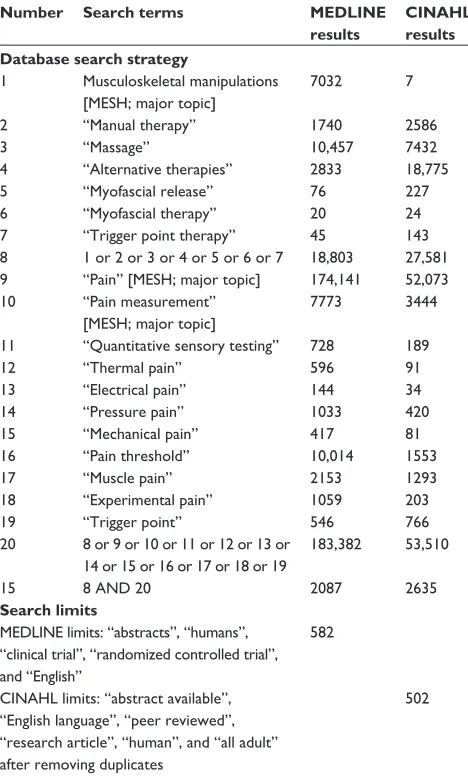
Relevant articles were identified by performing a compre-hensive search for studies in MEDLINE (PubMed) and Cumulative Index to Nursing and Allied Health Literature (CINAHL) from the inception of each database until July 2012. Search terms included: musculoskeletal manipula-tions [MESH; major topic], “manual therapy”, “massage”, “alternative therapies”, “myofascial release”, “myofascial therapy”, “trigger point therapy”, pain [MESH; major topic], “pain measurement” [MESH; major topic], “quantitative sensory testing”, “thermal pain”, “electrical pain”, “pressure pain”, “mechanical pain”, “pain threshold”, “muscle pain”,
Dovepress Muscle-biased therapy and pain sensitivity
Journal of Pain Research downloaded from https://www.dovepress.com/ by 118.70.13.36 on 24-Aug-2020
“experimental pain”, and “trigger point”. The search strategy for both databases is listed in Table 1. MEDLINE limits were: “abstracts”, “humans”, “clinical trial”, “randomized controlled trial”, and “English language.” CINAHL lim-its were: “abstract available”, “English language”, “peer reviewed”, “research article”, “human”, and “all adult”. Database searches were conducted on August 1, 2012. The search strategy used for both databases is listed in Table 1. In addition, manual searches through reference lists of relevant articles and previously published systematic reviews were performed to identify additional articles.
Study search and selection
All articles were screened for eligibility into this review by the primary author (CWG). A manual search of reference lists was conducted by all members of the research team to identify additional studies. A systematic screening procedure
was used to identify relevant articles. First, article titles were reviewed within each database search list. Second, abstracts were screened if the title did not yield adequate information for study inclusion. Based on title and abstract, articles were deemed as potentially relevant and further screened, while all other were excluded. Finally, two authors (MJA and CWG) independently reviewed the full texts of all potentially relevant articles for final inclusion in the review. Any disagreements regarding article inclusion were resolved by consensus. If a consensus could not be reached, a third author (MEH) was recruited to resolve disagreement.
Data extraction
Two authors (MJA and CWG) independently extracted data from each of the included articles using a standardized Micro-soft Excel 2007 (MicroMicro-soft Corporation, Redmond, WA) template. Results of each author’s extraction were compared to ensure accuracy of the data. Each article was reviewed for key information: type of randomized trial; participant characteristics, including total number of subjects, number of subjects within each group, gender, and clinical condition; type of intervention within groups, including cointerventions; duration of treatment; perceived intensity of treatment (eg, painful or nonpainful); pain sensitivity outcome and region in which stimulus was applied; and results of the study (pre-post mean values and standard deviation for each measure within each group). The primary author of the respective article was contacted if any of the above information was unobtainable. If a response was not provided within 14 days of being con-tacted, the information was not included in the review. Two
authors were contacted for additional information28,29 and
one provided a response.29
Methodologic quality assessment
Risk of potential bias was assessed by using the recommen-dations provided by the “Cochrane Handbook for Systematic
Reviews of Interventions”.30 Each article was assessed for
potential bias in five domains: selection bias, performance bias,
attrition bias, reporting bias, and detection bias.30 A 12-item
scale was used to assess the internal validity of each study. Articles were then individually categorized as: low risk of bias (plausible bias unlikely to alter the results seriously) if there was low risk of bias for all key domains; unclear risk of bias (plausible bias that raises some doubt about the results) if unclear risk of bias for one or more key domains; or high risk of bias (plausible bias that seriously weakens confidence in the
results) if high risk of bias for one or more key domains.30 Prior
to assessing the quality of the included studies, a practice trial
Table 1 Database search strategy performed August 1, 2012
Number Search terms MedlINe results
CINAHl results database search strategy
1 Musculoskeletal manipulations [MESH; major topic]
7032 7
2 “Manual therapy” 1740 2586
3 “Massage” 10,457 7432
4 “Alternative therapies” 2833 18,775
5 “Myofascial release” 76 227
6 “Myofascial therapy” 20 24
7 “Trigger point therapy” 45 143
8 1 or 2 or 3 or 4 or 5 or 6 or 7 18,803 27,581 9 “Pain” [MESH; major topic] 174,141 52,073 10 “Pain measurement”
[MESH; major topic]
7773 3444
11 “Quantitative sensory testing” 728 189
12 “Thermal pain” 596 91
13 “Electrical pain” 144 34
14 “Pressure pain” 1033 420
15 “Mechanical pain” 417 81
16 “Pain threshold” 10,014 1553
17 “Muscle pain” 2153 1293
18 “Experimental pain” 1059 203
19 “Trigger point” 546 766
20 8 or 9 or 10 or 11 or 12 or 13 or 14 or 15 or 16 or 17 or 18 or 19
183,382 53,510
15 8 AND 20 2087 2635
Search limits
MEDLiNE limits: “abstracts”, “humans”, “clinical trial”, “randomized controlled trial”, and “English”
582
CiNAHL limits: “abstract available”, “English language”, “peer reviewed”, “research article”, “human”, and “all adult”
502
after removing duplicates
Abbreviation: CiNAHL, Cumulative index to Nursing and Allied Health Literature.
Dovepress
Gay et al
Journal of Pain Research downloaded from https://www.dovepress.com/ by 118.70.13.36 on 24-Aug-2020
of scoring was performed by two authors (MJA and CWG) on two articles (not included in this analysis) to ensure under-standing of the quality criteria. The two authors independently rated the quality of each article. A second meeting was needed to clarify the grading of articles for four items within the risk of bias criteria (item 6, 7, 8, and 11). These items are not always fully addressed in the methods and results sections for immediate effects studies, because they are more relevant to longitudinal trials. After completion of independent grading, the authors met to finalize the scores for each article. Disagree-ments regarding article quality were resolved by consensus. If consensus could not be reached, a third author (MEH) was recruited to resolve discrepancy.
Data analysis
We used Microsoft Excel 2007 and PASW Statistics, version 20 (SPSS Inc, Chicago, IL) to examine and compile individ-ual study descriptive statistics, congruence between changes in pain sensitivity and clinical pain, and reviewer agreement. For meta-analytical procedures, we used Comprehensive Meta-Analysis, Version 2 (Biostat Inc, Englewood, NJ). Alpha was set at the 0.05 level for statistical significance.
We estimated congruence between changes in pain sensitivity and clinical pain using Kappa agreement and 95% confidence interval (CI). We examined the agree-ment for article methodologic quality using intraclass correlation coefficient and 95% CI. We used guidelines for interpreting Kappa and intraclass correlation coefficient
values proposed by Landis and Koch et al31 and Portney
and Watkins et al,32 where values , 0 indicate no
agree-ment and 0–0.20 as slight, 0.21–0.40 as fair, 0.41–0.60 as moderate, 0.61–0.80 as substantial, and 0.81–1 as almost
perfect agreement.31,32
Conducting the meta-analysis was dependent on having an adequate number of trials (eg, more than two) that used similar study methodology. We based this decision primarily on the pain sensitivity measure where studies needed to use the same experimental sensory modality (ie, pressure, heat, electricity) and measure a similar psychophysical response (ie, threshold, tolerance). In some studies, multiple imme-diate measurements of the same pain sensitivity outcome were obtained from the same anatomical region (ie, low back or upper extremity). In these cases, we generated a single composite effect for that region using the methods
for combining multiple outcomes described by Borenstein.33
We computed individual effect size estimates (Hedges g) for each group within each study using information provided in the articles.
We generated separate random-effects models for each pain sensitivity outcome. The primary comparison was a mean difference (eg, pre-to-post change) on the pain sen-sitivity measure between the group receiving MBT and the comparison group or groups. In cases where multiple treatment arms were included in a single study, we used the following approach. We collapsed comparison group data if groups were in the same category. We categorized compari-son groups as active, sham, or control (no treatment) using the definitions in eligibility criteria. We examined dissimilar comparison groups separately. When multiple MBT treat-ment groups were included in a study, we examined these groups separately within the meta-analysis. We computed an overall pooled Hedges g effect size estimate, with 95% CI as the measure of effect for MBT. Effect size estimates were
considered small (0.20), medium (0.50), or large (0.80).34
Last, we evaluated homogeneity of the estimated effects
using a measure of inconsistency (I2), where large values of
I2 suggest heterogeneity.
We performed two planned subgroup analyses. We planned a stratified analysis by population (healthy versus clinical) and comparison treatment (active versus sham ver-sus control). We categorized population groups as “healthy” (asymptomatic participants) or “clinical” (symptomatic participants) based on the study description. Studies that induced delayed onset muscle soreness or included subjects based on the presence of trigger points were not considered strictly clinical or healthy, and thus were withheld based on the difficulty of placing them into a category. We also strati-fied our analysis by comparison group where the effects of MBT were examined separately for active, sham, and control group comparisons.
Results
Study selection
We identified a total of 1084 articles from the systematic
search of MEDLINE (n = 582) and CINAHL (n = 502), and
nine articles from a review of reference lists. After removing duplicates, we screened and assessed 995 titles. Of these, we excluded 939 articles after title or abstract screening. We selected the full texts of 39 articles to be screened by two independent reviewers. Twenty-three studies were excluded
based on study design,35 inability to compare the effects of a
single session of MBT,36–52 intervention was not considered
MBT,53–57 or no pain sensitivity measure.58–67 As a result,
23 articles representing 24 studies were identified as meeting the criterion for inclusion in this review. Figure 1 depicts a flow diagram of the study selection process with reasons for
Dovepress Muscle-biased therapy and pain sensitivity
Journal of Pain Research downloaded from https://www.dovepress.com/ by 118.70.13.36 on 24-Aug-2020
Titles identified through database search (n = 1084) and other sources (n = 9) (n = 1093); [MEDLINE (n = 582), CINAHL (n = 502)]
Titles considered not relevant and excluded (n = 578): – Un-related topic (n = 289)
– No manual therapy intervention (n = 86) – Intervention not muscle biased (n = 77) – No pain sensitivity measure (n = 66) – Non-randomized trial (n = 60) Titles after duplicates removed
(n = 995)
Abstracts considered not relevant and excluded (n = 361):
– Un-related topic (n = 18)
– No manual therapy intervention (n = 8) – Intervention not muscle biased (n = 83) – No pain sensitivity measure (n = 195) – Non-randomized trial (n = 57) Abstracts screened for
potential inclusion (n = 417)
Full-text articles excluded (n = 33): – Intervention not muscle biased (n = 5)1–5
– Measured over several sessions (n = 13)6–18
– Multiple interventions (n = 4)19–22
– No pain sensitivity measure (n = 10)23–32
– Non-randomized trial (n = 1)33
Potentially relevant full-text articles retrieved
(n = 56)
Studies included in review (n = 23)
Figure 1 Flow chart of study identification, selection, and inclusion.
Abbreviation: CiNAHL,Cumulative index to Nursing and Allied Health Literature.
exclusion at each stage. Hou et al reported on two separate study designs that included separate samples, and both stud-ies were included. Thirteen of the studstud-ies compared two
groups.68–80 Nine of the studies compared three groups.28,81–87
Two studies compared six groups.88
Characteristics of studies
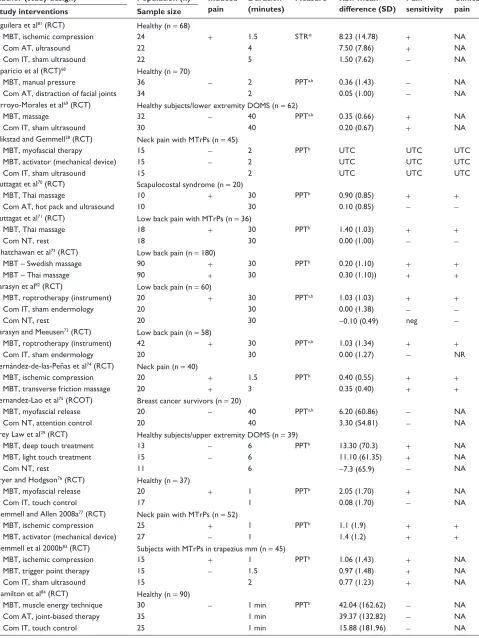
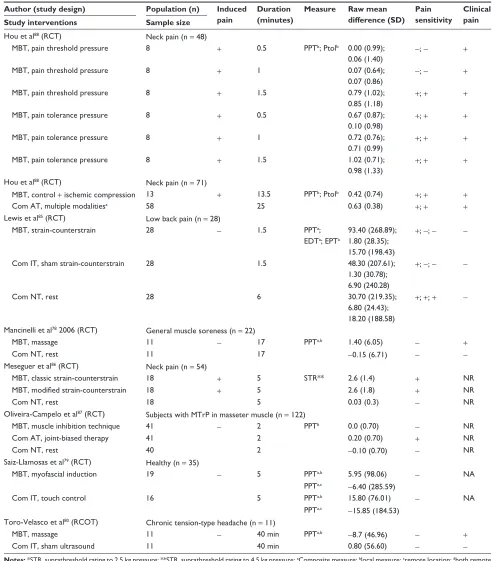
Table 2 provides characteristics of each study, including the sample population, description of muscle-biased inter-ventions and comparison groups, method of assessing pain sensitivity, and outcomes.
Sample population
A total of 1318 participants (62% female) were enrolled in
the included studies. Five studies (n = 300, 57% female)
included healthy participants.68,76,79,81,84 Two studies (n = 106,
44% female) included healthy participants and then exposed them to eccentric exercise in a controlled laboratory setting
to induce delayed onset muscle soreness.29,69 Sixteen studies
(n = 912, 66% female) included a clinical population. The
clin-ical conditions included low back pain (five studies),71–73,82,85
neck pain (five studies),28,74,77,86,88 tension-type headache (one
study),80 individuals with myofascial trigger points (two
studies),83,87 breast cancer survivors (one study),75 shoulder
pain (one study),70 and preseason sport-related muscle
sore-ness (one study).78
MBT characteristics
A variety of MBT was described across the 23 articles. A total
of 36 groups (n = 823) received an MBT treatment. Sixteen
studies included a single MBT group,68–71,73–76,78,79,81,82,84,85,87
seven studies included two MBT groups,28,29,72,74,77,83,86 and
Dovepress
Gay et al
Journal of Pain Research downloaded from https://www.dovepress.com/ by 118.70.13.36 on 24-Aug-2020
Table 2 Characteristics of included studies
Author (study design) Population (n) Induced pain
duration (minutes)
Measure Raw mean difference (Sd)
Pain sensitivity
Clinical pain Study interventions Sample size
Aguilera et al81 (RCT) Healthy (n = 68)
MBT, ischemic compression 24 + 1.5 STR* 8.23 (14.78) + NA
Com AT, ultrasound 22 4 7.50 (7.86) + NA
Com iT, sham ultrasound 22 5 1.50 (7.62) - NA
Aparicio et al (RCT)68 Healthy (n = 70)
MBT, manual pressure 36 - 2 PPTa,b 0.36 (1.43) - NA
Com AT, distraction of facial joints 34 2 0.05 (1.00) - NA
Arroyo-Morales et al69 (RCT) Healthy subjects/lower extremity DOMS (n = 62)
MBT, massage 32 - 40 PPTa,b 0.35 (0.66) + NA
Com iT, sham ultrasound 30 40 0.20 (0.67) + NA
Blikstad and Gemmell28 (RCT) Neck pain with MTrPs (n = 45)
MBT, myofascial therapy 15 - 2 PPTb UTC UTC UTC
MBT, activator (mechanical device) 15 - 2 UTC UTC UTC
Com iT, sham ultrasound 15 2 UTC UTC UTC
Buttagat et al70 (RCT) Scapulocostal syndrome (n = 20)
MBT, Thai massage 10 + 30 PPTb 0.90 (0.85) + +
Com AT, hot pack and ultrasound 10 30 0.10 (0.85) -
-Buttagat et al71 (RCT) Low back pain with MTrPs (n = 36)
MBT, Thai massage 18 + 30 PPTb 1.40 (1.03) + +
Com NT, rest 18 30 0.00 (1.00) -
-Chatchawan et al72 (RCT) Low back pain (n = 180)
MBT – Swedish massage 90 + 30 PPTb 0.20 (1.10) + +
MBT – Thai massage 90 + 30 0.30 (1.10)) + +
Farasyn et al82 (RCT) Low back pain (n = 60)
MBT, roptrotherapy (instrument) 20 + 30 PPTa,b 1.03 (1.03) + +
Com iT, sham endermology 20 30 0.00 (1.38) -
Com NT, rest 20 30 -0.10 (0.49) neg
-Farasyn and Meeusen73 (RCT) Low back pain (n = 58)
MBT, roptrotherapy (instrument) 42 + 30 PPTa,b 1.03 (1.34) + +
Com iT, sham endermology 20 30 0.00 (1.27) - NR
Fernández-de-las-Peñas et al74 (RCT) Neck pain (n = 40)
MBT, ischemic compression 20 + 1.5 PPTb 0.40 (0.55) + +
MBT, transverse friction massage 20 + 3 0.35 (0.40) + +
Fernandez-Lao et al75 (RCOT) Breast cancer survivors (n = 20)
MBT, myofascial release 20 - 40 PPTa,b 6.20 (60.86) - NA
Com NT, attention control 20 40 3.30 (54.81) - NA
Frey Law et al29 (RCT) Healthy subjects/upper extremity DOMS (n = 39)
MBT, deep touch treatment 13 - 6 PPTb 13.30 (70.3) + NA
MBT, light touch treatment 15 - 6 11.10 (61.35) + NA
Com NT, rest 11 6 -7.3 (65.9) - NA
Fryer and Hodgson76 (RCT) Healthy (n = 37)
MBT, myofascial release 20 + 1 PPTb 2.05 (1.70) + NA
Com iT, touch control 17 1 0.08 (1.70) - NA
Gemmell and Allen 2008a77 (RCT) Neck pain with MTrPs (n = 52)
MBT, ischemic compression 25 + 1 PPTb 1.1 (1.9) + +
MBT, activator (mechanical device) 27 - 1 1.4 (1.2) + +
Gemmell et al 2000b83 (RCT) Subjects with MTrPs in trapezius mm (n = 45)
MBT, ischemic compression 15 + 1 PPTb 1.06 (1.43) + NA
MBT, trigger point therapy 15 - 1.5 0.97 (1.48) + NA
Com iT, sham ultrasound 15 2 0.77 (1.23) + NA
Hamilton et al84 (RCT) Healthy (n = 90)
MBT, muscle energy technique 30 - 1 min PPTb 42.04 (162.62) - NA
Com AT, joint-biased therapy 35 1 min 39.37 (132.82) - NA
Com iT, touch control 25 1 min 15.88 (181.96) - NA
(Continued)
Dovepress Muscle-biased therapy and pain sensitivity
Journal of Pain Research downloaded from https://www.dovepress.com/ by 118.70.13.36 on 24-Aug-2020
Table 2 (Continued)
Author (study design) Population (n) Induced pain
duration (minutes)
Measure Raw mean difference (Sd)
Pain sensitivity
Clinical pain Study interventions Sample size
Hou et al88 (RCT) Neck pain (n = 48)
MBT, pain threshold pressure 8 + 0.5 PPTb; Ptolb 0.00 (0.99); 0.06 (1.40)
-; - +
MBT, pain threshold pressure 8 + 1 0.07 (0.64);
0.07 (0.86)
-; - +
MBT, pain threshold pressure 8 + 1.5 0.79 (1.02);
0.85 (1.18) +
; + +
MBT, pain tolerance pressure 8 + 0.5 0.67 (0.87);
0.10 (0.98)
+; + +
MBT, pain tolerance pressure 8 + 1 0.72 (0.76);
0.71 (0.99) +
; + +
MBT, pain tolerance pressure 8 + 1.5 1.02 (0.71);
0.98 (1.33)
+; + +
Hou et al88 (RCT) Neck pain (n = 71)
MBT, control + ischemic compression 13 + 13.5 PPTb; Ptolb 0.42 (0.74) +; + +
Com AT, multiple modalitiesa 58 25 0.63 (0.38) +; + +
Lewis et al85 (RCT) Low back pain (n = 28)
MBT, strain-counterstrain 28 - 1.5 PPTa;
EDTa; EPTa
93.40 (268.89); 1.80 (28.35); 15.70 (198.43)
+; -; -
Com iT, sham strain-counterstrain 28 1.5 48.30 (207.61);
1.30 (30.78); 6.90 (240.28)
+; -; -
Com NT, rest 28 6 30.70 (219.35);
6.80 (24.43); 18.20 (188.58)
+; +; +
-Mancinelli et al78 2006 (RCT) General muscle soreness (n = 22)
MBT, massage 11 - 17 PPTa,b 1.40 (6.05) - +
Com NT, rest 11 17 -0.15 (6.71) -
-Meseguer et al86 (RCT) Neck pain (n = 54)
MBT, classic strain-counterstrain 18 + 5 STR** 2.6 (1.4) + NR
MBT, modified strain-counterstrain 18 + 5 2.6 (1.8) + NR
Com NT, rest 18 5 0.03 (0.3) - NR
Oliveira-Campelo et al87 (RCT) Subjects with MTrP in masseter muscle (n = 122)
MBT, muscle inhibition technique 41 - 2 PPTb 0.0 (0.70) - NR
Com AT, joint-biased therapy 41 2 0.20 (0.70) + NR
Com NT, rest 40 2 -0.10 (0.70) - NR
Saiz-Llamosas et al79 (RCT) Healthy (n = 35)
MBT, myofascial induction 19 - 5 PPTa,b 5.95 (98.06) - NA
PPTa,c -6.40 (285.59)
Com iT, touch control 16 5 PPTa,b 15.80 (76.01) - NA
PPTa,c -15.85 (184.53) Toro-velasco et al80 (RCOT) Chronic tension-type headache (n = 11)
MBT, massage 11 - 40 min PPTa,b -8.7 (46.96) - +
Com iT, sham ultrasound 11 40 min 0.80 (56.60) -
-Notes: *STR, suprathreshold rating to 2.5 kg pressure; **STR, suprathreshold rating to 4.5 kg pressure; aComposite measure; blocal measure; cremote location; dboth remote and local measurements; induced pain = Did the intervention induce pain during the session? (+) = Yes; (-) = No; Duration, length of MBT session, reported in minutes; Measure, pain sensitivity measure; Diff in means (SE), estimated within-group difference in pre-intervention and post-intervention mean (standard error); Pain sensitivity =
within group effect on pain sensitivity. (+) = favorable; (-) = no change; (neg) = unfavorable effect; Clinical pain = within group effect on clinical report of pain. (+) = favorable; (-) = no change.
Abbreviations: RCT, randomized controlled trial; RCOT, randomized crossover trial; MTrP, myofascial trigger point; PPT, pressure pain threshold; Ptol, pressure pain tolerance; EDT, electrical detection threshold; EPT, electrical pain threshold; NR, not reported; NA, not applicable; UTC, unable to compute; MBT, muscle-biased therapy; Com iT, comparative group inert treatment; Com NT, comparative group no treatment; Com ATT, comparative group active treatment; DOMs, delayed-onset muscle soreness.
Dovepress
Gay et al
Journal of Pain Research downloaded from https://www.dovepress.com/ by 118.70.13.36 on 24-Aug-2020
one study employed six MBT groups.88 One study (two of
the 36 MBT groups) did not provide adequate descriptive statistics to discern group changes in pain sensitivity over
time.28 Twenty-five (74%, n = 609) of the 34 MBT groups
reported a favorable change, (ie, reduced pain sensitivity). No change in pain sensitivity was reported for nine of the
34 groups (26%, n = 184).
intensity of MBT
Twenty-three of the 24 studies provided adequate informa-tion to discern whether the MBT induced pain or not. One
study (two MBT groups, n = 30) did not.28 Twenty-one (62%,
n = 491) of the 34 MBT treatments provoked pain during the
treatment session. Nineteen (90%, n = 475) of the 21
pain-induced groups had a positive effect on pain sensitivity, and
two (10%, n = 16) had no effect. Thirteen (38%, n = 302)
of the 34 MBT treatments did not provoke pain during the
treatment. Five of the 13 nonpain groups (38%, n = 134) had
a positive effect on pain sensitivity and seven (54%, n = 168)
had no effect. A significantly greater proportion of the MBT treatments that induced pain during the session had a positive effect on pain sensitivity than MBT treatments that did not
induce pain during the session, (χ2= 9.17, P, 0.01).
Duration of MBT
All of the studies provided adequate information to discern the approximate duration of the MBT session. Twenty-six of
the MBT treatments (72%, n = 479) lasted less than 8 minutes
(short duration). The duration of treatment in the remaining
10 groups (28%, n = 344) lasted 16 minutes or more (long
duration). None of the included studies used an MBT tech-nique lasting between 8 and 16 minutes (medium duration).
One study, with two groups (n = 30) receiving short-duration
interventions, did not report mean changes in pain sensitivity
over time.28 Eighteen (75%, n = 307) of the 24 short-duration
sessions had a positive effect on pain sensitivity, and six
(25%, n = 142) had no effect. Seven (70%, n = 302) of the
10 long-duration sessions had a positive effect on pain
sen-sitivity and three (30%, n = 48) had no effect. There was no
difference in the proportion of studies reporting a positive effect on pain sensitivity based on session duration (ie, short
versus long, χ2= 0.091, P. 0.05).
Comparison interventions
A total of 29 (n = 575) comparison groups were described
across the 23 articles. Eight of the groups (n = 166) were
no treatment control groups. Seven of those rested for a
comparable amount of time as the active MBT intervention, and one group received 40 minutes of back pain education,
including home exercise instruction. Six (75%, n = 118) of
eight groups showed no change (ie, no effect) in pain
sensi-tivity. One group (12.5%, n = 20) showed a negative effect
on pain sensitivity (ie, increase in pain sensitivity), and one
group (12.5%, n = 28) showed a favorable effect on pain
sensitivity (ie, decrease in pain sensitivity).
Eleven of the groups (n = 219) received an inert/sham
intervention. The inert/sham interventions included inactive ultrasound (five groups), a touch control of similar duration as the active intervention (four groups) and inactive
endermol-ogy (light skin suction, two groups). One study (n = 15) did
not provide adequate descriptive statistics to discern group
changes in pain sensitivity over time.28 Three (30%, n = 73)
of ten groups showed a positive effect on pain sensitivity and
seven (70%, n = 131) groups had no effect.
Ten of the groups (n = 200) received an active
intervention. Active interventions included single or combi-nations of physical modalities (seven groups) and joint-biased
interventions (three groups). Seven (70%, n = 121) of the ten
groups showed a positive effect on pain sensitivity and three
(30%, n = 79) groups had no effect.
Pain sensitivity measures
There were different characteristics of pain sensitivity outcomes reported across the studies. Only two types of sensory modali-ties were reported, ie, mechanical pressure (24 studies) and
electricity (one study).85 The psychophysical responses were
primarily static measures of pain processing, pain threshold
(22 studies), pain tolerance (two studies),88 and a pain intensity
rating of a fixed suprapain threshold stimulus (two studies).81,86
Eighteen studies measured changes in pain sensitivity within the same anatomical region where the intervention was performed. Three studies obtained measures in an anatomical region remote
from the region receiving treatment.68,80,87 Two studies obtained
measurements in both the region being treated and in a remote
location.69,79 Eleven studies reported on both changes in
clini-cal pain and pain sensitivity measures.70–74,77,78,80,82,85,88 In those
studies, irrespective of random group assignment, there was a moderately strong congruence between changes in pain
sensi-tivity and changes in clinical pain, kappa = 0.446 (P= 0.01),
95% CI (0.269–0.623).31
Methodologic quality
The assessment of potential risk of bias for the 23 articles is shown in Table 3. Quality score agreement between the two
Dovepress Muscle-biased therapy and pain sensitivity
Journal of Pain Research downloaded from https://www.dovepress.com/ by 118.70.13.36 on 24-Aug-2020
primary raters (MJA and CWG) was good with an intraclass correlation coefficient of 0.67 (95% CI 0.21–0.86). The involvement of a third rater (MEH) was needed to resolve disagreements over criteria item 2, concealment of treatment
allocation, for three studies.28,77,81 Of the 23 studies included
in the review, none were considered at low risk of bias (ie, high quality), 18 of the studies were considered at unclear risk of bias (plausible bias for one or more key domains), and five studies at high risk of potential bias (ie, low quality). Across studies, there was consistent plausible risk of performance and detection bias contributing to the overall quality being assessed as “unclear risk of bias”, meaning that most informa-tion was gathered from studies at low or unclear risk of bias. Insufficient blinding of patients and practitioners, and the inability to account for other potential threats to validity were the major methodologic limits throughout the 23 studies. The five studies rated as at high risk of bias additionally failed to blind the assessor and/or report on baseline characteris-tics of the groups being compared (increasing the potential detection and selection bias, respectively). In general, due
to the nature of the studies (ie, immediate pre-post design) there was low risk of attrition bias. It is difficult to assess for reporting bias because the majority of studies used pain sensitivity tests as secondary outcome measures and not primary clinical measures.
Meta-analysis results
Seventeen of the 24 studies were eligible for
meta-analysis.29,70–76,78–80,82–84,87,88 All 17 studies examined an
immediate effect of MBT on pressure pain thresholds. The overall effect estimate generated from the random effects
model (I2= 44.0%, P, 0.05) suggested a small, favorable
effect of MBT on increasing pressure pain threshold response
as compared with all other interventions (Hedges g = 0.254
[95% CI 0.105–0.403], P, 0.05, Figure 2).
The same 17 studies were able to be stratified by com-parison group and the results are depicted in Figure 2. Five studies included comparisons of MBT with active treatment
(I2= 45.2%, P= 0.12), ten with sham treatment (I2= 0.0%,
P= 0.55), and eight with no-treatment controls (I2= 60.4%,
Table 3 Methodological quality assessment of included studies
Article/criteria 1 2 3 4 5 6 7 8 9 10 11 12 Total domains
A B C d e
Aguilera et al81 + - - - - + + ? + + + + 7 U U U L ?
Aparicio et al68 + - - - + + + ? + + + + 8 L U L L ?
Arroyo-Morales et al69 + - - - - + - ? + + + + 6 L U U L ?
Blikstad and Gemmell28 + - - - + + + ? - + + + 7 L U L L ?
Buttagat et al70 + - - - + + + ? + + + + 8 L U L L ?
Buttagat et al71 + - - - - + + ? + + + + 7 L U U L ?
Chatchawan et al72 + - - - + + + ? + + + + 8 L U L L ?
Farasyn et al82 + - - - - + + ? + + + + 7 L U U L ?
Farasyn and Meeusen73 + - - - - + + ? + + + + 7 U U U L ?
Fernández-de-las-Peñas et al74 (2006) + - - - + + + ? + + + + 8 L U L L ?
Fernandez-Lao et al75 (2012) + - - - + + + ? + + + + 8 L U L L ?
Frey Law et al29 + - - - + + - ? + + + + 8 L U L L ?
Fryer and Hodgson76 + + - - - + + ? + + + + 7 L U L L ?
Gemmell and Allen77 (2008a) + - - - + + + ? + + + + 8 L U L L ?
Gemmell et al83 (2008b) + - - - + + + ? + + + + 8 L U L L ?
Hamilton et al84 + - - - + + + ? + + + + 8 L U L L ?
Hou et al88 (2002) + - - - - + + ? + + + + 7 L U U L ?
Lewis et al85 + - - - + + + ? + + + + 8 L U L L ?
Mancinelli et al78 (2006) + - - - + + + ? + + + + 8 L U L L ?
Meseguer et al86 + - - - + + + ? + + + + 8 L U L L ?
Oliveira-Campelo et al87 + - - - + + + ? + + + + 8 L U L L ?
Saiz-Llamosas et al79 + - - - + + + ? + + + + 8 L U L L ?
Toro-velasco et al80 + + - - + + + ? + + + + 9 L U L L ?
Across all studies L U L L ?
Notes: (+) met criteria, (-) did not meet criteria, (?) unsure, (L) low risk of bias, (U) unclear risk of bias, (H) high risk of bias. Criteria: 1 – was the method of randomization adequate?; 2 – was the treatment allocation concealed?; 3 – was the patient blinded to the intervention?; 6 – was the dropout rate described and adequate?; 7 – were all randomized participants analyzed in the group which they were allocated?; 8 – are reports of the study free of suggestion of selective outcome reporting?; 9 – were the groups similar at baseline regarding the most important prognostic indicators?; 10 – were con-interventions avoided or similar?; 11 – was the compliance acceptable in all groups?; 12 – was the timing of the outcome assessment similar in all groups?. A, selection bias; B, performance bias; C, detection bias; D, attrition bias; E, reporting bias. *1 point for each item meeting criteria.
Dovepress
Gay et al
Journal of Pain Research downloaded from https://www.dovepress.com/ by 118.70.13.36 on 24-Aug-2020
Study name Comparison Statistics for each study Hedges g and 95% Cl
Hedges
g Standarderror VarianceLowerlimit Upperlimit Z-value P-value
−0.278 0.304 0.093 −0.875 0.319 −0.913 0.361 −0.271 0.220 0.048 −0.702 0.160 −1.232 0.218 0.018 0.246 0.060 −0.464 0.500 0.072 0.942 0.246 0.237 0.056 −0.220 0.711 1.034 0.301 0.888 0.451 0.203 −0.004 1.771 1.969 0.049 0.036 0.166 0.028 −0.289 0.362 0.218 0.828 0.048
Hou et al88
Oliveira-Campelo et al87a
Hamilton et al84a
Aparicio et al68
Buttagat et al70
Fernandez-Lao et al75
Active Active Active Active Active
Control 0.310 0.096 −0.559 0.656 0.155 0.877
0.135 0.220 0.049 −0.297 0.567 0.614 0.539 0.232 0.412 0.169 −0.575 1.039 0.563 0.574 0.249 0.265 0.070 −0.269 0.768 0.942 0.346 0.277 0.386 0.149 −0.480 1.034 0.717 0.473 0.302 0.398 0.158 −0.478 1.082 0.759 0.448 1.335 0.362 0.131 0.626 2.045 3.690 0.000 1.352
Oliveira-Campelo et al87c
Mancinelli et al78
Lewis et al85
Frey Law et al29d
Frey Law et al29e
Buttagat et al71
Farasyn et al82c
Control Control Control Control Control Control
Control 0.345 0.119 0.676 2.028 3.921 0.000
−0.174 0.411 0.169 −0.979 0.632 −0.423 0.673 −0.002 0.332 0.110 −0.652 0.648 −0.005 0.996 0.114 0.356 0.126 −0.583 0.811 0.321 0.748 0.144 0.267 0.071 −0.380 0.667 0.537 0.591 0.169 0.356 0.127 −0.529 0.867 0.475 0.635 0.182 0.264 0.070 −0.335 0.700 0.690 0.490 0.218
Toro-Velasco et al80
Saiz-Llamosas et al79
Gemmell et al83f
Hamilton et al84b
Gemmell et al83g
Lewis et al85b
Arroyo-Morales et al69
Sham Sham Sham Sham Sham Sham
Sham 0.252 0.063 −0.276 0.711 0.865 0.387
0.335 0.270 0.073 −0.194 0.864 1.242 0.214 0.776 0.335 0.112 0.120 1.433 2.317 0.021 0.828 0.323 0.105 0.194 1.462 2.560 0.010 0.268 0.097 0.009 0.078 0.457 2.771 0.006 0.254 0.076 0.006 0.105 0.403 3.347 0.001
−2.00 −1.00 0.00 1.00
Favors comparison Favors MBT
2.00 0.471 0.183 0.034 0.113 0.830 2.575 0.010
Farasyn and Meeusen 73
Fryer and Hodgson 76
Farasyn et al82b
Sham Sham Sham
Figure 2 Forest plot depicting overall effect of MBT across all studies and subgroup effect of MBT based on type of comparison group.
Notes: Open diamond depicts overall effect size across all studies. Colored diamonds depict subgroup effect size based on type of comparison group. For example, top colored diamond is effect size for MBT studies with active comparison groups. The width of diamond corresponds to its 95% CI (listed in figure). Individual study effect sizes (and 95% Ci) are depicted with boxes (whiskers). Box and whisker size and thickness for each individual study illustrate the weighted contribution of that study to the overall effect size (eg, larger boxes/thicker lines contribute more to overall effect size). aActive comparison; bsham comparison; ccontrol comparison; dMBT arm received superficial pressure; eMBT arm received deep pressure; fMBT arm received ischemic compression; gMBT arm received trigger point therapy.
Abbreviations: CI, confidence interval; MBT, muscle-biased therapy.
P, 0.05). A small, favorable effect on increasing pressure
pain thresholds was observed when MBT was compared with
sham treatments (Hedges g = 0.268 [95% CI 0.078–0.457],
P , 0.05) and a small-to-moderate, favorable effect when
compared with no-treatment controls (Hedges g = 0.471 [95%
CI 0.113–0.830], P, 0.05). No favorable effect was observed
when MBT was compared with other active interventions
(Hedges g = 0.036 [95% CI -0.289–0.362], P= 0.83). Twelve
of the 17 studies were stratified based on sample population and the results are depicted in Figure 3. Five studies were removed because they included individuals with induced pain (eg, delayed-onset muscle soreness) or nonclinical trigger points. Ten studies examined the effect of MBT on pressure
pain threshold responses in clinical participants (I2= 66.0%,
P, 0.05), while five studies examined these effects in healthy
participants (I2= 0.0%, P= 0.41). A small-to-moderate,
favor-able effect on increasing pressure pain thresholds following MBT was seen in studies with clinical participants (Hedges
g = 0.454 [95% CI 0.112–0.796], P, 0.05). A small,
favor-able effect was seen in studies with healthy participants
(Hedges g = 0.205 [95% CI -0.036–0.445], P= 0.10), but
was not statistically significant.
discussion
We conducted a comprehensive systematic review of the literature to address the three key questions of whether MBT affects pain sensitivity, whether MBT intensity and/or duration influences pain sensitivity, and whether short-term changes in pain sensitivity are associated with changes in clinical pain over similar time points. Our results suggest that a single session of MBT has a favorable effect on measures of pain sensitivity. Further, the degree of pressure intensity used during treatment seems to influence the effect because a significantly greater proportion of studies reported a favor-able effect on pain sensitivity when the intervention induced tolerable amounts of pain during the treatment compared with interventions that did not induce tolerable amounts of pain. Finally, the changes in pain sensitivity reported in the studies were related to changes in clinical pain intensity, thus highlighting the clinical relevance of pain sensitivity.
Dovepress Muscle-biased therapy and pain sensitivity
Journal of Pain Research downloaded from https://www.dovepress.com/ by 118.70.13.36 on 24-Aug-2020
Clinical Hou et al88
Toro-Velasco et al80
Fernandez-Lao et al75
Lewis et al85a
Lewis et al85b
Farasyn and Meeusen73
Farasyn et al82a
Buttagat et al70
Buttagat et al71
Farasyn et al82b
Saiz-Llamosas et al79
Hamilton et al84c
Hamilton et al84a
Aparicio et al68
Fryer et al76
Clinical −0.278 0.304 0.411 0.310 0.264 0.265 0.270 0.323 0.451 0.362 0.345 0.174 0.332 0.246 0.267 0.237 0.335 0.123 0.100 0.093 0.169 0.096 0.070 0.070 0.073 0.105 0.203 0.131 0.119 0.030 0.110 0.060 0.071 0.056 0.112 0.015 0.010 0.875 0.979 0.559 0.335 0.269 0.194 0.194 0.004 0.626 0.676 0.112 −0.652 −0.464 −0.380 −0.220 0.120 −0.036 0.090 0.319 0.632 0.656 0.700 0.768 0.864 1.462 1.771 2.045 2.028 0.796 0.648 0.500 0.667 0.711 1.433 0.445 0.484 −0.913 −0.423 0.155 0.690 0.942 1.242 2.560 1.969 3.690 3.921 2.604 −0.005 0.072 0.537 1.034 2.317 1.665 2.861 0.361 0.673 0.877 0.490 0.346 0.214 0.010 0.049 0.000 0.000 0.009 0.996 0.942 0.591 0.301 0.021 0.096 0.004 −0.174 0.048 0.182 0.249 0.335 0.828 0.888 1.335 1.352 0.454 −0.002 0.018 0.144 0.246 0.776 0.205 0.287 Clinical Clinical Clinical Clinical Clinical Clinical Clinical Clinical Healthy Healthy Healthy Healthy Healthy
Study name Subgroup
within study Statistics for each study Hedges g and 95% Cl
Hedges
g Standarderror VarianceLowerlimit Upperlimit Z-value P-value
−2.00 −1.00 0.00 1.00
Favors comparison Favors MBT
2.00
Figure 3 Forest plot depicting subgroup effect of MBT based on type of sample population.
Notes: Open diamond depicts overall effect size across all studies included in this subgroup analysis. Colored diamonds depict subgroup effect size based on type of comparison group. For example, top colored diamond is effect size for MBT studies with clinical samples. The width of diamond corresponds to its 95% CI (listed in figure). Individual study effect sizes (and 95% Ci) are depicted with boxes (whiskers). Box and whisker size and thickness for each individual study illustrate the weighted contribution of that study to the overall effect size (eg, larger boxes/thicker lines contribute more to overall effect size). aSham comparison; bcontrol comparison; cactive comparison.
Abbreviations: CI, confidence interval; MBT, muscle-biased therapy.
Prior reviews of the clinical effectiveness of MBT to relieve pain have been inconclusive, and the administration of inadequate treatments may account for the lack of effect in
some studies.7,17 One of the issues that may be related to the
lack of effect is that optimal treatment parameters for MBT in treatment of musculoskeletal pain conditions are not known. The review by Lewis et al reported variation in duration and dosage parameters of massage interventions and suggested
that the dosage may be inadequate.7 The review herein also
found variation across the duration of a single MBT session; however, interventions that were excluded in the previous review were included herein, which could account for addi-tional variability. This review expands upon prior work and reports on variation in the ability of some interventions to reduce pain sensitivity, and suggests the perceived inten-sity of pressure applied during MBT may be an important parameter. Our results confirm that heterogeneity exists across MBT interventions, and there is a need to establish optimal MBT parameters. Further, our results suggest that pain sensitivity may be a viable intermediate physiologic endpoint in determining adequate treatment protocols.
The findings of this review have implications for future mechanistic MBT research. The gate control theory of pain
is often implicated as the neurophysiologic mechanism
underlying symptomatic pain relief.12 Through activation
of non-noxious afferents, ongoing nociceptive transmission
is inhibited.7 Our finding that inducing a tolerable amount
of pain during a treatment session may preferentially affect pain sensitivity suggests that additional mechanisms may be involved, such as conditioned pain modulation, also known as diffuse noxious inhibitory control. This lends further support for a recent model of the mechanisms of all manual therapies, including muscle, joint, and nerve biased techniques, that suggests changes in pain are related to an interaction of neu-rophysiologic responses in the peripheral and central nervous
system that may involve several analgesic pathways.26
This review has clinical implications for future studies. First, these findings support that short-term reductions in pain sensitivity are a potential mechanism underlying short-term clinical benefit. Increased pain sensitivity is associated with a number of clinical pain conditions and is offered as a mechanistic explanation of pain persistence and a therapeutic
target.89 Thus, MBT is a viable treatment option to reduce
pain sensitivity. Future investigations will need to explore the link between short-term changes and long-term clinical improvement. Second, clinical pain is multidimensional
Dovepress
Gay et al
Journal of Pain Research downloaded from https://www.dovepress.com/ by 118.70.13.36 on 24-Aug-2020
(ie, affective-motivational, sensory-discriminative) and evidence suggests different dimensions may reflect diverse
underlying mechanisms.90–92 The evidence also suggests that
treatments may preferentially improve some dimensions over
others.21,93,94 Reductions in measures of pain sensitivity are
associated with improvements in movement-related pain to
a greater extent than improvements in spontaneous pain.21
The primary outcome in many MBT clinical trials is com-monly single-dimension measures (eg, visual analog scale scores, numerical rating scale scores, and verbal rating scale scores) of pain intensity, potentially making assessment of treatment effects for MBT challenging. Future clinical studies of the effectiveness of MBT may consider assessing movement-related and spontaneous pain separately, in addi-tion to recommended single-dimension measures.
limitations
There are several limitations to this review. We did not account for the type of practitioner applying the interven-tion, the years of experience of the practitioner delivering the intervention, the duration of pain in the clinical populations (ie, acute versus chronic), differences across the MBT treat-ments in their intended aim (short-term pain relief versus long-term improvement in condition), and changes in other physiologic measures. Thus, caution is recommended when applying the results of this review to clinical practice and for developing optimal therapeutic MBT protocols. Only one of several proposed mechanisms underlying clinical improve-ment was included, ie, pain sensitivity. Other systematic reviews have reported that MBT decreases psychologic mea-sures of anxiety and tension, promotes feelings of well-being and relaxation, and induces changes in physiologic indicators
of relaxation, such as heart rate and blood pressure.95,96
Interactions between the patient’s perceived intensity of MBT and other intermediate physiologic endpoints are not known. Additional consideration should be given to the patient’s perceptions regarding the effectiveness of MBT (ie, beliefs) and the patient’s preference for using amounts of perceived pressure that may induce levels of pain. Future research into developing optimal MBT protocols should consider several potential physiologic intermediate end-points simultaneously, treatment expectations, and patient preference.
While relatively few studies had a high risk of bias for any one domain, all of the studies presented herein had unclear performance bias, which raises some doubt about the results being only attributable to exposure to the interven-tion and not other factors. Adequate blinding of participants,
practitioners, and outcome assessors is difficult for all studies, and the increased difficulty has been well documented for many complementary and alternative medicine approaches,
especially manipulative and body-based therapies.97
Nonetheless, performance bias is likely to be introduced when blinding is not adequate. Further, the inclusion of a “sham” treatment arm in a study does not alone adequately control for potential systematic differences between groups that could account for the results. Post-randomization checks should be included and reported for such trials. The simple questions of “what do you expect from this treatment?” and “which group do you believe to belong to?” have been offered
as additional ways to help maintain internal validity.98 An
additional limitation is the lack of consistent reporting of pain sensitivity outcome measures and descriptions of the MBT intervention. When baseline and post-treatment means and standard deviations are not reported by authors, it is difficult to conduct meta-analyses. The duration of MBT interven-tions are generally well described. However, the intensity of treatment and whether subjects experienced pain during the treatment is not easily discernible. For example, using only descriptive terms such as deep and/or light pressure requires assumptions to be made regarding how the subjects perceived the pressure. An alternative approach would be to standardize the amount of pressure and pain to a general amount that is experienced by the subjects during treatment.
Without a post-randomization or post-treatment measure-ment of whether or not the patients believed they received the active or inactive treatment, or if they felt they were receiving a treatment that might benefit them (ie, expectation), it is difficult to assess if differences existed between groups. Even for studies that attempted to blind the patients where “sham” techniques were applied, no measure of effectiveness of the blinding process was reported; thus a true “sham” or placebo treatment cannot be assumed. Previous research has shown that patient expectations affect pain sensitivity, which was the primary outcome measure of this review. Therefore patient expectations represent a relevant risk of bias. Further differences in expecta-tion have been shown to be better predictors of short-term and long-term clinical improvement than group assignment to either
genuine or “sham” acupuncture.99 Moreover, manipulations of
expectation have shown the ability to enhance and diminish
the analgesic effects of a potent synthetic µ-opioid agonist
and forms of manual therapy.100,101 Unfortunately, assessing for
potential contributions of group assignment based on positive or negative expectations is not routinely done in this area of research and contributes to plausible biases that raise concern over the internal validity of results.
Dovepress Muscle-biased therapy and pain sensitivity
Journal of Pain Research downloaded from https://www.dovepress.com/ by 118.70.13.36 on 24-Aug-2020