Proceedings of the international conference on the European electronic Reference Collection May12-13, 2004,
ROB, Amersfoort, The Netherlands Edited by A.G. Lange
Proceedings of the international conference on the European electronic Reference Collection May12-13, 2004,
ROB, Amersfoort, The Netherlands A.G. Lange (editor)
English corrections and technical editing Drs. Kelly Fennema, Leiden
Cover design
Drs. Menne Kosian, ROB Original design
Bert van As, ROB
Design, layout and prepress Elvé Ex Press, Den Haag Printing
Plantijn Casparie, Almere
Copyright on images rests with the individual authors, unless otherwise stated.
© ROB, Amersfoort, 2004 ISBN 90-5799-059-8
Preface 7
Opening address 11
René Jongerius
Synopsis of conference discussions 15
Annet Nieuwhof
1 Some thoughts on the history of reference collections in the UK 23
Clive Orton
2 Classification and archaeological knowledge bases 35
Torsten Madsen
3 Reference datasets for stone axes in the UK: some theory and practice 43
Mike Heyworth
4 Quality through standards in UK and European archaeology 47
Kenneth Aitchison
5 Building quality in working collections 53
Maureen Mellor
6 Revealing collections: discovery, access and interoperability 63
Kate Fernie
7 The London Archaeological Archive and Research Centre and the
management and dissemination of archaeological data in London 71
Hedley Swain
8 Archaeological archives – issues and solutions in the UK 77
Kathy Perrin
9 Do reference collections have an electronic future? 85
Julian Richards
10 The Portable Antiquities Scheme: recording the past 93
11 Museum catalogues and a framework for publishing new reference
collections 103
Øyvind Eide, Jon Holmen, and Christian-Emil Ore
12 Visibility of knowledge: bringing archaeological references to
the fore 111
Irina Oberländer-Târnoveanu
13 Addressing the reference collections dilemma: the eRC (European Reference Collections) bid for European Commission
funding under Culture 2000 121
Jonathan Kenny
14 Top down and bottom up – two perspectives on reference collections 129
Henrik Jarl Hansen
15 ICT and the future of reference collections 133
Franco Niccolucci
16 The European Reference Collection: founding the future 139
Guus Lange
List of Contributors 147
On May 13 and 14, 2004 the conference ‘Reference Collections: Foundation for Future Archaeology’, was organized by the ROB1in Amersfoort, the
Nether-lands, as a sequel to a feasibility study that was completed the year before. This study made an assessment of the need for and feasibility of the establishment of a National Reference Collection (NRc) in the Netherlands. It was felt that the same problems that Dutch archaeology was facing in respect of the knowledge of material culture, might also be encountered elsewhere, and that international co-operation in solving these problems would be beneficial to archaeology on all levels. Archaeologists from Belgium, Denmark, Italy, Norway, Romania, and the United Kingdom participated in the conference, as well as Dutch archaeo-logists from various backgrounds, totalling about 80 participants.
The conference took place at a time when Internet technology is bringing about fundamental changes in the way we exchange information and knowl-edge. The new possibilities of accessing digitized information through the Internet have a fundamental impact on the practice of science in general and of archaeology in particular. Together with the changes induced by ‘Malta’, archaeology has reached a point where immediate action is required. On the one hand there is a fast growing demand for high-quality information and knowledge; on the other we see a fragmentation of the discipline. If we fail to adjust to the new circumstances, and do not incorporate state-of-the-art information and communication technology, eventually we will run the risk that knowledge accumulation will largely come to a standstill, or, perhaps even worse, that the knowledge base will be polluted by false information. This would seriously threaten the credibility of all our theories and decisions, and, in the end, the credibility of the discipline itself.
The contributions in this volume will show that many actions indeed have already been undertaken successfully. By discussing co-operation in the develop-ment of a (electronic) European Reference Collection (eRC), as a knowledge infrastructure to safeguard, enrich and disseminate knowledge of material culture, we hoped to find the right direction in which to push ahead.
Discussion
Participants in the conference have come from different backgrounds. Some are active in the area of archive management, and are not necessarily involved with reference collections per se; some work in universities and are, so to speak, producers of detailed reference collections, yet others represent members of excavation teams who tend to be more ‘consumers’ of reference collections. The focus in the discussions of each group was also expected to be slightly 1 Rijksdienst voor het Oudheidkundig
different. Therefore, the presentations of papers in parallel sessions allowed us to discuss the same issues from different angles. At the same time it created space for as many introductions to these discussions as possible within the limit of the two days available. The drawback of this approach with parallel sessions was that the participants could not attend every presentation. However, we regrouped frequently and took ample time to compare and discuss conclusions. The parallel sessions were divided into four categories:
1 Basics (central theme: What are reference collections? How can we use them today?);
2 Development Knowledge Management (the value of the eRC seen from the viewpoint of scientific archaeology);
3 Use (the usability of the eRC seen from professional archaeology); 4 Storage and Management (eRC seen from the perspective of collection
management and archaeological heritage management).
The central issue at this conference was to ascertain the value and the functions of reference collections and type series:
• Do reference collections and type series play a role outside their own
immediate environment or are they of value only to a particular research, with its own research questions, in its own landscape and socio-economic/cultural setting?
• Can reference collections serve as standards in the form of dictionaries and encyclopedias of knowledge on archaeological materials and material culture?
Papers
On the first day, after the stimulating opening words by the director of the Royal Netherlands Academy of Arts and Sciences, René Jongerius, who sketched the wider scientific framework in which developments within archaeology take place,
Clive Orton and Torsten Madsen were invited to deliver keynote lectures, addressing
the above mentioned issues. For Orton the use of standard terminology is imper-ative, while Madsen holds that the use of standard terms may obscure the varia-bility in the real data and warns against uncritical use of information labelled with standard terms. He pointed also to the danger of fossilisation of knowledge when using standards.
In the parallel sessions we paid attention to the same questions, but only after the introduction by papers from representatives of the three different viewpoints. The scientific researcher, Mike Heyworth, discussed the use and value of a typology of Bronze Age axes.
The user in the field was represented by Kenneth Aitchison who is a strong advocate of the use of standards in daily field practices, while Maureen Mellor presented the impressive work of the Medieval Pottery Research Group in realising a standard nomenclature.
The last group of speakers of the first day consisted of specialists on archiving:
Kate Fernie, Hedley Swain, and Kathy Perrin all discussed various initiatives in
Great Britain with the aim of safeguarding the archaeological archives which contain both material and documentation, and making these accessible to a wider public by reorganizing them physically and/or by digitizing.
In the second day’s key notes, Eelco Bruinsma presented us, notwithstanding a computer crash the night before, with a vivid view on the vital function that
reference collections have in our daily thinking and especially in the realm of cultural heritage. Julian Richards gave us an overview of the results of successful projects like ARENA and gave us an insight into what soon will become state-of-the-art procedures in the management of knowledge.
David Dawson illustrated the highly successful Portable Antiquities Scheme that
fundamentally changed the relationship between professionals and the public and for the better. Øyvind Eide showed how the database design of the Museum Project in Norway could be an example for the eRC development.
Irina Oberländer- Târnoveanu, who was already involved in the Bronze Age
Monuments glossary mentioned earlier, illustrated progress made in Romania in the opening up of valuable archives, and Jon Kenny discussed the application for Culture2000 funding of a pilot eRC. Henrik Jarl Hansen introduces the combination of a top-down (central) and bottom-up (local) approach in Danmark to develop an up to date National Reference Collection of use to a wide (inter)national audience. Franco Niccolucci provides us with models to preserve in the classifications and the digital record the ‘fuzziness’ of archaeo-logical data and our interpretations. Some backgrounds of the eRC-initiative and the lines of development are sketched in the last contribution by the present author.
In the concluding session of the conference we established priorities and composed the common agenda for further co-operative developments. Annet
Nieuwhof wrote the extensive synopsis of the major discussions and proceedings
of the conference.
Some other papers were presented which are not included in the present volume. This was either due to pressures of other work that prevented reworking the presentation into an article, or to the form of the presentation not lending itself for publication.
This volume will enable all participants to learn what was said in the sessions they could not attend and hopefully evokes for them the constructive atmosphere in Amersfoort. The non-participants I would like to recommend this publication as a rich reference collection of ideas and indications about the roles, tasks and possibilities that will play a role in promoting a healthy discipline of archaeology in the future. The diversity of the articles obviously reflects the various backgrounds of the participants, but one will notice the many corresponding points and principles that form the foundation for further development of the eRC.
Acknowledgements
To conclude I would like to express my gratitude to all speakers, who accepted with so much enthusiasm the invitation at such short notice, presented papers and reworked them into the inspiring articles you will find here. A special word of thanks goes to the director of the Archaeology Data Service, Dr Julian Richards, and his co-workers, William Killbride and Jon Kenny. They whole-heartedly welcomed the first presentation of the eRC at the EAA in Thessaloniki in 2002 and have been supportive ever since. Without their continued input of expertise, this conference simply would not have been possible. Jon Kenny, as before, has been ‘stand by’ and helped me out whenever he was asked.
All participants I would like to thank for their valuable and good-humoured con-tribution to the discussions, which made the conference a truly inspiring event.
I take the opportunity to thank the management and colleagues of the ROB, who, in good and in bad times, gave full support to the eRC initiative and made this conference possible. We owe much to the chairs of the different sessions that were held by ROB staff: Jos Bazelmans, Daan Hallewas, Henk Kars, Roel Lauwerier, Ronald Wiemer, Henk Stoepker, and former ROB-colleagues and NRc project members, Karen Waugh and Annet Nieuwhof. Before and during the conference they discussed the topics and decided on the direction of the discussions. This input was indispensable for a free, but at the same time, to the point and smooth flow of ideas. Esther Jansma, who unfortunately could not participate as much as she had hoped, deserves credit for convincing me to organize this conference in the first place. I am much indebted to Annet Nieuwhof, who, being involved in this project from the onset, took precious time off to attend and contribute the extensive synopsis of the conference. Substantial support, from the ‘world outside’, by SenterNovem2, has provided
a firm financial base for our national and European reference collection initiatives. For all its sustained support, which started with the Dutch feasibility study and ends with the funding of this publication, we are deeply indebted. At a very late date we found the division of the humanities of NWO3willing to
contribute financially to the conference and also taking a promising interest in the subject and its follow-up.
Guus Lange
Ladies and gentlemen,
I am pleased to have the opportunity at the opening of this conference to say a few words to underline the importance of the initiative you have taken. My introduction to professional archaeology dates back about 25 years. As a University of Amsterdam research policy official, I was shown around a field investigation in Uitgeest being conducted by the Amsterdam Institute for Pre-and Protohistory. My memories of that occasion are confined mainly to rubber boots and mud, but also to astonishment at the fact that so much information could be collected from a 10 centimetre layer of compressed turf. I also remember that it was a relatively large-scale investigation for that period, which seemed unusual for an institute employing only about 15 staff.
Since then, the scale on which archaeology is practised in the Netherlands has changed beyond all recognition. At that time there were perhaps 70 professional archaeologists in the Netherlands, compared to over 1,000 at present. In those days archaeology was primarily a scientific discipline without a clearly useful purpose, with inquisitiveness being the guiding principle. These days archaeology is a branch of industry in which turnover has to be achieved. At one time archaeo-logy seemed a scientific hobby for the true believers, nowadays it is a profession. This development came about as a result of the Malta Convention. This convention is intended to protect our archaeological heritage and obliges us to investigate the archaeological value of the soil prior to any infrastructural work. Although Dutch legislation still has to be adapted to the Malta Convention, its intentions are being observed with respect to large-scale infrastructural projects such as the Betuwelijn railway link and Vinex housing developments.
This expansion has had two effects. The excavation market has been privatized. In addition to university institutions there are about 80 companies, mainly small ones, involved in this sector. In line with this development, the archaeological profession has become institutionalized, and now includes:
• a professional association,
• a State Inspectorate for Archaeology, and • a Council for Archaeological Quality.
In addition, a national research agenda (NOA) is currently being set up. And just remember that in the past, the annual Reuvensdagen archaeological con-ferences were all you needed to remain up to date. The setting up of a reference collection is an inevitable and logical part of this process. As a result of the expansion that has taken place, the transfer of knowledge requires more than an informal network; other means are necessary.
I can understand that you are concerned about the varying quality of the many excavation reports that have appeared as a consequence of the Malta Convention. I can also understand that you are worried about the continuity of knowledge exchange within your scientific field. Viewed in this light, the question is not
whether a reference collection must be set up, but rather how and when. After all,
what good is a Council for Archaeological Quality if there are no relevant standards to which the work being carried out in the privatized market can be compared?
In this context, the call for a reference collection seems to be prompted by concerns about the scientific standards of archaeology in a world in which the bulk of the archaeological work is executed outside the universities. I prefer to look at it another way: the reference collection will provide new opportunities and new possibilities for scientific research. As a result of the standardizing effect that ensues from the use of a reference collection, all those Malta Convention reports will be open to comparative investigation that goes far beyond the exploration of individual archaeological sites.
However, this requires more than just a reference collection. In the first place, those reports must be accessible, and more broadly and more extensively than is possible with the ARCHIS II now being used. An ARCHIS III will have to be set up that not only includes discovery sites and summary descriptions, but also more detailed information on the basis of the reference collection. Entering by hand will then no longer be feasible, and more attention will be required for matters such as automatic access, metadata, etc. In this area, too, initiatives will be needed from your field of speciality.
In this context, I would like to place the developments in archaeology in a wider perspective by making two points.
Data access is not confined to archaeology, it is also relevant to many other specialities. The Netherlands Organisation for Scientific Research and the Royal Netherlands Academy of Arts and Sciences have taken the initiative to set up a widely accessible national data archive, based on the English Arts and Humanities Data Service. Existing activities will be concentrated within this archive along new lines. A new umbrella structure will be created under which a speciality such as archaeology can shelter.
Data access is also a government priority. On 30 January 2004, at the sugges-tion of our Minister of Educasugges-tion, the OECD1agreed the ‘Declaration on
access to research data from public funding’. This declaration is based on the principle that data produced in the context of publicly funded research must – with a few ifs and buts – be freely available to other researchers. It is doubtful whether the Minister will be satisfied with this declaration alone, further initia-tives may be expected, which in turn will provide opportunities for you. We must consider all this within the wider perspective of e-science: the changes that occur in the practice of science as a result of developments in ICT and Internet. This not only involves better access to our own sources, it also includes sharing sources and linking them in an international context, structuring and ordering information using new techniques, virtual collaborative projects – in other words: achieving results using totally new methods.
Consequently, the reference collection is not only important as a professional yardstick for the Malta archaeologist, but perhaps even more as a means of offering archaeology prospects as a scientific discipline.
Maybe I have presented you with a hair-raising image of the future: the
And why did you choose this profession? Because you pictured yourself in your muddy boots in Uitgeest – or elsewhere – hoping to make new discoveries in the field.
Nevertheless, I hope that I have provided you with some sort of framework for your deliberations. I wish you a fruitful and productive conference.
1 Introduction
The aim of the two-day conference was to examine the theory of reference collections, to make an inventory of the problems which European archaeology is facing concerning the knowledge of artefacts, and to discuss the possible contribution a digital, international Reference Collection in some form could make to solving these problems. The Dutch feasibility study as well as the international conference was in particular intended to look into the possibilities of electronic access to knowledge of archaeological material groups. For this electronic ‘reference collection’ on the Internet, the name eRC was used, the e standing for electronic as well as European.
2 The Dutch feasibility study
As many of the topics of the conference already came up in the Dutch feasibility study, some of the conclusions of this study will be repeated here.
2.1 Problems with access to and accumulation of knowledge
The protection of and the research on the remains of early human activities can be described by the term Archaeological Heritage Management (AHM). For a well-functioning AHM, registration and exchange of data and knowledge is essential. Every archaeologist requires easy access to knowledge of archaeo-logical remains: what has been found, how old is it and what are the geoarchaeo-logical and geographical contexts? The Dutch Sites and Monuments data are registered and accessible in the (not public) national archaeological database Archis2, maintained by the ROB. However, scientific knowledge of the artefacts and features themselves is not included in detail. All conclusions by archaeologists are based on the study of archaeological remains, on finds and features and their contexts. Knowledge of these remains is therefore of paramount importance to archaeological research and to the quality of AHM. However, this knowledge and the access to it are negatively affected by the drastic changes in modern, post-Malta archaeology, which caused a huge increase in scale, and mark the beginning of commercial archaeology. An inventory of the problems which Dutch archaeology is facing in this respect showed that access to knowledge of archaeological artefacts is hampered by many different factors, and that gradu-ates generally have little knowledge of archaeological remains. The growth in and the loss of transparency of the archaeological field are major factors
contributing to this situation, together with a certain loss of status of research on artefacts.
The problems in the research on material culture and the access to the knowl-edge of it have serious consequences for archaeology as a science and for AHM. If the ways in which knowledge is accumulated and disseminated remain as they are now, the quality of archaeology will diminish in a growing and constantly changing archaeological world. The knowledge at the moment still accessible via specialists will disappear. The cost of archaeological research will rise as it will take longer to find the right information. Or: the quality of research will decrease as contract archaeology operates in a competitive field. Research will be limited to the registration of data. The support for archaeology within society will decline if archaeological research no longer produces a reasonable account of the past.
2.2 A National Reference Collection
A National Reference Collection in some form could be the answer to the problems mentioned earlier. It will have to ensure that information is assembled, stored, made available, exchanged and extended: a system for knowledge management. A good knowledge infrastructure is therefore required: a web of well-maintained lines and paths along which information can be reached and transported quickly. The Reference Collection should not be an object in itself, a ‘stamp collection’ in a new digital cloak. It will have to be a flexible system, open to new insights. The question ‘What takes archaeology further?’ must always be borne in mind. This also means that for each material type a different approach may have to be adopted. The NRc will thus offer a large number of sub-collections which may consist of:
• Digital references to information sources (literature, comparative material, specialists, relevant websites, and digital databases).
• Digital ‘reference collections’, by which is meant scientific information (identification characteristics, dating, synonyms, drawings, photographs, etc.) that is accessible on the Internet. Digital access to knowledge of find cate-gories will require the use of a thesaurus to link databases and make them searchable.
• Physical reference collections. During the study it became clear that there was a great need for real, physical, reference collections for a number of find categories, especially (but not only) for ceramics.
To ensure the quality and usefulness of the NRc, a number of criteria were formulated with which the sub-collections of different material categories must comply:
• The collections must be suited to be used as comparative material in archaeological materials research.
• Use of the collection must place the studied artefacts in a wider scientific context.
• The collection must reflect the most recent scientific insights.
• The collection must give as complete a survey as possible of the particular material category of a certain period.
• The collections should represent as far as possible the communis opinio of Dutch archaeology. Where this cannot be achieved, more versions can be given alongside each other.
The National Reference Collection is aimed in particular at professional users: researchers, excavators, trainers and trainees. A digital Reference Collection may however also attract other users. Especially amateur archaeologists could benefit from it.
2.3 Organization of a National Reference Collection
Organizing a National Reference Collection will not be an easy task. In the feasibility study it was suggested that it might be wise to start with a relatively simple website with metadata (references to the sources of archaeological data). At a later stage, actual content may be added to the website, based on physical reference collections that can be used by visitors. In the end a national research centre of material culture may be envisaged, although this image conceived by many archaeologists may be no more than a fata morgana. At all stages the existence and maintenance of the National Reference Collection would have to be guaranteed. It should also be evident from the start that the NRc is meant for and made by the whole archaeological community. The availability of the NRc to all should be guaranteed as well.
2.4 European co-operation
It was clear from the start that European co-operation could make an important contribution to the study and knowledge of archaeological materials. During the feasibility study organizations in other European countries were visited with a dual purpose:
• Does archaeology in other European countries face the same problems as Dutch archaeology, and can the possible solutions of archaeology elsewhere inspire us?
• Is co-operation on a European level indeed possible and desirable? During the feasibility study only a first start was made to answer these ques-tions. It became clear that archaeologists in many European countries would welcome co-operation to facilitate the accessibility of data and knowledge. An international exchange of ideas and knowledge that would be facilitated by a digital system for knowledge management was also welcomed. The conference was a further step in getting to know each other better, and to bring within reach a long-term co-operation in the area of digital access to data and meta-data on archaeological materials.
3 The conference
The leading thread running through almost all conference sessions and lectures was the language problem that, following the first keynote lecture by Clive Orton, can be designated the ‘Tower of Babel’ problem. It is not only an ap-propriate term for the confusion that the Euro-English, the lingua franca of the conference, sometimes raised. It is also a very apt description of the many definition problems that were encountered during almost every discussion, where many words, from ‘European’ to ‘reference collection’, appeared to be encumbered by many different apparent and hidden meanings. And, last but not least, the confusion in the terminology used by archaeologists to describe
their finds demands a more uniform approach in name-giving. This is in fact one of the main challenges the eRC will have to tackle. This not only is a pre-requisite for a digital portal giving access to various websites and databases, but also has a more fundamental necessity. As scientists with different academic and national traditions, we should nevertheless try and learn to speak the same language, or at least learn to understand each others terminology. Only then will an exchange and comparison of data and scientific knowledge be possible.
3.1 The necessity of a knowledge infrastructure
One of the main topics of the discussions during the conference was, of course, the necessity of better access to knowledge of archaeological finds and features. It became clear that in many European countries archaeology is dealing with similar problems, despite national differences in schooling and knowledge exchange. Among the main difficulties were mentioned (in no specific order): • the confusion emanating from the many different systems of terminology; • the lack or poor quality of identification of recent finds;
• the insufficient knowledge in this area of young archaeologists;
• the modern requirement of efficiency, and pressure to produce site reports immediately following excavations which are a threat to the quality of research;
• the poor access to knowledge of material finds; • the fragmentation of knowledge of material finds;
• archaeological archives (including reference collections) are under-used; • so-called grey literature remains out of focus.
This list of difficulties on a European level is not unlike the Dutch inventory (Nieuwhof and Lange 2003: 90). The same problems appear to threaten the quality of archaeological research everywhere. To solve these problems archaeo-logy needs an ‘open knowledge infrastructure for the study, management and public presentation of material culture and reference collections’ (citation from the lecture by Jon Kenny). Such a system would be highly beneficial to archaeo-logical research. A selection of the advantages mentioned:
• it may be used by researchers, trainers and trainees on all levels as an easily accessible primary source of knowledge of archaeological objects;
• it will enable specialists to secure the knowledge in their heads by conveying it into an accessible, but still adjustable form;
• it will facilitate the exchange of knowledge between researchers;
• it will help commercial archaeology to maintain the quality of research and documentation;
• it will make knowledge gaps visible and stimulate research on material culture;
• digital access to scientific data and knowledge will facilitate comparative approaches in archaeology and open new possibilities for scientific research. The Internet would provide the best infrastructure conceivable for such a management system. The Internet would make it possible to link individual, academic, regional and national databases and classification systems. It would provide access to virtual collections irrespective of identity, place and time, while there would be no limit to the volume of added information. And a virtual system could show collections of items not found together in reality. However,
some possible risks were also mentioned. A virtual or digital reference collection can never replace a real, physical reference collection. It should always be pos-sible to really feel and touch the objects. Fear was expressed that an eRC might eventually replace the physical collections in archives. Also an eRC should not be an instrument for selection, used in ‘cleaning up’ depots and archives. Apart from these risks, some more fundamental issues emerged from the lectures and following discussion on the theory of reference collections.
3.2 Some theory about reference collections
What is actually meant by a reference collection? A reference collection in the first place is a classification system, which enables the archaeologist to recognize an object as being of a certain type, and coming from a certain period. Classi-fication is no longer the goal of archaeological research as it was in the early days of the profession, although this may still seem so to non-archaeologists. As Torsten Madsen put it in his keynote lecture: ‘classification is an operational tool in archaeology used to create meaningful structures from observations.’ It helps archaeologists to ask and answer their own research questions. The traditional reference collection consists of typical examples of objects, or images of them, arranged in a certain way. A more recent and very successful type of classification system works with sorting keys. It does not classify the objects themselves, but their descriptive elements, in a logical and hierarchical way (Torsten Madsen). Both types of classificatory reference collections can be made accessible in a digital form. The keynote speakers on the theory of reference collections, Orton and Madsen, stressed the importance of wider access to classi-fication systems as a means to get to know each others terminologies or even speak the same language, and make communication between archaeologists easier. There is however the danger of abuse of such a system. Not only would it be possible for inexperienced users to base false interpretations on the information provided by a digital reference collection, a problem that was already mentioned in the Dutch feasibility study, as well as in a British straw-poll by the Medieval Pottery Research Group (Maureen Mellor, this volume). False interpretations and conclusions are always a scientific problem, certainly when access to knowledge is poor (a striking example of differing interpretations by experienced researchers was given by Franco Niccolucci). Perhaps more dangerous would be such a knowledge management system, an eRC, also developing into an exclusive, fixed standard. Archaeology as a comparative science needs standardization in excavation techniques, in documentation and conservation. Standardization is however not desirable in interpretation. ‘Clearly a knowledge base of classifica-tions would be an advantage to research, but not if it is turned into an agent in current scholarly debate of the correct way to interpret our observations’
(Madsen). An eRC will have to be a flexible and open knowledge system that can always be adjusted to new insights, and where different views and classification systems can be presented alongside each other. To quote Torsten Madsen once more: ‘The purpose of standardisation is to keep things stable and controllable, which is a great thing in administration and industrial production, but not in humanistic research’. During the discussions it became clear that in situations where scientific interpretation and data input is carried out in a few, scholarly controlled, environments, such as museums and universities, standards are less desirable. When there are many more participants, it is vital to have standards in order to be able to reuse and enrich data and knowledge of others.
A reference collection in the strict sense, with images and/or sorting keys, can be broadened to a much wider knowledge management system, including all kinds of related information on finds and comparative material, their whereabouts, publications on find categories, relevant museum collections and other meta-data. A still wider scope is offered when site reports are published in the system as well, and information on excavations and cultural heritage is linked to it. Although an eRC should primarily centre around knowledge of archaeological finds to help solve the problems mentioned above, a wider knowledge infra-structure would certainly be welcomed by many. It would be a reference collec-tion in the widest sense: a system containing informacollec-tion one needs to refer to during research. This ‘information can be revised, reanalysed and compared in accordance with the progress of theory, excavation technique and new archaeo-logical discoveries’ (from the lecture by Irina Oberländer-Târnoveanu).
3.3 Inspiring initiatives
During lectures and sessions, many of the participants of the conference showed and mentioned examples of internet access to archaeological or cultural historical knowledge which is already operational. Some of these were the initiative of individual researchers or research groups, others were operating on a national, or even international level. Detailed descriptions of many of these can be found in the following chapters presenting the full texts of the lectures. Some more general remarks will be made here.
It is the experience of many institutions (for example the Romanian website by CIMEC, the Royal Library of The Netherlands, the British Museums, Libraries and Archives Council (Kate Fernie, this volume)), that once specific and detailed information on a subject is available on the Internet, visitor numbers of these websites increase spectacularly. Information meant for professionals will attract a wider audience, no matter how it is presented. Another remarkable effect is the increased use of physical (reference) collections, once their existence and whereabouts are published on the Internet (the experience of, for example, the Naturalis museum in Leiden, The Netherlands). We can be confident that, although an eRC will be aimed especially at a professional audience, the infor-mation provided will also be found and used by the public. This is a side-effect of the eRC that may prove beneficial to archaeology and cultural heritage man-agement on all levels. Support for these areas in society will rise when knowledge spreads outside the profession itself. An example of this effect is provided by the success of the British Portable Antiquities Scheme (David Dawson, this volume).
3.4 Organization
Organizing an RC on a European level is even more complicated than on a national level. There are already several portal websites giving access to archaeo-logical research data that work on a national or even international level (British ADS, Romanian CIMEC, Danish National Cultural Heritage Agency, ARENA). They often are the result of co-operation between smaller institutes and
organizations. An overwhelming majority of the participants of the conference saw this approach as the only possible way to organize a European eRC. On an international level co-operation is a prerequisite for development, a way of working that (since the lecture of Henrik Jarl Hansen) came to be called the
bottom-up approach during the conference. The opposite, a top-down approach of the eRC is conceivable, e.g. a European organization initiating archaeological finds research and digitizing its results. Although the top-down approach may well work on a national level, on an international level this approach was considered undesirable as it would imply enormous bureaucracy that would greatly hinder the flexibility of the eRC. It was considered best to start the eRC as a portal website linking reference collections initiated by individual scientists, research groups, organizations, national services and future national reference collections. This portal website would stimulate further research, as knowledge gaps would become apparent and data for new research would become easily accessible. It also would stimulate specialists in giving their knowledge a digital form if they would be provided with a suitable format. New research data could be digitized in the same format and become sub-collections of the eRC. However, all sub-collections would remain the responsibility of the researchers who can adjust and rearrange them when necessary. This will make it clear that the classification system as such is ‘a mental construct, created at some point in time by specific persons’ (Madsen). Also different views could be presented alongside each other, enabling researchers to make their own choices. Such a knowledge system would become a highly interesting, usable and flexible collection of classification systems and other reference data.
Apart from the lack of flexibility, a top-down approach for the content of the
eRC would not be attainable from a financial and organizational point of view.
Despite these major objections to a top-down approach, even an eRC in its ‘simplest’ form, a material finds centred portal, will require some form of organ-ization to provide the system with portal services and the necessary thesauri. For the development of these tools and the foundation of an organizational structure that would safeguard the preservation of the eRC (a top-down approach for the structure of the eRC) European funding will be sought. The example of national and international portal websites (e.g. ARENA , see the contribution of Julian Richards ) will be helpful in this respect.
4 Conclusion
To return to the Tower of Babel metaphor, we will probably never all speak the same (academic) language, use the same terminology and classification systems, nor do we need to. But for mutual understanding and the sake of future archaeology, we can and must publish dictionaries, so to speak. The need for an eRC as a knowledge infrastructure was clear to all. ‘The question is not whether a reference collection must be set up, but rather how and when’ (René Jongerius in his opening lecture). Without it, there will still be archaeology in the future. It will however be affected by the difficulties in knowl-edge access and exchange. The Malta Convention, that was meant to improve the situation of archaeology in our part of the world, had some side-effects that archaeology will have to deal with. The increase in scale and its concomitant scarcity of time and professionals has actually created a threat to the quality of archaeology. However, these effects may as well be seen as an incentive for new approaches to research and knowledge exchange, especially on a European level. Initiatives in this field fit in with well the attention paid by European govern-ments to data access. The Organisation for Economic Co-operation and Devel-opment agreed in January of this year on the ‘Declaration on access to research data from public funding’, based upon the principle that data produced in the
context of publicly funded research must be freely available to other researchers (Jongerius). It seems that the time is right for co-operation to achieve our goals. A partnership, in which organizations from 11 European countries participate in trying to raise funding (see the contribution of Jon Kenny), has already been established. A direct result of this conference is the intention to form a working group at the European Association of Archaeology, to further discuss the essen-tials of the eRC, and possibly to attract new participants. This was the practical translation of the ‘Declaration of Amersfoort’ that all participants finally agreed on: ‘The discussion on the eRC is profitable and ongoing. We should transform it into a sustainable initiative. Therefore we agree that our objective must be to look for a more structural way of achieving our aims.’
References
Nieuwhof, A. and A.G. Lange, 2003. Op weg naar een Nationale
Referentiecollectie Archeologie. Eindrapport Haalbaarheidsonderzoek NRc. Amersfoort: ROB (with English summary and overview).
Abstract
This paper concentrates on the development of reference collections for pottery fabrics and forms in the UK since the 1970s, acknowledging that there are important reference collections for other classes of material, e.g. animal bones, seeds, about which the writer knows very little. However, in all cases the reasons for reference collections are the same, to ensure that valid comparisons of assemblages can be made, both within and between sites. A brief consideration of the theory of classification is needed, in order to provide a framework within which the issues can be discussed.
The rapid increase in the amounts of material being excavated from the 1970s onwards stimulated the need for a common ‘language’ for pottery fabrics and forms. A range of solutions were proposed: some computer-based, some paper-based and one using the material itself as a sort of physical memory. This last, the ‘Polstore’ system, will be described in some detail; other suggestions will be presented more briefly. At the time, computer-based approaches were generally not successful, partly because of their inability to capture some of the essential characteristics, particularly of fabrics. Many of the approaches simply presented a more-or-less structured collection of ‘types’, and left the users to search it as best they could, while what was really needed was a procedure to lead from the unknown in the hand to the known in the collection. Can modern computing technology achieve both of these aims, which have so far eluded us?
1 Introduction
This paper is divided into three sections: • why have reference collections been created? • how have they been created?
• what is the impact of IT on them?
It does not set out to be a comprehensive review, or a complete historical account, of the subject. Rather, it is a reflection on the theoretical and practical issues that have arisen during a career as both a creator and a user of reference collections.
2 Why have reference collections?
2.1 A case study
We start with a ‘quiz’ type question: what is the link between: • the Tower of Babel,
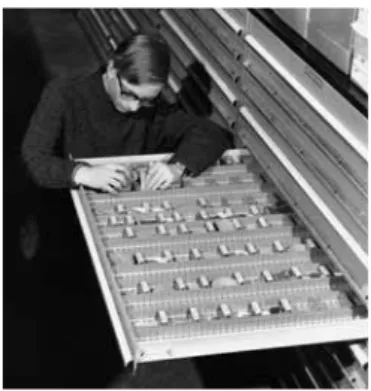
• the newly-built Croydon Tramlink in south London, and • the Museum of London’s Polstore system (Fig. 1).
The link is the need for everyone to speak the same language: • At the Tower of Babel, languages were divided.
• The draft Roman pottery report on the Croydon Tramlink excavations was based on the Oxford Roman pottery terminology, not the one in use in London. It was therefore not directly comparable with reports relating to other sites in the region.
• The Polstores were intended to provide a common language for pottery fabric types (the Polstore system is explained in section 3.3 below).
2.2 Why do we need a common language?
Archaeology is a comparative discipline: archaeologists spend much of their time making comparisons between artefacts, between assemblages, between sites and even between regions. Such comparisons may be made in different ways for different purposes; for example, assemblages may be compared for chronological purposes (e.g. seriation), for spatial purposes (e.g. distributional studies), or for the study of function or status. None of these activities is pos-sible unless comparable ‘objects’ (in the widest sense) are given the same names wherever they occur. If different terminologies are used in different places, then a means of translating between them must be made available. This can often result in all being reduced to a lowest common denominator (the coarsest level of classification) if comparisons at a higher level (e.g. of assemblages) are to be attempted.
A typically anarchic situation has arisen in the study of Roman pottery in Britain, where different organizations and individuals have developed their own terminologies, particularly of fabrics, in apparent ignorance of other systems. For example, Tyers (1996) lists twelve or more ‘aliases’ for common Roman wares, and four to six for less common ones.
2.3 The basic question
The basic question for the archaeologist, faced with an archaeological object, is ‘what shall I call it? What have other people called similar objects?’ I shall attempt to discuss this question in the context of ceramic fabrics and forms, which is where my experience lies. For some classes of object, the question would be ‘what is this object?’: for example, the species and element of a bone, or the species of a seed, can be seen as a fact to be ascertained, and reference collections can be created to aid that sort of identification. The form, and especially the fabric, of a ceramic vessel, is by contrast much more of an archaeologist’s construct. Even if we use ‘period’ terminology, such as tyg1,
we are still imposing the names that we have chosen to give to the material. It is however no less important for us to give similar objects the same name.
2.4 Theory of classification
Classification, seen from a mathematical point of view, consists of two stages: (a) creating, and (b) dividing up (‘partitioning’), what is called an ‘object space’. An object space is a multidimensional space in which each dimension represents a measurable characteristic of the objects being considered, and in which each object is represented as a point in that space. The dimensions may well com-prise different sorts of variables: ratio variables (e.g. length, weight), counts (e.g. number of handles), nominal variables (e.g. type of inclusion), and more complicated ones such as colour. Deciding which of the unbounded number of possible variables are relevant to a particular problem, is a difficult archaeo-logical question that is not always given the detailed consideration that it deserves.
Some very general criteria for a ‘good’ classification can be suggested: it should be ‘exhaustive’ (every object should belong to a type), ‘exclusive’ (no object should belong to more than one type),and it should be ‘natural’ (the partitions imposed in the classification should respect any groupings of points in the object space).
There are two broad approaches to the question of dividing an object space into ‘types’. They can be characterized as the implicit, in which ‘typical’ or ‘core’ examples of each type are described, and the explicit, which relies on defining the boundaries, or ‘frontiers’, between the various types.
One approach is not necessarily better than the other; it depends on the nature of the material and the purposes to which the classification will be put. Each approach has its strengths and its weaknesses.
2.4.1 The implicit approach
This is the approach adopted by many traditional type series. There may, for example, be a series of descriptions of pottery fabrics, often qualified by terms like ‘usually’, ‘commonly’, or ‘most often’, or a series of drawings of forms to illustrate the various types. Attention is thus focused on the ‘core’ or ‘typical’ examples, and the reader or user gains a strong impression of the central nature of each type.
The downside is the introduction of a new object to the space. Does it belong to one of the existing types (and if so, to which), or is it a new type in its own right? How can one tell? This raises the more abstract question of the diffe-rences between the types. Which variable(s) distinguish between two types, and why? What are the archaeological implications of such a distinction? 2.4.2 The explicit approach
This approach seeks to define types in terms of the differences between them, For example, plates, dishes and bowls may be defined in terms of the ratio of height to diameter. This makes it very easy to assign a new object to a type, and the information about the differences between the types can be useful diagnostically.
classifica-tion (the simpler it is, the less likely it is to do so), as the frontiers between the types may divide natural groupings within the space. Further, it tends to focus attention on the peripheral, thus the least typical, members of a type. This may seem to make it a rather perverse approach.
2.5 What happens in practice?
The theoretical discussion given above makes classification appear to be an elegant, even a simple, exercise. But when one starts to try to put it into practice, the mathematical elegance and logical simplicity soon fade, in the face of questions like:
• which measurements (dimensions) to choose?
• should different dimensions carry different weights? If so, what? • what do we do with new objects?
The most important question is: how can the knowledge embodied in a classi-fication be actually used? To enable comparisons to be made (see 2.2), different workers, separated by space and/or time, must ‘speak the same language’. This implies that not only must they use the same terms, but that those terms must convey the same meanings. This point about the transmission of information is especially relevant to ceramic studies in the UK today, when we are seeing a generational change, as the specialists who came in the boom of the 1970s ap-proach retirement. It highlights the value of reference collections as a way of embodying and transmitting knowledge.
3 How have reference collections been created?
Before the 1970s, reference collections of pottery fabrics scarcely existed in the UK. There were of course published type-series, such as those for samian and amphorae, which worked well for highly standardized wares, but perhaps less successfully for the more locally-produced coarsewares (e.g. Gillam 1957). A notable exception was the National Reference Collection of Medieval Pottery at the British Museum.
3.1 Rescue archaeology boom of the 1970s
The need for change became apparent in the 1970s, when the boom in rescue excavations led to a vast increase in the quantities of excavated materials, particularly pottery. The case for reference systems, whether formal reference collections or published type series, became rapidly stronger, in order to: • Ensure consistency between different archaeological units, often working in
close proximity to each other (Rhodes 1979: 97-8),
• Improve the efficiency of the recording and publishing of pottery, in the face of the increased volume of material (ibid.),
• Provide a training tool for the new and inexperienced workers who were drawn into the field.
This decade saw the creation of both the Medieval Pottery Research Group (MPRG) and the Study Group for Roman Pottery (SGRP), both of which instigated discussions about the establishment of fabric and form type series and/or collections. For various reasons, these were often slow in coming to
fruition; for example, the MPRG’s Glossary of Forms, first mooted in 1975 (Moorhouse 1979), finally appeared as A Guide to the Classification of Medieval Ceramic Forms (MPRG 1998) and the National Roman Fabric Reference Collection, first discussed in 1972 (Detsicas 1973), finally appeared in 1996 (Tomber and Dore 1996). In the meantime, a good deal of termi-nological anarchy reigned (see 2.2).
The decade also saw a range of suggestions for classifying pottery fabrics and forms. Those for fabrics tended to start from Peacock’s (1977) descriptive system, but developed in different directions, e.g.
• numerical taxonomy (based on Sokal and Sneath 1973) • the ‘Polstore’ approach (Rhodes 1977; Orton 1979a),
• the National Roman Fabric Reference Collection (Tomber and Dore 1998). For forms, the classical type-series approach could still be followed (e.g. MPRG 1998), but attempts were made to develop methods to explore or partition the object-space:
• the ‘tangent-profile’ method of classifying forms, developed by Peter Main in the 1970s and 1980s (Main 1981; Leese and Main 1983), and extended by Gilboa et al. (forthcoming),
• the ‘envelope’ approach to forms (Orton 1987).
Developments since the 1970s have been mainly in the direction of devolution, i.e. the setting up of regional type series of fabrics and/or forms, frequently crossing period boundaries.
3.2 Numerical taxonomy
The underlying idea, borrowed from the biological discipline of numerical taxonomy, was that all recorded variables should contribute in some way to the definition of a type. It was felt to be too subjective to select certain variables as ‘key’ ones in creating definitions. The idea could, in principle, be implemented by systematic recording of a standard and fairly exhaustive set of variables across the pottery being studied, and then using multivariate statistical tools (such as cluster analysis) to search for groupings within the resulting object-space.
This approach foundered on several rocks, both practical and theoretical, e.g.: • The workload involved in such recording would be enormous and extremely repetitive. This would in turn lead to ‘corner-cutting’ and increased levels of error,
• The problem that not all variables are of equal value in distinguishing between fabric types is not addressed. Some variables can vary considerably within types (e.g. colour differences due to firing conditions),
• The combining of variables of different types (see 2.5) in a multivariate space is not an automatic procedure. For example, it is well known that the Gower coefficient, often used for this task, tends to give more weight to nominal than to ratio variables.
3.3 The Polstore approach
This is named after the Polstore industrial storage cabinets used to house the collection (Fig. 1). It was developed by Michael Rhodes at the Museum of London’s Department of Urban Archaeology, assisted by me and Chris Green, between 1976 and 1979. A theoretical discussion is given in Rhodes (1979) and the practical workings are explained in Orton (1979b).
The starting points of this approach are:
• pottery fabric types consist of clouds, or swarms, of points in the object space, not of individual points,
• it is not possible to match a sherd in the hand to a written fabric description with any degree of certainty. A secure match can only be obtained by comparing sherd with sherd,
• the aim should be to enable workers to identify the sherd in their hand, as matching an existing fabric, or to decide that it belongs to a ‘new’ fabric (i.e. one not already in the collection).
Each of these points will be elaborated below.
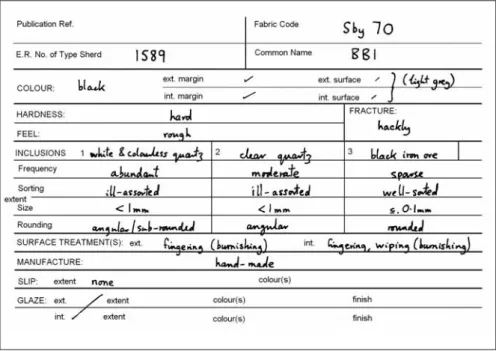
Each fabric has a unique identifying number and a descriptive code, which is built up from elements recorded on the fabric description card (Fig. 2), which describe inclusions, forming, surface treatment, etc. It is possible to include variable characteristics even at this level of description by enclosing the variants in brackets. For example, fabric 70 described in Fig. 2 is black in colour, but may have light grey surfaces (this is probably based on the observation of light grey patches on basically black surfaces).
Several fabrics together comprise a fabric type, encompassing a wider range of possible variation recognized within the type. To avoid confusion between ‘fabric’ and ‘fabric type’, the latter level of classification is referred to as the Common Name (e.g. BB1).
Fig. 2 Example of a pottery fabric description card, used in conjunc-tion with the Polstore system.
A physical example of each fabric was located in the Polstore under a code based on a subset of its description, which referred to inclusion, forming technique and glazing, but not, for example, to fabric colour. The codes were themselves ordered alphabetically throughout the cabinets. There would be, for example:
• whole cabinets of common codes (e.g. Sw), • shelves of less common codes,
• parts of shelves for rare codes.
These examples became a sort of ‘physical memory’ of the characteristics of a fabric and its related Common Name.
Workers would code their sherds, then go to the appropriate cabinet/shelf for that description, and try to match by eye. They might not find a match at all, in which case they had a new fabric. This approach was expected to achieve a better match than matching to written or coded descriptions, as it allows the worker to look for ‘indescribable’ characteristics, e.g. texture.
The main problem was that we under-estimated the difficulty that people would have in making descriptive codings. Robinson’s survey for the MPRG (Robinson 1979) showed a surprising degree of variability in descriptions, even between acknowledged specialists. If the coding is wrong, then the worker is directed to the wrong part of the collection, and may thus never find a match that is actually present in the collection. This may be exacerbated because the first letter of the coding stands for the material of the inclusions (e.g. S = sand). Nearly 30 years later, the Polstores are still in use. Established workers tend to use them less and less as they gain experience, and memory is transferred from the collections to their own brains. The collection is currently little used by visitors, partly because of its location, being relatively inaccessible and badly lit. It needs to be actively promoted, as it is a valuable but under-used resource.
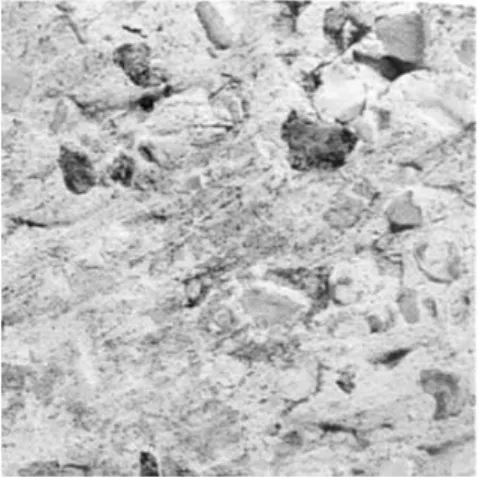
Fig. 3 Example of an image of a pottery fabric from the NRFRC Handbook.
3.4 National Roman Fabric Reference Collection
The NRFRC (Tomber and Dore 1998) is intended, like the Polstore system, to enable workers to identify pottery fabrics and to give them standard names and codes which will allow comparisons to be made both within and between sites. There are two important differences between the two approaches:
The NRFRC in its published (handbook) form relies on high-quality black-and-white and colour photographs (see Fig. 3) as a way of recognizing and matching fabrics.
The NRFRC handbook is organized by geography and status - imported fine wares, coarse wares and amphorae, followed by Romano-British wares by county, ordered alphabetically. This form of organization makes searching more difficult, unless the worker has some idea of the type and is seeking confirma-tion rather than identificaconfirma-tion of an unknown. The authors explain that, although this approach is used for the handbook, ‘the physical layout of the sherds is organised by ware and technological groupings (e.g. temper or surface treatment) regardless of source or industry, in order to facilitate the ‘matching’ of sherds.’ (ibid., 8).
3.5 Guides to forms
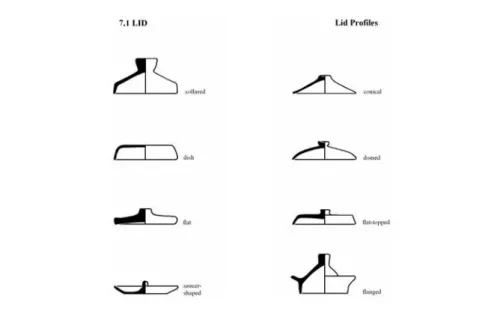
The MPRG recognized the need for a common terminology for medieval pottery forms. The resulting Guide was much delayed and was only published in 1998. It only covers broad ‘high-level’ terms, but has been designed to be extendible, as is shown by its loose-leaf format and the provision of a second (initially empty) binder when purchased (Fig. 4).
Fig. 4 Example of a form type from the MPRG Guide.
3.6 Shape statistics
A key aspect of the study of objects as points in a multi-dimensional space is to be able to define distances (or a metric) within that space, so that similar objects are ‘close’ to each other. It is actually possible to define an object-space entirely in terms of distances between pairs of objects; this approach has attractions when compared to measuring large numbers of dimensions, particularly if the process can be automated. Peter Main for his PhD in the 1970/80s found a simple way of describing and comparing shapes of artefacts. His ‘tangent-profile’ method was based on the idea of following the profile and noting the direction in which it was pointing. The relationship between distance along the profile and the direction of the tangent can be plotted, and differences between different shapes can be measured (Fig. 5).
A recent development uses the curvature function κ(s), plotting it against the arc length (distance along the profile) s (Gilboa et al., forthcoming).
Fig. 5 Tangent-profile curves for two bronze axe outlines (from Leese and Main 1983).
Fig. 6 Examples of envelopes for two delftware forms.
3.7 Envelopes
In geometry, an envelope is a curve which is touched, but not crossed, by all the curves of a particular family. For example, the envelope of all circles of a certain radius that pass through a fixed point is a circle of twice that radius, centred on that fixed point. It occurred to me, when sorting the pottery from the delftware kiln site of Mark Brown’s Wharf, Southwark (Orton 1988), that an analogous idea could be applied to pottery forms. If all vessels of the same form were re-drawn to a common size, and overlaid, it should be possible to draw an envelope around them in a way that generalizes their shapes (see Fig. 6). If the shapes that belong to the same form type were all very similar, their envelope would be ‘tight’ and would resemble the form closely, while if they were varied, it would be ‘loose’ and its relationship to individual shapes would be less obvious.
The perceived advantage, at least for the material from Mark Brown’s Wharf, was that envelopes created from complete profiles could be used to test sherds of various sizes. A rim sherd, for example, might fit into the ‘dish’ envelope, but into neither the ‘bowl’ nor the ‘plate’ envelope. As the form type series current at the time defined such forms in terms of their diameter/height ratio (which does not exist for rim sherds), this was an obvious improvement, permitting a wider range of sherds to be classified. The technique served its purpose for Mark Brown’s Wharf, but has never been developed into a practical tool.
4 Challenges for electronic approaches
In terms of speed and availability of access, electronic references collections seem to be the next step forward, for both fabrics and forms, though a physical version should be retained as the ultimate source of reference for pottery fabrics. The challenge is to devise systems that will enable the worker to match the sherd in their hand to a fabric and form as efficiently and as reliably as possible.
4.1 Some current electronic collections
An interesting contrast between the possibilities of paper and digital publication is provided by Potsherd: Atlas of Roman Pottery2, a digitally-enhanced and
updated version of Tyers (1996). The database of forms and images can be searched by ware, form or source. There is a concordance with the NRFRC, as well as links to bibliographies, other publications and websites, and even to sources of equipment.
An example of the current state of development is the Worcestershire On-line Fabric Type Series3. This is a reference collection of both fabrics and forms, of
both Roman and medieval material, and incorporating bibliographic references and information on kiln sites. It uses text-based searching of Common Names for fabrics and of broad groupings for forms, cross-referenced to each other. There are high-quality images of both fabrics and forms, but they can only be accessed by their names.
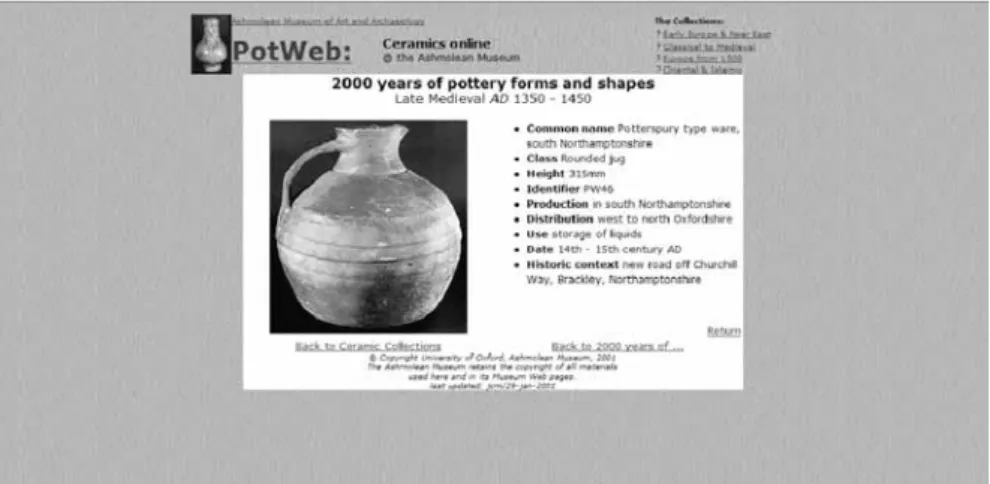
Alternatively, some museums may wish to digitize their own collections, to make them accessible to as wide a public as possible. An example of this approach is provided by PotWeb4, the on-line catalogue of the ceramic collections of the
Ashmolean Museum, Oxford. Some of the museum’s many collections are al-ready included, and more will be added. Searching is mainly by period and broad source; there is also an interesting route via function and social meaning.
4.2 The future
For fabrics, a sort of ‘electronic Polstore’ may be the best way forward, if images of sufficient quality can be searched in acceptable timescales. An ‘expert system’ approach might help to narrow the range of images to be searched, provided that it can accommodate the sorts of mistakes that users are prone to make. For forms, there are competing approaches, including but not confined to those described above. Again, questions of efficiency and reliability are to the fore, but the ability to deal with fragmentary material (and perhaps produce ‘fuzzy’ outputs, giving ranges of possible forms) will also be very important.
5 Conclusions
The needs seem straightforward: • speak the same ‘language’, • be open-ended,
• allow workers to go from the unknown to the known, • capture the ‘indescribables’.
Can the technology deliver? How?
References
Detsicas, A. (ed.), 1973. Current research in Romano-British coarse pottery. Council for British Archaeology Research Report 10.
Gilboa, A., A. Karasik, I. Sharom, and U. Smilansky, forthcoming. Towards computerized typology and classification of ceramics. Journal of Archaeological Science.
Gillam, J.P., 1957. Types of Roman coarse pottery vessels found in northern Britain. Archaeologia Aeliana (4th series) 35, 180-251.
Leese, M.N. and P.L. Main, 1983. An approach to the assessment of artefact dimensions as descriptors of shape. In: J.G.B. Haigh (ed.), Computer Applications and Quantitative Methods in Archaeology 1983, 171-180. University of Bradford.
Main, P.L., 1981. A method for the computer storage and comparison of outline shapes of archaeological artefacts. PhD thesis (Council for National Academic Awards).
Moorhouse, S., 1979. Glossary of less common pottery forms. Medieval Ceramics 3, 112.
MPRG, 1998. A Guide to the Classification of Medieval Ceramic Forms. Medieval Pottery Research Group Occasional Paper No. 1.
Orton, C.R., 1979a. Dealing with the pottery from a 600-acre urban site. In: M. Millett (ed.), Pottery and the Archaeologist. Institute of Archaeology Occasional Publication 4, 61-72.
Orton, C.R. (ed.), 1979b. Pottery Archive Users’ Handbook. Museum of London Department of Urban Archaeology Publications No. 1.
Orton, C.R., 1987. The ‘envelope’: un nouvel outil pour l’étude morphologique des céramiques. In: J. Chapelet, H. Galinié, and J. Pilet-Lemière (eds),
La Céramique (Ve-XIXe s) fabrication, commercialisation, utilisation, 33-41. Caen.
Orton, C.R., 1988. Post-Roman pottery from Mark Brown’s Wharf. In: P. Hinton (ed.), Excavations in Southwark 1973-76 Lambeth 1973-79, 307-347. London Middlesex Archaeological Society and Surrey Archaeological Society Joint Publication No. 3.
Peacock, D.P.S., 1977. Ceramics in Roman and Medieval Archaeology. In: D.P.S. Peacock (ed.), Pottery and Early Commerce, 21-33. London: Academic Press.
Rhodes, M., 1977. A pottery fabric type-series for London. Museums Journal 76 (4), 150-2.
Rhodes, M., 1979. Methods of cataloguing pottery in Inner London: an historical outline. Medieval Ceramics 3, 81-108.
Robinson, A.M., 1979. Three approaches to the problem of pottery fabric descriptions. Medieval Ceramics 3, 3-36.
Sokal, R. and P.H.A. Sneath, 1973. Numerical Taxonomy. London: W.H. Freeman.
Tomber, R. and J. Dore, 1996. A National Roman Fabric Collection. Britannia 27, 368-82.
Tomber, R. and J. Dore, 1998. The National Roman Fabric Reference Collection A Handbook. Museum of London Archaeology Service Monograph 2.
Abstract
Reference collections are classifications in action and electronic versions imply the use of databases to store and organize the information. The way classifica-tions are implemented in archaeological databases is far from unproblematic, however. This paper will initially summarize the role of classifications in archaeology, followed by an outline of the problems that may arise when using classifications in connection with databases. Finally it tries to clarify what this may mean to electronic reference collections.
1 Categories and classes
‘Why do we have to learn all these types by heart?’ students frequently ask me. ‘We would rather learn more about the past!’ For many years I did not give a consistent answer to that question. Rather when teaching typology and classi-fication as a theoretical and methodological issue, I focused on the nature of types and classes. How are they structured, what is the proper way of creating them, are they artificial constructions on our part or do they reflect ‘real’ types, recognized in the past as well? All these are standard questions discussed intensively in the literature over the years.
Reading the book ‘Archaeological typology and practical reality’ by Adams & Adams (1991) changed my perspective somewhat. With one of the authors being a philosopher the book goes much deeper than ordinary texts on classi-fication and typology in archaeology, and it shows systematically how classifi-cations and typologies are closely related to basic human observation and categorization of the world around us. Only with typologies, which in their definition includes a demand for logically constructed, unambiguous sorting keys, do we have a categorization principle that separates itself from what ordinarily takes place in human society.
Categorization is our way to meaningfully structure the world we observe, and it forms the basis for efficient communication when we share the structure and its meaning with others in a group. Categorization is a basic means by which human beings create culture. In archaeology, when we insist that students learn classifications by heart, we are in fact integrating them into the archaeological subculture, setting them up with the means to communicate meaningfully with their peers, and at the same time we indoctrinate them with a meaningful structure, through which they can understand the past.