THE EXPERIENCE OF RECENTLY QUALIFIED SPEECH
AND LANGUAGE THERAPISTS IN
INTERPROFESSIONAL COLLABORATIVE PRACTICE
Thesis submitted in partial fulfilment for the award of Doctor of
Philosophy
By
Ali YILDIRIM
De Montfort University Health and Life Science Faculty Division of Speech and Language Therapy
1
ABSTRACT
Speech and Language Therapy (SLT) is a very small profession that treats people with communication and swallowing disabilities. SLT professionals work in diverse settings
alongside a range of other professionals. There has, however, been very little research
into the nature of this interprofessional collaboration or the preparation of SLT
graduates for such collaboration. In this context, this research aims to examine SLTs’
experiences of interprofessional collaborative practice together with their attitudes towards Interprofessional Education (IPE) and its relevance to their existing
Interprofessional Collaborative Practice (IPCP). This is an exploratory study that uses
the qualitative methodological approach of interpretative phenomenological analysis
(IPA). The participants were 21 SLTs who had graduated from the UK’s De Montfort
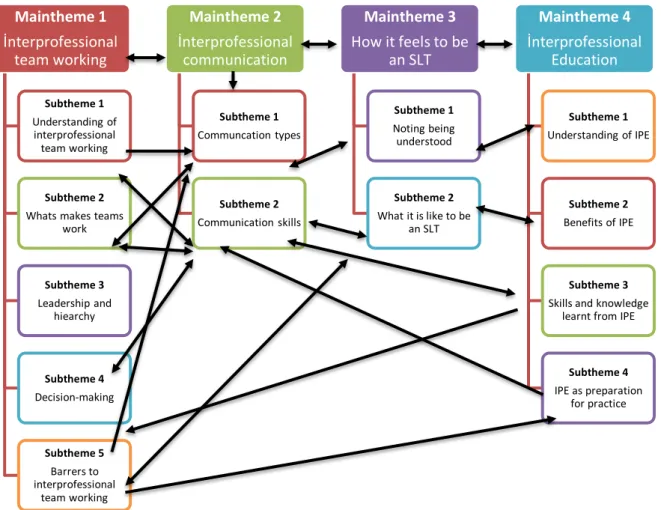
University in the previous five years. Semi-structured interviews were conducted to collect data, which were then analysed using Thematic Analysis (TA). Four major themes emerged from the interview data: 1) interprofessional team working, 2) interprofessional communication, 3) how it is feels to be an SLT and 4) IPE. Several subthemes also emerged from data: understanding of interprofessional team working, what makes teams work well, leadership and hierarchy, decision-making, barriers to interprofessional team working, communication types, communication skills, not being understood, what it is like to be an SLT, understanding of IPE, benefits of IPE, what participants learned from IPE, and IPE as preparation for practice. The findings lend
valuable insights into IPCP in SLTs’ early careers. It clearly illustrates the complex working lives of SLTs moving in and out of different teams with various leadership arrangements. The personalities of a range of professionals and the complexity of their
work environments determined the effects on the SLTs’ interprofessional relationships
and IPCP. This resulted in a need for negotiation and for promotion of their role to other professionals. SLTs felt undervalued and little understood. SLTs also see IPE as important and as a preparation those for IPCP, although it does not necessarily reflect real world conditions. In this scenario, the study examines the implications of this
2
ACKNOWLEDGEMENTS
Firstly, I would want to express my utmost gratitude to my supervisors: Miss Jenny Ford, Principal Lecturer of Speech and Language Therapy, De Montfort University; Professor Raghu Raghavan, Professor of Mental Health and Director of the Mary Seacole Research Centre (MSRC) at De Montfort University; and Professor Elizabeth
Liz Anderson, Professor of Interprofessional Education, National Teaching Fellow at
the University of Leicester. I have been extremely fortunate to have worked under such a supportive, constructive and positive supervisory team. Undoubtedly the consistent support of Miss Ford, Professor Raghavan and Professor Anderson has contributed to developing my confidence as a researcher. I will be eternally grateful for their reassuring encouragement and commitment throughout. I would also like to sincerely thank the wonderful members of the Centre for Advanced Interprofessional Education and Collaborative Practice (CAIPE), who welcomed me at every level and came up with relevant workshops, presentation materials and national and international activities. I would also like to express my gratitude towards the President of CAIPE, Emeritus Professor of Interprofessional Education and Collaborative Practice Professor Hugh Barr, for his help, timely advice and encouragement.
Additionally, I thank De Montfort University’s Department of Speech and Language Therapy and Leicester University’s Medical School for their help support during the
course of research. Quite a few people have attended presentations, corresponded with me during extensive periods of isolation, and been exceedingly magnanimous with their advice and encouragement, for which I shall always remain extremely grateful. I would also take this opportunity in thanking the Secretary of the School of Allied Health Sciences, De Montfort University, who has been a valuable source of information and supportive in terms of the administrative requirements of this research. I thank the staff of the Graduate School Office at De Montfort University, who have proactively shared information about research in the University and been prompt in providing responses to
3 my queries. I am also truly grateful for the fee waiver, received last year. Special thanks to the SLT who was involved in this research and accorded permission for the involvement of participants. Although the participants cannot be named for reasons of confidentiality, I would like to thank all of them. I would also like to thank the Service
Managers, the School’s senior management, hospital managers, line managers,
rehabilitation centre managers, and other managers and teams who facilitated the smooth research conduction. I equally express my gratitude to the Collaboration Centre for their values based on health and social care at St Catherina College, University Of Oxford. I would like to thank Professor Bill Fulford from St Catherine College at Oxford University and Professor Ashok Handa from Nuffield Department of Surgical Science at University of Oxford for their help, support and cooperation.
I conclude my acknowledgements by expressing my sincere gratitude to my wife, Hacer Yildirim who was a source of endless and unconditional support as well as encouragement throughout, and who exhibited great interest and enthusiasm. I am extremely grateful for the patience, understanding and support each of you have provided during the highs and lows of this experience.
4
Table of Contents
ABSTRACT ... 1
ACKNOWLEDGEMENTS ... 2
CHAPTER 1: INTRODUCTION ... 15
1.1 Introducing the research areas and focusing on a topic ... 15
1.2 Research aims and objectives ... 17
1.3 Justification for the research ... 17
1.4 Structure of the thesis: outline of each chapter ... 18
1.4.1 Background ... 18
1.4.2. Literature review... 18
1.4.3. Methodology and method ... 19
1.4.4. Analysis ... 19
1.4.5. Findings ... 19
1.4.6. Discussion ... 19
1.4.7. Recommendations and Conclusions ... 20
CHAPTER 2: BACKGROUND ... 21
2.1 Speech and language therapy ... 21
2.2 Historical Review ... 22
2.3 The current system of SLT practice, education and regulation ... 23
2.4 Interprofessional Education (IPE) ... 25
2.4.1 The history of IPE ... 27
2.4.2 The aims, benefits, barriers and outcomes of IPE ... 28
2.4.3 Policy on IPE ... 29
2.4.4 IPE courses and curricula in UK policy on IPE ... 31
2.4.5 IPE in Leicester’s policy ... 34
2.5 Understanding Interprofessional Collaborative Practice (IPCP) in the UK with a historical background and policy overview ... 35
5 2.5.1 The advantages and challenges of IPCP IPE courses and curricula in the UK’s
policy on IPE ... 38
2.6 Understanding the health care delivery system in the UK... 40
2.7 Summary of the chapter ... 46
CHAPTER 3: LITERATURE REVIEW ... 47
3.1 Literature search strategy ... 48
3.2 Relevant literature in pre-registration (IPE) and post-registration (IPCP)... 49
3.3 Relevant theories on Pre-registration IPE and Post-registration IPCP ... 58
3.3.1 Learning theories ... 59
3.3.2 Learning theories ... 61
3.3.3 System theories ... 62
3.3.4 Psychodynamic theory ... 63
3.3.5 Organizational theories ... 63
3.3.6 Interprofessional team working theories ... 64
3.3.7 Team role theories ... 67
3.3.8 Communication ... 69
3.3.9. Professional culture ... 70
3.3.1.0 Attitudes in IPE and IPCP ... 71
3.3.1.1. Leadership and hierarchy ... 73
3.3.1.2. Professional identity ... 74
3.3.1.3 Workplace theories ... 75
3.4 Pre-registration IPE and post-registration IPCP in SLT ... 76
3.5 Summary of chapter ... 82
CHAPTER 4: RESEARCH METHODOLOGY ... 83
4.1 Research paradigm and methodology in general ... 83
4.2 Qualitative research methods in general ... 86
4.3 Qualitative approach in the current research... 86
4.4 The phenomenological approach and interpretative phenomenological analysis in general 88 4.4.1 How phenomenology and IPA are applied ... 90
6
4.5 Epistemological positioning of the current research ... 92
4.6 Methodological framework of the current research ... 93
4. 7 Limitations of the current research methodological frame work ... 93
4.8 Acknowledging the researcher’s affiliation ... 94
4.9 Acknowledging the influence of the literature ... 94
4.10 Summary of the chapter... 95
CHAPTER 5: RESEARCH METHODS ... 96
5.1 Research questions ... 96
5.2 Research aims and objectives ... 97
5.3 Participants ... 97
5.4 Semi-structured interview... 105
5.5 Pilot study ... 105
5.5.1 Pilot study data collection and analysis ... 106
5.6 Main study ... 108
5.6.1 Audio recording ... 109
5.6.2 Transcription ... 109
5.6.3 Developing usable conventions... 110
5.7 Ethical considerations ... 111
5.8 Informed consent ... 111
5.9 Confidentiality and anonymity ... 112
5.10 Data storage ... 112
5.11 Other ethical issues ... 112
5.12 Researcher reflexivity... 113
5.13 Quality, validity, reliability and trustworthiness ... 114
5.14 Research bias ... 115
5.15 Summary of the chapter... 116
CHAPTER 6: ANALYSIS ... 117
7
6.2 Analytical framework ... 120
6.3 Aims of the analysis ... 120
6.4 Thematic Anaysis (TA) ... 120
6.5 The data analysis process... 122
6.6 Initial coding ... 125
6.7 Coding down ... 127
6.8 Use of QSR NVivo 10 for computer-assisted qualitative data analysis ... 128
6.9 The development of themes, subthemes and theoretical constructs and the establishment of hierarchical systems within the data ... 129
6.9 The interpretation of non-verbal cues in interviews ... 131
6.10 Being reflexive during the analysis process... 131
6.11 Ensuring transparency ... 132
6.12 Summary of the chapter... 133
CHAPTER 7: FINDINGS ... 134
7.1 Description of participants... 134
7.2 Themes and subthemes ... 138
7.3. Main Theme 1: Interprofessional team working ... 138
7.3.1. Understanding interprofessional team working ... 139
7.3.2 What makes teams work well ... 142
7.3.3. Leadership and hierarchy ... 144
7.3.4. Decision-making ... 147
7.3.5. Barriers to interprofessional team working ... 150
7.4. Summary of the theme ... 152
7.5 Main Theme two: Interprofessional communication... 153
7.5.1 Communication types ... 153
7.5.2. Communication skills ... 156
7.6. Main Theme Three: How it feels to be an SLT... 158
7.6.1. Not being understood... 159
8
7.7. Main Theme Four: IPE ... 161
7.7.1. Understanding IPE ... 162
7.7.2 The benefits of IPE ... 164
7.7.3 What the participants learnt from IPE ... 167
7.7.4 IPE as preparation for practice ... 170
7.8 Summary of findings ... 172
7.9 Summary of the chapter ... 172
CHAPTER 8: DISCUSSION ... 173
8.1 Meeting the objectives and addressing the research questions ... 173
8.2 Summary of themes and the connections between them ... 175
8.3 Discussion of key findings ... 178
8.4 Current research findings in some international interprofessional framework contexts . 180 8.5 SLTs’ experience of mono-professional practice ... 185
8.6 The experience of SLTs in interprofessional team working ... 186
8.7 Complexity ... 188
8.8 Negotiation and relationships... 192
8.8.1 Working with some professionals is easier than with others ... 192
8.8.2 Understanding each other’s roles and responsibilities is crucial ... 194
8.8.3 Methods of communication ... 196
8.8.4 Working with some professionals is challenging ... 197
8.8.4 Decision-making ... 198
8.8.5 Leadership ... 202
8.9 Professional identity ... 204
8.10 Personalities ... 206
8.11 Participants’ views of IPE ... 207
8.11.1 An understanding of IPE ... 208
8.11.2 Promoting the SLTs’ role ... 208
8.11.3 Understanding patient values ... 208
8.11.4 Benefits of IPE ... 210
9
8.11.6 What SLTs have learned from IPE ... 213
8.11.7 IPE as preparation for working practice ... 216
8.11.8 Services user involvement in IPE ... 218
8.13 IPE models for SLT... 221
8.14 IPCP model for SLT ... 223
8.15 Summary of the chapter... 225
CHAPTER 9: RECOMMENDATIONS AND CONCLUSION ... 226
9.1 Implementation of current research findings into pre-registration (IPE) and post registration (IPCP)………… ... 226
9.2 Limitations of the current research ... 229
9.3 A critical evaluation of the research process ... 231
9.4 Evaluation of the research philosophy... 231
9.5 Evaluation of research methodology ... 232
9.6 Reflections on design ... 232
9. 7 Reflections on sampling ... 233
9.8 Reflections on interviewing ... 233
9.9 Critical evaluation of the analysis process and method used ... 234
9.10 Use of QSR NVivo10 ... 234
9.11 General reflexivity ... 235
9.12 Usefulness of the research ... 235
9.13 Concluding remarks ... 236
9.13.1 For SLT pre-registration education (IPE) ... 237
9.13.2 For SLT Post registration (IPCP) ... 238
9.14 Recommendations for future research ... 238
9.14.1 Research suggestion 1: Other professionals’ experiences of SLTs in IPE and IPCP……… ... 239
9.14.2 Research Suggestion 2: Effects of personalities on interprofessional relationship and practice ... 239
10
9.16 Final thoughts on the thesis ... 241
REFERENCES ... 242
APPENDIXES ... 271
Appendix- 1 Literature searching strategies ... 271
Appendix- 2 Ethical approval ... 272
Appendix- 3 Research Protocol ... 273
Appendix- 4 Participants email ... 276
Appendix- 5 Participants consent from ... 277
Appendix- 6 Manager information sheets ... 278
Appendix- 7 Participants information sheet ... 282
Appendix- 8 Pilot study interview topic guide framework... 286
Appendix- 9 Main study interview topic guide ... 297
Appendix- 10 Main study anonymised transcripts ... 308
Appendix 11: Interprofessional for collobrative patient centered practice: An evolving Framework.. ... 325
11 List of Tables
Table 2.1: IPE Definations and Consepts……….26
Table 5.1: Demographic participant information………100
Table 5.2: Pilot participant information………..106
12 List of Figures
Figure 2.1: Knowledge for IPE and Uni-Professional Education; Lennox
and Anderson. ... 33
Figure 2.2: Developing interprofessional competencies, before and beyond registration... 35
Figure 2.3: Multi-axial model of multi-disiplinery care ... 44
Figure 2.5: The Health & care system from April 2013……….46
Figure 6.1: Themes and subthemes... 130
Figure 7.1: SLT working matrix ... 138
Figure 7.2: Main Theme one: Interprofessional team working ... 140
Figure 7.3: Main Theme Two: Interprofessional communication ... 154
Figure 7.4: Main Theme Three: How it feels to be an SLT….……… 160
Figure 7.4: Main Theme four: IPE ... 163
Figure 8.1: Themes and subthemes relationship ... 178
Figure 8.2: A model of multi-professional working ... 213
Figure 8.3: Key elements of funding adapted figure from D’amaour and Quandesen (2004) ... 228
13 Image contents
İmage 6.1: Researcher’s handwritten notes………119
İmage 6.2: Six transcription booklets………...123
İmage 6.3: Reading and note taking ... 124
İmage 6.4: Nodes. ... 127
İmage 6.5: Nodes in general ... 126
İmage 6.6: Some codes………...127 İmage 6.7: See screenshot of the NVivo 10 for MAC ... 128
14 Acronyms and Abbreviations
APSEF Australian Patient Safety Education Framework
CAIPE UK Centre for the Advancement of Interprofessional Education
CIHC Canadian Interprofessional Health Collaborative
DHHS Department of Health and Social Security
DoH Department of Health, UK
EHE Enterprise in Higher Education
HCPC Health Care Professional Council
HEI Higher Education Institution
GMC General Medical Council
MBA Medical Board of Australia
NHS National Health Service (UK)
IPC Interprofessional Collaboration
IPE Interprofessional Education
IPL Interprofessional Learning
QAA Quality Assurance Agency
WHO World Health Organization
UK United Kingdom
TQM Total Quality Management
15
CHAPTER 1: INTRODUCTION
The first chapter introduces and explains the objective and the research topics, and outlines the purpose of the study. It also provides directions to the key sections of the thesis together with overviews of them, giving a structured layout of the overall research process and explaining how these relate to each other. It further explores the historical, political and policy backgrounds that have produced the current conditions.
The purpose of the thesis: The thesis documents the PhD research process. Each step of the project is recorded and clearly presented to ensure that all of the processes are understood systematically and chronologically. The preparation for this research began in April 2014 and was conducted over a period of three years.
1.1Introducing the research areas and focusing on a topic
The researcher initially registered as a research student at De Montfort University (DMU) and began working with his original supervisor with the aim of pursuing a topic within the discipline of Speech and Language Therapy (SLT), but without a research plan. After exploring several possible subject areas, he saw himself gravitating towards Interprofessional Education (IPE) and Interprofessional Collobrative Practice (IPCP). Following the retirement of the original supervisor, the author was subsequently transferred to the current supervisory team, where he began identifying certain research goals. Since then he has worked towards acquiring adequate knowledge of relevant research literature. Over time he developed a relationship with the interprofessional education research community both in the UK and internationally, and with the SLT community in the East Midlands in particular and the UK in general. IPCP is a relatively underdeveloped field for research into IPE. Until now it has focused on teams working in acute settings, with special emphasis on better-known professions such as nursing and medicine. Research into IPE is along similar lines: the inclusion of Speech and Language therapists (SLTs) in studies is a rare phenomenon, and little research has been conducted into the outcomes of IPE on practitioners and their work or into the
16 experiences of recently qualified practitioners working interprofessionally. This study therefore aims to make a new and worthwhile contribution to the existing body of research. Its proposed qualitative methodology is appropriate for a fine-grained exploratory study. The researcher focused specifically on the perspective of SLTs working in the UK.
This is an attempt to make a useful contribution to the body of knowledge, especially when joint initiatives and collaboration are on the national policy agenda for SLTs in the UK. The study does not evaluate the outcomes of IPE. However, it does facilitate a better understanding of how these therapists work by investigating the interprofessional experience of recently qualified therapists. Most of all, the researcher has developed a better understanding of the advantages and disadvantages of qualitative approaches, and has striven to acquire a better understanding of the current literature and to identify relevant themes in order to augment the quality of data collection, analysis and interpretation. The methodology and design of this research is based on research methods seminars at DMU, and from the experiences gained at other workshops and face-to-face sessions relating to methodology and critical writing. The researcher then began working on his methods and methodology according to the research questions. He has elected to use qualitative research methods, which he has mentioned in his formal review panel and other review meetings. The comments he received led him to make a few changes in the methodology he was planning to adopt, as well as to the list of participants in his research. The researcher selected SLT students who had graduated over the last five years from DMU as his participants. The methodology dictated that semi-structured interviews be conducted with the participants. The researcher altered the formal review report as well as the proposal and registration forms according to their comments.
The change in methodology following the formal review process obliged him to write a proposal for the ethics committee incorporating the interview schedule and some information sheets. Based on the comments provided by the committee, the proposal was resubmitted until the committee granted ethical approval. At this point the author
17 conducted a few practice interviews with SLT colleagues and a pilot study with four voluntary participants. These will be discussed later.
1.2Research aims and objectives
1) The first aim of this study is to explore the IPP of recently qualified SLTs by
investigating their experience, knowledge and roles.
2) The second aim of this study is to explore SLTs’ attitudes towards pre- registration IPE, whether IPE relevant or valuable to their current Interprofessional Collaborative Practice (IPCP).
The objectives of this research are to explore the following:
SLTs’ experience of IPCP and IPE
SLTs’ attitudes towards and views of their pre-registration preparation for IPCP
SLT’s knowledge of IPCP and IPE
the roles assumed by SLTs in various interprofessional contexts
SLTs’ team experiences and roles
The views of SLTs towards teamwork
SLTs’ experiences of their relationships and the types, barriers and hierarchies involved in communication with other team members
1.3Justification for the research
Researchers have recently suggested that effective IPCP is difficult to achieve owing to
a number of barriers at a systemic, organizational and interpersonal level (D’Amour and
Oandasan, 2005). Over the last few decades’ students have been explicitly prepared for
IPCP with IPE elements added to their curricula to instruct them in current UK working practices. IPCP researchers have frequently focused on teams in acute care or medicine, and health care teams such as surgical teams (Kitto et al., 2013) as opposed to groups such as SLTs. The researcher anticipates that this study will result in a foundation of knowledge being laid in order to better understand SLT in IPE and IPCP. Notably, students SLTs have not been mentioned in IPE-related studies (Robalin, 2011). Until recently, no researcher has been able to demonstrate the benefits of IPE to SLTs during
18 the early years of their practice, despite the growing importance of teamwork for current
policies regarding SLT services. This study’s contribution lies in its ability to fill the
research gaps and to explore the knowledge, experience and roles of recently qualified SLTs working in various interprofessional contexts. The aim is to provide IPCP and IPE in SLT and those in pre-registration SLT courses with actionable insights into the experiences of recently qualified SLTs working with various teams. The findings will
help inform both SLTs’ contributions to safe and effectively integrated team working
and the pre-registration IPE curriculum. In this way the results of this research study will not only make a significant contribution to the literature, but could also potentially influence policies and practices, bringing about a change in perspective concerning the importance of training SLTs to work effectively within IPCP. The findings will also build on the current body of knowledge around IPE.
1.4Structure of the thesis: outline of each chapter
The thesis comprises seven chapters, which together present the context, background, purpose and findings of the study. Each part will be summarized succinctly in order to highlight the important points.
1.4.1 Background
The background information includes an overview of the historical and education context of SLT and a summary of current practice. It also provides some crucial information about IPE and IPCP and concludes with an overview of the current health care system in the UK, proposing new policies and structures regarding the nature and effectiveness of IPE.
1.4.2. Literature review
This chapter explains this research’s literature review process, discussing the strategy
used to search the literature. The body of the chapter review the literature and concludes with a response to the research questions.
19 1.4.3. Methodology and method
This chapter explores the research methodology using its philosophical, epistemological
and ontological historical background’s. The methodological framework, study design,
sampling, ethics and data collection strategies are also included in this chapter. It focuses on the research methods as well as the main study, and concludes by examining the researcher’s reflexivity, quality, validity, reliability and trustworthiness in addition
to a conscientious review of researcher bias.
1.4.4. Analysis
This chapter provides an overall explanation of the qualitative data analysis methods and TA before shifting its focus to the utilisation of the qualitative data management software QSR NVivo10 to facilitate the management of interview data. It discusses the role, capacity and limitations of the software in the analysis process, and then explores the data analysis process, organization, management and interpretation of interview data in the process of TA. The chapter finally explains the coding process and the development of themes within hierarchical and theoretical constructs.
1.4.5. Findings
This chapter begins with a framework of themes and subthemes. The researcher has developed these frameworks during the data analysis process to better summarise the essence of this study and its findings. The latter explain how the themes and subthemes come from row data by incorporating some direct quotations.
1.4.6. Discussion
This chapter addresses the research objectives and the questions identified during the literature review. It interprets the findings and discusses them in relation to existing research. The findings are aligned with the existing literature in the literature review process. The response to these research questions is based on the data from which the findings are drawn. The types of finding supported by the existing literature, and those the researcher has shown to be original contributions, characterises all the responses.
20 1.4.7. Recommendations and Conclusions
This chapter outlines the thesis and concludes with an assessment of the philosophy, methods, methodology and reliability of the current research, along with future research opportunities, and makes recommendations for practice and education.
21
CHAPTER 2: BACKGROUND
This chapter begins by background the history of SLT and its education. It then provides an overview of the overarching regulations and policies of SLT practice. The second part of this chapter will focus on the history of IPE, along with the policies and barriers that accompany it, before concluding with a discussion of IPCP.
2.1Speech and language therapy
SLT forms a very small part of health and social care. It deals with remedial measures for people with communication and swallowing disabilities. SLTs work in diverse settings and in close association with parents, caretakers and a wide range of professionals such as occupational therapists, physiotherapists, doctors, nurses and teachers. According to the 2019 Royal College of Speech and Language Therapists (RCSLT) conference, various institutions like the NHS, schools, charities and private practices employ nearly 17,000 SLTs in the UK. They must often work in community health centres, hospital wards, outpatient departments, mainstream and special schools,
assessment units and day centres, and sometimes even at clients’ residences. In addition,
SLTs are sometimes required to work in courtrooms, prisons and young offender institutions. They are involved with the treatment of babies swallowing difficulties, hearing problems, learning difficulties, physical disabilities, language delay, speech and language impairment, stammering, difficulties in producing sounds, voice disorders, cleft palates and autism. Similarly, they are engaged with adult patients who have acquired conditions such as strokes or head injuries, head, neck or throat cancer, voice problems, swallowing difficulties, mental health issues, learning difficulties, physical disabilities, stammering and hearing impairment (RCSLT, 2014). The requirement for them to work with a variety of professionals as a condition of their involvement in such a wide range of professional applications is inescapable.
22 2.2Historical Review
In the UK, SLT came into existence in the early 20th century with the emergence of a
small professional group of around 8,000 members. However, speech and language disorders go back centuries (van Thal, 1945) and there is data regarding the existence of
SLTs as long ago as the 18th century, when language disorders began attracting the
interest of health care practitioners (McGovern, 1994). According to Armstrong and Stansfield (1996), the pioneers in SLT were predominantly single females. The Central School established a speech therapy department in 1925; two hospitals in London followed suit and created their own speech therapy departments in subsequent years. Speech therapy education was recognized in Glasgow in 1928, and was formalised by the Glasgow School of Speech Therapy by 1935. By the late 1930s, graduates from these departments had begun to practice in Britain (Robertson, Kersner and Davies, 1995). Over time subjects such as stuttering, voice disorders, childhood communication disorders, cleft palates and neurological impairments became a topic of study for professionals in these fields (Eldridge, 1968). At the same time, two professional organisations were formed: the Association of Speech Therapists, which represented the artistic field, and the British Society of Speech Therapists, which represented the medical groups of speech therapists. Practice in the field of speech therapy was an
integral element of these two groups’ professional identities. The two organisations
were antagonistic to each other for the majority of their existence (Robertson et al., 1995:10).
In 1945 they eventually agreed to jointly form The College of Speech Therapists (CST). Through the Board of Medical Auxiliaries, the government recognized the CST as a responsible accrediting agency for all qualifying courses. According to the Robbins Report (CHE, 1963) several new course programmes joined the body after its establishment. Two course programmes were recognized in 1945, another five in the 1960s and six more in the 1970s, following the publication of the Quirk Report (DES, 1972).
23 New courses began to fulfil geographical requirements in southwest England (CSLT Bulletin, 1994). At that time, students were required to qualify for national exams to become professionals. The duration of all courses was three years, inclusive of practical clinical sessions. Many discussions were held regarding the degree of theoretical content that should be included in these courses. At the same time, some professional jealousy as well as perceptual differences became prevalent regarding the academic relevance of these degrees. The CST was apprehensive about the loss of their monopoly and nervous about their prestige and the relevance of diploma and degree courses (CST Bulletin, 1962). According to the Dearing Report (NCIHE, 1997:7-8), the educational structure of SLT has changed rapidly. First recommended in the 1960s by the Robbins Report (CHE, 1963), an increase in the number of SLT students across HE institutions was noted.
2.3The current system of SLT practice, education and regulation
Three bodies determine SLT practice: the Royal College of Speech and Language
Therapy (RCSLT) influences practice and outlines the curriculum guidelines, while the
Quality Assurance Agency (QAA) provides benchmark statements for SLT courses
along with the Health and Care Professions Council (HCPC), these being the regulatory agencies that set the standards for SLT education and training. The QAA and HCPC collectively focus on the documentation of student/graduate outcomes, whereas the RCSLT provides guidelines on SLT education.
There are two sets of standards. One is that of proficiency and the other of education and training. There are also standards regarding conduct, performance and ethics. The
HCPC is the statutory regulatory body for SLTs, and the Health Professions Order 2001
established other professional standards focusing on education and training, conduct, performance and ethics, and proficiency. The college also contributes to the establishment of good practice guidelines alongside the HCPC. With regard to health care courses, subjects are provided in both generic and subject-specific benchmark parts.
24 In October 2001, SLTs began to register with the HCPC. All HCPC-registered professionals are required to renew their registration every two years so as to comply
with the HCPC’s CPD standards. According to the RCSLT (2014), the HCPC maintains
the registration of health professionals who meet its exacting standards of training, professional skills, behaviour and health. Approximately 180,000 professionals from 16 professional backgrounds are currently registered as members. The HCPC also approves all UK courses requiring graduates to apply for registration, and sets the standards expected from both prospective students and registrants.
In addition to publishing educational and training standards, the HCPC also establishes proficiency standards for SLTs to determine safe and effective practice within the profession. The organisation is additionally entrusted with responsibility for setting the
minimum requirements for SLTs’ Continuing Professional Development (CPD) and
other health care professionals registered with them.
The minimum eligibility criterion for entering the field of SLT is an Honours degree. The HCPC requires therapists to meet the standards of proficiency for registration. The organisation also approves the pre-registration of education courses in SLT so as to make successful graduates eligible to apply for HPC registration. Hence, HCPC registration is mandatory for all SLTs in order to practice in the UK.
Many HE SLT course functions follow the requirements of the semester modular degree system, which offers flexible patterns for learning, combining lectures, seminars and clinical placements for SLT students to give them the perfect blend of training and clinical experience. Furthermore, certain subjects are taught by most institutions as specified in the RCSLT curriculum guidance and HCPC standards in the UK. These include linguistics, phonetics, biomedical sciences, neurology, child development, psychology, audiology, learning disabilities, counselling, acquired disorders, research methods, and evidence-based practice and clinical studies. The HCPC expects courses
to meet the RCSLT’s curriculum guidance by undertaking at least 150 sessions with
520 hours of placement training before SLT graduation. In placements, students usually work under the supervision of a qualified SLT. Every university has a unique
25 examination model with which to evaluate SLTs. This education model prepares them for clinical practice. In this case, certain differences exist between the universities and workforce agencies. Prior to this system, both the RCSLT and HE were responsible for formulating course structures and its outcomes. The education and training of the workforce is assumed to be significant and must be carefully addressed by HE institutions and other regulatory bodies.
2.4Interprofessional Education (IPE)
The IPE movement has expanded rapidly around the world. The present researcher will discuss mainly the UK and Canadian model of IPE and collaboration. However, some sections will provide information on the history of the IPE movement in various
contexts. According to Barr et al. (2005:12), “members or students of two or more
professions associated with health or social care, are engaged in learning with, from and
about each other.” Importantly, there has been some discussion of IPE terminology.
According to Leathard (1994, 2003) and Reeves et al. (2010a), similar terms have
different meanings. Examples include “multidisciplinary,” “interdisciplinary,” “
cross-disciplinary”, “teamwork”, “partnership”, “collaborative relationships”, “coordination”,
“integration”, “interprofessionality” and “IPP”. In addition, all these terms have been
used by health and social care professionals for a number of years. The prefixes “
multi-” and “inter-” are often used interchangeably in conjunction with the main words
“professional” and “disciplinary” (Oandasan and Reeves, 2005 L23; Leathard, 2003:5).
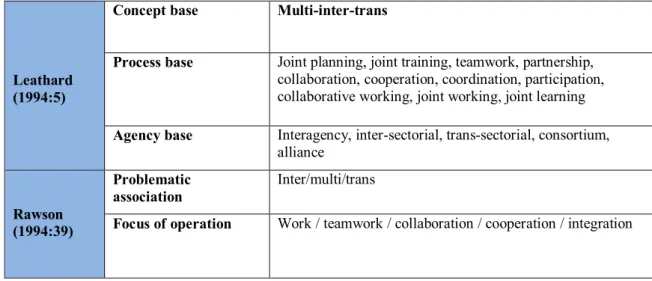
Several of these definitions are explored in Table 2.1. All of them and their
corresponding explanations underpin the complexity of their use in literature and policy. Which illustrates the concept of interprofessional terminology. All the explanations, glossaries and definitions have been used throughout the history of health and medical science in the UK. However, before commencing with the policy background, the issues pertaining to working together in public, private and the third sector will be discussed. In IPE, health and social care professionals cooperatively learn and work together towards a common goal of redefining interprofessional collaboration in order to have a positive influence on the wellbeing of patients and clients. The extensive support and complementation IPE have received reinforces the belief that it facilitates the
26 development of health care providers and imparts the skills required to work collaboratively (CIHC, 2010; Interprofessional Education Collaborative Expert Panel,
2011). IPE’s journey as an educational philosophy has been a long one, and an
understanding of this history facilitates an understanding of its present status. Various terms have been used to define IPE, and the literature has adopted several approaches to teaching and learning. Hammick et al (2007) has reviewed this literature and classified the principles of IPE. At a broader level, IPE helps professionals learn about each other and enables them to maximise the benefits of collaboration.
Table 2.1 IPE: Definitions and concepts
Table 2.1 shows Leathard’s (1994:5) presentation of the three IPE concepts of concept
base (multi-, inter- and trans), process base (including joint, partnership and collaborative working) and agency base (including inter-agency, inter-sectoral and trans-sectoral). Rawson (1994:39) gives two explanations, those of problematic association with (inter-multi-trans) and focus of operation with (which includes work, teamwork, collaboration/cooperation). Leathard (1994) and Rawson (1994) present the Interprofessional Learning (IPL) experiences of professionals as individuals or as
members of groups. It is these experiences of “learning together” that help professionals
disregard their stereotyping tendencies by identifying commonly shared skills and
Leathard (1994:5)
Concept base Multi-inter-trans
Process base Joint planning, joint training, teamwork, partnership, collaboration, cooperation, coordination, participation, collaborative working, joint working, joint learning
Agency base Interagency, inter-sectorial, trans-sectorial, consortium, alliance Rawson (1994:39) Problematic association Inter/multi/trans
27 values. These shared experiences can lead to greater mutual understanding (Clark, 1993). The literature on IPE focuses on the problems of education for those professionals who provide holistic client care, advocating joint education for these professions.
2.4.1 The history of IPE
IPE has steadily grown over the past decade. Notably, research into the mechanisms of learning events continues to advance their understanding by acknowledging their theoretical underpinnings, thereby shaping IPE. In the UK, the first IPE initiatives began in the 1960s. Community, primary, learning disability, mental, aged and palliative care were educational settings unified into a single movement along with a few other fields during the late 1980s, thus paving the way to establishing IPE nationally in the late 1990s. Early work in the interprofessional sector consisted of work-based seminars and short courses to cultivate understanding, trust and collaboration between professions.
In London, Kuenssberg (1966) began interprofessional work with a two-day symposium based on family care. The team aimed to explore working relationships between general practitioners, district nurses and health visitors. The symposium was sponsored by the Royal Colleges of General Practitioners, Midwifery and Nursing, the Queen's Institute of District Nursing, the Health Visitors' Association and the Society of Medical Officers of Health. Similar local and regional workshops and seminars were held, and were approved by both the regulatory and professional bodies. In 1979 some of them eventually organised conferences to support interprofessional developments.
Seminars and workshops also offered opportunities to newly qualified workers to better
understand each other’s roles and responsibilities. One example is that of GPs and nurses, who had to overcome problems of isolation and communication in practices in Liverpool (Thomas, 1994). In the 1980s the Health Education Authority (HEA) backed
the mounting interest in shared learning with the “traveling circus” of workshops
throughout England and Wales in primary health care teams as well as health education. Each team comprised three participants from various professional backgrounds, who
28 had to work on cervical screening and alcohol, drug and tobacco abuse (Spratley, 1990a). The movement grew more quickly in Scotland than in England. In particular, the social work services group and the NHS management executive commissioned the University of Dundee to facilitate these workshops. In 1989, the NHS, under the Community Care Act, published an inter-agency training program involving the statutory and voluntary sectors in health and social services, a program that offered some long-term solutions and strategies. Pertinently, the NHS training directorate and social services set up a training program with the aim of supporting organisations with appropriate training and by developing organisational structures. Following the implementation of the NHS and Community Care Act, some seven sectors in the English health profession were revised because of shared learning experiences (Carpenter et al., 1991). Though some events describe themselves as interprofessional, they only bring a mixed audience together without giving them the opportunity to increase their mutual understanding (Stevenson, 1995). To that end the Centre for Advanced Interprofessional Education (CAIPE) was launched in 1987, with Dr. John Horder as its first chairman; it supported work-based initiatives with the universities. 2.4.2 The aims, benefits, barriers and outcomes of IPE
Interprofessional approaches to health and social care are linked to improved clinical services and enhanced problem solving (Mitchell et al., 2010). IPE also targets patient-centred health and social care. It entails two types of educational benefit: for students (learning new skills, points of view and practices) and staff (who learn from their
students’ professional skills and can adapt their training accordingly). Working and
learning together can positively affect staff confidence and patient safety alike (WHO, 2010).
Despite all these positive outcomes, however, IPE presents some difficulties that could affect its growth in the health and social care sectors. The problems associated with IPE are usually those of culture, professional identity and accountability versus expectations, clinical responsibility, academic schedules and workloads. Cultural and professional identities are known to have a significant effect on IPE and IPCP. An ideal
29 IPE model is intertwined with IPL outcomes and activities, with team-based learning activities exhibiting the quality of IPE models. Students can demonstrate their roles, learn from their peers and develop skills to learn and work together by participating in these activities. In addition, learning becomes an interactive, experiential and reflective process. According to Thistlethwaite et al. (2007), this is most effective when the key stages of the learning process attempt to challenge stereotyping and break down hierarchies.
As will be discussed later, the well-documented predicament of hierarchies has been seen as a substantial barrier to the achievement of effective IPCP. Beneficial outcomes include a positive attitude to continued learning, the acquisition of new knowledge and the ability to work with a range of professionals (Freeth et al., 2005). However, these outcomes are by no means guaranteed, owing to the fact that a wide array of other influences such as communication, delivery of care and collaborative working can affect IPE outcomes. IPE can improve the communication and collaborative skills of students and professionals while enabling them to change their attitudes to team leaders (Thistlethwaite et al., 2007). According to Freeth et al. (2005) the efficacy of IPE entails five mechanisms: clinical effectiveness, evidence-based practice, cost-effectiveness, professionalism and ethical practice, and clinical governance. A critical examination of this research however, would point out that these are general issues. Several other factors including patient safety and their understanding of professional roles are excluded. These factors are crucial, since the ability of the patient to understand their care directly affects their wellbeing. Some of these topics will be discussed in the literature review.
2.4.3 Policy on IPE
The improvements in educational models for health and social care professionals has been accelerated by changes within the structure of their education models (WHO, 1985, 1984b). Educational, health and social care education policies influence a variety of sectors such as universities, the NHS and other professional bodies. The journey of interprofessional ideas began mainly with the Centre for the Advancement of
30 Interprofessional Education (CAIPE), established by academics in 1987. As an authoritative agency, both nationally and internationally, CAIPE has strong links with the Journal of Interprofessional Care, which is one of the most prominent academic
journals in this area. The UK’s Department of Health (DoH) published papers on the
subject of interprofessional working and collaborative care, part of the NHS’s
modernization agenda (DoH, 1989; 1990; 1998). Within the NHS structural models and political, professional, managerial and administrative roles are involved in the development of policy for IPE (Boaden, 1997). Horder (1993), Barr (1992) and Webb (1992) discuss interprofessional theory and its effects on political and economic contexts. The World Health Organisation (1973) states that some policies on interprofessional education and practice relate to the high costs of health and social care and its negative impact on accessing services at a global level.
In the UK, major reforms in health and social care are known to raise controversy among NHS professionals and in public opinion (DOH, 1989b). Since the 1980s, multidisciplinary and multi-agency collaboration has had a strong impact on the planning and delivery of services. In 1992 the government released a White Paper titled
The Health of the Nation, which provided multidisciplinary solutions and supported multidisciplinary educational systems. Policies on team and multidisciplinary working affected the training of professionals. In the context of IPE, collaborative learning and interaction is a key aspect of group learning, as group members learn about and from each other (Barr, 1994a). This is where the concerned parties
...Shall co-operate with one another in order to secure and advance the health and welfare of the people of England and Wales (Health Act 1999, Part 1, s.27). On the other hand, Barr et al. (2011:30) advised that pre-registration IPE has always
been “subject to separate regulation within each of the professional courses in which it is embedded”. In 2006 the QAA published a statement requiring its inclusion at the pre-registration level across professions, educators and their regulators. Similarly, in 2009
the GMC’s published version of Tomorrow’s Doctors emphasised that doctors must understand and respect others, adding that health and social care professionals must also
31 understand the principle of interdisciplinary learning and working towards the delivery of effective and safe patient care. Needham (2011:14) states
A wide range of actors use policy to convey certain meanings, how far meanings are shared, how some meanings come to be dominant and how they shape practice?
Most recent HCPC standards require IPE in pre-registration courses. 2.4.4 IPE courses and curricula in UK policy on IPE
At the same time, certain universities in the UK hosting CAIPE activities have established IPE courses at postgraduate level. For example, in 1986 Exeter University was one of the first in the UK to offer a multi-professional Masters course in Health and Social Care to a variety of professionals including nurses, physiotherapists, occupational therapists, social workers and other allied health professionals. As already mentioned, a multi-professional approach is not necessarily an interprofessional one. The figure below clearly shows how this learning model works.
Figure 2.1: Knowledge for IPE and uni-professional education. Lennox and Anderson
32 It demonstrates that shared and common learning is located within the uni-professional curriculum. The outer circle concerns the core profession and specific knowledge, which remains the domain of each uni-professional curriculum. The middle circle represents uni-professional or shared learning, while the inner circle consists of IPL, with preparation for working in teams in practice.
15 UK universities have followed suit and offered Masters Degrees with interprofessional perspectives (Storrie, 1992). However, nearly all of them are based on a single discipline and academic department; only one, at South Bank University, focuses primarily on IPL and working (Gorman, 1995). According to Ross and
Southgate (2000), while preparing for two CAIPE workshops in 1996, “shared
learning” between medical and nursing students at the qualifying stage catalysed the
formation of an academic network. CAIPE furthermore commissioned a nationwide survey that covered topics such as child abuse, teamwork, AIDS, mental health and learning disabilities. The researchers (Shakespeare et al., 1989) identified as many as
695 examples of IPE – two per cent at undergraduate level, 18 per cent at post-graduate
level and 83 per cent during subsequent professional development. This has implications for SLT, as it provides the context for concerted consultation between professionals within the purview of effective patient care.
Another survey in 1994 conducted by Barr and Waterton (1996) identified 455 examples of IPE, of which three-quarters were at the post-experience stage. According to the Committee of Vice Chancellors and Principals (CVCP, 1997), 54 of 77 HE
institutions in the UK with courses for health professionals offered some “shared
learning”. Of these, 13 were undergraduate and 30 at both undergraduate and
postgraduate levels. According to this data, “shared learning” was more inclusive than
“IPE” (Barr 1996:11). This teaching and training gradually improved over time. Higher Education (HE) policy aims to integrate IPE into the pre-registration education of specific professional curricula. However, a variety of challenges exist, including organisation-, faculty- and student-based factors (Reeves et al., 2010b).
33
For Barr (1996), IPE programs are based on attitudes, perceptions and “collaborative competencies”. Collaborative competency will be discussed later. Southampton and
Portsmouth universities have created a common learning outlined by O’Hollaron et al.
(2006): an IPE curriculum for a diverse range of undergraduate programs. This is
known as “The new generation project” and was aimed at providing students with a quality experience in IPL. The model was based on collaborative IPL, in which engaging in-group exercises and building mutual trust and respect across the professions was assumed to be of significance. Within this project a new Interprofessional e-Learning Pathway (IPeLP) was created that offered IPE online. Sheffield Hallam and Sheffield universities also developed an IPL approach to provide a capability framework. This could be a basis for institutions that want to develop their IPE curricula. Internationally, four other competency frameworks could help institutions improve those curricula.
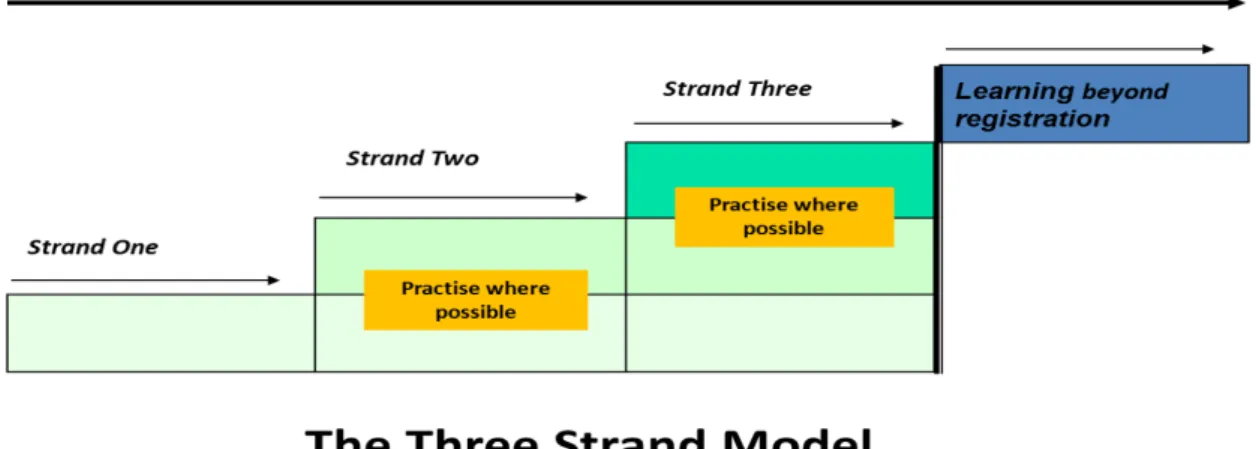
Figure 2.2: Developing interprofessional competencies, before and beyond registration (Anderson and Knight, 2004)
As it mentioned earlier with CAIPE leadership different institution around the UK used IPE in undergraduate and postgraduate level. The Three-Strand Model of Interprofessional Education was implemented in the Leicestershire, Northamptonshire
34
and Rutland Workforce Development Confederation(Anderson and Knight, 2004). The
first strand is a university-based one that involves classroom- and workshop-based IPE
activities (these were conducted more than once in each strand).The aim of this strand
is to have students learn about themselves and other professionals in relation to promoting person-centred care. The advantages of the second strand are uni-professional knowledge and skills applied to team working in practice. The aim is to familiarise students with the theoretical basis of teamwork and effective collaborative team practice in order to consider their future roles within such teams. The objective of the third strand is to enable students to further develop their knowledge and team-working skills in order to help apply them to current health and social care services
while also identifying solutions for effective teamwork.
2.4.5 IPE in Leicester’s policy
A three-strand model of IPE is used by some HE institutions in the UK. Curricula using this model are designed to bring all students together for learning and work. The
framework of the curriculum is known as the “Three-Strand Model of Interprofessional
Education” (Anderson and Knight, 2004). The University of Leicester, DMU and the
University of Northampton have used three-strand model IPE curricula (Anderson and Knight, 2004), the aim of which is to bring uni-professional students together in order to learn collaboratively. There is little evidence of IPE in the undergraduate curriculum (Anderson and Lennox, 2009). DMU and the University of Leicester carried out some IPE learning activities together. According to Lennox and Anderson (2012) the Leicester model has some links with the post-qualification period for future professional development.
The IPE module for DMU students is based on the Leicester model of IPE. A typical IPE day could be a half-day or one-day workshop with 20 to 30 students in one room. The workshop facilitators could be IPE-trained in departments related to the students in the workshops. 20 to 30 students are divided into interprofessional teams. The facilitators assign them tasks that could be altered by the workshop subjects. In patient safety workshops, for example, facilitators assign students tasks related to patient safety
35 such as case studies that involve issues of patient safety. Which students have changes create an interprofessional discussion around the patient safety case.
Every strand has own workshops. Strand One introduces IPE and team-building activities with communication IPE workshops. Strand Two presents challenges in community IPE, while Strand Three involves patient safety and safe practice IPE with patient involvement in the IPE workshop. There are mental health and education IPE days. These events consist of listening workshops that include service user involvement, an IPE introductory workshop that covers team-building activities, and a discussion of complex real-life cases. Patient safety and safe practice workshops also include discussions with other students of real cases from patient safety and safe practice perspectives. Finally, SLTs participate in IPE workshops in the community, and in IPE Education Day workshops with teachers and social workers. Participants in the present research have participated in the IPE workshops by undertaking various activities. The
present research presents the students’ perspectives while including IPE on the Leicester
model. However, there is insufficient data to illustrate how the IPE curriculum affects students during the course of their practice. In this research, the findings are expected to help the SLTs contribute to safe and effective integration, and to improve their interprofessional working. The following section will focus on Interprofessional Collaborative Practice (IPCP).
2.5Understanding Interprofessional Collaborative Practice (IPCP) in the UK with a historical background and policy overview
IPCP involves health and/or social care professionals who share a team ethos working closely together in an integrated yet independent manner to solve problems and deliver services. IPCP ensures that
Multiple health workers from different professional backgrounds work together with patients, families, carers and communities to deliver the highest quality
care (WHO, 2010:55).
The fundamental elements of IPCP are respect, trust, shared decision-making and
36 who have diverse backgrounds are able to disseminate their knowledge, information and goals among themselves by interacting with each other and through interpersonal relationships.
Correspondingly, Petri (2010:80) observes that
An interpersonal process is characterized by health care professionals from multiple disciplines with shared objectives, decision-making, responsibility, and power working together to solve patient care problems; the process is best attained through an interprofessional education that promotes an atmosphere of mutual trust and respect, effective and open communication, and awareness and acceptance of the roles, skills, and responsibilities of the participating disciplines.
IPCP’s complex nature has not made it easy for institutions and professionals to
implement, for several reasons that will be discussed later in this chapter. The theory behind IPCP is very complex, including as it does diverse professional fields and interprofessional backgrounds.
In 1948 the NHS began to use terms such as team working and collaboration. However, the importance of collaboration among health and social care professionals is believed
to have originated with the publication of the Beveridge Report in 1942. At that time,
team activities among health and social care services faced several problems. Since then, hurdles to the provision of IPCP are being addressed. This can be seen in the growing number of UK publications such as policy reports and regulations relating to IPCP written by a number of professional bodies. Day (2006) chronicles IPCP’s policy development thus:
1942: the Beveridge Report 1948: formation of the NHS 1968: the Seebohm Report
1978: the WHO’s Alma Ata Declaration
1989a: Working for Patients (DoH)
37
Beyond (DoH)
The NHS and Community Care Act 1990
1997: The New NHS, Modern – Dependable (Secretary of State for Health)
1998a: Modernising Social Services (DoH)
1999: Modernising Government (National Audit Office)
1999-2005: National Service Frameworks (NSF)
1998b: A First-Class Service: Quality in the New NHS (DoH).
1999a: The Health Act 1999 – Modern Partnerships for People (DoH)
1999b: Agenda for Change: Modernising the NHS Pay System (DoH)
2001b: The Health and Social Care Act 2001 (DoH)
2001a: National Service Framework for Older People (DoH)
2003: Knowledge and Skills Framework (KSF) (DoH)
2004b: The NHS Improvement Plan: Putting People at the Heart of Public
Services (DoH)
2008: Health and Social Care Act 2008 2012: Health and Social Care Act 2012 2014: Children and Families Act 2014 2014: Care Act 2014
All this depicts the importance of IPCP in the context of the UK’s policies. These focus
mainly on establishing collaboration between professional-carers, patients and professionals in the health and social care sectors. According to Leathard (2003) the
patient’s socio-economic situation also determines the supportive role of the caring professions. All related professions would indisputably respond to the task of providing support on behalf of their patients, clients and carers. Overall, the main purpose of IPCP is to improve outcomes for patients and learn together by sharing knowledge with other professionals and patients. Learning and working together entails certain shared aspects such as team goals, idea sharing, shared identity and team integration (Day, 2006).
These elements set out the “working and learning together” concept that obtains
between a range of professionals. This definition also implies that if different professional groups are brought together in a collaborative effort, they are likely to
38 achieve more as compared to working individually. With regard to supporting professionals working in IPCP, the DoH (1998a:3) states that:
1. At a strategic level, agencies are required to plan together and share
information on the use of their resources.
2. At an operational level, ranges of policies are required to demonstrate
partnership.
3. At an individual care and support level, a shared information system is
necessitated for interprofessional teams and joint training.
2.5.1 The advantages and challenges of IPCP IPE courses and curricula in the UK’s policy on IPE
IPCP has several benefits, as noted by McGrath (1991). These include the optimum utilisation of professionals, the encouragement of teamwork and the dissemination of ideas. All these elements can result in a more effective provision of services, thus increasing the efficiency of the health services. A more effective working environment attributed to the development of good working relations can further enhance job satisfaction within the profession, in turn improving the quality of care and patient safety in the system. This may then positively affect the wellbeing of service users, along with other aspects of the health and social care systems. Southill et al. (1995) have verified these positive outcomes, stating that communication between different professional groups, carers, patients and clients increases their awareness of the need for quality and patient-centred care. They point out that communication between professionals, as well as between professionals and their clients, positively affects the quality of care and the utilisation of resources. However, positive outcomes are not limited to patient care. They also result in greater efficiency of resource utilisation in health and social care.
Therefore, set against the drawbacks, by the twenty-first century, collaboration
has become a powerful force, spearheaded by the government’s modernisation
programme to further partnership working across the health and social care services. (Leathard, 2003:9)
39 However, IPCP also presents certain challenges to its use in the health service sector, one of the main ones being structural tensions between health and social services. Another occurs in team and organisational settings, including a few key factors such as professional issues such as ideological values, self-interest, expertise and diverse professional skill sets (Hardy et al., 1992). The third challenge is the use of complex jargon and varied professional backgrounds and values, which can lead to tensions during collaboration (Pietroni, 1992).
Finally, the issue of economic leadership and organisational boundaries is a serious one (Marshall et al., 1970). However, both Pietroni (1992) and Marshall et al. (1970) state that professional identity can be adapted by including IPE, which can facilitate a more effective form of IPCP despite the challenges involved. The limitations of Hardy et al (1992) research are confined not only to their analytical framework, but also on the differing perspectives of researchers and professionals participating in the study. The social system directly affects interprofessional working relationships, whereas the professional system tends to be influenced by membership of regulatory bodies and the Royal College of Speech and Language Therapy (RCSLT), the Nursing and Midwifery Council (NMC) and the Health Care Professions Council (HCPC). All of them have their own standards and rules, which are not always compatible.
In brief, the organisational structure of IPCP is based on individual team members and the relationships forged between them. Effective teamwork necessitates open communication, support for innovation, high levels of participation, clear roles and responsibilities, competent team members, effective time management, recognition of the intrinsic value of diversity, high levels of commitment, joint education and training, effective conflict resolution, moral support and team spirit. Furthermore, research has shown that effective IPCP is difficult to achieve due to the number of barriers at the systemic, organisational and interpersonal levels.
Farahani et al. (2011) identifies three major themes: