ESTIMATING COMPLEXITY OF A SOFTWARE CODE A MASTER’S THESIS in Software Engineering Atılım University by FERİD CAFER JUNE 2010
ESTIMATING COMPLEXITY OF A SOFTWARE CODE
A THESIS SUBMITTED TO
THE GRADUATE SCHOOL OF NATURAL AND APPLIED SCIENCES OF
ATILIM UNIVERSITY BY
FERİD CAFER
IN PARTIAL FULFILLMENT OF THE REQUIREMENTS FOR THE DEGREE OF
MASTER OF SCIENCE IN
THE DEPARTMENT OF SOFTWARE ENGINEERING JUNE 2010
Approval of the Graduate School of Natural and Applied Sciences, Atılım University.
_____________________ Prof.Dr. İbrahim Akman
Director I certify that this thesis satisfies all the requirements as a thesis for the degree of Master of Science.
_____________________ Prof. Dr. Ali Yazıcı Head of Department This is to certify that we have read the thesis Estimating Complexity of a Software Code submitted by Ferid Cafer and that in our opinion it is fully adequate, in scope and quality, as a thesis for the degree of Master of Science.
(ABROAD)
_____________________ _____________________
Assist. Prof. Dr. Sanjay Misra Prof. Dr. K. İbrahim Akman Co-Supervisor Supervisor
Examining Committee Members
Prof. Dr. Ali Yazıcı _____________________
Asst. Prof. Dr. Atila Bostan _____________________
Asst. Prof. Dr. Nergiz Ercil Çağıltay _____________________
Dr. Ali Arifoğlu _____________________
I declare and guarantee that all data, knowledge and information in this document has been obtained, processed and presented in accordance with academic rules and ethical conduct. Based on these rules and conduct, I have fully cited and referenced all material and results that are not original to this work.
Name, Last name: Ferid Cafer Signature:
ABSTRACT
ESTIMATING COMPLEXITY OF A SOFTWARE CODE
Cafer, Ferid
M.S., Software Engineering Department Supervisor: Prof. Dr. K. İbrahim Akman Co-Supervisor: Assist. Prof. Dr. Sanjay Misra
June 2010, 94 pages
This thesis study investigated the comprehensibility of a software code from a developer’s point of view and proposed new metrics accordingly. The factors that affect the complexity of procedural, Object-Oriented, and multi-paradigm codes were analysed for this purpose. Addition to the investigated factors, various metrics and several aspects were combined in the proposed metrics. The proposed metrics were empirically validated in different paradigms.
ÖZ
YAZILIM KODUNUN KARMAŞIKLIĞININ DEĞERLENDİRİLMESİ Cafer, Ferid
Yüksek Lisans, Yazılım Mühendisliği Bölümü Tez Yöneticisi: Prof. Dr. K. İbrahim Akman Ortak Tez Yöneticisi: Yrd. Doç. Dr. Sanjay Misra
Haziran 2010, 94 sayfa
Bu tez calışması yazılım kodunun anlaşılırlığını programcı bakış açısıyla incelemiştir ve bu bağlamda yeni ölçevler sunmuştur. Bu amaçla, prosedürel, nesneye dayalı ve çoklu paradigmalı programlama dillerindeki karmaşıklık etkenleri araştırılmıştır. Bulunan ögelere ek olarak çeşitli ölçev ve farklı bakış açılarına dayandırılarak bir grup ölçev sunulmuştur. Sunulan ölçevlerin geçerliliği deneysel yöntemlerle test edilmiştir.
Anahtar Kelimeler: Kod kalitesi, Yazılım karmaşıklığı ölçümü
ACKNOWLEDGMENTS
I express sincere appreciation to my supervisor Prof. Dr. K. Ibrahim Akman for his guidance and insight throughout the research. Thanks also go to my co-supervisor Assist. Prof. Dr. Sanjay Misra. I am extremely grateful to my supervisor and co-supervisor for both their technical guidance and fatherly manner.
TABLE OF CONTENTS
ABSTRACT...5 ÖZ ...6 ACKNOWLEDGMENTS ...8 TABLE OF CONTENTS...9 LIST OF TABLES ...11 LIST OF FIGURES ...12 LIST OF ABBREVIATIONS ...13 CHAPTER 1 ...14 INTRODUCTION ...14 1.1 Introduction ...14 1.2 Literature Review...171.2.1 Popular Metrics for Procedural Languages...18
a. Cyclomatic Complexity...18
b. Halstead Complexity Measures...19
c. Lines of Code ...20
1.2.2 Some OO Metrics...20
a. The CK Metrics Suite...20
b. Weighted Class Complexity...21
1.3 Purpose and Scope of Research ...22
CHAPTER 2 ...25
SOFTWARE QUALITY AND COMPLEXITY METRICS...25
2.1 Introduction ...25 2.2 Classification of Languages ...26 2.3 Quality of Software ...27 2.4 Complexity Metrics...27 CHAPTER 3 ...29 MULTI-PARADIGM LANGUAGES ...29 3.1 Introduction ...29 3.2 Multi-Paradigm Languages ...30
3.3 The Need for a New Metric ...31
CHAPTER 4 ...33
PROPOSED METRICS AND THEIR IMPLEMENTATIONS ...33
4.1 Introduction ...33
4.2 The Proposed Metric ...34
4.3 Demonstration of the Metric ...40
4.4 More Examples ...48
CHAPTER 5 ...57
EXTENDING THE METRIC...57
5.1 Introduction ...57
5.2 Multi-Paradigm Complexity Measurement...57
5.3 Demonstration of the Metric ...65
5.5 Empirical Validation ...73
CHAPTER 6 ...81
CONCLUSIONS AND FUTURE WORK ...81
REFERENCES...85
APPENDICES ...91
Appendix A ...91
Web Sites of JavaScript Codes ...91
Appendix B ...93
Example Code in C ...93
Appendix C ...97
Empirical Validation ...97
Appendix D ...106
Other JavaScript Codes ...106
Appendix E ...107
LIST OF TABLES
Table 1: Multi-Paradigm Languages...30
Table 2: Nested Conditions 1...37
Table 3: Nested Conditions 2...37
Table 4: Nested Loops ...37
Table 5: Basic Control Structures ...39
Table 6: Example 1 [84]...41
Table 7: Example 2 ...42
Table 8: Example 3 [85]...43
Table 9: Example 4 ...44
Table 10: Comparison of Metrics ...47
Table 11: Examples...49
Table 12: BCS for MCM ...58
Table 13: Function Point...63
Table 14: Class Complexity of Shapes in Python ...67
Table 15: Procedural Complexity of Shapes in Python ...67
Table 16: Class Complexity of Shapes in C++ ...67
Table 17: Procedural Complexity of Shapes in C++ ...68
Table 18: Class Complexity of Shapes in Java ...68
Table 19: Procedural Complexity of Shapes in Java ...68
Table 20: Function Point Calculation of Shapes...70
Table 21: Comparison between Metrics ...71
Table 22: Pyso – Classes...74
Table 23: Pyso – Procedural ...74
Table 24: Pyso – Inherited Classes ...76
Table 25: Pyso – FP ...77
Table 26: Comparison of Projects...80
Table 27: Chat Application – Classes ...97
Table 28: Chat Application – Cprocedural ...97
Table 29: Chat Application – FP...97
Table 30: Microprocessor Simulator – Classes...99
Table 31: Microprocessor Simulator – Cprocedural...99
Table 32: Microprocessor Simulator – FP ...100
Table 33: Medical System – FP ...101
Table 34: NeoMem – Classes ...102
Table 35: NeoMem – FP ...102
Table 36: TreeMaker – Classes...104
Table 37: TreeMaker – FP ...104
LIST OF FIGURES
Figure 1: Cyclomatic Complexity Example...18
Figure 2: Condition (1) Figure 3: Nested Condition (2) Figure 4: Nested Condition (3) 36 Figure 5: Loop (1) Figure 6: Nested Loop (2) Figure 7: Nested Loop (3) ...37
Figure 8: catch 1 Figure 9: catch 2 Figure 10: catch 3 Figure 11: try-catch 4 38 Figure 12: Flow Graph of Example 4 ...47
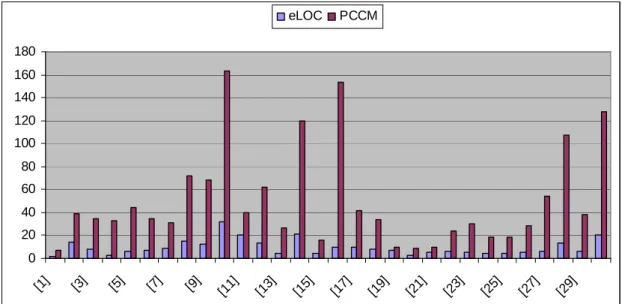
Figure 13: Comparison between eLOC and PCCM...51
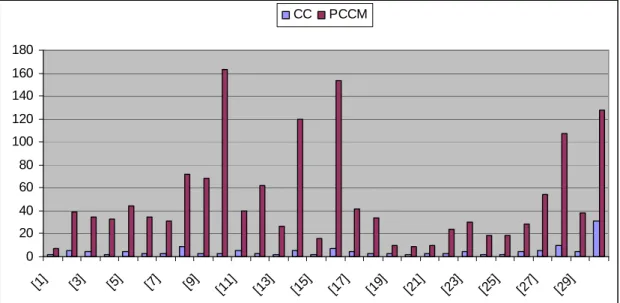
Figure 14: Comparison between CC and PCCM ...52
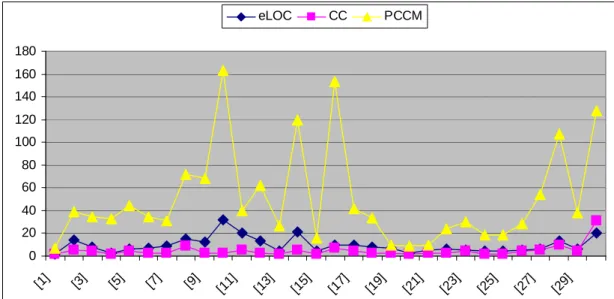
Figure 15: Relative Graph between eLOC, CC and PCCM...53
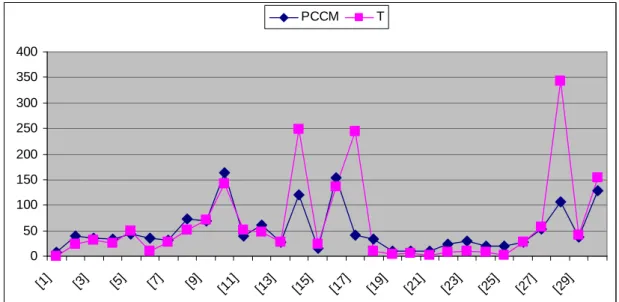
Figure 16: Relative Graph between Time and PCCM ...54
Figure 17: Relative Graph between eLOC, PCCM and Volume ...54
Figure 18: Relative Graph between CC, PCCM and Difficulty...55
Figure 19: Relative Graph between eLOC, CC, PCCM, Effort and Time ...56
Figure 20: Shapes – Class Diagram ...66
Figure 21: Comparison of Metrics ...73
Figure 22: Pyso – Inheritance 1 ...75
Figure 23: Pyso – Inheritance 2 ...76
LIST OF ABBREVIATIONS
ISO - International Standardisation Organisation IEEE - Institute of Electrical and Electronics Engineers OO - Object-Oriented
BCS - Basic Control Structures QA - Quality Assurance FP - Function Point
PCCM - Procedural Cognitive Complexity Measure MCM - Multi-paradigm Complexity Measurement CQ - Code Quality
ANV - Arbitrarily Named Variable MNV - Meaningfully Named Variable CWU - Cognitive Weight Unit
CC - McCabe’s Cyclomatic Complexity LOC - Lines of Code
W - Weight
E - Halstead’s Effort Estimation T - Halstead’s Time Estimation D - Halstead’s Difficulty Estimation V - Halstead’s Volume Estimation
CHAPTER 1
INTRODUCTION
1.1 Introduction
Software development involves creating a software system depending on requirements. Requirements are usually complex and this situation makes software projects change continuously. Software projects are changed or modified in order to better understand the user requirements or eliminate errors. Hence, software systems are called to be complex [58][10][53].
Software life cycle is the process of developing and changing software systems. A software life cycle consists of all the activities and products that are needed to develop a software system. Due to the fact that software systems are complex, life cycle models tend to enable developers to cope with software complexity. Life cycle models expose the software development activities and their dependencies in order to make them more visible and manageable [58][10][53].
A computer program is a set of instructions developed to perform a task, whereas a software system is a set of programs developed with an engineering discipline under consideration of quality with an aim to accomplish many tasks properly. The main distinguishing factor is quality [10]. Thereby, quality is the indispensable fact of a software system.
ISO [67] defines the concept of quality with six characteristics. If a software system is functional, reliable, usable, efficient, maintainable, and portable, then it is said to be of high quality. Another definition given by Software QA and Testing Resource Centre [66] is that quality software should have the least amount of bugs, be delivered on time and within a budget, meet requirements and be maintainable. IEEE definition is the degree to which a system component or process meets specified requirements [18].
Software systems are complex. Therefore, it is hard to attain a high level of quality. Software metrics have always been an important tool since it was realised that software development is a complex task. Due to its complexity, software quality has been a rising demand for decades and some definitions have been manifested throughout software history. A software product should carry several quality attributes, such as correctness, reliability, efficiency, integrity, usability, maintainability, testability, flexibility, portability, reusability, and interoperability [53]. According to Sommerville [69] the most necessary software quality attribute is maintainability. To efficiently be able to maintain a software system, the codes should be understandable for developers. Briefly, to achieve high quality, reduction of complexity is essential. To deal with software complexity, software metrics are used. Metrics are indicators of complexity; they expose several weaknesses of a complex software system. Therefore, by the means of software metrics, quality can be estimated. That is why metrics take an indispensable role in software development life cycle. Software complexity metrics are used to quantify a variety of software properties. Usually, it is extremely hard to build high quality software or improve the development process without using any metrics. There are a number of metrics each focusing on different complexity factors [68]. Large companies such as Hewlett-Packard, AT&T, and Nokia use several metrics to estimate the quality of their software systems [69].
The motivation for developing and using metrics is the need for quantitative and analytical approaches in general. Software metrics are amongst the measurement-based techniques which can be used to improve software development processes and software products [27]. They provide quantitative information about the development and the validation of software development processes [47]. DeMarco [20] describes the reason for using software metrics as “you cannot manage what you cannot measure.” In order to monitor and improve software quality, measurement is essential.
Software metrics tend to compare various parameters such as cost, effort, time, maintenance, understanding and reliability. Metrics are indispensable from several aspects such as measuring the comprehension of a code, testability of the software, maintainability and development processes [19].
McCabe et al. [44] define software complexity as “one branch of software metrics that is focused on direct measurement of software attributes, as opposed to indirect software measures such as project milestone status and reported system failures.”
Basili [7] defines complexity as a measure of resources used by a software system during the interaction of the parts of the software, to perform a task. If the interacting entity is a computer, then complexity is related to the execution time and hardware resources required to perform the task. If the interacting entity is a programmer, then complexity is related to the difficulty of coding, testing and modifying the software [36]. It is believed that for coding and modifying a software system, a higher comprehensibility of the code is required. If the comprehensibility is higher, then the complexity of the software is lower, and thus testing is easier.
Sommerville [69] categorises metrics as control and predictor metrics. Control metrics are related to software processes whereas predictor metrics are associated with software products. Control metrics estimate effort, time and defects. On the other hand, predictor metrics assess the number of attributes and the structures in a code. According to this definition, this thesis focuses on predictor metrics.
Related with the definitions above, the thesis proposal classifies software complexity metrics as:
1. Hardware resource allocation 2. Paradigms
a. procedural paradigm b. Object-Oriented paradigm c. multi-paradigm
d. other paradigms
The complexity factors and metrics that are used in this research are associated with procedural paradigm, OO paradigm, and multi-paradigm (a combination of the previous paradigms).
Procedural programming languages [81], which are also known as imperative programming languages, are based on structures. OO programming languages support hierarchical data abstractions. A problem may require various concepts to be solved practically which lead to multi-programming paradigm [75]. A multi-paradigm language may support two or more programming paradigms. One of the main benefits of a multi-paradigm language is providing easier transitions between multi-paradigms [81]. Under the scope of the proposal, by multi-paradigm, the combination of procedural and OO paradigms is meant. However, in fact, a multi-paradigm is not restricted with only those two paradigms.
In the next chapter, software quality and complexity metrics are expressed in greater detail.
1.2 Literature Review
There are lots of metrics that have been developed until now. Each metric has its own advantages and disadvantages. Metrics may tend to measure quality, size, complexity, requirements, effort, productivity, cost and schedule, scrap and rework, and support [68]. Typically the metrics can be classified as follows [68]:
• Technical metrics: are used to measure the structure of the code, external
characteristics, manuals and documentation.
• Defect metrics: measure defects of software. For instance, the number of defects
found in a specific time.
• End-user satisfaction: is based on the value received from using the system.
• Warranty metrics: focus on revenues and expenditures related with correcting the
software defects.
• Reputation metrics: are related with user satisfaction.
Although, metrics can be classified variously, this thesis categorises them according to paradigms.
1.2.1 Popular Metrics for Procedural Languages
Most of the tools used for measuring code complexity use Lines of Code, Cyclomatic Complexity and Halstead Complexity Measure [21][45].
a. Cyclomatic Complexity
McCabe’s Cyclomatic Complexity formula is given below:
p n e
m= − +2 (1)
Where,
m is the cyclomatic complexity e is the number of edges n is the number of vertices p is the connected components
For example, in Figure 1: e=5, n=4, p=1
Figure 1: Cyclomatic Complexity Example
m = 5 – 4 + 1 m = 2
McCabe’s Cyclomatic Complexity (CC) is older than 30 years. It was used very often in the past [43]. Measuring CC of a code is like making a basis path testing. In other words, it has an advantage of measuring the flow of a program. Thus, it can measure the complexity of an algorithm. However, it is not sufficient to measure code complexity especially of modern programming languages [42]. Today’s programming languages carry functions which decrease the burden of a programmer, inside its library. There are lots of short cuts in Java, Python, and some others. For instance, a code written in C or Python will make a big difference in a point of comprehensibility. In other words, the same program written in Python will be more readable and probably simpler, and for this reason it will be easier to develop. Hence, CC is not able to go beyond the algorithm and measure its cognitive aspect. Moreover, the factors that affect the code complexity does
not merely consist of algorithm, but also variables, structures, classes, coupling, cohesion.
b. Halstead Complexity Measures
This metric was presented by Halstead in 1977 [76][78]. The method includes • n1: the number of distinct operators,
• n2: the number of distinct operands, • N1: the total number of operators, and • N2: the total number of operands.
Program Length => N= N1 N+ 2 Vocabulary Size => n=n1 n+ 2 Program Volume => V =N*log2(n) Difficulty Level => D=(n1/2)*(N2/n2) Program Level => L=1/D
Effort to Implement => E=V*D
Time to Implement => T =E/18
Number of Delivered Bugs => B = E (2/3) / 3000
By using n1, n2, N1, N2, several outputs are generated, namely, program length, vocabulary size, program volume, difficulty level, program level, effort to implement, time to implement, and number of delivered bugs.
This metric is an easy way of measuring a code from many different angles. However, later some questions were aroused such as what was an operator and operand. It was difficult to differentiate them. There is no a sharp distinction between operators and operands. That was one of the major problems. Another issue to be considered is the
structure, inheritance, objects, and so on. The Halstead method is not capable of measuring the structure of a code, inheritance, interactions between modules, and so on [33]. Moreover, as mentioned before, it is based on some psychological assumptions. This fact breeds haze about the objectivity of the metric. However, limited amount of subjectivity is particular to cognitive aspect, since cognitive measurement considers comprehensibility of human being.
c. Lines of Code
This metric considers on the number of lines of code inside a program. It has some types [57]:
• Lines of Code (LOC): counts every line including comments and blank lines. • Kilo Lines of Code (KLOC): it is LOC divided by 1000.
• Effective Lines of Code (eLOC): estimates effective line of code excluding parenthesis, blanks and comments.
• Logical Lines of Code (lLOC): estimates only the lines which form statements of a code. For example, in C, the statements which end with semi-colon are counted to be lLOC.
This type of measurement is highly dependent on programming languages. A code written in Java may be much more effective than C. Two programs that give the same functionalities written in two different languages may have very different LOC values. The advantage of LOC is its ease of calculation, though it neglects all other factors that affect the complexity of software, such as the name of variables, classes, structures, coupling, cohesion, inheritance, and so on.
1.2.2 Some OO Metrics a. The CK Metrics Suite
class-Weighted methods per class (WMC): It is the sum of the complexities of all methods of a
class.
Depth of the inheritance tree (DIT): It is the maximum length in between the node and
the root.
Number of Children (NOC): It is the number of subclasses.
Coupling between object classes (CBO): It is the number of coupled classes.
Response for a class (RFC): It is the number of methods that can be triggered by a
message sent to an object.
Lack of cohesion in methods (LCOM): It is the number of methods that use one or more
of the same attributes [58].
These metrics are used for comparison purpose with the proposed measure.
b. Weighted Class Complexity
Misra and Akman proposed two metrics [51][48] for inheritance and class features of the OO code. Both metrics are based on cognitive weights. For including the inheritance property of the OO code, the authors first suggested calculating the weight of individual method in a class by associating a number (weight) with each member function (method), and then we simply add all the weights of all the methods. This gives the complexity (weight) of a single class/object. There are two cases for calculating the whole complexity of the entire system (if the system consists of more than one class or object), depending on the architecture:
• If the classes/objects are in the same level then their weights are added.
• If they are subclasses or children of their parent then their weights are multiplied. If there are m levels of depth in the object oriented code and level j has n classes then the cognitive code complexity (CCC) of the system is given by
∏
∑
= = = m j n k jkCC
CCC 1 1 (1)The second metric proposed by Misra and Akman is based on the theme that complexity of a single class depends on attributes and as well as on the complexity of the methods. Accordingly, the authors suggested Weighted Class Complexity (WCC) as
1 s a p p WCC N MC = = +
∑
(2)Where Na is the total number of attributes and MCp is the complexity of pth method of the class.
If there are y classes in an object oriented code, then the total complexity of the code is given by the sum of weights of individual classes.
1 y x x
TotalWeightedClassComplexity
WCC
==
∑
(3)Both of these metrics are used in a modified and enhanced form in the proposal.
1.3 Purpose and Scope of Research
Most of the existing metrics may yield conflicting results [47]. Some researchers emphasise that Halstead metrics are based on assumptions and those assumptions may mislead developers. For instance, to measure ‘Time to Implement’ in Halstead, ‘Effort to Implement’ should be divided by 18. Here, 18 is an example for some of the assumptions. Even though its psychological validation had been proved, it may be different with modern programming languages, for Halstead is out-dated. CC is usually used for testing rather than measuring the code complexity [41]. Furthermore, some researchers say that McCabe’s Cyclomatic Complexity is based on poor theoretical foundations and an inconvenient model of software development [42].
The existing metrics consider only a fact or a few facts that affect the software complexity. Most of them do not consider the characteristics of multi-paradigm languages. They are for either procedural or OO languages.
This thesis study is based on measuring complexity per paradigms. The research begins with investigating the factors of procedural paradigm codes, because procedural
paradigm is one of the oldest ways of computer programming. By combining those factors, a metric is proposed to measure the cognitive complexity of a procedural code. Thereafter, with a more modern approach, the research is extended further by adding OO features so that the newer metric could be used not only for procedural, but also either for OO codes or in more general meaning for multi-paradigm codes. Under scope of this research it is believed that multi-paradigm is highly popular in modern days because developers need the simplicity of procedural languages and maturity of OO languages. Due to the fact that multi-paradigm concept covers the features of two or more paradigms; it has become a necessity among software developers. To meet the developers’ needs, an extended metric was proposed which can be used in most of the popular programming languages such as Python, Java, C, and also in web applications such as JavaScript, JSP, PHP, etc.
The widely used old metrics mentioned above give numerical values as outputs. Those numbers may not always connote the quality of software. By using the available metrics, it is highly possible to reach vague and conflicting results. For example, ordinary metrics give a value such that one code is more complex than another one. It is not clear enough the notion of ‘being more complex’. In other words, being more complex may imply that the first code is a great software system developed for banking systems, and the other one is a simple calculator. Another possibility is that both of the software products have the same functionalities, but the second code was written in a more efficient way. That may be the reason for the second one being less complex. Due to not measuring functional aspect, this type of metrics makes developers fall into such ambiguous results. Hence, an exact comment cannot be made by looking at the results.
According to Kearney et al. [36] the large majority of software complexity metrics have been developed with little consideration of the understanding of programmers. Software metrics should be developed with regard for the understanding process.
On the other hand, this thesis deals with cognitive complexity aspect. Some metrics are proposed in this research to measure the cognitive complexity of a program. For example, Multi-paradigm Complexity Measurement method is combined with Function Point as an attempt to assess code quality. So, through measuring cognitive complexity
of a code, which is designed as the internal aspect in this study, and functional complexity of the software, also known as the external aspect, code quality value is reached.
Furthermore, with the proposed metric in this study due to combining cognitive code complexity with functional complexity of the program, the quality of the code can better be assessed cognitively and functionally. If a code also contains redundancy it can be evaluated with the proposed metric.
In Chapter 2, software quality and complexity metrics are discussed. In Chapter 3, a description is given about multi-paradigm languages and also the need for a new metric is explained. The procedural paradigm based metric is proposed in Chapter 4. The fourth chapter also covers complexity factors of procedural languages. In Chapter 5, the previous metric is extended by adding OO factors of complexity in order to propose a metric for multi-paradigm codes. Chapter 6 consists of conclusions and suggestions for future work.
CHAPTER 2
SOFTWARE QUALITY AND COMPLEXITY METRICS
2.1 Introduction
Software quality is closely related with testing and measurement. Fenton [22] defines measurement as follows; “Measurement is the process by which numbers or symbols are assigned to attributes of entities in the real world in such a way as to describe them according to clearly defined unambiguous rules.” Testing techniques tend to find defects, bottlenecks and weaknesses of a software system. Measurement aims to find the complexity in order to understand the effectiveness of the software’s code.
Requirement to improve the software quality is the prime objective, which promotes research projects on software metrics technology. It is always hard to control the quality if the code is complex [3][23]. Complex codes are hard to review, test, maintain and manage. As a consequence, those handicaps increase the maintenance cost and the cost of the product. Due to these reasons, it is strongly recommended that the complexity of the code should be controlled from the beginning of the software development process. Software metrics help to achieve this goal.
In order to increase the quality, the complexity should be decreased [3][23], because complexity increases risks of having defects, difficulty of maintenance and integration. Since this research is focused on cognitive complexity, it should be mentioned that complexity decreases the comprehensibility. To decrease the complexity of software, the factors that affect the complexity should be considered. Some of the factors that affect the procedural complexity are variables and structures. Some of the factors that affect the OO complexity are attributes, structures, and classes. Thus, in order to conceive the complexity of multi-paradigm code, the complexity factors of both of the paradigms should be considered, since multi-paradigm includes the features of both procedural and OO paradigms.
2.2 Classification of Languages
Programming languages are based on programming paradigms. Although there are vast amount of programming paradigms the scope of this research encompasses procedural paradigm, OO paradigm, and multi-paradigm. Multi-paradigm means a paradigm which carries features of two or more programming paradigms. Under the scope of the research the programming languages are classified as;
Procedural programming: it is based on structures and structural flow of algorithms.
Programming language C is a good example to procedural languages.
In the past, researchers proposed their methodologies for evaluating codes, which were written in procedural languages [50], such as C. Later, studies focused on OO programming languages, e.g. Java [43, 44, and 45].
OO programming: it provides data abstractions of hierarchical classes for programmers.
Java is a popular [73] example for programming languages in this category.
Some of the benefits of OO are faster development, higher quality, easier maintenance, reduced costs, increased scalability, improved structures, and higher level of adaptability [19].
Multi-paradigm programming: it encompasses both procedural and OO paradigms. A
programmer may choose to use either procedural code or OO, or even use both of them in the same code. For example: Python. Even though Python is not as popular as Java or C++ it is used by some software giants such as Google and YouTube [56]. Additionally, several conferences and workshops devoted to Python including SciPy India 2009 [61], RuPy ‘09 [59], Poland, FRUncon 09 [24], USA, ConFoo.ca 2010 [14], Canada, are proving the importance of Python. These facts show the need for modern multi-paradigm programming languages. C++ is known as the most used programming language in the world [73] which is another multi-paradigm language.
All stages in the development life-cycle need to be evaluated from the quality point of view. It is usually expected that the most important one amongst these stages is the
quality of the code which is highly affected by the programming paradigm used for development.
2.3 Quality of Software
There are several quality attributes such as security, performance, reusability, availability, testability, correctness, maintainability, reliability, integrity and many others [4][25]. To achieve some of those quality attributes, complexity should be reduced. For example, to be able to test software easily it is necessary that the software is not complex. Otherwise, the testing process will be harder and thus the cost will be higher. What makes software quality assurance unique is product complexity, visibility, and development process. Actually, complexity of software products has been observed for decades. Complexity of software product is much higher than that of other industrial products. Visibility is another difficulty of software quality assurance, since other industrial products are visible but software products are not visible until the end is reached. Software development process differs with its development methodologies and difficulties in finding and removing defects [25]. Similarly, Hughes and Cotterell [29] state that intangibility, increasing criticality of software, and accumulating defects during development process make the software quality unique. Furthermore, software needs to be measured in order to understand its quality. Otherwise, it may not be possible to make an effective project management.
One of the most important and effective tools in assessing software quality is to use complexity metrics explained in the following section.
2.4 Complexity Metrics
Complexity is defined as [30] “the degree to which a system or component has a design or implementation that is difficult to understand and verify”.
Metrics that concern the complexity of software can be classified as procedural metrics, OO metrics, and multi-paradigm metrics. In addition to those, there are also other metrics which are widely used, such as LOC, Halstead, and CC. Although, it is clear that
there are more metric types, only the above mentioned metrics are under the scope of this research, because it is not practically possible and significant to analyse all the existing metrics in a research.
It is well known that the maintainability is one of the important factors that affect the quality of any kind of software. JavaScript also requires modelling, measurement, and quantification for the ease of maintainability purpose. In addition, software metrics play an important role since they provide useful feedback to the designers to impact the decisions that are made during design, coding, architecture, or specification phases. Without such feedback, many decisions are made in ad hoc manner.
Number of researchers has proposed variety of complexity metrics [16][12] for different types of software, software languages [50], software products and related technologies [5][6]. All the reported complexity measures are supposed to cover the correctness, effectiveness and clarity of a system and to provide good estimate of these parameters. With the emergence of the new technologies, also new measurement techniques evolve. There is an ongoing effort to find such a comprehensive measure, which addresses most of the parameters for evaluating quality of the system. In addition, the quality objectives may be listed as performance, reliability, availability and maintainability [4][25] that are all closely related with software complexity.
CHAPTER 3
MULTI-PARADIGM LANGUAGES
3.1 Introduction
Multi-paradigm programming languages are the languages which carry the features of two or more paradigms. The multi-paradigm concept is taken as the combination of procedural and OO paradigms in this thesis. Tim Budd’s [11] definition for multi-paradigm is that it is a framework in which various constructs are obtained from different paradigms. In other words, it is a software development style that supports a number of different language paradigms which provides different problem solving styles. Therefore, one of the greatest advantages of using a multi-paradigm language is that it provides programmers a wider aspect of programming styles. That is to say, a programmer may prefer using developing code with very few classes or even without any class. Hence, multi-paradigm decreases the constraints for developers.
In the past, procedural languages gained popularity for developing programs. Those languages help developers to reduce a problem in its composite parts. Later, OO languages took the lead in popularity due to providing features of class hierarchies with data and methods encapsulated in classes. A need arose for a new paradigm considering the disadvantages of the former ones. Hence, multi-paradigm languages gained popularity by merging elements of various programming paradigms into a cohesive language which utilises programming and conceptual aspects from different paradigms [38].
According to Coplien [15], “Multi-paradigm design becomes an audit for that intuition and provides techniques and vocabulary to regularise the design.” Multi-paradigm programming makes developers think about the nature of complexity [46]. Therefore, it is one of the effective ways of coping with complexity.
Ierusalimschy [31] uses Lua scripting language which is similar to Scheme, in order to benefit from the effectiveness of multi-paradigm design. Instead, this study used JavaScript as a multi-paradigm scripting language. Though, the study does not contain validation of the proposed metrics only with JavaScript codes, but also C as a procedural language, Java as an OO language, and C++ and Python as multi-paradigm languages.
3.2 Multi-Paradigm Languages
Some of the most popular multi-paradigm languages are C++, Python, JavaScript, Perl, Ruby and PHP [73]. For validation, JavaScript, C++ and Python are used as multi-paradigm languages in this research. One of the advantages of Python is being platform independent since it can be used in Windows, Linux, BSD, Macintosh and even in cell phones. Another important advantage is its readability. According to Python official web site, Python additionally provides easy integration and lower maintenance cost [56]. One of the strongest advantages of C++ is its performance. However it is not platform-independent. JavaScript is a scripting language used to embed on HTML files. One of the valuable advantages of JavaScript is that it provides an interaction between the web page and client without using any extra networking resources.
Table 1 shows Scriptol’s [62] descriptions of popular multi-paradigm languages.
Table 1: Multi-Paradigm Languages
Multi-paradigm Language
Description
C++
It is a combination of C and objects. It provides an extended library and templates. System programming is possible in C++ as C, but C++ allows larger projects and applications.
Perl A scripting interpreted language. Readability and ease of use are not the goals. It is usually used by network administrators and for small CGI scripts.
PHP Designed to be embedded inside HTML to build dynamic web pages or update them from databases. It is possible to produce HTML pages by using PHP.
Python
A modern interpreted language with powerful built-in features and a unique indentation feature to shorten coding. It provides developers programming very fast. It is powerful and easy to learn.
Ruby Designed with simplicity in mind. It is interpreted, and has a proprietary but extensible library. Writing scripts are easy.
JavaScript JavaScript has been invented to build dynamic client-side HTML pages. It is used for interactivity in web pages.
3.3 The Need for a New Metric
There are too many popular and simple metrics that do not include the most important complexity factors [34]. Popular metrics that are used inside tools are simplistic [72]. As already noted before, various old metrics are under several criticisms. These criticisms are mainly based on lacking a theoretical basis [35][77], lacking in desirable measurement properties [82], being insufficiently generalized or too dependent on implementation technology [79], being too labour-intensive to collect [37] and only confined to the features of procedural languages.
Most of the available metrics cover only certain features of a language. For example, if Lines of Code (LOC) is applied, then only size will be considered; if McCabe’s Complexity metric is applied, the control flow of the program will be covered. In addition, the metrics applicable to the procedural languages do not fit to the modern languages such as Ruby or Python [12]. Metrics that are developed specifically for OO languages still do not satisfy the requirements for multi-paradigm since multi-paradigm does not cover merely OO features.
Moreover, most of the available metrics do not consider the cognitive characteristics in calculating the complexity of a code, which directly affects the cognitive complexity. Complexity of a code directly affects comprehension. The understanding of a code is known as program comprehension and is a cognitive process and related to cognitive complexity. The cognitive complexity is defined as the mental burden on the user who deals with the code, for instance, the developers, the testers and the maintenance staff. In
the proposal, cognitive complexity is calculated in terms of cognitive weights [80]. Cognitive weights are defined as the extent of difficulty or the relative time and effort required for comprehending the given software, and measure the complexity of the logical structure of the software. A higher weight indicates a higher level of effort required to understand the software. A high cognitive complexity is undesirable for several reasons, such as increased fault-proneness and reduced maintainability. Moreover, one of the programmers may leave the project and another one may come to sustain the project. In such a case, the code should have a low complexity so that the latter programmer can easily grasp the code without wasting too much time. Additionally, cognitive complexity also provides valuable information for the design of systems. High cognitive complexity indicates poor design, which sometimes can be unmanageable [9]. In such cases, maintenance effort increases drastically.
In this research, the factors that affect the cognitive complexity of a procedural language are investigated. Next, the metric is extended by adding OO factors so that the research can be used for multi-paradigm languages.
CHAPTER 4
PROPOSED METRICS AND THEIR IMPLEMENTATIONS
4.1 Introduction
Multi-paradigm programming is widely used, as mentioned by TIOBE [73] and LangPop [40] that C++, Python, Ruby, JavaScript and some other multi-paradigm programming and scripting languages are highly popular. Initially, in this section, procedural part of multi-paradigm is studied. The study investigates the factors that affect the complexity of a procedural code and then proposed a metric for procedural languages. For validation of the metric, the metric is applied on some sample codes which are written in JavaScript scripting language. Some of the reasons for choosing JavaScript are:
• It is a popularly used scripting language.
• There are not many researches which use JavaScript.
• JavaScript has lots of skills such as providing a programming tool for HTML, making an HTML code dynamic, give response to events, validate data, and get client side information [83].
• Even though having OO features, it is widely used for especially writing shorter codes [2].
• According to TIOBE Programming Community Index for January 2010, JavaScript is the ninth most popular language among all types of programming/scripting languages [73].
JavaScript is a simple client-side web programming language [60][17]. Despite JavaScript is used for validation of the metric, the proposed metric can also be applied for other procedural languages, for the metric covers most of the factors that affect the
complexity of procedural languages generally. Detailed explanations of the metric and empirical validations are sequentially given in 4.1.2 and 4.1.3.
4.2 The Proposed Metric
Definitions of complexity [30] imply that all the factors which make code difficult to understand are responsible for complexity. Accordingly, the factors which are responsible for the complexity of a procedural code should be identified. When procedural codes are analysed it is found that the following factors are responsible for the cognitive complexity:
1. Number of Arbitrarily Named Variables (ANV), [39] 2. Number of Meaningfully Named Variables (MNV), [39] 3. Number of operators; [49] and
4. Cognitive weights of basic control structures (BCS) [80].
Number of Arbitrarily Named Variables (ANV): The names of variables used in the code play a very important role in increasing or decreasing the understanding of the code. Although, it is suggested that the name of the variables should be chosen in such a way which is meaningful in programming, most of the developers do not follow it very strictly. If the variable names are taken arbitrarily, there is no problem if the developer himself is evaluating the code. However, it is not the case in real life implementations. After the system is developed, especially during maintenance time, arbitrarily named variables increase the difficulty of understanding four times more [39] than the meaningful names. In the formulation of the proposed metrics, the weights of the arbitrarily named variables are considered to be four times greater than the meaningfully named variables.
Number of Meaningfully Named Variables (MNV): From the discussion part taken in the above section, it is clear that meaningful named variables are more understandable than arbitrary named variables. The weight of meaningfully named variables is assigned as one unit.
Constants: Constants are out of the scope of the research as proposed by Kushwaha and
Misra [39]. It is possible to assume that constants have similar comprehensibility with MNV, because it supposed that constants make a similar effect on human understanding. For this reason, it is supposed that constants should be counted similar as MNV.
Words or sentences written in double quotations or single quotations are not assumed to be constants, because in the case of treating them as MNVs, ambiguity occurs. Because any character, word or sentence may be a string. Moreover, a string may be divided into many strings or characters. This ambiguity was realised during empirical validations. For this reason, they are exempt of being treated either as ANV or MNV. This fact is the same for characters. Only if the string or the character is a variable will it be enquired whether it is ANV or MNV.
It should be noted that discriminating the MNVs and the ANVs is subject to developers’ choice. A standard should be defined among a software team and the style of MNVs and ANVs should be defined by their cognitive choice.
Number of operators: Software in cognitive informatics is perceived as formally described design information and implemented instructions of a computing application [80]. In other words, complexity of any software is in the form of difficulty in understanding the information contained within. By keeping this point in mind, in formulation of Procedural Cognitive Complexity Measure (PCCM), the contribution of information contents is considered in terms of occurrences of operators.
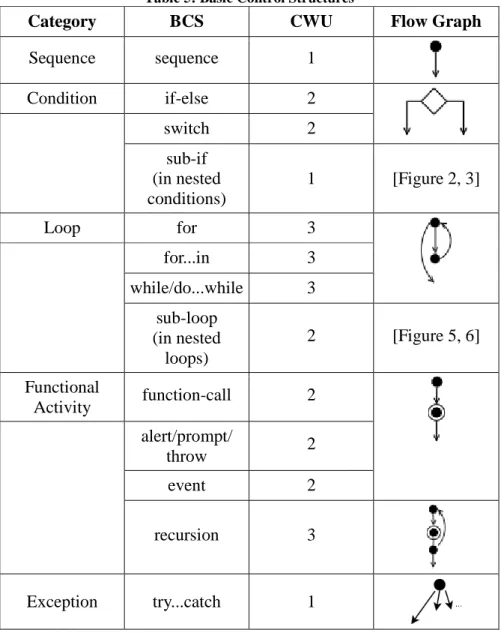
Cognitive weights of Basic Control Structures (BCS): The complexity of a program is directly proportional to the cognitive weights of Basic Control Structures (BSC). The cognitive weight of software is the extent of difficulty or the relative time and effort for comprehending the given software modelled by a number of BCS. BCS are basic building blocks of any software and their weights are one, two and three respectively. These weights are assigned on the classification of cognitive phenomenon as discussed by Wang [80]. He proved and assigned the weights for sub-conscious function (sequence), meta-cognitive function (selection) and higher cognitive function (looping) as 1, 2 and 3 respectively. Although the thesis followed a similar approach as Wang [80], there are some modifications in the weights of some BCS (Table 5). For example,
try-catch is included inside BCS (a special feature of JavaScript codes) in the list and its weight is assigned as 1, based on its structure. As a result the identified BCS and their corresponding weights are given in Table 5.
From the table it is clear that sequence, condition and loops in JavaScript have similar structures with other programming languages. The differences lie in functional activity and exceptions, where alert/prompt/throw, event, and try-catch are new basic control structures. However, try-catch, is common for most of the modern programming languages. The new basic control structures are represented by the corresponding flow graph notations in Table 5.
The weight of the structures depends on their flow diagram. The number of categories and structures can be either reduced or increased accordingly, based on the same logic. For example, alert/prompt/throw is a specific feature of JavaScript which can be removed while measuring codes that are written in other languages.
For example, try-catch has two variations; either try or catch (or one of the couple of catches) will be executed. Therefore, its Cognitive Weight Unit (CWU) is assigned as 2. In this logic, the number of ‘catch’s should be counted. ‘alert’, ‘prompt’, ‘throw’ and ‘event’ are kinds of function calls. Since Wang gives value 2 for function calls, in this study, the same weight is assigned to them. These types of functions differ from other functions by changing the flow of a program. Although the study considers the fact that there are also other such types of functionalities in JavaScript, the specified ones are the most commonly used types. For nested conditions value 1 and for nested loops value 2 is assigned to each sub-condition and sub-loop. The logical reason is shown in the figures below.
Figure 2: Condition (1) Figure 3: Nested Condition (2) Figure 4: Nested Condition (3)
Figure 5: Loop (1) Figure 6: Nested Loop (2) Figure 7: Nested Loop (3) (CWU=3) (CWU=5) (CWU=7)
Table 2: Nested Conditions 1
Figure 1 Figure 2 Figure 3
if (condition) statement; else statement; if (condition1) statement; else if (condition2) statement; else statement; if (condition1) statement; else if (condition2) statement; else if (condition3) statement; else statement;
Table 3: Nested Conditions 2
Figure 1 Figure 2 Figure 3
if (condition) statement; if (condition1) if (condition2) statement; if (condition1) if (condition2) if (condition3) statement;
Table 4: Nested Loops
Figure 4 Figure 5 Figure 6
for (content) statement; for (content1) for (content2) statement; for (content1) for (content2) for (content3) statement;
In Figure 2, CWU is 2 as demonstrated by Wang [80]. Figure 3 shows that there are three possibilities of flow. So, CWU is 3. In Figure 4, 3-leveled of conditional hierarchy is given. There are 3 variations in the flow. For this reason CWU value is assigned to 4. Figure 5, 6, and 7 are the demonstration of loops. According to Wang, loop’s CWU should be 3 based on its flow diagram. Based on the same logic, it is proposed that each nested loop increases the complexity by 2 CWU. For example, in Figure 5, in a nested loop there are 5 variations, and thus CWU is 5. Figure 7, shows that three nested loops make 7 variations. Hence its value should be 7 CWU. The pseudo codes of the conditions and loops (Figure 2-7) are given in Table 2, 3, and 4. Conditions and nested conditions are written in two ways which are shown in Table 2 and 3. Table 4 shows the codes for loops and nested loops.
Figure 8: try-catch 1 Figure 9: try-catch 2 Figure 10: try-catch 3 Figure 11: try-catch 4
While calculating try-catch statement, only ‘catch’s are counted. Because try-catch directs a program into possibilities similar to conditional structures, its weight is assigned to be 1. In a code, there may be more than one catches. In that case each catch will add 1 to the CWU value, because each catch increases the number of variations by 1. For example; if there are 1 try and 2 catches, then the first catch is counted as 1, and the second catch as 1. Therefore the total weight is 2. Of course the structures inside try-catch should also be considered. If there is no try-catch, then there cannot be a ‘try’. The same goes for try; if there is no try, then there cannot be catch. However, for one try there can be many ‘catch’s. For example for one try, there may be 5 ‘catch’s. In other words, the first catch is the initiator of try-catch variations. Each upcoming catch increases the number of variations only by one. In try-catch statements try does not have a weight. This has two reasons. First, try does not contain any variable or operator. Second, try is the expected flow of a program rather than being a condition. The exceptional cases are held by catches. Therefore, it seems more logical to count catches and eliminate try. Figure 8 is an example for a try with one catch. The weight will be as
a variable multiplied by 1 for catch. The weight of try will be as 0. Figure 9 is an example for two catch’s. The weight will be as each error-variable multiplied by each catch’s weight which is 1. That totally makes 2. Of course, if inside catch instead of MNV, ANV is used then it would be as 4x1. If the catch does not contain any variable, then it would be as 0x1. Figure 10 is an example of three catch’s. Similar approach should be applied here, too. Figure 11 shows a try-catch where there is another try-catch inside. In this case still the weight totally makes 2. In short, each catch has a value of 1 which should be multiplied by the variable used for catching errors.
Table 5: Basic Control Structures
Category BCS CWU Flow Graph
Sequence sequence 1 Condition if-else 2 switch 2 sub-if (in nested conditions) 1 [Figure 2, 3] Loop for 3 for...in 3 while/do...while 3 sub-loop (in nested loops) 2 [Figure 5, 6] Functional Activity function-call 2 alert/prompt/ throw 2 event 2 recursion 3 Exception try...catch 1
Accordingly the total complexity of a JavaScript is given by the following formula: Procedural Cognitive Complexity Measure
) CWU operators MNV ANV ( = PCCM ij n = i i m = j
∑∑
+ + 1 1 * ) ) * 4 (( (1)Here, the complexity measure of a procedural code (PCCM) is defined as the sum of
complexity of its n modules (if exists) and module I consists of mi lines of code. In the
context of formula 1, the concept of cognitive weights is used as an integer multiplier. Therefore, the unit of the PCCM is: CWU which is always a positive integer number. This implies achievement of scale compatibility. This logic was derived from Unified Complexity Measure [49]. Cognitive differences of variables were added inside the metric.
By looking at the formula and the methodology of reaching to it, it can be realised that the proposed metric can be thought as a dynamic metric since its structures can be changed due to the needs of a programming language or even of a scripting language. For instance, the BSC is edited according to the features of JavaScript. It could be modified further to be used with another language.
4.3 Demonstration of the Metric
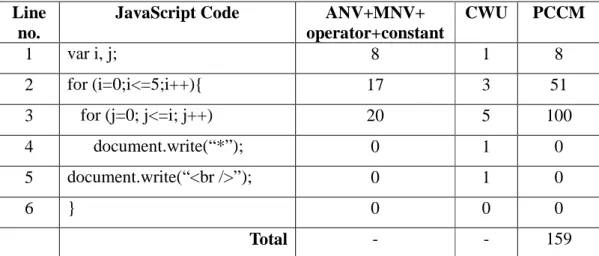
For demonstration of PCCM, 3 different types of codes written in JavaScript taken from the web are considered. These programs are different from each other in their architecture. The calculations of PCCM for these examples are given in Tables 6-8. The structures of all the three programs in tables are as follows: The second column of the tables shows the JavaScript codes. The sum of Arbitrarily Named Variables (ANV), the Meaningfully Named Variables (MNV) and the operators in the line is given in the third column of the table. The cognitive weights of each JavaScript lines are presented in the forth column. The JavaScript complexity calculation measure for each line is shown in the last column of Table 6-8.
Table 6: Example 1 [84]
Description of Example 1:
Line 1: ‘i’ is an ANV, ‘0’ is a constant, ‘=’ is an operator. For this reason 4x1+1+1=6 Line 2: ‘=’, ‘<=’, ‘++’ are operators. ‘i’ is used three times. There are two constants ‘0’ and ‘5’. As a result, 4x3+3+2=17
Line 3: ‘{‘ is neither a variable, nor an operator, nor a structure. Line 4: ‘i’ as an ANV. Therefore, 4x1, ‘+’ 1 => 4x1+1=5 Line 5: There is not either a variable or an operator. Line 6: There is no any structure, variable or operator.
Line no.
JavaScript Code ANV+MNV+ operator+constant CWU PCCM 1 var i=0; 6 1 6 2 for (i=0;i<=5;i++) 17 3 51 3 { 0 0 0 4 document.write(“The number is “ + i); 5 1 5 5 document.write(“<br />”); 0 1 0 6 } 0 0 0 Total - - 62
Table 7: Example 2
The important thing is to calculate the most realistic value which really represents the complexity of the script. If the complexity values of all related complexity measures given in Table 7 are compared, it will be found that PCCM values are higher than the lines of code, cyclomatic complexity [43], difficulty and time [28]. Its reason is that, PCCM represents the complexity values due to all parameters responsible for complexity; however, all these parameters are independently evaluated by different metrics.
Line 1: ‘i’ and ‘j’ are ANVs. 4+4=8
Line 2: ‘i’ is used three times. After adding also the operators and constants, the total makes 4x3+3+2=17
Line 3: There are 4 MNVs and a constant. 4x4+3+1=20. Due to being a nested loop 20x5=100
Line 4: However, for being a statement its structure value is 1, there is not any kind of ANV, MNV or operator. Therefore, 0x1=0
Line 5: It is similar to Line 4. Line
no.
JavaScript Code ANV+MNV+
operator+constant CWU PCCM 1 var i, j; 8 1 8 2 for (i=0;i<=5;i++){ 17 3 51 3 for (j=0; j<=i; j++) 20 5 100 4 document.write(“*”); 0 1 0 5 document.write(“<br />”); 0 1 0 6 } 0 0 0 Total - - 159
Line 6: There is no any structure, variable or operator.
Table 8: Example 3 [85]
Line no.
JavaScript Code ANV+MNV+
operator+constant CWU PCCM 1 var txt=””; 2 1 2 2 function message(){ 0 1 0 3 try{ 0 0 0 4 adddlert(“Welcome guest!”);} 0 1 0 5 catch(err){ 1 1 1
6 txt=”There was an error on
this page.\n\n”; 2 1 2 7 txt+=”Error description: “ + err.description + “\n\n”; 5 1 5 8 txt+=”Click OK to continue.\n\n”; 2 1 2 9 alert(txt);} 1 2 2 10 } 0 0 0 Total - - 14
Line 1: It is obvious that ‘txt’ means text. It is counted as 1x1, for it is MNV. ‘=’ is an operator. So, totally that line’s weight is 2.
Line 2: It does not have any variable or operator. The value of statement is 1. 0x1=0 Line 3: It does not have any variable or operator.
Line 4: It is similar to Line 2. Its structure’s weight is 1 due to being a statement.
Line 5: ‘err’ can be counted as an MNV. The weight of the structure is 1. Therefore, 1x1=1
Line 6: ‘txt’ and ‘=’ totally makes 2.
Line 7: ‘txt’, ‘+=’, and 2 times ‘+’ totally make 4. For ‘err’ is accepted as an MNV, the total weight of the line is 5.
Line 8: It is similar to Line 6.
Line 9: ‘alert’ is a kind of function call. So, the weight of the structure is 2. Line 10: It is obviously 0.
Table 9: Example 4
Line no.
JavaScript Code ANV+MNV+
operator+constant
CWU PCCM
1 var sum=0, min=100, max=0; 9 1 9
2 var grade, arrayNumber, average, studNo; 4 1 4
3 var studNo=prompt(“Number of
Students:”,””); 2 2 4
4 var grade=new Array(); 2 1 2
5 for (arrayNumber=0; arrayNumber<studNo;
arrayNumber++){ 8 3 24 6 grade[arrayNumber]=prompt(“Grade:”,””); 3 2 6 7 sum=sum+parseInt(grade[arrayNumber]); 6 1 6 8 if (grade[arrayNumber]>max) 4 2 8 9 max=grade[arrayNumber]; 4 1 4 10 if (grade[arrayNumber]<min) 4 2 8 11 min=grade[arrayNumber]; } 4 1 4 12 try{ 0 0 0 13 if (studNo==0) 3 2 6 14 throw “DivZero”; 0 2 0 else if (studNo<0) 3 2 6
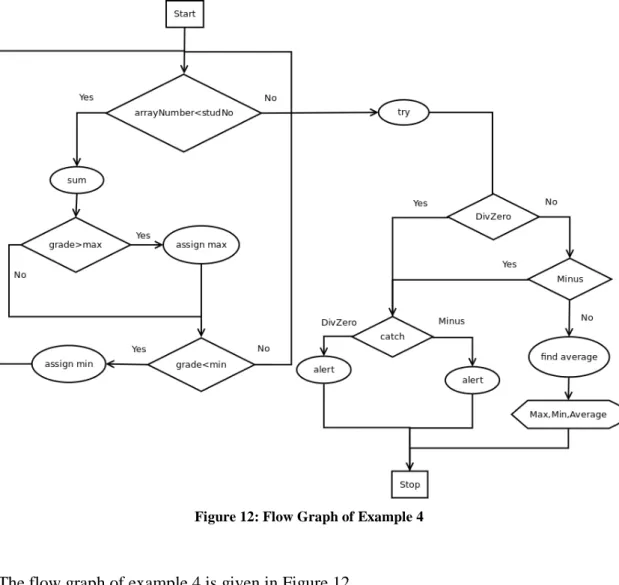
16 throw “Minus”; 0 2 0 17 average=sum/studNo; 5 1 5 18 document.write(“Maximum grade is “+max+”<br />”); 3 1 3 19 document.write(“Average is “+average+”<br />”); 3 1 3 20 document.write(“Minimum grade is “+min+”<br />”); 3 1 3 21 catch(er){ 1 1 1 22 if (er==”DivZero”) 2 1 2
23 alert(“There should be some students”); 0 2 0
24 else if (er==”Minus”) 2 2 4
25 alert(“Student number cannot be negative”);
} 0 2 0
Total - - 112
Line 1: There are 3 MNVs, 3 operators and 3 constants. Line 2: There are 4 MNVs.
Line 3: There is a prompt. Thus, MNV+operator, which makes 2 is multiplied by prompt’s weight 2.
Line 4: 1 MNV and 1 operator make up 2.
Line 5: Operators, constants and variables totally make 8. Due to being ‘for’ loop, the value is multiplied by 3.
Line 6: Both ‘grade’ and ‘arrayNumber’ are MNVs. There is also an operator. Thus, 3 is multiplied by prompt’s weight.
Line 7: Similar to Line 6, but this time it is a simple sequence.
Line 8: For being ‘if condition’ the total weight of MNVs and operators are multiplied by 2.
Line 9: It is a simple sequence. Line 10: Similar to Line 8. Line 11: Similar to Line 9. Line 12: The start of try-catch. Line 13: Similar to Line 8.
Line 14: ‘throw’ has a cognitive weight of 2, but there is no any operator or a variable. Thus, it is 0x2.
Line 15: Similar to Line 13. Line 16: Similar to Line 14. Line 17: Similar to Line 9.
Line 18, 19, and 20: ‘+’ operators and an MNV make up 3. Line 21: ‘er’ (error) is counted as MNV. ‘catch’s value is 1. Line 22: Similar to Line 8.
Line 23: ‘alert’ has a weight of 2, but there is no any constant, operator or variable. Line 24: Similar to Line 8.
Figure 12: Flow Graph of Example 4
The flow graph of example 4 is given in Figure 12.
Table 10: Comparison of Metrics
Halstead Example number PCCM eLOC CC V D E T 1 62 4 3 33 4 132 7 2 159 5 5 33 3 99 5 3 14 9 4 13 3 39 2 4 112 25 8 263 12 3156 175
Table 10 shows different values depending on the metric. Example 2 was obviously more complex than example 1. This is because, although both of their LOC value is 6, example 2 has a nested loop, whereas example 1 has only one loop. Example 2 has two
arbitrarily named variables, but example 1 has only one. In human understanding, the second example is clearly more difficult to grasp than the first one. The similar difference is also observed by eLOC and CC. However, none of Halstead results could measure the difference. Yet more, the Halstead data show that example 1 is more complex than example 2. On the other hand, PCCM could realise that the second example was more complex than the first one and measured the difference in a much more sensitive way than eLOC and CC.
Example 3 has a simplistic code which consists of only sequences, except try-catch. Even though CC, and Halstead’s V, E, and T consider example 3 more complex than example 2, those metrics were not able to show that example 3 is even simpler than example 1. Whereas, PCCM was the only metric that is closer to human understanding. Example 4 has a less cognitive complexity than example 2, due to its readability. Almost with a glance, the fourth example’s purpose is comprehensible. To understand the second example, more thought process is required, even though the fourth example has more lines of code and a longer flow of process. This fact was recognised only by PCCM among the specified metrics, because only PCCM is capable of measuring also the cognitive aspect of a code.
All the above results have shown that PCCM performs better in reflecting the comparative complexities. This also means PCCM is capable of assessing the quality of the code and hence is a valuable addition to the literature.
4.4 More Examples
The web sites of the examples in this section can be found in Appendix A. The proposed metric is compared with some popular metrics which are developed to be used for most of the programming languages. For not being developed specifically for JavaScript code and not even for generally procedural languages, their deficiencies are obvious in comparison with PCCM. PCCM is a dynamic metric, since its structure can be changed due to the features of any specific language. Though JavaScript carries also OO features, for procedural part of the research only procedural examples of JavaScript are used.
Table 11: Examples Halstead Program eLOC CC PCCM V D E T [1] 2 2 7 13 1 13 0 [2] 14 5 39 148 3 244 24 [3] 8 4 35 148 4 592 32 [4] 3 2 33 79 6 474 26 [5] 6 4 44 114 8 912 50 [6] 7 3 35 93 2 186 10 [7] 9 3 31 167 3 501 27 [8] 15 9 72 237 4 948 52 [9] 12 3 68 212 6 1274 70 [10] 32 3 163 212 12 2544 141 [11] 20 5 40 237 4 948 52 [12] 13 3 62 220 4 880 48 [13] 4 2 27 129 4 516 28 [14] 21 5 120 748 6 4488 249 [15] 4 2 16 148 3 444 24 [16] 10 7 153 152 16 2432 135 [17] 10 4 42 366 12 4392 244 [18] 8 3 34 93 2 186 10 [19] 7 3 10 63 1 63 3 [20] 3 2 9 48 2 96 5 [21] 5 3 10 23 1 13 1 [22] 6 3 24 76 2 152 8 [23] 5 4 30 93 2 186 10 [24] 4 2 19 76 2 152 8 [25] 4 2 19 48 1 48 2 [26] 5 4 28 171 3 513 28 [27] 6 5 54 259 4 1039 57 [28] 13 10 107 514 12 6168 342 [29] 6 4 38 192 4 768 42 [30] 20 31 128 696 4 2784 154
![Table 1 shows Scriptol’s [62] descriptions of popular multi-paradigm languages.](https://thumb-us.123doks.com/thumbv2/123dok_us/1588358.2713789/30.892.157.799.755.1058/table-shows-scriptol-descriptions-popular-multi-paradigm-languages.webp)
![Table 6: Example 1 [84]](https://thumb-us.123doks.com/thumbv2/123dok_us/1588358.2713789/41.892.178.780.290.587/table-example.webp)
![Table 11: Examples Halstead Program eLOC CC PCCM V D E T [1] 2 2 7 13 1 13 0 [2] 14 5 39 148 3 244 24 [3] 8 4 35 148 4 592 32 [4] 3 2 33 79 6 474 26 [5] 6 4 44 114 8 912 50 [6] 7 3 35 93 2 186 10 [7](https://thumb-us.123doks.com/thumbv2/123dok_us/1588358.2713789/49.892.218.736.166.1104/table-examples-halstead-program-eloc-cc-pccm-v.webp)