T. J. Tkacik 1,2
Advisor: Diane Pozefsky 1
April 25, 2014
1
Department of Computer Science, University of North Carolina at Chapel Hill
2
Department of Chemistry, University of North Carolina at Chapel Hill
Abstract
Membrane transport proteins are the molecular gatekeepers that regulate the movement
of chemicals into and out of every cell of every living organism.1 In this study, a
cheminformatics approach was taken to predict the substrate and inhibitory activities of 14 major
human intestinal transporters using quantitative structure-activity relationship (QSAR) models
built from 56 datasets. Dataset compounds were represented using CDK or Dragon descriptors
and modeled using random forests (RF), support vector machines (SVM), and k-nearest
neighbors (kNN). In all, 274 predictors passed all cut-offs. The predictive power of these
predictors, as quantified by the external coefficient of determination (R2) of regression predictors
and correct classification rate (CCR) of classification predictors, was analyzed for correlations
with characterizing data of the original datasets. Dataset size, represented by the logarithm of the
cardinality; a modelability index (MODI), defined previously for binary datasets and extended to
continuous datasets here; and the homology group of the represented transporter were each found
to have statistically significant effects on predictive power. However, true validation of QSAR
Abbreviations
ABC ATP-Binding Cassette superfamily of proteins
MRP1-5 Multidrug Resistance- associated Proteins 1-5
AD Applicability Domain NBD Nucleotide-Binding Domain
ASBT Apical Sodium-dependent Bile acid Transporter
NTCP Sodium-Taurocholate Cotransporting Polypeptide
ATP Adenosine TriPhosphate OATP2B1 Organic Anion Transport Protein 2B 1
BCRP Breast Cancer Resistance Protein OCT1 Organic Cation Transporter 1
BSEP Bile Salt export Pump PEPT1 PEPtide Transporter 1
CAS Chemical Abstract Services QSAR Quantitative Structure- Activity Relationship
CCR Correct Classification Rate R2 Coefficient of Determination
CDK Chemistry Development Kit RF Random Forest
GA Genetic Algorithm SA Simulated Annealing
IC50 Half maximal Inhibitory Concentration SDF Structure Data Format
kNN k-Nearest Neighbor SLC SoLute Carrier family of proteins
MCT1 MonoCarboxylate Transporter 1 SMILES Simplified Molecular Input Line Entry Specification
MDR1 MultiDrug Resistance Protein 1 SVM Support Vector Machines
MODI MODelability Index TMD TransMembrane Domain
Glossary of Terms
Amino Acids the building blocks of proteins Homology the degree of conservation in amino acid sequences Auto Scaling normalization by standard
deviation
In silico conducted in simulation
Chemical Descriptors
quantified descriptions of the salient aspects of a compound
In vitro conducted in laboratory setting
Cheminformatics the application of information techniques to chemical data
In vivo conducted in biological system
Chemistry space the set of all energetically stable
compounds Inhibitor
a chemical that blocks a protein's active site Chirality asymmetry such that the molecule
is different from its mirror image
Pharmacophore abstract description of features of an active site Combinatorial
chemistry
chemical synthetic methods that produce entire compound libraries from a single process
Range Scaling normalization by the range of values
Electrochemical potential
the combined effects of concentration and electrical potential
Substrate a chemical that binds to a protein's active site
High-throughput screening
robotic or otherwise automated screening methods
Background
Major Human Transporters
Drug resistance is mediated by
nearly 600 identified human transport
proteins, and it is assumed that at least 5%
(>2000) of human genes are
transport-related.1-3 These transporters largely
determine drug resistance by absorbing
from and expelling chemicals into the
intestines. Membrane transporters are the
protein doorways responsible for
facilitating and regulating the movement
of both biological and pharmaceutical
chemicals across the cell membrane.1
Transporters may move chemicals into
(importers) or out of (exporters) the cell
and to or from the intestine (apical side) or bloodstream (basal side). Individual
transporter-doorways, however, are unlocked by and translocate only a specific profile of chemical-keys
called substrates. In addition, chemicals may act as inhibitors by preventing the transporter from
moving substrates. Determining the factors that dictate how a drug interacts with major human
transport proteins is a critical challenge for drug discovery.
The difficulty in predicting drug resistance, however, is compounded by the sheer
complexity of the individual transporters. P-glycoprotein (MDR1) is the archetypal human ABC
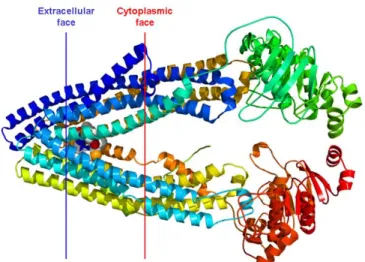
transporter, being the most medically relevant and well-studied. MDR1, Figure 1, is composed of
1280 amino acids (170 kDa) arranged as a single polypeptide.2 Although the corresponding gene
has been mapped, the crystal structure observed, and the amino acid sequence recorded,
determining the actual mechanism of poly-specific substrate selection is still a major challenge
for current bioinformatic techniques.4 Alternative methods in the field of cheminformatics
attempt to predict the interaction between substrate and protein without explicitly modelling the
transporter active site or the mechanism of selection and transport.6
In this study, we look at members of two major transporter families: the ATP-binding
cassette (ABC) superfamily and the solute carrier (SLC) group. Collectively, these groups
include the majority of identified proteins that contribute to drug resistance and susceptibility,
and understanding their biological differences may help explain differences in our ability to
predict their behavior.
ATP-Binding Cassette (ABC) Superfamily
The ABC superfamily of transporters is fundamental to life as it evolved on Earth;
members are believed to be present in every cell of every living organism.2 All ABC transporters
have two distinct substructures: a transmembrane domain (TMD, a portion of the protein that
tunnels through the cell membrane) and cytosolic nucleotide binding domain (NBD). ABC
proteins actively transport substrates through a series of conformational changes in the TMD that
are initiated by the binding and hydrolysis of adenosine triphosphate (ATP, the cell’s energy
molecule) to the NBD. Although the NBD is very similar in all ABC transporters, the TMD vary
widely, corresponding to variations in compatible substrates.
Solute Carrier (SLC) Group
In contrast to the evolutionary relatedness of ABC transporters, membership in the SLC
group is functional, encompassing all families of transmembrane solute transporters that are not
primary active transporters, ion channels, nor water channels. Accordingly, different SLC
subfamilies exhibit little structural similarity, also referred to has homology.3
Mechanisms of Transport
Membrane transporters form doorways through the cell membrane and operate by one of
three means:
Passive transporters allow substrates to move naturally across the membrane from
regions of high electrochemical potential to regions of low potential. This flow down an
electrochemical gradient is energetically favorable and requires no additional energy.
Primary active transporters are molecular motors that utilize an energy source, usually
ATP hydrolysis, to drive the movement of substrate.
Secondary active transporters are molecular turbines that couple the movement of two
substrates simultaneously. The flow of one substrate down its gradient is used to power
ABC proteins undergo primary active transport while the SLC group includes both passive and
secondary active transporters.
Cheminformatics
Although the intersection of chemistry and informatics had been established by the
mid-1960s, the term “cheminformatics” was coined by F. K. Brown in 1998 as
“the mixing of those information resources to transform data into information and
information into knowledge for the intended purpose of making better decisions
faster in the area of drug lead identification and optimization.”7,8
One year later, at the August 1999 meeting of the American Chemical Society, G. Paris
broadened to the term to
“[encompass] the design, creation, organization, management, retrieval, analysis,
dissemination, visualization, and use of chemical information.”6
The new nomenclature was a symptom of the exploding interest in the field during the 1990s
brought about both by advances in synthetic techniques and increases in computational power. In
particular, the concurrent developments of combinatorial chemical synthesis and high-throughput
screening allowed chemists to collect data hundreds of thousands times faster than before, the
quantity of which conventional analytical techniques were simply unable to manage.8-10
In particular, cheminformatics seeks to reduce the time and capital costs of drug
discovery by better identifying potential candidates earlier in silico. Current drug discovery
techniques require an estimated fifteen-years and nearly two billion US dollars to bring a new
drug into the market.6,11 These costs are due to the immensity of the chemistry space as well as
the rigor of clinical trials. Computational techniques, however, are relatively fast and cheap and
can be employed to reduce the number of exploratory assays and studies necessary.12-14
Molecular Representation
Molecules are complex real-world objects. Even 3-dimensional topography models are
little more than illustrative simplifications of what are in reality infinite fields of electron density
associating infinitesimal points of mass and charge. Although many standards exist in practice,
the task of representing molecules in silico is neither trivial nor complete. A database of
molecules may be queried using the accepted common name or a unique registry number
assigned by the Chemical Abstracts Services (CAS). More informative representations reference
Figure 2. Standard cheminformatic representations for aspirin.6
Name Representation
Common Name Aspirin
Synonyms Acetylsalicylic acid, Ecotrin, Acenterine, Acylpyrin, Polopyryna, Acetophen, Acetosal, Aspergum
Empirical Formula C9H8O4
2D Structure
IUPAC Name 2-Acetoxybenzoic acid
CAS Registry Number 50-78-2
SMILES CC(=O)OC1=CC=CC=C1C(=O)O
InChl 1S/C9H8O4/c1-6(10)13-8-5-3-2-4-7(8)9(11)12/h2-5H,1H3,(H,11,12)
Connection Table (SDF)
Aspirin Comment Line
21 21 0 0 0 0 0 0 0 999 V2000
6.3301 -0.5600 0.0000 C 0 0 0 0 0 0 0 0 0 0 0 0 4.5981 -1.5600 0.0000 C 0 0 0 0 0 0 0 0 0 0 0 0 6.3301 -1.5600 0.0000 C 0 0 0 0 0 0 0 0 0 0 0 0 5.4641 -2.0600 0.0000 C 0 0 0 0 0 0 0 0 0 0 0 0 2.0000 -0.0600 0.0000 C 0 0 0 0 0 0 0 0 0 0 0 0 5.4641 -0.0600 0.0000 C 0 0 0 0 0 0 0 0 0 0 0 0 4.5981 -0.5600 0.0000 C 0 0 0 0 0 0 0 0 0 0 0 0 4.5981 1.4400 0.0000 O 0 0 0 0 0 0 0 0 0 0 0 0 2.8660 -1.5600 0.0000 O 0 0 0 0 0 0 0 0 0 0 0 0 6.3301 1.4400 0.0000 O 0 0 0 0 0 0 0 0 0 0 0 0 5.4641 0.9400 0.0000 C 0 0 0 0 0 0 0 0 0 0 0 0 2.8660 -0.5600 0.0000 C 0 0 0 0 0 0 0 0 0 0 0 0 3.7321 -0.0600 0.0000 O 0 0 0 0 0 0 0 0 0 0 0 0 6.3301 2.0600 0.0000 H 0 0 0 0 0 0 0 0 0 0 0 0 6.8671 -0.2500 0.0000 H 0 0 0 0 0 0 0 0 0 0 0 0 4.0611 -1.8700 0.0000 H 0 0 0 0 0 0 0 0 0 0 0 0 6.8671 -1.8700 0.0000 H 0 0 0 0 0 0 0 0 0 0 0 0 5.4641 -2.6800 0.0000 H 0 0 0 0 0 0 0 0 0 0 0 0 2.3100 0.4769 0.0000 H 0 0 0 0 0 0 0 0 0 0 0 0 1.4631 0.2500 0.0000 H 0 0 0 0 0 0 0 0 0 0 0 0 1.6900 -0.5969 0.0000 H 0 0 0 0 0 0 0 0 0 0 0 0 6 7 2 0 0 0 0
1 6 1 0 0 0 0 6 11 1 0 0 0 0 2 7 1 0 0 0 0 7 13 1 0 0 0 0 1 3 2 0 0 0 0 10 11 1 0 0 0 0 8 11 2 0 0 0 0 2 4 2 0 0 0 0 12 13 1 0 0 0 0 5 12 1 0 0 0 0 9 12 2 0 0 0 0 3 4 1 0 0 0 0 1 15 1 0 0 0 0 2 16 1 0 0 0 0 3 17 1 0 0 0 0 10 14 1 0 0 0 0 4 18 1 0 0 0 0 5 19 1 0 0 0 0 5 20 1 0 0 0 0 5 21 1 0 0 0 0 M END
(IUPAC) has defined explicit nomenclature standards, Simplified Molecular Input Line Entry
Specification (SMILES) defines rules for describing molecular structure using an ASCII string,
and the Structure Data Format (SDF) standards are the most commonly used graph-based
representation.6 Figure 2 illustrates several standard representations for aspirin.
The structure itself is usually not useful for analysis, so descriptors are generated from
the structural representation. Molecular descriptors are quantified features that describe the
salient aspects of the compound. Both open-source, e.g. CDK, and privately licensed, e.g.
Dragon, descriptor generators exist with their own individual sets of descriptors.6 There are two
primary classes of descriptors. Information-based descriptors encapsulate the structure of the
compound and include descriptors for the molecular weight, the number of rotatable bonds, and
Kier shape indices. Knowledge-based descriptors are calculated using known models and include
estimates of the polarity in different regions of the compound. The Dragon descriptor set is much
larger than CDK (2489 v. 202) and includes many more esoteric and hyper-specific descriptors,
e.g. the frequency of carbon-fluorine atom pairs exactly 10 bonds apart. In general, there is a
trade-off between interpretability and predictive usefulness.13
QSAR Modeling
Quantitative structure-activity relationship (QSAR) modelling may be described as the
use of computational, analytical, and statistical methods to accurately and reliably predict or
explain the properties or activities of chemical compounds provided only their structure.15
Chemical activity can be defined as any quantifiable and observable behavior. It may be a
classification (e.g. substrate or not), a regression (e.g. the rate of transport through a membrane),
or a categorization into an ordered set of classes (e.g. highly active, active, or inactive).16
As early as 1869, Alexander Crum Brown and Thomas Richard Fraser proposed that a
molecule’s activity can be defined as a mathematical function of its structure.6
Furthermore, the
structure-activity relationship hypothesis states that similar compounds possess similar
properties. Unfortunately, chemical similarity and diversity are oftentimes extremely difficult to
define, and different measures of similarity may be relevant when considering different
activities. QSAR modeling attempts to quantify a structure-activity relationship such that it may
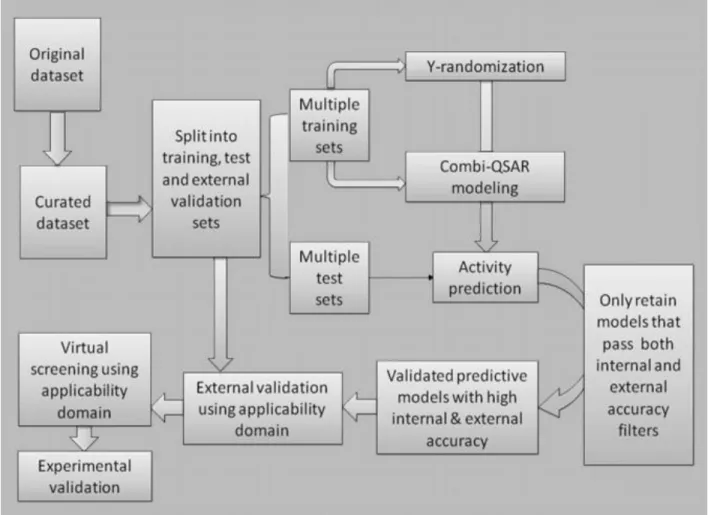
The predictive QSAR modeling workflow presented in Figure 3 has been adapted from
Tropsha 2010.15 The input to the QSAR workflow is always a dataset of compounds with
experimentally confirmed chemical activities. Thus the quality of a QSAR predictor is
fundamentally reliant on the quality of the experimental values and an accurate understanding
and representation of the chemical structures. It is critical to curate the chemical dataset to ensure
accurate structures and to remove any compounds that may not be informative to the model. If
chirality-sensitive descriptors are not employed, all pairs of mirror images will be represented as
duplicates; one must be removed, and any variance in their activities must be reconciled. In
addition, any compounds should be removed that cannot be handled by current techniques,
including organometallic complexes, inorganic compounds, salts, and mixtures.15
Any number of supervised learning techniques may then applied to the curated dataset to
construct the predictor, but the workflow remains the same.15 Firstly the dataset must be divided
into modeling and external sets. Usually many models are constructed from the modelling set,
and the best models, as identified by some internal evaluation, are consolidated to form the
predictor. To avoid overfitting, training is conducted using only the modelling set, and the
external set is used to validate the predictor.17 By considering the distribution of compounds, an
applicability domain (AD) is applied to each model as well as the overall predictor that defines
the subspace of the chemistry space for which the model has been validated.
Although there is a precedent for regulation based solely on predictive modelling,18 a
predictor should ideally be subject to laboratory validation. In silico high-throughput screening
of the predictor on compound databases will identify additional compounds with activities of
interest. The activities of some of these compounds should be determined experimentally to
further validate the predictor.15
Modeling Major Human Transporters
The human transportome consists of the subset of the proteome devoted to membrane
transporters. Recently, there have been several large-scale efforts to collect and organize the ever
increasing amount of transportome data available.19-23 Yet, until very recently, there has been
little effort to model this substrate data with the corresponding explicit molecular structures.1 In
this study, 56 datasets comprised of 10,407 activity values corresponding to the interaction
between 3,906 unique chemical compounds and 14 transporters were curated, characterized, and
modeled using multiple QSAR algorithms. The quality of the QSAR predictors was analyzed to
elucidate correlations with the chemical, biological, and numerical characters of the datasets.
Materials and Methods
Dataset Creation and Curation
Chemical-transporter interaction data were collected and curated by the Molecular
Modeling Lab in the Eshelman School of Pharmacy at the University of North Carolina at
Chapel Hill. Data were extracted from multiple publically available sources and consolidated
into 56 datasets.19-23 Equivalent records were compared and reconciled to form a single,
harmonious database. Classification datasets were constructed by combining reports of substrate
or inhibitory activity. Accordant reports were assigned values of 0 or 1, and ambiguous
chemicals were not included. Inhibitor classification is defined at a specified threshold
Michaelis-Menten constant of transportation (pKm, the relative concentration of substrate needed
to transport at a rate half of the maximum) or of the half maximal inhibitory concentration
(pIC50, the relative concentration of inhibitor needed to reduce the rate of transport by half). In
addition, datasets of pIC50 values are included for both general and specific hot ligands (the
substrate whose transport is being inhibited).
Chemical structures were standardized by the Molecular Modeling Lab using
PipelinePilot ver.6.15 (Accelrys) and the Standardizer module (ChemAxon).1 Organometallic
and poorly defined compounds were excluded from the database. In addition, polymers,
identified as extreme molecular weight outliers, were also excluded. Remaining compounds were
standardized and translated into their predominant and neutral form. The final curated database is
available on Chembench.26 The full, detailed process for data collection and curation has been
previously described by Sedykh et al.1
Dataset Characterization
The 56 datasets were preliminarily
characterized by their relevant transporter and
by the parameters of the activity reported (see
Tables 6 and 7 of the appendix). A summary
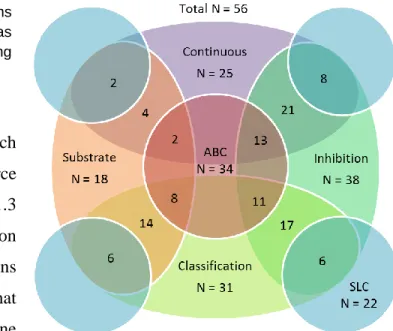
of the number of compounds in the datasets is available in Table 1. Twenty-five datasets
comprised of continuous values, and 31 contained binary assignments. Eighteen datasets
reported substrate activity, and 38 reported inhibitory activity (see Figure 5).
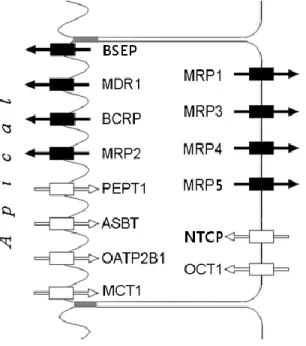
Transporters were also characterized by
the physiological role in the human body (see
Table 8 of the appendix and Figure 4).24 In all,
14 transporters from the ABC and SLC groups
are represented. Their membrane location,
direction of flow, subfamily, and archetypal
substrate are also reported and were included in
the statistical analysis.
Table 1. Summary of dataset cardinality.
Activity Type Max Min Mean St. Dev.
Classification
(N = 31) 1585 34 228.3 313.7
Continuous
(N = 25) 476 27 133.2 121.5
Descriptor Generation
Descriptors were generated for each
dataset using both the open-source
Chemistry Development Kit (CDK) ver.1.3
(202 descriptors) as well as Dragon
ver.1.4.4 (Talete) with explicit hydrogens
(2489 descriptors). Any descriptors that
generated an error for at least one
compound were dropped from the datasets. Descriptors were considered non-informative and
dropped from individual datasets if they correlated completely with another descriptor or if they
did not vary across compounds in that
dataset. Counts of retained descriptors for
individual classification and continuous
datasets are listed in Tables 6 and 7 of the
appendix and are summarized in Table 2.
Modelability Index Calculation
In a recent publication, Golbraikh et al. proposed the use of a MODelability Index
(MODI) to assess the goodness of a dataset for successful model building based on the frequency
of activity cliffs (regions in the descriptor space where chemical activity changes rapidly).25
They offer a definition for classification datasets computed from the number of dissimilar nearest
neighbors present for each class in the dataset:
(1)
where K is the number of classes, Nisame is the number of compounds belonging to the ith class
whose nearest neighbor belongs to the same class, and Nitotal is the total number of compounds in
the ith class. Nearest neighbors are determined as the neighbor with the least Euclidean distance Table 2. Summary of descriptors retained.
Descriptor Set Max Min Mean St. Dev.
CDK 162 127 151.6 8.4
Dragon 1420 835 1098.3 135.9
∑
from the compound in the entire descriptor space.25 Because descriptors are generated from the
chemical structure, the nearest neighbor will be the most structurally similar compound.
I offer a similar definition of MODI for continuous datasets for use and evaluation in this
study:
(2)
where N is the total number of compounds, z(ai) is the normalized activity of the ith compound,
and z( ) is the normalized activity of the neighbor nearest to the ith compound. Therefore MODI
is calculated as the average number of standard deviations in activity between nearest neighbors.
MODI values were computed for each transporter dataset using Python ver.2.7.6
including the packages NumPy and scikit-learn
ver.0.14. Descriptors were auto scaled before
calculating neighbor distances. MODI values
for individual classification and continuous
datasets are listed in Tables 6 and 7 of the
appendix and are summarized in Table 3.
QSAR Modeling
Quantitative structure-activity relationship (QSAR) predictors were created using the
Carolina Cheminformatics Workbench (Chembench) developed by the Carolina Exploratory
Center for Cheminformatics Research (CECCR) and according to the workflow outlined in
Figure 3.26 Random forests (RFs) were generated using the randomForest package for R
ver.4.6-7, support vector machines (SVMs) were constructed using an grid-search built on libsvm, and
k-nearest neighbors (kNN) predictors were prepared using an internally developed KNN+ ver.2.82.
Meta-parameters for each predictor type were controlled across datasets.
Datasets were split into five equal folds for external cross-validation. Separate predictors
were generated and evaluated for each external fold and then consolidated into a single
consensus predictor. Internal test sets were selected by sphere exclusion for datasets with fewer
than 300 compounds and randomly otherwise. Predictors were created for each dataset using
either CDK or Dragon descriptor sets.
∑| ( ) ( )|
Table 3. Summary of dataset modelability indices.
Activity Type Max Min Mean St. Dev.
Classification
(N = 31) 0.98 0.39 0.75 0.11
Continuous
Continuous datasets were modeled using RF, SVM, and kNN. The kNN predictors were
trained using a genetic algorithm (GA-kNN) for datasets with greater than 150 compounds and
both GA-kNN and simulated annealing (SA-kNN) otherwise. Descriptors were normalized using
range scaling. Predictors were evaluated by the average coefficient of determination (R2) of the
five folds:
(3)
where yi is the observed activity of the ith compound, ŷi is the predicted activity of the ith
compound, and ȳ is the average activity of all compounds.15 Note that because the model
predictions are not a linear best fit, the sum of squared errors (SSE) may be greater than the total
sum of squares (SST) in the observed activities.
Therefore R2 values may be negative.17 Coefficients
of determination for individual regression
predictors, reported as the mean of five
cross-validation folds, are shown in Table 9 of the
appendix and are summarized in Table 4.
As will be shown, modeling technique was not found to have a significant effect on
predictive power. Therefore, because of its rapid modeling time, classification datasets were
modeled using RF only. Four predictors were generated for each dataset corresponding to each
combination of range or auto scaled CDK or Dragon descriptors. Predictors were evaluated by
the overall correct classification rate (CCR) of the five folds:
(4)
where K is the number of classes (K = 2 for binary datasets), Ni,correct is the number of correctly
classified compounds in the ith class, and Ni,total is the total number of compounds in the ith class.
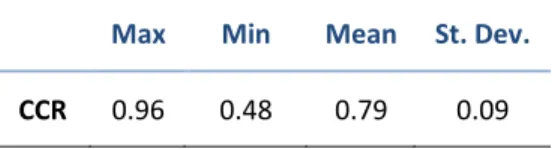
Previous studies have identified a CCR of 0.7 to
be the threshold for acceptable predictive
power.15,25 CCR, reported as the mean of five
cross-validation folds, are shown in Table 10 of
the appendix and are summarized in Table 5.
∑ ( ̂)
∑ ( ̅)
∑
Table 4. Summary of coefficients of determination for regression predictors.
Max Min Mean St. Dev.
R2 0.82 -0.20 0.37 0.22
Table 5. Summary of correct classification rates for classification predictors.
Max Min Mean St. Dev.
Model Fortification
Predictors were subjected to several additional thresholds throughout the modeling
process to maximize predictive power. Datasets with fewer than 30 compounds were not
modeled (N = 2). Individual models were required to present a squared leave-one-out
cross-validation correlation coefficient (Q2) of at least 0.6 to be accepted.
In addition, stochastic models were identified using y-randomization. This process
randomly redistributes activities to the compounds in the modeling set, constructs a predictor,
and calculates a CCR or R2 using a fraction of the modeling set as an evaluation set. Five
y-randomized predictors are constructed in this way such that a one-tailed t-test could be conducted
to determine the probability of obtaining the CCR or R2 of the true-activity predictor with
randomized values. If the p-value was greater than 0.05, the models built using the real data were
deemed unreliable and rejected.
An applicability domain (AD) of 0.5 standard deviations was also applied to each model
of kNN predictors. The standard deviation in Euclidean distance in the descriptor space between
each compound and its k nearest neighbors was calculated. Models were ignored during
prediction and evaluation if the new compound did not have at least k neighbors within 0.5
standard deviations.
In all, 274 predictors passed all cut-offs. The five datasets with fewer than 50 compounds
(N = 5) failed to produce any kNN models that passed all cut-offs. In addition, two datasets with
51 compounds failed to generate adequate models for a single kNN predictor each.
Statistical Analysis
Dataset characterization data and predictor quality data were prepared for analysis using
Excel ver.14.0 (Microsoft). Statistical analyses were conducted using Stata ver.13.0 (StataCorp).
Results and Discussion
A series of linear regression analyses were conducted to reveal correlations between the
biological, chemical, and numerical characteristics of the datasets and the modelability as
expressed by the coefficient of determination (R2) or correct classification rate (CCR) of the
predictor. These results may be used to improve future QSAR studies as well as to identify
Quantifying Predictive Power
The coefficient of determination (R2) calculated for continuous predictors is a measure of
the sum of squares of the external validation. Unfortunately, this value does not lend itself well
to linear regression. In addition, some values of R2 were found to be negative. Therefore a
transformed root of squares (R1) was used for analysis:
(5)
where R2 is the coefficient of determination.
Although it may be tempting to make conclusions about the relative success of regression
and classification QSAR predictors, it should be emphasized that R1 (equations (3) and (5)) and
CCR (equation (4)) are distinct evaluation measures that are not comparable. Both R1 and CCR
asymptotically approach 1.0 as external prediction improves. However, while R1 ranges to
negative infinity, CCR has a minimal value of zero. A random assignment of regression
predictions from the observed distribution will result in an R of 0.0, but a random classification
will result in a CCR of the inverse of the number of classes (CCR = 0.5 for binary data sets).
Therefore all analyses were conducted separately on either regression or classification predictors.
Numerical Characteristics
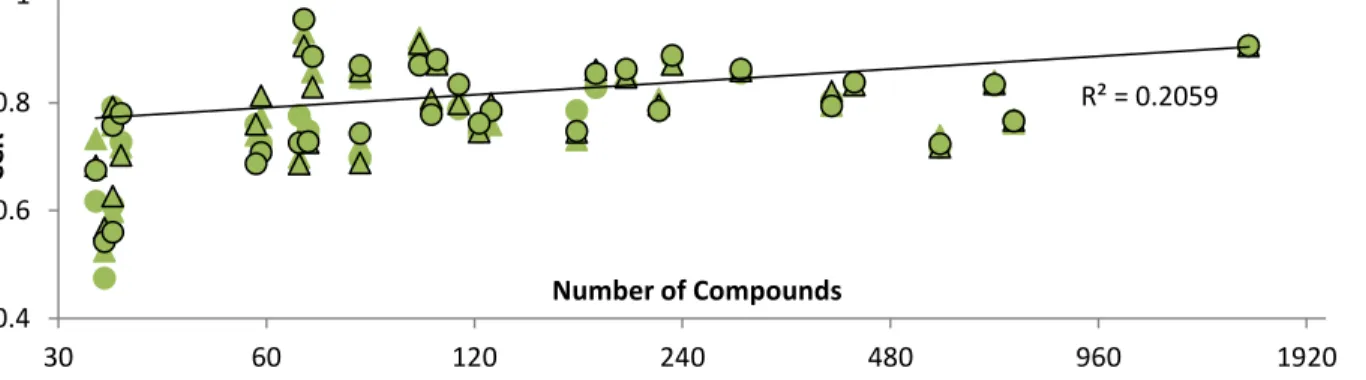
Not surprisingly, the size of a dataset was found to have a significant positive correlation
(p < 0.001) with predictive power for both regression and classification datasets. Furthermore,
this correlation is best realized when the dataset size is represented by the logarithm of the
cardinality. Figures 6 and 7 plot the R1 values for each regression predictor and CCRs for each
classification predictor, respectively, against the size of the original dataset.
√
Figure 6. Correlations between the logarithm of the number of compounds and the R1 of regression predictors. CDK (circles) and Dragon (triangles) descriptors are denoted by shape. RF (green), SVM (blue) and kNN (orange) are denoted by color.
R² = 0.276
-0.2 0 0.2 0.4 0.6
35 70 140 280
R1
In addition, QSAR modeling technique, descriptor type, and descriptor scaling are
denoted for each datum in Figures 6 and 7. None of these characteristics, nor the number of
descriptors, had a statistically significant effect on predictive power for either continuous or
classification datasets when controlling for the size of the dataset.
Modelability Indices
Classification MODI
The definition of a Modelability Index (MODI) offered by Golbraikh et al.25 and
presented again here as equation (1) was found to be a strong indicator of the predictive power of
RF classification transporter datasets. A significant correlation (R2 = 0.72) was found between
MODI and a predictor’s external CCR. Figure 8 is a plot of each predictor’s CCR against the
MODI of its original dataset. Using the threshold for modelability also offered by Golbraikh et
al. (CCR > 0.7), MODI can be used to reliably estimate whether a dataset may yield an
acceptable predictor. Nearly all (N = 107 of 112) predictors built from datasets with MODI
above 0.64 resulted in a CCR greater than 0.7.
In addition, descriptor type, and by extension the number of descriptors, was not found to
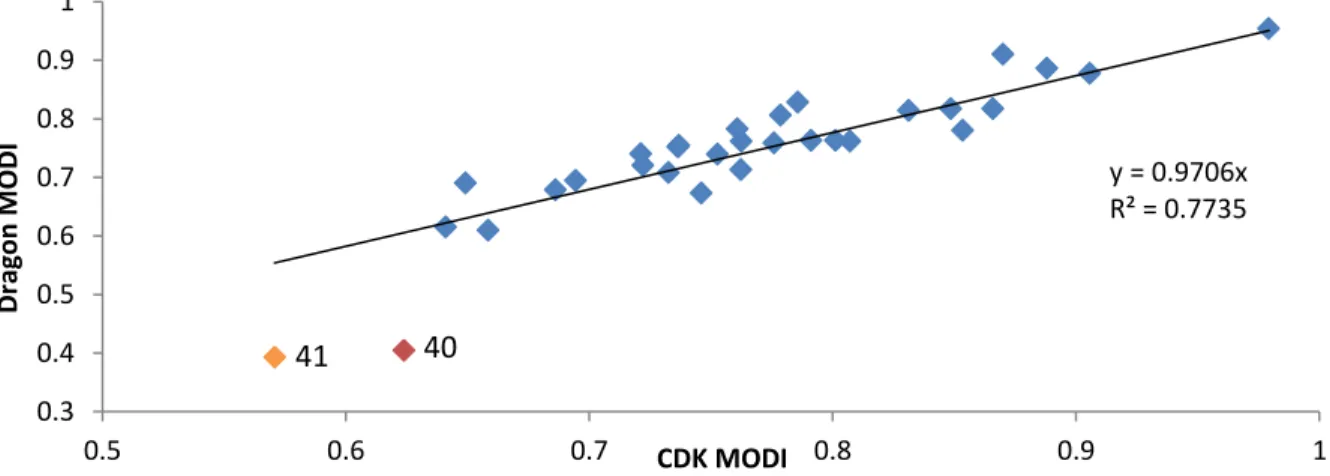
affect the MODI of a dataset. Figure 8 is a plot of the MODI calculated using Dragon descriptors
versus the MODI calculated using CDK descriptors for each classification dataset. A significant
correlation (R2 = 0.77) was determined for a linear regression through the origin. Note that only
two datasets deviate from this trend: datasets 41 and 40 located in the lower left of Figure 9. The
discrepancy in MODI implies that the compounds in these datasets are represented differently in
some significant way in the different descriptor spaces. These datasets are both concerned with R² = 0.2059
0.4 0.6 0.8 1
30 60 120 240 480 960 1920
CCR
Number of Compounds
Figure 7. Correlations between the logarithm of the number of compounds and the CCR of
the inhibition of MRP3 at different thresholds. Cross referencing Figure 8 reveals that the MODI
calculated using Dragon descriptors better predicted the CCR of the resultant predictors.
Therefore it may be inferred that CDK does not include some key descriptors relevant to MRP3
inhibition. However, any major conclusions from these datasets should be avoided because they
contain relatively few compounds (N = 36 and 35).
In addition, this set of datasets is biased toward modelable datasets. Additional predictors
with CCR between 0.5 and 0.7 would need to be studied to verify the correlation in the
unmodelable quadrant of Figure 8.
y = 0.7238x + 0.2416 R² = 0.7219
0.4 0.5 0.6 0.7 0.8 0.9 1
0.3 0.4 0.5 0.6 0.7 0.8 0.9 1
CCR
MODI Dragon
CDK
Modelable
Unmodelable
Figure 8. Correlation between the CCR of classification predictors and the MODI of their original datasets. The threshold for modelability is marked at CCR = 0.7 and correspondingly at MODI = 0.63. Datasets 40 (red) and 41(orange) are identified from Figure 9.
y = 0.9706x R² = 0.7735
0.3 0.4 0.5 0.6 0.7 0.8 0.9 1
0.5 0.6 0.7 0.8 0.9 1
D
rag
o
n
M
OD
I
CDK MODI
41 40
Continuous MODI
A novel definition for the MODI of continuous datasets was introduced in equation (2). A
significant correlation (R2 = 0.59) was found between values calculated using this definition of MODI and a regression predictor’s R1
value. Figure 10 illustrates this relationship with
descriptor type and modeling technique identified. Using a coefficient of determination of R2 >
0.5 as the threshold for modelability15 corresponds to a root of squares of roughly R1 > 0.3.
Therefore I propose a heuristic threshold of MODI > 0.35 to estimate the modelability of
continuous datasets. This cutoff deviates from the regression line to increase sensitivity without
sacrificing precision in this set.
Biological Characteristics
The membrane transporters were divided into homologous groups for additional analysis.
Because all ABC transporters are related, this process grouped ABC together and SLC
transporters into subfamilies. A statistically significant correlation was determined between this
grouping and the predictive power of classification datasets. In particular, predictors concerning
SLC transporters reported CCRs 0.089 greater (p < 0.001) than ABC predictors, on average. This
correlation persists when dataset size and MODI are included in the regression. Figure 11
illustrates the way that ABC predictors evaluated more poorly, even when the original datasets
computed similar MODI. This indicates that there are additional factors affecting modelability y = 0.8386x - 0.0398
R² = 0.5909
-0.1 0 0.1 0.2 0.3 0.4 0.5 0.6
0 0.1 0.2 0.3 0.4 0.5 0.6
R1
MODI Unmodelable
Modelable
besides those captured by MODI. This trend may result from the interaction with ATP as the
energy source or it may indicate that ABC transporters are reliant on the selectivity of multiple
external binding proteins.
Additional features characterizing the membrane transporter and activity measure were
analyzed as well. The location of the transporter in vivo, whether in the basal or apical
membranes, was not found to be significant for predictive power. Whether the dataset included
inhibitor or substrate activity data, however, was significant for both classification and regression
predictors when controlling for dataset size. Curiously, classification inhibitor datasets predicted
CCR 0.034 less (p = 0.022) than their substrate counterparts on average, but continuous inhibitor
datasets evaluated with R1 0.080 greater (p = 0.007) on average. This discrepancy is not quickly
explained, and additional research is needed to determine which, if either, correlation is accurate.
Conclusions
Membrane transport proteins are directly responsible for the movement of chemicals into
and out of each cell, so predicting their interaction with potential drug candidates is an important
challenge for drug discovery.1 Quantitative structure-activity relationship (QSAR) modeling, as
part of the greater field of cheminformatics, attempts to predict the activity of new compounds
by comparing their structures with the structures of compounds with known interactions. This
technique was applied to 56 datasets concerning 14 major human transporters. A modelability
index (MODI) for chemical datasets of continuous activities was developed to mimic an existing 0.4
0.5 0.6 0.7 0.8 0.9 1
0.3 0.4 0.5 0.6 0.7 0.8 0.9 1
CCR
MODI
MODI for classification datasets as a heuristic device for estimating predictive power. Dataset
cardinality and MODI were found to have significant effects on predictive power, but modeling
technique and descriptor type were not. In addition, transporter homology group was found to
have a significant effect such that ABC datasets modeled more poorly, on average. This suggests
that the mechanism of substrate selection of ABC proteins is more complex than that of SLC
proteins. True validation of QSAR predictors requires laboratory experimentation, which was not
available for this study.15 Therefore additional research is needed to confirm the predictive
powers of each dataset and verify the correlations observed.
Acknowledgements
I would like to express my deepest thanks to Professor Pozefsky for her guidance and
support throughout the course of this study in all its stages. I would like to thank also Ian Kim for
his help with the Chembench system, the members of the Molecular Modeling Lab for providing
the datasets, funding, and initiative to make this project possible, each previous Chembench
developer, and all of the other students, faculty, and staff of the departments of Computer
Science and Chemistry.
References
1. Sedykh, A.; Fourches, D.; Duan, J.; Hucke, O.; Garneau, M.; Zhu, H.; Bonneau, P.;
Tropsha, A. Human Intestinal Transporter Database: QSAR Modeling and Virtual
Profiling of Drug Uptake, Efflux, and Interactions. Pharm. Res.2013, 30, 996-1007.
2. Jones, P. M.; George, A. M. The ABC transporter structure and mechanism: perspectives
on recent research. Cell Mol. Life Sci.2004,61(6), 682–99.
3. Hediger, M. A.; Romero, M. F.; Peng, J. B.; Rolfs, A.; Takanaga, H.; Bruford, E. A. The
ABCs of solute carriers: physiological, pathological and therapeutic implications of
human membrane transport proteins: Introduction. Pflugers Arch.2004, 447(5), 465–8.
4. Aller, S. G; Yu, J.; Ward, A.; Weng, Y.; Chittaboina, S.; Zhuo, R.; Harrell, P. M.; Trinh,
Y. T.; Zhang, Q.; Urbatsch, I. L.; et al. Structure of P-Glycoprotein Reveals a Molecular
Basis for Poly-Specific Drug Binding. Science2009, 323(5922), 1718-1722.
5. Wikimedia Commons: http://en.wikipedia.org/wiki/File:MDR3_3g5u.png
6. Brown, N. Chemoinformatics--an introduction for computer scientists. ACM Comput.
7. Brown, F. K. Chapter 35. Cheminformatics: What is it and How does it Impact Drug
Discovery. Ann. Rep. Med. Chem.1998, 33.
8. Russo, E. Chemistry plans a structural overhaul. Nature Jobs2002, 419, 4–7.
9. Willett, P. A Bibliometric analysis of chemoinformatics. Aslib Proc.2008, 60, 4-17.
10.Hann, M.; Green, R. Chemoinformatics - a new name for an old problem? Chem. Biol.
1999, 3, 379-383.
11.Chen, W. L. Chemoinformatics: past, present and future. J. Chem. Inf. Mod. 2006, 46,
2230-2255.
12.Gasteiger, J. Chemoinformatics: a new field with a long tradition. Anal. Bioanal. Chem.
2006, 384, 57-64.
13.Maldonado, A. G.; et al. Molecular similarity and diversity in chemoinformatics: from
theory to applications. Mol. Div.2006, 10, 39-79.
14.Willett, P. From chemical documentation to chemoinformatics: fifty years of chemical
information science. J. Inf. Sci.2008, 34, 477-499.
15.Tropsha, A. Best Practices for QSAR model Development, Validation, and Exploitation.
Mol. Inf.2010, 29, 476-488.
16.Nantasenamat, C.; Isarankura-Na-Ayudhya, C.; Naenna, T.; Prachayasittikul, V. A
Practical Overview of Quantitative Structure-Activity Relationship. EXCLI J. 2009, 8,
74-88.
17.Esposito, E. X.; Hopfinger, A. J.; Madura, J. D.; Methods for Applying the Quantitative
Structure-Activity Relationship Paradigm. In Chemoinformatics: Concepts, Methods, and
Tools for Drug Discovery; Bajorath, J., Ed.; Totowa: New Jersey, 2004; pp 131-213.
18.OECD Principles for the Validation of (Q)SARs. European Commission Joint Research
Centre. Institute for Health and Consumer Protection, 30 June 2011. Web. 19 Apr. 2014.
19.Giacomini, K. M.; Huang, S. M.; Tweedie, D. J.; Benet, L. Z.; Brouwer, K. L. R.; Chu,
X.; et al. Membrane transporters in drug development. Nat. Rev. Drug Discov. 2010, 9,
215-36.
20.Saier Jr., M. H.; Yen, M. R.; Noto, K.; Tamang, D. G.; Elkan, C. The transporter
classification database: recent advances. Nucleic Acids. Res.2009, 37, D274-8.
21.Yee, S. W.; Chen, L.; Giacomini, K. M. Pharmacogenomics of membrane transporters:
22.Ozawa, N.; Shimizu, T.; Morita, R.; Yokono, Y.; Ochiai, T.; Munesada, K.; et al.
Transporter database, TP-Search: a web-accessible comprehensive database for research
in pharmacokinetics of drugs. Pharm. Res.2004, 21, 2133-4.
23.Ren, Q.; Chen, K.; Paulsen, I. T. TransportDB: a comprehensive database resource for
cytoplasmic membrane transport systems and outer membrane channels. Nucleic Acids
Res.2007, 35, D274-9.
24.Gene Database. National Center for Biotechnology Information.
<http://www.ncbi.nlm.nih.gov/gene/>
25.Golbraikh, A.; Muratov, E.; Fourches, D.; Tropsha, A. Data Set Modelability by QSAR.
J. Chem. Inf. Model. 2014, 54, 1-4.
Appendix
Table 6. Characterization data for continuous datasets.
Transporter Activity Hot Ligand a
Number of Compounds
Number of Descriptors b Modelability Index c
CDK Dragon CDK Dragon
Substrate Datasets
ASBT pKm 51 127 878 0.234 0.147
MDR1 pKm 63 152 1,015 0.226 0.059
MRP2 pKm 27 148 944 0.081 0.000
PEPT1 pKm 72 133 845 0.411 0.329
Inhibition Datasets
ASBT pIC50 Taurocholate 341 159 1,243 0.565 0.576
BCRP pIC50 Any 119 155 1,096 0.420 0.394
BCRP pIC50 Mitoxantrone 46 138 902 0.389 0.452
BSEP pIC50 Taurocholate 295 160 1,215 0.175 0.166
MCT1 pIC50 Any 46 142 955 0.114 0.279
MDR1 pIC50 Any 476 159 1,229 0.378 0.383
MDR1 pIC50 Calcein AM 116 154 1,119 0.374 0.306
MDR1 pIC50 Daunorubicin 302 152 1,164 0.364 0.413
MDR1 pIC50 Vinblastine 48 140 942 0.148 0.167
MRP1 pIC50 Any 196 151 1,056 0.474 0.391
MRP1 pIC50 Calcein AM 54 140 943 0.426 0.236
MRP1 pIC50 Daunorubicin 108 139 951 0.325 0.341
MRP2 pIC50 Any 103 154 1,138 0.344 0.313
MRP2 pIC50 DNP-SG 46 145 971 0.466 0.532
MRP4 pIC50 Any 40 143 987 0.228 0.240
NTCP pIC50 Taurocholate 75 155 1,099 0.162 0.177
OATP2B1 pIC50 Any 27 146 1,010 0.412 0.202
OCT1 pIC50 Any 87 149 981 0.068 0.207
OCT1 pIC50 Tetraethylammonium 51 148 949 0.196 0.286
PEPT1 pIC50 Any 272 155 1,149 0.412 0.326
PEPT1 pIC50 Glycylsarcosine 269 154 1,147 0.408 0.323
a
Table 7. Characterization data for classification datasets.
Transporter Activity a
Threshold (μM)
Number of Compounds
Number of Descriptors b Modelability Index c
CDK Dragon CDK Dragon
Substrate Datasets
ASBT Substrate 106 144 1,064 0.906 0.877 BCRP Substrate 169 160 1,227 0.722 0.720 BSEP Substrate 34 140 924 0.733 0.708 MCT1 Substrate 36 138 835 0.694 0.694 MDR1 Substrate 567 162 1,347 0.686 0.679 MRP1 Substrate 180 160 1,206 0.849 0.817 MRP2 Substrate 222 160 1,192 0.736 0.752 MRP3 Substrate 100 158 1,075 0.870 0.910 MRP4 Substrate 122 159 1,187 0.762 0.713 MRP5 Substrate 58 152 1,092 0.776 0.759 NTCP Substrate 70 153 1,065 0.786 0.829 OATP2B1 Substrate 59 153 1,046 0.649 0.691 OCT1 Substrate 82 154 1,124 0.866 0.817 PEPT1 Substrate 292 158 1,176 0.807 0.762
Inhibition Datasets
ASBT Inhibitor 10 232 159 1,217 0.853 0.780 BCRP Inhibitor 10 395 162 1,266 0.762 0.762 BSEP Inhibitor 10 679 162 1,387 0.753 0.740 BSEP Inhibitor 100 725 162 1,393 0.791 0.763 MCT1 Inhibitor 10 68 147 1,028 0.979 0.954 MDR1 Inhibitor 10 1,585 162 1,420 0.888 0.886 MRP1 Inhibitor 10 426 158 1,242 0.831 0.814 MRP2 Inhibitor 10 104 153 1,127 0.721 0.740 MRP3 Inhibitor 10 36 154 1,048 0.624 0.405 MRP3 Inhibitor 50 35 154 1,061 0.571 0.393 MRP4 Inhibitor 10 67 148 1,069 0.641 0.615 MRP4 Inhibitor 50 69 148 1,074 0.761 0.783 MRP5 Inhibitor 50 37 144 1,030 0.801 0.763 NTCP Inhibitor 10 127 158 1,171 0.746 0.673 OATP2B1 Inhibitor 100 114 159 1,122 0.737 0.754 OCT1 Inhibitor 100 199 159 1,162 0.779 0.806 PEPT1 Inhibitor 100 82 141 956 0.659 0.610
a
Table 8. Characterization data for each transporter represented in the database.
Transporter Gene Membrane Direction Superfamily Subfamily Substrate
MDR1 ABCB1 Apical Efflux ABC MDR Xenobiotics
BSEP ABCB11 Apical Efflux ABC MDR Bile Acids
MRP1 ABCC1 Basal Efflux ABC MRP Organic Anions
MRP2 ABCC2 Apical Efflux ABC MRP Bile Acids
MRP3 ABCC3 Basal Efflux ABC MRP Organic Anions
MRP4 ABCC4 Basal Efflux ABC MRP Cyclic Nucleotides
MRP5 ABCC5 Basal Efflux ABC MRP Cyclic Nucleotides
BCRP ABCG2 Apical Efflux ABC White Xenobiotics
NTCP SLC10A1 Basal Influx SLC SLC10 Bile Acids
ASBT SLC10A2 Apical Influx SLC SLC10 Bile Acids
PEPT1 SLC15A1 Apical Influx SLC SLC15 Oligopeptides
MCT1 SLC16A1 Apical Influx SLC SLC16 Monocarboxylates
OCT1 SLC22A1 Basal Influx SLC SLC22 Organic Cations
Table 9. External validation results (R2, %) for transporter regression predictors.
Trans-porter
Hot
Ligand a
CDK Descriptors Dragon Descriptors
RF SVM GA-kNN b SA-kNN b,c RF SVM GA-kNN b SA-kNN b,c
Substrate Predictors
ASBT 27 ± 16 15 ± 39 failed 32 ± 36 27 ± 20 -2 ± 20 14 ± 39 3 ± 29 MDR1 -5 ± 17 12 ± 34 -9 ± 58 22 ± 44 2 ± 30 13 ± 13 6 ± 51 25 ± 28 PEPT1 41 ± 16 23 ± 29 23 ± 24 30 ± 26 23 ± 18 38 ± 17 39 ± 24 45 ± 19
Inhibition Predictors
ASBT Tauro. 82 ± 3 80 ± 2 75 ± 9 77 ± 7 79 ± 4 79 ± 3 73 ± 5 81 ± 4 BCRP Any 53 ± 14 55 ± 8 59 ± 13 51 ± 15 44 ± 7 56 ± 11 60 ± 7 58 ± 8 BCRP Mitox. 55 ± 25 31 ± 28 failed failed 36 ± 43 54 ± 18 failed failed BSEP Tauro. 27 ± 10 7 ± 10 failed --- 30 ± 18 37 ± 12 5 ± 18 --- MCT1 Any 21 ± 23 23 ± 35 failed failed 44 ± 16 33 ± 13 failed failed MDR1 Any 55 ± 9 51 ± 10 52 ± 6 --- 55 ± 7 57 ± 8 52 ± 7 --- MDR1 Calc.-AM 57 ± 15 50 ± 29 55 ± 6 57 ± 6 60 ± 4 59 ± 10 53 ± 9 56 ± 10 MDR1 Dauno. 57 ± 10 54 ± 11 59 ± 7 --- 61 ± 8 60 ± 9 60 ± 6 --- MDR1 Vinbl. 8 ± 55 -12 ± 55 failed failed 12 ± 34 37 ± 27 failed failed MRP1 Any 62 ± 7 64 ± 6 61 ± 9 --- 63 ± 5 61 ± 7 59 ± 11 --- MRP1 Calc.-AM 44 ± 24 47 ± 36 27 ± 39 60 ± 20 31 ± 21 45 ± 9 46 ± 29 48 ± 8 MRP1 Dauno. 53 ± 6 54 ± 15 46 ± 11 54 ± 10 49 ± 14 54 ± 5 38 ± 22 50 ± 8 MRP2 Any 29 ± 25 -8 ± 76 42 ± 19 40 ± 11 19 ± 33 55 ± 14 34 ± 8 41 ± 7 MRP2 DNP-SG 50 ± 23 41 ± 35 failed failed 45 ± 19 68 ± 30 failed failed MRP4 Any 11 ± 27 8 ± 17 failed failed 18 ± 44 12 ± 36 failed failed NTCP Tauro. 27 ± 15 -9 ± 14 9 ± 19 9 ± 11 21 ± 14 -20 ± 62 10 ± 14 10 ± 23 OCT1 Any 34 ± 28 8 ± 41 29 ± 28 34 ± 24 40 ± 20 16 ± 25 33 ± 33 34 ± 30 OCT1 N(Et)4 41 ± 31 34 ± 8 19 ± 45 26 ± 39 27 ± 36 59 ± 15 failed 36 ± 26 PEPT1 Any 46 ± 8 47 ± 16 45 ± 1 --- 40 ± 18 39 ± 12 33 ± 19 --- PEPT1 Glycyl. 48 ± 8 27 ± 25 29 ± 21 --- 38 ± 13 28 ± 17 33 ± 15 ---
Table 10. External validation results (CCR, %) for classification transporter predictors.
Transporter
Threshold a (μM)
CDK Descriptors Dragon Descriptors
Range Auto Range Auto
Substrate Predictors
ASBT 87 ± 7 88 ± 7 88 ± 9 87 ± 9
BCRP 79 ± 3 75 ± 3 73 ± 4 75 ± 3
BSEP 62 ± 19 68 ± 22 73 ± 18 68 ± 16
MCT1 79 ± 13 76 ± 12 76 ± 12 79 ± 8
MDR1 72 ± 3 72 ± 3 74 ± 5 72 ± 5
MRP1 83 ± 5 85 ± 5 85 ± 7 86 ± 5
MRP2 79 ± 3 79 ± 4 81 ± 5 80 ± 7
PEPT1 86 ± 5 86 ± 5 86 ± 5 86 ± 5
MRP3 89 ± 4 87 ± 7 92 ± 5 91 ± 6
MRP4 75 ± 11 76 ± 9 75 ± 12 75 ± 13
MRP5 76 ± 16 69 ± 18 74 ± 12 76 ± 16
NTCP 89 ± 4 89 ± 6 86 ± 11 83 ± 8
OATP2B1 73 ± 17 71 ± 9 77 ± 13 81 ± 7
OCT1 85 ± 11 87 ± 13 85 ± 6 86 ± 8
Inhibition Predictors
ASBT 10 88 ± 5 89 ± 5 87 ± 7 87 ± 5
BCRP 10 81 ± 7 79 ± 7 80 ± 5 82 ± 8
MCT1 10 96 ± 5 96 ± 5 93 ± 8 91 ± 7
BSEP 10 83 ± 3 83 ± 3 84 ± 2 84 ± 2
BSEP 100 77 ± 4 77 ± 5 76 ± 3 77 ± 5
MDR1 10 91 ± 2 91 ± 2 91 ± 1 91 ± 2
MRP1 10 84 ± 3 84 ± 4 83 ± 5 83 ± 4
MRP2 10 79 ± 6 78 ± 11 80 ± 7 81 ± 9
MRP3 10 61 ± 15 56 ± 14 60 ± 20 63 ± 16
MRP3 50 48 ± 23 54 ± 15 53 ± 21 57 ± 18
MRP4 10 78 ± 5 73 ± 9 70 ± 11 69 ± 6
MRP4 50 75 ± 17 73 ± 10 76 ± 12 73 ± 11
MRP5 50 73 ± 20 78 ± 18 72 ± 17 70 ± 21
NTCP 10 78 ± 6 79 ± 8 76 ± 9 80 ± 8
OATP2B1 100 79 ± 8 83 ± 7 81 ± 10 80 ± 5
OCT1 100 86 ± 7 86 ± 6 85 ± 7 85 ± 7
PEPT1 100 70 ± 4 74 ± 11 72 ± 6 69 ± 7