ABSTRACT
Mother-to-child transmission of HIV (MTCT) and maternal mortality, have garnered increased global attention and are eliciting implementation of necessary interventions. Each day there are new cases of HIV among children globally, with the highest incident rates occurring in Sub-Saharan Africa. Prevention of mother-to-child transmission of HIV (PMTCT) is a practical intervention that averts transmission from mother to offspring. The United Nations and other partners are dedicated to eliminating new cases of HIV infections among the target populations. In the bid to prevent MTCT in the Sub-Saharan African region, women face certain gender-based obstacles. It is evident that men have a key role to play if MTCT is going to be an issue of the past. Low male participation in interventions that improve the health of their partners and children is linked to cultural, health systems, and socioeconomic barriers. Increased male involvement in HIV prevention and treatment efforts for both mother and child can lead to a decline in HIV transmission rates as well as improved health outcomes for families and the society in general. Total elimination of MTCT will require the complete support of male partners in various interventions.
ACKNOWLEDGEMENTS
I thank God Almighty for seeing me through this journey. I never would have made it without Him.
My sincere thanks goes out to Ms. Lori Evarts for being a great source of inspiration and courage throughout the MPH program. I could not have been assigned to a better advisor.
I also thank Dr. Lynn Collins for patiently guiding me through the various stages of this project. I truly appreciate your tutelage.
I thank Ms. Sue Robeson for her role behind-the-scenes.
I wish to thank my family for your continued support. I love you all. I thank all my friends for cheering me on. Thanks for being in my corner.
I appreciate the mentorship of Dr. Michael Ihemaguba, Dr. Echezona Ezeanolue, Mr. Martin Adamu, and Mr. Richards Adejola.
LIST OF ABBREVIATIONS AIDS: Acquired immune deficiency syndrome ANC: Antenatal care
ART: Antiretroviral therapy ARV: Antiretroviral
EGPAF: Elizabeth Glaser Pediatric AIDS Foundation
EMTCT: Elimination of mother-to-child transmission of HIV FP: Family planning
HIV: Human immunodeficiency virus
IATT: Inter-agency Task Team for prevention and treatment of HIV infection in pregnant women, mothers, and their children
MDGs: Millennium Development Goals MNCH: Maternal, newborn, and child health
PEPFAR: United States Presidents Emergency Plan for AIDS Relief PLHIV: People living with HIV
PMTCT: Prevention of mother-to-child transmission of HIV STIs: Sexually transmitted infections
UNAIDS: Joint United Nations Programme on HIV/AIDS UNFPA: United Nations Populations Fund
UNICEF: United Nations Children’s Fund
USAID: United States Agency for International Development VCT: Voluntary counseling and HIV testing
TABLE OF CONTENTS
Chapter Page
1. Introduction ... 8
Research Problem ... 9
Purpose of study ... 10
2. Literature Review... 11
Introduction ... 11
Literature Search Strategy... 11
Elimination of Mother-to-child Transmission of HIV (EMTCT)... 12
Global trends in MTCT ... 12
MTCT trends in Sub-Saharan Africa ... 13
EMTCT Progress in Sub-Saharan Africa ... 15
Importance of PMTCT Programs ... 18
EMTCT Approaches and Goals ... 19
The Global Plan and its Targets ... 26
Transition from Prevention to “Elimination” of MTCT ... 29
The Strategic Framework 2011-2015 ... 29
The Role of Men in EMTCT in Sub-Saharan Africa ... 34
HIV testing and counseling ... 38
Advantages of Male Participation in EMTCT ... 41
Barriers to Male Involvement in EMTCT Programs in Sub-Saharan Africa ... 42
Health System Issues ... 42
Socioeconomic Factors ... 42
Cultural Constraints ... 43
Stigma and Lack of Confidentiality ... 43
Lack of Education, Awareness, and Communication ... 43
Key Strategies and Promising Practices for Male Participation in EMTCT Interventions ... 44
The Rwanda Strategy ... 45
3. Methodology ... 48
4. Discussion ... 49
5. Conclusion and Recommendations ... 53
LIST OF FIGURES AND TABLES
Figure Page
1 Four prongs to eliminate mother-to-child transmission of HIV
and improve maternal health……….. 21
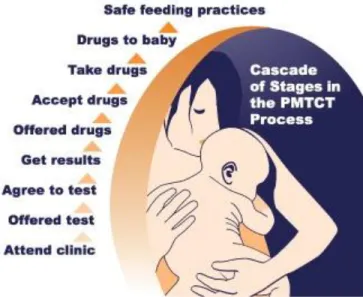
2 Cascade of stages in the PMTCT process……….. 23
3 The Four-pronged approach to PMTCT Strategy……….. 25
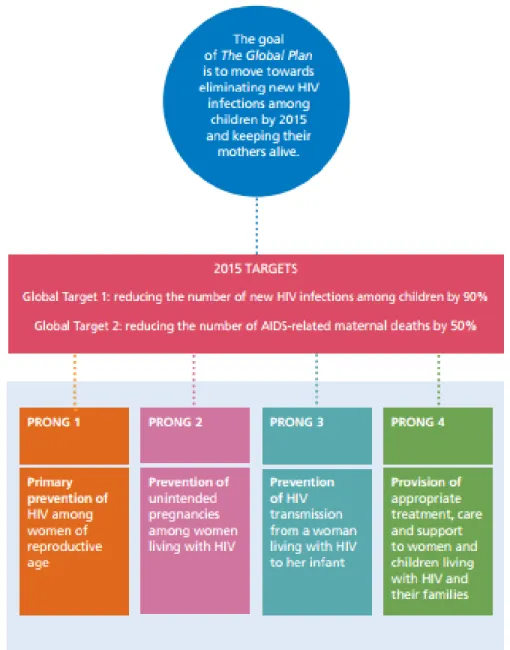
4 The Global Plan: The four-pronged strategy and the targets of the comprehensive approach to the EMTCT………... 28
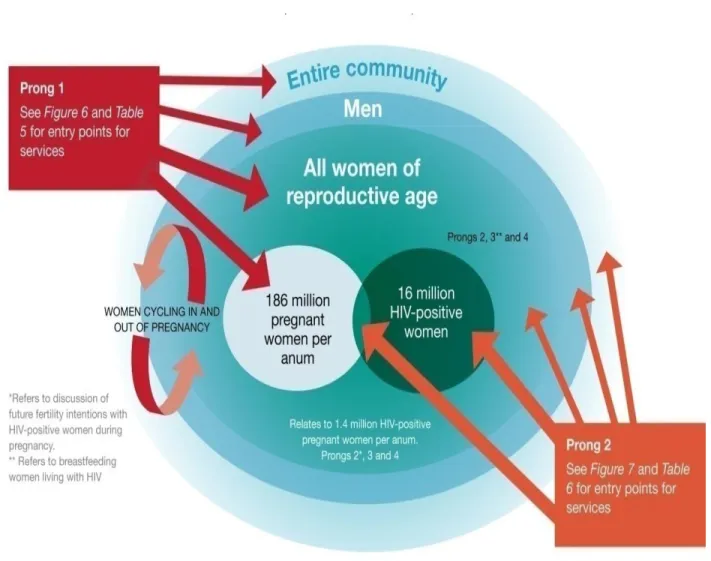
5 Focus populations of the strategic framework 2011-2015………. 31
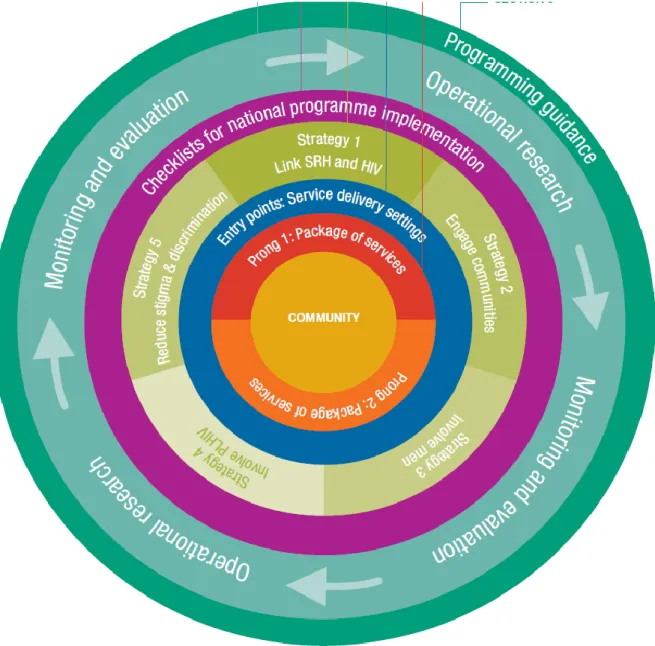
6 Framework at a glance………... 33
7 Essential sexual and reproductive health services for men……… 47
CHAPTER ONE Introduction
HIV is one of the most challenging health issues ever confronted by humanity. This infection has scourged populations worldwide particularly in low and middle income countries (LMICs). Providing widespread treatment and care for people in need is gradually making its way to the top of the agenda of many national governments. Ministries of health, international agencies, philanthropies, non-government organizations (NGOs), and civil society organizations (CSOs) are some of the stakeholders that are channeling resources to address the spread of the virus and mitigate its consequences, particularly among women and children. Both mother-to-child transmission (MTCT) of HIV, also known as onward or vertical transmission, and keeping the mothers alive, have garnered increased global attention and are eliciting implementation of necessary interventions. Prevention of mother-to-child transmission (PMTCT) of HIV is an intervention that curbs onward transmission of HIV (from mother to offspring).
Information Networks [IRIN], 2013; Shisana & Davids, 2004; Wodi, 2005). A good number of unsafe sexual practices take root in patriarchal settings that endorse male superiority; and male dominated houses of assembly enable the enactment of “gender-insensitive and gender biased policies” (Shisana & Davids, 2004). Consequently, these factors have contributed to the high rate of HIV infections among women in the region (Wodi, 2005) and interference with learning HIV status and accessing lifesaving antiretroviral drugs. It is important to engage the help of the male partners to ensure that MTCT becomes an issue of the past and that women and children are offered better chances of living healthy lives.
Research Problem
screening among pregnant women, unintended pregnancies, and accessibility to sexual and reproductive health (SRH) services such as family planning (FP)?
Purpose of study
CHAPTER TWO Literature Review Introduction
This chapter provides an overview of the current body of knowledge on the research topic. First, to indicate the magnitude of the problem, the current trends in MTCT of HIV particularly in Sub-Saharan Africa are provided. Since the thesis focuses on the role of male partners, this literature review addresses how partners affect women’s health seeking behaviors, as well as the uptake of HIV prevention and treatment services in Sub-Saharan Africa. This section also contains an overview of studies supporting the benefits of male engagement in EMTCT efforts. All the issues in this chapter revolve around MTCT. MTCT occurs when HIV is transmitted from an HIV-positive mother to her offspring during pregnancy, labor, delivery, or breastfeeding (AVERT, 2013; World Health Organization [WHO], 2010b, 2013b). In addition, this chapter addresses the theoretical perspective of the PMTCT interventions, the transition from the “prevention” to the “elimination” of mother-to-child transmission (EMTCT) of HIV, and the inclusion of a target to address HIV-related maternal mortality. The four- pronged approach to PMTCT will also be discussed in detail (USAID, n.d.).
Literature Search Strategy
International Development (USAID), United States Presidents Emergency Plan for AIDS Relief (PEPFAR), and WHO.
Elimination of Mother-to-child Transmission of HIV (EMTCT)
HIV remains a threat to the wellbeing of a mother, child, as well as the male partner all over the world. WHO (2010b, 2012c) identified HIV as the major cause of death among women of childbearing age, as well a key cause of maternal deaths in nations with high level of HIV, such as South Africa and Zimbabwe. The Center for AIDS Prevention Studies, University of California San Francisco (2002) stressed that “HIV-positive women who lack access to HIV treatment face a 25% chance of MTCT and an added 12% if the infant is breastfeeding”. In other words, if left unchecked, MTCT rate ranges from 15-45% (AVERT, 2013; WHO, 2013c). This rate can be lowered to less than 5% with effective strategies (WHO, 2013c) such as an
antiretroviral (ARV) regimen (AVERT, 2013) or the four-prong approach (USAID, n.d.). Global trends in MTCT
(UNAIDS, 2011b) and no less than 50% fail to live to their second year of life due to lack of HIV prevention and treatment (Newell et al., 2004).
Maternal death is a strong determinant of child survival (Anderson, Morton, Naik & Gebrian, 2007). UNICEF (2012a) identifies women’s health as a common denominator in pediatric deaths. About 500,000 women die each year as a result of childbirth or pregnancy related health issues such as HIV. It is established that infants born to women who die stand a lesser chance of reaching their first birthday than those whose mothers survive (UNICEF, 2012a). The good news from UNAIDS (2013c) is that as of December 2012, more than 900,000 HIV-positive pregnant women globally were placed on ARV regimens. In 2012, there was a 62% increase in coverage of ARV programs for PMTCT from about 57% in 2011. Also the mandate to administer ARVs to 90% of HIV-positive pregnant women has been attained in four priority countries-Botswana, Ghana, Namibia, and Zambia (UNAIDS, 2013c). The IATT (2012) and UNAIDS (2012c) also attest to the significant decline in new HIV infections among children globally with pediatric HIV dropping by 43% from 2003 to 2011 and with a decline of 24% between 2009 and 2011.
MTCT Trends in Sub-Saharan Africa
Generally, there has been some progress in the global response to HIV albeit
compromised by the initial delay in earmarking resources for HIV prevention and treatment in Sub-Saharan Africa (Wodi, 2005). This improvement, however, is “fragile and unevenly distributed” (WHO, 2011, p.4) with HIV transmission rates increasing in certain countries and
WHO (2012c) point out that Sub-Saharan Africa accounts for approximately 90% of all the pediatric HIV infections globally-about 2 million children.
President Bill Clinton stressed in his commentary on AIDS at 30 that the inequitable distribution of the HIV epidemic is unacceptable. People living in industrialized nations are no longer dying from AIDS rather the victims are the residents of resource-poor settings (UNAIDS, 2011a). Compared to industrialized countries, the decline in pediatric HIV incidences in Sub-Saharan Africa is not rapid enough to meet the 2015 deadline for the Millennium Development Goals (MDGs) – “reducing by at least 90% the number of new HIV infections among children (compared with a 2009 baseline)” (UNAIDS, 2013c, p.38; WHO, 2011, p.7). Due to relentless PMTCT interventions, MTCT has declined to about 1% in industrialized countries (Tudor Car et al., 2011; WHO, 2012c). This is a sharp contrast to the high transmission rates in LMICs where uptake of PMTCT services is still unsatisfactory (Johnson, 2009; WHO, 2012c). Sub-Saharan Africa, as UNAIDS (2012b) notes, remains the most severely stricken by the global HIV epidemic. Reports from UNAIDS (2013e) show that in 2012, about 25 million people were living with HIV in Sub-Saharan Africa of which 2.9 million were children. Sub-Saharan Africa is described by Shisana and Davids (2004), Johnson (2009), WHO (2009), and Boateng,
EMTCT Progress in Sub-Saharan Africa
For the year 2012, UNAIDS (2013) reported an annual number of 260,000 [230,000– 320,000] pediatric HIV cases in LMICs-though high this represents a 35% reduction from 2009 thanks to improved interventions. UNAIDS (2013d, 2013e) also reported marked progress in preventing pediatric HIV across the Global Plan priority countries in Sub-Saharan Africa. [NOTE: The Global Plan (UNAIDS, 2011b) and its priority countries will be discussed later]. The 2013 Progress Report on the Global Plan provides the following information on targets (listed below) achieved as of May 2013:
(a) “Reduce the estimated number of new HIV infections among children by 50% from 2009 levels in at least 10 high-burden countries” (UNAIDS, 2013e). Since 2009,
pediatric HIV cases were reduced by 50% or more in seven Sub-Saharan African countries, namely Botswana, Ethiopia, Ghana, Malawi, Namibia, South Africa, and Zambia. The United Republic of Tanzania and Zimbabwe are on track with a 48% and 47% decline respectively (UNAIDS, 2013e). In 2012 there were 130,000 fewer pediatric HIV infections across the Global Plan priority countries in Sub-Saharan Africa, accounting for a 38% decline since 2009 (UNAIDS, 2013d, 2013e). (b) “Reduce the estimated number of new HIV infections among children by 50%”
(UNAIDS, 2013e). Pediatric HIV in 21 countries dropped by 38%, a shortfall of the 50% target. UNAIDS (2013e) states that accelerated progress is needed in key countries such as Nigeria and the Democratic Republic of the Congo in order to meet the target (UNAIDS, 2013e).
(UNAIDS, 2013e). WHO has outlined new guidelines on HIV diagnosis, care, prevention, and treatment. There are also proposals for improved access and delivery of HIV services for women and children (UNAIDS, 2013e). UNAIDS (2013e) explains that early HIV treatment, improved therapy course, and new eligibility criteria, will help increase the coverage of antiretroviral therapy (ART) for HIV-positive pregnant women. Added benefits include an increased number of women and children placed on HIV treatment and a drop in MTCT (UNAIDS, 2013e).
(d) “Phase out single-dose nevirapine prophylaxis and adopt more effective
antiretroviral regimens for women and children” (UNAIDS, 2013e). To avert MTCT
the priority countries adopted improved ARV options for pregnant HIV-positive women rather than the single-dose nevirapine (UNAIDS, 2013e).
Amid progress in EMTCT in Sub-Saharan Africa, UNAIDS (2013e) still expresses concern over the unsatisfactory decline rate in new cases of HIV among women in many of the Global Plan priority countries. The slow reduction in maternal HIV infection is worrying due its propensity to (a) influence women’s health, (b) increase the need for ARV for preventing vertical transmission, and (c) increase the number of perinatal HIV infections (UNAIDS, 2013e). In this region of the world, one needs to also consider male partners’ vital role in MTCT and attaining the Global Plan targets. Male partners can be instrumental in reducing HIV infections through an array of prevention methods such as safe sexual practices, voluntary medical male circumcision, and use of ART among discordant couples (UNAIDS, 2013e).
decline-24,000 fewer infections in 2012 than in 2009 (UNAIDS, 2013d, 2013c). Conversely, UNAIDS (2013d) reports a slower decline in some Global Plan priority countries and in Angola, new HIV infections are on the rise. Nigeria, with the greatest rate of pediatric HIV (nearly 60,000 cases in 2012) has shown no significant drop in new infections among children since 2009 (UNAIDS, 2013d, 2013c). As an example, this country may not meet the 2015 global target without crucial measures (UNAIDS, 2013d, 2013c).
UNAIDS (2013e, p.12) indicates that ART coverage among has HIV-positive pregnant women “has increased but remains low”. Pregnant HIV-positive women increasingly gained
access to ART to prevent vertical transmission and for their own health in 2012 compared to 2009. Coverage levels have exceeded 75% in Botswana, Ghana, Malawi, Namibia, South Africa, Swaziland and Zambia resulting in reduced MTCT rates (UNAIDS, 2013d, 2013c). In Kenya, Lesotho, the United Republic of Tanzania, and Zimbabwe more than 50% of these women receive ART (UNAIDS, 2013e). MTCT rates have declined to 5% or lower in Botswana and South Africa.
However, only half of all breastfeeding HIV-positive women or their children receive ART for PMTCT. Breastfeeding is a known key to infant survival and mothers need access to ART during this phase. (UNAIDS, 2013d, 2013c). AVERT (2013) stresses that while
breastfeeding is the best source of nutrition for most babies, it can enable vertical HIV transmission. In the absence of ARTs, the risk of pediatric HIV is doubled to about 40% if breastfeeding spans beyond two years. Breastfeeding accounts for 5% to 20% of MTCT incidents (AVERT, 2013).
access to HIV treatment in the Global Priority countries. More than 50% of the eligible children in South Africa and Swaziland now have access to treatment (UNAIDS, 2013e). UNAIDS (2013d) reports indicate that from 2009 to 2012, the numbers of children accessing treatment doubled in Chad, Ethiopia, Ghana, Kenya, Malawi, Nigeria, South Africa, United Republic of Tanzania, and Zimbabwe. The number of children who require HIV treatment is directly proportional to the decline in new infections. However, earlier diagnosis of pediatric HIV is required to ensure timely access to ART. (UNAIDS, 2013d). Reports by UNAIDS (2013e) indicate that the number of women requiring PMTCT services remain “stable but at
unacceptably high levels”. It is crucial that HIV-positive pregnant women have access to ART
for their own health. (UNAIDS, 2013d).
Compared the peak in 1999, there are significantly fewer cases of new HIV infections in Sub-Saharan Africa (WHO, 2011). However, new infections are not proportional to the number of people placed on treatment and most people who are in need of ART lack access (WHO, 2011). There is also an unmet need for FP services (UNAIDS, 2013e), the second prong of EMTCT. UNAIDS (2013e) has documented that: widespread FP services would lead to a decline in pediatric HIV and improve maternal health outcomes; unplanned pregnancies can be avoided through the scale-up of optional FP services for all women; and FP empowers women to improve their families’ welfare by determining the family size as well as the gap between their children. This situation has spurred the global partners to accelerate EMTCT’s progress.
Importance of PMTCT Programs
impact on a country’s economic status. Women are the bedrock of a thriving society and healthy newborns represent the future (Jhpiego, 2013). UNICEF (2013) states that “Ensuring that no baby is born with HIV is an essential step towards achieving an AIDS-free generation”. PMTCT is a three-fold benefit package that (a) saves the infant’s life, (b) keeps the mother alive by providing her with treatment, and (c) prevents the rest of the children in the family from
becoming orphans (PEPFAR, n.d.). UNFPA states that FP not only empowers women, it reduces pediatric HIV as well as maternal mortality and morbidities. About 32% of all maternal deaths and 10% of childhood deaths are averted by FP. (UNFPA, 2012b).
UNICEF (2013) stresses that the most effective way to “eliminate new HIV infections among children and keep their mothers alive by 2015” is to ensure that PMTCT is accessible to all women in need of care. Increased access to ART by pregnant women living with HIV leads to fewer cases of pediatric HIV. Furthermore, PMTCT is acknowledged by WHO (2010b, p.8) as “a highly effective intervention and has a huge potential to improve both maternal and child
health”.
EMTCT Approaches and Goals The four-pronged approach
IATT (2012, p.5) and endorsed in the Global Plan towards the elimination of new HIV infections among children by 2015 and keeping their mothers alive is as follows:
Prong 1: “Prevention of HIV among women of reproductive age within services related to reproductive health such as ANC, postpartum/postnatal care, and other health and HIV service delivery points, including working with community structures”.
Prong 2: “Providing appropriate counseling and support, and contraceptives, to women living with HIV to meet their unmet needs for family planning and spacing of births, and to optimize health outcomes for these women and their children”.
Prong 3: “For pregnant women, ensuring access to HIV counseling and testing and, for pregnant women living with HIV, ensuring access to the antiretroviral drugs needed to prevent HIV infection from being passed on to their babies during pregnancy, delivery and
breastfeeding”.
Prong 4: “HIV care, treatment and support for women, children living with HIV and their families”. (IATT, 2012, p.5).
AVERT (2013) stipulates that for PMTCT programs to curb MTCT, PMTCT and antenatal care (ANC) services must be “available, efficient, and accessible”. Women need early
access to the services and need to participate in PMTCT programs for its entire duration. Increasing the number of women who comply with PMTCT interventions is essential to
The Global Plan and its Targets
During the 2011 United Nations General Assembly High Level Meeting on AIDS, PEPFAR and UNAIDS launched the Global Plan towards elimination of new HIV infections among children by 2015 and keeping their mothers alive (Global Plan) (UNAIDS, 2013d). The two main targets of the Global Plan are by 2014 to: (a) “Reduce the number of new HIV
infections among children by 90%”, and (b) “Reduce the number AIDS-related maternal deaths by 50%”. (UNAIDS, 2011b, 2013a). Although applicable to all countries, the Global Plan
focuses on the 22 countries which account for 90% of new HIV infections among children: Angola, Botswana, Burundi, Cameroon, Chad, Côte d’Ivoire, Democratic Republic of the
Congo, Ethiopia, Ghana, India, Kenya, Lesotho, Malawi, Mozambique, Namibia, Nigeria, South Africa, Uganda, United Republic of Tanzania, Swaziland, Zambia, and Zimbabwe. (UNAIDS, 2013d).
guidance on ART for pregnant women, adults, and children and by the IATT Preventing HIV and Unintended Pregnancies 2011-2015 Strategic Framework. This Strategic Framework provides guidance on interventions and strategies to avert HIV incidences, especially among pregnant women, and unintended pregnancies in HIV-positive women (IATT, 2012).
Figure 4. The Global Plan: The four-pronged strategy and the targets of the comprehensive approach to the EMTCT. Source: “Gateways to integration: A case study from Rwanda”. by United Nations Population Fund, International Planned Parenthood Federation, Joint United Nations Programme on HIV/AIDS & World Health Organization, 2013.
The Global Plan and its framework, as the IATT (2012, p.5) noted, symbolize a strategic transition to EMTCT giving rise to viable “new targets and indicators to guide national
planning”. The plan is cognizant of the importance of improved maternal health outcomes.
Governments need support to integrate MTCT with sexual and reproductive health (SRH), particularly MNCH, FP, and HIV treatment services. EMTCT is necessary for countries to achieve the MDGs (IATT, 2012). This can be achieved by recognizing HIV-positive mothers as key stakeholders in the plan’s implementation as well as bringing their male partners on board (UNAIDS, 2011b).
Transition from Prevention to “Elimination” of MTCT
It is important to note the transition from “prevention” to the “elimination” of
mother-to-child transmission (EMTCT). In other words, there has been a global shift from preventing mother-to-child transmission of HIV to eliminating such transmission (IATT, 2012). The two overall global targets of EMCT are to “reduce the number of new HIV infections among children by 90% by 2015’ and “reduce the number of HIV-associated deaths to women during pregnancy, childbirth or puerperium by 50% by 2015” (WHO, 2013b, p.4).
The Strategic Framework 2011-2015
Group to support implementation of the Global Plan by focusing on these first two neglected prongs.
This strategic framework seeks to strengthen “rights-based polices and programming” within health services and the community for Prongs 1 and 2-“preventing HIV in women of reproductive age as well as unintended pregnancies in women living with HIV respectively” (IATT, 2012, p.2). The framework highlights measures to strengthen programming for Prongs 1 and 2. It supports service delivery within “stigma-free integrated SRH and HIV services, and the community”. The framework maps out “key strategies for linking SRH and HIV, eliminating stigma and discrimination”, and the involvement of the community, “male partners, and PLHIV.
The IATT (2012) stresses that Prongs 1 and 2, as well as safer infant feeding (prong 3), and treatment (prongs 3 and 4), are vital for EMTCT and promoting maternal-child health. The rationale for prong 1 includes:
(a) “Maintaining HIV-negative status, especially during pregnancy and breastfeeding protects offspring from becoming HIV-positive by eliminating the possibility of vertical
transmission” and (b) “Primary prevention of HIV improves survival and wellbeing; HIV is the leading cause of death among women of reproductive age, contributing
significantly to maternal mortality” (IATT, 2012, p.19).
The grounds for prong 2 outlined by IATT (2012) comprise
(c) “Extensive FP benefits ranging from (i) fewer maternal and newborn deaths and healthier mothers and children to increased family savings and productivity, (ii) better
educational and employment prospects, and (iii) ultimately improvement in the status of
women” (IATT, 2012, p.27).
Added justification listed by IATT (2012) for Prong 2 are:
(d) “Unplanned pregnancies contribute to maternal morbidity and mortality; 27% of maternal deaths can be averted by meeting unmet need for FP”; (e) “HIV-related death
and disability in a HIV-positive mother impacts her child’s survival”; and (f) “Fewer
unintended pregnancies translate to fewer infants born to mothers living with HIV, thus
resulting in fewer potentially HIV-positive infants” (IATT, 2012, p.27).
The Strategic Framework as the IATT (2012, p.2) notes, is a guide to:
(1) “Implement a package of services for preventing HIV and unintended pregnancies within stigma-free integrated SRH and HIV services”;
(2) “Utilize key entry points to integrating services for HIV and SRH”;
(3) “Strengthen national program implementation, including to deliver Prongs 1 and 2 interventions”; and
(4) Execute the following five key strategies:
(a) “Link SRH and HIV at the policy, systems, and service delivery levels”, (b) “Strengthen community engagement”
(c) “Promote greater involvement of men,
(d) Engage organizations of people living with HIV”, and
(e) “Ensure non-discriminatory service provision in stigma-free settings”. (IATT, 2012, p.2).
The Role of Men in EMTCT in Sub-Saharan Africa
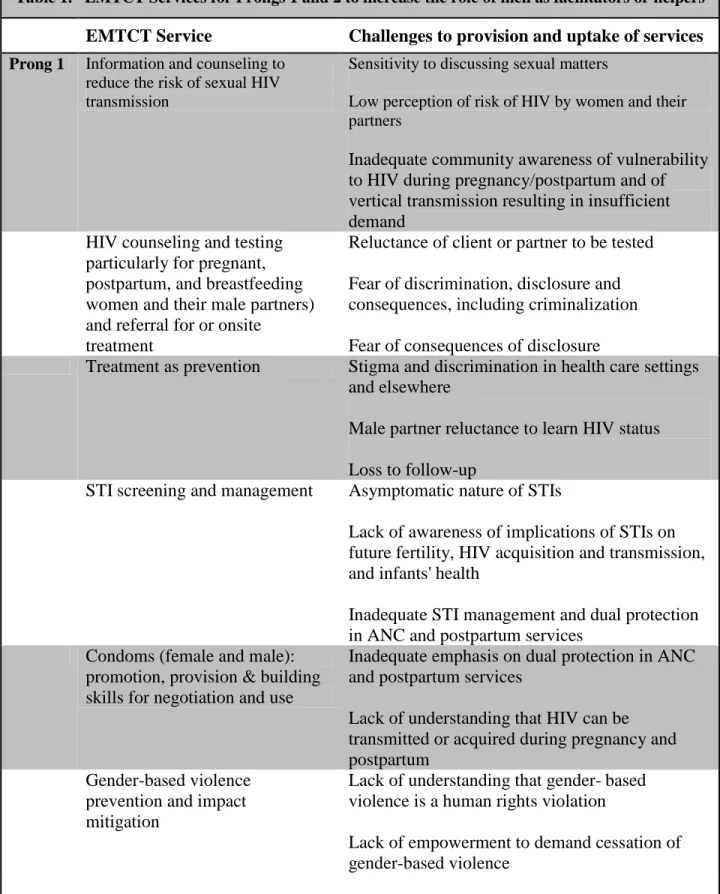
Table 1. EMTCT Services for Prongs 1 and 2 to increase the role of men as facilitators or helpers
EMTCT Service Challenges to provision and uptake of services
Prong 1 Information and counseling to
reduce the risk of sexual HIV transmission
Sensitivity to discussing sexual matters
Low perception of risk of HIV by women and their partners
Inadequate community awareness of vulnerability to HIV during pregnancy/postpartum and of vertical transmission resulting in insufficient demand
HIV counseling and testing particularly for pregnant, postpartum, and breastfeeding women and their male partners) and referral for or onsite
treatment
Reluctance of client or partner to be tested Fear of discrimination, disclosure and consequences, including criminalization Fear of consequences of disclosure
Treatment as prevention Stigma and discrimination in health care settings and elsewhere
Male partner reluctance to learn HIV status Loss to follow-up
STI screening and management Asymptomatic nature of STIs
Lack of awareness of implications of STIs on future fertility, HIV acquisition and transmission, and infants' health
Inadequate STI management and dual protection in ANC and postpartum services
Condoms (female and male): promotion, provision & building skills for negotiation and use
Inadequate emphasis on dual protection in ANC and postpartum services
Lack of understanding that HIV can be transmitted or acquired during pregnancy and postpartum
Gender-based violence prevention and impact mitigation
Lack of understanding that gender- based violence is a human rights violation
Table 1. EMTCT Services for Prongs 1 and 2 to increase the role of men as facilitators or helpers
EMTCT Service Challenges to provision and uptake of services
Prong 2 Information and counseling to
support reproductive rights, including preventing unintended pregnancies
Sensitivity to discussing sexual matters
Stigma and discrimination in health services and the community
Lack of awareness of benefits of family planning and availability of services
Fear of violence if partner learns of HIV-positive status
Clinical management of HIV, including treatment as prevention
Stigma and discrimination in health services and the community
Fear of violence if partner learns of HIV-positive status
Lack of ability to access services due to social, cultural, geographical or economic (user fees, long waiting times and cost of transportation) barriers
Loss to follow-up Rights-based family planning
counseling and services
Package of family planning services for women living with HIV not widely available
Insufficient integration of family planning in ANC/postpartum, VCT, treatment programs Sensitivity to discussing sexual matters
Stigma and discrimination in health services and the community
Weakness in follow-up post HIV- positive test result in family planning services
STI screening and management Asymptomatic nature of STIs
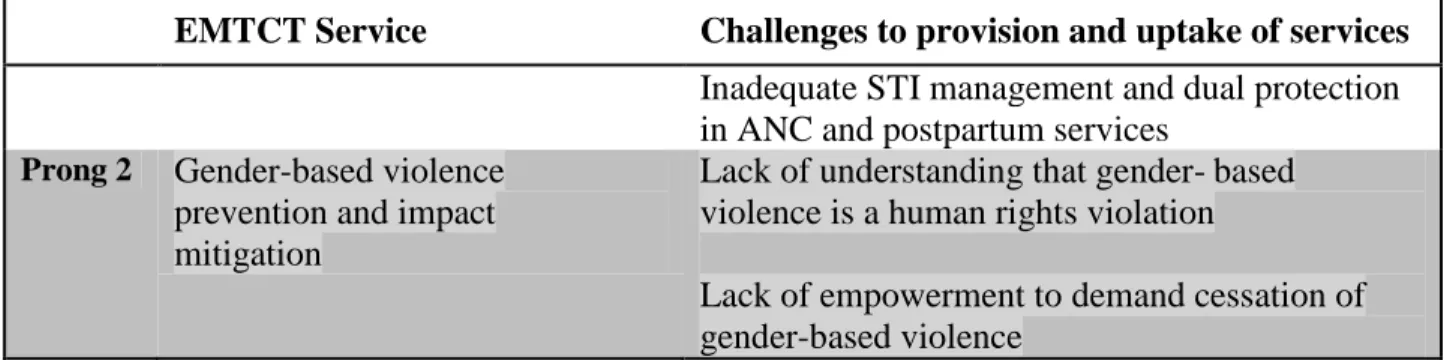
Table 1. EMTCT Services for Prongs 1 and 2 to increase the role of men as facilitators or helpers
EMTCT Service Challenges to provision and uptake of services Inadequate STI management and dual protection in ANC and postpartum services
Prong 2 Gender-based violence
prevention and impact mitigation
Lack of understanding that gender- based violence is a human rights violation
Lack of empowerment to demand cessation of gender-based violence
HIV testing and counseling
HIV testing is considered the first and crucial step to avert vertical transmission of infection (Larsson et al., 2012). EMTCT programs are built around pregnant women accessing HIV prevention and early diagnosis services, and ideally their partners as well. Both partners should participate in counseling and screening given the role they both play in the transmission of HIV to the child (Deller, 2007), although there has been some concern expressed with some negative consequences of male involvement in HIV counseling and testing. HIV testing and counseling are pivotal components of PMTCT programs because women who could benefit from ART or other interventions to prevent MTCT need to be identified. And also, improved post-test counseling for HIV negative women and their partners could help prevent HIV in both partners. Moreover, serodiscordant couples could benefit from treatment as prevention (ART lowers viral load and prevents onward transmission) if they know their respective status, and agree to
treatment.
However, in many Sub-Saharan African countries the HIV screening rates among pregnant women are very low, and counseling on HIV prevention minimal. Nigeria for instance has one of the highest maternal and infant mortality rates in the world with HIV as a leading contributor to these deaths and morbidity (Ndams, Joshua, Luka, Sadiq & Ayodele, 2010; WHO, 2012d). As the nation that accounts for 21% of pediatric HIV infections (UNAIDS, 2011b), only 10% of women in Nigeria are screened for HIV while 90% of pregnant women living with HIV lack access to PMTCT services (UNICEF, 2009).
comments on the low testing rates at ANC clinics in Eastern and Southern Africa amid the merits of male involvement. Findings from different studies in Zimbabwe (Chandisarewa et al., 2007), Kenya (Farquhar et al., 2004), Tanzania (Msuya et al., 2008), and Kenya (Katz et al., 2009) indicate testing rates ranging from 8% to 15%. A much lower male testing rate of 3% was recorded in another study in Tanzania (Falnes et al., 2011; WHO, 2012c).
The IATT (2012) stresses the relevance of male partner engagement to Prongs 1 and 2 and outlines their significant roles in EMTCT efforts. Male participation leads to: a decline in gender-based violence (GBV); increased contraceptive use such as condom; widespread uptake of SRH services by men; better discourse on family health issues; and decline in STIs (IATT, 2012). IATT (2012) adds that couples HIV counseling and testing can increase knowledge of HIV status and encourage disclosure, promote service utilization such as ART for HIV positive serodiscordant partners; and provide support for each other to effectively utilize ART and EMTCT interventions. For treatment as prevention, men need to be aware of their status and access ART for their own benefit and that of their serodiscordant partner (IATT, 2012).
testing and counseling for couples have been identified by Byamugisha et al., (2010) and Peltzer, Jones, Weiss, and Shikwane (2011) as factors that could spur the use of HIV prevention
interventions. Increased male participation is an intervention element that could enhance implementation of EMTCT, lead to decreased sexual risk, and increase uptake of and commitment to the medical protocol for pregnancy and newborn care (Peltzer et al, 2011; PEPFAR, 2010).
Family Planning
Most EMTCT efforts are directed at increasing HIV counseling and testing services and providing ART to mother and child. However, one often overlooked intervention is preventing unplanned pregnancies among HIV-positive women by increasing contraceptive use. (Kim, Rinehart & Mazzeo, 2009). Family planning (FP) is an essential component of EMTCT efforts that men need to actively engage in for their own health status as well as that of their partners and children. UNFPA (2012b) states that addressing women’s need for FP in HIV
high-prevalence countries would lead to 6 million fewer unintended births and 61,000 fewer cases of pediatric HIV in 2015.In fact by 2015, improved FP services could prevent 163,000 new cases of pediatric HIV globally (UNFPA, 2012b).
of over 160,000 HIV-positive births averted annually” (Deller, 2007; Reynolds, Steiner & Cates, 2005). Despite the lack of widespread FP services in Sub-Saharan Africa, Wilcher and Cates (2009) indicate the possibility of contraceptive uptake in the region averting 22% [about 173,000] of perinatal HIV incidences each year.
Deller (2007) also stresses the importance of FP for both HIV-positive and HIV-negative women during the postpartum period. Proper and consistent condom use is required to prevent HIV transmission and other sexually transmitted infections (STIs) as well as unintended
pregnancy among serodiscordant couples. Other contraceptive methods including the intrauterine device (IUD) may be suitable for the woman/couple living with HIV. (Deller, 2007).
Advantages of Male Participation in EMTCT
Among the potential benefits of male participation in EMTCT efforts is that men often influence women’s access to and utilization of SRH and HIV services (Barker, Ricardo,
Nascimento, Olukoya & Santos, 2010; IATT, 2012). WHO (2007) and IATT (2012) state that male involvement can lead to: (a) reduced GBV; (b) increased contraceptive use; (c) increased uptake of SRH services by men; (d) improved communication with spouse or partner about health related decision-making; and (e) decreased rates of STIs sexually transmitted diseases. To buttress the aforesaid benefits, Byamugisha, et al. (2010) and IATT (2012) stated couple HIV testing and counseling can: (a) increase awareness of HIV status; (b) encourage mutual
Barriers to Male Involvement in EMTCT Programs in Sub-Saharan Africa
There are various obstacles to male participation in EMTCT in Africa. Byamugisha et al. (2010) and Larsson et al. (2012) cite defunct health systems, socioeconomic, cultural factors, and traditional gender structures as significant barriers to male involvement in EMTCT efforts.
Health System Issues
Larson et al. (2012) explains that men are signed up for couple HIV testing through their pregnant partners with the midwife mandated to convince the male family decision-maker to go for couple testing. The author describes this as a daunting undertaking especially for women in unbalanced power relationships. Other health system issues identified by Byamugisha et al. (2010) include rudeness and maltreatment of the pregnant women by the health workers in the ANC clinics, health workers prevent men from entering clinics with their pregnant women, charging unofficial user-fees for services, and inadequate space in the ANC clinics. These experiences could deter both women and their partners from completing PMTCT services. Additional research on the treatment of male partners is needed to fully understand other barriers encountered by men.
Socioeconomic Factors
Cultural Constraints
Cultural issues also hinder male participation (Byamugisha, et al., 2010). Generally, men are less likely to seek any type of health care and especially ANC, which is viewed as a female domain (Larsson et al., 2012). In some African settings, male involvement in ANC and EMTCT is perceived as superfluous and a women’s business (Peltzer et al., 2011). Byamugisha et al.
(2010) present additional cultural issues preventing men from engaging in EMTCT efforts. Many men cannot come to terms with the idea of their partners’ exposure to health providers. Also many a time men who accompany their partners to ANC visits are regarded as weaklings.
Stigma and Lack of Confidentiality
Findings from a study conducted in Uganda, indicated that HIV related stigma was a factor behind lack of male participation in HIV screening and counseling services (Bwambale, et al., 2008). Bwamble and colleagues found that more than half of the men feared to test for HIV because of the stigma associated with the disease. The male partners dreaded being labeled HIV-positive because they would be stripped of their social privileges. The men would rather opt be screened at faraway HIV testing centers where they were unknown to the residents and
employees than risk running into familiar faces. (Bwambale, et al., 2008). Lack of Education, Awareness, and Communication
embarrassment and fear of infidelity accusations. Theuring et al. (2009) cite lack of knowledge of MTCT related issues as a barrier to male partner engagement in PMTCT efforts in Tanzania. Lack of education about the benefits of PMTCT services calls for “integrated preventive health
education” for pregnant women, male partners, and the general public (Kalembo & Zgambo). Key Strategies and Promising Practices for Male Participation in EMTCT Interventions
The merits of male participation in family health care abound, as summarized from UNAIDS’ 2012 Global Report. UNAIDS explains that providing services to couples instead of
separate individuals is linked to behavior change to protect the uninfected partner and can significantly reduce the risk of HIV transmission. Further, many countries are currently trying out various strategies to promote male partner involvement within service delivery. UNAIDS stresses that there are concerted efforts to incorporate male-related services into MNCH and other SRH services and potential initiatives include recruiting more male health providers for HIV services, offering men’s services in conjunction with MNCH and other SRH services, offering men’s services in conjunction with MNCH services, and other SRH services, and
offering services for couples. (UNAIDS, 2012c).
The Rwanda Strategy
In order to improve HIV services for men while expanding EMTCT services, Rwanda has developed a family package of support. Not only does the integrated package of services comply with national strategies to prevent pediatric HIV infection, it emphasizes male
participation and encourages men to partake in HIV counseling and testing (UNAIDS, 2012c; UNFPA, International Planned Parenthood Federation [IPPF], UNAIDS & WHO, 2013). The Rwandan strategy includes:
(a) “Promoting HIV counseling and testing for couples as a national strategy”; (b) “Mobilizing communities with local authorities and community health-care workers”;
(c)” Capacity building of health care personnel on HIV counseling and testing for couples”;
(d) “Organizing weekend HIV counseling and testing sessions for partners who are unavailable on weekdays”; and
(e)” Introducing invitation letters for male partners”. (UNAIDS, 2012c; UNFPA, IPPF, UNAIDS & WHO, 2013).
UNAIDS (2012c) and WHO (2012c) noted that a significant increase in couple testing, from a national average of 33% of male partners being tested in 2005 to 78% in 2008 has been attributed to the Rwandan family package approach. Further, they found that the number of couples tested through the EMTCT program rose from 58,700 in 2005 to 229,200 in 2008. HIV testing coverage in Rwanda leapt from 10% of the total number of pregnant women in 2002 to 50% in 2005 and 75% in 2008. Finally, the prevalence of HIV among pregnant women and their male partners also dropped from 9.1% in 2003 to 3.0% in 2008 among pregnant women and from 10.2% in 2003 to 3.1% in 2008 among male partners. (UNAIDS, 2012c & WHO, 2012c).
as the labor and education sectors would help promote the uptake of SRH and gender health services. Also, male circumcision, for instance, that exclusively benefits men by addressing their SRH and HIV needs could offer avenues to increase their willingness to participate in EMTCT programs. In addition, men’s attitudes take a turn for the better when they are involved in programs related to HIV, SRH and GBV. (IATT, 2012).
Figure 7. Essential sexual and reproductive health services for men. Source: “The truth about men, boys, and sex”. by International Planned Population Federation.
Methodology
The literature for review included relevant EMTCT policies, research findings, progress reports, case studies, especially concerning the influence of male partners, related strategies, and promising practices. An array of abstract citations was analyzed through search filters such as Cochrane, Medline, Medline Plus, and PubMed. Search terms included mother-to-child transmission of HIV, MTCT, PMTCT, EMTCT, Sub-Saharan Africa, HIV, prevention, HIV screening, participation, engagement, and male partners. The search was narrowed down to encompass papers that indicated the importance of male involvement in EMTCT in Africa. This was followed by a review of the full-text articles of abstracts that met the inclusion criteria. The materials were narrowed down further by year of publication. Mostly publications from year 2001 and above were selected to allow for any recent development in PMTCT/EMTCT efforts. The data culled from each article included: Name of author(s), year of publication, and source.
Electronic materials were collated from websites of international agencies such as IATT, PEPFAR, UNAIDS, UNFPA, UNICEF, USAID, and WHO. Other relevant NGOs and CSOs included EGPAF, GNP+, IPPF, and MSH.
CHAPTER FOUR Discussion
Every individual has the right to a healthy and fulfilling life, especially our children who are yet to make their mark on earth. What better way to achieve this than to create an AIDS-free society especially in resource-poor settings. As stated earlier, the global community was slow in their response at the onset of the HIV epidemic. UNAIDS noted that “a defining feature of the first two decades of HIV was the common failure of our leaders to put scientific knowledge to use” (UNAIDS, 2011a, p. 16). Also, inadequate condoms supply-“the most basic preventive tool”-in countries with rising incidence rates, contributed to the epidemic. The delayed actions led to a rapid increase in HIV as well as HIV related deaths and morbidities (UNAIDS, 2011a). Nevertheless, it is encouraging to know that HIV has not “faded into global significance” rather it continues to “engage the great minds of science, geopolitics, human rights, and social change” (UNAIDS, 2011a, p.11). HIV is now recognized as a “civil rights issue” (Wodi, 2005).
but that are encouraged to adopt health seeking behaviors particularly in LMCs. Granted resources are limited, but as President Bill Clinton rightly suggested we must make the most of what we have (UNAIDS, 2011a).
Deller (2007) and Moss, Clements and Halsey (2003) stated that the majority of children born to women living with HIV are uninfected with the virus. Of the children who contract the infection, most of the transmissions occur during delivery or shortly thereafter (Boateng, Kwapong & Agyei-Baffour, 2013; Moss, Clements & Halsey, 2003). The increased need for solutions to MTCT has led global partners to introduce four major PMTCT intervention strategies (prongs) whose efficacy lies in their concurrent implementation (UNAIDS, 2011a). All four PMTCT program components should be given equal importance “in order to respect both the woman and her child’s right to health” (UNFPA, n.d.a).
As earlier noted, Africa is a patriarchal society where women are oftentimes considered second class citizens. Johnson (2009), UNFPA (n.d.a), and WHO (2012c) point out that many women in the region are not free to make independent decisions, lack the wherewithal to access screening, counseling, ante- and postnatal care, as well as breastfeeding options. In the bid to prevent MTCT in the sub-Saharan region, women face certain gender-based obstacles identified by Johnson (2009), UNFPA (n.d.a), and WHO (2012c): (a) Inability to negotiate sex or safe sexual habits with a serodiscordant partner, which can culminate in her own HIV infection; (b) Unintended pregnancies due to a woman’s incapacity to negotiate sex, contraceptive use, or
access FP services; and (c) Lack of access to prenatal health services due to partners control of the family’s resources. In addition, fear of rejection, ostracization, violence, or abuse can hinder
the uptake of PMTCT services (such as HIV prevention and treatment, as well as AIDS care), disclosure of HIV status, or adoption of breast milk substitute (UNFPA, n.d.a, WHO, 2004).
That being said, it is evident that men have a key role to play if MTCT is going to be an issue of the past. Total elimination of MTCT will require the complete support of male partners in various interventions. It is important for the ANC clinics to integrate SRH services for men in order to increase their current level of involvement in the ANC clinics and then health and welfare of their women and children. WHO (2012c) and Peacock, Stemple, Sawires, and Coates (2009) explain that SRH services mainly target women, depriving men of the chance to make sound judgments on health choices and their roles in improving the family’s health outcomes. According to these authors, studies show that given a chance to engage in EMTCT efforts, men would play a significant role in enhancing the health of their families and society.
WHO (2012c) stresses that men’s active role in efforts directed at EMTCT and improving maternal-child health outcomes would encourage joint responsibility for family health and speed up global progress towards the realization of the MDGs that are “key to national development”. WHO (2012c) emphasizes that
CHAPTER FIVE
Conclusion and Recommendations
There is a growing sense of urgency to eliminate new HIV infections among children and keep their mothers alive. Global partners have shown their commitment towards reversing the HIV epidemic in the 1980s. Attention has shifted from just the mother and the child but now includes the role of men in EMTCT efforts. Men must fully engage in the uptake of EMTCT services to ensure a continuous and significant decrease in new pediatric HIV infections, and improved maternal health, particularly in high prevalence regions such as Sub-Saharan Africa.
IPPF (2009) recommends that EMTCT interventions should be “culturally, gender and age sensitive, confidential, affordable, and accessible”. It is my belief that local leaders should prompt men to be more compassionate and involved in the SRH of their partners and families. Male partners should be allowed to think over and even “dispute gender norms” as presently held in 2013 in the sub-Saharan region. EMTCT services should help men develop skills pertinent to “communication, condom use, parenting, and caring”. (IPPF, 2009).
IRIN (2013) explains that a great proportion of health care facilities in the region are populated by female providers and patients which can be a turnoff for the men. As IPPF (2009) stated, male participation in EMTCT efforts can be enhanced through establishing male clinics, special opening hours for males, and recruiting male clinicians and counselors. As identified earlier, some men in Sub-Saharan African settings are often reluctant to deal with female health care workers. To aptly tend to men’s health needs, male providers should have sufficient training on SRH issues the continuum of care for men with STIs, HIV, and other related heath
management should tackle issues of stigma and bias and employees should be “empowered to offer non-judgmental services” (IPPF, 2009).
Leadership is also critical to elicit male participation in averting vertical transmission of HIV. If our leaders lay down ground rules and are committed to eliminating new infections among children, it is very likely that the men would buy into the vision and actively engage in EMTCT alongside their partners. Nonchalant attitudes from the top will not do. A considerable drop in HIV infections (including among women) has been observed in countries that
demonstrated a “political will and government commitment to controlling HIV transmission”
(Wodi, 2005). UNAIDS (2011a) describes the proactive leadership of Uganda’s President Yoweri Musevini, who launched a full-scale national mobilization against HIV. Strategies included adopting a community approach to reject stigma, free communication on risks and behavioral change, and implementing regulations and programs to spur Uganda’s epidemic
decline during the 1990s in contrast to the rising rates in other Sub-Saharan African countries. (UNAIDS, 2011a). Unfortunately, the Uganda AIDS Indicator 2011 shows that between 2010 and 2011 the country’s HIV prevalence rate rose from 6.4% to 6.7% with more than 500, 000 HIV infections in the past five years (Pilon, 2012). This downward slope might be partly
attributed to changes in policies. Senegal is also among the countries whose leader implemented effective national programs, jointly curbing numerous new infections during the first two
Ultimately, national governments on their part should also enact laws, regulations, and policies to protect the rights of women and children to live HIV-free lives as well as promote male participation in EMTCT interventions. The onus lies on the governments in Sub-Saharan Africa to shield their citizens, especially women and children, from adverse health outcomes particularly given the high rate of HIV infections (Wodi, 2005). A leadership strategy proffered by Wodi (2005) is implementing educational intervention programs directed at women and their male partners to curb unsafe practices that make women susceptible to HIV infection. Cultural
and religious norms that hinder uptake of EMTCT services among men and women should be abolished, and effective SRH and HIV services for these populations should be delivered. IPPF (2009) stresses the necessity of a sound human rights approach in order to effectively address the HIV epidemic and its impact. Besides being “fair and just”, this approach elicits the “most
REFERENCES
Anderson, F. W., Morton, S. U., Naik, S. & Gebrian, B. (2007). Maternal mortality and the consequences on infant and child survival in rural Haiti. Maternal and Child Health Journal, 11(4), 395-401. Retrieved from
http://www.ncbi.nlm.nih.gov/pubmed/17265193
AVERT (2013). Preventing mother-to-child transmission of HIV. Retrieved from http://www.avert.org/preventing-mother-child-transmission-hiv.htm
Barker, G., Ricardo, C., Nascimento, M., Olukoya, A. & Santos, C. (2010). Questioning gender norms with men to improve outcomes: Evidence of impact. Global Public Health, 5(5), 539-553. doi: 10.1080/17441690902942464
Boateng, D., Kwapong, G. D. & Agyei-Baffour, P. (2013). Knowledge, perception about antiretroviral therapy (ART) and prevention of mother-to-child-transmission (PMTCT) and adherence to ART among HIV positive women in the Ashanti Region, Ghana: a cross-sectional study. BMC Women's
Health, (13)2. doi:10.1186/1472-6874-13-2
Bwambale, F.M., Ssali, S., Byaruhanga, S., Kalyango, J. & Karamagi, C. (2008). Voluntary HIV counselling and testing among men in rural western Uganda: Implications for HIV prevention. BMC Public Health, 8, 263. doi:10.1186/1471-2458-8-263 Byamugisha, R., Tumwine, J.K., Semiyaga, N. & Tylleskär, T. (2010). Determinants of male
involvement in prevention of mother-to-child transmission of HIV program in Eastern Uganda: A cross-sectional survey. Reproductive Health, BioMed Central.
Retrieved from `
http://www.ncbi.nlm.nih.gov/pmc/articles/PMC2913932/#__ffn_sectitle Center for AIDS Prevention Studies, University of California San Francisco. (2002). Is mother-
to-child HIV transmission preventable? Retrieved from caps.ucsf.edu/factsheets/mother-to-child-transmission-mtct/
Chandisarewa, W., Stranix-Chibanda, L., Chirapa,E., Miller, A., Simoyi, M., Mahomva, A., . . . Shetty, A. K. (2007). Routine offer of antenatal HIV testing (“opt-out” approach) to prevent mother-to-child transmission of HIV in urban Zimbabwe. Bulletin of the World Health Organization, 85(11), 843-850. doi: 10.2471/BLT.06.035188 Deller, B. (2007). Mother-to-child transmission of HIV. USAID Global Health eLearning
Center. Retrieved from http://www.globalhealthlearning.org/course/mother-child-transmission-hiv
Falnes, E. F., Moland, K. M., Tylleskär, T., de Paoli, M. M., Msuya, S. E. & Engebretsen, I. M. S. (2011). "It is her responsibility": Partner involvement in prevention of mother to child transmission of HIV programmes, Northern Tanzania. Journal of the International AIDS Society, 14(21), doi: 10.1186/1758-2652-14-21
Family Health International. (2006). Contraception cost-effective for preventing mother-to-child transmission of HIV. Retrieved from http://www.fhi360.org/sites/default/files media/documents/ContraceptionforPMTCTenrh.pdf
Farquhar, C., Kiarie, J. N., Richardson, B. A., Kabura, M. N., John, F. N., Nduati, R. W., . . . John-Stewart, G. C. (2004). Antenatal couple counseling increases uptake of interventions to prevent HIV-1 transmission. Journal of Acquired Immune Deficiency Syndrome, 37(5), 1620-1626. Retrieved from
http://www.ncbi.nlm.nih.gov/pmc/articles/PMC3384734/ Global Network of People Living with HIV. (n.d.). Option B+: Understanding
perspectives/experiences of women living with HIV. Retrieved from http://www.gnpplus.net/en/resources/positive-health-digity-and-
prevention/item/142-option-b%20-understanding-perspectives/experiences-of- women-living-with-hiv
Hirnschall, G., Doherty, M. & Shaffer, N. (2013). Is Option B+ the best choice? The Lancet, 381(9874), 1271-1272. doi:10.1016/S0140-6736(13)60831-4
Integrated Regional Information Networks. (2013). Kenya: Male clinics boost men’s participation in PMTCT. Retrieved from
http://www.irinnews.org/report/90847/kenya-male-clinics-boost-men-s- participation-in-pmtct
Inter-agency Task Team for prevention and treatment of HIV infection in pregnant women, mothers, and their children. (2012). Preventing HIV and unintended pregnancies: Strategic framework 2011-2015. Retrieved from
http://www.unfpa.org/webdav/site/global/shared/documents/publications/ 2012/V2_web_P1P2_framework%2022.8.12.pdf
International Planned Parenthood Federation. (2009). The truth about men, boys, and sex. Retrieved from http://www.srhhivlinkages.org/content/uploads/docs/articles/ truthaboutmensexboys_2009_en.pdf
Jhpiego (2013). Maternal, newborn and child health. Retrieved from
www.jhpiego.org/en/content/maternal-newborn-and-child-health
Johnson, W. (2009). Treatment for women and prevention for infants: Can’t we do both? GMHC Treatment Issues. Retrieved from
http://www.gmhc.org/files/editor/file/ti_poz_0309.pdf
Joint United Nations Programme on HIV/AIDS. (2011b). Countdown to zero: Global plan towards the elimination of new HIV infections among children by 2015 and keeping their mothers alive. Retrieved from http://www.unaids.org/en/media/ contentassets/documents/unaidspublication/2011/20110609_jc2137_
global-plan-elimination-hiv-children_en.pdf
Joint United Nations Programme on HIV/AIDS. (2012b). Fact sheets: Sub-Saharan Africa-AIDS epidemic facts and figures. Retrieved from
http://www.unaids.org/en/media/unaids/contentassets/documents/epidemiology/ 2012/gr2012/2012_FS_regional_ssa_en.pdf
Joint United Nations Programme on HIV/AIDS. (2012c). Global Report. Retrieved from http://www.unaids.org/en/media/unaids/contentassets/documents/epidemiology/ 2012/gr2012/20121120_UNAIDS_Global_Report_2012_with_annexes_en.pdf Joint United Nations Programme on HIV/AIDS. (2013a). Angolan government commits to
ensuring all children are born free of HIV. Retrieved from
http://www.unaids.org/en/resources/presscentre/featurestories/2013/ october/20131009angola/
Joint United Nations Programme on HIV/AIDS. (2013b). Global AIDS epidemic facts and figures: 2013 Global fact sheet. Retrieved from
http://www.unaids.org/en/media/unaids/contentassets/documents/epidemiology/ 2013/gr2013/20130923_FactSheet_Global_en.pdf
Joint United Nations Programme on HIV/AIDS. (2013c). Global report: UNAIDS report on the global AIDS epidemic 2013. Retrieved from
http://www.unaids.org/en/media/unaids/contentassets/documents/epidemiology/ 2013/gr2013/UNAIDS_Global_Report_2013_en.pdf
Joint United Nations Programme on HIV/AIDS. (2013d). New HIV infections among children have been reduced by 50% or more in seven countries in Sub-Saharan Africa. Retrieved from http://www.unaids.org/en/resources/presscentre/
pressreleaseandstatementarchive/2013/june/20130625prglobalplan/
Joint United Nations Programme on HIV/AIDS. (2013e). 2013 Progress report on the Global Plan towards elimination of new HIV infections among children by 2015 and keeping their mothers alive. Retrieved from
http://www.unaids.org/en/media/unaids/contentassets/documents/ unaidspublication/2013/20130625_progress_global_plan_en.pdf
Joint United Nations Programme on HIV/AIDS. (n.d.). Ending Mother to Child Transmission of HIV – eMTCT. Retrieved from http://www.unaidsrstesa.org/region/regional-profile/ending-mother-child-transmission-hiv-emtct
Kalembo, F. W. & Zgambo, M. (2012). Loss to Followup: A Major Challenge to Successful Implementation of Prevention of Mother-to-Child Transmission of HIV-1 Programs in Sub-Saharan Africa. Retrieved from
http://www.hindawi.com/isrn/aids/2012/589817/
Katz, D. A., Kiarie, J. N., John-Stewart, G. C., Richardson, B. A., John, F. N. & Farquhar, C. (2009). Male perspectives on incorporating men into antenatal HIV counseling
and testing. PLoS One, 4(11), e7602. doi: 10.1371/journal.pone.0007602.
Kim, Y., Rinehart, W. & Mazzeo, C. (2009). FP/RH for people living with HIV. Retrieved from http://www.globalhealthlearning.org/course/fp-rh-people-living-hiv
Larsson, E. C., Thorson, A. E., Pariyo, G., Waiswa, P., Kadobera, D., Marrone, G. & Ekström, A. M. (2012). Missed opportunities: Barriers to HIV testing during pregnancy from a population based cohort in Rural Uganda. PLoS ONE 7(8): e37590. doi:10.1371/journal.pone.0037590
Management Sciences for Health. (2013). Prevention of mother-to-child transmission of HIV (PMTCT) and option B+. Retrieved from http://www.msh.org/our-work/health- areas/hiv-aids/prevention-of-mother-to-child-transmission-of-hiv-pmtct-and- option-b
Msuya, S. E., Mbizvo, E. M., Hussain, A., Uriyo, J., Sam, N. E. & Stray-Perdersen, B. (2008). Low male partner participation in antenatal HIV counselling and testing in northern Tanzania: implications for preventive programs. AIDS Care, 20(6), 700- 709. doi: 10.1080/09540120701687059.
Ndams, I. S., Joshua, I. A., Luka, S. A., Sadiq, H. O. & Ayodele, S. B. (2010). Human immunodeficiency virus seroprevalence among pregnant women in Minna, Nigeria. Annals of Nigerian Medicine 4(1), 14-17. Retrieved from
http://www.anmjournal.com/article.asp?issn=0331-
3131;year=2010;volume=4;issue=1;spage=14;epage=17;aulast=Ndams Newell, M., Coovadia, H. Cortina-Borja, M., Rollins, N., Gaillard, P. & Dabis, F. (2004).
Mortality of infected and uninfected infants born to HIV-infected mothers in Africa: A pooled analysis. Lancet 364(9441): 1236-43. Retrieved from www.sciencedirect.com/science/article/pii/S0140673604171407
Nkuoh, G.N., Meyer, D.J., Tih, P.M. & Nkfusai, J. (2010). Barriers to men’s participation in antenatal and prevention of mother-to-child HIV transmission care in Cameroon, Africa. Journal of Midwifery & Women’s Health, 55(4), 363-369.
doi:10.1016/j.jmwh.2010.02.009.
Peltzer, K., Jones, D., Weiss, S. M. & Shikwane, E. (2011). Promoting male involvement to improve PMTCT uptake and reduce antenatal HIV infection: A cluster randomized controlled trail protocol. BMC Public Health, 11, 778. doi: 10.1186/1471-2458-11-778
Pilon, M. (2012). HIV/AIDS in Uganda: Abstinence, condoms, and side dishes. Retrieved from http://www.rnw.nl/africa/article/hivaids-uganda-abstinence-condoms-and-side- dishes
Pulerwitz, J., Michaelis, A., Verma, R. & Weiss, E. (2010). Addressing gender dynamic and engaging men in HIV programs: Lessons learned from Horizons Research. Public Health Reports, 125(2), 282-292. Retrieved from
http://www.ncbi.nlm.nih.gov/pmc/articles/PMC2821858/
Reynolds, H., Steiner, M. & Cates, W. (2005). Contraception’s proved potential to fight HIV.
Sexually Transmitted Infections, 81(2), 184-185. doi: 10.1136/sti.2004.012013 Reynolds, H., Janowitz, B., Homan, R. & Johnson, L. (2006). The value of contraception to
prevent perinatal HIV transmission. Sexually Transmitted Diseases, 33(6), 350- 356. Retrieved from http://www.ncbi.nlm.nih.gov/pubmed/16505747
Shisana, O. & Davids, A. (2004). Correcting gender inequalities is central to controlling HIV/AIDS. Bulletin of the World Health Organization, 82(11), 811-890. Retrieved from
http://www.who.int/bulletin/volumes/82/11/editorial11104html/en/
Stringer, E.M., Ekouevi, D. K., Coetzee, D., Tih, P.M., Creek, T.L., Stinson, K., Giganti, M.J., . . Stringer, J. S. (2010). Coverage of nevirapine-based services to prevent mother- to-child HIV transmission in 4 African countries. JAMA, 304(3), 293-302. doi: 10.1001/jama.2010.990.
Theuring, S., Mbezi, P. & Luvanda, H., Jordan-Harder, B., Kunz, A. & Hams, G. (2009). Male involvement in PMYTCT services in Mbeya Region, Tanzania. AIDS and Behavior, Suppl 1, 92-102. doi: 10.1007/s10461-009-9543-0
Tudor Car, L., van-Velthoven, M. H., Brusamento, S., Elmoniry, H., Car, J., Majeed, A. & Atun, R. (2011). Integrating prevention of mother-to-child HIV transmission (PMTCT) programmes with other health services for preventing HIV infection and
improving HIV outcomes in developing countries. Cochrane Database Systematic Review, 15(6). doi: 10.1002/14651858.CD008741.pub2.
UNITAID. (2013). Prevention of mother-to-child transmission of HIV. Retrieved from http://www.unitaid.eu/en/pmtct-proj
United Nations Children’s Fund. (2009). UN report: Data shows progress needed on HIV testing for children and mothers. Retrieved from
http://www.unicef.org/media/media_51942.html
United Nations Children’s Fund. (2012b). Options B and B+: Key Considerations for countries to implement an equity-focused approach. Retrieved from
http://www.unicef.org/aids/files/hiv_Key_considerations_options_B.pdf United Nations Children’s Fund. (2013). HIV and AIDS activities: The first decade of life.
Retrieved from http://www.unicef.org/aids/index_preventionyoung.html United Nations Population Fund. (2012a). Contraceptive commodities for women’s health.
Retrieved from http://www.unfpa.org/webdav/site/global/shared/images/ publications/2012/UN%20Commission_%20FP%20Synthesis_
%20Final%2019%20March%202012.pdf
United Nations Population Fund. (2012b). Saving Lives by Preventing Unintended Pregnancies and HIV during Pregnancy. Retrieved from
http://www.unfpa.org/public/home/news/pid/11649
United Nations Population Fund (n.d.a). HIV/AIDS, gender, and the prevention of mother-to- child transmission (PMTCT). Retrieved from
http://www.unfpa.org/hiv/docs/factsheet_transmission.pdf
United Nations Population Fund (n.d.b). Sexually transmitted diseases, including HIV/AIDS. In Reproductive health in refugee situations: An inter-agency field manual. Retrieved from www.unfpa.org/emergencies/manual/5.htm
United Nations Population Fund, International Planned Parenthood Federation, Joint United Nations Programme on HIV/AIDS & World Health Organization. (2013). Linking Sexual and Reproductive Health and HIV/AIDS, Gateways to Integration: A case study from Rwanda. Retrieved from http://www.emtct-iatt.org/wp-
content/uploads/2013/09/Rwanda_case_study_final.pdf
United States Agency for International Development. (2011). Integrating prevention of mother- to-child transmission of HIV interventions with maternal, newborn, and child health services. Retrieved from http://www.aidstar-one.com/sites/default/files/ AIDSTAR-One_TB_Integrating%20PMTCT%20with%20MNCH_0.pdf United States Agency for International Development. (n.d.). Prevention of mother-to-child
transmission (PMTCT) of HIV. Retrieved from http://www.aidstar-one.com/focus_areas/pmtct
United States Presidents Emergency Plan for AIDS Relief. (2010). Prevention of mother-to-child transmission of HIV: Executive summary of the expert panel report and
recommendations to the U.S. Congress and U.S. Global AIDS Coordinator. Retrieved from www.pepfar.gov/documents/organization/135466.pdf
United States Presidents Emergency Plan for AIDS Relief. (n.d.). Combination prevention: Preventing mother-to-child transmission. Retrieved from
http://www.pepfar.gov/documents/organization/183246.pdf