ORIGINAL RESEARCH ARTICLE
Closing the Gap between People and Programs: Lessons from
Implementation of Social Accountability for Family Planning and
Reproductive Health in Uganda
DOI: 10.29063/ajrh2018/v22i1.7
Vicky
Boydell1, Stella Neema
2, Kelsey Wright
3and Karen Hardee
4Rights and Accountability Advisor, Population Council/Evidence Project, New York, United States1; Associate Professor, Makerere University School of Social Sciences, Kampala, Uganda2; Staff Associate, Population Council/Evidence Project, New York, United States3; Senior Associate and Project Director, Population Council/Evidence Project, New York, United States4
*For Correspondence: Email: [email protected]; Phone: +44 (0)7946388257
Abstract
Globally, women‘s access to modern contraception can be attributed to poor service conditions and care. Growing evidence from across the health sector has found that social accountability approaches have the potential to improve the quality of care and therefore the utilization of health services, little of this evidence relates to family planning and reproductive health programs. This paper therefore assessed the results of retrospective implementation research into a five-year social accountability project in Uganda that focused on family planning and reproductive health. A mix of methods was used examine the project‘s implementation in three districts in Uganda between 2009 to 2013, including political economy analysis, document review, and in-depth interviews. Interviews were coded using ATLAS.ti software and analyzed with a thematic framework, organized by stakeholder groups and across districts. The research found that while the project broadly delivered as intended in local accounts, a wider range of activities and outcomes also occurred. Community participants in the three districts were much more likely to remember more personal changes, such as increased confidence when interacting with health care providers, in their health seeking behavior or in their ability to represent themselves. The research revealed a web of accountability relationships at play. These ranged from formal opportunities for community participation in institutional processes, to the more personal direct relationship between the service users and the health care provider compared to the less direct relationship between the community and local officials. In addition, ways in which elements of social accountability can be combined with features of FP program were seen, such as including outreach activities with civic and rights education. This appears to extend the reach and credibility of these services among community members while also counteracting barriers to women‘s and young people‘s participation. (Afr J Reprod Health 2018; 22[1]: 73-84).
Keywords: social accountability, family planning, reproductive health, implementation science
Résumé
autorités locales. En outre, des moyens de combiner des éléments de responsabilité sociale avec les caractéristiques du programme de PF ont été envisagés, notamment des activités de sensibilisation à l'éducation civique et aux droits. Cela semble étendre la portée et la crédibilité de ces services parmi les membres de la communauté tout en neutralisant les obstacles à la participation des femmes et des jeunes. (Afr J Reprod Health 2018; 22[1]: 73-84).
Mots-clés: responsabilité sociale, planification familiale, santé de la reproduction, science de la mise en œuvre
Introduction
Unmet need for contraception remains high among women who are sexually active and want to avoid becoming pregnant 1.Unmet need affects an estimated 225 million women in the developing world and has remained constant over the last decade. Many of these women began using contraceptives but then discontinued, becoming at risk of an unintended pregnancy. Lack of access or cost of services is rarely cited as the main reasons women stop the use of contraceptives1.Rather, women‘s confidence in and use of contraceptive services are negatively affected by concerns about how a method will affect their health, and the poor service conditions2, 3. Many women are aware that they will be subject to absent, disrespectful or untrained health care providers, a host of informal fees, and poor basic infrastructure and services4-8.
Social accountability approaches, where community members identify the challenges they face in using services and hold those responsible to account for their decisions and actions, hold much promise for addressing the challenges that women face in seeking services4-8. Community participatory approaches, which move beyond imparting information and generating demand, have been shown to improve patient-centred quality of care, knowledge of the right to quality health care and respectful treatment, the responsiveness of health care providers to community needs, increased collaboration between communities and health workers, and increased service access, coverage, and satisfaction4-8. There is mounting evidence of the effect of social accountability on improving the delivery of health services, yet there is less evidence on the implementation of these initiatives9. As the potential for significant impact is becoming clearer, it is critical to understand how these changes are produced and achieved, and what happens in the implementation process10. Moreover, there is little specific work on social
accountability in the context of family planning (FP) programs. To address these gaps this paper presents findings from an implementation study of a social accountability project focused on FP and reproductive health (RH), the Healthy Action Project (HAP), implemented in Uganda between 2009 and 2013. This paper examines the implementation of HAP with a focus on family planning.
What do we mean by social accountability?
Accountability refers to the formal and informal procedures, norms and structures in a political system that require those in power to explain their decisions and ensure remedy for any failures to discharge their duties4,5,10. Accountability encompasses ―horizontal‖ and ―vertical‖ mechanisms. Horizontal mechanisms are between different branches and levels of government; they are within the public sector and tend to be directed upward6,7. Vertical mechanisms, through which decision-makers are held to account by citizens and constituents, are external relationships between the public sector and the community and oriented towards service users6,7. Social accountability is vertical and refers to the efforts of citizens and civil society to scrutinize and hold decision-makers to account for providing promised services. This includes activities such as participatory budgeting, citizen hearings, and community scorecards.
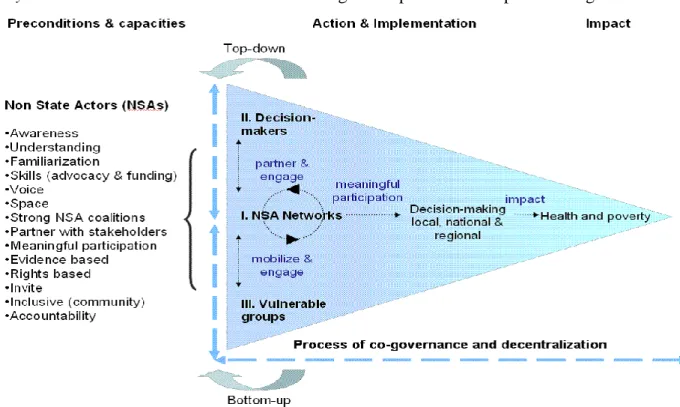
Figure 1: Healthy Action Project‘s proposed Theory of Change16
interventions have the potential to address on-the-ground challenges in availability, access, and quality of contraceptive services6-10,13.Recent experimental studies have even indicated that social accountability activities can increase use of FP services12,17.
A 2014 review identified 16 social accountability interventions with a focus on improving FP and RH programs, representing geographically diverse populations in Latin America, South Asia, and Africa10. Many were part of broader maternal health programs identified in the grey literature, and had encouraging results. Yet the specificity of applying social accountability to contraceptive services was unexamined. For example, social accountability activities are public in nature, and the implications for the personal and political sensitivities of FP are still to be fully understood.
The Healthy Action Project
Between 2008 and 2013, the German Foundation for World Population (DSW) and Reproductive Health Uganda (RHU) implemented the European Commission-funded HAP in five districts in Uganda. HAP was a social accountability project
aimed at empowering civil society and citizens in Uganda to effectively participate in policy priorities, monitoring their implementation and holding duty bearers to account for their promises. The project outlined a theory of change (TOC) which informed the project‘s actions (see Figure 1). First the capacity of civil society organizations (CSOs) for advocacy, resource mobilization and civic education was built. With this improved capacity, the CSOs then could mobilize communities to participate in monitoring services and actively interact with decision-makers to generate solutions and work in partnership to bring about the desired changes.
Table 1: Reported HAP Outcomes Related to FP/RH by District
District Reported Outcomes from HAP Documents
A
Engaged cultural leaders of Buganda Kingdom.
The Mutongole (county chiefs), the Lukiko (Parliament of Buganda) and clan leaders participated in a dialogue on FP/RH issues.
Buganda leaders recommended that the budget (funded by local dues paid by each village) include RH funding.
B
A district declaration on the 2012 London FP Summit resulted in the district government allocating 8 million Ugandan shillings to mainstream FP in districts health plans in 2013/2014.
FP messaging incorporated into 8 out of the 9 department‘s activities.
C
Interfaith Dialogue with religious and cultural leaders held and commitments made.
516 million Uganda shillings secured for the district budget for reproductive supplies
The national CSOs worked with community-based organizations (CBOs) and community health workers, known in Uganda as Village Health Teams (VHT), which generally implemented the activities in the communities. Three of the five districts focused on FP/RH issues and these were the focus of this retrospective study. Districts A and B are in Central Uganda, with District A being on the outskirts of a large city. District C is a remote district in Eastern Uganda. These districts have a combined population of over 3 million people. In each district, project coordinators employed by the CSOs, including RHU, undertook budget analyses of FP/RH spending and prepared a brief on local performance, mapped the district decision-making, created community groups, and facilitated dialogues with decision-makers. It is important to note that in District A, the CSO implemented the activities with the charitable arm of the Buganda Kingdom, Uganda‘s largest and most influential traditional kingdom. Traditional kingdoms continue to provide social services, including health care, in parallel to the public sector.
The project‘s monitoring and evaluation focused on measuring changes in the CSOs‘ capacity. The primary outcome of interest was CSOs‘ involvement in promoting and advocating for issues. Secondary outcomes included influencing district and national decision-makers. The project‘s final and impact evaluations found that the activities had increased CSO involvement in influencing decision-making, advocacy was included in their plans, and there was increased collaboration between CSOs.
An external evaluation undertaken at the end of the project described outcomes in the three
districts that included FP, as shown in Table 1. These outcomes included increased budget allocations for FP/RH services in two districts, increased staffing levels, and the development of an operating theatre in one district. Outcomes were also reported in participating villages and included increased number of delivery beds, the procurement of commodities, and increased mobile services and blood donations. According to the evaluation (and confirmed in the retrospective study), some elements of the project activities have been sustained, such as consultations with communities on health matters that are reportedly included as an on-going part of the district work planning.
Methods
Study design and sampling
The findings presented in this paper draw on data from retrospective implementation research on HAP, carried out in Uganda in 2015. The study was conducted in the three districts where the project documents indicated a focus on FP/RH.
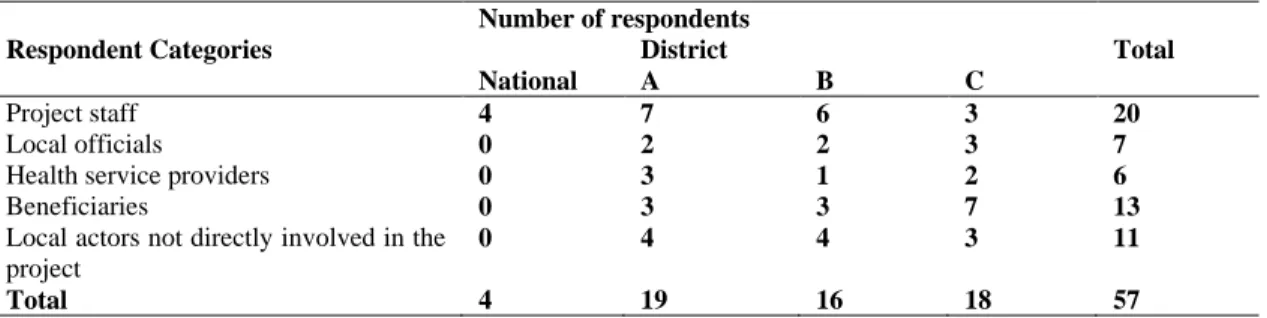
Table 2: In-depth Interviews, by Type of Respondent and District in Uganda
Respondent Categories
Number of respondents
Total National
District
A B C
Project staff 4 7 6 3 20
Local officials 0 2 2 3 7
Health service providers 0 3 1 2 6
Beneficiaries 0 3 3 7 13
Local actors not directly involved in the project
0 4 4 3 11
Total 4 19 16 18 57
implementation, and reported outcomes. District level service statistics and budget data were also collected to verify the reported project outcomes. In-depth interviews were conducted with 57 project stakeholders including project staff, local officials, health officials, beneficiaries, and local actors who were not directly involved in the project. The in-depth interviews aimed to understand participants‘ perspectives on the project implementation and outcomes. The respondents were selected through a combination of purposive and snowball sampling (see Table 2 for distribution of in-depth interviews).
Data analysis
The in-depth interviews were translated, transcribed, and coded using ATLAS.ti software. The responses were coded by question and by emerging themes. Following a thematic framework analysis approach, the thematic codes were organized by stakeholder group (see Table 3) and analyzed by and across district. The emerging themes were assessed against the findings of the Political Economy Analysis to identify any overarching political or social trends, and against project documents. The district level service statistics and budget data could not be used because they were incomplete.
Results
The Political Economy Analysis, the document review, and the in-depth interviews revealed differing accounts of what was planned and reported about the project, compared to what activities were reported by the people involved. There was also a difference in what changes were reported. What emerged from the analysis is a
range of pathways to accountability, each with its own features, and each situated in its local context.
Accounts
of
planned
versus
actual
implementation
The project‘s TOC suggests that building CSOs‘ advocacy and civic education capacity would strengthen local coalitions and lead to the CSOs mobilizing communities to actively engage decision-makers to positively influence policy, programming and resources. This translated into a set of planned activities such as mapping, training, civic education, community mobilization and community dialogues between community members and local duty-bearers.
Though the activities were seen in one of these two ways, the description of the implementation revealed that the civic education activities were implemented in conjunction with the health education. For example, sports events and music, dance, and drama were combined with civic and health education and service delivery. During the implementation, community members noted that the education activities were creating demand for FP, yet the services were not always available. On the community‘s request, the project quickly adapted and coordinated sensitization efforts and dialogues with outreach services, in the form of health care providers stationed at sports venues and entertainment events. This was not part of the original design.
Combining health education, outreach and civic education was seen as beneficial in addressing local gender dynamics that had not been fully anticipated in project design, which were seen by respondents to affect women and young peoples‘ ability to participate in community sensitization or outreach services. The combination of activities made it unclear why a person was participating and masked clandestine education and contraceptive use. This was particularly relevant in Districts A and B, where men were perceived as being opposed to or disinterested in contraception, while women were characterized as wanting to use contraception and often doing so without the knowledge or permission of their husband. The threat of violence from male partners because of contraceptive use was a repeated theme across the districts. As one respondent from District B who participated in the project reported:
“The husbands are complicated, they do not like family planning, for the women to take part most of the time the women have to get permission from their husbands…. but most women just use family planning without consent from their husbands because when he finds out the family feud will happen.” (B12)
The HAP project did not occur in a vacuum. Comparing the formal reports and the perceived implementation revealed the local political economy of development programs in which the
activities took place. There were a number of other projects underway, including both service delivery and advocacy activities, at the same time that HAP was being implemented. Incoming projects were seen to supplement and extend public sector health provision with funding, training, staff, etc. Local health officials reported intentionally ―integrating‖ the different activities with public programs— including health, FP/RH, immunization, bed nets, dentistry, and circumcision activities—to increase coverage and to use resources effectively. Community participants were often unable to distinguish which CSO or public sector agencies were doing what and when, and for what purpose. On the ground, programs blur and are not seen in singular way. Activities build on the successes and failures of other/earlier activities, which inevitably transforms how the planned package of activities are implemented and what changes are possible.
Perceived outcomes of implementation
The outcomes outlined in HAP reports included increased allocations from the district local government and the Buganda budget in support of FP/RH activities, and increased political support from religious and cultural leaders. Although project documents report these changes, these were not the changes remembered by the community participants.
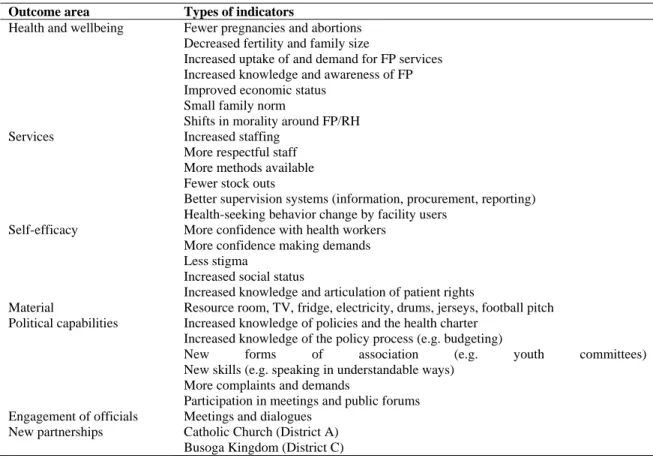
The outcomes recalled by community participants in the three districts, shown in Table 3, tended to focus on more personal changes, such as increased confidence when interacting with health care providers, in their health seeking behavior or in their ability to represent themselves. A community member from District A described their personal experience: ―At first I could not talk to anyone…. I am from nowhere. I am now a leader…not because I was meant to be, but because of the training I have been receiving from DSW.‖ (A02)
Table 3: Reported Outcomes of Healthy Action Project Activities, According to Study Participants
Outcome area Types of indicators
Health and wellbeing Fewer pregnancies and abortions Decreased fertility and family size
Increased uptake of and demand for FP services Increased knowledge and awareness of FP Improved economic status
Small family norm
Shifts in morality around FP/RH Services Increased staffing
More respectful staff More methods available Fewer stock outs
Better supervision systems (information, procurement, reporting) Health-seeking behavior change by facility users
Self-efficacy More confidence with health workers More confidence making demands Less stigma
Increased social status
Increased knowledge and articulation of patient rights
Material Resource room, TV, fridge, electricity, drums, jerseys, football pitch Political capabilities Increased knowledge of policies and the health charter
Increased knowledge of the policy process (e.g. budgeting)
New forms of association (e.g. youth committees) New skills (e.g. speaking in understandable ways)
More complaints and demands
Participation in meetings and public forums Engagement of officials Meetings and dialogues
New partnerships Catholic Church (District A) Busoga Kingdom (District C)
about how they connected and worked together in new ways, realized that they were facing similar problems and created solidarities to work together. One project participant from District A commented: ―you learn to speak to your age mates, youths and people who are beyond you in age. And the way to behave in our societies and how to handle a different person… I was shy previously to speak before about health issues and now I can speak freely.‖ (A09). A participant in District C noted that at the first dialogues no one would say anything, ―they would just look at you and nothing comes out, but when they left with the HAP, at least people are now opening up‖ (C05). Those who had been actively involved in the activities reported making more complaints and demands, and actively participating in community meetings.
Along with the more personal experiences of change, community participants and others recalled changes in the delivery of health services such as cleaner facilities, more respectful staff and
the removal of informal fees. Those outside the project also confirmed the changes in services and the relationship between community members and the local health facility staff:
“The young people can now pick condoms by themselves - from their corner. They never used to come, but now they do. The women at the facility are coming in big numbers to get the different family planning methods. They come on their own. The number has increased.” (C07)
address, such as the availability of supplies and equipment, as they required approval and budgetary changes from higher authorities.
The health care providers who were engaged commented on the increased mutual understanding between the community and health care providers. A health care provider from District A explained:
“The community dialogues came in because it looked as if they were not understanding us and we were not understanding them. For us, we know what we are supposed to do for them and to what extent because many people were demanding for what we are not supposed to offer them, which is supposed to be offered at a higher level. But so, through community dialogues they understand and that is why you see at times they tend to be calm. Because if they don‟t understand us and we don‟t understand them that is where community problems come in.” (A01)
Another health care provider from District C recalled learning more about the community‘s needs and how it helped them advocate for additional resources:
“There may be gaps [in services], if there is support to accelerate demand, access, and proper use, it is very critical because it informs management for planning, lobbying such that you can secure more logistics in the area of family planning. It also helps the community to be informed and demand for these services, because if you lack information you cannot demand for the services.” (C10)
The improved confidence in health services and improved relationships between the service providers and the community were captured in the project‘s impact evaluation.
Pathways of accountability
Recounting the implementation of the activities with those that were involved revealed a range of
accountability relationships at play. These ranged from formal opportunities for civil society participation in institutional processes, to the direct relationship between the client and the provider and the less direct relationship between the community and local officials. The outlined TOC tracked a single accountability relationship between the community and decision-makers; however, there were several pathways of change described.
The project staff in all districts gave accounts of the formal and official accountability relationships; they stated that the project must work through officials because people want to hear from, and are led by, their local leaders. The project staff, who were the most articulate on the project‘s stated TOC, focused on working with local officials to ensure buy-in and invoke formal accountability. They were less aware about the other accountability relationships that were seen as significant by other respondents and that may have influenced the outcomes.
In Districts B and C, the community members noted a change in how they related with the health care workers – they felt more assertive and used phrases such as ―I make decisions,‖ ―we learn to speak and behave,‖ and [we are] ―open,‖ ―confident,‖ and ―bold,‖ both personally and as a collective. Health care providers said the dialogues were important for gaining the community‘s empathy, increasing awareness of health workers‘ constraints, and getting community inputs into planning processes. The groups created by the project were seen to make engagement easier because they assembled people together to share information and complaints. Comments from health officials from this district reflected the improved confidence of clients with service providers. A District B health officer stated:
“We had key tangible things we wanted, we had meetings, we had dialogues, there was increase in FP commodities, sub counties were planning for FP, there was a budget line created, communities had started demanding for services from leaders and accountability.” (B03)
in all the districts mistrusted and questioned the motivations behind local officials‘ interest and speculated that they wanted to get more votes or other recognition. Local officials were thought only to materialize for big events, sweeping in to claim credit. Community groups described how they only engaged officials through letter writing and there were few occasions to directly air grievances. Community members were reluctant to engage directly with local leaders instead worked through VHTs.
Local officials described themselves as ―gatekeepers‖ of the community and as critical to the success of a project. The local officials‘ interaction with the community was also meditated through the mobilization and outreach programs of the VHTs and local CSOs. District A, where the project was implemented through the Buganda structures, was the exception, and the community related directly with the Buganda officials.
In all three districts, VHTs acted as a link between the stakeholders: They educated the community about their health and their rights on behalf of the CSOs, health workers and local officials, and they facilitated the interactions between them. They also brought the demands of the community to the attention of local decision-makers. A district health officer in District C noted improvements in planning and quality of care following the project, emphasizing the unique role of VHTs:
“In planning we used the health management information systems and then two, we were using what the VHTs were telling us. So, planning and budgeting have improved. The other thing that has improved are the resources. That is, human resources for health and capital as well as the commodities… so…the quality of care has improved now because people know what they are supposed to get from me and I know what I am supposed to give them. If I don‟t give them they always complain, and they always find ways of addressing those issues.” (C05).
Discussion
HAP focused on social accountability, that is ―efforts of citizens and civil society to scrutinize and hold duty bearers (politicians, government
officials and service providers) to account for providing promised services, actions that most often take place at the sub-national or community level‖11
. The experience of HAP helps to better understand how social accountability activities catalyze changes that improve service users‘ engagement with and experience of services, and contribute to increasing their satisfaction and confidence in FP services.
A notable feature in the accounts of the implementation was the combination of FP outreach activities with civic and rights education. All the community participants recalled learning about their entitlements and what standards to expect for FP services. George reminds us ―Not only is access to information essential for improving health awareness and access, it is impossible to mobilize for change without it. People cannot demand services and accountability if they do not know what they need and what they are entitled to.‖ 5
Combining rights and health education with CSO outreach services appear to have extended the reach and credibility among community members.
Working within the socially accepted methodologies of using football matches or drama shows for health education may help to balance the personal nature of FP and the public nature of many social accountability interventions10.Most examples of successful social accountability interventions tend to come from areas that enjoy widespread community support, such as childhood immunization and education. Given the personal and sensitive nature of FP, it may not have the same level of community support. For example, male partners‘ opposition to using FP may compromise women‘s participation in community dialogues about FP services. In the HAP project, incorporating the rights and entitlement awareness into health education and outreach appears to have created an opportunity for engagement. This suggests that civic and rights education could be embedded into social behavior change communication (SBCC) initiatives.
In all three districts the activities were seen to ―close the gap‖ by creating opportunities for community members and health care providers to interact, creating ―expanded spaces for dialogue and negotiation‖17
interaction were important as the more institutionalized, state-sponsored arenas, such as the Barazas (citizen action forums) and the health unit management committees (HUMCs), were considered to be weak. With the HAP approach, health care providers and community members jointly agreed what issues to address and developed collaborative solutions.
Community participants reported their interactions with local officials differed from those with health care providers. Officials tended to work indirectly through mediators (VHTs and CSOs), whereas health workers were physically part of the outreach and dialogues, had direct interaction with the communities and often lived and worked in the community as well. The VHT members (community health workers) played a critical role liaising and facilitating communication between communities and the health system because of their dual role as community member and as health service actor. They are answerable to both the community and to the health sector.
Providers reported being increasingly open and responsive to community inputs and getting more accurate information for their planning and logistics. The dialogues also supported and legitimized their own requests for change. Community members reported that they learnt about the constraints faced by health care workers, and adjusted their expectations. The activities appear to have built a sense of collaboration and trust and created a sense of joint responsibility17. Evaluations of social accountability initiatives in six countries similarly indicated a stronger relationship between community members and service providers, changing how both parties see themselves and each other, and how they collaborate6-8.
Focusing on the perceptions of implementation reveals a wider range of activities and outcomes compared to the original TOC. Most change happened between the community participants and health care providers, in the direct interactions between them in clinical consultation and in public forums. Community members that used contraceptive services reported changes in their experience with service providers and the facility. These changes mostly related to the
client-provider interaction and quality of care, such as more respectful care or more acceptable operating hours of the services. These were changes that were under the control of the provider and facility manager13. As the providers‘ attitudes and behaviors changed, so did those of the community participants. Community participants expressed more confidence in expressing their needs and wants with the health care providers. They noted that they felt more confident participating in group conversations, then later in more public forums with service providers and even with officials. The activities supported under HAP may not have instantly created demand-side accountability, but rather incrementally increased the individual political capabilities of both the service users and providers. It could be useful to see it as part of a longer process of empowering and engagement, and slowly changing hierarchies, patterns of representation and pathways of accountability14.
Ethical Considerations
The study was approved by three institutional review boards (ethics committees) and adhered to the respective codes of ethics adopted by the Population Council (691), Makerere School of Public Health (310), and the Uganda National Council of Science and Technology (SS3822). The three boards require informed consent before data are collected, confidentiality and anonymity for respondents, and the right to withdraw.
Limitations
verify if the recorded and reported changes were attributable to these or to other activities.
Conclusions
The HAP TOC broadly applies in local accounts of implementation and change, but there are other dimensions of change and axes of accountability that emerged in the accounts. Local perceptions of implementation provided more insight into the range of changes that happened and how. The activities supported appear to have changed both community members‘ and healthcare providers‘ behavior and suggest a slow-burning process of engagement. Given that some of these outcomes are incremental and cover a longer time span, it is critical to have realistic expectations of the outcomes social accountability interventions can achieve within set project timeframes. For example, shorter timeframes can show changes in service uptake, performance of providers, and measures such as political participation and decision-makers‘ responsiveness. Longer timeframes are required to assess changes in broader health and governance outcomes. Programs, and their evaluation strategies, must account for these realities at the design phase, to ensure that expected outcomes are appropriate and measurable within the project timeframe.
Acknowledgements
The authors thank the Deutsche Stiftung Weltbevoelkerung and Reproductive Health Uganda for sharing their experiences and their generous collaboration. The manuscript benefitted from feedback at the Population Association of America meeting in Washington, DC, May 2016, where it was presented. The Evidence Project is made possible by the generous support of the American people through the United States Agency for International Development (USAID) under the terms of cooperative agreement no. AID-OAA-A-13-00087. The contents of this manuscript are the sole responsibility of the Evidence Project and Population Council and do not necessarily reflect the views of USAID or the United States Government.
References
1. Sedgh G, Ashford L and Hussain R. Unmet need for contraception in developing countries: examining women‘s reasons for not using a method. New York: Guttmacher Institute, 2016.
2. FP2020. Momentum at the Midpoint 2015–2016. Annual Report. Washington DC: FP2020, 2016.
3. Castle S and Askew I. Contraceptive discontinuation: reasons, challenges and solutions. Washington DC: FP2020 report, 2015.
4. Brinkerhoff D. Accountability and health systems: toward conceptual clarity and policy relevance. Health Policy and Planning 2004; 19(6): 371-379. 5. George A. Using Accountability to Improve
Reproductive Healthcare. Reproductive Health Matters 2003. 11(21):161–170.
6. Hilber A, Martin H, Blake H, Bohle L,Bandali S and Hulton L. Strengthening accountability for improved maternal and newborn health: A mapping of studies in Sub-Saharan Africa. International Journal of Gynecology and Obstetrics 2016; 135: 345-357.
7. Gullo S, Galavotti C and Altman L. A review of CARE‘s Community Score Card experience and evidence. Health Policy and Planning 2016: 31:1467–1478. 8. Blake C, Annorbah-Sarpei N A, Bailey C, Ismaila Y,
Deganus S, Bosomprah S, Galli F andClark S. Scorecards and social accountability for improved maternal and newborn health services: A pilot in the Ashanti and Volta regions of Ghana. International Journal of Gynecology& Obstetrics 2016: 135(3):372-379.
9. Schedler A. Conceptualizing accountability. In: Schedler A (ed) The Self-Restraining State: Power and Accountability in New Democracies. London: Lynne Reinner, 1999.
10. Ringold D, Holla A andKoziol M. Citizens and Service Delivery: Assessing the Use of Social Accountability Approaches in Human Development. Washington, DC: World Bank, 2012. 11. Boydell V, Keesbury J and Wright K. Strengthening the Evidence Base on Social Accountability for Improving Family Planning and Reproductive Health Programs. Meeting Report. Washington, DC: Population Council, 2014.
12. Björkman M andSvensson J. Power to the People: Evidence from a Randomized Field Experiment on Community-Based Monitoring in Uganda. The Quarterly Journal of Economics, 2009:124(2):735-769.
13. McGee R andGaventa J. Synthesis report: Review of Impact and Effectiveness of Transparency and Accountability Initiatives. London: Open Society Foundation, 2010.
Literature. Washington, DC: Population Council, 2014.
15. King, S. Increasing the Power of the Poor? NGO-led Social Accountability Initiatives and Political Capabilities in Rural Uganda. European Journal of Development Research, 2015: 1-16.
16. Apunyo A, Healthy Action End of Project Evaluation
Report. Berlin: DSW, 2016.