VIEWPOINTSPAPERS
health
global
Kavita Singh
1,2, Shane M Khan
3,
Liliana Carvajal–Aguirre
3,
Paul Brodish
1, Agbessi
Amouzou
4, Allisyn Moran
51 MEASURE Evaluation/Carolina Population Center, University of North Carolina at Chapel Hill, Chapel Hill, North Carolina, USA
2 Department of Maternal and Child Health, Gillings School of Global Public Health, University of North Carolina at Chapel Hill, Chapel Hill, North Carolina, USA
3 Data and Analytics, Division of Data, Research and Policy, UNICEF, New York, New York, USA
4 Department of International Health, Johns Hopkins Bloomberg School of Public Health, Baltimore, Maryland, USA 5 Global Health Fellows Program II,
United States Agency for International Development (USAID), Washington, D.C., USA
Correspondence to:
Kavita SinghCB#7445 UNC–Chapel Hill
Chapel Hill, NC 27516, USA [email protected]
The importance of skin–to–skin contact for
early initiation of breastfeeding in Nigeria and
Bangladesh
Background Skin–to–skin contact (SSC) between mother and new-born offers numerous protective effects, however it is an intervention that has been under–utilized. Our objectives are to understand which newborns in Bangladesh and Nigeria receive SSC and whether SSC is associated with the early initiation of breastfeeding.
Methods Demographic and Health Survey (DHS) data were used to study the characteristics of newborns receiving SSC for non–facility births in Nigeria (DHS 2013) and for both facility and non–facility births in Bangladesh (DHS 2014). Multivariable logistic regression was used to study the association between SSC and early initiation of breast-feeding after controlling for key socio–demographic, maternal and newborn–related factors.
Results Only 10% of newborns in Nigeria and 26% of newborns in
Bangladesh received SSC. In the regression models, SSC was signifi -cantly associated with the early initiation of breastfeeding in both coun-tries (OR = 1.42, 95% CI 1.15–1.76 for Nigeria; OR = 1.27, 95% CI 1.04–1.55, for Bangladesh). Findings from the regression analysis for Bangladesh revealed that newborns born by Cesarean section had a 67% lower odds of early initiation of breastfeeding than those born by normal delivery (OR = 0.33, 95% CI 0.26–0.43). Also in Bangladesh newborns born in a health facility had a 30% lower odds of early ini-tiation of breastfeeding than those born in non–facility environments (OR = 0.70, 95% CI 0.53–0.92). Early initiation of breastfeeding was
significantly associated with parity, urban residence and wealth in Ni
-geria. Geographic area was significant in the regression analyses for
both Bangladesh and Nigeria.
Conclusions Coverage of SSC is very low in the two countries, despite
its benefits for newborns without complications. SSC has the potential
to save newborn lives. There is a need to prioritize training of health providers on the implementation of essential newborn care including SSC. Community engagement is also needed to ensure that all women and their families regardless of residence, socio–economic status, place
or type of delivery, understand the benefits of SSC and early initiation
of breastfeeding.
Globally there were an estimated 5.9 million deaths to children under–five
in the year 2015, and 45% of these deaths occurred during the neonatal
period, the first month of life [1]. While there have been substantial
VIEWPOINTS PAPERS
compared to 42% for neonatal mortality [1]. The main causes of under–five mortality are now prematu
-rity, pneumonia; and intrapartum–related conditions including birth asphyxia [2]. Notably two of the top three main causes of death occur either exclusively in the neonatal period (birth asphyxia) or mostly in the neonatal period (prematurity), while pneumonia is a cause of death for both neonates and children
1–59 months. The global health community has provided specific recommendations on essential new
-born care (ENC), which refers to care provided to the new-born within the first moments to days of life [3]. Components of ENC include thermal care, early and exclusive breastfeeding, appropriate cord care and monitoring/early treatment for low birth weight or sick newborns. ENC is intended to enable coun-tries to protect newborns through the implementation of simple, yet, life–saving interventions.
The ENC interventions focused on thermal care are intended to ensure that newborns do not develop hypothermia (state of being too cold) or hyperthermia (state of being too hot). Newborns regulate
tem-perature less effectively and lose heat more easily compared to adults. These issues are intensified for low birth weight and premature newborns [4]. Interventions for thermal care include immediate drying, de-layed bathing, head covering and skin–to–skin contact (SSC), which is the placement of a naked newborn
baby prone on the mother’s bare chest soon after birth [5]. The mother and baby may be covered loosely
with a blanket or cloth, preferable pre–warmed [6]. The newborn baby should remain in that position
until the end of the first successful breastfeeding [5,7]. In addition to providing warmth, SSC also has
numerous other benefits including improved attachment between mother and newborn [8–10] and the
reduction of infant stress [5,11,12]. A Cochrane Review of randomized trials including mother–baby dy-ads, found that SSC at birth was associated with breastfeeding at one to four months post–birth with a risk ratio of 1.25. A total of 13 trials, composing of 702 mother–baby dyads, were included in the review
for the breastfeeding outcomes [5]. Despite the benefits and the simplicity of SSC as a natural interven -tion, over time it became common practice to separate newborns from their mothers after delivery often
due to routine procedures [5,13–5]. In 2012, the American Academy of Pediatrics stated that many ma-ternal and newborn assessments can be done during SSC or can be delayed until after the critical SSC
period, so long as the mother and newborn do not have any complications [16].
There is an increased focus on newborn health interventions among the global health community and recently some large–scale household surveys have included measures of such interventions. The use of population–based data are important, as it can provide some indication of how well a country is imple-menting SSC in real–life settings. Data on SSC are only currently available from a few household surveys,
most recently the Nigeria Demographic and Health Survey (DHS) 2013 [17] and the Bangladesh DHS
2014 [18]. These two countries together accounted for 12% of the world’s neonatal deaths [1].
The first objective of this analysis is to assess the level of practice of SSC in Nigeria and Bangladesh and
to examine the characteristics of newborns who are receiving SSC. Understanding SSC by key factors is essential in efforts to improve coverage of this intervention. The second objective is to determine
wheth-er SSC is associated with the early initiation of breastfeeding, defined as breastfeeding within the first hour
of life. Early initiation of breastfeeding is an important outcome to study for several reasons. First milk or colostrum is rich in protective factors including antibodies and vitamin A, and early breastfeeding is a
pivotal step towards longer–term and exclusive breastfeeding [19]. Trials in Nepal and Ghana have found
that early initiation of breastfeeding could prevent 19% and 22%, respectively, of neonatal deaths [20,21].
METHODS
Data sources
We used data from the 2013 Nigeria DHS and the 2014 Bangladesh DHS. The DHS are a source of na-tionally representative data for monitoring socio–economic and health indicators at the population level. In sampled households women age 15–49 are eligible to participate, but in some countries, such as
Ban-gladesh, only ever–married women 15–49 are eligible to participate. The sample is based on a stratified two–stage cluster design. The first stage is the sample enumeration area (SEA), and the second stage is a
list of households from each SEA. The samples are representative at the national, urban/rural residence and regional levels. For both Nigeria and Bangladesh we restricted our sample to women with a live birth.
For Nigeria the question on SSC was asked of the most recent birth in the past five years for non–facility
births only. For Bangladesh the question on SSC was asked of the most recent birth in the past three years
VIEWPOINTSPAPERS
independent variable.) The sample sizes were 11 966 mother–newborn pairs in Nigeria and 4444 moth-er–newborn pairs in Bangladesh.
Outcome variable
The dependent variable was early initiation of breastfeeding, defined as breastfeeding within one hour of
birth. The question was worded the same in both Bangladesh and Nigeria: How long after birth did you first put (NAME) to the breast?
The variable was coded as “0” if more than 1 hour and “1” if one hour or less.
Key independent variable
The key independent variable was a dichotomous indicator of SSC for the most recent birth in the past
three (Bangladesh) or five (Nigeria) years. The questions were slightly different between the two surveys
as shown below.
Nigeria (non–facility births only): Was (Name) placed on your belly/breast before delivery of the placenta?
Bangladesh (facility and non–facility births): After the birth was (Name) put directly on the bare skin of your chest?
Another difference is that in Bangladesh the interviewers were trained to show the respondent a picture of the SSC position.
Control variables
Several maternal health variables were studied including mother’s age in years by the following age groups: 15–19, 20–24, 25–34, 35+; education (none, primary, secondary or higher); current marital status (mar-ried, not married) and parity (1, 2–3, 4+). The analysis included two socio–economic variables – urban residence and wealth quintile and a demographic variable–subnational region of residence (which were zones for Nigeria and divisions for Bangladesh). Several delivery–rated factors were studied including Cesarean delivery (yes/no: Bangladesh only); facility delivery (yes/no Bangladesh only; facility vs
non–fa-cility) and type of delivery attendant [skilled birth attendant (SBA) vs unskilled birth attendant]. SBA was defined as a doctor, nurse or midwife in accordance with the global definition. We included mother’s per -ceptions of her baby’s birthweight (small, average, large, large) to understand any differentials in SSC by perceived size of the baby.
Analysis
The analysis was carried out separately for each country. Bivariate analyses (using Pearson χ2 test) com-pared several control variables for mothers reporting SSC immediately after birth to those who did not. In multivariate logistic regressions, early breastfeeding was regressed on SSC, controlling for all of the maternal and infant–related variables mentioned in the section above.
RESULTS
Table 1 shows column percentages of SSC by key characteristics of the mother and newborn in Nigeria.
Only about 10% of mothers (1217/12 265) reported SSC, and there was little difference between moth-ers whose newborns received SSC and mothmoth-ers whose newborns did not receive SSC. However, there
was one significant difference. Newborns who were perceived to be large were significantly more likely
to experience SSC than smaller newborns. About 55% of the newborns who received SSC were perceived to be large, compared to 29% and 16% for those perceived to be average and small, respectively.
Table 2 shows column percentages of SSC by key characteristics for the Bangladesh sample. Overall,
about 26% of mothers (1210/4586) reported SSC with their newborn, and once again there was little
dif-ference between mothers whose newborns received SSC vs those that did not. The only significant find
-ing was that newborns of parity 2–3 were significantly more likely to have experienced SSC with their
mothers compared to newborns of parity one and higher parity. Of the newborns receiving SSC 50% were of parity 2–3 compared to 39% for newborns of parity one and 11% for newborns of parity 4 and
VIEWPOINTS PAPERS
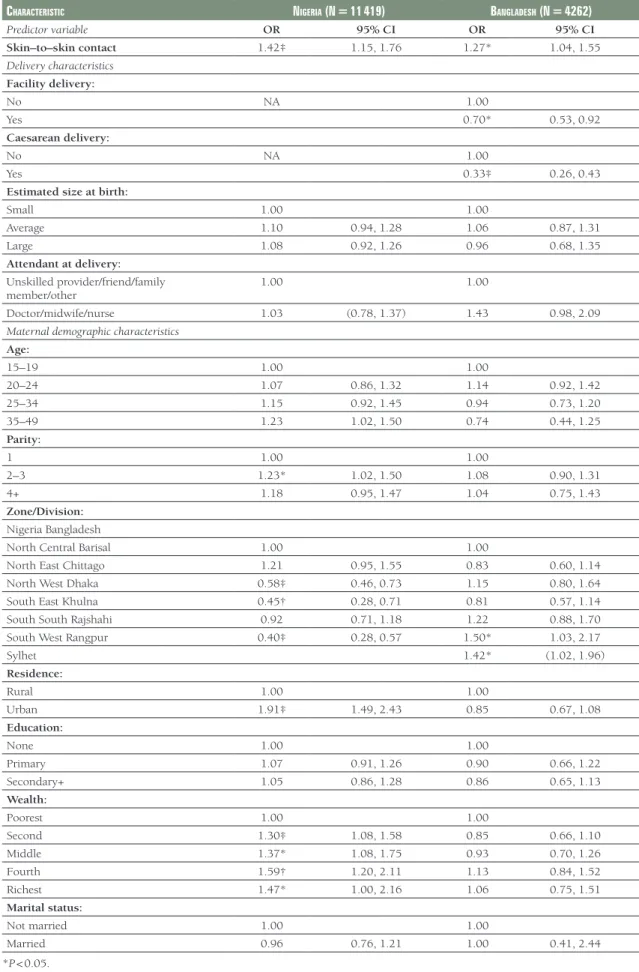
Table 3 shows results from regression analyses of early breastfeeding on SSC, controlling for key
charac-teristics of mothers and newborns. In both Nigeria and Bangladesh, SSC was associated with significant -ly increased odds of ear-ly breastfeeding, controlling for all other variables in the models. The odds of early breastfeeding was 42% for newborns receiving SSC in Nigeria and 27% for newborns receiving SSC
in Bangladesh (odds ratio (OR) = 1.42, 95% confidence interval (CI) 1.15–1.76; OR = 1.27, 95% CI 1.04–
1.55, respectively). Also, in Nigeria several maternal demographic variables were associated with increased odds of early breastfeeding. Newborns of parity 2 or 3 had a 23% increased odds of SSC than newborns of parity 1 (OR = 1.23, 95% CI 1.02–1.50). Compared to North Central, the referent region, the odds of
early breastfeeding were significantly lower for newborns in North West, South East and Southwest. New
-borns from wealthier households were significantly more likely to experience early breastfeeding than
newborns from the very poorest households. The odds ranged from 30% to 59% depending on the
spe-cific wealth quintile.
The results for Bangladesh indicated that Cesarean delivery was associated with a 67% lower odds of ear-ly breastfeeding (OR = 0.33, 95% CI 0.26–0.43), and facility delivery was associated with a 30% lower
Table 1. Skin-to-skin contact by key characteristics in Nigeria: Last non–facility birth in past five years (survey–weighted column percentages and counts)
Skin–to–Skin contact
Yes No Total P
10% (n = 1217) 90% (n = 11 048) 100.0% (N = 12 265)
Mother’s age: % n % n % n
15–19 7.9 96 7.7 850 7.7 946
20–24 20.3 248 20.9 2305 20.8 2551
25–34 45.2 551 44.9 4964 45.0 5515
35–49 26.6 323 26.5 2929 26.5 3249
Parity:
1 13.8 168 14.6 1616 14.6 1784
2–3 26.4 321 29.2 3223 28.9 3545
4+ 59.8 728 56.2 6204 56.5 6932
Mother’s education:
None 70.3 856 68.2 7538 68.5 8394
Primary 17.8 217 17.0 1877 17.1 2093
Secondary+ 11.8 144 14.8 1633 14.5 1774
Zone:
North Central 16.3 198 11.1 1227 11.6 1425
North East 33.8 412 20.4 2253 21.7 2665
North West 42.9 523 52.6 5809 51.6 6332
South East 1.2 14 2.7 297 2.5 312
South South 4.1 50 7.3 806 7.0 856
South West 1.7 21 5.9 651 5.5 672
Residence:
Urban 18.7 228 20.4 2263 20.3 2486
Rural 81.3 990 79.6 8785 79.7 9775
Wealth:
Poorest 38.6 470 34.8 3843 35.2 4313
Second 27.2 331 29.8 3294 29.6 3624
Middle 18.2 221 18.6 2057 18.6 2279
Fourth 11.5 140 11.8 1300 11.7 1438
Richest 4.6 56 5.0 553 4.9 606
Estimated size at birth:
Small 16.0 193 18.0 1973 17.8 2167
Average 29.4 355 42.2 4630 40.9 4985
Large 54.7 662 39.9 4378 41.3 5040 < 0.001
Attendant at delivery:
Doctor/midwife/Nurse 5.5 67 3.8 417 4.0 484
Unskilled provider/friend/
VIEWPOINTSPAPERS
odds of early breastfeeding (OR = 0.70, 95% CI 0.53–0.92). There were also two significant effects for di -vision. Compared to the referent division, Barisal, residence in Rangpur was associated with a 50% high-er odds of early breastfeeding (OR = 1.50, 95% CI 1.03–2.17) and in Sylhet with a 42% highhigh-er odds of early breastfeeding (OR = 1.42, 95% CI 1.02–1.96).
Table 2. Skin–to–skin contact by key characteristics in Bangladesh: last birth in past three years (survey–weighted column percentages and counts)
Skin–to–Skincontact
Yes No Total P
26% (n = 1210) 84% (n = 3376) 100.0% (N = 4586)
Mother’s age: % n % n % n
15–19 19.7 238 21.3 718 20.9 957
20–24 33.2 401 33.7 1138 33.6 1540
25–34 41.9 506 38.7 1305 39.5 1812
35–49 5.2 63 6.3 214 6.0 277
Parity:
1 38.5 465 40.1 1352 39.6 1818
2–3 50.3 609 45.1 1524 46.5 2132
4+ 11.2 136 14.8 500 13.9 636 < 0.1
Mother’s education:
None 11.8 143 15.1 508 14.2 651
Primary 28.6 346 27.7 936 28.0 1283
Secondary+ 59.6 721 57.2 1931 57.8 2652
Division:
Barisal 6.1 74 5.7 192 5.8 267
Chittagong 17.5 212 23.4 791 21.9 1003
Dhaka 40.2 486 33.6 1135 35.4 1621
Khulna 8.6 104 7.7 259 7.9 363
Rajshahi 9.0 109 10.5 353 10.1 462
Rangpur 9.5 114 9.8 332 9.7 446
Sylhet 9.1 110 9.3 314 9.2 424
Residence:
Urban 26.2 317 26.1 881 26.1 1198
Rural 73.8 893 73.9 2495 73.9 3388
Wealth:
Poorest 22.1 268 21.6 730 21.8 997
Second 17.6 213 19.5 659 19.0 872
Middle 19.7 238 18.7 632 19.0 870
Fourth 22.0 266 20.0 675 20.5 942
Richest 18.6 225 20.2 680 19.7 905
Estimated size at birth:
Small 22.7 275 18.9 637 19.9 912
Average 65.5 793 67.9 2291 67.3 3084
Large 11.7 142 13.2 447 12.8 589
Delivery location:
Home 58.0 701 62.8 2121 61.6 2822
Health facility 38.6 466 34.8 1175 35.8 1641
Public 15.5* 187 12.1 409 13.0 596
Private 23.1* 279 22.7 767 22.8 1046
Other 3.4 41 2.4 80 2.6 121
Attendant at delivery:
Doctor/midwife/nurse 33.3 402 31.7 1064 32.1 1465
Unskilled provider/friend/
family member/other 66.7 803 68.3 2293 67.9 3096
Caesarean delivery:
Yes 23.3 281 24.2 817 24.0 1099
No 76.7 928 75.8 2558 76.0 3486
VIEWPOINTS PAPERS
Table 3. Survey–weighted logistic regression analysis of early breastfeeding on skin–to–skin contact for the most recent birth, controlling for maternal and infant characteristics
characteriStic nigeria (n = 11 419) BangladeSh (n = 4262)
Predictor variable OR 95% CI OR 95% CI
Skin–to–skin contact 1.42‡ 1.15, 1.76 1.27* 1.04, 1.55
Delivery characteristics Facility delivery:
No NA 1.00
Yes 0.70* 0.53, 0.92
Caesarean delivery:
No NA 1.00
Yes 0.33‡ 0.26, 0.43
Estimated size at birth:
Small 1.00 1.00
Average 1.10 0.94, 1.28 1.06 0.87, 1.31
Large 1.08 0.92, 1.26 0.96 0.68, 1.35
Attendant at delivery:
Unskilled provider/friend/family
member/other 1.00 1.00
Doctor/midwife/nurse 1.03 (0.78, 1.37) 1.43 0.98, 2.09
Maternal demographic characteristics Age:
15–19 1.00 1.00
20–24 1.07 0.86, 1.32 1.14 0.92, 1.42
25–34 1.15 0.92, 1.45 0.94 0.73, 1.20
35–49 1.23 1.02, 1.50 0.74 0.44, 1.25
Parity:
1 1.00 1.00
2–3 1.23* 1.02, 1.50 1.08 0.90, 1.31
4+ 1.18 0.95, 1.47 1.04 0.75, 1.43
Zone/Division:
Nigeria Bangladesh
North Central Barisal 1.00 1.00
North East Chittago 1.21 0.95, 1.55 0.83 0.60, 1.14
North West Dhaka 0.58‡ 0.46, 0.73 1.15 0.80, 1.64
South East Khulna 0.45† 0.28, 0.71 0.81 0.57, 1.14
South South Rajshahi 0.92 0.71, 1.18 1.22 0.88, 1.70
South West Rangpur 0.40‡ 0.28, 0.57 1.50* 1.03, 2.17
Sylhet 1.42* (1.02, 1.96)
Residence:
Rural 1.00 1.00
Urban 1.91‡ 1.49, 2.43 0.85 0.67, 1.08
Education:
None 1.00 1.00
Primary 1.07 0.91, 1.26 0.90 0.66, 1.22
Secondary+ 1.05 0.86, 1.28 0.86 0.65, 1.13
Wealth:
Poorest 1.00 1.00
Second 1.30‡ 1.08, 1.58 0.85 0.66, 1.10
Middle 1.37* 1.08, 1.75 0.93 0.70, 1.26
Fourth 1.59† 1.20, 2.11 1.13 0.84, 1.52
Richest 1.47* 1.00, 2.16 1.06 0.75, 1.51
Marital status:
Not married 1.00 1.00
Married 0.96 0.76, 1.21 1.00 0.41, 2.44
VIEWPOINTSPAPERS
DISCUSSION
SSC is a natural intervention with numerous benefits, yet it is under–practiced as many mothers and new
-borns are separated after birth often due to routine procedures [5,13–15]. SSC has been studied as part
of trials, but this is the first analysis to use population–level data to look at coverage and factors related
to coverage. Associations between SSC with the early initiation of breastfeeding were also studied given
the numerous benefits of early breastfeeding, including reduced infant mortality [20,21]. SSC is also con-sidered step 4 of 10 Steps to Successfully Breastfeeding promoted by the Baby Friendly Hospital Initiative
[22].
In our study, we found low coverage of SSC in both Nigeria (10%) and Bangladesh (26%) and few differ-ences between newborns receiving SSC and those not receiving SSC. Though an uncommon
interven-tion, in the regression models SSC was significantly associated with early initiation of breastfeeding in both Nigeria and Bangladesh. Thus, our results support findings from trials indicating that SSC is associ
-ated with improved breastfeeding outcomes [5] and specifically with early breastfeeding.
Another key finding from the first regression models was that in Bangladesh newborns born in a health
facility were less likely to experience early breastfeeding than those born in non–facility environments.
There are several plausible explanations for this finding. Some of the mothers and babies may have gone
to the facility because of a complication, and this complication may have required separation beyond one hour. A second possible explanation involves health facility procedures, which often require the immedi-ate separation of mother and newborns, which in turn prevents both SSC and early breastfeeding. Many maternal and newborn assessments can actually be done during SSC or can be delayed until after the
critical SSC period, so long as the mother and newborn do not have any complications [16,23–25].
Find-ings from Bangladesh revealed that newborns of mothers who had a Cesarean section were significantly less likely to be breastfed early. Other studies have found the same results [26,27], but there is an increas-ing recognition that health facilities must implement protocols that allow mothers who have a Cesarean section to breastfeed early. The Baby Friendly Hospital Initiative recommends that SSC can actually begin
in the operating theater (after a Cesarean section) when the mother is alert [22,25].
Skilled delivery in a health facility is promoted as an essential strategy to improve both maternal and
new-born health [28,29]. The ideal situation would be for women to deliver in a health facility with a SBA who can oversee SSC, as mother and baby should be monitored in case any complication or safety
con-cerns should arise [30].
Other significant findings from the regression analyses are also worthy to note. In both countries there
were some differences by zone or division. In Nigeria the northern zones are generally poorer than the southern zones. However early breastfeeding was less common in the southern zones than in the North Central zone. A study by Berde and Yalcin also found variation in the early initiation of breastfeeding by
zone [31]. Our results from Bangladesh indicated that early breastfeeding was more common in Rangpur and Sylhet, the poorest divisions, compared to Barisal. A systematic review of early breastfeeding in South Asia also found geographic differences in the early initiation of breastfeeding within countries and also
highlighted the influence of traditional practices, which may vary within countries [32]. Another system-atic review highlighted the importance of the knowledge and beliefs of family members, particularly for
women who deliver at home [33]. A study from Nepal attributed variations in early breastfeeding to many
factors including socioeconomic factors, geographic terrain and the availability of formula [34]. Our find -ings from Nigeria suggested that wealthier and urban women as well as those of parity 2 or 3, had in-creased odds of having their newborns initiate breastfeeding early. These women may have greater knowl-edge than their counterparts and some previous experience with breastfeeding. Perceived size at birth was
not significant in our regression analyses, but other studies have found that low birthweight and prema
-ture newborns are less likely to be breastfed early than normal weight and term newborns [32,33]. Taken
together, these comprehensive findings suggest that there is a need to ensure equitable diffusion of knowl -edge on the importance of early breastfeeding and SSC to all delivery attendants and to all women and families regardless of wealth, parity or geographic residence.
There are several limitations to this analysis. The questions on SSC were not the same for the two coun-tries, and SSC was only asked to women who had a non–facility delivery in Nigeria. More broadly
VIEWPOINTS PAPERS
Acknowledgements: We are grateful to the Carolina Population Center and its NIH Center grant (P2C HD050924) for general support.
Disclaimers: The views expressed are those of the authors and do not necessarily reflect the views of the Unit -ed States Agency for International Development (USAID), the Unit-ed States Government or those of UNICEF.
Funding: This study was carried out with support provided by the United States Agency for International De-velopment (USAID) through MEASURE Evaluation (cooperative agreement AID–OAA–L–14–00004). The views expressed are not necessarily those of USAID or the United States government.
Authorship declaration: KS, SK, LCV and AA led the development of ideas for the paper. KS led the writing and analysis plan, and PB led the data management. SK, LCV, AA and AM provided substantial inputs and ideas into all drafts of the paper.
Competing interests: The authors have completed the Unified Competing Interest form at www.icmje.org/ coi_disclosure.pdf (available on request from the corresponding author) and declare no competing interests.
1 UNICEF. Levels and trends in under-five mortality. Estimates developed by the UN Interagency Group for Child Mortal -ity Estimation. New York: UNICEF; 2015.
2 WHO. MCEE-WHO methods and data sources for child causes of death 2000-2015. Global Health Estimates Technical Paper WHO/HIS/IER/GHE/2016.1 Geneva: WHO; 2016.
3 WHO. Every newborn: An action plan to end preventable deaths. Geneva:WHO; 2014.
4 WHO. Thermal Protection of the Newborn: A practical guide. The Safe Motherhood Initiative. Geneva: WHO; 1997.
5 Moore ER, Anderson G, Bergman N, Doswell T. Early skin-to-skin contact for mothers and their healthy infants. Co-chrane Database Syst Rev. 2012;5:CD003519. Medline:22592691
6 WHO. Essential newborn care training module. 2010. Available: http://www.who.int/maternal_child_adolescent/docu-ments/newborncare_course/en/. Accessed: 6 February 2017.
7 Widström AM, Lilja G, Aaltomaa-Michalias P, Dahllöf A, Lintula M, Nissen E. Newborn behaviour to locate the breast when skin-to-skin: a possible method for enabling early self-regulation. Acta Paediatr. 2011;100:79-85. Medline:20712833 doi:10.1111/j.1651-2227.2010.01983.x
8 Nahidi F, Tavafian SS, Heidarzadeh M, Hajizadeh E, Montazeri A. The Mother-Newborn Skin-to-Skin Contact Question-naire (MSSCQ): development and psychometric evaluation among Iranian midwives. BMC Pregnancy Childbirth. 2014;14:85. Medline:24564830doi:10.1186/1471-2393-14-85
9 Saastad E, Ahlborg T, Froen JF. Low maternal awareness of fetal movement is associated with small for gestational age infants. J Midwifery Womens Health. 2008;53:345-52. Medline:18586188doi:10.1016/j.jmwh.2008.03.001
10 Mikiel-Kostyra K, Mazur J, Bołtruszko I. Effect of early skin-to-skin contact after delivery on duration of breastfeeding: a prospective cohort study. Acta Paediatr. 2002;91:1301-6. Medline:12578285doi:10.1111/j.1651-2227.2002.tb02824.x
11 Thukral A, Sankar MJ, Agarwal R, Gupta N, Deorari AK, Paul VK. Early skin-to-skin contact and breastfeeding behav-iors in term neonates: A randomized controlled trial. Neonatology. 2012;102:114-9. Medline:22699241 doi:10.1159/000337839
12 Bornstein MH. Sensitive periods in development: Structural characteristics and casual intrepretations. Psychol Bull. 1989;105:179-97. Medline:2648441doi:10.1037/0033-2909.105.2.179
REFERENCES
to direct observation in two hospitals. However, Stanton et al. 2013 [36] found that a question on SSC met the criteria for quality reporting in study in Mozambique, which compared women’s reporting in household surveys (8 to 10 months after delivery) to direct observations. Further work may be needed on exact wording for questions on SSC and for appropriate probes. Another limitation is that the DHS data did not yield complete information on actual birthweight, which is often unknown for newborns who are born at home and not weighed. Also lacking were information on maternal and newborn com-plications as well as quality of care at the facilities and characteristics of providers. Recall bias could also be an issue in that mothers were asked to recall an event that occurred in a one–hour period. Some of the
mothers had births several years (three to five) before the survey.
In terms of program recommendations, training of SBAs on proper thermal care for newborns including SSC is a key step in improving newborn health. The WHO’s Essential Newborn Training Guide includes
modules on thermal care including SSC [6]. Manasyan et al. 2011 found this training to be cost–effective
for midwives at first level health facilities in Zambia [37]. Trainings will need to be done on a large scale to ensure that all healthy newborns, regardless of delivery type (vaginal vs Cesarean), size or socioeco-nomic status, receive SSC. At the same time community engagement is needed to enable more mothers and families to learn about the protective effects of SSC. More research is needed on exact timing of
VIEWPOINTSPAPERS
13 Anderson GC. The mother and newborn: Mutual caregivers. JOGN Nurs. 1977;6:50-7. Medline:242611 doi:10.1111/j.1552-6909.1977.tb02181.x
14 Odent M. New reasons and new ways to study birth physiology. Int J Gynaecol Obstet. 2001;75 Suppl 1:S39-45. Med-line:11742641doi:10.1016/S0020-7292(01)00512-4
15 Winberg J. Examining breast-feeding performance: forgotten influencing factors. Acta Paediatr. 1995;84:465-7. Med-line:7633136doi:10.1111/j.1651-2227.1995.tb13675.x
16 American Academy of Pediatrics Section on Breastfeeding. Breastfeeding and the use of human milk. Pediatrics. 2012;129:e827-41. Medline:22371471doi:10.1542/peds.2011-3552
17 National Population Commission (NPC) [Nigeria] and ICF International. Nigeria Demographic and Health Survey 2013. Abuja, Nigeria, and Rockville, Maryland, USA: NPC and ICF International; 2014.
18 National Institute of Population Research and Training (NIPORT), Mitra and Associates, and ICF International. Bangla-desh Demographic and Health Survey 2014. Dhaka, BanglaBangla-desh, and Rockville, Maryland, USA: NIPORT, Mitra and Associates, and ICF International; 2016.
19 Begum K, Dewey K. Impact of early initiation on breastfeeding on neonatal deaths. A&T Technical Brief. Issue 1. FHI 360. Washington, DC: FHI 360, Alive and Thrive; 2010.
20 Edmond KM, Zandoh C, Quigley MA, Amenga-Etego S, Owusu-Agyei S, Kirkwood BR. Delayed breastfeeding initiation increases risk of neonatal mortality. Pediatrics. 2006;117:e380-6. Medline:16510618doi:10.1542/peds.2005-1496
21 Mullany LC, Katz J, Li YM, Khatry SK, LeClerq SC, Darmstadt GL, et al. Breast-feeding patterns, time to initiation, and mortality risk among newborns in southern Nepal. J Nutr. 2008;138:599-603. Medline:18287373
22 World Health Organization, United Nations Children’s Fund. Baby-Friendly Hospital Initiative: Revised, updated, and expanded for integrated care. Geneva: WHO; 2009.
23 American College of Obstetrics and Gynecologists Committee on Obstetrics Practice, Committee on Health Care for Un-derserved. Special report from ACOG. Breastfeeding: Maternal and infant aspects. ACOG Clin Rev. 2013;12 Suppl. 1:1S-16S.
24 Sobel HL, Silvestre MAA, Mantaring JBV III, Oliveros YE, Nyunt US. Immediate newborn care practices delay thermoregula-tion and breastfeeding initiathermoregula-tion. Acta Paediatr. 2011;100:1127-33. Medline:21375583doi:10.1111/j.1651-2227.2011.02215.x
25 Crenshaw JT. Healthy Birth Practice #6: Keep mother and baby together—it’s best for mother, baby and breastfeeding. J Perinat Educ. 2014;23:211-7. Medline:25411542doi:10.1891/1058-1243.23.4.211
26 Hobbs AJ, Mannion CA, McDonald SW, Brockway M, Tough SC. The impact of caesarean section on breastfeeding ini-tiation, duration and difficulties in the first four months postpartum. BMC Pregnancy Childbirth. 2016;16:90. Med-line:27118118doi:10.1186/s12884-016-0876-1
27 Rowe-Murray HJ, Fisher JRW. Baby friendly hospital practices: cesarean section is a persistent barrier to early initiation of breastfeeding. Birth. 2002;29:124-31. Medline:12000413doi:10.1046/j.1523-536X.2002.00172.x
28 Kerber KJ, de Graft J, Bhutta Z, Okong P, Starrs A, Lawn J. Continuum of care for maternal, newborn,and Child health: from slogan to service delivery. Lancet. 2007;370:1358-69. Medline:17933651doi:10.1016/S0140-6736(07)61578-5
29 Campbell OMR, Calvert C, Testa A, Strehlow M, Benova L, Keyes E, et al. The scale, scope, coverage, and capability of childbirth care. Lancet. 2016;388:2193-208. Medline:27642023doi:10.1016/S0140-6736(16)31528-8
30 Feldman-Winter L, Goldsmith JP; AAP Committee on Fetus and Newborn, AAP Task Force on Sudden Infant Death Syndrome. Safe sleep and skin-to-skin care in the neonatal period for healthy term newborns. Pediatrics. 2016;138:e20161889. Medline:27550975doi:10.1542/peds.2016-1889
31 Berde AS, Yalcin SS. Determinants of early initiation of breastfeeding in Nigeria: A population-based study using the 2013 demographic and health survey data. BMC Pregnancy Childbirth. 2016;16:32. Medline:26852324doi:10.1186/ s12884-016-0818-y
32 Sharma IK, Bryne A. Early initiation of breastfeeding: A systematic literature review of factors and barriers in South Asia. Int J Breastfeed. 2016;11:17. Medline:27330542doi:10.1186/s13006-016-0076-7
33 Esteves TMB, Daumas RP, Couto de Oliveira MI, de Ferreira de Andrade CA, Leite IC. Factors associated to breastfeed-ing in the first hour of life: Systematic review. Rev Saude Publica. 2014;48:697-708. Medline:25210829doi:10.1590/ S0034-8910.2014048005278
34 Adhikari M, Khanal V, Karkee R, Gavidia T. Factors associated with EIBF among Nepalese mothers: further analysis of Nepal Demographic and Health Survey, 2011. Int Breastfeed J. 2014;9:21. Medline:25493094 doi:10.1186/s13006-014-0021-6
35 Blanc AK, Warren C, McCarthy KJ, Kimani J, Ndwiga C. RamaRao S. Assessing the validity of indicators of the quality of maternal and newborn health care in Kenya. J Glob Health. 2016;6:010405. Medline:27231541doi:10.7189/ jogh.06.010405
36 Stanton CK, Rawlins B, Drake M, dos Anjos M, Cantor D, Chongo L, et al. Measuring coverage in MNCH: Testing the validity of women’s self-report of key maternal and newborn health interventions during the peripartum period in Mo-zambique. PLoS One. 2013;8:e60694. Medline:23667427doi:10.1371/journal.pone.0060694
37 Manasyan A, Chomba E, McClure EM, Wright LL, Krzywanski S, Carlo WA. Cost-effectiveness of essential newborn care training in urban first-level facilities. Pediatrics. 2011;127:e1176-81. Medline:21502223doi:10.1542/peds.2010-2158