FEDERAL FUNDING MATTERS: DOES TYPE OF READING EXCELLENCE ACT INITIATIVE AND SCHOOL EFFECTIVENESS PREDICT KINDERGARTEN THROUGH SECOND-GRADE STUDENTS’ TWO-YEAR READING GROWTH?
Steven J. Amendum
A dissertation submitted to the faculty of the University of North Carolina at Chapel Hill in partial fulfillment of the requirements for the degree of Doctor of Philosophy in the School of
Education
Chapel Hill 2008
Approved by: Dr. Jill Fitzgerald
Dr. Lynne Vernon-Feagans Dr. Harriet Boone
©2008 Steven J. Amendum ALL RIGHTS RESERVED
ABSTRACT
STEVEN J. AMENDUM: Federal Funding Matters: Does Type Of Reading Excellence Act Initiative And School Effectiveness Predict Kindergarten Through Second-Grade Students’
Two-Year Reading Growth? (Under the direction of Dr. Jill Fitzgerald)
The research questions were: (a) Is there a relationship between Type of Reading Excellence Act (REA) Initiative and kindergarten through second-grade students’ two-year reading growth; (b) Is there a relationship between School Effectiveness and kindergarten through second-grade students’ two-year reading growth; and (c) Is there a combined effect of Type of REA Initiative and School Effectiveness on kindergarten through second-grade students’ two-year reading growth? Type of REA Initiative was conceptualized by two dimensions—degree of initiative structure and degree of support for teachers’ learning of the initiative. Using a two-year longitudinal design, data were collected at 16 REA schools in seven different districts. Children who began school in kindergarten, first, or second grade were followed into first, second, or third grade. Four child reading assessments were administered to students at the beginning, middle, and end of each of the two years.
Questionnaires were completed by principals at the end of each of the two years. Site-based literacy facilitators maintained REA Staff Development Logs which they turned in at the end of Year 1 and end of Year 2. A series of hierarchical linear models was conducted in stages, first examining effects in relation to Instructional Reading Level growth, and then in relation to selected reading subprocess growth. Main conclusions were the following: (a) Degree of REA initiative structure and extent of school effectiveness had a combined affect on the
amount of Instructional Reading Level growth students made. Students who made the most Instructional Reading Level growth were from schools with REA initiatives with low structure and high degrees of school effectiveness. (b) Degree of support for teachers’ learning and extent of school effectiveness had a combined affect on the amount of Instructional Reading Level growth students made. Students who made the most Instructional Reading Level growth were from schools with high degrees of support for teachers’ learning and low degrees of school effectiveness. (c) Neither type of REA initiative (degree of structure or degree of support) nor how effective a school was significantly related to growth in the reading subprocess outcomes, except for Phonics Knowledge.
ACKNOWLEDGEMENTS
I would like to thank many people who were instrumental in my dissertation completion. First, I thank my advisor and mentor Jill Fitzgerald. As I move into the next phase of my academic career I will use the many lessons I learned from you as a researcher, teacher, and mentor. You pushed me to think deeply and carefully and I have learned much from you. Second, I thank Lynne Vernon-Feagans for allowing me to work with her TRI project and for her support and mentoring through my graduate program and dissertation writing. Third, I thank my remaining committee members, Harriet Boone, Jill Hamm, and Leigh Hall. I am grateful for your support, difficult questions, and careful thoughts.
Next, I must thank my colleagues Karren Guthrie, Adina Davidson, Evelyn Gordon, and Kelley Mayer from our writing group. Your support and critical feedback were
instrumental to my study, and future readers thank you all.
To my parents, I am becoming more and more aware of how much this achievement was initiated by you. Mom and Dad, thank you for gently encouraging me from early on to see this through and always believing and knowing that I would.
Finally, and most importantly, I must thank my wonderful wife Emily, and our two beautiful girls, Paige and Evan Grace. Without your love, encouragement, and excitement for me I do not think I could have completed this study. I thank you for your tremendous encouragement, careful listening, endless proofreading, and positive attitudes. Words can not express my deep gratitude and love for the three of you. I look forward to the next part of our journey together!
TABLE OF CONTENTS
LIST OF TABLES……….………...xi
LIST OF FIGURES……….………..xiii
Chapter I. INTRODUCTION AND RATIONALE………...……….…….1
Reading Excellence Act (REA) Background……….1
Rationale……….3
Definitions……….………...11
II. REVIEW OF THE LITERATURE………. ...14
How Might The Context of Poverty Influence Students’ Reading Growth?……….…………...14
Study Hypotheses and Related Literature Synthesis and Critique………..…...17
Hypotheses………...18
Literature Synthesis and Critique………....19
How Might Type of Initiative Be Related to Students’ Reading Growth?……….……...19
How Might School-Based Contexts Be Related To Students’ Reading Growth?……….…...23
How Might The Combined Effect of Type of Initiative and School Effectiveness Affect Students’ Reading Growth?………...28
Summary……….……… ...31
III. METHODS………....33
Design……….…………...33
Schools………....33
Participants……….. ...35
Students……….……… ...35
Principals………...36
Literacy Facilitators………..… ...36
Data Sources, Variables, and Associated Reliability Estimates……… ...36
Student Reading Assessments, Validity, Variables, and Reliability…………...37
Instructional Reading Level………...……...39
Reading Words in Isolation………...39
Phonological Awareness………...40
Phonics Knowledge………...40
Comprehension……….…… ...40
Fluency………..………...41
Principal Questionnaire, Variables, and Reliability……… ...41
School Effectiveness……….…… ...42
REA Staff Development Logs and REA School Proposals, Variables, and Reliability……….…...42
Degree of School-Based REA Initiative Structure………...43
Degree to Which Teachers Were Supported in Learning the School-Based REA Initiative………...45
Demographic Data Sources and Variables………...…...47
Student-level variables………..… ...48
School-level variables………...48
IV. RESULTS………...50
Overview of Models and Sequence of Analyses………...50
Preliminary Data Analysis……….………...52
Possible Outlier Schools………...………...52
Means, Standard Deviations, and Correlations………...53
Analyses……….…...58
Instructional Reading Level Growth………...59
Addressing the Three Research Questions for Instructional Reading Level………...………...59
Follow-Up Analyses to Examine Growth in Word- and Sound-Level Reading Subprocesses……….……...66
Addressing the Three Research Questions for Reading Words in Isolation………...66
Addressing the Three Research Questions for Phonological Awareness………...68
Addressing the Three Research Questions for Phonics Knowledge………...71
Follow-up Analyses to Examine Growth in Comprehension and Fluency………..…...75
Addressing the Three Research Questions for Comprehension………...75
Addressing the Three Research Questions for Fluency……….…...77
Costs Associated With School-Based REA Initiatives………...79
Synthesizing Across Outcomes: Addressing the Research Questions and Controls………..…...80
Was There A Combined Effect of Type of REA Initiative and School Effectiveness on Students’ Reading Growth?………...80
Was There A Relationship Between Type of REA Initiative
and Students’ Reading Growth?………...81
Was There A Relationship Between School Effectiveness and Students’ Reading Growth?………...82
Relationships Between Control Variables and Students’ Reading Growth………...82
Costs Associated with REA Initiatives………...83
V. CONCLUSIONS AND DISCUSSION………...84
Conclusions………. ...84
Limitations……….. ...85
Discussion………...86
Combined Effect of Degree of REA Initiative Structure and School Effectiveness on Students’ Instructional Reading Level Growth………...86
Combined Effect of Degree of Support for Teachers’ Learning and School Effectiveness on Students’ Instructional Reading Level Growth……...89
Synthesizing Across Both Significant Combined Effects………...90
Overall Lack of Significant Relationships Between Type of REA Initiative School Effectiveness, and Students’ Reading Subprocess Growth………...92
Significant Relationships Between Control Variables and Students’ Reading Growth………...93
Poverty-Related Control Variables………...93
Ethnicity-Related Control Variables……….… ...94
Implications……….…...95
Implications for Classroom Teachers………..… ...95
Implications for Research and Theory……….…...97
x
LIST OF TABLES Table
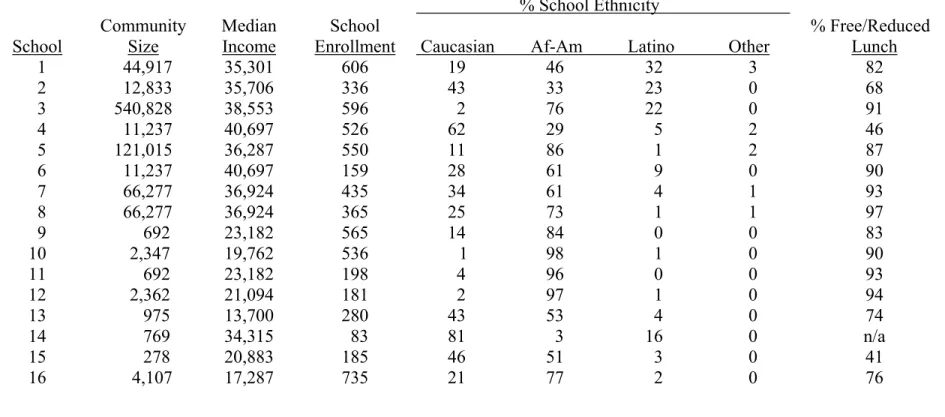
3.1. Summaries of Selected Demographic Variables for the
16 REA Schools and Surrounding Communities………...104 3.2. Variables, Sources, Procedures, and Reliability Estimates……….…. .105 3.3. School Effectiveness Characteristics and Corresponding
REA Principal Questionnaire Items………...….108 3.4. Rubric with Rating Points for Degree of School-Based
REA Initiative Structure……….110
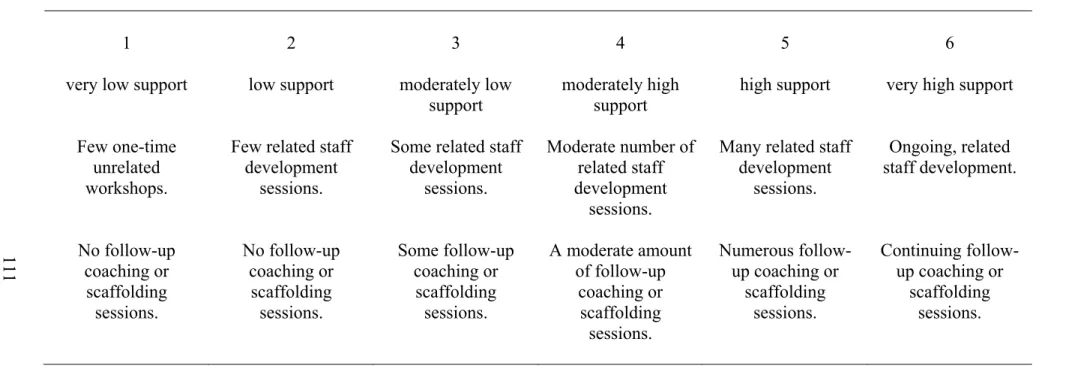
3.5. Rubric with Rating Points for Degree to Which Teachers Were
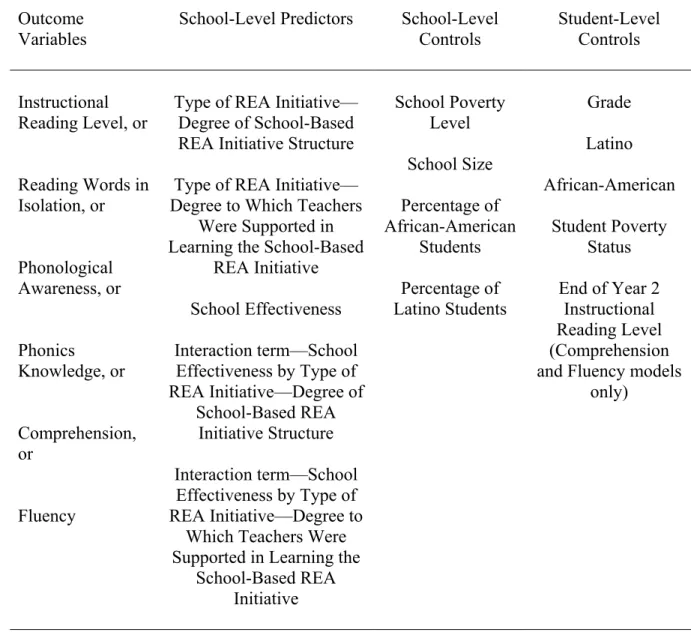
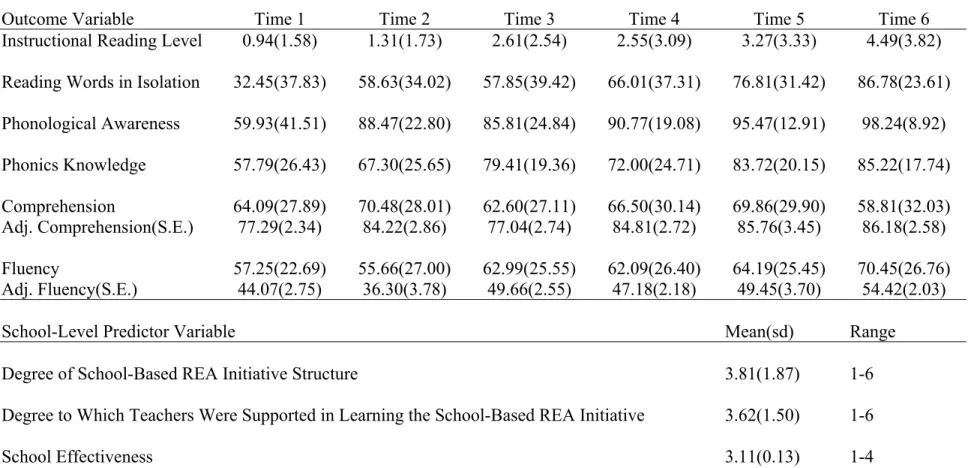
Supported in Learning the School-Based REA Initiative…………..………....111 4.1. Conditional HLM Used for Each of the Six Outcome Variables……….…… .112 4.2. Outcome Variable Means (Standard Deviations) for All Six
Outcome Variables, Adjusted Means (Standard Errors) for Comprehension and Fluency, and School-Level Predictor
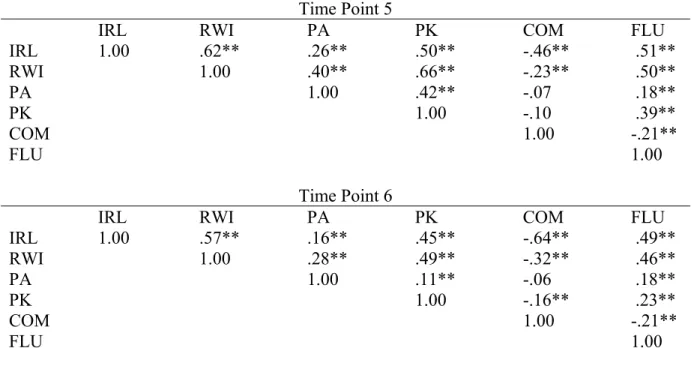
Variable Means (Standard Deviations………....113 4.3. Zero-Order Correlation Tables for Instructional Reading Level,
Reading Words in Isolation, Phonological Awareness, Phonics
Knowledge, Comprehension, and Fluency for Each Time Point………..…….114 4.4. Partial Correlation Tables for Reading Words in Isolation,
Phonological Awareness, Phonics Knowledge, Comprehension, and Fluency for Each Time Point, Controlling for
Instructional Reading Level………...116 4.5. Summarizing Across the Six Outcomes’ Results for the Three Research
Questions (Significant Coefficients for Intercept, Slope,
Respectively)……….….117
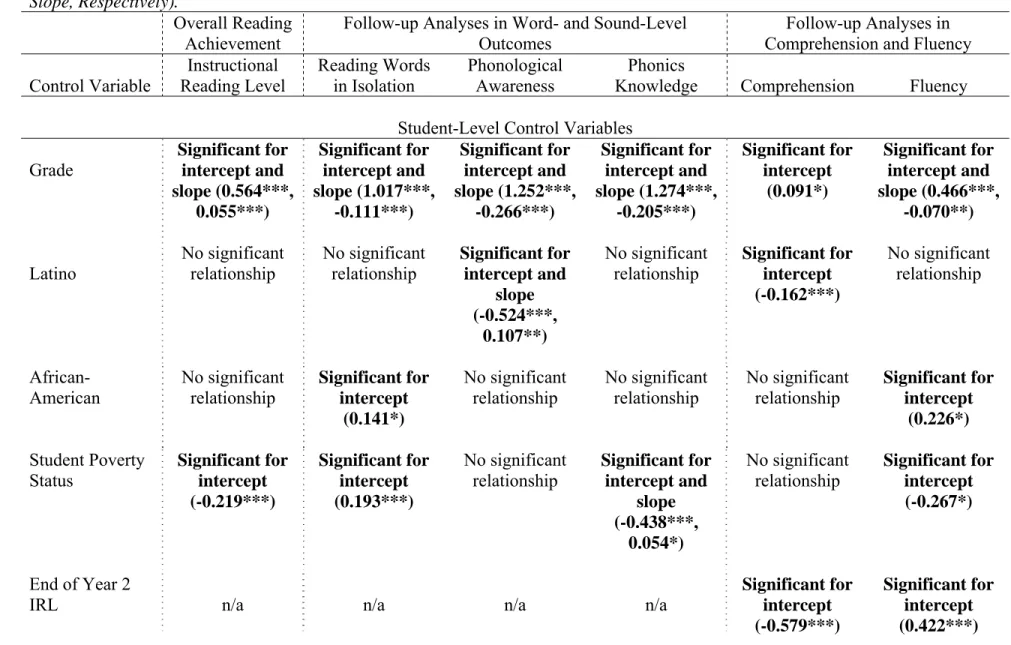
4.6. Summarizing Across the Analyses for Student- and School-Level Control Variables (Significant Coefficients for Intercept, Slope,
Respectively)………..119
xii
4.7. Unconditional HLM Results for Instructional Reading Level, Reading Words in Isolation, Phonological Awareness, Phonics
Knowledge, Comprehension and Fluency………..121
4.8. Final HLM Results for Instructional Reading Level………..….. .123
4.9. Final HLM Results for Reading Words in Isolation………..…....124
4.10. Final HLM Results for Phonological Awareness……… .125
4.11. Final HLM Results for Phonics Knowledge………..….…..126
4.12. Final HLM Results for Comprehension………..…………..127
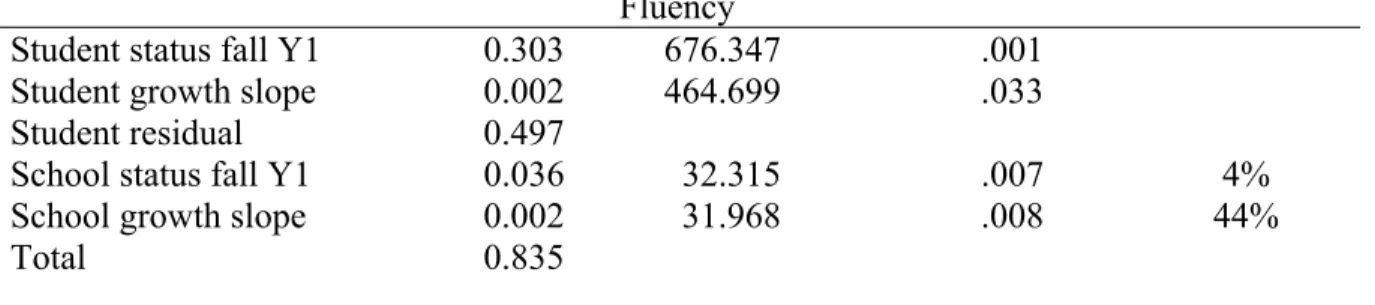
4.13. Final HLM Results for Fluency………..……..128
LIST OF FIGURES Figure
4.1. Degree of School-Based REA Initiative Structure (REA Structure)
by School Effectiveness (SE) Interaction Across Six Time Points……….130 4.2. Degree to Which Teachers Were Supported in Learning the
School-Based REA Initiative (REA Support) by School
Effectiveness (SE) Interaction Across Six Time Points……….131 4.3. Estimated Mean Standardized Phonological Awareness
Growth Lines Across Two Years (Six Time Points) By School Percentages of African-American Students
and Latino Students………....132
4.4. Estimated Mean Standardized Phonological Awareness Growth Lines Across Two Years (Six Time Points)
For Latino and All Other Students……….133 4.5. Phonics Knowledge Growth Lines Across All Six Time Points by
Degree of School-Based REA Initiative Structure (REA Structure)………….134 4.6. Phonics Knowledge Growth Lines Across All Six Time Points
by Student Poverty Status………..135
CHAPTER 1
INTRODUCTION AND RATIONALE
The current study explored whether type of Reading Excellence Act initiative and/or school-level contexts in the form of school effectiveness characteristics predicted young students’ reading growth, all within the context of high-poverty schools participating in the federal Reading Excellence Act (REA). The research questions that guided the current study were the following: (a) Is there a relationship between Type of REA Initiative and
kindergarten through second-grade students’ two-year reading growth; (b) Is there a
relationship between School Effectiveness and kindergarten through second-grade students’ two-year reading growth; and (c) Is there a combined effect of Type of REA Initiative and School Effectiveness on kindergarten through second-grade students’ two-year reading growth?
The present chapter begins with Reading Excellence Act background information. Then the rationale for the current study is presented. Finally, definitions for key constructs are provided.
Reading Excellence Act (REA) Background
Before presenting the rationale for the study it is helpful to understand some details about the Reading Excellence Act. Elementary classroom reading reform designed to raise student reading achievement is at the center of the public educational policy discussion in the United States (Taylor, Pearson, Peterson, & Rodriguez, 2005; U. S. Department of
2
particularly for high-poverty schools to improve classroom reading instruction with the ultimate goal of improved student reading achievement (U. S. Department of Education, 1999, 2002). Specifically, the 1998-2002 Reading Excellence Act (REA) provided funding for school-based reading reform initiatives, and created a context in which federal
educational policy could directly impact classroom reading instruction.
The purpose of the REA reform policy was to provide funds for classroom teachers’ professional development to improve reading instruction and teach all children to read by the end of third grade. The emphasis was on funding for high-poverty, low-performing schools (Amendment to Title II of the elementary and Secondary Education Act of 1965, 20 U.S. C. 6601 et seq.) School districts eligible to receive REA funding had to meet three criteria. Eligible school districts had the following: (a) at least one school in Title I improvement status, (b) the highest or second highest percentages of poverty in the state, and (c) the highest or second highest number of poor children in the state (U. S. Department of Education, 1999).
The REA grant process occurred over three years. First, three-year grants were provided to State Education Agencies on a competitive application basis. The State
3
U.S. Department of Education, 1999). At the end of the first year, competitive grant awards were made to selected local school districts for eligible schools. In the second and third years, schools that received funds conducted school-based REA initiatives (U. S. Department of Education, 1999).
Significant amounts of money were provided to schools, perhaps historically unprecedented amounts, directed toward enhancing classroom instruction. The North Carolina Department of Public Instruction received $15,000,000 and funded 16 schools in 7 different school districts throughout the state, with funding ranging from $138,891 to
$940,542 per school, excluding administrative district costs (funding figures provided North Carolina Department of Public Instruction).
Although the Reading Excellence Act was designed with the best intentions, early drafts of the Act were met with resistance (Roller, 2000). Some literacy professionals, researchers, and organizations felt the REA had the potential to “disempower” teachers (Goodman, 1998; Mesmer & Karchmer, 2003). Specifically, many literacy professionals and organizations objected to three major components of the Reading Excellence Act (Roller, 2000). First, many felt that the definition of reading was “incomplete and too heavily focused on word recognition” (Roller, 2000, p. 630). Second, many objected to the definition of research which eradicated much existing educational research. Finally,
4
changes to the panel’s composition were not realized for the Reading Excellence Act legislation or implementation (Roller, 2000).
Rationale
The current study examined types of school-based initiatives based on degree of structure and support for teachers’ learning along with selected school characteristics within the context of the Reading Excellence Act. Type of reading intervention initiative,
specifically degree of structure and support involved in the initiative, along with selected school characteristics, are likely pivotal to the effectiveness of an initiative, particularly for high-poverty schools. More specifically, the current study is an investigation of type of REA initiative, school context in the form of school effectiveness, and students’ reading growth. Type of REA Initiative is defined in the present study by two dimensions: degree of school-based REA initiative structure (Borman et al., 2005; Ross et al., 2004), and the degree to which teachers were supported in learning the school-based REA initiative (Taylor, Pearson, Clark, & Walpole, 2000; Taylor et al., 2005). School Effectiveness is defined by the degree of certain key school characteristics for high-poverty schools which are typically associated with more effective schools: strong school leadership, a focus on improved student learning, strong staff collaboration, ongoing professional development, and connections to parents. Before specifically addressing how type of initiative and school effectiveness might be predictive of students’ reading growth, it is helpful to briefly explore the context of the majority of students affected by the REA as this context may likely impact their reading achievement—living in poverty.
5
threshold, which varies by family composition, and many additional children live in low income households where the income level is less than twice the federal poverty threshold (Brooks-Gunn & Duncan, 1997). Low-income children are at greater risk for academic reading difficulty (Chatterji, 2006; Kaplan & Walpole, 2005; Perie, Grigg, & Donahue, 2005; Pungello, Kupersmidt, Burchinal, & Patterson, 1996; Snow, Burns, & Griffin, 1998; Sutton & Soderstrom, 1999; White, 1982), and tend to perform significantly lower than children living above the poverty level on numerous markers of academic achievement (Entwisle & Alexander, 1990; McLoyd, 1998; White, 1982; Zill, Moore, Smith, Stief, & Coiro, 1995). For example, the NAEP 2004 long-term analysis demonstrated persistent achievement gaps among different student groups based on gender, ethnicity, and particularly on markers of poverty (Perie, Moran, & Lutkus, 2005). Moreover, results from meta-analytic studies have demonstrated a strong relationship between family income and students’ academic
achievement (McLoyd, 1998; White, 1982).
The important question becomes, “How might Type of REA Initiative and School Effectiveness relate to students’ reading growth in high-poverty schools?” Some might judge a more structured school-based REA initiative, which dictates how teachers instruct students, to be related to greater reading growth both overall and in reading subprocesses. For
6
access to a wide variety of texts and books through initiatives such as book “floods” (Elley, 2000; Neuman, 1999, 2002).
Within high-poverty schools, a greater degree of support for teachers’ learning of school-based REA initiatives might positively impact student’s reading growth—both overall and in terms of reading subprocesses. This support for teacher learning allows teachers to gain knowledge of, and implement, their school-based REA initiative with peer collaboration and support from more knowledgeable others which might not be achieved alone (Vygotsky, 1978). There is little research which relates degree of support for teachers in high-poverty schools learning a school-based reading initiative to student reading achievement. However, the CIERA School Change Framework is one example of a highly supportive learning process which supports teachers and administrators in moderate- to high-poverty schools as they implement effective instructional and professional development activities designed to improve students’ reading achievement (Taylor et al., 2000; Taylor et al., 2005; Taylor, Peterson, Pearson, & Rodriguez, 2002; Taylor, Pressley, & Pearson, 2002). Researchers have demonstrated positive relationships between the CIERA School Change Framework and students’ reading achievement (e.g., Taylor et al., 2005) in schools with moderate to high-poverty levels. Therefore, in theory, higher degrees of support for teachers’ learning of school-based REA initiatives might be related to higher student overall reading achievement and achievement in reading subprocesses.
7
with history and context, which can greatly affect reading reform initiatives (Tyack & Cuban, 1995). Reading reform initiatives do “not exist in isolation” (Coburn, 2005, p. 23). Several school contexts “promote, translate, and even transform” reform initiatives (Coburn, 2005, p. 23). For high-poverty schools, five important school effectiveness characteristics have been determined in prior research: (a) strong school leadership, (b) a focus on improved student learning, (c) strong staff collaboration, (d) ongoing professional development, and (e)
connections to parents (Taylor et al., 2000; Taylor, Pearson, Clark, & Walpole, 1999; Taylor et al., 2005). In addition, children who attend schools with high concentrations of poverty may be particularly at risk for low reading achievement (Snow et al., 1998; Snow, Griffin, & Burns, 2005; Sutton & Soderstrom, 1999). In fact, measures of poverty based on individual family income levels do not predict student achievement outcomes as strongly as measures of concentration of poverty within a particular school or neighborhood (Snow et al., 1998), suggesting that school-level poverty indicators may be extremely influential, perhaps even more influential, than child-level poverty indicators. School ethnic composition (Kainz & Vernon-Feagans, 2007), as well as individual minority students’ ethnicity (Perie et al., 2005) may also be important contexts. Minority student segregation of 75% or greater has been related, on average, to decreased reading achievement (Kainz & Vernon-Feagans, 2007). Moreover, a well-documented achievement gap exists with minority students, on average, scoring lower than their peers (e.g., Perie et al., 2005).
In high-poverty schools, each of the five key school contexts has been shown to be positively related to school effectiveness and higher student reading achievement.
8
scores (Designs for Change, 1998; Lein, Johnson, & Ragland, 1997). High-poverty schools where both teachers, administrators, and support staff work together with a focus on
improved student learning, on average, have students whose reading achievement test scores increase over time (Designs for Change, 1998) or have higher reading achievement test scores (Lein et al., 1997; Taylor et al., 2000). High-poverty schools with strong staff collaboration, where teachers plan and meet together with a focus on meeting students’ instructional needs, tend to have students who also have reading achievement test scores which increase over time (Designs for Change, 1998) or have higher reading achievement test scores (Lein et al., 1997; Taylor et al., 2000). High-poverty schools with ongoing professional development focused on improving classroom instruction tend to have students, on average, with higher or increasing reading achievement test scores (Charles A. Dana Center - University of Texas at Austin, 1999; Designs for Change, 1998; Lein et al., 1997; Taylor et al., 2000). High-poverty schools that have strong connections to parents with an emphasis on developing effective school/home partnerships focused on student achievement tend to have students who also, on average, have higher or increasing reading achievement test scores (Charles A. Dana Center - University of Texas at Austin, 1999; Designs for Change, 1998; Lein et al., 1997; Taylor et al., 2000).
9
impact on student’s reading achievement is in schools which possess higher degrees of school effectiveness. It may be this optimal combination of degree of school-based REA initiative structure, degree to which teachers are supported in learning the school-based REA initiative, and school effectiveness which has the greatest positive impact on students’ reading growth. There is some evidence to support the combined effect of type of initiative and school effectiveness with respect to degree to which teachers are supported in learning the initiative. Moderate- to high-poverty schools deemed more effective that supported teachers with a scaffolded framework for learning tended, on average, to have students with higher oral reading, comprehension, or fluency levels (Taylor & Pearson, 2004; Taylor et al., 2000; Taylor et al., 1999; Taylor, Pearson, Peterson, & Rodriguez, 2003; Taylor et al., 2005; Taylor, Peterson et al., 2002; Taylor, Pressley et al., 2002). Moreover, this relationship may not be directional. Hypothetically, schools with higher student reading achievement may seek out initiatives with greater initiative structure and greater teacher support for learning an initiative, creating a bidirectional relationship.
10
et al., 2000; Taylor et al., 2003, 2005; Taylor, Peterson et al., 2002; Taylor, Pressley et al., 2002). Key findings highlighted the influence of school differences (Taylor et al., 2005; Taylor, Pressley et al., 2002), school effectiveness (Taylor et al., 2005), and instructional practices (Taylor & Pearson, 2000; Taylor et al., 2003) on students’ reading growth.
With respect to the current study, students living in poverty may have suppressed reading trajectories compared to their peers living above the poverty threshold, but the findings from Taylor and colleagues (Taylor et al., 2000; Taylor et al., 2003, 2005; Taylor, Peterson et al., 2002; Taylor, Pressley et al., 2002) support the positive influence of school and instructional factors, such as reform effort or teachers’ interaction styles, on students’ reading growth. Type of school reading initiative, defined by degree of structure and degree of support, might be pivotal to an initiative’s effectiveness, particularly for high-poverty schools. Additionally, within high-poverty schools, a greater degree of support for teachers’ learning of school-based initiatives might positively impact student’s reading growth. Similarly, school-based contexts likely influence students’ reading achievement and in high-poverty-schools, key school contexts have been positively related to school effectiveness and higher student reading achievement. However, the combined effect of type of initiative (represented by degree of structure and the degree of support) and school effectiveness may be what matters most for students’ reading achievement in high-poverty schools. Finally, little is known about relationships between types of reading reform initiative, school
11
Potential results of the present study may be of interest to researchers, policy makers, school administrators, and teachers. Findings which relate less structured initiatives to greater student reading growth would provide contrary evidence to current ideas for high-poverty schools of highly structured and even scripted classroom reading policy interventions such as Reading First initiatives (U. S. Department of Education, 2002). However, findings which relate reform initiatives with higher degrees of school-based REA initiative structure and teacher support for learning the school-based REA initiative better support students’ reading achievement growth, evidence would support certain types of reading reform initiatives over others. Potential study results might provide guidance for funding agencies, policy makers, and school administrators as they design and implement reform policies and corresponding school-based reading initiatives for schools with high-poverty levels.
Definitions
School-based REA initiative, for the current study, refers to the school-specific classroom reading instruction teachers provided for students which was funded by the Reading Excellence Act. School-based REA Initiatives refer to the classroom reading instruction which REA Initiatives added over and above existing classroom reading instruction, or REA Initiative classroom instruction which supplanted existing classroom reading instruction.
12
the school-based REA initiative. The degree to which teachers were supported in learning the school-based REA initiative will refer to the extent to which teachers were supported in learning the REA initiative-based reading instruction for the classroom.
School Effectiveness, for the current study, refers to school efficacy with respect to student reading achievement. Often, schools with higher student reading achievement are deemed more effective (Taylor et al., 2000; Taylor, Peterson et al., 2002). Additionally, higher degrees of certain key school characteristics are, on average, associated with more effective schools: strong school leadership, a focus on improved student learning, strong staff collaboration, ongoing professional development, and connections to parents.
Reading growth, for the current study, refers to the change in students’ reading achievement across a two-year period. Students’ reading growth is based on a process view of change (Francis, Schatschneider, & Carlson, 2000) which defines a student’s measured scores as representation of growth or change along a continuum of an underlying
characteristic. A process view of change applied to reading growth defines a student’s reading achievement scores as a representation of that student’s growth in reading
achievement, the underlying characteristic. A process view of change applied to reading growth allows: (a) individual reading growth parameters to be estimated, and described for individuals, and groups of individuals, and (b) allows reading growth correlates to be examined (Francis et al., 2000). Reading refers to more than just overall reading
13
reading achievement into selected reading subprocesses—reading words in isolation, phonological awareness, phonics knowledge, comprehension, and fluency.
CHAPTER 2
REVIEW OF THE LITERATURE
The following research questions guided the current study: (a) Is there a relationship between Type of REA Initiative and kindergarten through second-grade students’ two-year reading growth; (b) Is there a relationship between School Effectiveness and kindergarten through second-grade students’ two-year reading growth; and (c) Is there a combined effect of Type of REA Initiative and School Effectiveness on kindergarten through second-grade students’ two-year reading growth?
In the current chapter, first, I provide a literature synthesis exploring how the context of poverty might influence student reading growth outcomes. Second, I state hypotheses relative to the research questions. Finally, I explicate each of the study hypotheses with a synthesis of literature related to theoretical relationships among the major constructs in the research questions within the context of high-poverty schools.
15
Cauthen, 2007). In addition, child poverty rates vary significantly across ethnic groups and geographic locations (Aber, 2007; Fass & Cauthen, 2007).
Childhood poverty is a significant issue for the education of young children. Low-income students are at greater risk for academic reading difficulty (Chatterji, 2006; Kaplan & Walpole, 2005; Perie, Grigg, & Donahue, 2005; Pungello, Kupersmidt, Burchinal, &
Patterson, 1996; Snow, Burns, & Griffin, 1998; Sutton & Soderstrom, 1999; White, 1982). In fact, “unequivocal evidence” (Aber, 2007, p. 3) exists that low income children are more likely to exhibit developmental delays, have learning disabilities (e.g., Brooks-Gunn & Duncan, 1997; Klerman, 1991), or repeat a grade (e.g., Brooks-Gunn & Duncan, 1997; Children's Defense Fund, 1997). On average, low income children begin kindergarten with significantly lower reading achievement, math achievement, and general knowledge than their higher income peers (Gershoff, 2003; V. E. Lee & Burkam, 2002; West, Denton, & Germino-Hausken, 2000). Perhaps even more noteworthy is the finding that low income children progressively fall further academically behind their higher income peers over time (Fryer & Levitt, 2004; Rathbun & West, 2004).
Specifically, low income students tend to perform considerably lower than higher income children on numerous markers of academic achievement, including achievement test scores (Entwisle & Alexander, 1990; McLoyd, 1998; White, 1982; Zill et al., 1995). For example, 50% of low income students scored below the basic level on the 2007 National Assessment of Educational Progress (NAEP), while only 21% of their higher income peers scored below the basic level (J. Lee, Grigg, & Donahue, 2007).
16
the students themselves, poverty concentration, and poverty persistence. Living in poverty, on average, is related to adverse effects on students’ cognitive and physical development (McLoyd, 1998). Negative relationships have been established between low income status and both IQ and verbal skills (Duncan, Brooks-Gunn, & Klebanov, 1994; Hart & Risley, 1995; Korenman, Miller, & Sjaastad, 1995; Liaw & Gunn, 1994; Smith, Brooks-Gunn, & Klebanov, 1997). For example, low family income has been found to be a
significant predictor of lower IQ scores for five-year-olds when controlling for many typical differences between high- and low-income families—even more powerful than maternal education (Duncan et al., 1994). In addition, many researchers and practitioners recognize a bidirectional relationship between reading and cognition (e.g., Stanovich, 1986), and
therefore living in poverty may perpetuate a relationship between lower reading achievement and depressed cognitive development for students.
Children who attend schools with high concentrations of poverty may be especially susceptible to low reading achievement (Snow et al., 1998; Snow, Griffin, & Burns, 2005; Sutton & Soderstrom, 1999). In fact, measures of poverty based on individual family income levels do not predict student achievement outcomes as strongly as measures of concentration of poverty within a particular school or neighborhood (Snow et al., 1998). For example, an examination of the correlation between poverty and educational achievement found as the unit of analysis increased from student to school to district, the correlation coefficient increased from .3 to .5 to .6, respectively (Myers, 1986).
17
income children (Duncan et al., 1994; Korenman et al., 1995; McLoyd, 1998; Smith et al., 1997; Zill et al., 1995). Like cognitive functioning, school achievement also typically declines with increases in poverty duration (Korenman et al., 1995; McLoyd, 1998; Smith et al., 1997; Zill et al., 1995).
Notably, with respect to low-income students’ achievement, some researchers in the 1960s adopted a deficit hypothesis which held that low-income students were raised in unsuitable environments and that these students were therefore unprepared for the cognitive demands of school (cf. Vernon-Feagans, 1996). The deficit hypothesis held that the reasons for low-income students’ lower achievement were inherent to the students themselves. Subsequently, researchers have rejected the deficit hypothesis and have asserted that low-income students come to school with different experiences and language skills than their higher-income peers (Brice-Heath, 1983; Compton-Lilly, 2004; Purcell-Gates, 1995;
Vernon-Feagans, 1996), experiences and skills which may be in conflict with the experiences and language use valued in school. Various researchers have theorized sociocultural reasons for lower student achievement for students living in poverty (Purcell-Gates, 1995), have debunked myths about families living in poverty (Compton-Lilly, 2004), and have
demonstrated how understanding students’ home culture and language can allow teachers to connect with students and excite them about learning (e.g., Brice-Heath, 1983).
Study Hypotheses and Related Literature Synthesis and Critique
18 Hypotheses
There were five hypotheses related to the research questions which guided the literature review. The first two hypotheses were related to the association between Type of REA Initiative and students’ reading and reading subprocess growth. First, I anticipated a relationship between the degree of initiative structure and students’ reading and reading subprocess growth. I did not have directional hypothesis for degree of initiative structure but was interested whether greater student reading and reading subprocess growth were related to more-structured or less-structured initiatives. Second, I expected a positive relationship between a greater degree of support for teachers’ learning of the initiative and students’ reading and reading subprocess growth. The third hypothesis was related to the association between school-level contexts and students’ reading and reading subprocess growth. For the third hypothesis I expected a positive relationship between a greater degree of school
effectiveness and students’ reading and reading subprocess growth. The fourth and fifth hypotheses were related to the combined effect of Type of REA Initiative (degree of
initiative structure and degree of support for teachers’ learning) and School Effectiveness on students’ reading and reading subprocess growth. For the fourth hypothesis, I anticipated a combined effect of degree of initiative structure and higher school effectiveness on students’ reading and reading subprocess growth. I did not have a directional hypothesis for degree of initiative structure but was interested in whether greater student reading and reading
19
initiative and higher school effectiveness on students’ reading and reading subprocess growth.
Literature Synthesis and Critique
How Might Type of Initiative Be Related to Students’ Reading Growth?
In the current study, type of school-based reading initiative was defined by two dimensions: degree of initiative structure, and degree of teacher support for learning the initiative. Degree of initiative structure was the degree to which the reading instruction teachers actually carried out with students in classrooms was structured by the school-based initiative. Degree of teacher support for learning the initiative was the extent to which
teachers were supported in learning the initiative-based reading instruction for the classroom. The following sections synthesize and critique research findings related to the first two
hypotheses—an anticipated relationship between the degree of initiative structure and students’ reading and reading subprocess growth, and an expected positive relationship between a greater degree of support for teachers’ learning of the initiative and students’ reading and reading subprocess growth.
How Might Degree of Initiative Structure Relate to Students’ Reading Growth? Two perspectives from the research literature might support theoretical explanations of how degree of school-based initiative structure is related to students’ reading growth. One perspective from the literature might support the conclusion that within high-poverty schools a more structured school-based reading initiative, which prescribes how teachers instruct students, should be related to greater reading growth—both overall and for reading
20
Department of Education, 2002) has supported and strengthened the use of many “off-the-shelf” (Tivnan & Hemphill, 2005, p. 420) structured basals or programs. Often these
structured basals or programs are chosen because they may provide expertise not available at the local level, instructional materials, implementation monitoring, and because they pledge a reliable experience across teachers and grade levels (Tivnan & Hemphill, 2005).
Implied, but sometimes unspoken, in more structured initiatives is the idea that a highly structured program is necessary in order for teachers to provide high quality reading instruction for students (Borman et al., 2005; Foorman, Francis, Fletcher, Schatschneider, & Mehta, 1998; Mac Iver & Kemper, 2002; Ross et al., 2004). In fact, schools who receive Reading First funding are often required to have their personnel choose from one of a few structured programs to implement as a core reading program for the school. Fidelity to the structured lessons is a hallmark of the classroom reading instruction in Reading First schools.
21
average, scored higher on state literacy tests than other students in similar schools not using 4-Blocks (Cunningham, 2006).
An alternative perspective from the literature might suggest that less structure is more important and that opportunities for learning matter most, such as providing access to a wide variety of texts and books through book “floods” (Elley, 2000; Neuman, 1999, 2002). In one study preschool classrooms were provided with high-quality books in a ratio of five books to each child along with 10 hours of teacher training. Students from the book “flood” classrooms scored significantly higher than students in similar schools without book floods on four of six early literacy assessments six months into the kindergarten year (Neuman, 1999). Findings from a research review on providing book floods for students in Third World (e.g., Figi, Signapore, Sri Lanka) primary school classrooms with about 100 high-interest books per classroom along with short training sessions for their teachers
demonstrated, on average, significant improvements in students’ writing, listening comprehension, and other language skills (Elley, 2000).
22
between what a learner can do with help from a more knowledgeable other and what the learner can do without assistance. Scaffolding refers to how a more knowledgeable other continually adjusts the level of his or her help in response to the learner’s level of
performance. Both of these aspects of sociocultural learning can be applied to how the degree of support might impact teachers’ learning and their students’ reading achievement.
A greater degree of support for teachers’ learning allows teachers to increase their knowledge about the school-based initiative and also implement the initiative. If a
sociocultural (Vygotsky, 1978) framework is applied to the concept of support for teachers’ learning, the support provided might allow teachers to gain knowledge of, and implement, their school-based initiative through social interactions and peer collaboration along with support from more knowledgeable others (Vygotsky, 1978). In this way teachers’ learning can be scaffolded through interactions with a facilitator (more knowledgeable other) or with social peer interactions. According to this Vygotskian framework, the same results for learning and implementing a school-based initiative might not be achieved by teachers working and learning in isolation.
23
school activities as well as small-group activities focused on professional development in effective reading instruction. Teachers meet regularly in within- and across-grade study groups to (a) examine aspects of effective reading instruction supported by research, (b) discuss and implement aspects of effective reading instruction, and (c) reflect, problem-solve, and modulate aspects of effective reading instruction (Taylor et al., 2005).
The CIERA School Change Framework was related to favorable results with respect to students’ reading achievement (e.g., Taylor et al., 2005) in schools with moderate to high-poverty levels. For example, students in schools where the CIERA School Change
Framework process was fully implemented, on average, had significantly higher reading fluency scores than students in schools where the CIERA School Change Framework was not fully implemented (Taylor et al., 2005). In addition, researchers have demonstrated the efficacy of classroom instructional strategies within the context of schools involved in the CIERA School Change Framework (Taylor et al., 2000; Taylor et al., 2003; Taylor, Peterson et al., 2002; Taylor, Pressley et al., 2002). Drawing on Taylor and colleagues’ findings one might conclude that for high-poverty schools, higher degrees of support for teachers’ learning of school-based REA initiatives might be related to higher student overall reading achievement and achievement in reading subprocesses.
24
histories and contexts, which can greatly affect implementation and results for reading reform initiatives (Coburn, 2005; Tyack & Cuban, 1995). Influential school-based contexts in the current study include aspects of school effectiveness and/or demographic contexts.
In the current study, school effectiveness is defined by five important school
effectiveness characteristics which were found important in prior research with high-poverty schools: (a) strong school leadership, (b) a focus on improved student learning, (c) strong staff collaboration, (d) ongoing professional development, and (e) connections to parents (Hoffman, 1991; Taylor et al., 2000; Taylor et al., 1999; Taylor et al., 2005). First, I review and critique literature related to the third study hypothesis—an expected positive relationship between a greater degree of school effectiveness and students’ reading and reading
subprocess growth. To that end, I review each school effectiveness characteristic and its relation to students’ reading achievement, all within the context of high-poverty schools. Second, I review and critique literature related to demographic school-based contexts.
How Might School Effectiveness Relate To Students’ Reading Growth? The hypothesis for school effectiveness and students’ reading growth was that there was a positive relationship between a greater degree of school effectiveness and students’ reading and reading subprocess growth. Below, research findings for each of the five school effectiveness characteristics are presented related to the hypothesis.
25
worked collaboratively with teachers, on average, had trends of increasing student standardized reading test scores (Designs for Change, 1998). In addition, high-poverty schools with leaders who facilitated school improvement and instruction were associated with high percentages of students passing state reading achievement tests (Charles A. Dana Center - University of Texas at Austin, 1999; Lein et al., 1997).
Schools with a school-wide focus on improved student learning generally have a positive effect on students’ reading achievement (Charles A. Dana Center - University of Texas at Austin, 1999; Designs for Change, 1998; Hoffman, 1991; Lein et al., 1997; Taylor et al., 2000; Weber, 1971; Wilder, 1977). For example, teachers and school administrators might meet together to examine student achievement data and use those data to plan for classroom reading instruction. Specifically, high-poverty urban schools where there was staff priority on student learning, including high student expectations, had students with standardized reading achievement test scores that increased over time (Designs for Change, 1998). In addition, schools with a focus on the academic success of students, on average, had (a) higher percentages of students passing state reading achievement tests (Charles A. Dana Center - University of Texas at Austin, 1999; Lein et al., 1997), or (b) strong positive relationships with students’ word recognition, fluency, and comprehension scores (Taylor et al., 2000).
26
(Designs for Change, 1998). In addition, strong staff collaboration was related to higher percentages of students passing the state reading achievement test (Lein et al., 1997), or higher word recognition, fluency, and comprehension scores for students (Taylor et al., 2000).
Schools with teachers participating in ongoing professional development, with a focus on improving classroom instruction, were associated with higher student reading achievement (Charles A. Dana Center - University of Texas at Austin, 1999; Designs for Change, 1998; Hoffman, 1991; Lein et al., 1997; Stringfield, Millsap, & Herman, 1997; Taylor et al., 2000). For example, schools engaged with the CIERA School Change Framework have ongoing professional development through whole school and small group professional development activities assisted by an external CIERA facilitator (e.g., Taylor et al., 2005). Specifically, schools focused on improving classroom instruction through
ongoing professional development, on average, had students with standardized reading achievement test scores which increased over time (Designs for Change, 1998). In addition, ongoing professional development was associated with high percentages of students passing state reading tests (Charles A. Dana Center - University of Texas at Austin, 1999; Lein et al., 1997). Finally, in schools with teachers engaged in ongoing study of effective reading practices, ongoing professional development was associated with high word recognition, fluency, and comprehension scores for students (Taylor et al., 2000).
27
particular, urban schools who strived to establish partnerships with families and communities had students with standardized reading achievement test scores which increased over time (Designs for Change, 1998). In addition, strong school/home partnerships were related to high percentages of students passing state reading tests (Charles A. Dana Center - University of Texas at Austin, 1999; Lein et al., 1997). Finally, students in schools that created
connections to families tended to have higher word recognition, fluency, and comprehension scores (Taylor et al., 2000).
How Might School-Based Demographic Contexts Relate To Students’ Reading Achievement? School-level poverty indicators are vital to examine and may be as important, or more important, than child-level poverty indicators. Children who attend schools with high concentrations of poverty may be especially susceptible to lower reading achievement (Myers, 1986; Snow et al., 1998; Snow et al., 2005; Sutton & Soderstrom, 1999). In fact, concentration of poverty within a particular neighborhood or school is more strongly related to student achievement outcomes than measures of poverty based on individual family income levels (Myers, 1986; Snow et al., 1998).
School ethnic composition (Kainz & Vernon-Feagans, 2007) may also be an
important school context to consider. Prior research has demonstrated relationships between students’ ethnicities and reading achievement, and a well-documented achievement gap exists with minority students, on average, scoring lower than their peers (e.g., J. Lee et al., 2007; Perie et al., 2005). Therefore, variables which represent individual students’
28
instructional factors. Therefore, in conducting analyses with school-level factors, it may also be important to include variables which represent minority population concentration.
How Might The Combined Effect of Type of Initiative and School Effectiveness Affect Students’ Reading Growth?
In the current study, the combined effect of type of initiative and school effectiveness was represented by two interactions: the degree of initiative structure with school
effectiveness interaction, and degree of teacher support for learning the initiative with school effectiveness interaction. The following sections critique research findings related to the fourth and fifth study hypotheses: (a) an anticipated combined effect of degree of initiative structure and higher school effectiveness on students’ reading and reading subprocess growth, and (b) an expected combined effect of a greater degree to which teachers were supported in learning the initiative and higher school effectiveness on students’ reading and reading subprocess growth.
29
Lein et al., 1997; Taylor et al., 2000). Though each of these constructs has been related to students’ reading achievement, it may be an optimal combination of constructs that most positively impacts students’ reading achievement.
There is some evidence to support the combined effect of type of initiative and school effectiveness, but only with respect to degree to which teachers are supported in learning an initiative. Moderate- to high-poverty schools participating in the CIERA School Change Framework deemed more effective in supporting teachers with a scaffolded framework for professional development had students with higher oral reading, comprehension, or fluency levels (Taylor & Pearson, 2004; Taylor et al., 2000; Taylor et al., 1999; Taylor et al., 2003, 2005; Taylor, Peterson et al., 2002; Taylor, Pressley et al., 2002). However, the relationship between degree of support for teachers’ learning and higher student reading achievement may not be directional. Hypothetically, high-poverty schools with higher student reading achievement may seek out initiatives with greater initiative structure and greater teacher support for learning an initiative, creating a bidirectional relationship.
30
combination of degree of school-based initiative structure, degree to which teachers are supported in learning the initiative, and school effectiveness.
In addition, little is known about relationships between types of reading reform initiatives, school effectiveness, and reading growth. Investigations of reading growth, rather than cross-sectional reading achievement, allow for researchers to closely examine how students’ reading and reading subprocesses develop over time. For low income students, the outlook for their reading growth is not often positive. Low income students are more likely to have depressed reading growth trajectories, as children living below the poverty threshold are less likely to experience successful reading transitions (Kaplan & Walpole, 2005) and tend to remain behind their higher income peers (Chatterji, 2006). In addition, often reading tasks and expectations increase in demand and difficulty as children progress through school. As work becomes more difficult for low income students, they can lag significantly below grade-level expectations and their higher income peers (Chall et al., 1990).
A limited number of researchers investigated relationships among school
31
2005). Third, a substantial amount of variation in reading growth was explained by different types of instructional practices (Taylor & Pearson, 2000; Taylor et al., 2003). Consequently, though low income students may, on average, have suppressed reading trajectories compared to their higher income peers, the findings from Taylor and colleagues support the positive influence of school and instructional factors, such as reform effort or teachers’ interaction styles, on students’ reading growth and highlight the need for further investigation.
Summary
In short, type of school-based reading initiative, defined by degree of structure and degree of teacher support for learning the initiative, may be pivotal to a classroom reading initiative’s effectiveness, particularly for high-poverty schools. One perspective might judge more structured initiatives to be related to greater reading growth (e.g., Adams et al., 2002), while others might argue a greater degree of structure is not as important but the
32
CHAPTER 3 METHODS
The following section details the study methods. First, the study design is described followed by descriptions of the communities, schools, and participants. Finally, the data sources and variables with their associated reliability estimates are described.
Design
Using a two-year longitudinal design, data were collected at sixteen REA schools in seven different districts. Children who began school in kindergarten, first, or second grade in Year 1 were followed into first, second, or third grade in Year 2. In Year 1, child measures were administered to random samples of approximately 25% of the children in each
classroom in kindergarten through second grade. In Year 2, an effort was made to continue testing any child who was tested at any time point in Year 1. Reading assessments were done at the beginning, middle, and end of each of the two years. Questionnaires were completed by principals at the end of each of the two years. Site-based literacy facilitators maintained REA Staff Development Logs which they turned in at the end of Year 1 and end of Year 2. Analyses employed hierarchical linear models.
Schools
across school communities. In some (Schools 1, 2, 6, and 12), economies had centered on mills and factories, with several closing within the past 50 years, severely affecting
communities and contributing to high unemployment rates. One school community (3) was an inner-city school. Two schools (4 and 5) were located near military bases. Schools 7 and 8 were both located in a single community which had higher poverty and unemployment rates than state average. Other communities (Schools 9, 10, 11, 13, 15, and 16) were
predominantly rural, farming communities. Median community incomes were varied ranging from $13,700 to $40,697. Table 3.1 provides demographic information specific to each community and school.
School enrollments ranged from 83 students (School 14) to 735 students (School 16). The samples for Schools 1 and 2 appeared the most diverse of the 16 schools, with the
School 2 sample approximately 43% Caucasian of European descent, 33%
African-American, and 23% Latino and School 1 approximately 19%, 46%, and 32%, respectively. Latino presence was also notable in School 3 (22%), but no other School communities had more than more than 16% Latino students. At the time of data collection the population of English language learners had experienced recent growth at schools 1, 2, and 3. Conversely, the samples for some schools tended to be ethnically homogeneous. The sample for School 14 was 81% Caucasian of European descent, and the sample for Schools 3, 5, 8, 9, 10, 11, 12, and 16 were predominantly African-American (73% to 98%). Other school samples (e.g., 4, 6, 7, 13, and 15) were mixed ethnically.
A commonality in the sample across most schools was a high percentage of students who received free or reduced lunch rates. For all but Schools 4, and 15, the percentage of students in the sample ranged from 68% to 97%. The percentages for Schools 4 and 15 were
46% and 41%, respectively. Table 3.1 provides additional school-specific information on key demographic characteristics discussed above.
In addition, transience was an issue for many of the schools, with up to 24% (School 7) of the student population relocating during the school year. Other schools had remarkably low rates of student transience (1% and 3% in Schools 13 and 10, respectively). At 14 of the 16 schools the majority of parents had completed high school as their highest level of
education (ranging from 54% at Schools 6 and 7 to 76% at School 11). Two schools had a majority of parents who had completed a two- or four-year degree as their highest level of education (56% at School 4 and 49% at School 14). Notably, School 12 was the only primary school (K-3) in its district, and School 14 was a K-12 school and the only public school in the area.
Participants
Participants were 1,029 students, 20 principals, and 18 school-based literacy facilitators. Descriptions of the students, principals, and literacy facilitators follow in the next sections. Note that percents may not all sum to 100% because of missing data. Students
There were 293 kindergarten students, 330 first-grade students, and 334 second-grade students who were followed into first, second, and third grades, respectively. Sixty-one percent (61.71%) of the students were African-American, 22.35% were Caucasian of European descent, 7.77% were Latino, 1.17% were multi-ethnic, 0.39% were Asian, and 0.19% were Native American. There were 491 females and 448 males. The majority of students (77.28%) received subsidized lunch. Approximately 7.19% of the students were classified as English-language-learners.
Principals
There were 20 principals who participated in the study across both years. Four principals replaced principals at schools 1, 2, 5, and 13 during Year 2. Nine principals were female, and 11 were male. Seven were African-American, 12 were Caucasian of European descent, and one did not report ethnicity. Principals’ prior teaching or administrative
experiences were extremely varied, ranging from four to 38 years, with the median amount of prior experience 22 years, and a mean of 20 years. All 20 principals held a state
administrator’s license. Twelve held master’s degrees, five held an educational specialist’s diploma, and three held a doctorate.
Literacy Facilitators
Each school had a full-time literacy facilitator whose responsibilities included oversight of REA staff development for classroom teachers, teaching reading to children in need of additional help, and REA administrative duties. Two literacy facilitators replaced facilitators at Schools 6 and 13 during Year 2. All literacy facilitators were female. Four literacy facilitators were African-American, 13 were Caucasian of European descent, and one declined to provide ethnicity. Literacy facilitators were varied with respect to prior teaching experience, ranging from one to 32 years with the median amount of prior experience 14 years, and a mean of 15 years. All 18 literacy facilitators held a NC teaching license. Six literacy facilitators held an undergraduate degree, and 12 held a master’s degree.
Data Sources, Variables, and Associated Reliability Estimates
There were four categories of data sources: a) student reading assessments, b) a principal questionnaire, c) REA Staff Development Logs/REA School Proposals, and d) selected demographic information. A total of nine variables was created from the student
reading assessments, REA principal questionnaire, and the REA Staff Development Logs/REA School Proposals. Reliability estimates were calculated for each of the nine variables. Eight additional variables were created from demographic information.
The four categories of data sources are described in the following sections. For the sections on the student reading assessments, principal questionnaire and the REA Staff Development Logs/REA School Proposals the data source is first detailed, followed by a description of the variables created from that data source, and accompanying reliability estimates. Table 3.2 also provides a description of each variable created from the student reading assessments, principal questionnaire and the REA Staff Development Logs/REA School Proposals; the related data source; procedures for administration; and reliability estimates. For the section on demographic information, each of the variables is described.
Student Reading Assessments, Validity, Variables, and Reliability
Four reading assessments were individually administered in counterbalanced fashion: (a) Oral Reading of Successively Difficult Passages (1994; Barr et al., 2002; Clay, 2002); (b) Basic Sight Vocabulary (Barr et al., 2002); (c) Hearing Sounds in Words (Clay, 2002;
Johnston, 1992); and (d) Phonics Knowledge (adapted from Shefelbine, 1995). The reading assessments were selected based on three criteria: to assess critical features of early reading development as supported by prior research, to ensure use of assessments that have been widely used in practice and in prior research, and to represent authentic assessments that are typically used in school settings.
Though the validity of the student reading assessment measures used in the present study has (validity has) not been evaluated statistically, the data sources used to create the reading variables might be considered to have face validity, ecological validity, curricular
validity, and/or population validity. (Neufeld, Amendum, Fitzgerald, & Guthrie, 2006). In the present study there is support for both face validity and ecological validity in that the student reading measures are commonly used in early grades classrooms, or are highly comparable to measures regularly used in kindergarten through second-grade classrooms. There is support for curricular validity in that the student reading measures reflect common reading performance and/or curricular aims for primary grades students and classrooms. Finally, in the present study there is support for population validity as the study sample is typical of students in many low-performing, high-poverty schools across the United States. Six reading variables were created from the four reading assessments: Instructional Reading Level; Reading Words in Isolation; Phonological Awareness; Phonics Knowledge;
Comprehension; and Fluency.
For variables created from student reading assessments, a two-step procedure was associated with determining the reported interrater reliability estimates. First, for faithfulness of assessment administration, a shadow assessor was present for approximately 35% of assessment occasions. Agreements in scoring were then determined for the primary
assessor’s and the shadow assessor’s independent scoring of each assessment. Agreements ranged from .83 to 1.00. Second, reliability estimates were determined by randomly selecting 10% of children within classroom at each testing point and having a research assistant score all assessments for those children. Training for reliability involved only explaining to the assistant what the scores were, so that correct calculations could be done. Reliability estimates were represented by the proportions of times the examiner agreed with the research assistant.
Instructional Reading Level
For Oral Reading of Successively Difficult Passages (Bader & Weisendanger, 1994; Barr et al., 2002; Clay, 2002), students read aloud increasingly difficult graded texts from the Bader Reading and Language Inventory (Bader & Weisendanger, 1994), while the examiner recorded miscues on a separate copy of the passage (Barr et al., 2002; Clay, 2002). Using Clay’s (2002) method, Instructional Reading Level score was the highest level at which the student read with at least 90% word recognition accuracy. A score of “0” indicated that a student did not pass even the lowest reading passage; .25 indicated approximately a pre-primer level, which is, for typically developing students, achieved around the beginning of first grade; .50 indicated approximately a primer level, achieved by typically developing students around the middle of first grade; 1.00 indicated approximately end-of-first grade level; 2.00 approximately second grade level; and so on. The interrater reliability estimate for Instructional Reading Level was .86 for perfect agreement, and .95 within one reading level.
Reading Words in Isolation
On the Basic Sight Vocabulary (Barr et al., 2002) assessment, students were asked to look at five lists of words and say them aloud. Lists were presented beginning with the list near the student’s current grade level. If more than two words were missed on a list, then a lower list (or lists) was read. A word was scored correct if the student pronounced it correctly in three seconds or less. Raw score was number of words read correctly plus any unread words on lower lists (assuming that if students could read harder lists, they could also read lower lists). Possible raw scores ranged from 0 to 220 (the total number of words) and were converted to percent correct scores. The Reading Words in Isolation score was the
percentage of words read correctly. The interrater reliability estimate within five percentage points was .93.
Phonological Awareness
On the Hearing Sounds in Words (Clay, 2002; Johnston, 1992) assessment, the examiner slowly read a lengthy sentence containing 37 sounds. Students wrote letters for any sounds. A response was correct if there was a letter written for a sound in a word regardless of whether the letter was correct. Possible raw scores ranged from 0 to 37 and were
converted to percent correct scores. The Phonological Awareness score was the percentage of the 37 sounds represented. The interrater reliability estimate within 5 percentage points was .86.
Phonics Knowledge
On the Phonics Knowledge (adapted from Shefelbine, 1995) 67-item assessment, students looked at letters and letter combinations on lists while the examiner prompted with statements such as, “Look at these letters, and tell me how they sound,” and “Tell me the long sounds of these letters.” Items included consonants, consonant digraphs, long and short vowels, consonant blends, r-controlled vowels, and common phonograms (e.g., ad, ame). Possible raw scores ranged from 0 to 67 and were converted to percent correct scores. The Phonics Knowledge score was the percent of items answered correctly. The interrater reliability estimate within five percentage points was .92.
Comprehension
Using the assessment, Oral Reading of Successively Difficult Passages (Bader & Weisendanger, 1994; Barr et al., 2002; Clay, 2002), for the instructional reading level passage, the examiner asked the comprehension questions listed in the Bader Reading and