1
The London School of Economics and Political Science
Architectural Evolution through Softwarisation:
On the Advent of Software-Defined Networks
Reuel Edison Ocho
A thesis submitted to the Department of Management of
the London School of Economics for the degree of Doctor
3
Declaration
I certify that the thesis I have presented for examination for the PhD degree of the London School of Economics and Political Science is solely my own work other than where I have clearly indicated that it is the work of others (in which case the extent of any work carried out jointly by me and any other person is clearly identified in it).
The copyright of this thesis rests with the author. Quotation from it is permitted, provided that full acknowledgement is made. This thesis may not be reproduced without my prior written consent.
I warrant that this authorisation does not, to the best of my belief, infringe the rights of any third party.
4
Abstract
Digital infrastructures characteristically expand and evolve. Their propensity for growth can be attributed to the self-reinforcing mechanism of positive network externalities, in which the value and attractiveness of any digital infrastructure to users, is generated from and sustained as a function of the size of its existing user community. The expansion of any digital infrastructure, though, is ultimately underpinned by an inherent architectural capacity to support unanticipated change, that may include changes to architecture itself. However, as digital infrastructures scale, their usage grows, and they encounter and become entangled with other digital infrastructures. As such, the capacity of digital infrastructure architecture to accommodate change, under conditions of positive network externalities that attract users, conversely leads to intensified social and technical dependencies that eventually resist certain kinds of change. That is, it leads to sociotechnical ossifications. Changing underlying architecture in existing digital infrastructures, thus, becomes increasingly prohibitive over time.
Information Systems (IS) research suggests that architectural change or evolution in digital infrastructures occurs primarily via a process of replacement through two means. An existing digital infrastructure is either completely replaced with one that has an evolvedarchitecture, or intermediary transitory gateways are used to facilitate interoperability between digital infrastructures of incompatible architectures. Recognising the sociotechnical ossifications that resist architectural evolution, this literature has also tended to focus more on social activities of cultivating change of which the outcome is architectural evolution in digital infrastructures, than directly on architectural evolution itself. In doing so it has provided only a partial account of underlying architectural evolution in digital infrastructures.
The findings of this research come from an embedded case study in which changes to underlying architecture in existing networking infrastructures were made. Networking infrastructures are a prime instance of sociotechnically ossified digital infrastructures.
5 Standards Development Organisations, Network Equipment Vendors, Network Systems Integrators, Virtualisation Software Technology Organisations, Research Institutes, and as well technical documents. A critical realist analysis was used to uncover generative mechanisms that promote underlying architectural evolution in sociotechnically ossified digital infrastructures.
This thesis extends IS understanding of architectural evolution in digital infrastructures with the complementary finding of, architectural evolution through softwarisation. In architectural evolution through softwarisation, the architecture of sociotechnically ossified digital infrastructures, is evolved via the exploitation of features inherent to digital entities, which have been overlooked in extant research on architecture in digital infrastructures.
6
Acknowledgements
I would like to thank my first supervisor, Carsten Sørensen, for his advice, guidance, support and encouragement throughout my time at the Information Systems and Innovation Group as a PhD student. I genuinely appreciate his dedication to my success, and his skilfulness in manoeuvring me through the maze that is a PhD!
To my first educators, my parents, Edris Ocho and Albertina Ocho, thank you for always emphasizing the importance of education to my sisters and I, from an early age. To my sisters, Candace Ocho-Stewart and Arlene Ocho, thank you for your support and encouragement during my journey.
I would also like to thank my uncle Simeon Franklin Alexander, whose technical ingenuity inspired me at a young age, and I must also express my deepest gratitude to my uncle Joseph Kenrick Alexander, who asked me while I was yet a young child, “Why don’t you study computers?” That was the beginning of this journey! To my uncle, Dr. Oscar Ocho, thank you so much for the long talks, advice, and reassurances along the way!
7
Table of Contents
Declaration ... 3
Abstract ... 4
Acknowledgements ... 6
Table of Contents ... 7
Acronyms ... 16
Table of Figures ... 18
List of Tables ... 20
1 Introduction: Architectural Evolution in Sociotechnically Ossified Digital Infrastructures ... 21
1.1 Introduction ... 21
1.2 Research Problem Statement ... 24
1.3 Research Objectives and Research Strategy ... 25
1.4 Thesis Organisation ... 27
2 Related Literature ... 28
2.1 Introduction ... 28
2.2 Architectural Evolution ... 28
2.2.1 What is Architectural Evolution? ... 28
2.2.2 The Internet Layered Architecture ... 30
8
2.2.4 The Generative Capacity of Core Architecture ... 33
2.3 Sociotechnical Ossification of Digital Infrastructures ... 35
2.4 Introduction to Networking ... 38
2.4.1 Introduction ... 38
2.4.2 The Function of a Network ... 38
2.4.3 The Forwarding Function ... 39
2.4.4 The Control Function ... 39
2.4.5 The Relationship between the Forwarding and Control Functions ... 41
2.4.6 Functionality is Embedded within the Hardware... 42
2.5 Understanding Digital Materiality ... 43
2.5.1 Introduction ... 43
2.5.2 Digital Materiality ... 43
2.5.3 Digital Materiality in Abstraction ... 45
2.6 Chapter Summary ... 48
3 Theory ... 50
3.1 Introduction ... 50
3.2 A Stratified Ontology ... 51
3.3 Generative Mechanisms ... 54
3.4 Causality and Explanation ... 55
3.5 Structure ... 57
9
3.5.2 Structure as Emergent ... 58
3.5.3 The Reality of Structure ... 58
3.5.4 The Relative Endurance of Social Structure ... 61
3.5.5 The Transformation of Social Structure ... 62
3.6 A Word on the Relationship between Structure, Properties and Generative Mechanisms ... 64
3.7 Why Critical Realism for this Research ... 64
4 Methodology ... 67
4.1 Introduction ... 67
4.2 Case Study as the Research Design Strategy ... 67
4.2.1 Introducing the Research Design Strategy ... 67
4.2.2 Embedded Case Study Units of Analysis ... 68
4.2.3 The Advent of SDN Infrastructures as a Revelatory Case ... 69
4.2.4 Boundaries of the Case ... 73
4.2.5 Critical Realism and the Research Design Strategy ... 75
4.2.6 Some Additional Comments ... 78
4.3 Data Collection ... 80
4.3.1 Introduction ... 80
10
4.3.4 Data Collection for the Second Unit of Analysis ... 88
4.3.5 The Interviewing Process ... 96
4.4 Data Analysis ... 98
4.4.1 Introduction ... 98
4.4.2 First Unit of Analysis ... 99
4.4.3 Second Unit of Analysis ... 104
4.4.4 Conclusion of Analysis ... 105
4.5 An Account of Retroducing a Generative Mechanism ... 105
4.5.1 Introduction ... 105
4.5.2 Retroducing Technical Disaggregation ... 107
4.6 Generalisability of Case Study Theoretical Contributions ... 114
4.6.1 Single Case Study Generalisation ... 114
4.6.2 What Kind of Theory? ... 116
4.6.3 What Constitutes a Theoretical Contribution? ... 118
4.7 Ethical Considerations ... 119
4.7.1 Introduction ... 119
4.7.2 Informed Consent ... 119
4.7.3 Implementing Informed Consent ... 120
4.7.4 Confidentiality and Anonymisation ... 122
4.7.5 Other Ethical Considerations ... 124
11
5 Findings ... 126
5.1 Introduction ... 126
5.2 Structural Conditioning of Traditional Networking Infrastructures ... 130
5.2.1 Key Historical Antecedents ... 130
5.2.2 Why SDN? ... 137
5.2.3 Increasing Network Complexity ... 139
5.2.4 Infrastructure Inflexibility ... 142
5.2.5 Growing, Uncontrollable Capex and Opex ... 144
5.3 Catalysts of the Advent of Production SDN Infrastructures... 148
5.3.1 Introduction ... 148
5.3.2 Conceptual Familiarity with Preceding Technologies ... 148
5.3.3 Technical Achievability ... 149
5.3.4 A Radical Change of Networking Architecture Required ... 151
5.3.5 Releasing Condition ... 154
5.4 Structural Elaboration: Software-Defined Networks Explained ... 155
5.4.1 Introduction ... 155
5.4.2 Understanding the Technical Objective of SDN ... 156
5.4.3 Decoupling of the Forwarding and Control Planes ... 158
5.4.4 Aggregation and Centralisation of Control Planes ... 159
5.4.5 Programmability and Network Abstraction ... 161
12
5.4.7 Virtualisation as a Key Enabler of SDN Infrastructures ... 168
5.4.8 Software-Definition of Networking Infrastructure Hardware ... 171
5.4.9 Distinguishing Characteristics of SDN Infrastructures ... 175
5.4.10 From General-Purpose to Dynamically Tailored Infrastructure ... 175
5.4.11 From Rigid and Resistant to Change to Flexible and Accommodating of Change 176 5.4.12 Summary of Characteristics of SDN Infrastructures... 178
5.4.13 What is Infrastructure? ... 178
5.4.14 Characterising the Role of Hardware and Software in SDN Infrastructures... 179
5.4.15 Definition of Infrastructure in Relation to Software-Defined Networks 182 5.4.16 Summary of Structural Elaboration ... 187
5.5 Summary of Findings ... 188
6 Analysis ... 190
6.1 Introduction ... 190
6.2 Basic Identification of Generative Mechanisms ... 193
6.2.1 Cultivation of the Installed Base ... 193
6.2.2 Technical Disaggregation ... 194
6.2.3 Intelligence and Authority Migration from Hardware to Software ... 195
6.2.4 Infrastructure Virtualisation ... 197
13
6.2.6 Summary of Basic Identification of Generative Mechanisms ... 201
6.3 Explicating the Generative Mechanisms ... 205
6.3.1 Relating the Sociotechnical Generative Mechanisms ... 205
6.3.2 Formalising the Ontology ... 207
6.3.3 Analysing the Emergent Characteristics of SDN Infrastructures ... 208
6.3.4 Revisiting Technical Disaggregation, and Intelligence and Authority Migration from Hardware to Software ... 211
6.3.5 Summary of the Explication of Technical Disaggregation, and Intelligence and Authority Migration from Hardware to Software ... 222
6.3.6 Analysis of the Parallel Actualisation of Infrastructure Virtualisation223 6.3.7 Summary of the Parallel Actualisation of Infrastructure Virtualisation: Introducing Computational Ontology ... 229
6.3.8 Analysing Infrastructure Abstraction ... 232
6.4 Summary of the Sociotechnical Generative Mechanisms... 233
6.4.1 Review of the Analysis ... 233
6.4.2 Introducing Softwarisation ... 236
6.5 On the Morphogenesis of the Networking Industry ... 238
6.5.1 Introduction ... 238
6.5.2 Softwarisation Revisited: Softwarisation for Social Disaggregation.. 238
14
6.5.4 Summary of the Morphogenesis of the Networking Industry ... 248
6.6 A Word on Technological Determinism and Voluntarism ... 248
6.7 Summary of Analysis ... 249
7 Discussion... 250
7.1 Proposed Theoretical Contributions ... 250
7.1.1 Answer to the Research Question: Architectural Evolution through Softwarisation ... 250
7.1.2 Generative Mechanisms that Promote Architectural Evolution in Ossified Digital Infrastructures ... 252
7.1.3 Corollary Theoretical Contributions ... 253
7.2 Evaluating the Theoretical Contributions ... 254
7.2.1 Introduction ... 254
7.2.2 How have the Requirements of Explanatory Theory been met? ... 254
7.2.3 Complementing Architectural Evolution by Interconnection with Architectural Evolution through Softwarisation ... 256
7.2.4 Extending Digital Ontology: Acknowledging the Ephemeral ... 258
7.2.5 Digitalisation, Softwarisation and Social Disaggregation ... 261
7.2.6 Summary ... 261
7.3 Scope of Generalisability ... 262
7.4 A Criticism of Critical Realism for IS Research ... 264
8 Conclusion ... 269
15
8.2 Corollary Theoretical Contributions ... 269
9 Appendix A ... 272
10 Appendix B ... 275
11 Appendix C ... 277
12 Appendix D ... 279
16
Acronyms
Acronym Meaning
5G 5th Generation Mobile Networks ACI Application Centric Infrastructure API Application Programming Interfaces ARP Address Resolution Protocol
ASIC Application-Specific Integrated Circuit BGP4 Border Gateway Protocol version 4 Capex Capital Expenditure
CAQDAS Computer-Assisted Qualitative Data Analysis CLI Command Line Interface
COTS Commercial Off The Shelf DOS Denial of Service
ETSI European Telecommunications Standards Institute FIRE Future Internet Research and Experimentation ForCES Forwarding and Control Element Separation FTP File Transfer Protocol
GENI Global Environment for Network Innovations
GGSN Gateway General Packet Radio Service Support Node HTTP Hyper Text Transfer Protocol
IEEE Institute of Electrical and Electronics Engineers IETF Internet Engineering Task Force
IP Internet Protocol
IPS Intrusion Prevention System IPv4 Internet Protocol version 4 IPv6 Internet Protocol version 6 IS Information Systems
IS-IS Intermediate System to Intermediate System ISP Internet Service Provider
IT Information Technology
ITU-T Telecommunication Standardization Sector of the International Telecommunication Union MEF Metro Ethernet Forum
MVNO Mobile Virtual Network Operator NFV Network Functions Virtualisation NVRAM Non-Volatile Random Access Memory ONF Open Networking Foundation
17 QoS Quality of Service
RAM Random Access Memory RFC Request for Comments RIP Routing Information Protocol ROM Read-Only Memory
SAVI Strategic Network for Smart Applications on Virtual Infrastructure SDN Software Defined Networking
SDO Standards Development Organisation SS7 Signalling System No. 7
TCAM Ternary Content-Addressable Memory TCP Transmission Control Protocol
TMSA Transformational Model of Social Action VLAN Virtual Local Area Network
18
Table of Figures
Figure 2-1 The Internet Layered Architecture ... 31
Figure 2-2 The Forwarding Function of Routers ... 39
Figure 2-3 Route Selection through a Network ... 40
Figure 2-4 The Relationship between the Forwarding and Control Functions ... 41
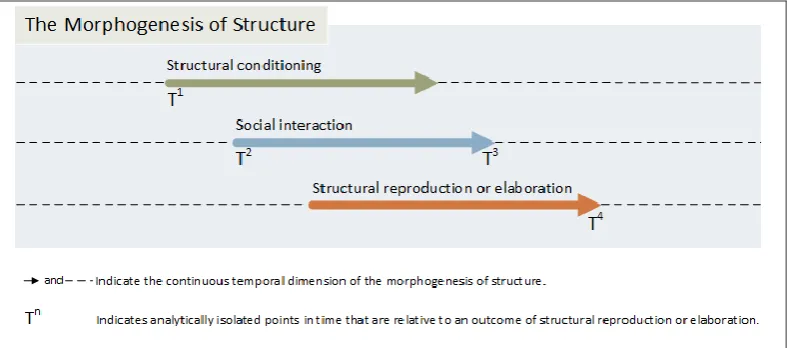
Figure 3-1 The Morphogenesis of Structure ... 62
Figure 5-1 Structural Conditioning and Early Social Interaction in the Morphogenetic Cycles ... 130
Figure 5-2 Structural Conditioning of Increasing Network Complexity ... 139
Figure 5-3 Structural Conditioning of Infrastructure Inflexibility... 142
Figure 5-4 Structural Conditioning of Growing, Uncontrollable Capex and Opex .... 144
Figure 5-5 Structural Elaboration of Traditional Networking Infrastructures ... 155
Figure 5-6 Decoupling of the Forwarding and Control Planes ... 158
Figure 5-7 Aggregation and Centralisation of the Control Plane in SDN Infrastructures ... 159
Figure 5-8 Programmability and Network Abstraction in SDN Infrastructures ... 162
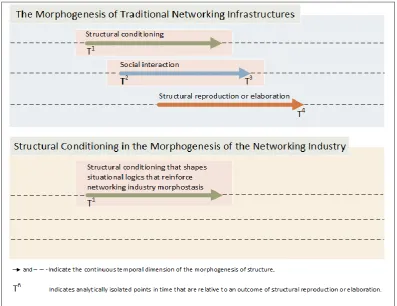
Figure 6-1 Social Interaction in the Morphogenesis of Traditional Networking Infrastructures ... 190
Figure 6-2 A Process of Technical Disaggregation ... 194
Figure 6-3 A Process of Intelligence and Authority Migration from Hardware to Software ... 197
19 Figure 6-5 Cumulative Actualisation of Technical Disaggregation, and Intelligence and Authority Migration from Hardware to Software ... 211
Figure 6-6 Refactoring the Digital Materiality of Infrastructure as an Emergent Generative Mechanism ... 214
Figure 6-7 Parallel Actualisation of Infrastructure Virtualisation with Other Generative Mechanisms ... 223
Figure 6-8 An Illustration of SDN Infrastructure ... 229
Figure 6-9 Parallel Actualisation of Infrastructure Abstraction with Other Generative Mechanisms ... 232
Figure 6-10 Softwarisation as the Sociotechnical Generative Mechanism of the Morphogenesis of Traditional Networking Infrastructures ... 236
20
List of Tables
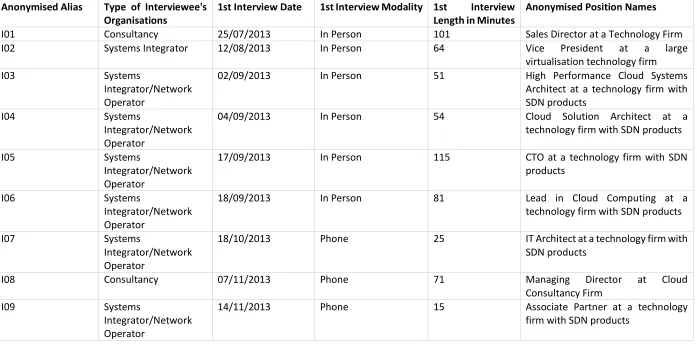
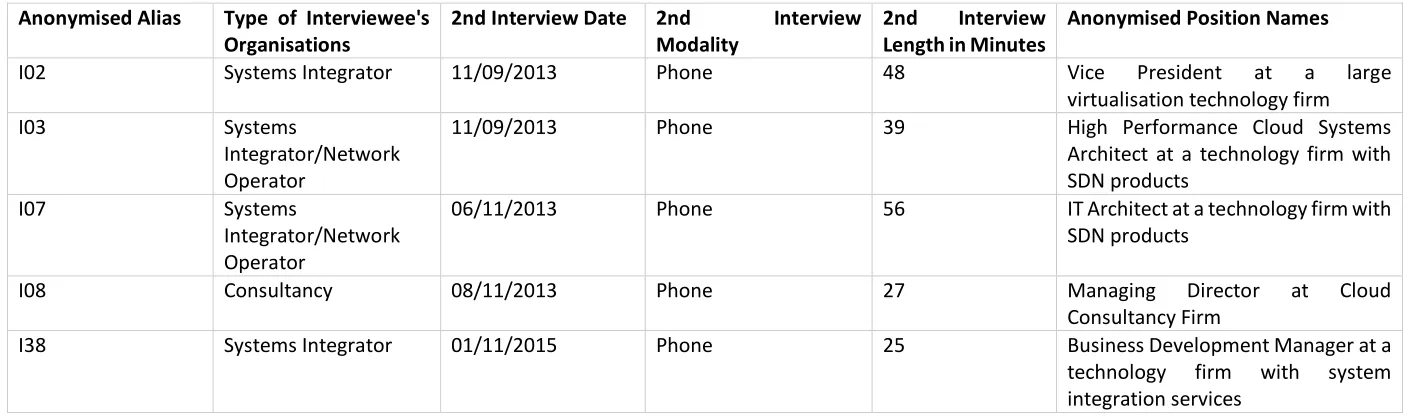
Table 4-1 List of Interviewees ... 91
21
1
Introduction:
Architectural
Evolution
in
Sociotechnically Ossified Digital Infrastructures
“So, how would you describe the problem that SDN (Software-Defined Networking) is a solution for?” – Interviewer (Reuel E. Ocho)
“Essentially, it's that, so far, network infrastructures have been very, the term you use – hear very often, is ‘ossified’. They have been very rigid…”
– Interviewee I33, Head of a technical committee at a Standards Development Organisation, (Meaning of SDN added.)
1.1
Introduction
Digital infrastructures are perpetual (Star & Ruhleder, 1996; Hanseth, et al., 1996; Edwards, et al., 2007; Ribes & Finholt, 2009), and yet they characteristically expand and evolve (Edwards, et al., 2007; Hanseth & Lyytinen, 2010; Tilson, et al., 2010b). Change in digital infrastructures is partly attributed to their openness to extension by diverse innovators, and to their unboundedness – the absence of a finite boundary that restricts their growth (Hanseth & Lyytinen, 2010). Aside from technical innovators, users that create or consume content that populate or traverse these infrastructures contribute to continued expansion and evolution (Benkler, 2000; Zittrain, 2008; Tilson, et al., 2010b).
22 individual user, directly or indirectly, contributes value enjoyed by others in the community (Katz & Shapiro, 1985; Katz & Shapiro, 1994; Suarez, 2005). Similarly, existing users face lower incentive to leave a digital infrastructure due to switching and adoption costs incurred (Katz & Shapiro, 1994; Zhu, et al., 2006; Shapiro & Varian, 1999, pp. 184-186).
Although an important explanatory mechanism, positive network externalities alone
do not reveal reasons for digital infrastructures’ characteristics of expansion and evolution. Complementary to the role of positive network externalities, are the technical qualities and features that underlie digital infrastructures – specifically architecture. The underlying architecture of a digital infrastructure is a stable base whose principles of design and features, inherently give the architecture a flexibility capacity for supporting and cultivating unanticipated change (Tilson, et al., 2010b; Yoo, et al., 2010). This flexibility is a generative capacity (Zittrain, 2008), as it lends itself to continuous innovative exploitation (Tilson, et al., 2010b; Yoo, et al., 2010). That is, the architecture tends towards unbounded generativity, rather than towards the imposition of boundaries (Zittrain, 2008).
Concomitant with characteristics of expansion and evolution, however, is the phenomenon of increasing sociotechnical irreversibility (Hanseth, et al., 1996; Monteiro, 1998; Edwards, et al., 2007; Hanseth & Lyytinen, 2010). As digital
infrastructures expand, positive network externalities reinforce users’ dependence on
them, but as well, they become entangled with other digital infrastructures (Monteiro, 1998; Hanseth, 2001; Egyedi & Spirco, 2011; Monteiro, et al., 2013). These social and technical dependencies intensify and ossify over time, and eventually resist certain kinds of change – in particular, evolution of the underlying architecture in digital infrastructures.
23 lesser degree, the super-imposition of digital infrastructures. A selection of examples includes (Hanseth, 2001; Sahay, et al., 2009; Egyedi & Spirco, 2011; Sanner, et al., 2014; Grisot, et al., 2014; Rodon & Silva, 2015).
Commentaries on architecture note that although digital infrastructures are not designed de novo by a single designer, but rather extend or build on top of existing infrastructures (Star & Ruhleder, 1996; Hanseth & Lyytinen, 2010; Aanestad & Jensen, 2011), initial design decisions (Edwards, et al., 2007; Eriksson & Ågerfalk, 2010; Hanseth & Lyytinen, 2010; Egyedi & Spirco, 2011; Rodon & Silva, 2015), and architectural design principles play a role in the kind of digital infrastructure changes that are possible (Zittrain, 2008; van Schewick, 2010, pp. 23, 37-81; Grisot, et al., 2014; Rodon & Silva, 2015). Most prominent, are arguments that highlight the role of modularity-derived architectural design principles in digital infrastructures. These design principles are explained as being critical enabling architectural features for generativity (Zittrain, 2008) in digital infrastructures (Hanseth, et al., 1996; Hanseth & Lyytinen, 2010; Aanestad & Jensen, 2011; Grisot, et al., 2014; Rodon & Silva, 2015). This perspective on architecture articulates a connection-oriented conceptualisation of architecture, in which the means by which information technology (IT) components
are interconnected, takes importance. Modularity’s standardised interfaces, and low
internal inter-relatedness between modules, is credited for its accommodation of extensions to digital infrastructures at the edges by connecting compatible IT components (Langlois & Robertson, 1992; Hanseth, et al., 1996; Schilling, 2000; Yoo, et al., 2010).
24 permanently disjoint architectures (Hanseth, 2001; Hanseth & Lundberg, 2001; Edwards, et al., 2007; Egyedi & Spirco, 2011).
With IS research on architectural evolution in digital infrastructures largely premised on a conceptualisation of architecture that emphasizes the interrelatedness of modules, architectural evolution by interconnection is most eminent. Underlying architecture either does not evolve, or it evolves with difficulty via complete replacement of its instantiating digital infrastructures or via incremental replacement facilitated by the attachment of transitory gateways, and accompanied by an exercise of cultivating the sociotechnical installed base of the digital infrastructures (Monteiro, 1998; Hanseth, 2001; Hanseth & Lundberg, 2001; Edwards, et al., 2007; Egyedi & Spirco, 2011; Sanner, et al., 2014; Grisot, et al., 2014).
1.2
Research Problem Statement
But architectural evolution by interconnection might be overstating the role of modularity in digital infrastructure architectural evolution. Recent research suggests that materiality is significant in issues of architecture (Henfridsson, et al., 2014). Digital materiality admits changes to the data structure and functionality of digital entities, post their production and distribution (Manovich, 2002, pp. 27-48; Kallinikos, et al., 2010; Yoo, et al., 2010; Kallinikos, et al., 2013; Henfridsson, et al., 2014). This raises a question of whether and to what extent digital materiality may admit architectural evolution, comparably to the way that it admits changes in the functionality of digital entities. That is, can underlying architecture be evolved via the exploitation of the digital materiality of digital infrastructures and if so, how does it occur? Helpful insights on this question may be borrowed from the neighbouring discipline of computer science, particularly in relation to networking infrastructures.
25 2010b), which is the ability to superimpose unanticipated innovation on digital infrastructures, as facilitated by the generative capacity of underlying architecture in networking infrastructures, was exploited (Anderson, et al., 2005; Chowdhury & Boutaba, 2010) to evolve underlying architecture of networking infrastructures (McKeown, et al., 2008; Casado, et al., 2009). A number of owners of large networking infrastructures have since appropriated this innovation and have used it to evolve the underlying architecture of their production networking infrastructures. The innovation was selected specifically because the approach to architectural evolution simultaneously circumvented intense sociotechnical ossification of the architecture of networking infrastructures (Anderson, et al., 2005; Casado, et al., 2009; Chowdhury & Boutaba, 2010; Gartner Inc., 2015a; International Data Corporation, 2015).
Although the generative capacity of the architecture in digital infrastructures and its relationship with digital infrastructure expansion has been well-studied in IS research on digital infrastructures, the mechanisms of underlying architectural evolution in sociotechnically ossified digital infrastructures have not been as widely elaborated, and explanations typically focus on the social cultivation of an installed base (Monteiro, 1998; Hanseth & Lyytinen, 2010; Aanestad & Jensen, 2011; Sanner, et al., 2014; Grisot, et al., 2014). The computer science literature, on the other hand, seems to be engaging architectural evolution in digital infrastructures, but in the absence of any explanatory theorisation. Thus, architectural evolution in sociotechnically ossified digital infrastructures post the advent of these new networking infrastructures, remains imperfectly theoretically articulated.
1.3
Research Objectives and Research Strategy
26 on the journey through the explication of architectural evolution through softwarisation, characteristics of digital infrastructures not previously elucidated in IS research were uncovered as important corollary theoretical insights. These characteristics were found to be instrumental in continued architectural evolution in digital infrastructures.
The research question investigated was the following:
Research Question: Which mechanisms promote architectural evolution in sociotechnically ossified digital infrastructures?
A critical realist embedded case study (Easton, 2010; Wynn & Williams, 2012), was implemented as the research design strategy for finding an answer to the research question (Cohen, et al., 2011, pp. 291-292; Yin, 2014, pp. 49-56). The advent of Software-Defined Networking infrastructures, the type of networking infrastructure that the aforementioned owners of large networking infrastructures have been implementing, was selected as a revelatory case (Mabry, 2008; May & Perry, 2011, pp. 228-233; Yin, 2014, p. 52). The case is revelatory because networking infrastructures are a prime example of sociotechnically ossified digital infrastructures, yet the advent of Software-Defined Networking infrastructures indicates architectural evolution that circumvented these ossifications but that did not occur via either of the aforementioned types of infrastructure replacement processes that have been theorised in IS.
27 of the operation of social, technical, and sociotechnical generative mechanisms, were developed.
The word “promote” was chosen for the research question instead of “cause” in
deference to critical realism’s formulation of causality which may include
transfactually acting generative mechanisms. Critical realist causality and explanation is explained in Chapter 3.
1.4
Thesis Organisation
This thesis continues with an exposition of the theoretical construct of the research question, namely architectural evolution in sociotechnically ossified digital infrastructures. Each concept in the theoretical construct is explained in turn via a review of related literature in Chapter 2. The following chapter presents critical realism as the philosophical base of the research. Chapter 4 introduces the embedded case study research design strategy, and explains the implications of critical realism on the research design. It gradually elucidates the data collection and analysis approaches, articulating the rationale behind various decisions made. The chapter ends by identifying the generalisation argument for the theoretical contributions, and provides a detailing of how ethical considerations were implemented throughout the research.
28
2
Related Literature
2.1
Introduction
This chapter presents related literature that explain the main theoretical construct of the research question: architectural evolution in sociotechnically ossified digital infrastructures. The first section of the chapter clarifies what architecture is, and what is meant by its evolution. Three types of architectural evolution related to digital infrastructures and to the case study are presented. Following this exposition of architectural evolution, sociotechnical ossification is developed out of the technical and social implications of one of the types of architectural evolution. Next, technical details of how networking infrastructures work, which are pertinent to the case study and to the findings of this research are presented. The final section of the chapter
articulates an abstract formulation of what the term “digital” which precedes
“infrastructure” connotes. This explanation of the digital, is particularly important for
understanding how architectural evolution in sociotechnically ossified digital infrastructures occurs.
2.2
Architectural Evolution
2.2.1 What is Architectural Evolution?
29 16-23), and it is implicated in the kind and amount of innovation in1 digital
infrastructures that can occur, and who is allowed to innovate (van Schewick, 2010, pp. 21-81; Crawley, et al., 2016, pp. 16-23). Design principles outline high-level architectural objectives and rules, such as where functionality should be located or how the architecture should be decomposed into smaller IT components (van Schewick, 2010, pp. 23, 37-81; Taylor, et al., 2010, pp. 58-75; Bass, et al., 2013, pp. 10-19). These principles explain the rationale for the original architectural design, and provide guidelines for future architectural evolution in a digital infrastructure while safeguarding important long-term objectives of the digital infrastructure (van Schewick, 2010, pp. 23, 37-81; Taylor, et al., 2010, pp. 58-59,65-68; Bass, et al., 2013, pp. 10-19; Crawley, et al., 2016, p. 211).
The second definitional perspective of architecture is the descriptive perspective (Taylor, et al., 2010, pp. 59-60,65-68). From a descriptive perspective, architecture is the abstract structure of deployed IT components in digital infrastructures, their functionality, how they interact, and the relationships that exist between them as derived from an operating digital infrastructure (or other digital entity) at a point in time (Taylor, et al., 2010, pp. 59-60,65-68).
It is important to understand that these are perspectives. To better understand that these are perspectives consider the following. A prescriptive deployment architecture is the abstract structure that connotes how a digital infrastructure is to be deployed, while a descriptive deployment architecture describes the literal finite abstract structures (Taylor, et al., 2010, pp. 59-60,65-68; Bass, et al., 2013, p. 14) of an operating digital infrastructure.
Architectural evolution may be understood as changes in the architecture of an existing digital infrastructure, that are the outcome of innovations that modify or replace IT
1Here, I use the phrase “innovation in” in isolation from the amplifications of Grisot, et al.
30 components, add [new types of] IT components, or change the responsibilities of, or basis of interactions or relationships between IT components (Grisot, et al., 2014). Innovation which adds, modifies, or duplicates IT components, or inter-connects or super-imposes digital infrastructures (Henderson & Clark, 1990; Hanseth, 2001; Hanseth & Lyytinen, 2010; Grisot, et al., 2014), fall within the scope of the evolution of deployment architecture (from the descriptive perspective) as derived from an operating digital infrastructure at a point in time. For terminological brevity, I shall
refer to deployment architecture as from the descriptive perspective as “deployment
architecture”2 in the remainder of this thesis.
As this research investigated architectural evolution via a case study of the advent of a particular type of networking infrastructure, the remainder of this section will explain architectural evolution in terms of the architecture found in networking infrastructures, namely the Internet layered architecture.
2.2.2 The Internet Layered Architecture
Three design principles have guided the definition of the Internet layered architecture: modularity which facilitates the independent modifiability of modules by co-locating related functionality within the same IT component (abstractly called a module) and by maintaining weak relationships (i.e., loose coupling) between modules such that they interact with each other only via standardised interfaces; layering, a specialisation of modularity (van Schewick, 2010, p. 46), which logically co-locates related modules, and imposes rules that restrict interactions between the modules of different layers (Sanchez & Mahoney, 1996; Schilling, 2000; Yoo, et al., 2010; van Schewick, 2010, pp. 38-47), and the end-to-end principle which advocates minimising the amount of problem-specific functionality that is natively embedded within networking infrastructures, and deferring the responsibility of correctly implementing that functionality to digital hardware and software entities thatuse the infrastructures and
31 that have a more complete knowledge of the required functionality (Saltzer, et al., 1984).
Figure 2-1 The Internet Layered Architecture
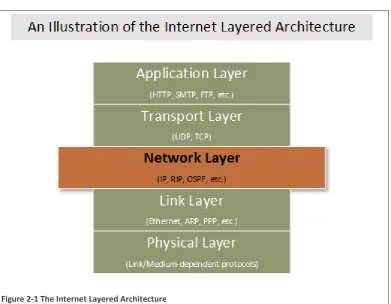
The outcome of the application of these design principles has been a prescriptive five-layer architecture of the Internet, visually illustrated in Figure 2-1, centred around its network layer whose Internet Protocol (IP) (Postel, 1981; Deering & Hinden, 1998) standardises generic rules for packaging, interpreting, and transporting digital data between digital hardware and software entities that are connected to the Internet (Kurose & Ross, 2013, pp. 75-79). By observing the end-to-end principle in its implementation of the Internet Protocol, the network layer acts as a portability layer to other layers (van Schewick, 2010, pp. 47, 89-90), deferring auxiliary problem-specific functionality to upper layers and their standardised protocols – rules for exchanging and interpreting messages between digital hardware and software entities at a layer (Kurose & Ross, 2013, p. 35); for instance, like guaranteeing data delivery (Saltzer, et al., 1984) to the Transport Layer via the Transmission Control Protocol (TCP) (Postel, 1981), or defining protocols for super-imposed applications or infrastructures like File
Transfer Protocol (FTP) and the Web’s Hyper Text Transfer Protocol (HTTP) to the
32 Portability, allows upper layers to change (such as via the addition of new protocols), without compromising the generic interconnectivity and data transportation functionality of the Internet. The Link and Physical layers can also transparently change or be substituted without necessitating significant work that updates existing digital hardware and software entities at layers above the network layer to accommodate new means of transporting data (such as wireless, fibre optics, etc.) (van Schewick, 2010, pp. 48, 89-90).
The five-layer Internet architecture is a type of prescribed architecture that is invariant and generally present at some level of abstraction (Maier & Rechtin, 2002, pp. 283-287; Taylor, et al., 2010, pp. 59-81) in networking infrastructures (Kurose & Ross, 2013, pp. 75-79). For terminological brevity, I shall henceforth refer to this type of prescriptive architecture as core architecture3 in the remainder of this thesis.
The Internet’s modular, layered, core architecture guided by the end-to-end principle bearsminimal assumptions about future usage scenarios, and its network layer tends towards portability, relative to upper layers, i.e., it embodies a capacity for upward flexibility, and portability relative to lower layers, i.e., it embodies a capacity for downward flexibility (Tilson, et al., 2010b). This capacity for upward and downward flexibility is furthered by the homogenisation of the base signification of the data exchanged between and processed within the layers, into a binary script that is separated from and agnostic to the software, hardware or other medium that ultimately processes or generates it (Manovich, 2002, pp. 27-48; Yoo, et al., 2010; Faulkner & Runde, 2013). This base signification is explained in the last section of this
chapter. The flexibility capacity of the Internet’s core architecture, together with
generally public openaccess to participation in the Internet, has been exploited not only for innovating extensions to the Internet’s core architecture through the addition
of protocols, but more predominantly by innovation through recombination and use
3 Indeed, from a descriptive perspective, core architecture may be derived from a deployed
33 (Bygstad, 2010; Henfridsson & Bygstad, 2013) of existing standardised protocols and services, to create new innovations in hardware and software.
2.2.3 Propagation of the Internet’s Core Architecture Instantiations
The definition of the Internet’s invariant core architecture with its standard protocols
(Internet Engineering Task Force, 2016), as well, has been continuously and extensively exploited to proliferate new network deployments. The Internet, as a globally
distributed network of networks (the term “network” is interchangeable with
“networking infrastructure”), is implemented in a distributed manner (van Schewick, 2010, pp. 50-51; Kurose & Ross, 2013, pp. 75-76). The implementation of the
Internet’s five layers’ protocols is distributed across network devices that implement
interconnectivity between Internet Service Provider’s (ISP) and Content Provider
networks which collectively form the Internet’s global networking infrastructure (Tanenbaum, 2003, pp. 14-30; Kurose & Ross, 2013, pp. 58-61).
Under the conditioning of positive network externalities which make an IP-based network preferable, many smaller networks, in enterprises, universities and homes,
implement the Internet’s core architecture protocols across network hardware and
software components to facilitate communication and data transfer between the digital hardware and software entities that are connected to those networks (van Schewick, 2010, pp. 50-51; Kurose & Ross, 2013, pp. 38-61). These networks connect
to the Internet’s global networking infrastructure via communication links to ISP
networks which, in turn are interconnected with other ISP networks that collectively
form the Internet’s global networking infrastructure (Tanenbaum, 2003, pp. 14-30; Kurose & Ross, 2013, pp. 38-61). Depending on their role and public visibility, networks
that connect to the Internet’s global networking infrastructure via its standardised
protocols, may expand the overall Internet. Thus, in abstraction, the proliferation of new networks yields an evolution of the deployment architecture of the Internet, but this evolution occurs in conformance with an invariantcore architecture.
2.2.4 The Generative Capacity of Core Architecture
34 capacity for supporting and occasioning unanticipated change. This capacity, is a generative4 one (Zittrain, 2008), as it lends itself to exploitation, and has been exploited to innovate new protocols, services, hardware and superimposed infrastructures in the application, transport, link and physical layers. It has been exploited to create a global continuously expanding proliferation of interconnected networks, within which the five-layer core architecture is replicated, that extends the
Internet’s deployment architecture. It has also been exploited to create conditions
that have led to an explosion of user-generated content. That is, the core architecture of the Internet tends towards unbounded generativity, rather than towards the imposition of boundaries (Lessig, 2001, pp. 120-141; Zittrain, 2008).
Collectively, the Internet’s expansion and inherent capacity for unboundedness, as a
networking infrastructure, can be traced to the exploited generative capacity of its core architecture, and is underpinned by positive network externalities (Katz & Shapiro, 1985; Katz & Shapiro, 1986; Katz & Shapiro, 1994; Shapiro & Varian, 1999, pp. 173-225; Edwards, et al., 2007; Hanseth & Lyytinen, 2010).
But this is architectural evolution of the deployment architecture.
This description, which highlights unboundedness, flexibility and generativity, has another side: the unbounded growth of the Internet is accompanied by the phenomenonof sociotechnical irreversibility (Hanseth, et al., 1996; Monteiro, 1998; Edwards, et al., 2007; Hanseth & Lyytinen, 2010) which resists architectural evolution of core architecture.
4 Generative capacity as used here, borrows from (Zittrain, 2008) and is distinguished from the
formulation proposed by (Avital & Te'eni, 2009), who define it as an attribute of people or artificially intelligent entities relative to a task performance context. Its use here is not synonymous with their definition of generative fit either, which likewise has a narrow scope of
task performance. The generative capacity of the Internet’s core architecture may include, but
35
2.3
Sociotechnical Ossification of Digital Infrastructures
The change dynamics of digital infrastructures is somewhat paradoxical. On the one hand, the long-term endurance of digital infrastructures is a required quality, but that quality is confronted by, as strong, the necessity to accommodate change (Ribes & Finholt, 2009; Hanseth & Lyytinen, 2010; Tilson, et al., 2010b; Monteiro, et al., 2013)
– change that may include core architectural evolution. Changing the core architecture of a widely proliferated and extensively utilised digital infrastructure is difficult, and in IS research, its accommodation is not usually considered to be a required quality of digital infrastructures.
To elaborate, upward flexibility of the Internet’s network layer necessitated the
creation of standardised stable interfaces, upon which billions of dependencies have been created as IP-based networks have replicated the Internet’s core architecture,
and as digital hardware and software entities connect to the global networking infrastructure (van Schewick, 2010, pp. 89, 98, 151; Gartner Inc., 2015a; International Data Corporation, 2015). As exemplified by the challenges which underlie the slow transition from IP version 4 (IPv4) to IP version 6 (IPv6) (Monteiro, 1998; Wu, et al., 2013), these dependencies constrain core architectural evolution, ossifying as it were, the pre-existing architecture, and by extension, dependencies (Tilson, et al., 2010b).
36 resistance to certain kinds of change (Hanseth, et al., 1996; Tilson, et al., 2010b). It is a condition of technical irreversibility. There is social irreversibility too.
Unlike simple software systems that can be upgraded at once, or one installation at a time, the compositeof IP-based network functionality is dispersed across five layers of protocols that are implemented by physically distributed network hardware devices and software, such that partially changing the core architecture could create incompatibilities and ultimately a partially functioning networking infrastructure with areas across which data cannot traverse (van Schewick, 2010, p. 138; Wu, et al., 2013). The core architecture imposes restrictions on which parts of it must change together, and the order in which they can be changed (Hanseth, et al., 1996; van Schewick, 2010, p. 138). But the distribution of networking infrastructures also implies distribution of control among heterogeneous actors over their architectural evolution (Tilson, et al., 2010b; Rodon & Silva, 2015), and hence the requirement for motivation, agreement, and coordination of change activities (Monteiro, 1998; van Schewick, 2010, p. 138; Wu, et al., 2013).
Consider again, the network layer of the Internet’s core architecture. In addition to
the Internet Protocol, routing protocols exist at this layer. Routing protocols prescribe how data paths through a network are discovered (Tanenbaum, 2003, pp. 350-384; Lammle, 2011, pp. 347-354; Kurose & Ross, 2013, pp. 334-348,389-439). Although the
Internet’s core architecture does not prescribe the balance of responsibility between
hardware and software for implementing its protocols, for reasons of performance, it has become the de facto standard architectural strategy, to implement routing in
network hardware devices, i.e., in routers, with the Internet Protocol’s
implementation distributed across hardware and software (Kurose & Ross, 2013, pp. 346-348). In other words, over time, the way that core architecture is implemented, has itself become an invariant architectural feature in most IP-based networks.
37 But this architecture matters, as there has developed a tight coupling between the
abstract stipulations of the Internet’s core architecture, and the de facto standard
architectural implementation of those stipulations. In the context of distributed control, changes to the core architecture, may require a propagation of updated protocol implementations across a vast number of network devices deployed in networks, motivation of competing manufacturers of network hardware devices (e.g., such as Cisco Systems, Juniper Networks, HP, Alcatel-Lucent and others) to create and make available the updates, and motivation of the administrators of networks in which the devices are deployed, to update devices (Wu, et al., 2013). Significantly more problematic, are changes that necessitate adjustments to the implementation architecture, ossified within network hardware devices, not only due to technical difficulty (Anderson, et al., 2005; Chowdhury & Boutaba, 2010; Wu, et al., 2013), but also due to the interest that some organisations, such as manufacturers of network hardware devices and those that make or rely on complementary products and services, have in retaining the existing architecture.
Professional careers, complementary products and services, organisational structure and practice, and industry structure relate to the architecture of products (Henderson & Clark, 1990; Sanchez & Mahoney, 1996; Baldwin, 2008; Yoo, et al., 2010). Examples from the networking industry include, an industry structured around manufacturers of network hardware devices, owners of networking infrastructures, and network systems integrators, and certification programs that train networking professionals for careers premisedon directly intervening at network hardware devices where they can
configure routing behaviour (e.g., Cisco’s Career Certification Program or Juniper’s
Certification Program (Cisco Systems, n.d.-a; Juniper Networks Inc., n.d.)). Convincing diverse, economically motivated social actors to embrace core architectural evolution or associated implementation architectural evolution is a considerably challenging exercise in installed base cultivation (Monteiro, 1998; Hanseth & Lyytinen, 2010; Aanestad & Jensen, 2011; Sanner, et al., 2014; Grisot, et al., 2014).
38 increasing irreversibility(Hanseth, et al., 1996; Monteiro, 1998; Edwards, et al., 2007; van Schewick, 2010, p. 138; Hanseth & Lyytinen, 2010; Egyedi & Spirco, 2011).
2.4
Introduction to Networking
2.4.1 Introduction
Having explained architectural evolution, and sociotechnical ossification that resists certain types of architectural evolution, a technical introduction to networking infrastructures is presented next. Indeed, understanding general characteristics of digital infrastructures which apply to networking infrastructures is important. However, to grasp the findings of this research requires understanding some basic technical details of how networking infrastructures work. A comprehensive tutorial on networking is beyond the scope of this thesis, and many of the particularities of networking are not pertinent to the answer to the research question. In what follows, an ample but simplified introduction to networking concepts that are central to an
understanding of the research’s findings is given.
2.4.2 The Function of a Network
39 2.4.3 The Forwarding Function
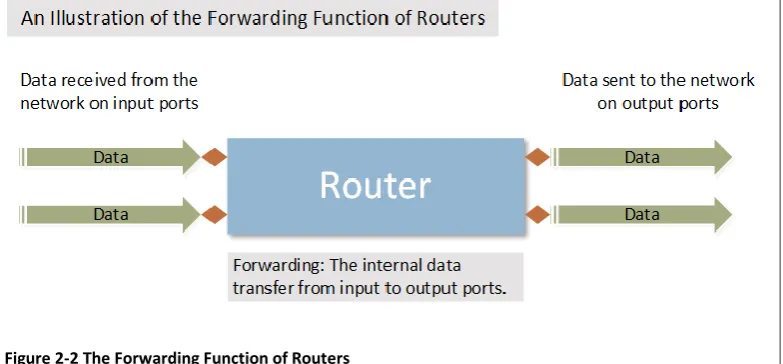
[image:39.595.97.489.199.381.2]As visually illustrated in Figure 2-2, each individual router within a network has input links or ports, via which data is received and output ports onto which data is transferred to an intermediary or final destination (Lammle, 2011, pp. 3-28; Kurose & Ross, 2013, pp. 331-352).
Figure 2-2 The Forwarding Function of Routers
The internal transfer of data from an input port to its appropriate output port within a router is called forwarding (Tanenbaum, 2003, p. 350; Kurose & Ross, 2013, pp. 334-336,346-348). The forwarding function of multiple routers in a network is what collectively realises the functionality of networks – interconnectivity and transportation of data from a source to its destination.
2.4.4 The Control Function
A router determines the output port onto which received data should be placed with the assistance of its control function5 (Lammle, 2011, pp. 3-28; Kurose & Ross, 2013,
pp. 331-352).
5 The control function is tasked with other responsibilities, but only an explanation of routing is
40 Whereas the forwarding function is a conceptually simple internalised process of, looking up the assigned output port for data received on an input port using the destination information that labels the incoming data in a forwarding table, and then placing the data onto the appropriate output port identified in the forwarding table (Kurose & Ross, 2013, pp. 334-336, 346-348), the control function is not necessarily as strongly internally encapsulated.
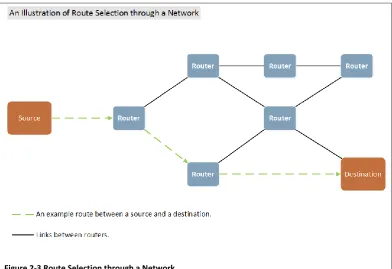
Figure 2-3 Route Selection through a Network
An implicit non-functional requirement of a networking infrastructure is the adherence to performance and data delivery expectations stipulated by standards, network operators, and its ultimate end users. Consequently, routers are tasked with being aware of the best path or route through the network from a source to a destination and this is facilitated by routing algorithms which attempt to determine these routes through the network (Tanenbaum, 2003, pp. 350-384; Lammle, 2011, pp. 347-354; Kurose & Ross, 2013, pp. 334-348,389-439). Figure 2-3 visually illustrates what an optimal route from some source to a destination in a network might be, as calculated via routing algorithms.
41 Shortest Path First (OSPF), Intermediate System to Intermediate System (IS-IS), and Border Gateway Protocol version 4 (BGP4)), to calculate routes through a network, and each router exchanges the calculated best routes or routing information with other routers. The control function of each router processes received routing information and updates a routing table of best routes (Lammle, 2011, pp. 20-21; Kurose & Ross, 2013, pp. 334-347, 389-439). As well, the control function may be manually invoked and updated by direct human intervention with preferred routing information (Lammle, 2011, p. 347; Kurose & Ross, 2013, p. 392).
A distinction between the forwarding and control functions is that while the forwarding is internal to a router, the routing responsibility of the control function is distributed across the network as a collaborative effort of its routers (Kurose & Ross, 2013, p. 357).
2.4.5 The Relationship between the Forwarding and Control Functions
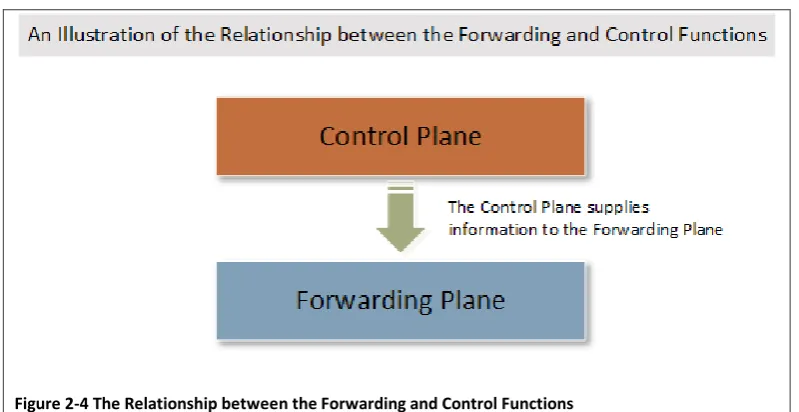
[image:41.595.92.492.478.684.2]The relationship between the forwarding and control functions is illustrated in Figure 2-4. The control function updates the forwarding table with simplified decision making information (i.e., for selecting the appropriate output port based on destination information that labels incoming data) taken from the more elaborate routing table that contains network route information (Kurose & Ross, 2013, p. 335).
42 In networking, the demarcation of forwarding and control functionality, though co-located within routers, is referred to as a logical stratification of routers into a forwarding plane and a control plane (Kurose & Ross, 2013, pp. 347-348).
2.4.6 Functionality is Embedded within the Hardware
It is important to reiterate the co-location of the forwarding and control planes within a single physical router in spite of the internal logical stratification.
For emphasis, taking a standard Cisco router architecture as an example, the forwarding function of the logical forwarding plane is implemented in hardware via the use of application-specific integrated circuits (ASIC), with the forwarding table of the forwarding plane typically stored in specialised [hardware] memory known as ternary content-addressable memory (TCAM) (Lammle, 2011, pp. 24, 278-279; Kurose & Ross, 2013, pp. 346-350).
Similarly, the control function of the control plane, though implemented as software, executes within the confinement of a routing processor implemented in the hardware of the router, and this software is stored on read-only memory (ROM) or on Flash Memory in the router (Lammle, 2011, pp. 278-279; Kurose & Ross, 2013, pp. 346-350). Manually configured routing information is typically made persistent by storing them with other router configuration settings in non-volatile random access memory (NVRAM), such that on start-up of a router these static routes are loaded into the routing table (and dynamic routes re-generated) in random access memory (RAM) (Lammle, 2011, pp. 372-373).
43
2.5
Understanding Digital Materiality
2.5.1 Introduction
According to extant IS theorising, digital infrastructures are shared, continuously evolving and expanding, collectives of heterogeneous IT capabilities, along with their communities of users, innovators, and organisational and institutional structures and forces that sustain them (Edwards, et al., 2007; Hanseth & Lyytinen, 2010; Tilson, et al., 2010b). Digital infrastructures are never designed de novo, but instead arise as the outcome of reproduction, or extensions and changes to earlier infrastructures (Star & Ruhleder, 1996; Hanseth & Lyytinen, 2010; Tilson, et al., 2010b; Aanestad & Jensen, 2011), or out of the adaptation and transfer of local information systems into broader non-local contexts (Star & Ruhleder, 1996; Edwards, et al., 2007). Although they undergo change, digital infrastructures are characteristically perpetual (Star & Ruhleder, 1996; Hanseth, et al., 1996; Edwards, et al., 2007; Ribes & Finholt, 2009). These are important characteristics of digital infrastructures, but they do more to
explain the term “infrastructure” than they do to explain what is meant by “digital”.
This section considers what is meant by “digital”. In so doing it produces a somewhat
abstract definition of the make-up of digital infrastructures, that provides a highly important foundation for the later analysis.
2.5.2 Digital Materiality
The terms materiality and digital materiality have been used in IS research to describe what constitutes digital entities such as digital infrastructures, but there remains, nonetheless, a lack of consensus on what the objects of study referred to by these terms are (Kallinikos, et al., 2012; Leonardi, 2012).
44 focus on the space of interaction between digital entities and humans. They conceptualise digital entities as being relatively meaningless outside of a context of practice, and suggest that whatever defines materiality, is constituted through interaction (Leonardi, 2010; Faraj & Azad, 2012). That is, either social interaction completes the account of the materiality of digital entities (Faulkner & Runde, 2009), or only actions and their consequences are material (Pentland & Singh, 2012).
Studies of sociomateriality go further to suggest an “inseparability of meaning and matter” (Scott & Orlikowski, 2014, p. 873), such that the digital entity itself is in some
sense ontologically materially co-constituted in practice (Orlikowski, 2007; Orlikowski & Scott, 2008; Scott & Orlikowski, 2012; Scott & Orlikowski, 2014). A few studies have tried to acknowledge the close intertwining of the social and the technical of interest in sociomateriality, while avoiding a fusion of epistemology and ontology, and ontological co-constitution of digital entities through practice, by treating materiality of digital entities, and materiality constituted through interactions of digital entities and humans as ontologically separate (Leonardi, 2011; Leonardi, 2013). Still others argue that some of the materiality that constitutes digital entities is really an immateriality (Kallinikos, 2012; Faulkner & Runde, 2013). (See also (Leonardi, 2010; Pentland & Singh, 2012; Kallinikos, et al., 2012, pp. 8-9)).
Whatever the philosophical arguments on materiality, what remains inescapable is the existence of digital entities whose technical constitution cannot be avoided if factual rather than counterfactual or incomplete statements about their make-up are to be made. For this research, it was particularly important to leverage an understanding of the technical constitution of infrastructures indicated by the term “digital” distinctly
45
2.5.3 Digital Materiality in Abstraction
So what do these terms, bearer, form, function, and matter mean? Bearer refers to whatever carries out or helps to manifest function. For example, routers are bearers of function in networking infrastructures. A bearer is constituted of form and matter (Kallinikos, 2012; Faulkner & Runde, 2013; Crawley, et al., 2016, pp. 27-29;67-68). Broadly, matter gives things their embodying constitution, and may manifest as materials distinguished by intrinsic properties (Kallinikos, 2012). Form, “provides the mold to which matter enters” (Kallinikos, 2012, p. 71). It imposes organisation onto
the matter that participates in, or is constitutive of the bearer. Quoting Crawley, et al. (2016) who elaborate form:
“Form has shape, configuration, arrangement, or layout. Over some period of time, form is static and perseverant (even though form can be
altered, created, or destroyed). Form is the thing that is built; the
creator of the system builds, writes, paints, composes, or manufactures
it. Form is not function, but form is necessary to deliver function.” – (Crawley, et al., 2016, pp. 27-29)
“Form is the physical or informational embodiment of a system that exists or has the potential for stable, unconditional existence, for some
period of time, and is instrumental in the execution of function. Form
includes the entities of form and the formal relationships among entities.
Form exists prior to the execution of function.” – (Crawley, et al., 2016, p. 68) (Underline emphasis added.)
46 “Function is what a system does; it is the activities, operations, and
transformations that cause, create, or contribute to performance6.
Function is the action for which a thing exists or is employed. Function
is not form, but function requires an instrument of form.
…
Function consists of a process and an operand. The process is the part
of function that is pure action or transformation, and thus it is the part
that changes the state of the operand. The operand is the thing whose
state is changed by that process. Function is inherently transient; it
involves change in the state of the operand (creation, destruction, or
alteration of some aspect of status of the operand).” – (Crawley, et al., 2016, p. 29) (Underline emphasis and footnote annotation added.)
Traditionally, it has been that form, function and matter share a close relation where, depending on the perspective from which they are considered, function proscribes types of physical materials unsuitable for executing it, and form bears upon what functions are possible or are occasioned (Kallinikos, 2012). Alternatively, it may be said that matter – intermediated by its configuration, that is, its form – admits certain types of function and not others (Kallinikos, 2012). This remains true and is straightforward to understand for physically executed (via manual or mechanical operation) function. Digital infrastructures are not confined primarily to physical execution of function against a physical operand. As a corollary, form, function, and matter relate differently to one another. The relationship between form, function and matter in digital infrastructures is mediated by another abstract concept called binary signification, which helps to account for key differences with the traditional relationships between these abstract elements.
6 In this quote, the authors are referring strictly of how well technical execution of function is
47 Binary signification refers to the representation of information, regardless of its ultimate meaning, as basic sequences of one of two binary values: ‘1’ or ‘0’ (Yoo, et al., 2010; Blanchette, 2011; Berry, 2011, pp. 54-55; Faulkner & Runde, 2013). It is a standardisation and homogenisation of how information is semioticallycaptured (Yoo, et al., 2010; Berry, 2011, pp. 54-55; Kallinikos, 2012). Binary signification, allows function (i.e., what actions must be carried out) in digital infrastructures (and in digital entities in general) to be encoded in abstraction from whatever bearer eventually executes it (Blanchette, 2011; Berry, 2011, pp. 94-97). The bearer must only understand binary signification, that is, it must be digital (Kallinikos, et al., 2010; Kallinikos, et al., 2013), and be able to interpret a function expressed in binary signification to carry out the function.
Thus, binary signification is implicated in a looser coupling within digital infrastructures, of relationships between form, function, and matter (Kallinikos, 2012), in that definition of function can be decoupled from and be indifferently transferrable between different bearers. In other words, function is not necessarily tied to a particular instance of a bearer (with its form and matter). Still, binary signification is manifested via matter that admits its representation (such as silicon transistors, magnetic variations, optical patterns, electric voltages, physical pits on plastic, etc. (Berry, 2011, pp. 96-97; Blanchette, 2011)), though as a type of signification, it remains logically indifferent to and decoupled from bearers, and from what it signifies – here, definition of function, but also the operands of function, i.e., data (Yoo, et al., 2010; Kallinikos, et al., 2010; Blanchette, 2011; Berry, 2011, pp. 54-55; Kallinikos, et al., 2013).
In summary, digital infrastructures are technologically constituted by digital materiality, and permeated by binary signification (Tilson, et al., 2010b). Irrespective of any variations in thought on digital materiality in the IS literature, what remains invariant are these abstract elements of form, function and matter. Moreover, the
word “digital” in the term “digital materiality” connotes the involvement of binary
48 2012; Kallinikos, et al., 2013) such as through processes of standardisation which prescribe what is manifested through form, function, matter and their bearers7
(Hanseth, et al., 1996; Hanseth & Monteiro, 1997; Hanseth, 2000; Iannacci, 2010; Eriksson & Ågerfalk, 2010; Egyedi & Spirco, 2011).
2.6
Chapter Summary
This chapter presented related literature that clarified the meanings intended by each aspect of the theoretical construct in the research question. Three types of architectural evolution were presented: deployment architectural evolution from a descriptive perspective which is the outcome of continued expansion of digital infrastructures, core architectural evolution which is change in prescribed architecture that is present throughout a type of digital infrastructure such as the Internet architecture in networking infrastructures, and implementation architectural evolution which is change in the internal constitution of IT components in digital infrastructures. The formation of social and technical dependencies on digital infrastructures and the interrelationships between these dependencies was explicated to establish what is meant by sociotechnical ossification.
Next details of how networking infrastructures work which are pertinent to the case study and to the findings of this research were presented. Of primary importance is the function of the control and forwarding planes, the relationship between the planes, and the co-location of these functional planes within the confines of network hardware devices called routers. Finally, because as will later be shown the architectural evolution in digital infrastructures which circumvents sociotechnical ossification relies on an exploitation of the digital materiality of digital infrastructures,
7 For this reason, throughout this thesis, digital infrastructures remain characterised as being
49 an explanation of digital materiality in terms of abstract elements of form, function, matter, complemented by concepts of bearers and binary signification was presented.
The foundation provided in these four aspects of the research question’s theoretical
50
3
Theory
3.1
Introduction
This chapter introduces critical realism as the philosophical basis of this research. Methodological implications of critical realism are presented in the Methodology chapter. In this introduction, an overview of key principles of critical realism is provided.
Critical realism holds a philosophical position on ontology, that was developed as an alternative to anthropocentric philosophies that define ontology in terms of what humans experience, or are able to experience (Bhaskar, 1998a; Hartwig, 2007, pp. 40-41). In concordance with realist ontology (Collier, 1994, pp. 3-30; Crotty, 1998, pp. 10-11), critical realism emphasizes that there is a distinction between knowledge and methods of knowledge production, and the objects about which knowledge is. The distinction demarcates knowledge into two dimensions: an intransitive dimension and a transitive dimension (Collier, 1994, pp. 3-30,50-51; Bhaskar, 1998a; Sayer, 2000, pp. 10-28).
Within the intransitive dimension of knowledge are the objects of knowledge – that is, the objects about which knowledge is. For the natural world, these objects of knowledge are enduring, whereas in the social, the objects of knowledge, though considered intransitive, are relatively enduring (Archer, 1982; Collier, 1994, pp. 137-168; Archer, 1995, pp. 135-161; Archer, 1998; Bhaskar, 1998a; Engholm, 2007). Nonetheless, for both the natural world and social reality, as per critical realist conceptualisation of real