Open Access
Research article
Insight dimensions and cognitive function in psychosis: a
longitudinal study
Manuel J Cuesta*, Victor Peralta, Amalia Zarzuela and Maria Zandio
Address: Psychiatric Unit of "Virgen del Camino" Hospital. E-31008 Pamplona, Spain
Email: Manuel J Cuesta* - [email protected]; Victor Peralta - [email protected]; Amalia Zarzuela - [email protected]; Maria Zandio - [email protected]
* Corresponding author
Abstract
Background: It has been reported that lack of insight is significantly associated with cognitive disturbance in schizophrenia. This study examines the longitudinal relationships between insight dimensions and cognitive performance in psychosis.
Methods: Participants were 75 consecutively admitted inpatients with schizophrenia, affective disorder with psychotic symptoms or schizoaffective disorder. Assessments were conducted at two time points during the study: at the time of hospital discharge after an acute psychotic episode and at a follow-up time that occurred more than 6 months after discharge. A multidimensional approach of insight was chosen and three instruments for its assessment were used: the Scale to Assess Unawareness of Mental Disorder (SUMD), three items concerning insight on the Assessment and Documentation in Psychopathology (AMDP) system and the Insight and Treatment Attitudes Questionnaire. The neuropsychological battery included a wide range of tests that assessed global cognitive function, attention, memory, and executive functions.
Results: After conducting adequate statistical correction to avoid Type I bias, insight dimensions and cognitive performance were not found to be significantly associated at cross-sectional and longitudinal assessments. In addition, baseline cognitive performance did not explain changes in insight dimensions at follow-up. Similar results were found in the subset of patients with schizophrenia (n = 37). The possibility of a Type II error might have increased due to sample attrition at follow-up.
Conclusion: These results suggest that lack of insight dimensions and cognitive functioning may be unrelated phenomena in psychosis.
Background
Psychosis is expressed through a wide range of psycho-pathological phenomena and different outcomes. The neurobiological underpinnings of psychosis remain unknown despite extensive research in the last century. The clinical heterogeneity within psychosis has led to a
debate concerning what the 'core' manifestations of psy-chosis are, which is still progressing [1]. However, it is widely acknowledged that lack of insight is the most prev-alent symptom in psychosis [2] and it has a notable influ-ence on cooperation with treatment and clinical outcome in psychotic patients [3].
Published: 31 May 2006
BMC Psychiatry 2006, 6:26 doi:10.1186/1471-244X-6-26
Received: 11 November 2005 Accepted: 31 May 2006
This article is available from: http://www.biomedcentral.com/1471-244X/6/26
© 2006 Cuesta et al; licensee BioMed Central Ltd.
Insight involves different underlying phenomena and now includes multidimensionality as an attribute [4]. Two multidimensional models are widely accepted. David [5] hypothetized that insight comprises three dimensions: recognition that one has a mental illness, the ability to relabel unusual mental events as pathological, and adherence with treatment. These insight dimensions are overlapping, dimensional and dynamic phenomena, which allow for particular variations along the course of the illness. This model holds face validity and has also been used by our group and others [6]. The other multidi-mensional model, proposed by Amador et al [4], distin-guishes between the two main components of insight: unawareness of illness and incorrect attribution of deficit or consequence of illness. Provided that insight is a dynamic symptom domain and may change along the course of the illness, Amador et al developed an ment scale that allows for current and retrospective assess-ments of these two main components of insight.
Explanations of the causes of lack of insight are purely hypothetical and pending clarification. Psychological processes [7,8], neurocognitive mechanisms [4] and psy-chopathological explanations have been proposed as explanations [9]. Two methods for exploring the hypo-thetical neurocognitive dysfunction associated with lack of insight have been used: neuroimaging procedures and neuropsychological assessment. Inconsistent findings have been reported by nine neuroimaging studies that focused on insight. Four out of the nine studies reported significant associations between lack of insight and either ventricular enlargement [10], smaller brain and intracra-neal volumes [11], frontal lobe atrophy [12], bilateral vol-ume reductions in middle frontal gyrus, gyrus rectus, and left anterior cingulate gyrus [13] or paralimbic structures [14]. However, these results should be taken as inconclu-sive due to severe limitations in the studies that reported positive findings. These limitations included the absence of specific instruments for the assessment of insight [10] and the inclusion of small samples [11,12]. In addition, many of these studies were performed with patients with chronic schizophrenia, making it difficult to disentangle the effects of illness chronicity and exposure to antipsy-chotic drugs. To overcome this limitation, two studies examined the relationship between insight in first-epi-sode psychotic patients and specific brain regions, such as the cingulated gyrus and dorsolateral prefrontal cortex, respectively [15,16]. In addition, significant correlations were not found between cerebral ventricular enlargement and insight in a large set of individuals with recent onset psychosis [17], as well as in another recently published study from the same group [18].
Conflicting findings have emerged concerning the rela-tionship between insight and neuropsychological
per-formance in psychosis. Although several methodological limitations have hampered the results, 37 studies (33 cross-sectional and four longitudinal studies) have been carried out. Out of the 33 cross-sectional studies, 22 showed significant relationships with executive measures [7,8,18-30] or other neuropsychological tests [31-36]. In addition, significant relationships between insight and neuropsychological [9,37-44] or intellectual performance [11,45] were not found in one-third of the 33 cross-sec-tional studies. In regards to longitudinal studies, three out of the four studies did not show significant associations between insight and cognitive performance [17,46,47]. However, executive and memory domains were associated with lack of insight in one study [48] and positive atti-tudes towards medication were associated with better per-formance on tests of verbal working memory in a forensic sample of patients with schizophrenia [49].
The variability in these findings may be accounted for by the different instruments used to assess insight and cogni-tive functioning, design limitations (i.e., cross-sectional design), or a lack of statistical power in the studies. The present study was conducted to examine if cognitive dys-function can predict the degree of insight into illness in patients suffering from psychosis. A dimensional approach and a longitudinal design were used. Specifi-cally, our study was developed from the hypothesis that lack of insight is not determined by a neuropsychological disturbance. The objectives were to ascertain: whether cross-sectional neuropsychological disturbance is associ-ated with insight dimensions at the time of hospital dis-charge after a psychotic episode and after a long period of stabilization and if baseline neuropsychological perform-ance predicts disturbperform-ances on insight dimensions at fol-low-up.
Method
The study design was longitudinal and involved assess-ments at two different time points. The assessassess-ments meas-ured multidimensional aspects of insight, psychopathological status and neuropsychological per-formance in a group of patients suffering from psychosis. This report presents a brief description of the study's methodology, as a description of the sample and psycho-pathological and insight assessment procedures have been reported elsewhere [50].
Patients
DSM-IV [51] criteria for schizophrenia (n = 37), affective disorder with psychotic symptoms (n = 27) and schizoaf-fective disorder (n = 11). The Comprehensive Assessment Schedule History (CASH) [52] was used as a semistruc-tured interview derive each patient's diagnosis and to assess psychopathology at baseline and follow-up. Inter-rater reliabilities for the positive and negative symptom scales have been reported as good to excellent [53]. The psychopathological, depressive and manic dimensions from Liddle's three-syndrome model [54] were computed. Clinicians completed the Clinical Global Impression scale (CGI) [55]. The CGI is a 7-point scale ranging from 1(very much improved) to 7(very much worse). This scale was com-pleted during the baseline and follow-up assessments periods of this study.
There were 19 patients that dropped out of the study and were not available for follow-up assessment. Our research program and its included protocols were approved by the Ethic Committee of our Hospital. Participants gave their informed consent to collaborate in the assessment proce-dures. Patients with a history of organic central nervous system disorder, drug or alcohol abuse in the past year or mental retardation were excluded.
Procedure and assessment measures
The assessment of insight utilized three instruments: (a) the Scale to assess Unawareness of Mental Disorder (SUMD) [56], (b) the Insight and Treatment Attitudes Questionnaire (ITAQ) [57], and (c) three insight items from the Manual for the Assessment and Documentation in Psychopathology (AMDP) [58]. The AMDP items were lack of feeling ill, lack of insight and uncooperativeness. Insight assessment was conducted in two sessions: the AMDP insight items and the SUMD were administered during the first session and the ITAQ was administered during the second session. The SUMD assessments were conducted by one of the researchers (MJC). The AMDP items were scored by MJC & VPM. The third researcher (AZ) scored the ITAQ. The authors participated in a pilot study in order to reach a consensus on ratings that were obtained using the three insight instruments. The proce-dure for this pilot study involved the authors completing independent ratings of interviews that were conducted with fifteen patients who were consecutively admitted to the hospital with a psychotic episode. This procedure was followed by a discussion about each patient in order to reach consensus ratings. High inter-rater reliability between the two raters for AMDP-insight items has been previously reported [9]. Each evaluator was blind to the measures of the other researchers. A description of the three instruments has been reported elsewhere [50].
Neuropsychological assessment
A neuropsychological battery was selected to provide a wide assessment of cognitive functions. These instru-ments measured cognitive functions that are commonly disturbed in schizophrenia, such as attention, memory and executive functions. The Information test of the WAIS was used to assess global [59]. Immediate and delayed verbal memory, and verbal fluency were assessed by means of subtests of a Spanish-adapted neuropsychologi-cal battery [60]. The immediate and delayed Verbal Mem-ory tasks of our battery were very similar to the Logical Memory tests of the Wechsler Memory Scale. The Verbal Fluency test consisted of the recording of the number of animals in 1 minute. Attention and executive function were assessed with two tests: the form B of the Trail Mak-ing Test [61] and the Stroop Color Word Test [62]. Finally, the Wisconsin Card Sorting Test (WCST) [63] was also used as a measure of executive function. Baseline insight and cognitive assessments took place after remission of the acute episode, during the days just before discharge (mean admission duration 3.67 ± 3.1 weeks).
Statistical analysis
Initially, inspection of variables was carried out and those variables non-normally distributed were transformed. Pearson correlation analyses between cognitive and insight measures were carried out at baseline and follow-up assessments. Bonferroni inequality correction was cho-sen to account for a high number of statistical tests [64]. The potential confounding effect of length of illness and illness severity over cognition and insight was tested by means of 'partial correlation' analyses.
As a complementary analytical methodology used to avoid conducting a large number of statistical procedures and to analyze insight dimensions, the data was summa-rized by means of two separated 'principal component factor analyses' of baseline insight and of neuropsycho-logical variables. Oblique rotation was chosen to avoid symptom overlapping on factors and to extract meaning-ful factors of cognitive variables. In order to match these baseline factors with the same factors at the follow-up assessment, the same variables were used in two 'factor analyses' that were carried out at follow-up. The number of resulting factors was fixed 'a priori' to the same number of factors of respective baseline assessments.
Statistical analyses were performed using Statistical Pack-age for the Social Sciences (SPSS Inc, Chicago).
Results
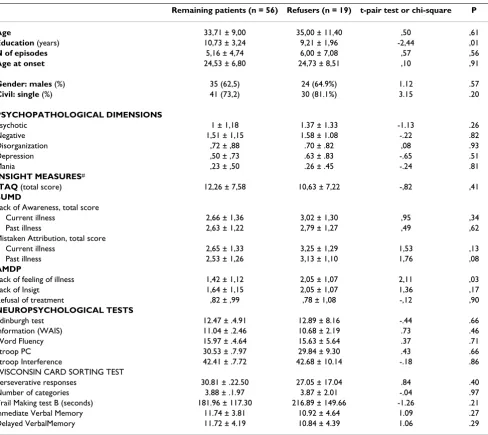
Table 1 displays the descriptive results of the demo-graphic, insight and neuropsychological variables. Attri-tion bias (25%) during the study was examined through comparisons of basal insight and basal cognitive dimen-sions between refusing patients and those patients who remained in the study. Patients who refused showed lower educational background than patients who remained in the study (t = 2.44, p ≤ 0.01). No significant statistical dif-ferences between these two groups of patients on insight or neuropsychological measures were found. A trend
towards significant differences was found between these two groups on the lack of feeling ill on the AMDP, how-ever this result did not reach statistical significance after a correction for the number of tests that were performed (t = -.2.11, df = 73, p ≤ 0.038).
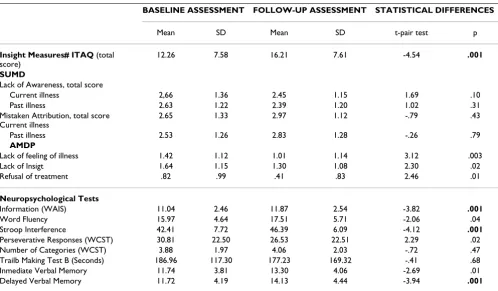
[image:4.612.63.551.281.716.2]Differences between baseline and follow-up measures, after applying Bonferroni inequality correction to account for a high number of statistical procedures, are shown in Table 2. Neuropsychological performance was relatively stable across assessments, with the exception of improve-ment on Information (WAIS), the Interference task of the Stroop test and delayed verbal memory. Insight measures only showed significant improvement on the ITAQ score
Table 1: Baseline sociodemographic, insight and neuropsychological variables comparison between patients remaining in the study and those who refused to participate in follow-up assessment.
Remaining patients (n = 56) Refusers (n = 19) t-pair test or chi-square P
Age 33,71 ± 9,00 35,00 ± 11,40 ,50 ,61
Education (years) 10,73 ± 3,24 9,21 ± 1,96 -2,44 ,01
N of episodes 5,16 ± 4,74 6,00 ± 7,08 ,57 ,56
Age at onset 24,53 ± 6,80 24,73 ± 8,51 ,10 ,91
Gender: males (%) 35 (62,5) 24 (64.9%) 1.12 .57
Civil: single (%) 41 (73,2) 30 (81.1%) 3.15 .20
PSYCHOPATHOLOGICAL DIMENSIONS
Psychotic 1 ± 1,18 1.37 ± 1.33 -1.13 .26
Negative 1,51 ± 1,15 1.58 ± 1.08 -.22 .82
Disorganization ,72 ± ,88 .70 ± .82 ,08 .93
Depression ,50 ± ,73 .63 ± .83 -.65 .51
Mania ,23 ± ,50 .26 ± .45 -.24 .81
INSIGHT MEASURES#
ITAQ (total score) 12,26 ± 7,58 10,63 ± 7,22 -,82 ,41
SUMD
Lack of Awareness, total score
Current illness 2,66 ± 1,36 3,02 ± 1,30 ,95 ,34
Past illness 2,63 ± 1,22 2,79 ± 1,27 ,49 ,62
Mistaken Attribution, total score
Current illness 2,65 ± 1,33 3,25 ± 1,29 1,53 ,13
Past illness 2,53 ± 1,26 3,13 ± 1,10 1,76 ,08
AMDP
Lack of feeling of illness 1,42 ± 1,12 2,05 ± 1,07 2,11 ,03
Lack of Insigt 1,64 ± 1,15 2,05 ± 1,07 1,36 ,17
Refusal of treatment ,82 ± ,99 ,78 ± 1,08 -,12 ,90
NEUROPSYCHOLOGICAL TESTS
Edinburgh test 12.47 ± .4.91 12.89 ± 8.16 -.44 .66
Information (WAIS) 11.04 ± .2.46 10.68 ± 2.19 .73 .46
Word Fluency 15.97 ± .4.64 15.63 ± 5.64 .37 .71
Stroop PC 30.53 ± .7.97 29.84 ± 9.30 .43 .66
Stroop Interference 42.41 ± .7.72 42.68 ± 10.14 -.18 .86
WISCONSIN CARD SORTING TEST
Perseverative responses 30.81 ± .22.50 27.05 ± 17.04 .84 .40
Number of categories 3.88 ± .1.97 3.87 ± 2.01 -.04 .97
Trail Making test B (seconds) 181.96 ± 117.30 216.89 ± 149.66 -1.26 .21 Inmediate Verbal Memory 11.74 ± 3.81 10.92 ± 4.64 1.09 .27
Delayed VerbalMemory 11.72 ± 4.19 10.84 ± 4.39 1.06 .29
and a trend toward significant improvement on the AMDP 'Lack of feeling of illness' score.
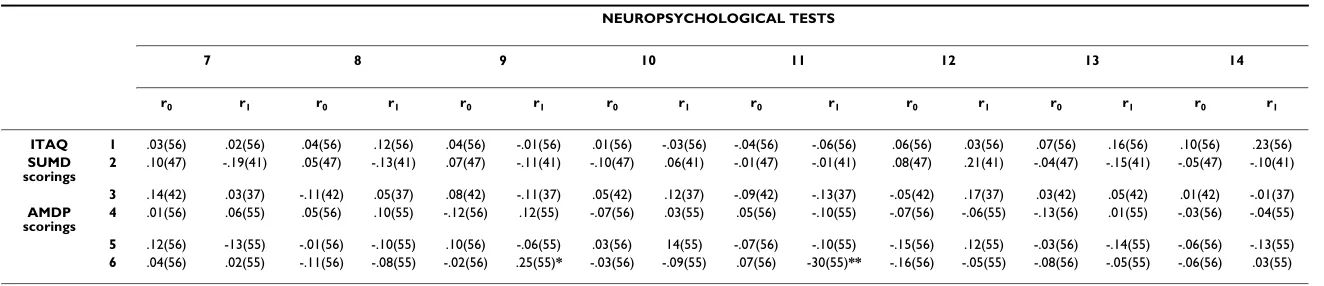
Pearson correlation coefficients between cognitive and insight measures, both at baseline and at follow-up assess-ments, were carried out. As demonstrated in Table 3, no significant correlation coefficients were found after apply-ing Bonferroni correction. The AMDP 'Refusal of treat-ment' score at follow-up showed trends towards a significant association with both the Interference task of Stroop test and the WCST 'number of categories' score.
The factor analysis of the fourteen insight measures resulted in two insight dimensions, as described else-where [50]. The first factor was the 'general awareness' dimension with high loading on all SUMD items. The sec-ond factor reflected 'attitudes to treatment', with high weightings on the ITAQ total score and the AMDP refusal of treatment item and moderate loading on the AMDP lack of feeling ill and the AMDP lack of insight items.
A principal components factor analysis of the neuropsy-chological scores yielded five factors, which are named in order of extraction as follows: (a) 'general cognitive', (b) 'perseverative', (c) 'non-perseverative errors', (d) 'ineffi-cient sorting', and (e) 'attentional-executive' factors. The
following is a description of the results for the component symptoms and factor loading of symptoms on each factor. The 'general cognition' factor included the WAIS informa-tion test (.73), memory tests (immediate .90 and delayed .88), verbal fluency (.55), the Stroop color-word test (.56) and the Trail Making B test (-.54). The second factor, namely the 'perseverative' dimension, was comprised of the number of perseverative errors (.91) and the number of categories of the WCST (-.92). The third factor was the 'non-perseverative errors' dimension, which included non-perseverative errors (.70), unique responses (.77) and the number of perseverative errors (.53) on the WCST. The 'inefficient sorting' factor was made up of two WCST parameters: failure to maintain the set (-.93) and the number of corrects minus ten (-.86). The fifth factor was a mixed attentional and executive factor with high loading on the Stroop color-word test (.88) and the Trail Making B test (-.49). A five-factor solution was forcibly extracted at follow-up and an analogy between baseline and follow-up structures was established on the basis of composition and loading of items on factors. The order of extraction of factors varied from baseline to follow-up assessments.
The Bonferroni inequality correction was applied between insight and neuropsychological dimensions and no
sig-Table 2: Differences between baseline and follow-up assessments on insight and neuropsychological variables.
BASELINE ASSESSMENT FOLLOW-UP ASSESSMENT STATISTICAL DIFFERENCES
Mean SD Mean SD t-pair test p
Insight Measures# ITAQ (total score)
12.26 7.58 16.21 7.61 -4.54 .001
SUMD
Lack of Awareness, total score
Current illness 2,66 1.36 2.45 1.15 1.69 .10
Past illness 2.63 1.22 2.39 1.20 1.02 .31
Mistaken Attribution, total score Current illness
2.65 1.33 2.97 1.12 -.79 .43
Past illness 2.53 1.26 2.83 1.28 -.26 .79
AMDP
Lack of feeling of illness 1.42 1.12 1.01 1.14 3.12 .003
Lack of Insigt 1.64 1.15 1.30 1.08 2.30 .02
Refusal of treatment .82 .99 .41 .83 2.46 .01
Neuropsychological Tests
Information (WAIS) 11.04 2.46 11.87 2.54 -3.82 .001
Word Fluency 15.97 4.64 17.51 5.71 -2.06 .04
Stroop Interference 42.41 7.72 46.39 6.09 -4.12 .001
Perseverative Responses (WCST) 30.81 22.50 26.53 22.51 2.29 .02
Number of Categories (WCST) 3.88 1.97 4.06 2.03 -.72 .47
Trailb Making Test B (Seconds) 186.96 117.30 177.23 169.32 -.41 .68
Inmediate Verbal Memory 11.74 3.81 13.30 4.06 -2.69 .01
Delayed Verbal Memory 11.72 4.19 14.13 4.44 -3.94 .001
*Critical p value after Bonferroni correction (1 × 23) p ≤ 0.0021 (in bold)
[image:5.612.59.557.422.713.2]BMC Psychiatry
200
6,
6
:26
http://www.bi
omedcen
tra
l.co
m
/14
71-24 Pa
ge 6 of
(page number not for citation purposes)
7 8 9 10 11 12 13 14
r0 r1 r0 r1 r0 r1 r0 r1 r0 r1 r0 r1 r0 r1 r0 r1
ITAQ 1 .03(56) .02(56) .04(56) .12(56) .04(56) -.01(56) .01(56) -.03(56) -.04(56) -.06(56) .06(56) .03(56) .07(56) .16(56) .10(56) .23(56) SUMD
scorings 2 .10(47) -.19(41) .05(47) -.13(41) .07(47) -.11(41) -.10(47) .06(41) -.01(47) -.01(41) .08(47) .21(41) -.04(47) -.15(41) -.05(47) -.10(41) 3 .14(42) .03(37) -.11(42) .05(37) .08(42) -.11(37) .05(42) .12(37) -.09(42) -.13(37) -.05(42) .17(37) .03(42) .05(42) .01(42) -.01(37) AMDP
scorings
4 .01(56) .06(55) .05(56) .10(55) -.12(56) .12(55) -.07(56) .03(55) .05(56) -.10(55) -.07(56) -.06(55) -.13(56) .01(55) -.03(56) -.04(55)
5 .12(56) -13(55) -.01(56) -.10(55) .10(56) -.06(55) .03(56) 14(55) -.07(56) -.10(55) -.15(56) .12(55) -.03(56) -.14(55) -.06(56) -.13(55) 6 .04(56) .02(55) -.11(56) -.08(55) -.02(56) .25(55)* -.03(56) -.09(55) .07(56) -30(55)** -.16(56) -.05(55) -.08(56) -.05(55) -.06(56) .03(55)
1. ITAQ; 2. Awareness of illness (current illness); 3. SUMD Mistaken attribution (current illness); 4. AMDP. Lack of feeling of illness; 5. AMDP. Lack of Insight; 6. AMDP Refusal of treatment; 7. Information (WAIS); 8. Word Fluency; 9. Stroop Interference; 10. WCST. Persev. Responses; 11. WCST Number of Categories; 12. Trailb Making B; 13. Inmediate Verbal Memory; 14. Delayed Verbal Memory.
a = In brackets, it is shown the number of patients in each correlation
b = Critical p value after Bonferroni correction (p ≤ .05) for two different correlation sets (6 × 8) was r = .48, p ≤ .001 (95% confidence interval for significant associations for n = 56 ranged from r = .24 to r = .66).
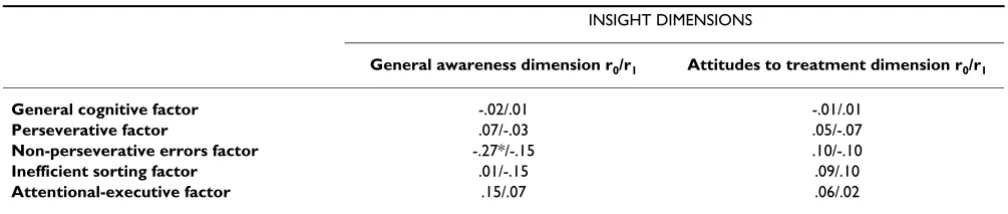
[image:6.792.78.740.78.221.2]nificant cross-sectional associations were found at base-line or follow-up (Table 4). The 'non-perseverative errors' factor of cognitive function at baseline showed a trend towards a significant correlation with the 'general aware-ness' dimension of insight (r = -.27). To account for differ-ences in length of illness among patients, 'partial correlation' coefficient analyses between insight and neu-ropsychological dimensions, with illness duration as the covariate, were carried out and the same results were obtained. In addition, separate equation regressions were computed for insight dimensions at follow-up (depend-ent variable) with insight dimensions and each one of the five cognitive 'factor scores' at baseline (independent var-iables). Our results revealed that baseline cognitive dimensions did not predict change in insight dimensions at follow-up. Lastly, a similar profile of results of a lack of significant associations (i.e., between 'cognitive and insight' measures and dimensions) was found in the schizophrenia subset sample (n = 37). SPSS Regression output in the total sample is provided by the supplemen-tary material to this article (see Additional file 1)
Discussion
Overall, our results support findings that insight dimen-sions and neuropsychological performance in patients suffering from psychoses are non-associated domains. Both cross-sectional and longitudinal analyses did not achieve the level for statistical association after the ade-quate statistical correction to avoid a Type I error. Moreo-ver, a similar profile of 'lack of significant associations' was found in the subset of patients with schizophrenia.
The discrepancy between our results and those of some of the published studies might partly originate from several sources, such as the selection of different target samples, the use of unstandardized or non-specific scales for the assessment of insight, statistical shortcomings (i.e., lack of statistical correction to avoid Type I error), or unreliability in neuropsychological assessment. Heterogeneity across samples of previous studies was very common, since
sev-eral studies comprised mixed samples [10,18,21,40,65] and others showed great differences in illness phase. As examples of the latter, samples of previous studies range from stable out-patients [7,8,38,39,41,66] to patients assessed after remission of acute episodes [9,48], relatively recent-onset patients [17,34] and first-episode psychotic patients [15,16,30,35] to rather chronic populations [22,31,37,47] or acute patients [26], and samples with non-selected patients to samples comprising 'high insight' patients or patients included in psychotherapeutic pro-grams [19,45,46,67]. Some authors have suggested that cognitive deficits do not relate to insight in the earlier stages of the psychotic illness, but do in samples with longer mean duration of illness [38,47]. In regards to insight assessment, many studies have used unstandard-ized instruments, such as Item 12 on the Positive and Neg-ative Symptom Scale (PANSS) [20,39,43,48,67] or insight items from general 'psychopathological inventories' (i.e., PSE [10,17] or AMDP [9,37]). These instruments have demonstrated limitations when attempting to capture the multidimensional aspects underlying insight.
[image:7.612.53.557.100.207.2]Another source of inconsistency between studies emerged from statistical grounds. Most studies have analyzed their results using correlation or regression methods. However, an exception to this was the use of adequate statistical cor-rection, such as the Bonferroni inequality [9,37] or one-tailed p [66], to avoid bias related to the performance of a high number of statistical procedures. For instance, after applying the Bonferroni correction to studies that reported significant correlations between insight and cog-nitive measures [18,20-26,31,32,42,46,67], few associa-tions between insight or compliance and IQ remained at a statistically significant level [43]. In addition, only two studies by Young et al. [18,20] continued to show signifi-cant correlations between lack of insight and executive dysfunction. Caution is needed in the interpretation of our results supporting our original hypothesis, since neg-ative results arose from the application of the Bonfferoni inequality correction to correlation coefficients. However,
Table 4: Pearson correlation coefficients between insight and cognitive dimensions at baseline(r0) and at follow-up assessments (r1)a.
INSIGHT DIMENSIONS
General awareness dimension r0/r1 Attitudes to treatment dimension r0/r1
General cognitive factor -.02/.01 -.01/.01
Perseverative factor .07/-.03 .05/-.07
Non-perseverative errors factor -.27*/-.15 .10/-.10
Inefficient sorting factor .01/-.15 .09/.10
Attentional-executive factor .15/.07 .06/.02
p ≤ 0.05 **p ≤ 0.01
not only our results, but also the results of most studies that have rendered a similar profile of a lack of significa-tion associasignifica-tions between insight and cognitive perform-ance were analyzed with the Bonfferoni inequality correction.
There was some unreliability associated with neuropsy-chological assessment in studies that have focused on insight, such as limitations in the selection of neuropsy-chological tests and conceptual inconsistency. For instance, certain studies have exclusively used one test that is hypothetically related to these areas, such as the WCST [21,37,38,44] or tests only related to executive function [19,47,48,67] and then concluded that lack of insight was or was not associated with executive or frontal dysfunction. However, this selective approach to neu-ropsychological assessment cannot distinguish whether lack of insight is or is not associated with a global cogni-tive dysfunction [68]. Moreover, general tests for intelli-gence assessment [9,17,69], the use of only a single test [25,39] or the qualitative assessment of cognitive func-tioning through 'clinical vignettes' [32] are not appropri-ate neuropsychological instruments to use to reach firm conclusions regarding insight and cognitive functioning.
Conclusion
Our present data is consistent with previous results from our group. We have previously hypothetized that insight dimensions are semi-independent domains of psychopa-thology regarding schizophrenic symptomatology. Insight dimensions have a 'primary' origin from a Bleule-rian perspective [9,50,70]. In this regard, lack of insight should be considered a characteristic manifestation of patients suffering from psychosis. Our hypothesis is also supported by the lack of significant correlations between lack of insight and cognitive performance, which are found in other 'characteristic symptoms' of psychosis such as delusions or hallucinations. This does not mean that there is no biological substrate for psychotic symptoms, but that the relationships between clinical and cognitive domains seem to be too complex to be reduced to a single direct association.
There are a number of limitations in the present study that might reduce the strength of our results and should there-fore be acknowledged. First, the use of factor scores to summarize insight measures might have resulted in differ-ent insight constructs compared to other studies. How-ever, an inspection of the raw data led us to disregard any significant associations that were found between cognitive and insight measures. Second, missing values on the SUMD scale were replaced by its mean value and included in factor analysis conjointly with other insight measures. These other insight measures included values resulting from the ITAQ and AMDP instruments, which were
avail-able for all patients. This modification in the SUMD scale should be taken into account when comparing our results with other studies, since our methods used to extract fac-tor scores might generate different insight constructs. Third, in spite of the fact that our sample was one of the largest in the literature, the inability to detect significant associations might represent a Type II error (i.e., lack of statistical power due to small sample size). In fact, for the highest correlation in Table 3 (correlation of .30 between AMDP refusal of treatment and WCST number of catego-ries at follow-up), a sample size of 85 would have been needed to establish that correlation alone as statistically significant (power ≥ 0.80). Similarly, a sample size of 105 would have been needed to determine the highest correla-tion in Table 4 (correlacorrela-tion of -.27 between 'non-persever-ative' factor and 'general awareness' dimension) as statistically significant. And fourth, cognitive assessment of patients during acute episodes might denote greater cri-ses rather than poorer performance. However, the first point of assessment occurred once our patients were stabi-lized from the episode of psychosis, which was more than 3 weeks after the time of admission.
A pending question that can be derived from our results is: What are the neurobiological underpinnings of lack of insight? The absence of statistically significant associa-tions between lack of insight and cognitive performance does not imply that insight dimensions do not hold pathophysiological correlates. On the contrary, it has been suggested that complex symptoms, such as lack of insight, are greatly influenced and distorted by the indi-vidual's socio-cultural background and language, as well as by the process of symptom formation itself. This occurs because less elaborate symptoms are more related to the biological substrate. In other words, the more complex the symptom, the farther the original signal is from the brain [71]. Following this line of reasoning, the search for 'clinical mediators' or simpler domains of psychopathol-ogy, such as hope [72], affect [73] and metacognition [74], might be relevant for understanding the neurobio-logical correlates of insight dimensions. Future studies that investigate the neurobiological dysfunction underly-ing psychosis should undertake the research startunderly-ing with less-structured behaviors or from 'basic' dimensions from lower hierarchical levels [75].
Abbreviations
Competing interests
The author(s) declare that they have no competing inter-est.
Authors' contributions
MJC designed the study and participated as the coordina-tor. MJC and VP carried out the clinical and psychopatho-logical assessments of patients. The assessment of insight was done by MJC, VP and AZ. Neuropsychological evalu-ations were carried out by AZ. Statistical analyses were performed by MJC, AZ and MZ. MJC and AZ drafted and updated the manuscript. All authors approved the final manuscript.
Additional material
Acknowledgements
The present study was partially funded by a grant from the Spanish National Health Service (FIS 97/0480). This project was not supported by a commer-cial organization.
References
1. Peralta V, Cuesta MJ: Diagnostic significance of Schneider's first-rank symptoms in schizophrenia: A comparative study between schizophrenic and non-schizophrenic psychotic dis-orders. British Journal of Psychiatry 1999, 174:243-248.
2. Carpenter W, Strauss J, Bartko J: Flexible system for the diagno-sis of schizophrenia: Report from the WHO international pilot study of schizophrenia. Science 1973, 182:1275-1277. 3. Smith TE, Hull JW, Goodman M, Hedayat-Harris A, Wilson DF, Israel
LM, Munich RL: The relative influences of symptoms, insight and neurocognition on social adjustment in schizophrenia and schizoaffective disorder. Journal of Nervous and Mental Disor-ders 1999, 187:102-108.
4. Amador XF, Strauss DH, Yale SA, Gorman JM: Awareness of illness in schizophrenia. Schizophrenia Bulletin 1991, 17:113-132. 5. David AS: Insight and Psychosis. British Journal of Psychiatry 1990,
156:798-808.
6. McGorry PD, McConville SB: Insight in psychosis: An elusive tar-get. Comprehensive Psychiatry 1999, 40:131-142.
7. Lysaker PH, Bryson GJ, Lancaster RS, Evans JD, Bell D: Insight in schizophrenia: associations with executive function and cop-ying style. Schizophrenia Research 2002, 59:41-47.
8. Lysaker PH, Lancaster RS, Davis LW, Clements CA: Patterns of neurocognitive deficits and unawareness of illness in schizo-phrenia. Journal of Nervous and Mental Disorders 2003, 191:38-44. 9. Cuesta MJ, Peralta V: Lack of insight in schizophrenia.
Schizo-phrenia Bulletin 1994, 20:359-366.
10. Takai A, Uematsu M, Ueki H, Sone K, Kaiya H: Insight and its related factors in chronic schizophrenic patients: A prelimi-nary study. European Journal of Psychiatry 1992, 6:159-170. 11. Flashman LA, McAllister TW, Andreasen NC, Saykin AJ: Smaller
brain size associated with unawareness of illness in patients with schizophrenia. American Journal of Psychiatry 2000,
157:1167-1169.
12. Laroi F, Fannemel M, Ronneberg U, Flekkoy K, Opjordsmoen S, Dull-erud R, Haakonsen M: Unawareness of illness in chronic schiz-ophrenia and its relationships to structural brain measures and neuropsychological tests. Psychiatry Research 2000, 20:49-58. 13. Flashman LA, McAllister TW, Johnson SC, Rick JH, Green RL, Saykin AJ: Specific frontal lobe subregions correlated with unaware-ness of illunaware-ness in schizophrenia preliminary study. Journal of Neuropsychiatry and Clinical Neurosciences 2001, 13:225-257. 14. Ha TH, Youn T, Ha KS, Rho KS, Lee JM, Kim IY, Kim SI, Kwon JS:
Gray matter abnormalities in paranoid schizophrenia and their correlations. Psychiatry Research 2004, 132:251-260. 15. Morgan K, Dazzan P, Orr K, Hutchinson G, Chitnis X, Sucling J,
Fearon P, Salvo J, McGuire PK, Mallet RM, Jones PB, Leff J, Murray RM:
Duration of illness and structural brain abnormalities in the AESOP first onset psychosis study. Schizophrenia Research 2004,
67(Suppl 1):99.
16. Shad MU, Muddasani S, Prasad K, Sweeney JA, Keshavan MS: Insight and prefrontal cortex in first-episode schizophrenia. Neuroim-age 2004, 22:1315-1320.
17. David A, Van Os J, Jones P, Harvey I, Foerster A, Fahy T: Insight and Psychotic Illness. Cross-sectional and longitudinal associa-tions. British Journal of Psychiatry 1995, 167:621-628.
18. Rossell SL, Coakes J, Woodruff PWR, David AS: Insight: Its rela-tionship with cognitive function, brain volume and symp-toms in schizophrenia. British Journal Psychiatry 2003, 33:111-119. 19. Young DA, Davila R, Scher H: Unawareness of illness and neu-ropsychological performance in chronic schizophrenia. Schiz-ophrenia Research 1993, 10:117-124.
20. Lysaker PM, Bell MD, Bryson G, Kaplan F: Neurocognitive func-tion and insight in schizophrenia: support for an associafunc-tion with impairments in executive function but not with impair-ment in global function. Acta Psychiatrica Scandinavica 1998,
97:297-301.
21. Young DA, Zakzanis KK, Bailey C, Davila R, Griese J, Sartory G, Thom A: Further parameters of insight and neuropsychological def-icit in schizophrenia and other chronic mental disease. Jour-nal of Nervous and Mental Disorders 1998, 186:44-50.
22. Mohamed S, Fleming S, Penn DL, Spaulding W: Insight in schizo-phrenia: Its relationship to measures of executive functions.
Journal of Nervous and Mental Disorders 1999, 187:525-531. 23. Smith TE, Hull JW, Goddman M, Hedayat-Harris A, Willson DF, Israel
LM: The relative influences of symptoms, insight, and neuro-cognition on social adjustment in schizophrenia and schizoaffective disorder. Journal of Nervous and Mental Disorders
1999, 187:102-108.
24. Marks KA, Fastenau PS, Lysaker PH, Bond GR: Self-appraisal of ill-ness questionnaire (SAI Q): relationship to researcher-rated insight and neuropsychological functions in schizophrenia.
Schizophrenia Research 2000, 27:203-211.
25. Buckley PF, HASAN S, Friedman L, Cerny C: Insight and schizo-phrenia. Comprehensive Psychiatry 2001, 42:39-41.
26. Drake RJ, Lewis SW: Insight and neurocognition in schizophre-nia. British Journal of Psychiatry 2003, 62:165-173.
27. McEvoy J, Hartman M, Gottlieb D, Godwon S, Apperson LJ, Wilson W: Common sense, insight and neuropsychological test per-formance in schizophrenia patients. Schizophrenia Bulletin 1996,
22:635-641.
28. Voruganti L, Heslegrave RJ, Awad AG: Neurocognitive correlates of positive and negative syndromes in schizophrenia. Cana-dian Journal of Psychiatry 1997, 42:1066-1071.
29. Jensen J, Nilsson LL, Levander S: Neurocognitive and psycho-pathological correlates of self-monitoring ability in schizo-phrenia. European Archives of Psychiatry and Clinical Neurosciences
2004, 254:312-317.
30. Koren D, Seidman LJ, Poyorovsky M, Goldsmith M, Viksman P, Zichel S, Klein E: The neuropsychological basis of insight in first-epi-sode schizophrenia: a pilot metacognitive study. Schizophrenia Research 2004, 70:195-202.
31. Macpherson R, Jerrom B, Hughes A: Relationship between insight, educational background and cognition in schizophre-nia. British Journal of Psychiatry 1996, 168:718-722.
32. Startup M: Insight and cognitive deficits in schizophrenia: evi-dence for a curvilinear relationship. Psychological Medicine 1996,
26:1277-1281.
Additional File 1
Regression output Biomedcentral Psychiatry. SPSS Regression output in the total sample.
Click here for file
33. Kim CH, Jayathilake K, Meltzer HY: Hopelessness, neurocogni-tive function, and insight in schizophrenia: relationship to suicidal behavior. Schizophrenia Research 2003, 60:71-80. 34. Subotnik KL, Nuechterlein KH, Irzhevsky V, Kitchen CM, Woo SM,
Mintz J: Is unamareness of psychotic disorder a neurocogni-tive or psychological defensiveness problem? Schizophrenia Research 2005, 75:147-157.
35. Keshavan MS, Rabinowitz J, DeSmedt G, Harvey PD, Schooler N:
Correlates of insight in first episode psychosis. Schizophrenia Research 2004, 70:187-94.
36. Goodman C, Knoll G, Isakov V, Silver H: Insight into illness in schizophrenia. Comprehensive Psychiatry 2005, 46:284-90. 37. Cuesta MJ, Peralta V, Caro F, de Leon J: Is poor insight in
psy-chotic disorders associated with poor performance on Wis-consin Card Sorting Test. American Journal of Psychiatry 1995,
152:1380-1382.
38. Collins AA, Remington GJ, Coolter K, Birkett K: Insight, neurocog-nitive function and symptom clusters in chronic schizophre-nia. Schizophrenia Research 1997, 27:37-44.
39. Dickerson FB, Boronow JJ, Ringel N, Parente F: Neurocognitive deficits and social functioning in outpatients with schizo-phrenia. Schizophrenia Research 1996, 23:75-83.
40. Sanz M, Constable G, Lopez Ibor I, Kemp R, David AS: A compara-tive study of insight scales and their relationship to psycho-pathological and clinical variables. Psychological Medicine 1998,
28:437-446.
41. McCabe R, Quayle E, Beirne A, Duane MMA: Insight, global neu-ropsychological functioning and symptomatology in chronic schizophrenia. Journal of Nervous and Mental Disorders 2002,
190:519-522.
42. Goldberg RW, Green-Paden LD, Lehman AF, Gold JM: Correlates of insight in serious mental illness. Journal of Nervous and Mental Disorders 2001, 189:137-145.
43. Aleman A, De Haan, Kahn R: Insight and neurocognitive func-tion in schizophrenia. Journal of Neuropsychiatry and Clinical Neuro-sciences 2002, 14:241-242.
44. Arduini L, Kalyvoka A, Stratta P, Rinaldi O, Daneluzzo E, Rossi A:
Insight and neuropsychological function in patients with schizophrenia and bipolar disorder with psychotic features.
Canadian Journal of Psychiatry 2003, 48:338-341.
45. Startup M: Awareness of own and others schizophrenia illness.
Schizophrenia Research 1997, 29:203-211.
46. McEvoy JP, Freter S, Merritt M, Apperson LJ: Insight about psycho-sis among outpatients with schizophrenia. Hospital. Community Psychiatry 1993, 44:883-884.
47. Kemp R, Hayward P, David A: Psychological predictors of insight and compliance in psychotic patients. British Journal of Psychiatry
1996, 169:444-450.
48. Lysaker PH, Bell MK: Insight and cognitive impairment in schiz-ophrenia. Performance on repeated administrations of the Wisconsin Card Sorting Test. Journal of Nervous and Mental Dis-orders 1994, 182:656-660.
49. Goodman C, Knoll G, Isakov V, Silver H: Negative attitude towards medication is associated with working memory impairment in schizophrenia patients. International Clinical Psy-chopharmacology 2005, 20(2):93-6.
50. Cuesta MJ, Peralta V, Zarzuela A: Reappraising insight in psycho-sis. Multi-scale longitudinal study. British Journal of Psychiatry
2000, 177:233-240.
51. American Psychiatric Association: Diagnostic and Statistical Manual of Mental Disorders (DSM-IV) 4th edition. Washington DC; 1994. 52. Andreasen NC, Flaum M, Arndt S: The Comprehensive
Assess-ment of Symptoms and History (CASH): an instruAssess-ment for assessing diagnosis and psychopathology. Archives of General Psychiatry 1992, 49:615-623.
53. Peralta V, Cuesta MJ: Are there more than two síndromes in schizophrenia? A critique of positiva-negative dichotomy.
British Journal of Psychiatry 1992, 161:335-343.
54. Liddle PF: Schizophrenia syndromes, cognitive performance and neurological dysfunctions. Psychological Medicine 1987,
17:49-57.
55. Clinical global impressions [CGI]: National Institute of Mental Health, Early Clinical Drug Evaluation, Psychopharmacology Research Branch. Guy W. (1976). In ECDEU assessment manual for psychopharmacology Rev. Rockville, MD: U.S. National Institute of Health, Psychopharmacology Research Branch; 1976:217-222.
56. Amador XF, Flaum M, Andreasen NC, Strauss DH, Yale SA, Clark SC, Gorman JM: Awareness of illness in schizophrenia and schizoaffective and mood disorders. Archives of General Psychiatry
1994, 51:826-836.
57. McEvoy JP, Aland J, Wilson WH, et al.: Measuring chronic schizo-phrenic patients attitudes toward their illness and treat-ment. Hospital Community Psychiatr 1981, 32:856-858.
58. Guy W, Ban TA: The AMDP System. In Springer Berlin Heidelberg. New York; 1979.
59. Wechsler D: Wechsler Adult Intelligence Scale-Revised Man-ual. Cleveland OH: Psychological Corporation; 1981.
60. Peña-Casanova J: Programa Integrado de Exploración Neurop-sicológica. (Neuropsychological Assessment Integrated Program). Mas-son. Barcelona 1990.
61. Reitan RM: Manual for administration of neuropsychological tests batteries for adult and children. Reitan Neuropsychology Laboratories, Tucson, AZ 1978.
62. Golden CJ: Stroop. Test de Colores y de Palabras. Madrid. TEA Edi-ciones. S.A 1994.
63. Heaton RK: A manual for the Wisconsin Card Sorting Test. In
Psychological Assessment Resources Odessa, FL; 1981.
64. Bland JM, Altman DG: Multiple significant tests: the Bonferroni method. British Journal of Psychiatry 1995, 310:170.
65. David AS, Buchanan A, Reed A, Almeida O: The assessment of insight in psychosis. British Journal of Psychiatry 1992, 61:599-602. 66. Smith TE, Hull JW, Israel LM, Willson DF: Insight, symptoms and
neurocognition in schizophrenia and schizoaffective disor-der. Schizophrenia Bulletin 2000, 26:193-200.
67. Lysaker PH, Bell MK, Bioty SM: Cognitive Deficits in Schizophre-nia. Prediction of Symptom Change for participators in work rehabilitation. Journal of Nervous and Mental Disorders 1995,
183:332-336.
68. Dickerson FB, Boronow JJ, Ringel N, Parente F: Lack of insight among outpatients with schizophrenia. Psychiatry Service 1987,
48:195-199.
69. Keefe RSE: The contribution of neuropsychology to psychia-try. American Journal of Psychiatry 1995, 152:6-15.
70. Peralta V, Cuesta MJ: Lack of Insight: Its Status within Schizo-phrenic Psychopathology. Biological Psychiatry 1994, 36:559-561. 71. Marková IS, Berrios GE: The meaning of insight in clinical
psy-chiatry. British Journal of Psychiatry 1992, 160:850-860.
72. Lysaker PH, Campbell K, Johannesen JK: Hope, awareness of ill-ness, and coping in schizophrenia spectrum disorders: evi-dence of an interaction. Journal of Nervous and Mental Disorders
2005, 193:287-292.
73. Freudenreich O, Deckersbach T, Goff DC: Insight into current symptoms of schizophrenia. Association with frontal cortical function and affect. Acta Psychiatrica Scandinavica 2004, 110:14-20. 74. Koren D, Seidman LJ, Poyurovsky M, Goldsmith M, Viksman P, Zichel S, Klein E: The neuropsychological basis of insight in first-epi-sode schizophrenia: a pilot study. Schizophrenia Research 2004,
70:195-202.
75. Cuesta MJ, Peralta V: Integrating psychopathological dimen-sions in functional psychoses: a hierarchical approach. Schiz-ophrenia Research 2001, 52:215-229.
Pre-publication history
The pre-publication history for this paper can be accessed here: