S T U D Y P R O T O C O L
Open Access
The effect of an educational program for
pregnant women to prevent allergic
diseases in infants: study protocol for a
randomized controlled trial
Rie Nakamura
1*, Nao Ishiguro
2, Eiji Naru
1, Yukiko Ishitsuka
1, Masato Nakade
1and Yoko Nezu
2Abstract
Background:Allergic diseases in infants have dramatically increased in developed countries during the past few decades. To date, extensive research has been done on risk factors for allergies in infancy, and preventive measures against them. However, the effect of the primary approach to preventing infantile allergy is still limited.
The aim of this trial is to evaluate whether prenatal education interventions, including the latest public research results on allergic diseases, prevent the onset of infant allergies.
Methods/design:We designed a randomized controlled, two-arm (standard prenatal education vs our education), parallel-group, assessor-blind trial. A sample of 120 pregnant women will be recruited at Chiba Aiyu-kai Kinen Hospital and allocation is by computer-generated randomization.
Pregnant women in the intervention arm participate in the childbirth education program established by the specialist and a pediatric allergy educator. The program was developed based on evidences supporting
interventions on primary prevention, which are suggested to be beneficial to infantile allergies in recent studies. The primary objective of the study is to determine whether it is possible to establish effective behaviors for allergy prevention in early infancy in the children of pregnant women who participate in an educational program
developed by pediatric allergy specialists. Four months after birth, their behaviors will be compared against those of pregnant women who did not participate in the program.
Discussion:Allergies are common in many individuals worldwide, and can be present from babyhood through the person’s lifetime. One of the strong points of this study is that it should provide pregnant women with
accumulated information on preventive knowledge against allergy, that can be effective in some cases, and that women can apply a combination of these behaviors before and after pregnancy. The results of our program will be publicized to help change the behaviors of mothers, and, if the program is effective, for preventing allergies in infants, it will be disclosed worldwide as a new preventive strategy for allergy in infants.
Trial registration:UMIN-CTR, ID:UMIN000034730Retrospectively registered on 1 December 2018.
Keywords:Allergies, Infant allergy, Prenatal, Pregnancy education, Allergic march, Educational intervention, Food allergy
© The Author(s). 2019Open AccessThis article is distributed under the terms of the Creative Commons Attribution 4.0 International License (http://creativecommons.org/licenses/by/4.0/), which permits unrestricted use, distribution, and reproduction in any medium, provided you give appropriate credit to the original author(s) and the source, provide a link to the Creative Commons license, and indicate if changes were made. The Creative Commons Public Domain Dedication waiver (http://creativecommons.org/publicdomain/zero/1.0/) applies to the data made available in this article, unless otherwise stated.
* Correspondence:[email protected]
1KOSÉ Corporation Research Laboratories, 48-18 Sakae-cho, Kita-ku, Tokyo
114-0005, Japan
Introduction
In Japan, as in most developed countries, the prevalence of allergy, including atopic dermatitis (AD), food allergy (FA), asthma, and allergic rhinitis, among infants has increased in recent years and is a serious health problem [1]. The “allergic march,” which was first proposed by Minoru Baba, and refers to the chain reaction of aller-gies in people predisposed to atopic dermatitis [2,3], has attracted a great deal of attention in recent years, and it has been suggested that preventative measures during the neonatal and early infancy period could be effective against this condition.
To date, extensive research has been conducted on the risk factors for, and preventative measures against, allergy during infancy. In addition, evidence supporting the efficacy of several of these preventa-tive measures has accumulated. For example, in 2008, Lack hypothesized that sensitization to aller-gens occurs through environmental exposure to allergens through the skin and that consumption of food allergens induces oral tolerance (dual-allergen-exposure hypothesis [4, 5]), and proposed a new allergy-prevention strategy based on the mainten-ance of skin-barrier function. To verify the dual-allergen-exposure hypothesis, randomized clinical trials (RCTs) of the effects of a moisturizer were conducted, and its efficacy in AD patients was dem-onstrated [6–8]. Lowe et al. (2016) [9] performed a meta-analysis and showed that a moisturizer can statistically significantly prevent infantile AD when used in the neonatal period, and that the onset of AD is associated with sensitization to egg-white antigen. On the other hand, this analysis suggested that the efficacy of moisturizer alone used from the neonatal period is poor because it cannot prevent sensitization to food allergens.
In addition to the dual-allergen-exposure hypoth-esis, some studies suggest that maternal intestinal bacterial flora is associated with neonatal allergy [10, 11]. Currently, probiotics [12], prebiotics [13], and synbiotics [14] are effective for the treatment of ab-normal intestinal bacterial flora. Some RCTs have examined the effects of probiotic intake by pregnant and lactating women on preventing the development of allergies in infants [15–19]. Zuccotti et al. (2015) [20, 21] performed a meta-analysis on these RCTs, and suggested that probiotic intake in pregnant and lactating women can reduce the incidence of rashes in neonates. However, probiotics did not reduce the prevalence of asthma or allergic rhinitis. A different meta-analysis of RCTs assessing the effects of prebi-otics [22] and synbiotics [23] showed that although these organisms prevent the development of a rash, they have no protective effects against allergic
sensitization in neonates. Additional studies are needed to assess the differences in intestinal bacterial flora between various races or regions.
Some observational studies identified many risk factors and preventive measures for allergy in in-fants. An observational study that examined the as-sociation between living conditions and infantile asthma [24, 25] reported that the combination of preventive measures to avoid allergens, such as tick and mold, can reduce the risk of allergy. Second-hand tobacco smoke from parents or other family members living together increases the risk of bron-chial asthma in infants [26–28]. The association be-tween living conditions and the risk of allergy in infants has been researched extensively. Many obser-vational studies examined the correlation between food intake by pregnant women or lactating mothers and the development of allergies in infants. Specific-ally, the intake of vitamin D (VD) [29–31] and n-3 polyunsaturated fatty acids [32–34] during pregnancy reduces the risk of allergy in infants. However, there are no recent meta-analyses [35–40] or RCTs [41–46] demonstrating the efficacy of these nutrients against allergies.
The preventive measures reported to date have shown limited effects, and a clear and effective method to prevent allergies in infants remains to be identified. Because multiple risk factors are associated with allergies in infants, the preventive measures identified to date are not effective.
We hypothesized that providing pregnant women with knowledge regarding the latest research findings on allergy prevention in prenatal and postnatal period may increase awareness and knowledge and, thereby lead to changes in behavior to prevent allergy in in-fants. The aim of this trial is, therefore, to evaluate whether prenatal education interventions, including the latest public research results on allergic diseases, prevent the onset of infant allergies.
This protocol has been written in accordance with the Standard Protocol Items: Recommendations for Interventional Trials (SPIRIT) guideline (Additional file 1). This report is based on protocol version 9, approved 1 March 2019, by Chiba Aiyu-kai Kinen Hospital Ethics Committee.
Methods/design
Objectives Primary objective
program developed by pediatric allergy specialists. Four months after birth, their behaviors will be compared against those of pregnant women who did not participate in the program.
Secondary objectives
The secondary objectives are as follows:
To determine whether the use of a moisturizer can reduce the onset of AD and eczema
To determine whether the onset of other atopic disorders can be prevented by the use of a moisturizer
To examine the association between the onset of AD and food allergy sensitization
To establish the safety of the recommended moisturizer in neonates
To investigate the presence of allergies, skin condition, serum immunoglobulin E (IgE), and thymus and activation-regulated chemokine (TARC) levels in neonates
Trial design
This study is an assessor-blinded, randomized con-trolled, parallel-group comparison study (comparing our educational program group with an established childbirth education group) conducted in Chiba Aiyu-kai Kinen Hospital (hereafter referred to as “our hos-pital”) to examine the superiority of the educational program over established programs. Subjects are ran-domized in a 1:1 ratio into one of the two groups. The participants and study personnel are not blinded with respect to the assignments.
This protocol is written in accordance with the Standard Protocol Item: Recommendations for Inter-ventional Trials (SPIRIT) guideline. Trial registration is through the University Hospital Medical Informa-tion Network – Clinical Trials Registry (UMIN-CTR) (UMIN000034730).
Participants
Recruitment procedure
Participants are recruited among all pregnant women who visit our hospital for consultation regarding de-livery. The investigator meets with each pregnant woman to provide oral and written information on the study and to request participation. Participants are selected according to the eligibility criteria. The pregnant women discuss participation with their re-spective families, and those who agree to participate in the study provide informed consent. After the col-lection of consent forms, the participants are random-ized to one of two groups.
Eligibility criteria
Eligibility and exclusion criteria are as follows:
Eligibility criteria (individuals must meet two criteria):
Those planning to give birth in our hospital Those planning to attend the childbirth education
program provided by our hospital
Exclusion criteria (any of the following criteria):
Those who were not planning to give birth in our hospital
Birth of triplets or more
Children with serious congenital malformations Abnormal birth including fetal distress and neonatal
asphyxia
Other pregnant women and neonates assessed as inadequate for the study by a physician
Intervention Intervention arm
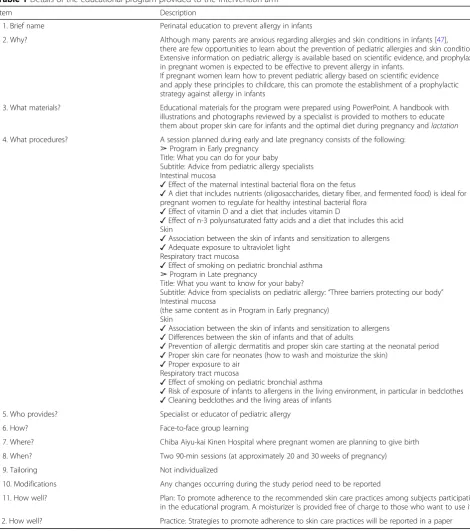
Pregnant women in the intervention arm participate in the childbirth education program established by the specialist and a pediatric allergy educator (PAE). The program was developed based on evidences supporting interventions on primary prevention, which are suggested to be beneficial to infant’s al-lergies in recent studies. In addition, the interven-tion groups will receive this program in face-to-face education. In this program, we propose three types of barriers that protect infants from allergy: the intestinal mucosa, the respiratory tract mucosa, and the skin. We then recommend behaviors for mothers that improve the functions of these three types of barriers. Table 1 explains the details of the program using the Template for Intervention De-scription and Replication (TIDieR) [48], a template for intervention description.
Control arm
A leaflet summarizing the content of the educational program that is provided to the intervention arm is made available to subjects in the control arm at ap-proximately 20 and 30 weeks of pregnancy.
Measurements/assessments Primary outcomes
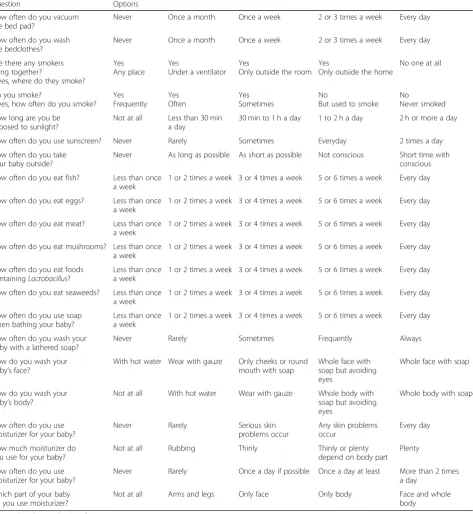
Self-evaluation of questionnaire to identify the
behavioral characteristics of mothers based on the educational program at 4 months after delivery Pri-mary outcomes are evaluated according to a self-evaluation score at 4 months after delivery in both arms.
characteristics of mothers. We prepared 21 questions to assess the dietary habits of mothers, living conditions, and the skin care of children based on the ideal behavior of mothers to prevent allergy in infant as proposed by specialists. Five options (a–e) are provided for all ques-tions: a = 1, b = 2, c = 3, d = 4, and e = 5. Higher scores indicate more appropriate behaviors of mothers to pre-vent pediatric allergy at each time point.
Secondary outcomes
We set the following seven secondary outcomes:
1. Incidence and severity of atopic dermatitis and eczema infantile
[image:4.595.59.530.93.625.2]The incidence and severity of AD and eczema in in-fants aged 1 week, 1 month, 4 months, and 12 months
Table 1Details of the educational program provided to the intervention arm
Item Description
1. Brief name Perinatal education to prevent allergy in infants
2. Why? Although many parents are anxious regarding allergies and skin conditions in infants [47], there are few opportunities to learn about the prevention of pediatric allergies and skin conditions. Extensive information on pediatric allergy is available based on scientific evidence, and prophylaxis in pregnant women is expected to be effective to prevent allergy in infants.
If pregnant women learn how to prevent pediatric allergy based on scientific evidence and apply these principles to childcare, this can promote the establishment of a prophylactic strategy against allergy in infants
3. What materials? Educational materials for the program were prepared using PowerPoint. A handbook with illustrations and photographs reviewed by a specialist is provided to mothers to educate them about proper skin care for infants and the optimal diet during pregnancy andlactation
4. What procedures? A session planned during early and late pregnancy consists of the following: ➢Program in Early pregnancy
Title: What you can do for your baby
Subtitle: Advice from pediatric allergy specialists Intestinal mucosa
✓Effect of the maternal intestinal bacterial flora on the fetus
✓A diet that includes nutrients (oligosaccharides, dietary fiber, and fermented food) is ideal for pregnant women to regulate for healthy intestinal bacterial flora
✓Effect of vitamin D and a diet that includes vitamin D
✓Effect of n-3 polyunsaturated fatty acids and a diet that includes this acid Skin
✓Association between the skin of infants and sensitization to allergens ✓Adequate exposure to ultraviolet light
Respiratory tract mucosa
✓Effect of smoking on pediatric bronchial asthma ➢Program in Late pregnancy
Title: What you want to know for your baby?
Subtitle: Advice from specialists on pediatric allergy:“Three barriers protecting our body” Intestinal mucosa
(the same content as in Program in Early pregnancy) Skin
✓Association between the skin of infants and sensitization to allergens ✓Differences between the skin of infants and that of adults
✓Prevention of allergic dermatitis and proper skin care starting at the neonatal period ✓Proper skin care for neonates (how to wash and moisturize the skin)
✓Proper exposure to air Respiratory tract mucosa
✓Effect of smoking on pediatric bronchial asthma
✓Risk of exposure of infants to allergens in the living environment, in particular in bedclothes ✓Cleaning bedclothes and the living areas of infants
5. Who provides? Specialist or educator of pediatric allergy
6. How? Face-to-face group learning
7. Where? Chiba Aiyu-kai Kinen Hospital where pregnant women are planning to give birth
8. When? Two 90-min sessions (at approximately 20 and 30 weeks of pregnancy)
9. Tailoring Not individualized
10. Modifications Any changes occurring during the study period need to be reported
11. How well? Plan: To promote adherence to the recommended skin care practices among subjects participating in the educational program. A moisturizer is provided free of charge to those who want to use it
are determined by a “blinded” pediatrician according to the Clinical Practice Guidelines for the Manage-ment of Atopic Dermatitis 2016 prepared by the Japanese Dermatological Association: URL:https:// www.dermatol.or.jp/uploads/uploads/files/guideline/ato picdermatitis_guideline.pdf.
2. Incidence of food allergy and sensitization to egg white, milk, and ovomucoid
The incidence of food allergy in infants aged 4 and 12 months is determined by sensitization using serum antigen-specific IgE [49], medical interview, and oral food challenge or a clear history of allergy triggered by accidentally ingested foods
3. Analysis of stratum corneum hydration,
transepidermal water loss (TEWL), and microscopic and digital images
Stratum corneum hydration in infants is measured three to five times on the left lower leg, forehead, and left cheek using Skicon-200EX® (IBS Japan Co., Ltd., Shizuoka, Japan). TEWL is determined two to three times on the left lower leg, forehead, and left cheek using the VapoMeter® (DelfinTechnologies, Kuopio, Finland). Enlarged images of the skin of the left lower leg, forehead, and left cheek in in-fants are acquired using a USB microscope M3 (Scalar Corporation, Tokyo, Japan). Images of a wide range of skin surfaces in infants are obtained using a digital camera (Canon, Tokyo, Japan). The skin is measured and photographed at 22 °C and 50% humidity.
4. TARC level
Serum TARC level is measured in infants aged 4 and 12 months to assess the severity of AD
5. Frequency of use and amount of moisturizer
The total amount of moisturizer used during the study is calculated to predict the effect of the educational pro-gram. The moisturizer is provided free of charge to those who want to use it
6. Questionnaire survey on living habits, awareness, and knowledge of mothers before and after pregnancy
A questionnaire survey on living habits, awareness, and knowledge of mothers before and after preg-nancy was prepared. Subjects answer the
self-evaluation questions in the survey at 30 weeks of pregnancy, and at 1, 4, and 12 months after delivery. Questions on living habits address stool frequency, use of supplements, eating habits between meals, and foods avoided or foods eaten. Regarding aware-ness and knowledge, the questions address what the mothers care about before and after pregnancy, how they intend to provide nourishment for the baby, and their concerns regarding childcare and the skin care of the baby.
7. Adverse events
Self-reported adverse events associated with the use of the moisturizer provided free of charge to those who want to use it during the study are recorded.
Baseline characteristics
The baseline characteristics are evaluated at ap-proximately 20 weeks of pregnancy. The variables to be measured include age; delivery experience; his-tory and type of allergy of the subject, their part-ner, and siblings; type of pet, if any; and smoking status of the subject and her family members living together.
Participant timeline
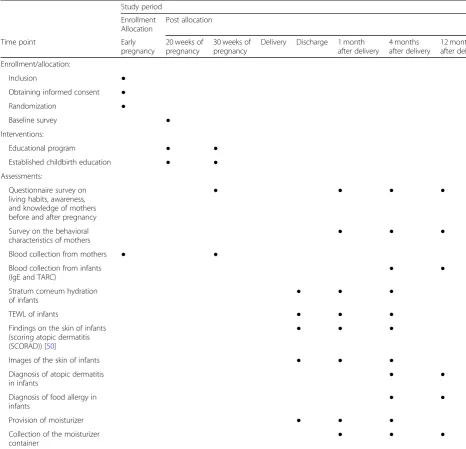
Table2shows the consent forms obtained from the sub-jects, the intervention, and the evaluation schedule.
Sample size
Randomization procedure and concealment of allocation Participants who meet the eligibility criteria and agree to participate in the study are randomized after signing the informed consent form. These subjects are stratified according to the estimated delivery date into winter and other seasons, and ran-domized using the permuted-block method. A statis-tical analyst generates a random allocation code using R statistical software (R Foundation for Statis-tical Computing) to randomize the subjects at each investigational site. The study is an assessor-blinded trial, and all raters are blinded with respect to the assignments. Also only the statistical analyst is aware
of the stratification block size; the remaining staff is blinded. Subjects are randomized in a 1:1 ratio into one of two groups.
Statistical analysis Full analysis set
[image:6.595.56.523.99.548.2]Subjects enrolled in the study who started any of the study procedures are included in the full analysis set (FAS). However, those with a confirmed serious devi-ation from the protocol and those determined ineli-gible for the study after enrollment are excluded from the FAS.
Table 2Consent, enrolment/allocation, and assessment of subjects (Additional file2)
Study period
Enrollment Allocation
Post allocation
Time point Early
pregnancy
20 weeks of pregnancy
30 weeks of pregnancy
Delivery Discharge 1 month after delivery
4 months after delivery
12 months after delivery
Enrollment/allocation:
Inclusion ●
Obtaining informed consent ●
Randomization ●
Baseline survey ●
Interventions:
Educational program ● ●
Established childbirth education ● ●
Assessments:
Questionnaire survey on living habits, awareness, and knowledge of mothers before and after pregnancy
● ● ● ●
Survey on the behavioral
characteristics of mothers ● ● ●
Blood collection from mothers ● ●
Blood collection from infants (IgE and TARC)
● ●
Stratum corneum hydration
of infants ● ● ●
TEWL of infants ● ● ●
Findings on the skin of infants (scoring atopic dermatitis (SCORAD)) [50]
● ● ●
Images of the skin of infants ● ● ●
Diagnosis of atopic dermatitis
in infants ● ●
Diagnosis of food allergy in
infants ● ●
Provision of moisturizer ● ● ●
Collection of the moisturizer container
● ● ●
Intention-to-treat analysis
In general, all statistical analyses are performed by the intention-to-treat principle.
Primary outcomes
Self-evaluation of questionnaire to identify the behavioral characteristics of mothers based on the educational program at 4 months after delivery
A linear mixed-effects model is used to analyze the total score of the questionnaire at 1, 4, and 12 months after delivery as an outcome variable. A mixed-effects model for repeated measurements (MMRM) [51] is used to properly handle missing values or dropouts that could arise during the study. An unstructured covariance structure is used to assess the correlation between outcomes at these time points. Mean changes from baseline are modeled as out-come variables for the MMRM. Mean changes from base-line at each time point are analyzed individually using a regression model. If the regression parameters cannot be estimated using the unstructured model, the covari-ance structure is changed in the following sequence: Toeplitz matrix model, heterogeneous compound sym-metry model, autoregressive model (1), compound symmetry model, and variance components model. A primary analysis is performed using estimates for the regression parameter or regression parameter test at 4 months after delivery. The significance level is set at 5% (two-sided).
Secondary outcomes
Incidence and severity of atopic dermatitis and eczema infantile
The incidence of infantile AD and eczema infantile is compared between groups at all time points using Pear-son’s chi-squared test. The severity of these diseases is compared between groups using descriptive statistics of scores at each time point. Subgroup analyses are per-formed to assess the incidence and severity of AD re-lated to the amount and frequency of moisturizer used during the study and the skin condition of infants.
Incidence of food allergy and sensitization to egg white, milk, and ovomucoid
The rate of sensitization to each allergen is compared between groups with a cut-off value of the incidence of food allergy and the serum antigen-specific IgE level (equal to or more than class II) in infants at each time point using Pearson’s chi-squared test. Subgroup analysis is performed to assess the outcomes related to the amount and frequency of moisturizer used during the study and the onset of AD in infants.
Analysis of stratum corneum hydration, TEWL, and microscopic and digital images
Descriptive statistics of the stratum corneum hydra-tion, TEWL in infants and rate of changes in the score at each time point are calculated and compared between groups. Subgroup analysis is performed to assess the amount and frequency of moisturizer used in infants during the study. In addition, an explora-tory investigation is performed to evaluate the skin images.
TARC level
Descriptive statistics of the serum TARC level at each time point are calculated and compared between groups. Subgroup analysis is performed to assess the incidence of infantile AD and eczema infantile, and the amount and frequency of moisturizer used during the study.
Frequency of use and amount of moisturizer
Descriptive statistics of the total amount of moisturizer and rate of changes in the scores at each time point are calculated and compared between groups. An evaluation is performed considering birth month as a baseline characteristic.
Questionnaire survey on living habits, awareness, and knowledge of mothers before and after pregnancy
Descriptive statistics of a questionnaire survey’s scores at each time point are calculated and compared between groups. Changes in the self-evaluation at each time point and the related factors are compared between groups.
Interim analysis
No interim analysis will be conducted.
Data collection procedure
All data will be analyzed by members specifically trained in the study protocol in our hospital.
Dissemination
Research ethics approval
Protocol amendments
Any amendments to the protocol will be submitted to the Ethics Committee of Chiba Aiyu-kai Kinen Hospital for approval. Once approved, they will be reported to all the study investigators and, when necessary, to the study participants.
Confidentiality
All personnel involved in this study will comply with the applicable laws and regulations regarding confi-dentiality. Study personnel must make every effort to protect confidential information on the subjects and must not disclose the information obtained during the study to any third party without due cause. This is binding for any personnel even after they are no longer directly associated with the study. The investi-gator, the person in charge of the study, and study collaborators will use subject identification codes or registration numbers to enroll subjects and prepare case report forms instead of personal information that could be identified by a third party such as name, ini-tials, address, telephone number, or medical chart number. With respect to information disclosure, the investigator or other personnel must carefully handle study data on the subjects to ensure that the data are not disclosed.
Research funding and conflicts of interest
The authors declare no conflicts of interest related to the plan, implementation, and reporting of the study results and interpretation of the results. The researchers inde-pendently planned, and will conduct, this study without funding or benefits from a company. Subjects do not lose any right or benefit by participating in this study.
Safety of subjects and compensation related to participation in the study
Subjects will need to allocate a certain amount of time to the study as follows: approximately 180 min for par-ticipation in sessions at 20 and 30 weeks of pregnancy, approximately 30 min for completing the questionnaire survey, and approximately 30 min for skin measurements at each time point. No special compensation is paid be-cause adverse health effects are not expected, as the aim of the study is to educate subjects. However, if subjects experience any abnormal feelings during blood collec-tion in the study, they must promptly contact the inves-tigator to receive proper treatment.
Dissemination policy
The full protocol will be published in an academic jour-nal in English. The study results will be announced to the public through presentations in academic meetings and publications in academic journals.
Discussion
Allergy is one of the most important health issues in de-veloped countries. Allergies are common in many indi-viduals worldwide, and can be present from babyhood through the person’s lifetime. Many observational stud-ies and RCTs have been performed to address the preva-lence of allergies. These studies revealed that specific intervention strategies to prevent allergies are effective in some cases.
One of the strong points of this study is that it should provide pregnant women with accumulated information on preventive knowledge against allergy that can be ef-fective in some cases, and the women can apply a com-bination of these behaviors before and after pregnancy. However, our trial has a few limitations. First, the trial may not provide clear data on the association between individual preventive measures and risk factors for al-lergy because the mothers themselves will be responsible for selecting and applying a combination of preventive measures. The second limitation is the study population because our sample is a relatively homogeneous group of pregnant women who are giving birth in a single hos-pital. Therefore, our findings may not be generalizable to other institutions or communities. However, at least in present-day Japan, a system for pregnant women to receive education is already in place, so we hope that all hospitals will have the opportunity to conduct our edu-cational program.
Currently, most pregnant women in Japan are con-cerned about the potential development of allergies in their babies. If the results of the study indicate that the educational program has a positive effect on preventing allergies, “prenatal education to prevent allergy in infants” should be added to the existing childbirth educational program provided by medical institutions and local governments or the physician’s instructions provided during infant examinations. This may decrease the anxiety of pregnant women and prevent allergy in infants. Our educational pro-gram is based on research findings from papers pub-lished in international medical journals. Thus, this program, which is the first study to determine the effect of education on allergy prevention, is expected to be effective both within and outside the Japanese population. The results of our program will be publi-cized to help change the behaviors of mothers and, if the program is effective for preventing allergies in infants, it will be disclosed worldwide as a new pre-ventive approach for allergy in infants.
Trial status
Appendix
Table 3Self-evaluation of questionnaire at 4 months after delivery
Question Options
How often do you vacuum the bed pad?
Never Once a month Once a week 2 or 3 times a week Every day
How often do you wash the bedclothes?
Never Once a month Once a week 2 or 3 times a week Every day
Are there any smokers living together?
If yes, where do they smoke?
Yes Any place
Yes
Under a ventilator Yes
Only outside the room Yes
Only outside the home
No one at all
Do you smoke?
If yes, how often do you smoke? Yes Frequently
Yes Often
Yes Sometimes
No
But used to smoke No
Never smoked
How long are you be exposed to sunlight?
Not at all Less than 30 min a day
30 min to 1 h a day 1 to 2 h a day 2 h or more a day
How often do you use sunscreen? Never Rarely Sometimes Everyday 2 times a day
How often do you take your baby outside?
Never As long as possible As short as possible Not conscious Short time with conscious
How often do you eat fish? Less than once a week
1 or 2 times a week 3 or 4 times a week 5 or 6 times a week Every day
How often do you eat eggs? Less than once a week
1 or 2 times a week 3 or 4 times a week 5 or 6 times a week Every day
How often do you eat meat? Less than once a week
1 or 2 times a week 3 or 4 times a week 5 or 6 times a week Every day
How often do you eat mushrooms? Less than once a week
1 or 2 times a week 3 or 4 times a week 5 or 6 times a week Every day
How often do you eat foods containingLactobacillus?
Less than once a week
1 or 2 times a week 3 or 4 times a week 5 or 6 times a week Every day
How often do you eat seaweeds? Less than once a week
1 or 2 times a week 3 or 4 times a week 5 or 6 times a week Every day
How often do you use soap when bathing your baby?
Less than once a week
1 or 2 times a week 3 or 4 times a week 5 or 6 times a week Every day
How often do you wash your baby with a lathered soap?
Never Rarely Sometimes Frequently Always
How do you wash your baby’s face?
With hot water Wear with gauze Only cheeks or round mouth with soap
Whole face with soap but avoiding eyes
Whole face with soap
How do you wash your baby’s body?
Not at all With hot water Wear with gauze Whole body with soap but avoiding eyes
Whole body with soap
How often do you use moisturizer for your baby?
Never Rarely Serious skin
problems occur
Any skin problems occur
Every day
How much moisturizer do you use for your baby?
Not at all Rubbing Thinly Thinly or plenty
depend on body part Plenty
How often do you use moisturizer for your baby?
Never Rarely Once a day if possible Once a day at least More than 2 times a day
Which part of your baby do you use moisturizer?
Not at all Arms and legs Only face Only body Face and whole
body
Supplementary information
Supplementary informationaccompanies this paper athttps://doi.org/10. 1186/s13063-019-3797-2.
Additional file 1.Standard Protocol Items: Recommendations for Interventional Trial (SPIRIT) 2013 Checklist: recommended items to address in a clinical trial protocol and related documents.
Additional file 2.Consent, enrolment/allocation, and assessment of subjects according to SPRIT format.
Abbreviations
AD:Atopic dermatitis; CI: Confidence interval; FA: Food allergy; PAE: Pediatric allergy educator; RCT: Randomized controlled trial; SCORAD: Scoring atopic dermatitis; TARC: Thymus and activation-regulated chemokine; UMIN-CTR: University Hospital Medical Information Network–Clinical Trials Registry; VD: Vitamin D
Acknowledgements
We would like to express our deep gratitude to Associate Professor Hisashi Noma, Department of Data Science, The Institute of Statistical Mathematics, for his support and cooperation.
Authors’contributions
YN and NI conceived of the study. RN wrote the first draft of the manuscript. All authors designed the study, and contributed to, read, and approved version of this manuscript.
Funding
This trial is conducted with no external funding and is instead from internal funding.
Availability of data and materials
Data sharing is not applicable to this article as no datasets were generated or analyzed during the current study.
Ethics approval and consent to participate
The study will be performed according to the Declaration of Helsinki (adopted by the 18th World Medical Association General Assembly, 1964, including subsequent revisions) and the Ethical Guidelines for Medical and Health Research Involving Human Subjects (Public Notice of the Ministry of Education, Culture, Sports, Science and Technology, and Ministry of Health, Labour and Welfare No. 3 of December, 2014). The study protocol was reviewed and approved by the Ethics Committee of Chiba Aiyu-kai Kinen Hospital. All participants will provide written informed consent prior to participation.
Consent for publication
This item is not applicable.
Competing interests
The authors declare that they have no competing interests.
Author details
1KOSÉ Corporation Research Laboratories, 48-18 Sakae-cho, Kita-ku, Tokyo
114-0005, Japan.2Chiba Aiyu-kai Kinen hospital, 1-1 Niregasaki, Nagareyama-shi, Chiba 270-0161, Japan.
Received: 2 May 2019 Accepted: 11 October 2019
References
1. Asher MI, Montefort S, Björkstén B, et al. Worldwide time trends in the prevalence of symptoms of asthma, allergic rhinoconjunctivitis, and eczema in childhood: ISAAC Phases One and Three repeat multicountry cross-sectional surveys. Lancet. 2006;368(9537):733–43.https://doi.org/10.1016/ S0140-6736(06)69283-0.
2. Dharmage SC, Lowe AJ, Matheson MC, et al. Atopic dermatitis and the atopic march revisited. Allergy. 2014;69(1):17–27.https://doi.org/10.1111/all. 12268[published Online First: 14 Oct 2013].
3. Hill DA, Spergel JM. The atopic march: critical evidence and clinical relevance. Ann Allergy Asthma Immunol. 2018;120(2):131–7.https://doi.org/ 10.1016/j.anai.2017.10.037[published Online First: 8 Feb 2018].
4. Lack G. Epidemiologic risks for food allergy. J Allergy Clin Immunol. 2008; 121(6):1331–6.https://doi.org/10.1016/j.jaci.2008.04.032.
5. Lack G. Update on risk factors for food allergy. J Allergy Clin Immunol. 2012; 129(5):1187–97.https://doi.org/10.1016/j.jaci.2012.02.036[published Online First: 30 Mar 2012].
6. Horimukai K, Morita K, Narita M, et al. Application of moisturizer to neonates prevents development of atopic dermatitis. J Allergy Clin Immunol. 2014; 134(4):824–30.e6. doi: [published Online First: 6 Oct 2014].https://doi.org/10. 1016/j.jaci.2014.07.060.
7. Simpson EL, Chalmers JR, Hanifin JM, et al. Emollient enhancement of the skin barrier from birth offers effective atopic dermatitis prevention. J Allergy Clin Immunol. 2014;134(4):818–23.https://doi.org/10.1016/j.jaci.2014.08.005 [published Online First: 6 Oct 2014].
8. Lowe AJ, Leung DYM, Tang MLK, et al. The skin as a target for prevention of the atopic march. Ann Allergy Asthma Immunol. 2018;120(2):145–51. https://doi.org/10.1016/j.anai.2017.11.023.
9. Lowe AJ, Su JC, Allen KJ, et al. A randomized trial of a barrier lipid replacement strategy for the prevention of atopic dermatitis and allergic sensitization: the PEBBLES pilot study. Br J Dermatol. 2018;178(1):e19–21. https://doi.org/10.1111/bjd.15747[published Online First: 24 Jun 2017]. 10. Abrahamsson TR, Wu RY, Jenmalm MC. Gut microbiota and allergy: the importance of the pregnancy period. Pediatr Res. 2015;77(1–2):214–9. https://doi.org/10.1038/pr.2014.165[published Online First: 14 Oct 2014]. 11. Vuillermin PJ, Macia L, Nanan R, et al. The maternal microbiome during
pregnancy and allergic disease in the offspring. Semin Immunopathol. 2017; 39(6):669–75.https://doi.org/10.1007/s00281-017-0652-y[published Online First: 19 Oct 2017].
12. Fiocchi A, Pawankar R, Cuello-Garcia C, et al. World Allergy Organization-McMaster University Guidelines for Allergic Disease Prevention (GLAD-P): Probiotics. World Allergy Organ J. 2015;8(1):4.https://doi.org/10.1186/ s40413-015-0055-2[published Online First: 30 Jan 2015].
13. Cuello-Garcia CA, Fiocchi A, Pawankar R, et al. World Allergy Organization-McMaster University Guidelines for Allergic Disease Prevention (GLAD-P): Prebiotics. World Allergy Organ J. 2016;9:10. https://doi.org/10.1186/s40413-016-0102-7[published Online First: 11 Mar 2016].
14. Barengolts E. Gut microbiota, prebiotics, probiotics, and synbiotics in management of obesity and prediabetes: review of randomized controlled trials. Endocr Pract. 2016;22(10):1224–34.https://doi.org/10.4158/ep151157.ra [published Online First: 14 Jul 2016].
15. Boyle RJ, Ismail IH, Kivivuori S, et al.Lactobacillus GGtreatment during pregnancy for the prevention of eczema: a randomized controlled trial. Allergy. 2011;66(4):509–16.https://doi.org/10.1111/j.1398-9995.2010.02507.x [published Online First: 3 Dec 2010].
16. Huurre A, Laitinen K, Rautava S, et al. Impact of maternal atopy and probiotic supplementation during pregnancy on infant sensitization: a double-blind placebo-controlled study. Clin Exp Allergy. 2008;38(8):1342–8.https://doi.org/10. 1111/j.1365-2222.2008.03008.x[published Online First: 15 May 2008]. 17. Dotterud CK, Storro O, Johnsen R, et al. Probiotics in pregnant women to
prevent allergic disease: a randomized, double-blind trial. Br J Dermatol. 2010;163(3):616–23.https://doi.org/10.1111/j.1365-2133.2010.09889.x [published Online First: 16 Jun 2010].
18. Rautava S, Kainonen E, Salminen S, et al. Maternal probiotic
supplementation during pregnancy and breast-feeding reduces the risk of eczema in the infant. J Allergy Clin Immunol. 2012;130(6):1355–60.https:// doi.org/10.1016/j.jaci.2012.09.003[published Online First: 23 Oct 2012]. 19. Rautava S, Kalliomaki M, Isolauri E. Probiotics during pregnancy and
breast-feeding might confer immunomodulatory protection against atopic disease in the infant. J Allergy Clin Immunol. 2002;109(1):119–21 [published Online First: 19 Jan 2002].
20. Zuccotti G, Meneghin F, Aceti A, et al. Probiotics for prevention of atopic diseases in infants: systematic review and meta-analysis. Allergy. 2015;70(11): 1356–71.https://doi.org/10.1111/all.12700[published Online First: 23 Jul 2015]. 21. Cuello-Garcia CA, Brozek JL, Fiocchi A, et al. Probiotics for the prevention of
trials. J Allergy Clin Immunol. 2015;136(4):952–61.https://doi.org/10.1016/j. jaci.2015.04.031[published Online First: 6 Jun 2015].
22. Cuello-Garcia C, Fiocchi A, Pawankar R, et al. Prebiotics for the prevention of allergies: a systematic review and meta-analysis of randomized controlled trials. Clin Exp Allergy. 2017;47(11):1468–77.https://doi.org/10.1111/cea. 13042[published Online First: 17 Oct 2017].
23. Chang YS, Trivedi MK, Jha A, et al. Synbiotics for prevention and treatment of atopic dermatitis: a meta-analysis of randomized clinical trials. JAMA Pediatr. 2016;170(3):236–42.https://doi.org/10.1001/jamapediatrics.2015.3943 [published Online First: 27 Jan 2016].
24. Sasaki M, Yoshida K, Adachi Y, et al. Environmental factors associated with childhood eczema: findings from a national web-based survey. Allergol Int. 2016;65(4):420–4.https://doi.org/10.1016/j.alit.2016.03.007[published Online First: 3 May 2016].
25. Leas BF, D’Anci KE, Apter AJ, et al. Effectiveness of indoor allergen reduction in asthma management: a systematic review. J Allergy Clin Immunol. 2018; 141(5):1854–69.https://doi.org/10.1016/j.jaci.2018.02.001[published Online First: 17 Feb 2018].
26. Burke H, Leonardi-Bee J, Hashim A, et al. Prenatal and passive smoke exposure and incidence of asthma and wheeze: systematic review and meta-analysis. Pediatrics. 2012;129(4):735–44.https://doi.org/10.1542/peds. 2011-2196[published Online First: 21 Mar 2012].
27. Silvestri M, Franchi S, Pistorio A, et al. Smoke exposure, wheezing, and asthma development: a systematic review and meta-analysis in unselected birth cohorts. Pediatr Pulmonol. 2015;50(4):353–62.https://doi.org/10.1002/ ppul.23037[published Online First: 22 Mar 2014].
28. Vardavas CI, Hohmann C, Patelarou E, et al. The independent role of prenatal and postnatal exposure to active and passive smoking on the development of early wheeze in children. Eur Respir J. 2016;48(1):115–24.https://doi.org/10. 1183/13993003.01016-2015[published Online First: 12 Mar 2016].
29. Devereux G, Litonjua AA, Turner SW, et al. Maternal vitamin D intake during pregnancy and early childhood wheezing. Am J Clin Nutr. 2007;85(3):853–9. https://doi.org/10.1093/ajcn/85.3.853[published Online First: 9 Mar 2007]. 30. Pacheco-Gonzalez RM, Garcia-Marcos L, Morales E. Prenatal vitamin D status
and respiratory and allergic outcomes in childhood: a meta-analysis of observational studies. Pediatr Allergy Immunol. 2018;29(3):243–53.https:// doi.org/10.1111/pai.12876[published Online First: 15 Feb 2018]. 31. Chawes BL, Bonnelykke K, Jensen PF, et al. Cord blood 25(OH)-vitamin D
deficiency and childhood asthma, allergy and eczema: the COPSAC2000 birth cohort study. PLoS One. 2014;9(6):e99856.https://doi.org/10.1371/ journal.pone.0099856[published Online First: 14 Jun 2014].
32. Maslova E, Strom M, Oken E, et al. Fish intake during pregnancy and the risk of child asthma and allergic rhinitis - longitudinal evidence from the Danish National Birth Cohort. Br J Nutr. 2013;110(7):1313–25.https://doi.org/10. 1017/s000711451300038x[published Online First: 12 Mar 2013].
33. Miyake Y, Sasaki S, Tanaka K, et al. Fish and fat intake and prevalence of allergic rhinitis in Japanese females: the Osaka Maternal and Child Health Study. J Am Coll Nutr. 2007;26(3):279–87 [published Online First: 20 Jul 2007].
34. Gunaratne AW, Makrides M, Collins CT. Maternal prenatal and/or postnatal n-3 long chain polyunsaturated fatty acids (LCPUFA) supplementation for preventing allergies in early childhood. Cochrane Database Syst Rev. 2015; (7):Cd010085.https://doi.org/10.1002/14651858.CD010085.pub2[published Online First: 22 Jul 2015].
35. Perez-Lopez FR, Pasupuleti V, Mezones-Holguin E, et al. Effect of vitamin D supplementation during pregnancy on maternal and neonatal outcomes: a systematic review and meta-analysis of randomized controlled trials. Fertil Steril. 2015;103(5):1278–88.e4. [published Online First: 31 Mar 2015].https:// doi.org/10.1016/j.fertnstert.2015.02.019.
36. Wei Z, Zhang J, Yu X. Maternal vitamin D status and childhood asthma, wheeze, and eczema: a systematic review and meta-analysis. Pediatr Allergy Immunol. 2016;27(6):612–9.https://doi.org/10.1111/pai.12593[published Online First: 5 May 2016].
37. Yepes-Nunez JJ, Brozek JL, Fiocchi A, et al. Vitamin D supplementation in primary allergy prevention: Systematic review of randomized and non-randomized studies. Allergy. 2018;73(1):37–49.https://doi.org/10.1111/all. 13241[published Online First: 5 Jul 2017].
38. Roth DE, Leung M, Mesfin E, et al. Vitamin D supplementation during pregnancy: state of the evidence from a systematic review of randomised trials. BMJ. 2017;359:j5237.https://doi.org/10.1136/bmj.j5237[published Online First: 1 Dec 2017].
39. Beckhaus AA, Garcia-Marcos L, Forno E, et al. Maternal nutrition during pregnancy and risk of asthma, wheeze, and atopic diseases during childhood: a systematic review and meta-analysis. Allergy. 2015;70(12):1588– 604.https://doi.org/10.1111/all.12729[published Online First: 25 Aug 2015]. 40. Best KP, Gold M, Kennedy D, et al. Omega-3 long-chain PUFA intake during
pregnancy and allergic disease outcomes in the offspring: a systematic review and meta-analysis of observational studies and randomized controlled trials. Am J Clin Nutr. 2016;103(1):128–43.https://doi.org/10.3945/ ajcn.115.111104[published Online First: 18 Dec 2015].
41. Goldring ST, Griffiths CJ, Martineau AR, et al. Prenatal vitamin d
supplementation and child respiratory health: a randomised controlled trial. PLoS One. 2013;8(6):e66627.https://doi.org/10.1371/journal.pone.0066627 [published Online First: 5 Jul 2013].
42. Litonjua AA, Carey VJ, Laranjo N, et al. Effect of prenatal supplementation with vitamin D on asthma or recurrent wheezing in offspring by age 3 years: the VDAART randomized clinical trial. JAMA. 2016;315(4):362–70.https://doi.org/10. 1001/jama.2015.18589[published Online First: 28 Jan 2016].
43. Wolsk HM, Chawes BL, Litonjua AA, et al. Prenatal vitamin D supplementation reduces risk of asthma/recurrent wheeze in early childhood: a combined analysis of two randomized controlled trials. PLoS One. 2017;12(10):e0186657.https://doi.org/10.1371/journal.pone.0186657 [published Online First: 28 Oct 2017].
44. Wolsk HM, Harshfield BJ, Laranjo N, et al. Vitamin D supplementation in pregnancy, prenatal 25(OH) D levels, race, and subsequent asthma or recurrent wheeze in offspring: Secondary analyses from the Vitamin D Antenatal Asthma Reduction Trial. J Allergy Clin Immunol. 2017;140(5):1423–9.e5. [published Online First: 14 Mar 2017].https://doi.org/10.1016/j.jaci.2017.01.013. 45. Palmer DJ, Sullivan T, Gold MS, et al. Effect of n-3 long chain
polyunsaturated fatty acid supplementation in pregnancy on infants’ allergies in first year of life: randomised controlled trial. BMJ. 2012;344:e184. https://doi.org/10.1136/bmj.e184[published Online First: 2 Feb 2012]. 46. Dunstan JA, Mori TA, Barden A, et al. Fish oil supplementation in pregnancy
modifies neonatal allergen-specific immune responses and clinical outcomes in infants at high risk of atopy: a randomized, controlled trial. J Allergy Clin Immunol. 2003;112(6):1178–84.https://doi.org/10.1016/j.jaci. 2003.09.009[published Online First: 6 Dec 2003].
47. Suzuki T, et al. Current status of neonatal skin care by mothers of newborns who underwent a one-month medical examination. J Pediat Dermatol. 2014;33(1):7–12.
48. Hoffmann TC, Glasziou PP, Boutron I, et al. Better reporting of interventions: Template for Intervention Description and Replication (TIDieR) Checklist and guide. BMJ. 2014;348:g1687.https://doi.org/10.1136/bmj.g1687[published Online First: 13 Mar 2014].
49. Suzuki K, Hiyoshi M, Tada H, et al. Allergen diagnosis microarray with high-density immobilization capacity using diamond-like carbon-coated chips for profiling allergen-specific IgE and other immunoglobulins. Anal Chim Acta. 2011;706(2):321–7.https://doi.org/10.1016/j.aca.2011.08.034[published Online First: 26 Oct 2011].
50. Severity scoring of atopic dermatitis: the SCORAD index. Consensus Report of the European Task Force on Atopic Dermatitis. Dermatology. 1993;186(1):23– 31.https://doi.org/10.1159/000247298[published Online First: 1 Jan 1993]. 51. Mallinckrodt CH, Clark WS, David SR. Accounting for dropout bias using
mixed-effects models. J Biopharm Stat. 2001;11(1–2):9–21.https://doi.org/10. 1081/bip-100104194[published Online First: 19 Jul 2001].
Publisher’s Note