476
DESIGN AND OPTIMIZATION OF AN XML-
BASED GRAMMATICAL STRUCTURE OF THE HOLY
QURAN
1AYOUB KADIM, 2AZZEDDINE LAZREK
Department of Computer Science, Faculty of Science, Cadi Ayyad University P.O. Box 2390, 40000, Marrakech – Morocco
E-mail: 1[email protected], 2[email protected]
ABSTRACT
The Holy Quran is considered one of the most studied books along the human history. In fact, until now, scholars and researchers continue to treat it from various specialties: Quranic jurisprudence, rhetoric, grammar, etc., what is called the Quranic sciences. In the same way, we aim through this work to add a new contribution by designing a model that can absorb and organize all the information relating to the Quranic grammar. So, after studying Arabic grammar and Quranic structure, we proposed a methodology to classify Arabic grammar units and index Quranic elements to have an optimal and rich structure. The proposed model is based on XML language for more flexibility and compatibility with various systems and to more benefit from it in Quranic and Natural Language Processing researches. And finally, we discuss contributions, limitations, applications and prospects of this work.
Keywords: Holy Quran, Quranic sciences, Arabic Language, Grammatical analysis, Natural Language Processing, XML language
1. INTRODUCTION
1.1 Arabic Language
Arabic is one of the oldest human languages [1] and most consistent and organized ones. Indeed, the ancient Arabs did not have a material civilization as known in other civilizations as Babylonians, Romans and others. In fact, Arabs civilization was manifested in their language [2] which had a very important influence in their lives. This was due to the isolated desert environment in which they lived [3] and their simple Bedouin life which made them away from the effects of other civilizations [4]. This has been a major factor in protecting the Arab tongue from deviation and influence by non-Arabic languages. So their creative energy was focused on poetry and literature, and were known by eloquence, rhetoric and powerful memorization; the majority of them did not know reading and writing. With the coming of Islam, scholars and specialists in Arabic sciences had put several laws and rules to regulate the Arabic language and facilitate its learning.
1.2 Quranic Grammar
First of all, the Holy Quran was destined to the eloquent Arabs. So, to better understand the
meaning of the Quranic texts it is necessary to have a good knowledge of the Arabic language [5]. Hence came the importance of Arabic language studies for Quranic studies especially the traditional Arabic grammar which processes the states of the Arabic word extremities in the composition case [6]. There are several features and characteristics that distinguish the Quranic text from the other Arabic texts, especially in the grammatical level; as
stopping and starting (ءاﺪﺘﺑﻻاو ﻒﻗﻮﻟا) [7], using a
variety of Arabic versions (بﺮﻌﻟا تﺎﻐﻟ) other than
Quraish's one1, using turning style (تﺎﻔﺘﻟﻻا بﻮﻠﺳأ)
[9], etc.
From these characteristics, we can touch the contributions and additions of the Holy Quran for the Arabic language in rhetoric, grammar [10] and other language issues. By dropping this on digital processing level, we can say that processing the Quranic grammar digitally can have an
1The Arabic language version dominant on the Holy
Quran is the language version of Quraish (ﺶﯾﺮﻗ). Tribe of Quraish, due to their proximity of the Kaaba, receives
477 important contribution in the Arabic Natural language Processing (NLP).
1.3 Related Works
By tracking the works already done in the Quranic grammar processing, we can classify it according to its depth in the digital grammatical analysis of the Quranic texts.
1.3.1 Electronic books
The shallowest works in digital Quranic grammar processing are the electronic books talking about Quranic grammar, which are electronic copies manually entered and organized according to the author index. Hence, they do not necessarily respect the classification of verses. For example, the book
Ierab Al Qor'an (جﺎﺟﺰﻠﻟ نآﺮﻘﻟا باﺮﻋإ): Grammatical
Analysis Of The Quran (by Azzajjaj), in the
Shamela2 library, gives a variety of grammatical cases as titles, and then for each case gives the corresponding Quranic texts; as in section XV: What came in the Quran with deleting the preposition and the genitive ( فﺬﺣ ﻦﻣ ﻞﯾﺰﻨﺘﻟا ﻲﻓ ءﺎﺟ ﺎﻣ روﺮﺠﻤﻟاو رﺎﺠﻟا). There are also separate e-books as light software to launch in the computer. For example, Ierab Al Qor'an (by Ibn Sidah) is an
e-book classified and arranged according to the verses classification. Within the same classification: Mushkil al Qur'an (ﻲﻜﻤﻟ نآﺮﻘﻟا ﻞﻜﺸﻣ):
which confused in the Holy Quran (by Makky), and
with the same title but more detailed (by Al
Kharrat), but these last two e-books focus just on
the confusing grammatical cases. 1.3.2 Websites
Then, we find some web interfaces providing easier navigation, to access directly to the desired verse and view the related grammatical analysis. For example, there are the Mosshaf site3 and Altafsir
site4 and similar sites dealing with the Quranic sciences.
1.3.3 Software
There is another category of related works which are programs to install in the computer, providing to the user browsing and selecting the desired verse and word; as the software Ierab Al Qor'an Al Karim
(ﻢﯾﺮﻜﻟا نآﺮﻘﻟا باﺮﻋإ) of the RDI Company. And here we move from the verse level to a deeper level: the words. Indeed, the program addresses the grammatical analysis of the Quran word by word, and displays the grammatical analysis of a word by clicking on it.
2http://shamela.ws/index.php
3http://www.mosshaf.com
4http://www.altafsir.com
1.3.4 Using Syntactic Treebank
The deeper work in the digital Quranic grammar processing is the Quranic Arabic Corpus5 project where the analysis comes down to the level of word parts and the grammatical relations linking word parts, words and sentences basing on a Syntactic Treebank [11].
2. CONCEPTION
2.1 Classification
When we want to computerize the Quranic grammar, first thing, we started looking at the traditional Arabic grammar through the computer systems design. We found that we can classify the grammatical information in such a way to have a smaller and more organized model. We analyzed the expressions of traditional Arabic grammar and its elements in order to divide them into units. Each unit will be classified and coded according to its possible values.
Let's take the following example: ﻰﻌﺳ : ﻞﻌﻓ ضﺎﻣ ﻲﻨﺒﻣ ﻰﻠﻋ ﺢﺘﻔﻟا رﺪﻘﻤﻟا ﻒﻟﻷا ﻰﻠﻋ ارﺬﻌﺗ
s‘a (try): past verb Indeclinable in the
accusative marked by the vowel a hidden at the end
because of the impossibility of pronunciation6 We notice so, that we can consider several units (underlined) such that each unit can have different values. And that will be the basis of the adopted classifications.
2.1.1 Nature of the word
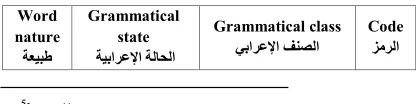
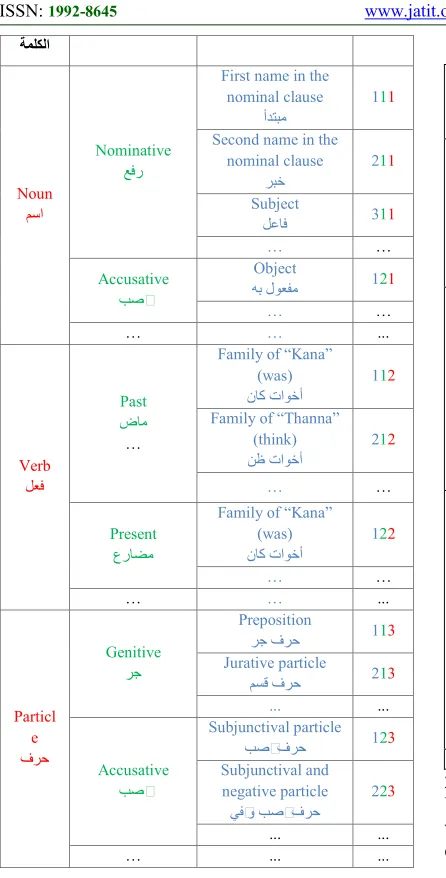
[image:2.612.313.521.645.697.2]In the expression of traditional Arabic grammar, we start with the description of the nature of the concerned word (noun, verb or particle) and then we describe its grammatical state; for example: a preposition (ﺮﺟ فﺮﺣ) i.e. that puts the following word in genitive; a conditional noun (طﺮﺷ ﻢﺳا) i.e. it expresses the condition; an imperative verb (ﺮﻣأ ﻞﻌﻓ) i.e. verb in the imperative mood, etc. For coding the elements, we have created a code composed of three numbers: the first for the nature of the word, the second for its grammatical state and the third to distinguish the category of the word between the categories having the same nature and the same grammatical state (See table 1).
Table 1: Classification Of The Word Nature And Its Grammatical Class
Word nature ﺔﻌﯿﺒط
Grammatical state ﺔﯿﺑاﺮﻋﻹا ﺔﻟﺎﺤﻟا
Grammatical class ﻲﺑاﺮﻋﻹا ﻒﻨﺼﻟا
Code ﺰﻣﺮﻟا
5http://corpus.quran.com
6The translation of the Arabic grammatical terms was
478 ﺔﻤﻠﻜﻟا Noun ﻢﺳا Nominative ﻊﻓر
First name in the nominal clause
أﺪﺘﺒﻣ
1
1 1
Second name in the nominal clause ﺮﺒﺧ 1 1 2 Subject
ﻞﻋﺎﻓ 311
… …
Accusative ﺐﺼﻧ
Object
ﮫﺑ لﻮﻌﻔﻣ 121
… … … … ... Verb ﻞﻌﻓ Past ضﺎﻣ …
Family of “Kana” (was) نﺎﻛ تاﻮﺧأ
112
Family of “Thanna” (think) ﻦظ تاﻮﺧأ 12 2 … … Present عرﺎﻀﻣ
Family of “Kana” (was) نﺎﻛ تاﻮﺧأ 2 2 1 … … … … ... Particl e فﺮﺣ Genitive ﺮﺟ Preposition
ﺮﺟ فﺮﺣ 113
Jurative particle
ﻢﺴﻗ فﺮﺣ 213
... ...
Accusative ﺐﺼﻧ
Subjunctival particle
ﺐﺼﻧ فﺮﺣ 123
Subjunctival and negative particle ﻲﻔﻧو ﺐﺼﻧ فﺮﺣ
223
... ...
… ... ...
2.1.2 Grammatical mark
In the traditional grammar expression, after describing the word nature and its grammatical class, we move to clarify its grammatical mark i.e. how the grammatical state is manifested. Indeed, for the Arabic words, the grammatical state is manifested either by vowels (تﺎﻛﺮﺤﻟﺎﺑ باﺮﻋإ) or letters (فوﺮﺤﻟﺎﺑ باﺮﻋإ); and sometimes does not manifest (رﺪﻘﻣ باﺮﻋإ). And we distinguish between Declinable words (ﺔﺑﺮﻌﻤﻟا تﺎﻤﻠﻜﻟا) and Indeclinable words (ﺔﯿﻨﺒﻤﻟا تﺎﻤﻠﻜﻟا) in the expression. For example, we say for Declinable words: word in nominative (عﻮﻓﺮﻣ) and we say for Indeclinable ones: fixed in
[image:3.612.90.528.67.502.2]nominative (ﻊﻓﺮﻟا ﻰﻠﻋ ﻲﻨﺒﻣ) (See table 2).
Table 2: Classification Of The Grammatical Marks
Grammatical mark باﺮﻋﻹا ﺔﻣﻼﻋ Inflecti on باﺮﻋﻹا Grammati cal state ﺔﻟﺎﺤﻟا ﺔﯿﺑاﺮﻋﻹا Vowel ﺔﻛﺮﺤﻟا Cod e ﺰﻣﺮﻟا Word in nominative marked by the vowel u at the
end ﺔﻤﻀﻟﺎﺑ عﻮﻓﺮﻣ هﺮﺧآ ﻰﻠﻋ ةﺮھﺎﻈﻟا e.g. ُلﻮُﺳﱠﺮﻟا َلﺎَﻗ َو
Declina ble بﺮﻌﻣ Nominative ﻊﻓر An apparent
vowel: u
ﺔﻛﺮﺣ :ةﺮھﺎظ ﺔﻤﻀﻟا 111 word in genitive marked by the
letter Yā (ي) ءﺎﯿﻟﺎﺑ روﺮﺠﻣ e.g. َﻦﯿِﻨِﻣْﺆُﻤْﻠِّﻟ ﻞُﻗ
Declina ble بﺮﻌﻣ
Genitive
ﺮﺟ
A letter
replacing the vowel: the Yā
replacing the vowel i :ﺐﺋﺎﻧ فﺮﺣ ﺔﺒﺋﺎﻨﻟا ءﺎﯿﻟا ةﺮﺴﻜﻟا ﻦﻋ 1 3 6
Word fixed in accusative marked by the
vowel a hidden at the end because
of the difficulty of pronunciation
ﺢﺘﻔﻟا ﻰﻠﻋ ﻲﻨﺒﻣ هﺮﺧآ ﻰﻠﻋ رﺪﻘﻤﻟا
ﻻﺎﻘﺜﺘﺳا e.g. ﻰَﻄْﻋَأ ْﻦ َﻣ
َو ﻰَﻘﱠﺗا Indecli nable ﻲﻨﺒﻣ Accusative ﺐﺼﻧ
A hidden vowel: because of pronuncia tion difficulty ﺔﻛﺮﺣ :ةرﺪﻘﻣ ﻻﺎﻘﺜﺘﺳا 2 2 3 ... ... ... ... ...
2.1.3 Grammatical relation
We clarify the grammatical relations linking the word in question with other words or sentences. For example, in the sentence:
)
ﻢﯿﻠﻋ ءﻲﺷ ﻞﻜﺑ ﷲ نإ
لﺎﻔﻧﻷا (75
(Verily Allah is well-acquainted with all things)
The spoils of War 75 [14]
We say that the sacred word “ َﷲ” is the Noun of ’inna ( ﱠنإ ﻢﺳا), and the word “ ِّﻞُﻛ” is annexed to
(ﻰﻟإ فﺎﻀﻣ) the word “ ٍءﻲﺷ”, and all " ِّﻞﻜِﺑ" ( ِّﻞﻛ + ِـﺑ) is dependent to (ـﺑ ﻖﻠﻌﺘﻣ) the word “ﻢﯿﻠﻋ”, etc. So, all these expressions (Noun of, annexed to, dependent to, etc.) can be considered as grammatical relations that can also be classified and coded (See Table 3).
Table 3: Classification Of The Grammatical Relations Grammatical relation
ﺔﯿﺑاﺮﻋﻹا ﺔﻗﻼﻌﻟا Code ﺰﻣﺮﻟا Agent (with the verb)
(ﻞﻌﻓ ﻊﻣ) ﻞﻋﺎﻓ 1
Predicate (with the Inchoative)
(أﺪﺘﺒﻣ ﻊﻣ) ﺮﺒﺧ 2
[image:3.612.91.314.76.515.2]479
... ...
2.1.4 Pronoun
[image:4.612.306.543.441.711.2]Then we found that we can classify pronouns, given their high frequency of use in the Arabic language. So we found that they can be classified according to type, reference, number and gender (See Table 4).
Table 4: Classification Of The Pronouns
Pronoun ﺮﯿﻤﻀﻟا Type عﻮﻨﻟا
Refers to ﮫﯿﻠﻋ ﺪﺋﺎﻌﻟا Number دﺪﻌﻟا Gend er ﺲﻨﺠﻟا Code ﺰﻣﺮﻟا me ﺎﻧأ Separ ated ﻞﺼﻔﻨﻣ Speaker
ﻢﻠﻜﺘﻣ Singleدﺮﻔﻣ - 111 they: fem. ﻦھ Separ ated ﻞﺼﻔﻨﻣ Absent ﺐﺋﺎﻏ Plural ﻊﻤﺟ Femi nine ﺚﻧﺆﻣ
2331
me ُﺖـ Linke d ﻞﺼﺘﻣ Speaker
ﻢﻠﻜﺘﻣ Single دﺮﻔﻣ - 112
you: dual ﺎﻤُﺘﻧأ Separ ated ﻞﺼﻔﻨﻣ Interloc utor ﺐطﺎﺨﻣ Dual
ﻰﻨﺜﻣ - 221
... ... ... ... ... ...
We can say that this method of coding will make the model content more semantic. Indeed, we can, for example, determine the tense of a verb by checking the second number in the word indices beginning with 2. and it also responds to the way of expressing the traditional Arabic grammar analysis, where often the expression is not very detailed; For example, in the preceding word “ﻰﻌﺳ” we can find instead of the expression: “ ﺢﺘﻔﻟا ﻰﻠﻋ ﻲﻨﺒﻣ ضﺎﻣ ﻞﻌﻓ ارﺬﻌﺗ ﻒﻟﻷا ﻰﻠﻋ رﺪﻘﻤﻟا” this expressions: “ ﻲﻨﺒﻣ ضﺎﻣ ﻞﻌﻓ ﺢﺘﻔﻟا ﻰﻠﻋ” , "ضﺎﻣ ﻞﻌﻓ" or even "ﻞﻌﻓ" (as in the word "ﺎَﻨْﯿَﻌَﺳ" it is said: "ﻞﻋﺎﻓو ﻞﻌﻓ"). So the model will provide the requested information according to all the analysis level, by allowing the extraction of the desired information via its corresponding number in the code, without addressing the other details.
2.2 Indexation
When we talked about the grammatical relations, we said that the word can have a relation with a word or a sentence, and that the same word can have multiple relations. Let's take the following example:
)
َﻣ
ِﺪَﺘْﮭُﻤْﻟا َﻮُﮭَﻓ ُﷲ ِﺪْﮭَﯾ ْﻦ
ﻒﮭﻜﻟا (17
(He whom Allah guides is rightly guided)
The Cave 17 [14]
The word “ﺪْﮭَﯾ” (which is a verb) has a grammatical relation with the word “ﻦَﻣ” (particle) and the nature of this relationship is: the condition verb (طﺮﺸﻟا ﻞﻌﻓ). The same word "ﻦَﻣ" has a relation
but this time with the sentence “ﺪﺘﮭﻤﻟا ﻮھ” and the nature of this relationship is: the Result depending
upon the condition (طﺮﺸﻟا باﻮﺟ). Thus we will need
a proper indexation, from which we can locate the words and sentences in the Holy Quran in order to define the elements of grammatical relations.
We then adopted the following indexation:
Chapter , Verse , Sentence , Word , Word part
ﺔﻤﻠﻛ ءﺰﺟ ، ﺔﻤﻠﻛ ، ﺔﻠﻤﺟ ، ﺔﯾآ ، ةرﻮﺳ Where:
• Chapter: the chapter ranking relative to the
other chapters of the Quran.
• Verse: the verse ranking compared to the other
chapter verses.
• Sentence: the sentence ranking inside the
verse.
• Word: the ranking word inside the sentence.
• Word part: the word part ranking (if exists)
inside the word, relative to the other word parts.
2.2.1 Indexation levels
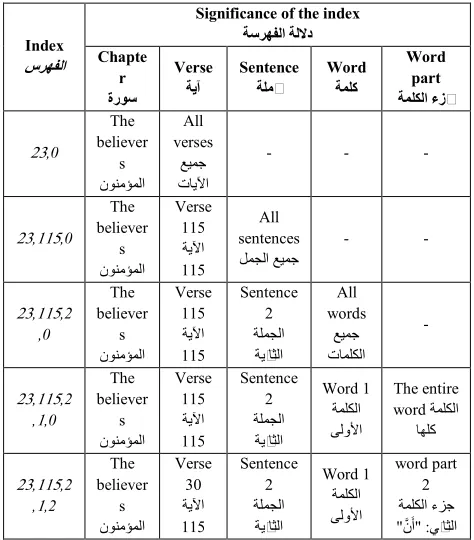
If we put 0 in an indexation level, the resulting index will point on all of the elements belonging to this level (See Table 5). For example, let’s take this verse:
)
َنﻮُﻌَﺟ ْﺮُﺗ َﻻ ﺎَﻨْﯿَﻟِإ ْﻢُﻜﱠﻧَأَو ﺎًﺜَﺒَﻋ ْﻢُﻛﺎَﻨْﻘَﻠَﺧ ﺎَﻤﱠﻧَأ ْﻢُﺘْﺒِﺴَﺤَﻓَأ
(نﻮﻨﻣﺆﻤﻟا 115
(Did ye then think that We had created you in jest,
and that ye would not be brought back to Us (for
account)?) The believers 115 [14]
Table 5: Explanation Of The Indexation Levels
Index سﺮﮭﻔﻟا
Significance of the index ﺔﺳﺮﮭﻔﻟا ﺔﻟﻻد Chapte r ةرﻮﺳ Verse ﺔﯾآ Sentence ﺔﻠﻤﺟ Word ﺔﻤﻠﻛ Word part ﺔﻤﻠﻜﻟا ءﺰﺟ 23,0 The believer s نﻮﻨﻣﺆﻤﻟا All verses ﻊﯿﻤﺟ تﺎﯾﻵا - - -
23,115,0 The believer s نﻮﻨﻣﺆﻤﻟا Verse 115 ﺔﯾﻵا 115 All sentences ﻞﻤﺠﻟا ﻊﯿﻤﺟ - -
23,115,2 ,0 The believer s نﻮﻨﻣﺆﻤﻟا Verse 115 ﺔﯾﻵا 115 Sentence 2 ﺔﻠﻤﺠﻟا ﺔﯿﻧﺎﺜﻟا All words ﻊﯿﻤﺟ تﺎﻤﻠﻜﻟا -
23,115,2 ,1,0
The believer s نﻮﻨﻣﺆﻤﻟا Verse 115 ﺔﯾﻵا 115 Sentence 2 ﺔﻠﻤﺠﻟا ﺔﯿﻧﺎﺜﻟا Word 1 ﺔﻤﻠﻜﻟا ﻰﻟوﻷا The entire word ﺔﻤﻠﻜﻟا
ﺎﮭﻠﻛ
23,115,2 ,1,2
[image:5.612.87.520.68.269.2]
480 Figure 1: Representation Of The Indexation Levels
2.2.2 Indexation of the hidden elements We often find that the specialists in Arabic grammar introduce in their grammatical analyzes some estimated words or sentences that do not appear in the text. These hidden elements are used to complete the context, so they will be considered as the other items and will have the same grammatical characteristics. Then we need to index them so as to distinguish between the original text and what is estimated by the linguist.
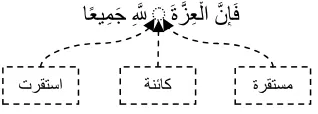
Hidden elements differ according to the number and the nature. For example, in the sentence “ ﱠنِﺈَﻓ ﺎًﻌﯿِﻤَﺟ ِ ﱠ ِ´ َة ﱠﺰِﻌْﻟا” (all honour be to Allah) is estimated a
verb, such as: ﺮﻘﺘﺳات (establish) or a name as: ﺮﻘﺘﺴﻣة
[image:5.612.320.525.412.602.2](established) (See Figure 2).
Figure 2: Example Of Diversified Hidden Elements
They may also differ according to the location, as the estimation of ئﺪﺘﺑأ (I start) or ﻲﺋاﺪﺘﺑا
(my beginning) in ﺔﻠﻤﺴﺒﻟا (the first verse of the Holy
Quran) (See Figure 3).
Figure 3: Example Of Hidden Elements In Different Locations
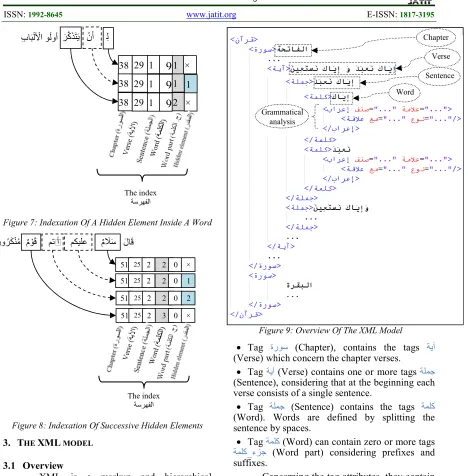
They may also be included inside a word, as the estimation of the hidden word ْنأ (ةﺮﻤﻀﻤﻟا نأ) in the word َﺮﱠﻛَﺬَﺘَﯿِﻟ َو (See Figure 4).
Figure 4: Example Of A Hidden Word Inside A Word
We can also find successive hidden elements in the same location, as in this sentence:
)
نوﺮﻜﻨﻣ مﻮﻗ مﻼﺳ لﺎﻗ
(تﺎﯾراﺬﻟا 25
(he said: 'peace'! - people unknown)
Adh-Dhariyat 25 [15] The estimated meaning is (See Figure 5):
مﻼﺳ لﺎﻗ ﻢﺘﻧأ ﻢﻜﯿﻠﻋ نوﺮﻜﻨﻣ مﻮﻗ
(he said: 'peace [upon you]'! - [you are a] people
unknown)
Figure 5: Example Of Successive Hidden Items
It is then necessary to take into consideration all possible cases in order to design proper indexation to these hidden elements.
•Indexation of the hidden elements
To locate the place where we want integrate the hidden element, we adopted the following syntax:
The index of the preceding element “,”the hidden
element ranking relative to the other hidden
elements (if there are several ones).
[image:5.612.123.282.430.487.2]Thus, the indexes of the previous examples will be as followings: Sentence (ﺔﻠﻤﺟ)
Figure 6: Indexation Of A Simple Hidden Element 4
ﱠنِﺈَﻓ َة ﱠﺰِﻌْﻟا
ﺎًﻌﯿِﻤَﺟ
1393 1 0 ×
0 1 2
0 × 3
The index ﺔﺳﺮﮭﻔﻟا ِﱠ ِ´ ﺔﻨﺋﺎﻛ
4 1393 4 1393
4 1393 2 0 ×
ٌم َﻼَﺳ َلﺎَﻗ
َنو ُﺮَﻜْﻨُﻣ ٌم ْﻮَﻗ
ﻢﺘﻧأ ﻢﻜﯿﻠﻋ
ِﻟ َو
ـ
ـ
ِبﺎَﺒْﻟَ ْﻷا ﻮُﻟوُأ َﺮﱠﻛَﺬَﺘَﯿ
ْنَأ
ِﻢﯿ ِﺣ ﱠﺮﻟا ِﻦَﻤْﺣ ﱠﺮﻟا ِ ﱠ´ا ِﻢْﺴِﺑ
ئﺪﺘﺑأ ئﺪﺘﺑأ
ﻲﺋاﺪﺘﺑا
َة ﱠﺰِﻌْﻟا ﱠنِﺈَﻓ
ﺎًﻌﯿِﻤَﺟ ِ ﱠ ِ´
تﺮﻘﺘﺳا ﺔﻨﺋﺎﻛ ةﺮﻘﺘﺴﻣ
Word part 2
ﺎًﺜَﺒَﻋ ْﻢُﻛﺎَﻨْﻘَﻠَﺧ ﺎَﻤﱠﻧَأ ْﻢُﺘْﺒِﺴَﺤَﻓَأ
ﱠﻧ
َأ َو
ْﻢُﻜ
َنﻮُﻌَﺟ ْﺮُﺗ َﻻ ﺎَﻨْﯿَﻟِإ
ﱠنَأ
ْﻢُﻛ
َو
Sentence 2 Sentence 1
Word 1
Word part 1
Verse 115
[image:5.612.103.287.558.621.2][image:6.612.87.555.67.543.2]
481 Figure 7: Indexation Of A Hidden Element Inside A Word
Figure 8: Indexation Of Successive Hidden Elements
3. THE XML MODEL
3.1 Overview
XML is a markup and hierarchical language. It is a kind of simplified databases where the XML file consists of tags identifying the data elements (e.g. Chapter, Verse, Word, etc.) beginning with “<item>” and ending with “</item>”. Inside each element, there are some entities determining the properties of the element (for example, Number, Nature, etc.). The hierarchy appears in the fact that the parent tag contains the child tags that can also contain children, etc.
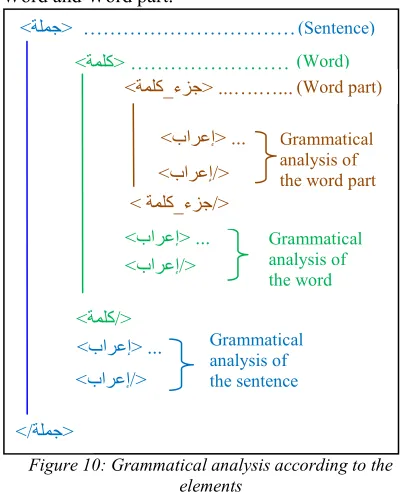
The Figure 9 shows an overview of the model.
Figure 9: Overview Of The XML Model
• Tag ةرﻮﺳ (Chapter), contains the tags ﺔﯾآ (Verse) which concern the chapter verses.
• Tag ﺔﯾآ (Verse) contains one or more tags ﺔﻠﻤﺟ (Sentence), considering that at the beginning each verse consists of a single sentence.
• Tag ﺔﻠﻤﺟ (Sentence) contains the tags ﺔﻤﻠﻛ (Word). Words are defined by splitting the sentence by spaces.
• Tag ﺔﻤﻠﻛ (Word) can contain zero or more tags
ﺔﻤﻠﻛ_ءﺰﺟ (Word part) considering prefixes and suffixes.
Concerning the tag attributes, they contain grammatical information that we have already classified:
• Attribute ﻒﻨﺻ (Class): contains the code concerning the word nature and its grammatical class.
• Attribute ﺔﻣﻼﻋ (Mark): contains the code concerning the grammatical mark.
Then we define the grammatical relation(s) with the other elements. And from the fact that we can have several relations for the same element, we considered the element ﺔﻗﻼﻋ (relation) as an independent tag being a child of the element
اﺮﻋإ
ب (grammatical analysis). The element ﺔﻗﻼﻋ (relation) has the attributes عﻮﻧ (type) containing the code of the relation type and ﻊﻣ (with) containing َلﺎَﻗ
ٌم َﻼَﺳ ﻢﻜﯿﻠﻋ ﻢﺘﻧأ َنو ُﺮَﻜْﻨُﻣ
2 2 51 25 2 2 0 ×
0 1
0 2 51 25 2
51 25 2
3 0 × 51 25 2
ٌم ْﻮَﻗ
The index ﺔﺳﺮﮭﻔﻟا
38 29
9
1 × ِبﺎَﺒْﻟَ ْﻷا ﻮُﻟوُأ َﺮﱠﻛَﺬَﺘَﯾ1 ×
The index ﺔﺳﺮﮭﻔﻟا ِﻟ
ـ ْنَأ
38 29 1
9
2 38 29 19
11
Chapter
Verse
Sentence
Word
[image:6.612.83.287.289.477.2]482 the index of the other element involved in the relation.
3.2 Grammatical analysis according to the elements
[image:7.612.89.291.228.476.2]In the traditional Arabic grammar we talk about the grammatical analysis of words باﺮﻋإ تﺎﻤﻠﻜﻟا (or word parts) as well as the grammatical analysis of sentences ﻞﻤﺠﻟا باﺮﻋإ, considering the sentence –grammatically- as one word ( ﻞﺤﻣ ﺎﮭﻟ ﺔﻠﻤﺟ باﺮﻋﻹا ﻦﻣ). So, we have to foresee the tag باﺮﻋإ (grammatical analysis) inside the tags: Sentence, Word and Word part.
Figure 10: Grammatical analysis according to the elements
In the figure 11, we give an example of the grammatical analysis of the sentence ﻦﯿﻌﺘﺴﻧ كﺎﯾإو and the grammatical analysis of the element و that is part of the word كﺎﯾإو.
Figure 11: XML model of the grammatical analysis
3.3 Origins of the word parts
We also added the attribute ﻞﺻأ (Origin), because, in the grammatical analysis, the word parts are called as if they are independent. For example, the word ﻢﺴﺑ contains two parts: ِب and ِﻢْﺳ, and in its grammatical analysis we do not say:
(“bi”: Preposition) ﺮﺟ فﺮﺣ : ِب “ ِب”ـﺑ روﺮﺠﻣ ﻢﺳا : ِﻢْﺳ
(“smi”: The genitive governed by “bi”) But we say:
(“Bā”: Preposition) ﺮﺟ فﺮﺣ :ءﺎﺒﻟا ِﻢﺳا ب روﺮﺠﻣ ﻢﺳا : ءﺎﺒﻟا
(“Ismi”: The genitive governed by the “Bā”) Another example for the word ﺎَﻨْﻠُﻗ (ﺎَﻧ + ْﻞُﻗ), we do not say:
ْﻞُﻗ : ﻲﺿﺎﻣ ﻞﻌﻓ (“qul”: past verb)
But we say:
لﺎﻗ : ﻲﺿﺎﻣ ﻞﻌﻓ (“qala”: past verb)
Thus it is necessary to foresee a morphological analysis process to determine the origin of each word part. To facilitate this task, we can interface a morphological analyzer suggesting the possible origins. For example, we can use the morphological analyzer Alkhalil [16] or Buckwalter [17].
3.4 Versions of grammatical analysis
We often find in the grammatical analysis of the Quranic text that we can have several versions of grammatical analysis, and that these versions do not have the same degree.
For this, we give the opportunity to add several grammatical analysis (باﺮﻋإ element) for the same entity (sentence, word or word part), giving the attribute ﮫﺟو (version) indicating the degree of the current version compared to the other versions.
For example, in the grammatical analysis of the word بر in the sentence: “ﻦﯿﻤﻟﺎﻌﻟا بر Á ﺪﻤﺤﻟا” we can have two versions: لﺪﺑ (replacing) of the
[image:7.612.116.563.519.706.2]holy word “ﷲ” or: ﺖﻌﻧ (adjective) of the same word. Then the model will be as in Figure 12.
Figure 12: Example of two grammatical analysis versions
The second version The first version
(Sentence)
(Word)
(Word part)
Grammatical analysis of the word part
<ﺔﻠﻤﺟ> ………..
> ﺔﻠﻤﺟ / <
……… <ﺔﻤﻠﻛ>
<ﺔﻤﻠﻛ/>
….…... ... > ﺔﻤﻠﻛ_ءﺰﺟ <
... > باﺮﻋإ <
/> باﺮﻋإ <
... > باﺮﻋإ <
/> باﺮﻋإ <
... > باﺮﻋإ <
/> باﺮﻋإ <
/> ﺔﻤﻠﻛ_ءﺰﺟ <
Grammatical analysis of the word
483 3.5 Sentences distributed over multiple verses
[image:8.612.316.562.96.277.2]We can find sentences containing several parts belonging to different verses. For example, we can consider the first three verses as one sentence.
Figure 13: Example of a sentence distributed over several verses
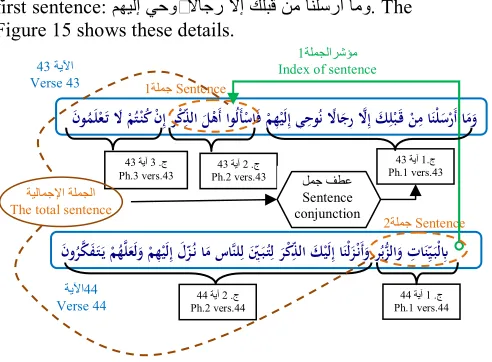
[image:8.612.58.290.140.226.2]These cases present a problem for the XML hierarchy, where the son element (here the sentence) must be completely included in the father element. For this, we have added an entity (Sequel) in the element (Sentence) that contains the index of the previous part of the total sentence. Thus, the index of the total sentence will be the index of the last part, so as to bring all parts starting with the last index up to the first.
Figure 14: Indexation of a sentence distributed over several verses
To better understand this, let us take a more detailed example: in the verses 43 and 44 of Chapter ﻞﺤﻨﻟا (Bees):
ﱠﻻِإ َﻚِﻠْﺒَﻗ ﻦِﻣ ﺎَﻨْﻠَﺳ ْرَأ ﺎَﻣ َو
َﻞْھَأ اﻮُﻟَﺄْﺳﺎَﻓ ْﻢِﮭْﯿَﻟِإ ﻲ ِﺣﻮﱡﻧ ًﻻﺎَﺟ ِر
َنﻮُﻤَﻠْﻌَﺗ َﻻ ْﻢُﺘﻨُﻛ نِإ ِﺮْﻛِّﺬﻟا
(43)
ﺎَﻨْﻟ َﺰﻧ
َأ َو ِﺮُﺑﱡﺰﻟا َو ِتﺎَﻨِّﯿَﺒْﻟﺎِﺑ
َنو ُﺮﱠﻜَﻔَﺘَﯾ ْﻢُﮭﱠﻠَﻌَﻟ َو ْﻢِﮭْﯿَﻟِإ َل ِّﺰُﻧ ﺎَﻣ ِسﺎﱠﻨﻠِﻟ َﻦِّﯿَﺒُﺘِﻟ َﺮْﻛِّﺬﻟا َﻚْﯿَﻟِإ
(44)
And before thee We sent none but men, to whom We granted inspiration: if ye realise this not, ask of
those who possess the Message (43) (We sent them)
with Clear Signs and scriptures and We have sent down unto thee (also) the Message; that thou mayest explain clearly to men what is sent for them,
and that they may give thought. (44) [14]
The sentence ﺮﺑﺰﻟاو تﺎﻨﯿﺒﻟﺎﺑ is considered as a sequel of the sentence ﺮﻛﺬﻟا ﻞھأ اﻮﻟﺄﺳﺎﻓ and the total sentence ﺮﺑﺰﻟاو تﺎﻨﯿﺒﻟﺎﺑ + ﺮﻛﺬﻟا ﻞھأ اﻮﻟﺄﺳﺎﻓ has the relation ﻞﻤﺠﻟا ﻒﻄﻋ (sentence conjunction) with the
first sentence: ﻢﮭﯿﻟإ ﻲﺣﻮﻧ ﻻﺎﺟر ﻻإ ﻚﻠﺒﻗ ﻦﻣ ﺎﻨﻠﺳرأ ﺎﻣو. The Figure 15 shows these details.
Figure 15: Detailed a sentence distributed over several verses
3.6 The reference of the grammatical analysis The reference of the grammatical analysis is an important information that the model should also include. For this, we have two choices:
• Either we reserve for each source (book) a separate XML file.
• Or we add an attribute رﺪﺼﻣ (Reference) in each element باﺮﻋإ (Grammatical analysis)
So we adopted the second choice for these reasons:
• There are authors who have not completed the grammatical analysis of the entire Holy Quran.
• There are some grammatical analyzes that are scattered in books that are not specialized in this field (such as interpretations of the Quran)
• We will have a more global view of every word by presenting several analyses.
4. CONCLUSION
4.1 Contributions
From the presented work, we can draw the following contributions:
• It represents a new application of the XML language.
• It provides a rich resource for research related to Natural Language Processing (NLP), especially for the Arabic language whose resources are not enough numerous and available.
• Thanks to the categorization and classification, there will be an optimal data size by substituting long sentences (as in Figure 1) by small numbers; given the fact that we will have as result an XML resource that is at the end a text file that we have the interest to reduce due to the constraints of transfer and processing time. Indeed, this
ﺔﻠﻤﺠﻟا ﺔﯿﻟﺎﻤﺟﻹا
The total sentence
ﺔﯾﻵا44 Verse 44
ﺔﻠﻤﺟ
1 Sentence
1
ﺔﻠﻤﺟ
2 Sentence
2 ﺔﻠﻤﺠﻟاﺮﺷﺆﻣ 1
Index of sentence ﺔﯾﻵا
43 Verse 43
َﻔَـﺘَـﻳ ْﻢُﻬﱠﻠَﻌَﻟَو ْﻢِﻬْﻴَﻟِإ َلِّﺰُـﻧ ﺎَﻣ ِسﺎﱠﻨﻠِﻟ َِّﲔَـﺒُـﺘِﻟ َﺮْﻛِّﺬﻟا َﻚْﻴَﻟِإ ﺎَﻨْﻟَﺰْـﻧَأَو ِﺮُﺑﱡﺰﻟاَو ِتﺎَﻨِّﻴَـﺒْﻟِ& َنوُﺮﱠﻜ
َﻓ ْﻢِﻬْﻴَﻟِإ ﻲِﺣﻮُﻧ ًﻻﺎَﺟِر ﱠﻻِإ َﻚِﻠْﺒَـﻗ ْﻦِﻣ ﺎَﻨْﻠَﺳْرَأ ﺎَﻣَو َنﻮُﻤَﻠْﻌَـﺗ َﻻ ْﻢُﺘْـﻨُﻛ ْنِإ ِﺮْﻛِّﺬﻟا َﻞْﻫَأ اﻮُﻟَﺄْﺳﺎ
ج . 2 ﺔﯾآ 43 Ph.2 vers.43 ج
. 3 ﺔﯾآ 43
Ph.3 vers.43 ﻞﻤﺟ ﻒﻄﻋ
Sentence conjunction
ج . 1 ﺔﯾآ 43 Ph.1 vers.43
ج . 1 ﺔﯾآ 44 Ph.1 vers.44 ج
. 2 ﺔﯾآ 44 Ph.2 vers.44
ﺔﻠﻤﺟ 3
Sentence 3 Sentence 2 2ﺔﻠﻤﺟ
ﺔﻗﻼﻋ ﺔﯿﺑاﺮﻋإ Grammatical
relation
ﺔﻠﻤﺟ 1 Sentence 1 ا
ﺔﯾﻵ
أ + 2
Verse i+2
ﺔﯾﻵا
أ + 1
Verse i+1 ﺔﯾﻵا
أ
Verse i
ﺔﻠﻤﺠﻟا ﺔﯿﻟﺎﻤﺟﻹا The total sentence
ﺮﺷﺆﻣ ﺔﻠﻤﺠﻟا 1
Index of sentence 1 ﺮﺷﺆﻣ
ﺔﻠﻤﺠﻟا 2
Index of sentence 2
Sentence 2 ﺔﻠﻤﺟ
2 1ﺔﻠﻤﺟSentence 1
Verse 3 ﺔﯾﻵا 3
ِﻚِﻟﺎَﻣ ِم ْﻮَﯾ
ِﻦﯾِّﺪﻟا ِﻢﯿ ِﺣ ﱠﺮﻟا ِﻦَﻤْﺣ ﱠﺮﻟا َﻦﯿِﻤَﻟﺎَﻌْﻟا ِّب َر ِﱠ ِ´ ُﺪْﻤَﺤْﻟا
Sentence 3 ﺔﻠﻤﺟ
3
ﺔﻠﻤﺠﻟا ﺔﯿﻟﺎﻤﺟﻹا The total sentence
Verse 2 ﺔﯾﻵا
[image:8.612.76.299.367.468.2]484 contribution will be more important in the case of large queries that process a massive number of cases, so instead of dealing with long phrases we will have simple numbers.
• The model provides a normalization of the grammatical analysis expressions. Indeed there are often differences between the expressions of the grammarians for the same word (e.g. ،ضﺎﻣ / ﻲﺿﺎﻤﻟا ﮫﻠﻋﺎﻓ ﻢﺴﯾ ﻢﻟ ﺎﻤﻟ / لﻮﻌﻔﻤﻠﻟ / لﻮﮭﺠﻤﻠﻟ ﻲﻨﺒﻣ ،ﺮﺴﻜﻟا / ﺾﻔﺨﻟا, etc.). So the unification of these expressions is a paramount phase to allow the automatic processes such as advanced search, rule extraction, etc. And this can be a first step to a universal standard of Arabic grammar.
• In addition, it will provide several grammatical analysis depth levels, so as to have the required information without browsing other details by checking directly the relevant section in the code.
• It provides the possibility of advanced search; for example, searching the cases where the predicate of نﺎﻛ (Kana) is a verbal sentence having
a present verb.
• It supports adding multiple versions of
grammatical analyzes of the same person.
• In addition to the benefits of XML structure: flexibility, extensibility and compatibility with various systems, etc.
4.2 Limits
Like every new work, we can see the following limitations of our work:
• It requires a community of specialists in Quranic sciences, the Arabic language and XML language to ensure and validate the proposed structure.
• It also requires specialists to delimit the sentences and word parts, and to enter the information related to the grammatical analysis.
• We also mention the limitations of XML
format: security, complexity, etc. 4.3 Applications
We can have diverse applications of this work related to the creation of a reference for everything related to the grammatical analysis of the Holy Quran that will be accessible and used by researchers in various entities: Arabic sciences, Quranic sciences, NLP, XML ... As well as developers of web and mobile applications.
4.4 Perspectives
Regarding the present work, we think to introduce future enhancements:
• Create more specialist groups to discuss the validation and improvement of the structure and its components.
• Extend the model to cover the Arabic language.
• Combine this structure with other XML
structures concerning the other Quranic sciences (as
Tajweed ﺪﯾﻮﺠﺘﻟا: pronunciation of the Quranic text,
Tafseer ﺮﯿﺴﻔﺘﻟا: explanation of the Quran, etc.).
• For the Quranic versions (Qiraat), we work currently on the available version (Hafs). However, currently, we have the vision to work on other Quranic versions separately, because there are often differences between versions that affect the division of words and phrases which will complicate the model if we want to assemble all the versions into one file.
• We are also working on the design of an advanced web interface containing all the features required to edit the XML model and view its content adequately.
•
REFERENCES:
[1] Thomas Chenery, “The Arabic language, a lecture”, 1869.
[2] Nezar Najjar, “The civilization of Arabs is based on their language”, 2010.
) "ﻢﮭﺘﻐﻟ ﻰﻠﻋ بﺮﻌﻟا ةرﺎﻀﺣ ﺖﻣﺎﻗ" ،رﺎﺠﻧ راﺰﻧ ،
2010 (
http://fedaa.alwehda.gov.sy/_archive.asp?FileN ame=59152148320100314224056
[3] Dakhil Hamad Ben Nasser, “The impact of the desert in the genesis and evolution of Arabic poetry until the end of the Abbasid era”, 2013.
) .ﺮﺻﺎﻧ ﻦﺑ ﺪﻤﺣ ﻞﯿﺧد "
ﻲﺑﺮﻌﻟا ﺮﻌﺸﻟا ةﺄﺸﻧ ﻲﻓ ءاﺮﺤﺼﻟا ﺮﺛأ
،"ﻲﺳﺎﺒﻌﻟا ﺮﺼﻌﻟا ﺔﯾﺎﮭﻧ ﻰﺘﺣ هرﻮﻄﺗو 2013
. (
[4] Gustave Le Bon, “La civilisation des Arabes”,
Librairie de Firmin-Didot, 1884.
[5] Roubhi Lakhdar, “The importance of the grammatical example in the Holy Qur'an interpretation, the interpretation (inclusive statement of Ibn Jarir al-Tabari) as a model”,
Al-Athar - Journal of Arts and Languages,
University of KasdiMarbah- Ouarqalla, Algeria, Vol. 6, 2007.
) نآﺮﻘﻟا ﺮﯿﺴﻔﺗ ﻲﻓ يﻮﺤﻨﻟا ﺪھﺎﺸﻟا ﺔﯿﻤھأ" ،ﺮﻀﺨﻟ ﻲﺤﺑور
،ﻢﯾﺮﻜﻟا ،"ﺎﺟذﻮﻤﻧ (يﺮﺒﻄﻟا ﺮﯾﺮﺟ ﻦﺑﻻ نﺎﯿﺒﻟا ﻊﻣﺎﺟ) ﺮﯿﺴﻔﺗ
ﺮﺛﻷا -حﺎﺑﺮﻣ يﺪﺻﺎﻗ ﺔﻌﻣﺎﺟ ،تﺎﻐﻠﻟاو بادﻵا ﺔﻠﺠﻣ
-رو ﺔﻠﻗ
،سدﺎﺴﻟا دﺪﻌﻟا ،ﺮﺋاﺰﺠﻟا 2007
. (
[6] Sabban, “Sabban’s Footnotes on Al-Ashmouni explanation of Alfiat Ibn Malik, arranged by Mustapha Houssain Ahmed”, Dar
Al-Fikr, Vol. 1, pp. 18.
) ﻂﺒﺿ ،ﻚﻟﺎﻣ ﻦﺑا ﺔﯿﻔﻟﻷ ﻰﻧﻮﻤﺷﻷا حﺮﺷ ﻰﻠﻋ نﺎﺒﺼﻟا ﺔﯿﺷﺎﺣ
،لوﻷا ﺪﻠﺠﻤﻟا ،ﺮﻜﻔﻟا راد ،ﺪﻤﺣأ ﻦﯿﺴﺣ ﻰﻔﻄﺼﻣ ﺐﯿﺗﺮﺗو .ص
18 . ( [7] Ibn Jazary, “nachr Fi Qiraeat
Al-achr, corrected and revised by Ali Mohammed Dabbae”, Dar Al-Koutoub Al-ilmiah, Vol. 2,
485 ) ﺔﻌﺟاﺮﻣو ﺢﯿﺤﺼﺗ ،ﺮﺸﻌﻟا تاءاﺮﻘﻟا ﻲﻓ ﺮﺸﻨﻟا" ،يرﺰﺠﻟا ﻦﺑا .ص ،لوﻷا ءﺰﺠﻟا ،ﺔﯿﻤﻠﻌﻟا ﺐﺘﻜﻟا راد ،"عﺎﺒﻀﻟا ﷴ ﻲﻠﻋ
224 . ( [8] Hanna Al-Fakhouri, “Inclusive in the history of
Arabic literature”, Dar Al-Jalil, Beirut, 1st
Edition, 1986, pp. 52.
) ،يرﻮﺧﺎﻔﻟا ﺎﻨﺣ "
راد ،"ﻲﺑﺮﻌﻟا بدﻷا ﺦﯾرﺎﺗ ﻲﻓ ﻊﻣﺎﺠﻟا
.ص ،ﻰﻟوﻷا ﺔﻌﺒﻄﻟا ،توﺮﯿﺑ ،ﻞﯿﻠﺠﻟا 52
، 1986 (
[9] Ghalib Ben MohammedAl-Hamidi, “Method of Changing Context, and its types, in the Holy Quran”, Conference of University of Al-Minia,
Egypt, 1429 AH.
) ﻟا ﻢﺳﺎﻘﻟا ﻮﺑأ ﷴ ﻦﺑ ﺐﻟﺎﻏ " ،ﻲﻀﻣﺎﺤ
ﮫﻣﺎﺴﻗأو تﺎﻔﺘﻟﻻا بﻮﻠﺳأ
،"ﻢﯾﺮﻜﻟا نآﺮﻘﻟا ﻲﻓ ،ﺮﺼﻣ ،ﺎﯿﻨﻤﻟا ﺔﻌﻣﺎﺟ ﺮﻤﺗﺆﻣ
1429 ـھ (
http://uqu.edu.sa/files2/tiny_mce/plugins/filem anager/files/4050050/gh4.doc
[10] Abdeleal Salem Makram, “The Holy Quran and its impact on the grammatical studies”, Ali
Al-Jarrah institution, 2nd Edition, 1978, pp. 45.
) ،مﺮﻜﻣ ﻢﻟﺎﺳ لﺎﻌﻟا ﺪﺒﻋ "
تﺎﺳارﺪﻟا ﻲﻓ هﺮﺛأو ﻢﯾﺮﻜﻟا نآﺮﻘﻟا
،ﺔﯿﻧﺎﺜﻟا ﺔﻌﺒﻄﻟا ،حﺎﺒﺼﻟا حاﺮﺠﻟا ﻲﻠﻋ ﺔﺴﺳﺆﻣ ،"ﺔﯾﻮﺤﻨﻟا 1978 ، .ص 45 (.
[11] Kais Dukes and Tim Buckwalter, “A Dependency Treebank of the Quran using Traditional Arabic Grammar”, The 7th International Conference on Informatics and
Systems (INFOS), 2010.
[12] Pierre Cachia, “The monitor A Dictionary of Arabic Grammatical Terms Arabic-English English-Arabic”, Librairie du Liban &
Longman London, 1973.
) ﺮﯿﯿﺑ ،ﺎﯿﻛﺎﻛ ﻲﺑﺮﻌﻟا ﻮﺤﻨﻟا تﺎﺤﻠﻄﺼﻣ ﻲﻓ ﻢﺠﻌﻣ ﻒﯾﺮﻌﻟا"
ﻲﺑﺮﻋ -يﺰﯿﻠﻜﻧا -يﺰﯿﻠﻜﻧا
-"ﻲﺑﺮﻋ ، توﺮﯿﺑ ،نﺎﻨﺒﻟ ﺔﺒﺘﻜﻣ
،نﺪﻨﻟ ،نﺎﻤﺠﻨﻟو 1973
. (
[13] William Wright, “A grammar of the Arabic language”, Cambridge university press, 3rd
Edition, 1967.
[14] Abdullah Yusuf Ali, “The Holy Qu'ran with English Translation of Its meaning, Roman Transliteration and full Arabic Text”, Dar
Al-Kitab Al-Aziz.
[15] Daryabadi, Abdul Maajid, “The Glorious Qur'an: Text, Translation & Commentary (Koran)”, The Islamic Foundation, 2010.
[16] Abderrahim Boudlal, Abdelhak Lakhouaja, Azzeddine Mazroui, et al. “Alkhalil Morpho SYS1: A Morphosyntactic Analysis System for Arabic Texts”. International Arab Conference
on Information Technology, 2010.