Journal of Chemical and Pharmaceutical Research, 2014, 6(6):1255-1260
Research Article
CODEN(USA) : JCPRC5
ISSN : 0975-7384
Study of fuzzy gravity center evaluation method based on fuzzy
mathematical theory
Yang Ke
Air Force Engineering University, Engineering College, Xi’an, China
_____________________________________________________________________________________________
ABSTRACT
In order to improve the credibility of the evaluation method, a new evaluation method based on fuzzy gravity center was proposed. In this method, the experts’ scoring in the cartesian coordinate system are displayed graphically, the abscissa of gravity center is the final evaluation of indicators, the ordinate of gravity center is with the reliability information of the indicators’ evaluation, which reflects the reliability of the evaluation. Further, the paper introduces the concept of deviation rate to reflect the impartiality of the final score coming from experts. The method is more flexible and more intelligent due to the fact that it takes into account of the degrees of confidence of decision-makers' opinions.
Keywords: Center-of-gravity; Fuzzy Mathematical Theory; Evaluation method
CLC: E917, Document code: A
_____________________________________________________________________________________________
INTRODUCTION
Evaluation methods is continuously developed and improved, and the key to solving the evaluation problem is to deal with the score given by experts. This article proposes a new evaluation method based on the summary of the fuzzy mathematical theory.
The common assessment methods are fuzzy comprehensive evaluation method, multivariate statistical analysis, multi-objective decision-making method, entropy method, gray correlation degree assessment method and so on. Each method has its advantages to solve certain problems, but the limitations of it is inevitable, practical applications and we often use the improvement of one or the combination of several methods to improve then evaluation method. Since the program evaluation, system evaluation are the indicators and comment conclusion of strong fuzzy, this article proposes a new evaluation method based on the fuzzy theory to solve the assessment.
1. Evaluation method Research based on Fuzzy Gravity Center 1.1 Information of indicators evaluation
1.1.1 Indicators evaluation and experts involved in the assessment
Suppose there are m evaluation indicators:
X=(x1, x2,…, xm)
And h experts involved in the assessment
The expert set is:
Let us assigned h experts weights as:
AZ= ( az1, az2,…, azh)
Among them: zt is expert t, and azt is the experts weights of expert t, t=1,2,…,h.
1.1.2 Definitions for the gravity center of fuzzy set
If the domain U is measurable set of real numbers in the domain, then we can use five reviews to make the U assessment set up:
V=(v1, v2, v3, v4)=(Vt︱t=1,2,3,4,5)
= (very poor, poor, fair, good, very good).
In order to score expediently, we place five reviews on a continuous value scale, and each comment’s length on the scale is set to 2. The Figure 1 show the comment ruler.
figure1: the comment ruler
1.1.3 The score of the experts
Experts score the indicators in the form of fuzzy interval, the interval length of fuzzy is 10 units. An index score is range from 0 to 10 points, the format of scoring are shown in Figure 2.
Figure 2: the format of scoring
1.2 The evaluation method based on fuzzy gravity center 1.2.1 The case without considering Experts weight (1) Fuzzy value
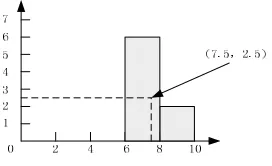
[image:2.595.237.373.463.546.2]Suppose we choose 8 experts to evaluate the indicators, Abscissa range is the scores, and the vertical axis is the frequency of a select range of values (equivalent to the number of experts given the same value).
Figure 3: Schematic 1of the expert scoring
Figure 3 shows an index system for the given interval score of [6, 8), and the frequency is 6, so the number of experts is 6; if the given index interval [8, 10], its frequency is 2. We can calculate values of the indicator’s gravity center of the range as follows:
∫∫
= D i x xd A G 1 σ,
∫∫
= D i y yd AG 1 σ
That is to say:
5 . 7 ) 36 84 ( 16 1 ) ( 2 2 6 2 1 10 8 2 0 8 6 6 0 = + × = + × × ×
=
∫
xdx∫
dy∫
xdx∫
dy Gxi+ 5 . 2 ) 4 36 ( 16 1 ) ( 16 1 2 0 10 8 8 6 6 0 = + × = + ×
=
∫
ydy∫
dx∫
ydy∫
dx Gyi [image:2.595.73.533.621.722.2](2) Credibility
[image:3.595.230.369.196.262.2]Credibility is half of the value that the gravity center ordinate value divided by the number of experts. The process of the ordinate values in Figure 3: 2.5 ÷ 4 × 100% = 62.5%, indicating that the index finally get the of credibility fuzzy value 7.5.
Figure 4 represents the indicators’ scores given by eight experts are all [6, 8) interval points, the coordinates of the gravity center is clearly to (7, 4). Fuzzy value of this indicator can be considered as 7, and the credibility is: 4 ÷ 4 × 100% = 100%.
[image:3.595.240.374.494.559.2]However, the same fuzzy value of index in Figure 5 shows a value of 7 which sent much of its credibility.
Figure 4: Schematic 2 of the expert scoring (credibility)
Figure 5: Schematic 3 of the expert scoring (credibility)
In figure 5, the coordinates of the gravity center is (7, 1.5). However, its credibility is just: 1.5 ÷ 4 × 100% = 37.5%. Seen in this light, it is acceptable to replace credibility of fuzzy values by the value of gravity ordinate value divide the half number of experts.
1.2.2 The case considering the Experts weight
When considered the expert weights the abscissa value of index is unchanged (fuzzy value unchanged), but the vertical axis changes, which affects the change of the credibility. Ordinate values are equal to the sum of experts weight in the given range. Figure 6 scoring situations of a certain indicator:
Figure 6: Schematic 5 of the expert scoring (credibility)
Suppose we choose 8 experts to evaluate the indicators, the weight of each expert is AZ= (az1, az2,…, az8)=(0.1,
0.1,0.2,0.2,0.1,0.1,0.1,0.1). If the indicators’ scores given by eight experts are all[6, 8) interval points, the
coordinates of the gravity center is clearly to (7, 0.5). Fuzzy value of this indicator can be considered as 7, and the credibility can be considered as 100%, but according to the previous method we can calculate that: 0.5 ÷ 4 ×100% = 12.5%, It has great difference in what we think 100%, Since the ordinate reflects the credibility of the information, so process the ordinate: 0.5×2×100% = 100%, which meets the requirements. Example of this calculation method is shown in Figure 7.
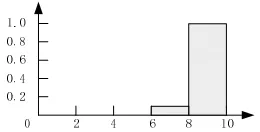
[image:3.595.239.369.684.750.2]The first expert give the [6, 8) interval points, and the others give [8, 10] interval points.
The gravity center of it is: (8.8, 0.41), the fuzzy score of it is 8.8 and the credibility of it is: 0.41×2× 00% = 82%.
From this perspective, the calculation method of credibility is acceptable in the case of considering the expert weights. Namely: the credibility twice of gravity center ordinate.
1.2.3 Deviation rate
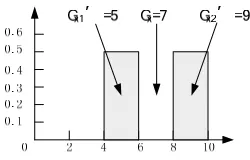
[image:4.595.242.367.218.293.2]Whether or not to consider the weight of experts, the case will exist, where the abscissa and ordinate values of the gravity center are equal but expert opinion is inconsistent. Such as figure 8 and figure 9, the abscissa and ordinate values of the gravity center is equal but experts’ advice in the evaluation process is different. To solve this issue, we bring in the concept of deviation rate of deviation rate, which is only related with the abscissa.
[image:4.595.239.371.323.408.2]Figure 8:Schematic 7 of th expert scoring
Figure 9: Schematic 8 of the expert scoring
Formula to calculate the deviation rate is:
% 100 ) (
1
1
× ′ − ×
=
∑
= x xi
h
i
G G i
p
σ
Among them,
σ
is the unit of measure for the abscissa, and the unit of measure in figure 10 is 2.G
x is the finalvalue of the abscissa, Gxi′is the abscissa value of the Cartesian coordinates of the respective sections forming the
focus rectangle. 1≤i≤h, h is the number of the experts. The deviation rate of it is:
p =1/4×(2+2)×100% = 100%
Figure 10: Schematic 9 of the expert scoring The deviation rate of figure 11 is:
[image:4.595.241.366.571.651.2]Figure 11: Schematic 10 of the expert scoring
1.2.4 Evaluation model based on gravity center
The evaluation model based on gravity center are as follows: to facilitate, we only consider to evaluate two index evaluation system.
Suppose the index in index layer 1 of index system is: X = (x1, x2,…, xn), and its weight is: W =(w1, w2,…, wn). the
index of the index below the index layer xi(i=1,2,…,n)(index layer2) is: X’ =(xi1, xi2,…, xim), its weight is, W’ =(wi1,
wi2,…, wim).
After scoring, the fuzzy value of each index in index layer 2, when expressed with the coordinates of the gravity center it can de shown as:
),
,
(
,
),
,
(
),
,
(
G
xi1G
yi1G
xi2G
yi2L
G
ximG
yim
The abscissa value is the number of experts and in the case without considering the expert weight: the vertical axis value is the weight of experts.
Combined the index weight, we can finally obtain the coordinates of the gravity center of each index i layer by the using the weighted summation method. it is expressed as:
)
,
(
∑
∑
= =•
•
=
m t it y it m t it x it i y ix
G
w
G
w
G
G
1 1
)
,
(
i=1,2, …,nThe gravity center of the overall objective evaluation is:
)
,
(
∑
∑
= =•
•
=
n t t y t n t t x t yx
G
w
G
w
G
G
1 1)
,
(
Among them:
G
x is the final score of the overall objective review. Obviously, 0≤G
x≤10. In addition, for a certain goal:z-1≤
G
x≤z,z=1,2,3,4,5For example: when
G
x=8.5, so the goals comment is “fine”, for 8≤G
x≤10. The case without considering experts’ weight:y
G
is a value between 0 and h(h is the number of experts involved in the evaluation), andG
y÷(g/2)×100% is the credibility of the review score.The case considering the expert weight:
y
G
×2×100% is the credibility of the review score. And the deviation rate is:∑
=•
=
n t t x tp
w
n
p
11
.1.3 sort gravity
In gravity center coordinates, the merits of abscissa values are proportional to the size of the target evaluations. That is to say, the larger value of the abscissa is, the better the corresponding objective assessment is. When the two goals of equal value of the abscissa, the goals with greater ordinate value(high confidence) has the priority. If the gravity center is equal(both abscissa and ordinate values are equal) of the two assessment objectives, the goals with small deviation rate has the priority, and if the goals have equal deviation rate equal and gravity center we can considered that they are equal.
CONCLUSION
This article proposed a new evaluation method based on fuzzy gravity center. In this method, the results of expert scoring is displayed in the Cartesian coordinate system by graphically, the abscissa of coordinate is the final evaluation of indicators, the ordinate of coordinate is the reliability information of the indicators’ evaluation, which reflecting the reliability of the evaluation, and the concept of deviation rate is introduced to reflect the impartiality of the final score coming from experts.
REFERENCES
[1] ZHU Yu Peng, FU Wen Yao, LI Xiang, Xiao Shun. System Engineering and Electronics. 2008.06. [2] FAN Ru Yu, SUI Li Fen, MA Li. Measurement Science, 2010.12.
[3] ZHU Xing De, FENG Tie Jun. System Engineering Theory And Practice, 2003.12.