Neurodevelopment: The Impact of
Nutrition and Inflammation During
Infancy in Low-Resource Settings
Nancy F. Krebs, MD, MS, a Betsy Lozoff, MD, b, c Michael K. Georgieff, MDdaDepartment of Pediatrics, University of Colorado School of Medicine, Aurora, Colorado; bCenter for Human Growth and Development and cDepartment of Pediatrics and Communicable Diseases, University of Michigan, Ann Arbor, Michigan; and dDivision of Neonatology, University of Minnesota School of Medicine, Minneapolis, Minnesota
Dr Krebs was a panelist at the original Eunice Kennedy Shriver National Institute of Child Health and Human Development scientifi c meeting, served as the lead author for the paper, organized the writing team, drafted the initial manuscript, incorporated edits from the additional authors and editors, and fi nalized the manuscript; Drs Lozoff and Georgieff was a panelist at the original NICHD scientifi c meeting, contributed to the writing of the initial manuscript, and reviewed and revised subsequent versions of the manuscript; and all authors approved the fi nal manuscript as submitted and are accountable for all aspects of the work. DOI: 10.1542/peds.2016-2828G
Accepted for publication Dec 21, 2016
Address correspondence to Nancy F. Krebs, MD, MS, Department of Pediatrics, University of Colorado School of Medicine, 12700 East 19th Ave, Research Complex 2, Room 5025, Box C225, Aurora, CO 80045. E-mail: [email protected]
PEDIATRICS (ISSN Numbers: Print, 0031-4005; Online, 1098-4275). Copyright © 2017 by the American Academy of Pediatrics
FINANCIAL DISCLOSURE: The authors have indicated they have no fi nancial relationships relevant to this article to disclose.
FUNDING: This supplement was supported by the Eunice Kennedy Shriver National Institute of Child Health and Human Development (NICHD) at the United States National Institutes of Health (NIH).
POTENTIAL CONFLICT OF INTEREST: The authors have indicated they have no potential confl icts of interest to disclose.
Infancy and early childhood (ie, birth through age 24 months) represent a period of life with both exquisite opportunity and vulnerability for neurodevelopment. This is due to rapid brain development, both anatomic and functional, as well as to high nutrient requirements during a time of dependence on human milk and complementary foods. Complex interactions exist among nutrition, social, and physical environments and exposures. The newborn brain also reflects maternal exposures that occurred as the product of many interacting forces during gestation. Connections between nutrient use and acute and chronic
inflammation are increasingly recognized, but the evidence base linking both nutrition and inflammation to neurodevelopment is relatively modest and quite limited for this young age group specifically. This article provides an overview of key interactions of nutritional requirements relevant to brain development and function; nutritional vulnerabilities related to maternal nutritional status and function; and the impact of environmental exposures and inflammation on nutrient homeostasis and neurodevelopment during this critical developmental window.
PEDIATRICS Volume 139 , Number s1 , April 2017 S51 Estimates of the burden of
neurodevelopmental impairments in low- and middle-income countries (LMIC) are limited and highly variable, but are generally reported to be higher than in high-resource settings. In all settings, the prevalence of mild impairments is higher than severe disability. 1, 2
Among several factors identified as contributors to developmental disabilities in LMIC, infections and malnutrition, including micronutrient deficiencies, are particularly
important and potentially modifiable. 3
Infancy and early childhood (ie, birth through age 24 months) represent a period of life with both exquisite opportunity and vulnerability for neurodevelopment. Not only are many aspects of brain development undergoing rapid anatomic and functional expansion during this postnatal component of the “1000 days critical window, ” but nutrient requirements are also high due to rapid physical growth and
maturation. The complex interactions that exist among nutritional status (deficits and surfeits) as well as the social and physical environments and exposures they entail are particularly potent during this period of rapid change. Furthermore, the interactions are bidirectional, such that the developing infant not only responds to his/her environment but also, in ideal circumstances, elicits responses from adult care providers that additionally stimulate more inputs. The newborn brain also reflects maternal exposures that occurred as the product of many interacting forces during gestation.
The connections between nutrient use (absorption, excretion, and retention) and acute and chronic inflammation and stress are increasingly recognized. 4 Recent
reviews have addressed selected aspects of this sensitive period, but the evidence base linking both nutrition and inflammation to
neurodevelopment is only modest and even more limited for this young age group specifically. This article in the supplement will provide an overview of key aspects of interactions that are particularly relevant to the infant and young child during this critical developmental stage. The underlying framework reflecting these interrelationships and the issues particular to infants in low-resource settings (LRS) are depicted in Fig 1. Furthermore, emphasis will be placed on these sectors as they exist in, and are impacted by, environments in LRS. To advance the field, knowledge gaps and research priorities will be highlighted.
KEY NEURODEVELOPMENTAL CONSIDERATIONS DURING INFANCY
The concept of neurodevelopment for the infant and young child includes multiple behavioral domains: motor, mental, sensory, and socioemotional. It is important to understand that these behaviors are the expression of the brain’s activity. Thus, understanding brain development and the roles that nutrients and inflammation play in shaping its development and function are critical for effective child health practice and policy recommendations. The young brain in particular is highly susceptible to early life experiences, both positive and negative, and thus attention should be paid to the elements that support brain development. Although the young brain is highly plastic and demonstrates potential for recovery from early life insults, the bulk of research evidence suggests that its vulnerability outweighs its plasticity. 5
Thus, support of normal development (eg, through proper nutrition) is far more efficient than trying to restore a neurodevelopmental trajectory after a period of deprivation.
Developmental Progression of Physical and Anatomic Maturation During Infancy and Early Childhood
The brain is not a homogenous organ. Rather, it is composed of discrete regions (eg, hippocampus, striatum, cortex, cerebellum) and processes (eg, myelination, release and reuptake of neurotransmitters) that have different developmental trajectories. In the article
in this supplement titled, "Neurodevelopment, Nutrition, and Inflammation: The Evolving Global Child Health Landscape, " Fig 1 demonstrates when these trajectories begin, peak, and end. The vulnerability of any of these regions to a nutrient deficit will depend on the timing of the event, based on the region’s requirement for the nutrient at that time. This basic principle exists from conception through the end of brain development, but is particularly accentuated during periods of rapid brain growth and differentiation. One such period is infancy and young childhood.
The postnatal periods of infancy and early childhood are characterized by rapid differentiation of brain regions, such as the visual, auditory, and motor cortices; the limbic system, including the hippocampus; and the cerebellum. These regions mediate fundamental behaviors, such as seeing, hearing, movement, declarative memory, and mixed motor/cognitive functions, respectively. Just as importantly, the integrity of these fundamental structures is key for the construction of connections to later maturing structures (eg, the frontal cortex) that support more complex processing behavior, such as working memory and executive function. Indeed, although the frontal cortex begins to show differentiation as early as infancy, its developmental trajectory is more protracted through young adulthood and thus is vulnerable to nutritional insults both in infancy and later in childhood. Examples
at Viet Nam:AAP Sponsored on August 28, 2020
www.aappublications.org/news
of brainwide processes that are rapidly progressing in infants and toddlers include myelination, which proceeds at a brisk pace from 32 weeks’ gestation through 2 to 3 years of age; synaptogenesis, which begins prenatally and continues throughout childhood; and the dopamine neurotransmitter system.
Rapid development of the brain is a highly metabolically taxing process. The young brain accounts for 60% of the body’s energy consumption, 6
a figure that contrasts with the adult value of ∼20%. Nutrients that support this cellular metabolic rate include glucose, protein (especially branched-chain amino acids), oxygen, iron (for cytochromes), zinc, selenium, and iodine (through regulation of the thyroid). Their integration through signaling
cascades, such as the mammalian target of rapamycin system, dictate rates of protein synthesis and actin polymerization in neurons, which in turn are related to dendritic complexity and neuronal functional capacity. 7, 8 Thus, deficiencies of
these nutrients have more profound negative effects on the brain than other nutrients.
THE IMPACT OF NUTRITION ON NEURODEVELOPMENT DURING INFANCY
Human Milk and Breastfeeding (0–6 months)
At the very time when brain development is rapidly progressing, the young infant is uniquely
dependent on a single food. Exclusive breastfeeding for young infants is
particularly critical for infants in LRS where the risk of exposures to enteric pathogens from contaminated human milk substitutes, fluids and foods is very high. The recommendation in 2001 from the World Health Organization for exclusive
breastfeeding for the first 6 months of life 9 emphasized the protective
effects against gastrointestinal disease. Importantly, however, the statement acknowledged that the evidence base was insufficient to exclude the potential for micronutrient deficiencies and insufficient intake, especially for infants born with low birth weight and/or to undernourished mothers.
Recent research has raised caution about the robustness of human milk micronutrient composition, particularly for those nutrients in
FIGURE 1
PEDIATRICS Volume 139 , Number s1 , April 2017 S53 human milk that are responsive
to maternal dietary intake and status: vitamins B6 and B12, choline, iodine, and selenium, 10 all of which
are directly involved in brain development and function, namely, neurogenesis, differentiation, migration, myelination, and
neurotransmitter-related processes. 5
Maternal vitamin B12 depletion, whether due to dietary inadequacy or to impaired absorption, has been associated with the development of vitamin B12 deficiency in exclusively breastfed infants. Neurologic symptoms of deficiency appeared midway through the first year of life and included cerebral atrophy, loss of developmental milestones, and behavioral and developmental delays. Notably, the deficits were reversible with supplementation in only about half of the cases. 11 Low
iodine concentrations in human milk have also been observed in regions with a high prevalence of goiter, and the prevalence of cretinism has been reported in 5% to 15% of breastfed infants in such regions. 12
For folate, iron, and zinc, 3 micronutrients that are critical to brain development and function, 5
breast milk concentrations are relatively unaffected by maternal intake or status. In the case of iron concentrations, human milk is uniformly low, and the young infant depends primarily on non-dietary factors, such as the use of stores accrued prenatally, delayed cord clamping, and gradual use of iron from the erythron over the early postnatal months. Current estimates of iron requirements of young breastfed infants may not pertain to LMIC, where many infants may be born with a low endowment and yet, in an increasing number of settings, are doubling or tripling in birth weight more rapidly than ever before. In the case of zinc, the concentration in early milk and thus daily transfer to the infant are quite high, are similar across
populations, and generally meet the term infant’s needs for the first several months of postnatal life. The adequacy of the zinc from human milk alone for low birth weight and premature infants has not been systematically addressed in LRS, but some intervention trials suggest a benefit of zinc supplements. 13
Folate concentrations in human milk, unlike the other B vitamins, are maintained independently of maternal folate status. Infants in both high- and low-resource settings who have been exclusively breastfed for ∼6 months have been observed to have normal circulating folate concentrations whether mothers were well-nourished or had marginal nutritional status. 10 The demand
for all 3 of these nutrients for the undernourished lactating mother is met by her own tissues, and she may become depleted if her dietary intake is inadequate to support the amounts secreted in milk. In such circumstances, maternal supplementation benefits the mother rather than the infant directly. The impact (direct or indirect) on infant growth and development through improvement in maternal nutritional status during the demanding process of lactation, especially during the early postpartum months, has received relatively little investigation and represents an important
research gap.
Complementary Feeding Period (∼6–24 months)
By ∼6 months postpartum, exclusive breastfeeding is no longer adequate to meet micronutrient needs, and the quality of complementary foods is critical for the young child’s optimal growth and development. This represents another period of great vulnerability. Nearly all of the micronutrients highlighted above as being critical for brain development are found primarily, or in some cases exclusively, in animal-source foods, especially flesh foods. Iodine and long-chain polyunsaturated fatty
acids could be considered exceptions. Iodine is often added as a fortificant to salt, rather than consumed within a specific food. 14 Due to both limited
availability (eg cost constraints) and to tradition, animal flesh foods are often not offered as complementary foods to young children, and even more infrequently to infants between 6 and 12 months of age. 15, 16
Primary reliance on unfortified, plant-based staple foods during the complementary feeding period, even with continued breastfeeding, often results in inadequate intake of several critical micronutrients. 16
Additionally, lower bioavailability of some micronutrients from primarily plant sources (except for some beans) may additionally compromise the adequacy of the intake of a given micronutrient. Undoubtedly, suboptimal complementary feeding quality and quantity contribute to poor linear growth, even though total energy intake may be adequate. The combination, along with the impact of prenatal factors and austere environments associated with poor hygiene and chronic immune stimulation, results in a high prevalence of stunting, with wasting being less common.17, 18 Many of
the same factors that contribute to stunting are also likely to impact neurodevelopment during the period of complementary feeding, although trials to specifically isolate and quantify the impact of each factor are lacking. 3
Feeding Context and Environment
In addition to the quantity of energy and nutrient intakes, the quality of the feeding process and caregiver responsiveness are also critical for optimal infant and young child development ( Fig 1). However, interventions that have investigated the impact of improving the quality of the complementary feeding process specifically on neurodevelopment are limited in LRS. One study in Malawi that employed lipid-based nutrient
at Viet Nam:AAP Sponsored on August 28, 2020
www.aappublications.org/news
supplements or a micronutrient-fortified corn–soy flour reported no difference in developmental scores in 18-month-old children after a year-long intervention, but length-for-age
z score gain and maternal education were both significant predictors of developmental outcomes, supporting the interconnectedness of child development, nutritional intake, growth status, and maternal factors. 19 In a clinical trial studying
Indian toddlers, improved complementary feeding alone did not affect development, but guidance around complementary feeding practices in addition to psychosocial stimulation had a significant positive effect on the toddlers’ neurodevelopment. 20 These findings
support the critical importance of maternal education for fostering enhanced child psychosocial stimulation, improved feeding practices, and improved nutritional status on child development, with or without a substantial impact on linear growth. 21 In addition to
the physiologic impact of maternal undernutrition on the mother’s health and that of her offspring, nutritional deficiencies have
potential adverse effects on maternal cognition and mental status, which in turn exacerbate the risk for low infant stimulation and limited maternal–child responsiveness. Potential interactions between maternal stress and poor nutrition have also recently been reviewed, but the relative contributions of each factor have not yet been elucidated by rigorous field studies.22
Iron as an Example of
Nutrient Defi cits and Impaired Neurodevelopment
This section concludes with an additional discussion of iron and neurodevelopment, because this micronutrient has the richest evidence base to illustrate several broadly applicable general concepts: powerful interconnections in brain and behavior development; roles of timing, duration, and severity of deficiency; and cooccurrence of nutritional deficiencies with other disadvantages. Iron deficiency is not only the most prevalent micronutrient deficiency in this age group, but its eradication has been challenging and is, as yet, incomplete.
Iron is required for many central nervous system (CNS) processes that are rapidly maturing in infancy and early childhood. Thus, both diffuse and subtle effects would be expected with iron deficiency. The conceptual framework in Fig 2 23
emphasizes the interconnectedness of iron-dependent changes in brain architecture and physiologic “wiring” during development (myelin/ dendrites, neurotransmitters, and neurometabolism in specific brain regions) and includes altered gene and protein profiles that may regulate these CNS processes. For behavioral development, changes in sensory, motor, cognitive, language, and socioemotional functioning related to iron deficiency are also interconnected. As noted above and indicated in the Fig 2, brain and behavior effects can be bidirectional,
as can environmental influences. Such effects would be expected with other common nutrient deficits in infancy and early childhood, particularly involving those nutrients that affect brain chemistry, anatomy, and metabolism. 5
Initial studies linking fetal and neonatal iron deficiency involved neonates with other risk factors for compromised development, such as prematurity, maternal diabetes, or intrauterine growth restriction. 24
The handful of studies involving term infants of uncomplicated pregnancies suggest short- and long-term effects. 25 –29 The different
neurodevelopmental impacts of fetal–neonatal versus postnatal iron deficiency in humans are unknown, but the time course of brain development suggests there would be differential effects. That is, outcomes would be worse when a nutrient deficiency starts earlier, lasts longer, or is more severe. The sole study of adult outcomes involved iron deficiency that was probably chronic during infancy, because iron deficiency anemia was detected (and treated) at 12 to 23 months of age in a sample of infants in Costa Rica. There were poorer functional outcomes at 25 years of age, despite correction of iron deficiency anemia in infancy. Specifically, previously iron-deficient individuals were less likely to complete secondary school, to have pursued additional training, or to have married. 30
Human studies have also turned to randomized controlled trials (RCTs) of prophylactic iron supplementation (rather than treatment) to strengthen causal inferences. The effects on neurodevelopment are less consistent or pronounced in such trials versus in studies that compare neurodevelopment in infants with or without iron deficiency. In fact, some meta-analyses conclude that there are no effects of iron supplementation, 31, 32 in contrast
FIGURE 2
PEDIATRICS Volume 139 , Number s1 , April 2017 S55 to several studies showing poorer
outcomes in iron-deficient infants. 24, 33–36 Additional
considerations help us understand this apparent paradox. RCTs in populations where iron deficiency is uncommon may require huge sample sizes to detect statistically and clinically meaningful effects. RCTs in populations where iron deficiency is widespread may not provide sufficient iron if prophylactic doses are used, and supplementation may begin after neurodevelopment has already been compromised by lack of iron for many infants. Consequently, improved analytic methods and study designs are needed to investigate these intersecting scientific areas.
Few studies to date have considered the impact of maternal iron
supplementation on fetal–neonatal iron status. A recent RCT in China showed marked improvements in maternal iron status with supplemental iron, but many women were still iron deficient at or near term, and there was no effect on cord blood measures of fetal–neonatal iron status. 37 In this
same trial, iron supplementation during infancy was associated with significantly improved motor scores compared with placebo or with supplementation during pregnancy alone. 38
THE IMPACT OF INFLAMMATION ON NEURODEVELOPMENT DURING INFANCY
The evidence base for the direct impact of inflammation, resulting from both infectious
and noninfectious causes, on neurodevelopment is even more limited than that for nutrient use. The recent outbreak of Zika virus infection has drawn attention to the striking effects of infection occurring early in gestation, notably manifest as severe microcephaly. In a prospective study, 29% of women found to have become infected at various time points throughout pregnancy had adverse effects that extended beyond the most severe brain insults to also include placental insufficiency, intrauterine growth restriction, and milder central nervous system injury. 39
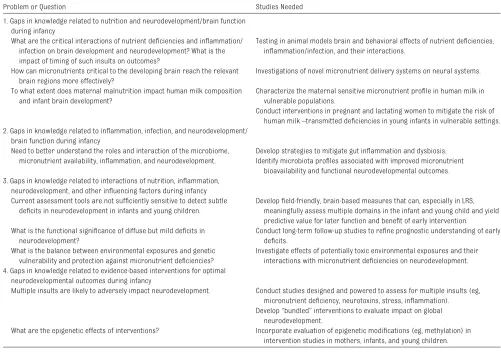
Thus, the full extent of infection during gestation on offspring neurodevelopmental outcomes is unknown, but early findings suggest that this may represent an important additional burden TABLE 1 Recommendations for Research Initiatives To Address Knowledge Gaps
Problem or Question Studies Needed
1. Gaps in knowledge related to nutrition and neurodevelopment/brain function during infancy
What are the critical interactions of nutrient defi ciencies and infl ammation/ infection on brain development and neurodevelopment? What is the impact of timing of such insults on outcomes?
Testing in animal models brain and behavioral effects of nutrient defi ciencies, infl ammation/infection, and their interactions.
How can micronutrients critical to the developing brain reach the relevant brain regions more effectively?
Investigations of novel micronutrient delivery systems on neural systems. To what extent does maternal malnutrition impact human milk composition
and infant brain development?
Characterize the maternal sensitive micronutrient profi le in human milk in vulnerable populations.
Conduct interventions in pregnant and lactating women to mitigate the risk of human milk –transmitted defi ciencies in young infants in vulnerable settings. 2. Gaps in knowledge related to infl ammation, infection, and neurodevelopment/
brain function during infancy
Need to better understand the roles and interaction of the microbiome, micronutrient availability, infl ammation, and neurodevelopment.
Develop strategies to mitigate gut infl ammation and dysbiosis. Identify microbiota profi les associated with improved micronutrient
bioavailability and functional neurodevelopmental outcomes. 3. Gaps in knowledge related to interactions of nutrition, infl ammation,
neurodevelopment, and other infl uencing factors during infancy Current assessment tools are not suffi ciently sensitive to detect subtle
defi cits in neurodevelopment in infants and young children.
Develop fi eld-friendly, brain-based measures that can, especially in LRS, meaningfully assess multiple domains in the infant and young child and yield predictive value for later function and benefi t of early intervention. What is the functional signifi cance of diffuse but mild defi cits in
neurodevelopment?
Conduct long-term follow-up studies to refi ne prognostic understanding of early defi cits.
What is the balance between environmental exposures and genetic vulnerability and protection against micronutrient defi ciencies?
Investigate effects of potentially toxic environmental exposures and their interactions with micronutrient defi ciencies on neurodevelopment. 4. Gaps in knowledge related to evidence-based interventions for optimal
neurodevelopmental outcomes during infancy
Multiple insults are likely to adversely impact neurodevelopment. Conduct studies designed and powered to assess for multiple insults (eg, micronutrient defi ciency, neurotoxins, stress, infl ammation). Develop “bundled” interventions to evaluate impact on global
neurodevelopment.
What are the epigenetic effects of interventions? Incorporate evaluation of epigenetic modifi cations (eg, methylation) in intervention studies in mothers, infants, and young children.
at Viet Nam:AAP Sponsored on August 28, 2020
www.aappublications.org/news
for LRS. The acute and long-term consequences of new Zika virus infection in infancy are unknown, but pose a theoretical risk for neurodevelopmental sequelae.
The connection between stunting, which is mediated in part by chronic inflammation, and impaired child development has clearly been documented, particularly in older children. Such associations include less exploratory behavior, poorer cognitive achievement, more anxiety, and lower school performance. 18 A recent large
prospective observational study in Bangladesh directly assessed the association of biomarkers of inflammation at 6 months of age on motor and cognitive function at 12 and 24 months of age. In this cohort, fever and inflammation were strongly associated with significantly lower scores on language, cognitive, and motor tests. 40 In the same cohort, high
rates of anemia and zinc deficiency were also observed, with rates being highest in the first year of life when processes of brain maturation are particularly active. 41 New insights regarding
the links between inflammation and neurodevelopment will undoubtedly emerge in coming years, as prospective data linking growth, feeding, and nutrient-intake patterns, gut function and the microbiota, inflammation, and developmental testing from other high-risk populations become available. 41, 42
THE INTERACTION OF NUTRITION, INFLAMMATION, NEURODEVELOPMENT, AND OTHER INFLUENCING FACTORS DURING INFANCY
The pervasive and substantial exposures to environments with contaminated water and to poor hygiene are increasingly recognized to contribute to the early postnatal linear growth faltering and
stunting observed in LMIC. 43
Although stunting is undoubtedly multifactorial and includes chronic malnutrition, environmental enteric dysfunction, a chronic inflammatory condition of the intestinal tract that starts in early infancy, 44, 45
is increasingly recognized to impact nutrient use, growth, and neurodevelopment. For example, the central role of hepcidin in the regulation of iron homeostasis powerfully illustrates a biological balance between the need for adequate intake of an essential nutrient and the countering effect of immune stimulation to inhibit iron absorption and use. Although a similar “master regulator” analogous to hepcidin has not been identified for other micronutrients, data are emerging to suggest adverse effects of environmental enteric dysfunction and
inflammation on zinc absorption and homeostasis. 13, 46, 47 Another
mechanism by which disrupted gut health may impact development is through alterations in the gut microbiota which, through interaction with the developing innate immune system, can drive elevations in proinflammatory and antiinflammatory cytokines and influence brain function. 48 Such
early and enduring inflammatory stimuli have also been linked to a risk of systemic metabolic disease associated with later noncommunicable diseases, particularly in settings where access to more abundant caloric intake is emerging. In recent years, this constellation has been termed the “stunting syndrome, ” 18
reflecting the multifactorial and self-perpetuating nature of the condition. Such recognition now underpins consideration of effective interventions that encompass approaches well beyond nutrient intakes alone and that attempt to mitigate other negative environmental factors and host exposures. 4, 49
IMPLICATIONS FOR RESEARCH, PROGRAM, AND POLICY DEVELOPMENT
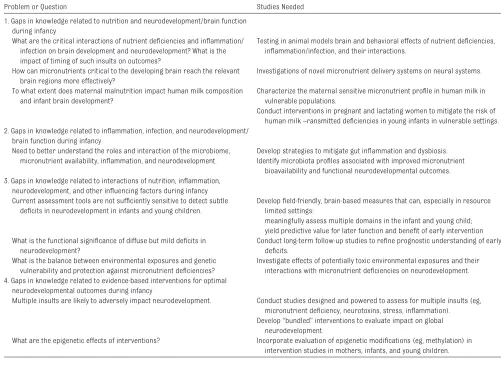
The period from birth through 24 months of age represents a strongly compelling illustration of the interactions among maternal and infant nutritional status, environmental exposures, inflammation, and the rapidly developing brain. A list of knowledge gaps and research priorities is provided in Table 1. Although this complexity mandates multisectoral interventions to maximize benefits, the evidence base is more than adequate to prioritize selected specific and nutrition-sensitive elements, especially in the most socioeconomically deprived settings. 21, 49 Despite the
numerous vulnerabilities for infants and young children highlighted in this paper, highest yields for improved neurodevelopment seem likely to be realized by bundled interventions that focus on improved maternal nutritional status through the entire reproductive cycle, including lactation; promoting and supporting exclusive breastfeeding for nutritional benefits and for limiting infant contaminant exposures; enhancing the quality of complementary foods as well as the feeding process; enabling maternal education to improve parenting and infant stimulation (among numerous other benefits); and improving hygiene and sanitation to reduce the drivers of high-inflammatory burdens. As multidimensional programs aiming to broadly improve infant and young child feeding are developed, rigorous process evaluation should be a cornerstone to enable identification of the key effective components. Examples of program impact evaluation have recently been published. 50, 51 Thus,
PEDIATRICS Volume 139 , Number s1 , April 2017 S57 progress in each of these domains,
the potential benefits in human capital would be realized for both individuals and populations in both short- and long-term time frames.
ABBREVIATIONS
CNS: central nervous system LMIC: low- and middle-income
countries
LRS: low-resource setting RCT: randomized controlled trial
REFERENCES
1. Durkin M. The epidemiology of developmental disabilities in low-income countries. Ment Retard Dev Disabil Res Rev. 2002;8(3):206–211
2. Fernandes M, Stein A, Newton CR, et al; International Fetal and Newborn Growth Consortium for the 21st Century (21st). The INTERGROWTH-21st Project Neurodevelopment Package: a novel method for the multi-dimensional assessment of neurodevelopment in pre-school age children. PLoS One. 2014;9(11):e113360
3. Olness K. Effects on brain development leading to cognitive impairment: a worldwide epidemic. J Dev Behav Pediatr. 2003;24(2):120–130
4. Raiten DJ, Sakr Ashour FA, Ross AC, et al; INSPIRE Consultative Group. Infl ammation and Nutritional Science for Programs/Policies and Interpretation of Research Evidence (INSPIRE). J Nutr. 2015;145(5):1039S–1108S
5. Cusick SE, Georgieff MK. The role of nutrition in brain development: The golden opportunity of the “First 1000 Days”. J Pediatr. 2016;175:16–21 6. Kuzawa CW. Adipose tissue in human
infancy and childhood: an evolutionary perspective. Am J Phys Anthropol. 1998;(suppl 27):177–209
7. Wullschleger S, Loewith R, Hall MN. TOR signaling in growth and metabolism.
Cell. 2006;124(3):471–484
8. Fretham SJ, Carlson ES, Georgieff MK. The role of iron in learning and memory. Adv Nutr. 2011;2(2):112–121
9. World Health Organization. The optimal duration of exclusive breastfeeding: report of an expert consultation. Available at: www. who. int/ nutrition/ publications/ optimal_ duration_ of_ exc_ bfeeding_ report_ eng. pdf. Accessed June 6, 2016
10. Allen LH. B vitamins in breast milk: relative importance of maternal status and intake, and effects on infant status and function. Adv Nutr. 2012;3(3):362–369
11. Dror DK, Allen LH. Effect of vitamin B12 defi ciency on neurodevelopment in infants: current knowledge and possible mechanisms. Nutr Rev. 2008;66(5):250–255
12. Semba RD, Delange F. Iodine in human milk: perspectives for infant health. Nutr Rev. 2001;59(8 Pt 1):269–278
13. Krebs NF, Miller LV, Hambidge KM. Zinc defi ciency in infants and children: a review of its complex and synergistic interactions. Paediatr Int Child Health. 2014;34(4):279–288
14. Rohner F, Zimmermann M, Jooste P, et al. Biomarkers of nutrition for development--iodine review. J Nutr. 2014;144(8):1322S–1342S
15. Krebs NF, Mazariegos M, Tshefu A, et al; Complementary Feeding Study Group. Meat consumption is associated with less stunting among toddlers in four diverse low-income settings. Food Nutr Bull. 2011;32(3):185–191
16. Gibson RS, Abebe Y, Hambidge KM, Arbide I, Teshome A, Stoecker BJ. Inadequate feeding practices and impaired growth among children from subsistence farming households in Sidama, Southern Ethiopia. Matern Child Nutr. 2009;5(3):260–275 17. Black RE, Victora CG, Walker SP, et al;
Maternal and Child Nutrition Study Group. Maternal and child undernutrition and overweight in low-income and middle-low-income countries.
Lancet. 2013;382(9890):427–451
18. Prendergast AJ, Humphrey JH. The stunting syndrome in developing countries. Paediatr Int Child Health. 2014;34(4):250–265
19. Phuka JC, Gladstone M, Maleta K, et al. Developmental outcomes among 18-month-old Malawians after a
year of complementary feeding with lipid-based nutrient supplements or corn-soy fl our. Matern Child Nutr. 2012;8(2):239–248
20. Vazir S, Engle P, Balakrishna N, et al. Cluster-randomized trial on complementary and responsive feeding education to caregivers found improved dietary intake, growth and development among rural Indian toddlers. Matern Child Nutr. 2013;9(1):99–117
21. Bhutta ZA, Das JK, Rizvi A, et al; Lancet Nutrition Interventions Review Group; Maternal and Child Nutrition Study Group. Evidence-based interventions for improvement of maternal and child nutrition: what can be done and at what cost? Lancet. 2013;382(9890):452–477
22. Monk C, Georgieff MK, Osterholm EA. Research review: maternal prenatal distress and poor nutrition - mutually infl uencing risk factors affecting infant neurocognitive development. J Child Psychol Psychiatry. 2013;54(2):115–130
23. Lozoff B, Georgieff MK. Iron defi ciency and brain development. Semin Pediatr Neurol. 2006;13(3):158–165
24. Georgieff MK. Long-term brain and behavioral consequences of early iron defi ciency. Nutr Rev. 2011;69(suppl 1):S43–S48
25. Wachs TD, Pollitt E, Cueto S, Jacoby E, Creed-Kanashiro H. Relation of neonatal iron status to individual variability in neonatal temperament.
Dev Psychobiol. 2005;46(2):141–153
26. Tamura T, Goldenberg RL, Hou J, et al. Cord serum ferritin concentrations and mental and psychomotor development of children at fi ve years of age. J Pediatr. 2002;140(2):165–170
27. Amin SB, Orlando M, Wang H. Latent iron defi ciency in utero is associated with abnormal auditory neural myelination in ≥ 35 weeks gestational age infants. J Pediatr. 2013;163(5):1267–1271
28. Geng F, Mai X, Zhan J, et al. Impact of fetal-neonatal iron defi ciency on recognition memory at 2 months of age. J Pediatr. 2015;167(6):1226–1232
29. Christian P, Murray-Kolb LE, Khatry SK, et al. Prenatal micronutrient
at Viet Nam:AAP Sponsored on August 28, 2020
www.aappublications.org/news
supplementation and intellectual and motor function in early school-aged children in Nepal. JAMA. 2010;304(24):2716–2723
30. Lozoff B, Smith JB, Kaciroti N, Clark KM, Guevara S, Jimenez E. Functional signifi cance of early-life iron defi ciency: outcomes at 25 years.
J Pediatr. 2013;163(5):1260–1266 31. McDonagh MS, Blazina I, Dana T,
Cantor A, Bougatsos C. Screening and routine supplementation for iron defi ciency anemia: a systematic review.
Pediatrics. 2015;135(4):723–733
32. Pasricha SR, Hayes E, Kalumba K, Biggs BA. Effect of daily iron supplementation on health in children aged 4-23 months: a systematic review and meta-analysis of randomised controlled trials. Lancet Glob Health. 2013;1(2):e77–e86
33. Berglund SK, Westrup B, Hägglöf B, Hernell O, Domellöf M. Effects of iron supplementation of LBW infants on cognition and behavior at 3 years.
Pediatrics. 2013;131(1):47–55
34. Shafi r T, Angulo-Barroso R, Jing Y, Angelilli ML, Jacobson SW, Lozoff B. Iron defi ciency and infant motor development. Early Hum Dev. 2008;84(7):479–485
35. Lozoff B, Clark KM, Jing Y, Armony-Sivan R, Angelilli ML, Jacobson SW. Dose-response relationships between iron defi ciency with or without anemia and infant social-emotional behavior.
J Pediatr. 2008;152(5):696–702, 31–33 36. Siddappa AM, Georgieff MK, Wewerka
S, Worwa C, Nelson CA, Deregnier RA. Iron defi ciency alters auditory recognition memory in newborn infants of diabetic mothers. Pediatr Res. 2004;55(6):1034–1041
37. Zhao G, Xu G, Zhou M, et al. Prenatal iron supplementation reduces
maternal anemia, iron defi ciency, and iron defi ciency anemia in a randomized clinical trial in rural china, but iron defi ciency remains widespread in mothers and neonates.
J Nutr. 2015;145(8):1916–1923
38. Angulo-Barroso RM, Li M, Santos DC, et al. Iron supplementation in pregnancy or infancy and motor development: a randomized controlled trial. Pediatrics. 2016;137(4):
e20153547
39. Brasil P, Pereira JP Jr, Moreira ME, et al. Zika virus infection in pregnant women in Rio de Janeiro. N Engl J Med. 2016;375(24):2321–2334
40. Jiang NM, Tofail F, Moonah SN, et al. Febrile illness and pro-infl ammatory cytokines are associated with lower neurodevelopmental scores in Bangladeshi infants living in poverty.
BMC Pediatr. 2014;14:50
41. Lang D; MAL-ED Network Investigators. Opportunities to assess factors contributing to the development of the intestinal microbiota in infants living in developing countries. Microb Ecol Health Dis. 2015;26:28316
42. Arnold BF, Null C, Luby SP, et al. Cluster-randomised controlled trials of individual and combined water, sanitation, hygiene and nutritional interventions in rural Bangladesh and Kenya: the WASH Benefi ts study design and rationale. BMJ Open. 2013;3(8):e003476
43. Victora CG, de Onis M, Hallal PC, Blössner M, Shrimpton R. Worldwide timing of growth faltering: revisiting implications for interventions.
Pediatrics. 2010;125(3). Available at: www. pediatrics. org/ cgi/ content/ full/ 125/ 3/ e473
44. Prendergast AJ, Rukobo S, Chasekwa B, et al. Stunting is characterized by
chronic infl ammation in Zimbabwean infants. PLoS One. 2014;9(2):e86928
45. Kosek M, Haque R, Lima A, et al; MAL-ED network. Fecal markers of intestinal infl ammation and permeability associated with the subsequent acquisition of linear growth defi cits in infants. Am J Trop Med Hyg. 2013;88(2):390–396
46. Esamai F, Liechty E, Ikemeri J, et al. Zinc absorption from micronutrient powder is low but is not affected by iron in Kenyan infants. Nutrients. 2014;6(12):5636–5651
47. Manary MJ, Abrams SA, Griffi n IJ, et al. Perturbed zinc homeostasis in rural 3-5-y-old Malawian children is associated with abnormalities in intestinal permeability attributed to tropical enteropathy. Pediatr Res. 2010;67(6):671–675
48. Cryan JF, Dinan TG. Mind-altering microorganisms: the impact of the gut microbiota on brain and behaviour. Nat Rev Neurosci. 2012;13(10):701–712
49. Ahmed T, Auble D, Berkley JA, et al. An evolving perspective about the origins of childhood undernutrition and nutritional interventions that includes the gut microbiome. Ann N Y Acad Sci. 2014;1332(1):22–38
50. Menon P, Rawat R, Ruel M. Bringing rigor to evaluations of large-scale programs to improve infant and young child feeding and nutrition: the evaluation designs for the Alive & Thrive initiative. Food Nutr Bull. 2013;34(3 suppl):S195–S211
PEDIATRICS Volume 139 , number s1 , April 2017 :e 20162828
SUPPLEMENT ARTICLE
aDepartment of Pediatrics, University of Colorado School of Medicine, Aurora, Colorado; bCenter for Human Growth and Development and cDepartment of Pediatrics and Communicable Diseases, University of Michigan, Ann Arbor, Michigan; and dDivision of Neonatology, University of Minnesota School of Medicine, Minneapolis, Minnesota
Dr Krebs was a panelist at the original National Institute of Child Health and Human Development scientifi c meeting, served as the lead author for the paper, organized the writing team, drafted the initial manuscript, incorporated edits from the additional authors and editors, and fi nalized the manuscript; Drs Lozoff and Georgieff was a panelist at the original National Institute of Child Health and Human Development scientifi c meeting, contributed to the writing of the initial manuscript, and reviewed and revised subsequent versions of the manuscript; and all authors approved the fi nal manuscript as submitted and are accountable for all aspects of the work.
DOI: 10.1542/peds.2016-2828G Accepted for publication Dec 21, 2016
Address correspondence to Nancy F. Krebs, MD, MS, Department of Pediatrics, University of Colorado School of Medicine, 12700 East 19th Ave, Research Complex 2, Room 5025, Box C225, Aurora, CO 80045. E-mail: [email protected]
PEDIATRICS (ISSN Numbers: Print, 0031-4005; Online, 1098-4275). Copyright © 2017 by the American Academy of Pediatrics
FINANCIAL DISCLOSURE: The authors have indicated they have no fi nancial relationships relevant to this article to disclose.
FUNDING: This supplement was supported by the Eunice Kennedy Shriver National Institute of Child Health and Human Development (NICHD) at the United States National Institutes of Health (NIH).
POTENTIAL CONFLICT OF INTEREST: The authors have indicated they have no potential confl icts of interest to disclose.
Estimates of the burden of neurodevelopmental impairments in low- and middle-income countries (LMIC) are limited and highly variable, but are generally reported to be higher than in high-resource settings. In all settings, the prevalence of mild impairments is higher than severe disability. 1, 2 Among several factors identified as contributors to developmental disabilities in LMIC,
infections and malnutrition, including micronutrient deficiencies, are particularly important and potentially modifiable. 3
Infancy and early childhood (ie, birth through age 24 months) represent a period of life with both exquisite opportunity and vulnerability for neurodevelopment. Not only are many aspects of brain development undergoing rapid anatomic and functional expansion during this postnatal component of the “1000 days critical window, ” but nutrient requirements are also high due to rapid physical growth and maturation. The complex interactions that exist among nutritional status (deficits and surfeits) as well as the social and physical environments and exposures they entail are particularly potent during this period of rapid change. Furthermore, the interactions are bidirectional, such that the developing infant not only responds to his/her environment but also, in ideal circumstances, elicits responses from adult care providers that additionally stimulate more inputs. The newborn brain also reflects maternal exposures that occurred as the product of many interacting forces during gestation.
The connections between nutrient use (absorption, excretion, and retention) and acute and chronic inflammation and stress are increasingly recognized. 4 Recent reviews have addressed selected
aspects of this sensitive period, but the evidence base linking both nutrition and inflammation to neurodevelopment is only modest and even more limited for this young age group specifically. This article in the supplement will provide an overview of key aspects of interactions that are
at Viet Nam:AAP Sponsored on August 28, 2020
www.aappublications.org/news
particularly relevant to the infant and young child during this critical developmental stage. The underlying framework reflecting these
interrelationships and the issues particular to infants in low-resource settings (LRS) are depicted in Fig 1. Furthermore, emphasis will be placed on these sectors as they exist in, and are impacted by, environments in LRS. To advance the field, knowledge gaps and research priorities will be highlighted.
KEY NEURODEVELOPMENTAL CONSIDERATIONS DURING INFANCY
The concept of neurodevelopment for the infant and young child includes multiple behavioral domains: motor, mental, sensory, and socioemotional. It is important
to understand that these behaviors are the expression of the brain’s activity. Thus, understanding brain development and the roles that nutrients and inflammation play in shaping its development and function are critical for effective child health practice and policy recommendations. The young brain in particular is highly susceptible to early life experiences, both positive and negative, and thus attention should be paid to the elements that support brain development. Although the young brain is highly plastic and demonstrates potential for recovery from early life insults, the bulk of research evidence suggests that its vulnerability outweighs its plasticity. 5
Thus, support of normal development (eg, through proper nutrition) is far more efficient than trying to restore a
neurodevelopmental trajectory after a period of deprivation.
Developmental Progression of Physical and Anatomic Maturation During Infancy and Early Childhood
The brain is not a homogenous organ. Rather, it is composed of discrete regions (eg, hippocampus, striatum, cortex, cerebellum) and processes (eg, myelination, release, and reuptake of neurotransmitters) that have different developmental trajectories. In the article
in this supplement titled, "Neurodevelopment, Nutrition, and Inflammation: The Evolving Global Child Health Landscape, " Fig 1 demonstrates when these trajectories begin, peak, and end. The
FIGURE 1
KREBS et al vulnerability of any of these regions
to a nutrient deficit will depend on the timing of the event, based on the region’s requirement for the nutrient at that time. This basic principle exists from conception through the end of brain development, but is particularly accentuated during periods of rapid brain growth and differentiation. One such period is infancy and young childhood.
The postnatal periods of infancy and early childhood are characterized by rapid differentiation of brain regions, such as the visual, auditory, and motor cortices; the limbic system, including the hippocampus; and the cerebellum. These regions mediate fundamental behaviors, such as seeing, hearing, movement, declarative memory, and mixed motor/cognitive functions, respectively. Just as importantly, the integrity of these fundamental structures is key for the construction of connections to later maturing structures (eg, the frontal cortex) that support more complex processing behavior, such as working memory and executive function. Indeed, although the frontal cortex begins to show differentiation as early as infancy, its developmental trajectory is more protracted through young adulthood and thus is vulnerable to nutritional insults both in infancy and later in childhood. Examples of brainwide processes that are rapidly progressing in infants and toddlers include myelination, which proceeds at a brisk pace from 32 weeks’ gestation through 2 to 3 years of age; synaptogenesis, which begins prenatally and continues throughout childhood; and the dopamine neurotransmitter system.
Rapid development of the brain is a highly metabolically taxing process. The young brain accounts for 60% of the body’s energy consumption,
6 a figure that contrasts with the
adult value of ∼20%. Nutrients that support this cellular metabolic rate
include glucose, protein (especially branched-chain amino acids), oxygen, iron (for cytochromes), zinc, selenium, and iodine (through regulation of the thyroid). Their integration through signaling cascades, such as the mammalian target of rapamycin system, dictate rates of protein synthesis and actin polymerization in neurons, which in turn are related to dendritic complexity and neuronal functional capacity. 7, 8 Thus, deficiencies of
these nutrients have more profound negative effects on the brain than other nutrients.
THE IMPACT OF NUTRITION ON NEURODEVELOPMENT DURING INFANCY
Human Milk and Breastfeeding (0–6 months)
At the very time when brain development is rapidly progressing, the young infant is uniquely
dependent on a single food. Exclusive breastfeeding for young infants is particularly critical for infants in LRS where the risk of exposures to enteric pathogens from contaminated human milk substitutes, fluids and foods is very high. The recommendation in 2001 from the World Health Organization for exclusive
breastfeeding for the first 6 months of life 9 emphasized the protective
effects against gastrointestinal disease. Importantly, however, the statement acknowledged that the evidence base was insufficient to exclude the potential for micronutrient deficiencies and insufficient intake, especially for infants born with low birth weight and/or to undernourished mothers.
Recent research has raised caution about the robustness of human milk micronutrient composition, particularly for those nutrients in human milk that are responsive to maternal dietary intake and status: vitamins B6 and B12, choline, iodine, and selenium, 10 all of which
are directly involved in brain
development and function, namely, neurogenesis, differentiation, migration, myelination, and
neurotransmitter-related processes. 5
Maternal vitamin B12 depletion, whether due to dietary inadequacy or to impaired absorption, has been associated with the development of vitamin B12 deficiency in exclusively breastfed infants. Neurologic symptoms of deficiency appeared midway through the first year of life and included cerebral atrophy, loss of developmental milestones, and behavioral and developmental delays. Notably, the deficits were reversible with supplementation in only about half of the cases. 11 Low
iodine concentrations in human milk have also been observed in regions with a high prevalence of goiter, and the prevalence of cretinism has been reported in 5% to 15% of breastfed infants in such regions. 12
For folate, iron, and zinc, 3 micronutrients that are critical to brain development and function,
5 breast milk concentrations are
relatively unaffected by maternal intake or status. In the case of iron concentrations, human milk is uniformly low, and the young infant depends primarily on non-dietary factors, such as the use of stores accrued prenatally, delayed cord clamping, and gradual use of iron from the erythron over the early postnatal months. Current estimates of iron requirements of young breastfed infants may not pertain to LMIC, where many infants may be born with a low endowment and yet, in an increasing number of settings, are doubling or tripling in birth weight more rapidly than ever before. In the case of zinc, the concentration in early milk and thus daily transfer to the infant are quite high, are similar across populations, and generally meet the term infant’s needs for the first several months of postnatal life. The adequacy of the zinc from human milk alone for low birth weight and
premature infants has not been systematically addressed in LRS, but some intervention trials suggest a benefit of zinc supplements. 13
Folate concentrations in human milk, unlike the other B vitamins, are maintained independently of maternal folate status. Infants in both high- and low-resource settings who have been exclusively breastfed for ∼6 months have been observed to have normal circulating folate concentrations whether mothers were well-nourished or had marginal nutritional status. 10 The demand
for all 3 of these nutrients for the undernourished lactating mother is met by her own tissues, and she may become depleted if her dietary intake is inadequate to support the amounts secreted in milk. In such circumstances, maternal supplementation benefits the mother rather than the infant directly. The impact (direct or indirect) on infant growth and development through improvement in maternal nutritional status during the demanding process of lactation, especially during the early postpartum months, has received relatively little investigation and represents an important
research gap.
Complementary Feeding Period (∼6–24 months)
By ∼6 months postpartum, exclusive breastfeeding is no longer adequate to meet micronutrient needs, and the quality of complementary foods is critical for the young child’s optimal growth and development. This represents another period of great vulnerability. Nearly all of the micronutrients highlighted above as being critical for brain development are found primarily, or in some cases exclusively, in animal-source foods, especially flesh foods. Iodine and long-chain polyunsaturated fatty acids could be considered exceptions. Iodine is often added as a fortificant to salt, rather than consumed within a specific food. 14 Due to both limited
availability (eg cost constraints) and
to tradition, animal flesh foods are often not offered as complementary foods to young children, and even more infrequently to infants between 6 and 12 months of age. 15, 16 Primary reliance on unfortified,
plant-based staple foods during the complementary feeding period, even with continued breastfeeding, often results in inadequate intake of several critical micronutrients. 16
Additionally, lower bioavailability of some micronutrients from primarily plant sources (except for some beans) may additionally compromise the adequacy of the intake of a given micronutrient. Undoubtedly, suboptimal complementary feeding quality and quantity contribute to poor linear growth, even though total energy intake may be adequate. The combination, along with the impact of prenatal factors and austere environments associated with poor hygiene and chronic immune stimulation, results in a high prevalence of stunting, with wasting being less common.17, 18 Many of
the same factors that contribute to stunting are also likely to impact neurodevelopment during the period of complementary feeding, although trials to specifically isolate and quantify the impact of each factor are lacking. 3
Feeding Context and Environment
In addition to the quantity of energy and nutrient intakes, the quality of the feeding process and caregiver responsiveness are also critical for optimal infant and young child development ( Fig 1). However, interventions that have investigated the impact of improving the quality of the complementary feeding process specifically on neurodevelopment are limited in LRS. One study in Malawi that employed lipid-based nutrient supplements or a micronutrient-fortified corn–soy flour reported no difference in developmental scores in 18-month-old children after a year-long intervention, but length-for-age
z score gain and maternal education were both significant predictors of developmental outcomes, supporting the interconnectedness of child development, nutritional intake, growth status, and maternal factors. 19 In a clinical trial studying
Indian toddlers, improved complementary feeding alone did not affect development, but guidance around complementary feeding practices in addition to psychosocial stimulation had a significant positive effect on the toddlers’ neurodevelopment. 20 These findings
support the critical importance of maternal education for fostering enhanced child psychosocial stimulation, improved feeding practices, and improved nutritional status on child development, with or without a substantial impact on linear growth. 21 In addition to
the physiologic impact of maternal undernutrition on the mother’s health and that of her offspring, nutritional deficiencies have
potential adverse effects on maternal cognition and mental status, which in turn exacerbate the risk for low infant stimulation and limited maternal–child responsiveness. Potential interactions between maternal stress and poor nutrition have also recently been reviewed, but the relative contributions of each factor have not yet been elucidated by rigorous field studies.22
Iron as an Example of
Nutrient Defi cits and Impaired Neurodevelopment
KREBS et al is not only the most prevalent
micronutrient deficiency in this age group, but its eradication has been challenging and is, as yet, incomplete.
Iron is required for many central nervous system (CNS) processes that are rapidly maturing in infancy and early childhood. Thus, both diffuse and subtle effects would be expected with iron deficiency. The conceptual framework in Fig 2 23
emphasizes the interconnectedness of iron-dependent changes in brain architecture and physiologic “wiring” during development (myelin/ dendrites, neurotransmitters, and neurometabolism in specific brain regions) and includes altered gene and protein profiles that may regulate these CNS processes. For behavioral development, changes in sensory, motor, cognitive, language, and socioemotional functioning related to iron deficiency are also interconnected. As noted above and indicated in the Fig 2, brain and behavior effects can be bidirectional, as can environmental influences. Such effects would be expected with other common nutrient deficits in infancy and early childhood, particularly involving those nutrients that affect brain chemistry, anatomy, and metabolism. 5
Initial studies linking fetal and neonatal iron deficiency involved neonates with other risk factors for compromised development, such as prematurity, maternal diabetes, or intrauterine growth restriction. 24
The handful of studies involving term infants of uncomplicated pregnancies suggest short- and long-term effects. 25 –29 The different
neurodevelopmental impacts of fetal–neonatal versus postnatal iron deficiency in humans are unknown, but the time course of brain development suggests there would be differential effects. That is, outcomes would be worse when a nutrient deficiency starts earlier, lasts longer, or is more severe. The
sole study of adult outcomes involved iron deficiency that was probably chronic during infancy, because iron deficiency anemia was detected (and treated) at 12 to 23 months of age in a sample of infants in Costa Rica. There were poorer functional outcomes at 25 years of age, despite correction of iron deficiency anemia in infancy. Specifically, previously iron-deficient individuals were less likely to complete secondary school, to have pursued additional training, or to have married. 30
Human studies have also turned to randomized controlled trials (RCTs) of prophylactic iron supplementation (rather than treatment) to strengthen causal inferences. The effects
on neurodevelopment are less consistent or pronounced in such trials versus in studies that compare neurodevelopment in infants with or without iron deficiency. In fact, some meta-analyses conclude that there are no effects of iron supplementation, 31, 32 in contrast
to several studies showing poorer outcomes in iron-deficient infants. 24, 33–36 Additional considerations
help us understand this apparent paradox. RCTs in populations where iron deficiency is uncommon may require huge sample sizes to detect statistically and clinically meaningful effects. RCTs in populations where iron deficiency is widespread may not provide sufficient iron if prophylactic doses are used, and supplementation may begin after neurodevelopment has already been compromised by lack of iron
for many infants. Consequently, improved analytic methods and study designs are needed to investigate these intersecting scientific areas.
Few studies to date have considered the impact of maternal iron
supplementation on fetal–neonatal iron status. A recent RCT in China showed marked improvements in maternal iron status with supplemental iron, but many women were still iron deficient at or near term, and there was no effect on cord blood measures of fetal–neonatal iron status. 37 In this
same trial, iron supplementation during infancy was associated with significantly improved motor scores compared with placebo or with supplementation during pregnancy alone. 38
THE IMPACT OF INFLAMMATION ON NEURODEVELOPMENT DURING INFANCY
The evidence base for the direct impact of inflammation, resulting from both infectious and noninfectious causes, on neurodevelopment is even more limited than that for nutrient use. The recent outbreak of Zika virus infection has drawn attention to the striking effects of infection occurring early in gestation, notably manifest as severe microcephaly. In a prospective study, 29% of women found to have become infected at various time points throughout pregnancy had adverse effects that extended beyond the most severe brain insults to also include
S6
FIGURE 2
Iron defi ciency and brain development, illustrating connections among iron-dependent changes in brain architecture during development, with examples of altered gene and protein profi les that may regulate these CNS processes. (Reprinted with permission from Lozoff B, Georgieff MK. Iron defi ciency and brain development. Semin Pediatr Neurol. 2006;13(3):159.)
at Viet Nam:AAP Sponsored on August 28, 2020
www.aappublications.org/news
placental insufficiency, intrauterine growth restriction, and milder central nervous system injury. 39
Thus, the full extent of infection during gestation on offspring neurodevelopmental outcomes is unknown, but early findings suggest that this may represent an important additional burden for LRS. The acute and long-term consequences of new Zika virus infection in infancy are unknown, but pose a theoretical risk for neurodevelopmental sequelae.
The connection between stunting, which is mediated in part by chronic inflammation, and impaired child development has clearly been documented, particularly in older children. Such associations include less exploratory behavior, poorer cognitive achievement, more anxiety, and lower school performance. 18
A recent large prospective observational study in Bangladesh directly assessed the association of biomarkers of inflammation at 6 months of age on motor and cognitive function at 12 and 24 months of age. In this cohort, fever and inflammation were strongly associated with significantly lower scores on language, cognitive, and motor tests. 40 In the same cohort, high
rates of anemia and zinc deficiency were also observed, with rates being highest in the first year of life when processes of brain maturation are particularly active. 41 New insights
regarding the links between
inflammation and neurodevelopment will undoubtedly emerge in coming years, as prospective data linking growth, feeding, and nutrient-intake patterns, gut function and the microbiota, inflammation, and developmental testing from other high-risk populations become available. 41, 42
THE INTERACTION OF NUTRITION, INFLAMMATION, NEURODEVELOPMENT, AND OTHER INFLUENCING FACTORS DURING INFANCY
The pervasive and substantial exposures to environments with contaminated water and to poor hygiene are increasingly recognized to contribute to the early postnatal linear growth faltering and stunting observed in LMIC. 43 Although stunting is
undoubtedly multifactorial and includes chronic malnutrition, environmental enteric dysfunction, a chronic inflammatory condition of the intestinal tract that starts in early infancy, 44, 45 is increasingly
recognized to impact nutrient use, growth, and neurodevelopment. For example, the central role of hepcidin in the regulation of iron homeostasis powerfully illustrates a biological balance between the need for adequate intake of an essential nutrient and the countering effect of immune stimulation to inhibit iron absorption and use. Although a similar “master regulator” analogous to hepcidin has not been identified for other micronutrients, data are emerging to suggest adverse effects of environmental enteric dysfunction and inflammation on zinc absorption and homeostasis. 13, 46, 47 Another mechanism by which
disrupted gut health may impact development is through alterations in the gut microbiota which, through interaction with the developing innate immune system, can drive elevations in proinflammatory and antiinflammatory cytokines and influence brain function. 48 Such
early and enduring inflammatory stimuli have also been linked to a risk of systemic metabolic disease associated with later noncommunicable diseases, particularly in settings where access to more abundant caloric intake is emerging. In recent years, this constellation has been termed the “stunting syndrome,
” 18 reflecting the multifactorial
and self-perpetuating nature of the condition. Such recognition now underpins consideration of effective interventions that encompass approaches well beyond nutrient intakes alone and that attempt to mitigate other negative environmental factors and host exposures. 4, 49
IMPLICATIONS FOR RESEARCH, PROGRAM, AND POLICY DEVELOPMENT
The period from birth through 24 months of age represents a strongly compelling illustration of the interactions among maternal and infant nutritional status, environmental exposures, inflammation, and the rapidly developing brain. A list of knowledge gaps and research priorities is provided in Table 1. Although this complexity mandates multisectoral interventions to maximize benefits, the evidence base is more than adequate to prioritize selected specific and nutrition-sensitive elements, especially in the most socioeconomically deprived settings. 21, 49 Despite the
KREBS et al are developed, rigorous process
evaluation should be a cornerstone to enable identification of the key effective components. Examples of program impact evaluation have recently been published. 50, 51 Thus,
beyond traditional research trials to examine biological outcomes, such dissemination and implementation studies are critical to move from identification of best practices to best programs and policies. With progress in each of these domains, the potential benefits in human capital would be realized for both individuals and populations in both short- and long-term time frames.
ABBREVIATIONS
CNS: central nervous system LMIC: low- and middle-income
countries
LRS: low-resource setting RCT: randomized controlled trial
S8
TABLE 1 Recommendations for Research Initiatives To Address Knowledge Gaps
Problem or Question Studies Needed
1. Gaps in knowledge related to nutrition and neurodevelopment/brain function during infancy
What are the critical interactions of nutrient defi ciencies and infl ammation/ infection on brain development and neurodevelopment? What is the impact of timing of such insults on outcomes?
Testing in animal models brain and behavioral effects of nutrient defi ciencies, infl ammation/infection, and their interactions.
How can micronutrients critical to the developing brain reach the relevant brain regions more effectively?
Investigations of novel micronutrient delivery systems on neural systems. To what extent does maternal malnutrition impact human milk composition
and infant brain development?
Characterize the maternal sensitive micronutrient profi le in human milk in vulnerable populations.
Conduct interventions in pregnant and lactating women to mitigate the risk of human milk –ransmitted defi ciencies in young infants in vulnerable settings. 2. Gaps in knowledge related to infl ammation, infection, and neurodevelopment/
brain function during infancy
Need to better understand the roles and interaction of the microbiome, micronutrient availability, infl ammation, and neurodevelopment.
Develop strategies to mitigate gut infl ammation and dysbiosis. Identify microbiota profi les associated with improved micronutrient
bioavailability and functional neurodevelopmental outcomes. 3. Gaps in knowledge related to interactions of nutrition, infl ammation,
neurodevelopment, and other infl uencing factors during infancy Current assessment tools are not suffi ciently sensitive to detect subtle
defi cits in neurodevelopment in infants and young children.
Develop fi eld-friendly, brain-based measures that can, especially in resource limited settings:
meaningfully assess multiple domains in the infant and young child; yield predictive value for later function and benefi t of early intervention What is the functional signifi cance of diffuse but mild defi cits in
neurodevelopment?
Conduct long-term follow-up studies to refi ne prognostic understanding of early defi cits.
What is the balance between environmental exposures and genetic vulnerability and protection against micronutrient defi ciencies?
Investigate effects of potentially toxic environmental exposures and their interactions with micronutrient defi ciencies on neurodevelopment. 4. Gaps in knowledge related to evidence-based interventions for optimal
neurodevelopmental outcomes during infancy
Multiple insults are likely to adversely impact neurodevelopment. Conduct studies designed and powered to assess for multiple insults (eg, micronutrient defi ciency, neurotoxins, stress, infl ammation). Develop “bundled” interventions to evaluate impact on global
neurodevelopment.
What are the epigenetic effects of interventions? Incorporate evaluation of epigenetic modifi cations (eg, methylation) in intervention studies in mothers, infants, and young children.
at Viet Nam:AAP Sponsored on August 28, 2020
www.aappublications.org/news