Vo1. 1, No. 4, 2013, 244-250 DOI: 10.11634/232907811301419
Print ISSN 2329-0781 - Online ISSN 2329-079X / World Scholars http://www.worldscholars.org
Effects of Adoption of Improved Sheabutter Processing Technology on Women’s
Livelihoods and their Microenterprise Growth
Fadilah Mohammed
1, Seth Boateng
2and Seidu Al-hassan
3*1Department of Innovation and Communication, University for Development Studies, P O Box TL 1350, Tamale, Ghana 2Department of Agricultural Extension, University of Ghana, Legon, Accra, Ghana
3Institute for Continuing Education and Interdisciplinary Research, University for Development Studies, P O Box TL 1350,
Tamale, Ghana
This paper investigates the effects of adoption of improved shea butter processing technology on women’s livelihood and microenterprise growth using 300 women enterprise owners. The sample was stratified into three groups: Full adopters (FA), Partial adopters (PA) and Non-adopters (NA). The study was undertaken in nine (9) communities drawn from the Tamale Metropolis and the Tolon/Kunbumgu District of the Northern Region of Ghana. The results reveal that full adopters have improved their income, savings, employment, investment and credit levels as a result of adopting improved method of processing shea butter. Results of t-test suggest a significant difference in income, savings, employment, investment and credit levels. Enterprises owned by women who adopted the improved technology have improved more than those who did not adopt. It is concluded that the adoption of improved technology has had positive effect on the livelihoods of women and enterprise growth. It is recommended among other things that shea butter processors, particularly non-adopters should be exposed to the improved shea butter processing technology and also be given training on their usage to enhance the growth of their enterprises.
Keywords: Adoption, livelihood, microenterprise growth and women
Background
Ghana possesses great potential for shea butter processing. Shea butter production in Ghana has the potential of increasing productivity of shea butter business, providing employment to the vulnerable, especially women and therefore contributing to women’s empowerment through poverty reduction. The Ghana Export Promotion Council (GEPC) reports that shea butter export volumes ranged between 1,310 MT in 1998 and 2,539 MT in 2002. In recent years, shea butter has gained economic importance because of its recent penetration into the international market. With its high export potential, the shea industry is contributing to industrial development, growth of national economy and provision of employment for the poor and the vulnerable. It is estimated that shea butter is produced by over two million women in 13 African countries for use in their homes and for sale for income (Hyman, 1991). In the case of Ghana the shea butter sub-sector contributes to minimizing the out-migration of the youth from the rural north to the urban areas such as Accra, Kumasi, Takoradi and Tema. Also the collection, primary processing, and subsequent sale of shea-based products make an
important contribution to women’s cash income in many Ghanaian shea producing areas.
Print ISSN 2329-0781 - Online ISSN 2329-079X / World Scholars http://www.worldscholars.org Problem Statement
It has been almost a decade (2003) since the ITTU introduced the improved method of shea butter processing to women in the Northern Region of Ghana. The method is aimed at reducing irksomeness and improving quality of shea butter. However, adoption rate of the improved method in the study areas has been described as low (Lovett, 2004; SNV, 2006 and Al-hassan, 2011). Al-hassan (2011) estimated that about 35% of women use the modern method of processing shea butter with the rest still relying on the traditional method in the Northern Region. Studies (Saidur, 2007 and Adam, 2008) have shown that education and training among other factors have played important role in influencing adoption of new or improved technologies. Yet, majority of the women shea butter processors in the study area have no formal education and do not benefit from available capacity training services mostly from NGOs. With low levels of education and capacity training, it is likely that women processors will lack the ability to use the improved shea butter processing method in order to improve their livelihoods and enterprises. The extent to which adoption has affected growth and development of micro enterprises in the shea dominated Region of Ghana, particularly, those owned by women is also not empirically studied. Indeed, the effect of adoption of improved shea butter technology in relationship to the growth and development of small businesses in Ghana has remained largely unaddressed. Whereas many works on sheabutter have focused on individual or household level analysis others have concentrated on policy dimension without providing adequate attention to small scale enterprise level data. This study departs from previous works because it dwells much on the impact of adoption of improved sheabutter processing technology on small and medium enterprise performance. The enterprise level data is important because it will measure how small and medium firms are performing in terms of income, employment, savings and investment promotion. Previous works such as Bawa (2007) and Zakaria (2009) are also biased because they both concentrated on a rural District, Tolon-Kumbungu District, with little or no comparison of their results to urban areas. With varying levels of socio-economic development in terms of market and credit access, in rural district such as Tolon-Kumbungu District and urban district such as Tamale Metropolis, it is expected that adoption rate and its impact on enterprise performance will differ. This present study distinguishes itself by focusing on enterprise performance using the features of both rural (Tolon-Kumbungu) and urban set ups (Tamale Metropolis). The paper investigates the effects of adoption of
improved shea butter processing technology on women’s livelihood and their microenterprises in the Northern Region of Ghana.
Methodology
Adoption of improved technology is expected to have a direct influence on the growth and development of women’s shea butter enterprises in terms of output, income generation, savings, and employment of people as well as investment by women. Technology adoption has the potential of improving the livelihood needs of women shea butter processors through increased income levels leading to women being food secured, having access to improved housing, improvement in children’s education through women’s ability to pay for their wards education, payment of medical bills and finally reduction in vulnerability of women.
The study used the difference-in-differences (DID) approach to achieve its objectives. The difference-in-differences (DID) estimator is one of the most popular tools for applied research in economics to evaluate the effects of development interventions and other treatments of interest on some relevant outcome variables such as income (Abadie, 2005). Difference-in-Differences estimation has become an increasingly popular way to estimate causal relationships (Bertrand, Duflo and Mullainathan, 2004). The method consists of identifying a specific intervention or treatment and then compares the difference in outcomes after and before the intervention for groups affected by the intervention to the same difference for unaffected groups. A control group was used. This was defined to include a sample of people, similar in every other way, who have not used the modern method of processing shea butter, compared with a sample who have adopted in order to find out the effect of the adoption of that technology on the income levels of women. The latter group is the treated.
the components of the improved shea butter processing technology in processing shea butter. Enterprise Growth is viewed as improvement in productivity, income, savings, and employment and investment abilities of shea butter processing entrepreneurs as a result of adoption. Livelihood outcomes are the achievements or output of livelihood strategies.
The dispersed nature of shea butter processors in the Region and the lack of any comprehensive sampling frame or systematic numbering of shea butter processors preclude the use of a strictly stratified or cluster sampling technique. With an unknown population of shea butter processors in Northern Region, data were collected from a random sample of 300 shea butter processors from two (2) Districts in the Region. These are Tamale Metropolis and Tolon-Kumbungu Districts. The districts were selected because they constitute two of the popular Districts in the Region where shea butter processing takes place. Three hundred respondents were chosen because that is the number that could be handled effectively within the research budget and time constraints. In all, 88 full adopters, 128 partial adopters and 84 non- adopters of the improved shea butter processing technology were interviewed. Sampling at the community level was also purposive in nature. Out of a total of seventeen (17) popular shea butter processing communities comprising nine (9) in the Tamale Metropolis and eight (8) in Tolon / Kumbungu Districts, three (3) communities each were purposively sampled for full adopters, partial adopters and non- adopters in the two Districts. In all one hundred and sixty eight (56%) women shea butter processors were interviewed in the Tamale Metropolis whereas one hundred and thirty two (44%) processors were selected from the Tolon/ Kumbungu District. The specific communities visited are Vitin, Sagnaregu and Kumbuyilli, Malshegu, Kasalgu, Bognayilli, Cheshegu, Kpalga and Kochim.
Non-probability sampling technique, specifically the snowball sampling, was used to select adopters, partial adopters, and non- adopters at the enterprise level. The first woman shea butter processor interviewed was asked to mention the next processor for interview and the process continued like that until the desired number was arrived at. Snowball sampling is justifiable in situations like this where the subjects (adopters, partial adopters and non-adopters) are difficult to find (Babbie, 2001 & Anaman, 2003). The advantage of snowballing was that it made it possible to increase the number of respondents through information supplied by the earlier interviewees. For purposes of comparison, the sampled shea butter
processors are treated as a homogeneous group for two reasons. First, all of the women shea butter processors face uniform natural and market conditions, and secondly, all the women have broadly similar type of resource – shea nuts. Data on enterprise features included size, capital, ownership, employment, location, methods of shea butter processing, participation in capacity building, credit and output were collected. Other important areas include income and employment levels, challenges and shea butter development related policies.
Data were analysed using computer software known as Statistical Package for Social Scientists (SPSS). Data analysis involved a careful matching of field data to study objectives. The analysis centred on 6 interest areas. The statistical presentation included mean values and relevant measures of dispersion for quantitative data, and frequency distribution of qualitative data. Tests of mean differences were performed to compare attributes of target group and control group. The Student t statistic was then used to test the mean differences between target and control groups at 95% confidence level.
Influence of Adoption on Women’s Livelihood
The findings further reveal that 42% of full and partial adopters, respectively are able to meet their medical needs as compared with only 16% of non-adopters who did meet their medical needs. With regards to education of respondents’ children, the results show that 45% of full and partial adopters meet the educational needs of their wards whereas only 10% of non-adopters indicated that they are able to meet the educational needs of their wards. Again, the results indicate that partial adopters (49%) acquired assets such as fridges, pots, pans, calabash, etc. as compared to non-adopters (7%). This therefore means that adoption of improved shea butter processing technology greatly enhances the capability of women shea butter enterprise owners to improve their livelihood situation. Results of chi-square analysis as shown (6, N=376) = 18.655 reveals a significant difference among respondent’s livelihood outcomes and their level of adoption of the improved shea butter processing technology. This can be attributed to the fact that full adopters and partial adopters are able to increase production as a result of usage of the improved processing technology. This has helped to increase the output and at the same time income levels of women shea butter processors leading to their ability to meet their livelihood needs.
Adopter s
How Adopter Categories Spend their Income
Food Medical care Education Assets Total
Frequency % Frequency % Frequency % Frequency % Frequency %
Full Partial Non
99 100
51
35.74 26.60 42.50
98 99 36
35.39 26.33 30.00
99 98 21
35.74 26.06 17.50
71 79 12
25.63 21.01 10.00
277 376 120
100 100 100 Source: Field Survey, 2011. X2 (6, N=376) = 18.655 P˂ .001 (Significant)
Influence of Adoption of Improved Shea Butter Processing Technology on Enterprise Growth
The growth of shea butter enterprise is measured using employment, savings, investment, income and productivity.
Table 2: Mean of business growth indicators
No. Description Full Adopters Partial Adopters Non-adopters
BA AA BA AA BA AA
1. Savings (Gh¢) per processing cycle 1.7 7.8 1.3 6.3 0 1
2. Income (Gh¢) per processing cycle 23 145 18 115 8 30
3. Employment () 3 5 2 5 1 2
4. Investment:
4(i) Education () 28 48 20 40 4 9
4(ii) Ploughing back profits () 91 92 71 80 43 43
4(iii) Diversification () 52 78 37 77 30 35
4(iv) Household assets () 1 5 0 1 2 2
4(v) Health care () 14 19 27 26 3 3
Source: Field Survey, 2011. BA implies Before Adoption and AA denotes After Adoption.
Table 3: Test of Mean Difference for Full Adopters.
No. Description Means Standard
deviations
t value
BA AA
1. Savings (Gh¢) per processing cycle 1.7 7.8 5.04100 -12.120***
2. Income (Gh¢) per processing cycle 23 145 66.52820 -18.282***
3. Employment (Number) 3 5 5.13617 -3.777***
4. Investment:
4(i) Education () 28 48 0.40936 5.130***
4(ii) Ploughing back profits () 91 92 0.10000 1.000
4(iii) Diversification () 52 78 0.56174 4.682***
4(iv) Household assets () 1 5 0.32952 1.517
4(v) Health care () 14 19 0.19695 2.031**
Source: Field Survey, 2011. ***, ** and * represent 1%, 5% and 10% Significant levels.
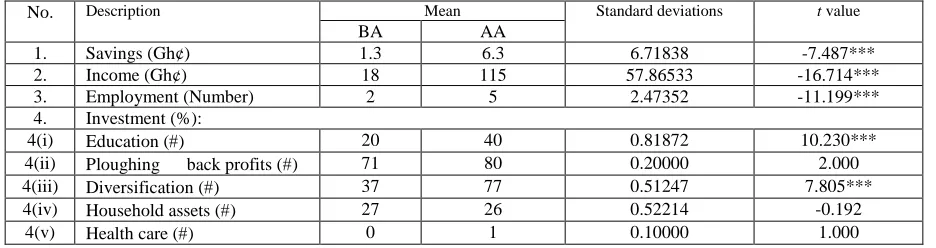
Table 4: Test of Mean Difference for Partial Adopters.
No. Description Mean Standard deviations t value
BA AA
1. Savings (Gh¢) 1.3 6.3 6.71838 -7.487***
2. Income (Gh¢) 18 115 57.86533 -16.714***
3. Employment (Number) 2 5 2.47352 -11.199***
4. Investment (%):
4(i) Education () 20 40 0.81872 10.230***
4(ii) Ploughing back profits () 71 80 0.20000 2.000
4(iii) Diversification () 37 77 0.51247 7.805***
4(iv) Household assets () 27 26 0.52214 -0.192
4(v) Health care () 0 1 0.10000 1.000
Employment
The findings show that employment levels of full and partial adopters increased after adopting the improved technology. The results indicate that before adoption of the improved technology, the average number of employees was 3 and 2 for full and partial adopters, respectively. The independent samples t test shows significant difference in employment after adoption of the improved technology when the number of employees increased to 5 for full adopters and partial adopters respectively at (1% significant level). With regards to non-adopters of the technology the results show that average employment rose from 1 to 2 before and after the introduction of the improved shea butter processing technology respectively (Table 2). Results of t-test suggest that adoption of the improved shea butter processing has contributed significantly to creating job avenues for people in the study area. This has also helped in increasing production, productivity and employment levels. The increase in employment levels can be attributed to the ability of small business owners to invest in their enterprises. This is understandable because increase investment opens up employment opportunities (Apt, 2007; Todaro & Smith, 2009 & Ning, 2009).
Savings
Saving levels of full and partial adopters increased after adopting the improved technology. Before adoption of the improved technology, savings were GHȼ 1.7 and GHȼ 1.3 for full and partial adopters, respectively per week. The results of t test show significant difference in savings after adoption of the improved technology. The findings indicate that savings increased to GHȼ7.8 and G Hȼ6.3 for full adopters and partial adopters respectively at (1% significant level). With regards to non-adopters of the technology the results show that average savings was GHȼ1 (Table 1). Results of t-test suggest that adoption of the improved shea butter processing has contributed to increase in savings for full and partial adopters. This also implies that shea butter processing could provide an extra income for people to save for the future.
Investment
Investment levels of full and partial adopters increased after adopting the improved technology. The results indicate that before adoption of the improved technology, investment in health care was 14% for full adopters and 27 for partial adopters. Again, the results indicate that investment in other forms of businesses (diversification) before adoption was 52% for full
adopter and 37% for partial adopters. In terms of investment in education, the findings indicate that before adoption, partial adopters invested 20% of their income while full adopters invested 28% of their incomes into their children’s education. The independent samples t test shows significant difference in investment components after adoption of the improved technology. The findings indicate that investment in education increased to 40 for partial adopters and 48 for full adopters respectively at (1% significant level). With respect to diversification, the findings suggest increases for full adopters (78) and partial adopters (77) as shown in Table 1.
The results of t-test suggest that adoption of the improved shea butter processing has contributed to increase in investment components except for health care. This also implies that shea butter processing is a major contributor of funds for the educational needs of respondent’s families. As indicated by Sachs and Larrain (1993), fluctuation in firm’s investments plays a role in determining the level of output and unemployment in an economy.
Income
Full adoptersof the improved technology registered a maximum income of GHȼ160 before adoption and GHȼ 360 after adoption of the technology. The mean income rose from GHȼ 23 to Ghȼ 145 after adoption (Table 1). Partial adopters of the improved technology registered a maximum income of GHȼ 80 and GHȼ 300 before and after adoption of the technology. The mean income rose from GHȼ 18.4 to GHȼ 115.1 (Table 4). Non-adopters of the improved technology registered a maximum of GHȼ 40 and GHȼ 45 before and after the introduction of the improved technology at 1% significance level. Their mean incomes rose from GHȼ 8 to GHȼ 30 after the introduction of the technology (Table 1). This implies that adoption of the improved technology has impacted positively on the income levels of respondents, thereby increasing their probability of escaping poverty. This confirms the widely held view that productivity-enhancing agricultural innovations can contribute to raising incomes of farm households, poverty alleviation, and food security in developing countries (Nguezet et al. 2011).
Region continue to use the traditional method of shea butter processing alongside the improved ones. This suggests that intervention programs to help extend the improved shea butter processing technology to areas with high poverty rates is reasonable to raise incomes in these areas, although corresponding measures are needed.
The Influence of Level of Adoption on Production and Productivity
The results show that majority of the full adopters (58%) process at least 3 bags of shea nuts per week. This figure rose to 75% after adoption. Processing figures for partial adopters before and after adoption stood at 47% and 60%, respectively. The proportion of non-adopters who processed at least 3 bags per week declined from 10% to 8% after the introduction of the improved method of shea butter processing technology (Figure 1).
The findings further shows that 71% of the full adopters are able to extract at least 27 kilograms of shea butter per week compared to 67% of the partial adopters and only 9% in the case of the non-adopters who process the same quantity. This means that in terms of out-put of shea butter full adopters of the shea butter processing technology have higher output compared to partial adopters and non-adopters of the technology. The higher quantity of shea butter processed by Full adopters (71%) and partial adopters (69%) might be attributable to the fact that they are using improved technology in the processing of the butter. Also due to the high quality of shea butter processed by the use of improved technology, they are exposed to companies who buy their butter for export and this serves as a very good business environment for increase in production.
The results of focus group discussions with non-adopters of the improved shea butter processing technology indicate that their shea nuts go wasted during hand crushing and pounding as the nuts poor and scatter on the floor and animals eat them. This is due to lack of the mechanical crusher which could complete the process neatly without drudgery and without any reduction in the quantity of nuts. This coupled with their lack of market opportunities prevent them from increasing production. This implies that the non-adopters may have substantial capabilities to increase the productivity of their shea butter business but lack market opportunities due to low quality of shea butter processed as a result of using traditional method. This corroborates the findings of Nichter and Goldmark (2005) that MSEs may have substantial capabilities, but lack viable opportunities to capitalize on them.
Conclusions
The results show that various livelihood outcomes of respondents indicate a significant relationship between respondent’s livelihood outcomes and their level of adoption. There is a positive relationship between investment, savings, income and credit levels of small enterprise owners who adopted the improved method of processing shea butter. Majority of women shea butter processors meet their livelihood outcomes through the adoption of the improved shea butter processing technology. These include their ability to cater for their children’s education, ability to meet the health needs of their families, improvement in access to household foods as well as improvement in household assets. There has been an increase in the employment level of shea butter processing enterprises as a result of increase in production due to the use of the improved processing technology which called for additional labour. There has also been an increase in savings and investment status of most shea butter processors. It has been found that improved method of shea butter processing has played an important role in the investment abilities of women shea butter processors. Women invest their incomes into their children’s education, diversification into other businesses, ploughing back of profit to their shea butter businesses, health care and also into the acquisition of household assets.
Also full adopters of the improved shea butter processing technology have higher output of butter compared to partial and non-adopters of the technology. Majority (58%) of the full adopters process at least 3 bags of shea nuts per week followed closely by partial adopters (47%) and non-adopters (10%).
Recommendations
through the provision of effective and efficient extension of education on the operation of processing machines, increase access to credit and the development of more efficient processing machines at affordable prices.
References
Abadie, A. (2005). “Semiparametric Difference-in-Differences Estimators”, Review of Economic Studies, 72(1), 1-19. Adam, H. (2008). “Adoption of Innovations by Small Ruminant
Farmers in the Tolon-Kumbungu District of the Northern Region of Ghana”, Unpublished Mphil Thesis.
Al-hassan, S. 2011. “Market Access Capacity of Women Shea Processors in Ghana”, Journal of Arts and Social Science. Anaman, K. A. (2003). Research Methods in Applied Economics and
Other Social Sciences, Brunei Press Sendirian Berhad. Brunei
Darussalam.
Apt, N. A (2007). Learning How to Play to Win, Nana Araba Apt, London, U. K, p 66.
Babbie, E. (2001). The Practice of Social Research, 9th Edition,
Belmont, California: Wadsworth Publishing Company. Bawa, A. (2007). “Impact of Clip Project on the Livelihood of
Sheabutter Processing Women in Karaga District of Northern Region”, Ghana, Unpublished Mphil Thesis.
Bertrand, M. E., Duflo and Mullainathan, S. (2004). “How much should we trust the Differences-in-Differences Estimates?”
Quarterly Journal of Economics, 119(1), 249-275.
Bharati, P. and Chaudhury, A. (2010). “Impact of technology assimilation”. Journal of computer information system. Ghana Export Promotion Council (2010). Department of Data
Processsing, GEPC, Accra.
Hyman, L. E. (1991). A comparison of labour saving technologies for processing shea nut butter in Mali. World Development, vol.19, No 9, pp1246.
Lovett, P. N. 2004. “Opening bottlenecks in the African shea butter industry”, Report
Mohammed, O., Hurasamy, R., Omar, A. and Marimuthu, M. (2009). Technology Adoption among Small and Medium (SME’s): A research Agenda-World Academy of Science, Engineering and Technology 53.
Ning, G. (2009). The impact of Technology Adoption on Employment: Exploration from the perspective of manufacturing industry in Transitional China”. Department of Economics, Nankai University, Tranjin, 300071, P. R. China. Nitchter, S. and Goldmark, L. (2005). “Understanding Micro and
Small Enterprise Growth”, Micro Report. Number 36. Prepared by Development Alternatives, Inc. United States Agency for International Development.
Sachs, J. D. and Larrain, F. B. (1993). Macro Economics in the Global
Economy. Prentice-Hall, Inc.
SNV. (2006). “Shea sub-sector study in Ghana”, SNV, Tamale, pp 1-44. 249-275.
Todaro, P. M. and Smith, C. S. (2009). Economic Development, Tenth
Edition. Addison-Wesley, Harlow, England. pp 373-375.