SPECIAL ARTICLE
Implementing Pay-for-Performance in the Neonatal
Intensive Care Unit
Jochen Profit, MD, MPHa,b, John A. F. Zupancic, MD, ScDc, Jeffrey B. Gould, MD, MPHd,e, Laura A. Petersen, MD, MPHb,f
aSection of Neonatology, Texas Children’s Hospital, andfSection of Health Services Research, Department of Medicine, Baylor College of Medicine, Houston, Texas; bHouston Center for Quality of Care and Utilization Studies, Houston Veterans Affairs Medical Center, Houston, Texas;cHarvard Neonatal Perinatal Medicine Program,
Beth Israel Deaconess Medical Center, Boston, Massachusetts;dCalifornia Perinatal Quality Care Collaborative, Palo Alto, California;ePerinatal Epidemiology and Health
Outcomes Research Unit, Division of Neonatology, Stanford University School of Medicine, Lucile Packard Children’s Hospital, Palo Alto, California
The authors have indicated they have no financial relationships relevant to this article to disclose.
ABSTRACT
Pay-for-performance initiatives in medicine are proliferating rapidly. Neonatal intensive care is a likely target for these efforts because of the high cost, available databases, and relative strength of evidence for at least some measures of quality. Pay-for-performance may improve patient care but requires valid measurements of quality to ensure that financial incentives truly support superior performance. Given the existing uncertainty with respect to both the effectiveness of pay-for-performance and the state of quality measurement science, experimentation with pay-for-performance initiatives should proceed with caution and in controlled settings. In this article, we describe approaches to measuring quality and imple-menting pay-for-performance in the NICU setting.
www.pediatrics.org/cgi/doi/10.1542/ peds.2006-1565
doi:10.1542/peds.2006-1565
Key Words
pay-for-performance programs, quality improvement
Abbreviations QI— quality improvement IOM—Institute of Medicine OECD—Organisation of Economic Cooperation and Development CPQCC—California Perinatal Quality Care Collaborative
Accepted for publication Dec 20, 2007
Address correspondence to Jochen Profit, MD, MPH, Houston Center for Quality of Care and Utilization Studies, VA HSR&D(152), 2002 Holcombe Blvd, Houston, TX 77030. E-mail: profi[email protected]
L
ARGE DEFICITS INquality of care remain more than half a decade after the Institute of Medicine (IOM) provided a blueprint for improvement.1In neonatology,there is persistent unexplained variation in health care delivery and outcomes.2–8To date, quality improvement
(QI) efforts, either locally or as part of collaborative efforts, have had mixed results.9–17The broad-based
im-provement envisioned by health care payers and the IOM has not occurred. (In this article, we use the term “payer” to mean the broad group of employers, purchas-ers, insurpurchas-ers, and health care plans that pay for health care services directly or indirectly.)
One factor that is receiving increasing attention is a reimbursement system that may actively discourage QI.1
For example, in December 2003, the New York Times described how Intermountain Health Care, a network of 21 hospitals in Utah and Idaho, was punished financially by Medicare for saving lives and cutting costs.18
Reim-bursement decreased because better care resulted in lower complication rates. In health care, the financial benefits of QI often accrue primarily to payers and pa-tients and not to providers. Pay-for-performance repre-sents an attempt to correct this imbalance and to provide incentives for quality to providers.19
By paying providers according to the quality of care they deliver, pay-for-performance schemes attempt to align the interests of health care payers, patients, and providers, ensuring that providers act in the other par-ties’ best interest.20,21 Pay-for-performance initiatives
provide financial motivation but may also introduce competitive motivational incentives by comparing the performance of providers again each other or against a standard of care (benchmarking). Pay-for-performance programs thus hold promise for QI by generating both intrinsic (motivation) and extrinsic (reputation and fi-nancial rewards) performance incentives.22–24 Although
relatively little evidence for their effectiveness has been accumulated to date, 2 comprehensive reviews of the topic found moderate benefits of pay-for-performance and drew cautiously optimistic conclusions about its po-tential to improve quality of care.25,26In one review, 14
of 17 studies showed partial or positive effects on quality of care.26 However, it should be noted that, in some
studies, improvement owed more to improved docu-mentation than to actual changes in care delivery.27–29
Only 3 studies were carried out in the pediatric popula-tion, and all targeted preventive care services in the general pediatric health care delivery setting.26
Despite some ambiguity in early evaluations, the IOM has endorsed ongoing experimentation with pay-for-performance,30 and payers are enthusiastic about its
potential to improve the value of health care purchas-ing.31 There are now⬎100 active pay-for-performance
projects throughout the country.19,24In addition,
legisla-tive initialegisla-tives aim to incorporate incenlegisla-tives for quality into Medicare’s payment systems.32 Although to our
knowledge pay-for-performance approaches have not been applied in the NICU, we think that the NICU is a prime target for payers because of the high cost, avail-able databases, relative strength of research evidence, and, compared with adult settings, low incidence of comorbidities. The latter makes it easier to attribute per-formance to providers, rather than to patients.
Unfortunately, many pay-for-performance projects are implemented in an uncontrolled manner, making it unclear whether the benefits are truly attributable to the financial incentives.26 Rigorous research designs and
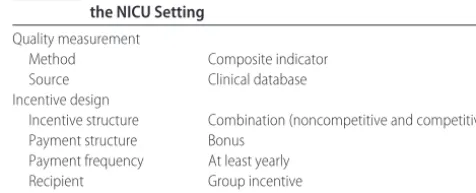
methods are necessary to determine whether perfor-mance-based payment arrangements result in meaning-ful QI and are cost-effective. For example, 2 of us (Drs Petersen and Profit) are conducting a prospective, mul-ticenter, cluster-randomized, controlled trial to study the effects of the pay-for-performance approach on quality of care and hypertension control in adults (L.A.P., L. D. Woodard, MD, T. Urech, MPH, et al, unpublished data, 2007). That trial should add to the body of literature on pay-for-performance and shed light on the benefits and costs of different choices in incentive design. It uses physician- and group-level financial incentives, plus au-dit and feedback, to improve quality of care. More such trials need to be designed to evaluate the effectiveness of pay-for-performance in a variety of care settings and for a spectrum of clinical situations. Our recommendations for implementing quality assessment and financial in-centives for future pay-for-performance initiatives in neonatology are described below and summarized in Table 1.
MEASURING QUALITY
General Approach
Defining and measuring quality is central to a pay-for-performance program’s relevance and ability to meet its objectives. Careful attention to quality measurement is also important for the feasibility of implementation, be-cause physician opposition to pay-for-performance in health care is often grounded in questions about the basic validity, fairness, and meaningfulness of the assess-ment methods. A fair and scientifically sound approach to quality measurement may enhance provider
accep-TABLE 1 Recommendations for Adapting Pay-for-Performance to the NICU Setting
Quality measurement
Method Composite indicator
Source Clinical database
Incentive design
Incentive structure Combination (noncompetitive and competitive)
Payment structure Bonus
Payment frequency At least yearly
Recipient Group incentive
tance and alleviate concerns that pay-for-performance is primarily a cost-cutting measure, rather than a QI tool. Although policymakers and payers are moving ahead with pay-for-performance, the science of quality measurement has not kept pace, which has created a serious disconnec-tion between policy intendisconnec-tions and potential outcomes. Measures that define clinical quality too narrowly or lack the support of empirical evidence are unlikely to yield the desired improvements in health care quality. Furthermore, the process of measurement should minimize undesirable secondary effects on physician behavior. For example, when pay-for-performance initiatives provide financial in-centives for quality, measures that are not adjusted for clinical risk offer an incentive for providers to avoid treat-ing the sickest patients.
Framework for Measuring Quality
Generally, quality of care is defined within a multidi-mensional framework. For example, the IOM has sug-gested that quality of care is a reflection of care in the domains of patient safety, effectiveness, efficiency, pa-tient-centeredness, timeliness, and equity.1The
dimen-sions of the quality of health care delivered by a NICU may also be described by its physical and organizational composition (structure of care), by the clinical care in-teractions between patients and providers (process of care), and by patient outcomes, in terms of morbidity, death, and caregiver satisfaction (outcomes of care).33
Measures of structure, process, and outcome have
dis-tinct advantages and disadvantages. For example, struc-tural measures (eg, the availability of electronic health records) are easy to obtain and measure but are theoret-ically distant from the ultimate goal of improving health outcomes. Process measures may be more sensitive to differences in quality of care but require that there be good evidence for a direct link between the process and clinical outcomes. Outcome measures are perhaps of greatest intrinsic value, because they reflect directly what patients and providers truly care about, but they may occur too infrequently to provide statistically mean-ingful results (eg, death)34 or may occur so far in the
future (eg, developmental delay) that data collection efforts become impractical or burdensome.
Ideally, we think that an assessment of quality should incorporate the full range of quality-of-care dimensions, with indicators that are valid, reliable, feasible to collect, and relevant to important domains of care. Quality as-sessment is a dynamic process and, especially within pay-for-performance schemes, should reinforce provid-ers’ control over their performance. Accordingly, indica-tors should be not only theoretically sound but also actionable; that is, indicators should be responsive to change within a timely period and should be unambig-uous with respect to interpretation. Importantly, mea-sures must be standardized and adjusted for clinical risk, and data collection must be adequately simplified to ensure uniformity of definitions.35
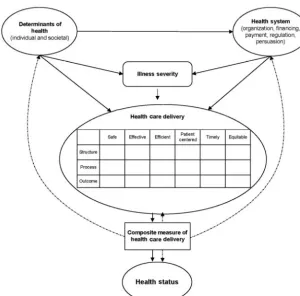
Figure 1 presents a proposed framework for neonatal
FIGURE 1
quality measurement. Pay-for-performance programs attempt to measure and reward the quality of the prod-ucts of the health care delivery system. The outcomes of the health care delivery system are influenced by indi-vidual and societal determinants of health,36 as well as
the design of the health system.37The combination of the
structure/process/outcome framework of quality with that of the IOM results in a quality-of-care matrix that forms an inclusive framework for measuring quality. In our opinion, this could address some of the shortfalls of focusing on individual measures. Although identifying the specific indicators for each of these domains of qual-ity might prove challenging, this framework provides a guide to practitioners and researchers in an ongoing effort to refine quality measurement. Evidence-based expert consensus38,39could be used to fill the matrix and
to generate measures for quality-monitoring or pay-for-performance initiatives.
Composite Indicators
To benchmark and to reward NICUs for high quality of care that has been assessed across several dimensions, the individual dimensional measures of quality need to be combined and aggregated into a summary measure or composite indicator of quality. Such a composite indica-tor reflects judgments regarding the relative importance of each measure. In other fields of medicine, composite indicators (or scorecards) that capture multiple dimen-sions of quality have improved the quality of health care institutions,20,40–43providers,44,45and patient care.20,46,47A
composite indicator of NICU quality could offer perfor-mance targets for improvement by showing the gaps between NICU performance and benchmarks. It could provide a foundation for the development of public and private policy action and a yardstick against which to measure the success of new policies. Although the liter-ature describes many different guidelines and methods for constructing composite indicators, a particularly ex-plicit methodical approach has been described by the Organisation of Economic Cooperation and Develop-ment (OECD)48 and applied to several indicators of
country performance. Crucially, the OECD guidelines ensure transparency of the composite indicator-building process and promote internal and external statistical and methodologic consistency, an improvement over many currently applied methods.49
OECD Guidelines for Constructing Composite Indicators
Briefly, the OECD suggests a 10-step building process)48
(Table 2). At each step, researchers must choose from several available options, depending on the underlying data and the purpose of the composite indicator.
Step 1 is development of a theoretical framework. This step defines the construct to be measured, identifies desirable subindicators, and establishes guidelines for selecting them.
Step 2 is measure selection. Importance, accuracy, and feasibility guide the selection of quality-of-care in-dicators. The medical literature and expert opinion can provide guidance.
Step 3 is initial data analysis. The underlying nature of the data must be explored and appropriate transfor-mations made with regard to directionality of measures, outliers, ceiling effects, and nature of distributions.
Step 4 is imputation of missing data. The impact of missing data on the performance measurement must be examined, because the data may contain significant bias if providers avoid reporting poor outcomes.
Step 5 is normalization of data. For linkage of mea-sures, the measures must be transformed into a common unit of measurement. There are many options for nor-malization, including ranking, standardization, and dis-tance to a reference.
Step 6 is weighting and aggregation. This is a crucial step in the development of a composite indicator, be-cause the attribution of weights to different measures and their aggregation can have significant influences on performance. The 2 basic approaches used to arrive at subindicator weights include statistical (eg, principal-component analysis, factor analysis, multivariate tech-niques, and others) and participatory (variations on elic-itation of expert opinion) methods. It is important to realize that equal weighting does not imply an absence of weights, because with this approach each subindicator is given a weight of 1. The benefit of the statistical approach includes its relative fairness and freedom from bias in deriving weights based on purely statistical grounds. Its disadvantage is that the weights may not correspond to real-world common sense.
In the aggregation phase, the subindicators are aggre-gated into a composite indicator. The primary decision involved in choosing an aggregation method is whether NICUs should be allowed to compensate for poor per-formance in one subindicator with superior perper-formance in others. There are 3 principal choices, namely, full compensation (linear additive aggregation), partial com-pensation (geometric or multiplicative aggregation), and no compensation (noncompensatory methods). Each of these choices has benefits and drawbacks.
TABLE 2 Developing a Composite Indicator
Step Description
1 Development of a theoretical framework
2 Measure selection
3 Initial data analysis
4 Imputation of missing data
5 Normalization
6 Weighting and aggregation
7 Uncertainty and sensitivity analysis
8 Linkage to other variables
9 Deconstruction of the composite indicator
Step 7 is uncertainty and sensitivity analysis. There are 2 primary sources of error in performance measure-ment, that is, the effect of the error contained within the underlying data (uncertainty analysis) and the impact of different choices in constructing the composite indicator (sensitivity analysis). These error sources can be com-bined and their effect displayed in a higher-order Monte Carlo experiment.
Step 8 is linkage to other variables. Composite indi-cators for some fields of medicine might be combined with those in others, potentially yielding greater insights across care settings or longitudinally. Entire networks of care could be compared with respect to their perfor-mance in managing acute and chronic care (ie, combin-ing NICU care with follow-up care).
Step 9 is deconstruction of the composite indicator. Both summary scores and performance on individual measures can be displayed to guide health policy-mak-ing and future research. This allows stakeholders to identify areas of weakness and strengths.
Step 10 is presentation and dissemination. Results can be presented in user-friendly formats such as charts that include measures of uncertainty (confidence intervals). Electronic publications can link to additional details on individual subindicators.
Measuring Quality in the NICU Setting
Data collection efforts in neonatology are better devel-oped than in many clinical specialties. The Vermont Oxford Network collects validated data from ⬎600 NI-CUs throughout the world.50 In California, 120 NICUs
submit an expanded data set, with core elements iden-tical to those collected by the Vermont Oxford Network, to the California Perinatal Quality Care Collaborative (CPQCC). These data are used to prepare confidential reports for each NICU and to prepare the California Children’s Services mandated yearly activity and out-comes report, which CPQCC submits on behalf of re-questing NICUs. A quality indicator based on routinely collected data could thus be used for comparative bench-marking efforts involving pay-for-performance pro-grams. We are currently working to develop such an indicator by using the CPQCC database. A possible rep-resentation of NICU quality measures within the matrix is given in Fig 2.
A danger of tying payments to performance is that data quality may suffer as providers use undesirable behaviors, such as omitting poor outcomes from their reports, in order to improve their ratings without im-proving actual performance. Minimizing such behaviors will require costly, ongoing validation of randomly sam-pled data, a significant disadvantage of pay-for-perfor-mance initiatives. Several other challenges to measuring quality are particularly prominent in the NICU setting and require special attention.
The first challenge involves the diversity of popula-tions. Pathologic conditions, care practices, and out-comes vary widely for patients in different gestational age groups, requiring in some instances both stratum-specific analyses and individualized quality-of-care mea-sures for specific subpopulations, such as extremely pre-mature infants, infants requiring complex surgery, and infants with congenital anomalies. Rather than attempt-ing to measure care for all groups at once, stakeholders should focus on developing quality measures for patient groups that are commonly represented in NICUs (very low birth weight infants, moderately premature infants, and term infants).
The second challenge involves the limit of viability. There is no consensus regarding the treatment of pa-tients born at gestational ages of ⬍25 weeks.51 This
group of patients may require a special set of quality markers that relate more to patient satisfaction with care or documentation of parental education than patient-specific outcome measures.
The third challenge involves patient transfers. It is currently difficult to track patients’ hospital stays across multiple institutions of care. This may induce significant bias, because NICUs might transfer their highest-risk patients to other hospitals.52 Another source of bias
stems from the differing availability of back-transports across NICUs. Lengths of stays are increased in NICUs where opportunities for back-transport are limited. Evaluations of quality therefore need to account for transfer bias. Risk adjustment should also account for the location of birth (inborn/outborn). Ultimately, im-provements in patient tracking may eliminate this problem.
FIGURE 2
DESIGN OF THE FINANCIAL INCENTIVE
Overall Design
Designing financial incentives is a complex process in-volving decisions about the structure of the incentive (competitive or noncompetitive), the recipient of the incentive, the amount of the incentive, the structure of the payment, and the frequency of payment. Choices in any of these categories have advantages and disadvan-tages and must reflect an optimal balance between the incentive’s aims and practicality constraints.
Incentive Structure
Incentive structure influences how rewards are allocated across providers, whether providers compete for bo-nuses, and whether targets are based on improvement or just good performance. Competitive bonus programs provide an incentive to improve performance as provid-ers compete for rewards and reputation. However, most of the payouts go to the top-performing providers, with little incentive for bottom-performing providers to im-prove.53 In noncompetitive programs, all providers are
rewarded for reaching fixed performance targets. Targets based on QI rather than absolute quality provide greater incentives for those with low baseline quality, although most of the payouts again go to the high performers. Our preferred approach would be a combination of methods in which providers are rewarded for achieving the de-sired result in any given measure of care but also are rewarded for overall performance and/or improvement on a composite measure of care.
Incentive Recipient
The more direct the connection between the incentive and the person delivering the care, the greater is the effect of the incentive. In the NICU setting, however, care practices and results rarely can be attributed to a single provider but rather are a reflection of a team effort that includes a group of caregivers (eg, physicians, nurses, respiratory therapists, and nutritionists). In ad-dition, some patients require multidisciplinary care from surgeons, cardiologists, and other providers. Therefore, in the NICU, a group or hospital incentive is a more-practical design choice. Any financial reward to provid-ers would be redistributed within the group. This design would also foster a collaborative approach to patient care, because all caregivers would participate in the ben-efits of the reward, although a potential problem with this approach is “free-riding” by providers who contrib-ute relatively little to care improvement within the group.
Incentive Amount
The amount of money needed to change provider effort is variable and is determined by the provider’s marginal utility for the extra income. This depends not only on
monetary factors (household income) but also on non-monetary factors (personal ethics, normative profes-sional practices, regulatory control, and clinical uncer-tainty). An amount too small is unlikely to induce a change in behavior; an amount too large may induce undesirable provider behavior. A survey of health main-tenance organization managers indicated that a bonus of at least 5% of a physician’s capitation income would be required to influence provider behavior.54
Payment Structure
The principle choice is whether to reward providers through an intermittent bonus or an increase in the fee-for-service schedule. Economic theory suggests that providers would respond most to incentives if they are rewarded every time they do the right thing or achieve a desirable outcome. However, the psychological litera-ture suggests that larger intermittent bonuses for achiev-ing a benchmark of care may create a more powerful motivational effect than regular small payment in-creases. There is insufficient literature to make a defin-itive judgment with regard to either method.27,28 For
practical reasons related to data collection, we recom-mend a yearly bonus.
Payment Frequency
Practical impediments to rewarding providers with fre-quent timely payments to sustain momentum for im-provement include the need to collect and to evaluate data. In addition, the frequency depends on the interval of measurement that allows for a meaningful interpre-tation of change. Specifically, if a measured variable occurs relatively infrequently, then it will take a longer time before a true performance assessment can be ob-tained. In the NICU setting, at a minimum, yearly feed-back would be desirable.
BRINGING PAY-FOR-PERFORMANCE TO THE NICU
methods for assessing quality of care, which could have both economic and scientific implications.
REFERENCES
1. Institute of Medicine.Crossing the Quality Chasm: A New Health System for the 21st Century. Washington, DC: National Academy Press; 2001
2. Olsen IE, Richardson DK, Schmid CH, Ausman LM, Dwyer JT. Intersite differences in weight growth velocity of extremely premature infants.Pediatrics.2002;110:1125–1132
3. Stoll BJ, Hansen N, Fanaroff AA, et al. Late-onset sepsis in very low birth weight neonates: the experience of the NICHD Neo-natal Research Network.Pediatrics.2002;110:285–291 4. Sankaran K, Chien L-Y, Walker R, Seshia M, Ohlsson A, Lee
SK. Variations in mortality rates among Canadian neonatal intensive care units.CMAJ.2002;166:173–178
5. Eichenwald EC, Escobar GJ, Zupancic JA, Greene JD, McCor-mick MC, Richardson DK. Inter-NICU variation in discharge timing of moderately premature infants: earlier discharge does not affect outcome.Pediatr Res.2004;55:372A
6. Rogowski JA, Staiger DO, Horbar JD. Variations in the quality of care for very-low-birthweight infants: implications for pol-icy.Health Aff (Millwood).2004;23:88 –97
7. Morales LS, Staiger DO, Horbar JD, et al. Mortality among very low-birthweight infants in hospitals serving minority popula-tions.Am J Public Health.2005;95:2206 –2212
8. Profit J, Zupancic JA, McCormick MC, et al. Moderately pre-mature infants at Kaiser Permanente Medical Care Program in California are discharged home earlier than their peers in Mas-sachusetts and the United Kingdom.Arch Dis Child Fetal Neo-natal Ed.2006;91:F245–F250
9. Chow LC, Wright KW, Sola A. Can changes in clinical practice decrease the incidence of severe retinopathy of prematurity in very low birth weight infants?Pediatrics.2003;111:339 –345 10. Horbar JD, Rogowski J, Plsek PE, et al. Collaborative quality
improvement for neonatal intensive care: NIC/Q Project Inves-tigators of the Vermont Oxford Network.Pediatrics.2001;107: 14 –22
11. Horbar JD, Carpenter JH, Buzas J, et al. Collaborative quality improvement to promote evidence based surfactant for pre-term infants: a cluster randomised trial.BMJ.2004;329:1004 12. Jackson JK, Vellucci J, Johnson P, Kilbride HW.
Evidence-based approach to change in clinical practice: introduction of expanded nasal continuous positive airway pressure use in an intensive care nursery. Pediatrics. 2003;111(4). Available at: www.pediatrics.org/cgi/content/full/111/4/e542
13. Kaempf JW, Campbell B, Sklar RS, et al. Implementing poten-tially better practices to improve neonatal outcomes after re-ducing postnatal dexamethasone use in infants born between 501 and 1250 grams. Pediatrics. 2003;111(4). Available at: www.pediatrics.org/cgi/content/full/111/4/e534
14. Kilbride HW, Powers R, Wirtschafter DD, et al. Evaluation and development of potentially better practices to prevent neonatal nosocomial bacteremia. Pediatrics. 2003;111(4). Available at: www.pediatrics.org/cgi/content/full/111/4/e504
15. Kilbride HW, Wirtschafter DD, Powers RJ, Sheehan MB. Im-plementation of evidence-based potentially better practices to decrease nosocomial infections.Pediatrics.2003;111(4). Avail-able at: www.pediatrics.org/cgi/content/full/111/4/e519 16. Wirtschafter DD, Danielsen BH, Main EK, et al. Promoting
antenatal steroid use for fetal maturation: results from the California Perinatal Quality Care Collaborative.J Pediatr.2006; 148:606 – 612
17. Wirtschafter DD, Powers RJ. Organizing regional perinatal quality improvement: global considerations and local imple-mentation.NeoReviews.2004;5:e50
18. Abelson R. Hospitals say they’re penalized by Medicare for improving care.New York Times. December 5, 2003
19. Epstein AM. Paying for performance in the United States and abroad.N Engl J Med.2006;355:406 – 408
20. Premier, Inc. CMS/Premier Hospital Quality Incentive demon-stration. Available at: www.premierinc.com/all/quality/hqi/ resources/top-performer-summary.pdf. Accessed May 19, 2006 21. Robinson JC. Theory and practice in the design of physician
payment incentives.Milbank Q.2001;79:149 –177, III 22. Freudenberg M. Composite indicators of country performance:
a critical assessment. Available at: www.sourceoecd.org/10. 1787/405566708255. Accessed February 22, 2006
23. Hibbard JH, Stockard J, Tusler M. Does publicizing hospital performance stimulate quality improvement efforts?Health Aff (Millwood).2003;22:84 –94
24. Rosenthal MB, Fernandopulle R, Song HR, Landon B. Paying for quality: providers’ incentives for quality improvement. Health Aff (Milwood).2004;23:127–141
25. Rosenthal MB, Frank RG. What is the empirical basis for pay-ing for quality in health care? Med Care Res Rev. 2006;63: 135–157
26. Petersen LA, Woodard LD, Urech T, Daw C, Sookanan S. Does pay-for-performance improve the quality of health care?Ann Intern Med.2006;145:265–272
27. Fairbrother G, Hanson KL, Friedman S, Butts GC. The impact of physician bonuses, enhanced fees, and feedback on child-hood immunization coverage rates.Am J Public Health.1999; 89:171–175
28. Fairbrother G, Siegel MJ, Friedman S, Kory PD, Butts GC. Impact of financial incentives on documented immunization rates in the inner city: results of a randomized controlled trial. Ambul Pediatr.2001;1:206 –212
29. Hillman AL, Ripley K, Goldfarb N, Weiner J, Nuamah I, Lusk E. The use of physician financial incentives and feedback to im-prove pediatric preventive care in Medicaid managed care. Pediatrics.1999;104:931–935
30. Institute of Medicine. Rewarding provider performance: align-ing incentives in Medicare. Available at: www.iom.edu/CMS/ 3809/19805/37232.aspx. Accessed December 3, 2006 31. Epstein AM, Lee TH, Hamel MB. Paying physicians for
high-quality care.N Engl J Med.2004;350:406 – 410
32. Milgate K, Cheng SB. Pay-for-performance: the MedPAC per-spective.Health Aff (Millwood).2006;25:413– 419
33. Donabedian A. Evaluating the quality of medical care.Milbank Mem Fund Q.1966;44(suppl):166 –206
34. Parry GJ, Gould CR, McCabe CJ, Tarnow-Mordi WO. Annual league tables of mortality in neonatal intensive care units: longitudinal study.BMJ.1998;316:1931–1935
35. Freed GL, Uren RL. Pay-for-performance: an overview for pediatrics.J Pediatr.2006;149:120 –124
36. Arah OA, Klazinga NS, Delnoij DMJ, Asbroek AHAT, Custers T. Conceptual frameworks for health systems performance: a quest for effectiveness, quality, and improvement.Int J Qual Health Care.2003;15:377–398
37. Roberts MJ, Hsiao W, Berman P, Reich MR. Getting Health Reform Right: A Guide To Improving Performance and Equity. New York, NY: Oxford University Press; 2004
38. Brook RH.The RAND/UCLA Appropriateness Method. Rockville, MD: Agency for Health Care Policy and Research; 1994. Report 95– 0009
39. Wang CJ, McGlynn EA, Brook RH, et al. Quality-of-care indi-cators for the neurodevelopmental follow-up of very low birth weight children: results of an expert panel process.Pediatrics. 2006;117:2080 –2092
41. Mor V. Improving the quality of long-term care with better information.Milbank Q.2005;83:333–364
42. Petra E, Varughese P, Epifania L, Buneo L, Scarfone K. Use of quality index tracking to drive improvement in clinical out-comes.Nephrol News Issues.2006;20:67– 61, 83
43. HealthGrades.The Eighth Annual HealthGrades Hospital Quality in America Study. Golden, CO: HealthGrades; 2005
44. Simpson CR, Hannaford PC, Lefevre K, Williams D. Effect of the UK incentive-based contract on the management of pa-tients with stroke in primary care.Stroke.2006;37:2354 –2360 45. Commission for Healthcare Audit and Inspection.NHS Perfor-mance Ratings 2004/2005. London, United Kingdom: Commis-sion for Healthcare Audit and Inspection; 2005
46. Epstein AJ. Do cardiac surgery report cards reduce mortality? Assessing the evidence.Med Care Res Rev.2006;63:403– 426 47. Grossbart SR. What’s the return? Assessing the effect of
“pay-for-performance” initiatives on the quality of care delivery. Med Care Res Rev.2006;63(suppl):29S– 48S
48. Nardo M, Saisana M, Saltelli A, Tarantolo S, Hoffman A, Gio-vanini E.Handbook on Constructing Composite Indicators: Method-ology and User Guide. Paris, France: Organisation for Economic Co-operation and Development; 2005. Available at: www.olis.
oecd.org/olis/2005doc.nsf/LinkTo/std-doc(2005)3. Accessed December 5, 2005
49. Premier, Inc. Premier Hospital Quality Incentive Project: sum-mary of the composite indicator scoring methodology. Available at: www.premierinc.com/quality-safety/tools-services/p4p/hqi/ resources/top-performer-summary.pdf. Accessed December 12, 2005
50. Horbar JD, Leahy KA. An assessment of data quality in the Vermont-Oxford Trials Network database. Control Clin Trials. 1995;16:51– 61
51. Peerzada JM, Richardson DK, Burns JP. Delivery room deci-sion-making at the threshold of viability.J Pediatr.2004;145: 492– 498
52. Peterson ED, Roe MT, Mulgund J, et al. Association be-tween hospital process performance and outcomes among patients with acute coronary syndromes.JAMA. 2006;295: 1912–1920
53. Rosenthal MB, Frank RG, Li Z, Epstein AM. Early experience with pay-for-performance: from concept to practice. JAMA. 2005;294:1788 –1793
54. Hillman AL, Pauly MV, Kerman K, Martinek CR. HMO man-agers’ views on financial incentives and quality. Health Aff (Millwood).1991;10:207–219
IN THE WORLD OF LIFE-SAVING DRUGS, A GROWING EPIDEMIC OF DEADLY FAKES
“Asia is seeing an ‘epidemic of counterfeits’ of life-saving drugs, experts say, and the problem is spreading. Malaria medicines have been particularly hard hit; in a recent sampling in Southeast Asia, 53 percent of the anti-malarials bought were fakes. Bogus antibiotics, tuberculosis drugs, AIDS drugs and even meningitis vaccines have also been found. Estimates of the deaths caused by fakes run from tens of thousands a year to 200 000 or more. The World Health Organization has estimated that a fifth of the one million annual deaths from malaria would be prevented if all medicines for it were genuine and taken properly. ‘The impact on people’s lives behind these figures is devastating,’ said Dr Howard A. Zucker, the organization’s chief of health technology and pharmaceuticals. Internationally, a prime target of counterfeiters now is artemisinin, the newest miracle cure for malaria, said Dr Paul N. Newton of Oxford University’s Center for Tropical Medicine in Vientiane, Laos. His team, which found that more than half the malaria drugs it bought in Southeast Asia were counterfeit, discovered 12 fakes being sold as artesunate pills made by Guilin Pharma of China.”
DOI: 10.1542/peds.2006-1565
2007;119;975
Pediatrics
Jochen Profit, John A. F. Zupancic, Jeffrey B. Gould and Laura A. Petersen
Implementing Pay-for-Performance in the Neonatal Intensive Care Unit
Services
Updated Information &
http://pediatrics.aappublications.org/content/119/5/975
including high resolution figures, can be found at:
References
http://pediatrics.aappublications.org/content/119/5/975#BIBL
This article cites 39 articles, 17 of which you can access for free at:
Subspecialty Collections
_sub
http://www.aappublications.org/cgi/collection/child_health_financing
Child Health Financing
http://www.aappublications.org/cgi/collection/advocacy_sub
Advocacy
http://www.aappublications.org/cgi/collection/hospital_medicine_sub
Hospital Medicine following collection(s):
This article, along with others on similar topics, appears in the
Permissions & Licensing
http://www.aappublications.org/site/misc/Permissions.xhtml
in its entirety can be found online at:
Information about reproducing this article in parts (figures, tables) or
Reprints
http://www.aappublications.org/site/misc/reprints.xhtml
DOI: 10.1542/peds.2006-1565
2007;119;975
Pediatrics
Jochen Profit, John A. F. Zupancic, Jeffrey B. Gould and Laura A. Petersen
Implementing Pay-for-Performance in the Neonatal Intensive Care Unit
http://pediatrics.aappublications.org/content/119/5/975
located on the World Wide Web at:
The online version of this article, along with updated information and services, is
by the American Academy of Pediatrics. All rights reserved. Print ISSN: 1073-0397.