A RAPID AND EFFICIENT PROTOCOL FOR
LATHYRUS SATIVUS
1, 2
Saikat Chakraborty,
1Jagannath Bhattacharyya,
1Anirban Chakraborty and
1
Advanced Laboratory for Plant Genetic Engineering, Indian Institute of Technology,
Kharagpur 721302, West Bengal,
2
Department of Microbiology, Vidyasagar University, Midnapore 721102, West Bengal, India
ARTICLE INFO ABSTRACT
A rapid, simple and reproducible protocol for in vitro multiple shoot induction and whole plant regeneration was developed from two cultivars of
available variety. Cotyledonary node, shoot tip of five ten-day
and Skoog (MS) media fortified with different concentrations (0.125 Benzylaminopurine (BAP) and Thidia
number of multiple shoot induction and proliferation (12
cotyledonary node explant within 30 days using 1.5 mg/L BAP. The micro shoots were subcultured in the same media containing low concentration of IAA (0.03 mg/L) for further elongation. Up to 85% of shoots developed roots following their transfer to half strength of Murashige and Skoog MS media containing 0.25 mg/L Indole
hardened under culture conditions and were subsequently established in the greenhouse with survival rate of 85%. The entire
days). Thus, the pre
regeneration through direct organogenesis of transformation systems.
Abbreviations
BAP: 6 Indole-Thidiazuron.
Copyright©2016, Saikat Chakraborty et al. This is an open access article distributed under the Creative use, distribution, and reproduction in any medium, provided the original work is properly cited.
INTRODUCTION
Grasspea (Lathyrus sativus L.) remains an important annual grain legume and it is believed to be poor people’s crop as it provides a cheap source of dietary proteins. It is cultivated in several tropical and sub-tropical countries all over the world especially in Asio-African regions. It is primarily used for human consumption, animal feed and fodder and several other purposes (Croft et al., 1999; Hanbury et al., 2000). Seeds of
Lathyrus are generally popular for higher protein content as
compared to some commonly consumed grain legumes (Baudoin et al., 1999; Hanbury et al., 2000).
*Corresponding author: Bikas Ranjan Pati,
Department of Microbiology, Vidyasagar University, Midnapore 721102, West Bengal, India.
ISSN: 0975-833X
Vol.
Article History:
Received 19th August, 2016
Received in revised form 22nd September, 2016
Accepted 14th October, 2016
Published online 30th November,2016
Key words:
Lathyrus sativus L., Cotyledonary node, Multiple shooting, In vitro regeneration, Rooting.
Citation: Saikat Chakraborty, Jagannath Bhattacharyya, Anulina Manna, Narattam Sikdar, Anirban rapid and efficient protocol for in vitro plant regeneration of
Research, 8, (11), 41556-41564.
RESEARCH ARTICLE
A RAPID AND EFFICIENT PROTOCOL FOR
IN VITRO
PLANT REGENERATION OF
LATHYRUS SATIVUS
L. (GRASS PEA) THROUGH MULTIPLE SHOOTING
Jagannath Bhattacharyya,
1Anulina Manna,
1, 2Anirban Chakraborty and
2,*Bikas Ranjan Pati
Advanced Laboratory for Plant Genetic Engineering, Indian Institute of Technology,
Kharagpur 721302, West Bengal, India
Department of Microbiology, Vidyasagar University, Midnapore 721102, West Bengal, India
ABSTRACT
A rapid, simple and reproducible protocol for in vitro multiple shoot induction and whole plant regeneration was developed from two cultivars of Lathyrus sativus
available variety. Cotyledonary node, shoot tip of five-day-old germinated seeds and nodal explant of day-old seedlings were used as experimental material. The explants were cultured in Murashige and Skoog (MS) media fortified with different concentrations (0.125
Benzylaminopurine (BAP) and Thidiazuron (TDZ) for multiple shoot proliferation. The maximum number of multiple shoot induction and proliferation (12 – 14 shoots / explant) was observed in cotyledonary node explant within 30 days using 1.5 mg/L BAP. The micro shoots were subcultured in same media containing low concentration of IAA (0.03 mg/L) for further elongation. Up to 85% of shoots developed roots following their transfer to half strength of Murashige and Skoog MS media containing 0.25 mg/L Indole-3-butyric acid (IBA) within 25 days
hardened under culture conditions and were subsequently established in the greenhouse with survival rate of 85%. The entire in vitro regeneration process took relatively short period of time (90 days). Thus, the present study remained successful in developing a rapid and efficient in vitro regeneration through direct organogenesis of Lathyrus sativus for subsequent development of efficient transformation systems.
Abbreviations
BAP: 6-Benzylaminopurine, β-ODAP: β N-Oxalyl-L- alpha,
-3-acetic acid, IBA: Indole-3-butyric acid, MS: Murashige and Skoog media, TDZ: Thidiazuron.
is an open access article distributed under the Creative Commons Attribution License, which use, distribution, and reproduction in any medium, provided the original work is properly cited.
L.) remains an important annual grain legume and it is believed to be poor people’s crop as it provides a cheap source of dietary proteins. It is cultivated in tropical countries all over the world African regions. It is primarily used for human consumption, animal feed and fodder and several other
et al., 2000). Seeds of
are generally popular for higher protein content as compared to some commonly consumed grain legumes
Department of Microbiology, Vidyasagar University, Midnapore
It also serves as a rich source of essential amino acids like lysine and L-homoarginine (Querreshi
it has the ability to adapt to the saline, alkaline, water logged or clayey, drought or otherwise poor soi
reported to be resistant to a number of infectious diseases viz. Ascochyta blight, Powdery mildew attack, Thrips attack etc.
(Tekele Haimanat et al., 1990; Campbell
et al., 1994; Hoque et al., 1996; Wh
et al., 2014). These traits make grasspea an agronomically
important legume. This is more so as its cultivation requires minimum crop management procedure. However, the limiting factor of its large scale cultivation and commerci
presence of the neurotoxin Beta diaminopropionic acid (ODAP). International Journal of Current Research
Vol. 8, Issue, 11, pp.41556-41564, November, 2016
INTERNATIONAL
Saikat Chakraborty, Jagannath Bhattacharyya, Anulina Manna, Narattam Sikdar, Anirban Chakraborty and Bikas Ranjan Pati rapid and efficient protocol for in vitro plant regeneration of Lathyrus sativus L. (Grass pea) through multiple shooting
PLANT REGENERATION OF
L. (GRASS PEA) THROUGH MULTIPLE SHOOTING
1, 2
Narattam Sikdar,
Advanced Laboratory for Plant Genetic Engineering, Indian Institute of Technology,
Department of Microbiology, Vidyasagar University, Midnapore 721102, West Bengal, India
A rapid, simple and reproducible protocol for in vitro multiple shoot induction and whole plant
Lathyrus sativus L., viz. Nirmal B1 and a locally
ld germinated seeds and nodal explant of old seedlings were used as experimental material. The explants were cultured in Murashige and Skoog (MS) media fortified with different concentrations (0.125-2.5 mg/L) of
6-zuron (TDZ) for multiple shoot proliferation. The maximum 14 shoots / explant) was observed in cotyledonary node explant within 30 days using 1.5 mg/L BAP. The micro shoots were subcultured in same media containing low concentration of IAA (0.03 mg/L) for further elongation. Up to 85% of shoots developed roots following their transfer to half strength of Murashige and Skoog MS media butyric acid (IBA) within 25 days. Rooted plantlets were successfully hardened under culture conditions and were subsequently established in the greenhouse with survival regeneration process took relatively short period of time (90-100 sent study remained successful in developing a rapid and efficient in vitro for subsequent development of efficient
beta-diaminopropanoic acid, IAA: butyric acid, MS: Murashige and Skoog media, TDZ:
ribution License, which permits unrestricted
It also serves as a rich source of essential amino acids like
homoarginine (Querreshi et al., 1977). Moreover
it has the ability to adapt to the saline, alkaline, water logged or clayey, drought or otherwise poor soil conditions and is reported to be resistant to a number of infectious diseases viz. Ascochyta blight, Powdery mildew attack, Thrips attack etc.
., 1990; Campbell et al., 1994; Smartt
., 1996; White et al., 2002; Vaz Patto
., 2014). These traits make grasspea an agronomically important legume. This is more so as its cultivation requires minimum crop management procedure. However, the limiting factor of its large scale cultivation and commercial use is the presence of the neurotoxin Beta-N-oxalyl-L-alpha, beta-diaminopropionic acid (ODAP).
INTERNATIONAL JOURNAL OF CURRENT RESEARCH
This neurotoxin causes neurolathyrism both in animals and humans and results paralysis in the lower limbs by affecting the central nervous system (Rao et al., 1964; Spencer et al., 1986; Spencer et al., 1995; Hanbury et al., 2000; Kuo et al.,
2000; Lambien et al., 2009). Thus, development of β-ODAP
free lathyrus variety remains a challenge for the plant breeders
and biotechnologists. The conventional breeding techniques and agronomical approaches have failed to produce β-ODAP - free Lathyrus variety(Campbell et al., 1994; Jiao et al., 2006; Haque et al., 2011) because this trait is highly influenced by climatic and odaphic environmental conditions (Girma and korbu, 2012). Development and application of suitable genetic engineering strategies for eliminating or reducing the neurotoxin in the plants remains a key approach for solving this problem and can supplement future plant breeding
programmes to improve its agronomic importance.
Development of an efficient transformation system remains a prerequisite for application of such genetic engineering strategies. To achieve the same, a rapid, efficient and reproducible in vitro plant regeneration procedure is required at the first place. Although there have been some past reports
on in vitro shoot bud differentiation and plant regeneration
through somatic embryogenesis from shoot tips (Gharyal et al.,
1980), decapitated axillary buds of embryo (Gharyal et al.,
1983), stem (Sinha et al., 1983), root explants (Roy
et al.,1991; Roy et al., 1992), leaf (Sridhar et al., 2015) as well
as direct shoot regeneration from epicotyl explants (Malik
et al., 1992), different types of cotyledonary node (Barik et al.,
2004) and seed cultures (Malik et al., 1993) in different
genotypes of Lathyrus sativus L., the efficiency of whole plant
regeneration was low and time consuming.
Also, the efficiency of plant regeneration was not very apparent from the existing literature. Thus, the objective of our present study was set to establish a rapid, efficient and reproducible in vitro plant regeneration protocol of Lathyrus
sativus L. through multiple shooting. The results showed a
multiple shoot induction frequency upto 91%, root induction frequency upto 85% and mature plant regeneration/survival frequency of upto 85%. Also, the plant regeneration was achieved in a relatively short time interval (90-100 days) as compared to existing protocols. Thus, the present study remains novel in offering a rapid and efficient in vitro plant
regeneration protocol for Lathyrus sp.
MATERIALS AND METHODS
Seed source and surface sterilization
Seeds of Lathyrus sativus L. cv Nirmal B1 were obtained from
ICAR, New Delhi. Seeds of locally available variety were procured from the local market. Prior to explant preparation, the mature seeds of both the variety were washed in 0.1% (v/v) Tween 20 for 15 min, followed by rigorous rinsing with sterile distilled water. Seeds were then surface disinfected with 0.1%
(w/v) HgCl2 for 5 min and rinsed five times with sterile
distilled water. Seeds (12 seeds per plate) were germinated aseptically in petriplates (90 mm x 20 mm) in dark at 30 °C overnight on seed germination medium (SGM), which contained half strength MS (Murashige and Skoog, 1962) media with vitamins, 1% (v/v) sucrose and 0.8 % (w/v) agar as the gelling agent. Seeds were thereafter maintained at 26 ± 2°C
with 16 h light/8 h dark in a growth chamber (150-200 µE m-2 s-1).
Explant preparation
Aseptically excised 3.0 mm long apical meristem,
cotyledonary node of 5-day-old in vitro germinated seeds and
nodal segments (4.0 mm - 5.0 mm) of 10-day-old in vitro
raised seedlings were selected as explants for direct shoot multiplication.
Organogenesis and plant regeneration
Disinfected explants viz. apical meristem, cotyledonary node and nodal segments were cultured on different strengths of MS
basal media and B5 media (Gamborg et al., 1968)
supplemented with 3.0% (w/v) sucrose for better regeneration of explant and multiple shoot initiation. The pH of the media was adjusted between 5.75-5.8 with 0.1 N NaOH or 0.1 N HCl and 0.8% agar was used as gelling component. Different concentrations of growth regulators like BAP (0.125-2.5 mg/L) and TDZ (0.125-2.5 mg/L) were used along with the basal media for multiple shooting. Twenty five explants each were used in three replicate experiments and they were cultured under 16 h / 8 h (light/ dark) photo period with light intensity
of 150-200 µE m-2 s-1 in a Percival plant growth chamber with
periodic sub-culture every 2 weeks. Proliferating shootlets were excised and cultured in the multiple shooting media supplemented with different concentrations of IAA (0.01-0.05 mg/L), designated as elongation medium (EM) for further elongation of micro shootlets. Healthy elongated shootlets were transferred to liquid root inducing medium (RM) Containing different strength of MS media (½X, 1X and 2X) and B5 media, supplemented with different concentrations IBA (0.05-1.5 mg/L).
Hardening of the regenerated plants and acclimatization
Rooted plantlets were transferred to potting medium (PM) for hardening in mixture of soilrite (Keltech Energies ltd.) and sand (autoclaved) for about 20 days. Finally, the well grown plants were transferred to large pots containing soil mixture: sand (1:1) in greenhouse condition. Plants grown in these conditions were observed for their growth and survival rate.
Statistical analysis: Student’s t-test was performed to
compare the results following a Gaussian distribution.
RESULTS
Effect of different basal media composition on shoot and root regeneration
Table 1. Effect of different concentration of TDZ and BAP on multiple shoot regeneration frequency per explant in two cultivars of L. sativus L.
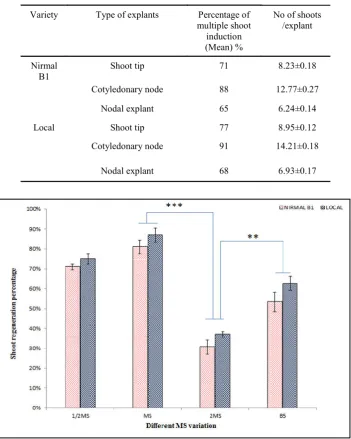
Table 2. Comparative account of multiple shoot induction (MS+1.5 mg/L BAP) from shoot tip, cotyledonary node and nodal explants of two cultivars of L. sativus L.
Fig. 1. Effect of different types of basal media on shoot regeneration percentage. . Results are expressed as mean ± SE for triplicate experiments. ** indicates P<0.01, *** indicates P<0.005
Concentration of hormone
(mg/L)
Mean shoots per explant
Nirmal B1 Loc al
TDZ BAP TDZ BAP
0.125 2.49±0.08 - 3.98±0.15 -
0.25 5.66±0.19 3.86±0.17 6.32±0.18 5.13±0.17
0.5 8.04±0.20 6.79±0.19 9.24±0.23 7.63±0.20
1.0 - 8.30±0.15 - 9.27±0.15
1.5 Callus 12.80±0.26 Callus 14.23±0.18
2.0 Callus 9.02±0.16 Callus 8.97±0.21
2.5 Callus 4.46±0.21 Callus 2.42±0.09
Variety Type of explants Percentage of
multiple shoot induction (Mean) %
No of shoots /explant
Nirmal B1
Shoot tip 71 8.23±0.18
Cotyledonary node 88 12.77±0.27
Nodal explant 65 6.24±0.14
Local Shoot tip 77 8.95±0.12
Cotyledonary node 91 14.21±0.18
Fig. 2. Effect of different types of basal media on root induction percentage. Results are expressed as mean ± SE for triplicate experiments. ** indicates P<0.01, *** indicates P<0.005
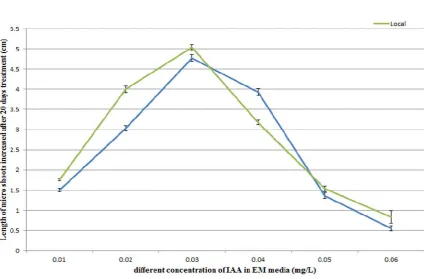
[image:4.595.121.479.310.770.2]Fig. 4. Effect of different concentration of IAA on elongation of microshoots of two different genotypes (Nirmal B1 and Local). Results are expressed as mean ± SE for triplicate experiments
Multiple shoot induction and elongation of microshoots
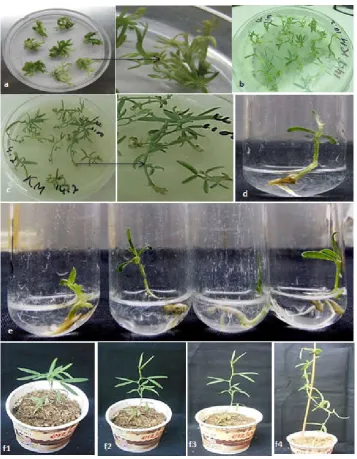
MS media supplemented with BAP and TDZ (0.125-2.5 mg/L) were used for multiple shoot induction. Of all the different concentrations of growth regulators tested, 1.5 mg/L BAP was found to be most effective for inducing multiple shoots (Table 1) within 30 days. It was observed that cotyledonary node explants produced the maximum number of shoots (12-14/ explant) (Fig. 3. a) as compared to shoot tip and nodal explants (Table 2). Moreover, high percentage (88-91%) of multiple shoot induction was observed for cotyledonary node explant (Table 2). Among the two genotypes tested local variety produced higher number of shoots per explant as well as higher percentage of multiple shoot induction (Table 2).
Same media supplemented with low concentration of IAA (0.01-0.06 mg/L) resulted further elongation of microshoots (Fig.3. c). The IAA concentration of 0.03 mg/L was found to be most effective for elongation of microshoots upto 5 cm (Fig.4).
Root development and hardening of the regenerated plants
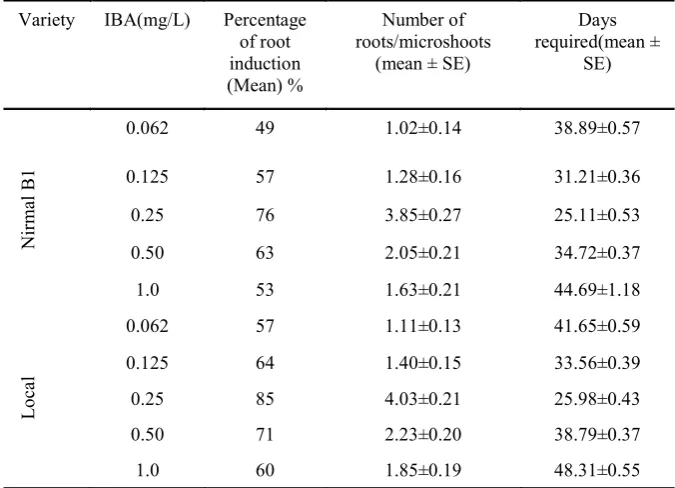
The individual elongated shoots were isolated and transferred to liquid ½ MS media fortified with IBA (0.062-1.0 mg/L) for root development. The IBA concentration, 0.25 mg/L was found to be most effective (Table 3) for rooting with of maximum percentage of root induction higher number of root
[image:6.595.130.468.86.330.2]Table 3. Effect of different concentration of IBA on in vitro rooting of two different cultivars of L. sativus L.
Table 4. Different media composition for in vitro regeneration of Lathyrus sativus L.
Variety IBA(mg/L) Percentage
of root induction (Mean) %
Number of roots/microshoots
(mean ± SE)
Days required(mean ±
SE)
Nir
mal
B
1
0.062 49 1.02±0.14 38.89±0.57
0.125 57 1.28±0.16 31.21±0.36
0.25 76 3.85±0.27 25.11±0.53
0.50 63 2.05±0.21 34.72±0.37
1.0 53 1.63±0.21 44.69±1.18
Loca
l
0.062 57 1.11±0.13 41.65±0.59
0.125 64 1.40±0.15 33.56±0.39
0.25 85 4.03±0.21 25.98±0.43
0.50 71 2.23±0.20 38.79±0.37
1.0 60 1.85±0.19 48.31±0.55
Medium Composition Application
Seed germination media (SGM)
½ Strength MS Salts + Vitamins + 1% Sucrose + Agar 0.8% (w/v.)
Seed Germination
MSGM (Multiple shoot generation media)
MS ( Macro + Micro salts) + Vitamins +1.5 mg/L BAP + Sucrose 3 % + Agar 0.8% (w/v).
Multiple Shoot formation
EM (Elongation Medium)
MS ( Macro + Micro salts) + Vitamins + 1.5 mg/L BAP + 0.03 mg/L IAA + Sucrose 3 % + Agar 0.8% (w/v).
Shoot Elongation
RM (Root Inducing medium)
½ Strength MS Salts + Vitamins +0.25 mg/L IBA + Sucrose 3%, Agar 0.8% (w/v)
Rooting
PM (Potting Medium)
autoclaved Soilrite and sand (1:1) Transplantation of
per shootlet (Fig.3 e) and the minimum time requirement for root development in both the genotypes. In this particular IBA concentration Nirmal B1 showed 76% root induction with 3.85±0.27 roots per shootlet within 25 days whereas local variety showed 85% root induction with 4.03±0.21 roots per shootlet in same time period. Rooted plantlets were initially hardened in soilrite:sand (1:1) and subsequently established in the greenhouse on the mixture of soil: sand (1:1). The survival rate of the plants under the field conditions was recorded as
85% (data not shown). All the media used for in vitro culture
of L. sativus L. are listed in table 4 and the entire process of
plant regeneration through multiple shooting is summarized in the flow chart (Fig. 5).
DISCUSSION
In the present study, we reported an efficient and reproducible
protocol for in vitro regeneration of Lathyrus sativus L.
through multiple shooting using nodes from 10-day-old
seedlings, cotyledonary node and shoot tips from 5-day-old germinating seeds as explants within a very short period of time (90-100 days). We have tested three types of explants on four types of basal media (½MS, MS, 2MS and B5), fortified with different concentrations of growth regulators (BAP and
TDZ) in two Lathyrus varieties (Nirmal-B1 and local) for plant
regeneration and multiple shooting. Previous study on grasspea
(Lathyrus sativus L.) showed the shoot formation in calli from
shoot apex and leaf explants without any subsequent root development (Mukhopadhyay and Bhojwani, 1978; Gharyal and Maheshwari 1983). Both BAP and TDZ are essential for induction of shoot regeneration on immature zygotic embryos
(Sahin-Demirbag et al. 2010), but some reports stated that
TDZ was more efficient to proliferate shoot buds rather than
BAP in case of grasspea (Malik et.al., 1992). Our result
showed that MS salts supplemented with BAP is more
effective for high number of shoot regeneration under in vitro
condition and this is consistent with previous reports (Sinha et
al., 1983; Barik et al., 2004). It is found that 1.5 mg/L BAP resulted in highest shoot regeneration frequency (88-91%) and maximum number of shoots (12-14) per explant in two
varieties of Lathyrus sativus L. (Table 2). However, increase in
the concentration of BAP above 2.0 mg/L reduced shoot bud proliferation frequency (Table 1). On the other hand, MS medium supplemented with 0.5 mg/L TDZ led to generation of highest number of shoots/explant for Nirmal-B1 and local
variety among different concentrations of TDZ tested (Table 1). Lower concentration of TDZ showed better response
in number of multiple shoot proliferation, whereas increased concentration of TDZ failed to elongate microshoots. Formation of stunted shoots on MS medium supplemented with TDZ had been reported earlier in several plant species
like Malus sp. (Van Nienwkerk et al., 1986) and
Rhododendron sp. (Preece and Imel, 1991). This inhibition of
shoot elongation is a common problem with TDZ probably due
to its super-optimal cytokinin activity (Barik et al., 2004). The
present study revealed that TDZ containing media produced a small amount of callus at the base of the explants which ultimately hampered the shoot regeneration process and this is also supported by previous report (Barik et al., 2004). As the response to cytokinin treatment varied among different
genotypes, it can be stated that in vitro regeneration and
multiple shooting efficiency was genotype dependent. Several previous reports suggested the efficiency of epicotyl meristematic tissue for higher number of shoot bud
proliferation in case of different grain legume (Pickardt et al.,
1991; Amitha and Reddy, 1996) and also in Lathyrus (Barik
et al., 2005-a). In the present study, of all the three types of
explants tested, the cotyledonary node showed maximum response in terms of percentage of multiple shoot induction (88%-91%) and number of shoots per explant (12.77 ± 0.27-14.21± 0.18) in both the genotypes. MS media containing BAP along with different concentrations of IAA (0.01 mg/L- 0.06 mg/L) were tested to improve further elongation of microshoots. IAA at 0.03 mg/L induced the elongation of microshoots upto 4.7 cm in Nirmal-B1 and 5.04 cm in local variety (Fig. 4).
Although shoots were longer with BAP in combination with IAA, no multiple shoot was formed in media supplemented with IAA alone. According to the earlier findings, gradual increase in concentration of IAA (0.5-1.0 mg/L) resulted in reduced percentage of shoot elongation and it became nil when
IAA concentration was raised to 2.0 mg/L (Chakraborty et al.,
2006). Poor frequency of in vitro root development is
considered to be a major constraint in grasspea (Lathyrus
sativus L.) tissue culture and this significantly reduces the
whole plant regeneration potential. It is observed that use of different cytokinins played a crucial role in root developement. Present study showed that shoots regenerated on BAP supplemented media led to efficient root development rather than the shoot from TDZ containing media, which was also previously exhibited in case protein pea (Ochatt et al. 2000)
and L. sativus L (Ochatt et al. 2002). Strength of basal media
plays a vital role in in vitro rooting. It is well known that, rooting in certain plant species may occur ideally when the overall salt strength of the medium is reduced. In some cases, the salt strength reduction may eliminate the need of using auxin (s) for rooting (Verma, 2012), which is the case for even
Lathyrus also (Ochatt et al. 2001). Though the use of auxins
was reported to enhance root induction capability from reduced strength of basal media (Shridhar et al., 2015). The highest frequency of rooting (65%), recorded so far, was in the culture
medium containing 1.5 mg/L IBA (Barik et.al., 2005-b;
Tripathy et.al., 2013; Piwowarczyk and Pindel, 2014).
Optimum root induction on ½ strength B5 media supplemented
with low dose of IBA was exhibited by Roy et al. 1992 and he
also underlined specific and narrow utility of growth regulators
for rooting of Lathyrus sp. Our study also remained successful
broadened the practical scope for development of an effective
transformation system in desirable genotypes of Lathyrus sp.
The efficient rooting method proposed here not only increased the whole plant regeneration frequency but also resulted in very high recovery of plants after transplantation to the glasshouse. Thus this protocol provides an efficient means for
in vitro manipulation of grasspea within a short time of 90-100
days.
Author contribution
Experiments were designed by SC with valuable scientific inputs from JB and BRP. Experiments were performed by SC, AM, NS and BRP provided valuable suggestions for troubleshooting throughout the study. SC, JB, AM analysed the data. The manuscript was prepared by SC and AM in consultation with AC, JB and BRP. All the authors read and approved the MS.
Acknowledgements
The authors express their deepest sense of gratitude to Late Prof. Soumitra Kumar Sen for introducing them to the field of plant biology, for providing extensive laboratory facilities and for his invaluable scientific inputs. Authors also thankfully acknowledge Indian Council of Agricultural Research (ICAR) in terms of grant support to Advanced Laboratory for Plant Genetic Engineering and fellowships to SC, JB, AM, NS. Finally, the authors are also thankful to Dr. Joy Mitra and Mrs Shila Bhattacharyya for their co-operation.
Conflict of Interest
The authors declare no financial or commercial conflict of interest.
REFERENCES
Amitha, K. and Reddy, T. P. 1996. Regeneration of plantlets
from different explants and callus culture of cowpea (Vigna
unguiculata). Phytomorphology, 46: 207–211.
Barik, D.P., Mohapatra, U. and Chand, P.K., 2005-a. High
frequency in vitro regeneration of Lathyrus sativus L.
Biologia Plantarum, 49: 637-639.
Barik, D.P., Mohapatra, U. and Chand, P.K. 2005-b.
Transgenic grasspea (Lathyrus sativus L.): Factors
influencing Agrobacterium-mediated transformation and
regeneration. Plant Cell Reports, 24: 523-531.
Barik, D.P., Naik, S.K., Mohapatra, U. and Chand, P.K. 2004.
High-frequency plant regeneration by in vitro shoot
proliferation in cotyledonary node explants of grasspea
(Lathyrus sativus L.). In Vitro Cellular & Developmental
Biology – Plant, 40: 467–470.
Baudoin, J. P. and Maquet, A. 1999. Improvement of protein and amino acid contents in seeds of food legumes. A case
study in Phaseolus. Biotechnologie Agronomie Societeet
Environnment, 3: 220-224.
Campbell, C.G., Mehra, R.B., Agrawal, S.K., Chen, Y.Z., Abd El Moneim, A., Khawaja, H.I.T., Yadov, C.R., Tay, J.U. and Araya, W.A. 1994. Current status and future research strategy in breeding grasspea (Lathyrus sativus). Euphytica, 73: 167–175.
Chakraborti, D., Sarkar, A. and Das, S. 2006. Efficient and rapid in vitro plant regeneration system for Indian cultivars
of chickpea (Cicer arietinum L.). Plant Cell, Tissue and
Organ Culture, 86: 117-123.
Croft, A. M., Pang, E. C. K. and Taylor, P. W. J. 1999. Molecular analysis of Lathyrus sativus L. (grasspea) and
related Lathyrus species. Euphytica, 107: 167-176.
Gamborg, O. L., Miller, R. A. and Ojima, K. 1968. Nutritional requirement for suspension cultures of soybean root cells.
Experimental Cell Research, 50: 151–158.
Gharyal, P. K. and Maheshwari, S. C. 1980. Plantlet formation
from callus cultures of a legume, Lathyrus sativus cv.
L.S.D.-3. Zeitschrift für Pflanzenphysiologie,100: 359–
362.
Gharyal, P. K. and Maheshwari, S. C. 1983. Genetic and physiological influences on differentiation in tissue cultures
of a legume, Lathyrus sativus. Theoritical and Applied
Genetics, 66: 123-126.
Girma, D. and Korbu, L. 2012. Genetic improvement of grass pea (Lathyrus sativus) in Ethiopia: an unfulfilled
promise. Plant Breeding, 131: 231-236.
Hanbury, C. D., White, C. L., Mullan, B. P. and Siddique, K.
H. M. 2000. A review of the potential of Lathyrus sativus
L. and L. cicera L. grain for use as animal feed. Animl Feed
Science and Technology, 87: 1-27.
Haque, R.M., Kuo, Y.H., Lambein, F. and Hussain, M. 2011. Effect of environmental factors on the biosynthesis of the neuro-excitatory amino acid beta-ODAP (beta- N-oxalyl-L-alpha, beta-diaminopropionic acid) in callus tissue of
Lathyrus sativus. Food and Chemical Toxicology. 49:
583-588.
Hoque, R., Hussain, M., Kuo, Y.H. and Lambein, F. 1996. Salinity tolerance and accumulation of neurotoxin and
excitatory amino acids in Lathyrus sativus. Bangladesh
Journa of Biochemistry, 2: 15- 27.
Jiao, C. J., Xu, Q. L., Wang, C. Y., Li, F. M., Li, Z. X. and Wang, Y. F. 2006. Accumulation pattern of toxin β-ODAP during lifespan and effect of nutrient elements on β-ODAP
content in Lathyrus sativus seedlings. Journal of
Agricultural Science, 144: 369-375.
Kuo, Y. H., Bau, H. M., Rozan, P., Chowdhury, B. and Lambein, F. 2000. Reduction efficiency of the neurotoxin
β-ODAP in low-toxin varieties of Lathyrus sativus seeds by
solid state fermentation with Aspergillus oryzae and
Rhizopus microsporus var chinensis. Journal of the
Science of Food Agriculture, 80: 2209-2215.
Lambein, F. and Kuo, Y.H. 2009. Lathyrism. Grain Legumes,
54: 8-9.
Malik, K. A., Ali Khan, S. T. and Saxena, P. K. 1992. Direct organogenesis and plant regeneration in preconditioned tissue cultures of Lathyrus cicera L. L. ochrus L. DC and
L. sativus L. Annals of Botany, 70: 301-304.
Malik, K. A., Ali-Khan, S. T. and Saxena, P. K. 1993. High-frequency organogenesis from direct seed culture in
Lathyrus. Annals of Botany, 72: 629-637.
Mukhopadhyay, A. and Bhojwani, S. S. 1978. Shoot-bud differentiation in tissue cultures of leguminous plants.
Zeitschrift für Pflanzenphysiologie, 88: 263-268.
Murashige, T., Skoog, F., 1962. A revised medium for rapid growth and bioassays with tobacco tissue cultures.
Physiologia Plantarum, 15: 473–497.
Ochatt, S.J., Pontécaille, C. and Rancillac, M. 2000. The growth regulators used for bud regeneration and shoot rooting affect the competence for flowering and seed set in regenerated plants of protein pea. In Vitro Cellular and
Ochatt, S.J., Durieu, P., Jacas, L., Pontécaille, C., 2001. Protoplast, cell and tissue cultures forthe biotechnological
breeding of grass peas (Lathyrus sativus L.). Lathyrus
Neurolathyrism Newsletter, 2: 35–38.
Ochatt, S.J., Muneaux, E., Machado, C., Jacas, L. and Pontécaille, C. 2002. The hyperhydricity of in vitro regenerants is linked with an abnormal DNA content in
grass pea (Lathyrus sativus L.). Journal of Plant
Physiology, 159: 1021–1028.
Pickardt, T., Meixner, M., Schade, V. and Scheider, O. 1991.
Transformation of Vicia narbonensis via Agrobacterium
-mediated gene transfer. Plant Cell Reports, 9: 535–538.
Piwowarczyk, B. and Pindel, A. 2014. Early stages of somatic
embryogenesis in root callus of grass pea (Lathyrus sativus
L.). Journal of central European Agriculture, 15: 209-218.
Preece, J. E. and Imel, M. R. 1991. Plant regeneration from
leaf explants of Rhododendron ‘PJM hybrids’. Scientia
Horticulturae, 48: 159–170.
Querreshi, M. Y., Pilbea, D. J., Evans, C. V. and Bell, E. A.
1977. The neurolathyrogen –amino
–β-Oxalylaminopropionic acid in Legume seeds.
Phytochemistry, 16: 477-479.
Rao, S. L. N., Adiga, P. R. and Sarma. P. S. 1964. The isolation and characterization of N-oxalyl-L-α, β-diaminopropionic acid: A neurotoxin from the seeds of
Lathyrus sativus. Biochemistry, 3: 432-436.
Roy, P. K., Barat, G. K. and Mehta, S. L. 1992. In vitro plant
regeneration from callus derived from root explants of
Lathyrus sativus. Plant Cell, Tissue and Organ Culture, 29:
135-138.
Roy, P. K., Singh, B., Mehta, S. L., Barat, G. K., Gupta, N., Kirti, P. B. and Chopra, V. L. 1991. Plant regeneration
from leaf disc of Lathyrus sativus. Indian Journal of
Experimental Biology, 29: 327-330.
Sahin-Demirbag, N., Kendir, H., Khawar, K. M. and Ciftci, C. Y. 2010. In vitro regeneration of Turkish dwarf chickling
(Lathyrus cicera L) using immature zygotic embryo
explant. African Journal of Biotechnology, 7: 2030-2033.
Sinha, R. R., Das, K. and Sen, S. K. 1983. Plant regeneration
from stem derived callus of the seed legume Lathyrus
sativus L. Plant Cell, Tissue and Organ Culture, 2: 67-76.
Smartt, J., Kaul, A.K., Araya, W.A., Rahman, M.M. and
Kearney, J. 1994. Grasspea (Lathyrus sativus L.) as a
potential safe legume food crop. Expanding the Production
and Use of Cool Season Food Legumes, Kluwer Academic
Publishers, Dordrecht Netherlands 144–155.
Spencer, P. S., 1995. Lathyrism. Handbook of Clinical Neurology., vol. 21, Intoxications of the Nervous System, Part II. Elsevier, Amsterdam 1–20.
Spencer, P. S., Ludolph, A., Dwivedi, M. P., Roy, D., Hugon, J. and Schaumburg, H. H. 1986. Lathyrism: evidence for
role of the neuroexcitatory amino acid BOAA. The Lancet,
328: 1066-1067.
Sridhar, S., Mohan, Ch., Ranemma, M. and Reddy Karnakar, S. 2015. Somatic Embryogenesis from Leaf and Internode
Explants of Lathyrus sativus L. International Journal of
pure & applied bioscience, 3: 212-217.
Tekele-Haimanot, R., Kidane, Y., Wuhib, E., Kalissa, A., Alemu, T., Zein, Z. A. and Spencer, P.S. 1990. Lathyrism in rural northwestern Ethiopia: a highly prevalent
neurotoxic disorder. International Journal of
Epidemiology, 19: 664–672.
Tripathy, S.K., Ranjan, R., Lenka, D., Ray, Mohapatra, B. and
Pal, S. 2013. Somatic embryogenesis from in vitro cultured
internode explants in grass pea (Lathyrus sativus L.).
International ResearchJournal of Plant Science, 4: 19-24.
Van Nieuwkerk, J.P., Zimmerman, R.H. and Fordham, I., 1986. Thidiazuron stimulation of apple shoot proliferation
in vitro. Horticulture Science, 21: 516–518.
Vaz Patto, M. C., Skiba, B., Pang, E. C. K., Ochatt, S. J.,
Lambein, F. and Rubiales, D. 2006. Lathyrus Improvement
for resistance against biotic and abiotic stresses: From classical breeding to marker assisted selection. Euphytica,
147: 133-147.
Verma, O.P. 2012. Standardization of auxin concentration for
root induction in Chrysanthemum morifolium.Advances in
Applied Science Research, 3: 1449-1453.
White, C. L., Hanbury, C. D., Young, P., Phillips, N., Wiese, S. C., Milton, B., Avidson, R. H., Siddique, H. M. and Harris, D. 2002. The nutritional value of Lathyrus cicera
and Lupinus angustifolius grain for sheep. Animal Feed
Science and Technology, 99: 45–64.