STUDY OF TOXICITY OF BACILLUS THURINGIENSIS CRY PROTEIN ISOLATED FROM 1953
STRAIN OF BACILLUS THURINGIENSIS ON THE RAT HEPATIC AND RENAL TISSUES IN
*
Tanushree Tulsian (Samanta) and Arpita Rani Khamrai
Department of Physiology, Raja N.L. Khan Women’s College, Midnapore
ARTICLEINFO ABSTRACT
Bacillus thuringiensis
chemical compounds which are used for different types of insecticidal purposes. Though other various species of Bacillus are used fo
been elaborated till now. In our study we observed some adverse effects of the cry toxins on the mammalian tissues i.e. specifically in the renal and hepatic tissues. The renal tissues and the h tissues are the markers of toxin excretion and accumulation in physiological systems. Some results show no significant differences at all while some showed potent differences. Our study in brief reflects the different biochemical and histological ch
diet to the group of animals for observing the toxicological effects o
Copyright©2019, Tanushree Tulsian (Samanta) and Arpita Rani Khamrai
License, which permits unrestricted use, distribution, and
INTRODUCTION
Bt is an aerobic or anaerobic facultative and
sporulatingbacterium. It can remain latent in the environment even in adverse conditions for its development.
found in soil, insects and their habitats, stored products, plants, forest, and aquatic environments.The insecticidal bacterium Bt is a Gram-positive bacterium that produces proteinaceous inclusions during sporulation [Apaydin et al.,
inclusions can be distinguished as distinctively shaped crystals by phase-contrast microscopy. The inclusions are composed of proteins known as crystal proteins, Cry proteins, or δendotoxins, which are highly toxic to a wide variety of important agricultural and health-related insect pests as well as other invertebrates. Because of their high specificity, crystal proteins are a valuable alternative to chemical pesticides for control of insect pests in agriculture and forestry and in the home. It has been proposed that the rational use of Bt toxins will provide a variety of alternatives for insect control and for overcoming the problem of insect resistance to pesticides. cotton refers to transgenic cotton which contains endotoxin protein inducing gene from soil bacterium Ba thuringiensis (Bernhard, 1997). It has been reported that in
ISSN: 0975-833X
Article History: Received 17th June, 2019 Received in revised form 20th July, 2019
Accepted 28th August, 2019
Published online 30st September, 2019
Citation: *Tanushree Tulsian (Samanta) and Arpita Rani
thuringiensis on the rat hepatic and renal tissues in a 90 day feed design
Availableonlineathttp://www.journal
Key Words:
Bacillus thuringiensis, Ammonium Sulphate cut, Mammalian System, Toxicological Effects.
*Corresponding author:
Tanushree Tulsian (Samanta)
RESEARCH ARTICLE
STUDY OF TOXICITY OF BACILLUS THURINGIENSIS CRY PROTEIN ISOLATED FROM 1953
STRAIN OF BACILLUS THURINGIENSIS ON THE RAT HEPATIC AND RENAL TISSUES IN
A 90 DAY FEED DESIGN
Tanushree Tulsian (Samanta) and Arpita Rani Khamrai
Department of Physiology, Raja N.L. Khan Women’s College, Midnapore - 721102
ABSTRACT
Bacillus thuringiensis is a spore forming gram positive bacteria that have a number of different chemical compounds which are used for different types of insecticidal purposes. Though other various species of Bacillus are used for insecticidal purpose the effect on mammalian system has not been elaborated till now. In our study we observed some adverse effects of the cry toxins on the mammalian tissues i.e. specifically in the renal and hepatic tissues. The renal tissues and the h tissues are the markers of toxin excretion and accumulation in physiological systems. Some results show no significant differences at all while some showed potent differences. Our study in brief reflects the different biochemical and histological changes that occurred by Bt Cry proteins in daily diet to the group of animals for observing the toxicological effects o
Tanushree Tulsian (Samanta) and Arpita Rani Khamrai. This is an open access article distributed under and reproduction in any medium, provided the original work is properly
is an aerobic or anaerobic facultative and
sporulatingbacterium. It can remain latent in the environment even in adverse conditions for its development. Bt can be insects and their habitats, stored products, plants, The insecticidal bacterium Bt positive bacterium that produces proteinaceous
et al., 2004]. These
distinguished as distinctively shaped crystals contrast microscopy. The inclusions are composed of proteins known as crystal proteins, Cry proteins, or δendotoxins, which are highly toxic to a wide variety of ted insect pests as well as other invertebrates. Because of their high specificity, crystal proteins are a valuable alternative to chemical pesticides for control of insect pests in agriculture and forestry and in the tional use of Bt toxins will provide a variety of alternatives for insect control and for overcoming the problem of insect resistance to pesticides. Bt cotton refers to transgenic cotton which contains endotoxin protein inducing gene from soil bacterium Bacillus It has been reported that in
progressively reduced in size as they travel down the GI tract. None were detected in the liver, spleen, or lymph nodes (Bradford, 1976) indicating they were too large to be systemically absorbed from the GI tract. It has been suggested that transgenic nucleic acids and proteins from GM crops are handled in the gut like their conventional counterparts, with no evidence for systemic absorption of intact proteins or genes (Cannon, 1996). Bt cry protein that has non
which is the strong crytocidal activity against various cell with a markedly divergent target specificity to the normal hepatic tissue & in renal tissue. It has been reported to form liver & kidney cancer cells. Bt toxin can induce hepatotoxicity & renal toxicity. Hence in our work we coined the observations after the treatment of the protein in
important organs i.e liver & kidney.
MATERIALS AND METHOD
Purification of the crystal proteins:
autolysis phase of the bacterium
thuringiensis) at 110 hour of incubation,the crystal proteins
from all the strains were isolated after the
was then subjected to ammonium sulphate [(NH precipitation followed by filtration through dialysis membranes International Journal of Current Research
Vol. 11, Issue, 09, pp.6867-6873, September, 2019
DOI: https://doi.org/10.24941/ijcr.36446.09.2019
*Tanushree Tulsian (Samanta) and Arpita Rani Khamrai, 2019. “Study of toxicity of bacillus thuringiensis cry protein isolated from 1953 strain of bacillus thuringiensis on the rat hepatic and renal tissues in a 90 day feed design”, International Journal of Current Research, 11, (09), 6867
Availableonlineathttp://www.journalcra.com
z
STUDY OF TOXICITY OF BACILLUS THURINGIENSIS CRY PROTEIN ISOLATED FROM 1953
STRAIN OF BACILLUS THURINGIENSIS ON THE RAT HEPATIC AND RENAL TISSUES IN
Tanushree Tulsian (Samanta) and Arpita Rani Khamrai
721102, West Bengal, India
is a spore forming gram positive bacteria that have a number of different chemical compounds which are used for different types of insecticidal purposes. Though other r insecticidal purpose the effect on mammalian system has not been elaborated till now. In our study we observed some adverse effects of the cry toxins on the mammalian tissues i.e. specifically in the renal and hepatic tissues. The renal tissues and the hepatic tissues are the markers of toxin excretion and accumulation in physiological systems. Some results show no significant differences at all while some showed potent differences. Our study in brief anges that occurred by Bt Cry proteins in daily diet to the group of animals for observing the toxicological effects of the said insecticidal protein.]
under the Creative Commons Attribution properly cited.
progressively reduced in size as they travel down the GI tract. None were detected in the liver, spleen, or lymph nodes indicating they were too large to be systemically absorbed from the GI tract. It has been suggested that transgenic nucleic acids and proteins from GM crops are handled in the gut like their conventional counterparts, with no temic absorption of intact proteins or genes Bt cry protein that has non-insecticidal effect which is the strong crytocidal activity against various cell with a markedly divergent target specificity to the normal hepatic issue. It has been reported to form liver & kidney cancer cells. Bt toxin can induce hepatotoxicity & renal Hence in our work we coined the observations after the treatment of the protein in case of the toxicologicaly
kidney.
AND METHODS
Purification of the crystal proteins: After attaining the
autolysis phase of the bacterium (Strain-1953, Bacillus ) at 110 hour of incubation,the crystal proteins from all the strains were isolated after the specified time. It was then subjected to ammonium sulphate [(NH4)2SO4]
precipitation followed by filtration through dialysis membranes
INTERNATIONAL JOURNAL OFCURRENTRESEARCH
of various pore sizes for purification and concentration of the samples. Male albino rat models were selected for the study. 90 days feeding study was performed on them. With the crystal proteins of Bt 1953, the animals were sacrificed after the experiment and the tissue samples were collected for histopathological studies.
Procurement of materials:
Chemicals: Analytical grade chemicals required for the
preparation of various reagents and solutions were procured.
Media: Media were required for the culture of the
bacteria and for performing various biochemical tests.
Reagents and Solutions: Reagents and different
solutions were made to perfom different biochemical and staining experiments.
Test Organisms: Bacillus thuringiensis
(Bt) Strains: Vegetative growth of the strains were obtained
by adding them into sterilized nutrient broth media and incubating at 28C for 24h.
Rat: Male albino rats were were bought which weighed 180-200gm and were 6-8 weeks old at the time of procurement. The rats were allowed to acclimatize to the housing conditions for one week. The rats were needed for histopathological and histological experiments.
METHODS
Bacterial culture : The Bt strain were cultured to produce
vegetative cells by incubating for 24hrs at 28C in sterilized Nutrient Broth and then were spread on Nutrient Agar plates to obtain the pure culture of the respective strains.
Isolation and purification of crystal proteins: The Bt strain
was inoculated in 50 ml sterile conical flask containing 20ml Nutrient Broth for 110hrs to rach complete autolysis phase. Crude Protein was extracted by centrifugation at 10,000 rpm at 4C for 15 minutes. Supernatant was discarded and the pellet was suspended in 2ml sterile distilled water. The suspension was crude protein obtained from the stran. The protein quantification has been done using Bradford method (1976). The rats were divided into two groups in which one group contained five treated rats where as other contained one control albino rat respectively. The 1953 strain treated rats were named as T1, T2, T3, T4 and T5 and the untreated was named as C or control.
Histological & Histochemical test: Histological &
histochemical test of laboratory prepared tissue section is effective diagnosis of tissue abnormalities & cancerous condition.
Haematoxylin –Eosin stain: This protocol describes H&E
staining of tissue and cell sections (13).
Bromophenol blue stain: It has recently come into general
use of histochemical reagent for the recognition of protein in tissue.bromophenol blue is a acid phenopthelin dye, commonly used as a pH indicator. This method is employed for the localization of total proteins for the following advantages Mercuric bromophenol blue method (www.cicr.org.in).
Biochemical test:
Total protein: Protein can be estimated by different method as
Lowry method.the blue color developed by the biurul reaction of the protein with the alkaline copper tartrate are measured in the Lowry method.
Billirubin test: The billirubin estimation in tissue is
performed by Diazo method. The main principle is conversion of billirubin to the purple colored azobillirubin when coupled with diazolised sulphanilic acid. The water soluble billirubin reacts fast with the diazo reagent.
SGOT (serum glutamic oxaloacetic transaminase):
Aminotransferares are a group of enzyme that catalyse the transfer of an amino group from an α amino acid.this specific enzymes are diagnosis significance & arise from different tissue like liver & kidney etc are reach sources of AST(Aspartate aminotransferase) (Zhang, 2017).
SGPT (Serum Glutamic Pyruvic Transaminase):
Aminotransferares are a group of enzyme that catalyse the transfer of an amino group from an α amino acid.this specific enzymes are diagnosis significance & arise from different tissue like liver & kidney etc are reach sources of AST (Aspartate aminotransferase) ( Zhang, 2017).
Catalase test:
Inhibition (%) = (ABlank control 1 - AStandard or Sample)/(ABlank control 1 -
ABlank control 2) x 100%.
The standards were used with known Catalase activities and their inhibitions to establish a standard curve. Then, the curve was used to calculate the Catalase activities of samples by their inhibitions (21).
Alkaline phosphatase test: Were done using the OD values
observed from the test samples.
RESULTS
The diversity of B. thuringiensis strains facilitates isolation of new types of cry and vip which is known as vegetative insecticidal protein genes (15). For better pest control, the cry genes have been transferred to plants. Stacking of more than one insecticidal gene is required for resistance management in transgenic crops.
Modification of these proteins through protein engineering for increasing the toxicity and the insecticidal spectrum is also a promising approach, but requires detailed understanding of the structure and function of these proteins (17).
Total Protein content of Liver & Kidney: The total protein
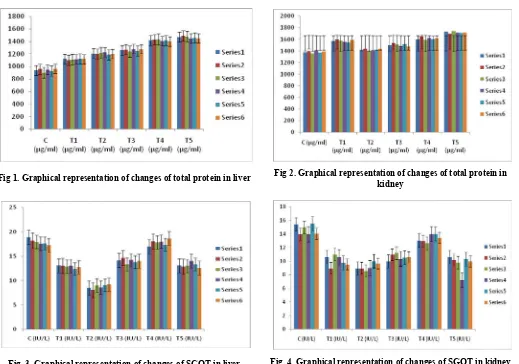
Fig 1. Graphical representation of changes of total protein in liver Fig 2. Graphical representation of changes of total protein in kidney
[image:3.595.308.547.427.566.2]Fig. 3. Graphical representation of changes of SGOT in liver Fig. 4. Graphical representation of changes of SGOT in kidney
Fig. 5. Graphical representation of changes of SGPT in liver Fig. 6. Graphical representation of changes of SGPT in kidney
Fig 7. Graphical representation of changes of catalase activity in liver
Fig 8. Graphical representation of changes of catalase activity in kidney
[image:3.595.38.282.428.563.2] [image:3.595.159.533.602.760.2]Fig 9: Graphical representation of changes alkaline phosphatise in liver
Fig 11. Graphical representation of changes bilirubinlevel in liver
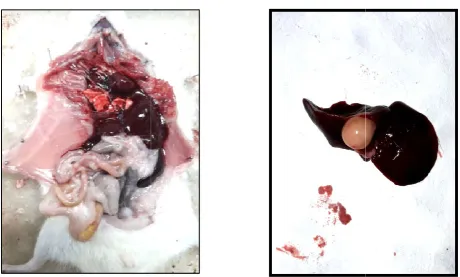
Fig12:Macrophotography of sacrificed rat after 3months feeding of bt cry protein
Fig 9: Graphical representation of changes alkaline phosphatise Fig 10. Graphical representation of changes of alkaline
[image:4.595.64.525.477.754.2]phosphatise level in kidney
Fig 11. Graphical representation of changes bilirubinlevel in liver
Fig12:Macrophotography of sacrificed rat after 3months feeding of Fig. 13 : Observation of cystic appearances in liver tissue after
sacrifie of the treated rats.
Fig 10. Graphical representation of changes of alkaline phosphatise level in kidney
The total protein level differed about ±19.59843, which differs significantly from the control animals (Fig :2).
SGOT level of liver and kidney: Extremely high levels of
AST indicate conditions that cause severe liver damage including the decrease in enzyme levels. The SGOT level
differed about ±1.409016 from the control respectively (Fig 3).
Extreme high levels of SGOT in kidney may degrade the renal reabsorptions in DCT and PCT. The SGOT level of kidney
differed about ±0.361185 from the control animals respectively
(Fig 4).
SGPT level of liver & kidney: Extremely high levels of AST
indicate conditions that cause severe liver damage including the decrease in enzyme levels. The SGPT level differed about
±0.527127 from the control respectively (Fig :5). High or low levels of SGPT or AST denotes less kidney functioning from the normal. In this context the SGPT level of kidney differed
about ±0.746713 from the control animals respectively (Fig 6).
Catalse activity of liver & kidney: The catalase activity of
the liver tissues showed drastic difference. As from the diagram it can be seen the protein exerted crucial effects on the reactive oxygen and nitrogen species generation.
The catalase level differed about ±0.025944 from the control
respectively (Fig 7). Renal antioxidant enzymes can be down-regulated, as well, by certain biological stimuli. Renal antioxidant enzymes undergo postnatal development. Oberley et al demonstrated immunohistochemical localization of catalase in the developing hamster kidney [6]. Here in this context, the catalase activity differed about ±0.001232 from the control animals (Fig 8).
Alkaline phosphatise levels in liver & kidney: The highest
concentrations of ALP are present in the cells that comprise bone and the liver. Elevated levels of ALP in the blood are
most commonly caused by liver disease or bone disorders. The
ALP level differed about ±1.43398, which differs significantly
from the control animals. Abnormal levels of ALP in kidney
indicate malnutrition, kidney cancer tumors, intestinal issues,
a pancreas problem, or a serious infection. Here the level in
ALP differed about ±0.10623 from the control animals
respectively.
6. Bilirubin content of liver: Adults with jaundice generally
have bilirubin levels greater than 2.5 milligrams per deciliter (mg/dL). In an otherwise healthy newborn, bilirubin levels greater than 20 to 25 mg/dL may cause problems.
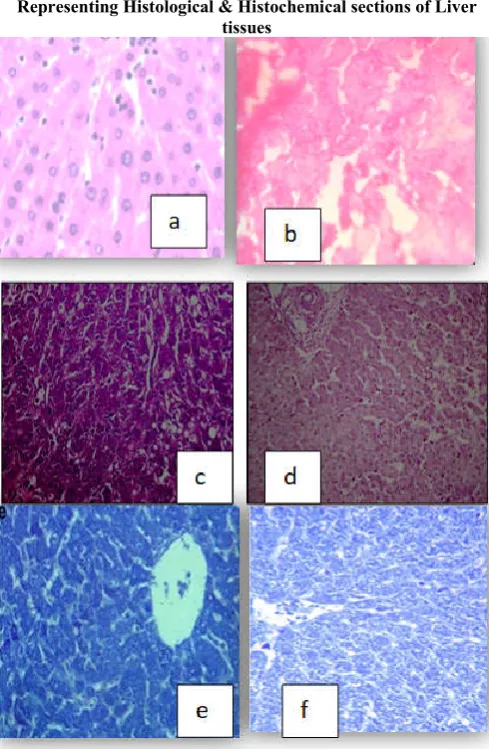
Representing Histological & Histochemical sections of Liver tissues
Representing Histological & Histochemical sections of Kidney tissues
Fig 14. Representing the hematoxyline eosin(a,b) , PAS(c,d) , Bromophenol(e,f) stained histological & histochemicall slides of normal and treated albino rats .“a” , “c” , “e” denotes the normal histology and histochemistry of liver from the control rat whereas “b” denotes the treated rat’s liver histology which shows degenerated cell morphologies of the respective hepatocytes, whereas “d” and “f” denotes the diffrenece in protein and glycogen content respectively of the treated rats
Fig 15. Representing the hematoxyline eosin(a,b) , PAS(c,d) , Bromophenol(e,f) stained histological & histochemicall slides of normal and treated albino rats .“a” , “c”,”e” shows the normal histology and histochemistry of kidney of the control rat whereas “b” denotes the treated rat’s kidney histology which shows degenerated cell morphologies.
[image:5.595.38.283.344.720.2] [image:5.595.309.544.354.723.2]The Bilirubin level differed about ±1.409016, which differs significantly from the control animals.
DISCUSSION
In the histological study the transverse section of both the organs liver and kidney were observed. In case of hematoxylene eosin staining of liver the sections containing cysts were observed under 400X(40*10) magnification. The liver hepatocyte cells observed after the treatment of Bt protein in the H/E staining showed some structural deformities. The kidney sections observed under microscope for Bromophenol blue and PAS staining didn’t show any significant difference. Total protein content was estimated from tissue homogenate mainly for liver & kidney, isolated from control & Bt cry protein treated rat by lowry method, and it was observed increased level of total protein in liver & kidney tissue in Bt fed rat as compared to the control rat. In this study elevated levels of protein content in case liver tissue observed in treated animal as compared to control rat & showing the P value is less than 0.05(P<0.05),indicating there was a significant difference. Further we measured the amount of bilirubin is formed in case of liver tissue. The breakdown of old red blood (RBCs) in the body produces bilirubin, which thus travels to the liver is stored in the bile duct.RBCs have a lifespan of around 120 days & renew continuouslly. In my case Bt cry protein treated rats showing gradual decrease in bilirubin content in case of liver compaired to control group & it gives the P value less than the 0.05,thus it can be concluded that there was a significant difference affecting the normal functioning of liver. The fluctuation observed in values of treated animal may be due to variation of waste product excretion by treated animals.
Poulsen et al. observed that the level of SGOT & SGPT is decreased in case Bt cry protein treated rat compared to the control,so they concluded that Bt cry protein does effect SGOT & SGPT level in case of renal & hepatic tissue. In this study a decreased level of SGOT/AST & SGPT/ALT levels in case of treated rats both liver & kidney represents Bt cry protein does affect the hepatic & renal tissue but causes less damage to it. It was observed that ALP& catalase level in liver does not increase significantly. In my study the statistical analysis of catalase, for both the hepatic & renal tissue, showed the P value less then 0.05.Thus there is a significant difference between the control & treated rats. This catalase activity increased to protect hepatic & renal cells from oxidative stress induced by Bt cry protein ingestion for consecutive 90 days. Thus it can be concluded that Bt cry protein shows some detrimental effects in term of oxidative stress, where as enzyme (ALP) level in hepatic tissue showed insignificant effects.
Conclusion
It can be concluded that, total protein content level increased significantly both in hepatic and renal tissue in Bt cry protein treated rat. But Bt cry protein diet does not affect bilirubin content of hepatic tissue. In addition to this, it was observed that the SGOT & SGPT levels are decreased significantly for both renal and hepatic tissues, and the catalase activity increased significantly showing no damage to the tissues thus protecting the cells from oxidative stress induced by Bt toxin. The ALP level gradually increases in case of renal tissue whereas the ALP levels does not show any significant result
for hepatic tissue. Hence it can be said that the Bt Cry proteins treated here showed some detrimental effects and further work is required to establish its negative effects.
REFERENCES
Apaydin O., Yenidu FA., Harsa S., Guznes H. 2004. Isolation and characterizatio.n of Bacillus thuringiensis strains from different grain habitats in Turkey. World. J. Microbiol. Biotechnol., 21: 285-292.
Bernhard, K., P. Jarrett , M. Meadows, J. Butt, D. J. Ellis, G. M. Roberts, S.Pauli, P. Rodgers, and H. D. Burges, 1997. Natural isolates of Bacillus thuringiensis: worldwide distribution, characterization, and activity against insect pests., Journal of InvertebratePathology, 70, 59-68.
Bradford MM. 1976. A rapid and sensitive method for the quantitation of microgram quantities of protein-dye binding. Anal Biochem., 72:248-254.
8.Cannon RJC. 1996. Bacillus thuringiensis use in agriculture: a molecular perspective. Biol. Rev. Cambridge. Philos. Soc., 71: 561- 636. Crickmore N. 2006.
Beyond the spore - past and future developments of Bacillus thuringiensis as a biopesticide. J. App. Microbiol., 101(3):616–619.
Carr WJ., Oberley-Deegan RE., Zhang Y., Oberley CC., Oberley LW., Dunnwald M. 2011. Antioxidant proteins and reactive oxygen species are decreased in a murine
epidermal side population with stem cell-like
characteristics. Histochemistry and cell biology. Mar 1;135(3):293-304.
Clark CJ., Poulsen JR., Levey DJ., Osenberg CW. 2007. Are plant populations seed limited? A critique and meta-analysis of seed addition experiments. The American Naturalist. May 21;170(1):128-42.
Chowdhury EH., Kuribara H., Hino A., Sultana P., Mikami O., Shimada N., Guruge KS, Saito M, Nakajima Y. Detection of corn intrinsic and recombinant DNA fragments and Cry1Ab protein in the gastrointestinal contents of pigs fed genetically modified corn Bt11. Journal of animal science. 2003 Oct 1;81(10):2546-51.
Eswarapriya B. et al. 2010. Insecticidal Activity of Bacillus thuringiensis IBT- 15Strain against Plutella xylostella. Int.J. PharmTech Res.Vol.2, No.3, pp 2048-2053, July-Sept 2010
Frachon. E. and Frachon, T. 1997. Identification, isolation, culture and presevation of entamopathogenic bacteria., in Biological Techniques, Manual of Techniques in Insect Pathology, edited by Lawrence H. Lacey, (Academic Press), 55-72.
Ghelardi E, Celandroni F, Salvetti S, Fiscarelli E, Senesi S 2007. Bacillus thuringiensis: Pulmonary infection, critical role for bacterial membrane-damaging toxins and host neutrophils. Microb. Infect., 9(5): 591-598
Glazer, A. N. and H. Nikaido, 1995. "Microbial insecticides", in Microbial Biotechnology Fundamentals of Applied Microbiology, (W.H. Freeman and Company, New York,), p. 209-229.
H and E Part One: History, Background and Solution, Martin Wilson
Hendriksen NB. and Hansen BM. 2006. Detection of Bacillus thuringiensis kurstaki HD1 on cabbage for human consumption. Fed. Eur. Microbiol. Soc., 257:106-111. Kaur S. 2006. Molecular approaches for identification and
construction of novel insecticidal genes for crop protection.
Kitnamorti T., X Rathinam and S Subramaniam, 2011. Novel isolation and characterization techniques for Bacillus thuringiensis strains from the cabbage growing area in
Cameron Highlands Malaysia. African Journal of
Microbiology Research, Vol. 5(20), pp. 3343-3350
Konecka E., Kaznowski A., Ziemnicka J., Ziemnicki K. 2006. Molecular and phenotypic characterization of Bacillus thuringiensis isolated during epizootics in Cydra pomonella
L., J. Inverteb. Pathol., 94: 56- 63.
Roh JY., Choi JY., Li MS., Jin BR., Je YH. 2007. Bacillus thuringiensis as a specific, safe, and effective tool for insect pest control. Journal of microbiology and biotechnology. pr 1;17(4):547.
Swiatkiewicz S., Koreleski J. 2009. Effect of crude glycerin level in the diet of laying hens on egg performance and nutrient utilization. Poultry Science. Mar 1;88(3):615-9. Technical Bulletin from CICR (www.cicr.org.in)
Zhang J., Chen R., Yu Z., Xue L. 2017. Superoxide dismutase (SOD) and catalase (CAT) activity assay protocols for caenorhabditis elegans. Bio-protocol. Aug 20;7:e2505. Vijayaraghavan MR., Kumra S., Sujata V. 1987. Ontogeny and
histochemistry of anther wall inSaxifraga ciliata Lindl. Proceedings: Plant Sciences. Aug 1;97(4):301-7.
6873 International Journal of Current Research, Vol. 11, Issue, 09, pp.6867-6873, September, 2019