Effect of Holistic Module of Yoga and Ayurvedic
Panchakarma in Type 2 Diabetes Mellitus—A Pilot Study
Barve Vaibhavi, Tripathi Satyam, Patra Sanjibkumar, Nagarathna Raghuram, Nagendra H.Ramarao Division of Life Sciences, SVYASA, Swami Vivekananda Yoga Anusandhana Samsthana, Bangalore, India
Email: [email protected]
Received November 24, 2012; revised December 26, 2012; accepted January 28, 2013
ABSTRACT
Objective: Ayurveda and Yoga have emerged as beneficial adjuvant in management of diabetes. This pilot study was planned to understand the concepts and assess the effect of a combination of Ayurvedic panchakarmaand Yoga. Design:
Experimental pilot study with pre post design. Subjects: Twelve patients with type 2 diabetes in age between 40 - 70 years (mean 56 ± 9.08) with no cardiac, renal or retinal complications. Settings: Residential Holistic Health Centre of
S-VYASA. Intervention: A validated Ayurveda protocol comprising of panchakarma followed by maintenance the-
rapy with a specific module of Integrated Approach of Yoga Therapy for Diabetes that included selected physical pos-
tures (asanas), pranayama, meditation, lifestyle change and yogic counseling for stress management. All subjects un-
derwent a residential program for six weeks followed by therapy at home for 12 weeks. Results were analyzed using paired “t” test. Results: After 6 weeks, Fasting Blood Glucose reduced (p < 0.05) from 129.31 ± 58.11 to 103.54 ± 40.74 (19.93%), Post Prandial Blood Glucose from 191.69 ± 76.77 to 152.92 ± 62.06 (20.23%, p < 0.05), Total choles- terol from 209 ± 33.7 to 186.92 ± 23.36 (10.56%, p < 0.05), Triglycerides from 198.25 ± 94.78 to 151.25 ± 43.65 (23.71%, p < 0.05), HbA1c reduced (p = 0.014) from 8.79 ± 2.12 to 8.07 ± 1.77 (8.19%) in 6th week and further to 7.63
± 2.12 (13.19%, p = 0.001) after 12th week. Oral Hypoglycemic Agent (OHA) drug score reduced from 2.83 ± 0.93 to 1
± 1.27 (64.66%, p < 0.001). Symptom score reduced from 2.83 ± 1.02 to 1.66 ± 0.65 (p < 0.001). At baseline guna questionnaire showed six subjects each with rajas and tamas dominance. On post assessments, two subjects shifted from tamas to rajas dominance. Conclusion: This first pilot study has indication of a potentially beneficial effect of combin-
ing traditionally recommended Ayurvedapanchakarmawith maintenance herbsandYoga, in reducing blood glucose
and lipids. Long term RCT is recommended.
Keywords: Ayurveda; Yoga; Diabetes
1. Introduction
Diabetes mellitus imposes a sizeable burden globally in terms of early mortality, morbidity, and health care costs. The incidence of diabetes worldwide was likely to be 2.8% in 2000 and expected to rise to 4.4% by 2030, and above three-quarters of people with diabetes would be living in developing countries [1]. Diabetes mellitus (madhumeha) was known to ancient Indian physicians with detailed description of its clinical features and
management protocols [2].Ayurveda is a comprehensive
system of traditional health care, which originated in Indiaapproximately three thousand years ago. Its unique holistic approach appears to have become relevant today due to the increasing prevalence of non communicable diseases. This science of life deals with body, mind, and spirit as a single entity with clear understanding of the techniques of managing them. Ancient Ayurveda classics by Charaka, Sushruta, and Vagbhata contain ample literature about Prameha and its treatment. Prameha is a
metabolic disorder and is diagnosed mainly with the help of signs and symptoms related to “Mutra” (Urine). Genetic predisposition with sedentary life style, inju- dicious intake of food, and stress are recognized as some of the important etiological factors of Prameha, [3]. The diagnosis and management of diabetes (madhumeha) is based on tridosa (bodily humor) theory which says that kapha (phlegm), pitta (bile) and vata (wind) are the basic pillars of life [4]; balanced functioning of these tridosas is health and imbalance is disease [5]. A disturbance in the doshas precedes the genesis of various pathological states which results to 20 types of Prameha where finally diabetes (madhumeha) is one of the chronic type of Prameha. Thus, the primary aim in prevention, diagnosis and treatment of a disease is to detect the degree of vitiation in these doshas.
Blood Glucose (FBG, PPBG) levels and lipids [6-8]. A study by Ahmed et al. that treated diabetic rats with the fruit juice of Momordia charantia has reported rege- neration or increase in the number of beta cells [9], which appears to offer some evidence to the additional benefits of Ayurveda because none of the conventional Oral Hypoglycemic Agents (OHA) exhibit this property. Momordia charantia also has exhibited extra-pancreatic effects with improved peripheral glucose utilization [10]. Recent studies [11,12] have described the role of a few herbs like Trigonella foenum graecum and Tinospora cordifolia on activities of enzymes involved in carbo- hydrate and lipid metabolism. In animal based studies, herbs like Curcuma longa have shown reduction in dyslipidemia in diabetics [13] through its effect on lipid peroxidation [14].
Ayurveda being a holistic science, it has to be pra- cticed as a whole science including several steps of management and cannot be given only as one capsule of a proven herbal preparation. Hence it was necessary to review the classical texts and compile them to present a holistic management protocol in the form of flow chart with different steps, which was finally done and sent for validation from various Ayurveda experts [15].
Yoga is also one of the modalities in Complimentary and Alternative Medicine (CAM) which is an integral
part of Ayurveda (mentioned in classical texts) [16].
Yoga is found to be very effective as a complimentary treatment for type 2 diabetes in several studies [17-19]. Studies have demonstrated significant reduction in FBG, PPBG [20-22] Glycosylated Haemoglobin (HbA1c) [22], improvement in nerve functions [22], reduction in oral glycemic agents [23] and Body Mass Index (BMI) [24] after the practice of Yoga.
Multiple factors involved in the pathogenesis of diabetes demands a multi-modal remedial approach [25]. Although there are many studies that reveal the efficacy of CAM modalities, there are very few studies which report the efficacy of these modalities when used together. Since there are ample evidences that Ayurveda can be a potential complimentary therapy for diabetes [6-8], it would be worthwhile to test its efficacy when combined with Yoga, which is also one of the CAM modalities having large number evidence based studies supporting its effect in type 2 diabetes.
Hence this pilot study was planned with an intention of assessing the feasibility and safety of this residential Ayurveda and Yoga therapy before launching a con- trolled study on a larger population.
2. Materials and Methods
2.1. Subjects
Twelve (n = 12) subjects (7 female, 5 male) in age range
of 40 - 70 years (mean 56 ± 9.08) with Type 2 Diabetes Mellitus (T2DM) were recruited for the study. The sample size was calculated based on an effect size (Cohen’s effect size, ε= 2.45) obtained from a previous study of changes following the practices of Yoga in DM patients [16]. It was calculated using G*Power software, Version 3.0.10, where the level was 0.05 and power = 0.95 and the recommended sample size was twelve. Thus, a sample size of twelve was recruited for the present study. Subjects who satisfied the American Diabetes Association (ADA) criteria for T2DM [26],not practicing Yoga for at least previous three months and willing to participate in the trial were included. Those with cardiac complications and nephropathy were excluded after checking ECG, FBG, blood urea, and creatinin. Those with proliferative retinopathy (screened by an ophthalmologist) and had practiced Yoga in the recent past (three months) were also excluded. Ethical clearance was obtained from institutional ethical committee. Signed informed consent was obtained from all subjects.
2.2. Design
This was an experimental pilot study with a pre post design in a single group.
2.3. Methods
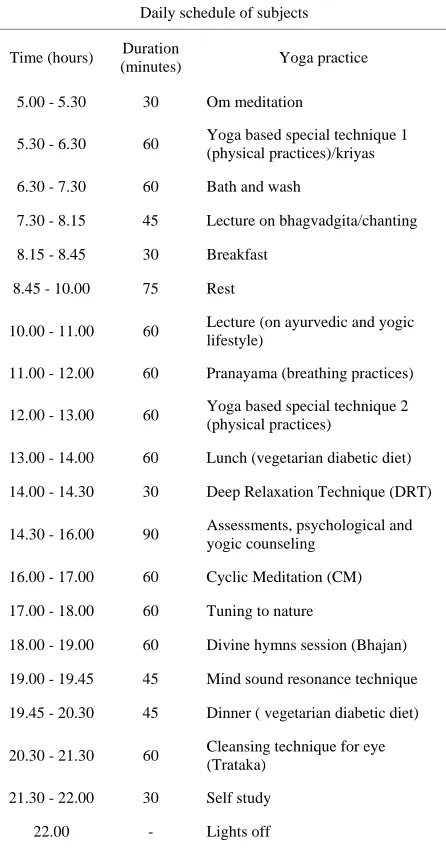
All subjects went through a daily routine (Table 1) that included Integrated Approach of Yoga Therapy for Diabetes (IAYTD) along with a progressive plan of panchakarma (purificatory therapy) and maintenance herbs.
The protocol had the flexibility for changes in medica- tion or Yoga practices based on their daily response as-
sessments. After admission, first week was planned for
stabilization of the baseline parameters without any in- tervention. The fasting (12-hr) blood sample was ob- tained via a veni-puncture in the arm with the individual in an upright position and after at least 5 min in a resting state. Supervised intervention with strict adherence to the schedule was followed from the beginning of second to end of fifth week. The clinical progress was monitored daily by one Ayurveda and one allopathic physician; therapies were carried out by certified therapists and documentation was done by the research team. The sub-
jects were monitored daily for symptomsscores, medica-
Table 1. Ayurveda protocol.
Ayurveda protocol
Treatment plan Drugs used in treatment plan
with their dosage and time
Appetizer, digestive drugs (Deepana/Paachan) for 3 - 7 days
Trikatu churna [27] 2 gms twice daily before food
Internal oleation for 3 - 7 days (Snehapaan)
Sarshapa tail [28]
30ml/60ml/90ml in increasing dose
External oleation with sudation (Abhyanga/Swedan) for 3 days
Brihat saindhavadi Taila [29] (external application)
Purgation (Virechan) 1 day Trivrit lehyam [30] 30 - 60 gms
Post purgation diet restrictions
(Samsarjana/Krama ) for 3 - 5 days
-
Palliative therapy (Shamana) to be continued
Kathakhadiradi kashaya [31] 15 ml twice daily. Amritmehari churna [32] 2 gms twice daily. Shilajatwadi vati [33] 2 tabs thrice daily
practice was monitored up to 12 weeks by regular moti-vating phone calls. HbA1c was assessed at the end of twelfth week.
2.4. Intervention
A validatedAyurveda protocol developed on the basis of
classical scriptural references was used which included
panchakarma followed by maintenance medication (Ta-
ble 2). Along with Ayurveda protocol, the module of Integrated Approach of Yoga Therapy (IAYTD) for dia- betes comprised of Yogasanas, Pranayama, meditation and lectures as used in our two earlier studies in India [23,34] and UK [17](Table 3).
2.5. Outcome Measures
[image:3.595.311.534.104.528.2]Ama, agni and kostha were assessed at baseline using a check list prepared for the purpose of this study based on guidelines in classical texts.Agni was scored on a three point scale 1 = mandagni(less digestive capacity), 2 = mad- hyagni (medium digestive capacity) and 3 = pravaragni (more digestive capacity). The end point of the cleansing procedure was considered to be when ama score reached a balanced score of 1. Koshta (colonic sensitivity) was assessed based on seven questions with three response choices. A total score of 1 to 7 indicates mrudu koshta (more colonic sensitivity), 8 to 18 madhyam koshta (me- dium colonic sensitivity) and 19 to 21 krura koshta(less co- lonic sensitivity). These assessments were done at baseline and daily for assessing the effect of panchakarma procedure.
Table 2. Daily schedule of subjects.
Daily schedule of subjects
Time (hours) Duration
(minutes) Yoga practice
5.00 - 5.30 30 Om meditation
5.30 - 6.30 60 Yoga based special technique 1 (physical practices)/kriyas
6.30 - 7.30 60 Bath and wash
7.30 - 8.15 45 Lecture on bhagvadgita/chanting
8.15 - 8.45 30 Breakfast
8.45 - 10.00 75 Rest
10.00 - 11.00 60 Lecture (on ayurvedic and yogic
lifestyle)
11.00 - 12.00 60 Pranayama (breathing practices)
12.00 - 13.00 60 Yoga based special technique 2
(physical practices)
13.00 - 14.00 60 Lunch (vegetarian diabetic diet)
14.00 - 14.30 30 Deep Relaxation Technique (DRT)
14.30 - 16.00 90 Assessments, psychological and
yogic counseling
16.00 - 17.00 60 Cyclic Meditation (CM)
17.00 - 18.00 60 Tuning to nature
18.00 - 19.00 60 Divine hymns session (Bhajan)
19.00 - 19.45 45 Mind sound resonance technique
19.45 - 20.30 45 Dinner ( vegetarian diabetic diet)
20.30 - 21.30 60 Cleansing technique for eye
(Trataka)
21.30 - 22.00 30 Self study
22.00 - Lights off
2.5.1. Symptom Score
The average severity of all symptoms documented before and after the 6 weeks was recorded. Severity was scored on a 4-point scale of 0 - 3 (0 = nil, 1-mild not disturbing the daily routine, 2 = moderate-disturbs routine requires symptomatic medication, 3 = severe-require hospital- ization or parenteral medication).
2.5.2. Medication Score
Number of tables of Oral Hypoglycemic Agent (OHA)/day; 1 tablet = the standard strength each for adults quoted in pharmacopeia index e.g. one tablet of Metformin = 500 mg.
2.5.3. Guna Assessment
The G-Inventory [35](GI) assessed the shift of guna
Table 3 Demographic details of the subject
Sub no. Name Age
(years)
Sex (M/F)
Duration of DM in years
**Family H/O
DM
Creatinine (mg/dl)
Urea
(mg/dl) Agni Ama Kostha
1 SS 69 M 03 N 1.3 30.8 1 3 19
2 AS 48 F 5.5 N 0.78 29.4 3 3 9
3 MG 55 M 12 N 0.90 30.3 1 3 9
4 R 68 F 08 N 0.7 28 1 3 12
5 H 56 F 15 F 0.86 34.2 1 3 8
6 TC 49 F 14 M/B 0.85 18.6 3 2 9
7 BS 50 F 16 B/S 0.86 21.7 1 3 7
8 AS 40 M 04 B 0.72 22.8 1 3 18
9 Hu 52 M 07 N 0.8 39.5 2 3 19
10 A 61 F 11 S 1.0 20.0 1 3 11
11 S 63 F 25 GF 1.0 23.0 2 2 13
12 D 66 M 9 B 1.2 19.0 1 3 7
**
F—Father, M—Mother, B—Brother, S—Sister, GF—Grandfather, GM—Grandmother, N—Nil history.
three gunas (sattva, rajas and tamas) and contains ten questions with three response choices. A total score of above 28 indicates sattva, 24 to 28 rajas and <24 tamas. This test has a test retest reliability of 0.60 with a confi-
dence level of 99% and has been validated.Biochemical
parameters: these included Fasting (FBG) and Post Pran- dial Blood Glucose (PPBG), HbA1c and lipid profile determined at baseline and at the end of 6th week. HbA1c
was repeated at end of 12th week. A semi-auto analyzer
was used for the biochemical measurements. Blood Glu- cose was determined by enzymatic oxidation method using glucose peroxidase [36]. HbA1c was estimated by glucose oxidase method and cation-exchange resin me-
thod [37].Cholesterol was determined after enzymatic
hydrolysis and oxidation [38]. Triglycerides were deter- mined after enzymatic splitting with lipoprotein lipase. Indicator for the same was generated from 4-aminoanti- pyrine and 4-chlorophenol by hydrogen peroxide under the catalytic action of peroxidase. LDL-VLDL Choles- terol was determined by using Friedewald’s equation [39].
3. Statistical Analysis
Data were analyzed using SPSS version 16.0; checked for normal distribution by Shapiro Wilk’s test. As the data were normally distributed for all variables student’s paired samples “t” test was used with a significance value set at 0.05 for two-sided hypothesis testing.
4. Results
Table 3 gives the demographic characteristics of subjects.
The mean age was 56 ± 9.08 years. None had cardiac, renal or retinal complications. There were no drop outs in this study. At baseline, 2 subjects had madhyam ama and 10 had pravara ama, while 10 subjects had manda agni and 2 had madhyam agni and 3 subjects had mrudu kostha, 7 had madhyam kostha and 2 had krura kostha.
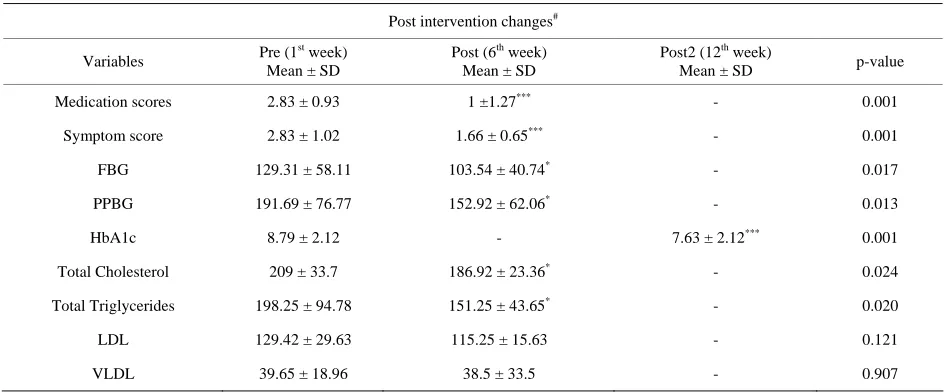
Table 4 shows the results after the intervention.
After 6 weeks of intervention, the symptom score re- duced from 2.83 ± 1.02 to 1.66 ± 0.65 (p < 0.001). OHA score reduced (p < 0.001) from 2.83 ± 0.93 to 1 ± 1.27 (64.66%). FBG reduced (p < 0.05) from 129.31 ± 58.11 to 103.54 ± 40.74 (19.93%). PPBG decreased from 191.69 ± 76.77 to 152.92 ± 62.06 (20.23%, p < 0.05). HbA1c reduced (p = 0.014) from 8.79 ± 2.12 to 8.07±
1.77 (8.19%) in 6th week. It reduced further to 7.63 ±
2.12 (13.19%, p = 0.001) after 12th week. At baseline
guna questionnaire showed 6 subjects each with rajas and tamas dominance. On post assessments, two subjects shifted from tamas to rajas dominance. All of them had balanced functioning of agni, ama and kostha at the end of 6 weeks.
Lipid profile: Total Cholesterol decreased significantly (p < 0.05) from 209 ± 33.7 to 186.92 ± 23.36 (10.56%). Triglycerides reduced (p < 0.05) from 198.25 ± 94.78 to 151.25 ± 43.65 (23.71%). There was non-significant reduction in the levels of LDL, VLDL and HDL.
5. Discussion
Table 4. Results after the intervention.
Post intervention changes#
Variables Pre (1
st week)
Mean ± SD
Post (6th week)
Mean ± SD
Post2 (12th week)
Mean ± SD p-value
Medication scores 2.83 ± 0.93 1 ±1.27*** - 0.001
Symptom score 2.83 ± 1.02 1.66 ± 0.65*** - 0.001
FBG 129.31 ± 58.11 103.54 ± 40.74* - 0.017
PPBG 191.69 ± 76.77 152.92 ± 62.06* - 0.013
HbA1c 8.79 ± 2.12 - 7.63 ± 2.12*** 0.001
Total Cholesterol 209 ± 33.7 186.92 ± 23.36* - 0.024
Total Triglycerides 198.25 ± 94.78 151.25 ± 43.65* - 0.020
LDL 129.42 ± 29.63 115.25 ± 15.63 - 0.121
VLDL 39.65 ± 18.96 38.5 ± 33.5 - 0.907
*
p < 0.05, **p < 0.01, ***p < 0.001, baseline data compared with the post data using a paired “t” test. Fasting Blood Glucose (FBG), Post Prandial Blood Glu- cose (PPBG), Glycosylated Hemoglobin (HbA1c), Total Cholesterol (TC), Total Triglycerides (TG), Low Density Lipoprotein (LDL), Very Low Density
Lipoprotein (VLDL). #Note: These significant values stated are based on single group pre comparison to post. There is no control group which is an imita-
tion of this study and that can also effect p-values when compared with control groups in main efficacy study.
medication and balanced functioning of agni, ama and kostha after six weeks of residential intervention using Yoga and Ayurveda.
5.1. Comparisons
To the best of our knowledge, there are no studies which report the effect of a combination of Yoga and Ayurveda (panchakarma and maintenance therapy) although there are studies on these two therapeutic modalities used independently in comparison to conventional medicine.
Kumari et al. [8]. Assessed the effect of panchakarma
followed by maintenance ayurvedic herbal therapy in forty two subjects with T2DM, which showed significant reduction in FBG and PPBG by 10.2% and 6.4% respectively after one month of intervention. In one of our earlier Yoga studies we had observed a decrease in FBG and HbA1c by 6.9% and 15.5% after an integrated
Yoga protocol in a control study on diabetics inLondon
[17]. Sahay et al. showed that Yoga was effective in
reducing TC (by 0.47%) and TG (by 18.03%) [25].In
comparison, the present study has shown reduction in mean values of FBG (19.9%), PPBG (20.2%), HbA1c (13.2%), TC (10.6%), and TG (23.7%). These values (except HbA1c) showed higher magnitude of change than the independent Yoga or Ayurveda studies. There are other studies on Ayurveda in T2DM that have shown
encouraging results. Elder et al. randomized 60 adults
with newly diagnosed T2DM (baseline HbA1c of 6.0 to 8.0) into experimental and control groups. The Ayurveda protocol included Ayurvedic diet, meditation and Ayurvedic herbal supplement (MA 471). The results
showed significant difference between groups (ANCOVA) in HbA1c, FBG, TC, LDL and body weight in those who
had higher baseline HbA1c [6]. Saxena and Vikram
reviewed the accumulated literature on ten herbs with antidiabetic activity and reported that momordica charantia, pterocarpus marsupium and trigonella foenum greacum have beneficial effects in treating T2DM [40]. The results of many other studies on Yoga are also consistent with the outcomes of present study [17]. Yoga nidra (a form of guided relaxation) resulted in decreased FBG, PPBG, in patients with T2DM [41]. Looking at
cardiac functions Singh et al. showed that training in
Yogaasanas for forty days in 24 T2DM decreased their
pulse rate, blood pressure, and Corrected QT interval in addition to decrease in FBG (25.5%), PPBG (27.03%)
and HbA1c (13.3%) [42]. A randomized control study
that used Nadishodhana Pranayama and Sun Salutation for 5 weeks in twenty T2DM has shown significant decrease in plasma glucose, serum cortisol and serum Malone-Di-Aldehyde (MDA) levels and a significant increase in serum Super Oxide Dismutase (SOD) activity, more prominently in those who has poor glycemic control [43].
5.2. Mechanism
inflammation[46] resulting in insulin resistance which in turn is responsible for the biochemical changes and the clinical manifestations. Thus, the benefits may be traced to reduction in oxidative stress mediators, modified HPA axis [47], reduction in adipoleptin [48], and pro-inflam- matory cytokines [49] that are known to induce IR. The mechanism described by Yoga and Ayurveda offers a different model of understanding T2DM. Accordingly, diabetes is the effect of erratic life style that has resulted from lack of mastery over the mind and wrong notion about the meaning and purpose of life (prajnaparadha).
The flow chart in Table 5 shows the pathogenesis of
T2DM. Yoga masters proposed that the human system is made of five levels of subtle bodies [annamaya (physi- cal), pranamaya (vital energy), manomaya (mental), vij- nanamaya (intellectual) and anandamaya (bliss) kosas]
[50].Three gunas (satva, rajas and tamas) that grossify
into three doshas (vata, pitta and kapha) constitute the physical body (annamaya kosha). Man is in best of health when there is a balanced functioning of the tridosas which is possible when the mind is in a state of satva (freedom from stress) and established in anandamaya kosha. T2DM, madhumeha [8]is a tridoshaja vyadhi, i.e. there is vitiation of all three dosas which is preceded by imbalance of the three gunas [dominance of tamas and/or rajas]. T2DM, a life style disease (samanya adhija vya- dhi), begins in manomaya kosha. This is due to lack of right knowledge (a function of vijnanamaya kosha) that “I am made of happiness and freedom from all thoughts”. This leads to craving for happiness from outside objects (wealth and fame). Long standing stresses (due to unsat- isfied desires) leads to sleeplessness, irritability, indeci- siveness, depression, and/or frustration (violent negative emotions). The long standing suppressed emotions are characterized by uncontrolled rewinding of thoughts in the mind (yogic definition of stress).This habituated un- controlled speed percolates in to the pranamaya kosha and drains large quantities of prana leading to early aging (DM is an aging disease). This uncontrolled habituated speed results in an imbalance that further settles down in the physical body as structural damage (inflammation = speed at annamaya kosha). This descent (prasava) from a balanced state of functioning of the mind-body complex results in an imbalance of the three doshas. Caraka, the father of Ayurveda, describes T2DM as a disease char- acterized by covering (avarana) of excess kapha over vata that leads to obstruction in the harmonious move- ment of vata, and this obstructed/restricted movement in turn leads to stagnation and unavailability of pitta that is responsible for healthy metabolic processes in tissues. In addition, the obstructed vata gets aggravated and gets vitiated further [51]. Thus, T2DM begins with wrong life style due to adnyana (pragnaparadha) that leads to kapha
dosha or tamo guna pradhanaka vihara and ahara (seden-tary life- style, day time sleeping, excessive intake of fermented foods, oily foods, excess sweets and meat). This domi- nance of kapha results in agnimandya (im-proper func- tioning of digestive fire). This goes on to produce excess ama (endotoxins) which blocks the channels (srotas) thus preventing the balanced flow of vata. The vitiated kapha circulates throughout the body resulting in dhatwagni mandya (poor functioning of di-gestive fire at tissue level). It affects the dushya struc-tures, the dhatus (tissues). Adipose tissue (medas) is the first dushya to be affected. Then it goes on to affect all other structures of the body including muscular tissue (mansa), intracellular and extra cellular fluids (kleda), vasa (muscle fat), shukra (semen), rakta (blood), majja (marrow tissue), rasa (blood plasma), lasika (fluids & plasma) and ojas (vital substance that maintains immu-nity). Mutravaha srotas is the main channel to be affected that leads to madhumeha [52].
The holistic module of management of T2DM is based on measurement of the status of guna, the genetic per-sonality type (prakrti), the present state of imbalance of the doshas (vikrti), the status of dushya, srotas, agni and ama at all stages of therapy.
Table 5. Pathophysiology and management of Type 2 Diabetes Mellitus according to Ayurveda, Yoga and biomedicine.
Pathophysiology according to Ayurveda and Yoga [53]
Reversing Pathophysiology Ayurveda
and Yoga[54]
Pathophysiology according to modern [46]
Reversing the Pathophysiology
modern [46]
correct the dosha imbalance and clear the subtle channels
through medication, asanas and pranayama forms the
basis of this integrated Yoga and Ayurveda model used in this program. Long term regular monitoring is neces-sary to prevent return of the imbalance that is genetically determined in T2DM. This is ensured by lifelong regular IAYT and medication.
6. Strength of the Study
This is the first attempt to test the efficacy of multi mo- dalities of CAM in a residential setting using standard tools of assessment. The development of an integrated module by an exhaustive search of all available texts of Ayurveda and Yoga (16 texts) with a sound conceptual basis for the holistic approach is the major contribution of this study. Rendering the traditional knowledge in an acceptable capsule for the present day elite community of diabetics has been achieved by this pilot study.
7. Limitations of the Study
Sample size was small and no control group was planned. There is lack of a control group using either of Yoga and Ayurveda, the comparison with other single method study is not very valid. As this was a pilot study and not
an efficacy trial the conclusions from the study are only pointers to a larger study and not a proof of concept.
8. Implications and Suggestions for Future
Work
The Yoga and Ayurveda model of etio-pathogenesis of T2DM based on the concepts of imbalance of gunas and doshas offers an opening to subtler dimensions Holistic way of understanding of this disease and may bring about a paradigm shift in diabetes research. This pilot study has prepared the ground for a four armed control study that has been funded by dept. of AYUSH, ministry of health and family welfare, Govt. of Karnataka, India. Statisti-cally acceptable sample sizes, with a battery of assess-ment of the cognitive functions (subjective and objective), autonomic functions along with biochemical, molecular, genetic, immunological variables has been included in the proposed project.
9. Conclusion
Oral Hypoglycemic Agents in patients with T2DM. This has prepared the ground for an efficacy trial.
10. Acknowledgements
We thank the faculty of Susruta Ayurveda College, Ban- galore for their help in preparing the module of Ayurveda protocol. We thank the therapists of S-VYASA for their support in carrying out the study. We thank Dr. Pradhan B. for his support with statistics and Dr. Haldavnekar R. for her continuous support during the study.
REFERENCES
[1] S. Wild, G. Roglic, A. Green, R. Sicree and H. King, “Global Prevalence of Diabetes: Estimates for the Year 2000 and Projections for 2030,” Diabetes Care, Vol. 27, No. 5, 2004, pp. 1047-1053.
doi:10.2337/diacare.27.5.1047
[2] V. P. Upadhyay and P. Kamla, “Ayurvedic Approach to Diabetes Mellitus and Its Management by Indiginous Re- sources,” In: J. S. Bajaj, Eds., Diabetes Mellitus in Deve- loping Countries, Interprint, New Delhi, 1984, pp. 375-377. [3] B. Tripathi, “Sarangadhara Samhita of Sharangadhara- charya,” In: Chaukhamba Surbharati Prakashana, Vara-nasi, 2010, p. 101.
[4] G. K. Garde, “Sartha Vaghbhata,” In: Sutrasthana 6th Verse, Raghuvamshi Publishers, Pune, 1996, p. 2. [5] G. K. Garde, “Sartha Vaghbhata,” In: Sutrasthana 7th
Verse, Raghuvamshi Publishers, Pune, 1996, p. 2. [6] C. Elder, M. Aickin, V. Bauer, J. Cairns and N. Vuckovic,
“Randomized Trial of a Whole-System Ayurvedic Proto- col for Type 2 Diabetes,” Alternative Therapies in Health and Medicine, Vol. 12, No. 5, 2006, pp. 24-30.
[7] T. Ila, H. M. Chandola and J. R. Joshi, “Clinical Efficacy of Mehamudgara Vati in Type 2 Diabetes Mellitus,” Ayu, Vol. 32, No. 1, 2011, pp. 30-39.
doi:10.4103/0974-8520.85722
[8] J. Kumari, C. S. Mehta, V. D. Shukla, A. R. Dave and T. M. Shingala, “A Comparative Clinical Study of Nya- grodhadi Ghanavati and Virechana Karma in the Mana- gement of Madhumeha,” Ayu, Vol. 31, 2010, pp. 300-304. doi:10.4103/0974-8520.77152
[9] I. Ahmed, I. Chandranath, A. K. Sharma, E. Adeghate, D. J. Pallot and J. Singh, “Mechanism of Hypoglycemic Ac- tion of Momordica Charantia Fruit Juice in Normal and Diabetic Rats,” The Journal of Physiology, Vol. 520, 1999.
[10] I. Ahmed, E. Adeghate, A. K. Sharma, D. J. Pallot and J. Singh, “Effects of Momordica CharantiaFruit Juice on Islet Morphology in the Pancreas of the Streptozotocin- Diabetic rats,” Diabetes Research and Clinical Practice, Vol. 40, No. 3, 1998, pp. 145-151.
doi:10.1016/S0168-8227(98)00022-9
[11] J. Raju, D. Gupta, A. R. Rao, P. K. Yadava and N. Z. Baquer, “Trigonella Foenum Graecum (Fenugreek) Seed Powder Improves Glucose Homeostasis in Alloxan Dia- betic Rat Tissues by Reversing the Altered Glycolytic, Gluconeogenic and Lipogenic Enzymes,” Molecular and
Cellular Biochemistry, Vol. 224, No. 1-2, 2001, pp. 45-51. doi:10.1023/A:1011974630828
[12] P. Stanely, M. Prince and V. P. Menon, “Hypoglycemic and Other Related Actions of Tinospora Cordifolia Roots in Alloxan-Induced Diabetic Rats,” Journal of Ethno- pharmacology, Vol. 70, No. 1, 2000, pp. 9-15.
doi:10.1016/S0378-8741(99)00136-1
[13] A. C. Reddy and B. R. Lokesh, “Studies on Spice Princi- ples as Antioxidants in the Inhibition of Lipid Peroxida- tion of Rat Liver Microsomes,” Molecular and Cellular Biochemistry, Vol. 111, No. 1-2, 1992, pp.117-124. [14] PS. Babu and K. Srinivasan, “Hypolipidemic Action of
Curcumin, the Active Principle of Turmeric (Curcuma Longa) in STZ Induced Diabetic Rats,” Molecular and Cellular Biochemistry, Vol. 166, No. 1-2, 1997, pp. 169- 175. doi:10.1023/A:1006819605211
[15] S. Tripathi, R. Nagarathna, H. R. Nagendra, “Validation of an Integrated Ayurveda-Yoga Module for Residential Treatment of Patients with Type 2 Diabetes Mellitus—A Compilation from Traditional Literature,” International Journal of Applied Mechanics, Vol. 2, No. 5, 2012, pp. 921-934.
[16] G. K. Garde, “Sartha Vaghbhata,” In: Sutrasthana, Rag- huvamshi Publishers, Pune, 1996, p. 8.
[17] R. Monro, J. Powar, R. Nagarathna and P. Dandona, “Yoga Therapy for NIDDM—A Control Trial,” Journal of Complementary Medicine Research, Vol. 6, No. 2, 1992, pp. 66-68.
[18] S. V. Hegde, P. Adhikari, S. Kotian, V. J. Pinto, S. D’ Souza and V. D’Souza, “Effect of 3-Month Yoga on Oxi- dative Stress in Type 2 Diabetes with or without Compli- cations: A Controlled Clinical Trial,” Diabetes Care, Vol. 34, No. 10, 2011, pp. 2208-2010.
[19] R. K. Yadav, R. B. Ray, R. Vempati and R. L. Bijlani, “Effect of a Comprehensive Yoga-Based Lifestyle. Modi- fication Program on Lipid Peroxidation,” Indian Journal of Physiology and Pharmacology, Vol. 49, No. 3, 2005, pp. 358-362.
[20] V. Malhotra, S. Singh, O. P. Tandon and S. B. Sharma, “The Beneficial Effect of Yoga in Diabetes,” Nepal Medical College, Vol. 7, No. 2, 2005, pp. 145-147. [21] S. Singh, V. Malhotra, K. P. Singh, S. V. Madhu and O. P.
Tandon, “Role of Yoga in Modifying Certain Cardiovas- cular Functions in Type 2 Diabetic Patients,” Journal of the Association of Physicians of India, Vol. 52, 2004, pp. 203-206.
[22] V. Malhotra, S. Singh, O. P. Tandon, S. V. Madhu, A. Prasad and S. B. Sharma, “Effect of Yogasanas on Nerve Conduction in Type 2 Diabetes,” Indian Journal of Physiology and Pharmacology, Vol. 46, No. 3, 2002, pp. 298-306.
[23] S. C. Jain, A. Uppal, S. O. Bhatnagar and B. Talukdar, “A Study of Response Pattern of Noninsulin Dependent Diabetics to Yoga Therapy,” Diabetes Research and Clinical Practice, Vol. 19, No. 1, 1993, pp. 69-74. doi:10.1016/0168-8227(93)90146-V
Meta-bolic Syndrome and Related Disorders, Vol. 7, No. 6, 2009, pp. 515-517. doi:10.1089/met.2009.0011
[25] A. K. Tiwari and J. M. Rao, “Diabetes Mellitus and Mul- tiple Therapeutic Approaches of Phytochemicals: Present Status and Future Prospects,” Current Science, Vol. 83, No. 1, 2002, pp. 30-38.
[26] American Diabetes Association, “Standards of Medical Care in Diabetes—2011”, American Diabetes Association Diabetes Care, Vol. 34, No. 1, 2011, pp. S11-S61. [27] G. K. Garde, “Sartha Vaghbhata,” In: Sutrasthana, Rag-
huvamshi Publishers, Pune, 1996, p. 35.
[28] K. N. Shastri and G. N. Chaturvedi, “Agnivesha’s Cha- raka Samhita, Vidyotini Commentary,” In: Chikitsast-hana, Chaukhamba Bharati Academy, Varanasi, 2004, p. 235.
[29] G. M. Shastri, “Bhavprakash,” In: Chikitsa Prakarana Verse 117-118, Sastu Sahitya Vardhaka Karyalaya, Ah- medabad, 1966, p. 1117.
[30] G. K. Garde, “Sartha Vaghbhata,” In: Sutrasthana, Rag- huvamshi Publishers, Pune, 1996, p. 338.
[31] D. K. Nishteswar and R. Vidyanath, “Sahasrayogam,” In: Prameha Prakarana, Chawkhamba Samkrit Series Office, Varanasi, 2006, p. 30.
[32] D. K. Nishteswar and R. Vidyanath, “Sahasrayogam,” In: Prameha Prakarana, Chawkhamba Samkrit Series Office, Varanasi, 2006.
[33] S. Ambikadutta, “Bhaishajyaratnavali,” In: Pradararoga Chikitsa, Chowkhamba Samskrit Academy, Varanasi, 2008, p. 1035.
[34] B. K. Sahay, “Role of Yoga in Diabetes,” Journal of the Association of Physicians of India, Vol. 55, 2007, pp. 121- 126.
[35] S. Despande, H. R. Nagendra and R. Nagarathna, “A Randomized Control Trial of the Effect of Yoga on Gunas (Personality) and Health in Healthy Volunteers,” International Journal of Yoga, Vol. 1, No. 1, 2008, pp. 2- 10. doi:10.4103/0973-6131.36785
[36] P. Trinder, “Analysis of Glucose,” Ann Clin Biochem, Vol. 6, 1969, p. 24.
[37] D. M. Nathan, D. E. Singer, K. Hurxthal and J. D. Goodson, “The Clinical Information Value of the Glyco- sylated Hemoglobin Assay,” The New England Journal of Medicine, Vol. 310, No. 6, 1984, pp. 341-346.
doi:10.1056/NEJM198402093100602
[38] J. D. Artiss and B. Zak, “Measurement of Cholesterol Concentration,” In: N. Rifai, G. R. Warnick and M. H. Dominiczak, Eds., Handbook of Lipoprotein Testing, AACC Press, Washington, 1997, pp. 99-114.
[39] W. T. Friedewald, R. I. Levy and D. S. Fredrickson, “Es- timation of the Concentration of Low Density Lipoprotein Cholesterol in Plasma without the Use of Preparatory Centrifuge,” Clinical Chemistry, Vol. 18, 1972, pp. 499- 503.
[40] A. Saxena and N. K. Vikram, “Role of Selected Indian Plants in Management of Type 2 Diabetes: A Review,” Journal of Alternative and Complementary Medicine, Vol. 10, No. 2, 2004, pp. 369-378.
doi:10.1089/107555304323062365
[41] S. Amita, S. Prabhakar, I. Manoj, S. Harminder and T. Pavan, “Effect of Yoga-Nidra on Blood Glucose Level in Diabetic Patients,” Indian Journal of Physiology and Pharmacology, Vol. 53, No. 1, 2009, pp. 97-101.
[42] S. Singh, V. Malhotra, K. P. Singh, S. V. Madhu and O. P. Tandon, “Role of Yoga in Modifying Certain Cardiovas-cular Functions in Type 2 Diabetic Patients,” Journal of the Association of Physicians of India, Vol. 52, 2004, pp. 203-206.
[43] H. H. Mahapure, S. U. Shete and T. K. Bera, “Effect of Yogic Exercise on Super Oxide Dismutase Levels in Diabetics,” International Journal of Yoga, Vol. 1, No. 1, 2008, pp. 21-26. doi:10.4103/0973-6131.36792
[44] W. F. Paul, M. Jose-Luis, H. H. Anne and J. W. Nicholas, “Gene-Lifestyle Interaction on Risk of Type 2 Diabetes,” Nutrition, Metabolism and Cardiovascular Diseases, Vol. 17, No. 2, 2007, pp. 104-124.
doi:10.1016/j.numecd.2006.04.001
[45] E. Y. Jung, S. K. Young, R. C. Mi and R. Choue, “Ratio of Fat to Energy Intake Independently Associated with the Duration of Diabetes and Total Cholesterol Levels in Type 2 Diabetes,” Nutrition Research and Practice, Vol. 5, No. 2, 2011, pp. 157-162.
doi:10.4162/nrp.2011.5.2.157
[46] A. Fauci, E. Braunwald, D. Kasper, S. Hauser, D. Longo, J. Jameson and J. Loscalzo, “Diabetes Mellitus. Harri- sons’ Principles of Internal Medicine,” McGraw-Hill, Boston, 2008.
[47] H. L. Fehm, W. Kern and A. Peters, “The Selfish Brain: Competition for Energy Resources,” Progress in Brain Research, Vol. 153, 2006, pp. 129-140.
doi:10.1016/S0079-6123(06)53007-9
[48] S. C. Woods, S. C. Benoit and D. J. Clegg, “The Brain- Gut-Islet Connection,” Diabetes, Vol. 55, Suppl. 2, 2006, pp. S114-S121. doi:10.2337/db06-S015
[49] J. S. Yudkin, “Adipose Tissue, Insulin Action and Vascu- lar Disease: Inflammatory Signals,” International Journal of Obesity, Vol. 27, Suppl. 3, 2003, pp. S25-S28. doi:10.1038/sj.ijo.0802496
[50] S. Lokeswarananda, “Taittireya Upanishad,” The Ramak- rishna Mission Institute of Culture, Kolkatta, 1996.
[51] S. A. Dutta, “Sushruta Samhita,” In: Nidanasthana, Chau- khamba Bharati Academy, Varanasi, 2007, pp. 251-252.
[52] K. N. Shastri and G. N. Chaturvedi, “Agnivesha’s Cha- raka Samhita,” In: Chikitsasthana, Chaukhamba Bharati Academy, Varanasi, 2004, pp. 228-229.
[53] K. N. Shastri and G. N. Chaturvedi, “Agnivesha’s Charaka Samhita Vidyotini Commentary,” In: Chikitsas- thana, Chaukhamba Bharati Academy, Varanasi, 2004, p. 243.
[54] K. N. Shastri and G. N. Chaturvedi, “Agnivesha’s Cha- raka Samhita,” In: Chikitsasthana, Chaukhamba Bharati Academy, Varanasi, 2004, pp. 234-235