TECHNOLOGY
MATTERS
Proceedings of the 2018
STORIES Conference
Oxford: STORIES Conference
Edited by
Alice Tawell
Kyle Davison
Faidra Faitaki
Technology Matters: STORIES 2018 Proceedings 1 Cover illustration: Marianne Melsen
Lay-out: Faidra Faitaki and Kyle Davison Editor-in-chief: Alice Tawell
Technology Matters: Proceedings of the 2018 STORIES Conference
Edited by: Alice Tawell, Kyle Davison, Faidra Faitaki and Yusuf Ikbal Oldaç ISBN 978-0-9955348-2-7
Published by Oxford: STORIES Conference, 2018
The copyright of all papers within this volume remains with the author(s).
This work is licensed under the Creative Commons Attribution 4.0 International License (https://creativecommons.org/licenses/by/4.0/), which permits unrestricted use, distribution, and reproduction in any medium, provided the original work is properly cited.
Technology Matters: STORIES 2018 Proceedings 2
About the STORIES Conference
Technology Matters: STORIES 2018 Proceedings 3
About the Editors
Alice Tawell is an ESRC DPhil candidate at the Department of Education, University of Oxford. Her research focuses on school exclusion policy. Alice completed her BSc in Sociology at the University of Bath and her MSc in Education (Research Training) at the University of Oxford. Alongside her studies, Alice is a member of the Excluded Lives Research Group at the Department of Education, University of Oxford, and Co-President of the Grand Union Doctoral Training Partnership Scholar’s Association.
Kyle Davison is a DPhil candidate, and member of the Child Development and Learning research group at the Department of Education, University of Oxford. His research investigates academic peer help-seeking among primary school pupils at Key Stage 2. Kyle holds a MSc in Child Development and Education from the University of Oxford. Alongside his studies, Kyle sits on the Department of Education’s Academic Committee, and is Junior Dean of Jesus College, Oxford.
Faidra Faitaki is an ESRC DPhil candidate at the Department of Education, University of Oxford. Her research, in collaboration with the Department of Experimental Psychology, looks at the acquisition of English as an additional language by Greek-speaking children. Faidra has a BA in Linguistics from UCL and an MSc in Applied Linguistics and Second Language Acquisition from the University of Oxford.
Technology Matters: STORIES 2018 Proceedings 4
Table of Contents
What design recommendations can be made for effective exploitation of augmented reality in secondary science classrooms?
5
Ayşe Inal, Institute of Education, UCL
Tracing teachers’ beliefs and changes in pedagogy when using 1:1 iPad in the classroom
13
Olympia Christina Kalogianni, Institute of Education, UCL
Use of technology to support parental engagement and children’s learning
24
Eliana Osorio Saez, University of Bath
Adult learners in online higher education: The complexity of students’ transitional experiences of becoming a distance learner
30
Olga Rotar, Lancaster University
Mapping pre- and post-exclusion trajectories using Tiki-Toki Desktop Timeline software
44
Alice Tawell, University of Oxford Eszter Saghy, University of Bath Zening Yang, University of Bath
Use of a three dimensional virtual environment to teach anatomy 55 C. L. Voisey, School of Pharmacy, University of Keele
Technology Matters: STORIES 2018 Proceedings 5
What design recommendations can be made
for effective exploitation of augmented
reality in secondary science classrooms?
Ayşe Inal, Institute of Education, UCL
Key Words
Augmented reality, STEM, science education, 21st century skills,
constructivism
Abstract
Augmented reality is a technology-enhanced tool that can assist teachers in presenting difficult-to-grasp abstract scientific concepts that traditional teaching methods struggle to convey, helping tackle the UK’s ongoing skills-shortage – a crisis caused by poor uptake of science, technology, engineering and maths subjects. This study, which was originally presented in my master’s thesis, set out to derive implications for augmented reality design for use in science lessons, and to make design recommendations for the improvement of features of augmented reality tools and how they can be exploited and enhanced for effective use in the classroom. The thematic analysis of data gathered from questionnaires, observations and focus groups identified seven distinct themes for the design of augmented reality tools and nine recommendations for future educational augmented reality tool development, with an emphasis on substantiality, interactivity and the involvement of subject-experts during the design process.
Introduction
UK educators are keen to find more innovative and engaging ways to deliver their lessons to counter the continuing skills-shortage crisis in science, technology, engineering and maths (STEM) areas (Gill et al, 2017).
Technology Matters: STORIES 2018 Proceedings 6 One such intervention is augmented reality (AR; Luckin & Fraser, 2011), a stimulating technology that enables the viewing of virtual 3D objects and information in a user’s physical environment, making learning more meaningful and contextual (Lindgren & Moshell, 2011; Bloxham, 2013). However, despite the growing body of research recommending AR in education, there still seems to be a reluctance to make AR an everyday part of classroom teaching and learning.
Cuendet et al (2013) identified flawed design to be a key issue, noting that most AR tools to date had been developed and tested in lab settings without consideration of classroom mechanisms (Nussbaum & Diaz, 2013), producing erroneous results, and poor outcomes in a classroom setting.
The purpose of this study was to derive implications for AR design for use in science lessons and to make design recommendations to improve the features of AR tools. Eight secondary science teachers were observed as they interacted with three different AR tools exploring and reflecting on their usefulness, advantages and disadvantages.
Methodology
Underpinned by a constructivist epistemology, whereby children construct their own knowledge and understanding of the world through experience rather than direct instruction (Mooney, 2013; Barillaro et al, 2009), this study was informed by a design thinking methodology. Data was gathered using a mixed-methods approach through online questionnaires, observations and focus groups, and analysed using Braun and Clarke’s (2006) six-phase thematic analysis framework (see Figure 1).
Figure 1. Six-phase thematic analysis framework (Braun & Clarke, 2006)
The setting was a mixed state secondary school with academy status for 11 to 19-year olds and the participants were members of the school’s science faculty split into two groups based on availability.
Technology Matters: STORIES 2018 Proceedings 7
Design Thinking Process: Findings and Discussion
[image:8.595.111.517.208.317.2]Design thinking methodology (see Figure 2) requires empathy, including awareness of and compassion toward the needs of people affected by a problem, and a desire to create an innovative solution.
Figure 2. The iterative design thinking process, Hasso-Plattner Institute of Design at Stanford (Ratcliffe, 2009)
This study only engaged with the first three phases (empathise, define and ideate) as the intention was not to produce or test a prototype tool.
Step 1 - Empathise
The empathise phase consisted of a literature review and data collection through questionnaires, the observation of two participant groups, and their subsequent focus groups. This phase facilitated an understanding of the problem, and the people.
Step 2 - Define
During the define phase, all the collected data was sorted and analysed through iterative manual open coding in Word, followed by re-coding in NVivo. The quantitative data from the questionnaires were collated into Excel charts.
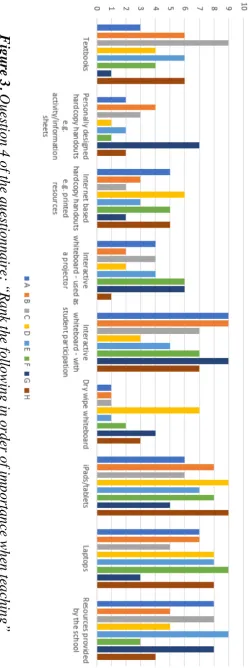
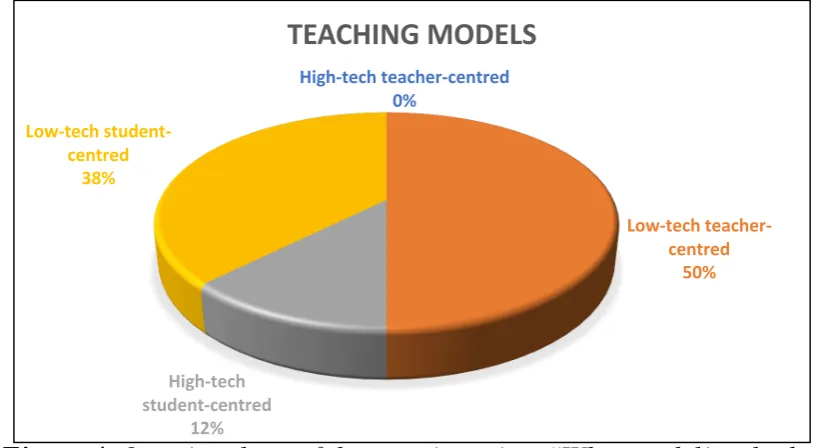
Technology Matters: STORIES 2018 Proceedings 9 Figure 4. Question three of the questionnaire: “What model/method of
teaching do you usually adopt in your lessons?”
In contrast to these teacher-centred, low-tech findings however, positive comments were made by participants who could see the creativity the tools could bring to the lesson and to the students, e.g. whilst putting together the more dangerous elements using Elements 4D, one participant in particular commented that when showing the students chemicals that were too hazardous to bring into class “…you’d have to show a video and sometimes that gets a bit tedious and a bit boring for them”.
Key themes were identified and used to define and frame the core problem (Dam & Siang, 2017). The seven key themes identified during the
study’s thematic analysis were Desired improvements, Usefulness, Potential
use, Positive discovery and reaction, Interactivity, Obstacles, and
Deficiencies and inconsistencies.
Step 3 - Ideate
One of the overarching themes was Desired improvements and this was
selected as the focus for the ideate phase. There was a clear need for the tools to be more interactive to improve engagement, rather than relying on books and videos (Group 2 participant).
This illustrates the difficulties currently faced by teachers when teaching abstract concepts that students often find boring. Digitally enhanced interventions in the classroom with game-based tools have the potential to increase interest and motivation in the sciences (Hwang et al, 2012).
High-tech teacher-centred 0%
Low-tech teacher-centred
50%
High-tech student-centred
12%
Low-tech student-centred
38%
Technology Matters: STORIES 2018 Proceedings 10
Design Recommendations
These findings underline the role that pedagogical methods and materials play in creating an image of science as something boring and difficult (Palmer, 2009), and has demonstrated the interest and excitement generated by visually stimulating technologies such as AR and the feeling of being immersed in the content.
Therefore, the recommendations of this study are:
1. Ensure the tools are more substantial
2. Include links to more detailed information for extended and
differentiated lessons
3. Allow for the creation of quizzes to allow for better formative assessment
4. Include a higher level of content detail
5. Allow for more teacher control through interactivity to tailor lessons to
age groups
6. Link the content more closely to the national curriculum
7. Enable more interactivity within the app and user manipulation of
content
8. Incorporate artificial intelligence (AI) or data analytics for student
assessment over a long period of time
9. Provide real-time feedback on progress
Conclusion
Technology Matters: STORIES 2018 Proceedings 11
About the Author
Currently working as an IT trainer developing digital learning, Ayse has recently completed her Master’s in Education and Technology at UCL, and is looking to progress this research further at PhD level.
Bibliography
Barillaro, P., Metz, J., Perran, R. & Stokes, W. (2009). Constructivist epistemology: An analysis. Retrieved from: http://admn502awiki. pbworks.com/w/page/10245610/Constructivist %20 Epistemology [Accessed: 19 November 2017].
Bloxham, J. (2013). Augmented reality in education: Teaching tool or
passing trend? The Guardian. Retrieved from:
https://www.theguardian.
com/higher-education-network/blog/2013/feb/11/augmented-reality-teaching-tool-trend [Accessed: 6 November 2017].
Braun, V. & Clarke, V. (2006). Using thematic analysis in psychology.
Qualitative Research in Psychology 3(2), 77-101.
Cuendet, S., Bonnard, Q., Do-Lenh, S. & Dillenbourg, P. (2013). Designing
augmented reality for the classroom. Computers and Education 68,
557-569 https://doi.org/10.1016/j.compedu.2013.02. 015.
Dam, R. & Siang, T. (2017). Design thinking: Get a quick overview of the
history. Retrieved from: https://www.interaction-design.org
/literature/article/design-thinking-get-a-quick-overview-of-the-history [Accessed: 6 November 2017].
Gill, T., Vidal Rodeiro, C., & Zanini, N. (2017). Higher education choices of secondary school graduates with a Science, Technology,
Engineering or Mathematics (STEM) background. Journal of Further
and Higher Education, 13, 1-17 https://doi.org/10.1080/0309877X.2017.1332358.
Hsu, Y. S., Lin, Y. H. & Yang, B. (2017). Impact of augmented reality
lessons on students’ STEM interest. Research and Practice in
Technology Matters: STORIES 2018 Proceedings 12
Hwang, G.J., Sung, H.Y., Hung, C.M., Huang, I. & Tsai, C.C. (2012). Development of a personalized educational computer game based on
students’ learning styles. Educational Technology Research and
Development 60, 623–638. https://www.learntechlib. org/p/67714/. Luckin, R. & Fraser, D. (2011). Limitless or pointless? An evaluation of
augmented reality technology in the school and home. International
Journal of Technology Enhanced Learning, 3, 510-524 http://dx.doi. org/10.1504/ijtel.2011.042102.
Lindgren, R. & Moshell, J.M. (2011). Supporting children’s learning with bodybased metaphors in a mixed reality environment. Proceedings of the 10th international conference on interaction design and children. ACM, 177-180.
Mooney, C.G. (2013). Theories of Childhood. 2nd Edition, Redleaf Press.
Nussbaum, M. and Diaz, A. (2013). Classroom logistics: Integrating digital
and non-digital resources. Journal of Computer in Education, 69,
493-495.
Palmer, D.H. (2009). Student interest generated during an inquiry skills
lesson. Journal of Research in Science Teaching, 6, 147-165
https://doi.org/10.1002/tea.20263.
Technology Matters: STORIES 2018 Proceedings 13
Tracing teachers’ beliefs and changes in
pedagogy when using 1:1 iPad in the
classroom
Olympia Christina Kalogianni, Institute of Education, UCL
Key Words
Technology, 1:1 iPad, school, pedagogy, learning
Abstract
This research was originally presented in my master’s thesis and focuses on teachers’ perspectives when using 1:1 iPad in the classroom. The aim was to trace teachers’ pedagogical changes when they were implementing technology into their teaching, the alterations of their beliefs and what mediated these changes. The research was conducted in a Greek school, which uses 1:1 iPad daily for learning activities. An online questionnaire was filled in by 20 teachers, and six follow-up interviews were conducted to examine teachers’ experiences in detail. The findings illustrated overall positive trends in the use of 1:1 iPad. All teachers were satisfied by its use and described it as a crucial change for them. Despite some initial difficulties, such as technical issues and parental intervention, they also agreed that 1:1 iPad promotes a collaborative way of effective teaching. Most teachers stated that 1:1 iPad fosters more student-centred learning and reported both time and creativity as additional benefits.
Introduction
Technology Matters: STORIES 2018 Proceedings 14
technological interventions, like 1:1 iPad, and how educators and learners make use of such technology (Tondeur et al, 2007).
Several digital technologies, such as Interactive Whiteboards, and iPads are increasingly being used in schools (Quniebi, 2016). Yet, even though 1:1 iPad is considered a technology-rich educational reform, there is little empirical evidence to support this claim (Bebell & O’Dwyer, 2010). Furthermore, teachers frequently change their instructional practices when using technology with students (Windschitl & Sahl, 2002), by affecting positively their teaching methods as they redesign their classrooms (Foote, 2012).
Several researchers have supported the view that technology promotes student-centred collaborative learning (Baker, Herman, & Gearhart, 1996; Mehlinger, 1996) and the application of technology stimulates educators to utilise more challenging activities in teaching (Means, 1994). However, how and under what specific circumstances such alterations occur is not clear. The current study aimed to trace teachers’ perspectives on the use of 1:1 iPad in the classroom, and to track any changes they made to their pedagogical practices when implementing such technology. It therefore attempted to examine teachers’ perceptions of changes in their teaching practice and what they think mediated these changes.
Method
Measures and Procedure
Technology Matters: STORIES 2018 Proceedings 15
Questionnaire
The questionnaire was administered by ‘Survey Monkey’, which provided convenience, flexibility and anonymity to participants. In the questionnaire, participants were given a small introductory statement and then they were asked ten questions (Appendix A). All the questions required one answer, apart from Questions two, three, five, and eight, where participants could choose up to three answers since one answer was not enough for them to provide their opinions adequately.
Interview
The second method was interviews, conducted to examine teachers’ perceptions in their pedagogical practices when using 1:1 iPad. The interview began with questions regarding teachers’ integration of 1:1 iPad in the classroom (Appendix B). Audio recording methods were chosen for the research, helping to improve the validity of the research and enabling the researcher to focus closely on the whole procedure (O’Leary, 2014). Also, the use of participants’ quotations throughout the survey enhanced credibility and trustworthiness (Boyce & Neale, 2006).
Ethical Considerations
Technology Matters: STORIES 2018 Proceedings 16
Results
In this section, findings from the questionnaires (that were conducted to trace teachers’ perceptions and changes in their teaching when using 1:1 iPad in the classrooms) and the interviews are presented.
Questionnaires
The 20 teachers (ten male and ten female) who filled in the questionnaire had been using 1:1 iPad for three or more years and had more than ten years of teaching experience. Bar Chart 1 shows the learning activities where the 1:1 iPad was primarily used. Eighty-five percent of the participants used particular pre-designed educational applications in the 1:1 iPad and twenty percent of them used it for planning and assessment of the course. Forty-five percent of the respondents stated that they use it for online resources and fifteen percent of them as supplementary material.
Bar Chart 1. Teachers’ learning activities on 1:1 iPad
85%
20%
45%
85%
15%
USE OF PARTICULAR PRE-DESIGNED EDUCATIONAL APPLICATIONS
PLANNING AND
ASSESSMENT USE OF ONLINE RESOURCES AS A DIGITAL TEXTBOOK AS SUPPLEMENTARY MATERIAL
Technology Matters: STORIES 2018 Proceedings 17 Pie Chart 1. Key teaching and learning benefits of 1:1 iPad
Pie Chart 1 indicates the key learning benefits of 1:1 iPad. Particularly, thirty-five percent of the respondents chose “Collaboration” and eighty-five percent “Engagement”. Also, eighty percent of the participants stated that 1:1 iPad boosts “Creativity”, and five percent of them gave the answer of “Interactive Discussion and Communication” as a key benefit. Finally, twenty-five percent of the participants answered, “Ease of use”, and sixty-five percent reported “Benefit of time” as an advantage. Finally, in terms of rating the usefulness of the particular technology, 19/20 of the participants characterised 1:1 iPad as “Very Good” and one of them as “Good”. In a similar pattern, 20/20 participants answered that the use of 1:1 iPad has positively changed their views about technology for education.
Interviews
Technology Matters: STORIES 2018 Proceedings 18
iPad; changes in their teaching; students’ experiences; and advantages and disadvantages of using 1:1 iPad.
Six teachers participated in the interviews: three literature teachers, two mathematics teachers, and one biology teacher, all ranging from the fourth grade of primary school to the third grade of high school. They were confident and had a positive attitude towards the use of 1:1 iPad as they had used it for the past six years. All the teachers initially faced technical difficulties with the devices and although they wanted to provide students with new opportunities, they had issues with the hardware and the software. Particularly, participants mentioned several technical problems, such as the slow software or the bad condition of the touchscreen, as students had difficulty writing on it. However, these problems have now been resolved with the advancement of technology.
Secondly, several teachers referred to parents’ attitude towards 1:1 iPad as an initial barrier as some parents were distrustful about integrating it into their children’s school life; some parents preferred a more traditional concept of teaching such as reading from the book instead of the iPad. Moreover, all teachers, one year before the incorporation of 1:1 iPad, prepared the new material (collecting teaching material, visualising it, etc.). Some teachers supported that with the incorporation of 1:1 iPad they implemented the teaching material into another methodology and made it more interactive.
Furthermore, teachers listed the key advantages and disadvantages of using 1:1 iPad. As advantages, they stressed that students’ perception of studying has been improved. They appeared to enjoy this educational tool, be more engaged in the classroom, which resulted in more learning time being available. Overall, teachers described how 1:1 iPad had brought beneficial changes in students’ learning as they now study through self-exploration and use new resources for their learning. All teachers stated that because of the use of 1:1 iPad there is more learning time available in the classroom and so, they have the opportunity to dedicate valuable time to students as facilitators; in other words, they can guide and assist students in learning by themselves through picking apart ideas and forming their own thoughts about them.
Technology Matters: STORIES 2018 Proceedings 19
management became more difficult; it is harder to attract students’ attention and interest as the iPad is a powerful information tool and they sometimes lose their focus. Moreover, some teachers mentioned that it is difficult to manage the plethora of online information. The teacher’s aim is to make students active users of the knowledge they acquire by selecting the information critically, and therefore building students’ confidence at a pace suitable to them.
Conclusion
The present research explored teachers’ perspectives regarding the implementation of 1:1 iPad in the classroom. Overall, teachers were satisfied with such integration in their pedagogy and pointed out that this device is substantially beneficial for their learning activities and interaction with students. The findings of this study were an attempt to provide an insight into teachers’ experiences of using 1:1 iPad and to contribute to this expanding field of educational research.
About the author
Olympia Christina Kalogianni holds a Bachelor’s Degree in English Language and Literature from the National and Kapodistrian University of Athens. She has recently graduated from the Institute of Education, UCL where she completed her Master’s degree in Education and Technology.
Bibliography
Baker, E. L., Herman, J. L. & Gearhart, M. (1996). Does technology work in schools? Why evaluation cannot tell the full story. In C. Fisher, D.
C. Dwyer, & K. Yocam (Eds.), Education and technology: Reflections
on computing in classrooms (pp. 185– 202). San Francisco: Jossey-Bass.
Bebell, D. & O'Dwyer, L., M. (2010). Educational outcomes and research
from 1: 1 computing settings. Journal of Technology, Learning, and
Technology Matters: STORIES 2018 Proceedings 20
Boyce, C. & Neale, P. (2006). Conducting in-depth interviews: A guide for
designing and conducting in-depth interviews for evaluation input.
Watertown, MA: Pathfinder International.
Foote, C. (2012). The evolution of a 1: 1 iPad program. Internet Schools, 1,
15-18.
Kirkwood, A. & Price, L. (2014). Technology-enhanced learning and teaching in higher education: What is ‘enhanced’ and how do we
know? A critical literature review. Learning, Media and Technology,
39(1), 6-36.
Longhurst, R. (2003). Semi-structured interviews and focus groups. In N.
Clifford, & G. Valentine (Eds.), Key methods in geography (pp.
117-132). London: SAGE Publications.
Means, B. (1994). Introduction: Using technology to advance instructional goals. In B. Means (Ed.), Technology and education reform: The reality behind the promise. San Francisco: Jossey-Bass.
O’Leary, Z. (2014). The essential guide to doing your research project. London: SAGE Publications.
Penuel, W. R. (2006). Implementation and effects of one-to-one computing
initiatives: A research synthesis. Journal of Research on Technology
in Education, 38(3), 329-348.
Quniebi, F., M., S. (2016). Evaluation of using iPad in classroom learning
and teaching. International Journal of Education and Research, 4(6).
Tondeur, J., van Braak, J. & Valcke, M. (2007). Towards a typology of
computer use in primary education. Journal of Computer Assisted
Learning, 23, 197-206.
Windschitl, M. & Sahl, K. (2002). Tracing teachers’ use of technology in a laptop computer school: The interplay of teacher beliefs, social
dynamics, and institutional culture. American educational research
Technology Matters: STORIES 2018 Proceedings 21
Appendices
Appendix A: Online Questionnaire
Use of 1:1 iPad in the classroom
Thank you for filling out this questionnaire about the use of 1:1 iPad in the classroom. I am a postgraduate student at the UCL and I am writing my dissertation on tracing teachers’ beliefs and changes in pedagogy when using 1:1 iPad in the classroom. I would be grateful if you could help me collect some data for my survey. Your answers of this questionnaire are completely anonymous and confidential. I appreciate your time and input!
1. How long have you been using 1:1 iPad in the classroom? • I do not use it
• Less than 1 year • 1-2 years
• 3 or more years
2. What activities do you primarily use it for? (choose up to 3) • Use of particular pre-designed educational applications
• Planning and assessment of the course
• Use of online resources (e.g. videos, images) • As a digital textbook
• As supplementary material (e.g. webpages, maps) • Other (please specify)
3. What do students primarily use the 1:1 iPad for in the classroom? (choose up to 3)
• As supplementary material (e.g. webpages, maps) • Exploring the Internet
• Use of online resources (e.g. videos, images) • Do learning activities
• Use as a textbook • Other (please specify)
4. What is your overall opinion about this particular technology for teaching and learning?
Technology Matters: STORIES 2018 Proceedings 22 • Neutral
• Hesitant • Dissatisfied
5. What do you think are the key teaching and learning benefits? (choose up to 3)
• Collaboration
• Engagement
• Boost Creativity
• Interactive Discussion and Communication • Ease of use
• Benefit of time
• Other (please specify)
6. Do you think that 1:1 iPad has changed the way you teach your subject?
• Yes
• No
• Not yet
7. If yes, give one example of how you think that 1:1 iPad has changed your way of teaching?
• Use of 1:1 iPad instead of textbooks • Use of 1:1 iPad instead of blackboard
• More student-centred learning (students’ action, engagement) • Planning and assessment of the course
• Other (please specify)
8. What kind of difficulties have you faced during your experience with 1:1 iPad? (choose up to 3)
• Technical
• Knowledge/Training
• Students’ denial • Parental intervention • Other (please specify)
9. Overall how would you rate its usefulness?
• Very good
• Good
Technology Matters: STORIES 2018 Proceedings 23
• Poor
10. Has the use of 1:1 iPad changed your views about technology for education?
• More positive • More negative • Neither
Appendix B: Interview Themes
A. An overview of teachers’ first and current contact of 1:1 iPad.
• How did you feel about integrating 1:1 iPad into your teaching at the start? • How do you feel about it now?
B. Teachers’ background/training for using 1:1 iPad.
• Did you experience any difficulties when you first used 1:1 iPad? Can you describe these?
• What kind of instruction did you receive, if any? What would you have liked/needed?
C. Changes in teachers’ teaching when using 1:1 iPad
• What learning activities do you do when using 1:1 iPad? Why did you choose these? Have these changed over the course of your use?
Technology Matters: STORIES 2018 Proceedings 24
Use of technology to support parental
engagement and children’s learning
Eliana Osorio Saez, University of Bath
Key Words
Parental engagement, technology and children’s learning
Abstract
For more than fifteen years, The Learning Foundation has provided socioeconomically disadvantaged households with children in England with some kind of technological device (a tablet or a laptop) to use at school, and at home to complete schoolwork and homework. The 1:1 (one device per child) scheme has reached more than 1,000 schools, 400,000 parents and 250,000 children. This ongoing mixed-methods study examines the impact of parental engagement on children's learning by identifying patterns in the conditions under which the use of technology might be more effective in supporting parents to help children learn. My study has two stages: during the first stage, data from two surveys from more than 5,000 parents will be statistically analysed using structural equation models; during the second stage, new data will be collected from schools, parents, students and past project’s participants to allow a longitudinal study.
Literature Review
The term deprivation will be defined in this research as the adverse economic circumstances in a child's family and/or local area (DCSF, 2009). We can perceive that compared to their economically advantaged peers, children in deprived context have worse outcomes on just about everything we can measure: personal, social, emotional, and physical development, as well as communication and language (Hackman & Farah, 2009).
Technology Matters: STORIES 2018 Proceedings 25
(FSM) children achieving a good level of development at the end of the foundation stage has increased by about twenty-two percent between 2015 and 2017 (DfE, 2017). However, there is still a significant number of poor families that contribute to the achievement gap: the report by the Education Policy Institute (2017) shows that this gap in these disadvantaged children against their wealthy peers becomes wider (it is 24.3 months at the end of secondary school).
Children born into low-income families “face life-long penalties regardless of their abilities or effort” (Gregg & Macmillan, 2010, p. 260). The economically disadvantaged children tend to perform low in school (Cassen & Kingdon, 2007), they complete fewer years of schooling, they are more likely to be poor as adults (Lindley & Machin, 2012), they are less healthy, and they are more likely to commit or be victims of crime. All of these consequences of being born into a low income family has a negative impact on the national economy.
According to the Joseph Rowntree Foundation (2016), it was estimated that fighting back the effects of poverty and deprivation costs £1,200 for each person in the UK. Evidence from research shows that the aspirations, attitudes, and behaviours of parents may have an important part to play in explaining why poor children typically underperform at school and are at risk of never getting the social and cultural capital (Bourdieu, 1986) required for social mobility, overcoming poverty and becoming resilient.
Parents do matter; they perform a crucial role in their children achieving better outcomes (Harrys & Goodall, 2008). Parental engagement goes beyond parental involvement. Parental involvement refers to the relationship between schools and parents and how parents can support the school’s goals, especially academic achievement. On the other hand, parental engagement is connected with learning, a much broader concept. Parental engagement describes the relationship between parents and children towards learning, and it includes conversations, interactions, and discussions. Parental engagement describes how parents model and assume an attitude towards learning and the value of learning for their children, and how these models and attitudes support children’s development, behaviour, and achievements (Goodall, 2016).
Technology Matters: STORIES 2018 Proceedings 26
Phan, Sylva, Sammons, Siraj-Blatchford & Taggart, 2008). These activities are not necessarily connected with wealthy families; rather, they can also be performed in disadvantaged settings (Goodall, 2017).
Through the use of technology, this home learning environment might be strengthened. A significant number of charities in England such as Techknowledge for Schools and the Learning Foundation, provide children with some sort of one to one (1:1) technological devices and Internet connection. According to the report presented by Clarke and Svanaes, between sixty-eight and sixty-nine percent of children in England are currently using Tablets or laptops (Family, Kids and Youth research group from the University of Cambridge, 2014), therefore technology has a presence at school and at home.
Technology in education is often discussed in the teaching context, where it is used to support teaching and learning (Shank, 2007; Thorn, 2009). However, few studies have focused on how technology supports parental engagement and children’s learning at home, in other words how the use of technological devices might help parents to create a home learning environment that may contribute to narrow the achievement gap.
Methodology
This is an ongoing mixed-method study, where quantitative and qualitative research will be combined. Quantitative data comes from two surveys carried out between 2016 and 2018. These surveys were filled in by more than 5,000 parents in England.
Data analysis in the first stage is being conducted by using advanced statistical techniques (Structural Equation Models) to identify patterns in the conditions under which technology is more effective in supporting parents’ engagement.
Qualitative data will be collected by the researcher using interviews and focus groups. Current and former participants of the programme will be involved, in order to achieve a longitudinal study of impacts on parental engagement and children’s learning.
Anticipated Contributions
Technology Matters: STORIES 2018 Proceedings 27
less is known about which methods are the most effective" (Barbour, Eisenstadt, Goodall, Jelley & Sylva, 2018, p. 3).
This mixed-method study will broaden the knowledge and understanding of how technology supports parental engagement and the creation of a home learning environment. In addition, this research will provide large-scale data from different areas across England, and will offer an overview of how England is placed compared to other regions in the world.
Moreover, it will provide an understanding of how parents observe the interaction with technological devices at home, focusing on their usage, learning potential, and home-school communications. Additionally, this study will reveal parents’ opinions about the role of technology: beliefs, challenges, barriers, confidence, motivations, self-learning, collaboration and aspirations.
About the Author
Eliana holds a BA in Teaching Spanish and English from Universidad Popular del Cesar and an MA in Education: English Didactics from Universidad Externado de Colombia, both in Colombia. She graduated with a second MA in Education: Leadership and Management from Bath Spa University in England and is currently studying a PhD in Education at the University of Bath, in England. She has taught at all levels and is an author of textbooks and online courses. She has been a speaker and a teacher trainer in the fields of E-learning and ICT in Education, as well as a consultant for the public and private sector in Colombia, actively participating in educational projects for implementing e-learning and blended learning in public and private universities and high schools.
Bibliography
Andrews, J., Robinson, D. & Hutchinson, J. (2017). Closing the gap?
Trends in educational attainment and disadvantage. London: Education Policy Institute. Retrieved from: https://epi.org.uk/wp-content/uploads/2017/08/Closing-theGap_EPI.pdf.
Barbour, L., Eisenstadt, N., Goodall, J., Jelley, F. & Sylva,
Technology Matters: STORIES 2018 Proceedings 28
Bourdieu, P. (1986). The forms of capital. Retrieved from:
https://www.marxists.org/reference/subject/philosophy/works/fr/bou rdieu-forms-capital.htm.
Bryman, A. (2015). Social research methods. Oxford: Oxford University
Press.
Cassen, R. & Kingdon, G. (2007). Tackling low educational
achievement. London: Joseph Rowntree Foundation. ISBN 9781859355848
Clarke, B. & Svanaes, S. (2014). An updated literature review on the use of
tablets in education Family Kids and Youth. Retrieved from:
http://www.tabletsforschools.org.uk/wp-content/uploads/2014/04/T4S-Literature-Review-9-4-14.pdf.
Department for Children, Schools and Families. (2009). Deprivation and
education: The evidence on pupils in England, Foundation Stage to Key Stage 4. Retrieved from: http://dera.ioe.ac.uk/9431/1/DCSF-RTP-09-01.pdf.
Department for Education. (2011). Deprivation – what you need to know.
Retrieved from:
http://www.education.gov.uk/schools/pupilsupport/premium/a00760 62/deprivation-what-you-need-toknow.
Evans, G. W. (2004). The environment of childhood poverty. American
Psychologist, 59(2), 77-92. DOI: 10.1037/0003-066X.59.2.77
Goodall, J. (2015). Closing the gap. Leading Parent Partnership Award
Newsletter.
Goodall, J. S. (2016). Technology and school-home
communication. International Journal of Pedagogies and
Learning, 11(2), 118-131. DOI: 10.1080/22040552.2016.1227252
Goodall, J. (2017). Narrowing the achievement gap: Parental engagement
with children's learning. Abingdon: Routledge.
Gregg, P. & Macmillan, L. (2010). Family income, education and cognitive ability in the next generation: Exploring income gradients in
education and test scores for current cohorts of youth. Longitudinal
Technology Matters: STORIES 2018 Proceedings 29
Hackman, D. & Farah, M. (2009). Socioeconomic status and the developing
brain. Trends in Cognitive Sciences, 13, 65-73. DOI: 10.1016/
j.tics.2008.11.003.
Lindley, J. & Machin, S. (2012). The quest for more and more education:
Implications for social mobility. Fiscal Studies, 33, 265-286.
doi:10.1111/j.1475-5890.2012.00161.x.
Melhuish, E., Phan, M., Sylva, K., Sammons, P., Siraj-Blatchford, I. &
Taggart, B. (2008). Effects of the home learning environment and
preschool center experience upon literacy and numeracy development
in early primary school.Journal of Social Issues, 64(1), 95-114.
Tang, S., Davis-Kean, P. E., Chen, M. & Sexton, H. R. (2016). Adolescent pregnancy's intergenerational effects: Does an adolescent mother's
education have consequences for her children's achievement?. J Res
Technology Matters: STORIES 2018 Proceedings 30
Adult learners in online higher education:
The complexity of students’ transitional
experiences of becoming a distance learner
Olga Rotar, Lancaster University
Key Words
Adult student, online learner, online higher education, diversity
Abstract
Online learning is a rapidly growing aspect of higher education. However, while this learning mode offers the flexibility and convenience required by non-traditional adult students who face competing social demands and obligations, various barriers still exist that threaten their academic success (Dziuban et al, 2006). Although a large body of research has focused on challenges for adult learners in online education, there is still a lack of in-depth understanding of the conceptual variations in the experiences and perceptions of adults as they embark on online education. This paper aims to emphasize the complexity of experiences of an adult student population in an online learning environment through a review of previous empirical research. The paper will stress the importance of looking at adult learners’ transitions to online learning environments in more depth, with a particular focus on their divergent perceptions of learning processes.
Introduction
Technology Matters: STORIES 2018 Proceedings 31
in adults’ perceptions of their online learning. This paper aims to provoke a discussion on the differences in adult students’ perceptions of their online learning, and highlight the need to examine the transitional processes of adults returning to universities as distance students with a particular focus on the diversity of their experiences.
Literature Review
According to Moore and Kearsley (2012), distance learners are primarily adults between the ages of 25 and 50 years. Online education can offer numerous advantages for them, including flexibility, accessibility, independence, and cost effectiveness. Ironically, it is the perceived benefits of online learning that usually create negative experiences for the majority of adult learners. Challenges, such as a lack of a sense of belonging to the academic community, insufficient course content and quality of teaching are commonly reported by adult online learners (Bourdeaux & Schoenack, 2012). Other factors that are actively discussed in the literature include physical isolation and the rarity of interactions (Phirangee & Malec, 2017; Kuo & Belland, 2016), inadequate support (Park & Choi, 2009) and challenges associated with technological adaptation (Beqiri, Chase, & Bishka, 2009; Pena & Yeung, 2010). Additionally, when adult learners face a dilemma between the course, and their competing life demands, they feel that they have no choice but to prioritise the latter (Thistoll & Yates, 2016). All of the above could lead to frustration and contribute to learners deciding to withdraw from the online course (Bourdeaux & Schoenack, 2012; Ilgaz & Gülbahar, 2015).
Technology Matters: STORIES 2018 Proceedings 32
difficult to adapt to (Dubois, 1996). Some scholars affirm that adults tend to feel insecure about their ability to succeed in distance learning, demanding more support services and additional technical training (Ke & Xie, 2009). On the other hand, there are findings suggesting that adult students are comfortable and satisfied with using technology in their learning (Ilgaz & Gülbahar, 2015).
I agree with those scholars who state that adult students have unique needs and expectations (e.g. Cercone, 2008), diverse characteristics, and life circumstances that impact on their learning (e.g. Boling et al, 2012; Loizzo et at., 2017), and argue that further in-depth research is needed to uncover the variations in the ways in which adult students experience their online learning.
Methodology
A systematic literature review was conducted with the aim of identifying gaps in the existing research. The Scopus database was used to search for relevant studies. Avariety of key words and word combinations, such as "adult student", "non-traditional student", and "online higher education" were used as search terms. Among identified studies only articles published between 2008 and 2017 in peer-reviewed journals were selected. Among other inclusion criteria that set the boundaries for this review were the student population (adult learners) and the study setting (online higher education). Only studies published in English language were reviewed. Additional studies of relevance to the phenomenon of interest were identified through a ‘snowball’ method by using reference lists of the
selected articles (Webster & Watson, 2002).
Results and Discussion
The complexity of adults’ online learning experiences
Appendix A presents an overview of findings reported in the extracted studies. There is no doubt that previous research has made a great
contribution to understanding adults' online learning. Yet, although scholars
Technology Matters: STORIES 2018 Proceedings 33
The level of engagement and the sense of belonging to the academic
community has been suggested to have an influence on students’ learning
satisfaction (Ke & Xie, 2009). In their study, Hashim, Ahmad and Ahmad (2011) emphasized that older students have lower academic performance due to their weaker cognitive engagement. This statement differs from findings presented by Conrad (2009) which demonstrate that adult learners possess good self-knowledge in their use of metacognitive strategies, and engagement in learning. Other authors have shown that adult students have mixed perceptions of engagement with online learning and suggest that adult students with a stronger sense of belonging to the academic community tend to have a higher level of learning satisfaction (Gravani, 2015; Ke, 2010).
Motivation was another factor that emerged from the literature. Scholars argue that lack of motivation could have an influence on students’
academic progress (Kim & Frick, 2011; Nagelsmith, Bryer & Yan, 2012;
Stoessel et al, 2016). Evidence provided by Kim and Frick (2011) further noted that the level of motivation may vary among adult learners across the study period. This suggests that there are not only variations in motivation among adults, but also that adults may perceive the same phenomenon – their learning process – differently at different times during their study.
Scholars have investigated the impact of learners’ self-directedness on their study processes. Coetzee (2014), for instance, suggests that academic self-directedness has both an explicit and an implicit influence on students’ sense of academic, personal and social responsibility. Botha and Coetzee’s (2016) later findings also show that students’ gender, race, and age are associated with the level of their self-directedness.
There have been other findings reporting learners’ experiences in
relation to their age and personal characteristics (Dwyer et al, 2013; I-Jan et
Technology Matters: STORIES 2018 Proceedings 34
Prior studies have introduced some recommendations to overcome barriers and challenges reported by adult students. In order to encourage learners to become and stay involved in the online learning environment, Cheng et al (2011) and Boling et al (2012) proposed that teachers should integrate work-related tasks and real-world assignments into the lesson design. Ke (2013) points out that older students tend to prefer collaborative interaction in an online learning environment, rather than working individually, and suggests that learning arrangements which encourage learner-learner interactions should be prioritised as they enhance the level of interactivity and collaboration in learning. By contrast, Kuo and Belland (2016) advocate learner–content interaction, showing that it has the strongest correlation with Internet self-efficacy. Loizzo, Ertmer, Watson and Watson (2017) argue that learners have a variety of expectations within their online learning, and that while some learners value discussions and instructor engagement, others prefer to have limited interaction and focus solely on the course content via videos, readings, and assignments.
Conclusion
The scientific discussion on the diversity of adult student accounts and differences in their perceptions, experiences and needs of online learning environments has recently emerged in the literature (see, for instance, Kim & Frick, 2011; Baloyi, 2013; Kuo & Belland, 2016, Waller, 2006). However, acknowledging these differences is one thing, but taking the divergence principle into account is another. This principle could be implemented into the research design by selecting the study sample that reflects the diversity of the adult student population, and by choosing the appropriate research methodology that aims to uncover variations in students’ learning experiences. As Waller (2006) emphasized, ‘mature students are a diverse and heterogeneous group, with the ‘reality’ of their experience(s) being [too complex and individually situated]’ (p. 120). Therefore, I would argue, that research that is specifically designed to examine the variations in the experiences and perceptions of the adult student group is needed in order to create a more complete picture of the phenomenon of adult online learning. Understanding the range of student experiences in online programmes is crucial because those learners who feel frustrated, lost or unsupported during their studies are more likely to discontinue their enrolment (Bourdeaux & Schoenack, 2016).
Technology Matters: STORIES 2018 Proceedings 35
About the Author
Olga Rotar is a PhD candidate, and member of the Centre for Technology Enhanced Learning at the Educational Research Department, Lancaster University, UK. Olga is also a Research Assistant at Lancaster University and a member of the International Council for Open and Distance Education.
Bibliography
Boling, E. C., Hough, M., Krinsky, H., Saleem, H. & Stevens, M. (2012). Cutting the distance in distance education: Perspectives on what
promotes positive, online learning experiences. Internet and Higher
Education, 15(2), 118-126. doi:10.1016/j.iheduc.2011.11.006.
Botha, J. & Coetzee, M. (2016). The influence of biographical factors on adult learner self-directedness in an open distance learning
environment. International Review of Research in Open and Distance
Learning, 17(4), 242-263.
Bourdeaux, R. & Schoenack, L. (2016). Adult student expectations and
experiences in an online learning environment. Journal of Continuing
Higher Education, 64(3), 152-161. doi:10.1080/07377363.2016.1229072.
Carnoy, M., Rabling, B. J., Castano-Munoz, J., Montoliu, J. M. D. & Sancho-Vinuesa, T. (2012). Who attends and completes virtual universities: The case of the open university of catalonia (UOC).
Higher Education, 63(1), 53-82. doi:10.1007/s10734-011-9424-0. Cheng, B., Wang, M., Yang, S. J. H., Kinshuk & Peng, J. (2011).
Acceptance of competency-based workplace e-learning systems:
Effects of individual and peer learning support. Computers and
Education, 57(1), 1317-1333. doi:10.1016/j.compedu.2011.01.018. Coetzee, M. (2014). Exploring the mediating role of graduate attributes in
relation to academic self-directedness in open distance learning.
Higher Education Research & Development, 33(6), 1085-1098. Conrad, D. (2009). Cognitive, instructional, and social presence as factors
in learners' negotiation of planned absences from online study.
Technology Matters: STORIES 2018 Proceedings 36
Cercone, K. (2008). Characteristics of adult learners with implications for
online learning design. AACE journal, 16(2), 137-159.
Dwyer, D., Thompson, D. E. & Thompson, C. K. (2013). Adult learners' perceptions of an undergraduate HRD degree completion programme: Reasons for entering, attitudes towards programme and impact of
programme. Assessment and Evaluation in Higher Education, 38(2),
131-141. doi:10.1080/02602938.2011.608906
Dziuban, C., Hartman, J., Juge, F., Moskal, P. & Sorg, S. (2006). Blended
learning enters the mainstream. In: C.J. Bonk & C. Graham, (Eds.),
Handbook of Blended Learning Environments: Global Perspectives, Local Designs (pp. 195-206). Oxford: Pfeiffer Publications, An imprint of John Wiley and Sons, .
Dubois, J. R. (1996). Going the distance: A national distance learning
initiative. Adult Learning, 8(1), 19-21.
Gravani, M. N. (2015). Adult learning in a distance education context:
Theoretical and methodological challenges. International Journal of
Lifelong Education, 34(2), 172-193. doi:10.1080/02601370.2014.982728
Moore, C. & Greenland, S. (2017). Employment-driven online student attrition and the assessment policy divide: An Australian open-access
higher education perspective. Journal of Open, Flexible and Distance
Learning, 21(1), 52.
Hashim, R., Ahmad, H. & Ahmad, N. (2011). Evaluation of andragogy:
Cognitive engagement of distance learners. International Journal of
Technology Enhanced Learning, 3(3), 322-331. doi:10.1504/IJTEL.2011.040228
Howland, J. L. & Moore, J. L. (2002). Student perceptions as distance
learners in Internet-based courses. Distance education, 23(2),
183-195.
Jan, Y. I., Kao, C. P., Huang, C. H. & Wei, C. K. (2013). Exploring adult learners’ preferences toward online learning environments: The role
of internet self-efficacy and attitudes. The Anthropologist, 16(3),
487-494.
Ilgaz, H. & Gülbahar, Y. (2015). A snapshot of online learners: E-readiness,
e-satisfaction and expectations. International Review of Research in
Technology Matters: STORIES 2018 Proceedings 37
Ismail, I., Ali, A. S. M. & Azman, N. (2012). Discomfort in E-learning:
Does it impact learners? International Journal of Emerging
Technologies in Learning, 7(2), 39-42.
Moore, C. & Greenland, S. (2017). Employment-driven online student attrition and the assessment policy divide: An Australian open-access
higher education perspective. Journal of Open, Flexible and Distance
Learning, 21(1), 52.
Ke, F. (2010). Examining online teaching, cognitive, and social presence for
adult students. Computers and Education, 55(2), 808-820.
doi:10.1016/j.compedu.2010.03.013
Ke, F. (2013). Online interaction arrangements on quality of online
interactions performed by diverse learners across disciplines. Internet
and Higher Education, 16(1), 14-22. doi:10.1016/j.iheduc.2012.07.003
Ke, F. & Xie, K. (2009). Toward deep learning for adult students in online
courses. Internet and Higher Education, 12(3-4), 136-145.
doi:10.1016/j.iheduc.2009.08.001
Kim, K. J. & Frick, T. W. (2011). Changes in student motivation during
online learning. Journal of Educational Computing Research, 44(1),
1-23.
Kuo, Y. & Belland, B. R. (2016). An exploratory study of adult learners’ perceptions of online learning: Minority students in continuing
education. Educational Technology Research and Development,
64(4), 661-680. doi:10.1007/s11423-016-9442-9
Knowles, M. S. (1984). Andragogy in action: Applying modern principles
of adult education. San Francisco: Jossey-Bass.
Lee, Y. & Choi, J. (2013). A structural equation model of predictors of
online learning retention. Internet and Higher Education, 16(1),
36-42. doi:10.1016/j.iheduc.2012.01.005
Loizzo, J., Ertmer, P. A., Watson, W. R. & Watson, S. L. (2017). Adult MOOC learners as self-directed: Perceptions of motivation, success,
and completion. Online Learning Journal, 21(2)
doi:10.24059/olj.v21i2.889
Technology Matters: STORIES 2018 Proceedings 38
International Journal of Lifelong Education, 36(4), 442-457. doi:10.1080/02601370.2016.1276107
Mohd Nor, N. M. (2011). Understanding older adult learners in distance
education: The case of universiti sains malaysia. Turkish Online
Journal of Distance Education, 12(3), 229-240.
Moore, M. G. & Kearsley, G. (2012). Distance education: A systems view
of online learning. Belmont: Wadsworth, Cengage Learning.
Nagelsmith, L., Bryer, J. & Yan, Z. (2012). Measuring motivation and volition of nursing students in nontraditional learning environments.
Journal of Nursing Measurement, 20(2), 90-112. doi:10.1891/1061-3749.20.2.90
Park, J. & Choi, H. J. (2009). Factors influencing adult learners' decision to
drop out or persist in online learning. Educational Technology and
Society, 12(4), 207-217.
Stoessel, K., Ihme, T. A., Barbarino, M. L., Fisseler, B. & Stürmer, S. (2015). Sociodemographic diversity and distance education: Who
drops out from academic programs and why? Research in Higher
Education, 56(3), 228-246.
Simpson, O. (2013). Supporting students for success in online and distance
education. London: Routledge.
Thistoll, T. & Yates, A. (2016). Improving course completions in distance
education: an institutional case study. Distance Education, 37(2),
180-195.
Webster, J. & Watson, R. T. (2002). Analyzing the past to prepare for the
Technology Matters: STORIES 2018 Proceedings 39
Appendices
Appendix A: Adult Learners’ Experiences in Online Higher Education
Author Year Approach Sample size
Findings
Meyers & Bagnall
2017 Qualitative Phenomenography
10 students
Authors suggest a model of variations in adult students’ prior knowledge and skills in relation to the use of computers or the Internet.
Loizzo et al 2017 Qualitative 12 students
Study results show that adult students express a variety of reasons to enrol onto online programmes. Those range from personal enjoyment to career development; have different expectations within a MOOC; and show various preferences towards levels of interactions and engagement.
Shapiro et al 2017 Mixed-method 26 students
The results demonstrated that participants with lower levels of formal education are more likely to feel lost and frustrated in their studies. In addition, the findings showed stronger resilience and optimism in students from less developed countries. Lack of time, previous bad classroom experiences, inadequate background, and lack of resources such as money, infrastructure, and Internet access, have been identified as common barriers. Bourdeaux
&
Schoenack
2016 Qualitative 22 students
The study findings suggest that students expect clarity, respect, and intentional design from their online instructors, and experience a feeling of frustration if instructors do not meet their expectations of teaching.
Kuo & Belland
2016 Quantitative 167 students
The results of the research showed the strong correlation between learner satisfaction and performance. The data analysis showed the positive correlation of Internet self-efficacy and learner, instructor and learner-content interactions. Learner–learner-content interaction proved to be the most important predictor of student satisfaction.
Botha & Coetzee
2016 Quantitative 1,102 students
Technology Matters: STORIES 2018 Proceedings 40 Stoessel et
al
2015 Quantitative 4,599 students
The study results suggest that older students are generally stronger motivated. Malinovski
et al
2015 Quantitative 198 students
Adult students’ satisfaction with online learning is influenced by the ease of participation and appropriateness of teacher-student interaction and is predicted by students’ motivation to attend similar trainings.
Ilgaz & Gülbahar
2015 Mixed-method 2,334 and 2,288 students
Findings suggest that the participants’ satisfaction was generally affected by instructional content, level of communication and content usability, as well as by the teaching process and learners’ time management skills.
Gravani 2015 Qualitative, phenomenography
16 students, 8
educators
Study findings indicate the complexity of adults’ online learning experiences, and suggest that adult student’s experience might be influenced by personal, social and contextual factors that interconnect and can either support or impede learning. Coetzee 2014 Quantitative 1102
students
Results indicate that academic self-directedness of the participants was positively influenced by their scholarship, global/moral citizenship and lifelong learning attributes. Authors emphasize that the influence of scholarship attributes on academic self-directedness is significantly mediated through global/moral citizenship and lifelong learning attributes.
I-Jan et al 2013 Quantitative 178 students
Authors suggest that gender does not have an influence on adult students’ preference towards online environments, while age does. In addition, the findings show that younger adults have more confidence than older adults in using technologies in their learning.
Ransdell 2013 Quantitative 52 students
The results of the study showed that baby-boomers often interact with learning software with more meaningful engagement.
Lee & Choi 2013 Quantitative 169 students
The findings of the study showed that persistent students had higher levels of academic locus of control and metacognitive self-regulation skills compare to dropout students.
Dwyer et al 2013 Quantitative 97 students
Technology Matters: STORIES 2018 Proceedings 41 had significantly more favourable attitudes towards distant learning than the male participants. The opinions in regard to benefits of online programmes were different among students of different gender.
Ke 2013 Mixed-method 463 students
Findings showed that a design of online discussions with a balanced inclusion of three types of interactions (student-student, student-content, student-instructor) promoted the most self-reflection/ self-regulation oriented online discussions. Findings also showed that older students perform less online discussions which may denote individualistic knowledge construction or surface learning.
Nagelsmith et al
2012 Quantitative 297 students
Findings showed that there are strong relationships between motivation, volition, and academic success.
Ismail et al 2012 Quantitative 182 students
The study results indicate a positive and active attitude in learners’ readiness to use e-learning.
Boling et al 2012 Qualitative 10 students, 6
course instructors
Findings reveal that in online courses with little or no interactions, students often feel disconnected. Communication with fellow students and completing real-world assignments that required interactions with others has been reported as a favourable aspect of online learning, while learning through memorisation was reported as a negative aspect. Another negative aspect mentioned by students was the learning experience when peers’ lack of activities during the collaborative work and group projects influenced their own grades.
Carnoy et al 2012 Quantitative 29,700 students
Study findings suggest that adult students’ age does not influence the online course completion or duration of enrolment, while number of children does.
Hashim et al 2011 Quantitative 169 students
The findings of the study showed that cognitive engagement in online learning processes is rather weak for adult students, suggesting that adult learners need as much guidance as their younger counterparts.
Cheng et al 2011 Mixed-method 12 students
Technology Matters: STORIES 2018 Proceedings 42 of cooperation, on students’ intention to use e-learning system. The perceived support for enhancing social ties had a negative effect on employees’ behavioural intention.
Mohd Nor 2011 Mixed-method 5 interviews,
72 questionna
ires
Author suggests that older adults are strongly motivated to learn, health conscious, possess good time management and social skills, have support from family and no financial difficulties. Challenges faced by older adult learners are related to the usage of a computer and the stress of study.
Kim & Frick
2011 Quantitative 368 students
The study findings inform that the best predictors of motivation during self-directed learning are the perceived quality of instruction and learning, and the motivation to begin.
Ke 2010 Mixed-method 16 students
The study results indicate online instructional design and teaching elements that are crucial prerequisites for a successful online higher education experience for adult students. The author also discusses the relations between online teaching, cognitive, and social presence.
Ke & Xie 2009 Quantitative 51 students
Findings suggest that age does not predict adult students' learning satisfaction and performance. Findings of the study indicate disadvantages of close-ended discussion tasks in supporting students' online learning success and emphasize the benefits of the integrated course model to promote learning satisfaction, and a Content +Support course model to reinforce knowledge–constructive online interactions.
Kim 2009 Qualitative 12 students
Technology Matters: STORIES 2018 Proceedings 43 Park & Choi 2009 Quantitative 147
students
Authors conclude that individual characteristics have little influence on the decision to drop out from an online course, while external factors (e.g. family and organisational support), learning satisfaction and course relevance have a significant influence.
Conrad 2009 Qualitative 18 students