DEPARTMENT OF INFORMATION ENGINEERING AND COMPUTER SCIENCE
ICT International Doctoral School
Brain Decoding for Brain Mapping
Definition, Heuristic Quantification, and
Improvement of Interpretability in Group MEG
Decoding
Seyed Mostafa Kia
International Doctorate School in Information
and Communication Technologies,
Universit`a degli Studi di Trento
Advisor:
Prof. Andrea Passerini
Universit`a degli Studi di Trento
Abstract
In the last century, a huge multi–disciplinary scientific endeavor is
de-voted to answer the historical questions in understanding the brain
func-tions. Among the statistical methods used for this purpose, brain decoding
provides a tool to predict the mental state of a human subject based on the
recorded brain signal. Brain decoding is widely applied in the contexts of
brain–computer interfacing, medical diagnosis, and multivariate hypothesis
testing on neuroimaging data. In the latest case, linear classifiers are
gen-erally employed to discriminate between experimental conditions. Then, the
derived weights are visualized in the form of brain maps to further study the
spatio–temporal patterns of the underlying neurophysiological activity. It is
well known that the brain maps derived from weights of linear classifiers
are hard to interpret because of high correlations between predictors, low
signal–to–noise ratio, across–subject variability, and the high
dimension-ality of the neuroimaging data. Therefore, improving the interpretability
of brain decoding approaches is of primary interest in many neuroimaging
studies. Despite extensive studies of this type, at present, there is no formal
definition for interpretability of multivariate brain maps. As a consequence,
there is no quantitative measure for evaluating the interpretability of
differ-ent brain decoding methods. In this thesis, as the primary contribution, we
propose a theoretical definition of interpretability in linear brain decoding;
we show that the interpretability of multivariate brain maps can be
decom-posed into their reproducibility and representativeness. As an application
of the proposed definition, we exemplify a heuristic for approximating the
interpretability in multivariate analysis of evoked magnetoencephalography
(MEG) responses. We propose to combine the approximated interpretability
and the generalization performance of the model into a new multi–objective
classifier based on the proposed criterion results in more informative
mul-tivariate brain maps. More importantly, the presented definition provides
the theoretical background for quantitative evaluation of interpretability,
and hence, facilitates the development of more effective brain decoding
al-gorithms in the future. As the secondary contribution, we present an
ap-plication of multi–task joint feature learning for group–level multivariate
pattern recovery in single–trial MEG decoding. The proposed method
al-lows for recovering sparse yet consistent patterns across different subjects,
and therefore enhances the interpretability of the decoding model. We
eval-uated the performance of the multi–task joint feature learning in terms of
generalization, reproducibility, and quality of pattern recovery against
tra-ditional single–subject and pooling approaches on both simulated and real
MEG datasets. Our experimental results demonstrate that the multi–task
joint feature learning framework is capable of recovering meaningful
pat-terns of varying spatio–temporally distributed brain activity across
indi-viduals while still maintaining excellent generalization performance. The
presented methodology facilitates the application of brain decoding for
char-acterizing the fine–level distinctive patterns of brain activity in group–level
inference on neuroimaging data.
Keywords
Brain Decoding; Brain Mapping; Neuroimaging; Machine Learning;
Acknowledgments
Firstly, I would like to express my sincere gratitude to my adviser Andrea
Passerini for his patience, constructive feedback, and support of my
re-search. Besides my advisor, I would like to thank the rest of my thesis
committee: Lauri Parkkonen, Alexandre Gramfort, and Lorenzo Bruzzone
for their insightful comments that improved this work significantly.
My special thanks also goes to Nathan Weisz for his ubiquitous
moti-vating attitude and valuable scientific supports. I owe a debt of gratitude
to Nicu Sebe and Paolo Giorgini, whose supports provided me the
oppor-tunity to continue my PhD study. I wish to thank James Haxby whose
lecture on “Neural Decoding” ignited the main motivation behind my
re-search activity.
I would like to thank my other collaborators and friends, Paolo Avesani,
Emanuele Olivetti, Sandro Vega Pons, Fabian Pedregosa, and Anna
Blu-menthal for stimulating discussions, criticisms, and kind feedback on the
content of this thesis.
Last but not the least, I would like to thank my family: my beloved wife
Nastaran, and my beloved parents Masood and Mina for their sympathetic
ear and spiritual supports throughout my life. I would like to dedicate this
Contents
1 Introduction 1
2 Background 13
2.1 Brain: from Neurons to the Cerebral Cortex . . . 13
2.2 Magnetoencephalography (MEG) . . . 16
2.2.1 History and Mechanisms . . . 16
2.2.2 Data Analysis . . . 19
2.3 Statistical Hypothesis Testing . . . 23
2.3.1 Classical Hypothesis Testing . . . 23
2.3.2 Mass–Univariate Hypothesis Testing on MEG data 27 2.4 Statistical Learning Theory . . . 30
2.4.1 From Maximum a Posteriori to Risk Minimization . 31 2.4.2 Bias–Variance Decomposition of Error . . . 32
2.4.3 Regularization . . . 34
2.4.4 Bias–Variance Decomposition in Binary Classification 35 2.4.5 Multi–Task Learning . . . 37
3 Interpretability in Linear Brain Decoding 43 3.1 Introduction . . . 43
3.1.1 Knowledge Extraction Gap in Brain Decoding . . . 45
3.1.2 State of the Art . . . 47
3.1.3 The Gap: Formal Definition for Interpretability . . 50
3.2 Materials and Methods . . . 54
3.2.1 Notation and Background . . . 54
3.2.2 Interpretability of Multivariate Brain Maps: Theo-retical Definition . . . 56
3.2.3 Interpretability Decomposition into Reproducibility and Representativeness . . . 61
3.2.4 A Heuristic for Practical Quantification of Interpretabil-ity in Time–Locked Analysis of MEG Data . . . 66
3.2.5 Incorporating the Interpretability into Model Selection 69 3.2.6 Experimental Materials . . . 70
3.2.7 Classification and Evaluation . . . 74
3.3 Results . . . 76
3.3.1 Performance–Interpretability Dilemma: A Toy Ex-ample . . . 76
3.3.2 Decoding on Simulated MEG Data . . . 78
3.3.3 Single–Subject Decoding on MEG Data . . . 80
3.3.4 Mass–Univariate Hypothesis Testing on MEG Data 87 3.3.5 Across–Subject Decoding of MEG Data . . . 88
3.4 Discussions . . . 90
3.4.1 Defining Interpretability: Theoretical Advantages . 90 3.4.2 Application in Model Evaluation . . . 91
3.4.3 Regularization and Interpretability . . . 93
3.4.4 The Performance–Interpretability Dilemma . . . 94
3.4.5 Advantage over Mass–Univariate Analysis . . . 95
3.4.6 Limitations and Future Directions . . . 96
4 Multi–Task Joint Feature Learning for Group MEG
De-coding 97
4.1 Introduction . . . 97
4.1.1 Group–level Brain Decoding: Approaches and Chal-lenges . . . 99
4.1.2 Contribution . . . 101
4.2 Materials and Methods . . . 102
4.2.1 Notation . . . 102
4.2.2 Brain Decoding for Brain Mapping: The Pattern Re-covery Problem . . . 103
4.2.3 Group–Level Brain Decoding . . . 104
4.2.4 Multi–Task Joint Feature Learning for Group–Level Decoding . . . 106
4.2.5 Experimental Materials . . . 108
4.2.6 Classification and Evaluation . . . 112
4.3 Results . . . 114
4.3.1 Simulated Data . . . 114
4.3.2 Real MEG Data . . . 121
4.4 Discussion . . . 123
4.4.1 Higher Interpretability of Brain Maps in Multi–Subject Brain Decoding . . . 123
4.4.2 Related Work . . . 125
4.4.3 Limitation and Future work . . . 127
5 Conclusions 129 Bibliography 133 A Appendices 163 A.1 Uncertainty in Input Space and Learning . . . 163
A.2 The Distribution of Cosine Similarity: an Experimental Sup-port . . . 165
and cERF . . . 165
A.4 Limitations of the Proposed Heuristic . . . 167
A.5 Recovered Time Courses on Simulated Data . . . 169
A.6 Recovered Topoplots on Real Data . . . 172
List of Tables
2.1 Interpretation of the Bayes factor. . . 27
2.2 Some popular examples of the loss function. . . 32
2.3 Some popular choices for Ω. Here θi is used to refer to the
ith element of the parameter vector Θ. . . 35
3.1 Comparison between δΦ, ηΦ, and ζΦ for different λ values on the toy example shows the performance–interpretability
dilemma, in which the most accurate classifier is not the
most interpretable one. . . 76
3.2 The performance, reproducibility, representativeness, and
interpretability of ˆΦδi and ˆΦζi over 16 subjects. . . 82
3.3 The performance, reproducibility, representativeness, and
interpretability of ˆΦδ and ˆΦζ in the across–subject
decod-ing scenario. . . 89
decoding methods and the ground truth effect. The
num-bers show the average and the standard deviation of cosine
similarities between the ground–truth and brain maps in
10 simulation runs. The bold faced numbers show the best
method for each subject. The last row of the table shows the
mean similarity across subjects. MT-L21 maps are
signifi-cantly more representative of the ground–truth effect than
other benchmarked approaches. . . 119
A.1 Distribution of cosine similarity between two randomp-dimensional
vectors. . . 164
A.2 Cosine similarity between cERFs and APs across 16 subjects
and comparison between the generalization performance of
cERFs (δcERF), APs (δAP), and the weights of the decoding
model selected based on the proposed criterion (δζ). . . 167
List of Figures
1.1 Neuroimaging techniques. (A) Siemens MAGNETOM Trio
device for structural and functional brain imaging. (B)
CTF–275 MEG scanner for recording magnetic fields
pro-duced by electrical currents in the brain. (C) User
prepa-ration for a NIRS recording. (D) A grid of ECoG sensors
implanted on sensory and motor areas. (E) Configuration
of EEG sensors on the head for scanning electrical brain
ac-tivity. (F) Discovery D600 PET–CT system for positron
emission tomography. . . 2
2.1 The structure of a typical neuron [206]. The electrical
sig-nals are received by the dendrites, processed at the soma,
and transmitted to the synaptic terminals via the axon. . . 15
2.2 (A) The organization of the white and gray matter in the
human brain. (B) The six layers of the gray matter. (C)
The division of human cerebral cortex into occipital,
pari-etal, temporal, and frontal lobes [204]. . . 16
2.3 The radial magnetic fields resulting from the tangential
elec-trical currents can be measured outside the scalp [205]. . . 18
2.4 Types of flux transformers in MEG sensors [68]: (A)
Mag-netometer, (B) Axial gradiometer, (C) Planar gradiometer. 19
2.5 A schematic illustration of some well–known ERPs. . . 21
Fisher’s method for the significance testing. (B) Neyman–
Pearson’s method for the hypothesis testing. . . 25
2.7 The components of the error and the effect of regularization
on the bias and variance of a model [81]. . . 34
2.8 (A) In single–task learning the predictive functions are learned
independently across subject, while (B) multi–task learning
provides the possibility of sharing information across
differ-ent tasks in the learning process. . . 39
3.1 (A) The local co–occurrence rate of target words and
ma-chine learning related words. (B) The global co–occurrence
rate of target words and common intuitive definitions of
in-terpretability in brain decoding. . . 52
3.2 The high co–occurrence rate between the term
“Interpretabil-ity” with a variety of concepts such as “Stabil“Interpretabil-ity”,
“Repro-ducibility”, “Sparsity”, and “Plausibility” shows that there
is no consensus over its definition and quantification. . . . 53
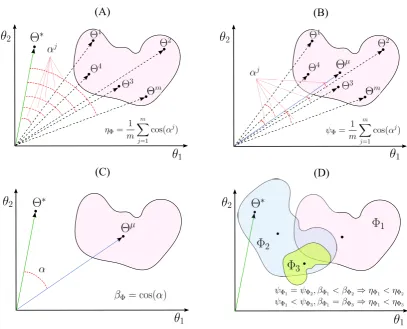
3.3 A schematic illustrations for (A) interpretability (ηΦ), (B) reproducibility (ψΦ), and (C) representativeness (βΦ) of a
linear decoding model in two dimensions. (D) The
indepen-dent effects of the reproducibility and the representativeness
of a model on its interpretability. . . 58
3.4 Two–dimensional geometrical illustration for computing the
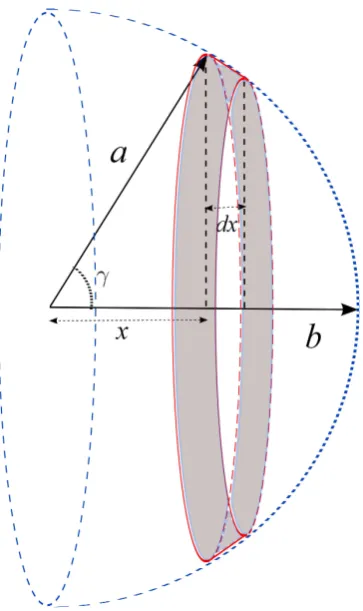
PDF of cosine similarity. . . 60
3.5 Relation between representativeness, reproducibility, and
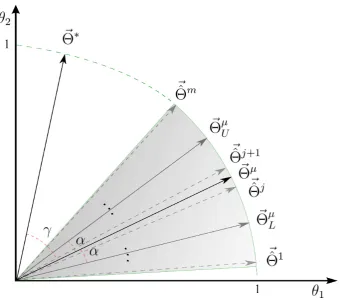
in-terpretability in 2 dimensions. . . 65
3.6 (A) The red circles show the dipole position, and the red
stick shows the dipole direction. (B) The spatio–temporal
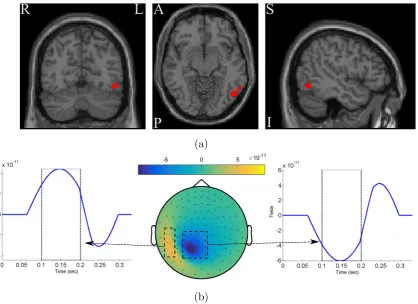
pattern of the discriminative ground–truth effect. . . 73
3.7 Noisy samples of toy data. The dotted line shows the true
separator based on the generative model (Φ∗). The dashed line shows the most accurate classification solution. Because
of the contribution of noise, any interpretation of the
param-eters of the most accurate classifier yields a misleading
con-clusion with respect to the true underlying phenomenon [83]. 77
3.8 (A) The actual ηΦ, and (B) the heuristically approximated
interpretability ˜ηΦ of decoding models across different λ val-ues. There is a significant co–variation (Pearson’s
correla-tion p-value = 9×10⁻⁴) between ηΦ and ˜ηΦ. (C) The gen-eralization performance of decoding models. The box gives
the quartiles, while the whiskers give the 5 and 95 percentiles. 79
3.9 Topographic maps of weights of brain decoding models with
different λ values. . . 79
3.10 (A) Mean and standard–deviation of the performance (δΦ),
interpretability (ηΦ), and ζΦ of Lasso over 16 subjects. (B) Mean and standard–deviation of the reproducibility (ψΦ), representativeness (βΦ), and interpretability (ηΦ) of Lasso
over 16 subjects. The interpretability declines because of
the decrease in both reproducibility and representativeness
(see Proposition 1). (C) Mean and standard–deviation of
the bias, variance, and EPE of Lasso over 16 subjects. While
the change in bias is correlated with that of EPE (Pearson’s
correlation coefficient= 0.9993), there is anti–correlation
be-tween the trend of variance and EPE (Pearson’s correlation
coefficient=−0.8884). . . 81
and ˆΦζi. Adopting ζΦ instead of δΦ in model selection yields (on average) 0.04 less accurate classifiers over 16 subjects.
(B) Comparison between interpretabilities of ˆΦδi and ˆΦζi.
Adopting ζΦ instead of δΦ in model selection yields on
aver-age 0.31 more interpretable classifiers over 16 subjects. . . 83
3.12 Comparison between spatio–temporal multivariate maps of
(A)the most accurate, and(B) the most interpretable
clas-sifiers for Subject 1. Θ~ˆζ1 provides a better spatio–temporal
representation of the N170 effect than Θ~ˆδ1. . . 84
3.13 Comparison of the reproducibility of Lasso when δΦ and
ζΦ are used in the model selection procedure. (A) and (B) show the spatio–temporal patterns represented byΘ~ˆδ1 across the 4 perturbed training sets. (C)and(D) show the spatio–
temporal patterns represented by Θ~ˆζ1 across the 4 perturbed
training sets. Employing ζΦ instead of δΦ in the model
se-lection yields on average 0.15 more reproduciblilty of MBMs. 86
3.14 The mean and standard–deviation of the performance (δΦ),
interpretability (ηΦ), andζΦ of the elastic–net model over 16 subjects. In this dataset, increasing the amount of sparsity
increases the chance of performance–interpretability dilemma. 87
3.15 (A) Comparison between generalization performances of ˆΦδi
and ˆΦζi using elastic–net as the classifier. (B) Comparison
between the interpretability of ˆΦδi and ˆΦζi using elastic–net
as the classifier. The results obtained by the elastic–net
classifier are very similar to the Lasso model. . . 88
3.16 The spatio–temporal MBM of face processing in the across–
subject decoding scenario: (A) before the stimulus onset,
(B) 3 occipo–parietal dipoles 200 ms after the stimulus
on-set, (C) and (D) the forward ventral information flow from
300 to 400 ms after the stimulus onset, (E) the backward
information flow from temporal areas to occipital area 500
ms after the stimulus onset. . . 90
4.1 A schematic illustration for multi–task joint feature learning
via `2,1-norm. The resulting weight matrix has a similar sparse pattern across different tasks while each feature can
have different weights on different tasks. . . 108
4.2 (A) The dipole position in the RAS coordinate system (the
red circle). (B)The time–locked target effect is only present
in the trials of the positive class. (C) The background brain
activity is present in all simulated trials. (D) All trials are
contaminated with white Gaussian noise. (E) An example
of simulated trials in the positive and negative classes. . . 110
4.3 Comparison between the generalization performance and the
reproducibility of the 5 different methods on the simulated
and real MEG data. The results on the simulated data
are averaged over 10 simulation runs and 7 simulated
sub-jects. The results on the real MEG data are averaged over
16 subjects. MT-L21 provides the best decoding
perfor-mance, while preserving the highest reproducibility level
among other competing methods. . . 115
the weight vectors computed using 5 different decoding
ap-proaches (columns) on 7 simulated subjects (rows). The
weight vectors are normalized in the unit hyper–sphere. The
maps show the averaged weights in 100 ms interval from 100
to 200 ms after the stimulus onset. . . 116
4.5 Comparison between the temporal maps of the 5 different
decoding methods with the ground–truth effect, on data
from the first three simulated subjects. The time courses
are showing the temporal patterns of the recovered effect
computed by averaging the weights of the classifier over the
highlighted channels. The channels are selected based on
the spatial distribution of the dipole in the ground–truth
effect (see Figure 4.4). . . 118
4.6 A comparison between the reproducibility of spatio–temporal
maps in the SS-L1 and MT-L21 decoding approaches. The
topographic maps are plotted by averaging the weights of
the classifier between 100 and 200 ms in 3 simulation runs
of simulated subject 1. The recovered time courses are
plot-ted by averaging the weights over the highlighplot-ted channels.
MT-L21 is more stable in recovering the spatio–temporal
maps. . . 120
4.7 Comparison between the performance and reproducibility
of SS-L1, SS-L2, and MT-L21 across 16 subjects of real
MEG data. (A) The scatter plot of 16 decoding models
in the performance–reproducibility plane. The circles
repre-sent subjects and the colors denote different methods. (B)
The fitted normal distributions on the performance of 16
decoding models for 3 different approaches. (C) The fitted
normal distributions on the reproducibility of 16 decoding
models for 3 different approaches. . . 122
4.8 The recovered spatio–temporal representation of the N170
effect in 16 subjects from the real MEG dataset. The topoplots
show the classifier weights for magnetometer sensors
aver-aged in the 150 to 250 ms time period after stimulus onset.
The corresponding plots represent the temporal dynamic of
the dipole (red for the positive effect and blue for the
nega-tive effect) in the time dimension. . . 123
A.1 (A)The distribution of the sampled data without noise and
the true solution. (B) The distribution of sampled data
after noise contamination and the estimated solution of least
squares. . . 164
A.2 Histograms of cosine similarity between 10000 random
vec-tors with a random reference vector in p dimensional space. 166
A.3 (A)The clean positive sample. (B)A noisy positive sample
(C) A negative sample. . . 168
A.4 (A) The effect of sample size and on ∆β. Increase in
sample size and decrease in improves our approximation
of (B) representativeness and (C) interpretability. . . 169
sample size and decrease in σ improves our approximation
of (B) representativeness and (C) interpretability. . . 170
A.6 Recovered time course for simulated subject 4 using 5
dif-ferent methods. . . 170
A.7 Recovered time course for simulated subject 5 using 5
dif-ferent methods. . . 171
A.8 Recovered time course for simulated subject 6 using 5
dif-ferent methods. . . 171
A.9 Recovered time course for simulated subject 7 using 5
dif-ferent methods. . . 171
A.10 Recovered topological maps using SS-L1 method from the
real MEG dataset across all 16 subjects. . . 172
A.11 Recovered topological maps using SS-L2 method from the
real MEG dataset across all 16 subjects. . . 173
A.12 Recovered topological maps using L1 (left) and
Pooling-L2 (Right) methods from the real MEG dataset. . . 173
Chapter 1
Introduction
Understanding the nature and function ofbrain is one of the main questions
that has evoked human curiosity all along the history. Ancient Greek
philosophers envisaged different functions for the brain from 500 B.C.E
to 200 C.E, ranging from it is being the cooling agent of body heat to
the seat of a rational soul and center of sensation and understanding [42].
Nowadays, cognitive science tries to incorporate research areas that are
concerned with neurophysiological and behavioral understanding of the
brain, e.g., neuroscience and psychology, with variety of other research
fields, such as computer science, physics, and statistics, to provide a better
insight into the structure and function of the brain. As the field matures,
techniques are being adopted from other areas of computational science in
order to accelerate research in cognitive science.
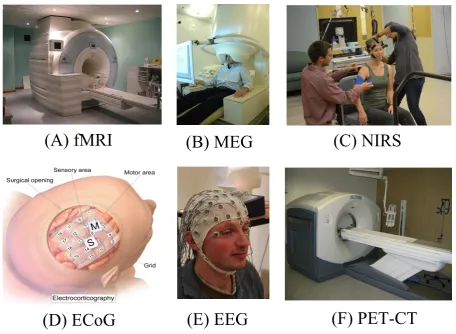
Neuroimaging techniques (see Figure 1.1), also called brain imaging
techniques, such as structural and functional Magnetic Resonance Imaging
(s/fMRI) [54], Electro/Magnetoencephalography (E/MEG) [20, 37],
Elec-trocorticography (ECoG) [103], Positron Emission Tomography (PET) [13],
and Near–Infrared Spectroscopy (NIRS) [25], have become essential tools
for either invasive or non–invasive imaging of the structure and function
of the brain. Structural brain imaging is more concerned about the
(A) fMRI
(B) MEG
(C) NIRS
(D) ECoG
(E) EEG
(F) PET-CT
Figure 1.1: Neuroimaging techniques. (A) Siemens MAGNETOM Trio device for struc-tural and functional brain imaging. (B) CTF–275 MEG scanner for recording magnetic fields produced by electrical currents in the brain. (C) User preparation for a NIRS recording. (D) A grid of ECoG sensors implanted on sensory and motor areas. (E) Con-figuration of EEG sensors on the head for scanning electrical brain activity. (F)Discovery D600 PET–CT system for positron emission tomography.
nosis of large–scale brain diseases resulting from the abnormality in brain
tissues [10, 179], e.g., tumors or brain injuries. On the other side, there
are a variety of applications for functional brain imaging, ranging from the
finer–level medical diagnosis to brain–computer interfaces and
understand-ing brain’s function.
In last three decades, the clinical application of functional brain
3 imaging techniques are used to investigate the neural correlates of various
mental disorders in order to identify biomarkers for them. These
biomark-ers then can be employed to investigate the effect of behavioral therapies
and drug treatments. For example, resting–state functional connectivity
derived from patients’ fMRI are used for early identification of Alzheimer’s
disease and presurgical planning [169]. MEG and EEG recordings are also
employed for finding the seizure onset zone in presurgical evaluation of
epilepsy patients [109].
Brain–computer interface [207] (BCI) is a system that provides a real–
time communication channel between the brain and an external machine.
The application of neuroimaging in BCI is more focused on measuring
elec-trical activity of brain invasively by means of intracranial implants such
as ECoG [120], or non–invasively by means of EEG devices. Then an
algorithm is used for online translation of the recorded brain activity to
machine instructions. This technology has applications in verbal
commu-nication [50], controlling devices [209], affect recognition [1–3, 110], multi–
media content retrival [59], and locomotion [200] especially for individuals
with severe motor disabilities by brainstem stroke or neuro–muscular
dis-eases such as amyotrophic lateral sclerosis.
In cognitive neuroscience [57], researchers use the recorded
neuroimag-ing data to understand the relationship between brain activity and specific
cognitive functions, i.e., to answer three key questions of where, when and
how 1 a brain region contributes to a particular cognitive process. To do this, depending on the question of interest, an experimental protocol is
designed to evoke or induce certain brain activity in human or non–human
participants, while simultaneously recording neural correlates by means of
functional neuroimaging devices. Then statistical analysis techniques are
1Here the answer to “how” question refers to finding the connection between a specific cognitive
employed to justify the initial hypotheses about the three key questions.
Here is an example of a scientific question in cognitive neuroscience [140]:
“We here wanted to reveal whether neural excitability of the auditory
cortex putatively reflected in local alpha–band power is modulated already
prior to speech onset, and which brain regions may mediate such a top–
down preparatory response.”
in which auditory cortex, modulation of alpha–band power, and occurrence
of this modulation prior to speech onset stand for hypothesized answers to
where, how, and when questions, respectively.
In this thesis, we are interested in the application of functional
neu-roimaging in understanding brain function. More specifically, we are
inter-ested in improving the interpretability of multivariate hypothesis testing
approaches in order to infer more reliable, reproducible, and plausible
an-swers to the main questions in cognitive neuroscience. Of course, the
re-sulting methodology is also applicable to the medical diagnosis domain, but
our experimental setups and discussion are more focused on the
applica-tions in confirmatory and exploratory data analysis techniques in cognitive
neuroscience.
There are two schools of thought in statistical analysis for inference on
neuroimaging data [32]: 1) classical statistical testing, and 2) statistical
learning theory. Classical statistical testing is an in–sample
generaliza-tion technique based on null–hypothesis falsificageneraliza-tion, in which, generally,
a set of univariate tests, e.g., t–tests, are independently applied to each
variable of interest. On the other hand, statistical learning theory is a
multivariate approach that is more concerned with out–of–sample
gener-alization. While both techniques are successfully applied for inference on
neuroimaging data, they capture partially different aspects of the
underly-ing neurophysiological activity [32].
5 in classical inference on neuroimaging data [71, 160]. It is typically based
on the mean activity analysis, using e.g., ANOVA, on a pre–specified ROIs.
The pre–specified ROIs are generally decided using prior knowledge on the
studied cognitive process, and the mean activity within the ROIs are tested
in different experimental conditions. Despite the popularity and simplicity
of the ROI analysis method, the prerequisite for pre–selecting the ROIs
limits its application especially in exploratory analysis of neuroimaging
data where little is known about the brain areas involved in a cognitive
function. Addressing this limitation, classical inference evolved to the new
generation of exploratory whole–brain analysis such as mass–univariate
hypothesis testing [64].
Mass–univariate analysis performs a large number of univariate tests
on each variable, e.g., each voxel, independently. It can be employed for
hypothesis testing in whole–brain exploratory analysis without the need
for prior variable selection. However, it requires a procedure to handle
the multiple–comparison problem (MCP) [60]. There are various methods
for multiple–comparison correction based on the strong or weak control of
family–wise error rate (FWER) [203,213] or false discovery rate (FDR) [16]
control. Being essential for the validity of results, on the down side this
correction reduces the power of statistical analysis with the increase in the
number of univariate tests [64].
In statistical learning approaches, also known as brain decoding and
multivariate pattern analysis (MVPA) in the literature [86, 99], a model
is trained to learn the relation between the independent variables, i.e.,
neuroimaging data, and the dependent variables, i.e., experimental
condi-tions. The training is performed in the framework of statistical learning
theory [80]. The performance of the model is evaluated on a test set,
which is different from the initial training set. If the performance is
relation exists between the recorded neural signals and the cognitive task.
The statistical learning approach can possibly provide a multivariate
al-ternative for classical univariate hypothesis testing methods. The
multi-variate nature of this method yields higher sensitivity to the distributed
patterns of brain activities [149] and provides the possibility of
capitaliz-ing the complex interactions among the parameters of interest. Further,
by employing proper validation strategies, it resolves the multiple testing
problem of mass–univariate approaches [98]. In this thesis, we use brain
decoding to refer to the application of the statistical learning theory in the
neuroimaging context.
Due to the high dimensionality and limited number of samples typically
associated with neuroimaging data [41, 114], linear classifiers are generally
used to assess the relation between spatio–temporal brain measurements
and cognitive tasks [22, 118, 157]. This assessment is performed by
solv-ing an optimization problem that minimizes a loss function by learnsolv-ing
weights associated with each independent variable. These learned weights
can then be visualized in the form of a brain map, in which the
engage-ment of different brain areas in a cognitive task is illustrated. In fact,
brain mapping via brain decoding can be viewed as a pattern recovery
problem, where the goal is to recover spatio–temporal patterns of the
dis-criminative brain activity involved in the cognitive processing of external
stimuli. If successful, brain maps created by means of brain decoding can
provide a comprehensive explanation regarding the nature of neural
rep-resentations and brain states, and may be more informative for cognitive
science than a merely decoding accuracy measure [154]. Currently, brain
decoding is the gold standard in multivariate analysis of functional
mag-netic resonance images (fMRI) [41, 86, 135, 149] and
magnetoencephalogra-phy/electroencephalography(MEG/EEG) data [3, 34, 36, 93, 156, 167, 199].
7 interpretability of weights of classifiers, especially in group studies of
neu-roimaging data.
A classifier or a regression model that is trained in the statistical
learn-ing framework only answers the question of what is the most likely label
of a given unseen sample [12]. This fact is generally known as the
knowl-edge extraction gap [198] in the machine learning context. Thus far, much
effort has been devoted to filling this gap of linear and non–linear data
modeling methods in different areas such as computer vision [11], signal
processing [137], chemometrics [216], bioinformatics [72], and
neuroinfor-matics [83]. In the context of neuroimaging, this gap is generally known
as the interpretation problem [88, 142, 172]. Therefore, improving the
in-terpretability of linear brain decoding and the associated brain maps is a
topic of interest in many neuroimaging studies [178]. In spite of the
exten-sive efforts to improve the interpretability of brain decoding, there is still
no formal definition for the interpretability of brain decoding. Therefore,
the interpretability of different brain decoding methods is evaluated either
qualitatively or indirectly by means of an intermediate property.
Group–level analyses of neuroimaging data are extremely important,
as they allow for results to be generalized to new individuals. In
sta-tistical learning, an ideal group–level approach should be able to recover
both structural and functional similarities and dissimilarities across
differ-ent individuals. These similarities and dissimilarities generally occur at
both a coarse and fine level in space and time, and can provide valuable
spatio–temporal information about both the underlying macro and micro–
structures of the cognitive function in question. For example, visual stimuli
in general evoke a coarsely similar effect in early visual brain areas across
different subjects, but the response to different types or categories of visual
stimuli can differ from subject to subject at the finer level (see Ref. [87] for
level inference on neuroimaging data challenging, particularly since there is
also substantial across–subject variability in the brain structure (e.g., the
different size and shape of brains) [129, 164, 165, 180, 181]. This problem is
even more pronounced when one takes into account the difference in the
spatio–temporal structure of noise that commonly occurs due to different
external and internal sources, or manual preprocessing errors. These
vari-ations not only negatively affect the generalization performance of brain
decoding, but they also make post–hoc interpretation of the derived brain
maps more challenging, due to concerns about lack of reproducibility and
plausibility. For these reasons, it is crucial to explore more effective
de-coding methods that are capable of recovering structural and functional
similarities and dissimilarities in a group–level analysis of neuroimaging
data.
With the aim of filling these gaps, the contribution of this thesis is
two–fold:
1. A theoretical definition for the interpretability of linear brain
decod-ing models is presented. The definition is based on cosine proximity
between the estimated and true solutions of brain decoding in the
parameter space. Furthermore, it is shown that the interpretability
can be decomposed into the reproducibility and representativeness.
As a proof of concept, a practical heuristic based on event–related
fields is exemplified to quantify the interpretability of brain maps.
Furthermore, the combination of interpretability and performance of
brain decoding is proposed as a new Pareto optimal multi–objective
criterion for model selection.
2. An application of multi–task joint feature learning [9] for accurate
spatio–temporal pattern recovery at the group–level decoding of MEG
9 is considered as a task in the multi–task learning framework, where
only one decoding model is simultaneously trained over all subjects.
Further, `2,1 regularization [124] is employed to learn sparse patterns
consistently across different subjects, i.e., to jointly learn the features
across different subjects.
Regarding my first contribution, the presented definition for
interpretabil-ity of linear brain decoding models provides a concrete framework for a
pre-viously abstract concept and establishes theoretical background to explain
an ambiguous phenomenon in the brain decoding context. The
experi-mental results on MEG data show that accounting for the approximated
measure of interpretability has a positive effect on the human
interpreta-tion of brain decoding models. Furthermore, the proposed decomposiinterpreta-tion
of the interpretability of brain maps into their reproducibility and
repre-sentativeness explains the relationship between the influential cooperative
factors in the interpretability of brain decoding models and highlights the
possibility of indirect and partial evaluation of interpretability by
mea-suring these effective factors. The experimental results on single–subject
MEG decoding showed that adopting the new proposed criterion for
op-timizing the hyper–parameters of brain decoding models is an important
step toward reliable visualization of learned models from neuroimaging
data. Furthermore, these findings provide a step toward direct evaluation
of interpretability of the currently proposed regularization strategies. Such
an evaluation can highlight the advantages and disadvantages of applying
different regularization strategies on different data types and facilitates the
choice of appropriate regularizer for a certain application.
Regarding my second contribution, multi–task joint feature learning
fa-cilitates consistent sparse pattern recovery across individual subjects while
at the same time preserving idiosyncratic structural and functional
spatio–temporal similarities and dissimilarities of brain activity, multi–task
joint feature learning provides higher interpretability for multivariate brain
maps at the group–level. To my knowledge, this is the first time one uses
multi–task joint feature learning in the context of group–level MEG
de-coding. Considering the fact that only EEG and MEG can non–invasively
record brain activity at a high temporal resolution [75, 78], the proposed
approach provides the possibility for recovering temporal brain dynamics
within the millisecond time scale, a crucial task if we aim to understand the
dynamics of human brain function [77, 79]. On the other hand, multi–task
joint feature learning provides the infrastructure for combining structured
regularization with stability selection in group–level multivariate analysis.
While `2,1 penalty combines `2 and `1 norms to enforce group sparsity, its integration with simultaneous optimization in multi–task learning also
offers a variant of stability selection across a group of subjects.
The rest of this thesis is organized in the following 4 chapters:
1. In order to provide the basic background for the general audience,
Chapter 2 reviews the basic concepts and terminologies that are used
to develop the contributions of this thesis. To this end, the basic
terminology to describe the structure and function of human brain is
firstly introduced. Then the principles of brain recording and analysis
using MEG data are briefly reviewed. At the end, I review the
con-cepts behind hypothesis testing on neuroimaging data, ranging from
the classical hypothesis testing to the statistical learning theory.
2. Chapter 3 presents a novel definition for the interpretability of linear
brain decoding models [105, 108]. It is shown that the
interpretabil-ity of multivariate brain maps can be decomposed into their
repro-ducibility and representativeness. Then, a heuristic for approximating
11 is exemplified. Finally, I propose to combine the approximated
in-terpretability and the generalization performance of brain decoding
into a new multi–objective criterion for model selection. The results
demonstrate the importance of including interpretability in the model
selection for deriving more meaningful brain maps.
3. In Chapter 4, an application of multi–task joint feature learning for
group–level multivariate pattern recovery in single–trial MEG
decod-ing is proposed [106, 107]. The proposed method allows for recoverdecod-ing
sparse yet consistent patterns across different subjects, and therefore
enhances the interpretability of the decoding model in group–level
analysis.
4. Finally, Chapter 5 summarizes the lessons that have been learned and
Chapter 2
Background
The aim of this chapter is to provide background information about brain,
magnetoencephalography (MEG), hypothesis testing, and machine
learn-ing for the readers. The basic concepts introduced in this chapter provide
the formal and conceptual ingredients for understanding our contributions
in the following chapters. To this end, we first introduce the basic
ter-minology that is used to describe the brain structure. Second, we briefly
describe the mechanisms and characteristics of extracranial magnetic field
recording using an MEG device. Third, the principles of classic statistical
hypothesis testing on the neuroimaging data are reviewed. We finalize this
chapter by introducing the basic concepts in statistical learning theory.
2.1
Brain: from Neurons to the Cerebral Cortex
The brain is an organ contained in the skull of vertebrates and head of
most invertebrate animals; brain serves as the coordinating center of the
nervous system. The brain tissue is composed of two classes of cells:
1) neurons, and 2) glial cells. Glial cells are involved in structural and
metabolic support. Neurons are the basic elements of the nervous system
that process and transmit information via electro–chemical processes [100].
These signals are transmitted from one neuron to another via specialized
inter–neuron connections called synapses. Synapses are key functional
el-ements of the brain as they form modifiable communication channels
be-tween neurons [174]. This modifiability provides the possibility of changing
the strength or patterns of neuro–electrical signals. This key feature
pro-vides the infrastructure for crucial brain functions such as learning and
memory. The web between neurons form densely connected networks. To
understand better the structural complexity of the neural networks, it is
worthwhile to emphasize that the brain has around 1011 neurons each of which with up to ∼ 104 connections.
A typical neuron is composed of a cell body or soma, dendrites, and an
axon (see Figure 2.1). The electrical signals are received by the dendrites,
integrated at the soma, and transmitted to the synaptic terminals via the
axon. The signals that are transmitted along the axon are called action
potentials and the received signals at dendrites are called post–synaptic
po-tentials. Neurons are classified to several categories based on their
struc-tural properties. Purkinje neurons, Pyramidal neurons, Granule neurons,
and Spindle neurons are examples of neuron types in the brain.
Axons are generally wrapped in a fatty insulating cover called myelin.
Myelin is white, thus, the area of the brain that includes axons appears
white, hence, it is known aswhite matter [see Figure 2.2(A)]. In contrast the
area that contains the cell bodies of neurons and dendrites appears darker
and it is called the gray matter. The gray matter forms the human cerebral
cortex which is divided into left and right hemispheres along the sagittal
plane. The types of neurons in the gray matter divide the cerebral cortex
into six layers [see Figure 2.2(B)]: 1) molecular layer, 2) external granular
layer, 3) external pyramidal layer, 4) internal granular layer, 5) internal
pyramidal layer, and 6) polymorphic layer. The human cerebral cortex is
coarsely segmented into four lobes in each hemisphere [see Figure 2.2(C)]:
2.1. Brain: from Neurons to the Cerebral Cortex 15
Figure 2.1: The structure of a typical neuron [206]. The electrical signals are received by the dendrites, processed at the soma, and transmitted to the synaptic terminals via the axon.
called as V1 area or striate cortex) which processes the low–level
vi-sual features such as local orientation and spatial frequency. Primary
visual cortex is followed up by the ventral stream (V2 and V4 areas),
and the dorsal stream (V3, and V5 areas). The ventral stream
pro-cesses important information regard the identification of stimuli while
the dorsal stream focuses more on the spatial aspects of motor actions
in response to visual stimuli.
2. Parietal Lobe: The parietal lobe plays important roles in integrating
sensory information, e.g., visuo–spatial processing, and language.
3. Temporal Lobe: The temporal lobe consists several sub–areas which
are involved in associating meanings to the sensory inputs such as
visual and auditory stimuli, language comprehension, and emotion
processing.
(A)O (B)O (C)O
Molecular
OExternalO Granular OExternalO PyramidalO OInternalO Granular InternalO Pyramidal
OPolymorphic GrayO
Matter WhiteO
Matter FrontalLobe
Parietal Lobe
Occipital Lobe
Temporal Lobe
Figure 2.2: (A) The organization of the white and gray matter in the human brain.
(B) The six layers of the gray matter. (C) The division of human cerebral cortex into occipital, parietal, temporal, and frontal lobes [204].
and performs some high–level cognitive functions such as attention,
short–term memory, emotions, and planning.
2.2
Magnetoencephalography (MEG)
2.2.1 History and Mechanisms
Nowadays, neuroimaging methods that allow to explore the brain
func-tions within the millisecond time scale provide exceptional opportunity to
unveil temproal patterns of neural activity [68, 75, 77–79, 150]. Up to now,
only electroencephalogram (EEG) and magnetoencephalogram (MEG) can
non–invasively record neural activity at such a high temporal resolution.
These methods allow for real–time tracking of brain activation sequences
during sensory processing, motor planning and action, cognition, language
perception and production, social interaction, and various brain
disor-ders [73, 74, 76, 188].
According to Maxwell’s equations, the post–synaptic electrical current
2.2. Magnetoencephalography (MEG) 17 the magnitude of the resulting magnetic field can be used as an
indica-tor for the activation of population of neurons. The weak neuro–magnetic
fields outside the human scalp were first measured by David Cohen in
1968 [37] using a copper induction coil. The weakness of the cortical
mag-netic fields, which are on the order of 10-103 femtotesla (fT), compared to the environmental noise led to the invention of superconducting
quan-tum interference device (SQUID) [222]. Cohen used a heavy magnetically
shielded room and a single SQUID detector to show that MEG can capture
the brain’s alpha rhythms similarly as EEG [38]. Currently, MEG devices
contain around 300 SQUIDs arranged in a helmet–shaped array that cover
the whole human scalp [see Figure 1.1(B)].
Measuring the magnetic fields around the scalp provides an exceptional
technique to investigate the cognitive function of different brain regions
especially within cortical sulci that are barely observable even with
in-vasive intracranial brain recording techniques. The majority of magnetic
field measured by SQUID are produced by the parallel pyramidal cells that
are perpendicular to the cortical surface. Their electrical current flow is
directed perpendicular to the cortical sheet of the gray matter. Thus
mag-netic fields resulting from the synchronized tangential neural activity across
a population of pyramidal neurons can be sensed via SQUIDs outside the
head (see Figure 2.3).
In modern MEG devices, the temporal and spatial sampling frequency
is designed based on the multidimensional generalization of Nyqvist
crite-rion to avoid any spatio–temporal aliasing [6]. The temporal and spatial
sampling rate are generally ∼ 1000 and ∼ 300, respectively. The ∼ 300
spatial sampling rate stands for ∼ 300 MEG sensors which could be
dif-ferent from one device to another. For example CTF MEG 1 and Electa
1See
Figure 2.3: The radial magnetic fields resulting from the tangential electrical currents can be measured outside the scalp [205].
Neuromag 2 systems have 275 and 306 sensors, respectively. The MEG sensors, depending on the type of the corresponding flux transformer, i.e.,
a device that transforms the magnetic field to SQUID, are categorized into
three main types [68]: 1) magnetometer, 2) axial gradiometer, and 3)
pla-nar gradiometer. Magnetometer sensors, with a single coil, measure only
one component of the magnetic field [see Figure 2.4(A)]. Axial
gradiome-ters consist of two vertically connected coils with opposite directions, thus,
these sensors are insensitive to homogeneous fields and therefore to most of
environmental noise [see Figure 2.4(B)]. Planar gradiometers consist of two
twisted magnetometers placed next to each other and measure the gradient
of the magnetic field in a plane roughly tangential to the head surface [see
Figure 2.4(C)].
Even though the effect of environmental noise can be alleviated to some
degree with astute design of flux transformers, the recorded MEG signal
is often contaminated with artifacts. Eye blinks, eye movements, cardiac
2See
2.2. Magnetoencephalography (MEG) 19
(A) (B) (C)
Figure 2.4: Types of flux transformers in MEG sensors [68]: (A) Magnetometer, (B) Axial gradiometer, (C) Planar gradiometer.
activity, and muscular activity are examples of biological artifacts in MEG
signal. These artifacts can be partially rejected using band–pass frequency
filtering or using blind–source separation methods such as independent
component analysis (ICA) [94].
2.2.2 Data Analysis
Time–Domain Analysis
One of the most common methods for analyzing the EEG/MEG signals
is to compute the average event–related potential/fields (ERP/ERF) [71].
ERP/ERFs are suitable for investigating the neuronal correlates of specific
transient external stimuli [125]. In addition, abnormality in ERP/ERF
components can be used as a clinical biomarker for diagnosing
neurologi-cal diseases such as Alzheimer’s [27], Parkinson’s [163], and multiple
scle-rosis [159].
The main idea behind computing the ERP/ERF is to increase the
signal–to–noise ratio (SNR). Due to the internal (such as background brain
activity and other biological interference) and external (electromagnetic
contaminations, the single trials of EEG/MEG data suffer from low SNR.
One simple solution to address this problem is to compure ERP/ERF by
averaging many trials in order to cancel out the random uncorrelated noise
components [171]. The averaging operation is based on three main
assump-tions: 1) the noise components are uncorrelated with the signal of interest;
2) the signal of interest is time–locked, i.e., it has a fixed latency with
respect to the stimulus onset. This type of time–locked response is also
called as the evoked response in the literature; 3) the noise components
have a zero–mean Gaussian distribution with variance of σ2. This ap-proach is generally known as a time–locked analysis and is available within
common EEG/MEG data analysis toolboxes such as Filedtrip [153], MNE–
Python [61], and EEGLAB [47].
One possible approach to interpret ERP/ERF responses is to categorize
them based on their amplitude and latency [171]. ERP/ERF responses
are divided into positive and negative based on the sign of their
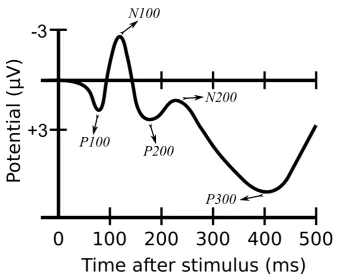
ampli-tudes. The P100, P200, and P300 are examples of well–known positive
components that are evoked around 100, 200, and 300 ms after the stimulus
onset, respectively. The P100 is typically modulated by attention in the
extrastriate cortex and in response to visual stimuli [193]. The P200
com-ponent is involved in cognitive processes such as working memory [116]
and semantic processing [53]. The P300 indicates higher cognitive
pro-cesses and occurs in response to a variety of sensory stimuli such as visual,
tactile, and auditory [161]. Due to its robustness, the P300 has some
ap-plications in the BCI context [158]. The N100 and N170 are examples
of negative ERP/ERF components that are generally elicited in response
to auditory [141] and human face [19] stimuli, respectively. Figure 2.5
2.2. Magnetoencephalography (MEG) 21
P100
N100
P200
N200
P300
Figure 2.5: A schematic illustration of some well–known ERPs.
Time–Frequency Analysis
In computing the evoked ERP/ERF in response to external stimuli/events,
one of the main assumptions is that the signal of interest is time–locked.
But in fact brain responses are not always time–locked to the stimulus
onset, and the timing might change slightly from one epoch to another.
These jitters in time result in cancellation of positive and negative signal
components when averaging the epochs. This situation might happen also
in case of induced responses, i.e., when the response is time–locked but
not phase–locked. An example for this kind of responses is Gamma
os-cillation in complex stimulus processing [182]. One possible approach to
overcome this problem is to compute the frequency power spectrograms by
transferring the signal from time domain to the time–frequency domain.
Short–time Fourier transform (SFT) and wavelet transform are two
signals [68]. The computation is generally performed by calculating the
spectral power of different frequency bands on a sliding interval of the
sig-nal. The length of intervals can be considered fixed for different frequency
bands. An alternative and more effective approach is to decrease the
in-terval length by increase in frequency. The analysis can be enhanced using
the multitaper technique [136] which allows for a better control of time
and frequency smoothing and reduces spectral leakage.
Source–Space Analysis
The electrical/magnetic brain activity is recorded via EEG/MEG sensors
placed around the head. In sensor–space EEG/MEG data, each sensor
records the electrical/magnetic activity from several sources in the brain.
The goal of transferring the sensor–space data to the source–space is to
estimate the source of brain activity based on the signals measured
out-side the head. Although the EEG/MEG data are measured simultaneously
with several sensors, transforming the data to the source–space is an ill–
posed problem without a unique solution. This problem is known as the
inverse problem [68] in the context of EEG/MEG data analysis. One
pos-sible solution to derive valuable information on source distribution of brain
activity is to include additional physiological information in order to put
some constraints on the inverse problem. There are two main directions
toward addressing the inverse problem:
1. Parametric source models: These approaches make some specific
assumptions on the number and locations of focal sources. Generally,
it is assumed that there are few active sources and their number,
lo-cations, and orientations are estimated iteratively e.g., by using
stan-dard nonlinear least–squares optimization methods [130], until the
predicted electric potential or magnetic field is sufficiently close to the
multi-2.3. Statistical Hypothesis Testing 23 ple signal characterization [139] are two common parametric source
estimation approaches.
2. Distributed dipole models: Unlike parametric approaches, the
dipole distribution models make little assumptions on the
parame-ters of the source model, instead they try to extract the
characteris-tics of the data distribution in source–space in a data–driven manner.
To this end, distributed dipole models assume that the sources are
distributed within a volume or on a surface and then use various
esti-mation techniques to find out the most plausible source distribution.
Linear minimum–norm estimation [70] is an example of these
meth-ods.
2.3
Statistical Hypothesis Testing
The falsifiability is an indispensable principle of any scientific
hypothe-sis [162]. The falsifiability means that before any scientific hypothehypothe-sis is
accepted as a theory, it must be inherently disprovable. In fact, the
falsifia-bility provides the possifalsifia-bility of replacing an old theory by an enhanced one
with more generalization. Statistical hypothesis testing provides a
frame-work to measure the degree of falsifiability of a probabilistic hypothesis. In
this section, we review the basic concepts behind the classical hypothesis
testing approaches with focus on applications in neuroimaging.
2.3.1 Classical Hypothesis Testing
A scientific hypothesis is a proposed explanation for a general behavior
of a particular phenomenon that is made based on limited observations.
The validity of any scientific hypothesis is evaluated by means of statistical
hypothesis testing can be performed by adopting either a frequentist or
Bayesian approach.
Frequentist Framework
In the frequentist approach, the falsifiability of a hypothesis is measured
by computing the probability of erroneous inference by replicating the
experiment. There are two major schools of thoughts in frequentist
ap-proach [21, 117, 119, 152]:
1. Significance Testing (Fisher’s method): Ronald Fisher for the
first time introduced the concept of significance testing in statistics [55].
The Fisher’s procedure for significance testing is as follows [see
Fig-ure 2.6(A)]:
i . Setting up the null hypothesis H0. The aim of the experiments is to prove that the null hypothesis is false.
ii . Choosing an appropriate test statistic T to summarize the data
in real numbers.
iii . Deriving the null distribution p(T | H0) analytically or by
re-sampling.
iv . Collecting the experimental data and calculating the test
statis-tic in the observed data To.
v . Computing the p-value = p(T ≥ To | H0).
vi . Reporting the p-value as a measure of evidence against H0.
2. Hypothesis Testing (Neyman–Pearson’s Method): is
intro-duced first time in a paper by Jerzy Neyman and Egon Pearson in
1933 [145]. The Neyman–Pearson approach is applicable when the
2.3. Statistical Hypothesis Testing 25
(A) Significance Testing (B) Hypothesis Testing
Figure 2.6: Frequentist frameworks in classical hypothesis testing: (A) Fisher’s method for the significance testing. (B) Neyman–Pearson’s method for the hypothesis testing.
and a meaningful cost/benefit trade–off can be set between the two.
The whole procedure can be summarized as follows [see Figure 2.6(B)]:
i . Setting up two simple complementary hypotheses: the null H1 and the alternative H2 hypothesis. The aim of the test is to see
whether we can reject H1 in favor of H2.
ii . Choosing an appropriate summary of the data based on a test
statistic T.
iii . Deciding critical value α, so called the Type I error rate or
false positive rate, and the sample size n. The α is a parameter
that specifies the probability of false alarms, i.e, the probability
of rejecting the null hypothesis when it is true.
iv . Computing the power of test for a given α and statistics T. The
power of the test is 1− β, where β is the Type II error rate or
false negative rate.
v . Computing the rejection region R on T. The rejection region is
the range of values in T where the null hypothesis is rejected.
vi . Running the experiment and computing the statistic To on the
vii . Rejecting H1 and accepting H2 if To ∈ R, accepting H1 and rejecting H2 if To ∈/ R.
It is worthwhile to emphasize that failing to reject the H1 in hypothesis
testing must not be interpreted as the correctness of the null hypothesis,
but it just shows a lack of evidence against it [147].
Bayesian Framework
Bayesian framework is an alternative for the frequentist approaches in
sta-tistical hypothesis testing [147]. In contrary to the frequentist approaches
that test the data given the hypothesis, in Bayesian hypothesis testing we
test the hypothesis given the data. The procedure for general Bayesian
hypothesis testing for two alternative hypotheses can be summarized as
follows:
1. Set up two mutually exclusive hypotheses, H1 and H2.
2. Run the experiment and collect the data D.
3. Use prior knowledge to specify the prior probabilitiesp(H1) andp(H2) where p(H1) +p(H2) = 1.
4. Specify the likelihood functions to model the data given the
hypothe-ses: p(D | H1) and p(D | H2).
5. Compute the posterior probability of each hypothesis using the Bayes
rule: p(Hi | D) =
p(D|Hi)p(Hi)
P2
j=1p(D|Hj)p(Hj)
.
6. Test the hypothesis using one of the following approaches:
i . Maximum a posteriori (MAP) approach: we accept H1 if p(H1 |
D) > p(H2 | D) and vice versa.
ii . Bayes factor (BF) approach: we compute the BF as p(D|H1)
p(D|H2). The
2.3. Statistical Hypothesis Testing 27 Table 2.1: Interpretation of the Bayes factor.
Bayes Factor (BF) Evidence
<1 Negative (H1 is rejected andH2 is accepted)
1 to 3 Barely worth mentioning 3 to 10 Substantial (in favor of H1)
10 to 30 Strong (in favor of H1)
30 to 100 Very strong (in favor ofH1) >100 Decisive (in favor of H1)
2.3.2 Mass–Univariate Hypothesis Testing on MEG data
The recorded MEG data represent the neural sources in space, time, and
frequency domains; thus, the data contain spatio–temporal correlated
struc-tures. Therefore, an ideal approach for hypothesis testing on MEG data
should consider the full range of spatio–temporal information. However,
the common statistical hypothesis testing approaches on MEG data [48] fail
to fully get advantage of these spatio–temporal information [64]. This fact
motivates exploring new methods for statistical testing on high–dimensional
data. Mass–univariate hypothesis testing is an effective approach in this
direction, and it can be used to simultaneously perform a large number of
univariate tests on whole spatio–temporal variables. In MEG data
analy-sis, the mass–univariate hypothesis testing can detect the underlying
neu-rophysiological effects with greater temporal and spatial details compared
to the conventional priori–based analysis. Therefore, it is preferable to
conventional analysis in exploratory studies on neuroimaging data where
little is known in advance about when, where, and how an effect will occur.
Despite its effectiveness, mass–univariate hypothesis testing suffers from
multiple comparisons problem (MCP). The MCP occurs in statistical
hy-pothesis testing when a set of statistical inferences are simultaneously
hypothesis on several data dimensions, e.g., on several MEG sensors. The
MCP increases the chance of commiting the Type I error, thus, ignoring
the MCP poses a threat on the reliability of multiple statistical testing [15].
Several techniques are proposed for correcting the results of multiple
statis-tical tests. These approaches can be classified into two main categories: 1)
controlling the family–wise error rate, and 2) controlling the false discovery
rate.
1. Controlling the Family–Wise Error Rate: The family–wise error
rate (FWER) is the probability of making at least one Type I error in
multiple–hypothesis testing. There are several methods to strongly or
weakly control the FWER such as Bonferroni correction, step–down
procedure [92], step–up procedure [91], and non–parametric cluster–
based permutation tests [127].
2. Controlling the False Discovery Rate: The false discovery rate
(FDR) is defined as the expected proportion of false discoveries to all
discoveries [16]. Here a discovery refers to the rejection of the null
hypothesis. Controlling the FDR is less restrictive than controlling
the FWER, thus, it provides more statistical power but increases the
Type I error rate. So far several methods have been proposed in
the literature for controlling the FDR such as controlling the FDR
under dependency [18], positive FDR [177], and adaptive linear step–
up procedures [17].
Being essential for validity of results, on the down side, both strong
control of FWER and controlling FDR reduce the statistical power of mass–
univariate analysis. One possible approach to alleviate this problem is to
weakly control the FWER, which guarantees the control of FWER in case
there are no experimental effects [146]. The cluster–mass test [31] is a
2.3. Statistical Hypothesis Testing 29 and Oostenveld [127] for non–parametric cluster–based permutation test
on MEG data. The intuitive idea behind the cluster–based permutation
test is that if a group of significant tests are clustered meaningfully in
space, time, and frequency then the chance of committing the Type I error
decreases. This method can be summarized as the following steps [64,127]:
1. Combine the MEG trials of the two experimental conditions A and B
in a single dataset D.
2. Compute a random partition of D into A and B, D0, by randomly permuting the trials.
3. For all the independent variables of D0 in time and space (e.g., each time–bin of each sensor), compute the statistic T, e.g., t–statistic.
4. Ignore all variables with T statistic below a certain threshold. The
threshold is decided based on the pre–specified α and the probability
distribution of T.
5. Cluster the remaining independent variables that are adjacent in time
and space.
6. Compute the cluster–level statistic Tc for each cluster, for example by
summing up the statistics in each cluster.
7. Save the largest cluster level statistic as Tmax.
8. Repeat the steps 2–7 to construct the null hypothesis of cluster–level
statistics on the randomly partitioned data.
9. Perform steps 3–6 on D and save the cluster–level statistic for each
cluster in T∗.
10. Use the Montecarlo method on the null hypothesis derived in step 8
is computed by computing the proportion of Tmax that are larger than
T∗.
11. The cluster–levelp-value is assigned to the all variables in that cluster.
The p-value of ignored variables (not involved in any cluster) are set
to 1.
In spite of its higher statistical power, the non–parametric cluster–based
permutation test suffers from three main limitations: 1) since it weakly
controls FWER, it is not reliable for explaining the exact spatio–temporal
pattern of the underlying effect. This shortcoming makes this method
more appropriate for understanding whether an effect is present in data
rather than finding out exactly when and where the effect occurs [127]; 2)
it is not sensitive enough to detect narrowly distributed effects in time and
space [64, 65]; 3) due to its univariate nature, it does not benefit from
mul-tivariate and distributed patterns across different sensors, frequency bands,
and time scales. These limitations motivate exploring new approaches with
higher sensitivity and specificity that enable researchers to find the exact
discriminative source of neural correlates across different experimental
con-ditions.
2.4
Statistical Learning Theory
Statistical learning theory provides an alternative for classic statistical
hy-pothesis testing approaches. In the following text we briefly introduce the
basic concepts in the statistical learning theory that are used in the rest of
2.4. Statistical Learning Theory 31
2.4.1 From Maximum a Posteriori to Risk Minimization
In the supervised statistical learning framework, the main aim is to learn a
function Φ∗ : X → Y, whereX = Rp andY represent the input and output spaces, respectively. In practice, the l
![Figure 2.1: The structure of a typical neuron [206]. The electrical signals are received bythe dendrites, processed at the soma, and transmitted to the synaptic terminals via theaxon.](https://thumb-us.123doks.com/thumbv2/123dok_us/531380.2053083/35.595.150.480.140.348/structure-electrical-received-dendrites-processed-transmitted-synaptic-terminals.webp)
![Figure 2.3: The radial magnetic fields resulting from the tangential electrical currents canbe measured outside the scalp [205].](https://thumb-us.123doks.com/thumbv2/123dok_us/531380.2053083/38.595.167.397.130.341/figure-magnetic-elds-resulting-tangential-electrical-currents-measured.webp)
![Figure 2.7: The components of the error and the effect of regularization on the bias andvariance of a model [81].](https://thumb-us.123doks.com/thumbv2/123dok_us/531380.2053083/54.595.111.455.129.485/figure-components-error-eect-regularization-bias-andvariance-model.webp)