HEALTH-RELATED VARIABLES, PHYSICAL ACTIVITY, AND NUTRITION
by
Jennifer Ashley Summers
A thesis
submitted in partial fulfillment of the requirements for the degree of Master of Health Science, Health Promotion
Boise State University
© 2013
BOISE STATE UNIVERSITY GRADUATE COLLEGE
DEFENSE COMMITTEE AND FINAL READING APPROVALS
of the thesis submitted by
Jennifer Ashley Summers
Thesis Title: Project PHIT: A 10-Week University Intervention Improves Health-Related Variables, Physical Activity, and Nutrition
Date of Final Oral Examination: 26 November 2012
The following individuals read and discussed the thesis submitted by student Jennifer Ashley Summers, and they evaluated her presentation and response to questions during the final oral examination. They found that the student passed the final oral examination.
Caile Spear, Ph.D. Chair, Supervisory Committee
Lynda Ransdell, Ph.D. Member, Supervisory Committee Tedd McDonald, Ph.D. Member, Supervisory Committee
iv
ACKNOWLEDGEMENTS
I would like to take this opportunity to thank my mentor, Dr. Lynda Ransdell. She has always been willing to offer her time, advice, and energy in helping make this a quality thesis. Thank you.
v ABSTRACT
Project PHIT: A 10-Week University Program Improves Health-Related Variables, Physical Activity, and Nutrition
by Jennifer Ashley Summers
Despite increasing evidence regarding the benefits of regular physical activity and healthy nutritional habits, a large percentage of the population does not participate in regular exercise or eat the recommended daily servings of fruits and vegetables. Previous studies have identified the use of social support as a means to modify health behavior. The purpose of this study was to assess the effects of a 10-week Project PHIT
vi
Demographic and Health History Questionnaire to gather data such as age, health history, and ability to perform physical activity; 2) The Social Support Questionnaire to determine participants’ perceived level of social support relative to nutritional and physical activity habits; 3) the Fitnessgram Physical Activity Questionnaire to detect physical activity changes; and 4) The Block Food Frequency: Rapid Food Screener for Fruits, Vegetables and Fiber to detect nutrition changes, as a result of the intervention. The majority of participants (24 out of 26 or 92.3%) attended at least 86% of the sessions. Repeated measures multivariate analysis of variances indicated: (a) significant positive changes in body mass (kilograms) (p=0.01), reduced systolic blood pressure (mmHg) (p=0.033), reduced diastolic blood pressure (mmHg) (p=0.03), and aerobic capacity (VO2
vii
TABLE OF CONTENTS
ACKNOWLEDGEMENTS ... iv
ABSTRACT ...v
LIST OF TABLES ...x
CHAPTER ONE: INTRODUCTION ...1
Introduction ...1
Statement of Problem ...5
Purpose ...5
Research Questions ...6
Delimitations ...6
Limitations ...7
Definition of Terms...8
CHAPTER TWO: LITERATURE REVIEW ...10
Prevalence of Physical Activity in American Adults and the Relationship Between Physical Activity and Disease ...10
Current Dietary Habits of Americans and the Relationship Between Diet and Health ...12
Workplace-Based Interventions ...14
Social Support Theories and Models and Applications within Interventions ...17
CHAPTER THREE: METHOD ...25
viii
Participants ...25
Intervention Description ...26
Adherence and Compliance ...26
Procedures ...27
Instrumentation ...29
Health-Related Fitness Variables ...31
Data Analysis ...34
CHAPTER FOUR: RESULTS ...35
Participants ...35
Health-Related Variables ...35
Physical Activity ...36
Nutrition ...37
Social Support ...38
CHAPTER FIVE: DISCUSSION ...40
Research question 1: Will a 10-week Project PHIT intervention change physical activity as measured objectively with pedometers in this sample? ...40
Research question 2: Will a 10-week Project PHIT intervention change physical activity (aerobic, weight training, and flexibility exercises) as measured subjectively with a questionnaire in this sample? ...42
Research question 3: Will a 10-week Project PHIT intervention change the intake of fruits, vegetables and fiber in this sample? ...44
Research question 4: Will a 10-week Project PHIT intervention change health-related fitness (e.g. weight, blood pressure and cardiovascular fitness) in this sample? ...47
ix
REFERENCES ...52
APPENDIX A ...64
The Demographic and Health History Questionnaire ...64
APPENDIX B ...67
Project PHIT: Consent Form ...67
APPENDIX C ...70
Schedule of Topics and Activities for Project PHIT ...70
APPENDIX D ...73
Project PHIT: Fitnessgram Physical Activity Questionnaire ...73
APPENDIX E ...74
Project PHIT: Block Food Frequency- Rapid Food Screener for Fruit, Vegetable and Fiber ...74
APPENDIX F...75
Project PHIT: Social Support Questionnaires...75
APPENDIX G ...77
Examples of Activities from Project PHIT Pilot Programs ...77
APPENDIX H ...79
x
LIST OF TABLES
Table 2.1 Overview of Social Support Studies ... 19
Table 2.2 Application of SCT to Project PHIT Program ... 22
Table 3.1 Project PHIT Interventions ... 27
Table 3.2 VO2 max Classification Ranges for Women ... 33
Table 3.3 VO2 max Classification Ranges for Men ... 34
Table 4.1 Project PHIT Participants’ Health-Related Variables Pre- and Post-Intervention ... 36
Table 4.2 Project PHIT Participants’ Physical Activity Participation Pre- and Post Intervention ... 37
Table 4.3 Project PHIT Participants’ Fruit, Vegetable and Fiber Intake Pre- and Post-Intervention ... 38
Table 4.4 Project PHIT Participants’ Perceived Social Support Scores Pre- and Post Intervention ... 39
Table 1 Overview of Social Support Studies ... 80
Table 2 Application of SCT to Project PHIT Program ... 82
Table 3 Project PHIT Program Adherence ... 84
Table 4 VO2 max Classification Ranges for Women ... 85
Table 5 VO2 max Classification Ranges for Men ... 86
Table 6 Project PHIT Participants’ Health-Related Variables Pre- and Post- Intervention ... 87
Table 7 Project PHIT Physical Activity Participation ... 88
xi
Table 9 Project PHIT Perceived Social Support Scores Pre- and Post-Intervention
CHAPTER ONE: INTRODUCTION
Introduction
Regular physical activity has long been praised for its positive impact on health and disease prevention. Additionally, low levels of physical activity have been linked to a number of health concerns including obesity, diabetes, osteoporosis, depression, and other mental health-related conditions (Centers for Disease Control and Prevention (CDC), 2011). Despite the proven benefits of physical activity, more than 50% of American adults do not get enough physical activity to provide health benefits and more than 25% are not active in their leisure time (CDC, 2011). These low levels of physical activity have led to an increase in population-wide interventions aimed at increasing exercise behavior (Sallis, Calfas, Alcaraz, Gehrman, & Johnson, 1999).
Dietary behavior changes provide another opportunity for disease prevention. Increasing fruit and vegetable intake is one of the most important components of improving diet to prevent disease (Knoops et al., 2004). A diet high in fruits and vegetables is associated with a decreased risk for chronic disease (United States
Department of Agriculture (USDA), 2010). According to the 2010 Dietary Guidelines for Americans, adults should consume 3 ½ to 6 ½ cups of fruit and vegetables every day; however, most Americans fail to meet this recommendation (USDA, 2010).
almost one-fourth (21%) of adult Idahoans reported no participation in physical activity in the prior month surveyed, and more than 75% did not eat the recommended minimum of five servings of fruits and vegetables per day (Centers for Disease Control and
Prevention (CDC), 2009). Reasons for low levels of physical activity involvement include material influences (e.g., program cost and access), psychological influences (e.g., lack of motivation and confidence in physical abilities), and social influences (e.g., peer pressure) (Hanlon, Morris, & Nabbs, 2010; Ransdell, Dratt, Kennedy, O’Neill, & DeVoe, 2001). Reasons for low levels of fruit and vegetable consumption can also be attributed to factors such as material influences (e.g., cost and income level), environment (e.g., lack of acceptable food at work), psychological influences (e.g., self-efficacy and perceived barriers), and social influence (e.g., social support) (Backman, Gonzaga, Sugerman, Francis, & Cook, 2011; Kamphuis et al., 2006).
The worksite is an optimal setting for making healthy lifestyle modifications because of the established channels of communication, existing support networks, and opportunities for developing norms of behavior (DeJoy et al., 2008; Sallis et al., 1999). Workplaces, such as university campuses, can provide a means to improve physical activity participation and unhealthy dietary practices because workers spend such a large portion of each work day at their worksites (Abood, Black, & Feral, 2003; Backman et al., 2011; Conn, Hafdahl, Cooper, Brown, & Lusk, 2009). Workplace-based settings provide an ideal environment for nutrition and physical activity interventions (Katz et al., 2005).
motivating behavior change (1986). SCT references an individual’s ability to learn behavior through social, cognition, and environmental factors. A key component of the SCT is the importance it assigns to social support in terms of producing and maintaining behavior change. Social support can be described as a person’s perception of the help that is received from their social environment (Amaya & Petosa, 2011).
The importance of social support can be found within all stages of life and arguably it is as important during adulthood (e.g., lack of confidence, lack of access and/or travel time to physical activity classes) as it is during childhood and adolescence (Ransdell et al., 2003). Research has suggested that social support provides benefits for a person’s physical health and has been linked to a number of health outcomes (Hale, Hannum, & Espelage, 2005; Manning & Fusilier, 1999; Sallis, Grossman, Pinski, Patterson, & Nader, 1987). For example, psychological (e.g., depression, overall happiness, life satisfaction) and physical health have been studied and both have been linked to social support (Wallen & Lachman, 2000). It is also likely that the lack of social support is associated with increased risk of cardiovascular disease (Manning & Fusilier, 1999).
Increasing social support is also a promising, well-researched strategy for facilitating health behavior changes among employees (Backman et al., 2011; DeJoy et al., 2008; Griffin-Blake & DeJoy, 2005). For example, Plotnikoff et al. (2007) suggested that “The most efficacious workplace interventions are based on social-cognitive
theories” (as cited in Plotnikoff et al., 2007, p. 502). Additional studies examining intervention methods that incorporate social support strategies within workplace-based physical activity and nutrition programs are necessary to move the health promotion field forward. More specifically, additional research is needed to determine the role of social support within a university-based setting.
To examine the role of social support among employees in a university-based setting, two pilot programs of Project PHIT (Personal Health Intervention Team) were performed in the spring and fall of 2009 (n=18 and n=17 participants, respectively). Activities were designed to incorporate strategies that sought to create a supportive environment for increasing an individual’s physical activity and healthy eating habits. Each of the pilot Project PHIT programs focused employees known to have significant health risks including individuals who reported being overweight (64%), never/rarely exercising (17%), and/or having diabetes or heart disease (both at 19%) (Health Risk Appraisal, 2007).
during leisure time, and working out with fellow colleagues (i.e., all potential indicators of social support), were aspects of the program that helped create a positive, healthy environment conducive to making health behavior modifications. These findings
provided the information needed to examine the role of social support further as a means for increasing health behavior among the employees in a university-based setting.
Statement of Problem
Previous research studies have provided evidence regarding factors that may contribute to increasing physical activity levels and healthy nutrition habits among individuals at their workplace (Backman et al., 2011; Dishman, DeJoy, Wilson, &
Vandenberg, 2009; Plotnikoff et al., 2007). Few studies have attempted to increase social support among employees in a university-based setting in order to increase physical activity and healthy eating habits.
Purpose
Due to the limited information about university-based worksite health promotion programs that use social support as a facilitator of behavior change, the purpose of this thesis was to test the efficacy of a 10-week workplace-based lifestyle and physical activity intervention in terms of increasing social support, fruit, vegetable, and fiber intake, and physical activity participation in a convenience sample of university
physical activity (e.g. increasing number of steps taken daily). This study will use activities designed to increase social support to determine whether social support is a mediator of the predicted changes in health behaviors.
Research Questions The specific research questions for this study are:
1. Will a 10-week Project PHIT intervention change physical activity as measured objectively with pedometers in this sample?
2. Will a 10-week Project PHIT intervention change physical activity (e.g., aerobic, weight training, and flexibility exercises) as measured subjectively with a questionnaire in this sample?
3. Will a 10-week Project PHIT intervention change the intake of fruits, vegetables, and fiber in this sample?
4. Will a 10-week Project PHIT intervention change health-related fitness (e.g., weight, blood pressure, and cardiovascular fitness) in this sample?
5. Will social support facilitate changes in physical activity, fitness, and intake of fruits, vegetables, and fiber that occur as a result of participating in the 10-week Project PHIT intervention?
Delimitations
prevent participation in the program and signed a consent form as a record of agreement to participate in the program (see Appendix A). Participants were excluded from the study if, based on their own self-reported health history, they had any physical injuries, health concerns or complications that would prevent them from light to moderate exercises. Additionally, participants were excluded if they were pregnant.
Limitations
Findings should be considered in the context of the following limitations. First, the sample was not randomly selected; additionally, participants were not assigned to a control group. Although the design assumes that changes are attributable to the effects of the intervention, it is possible that factors other than the intervention affected the reported changes. Generalization is limited in the sense that all findings stem from a small
convenience sample of employees within a metropolitan, research university. The small sample size and single site for this research limit the extent to which the findings can be generalized to other contexts.
A second limitation was that the amount of exercise was variable across participants. Some individuals had injuries restricting the range of exercises in which they could participate. Every attempt was made to provide alternative exercises in order to try to keep the participants engaged in physical activity (i.e., about 30 minutes of physical activity) and maintain comparable frequency and duration of weekly physical activity.
Thirdly, all data obtained from the questionnaires contained self-reported
the effectiveness of the intervention, at least as measured by questionnaires, may be gleaned only from the employees who completed the pre- and post-intervention questionnaires.
A fourth limitation stems from the fact that Sallis et al. (1987) originally created the Social Support Questionnaire to address support only from family and friends. Therefore, the Social Support Questionnaire was modified for purposes of this study to include information about social support provided by participants in a 10-week faculty and staff Project PHIT program.
Definition of Terms
Baseline activity. “The light-intensity activities of daily life, such as standing, walking slowly, and lifting lightweight objects” (as cited in United States Department of Health and Human Services (USDHHS), 2008, chapter 1).
Healthy eating habits. Healthy eating habits consist of a combination of the two points below:
1. Adults should consume 3 ½ to 6 ½ cups of fruit and vegetables every day.
2. Adults should choose a variety of fruits and vegetables each day. In particular, vegetables should be from all five vegetable subgroups (e.g., dark green, orange, legumes, starchy vegetables, and other vegetables) several times a week (USDA, 2010).
Hypokinetic disease. A disease or condition that is related to or caused by chronic physical inactivity and poor fitness. Examples of such conditions include heart disease and obesity (Corbin, Lindsey, Welk, & Corbin, 2002).
Intervention. A specific prevention measure or activity designed to meet a program objective.
Perceived social support. The possibility of exchange of resources between two people or more that is perceived by the recipient as intended to increase well being.
CHAPTER TWO: LITERATURE REVIEW
The purpose of this literature review is to provide background information about this thesis, the topic, and the methodology selected to support the research hypotheses that University employees will benefit from a 10-week workplace-based, physical activity, and nutrition intervention. In the first section, the prevalence of obesity in American adults is explored along with the relationship between physical activity and disease. Next, the dietary habits of American adults and the relationship between diet and health are examined. Third, workplace-based health interventions are examined. Finally, social support models and theories are assessed, and specific applications within physical activity and nutrition behaviors are explored.
Prevalence of Physical Activity in American Adults and the Relationship Between Physical Activity and Disease
health (USDHHS, 2008). Despite the positive effects of exercise, more than 80% of American adults do not meet the guidelines for physical activity (USDHHS, 2008).
The lack of physical activity in American adults is disconcerting because regular physical activity is associated with enhanced health such as aerobic capacity, muscular strength, and enhanced metabolic functioning (USDHHS, 2008). Likewise, low levels of physical activity have been linked to a number of chronic diseases and health concerns including (but not limited to) obesity, diabetes, coronary heart disease, osteoporosis, lower back pain, depression and other mental health conditions (CDC, 2011). Benefits increase as the frequency and intensity of physical activity increases. Even moderate levels of activity, such as raking leaves for 30 minutes or taking a brisk walk for 20 minutes, provide substantial benefits (e.g., lower risk of falls and injury, improved mood, and quality of life) and help prevent chronic diseases (USDHHS, 2008).
Another condition that physical activity can address is the loss of mobility that often accompanies the aging process. According to the USDHHS (2008), the perception that old age results in frailty and a loss of function (e.g., difficulty walking long distances or climbing the stairs) is in large part due to physical inactivity. Even in the absence of being overweight, studies have linked unhealthy eating habits, low physical activity levels, high body mass index, and smoking with the major causes of morbidity and mortality in older adults (LaCroix, Guralnik, Berkman, Wallace & Satterfield, 1993; USDA, 2010). Overall, the health benefits of physical activity far outweigh the possible risks.
kilograms/height in meters2) between 25 or higher and obesity is defined as adults with a BMI of 30 or higher (CDC, 2011). According to the CDC (2011), more than one-third of U.S. adults are obese. The prevalence of obesity doubled for adults during 1980-2008, which translates into approximately 72 million adults (CDC, 2011). Medical care costs equal billions of dollars each year. In 2008, the national estimated cost of annual medical spending attributable to obesity was $147 billion (Finkelstein, Trogdon, Cohen, & Dietz, 2009). Obesity is also a contributor to disability, sick leave, injuries, and health care claims in the workplace (Ostbye, Dement, & Krause, 2007). Clearly, there is a need to develop physical activity interventions that address the problem of overweight and obesity in today's worksites interventions that address a workplace environment that can often support low activity levels and overeating.
Overall, the research has supported a consistent and inverse relationship between physical activity and disease (e.g., more physical activity = less disease risk). To assist with health care costs and improve the health of their workers, some employers are implementing health promotion programs and interventions at the workplace. Some of the most promising interventions have been found to result from programs that focus on individual risk reduction and efforts to address the social and environmental factors that support unhealthy behaviors (e.g., low physical activity and over-consumption of
calories) (DeJoy et al., 2008). Further studies are needed to explore the mediating factors that influence behavior change in the workplace.
cited in Green, Cheadle, Pellegrini, & Harris, 2007, p. 1). Currently, most Americans consume too many calories compared to their energy expenditure (i.e., energy imbalance = energy in from foods > energy out/calories used in physical activity and daily
activities) (CDC, 2011). Energy imbalance can be attributed to greater access and
consumption of high-calorie foods coupled with a lack of physical activity throughout the day (e.g., sitting behind a desk at work), which ultimately contributes to obesity.
As a result of poor dietary quality among Americans, the risk of disease including cardiovascular disease, stroke, cancer, diabetes, and obesity has increased over the last decade (Backman et al., 2011; Vandelanotte, Spathonis, Eakin, & Owen, 2007).
Specifically, many Americans eat too many calories from fat, added sugars, and refined grains while consuming too few fruits and vegetables (USDA, 2010). Increased incidence of obesity among Americans has been linked to high-sugar drinks such as soda, which are abundantly available in the workplace (e.g., vending machines), more sedentary jobs, a higher availability to energy-rich foods and higher rates of occupational conditions such as cardiovascular disease, cancer, injury, and lowered immune response (Anderson et al., 2009; DeJoy et al., 2008).
Fruit and vegetable intake is one of the leading protective factors for disease prevention (Backman et al., 2011). According to the USDA Dietary Guidelines of Americans (2010), the more fruits and vegetables you consume, the more likely you will reduce the risk of chronic diseases, stroke, and cancer. A high consumption of fiber has also been linked to a reduced risk in coronary heart disease. Even though poor nutrition has been linked to numerous health concerns, many Americans fail to meet the
Studies suggest dietary behavior change is influenced by a combination of environmental, community, and societal factors (Parker, DeJoy, Wilson, Bowen, & Goetzel, 2010). Researchers continue to investigate mediating factors to understand the impact of nutrition interventions. Health promotion programs have often used conceptual models of behavior change (e.g., SCT) and program planning models to evaluate
psychosocial, predisposing (e.g., knowledge), and enabling factors (e.g., social support) factors as mediators of change (Kristal, Glanz, Tilley, & Li, 2000). According to Kristal et al. (2000), interventions that target eating environments (e.g., the workplace), skills, and knowledge can increase intervention effectiveness. In particular, research continues to suggest that the workplace is an ideal setting for improving nutrition and physical activity behavior (Aldana et al., 2005).
Overall, the literature supports that a combination of poor dietary choices,
increased caloric intake, and physical inactivity has contributed to obesity in this country. The adoption of healthy eating behaviors can lead to many health benefits and prevent hypokinetic health conditions. Workplace-based interventions that encourage healthy dietary and physical activity behaviors can improve the health of individuals while decreasing health care cost and the incidence of obesity and chronic disease in this country.
Workplace-Based Interventions
Plotnikoff et al., 2007). Workplace physical activity interventions can improve health and important worksite outcomes, as well as result in cost savings for the employer (Backman et al., 2011; Conn et al., 2009). For example, workplace physical activity programs have the potential to lower absenteeism, short-term sick leave, health care costs, and job turnover as well as increase job productivity and morale (Katz et al., 2005; USDHHS, 2008).
Specifically, interventions have been used at the workplace to improve healthy dietary behaviors. According to Backman et al. (2011), building self-efficacy in the workplace (e.g., increasing opportunities to observe social models and experience social persuasion) can encourage a higher consumption of fruits and vegetables. Low-fat
vending machine options have also been proven to be successful in improving the dietary choices among employees (French et al., 2001). Abood et al. (2003) created a program for university staff and evaluated the effects of this theory-based, Health-Belief Model, nutrition intervention. Results indicated a significant reduction in total calories, fat, saturated fat, and cholesterol intake; however, it was noted that psychosocial models might enhance the effectiveness of nutrition interventions (Abood et al., 2003).
The promotion of physical activity via written materials does not tend to significantly impact physical activity levels (Plotnikoff et al., 2007), whereas theory-based interventions (e.g., those theory-based on SCT, Health Belief Model, etc.) have shown significant changes in physical activity in the workplace. Theory-based interventions that have applied strategies such as the development of a supportive environment, activities that enhance self-efficacy, and role modeling techniques to encourage physical activity improved activity levels (Elbel, Aldana, Bloswick, & Lyon, 2003; Plotnikoff et al., 2007; Titze, Martin, Seiler, Stronegger, & Marti, 2001).
Research indicates that successful theory-based, physical activity interventions can be attributed to changes in particular mediators (e.g., self-efficacy and social support); however, few studies have examined the change in potential mediators to predict change in healthy behaviors (e.g., physical activity and healthy dietary habits) (DeJoy et al, 2011; DeJoy et al., 2008; Lewis, Marcus, Pate, & Dunn, 2002). There is a need to measure mediating variables and determine whether intervention variables
change with the inclusion of mediators (Baranowski, Anderson, & Carmack, 1998; Lewis et al., 2002). Additionally, there is a need to further evaluate psychosocial mediators of physical activity and nutrition behaviors among adults in the workplace.
well as established channels of communication and existing support networks (Plotnikoff et al., 2007).
An electronic search using the databases PubMed, MEDLINE, and ERIC between 1993 through 2011 produced only a few studies that focused on physical activity or nutrition interventions in the university workplace (Abood et al., 2003; Gilson et al., 2007; White & Ransdell, 2003), but failed to produce any studies that incorporated each of the following requirements: 1) workplace-based, 2) theory-based, 3) nutrition, and 4) physical activity interventions that focused on university employees.
Workplace-based interventions have yielded many positive outcomes including disease prevention (Vandelanotte et al., 2007) and lowered health care costs for the employer (Anderson et. al., 2009). It is estimated that approximately 90% of workplaces with more than 50 employees have some form of health promotion or disease prevention program (Aldana et al., 2006). The outcomes of the programs vary considerably,
however, and more studies need to focus on theory-based (e.g., SCT) nutrition and physical activity interventions for employees in the workplace. Additionally, there is a need to conduct further investigations of theoretical constructs (e.g., social support) that are hypothesized to create changes in behavior as a result of the intervention.
consisting of structural (e.g., social support networks), functional (e.g., exchange of social support resources), and perceived (e.g., perception of the quality and quantity of social support) dimensions (Barrera, Strycker, MacKinnon, & Toobert, 2006; Chronister, Johnson, & Berven, 2006; Holt & Hoar, 2006). In particular, perceived social support (i.e., perception of being cared for and loved) is associated with well being and health (Gould, Greenleaf, Chung, & Guinan, 2002). For example, Barrera et al. (2006) noted the positive effects of social support on alcoholism, smoking, obesity, and heart disease.
According to the Task Force on Community Prevention Services (2002), social support interventions in community settings are strongly recommended due to their effectiveness for increasing physical activity (i.e., time spent exercising and frequency of exercise), improving physical fitness, increasing muscular strength, and flexibility and decreasing body fat. For example, Belza et al. (2004) determined that many older adults experience a lack of social support, lack of transportation (to specific physical activity facilities), fear of injury, and/or potential program costs keeping them from engaging in regular physical activity.
According to Ransdell et al. (2008), the SCT is one of the most successful theory-based frameworks for physical activity interventions. A major concept of the SCT is that social factors play an influential role in cognitive development, motivation, and
ultimately behavior change (Bandura, 1986). For example, changing health-related behaviors such as physical inactivity and diet may require targeting a person’s social support system.
eating behaviors and habits (Sallis et al., 1987; Shaikh et al., 2008; Stanton, Green, & Fries, 2007). Kristal et al. (2000) found that predisposing (i.e., motivation, beliefs, and knowledge) and enabling factors (i.e., social support, norms, and workplace environment) were mediators for dietary change behavior (i.e., increase in fiber, fruits, and vegetables; and a decrease in fat intake).
There is evidence that social support is an important determinant in changing physical activity (Bandura, 2001; McNeill et al., 2006). Grounded in the SCT, studies using website-based interventions (Napolitano et al., 2003) and walking interventions (Rovniak, Hovell, Wojcik, Winett, & Martinez-Donate, 2005) found positive changes in physical activity in the workplace. In addition, telephone-based interventions
(Opdenacker & Filip, 2008) and community-based interventions (Jackson, 2006)
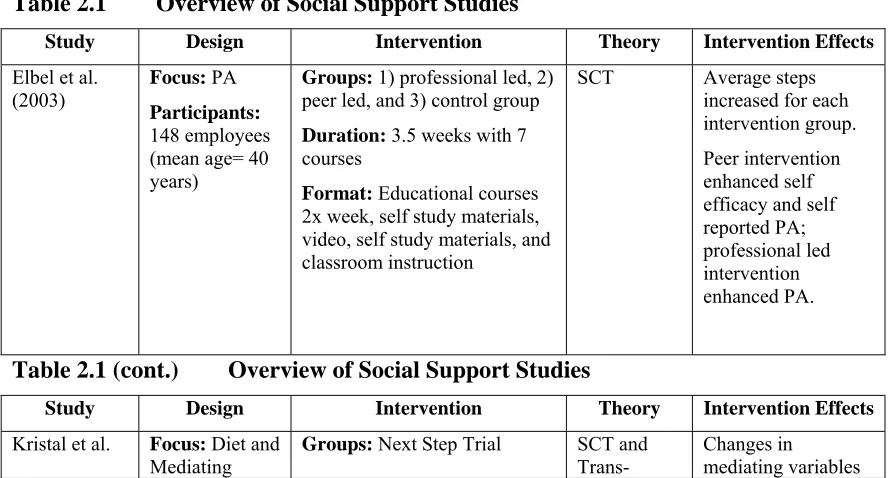
acknowledged social support as a mediating factor for increasing physical activity. Table 2.1 provides an overview of social support studies with a focus on diet and/or physical activity.
Table 2.1 Overview of Social Support Studies
Study Design Intervention Theory Intervention Effects
Elbel et al.
(2003) Focus: PA
Participants: 148 employees (mean age= 40 years)
Groups: 1) professional led, 2) peer led, and 3) control group
Duration: 3.5 weeks with 7 courses
Format: Educational courses
2x week, self study materials, video, self study materials, and classroom instruction
SCT Average steps
increased for each intervention group. Peer intervention enhanced self efficacy and self reported PA; professional led intervention enhanced PA.
Table 2.1 (cont.) Overview of Social Support Studies
Study Design Intervention Theory Intervention Effects
Kristal et al. Focus: Diet and Mediating
Groups: Next Step Trial SCT and
Trans-Changes in
(2000) Factors
Participants: 1,795 employees (mean age= 58 years)
participants from 28 worksites
Duration/Format: 3 year
observation (year 1, 5 classes and mailed materials were provided; year 2, personalized feedback materials), both years newsletters and activities were provided
theoretical model (TTM)
had significant effects on dietary change (predisposing factors and enabling factors such as social support)
Napolitano et
al. (2003) Focus: PA Participants: 65 sedentary employees (18-65 years; mean age=43)
Groups: 1) website and email 2) Control group (those on the waiting list)
Duration: 3 months
Format: Internet plus weekly email tips
SCT and
TTM Minimal PA (walking) was significantly higher in intervention group
Opdenacker
et al. (2008) Focus: PA and Mental Health
Participants: 66 university employees (mean age= 39 years)
Groups: 1) face-to-face support group or 2) telephone based support group
Duration: 3 month coaching
program
Format: Class courses, brochures, telephone support groups, weekly feedback
Not reported- focus on self-efficacy and social support
Both groups increased leisure-time PA, self-efficacy, and social support and decreased sitting time and trait anxiety
Rovinak et al.
(2005) Focus: Walking
Participants: 2,121 workplace employees (mean age= 45)
Groups: 1) walking program
with SCT feedback 2) walking program with tailored SCT feedback
Duration: 12 weeks
Format: Walking program,
walking logs via email, feedback, emails
SCT Significant improvement in 1 mile walk test, improvement in estimated VO2max and greater program satisfaction in tailored SCT feedback group
Stanton et al.
(2007) Focus: social support Diet and
Participants: 1,942 students (mean age= 12 years)
Groups: Data collected from
22 counties in Virginia and New York
Duration/ Format: Cross
sectional baseline health surveys administered in classrooms Not reported- Evaluated relationships among social support sources and eating behaviors Positive support (family and friend) for healthful eating was related to healthful dietary practices (fat and fiber intake)
researchers should take into account the individual approach and the development of a supportive environment when establishing an intervention (Titze et al., 2001).
Sallis et al. (1987) conducted one of the few studies that developed scales to determine whether social support is a mediator for dietary and physical activity behavior modifications. Positive support was more closely related to health enhancing behaviors than negative support. The results indicated that dietary social support was strongly related to change in dietary behaviors and exercise social support was strongly related to exercise behaviors. Sallis et al. (1987) also found that the friend and family support scales were shown to have good reliability (reliability test and retest reliabilities of the factors are r=0.55-0.86) and validity (validity coefficients of the positive factors were moderate). The diet and physical activity social support scales “may be the first systematic
description of patterns of interpersonal support for health-related dietary and exercise behaviors and the first psychometric evaluation of social support measures for dietary and exercise habits” (as cited in Sallis et al., 1987, p. 834). The scales developed in this study were used in the Project PHIT intervention in order to understand the role that social support played in health-behavior change.
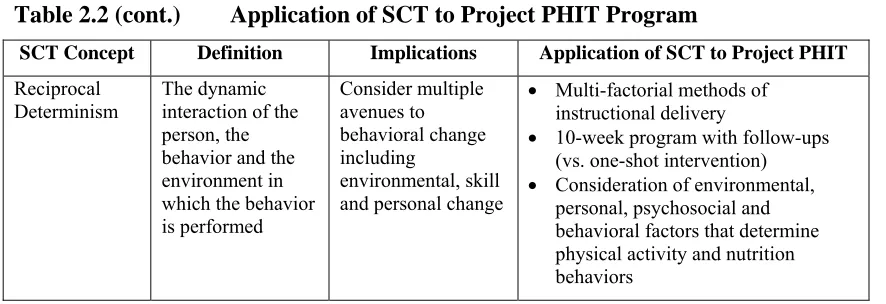
participate, the desired timeframe for the intervention, and optimal days and times of the week to hold the program. Using the SCT, promising intervention components and feedback from the two pilot programs, the Project PHIT program was developed (see Table 2.2 for a summary of the SCT aspects of Project PHIT program).
Table 2.2 Application of SCT to Project PHIT Program
SCT Concept Definition Implications Application of SCT to Project PHIT
Environment Factors physically external to the
person
Provides
opportunities and social support
Workplace environment
Social environment including family, friends and peers at work
Situation Perception of the
environment Correct misperceptions and promote healthful forms
Participants assumed to be healthy Promote that physical activity is fun
and can be performed conveniently at the office
Promote the notion that intensity can be moderate to vigorous
Promote the notion that healthy dietary habits can be small changes in eating patterns
Use mental imagery and positive self-talk to facilitate confidence in physical activity and dietary habits Behavioral
capacity Knowledge and skill to perform a given behavior
Promote mastery learning through skills training
Teach participants circuit training and aerobic physical activity Teach participants alternative fun
activities (e.g., ultimate frisbee, soccer, basketball, yoga, etc) Teach participants healthy dietary
behaviors
Teach participants disease prevention Outcome
Expectations Anticipatory outcomes of behavior (own experiences or observe others) Model positive outcomes of healthful behavior
Peer-to-peer training
Researcher-to-subject training Project PHIT team members-to- team
members group activities (e.g., social persuasion)
Table 2.2 (cont.) Application of SCT to Project PHIT Program
SCT Concept Definition Implications Application of SCT to Project PHIT
Outcome
Expectancies Values that a person places on a given outcome (incentives)
Present outcomes of change that have functional meaning
Presentation of pre- and post- testing results
Emphasize long-term behavior change
Prizes for individual goal attainment (e.g., average number of steps per day, recommended number of fruits and vegetables consumed, etc) Self Control Personal regulation
of goal-directed behavior or performance Provide opportunities for self-monitoring, goal-setting, problem solving and self reward
“Food Bowl” contest Steps logs
Monitor attendance
Role playing of overcoming physical activity and nutrition barriers
Observational Learning Acquire behavior by watching actions and outcomes of others’
Include credible role models of the targeted behavior
Instructors spoke frequently of their own physical activity and nutrition behaviors
Project PHIT participants spoke about their own experiences in the pilot Project PHIT programs Reinforcement Responses to a
person’s behavior that increase or decreases the likelihood of reoccurrence Promote self-initiated rewards and incentives (move from valuing extrinsic to intrinsic)
Use handouts and email to keep participants informed
Make activities fun
Make nutrition simple and fun (e.g., “Food Bowl” contest- points for positive behavior and negative points for negative behavior)
Teach positive reinforcement between Project PHIT teams Self-efficacy Situation-specific
self-confidence
Approach
behavioral change in small steps to ensure success; seek specificity about the change sought
Set goals to increase average number of steps taken each week
Set goals to increase fruit, vegetable and fiber intake
Set goals to increase physical activity each week
Provide basic and progressive instructions in a variety of physical activities and nutrition behavior changes
Emotional Coping Responses
Strategies or tactics that are used by a person to deal with
emotional stimuli
Provide training in problem solving and stress management Include
opportunities to practice skills in emotionally arousing situations
Use mental imagery and positive self-talk to facilitate confidence in physical activity and dietary habits Positive self-talk while performing
physical activity
Table 2.2 (cont.) Application of SCT to Project PHIT Program
SCT Concept Definition Implications Application of SCT to Project PHIT
Reciprocal
Determinism The dynamic interaction of the person, the behavior and the environment in which the behavior is performed
Consider multiple avenues to behavioral change including
environmental, skill and personal change
Multi-factorial methods of instructional delivery
10-week program with follow-ups (vs. one-shot intervention) Consideration of environmental,
personal, psychosocial and behavioral factors that determine physical activity and nutrition behaviors
Researchers continue to explore which key factors influence behavior change (e.g., physical activity participation, healthy dietary habits, etc.). Likewise, there is a need for well-designed physical activity and nutrition interventions within the workplace. Employees in the workplace can alter sedentary lifestyles and engage in more regular physical activity levels as well as healthier eating habits in order to prevent obesity and to reduce the risk of many adverse health outcomes. Applications of the SCT within
CHAPTER THREE: METHOD
Recruitment
Marketing for Project PHIT was performed through the university health center via regular postal route as well as the health center website and email advertisements. All participants were able to sign up for Project PHIT through an online registration program. In order to sign up for the program, participants were required to complete a self-reported health questionnaire with their online registration. The Demographic and Health History Questionnaire (see Appendix A) gathered information including: age, health history, and ability to perform physical activity. The information was used to identify participants’ eligibility for participation. The inclusion criteria for participating in the study were that participants: 1) were able to participate in light-moderate physical activity; 2) worked at the university; 3) were between the ages of 18 and 60 years old; and 4) were able to participate in at least 80% of the sessions. Individuals were excluded from the program if they were pregnant or lactating.
Participants
suffered from any physical injuries, health concerns, or complications that prevented them from completing light to moderate exercise. Participation was voluntary. Approval for this study was obtained from the Boise State University Institutional Review Board for the Protection of the Human Subjects in Research.
Intervention Description
Prior to the development of the intervention, two pilot programs of Project PHIT (spring and fall 2009) were conducted along with focus groups at the end of each
program. In these focus groups, participants were asked to discuss the types of activities in which they would like to participate, the desired time frame for the intervention and the optimal days and times of the week to participate in physical activity. Using feedback from the two pilot programs, the SCT and effective health intervention/health program models, Project PHIT was planned (see Literature Review Section on "Social Support," Table 2.2 for the theoretical underpinnings of the study and Appendix C Schedule of Topics and Activities for PHIT). The program focused on improving physical activity and healthy eating habits among university employees in a workplace-based setting.
Adherence and Compliance
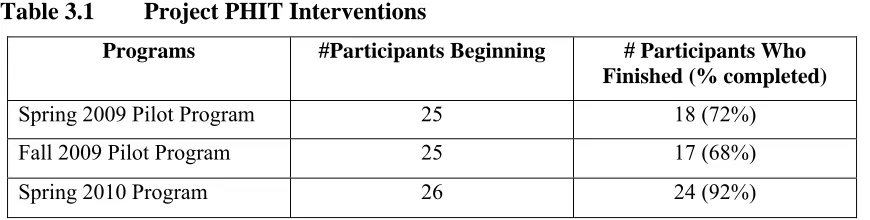
average of 89% of the 20 classes. The completion rate was 92% (24 of 26 participants) during the 10-week program. Of the two participants who discontinued participation in the program, one did so due to a scheduling conflict and the other due to a previous injury.
Table 3.1 Project PHIT Interventions
Programs #Participants Beginning # Participants Who Finished (% completed)
Spring 2009 Pilot Program 25 18 (72%) Fall 2009 Pilot Program 25 17 (68%)
Spring 2010 Program 26 24 (92%)
Procedures
Project PHIT was a 10-week program. Participants met twice a week (Mondays and Wednesdays) from noon-1 PM in the Kinesiology Building Gym from March 1-May 12, 2010. Each session lasted 50-60 minutes and included both education and physical activity components. Each Monday began with a 20-minute education session and
involved participants in discussions on ways to improve healthy behaviors (e.g., nutrition, benefits of physical activity, and stress management). The remainder of the time was spent on circuit training exercises. These exercises included basic movements such as push-ups, squats, or crunches and allowed participants to push themselves to their own limits. Prior to each activity or exercise, participants were presented with a visual demonstration of each exercise as well as pictures at each "station" and a paper copy of the program of exercises to guide them on form and technique. Project PHIT facilitators monitored the participants throughout each of the excercises.
relay races and games). Activity selection was based on participant input collected from the two previous pilot programs and on the first day of the program. To facilitate the development of regular physical activity habits, participants were encouraged to increase their physical activity levels outside the intervention. Specifically, participants were encouraged to increase the average number of steps they took each day (as measured by pedometer) and to participate in additional exercise sessions (e.g., fitness classes through the campus recreation department) each week.
To teach effective self-monitoring of activity, a three-day self-recorded pedometer log was maintained by each participant. Participants were asked to log their average steps at the beginning and the end of the intervention (i.e., the first three days of the
intervention and the last three days of the 10-week intervention). Participants were encouraged to meet the recommended 10,000 steps per day (Le Masurier, Sidman, & Corbin, 2003). Pedometers have been shown to be reliable and valid for measuring walking on a variety of surfaces at a variety of speeds, and they provide an inexpensive way to motivate participants to be more active (Tudor-Locke, 2002).
Project PHIT member,” and “the most improved Project PHIT member.” Winners received prizes such as water bottles, clothing, and exercise equipment at the end of the intervention.
Data were collected before and after the 10-week intervention. Multiple
questionnaires and physical tests were conducted prior to the start of the project and upon completion of the project. In an attempt to prevent program attrition, several incentives were offered throughout the 10-weeks. Incentives included items related to physical activity (e.g., water bottles, heart rate monitors, and yoga mats). Participants who were absent for class on two consecutive occasions were sent a reminder email and/or called on the phone to identify possible barriers to participation and to encourage them to continue participation.
Instrumentation
Physical activity changes were assessed using objective and subjective measures. The Fitnessgram Physical Activity Questionnaire contained seven questions to detect physical activity changes that occurred as a result of the intervention (see Appendix D). For example, to assess participation in muscular strength building activities, one of the questions asked: “On how many of the past seven days did you do exercises to strengthen your muscles (e.g., push-ups, sit-ups and weight lifting)?” Participants were asked to answer between zero to seven days. The Fitnessgram Physical Activity Questionnaire was used to detect physical activity changes that occurred as a result of the intervention. This questionnaire, developed using questions from the Youth Risk Behavioral
objectively using a 3-day step log, using the average mean of each 3-day step log (pre- and post-intervention). Although most individuals were compliant with tracking their step logs, the researchers provided follow up via email to a few individuals who did not fill them out.
The Block Food Frequency: Rapid Food Screener for Fruits, Vegetables, and Fiber (see Appendix E) was used to document changes in eating behaviors. It contained 10 questions and provided an analysis of estimated fruit, vegetable, and fiber intake (Block, 1982; Block, Clifford, Naughton, Henderson, & McAdams, 1989). An example of a Block Food Frequency item is, “How often do you eat the following foods?”
Response options to this item included: 1) less than once a week, 2) once a week, 3) two-three times a week, 4) four-six times a week, 5) once a day, or 6) two plus a day. The validity of this instrument has been tested in numerous scientific studies and the instrument is comparable to a detailed food record for identifying people with low nutrient intake (Block, Gillespie, Rosenbaum, & Jenson, 2000).
In order to determine whether social support was a significant mediator of physical activity and nutrition behaviors for Project PHIT participants, social support on nutrition, and physical activity change was measured using a questionnaire designed by Sallis et al. (1987) (see Appendix F). For this study, the social support questionnaire was modified. To determine the level of social support among Project PHIT class participants relative to nutrition and physical activity, “Project PHIT participants” was added as a source of social support.
participants have: encouraged me not to eat “unhealthy foods” (e.g., cake, salted chips) when I am tempted to do so.” Questions were scored on a Likert scale with a range from one to five (i.e., 1=none and 5=very often). Scores for family, friends, and class
participants were scored separately and were totaled for discouragement and
encouragement scores. The Social Support Questionnaire is valid and reliable for use with adults (Sallis et al., 1987).
Health-Related Fitness Variables
Health-related fitness variables included: weight (kilograms or kg), blood pressure (millimeters of mercury or mmHg), number of steps taken (assessed using a pedometer pre- and post-intervention), and cardiovascular fitness (as estimated using the 12-minute Cooper Test to assess VO2 max). Within the intervention, there were seven facilitators
that performed the health-related fitness variable testing and monitored all physical activity sessions. The facilitators participated in intense 3-hour training before the intervention to ensure consistent and reliable testing with each participant in Project PHIT.
Weight, to the nearest 0.1 kg, was measured in light clothing without shoes using a calibrated electronic scale: Tanita Weigh System, Model C400 (Tanita Weigh System, 2011).
adult). Two blood pressure measurements (systolic/diastolic, in mmHg), with 1-2
minutes between each, were performed on the left side of the body and the average of the two readings was used for the analyses. If the two measurements varied by more than five mmHg (either systolic or diastolic), a third measurement was taken and the average of the two closest values were used. Values for systolic and diastolic blood pressure (mmHg) were recorded and individuals were classified by age-specific health risk (optimal, normal, high normal, stages 1-4). To minimize the potential for multiple-tester error, maximize reliability of measures, and maximize ability to detect changes as a result of the intervention, the Omron, Model HEM 707 electronic blood pressure was used to assess blood pressure.
Average Number of Steps was measured with a TIMEX, Time Watch 793 pedometer (TIMEX, 2004). The average number of steps was calculated to determine whether participants increased their ambulatory activity as a result of the intervention. Number of steps walked was measured for three days on two occasions: 1) at baseline (pre-intervention) and 2) post-intervention. At the start of the program, participants received a pedometer as well as instructions on how to use it. Pedometers were used instead of other devices (e.g., accelerometers) because they are considerably less
Cardiovascular fitness was assessed using the Cooper 12-minute walk/run test (Cooper, 1968). To complete this test, participants used an 8-foot wide, 146 meters long indoor track. Participants were asked to walk or run (at a pace comfortable to them) for 12 minutes. Aerobic capacity was estimated by measuring the distance in meters completed and participant’s weight, age, and gender. Cooper (1968) reported a
correlation of 0.90 between VO2 max and the distance covered in a 12-minute walk/run.
Based on the measured distance, VO2 max (ml/min/kg) was estimated as follows:
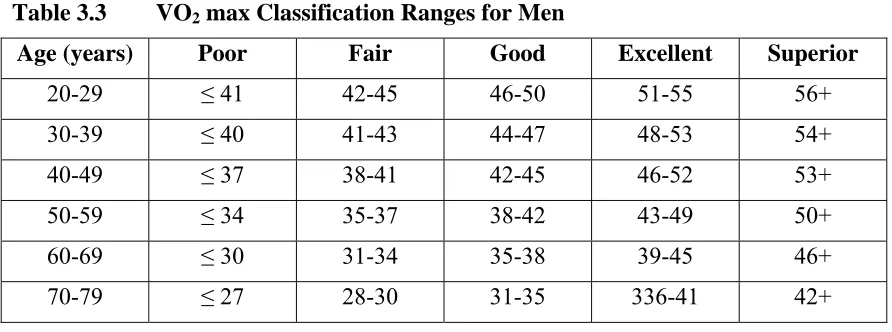
Where d12 is distance (in meters) covered in 12-minutes. Table 3.2 and 3.3 display
standard VO2 max classification ranges for both men and women (The Cooper Institute
for Aerobics Research, 2006; Heyward, 2005).
Table 3.2 VO2 max Classification Ranges for Women
Age (years) Poor Fair Good Excellent Superior
20-29 ≤ 35 36-39 40-43 44-49 50+
30-39 ≤ 33 34-36 37-40 41-45 46+
40-49 ≤ 31 32-34 35-38 39-44 45+
50-59 ≤ 24 25-28 29-30 31-34 35+
60-69 ≤ 25 26-28 29-31 32-35 36+
Table 3.3 VO2 max Classification Ranges for Men
Age (years) Poor Fair Good Excellent Superior
20-29 ≤ 41 42-45 46-50 51-55 56+
30-39 ≤ 40 41-43 44-47 48-53 54+
40-49 ≤ 37 38-41 42-45 46-52 53+
50-59 ≤ 34 35-37 38-42 43-49 50+
60-69 ≤ 30 31-34 35-38 39-45 46+
70-79 ≤ 27 28-30 31-35 336-41 42+
Data Analysis
Statistical analysis was performed using SPSS (Version 16.0) (SPSS, 2007). Alpha was set at p<0.05. Health variables measured before and after the 10-week intervention included blood pressure, body weight, regular activity participation, and aerobic fitness (i.e., VO2max). Means and standard deviations were calculated for each
variable. Paired samples t-tests and repeated measures multivariate analysis of variance (MANOVA) analysis was used to analyze: 1) changes in health-related fitness (e.g., weight, blood pressure and VO2max); 2) changes in fruit, vegetable, and fiber intake; and
3) changes in participation in physical activity. Correlations were used in this study to analyze the relationship between changes in physical activity and healthy eating
CHAPTER FOUR: RESULTS
Participants
Data were collected from 26 participants. The majority of participants (24 of 26, or 92.3%) attended at least 86% of the sessions (i.e., at least 20 total sessions). All participants were staff members at Boise State University during March through May in 2010. Each of the 24 participants completed the post-intervention questionnaires and health-related variables testing. The mean age for participants in the intervention was 41 years old (M=41.13, SD= 12.28). The sample was predominantly female (81%).
Health-Related Variables
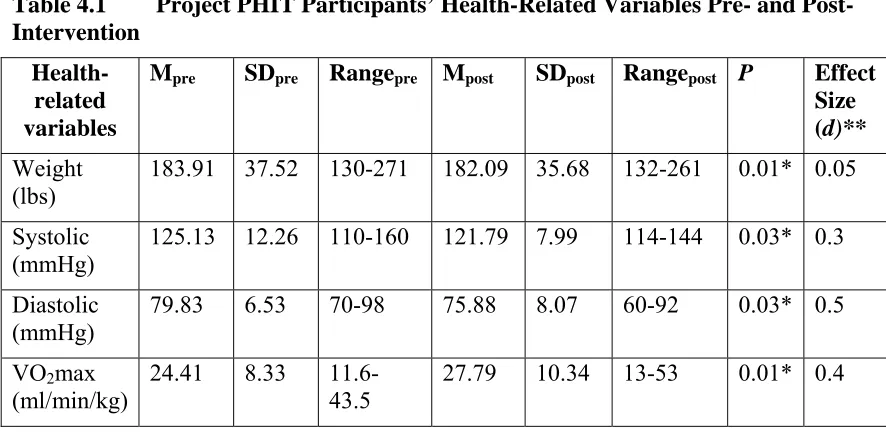
Participants’ values on the health-related variables including weight, blood pressure, and VO2max are listed in Table 4.1. There was an overall statistically
significant difference between pre- and post-intervention on health-related variables, Hotellings F(5, 19)=3.76, p=0.02. Analyses indicated a statistically significant positive physiological change in weight with a mean 183.91 pounds at the start of the intervention and 182.08 pounds at the conclusion (p=0.01). Participants also saw a reduction in blood pressure, both systolic and diastolic (systolic p=0.03, diastolic p=0.03). Positive changes in VO2max also occurred (p=0.01). According to Cohen (1988), effect sizes for changes
Table 4.1 Project PHIT Participants’ Health-Related Variables Pre- and Post-Intervention
Health-related variables
Mpre SDpre Rangepre Mpost SDpost Rangepost P Effect
Size (d)** Weight
(lbs) 183.91 37.52 130-271 182.09 35.68 132-261 0.01* 0.05 Systolic
(mmHg) 125.13 12.26 110-160 121.79 7.99 114-144 0.03* 0.3 Diastolic
(mmHg) 79.83 6.53 70-98 75.88 8.07 60-92 0.03* 0.5
VO2max
(ml/min/kg)
24.41 8.33 11.6-43.5
27.79 10.34 13-53 0.01* 0.4 * Note: Significantly different p<0.05; P value for change over time by paired samples t-test (N= 24). ** Small-0.2; medium-0.5; large-0.8.
Physical Activity
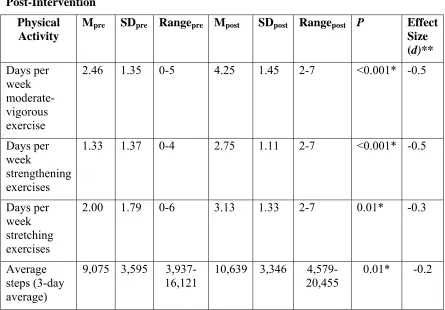
Physical activity participation. Data were analyzed from the Fitnessgram Physical Activity Questionnaire (e.g., used to assess the number of days per week of participation in aerobic, strengthening, and flexibility exercises) and the average number of steps taken pre- and post-intervention. Table 4.2 presents physical activity participation data.
Table 4.2 Project PHIT Participants’ Physical Activity Participation Pre- and Post-Intervention
Physical Activity
Mpre SDpre Rangepre Mpost SDpost Rangepost P Effect
Size (d)** Days per week moderate-vigorous exercise
2.46 1.35 0-5 4.25 1.45 2-7 <0.001* -0.5
Days per week
strengthening exercises
1.33 1.37 0-4 2.75 1.11 2-7 <0.001* -0.5
Days per week stretching exercises
2.00 1.79 0-6 3.13 1.33 2-7 0.01* -0.3
Average steps (3-day average)
9,075 3,595 3,937-16,121
10,639 3,346 4,579-20,455
0.01* -0.2
* Note: Significantly different p<0.05; P value for change over time by paired samples t-test (N=24). ** Small-0.2; medium-0.5; large-0.8.
Nutrition
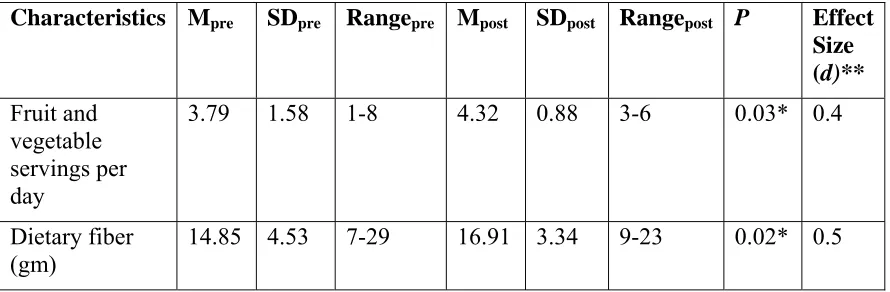
A MANOVA exploring pre- and post-intervention differences in fruit, vegetable, and fiber intake found an overall statistically significant difference, Hotellings
grams per day for males [USDA, 2010]). Following the intervention, participants increased their fruit and vegetable servings per day (M = 4.32, p=0.03) and fiber (gm) consumed per day (M= 16.91 gm, p=0.02). Effect sizes for changes in fruit, vegetable, and fiber intake were medium (d range=0.4-0.5) (Cohen, 1988).
Table 4.3 Project PHIT Participants’ Fruit, Vegetable and Fiber Intake Pre- and Post-Intervention
Characteristics Mpre SDpre Rangepre Mpost SDpost Rangepost P Effect
Size (d)** Fruit and
vegetable servings per day
3.79 1.58 1-8 4.32 0.88 3-6 0.03* 0.4
Dietary fiber
(gm) 14.85 4.53 7-29 16.91 3.34 9-23 0.02* 0.5
* Note: Significantly different p<0.05; P value for change over time by paired samples t-test (N=24). ** Small-0.2; medium-0.5; large-0.8.
Social Support
Results indicate there was a statistically significant difference between pre- and post-intervention on participants overall perception of social support, Hotellings F(3,21)=49.51, p<0.001. Table 4.4 presents results from the Social Support
Questionnaire for Nutrition and Exercise (Sallis et al., 1987). There were significant increases over time (pre- vs. post-intervention) in perceived social support for nutrition (Mpre= 8.92, Mpost= 12.54, p=0.001) and physical activity (Mpre = 16.46, Mpost=27.75,
Table 4.4 Project PHIT Participants’ Perceived Social Support Scores Pre- and Post-Intervention
Characteristics Mpre SDpre Rangepre Mpost SDpost Rangepost P Effect
Size (d)** Social support
from Project PHIT for nutrition
8.92 5.49 5-18 12.54 4.98 1-19 0.001* 0.7
Social support from Project PHIT for exercise
16.46 10.73 9-39 27.75 9.63 13-49 <0.001* 0.05
* Note: Significantly different p<0.05; P value for change over time by paired samples t-test (N=24); higher values=more social support. ** Small-0.2; medium-0.5; large-0.8.
It was expected that an intervention with activities designed to increase social support would be associated with changes in nutritional intake and physical activity behavior. Correlation analyses were conducted to determine if perceived social support is correlated to health behavior changes. Perceived nutrition-based social support was positively correlated with participants’ positive changes in fruit and vegetable servings per day and fiber (gm) intake r(22)=0.48, p=0.02 and r(22)= 0.40, p=0.05, respectively. Analyses of r2 values showed that 23% of changes in daily fruit and vegetable servings
CHAPTER FIVE: DISCUSSION
The purpose of this study was to assess the effects of a 10-week Project PHIT intervention on levels of physical activity and dietary intake (e.g., fruit and vegetable servings per day and fiber intake) among university employees. The Project PHIT
intervention yielded many positive results. This intervention, grounded in SCT, promoted positive changes in health-related variables, nutrition behaviors, and physical activity as well as positive changes in social support among the university employees. The use of social support as a behavioral change strategy in conjunction with a variety of physical activities may be useful for improving healthy behaviors. The most important findings are presented as they related to the thesis research questions.
Research Question 1: Will a 10-week Project PHIT intervention change physical activity as measured objectively with pedometers in this sample?
In order to increase participants’ overall physical activity levels, participants were given a pedometer, instructed how to use the device, and encouraged to meet the
Although participants significantly increased their number of steps (from pre- to post-intervention), it should be noted that participants started the intervention with an average number of steps that was very close (i.e., 9,075 average steps per day) to the recommended number of steps per day (i.e., 10,000 steps per day) indicating the participants to be relatively healthy prior to the start of the intervention. One possible explanation of this may be the fact that previous pilot Project PHIT program participants (N=11) were familiar with the 10,000 steps per day recommendations. A second
explanation may be due to the fact that some university employees have to walk across campus several times a day (e.g., teach a class).
It should also be noted that the participants’ final 3-day average was only slightly over the recommended 10,000 steps per day (i.e., 10,639 steps per day post-intervention) despite the Project PHIT recommendation of improving at least 500 steps per day more than their pre-intervention 3-day average. According to the CDC (2011), participants can still see health benefits by increasing the frequency and intensity of daily physical
activity (i.e., walk more than 10,000 steps per day). In doing so, participants could see improved quality of life and could help prevent chronic diseases (USDHHS, 2008).
self-efficacy in the workplace can encourage health behavior changes. Follow-up studies are needed to determine participants’ maintenance of health behavior changes.
Research question 2: Will a 10-week Project PHIT intervention change physical activity (aerobic, weight training, and flexibility exercises) as measured subjectively
with a questionnaire in this sample?
At the time of this study, there were limited data findings to indicate the daily physical activity levels of the university employees. Survey findings revealed that almost one-fourth of adult Idahoans reported no physical activity involvement (in the prior month surveyed) and on campus 17% of university employees reported never/rarely exercising (CDC, 2009; Health Risk Appraisal, 2007). Findings from surveys and requests from faculty and staff indicated the need for a physical activity intervention at the university. Research supports the fact that workplaces, such as university campuses, can provide a means to improve physical activity and dietary practices because workers spend such a large portion of each day at their workplace (Abood et al., 2003; Backman et al., 2011; Conn et al., 2009; Katz et al., 2005).
1.33 days pre-intervention and 2.75 days post-intervention, p<0.001), and 3) the average days per week for stretching exercises.
Results were investigated to determine whether the participants met the USDHHS physical activity guidelines (e.g., 150 minutes a week of moderate intensity aerobic activity). Specifically, researchers examined the Fitnessgram question, “On how many of the past 7 days did you participate in physical activity for a total of 30-60 minutes or more over the course of a day?” At pre-intervention, participants indicated an average of 2.46 days of moderate to vigorous activities per week. This can be translated into roughly 75-150 minutes per week of moderate to vigorous activities. It would appear that
participants were relatively healthy and many were meeting the USDHHS (2008) physical activity recommendations prior to the Project PHIT intervention; however, this conclusion is dependent on which end of the time spectrum participants were referring to when answering the Fitnessgram questionnaire (i.e., activity levels closer 60 minutes over the course of a day) and the intensity of exercise (i.e., moderate or vigorous activity).
Post-intervention participants indicated participation was roughly 130-260 minutes per week of moderate to vigorous activities. Findings show a statistical significance in positive changes in physical activity (p<0.001). Results were again dependent on which end of the time spectrum participants were referring to (i.e., activity levels closer to 60 minutes over the course of a day) and the intensity their physical activity (i.e., moderate or vigorous); however, the post-intervention results show findings that exceed the USDHHS (2008) guidelines of 150 minutes a week of moderate intensity physical activity. Project PHIT included intervention activities twice a week but
week. These post-intervention findings indicated participants were engaging in increased physical activity outside of the Project PHIT intervention.
Overall, the intervention was successful with producing significant increases in physical activity (aerobic, strengthening, and stretching exercise) in the participants’ lifestyle. Participants had high participation rates (86%). As noted in previous chapters, pilot Project PHIT program participants provided feedback for days and times of the week that were most convenient for participants’ schedules. Activities and circuit training exercises were also built around participants’ feedback. The use of participants’
feedback, previous Project PHIT participants, and the workplace setting within the Project PHIT intervention provided additional SCT constructs (e.g., environment,
situation, behavioral capacity and outcome expectation) (see Table 2.2). For example, the intensity of physical activity was closely monitored to promote self-efficacy.
Future Project PHIT intervention programs or similar programs should consider similar application of SCT including the use of the workplace environment and a social environment. Additionally, a 10-week intervention seemed to be a sufficient amount of time to produce increased physical activities levels in university employees. In order to compare physical activity levels with the USDHHS (2008) physical activity
recommendations, future researchers should consider modifying the questions on Fitnessgram Physical Activity Questionnaire (e.g., ask a question that capture the USDHHS recommended physical activity levels).