Available online on 15.3.2019 at http://ujpr.org
Universal Journal of Pharmaceutical Research
An International Peer Reviewed JournalOpen access to Pharmaceutical research
This is an open access article distributed under the terms of the Creative Commons Attribution-Non Commercial Share Alike 4.0 License which permits unrestricted non
commercial use, provided the original work is properly cited Volume 4, Issue 1, 2019
RESEARCH ARTICLE
DEVELOPMENT AND
IN VITRO
DISSOLUTION STUDY OF BINARY AND
TERNARY SOLID DISPERSIONS OF ACECLOFENAC
Md. Shahidul Islam* , Rasheda Akter Lucky
Department of Pharmacy, University of Science and Technology Chittagong, Bangladesh.
ABSTRACT
Objective: The poor aqueous solubility of the drug exhibits in variable dissolution rate and hence poor bioavailability. Aceclofenac is poorly water soluble drug. The aim of the present study was to improve the water solubility and the dissolution rate of Aceclofenac by solid dispersion technique using different water soluble polymers. The term solid dispersions refer to the dispersions of one or more active ingredients in an inert carrier or matrix at solid state.
Methods: In this study, binary solid dispersion of Aceclofenac were prepared by fusion method using Polyethylene glycol 6000 (PEG 6000), Polyethylene glycol 4000 (PEG 4000), Poloxamer as carrier. Different drug-carrier weight ratio was used for this study. The effect of the carrier on the solubility and in-vitro dissolution were studied.
Results: It was found the drug was released 26.86% after 5 minutes and only 40.19% within 60 mins from active Aceclofenac on the other hand the release pattern of Aceclofenac from the binary solid dispersion formulations containing PEG 6000 in 1:5 ratio (Formulation coding: A5) showed the best result in comparison of other binary and ternary solid dispersion formulations which was 62.29% after 5 min and 83.03% within 60 mins. The hydrophilic polymers used for the preparation of solid dispersion are showed significant increase in the solubility of Aceclofenac.
Conclusion: This research showed that when Aceclofenac was dispersed in suitable water-soluble carriers such as PEG 6000, PEG 4000, Poloxamer, its dissolution were enhanced compared with pure drug.
Keywords: Aceclofenac, in-vitro dissolution, PEG 4000, PEG 6000, poloxamer, solid dispersion.
Article Info: Received 20 February 2019; Revised 28 February; Accepted 4 March, Available online 15 March 2019 Cite this article-
Md. Shahidul Islam, Rasheda Akter Lucky. Development and in vitro dissolution study of binary and ternary solid dispersions of aceclofenac. Universal Journal of Pharmaceutical Research 2019; 4(1): 29-34.
DOI: https://doi.org/10.22270/ujpr.v4i1.240 Address for Correspondence:
Md. Shahidul Islam, Assistant Professor, Department of Pharmacy, University of Science and Technology Chittagong (USTC), Bangladesh, Tel:+88 01815579040; E-mail: [email protected]
INTRODUCTION
Poorly water-soluble drugs are increasingly becoming a problem in terms of obtaining the satisfactory dissolution within the gastrointestinal tract that is necessary for good bioavailability1. It is not only existing drugs that cause problems but it is the challenge of medicinal chemists to ensure that new drugs are not only active pharmacologically but have enough solubility to ensure fast enough dissolution at the site of administration, often gastrointestinal tract. Therefore efforts to increase drug dissolution are often needed2. Aceclofenac is a new generation NSAID used in the treatment of osteoarthritis, rheumatoid arthritis and other joint diseases3. It is chemically designated as 2-[(2,6-diclorophenyl) amine] phenyl acetoxy acetic acid). Solid dispersions of aceclofenac were formulated to overcome problems like gastric irritation and other side effects that are frequently experienced with NSAID drug therapy4. Aceclofenac is practically
refers to a group of solid products consisting of at least two different components, generally a hydrophilic matrix and a hydrophobic drug. The matrix can be either crystalline or amorphous. The drug can be dispersed molecularly, in amorphous particles (clusters) or in crystalline particles9. For drugs with high crystal energy, higher amorphous compositions can be obtained by choosing carriers, which exhibit specific interactions with them10.
Present study has been designed with purpose to improve the water solubility of Aceclofenac which is insoluble in water at active ingredient. The dissolution
rate of Aceclofenac is expected to limit its absoption from the GIT. In this study, fusion method and solubility test has been used to develop solid dispersion of drug. There are various polymers which have been used in this technique to form porous and amorphous micro particle of solid dispersion helps in the reduction of dose of the drug. Aceclofenac has been chosen as a water insoluble model drug PEG 6000, PEG 4000 and Poloxamer have been used as the hydrophilic polymers which were employed as a carrier material for formulation of solid dispersion with model drug.
Table 1: Composition of solid dispersion formulations of Aceclofenac.
Code Carriers Drug polymer
ratio
Code Carriers Drug polymer
ratio A1 PEG 6000 1:1 A9 PEG 6000:Poloxamer 1:1:00 A2 PEG 6000 1:2 A10 PEG4000:Poloxamer 1:1:0.75 A3 PEG 6000 1:3 A11 PEG4000:Poloxamer 1:1:0.50 A4 PEG 6000 1:4 A12 PEG4000:Poloxamer 1:1:0.25 A5 PEG 6000 1:5 A13 PEG4000:Poloxamer 1:1:00 A6 PEG6000:Poloxamer 1:1:0.75 A14 PEG 4000 1:3 A7 PEG 6000:Poloxamer 1:1:0.50 A15 PEG 4000 1:5 A8 PEG 6000:Poloxamer 1:1:0.25
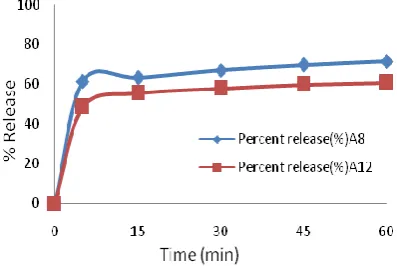
Figure 1: Percent release of aceclofenac from active drug and solid dispersion (SD) formulations
containing different ratio of PEG 6000 with different ratio
MATERIALS AND METHODS
Aceclofenac and Polyethylene Glycol 4000 were obtained from Albion Laboratories Ltd, Chittagong, Bangladesh. Poloxamer, Potassium di-hydrogen phosphate, Di-Potassium hydrogen phosphate were obtained from Merck, Germany.
Preparaion of Solid dispersion formulations
Aceclofenac solid dispersions formulations were prepared by Fusion method11.Desired amount of drug and polymer (PEG 4000, PEG 6000 and Poloxamer) weighted out accurately (Table 1). Then PEG was taken in a beaker. Put it in to hot water bath for melting at 70°C. After melting PEG (liquid)/Polymer, desired amount of Aceclofenac was added to that glass beaker. Then it was mixed properly to obtain viscous mass. The mixture was stirred robustly for uniformed mixing by using glass rod. After melting, it was kept in normal room temperature for five days until getting solid mass. The solidified mixture was then withdrawn from glass beaker and grinded by mortar and pestle. Obtained solid preparation powder was passed through the sieve (mesh size 40). Finally it was kept in glass vial with
proper labeling and stored in a dessicator until further use.
Figure 2: Percent release of Aceclofenac from active drug and solid dispersion (SD) formulations
containing different ratio of PEG 4000
In vitro dissolution study of solid dispersion
formulations
The in-vitro dissolution tests were performed for the pure Aceclofenac and solid dispersions; using USP dissolution test apparatus type II using 900 ml of phosphate buffer as dissolution medium with the assay.
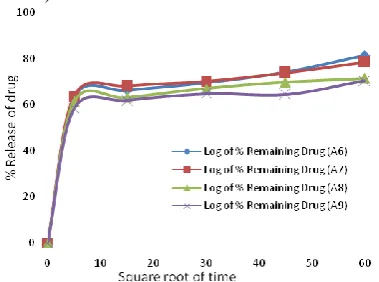
Figure 3: Percent release of Aceclofenac solid dispersion formulations containing different ratio of
We used this media to compare the dissolution profile of pure drug with that of prepared binary and ternary solid dispersions.
Figure 4: Percent release of Aceclofenac from active drug and solid dispersion formulations containing
different ratio of PEG 4000 and Poloxamer
The temperature of the medium was maintained at 37°C±0.5°C throughout the experiment. The samples containing 50 mg of Aceclofenac or its equivalent solid dispersions were placed in the dissolution medium. Paddle was used at a stirring rate of 50 rpm. A 5ml solution was withdrawn at predetermined time intervals of at 5, 15, 30, 45 and 60 minutes and then 5 ml of fresh dissolution medium was replaced to maintain the constant volume of dissolution medium. The absorbance of solution was measured at 275 nm by using UV spectrophotometer against dissolution medium as phosphate buffer. Percentage of drug release was calculated12.
RESULTS AND DISCUSSION
Aceclofenac is a poor water soluble oral dosage form with problems of variable bioavailability and bioequivalence related to its poor water solubility. The present study was aimed to observe release pattern of drug from solid dispersions by using different excipients such as PEG6000, PEG4000 etc.
Figure 5: Average % release of drug from solid dispersion formulations containing PEG 4000 and
PEG 6000
From the obtained data (Figure 1) it was shown that release pattern from solid dispersions formulations A5 shows the best result in comparison to A1, A2 and A3 which was 83.03% within an hour. The release pattern from solid dispersions formulations A14 shows the best result in comparison to A15 which was 54.13% within an hour (Figure 2). The release pattern from solid dispersions formulations A6 shows the best result in comparison to A7, A8 and A9 which was 81.38 % within an hour (Figure 3).
Figure 6: Comparison between PEG 6000 and PEG 4000 on release of Aceclofenac at 1:5 ratio.
The results indicates that that release pattern from solid dispersions formulations A10 shows the best result in comparison to A11, A12 and A13 which was 74.55% within an hour (Figure 4).
Figure 7: Comparison among PEG 6000, PEG 4000 and Poloxamer on release of Aceclofenac at 1:1:0.75
ratio (Ternary formulation).
The solid dispersions of aceclofenac prepared by PEG 6000 and PEG 4000 at 1:3 ratio was compared with each other. When comparing the solid dispersions of aceclofenac containing two polymers, A3 (with PEG6000) gave the best result (Figure 5).
Figure 8: Comparison among PEG 6000, PEG 4000 and Poloxamer on release of Aceclofenac at 1:1:0.25
ratio.
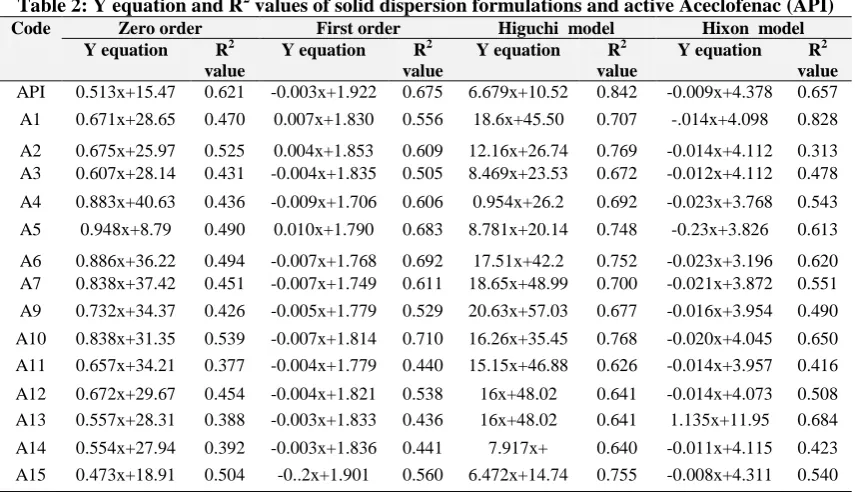
Table 2: Y equation and R2 values of solid dispersion formulations and active Aceclofenac (API)
Code Zero order First order Higuchi model Hixon model
Y equation R2 value
Y equation R2 value
Y equation R2 value
Y equation R2 value API 0.513x+15.47 0.621 -0.003x+1.922 0.675 6.679x+10.52 0.842 -0.009x+4.378 0.657 A1 0.671x+28.65 0.470 0.007x+1.830 0.556 18.6x+45.50 0.707 -.014x+4.098 0.828
A2 0.675x+25.97 0.525 0.004x+1.853 0.609 12.16x+26.74 0.769 -0.014x+4.112 0.313 A3 0.607x+28.14 0.431 -0.004x+1.835 0.505 8.469x+23.53 0.672 -0.012x+4.112 0.478
A4 0.883x+40.63 0.436 -0.009x+1.706 0.606 0.954x+26.2 0.692 -0.023x+3.768 0.543
A5 0.948x+8.79 0.490 0.010x+1.790 0.683 8.781x+20.14 0.748 -0.23x+3.826 0.613
A6 0.886x+36.22 0.494 -0.007x+1.768 0.692 17.51x+42.2 0.752 -0.023x+3.196 0.620 A7 0.838x+37.42 0.451 -0.007x+1.749 0.611 18.65x+48.99 0.700 -0.021x+3.872 0.551
A9 0.732x+34.37 0.426 -0.005x+1.779 0.529 20.63x+57.03 0.677 -0.016x+3.954 0.490
A10 0.838x+31.35 0.539 -0.007x+1.814 0.710 16.26x+35.45 0.768 -0.020x+4.045 0.650 A11 0.657x+34.21 0.377 -0.004x+1.779 0.440 15.15x+46.88 0.626 -0.014x+3.957 0.416
A12 0.672x+29.67 0.454 -0.004x+1.821 0.538 16x+48.02 0.641 -0.014x+4.073 0.508 A13 0.557x+28.31 0.388 -0.003x+1.833 0.436 16x+48.02 0.641 1.135x+11.95 0.684
A14 0.554x+27.94 0.392 -0.003x+1.836 0.441 7.917x+ 0.640 -0.011x+4.115 0.423
A15 0.473x+18.91 0.504 -0..2x+1.901 0.560 6.472x+14.74 0.755 -0.008x+4.311 0.540
The solid dispersions of aceclofenac prepared with PEG6000and PEG 4000 and Poloxamer at 1:1:0.75 ratios was compared with each other.
Figure 9: Zero order Plots of solid dispersion formulations (PEG 6000 and Poloxamer
When comparing the solid dispersions of aceclofenac containing same polymer, A6 (with PEG6000 and Poloxamer) gave the best result (Figure 7).
Figure 10: Zero order plots of solid dispersion formulations (PEG 4000 and Poloxamer)
The solid dispersions of aceclofenac prepared with PEG6000and PEG 4000 and Poloxamer at 1:1:0.25 ratios was compared with each other. When comparing the solid dispersions of aceclofenac containing same
polymer, A8 (with PEG6000 and Poloxamer) gave the best result.
Figure 11: Comparative study of first order release kinetics of solid dispersion formulations (PEG 4000
and Poloxamer)
From the above result, we can conclude that the dissolution rate of the solid dispersions increases in compared with active drug when aceclofenac was dispersed in different water soluble carrier. As the soluble carriers dissolve, the insoluble drug is exposed to dissolution medium as very fine particles leading to increase in both surface area and solubilization for fast dissolution and absorption (Figure 8).
Figure 12: First order release kinetics of solid dispersion formulations (PEG 4000
and Poloxamer).
by zero order model, first order, Higuchi square root equation and Hixon Crowell cube root law (Figure 9 to Figure 16) 13.
Figure 13: Higuchi release kinetics of solid dispersion formulations (PEG 6000 and poloxamer).
The above data showed that R2 value of active Aceclofenac, (R2=0.979) and all solid dispersions formulations except A1 were found substantially highest result in case of Higuchi release kinetics than other release kinetics.
Figure 14: Higuchi release kinetics of solid dispersion formulations (PEG 4000 and poloxamer).
These R2 value is near about 01, so it can be said that, active Aceclofenac, all solid dispersions formulations except A1 were followed zero order release pattern.
Figure 15: Comparative study of Hixon Crowell release of solid dispersion formulations (PEG 6000
and Poloxamer)
A1 (R2=0.828) was displayed best fitting with Hixoncrowell release kinetics pattern. Because R2 value of A1 was showed better value in case of Hixoncrowell release kinetics (Table 2). It was also
observed that, in all case no formulation was fitted with First order release kinetics model.
Figure 16: Comparative study of Hixon Crowell release of solid dispersion formulations (PEG 4000
and Poloxamer)
CONCLUSION
Aceclofenac is a poorly water soluble drug. The enhancement of oral bioavailability of poor water soluble drugs remains one of the most challenging aspects of drug perfection. Various scientists achieved a complete dissolution of drug from solid dispersions by using different hydrophilic carriers. The carriers acted as dispersing for the liberated drug, thus preventing the formation of any water- insoluble surface layers. In the present study, solid dispersions of Aceclofenac with different hydrophilic carriers in different ratios were prepared by Fusion method to improve water solubility and dissolution characteristics. The preparation of solid dispersions by solvent evaporation technique has been proven to be successful. This research showed that when Aceclofenac was dispersed in suitable water-soluble carriers such as PEG 6000, PEG 4000, Poloxamer, its dissolution were enhanced compared with pure drug. Among all water soluble carriers, the solid dispersions formulationscontaining PEG 6000at 1:5 ratios (binary formulation) gave the best result. Fusion method is effective to increase the release rate of Aceclofenac. The water soluble carrier may operate in the micro environment (diffusion layer) immediately surrounding the drug particles in the early stage of dissolution, since the carrier completely dissolves in short time thus enhancing the solubility and dissolution of drug. The drug –polymer interaction were investigated by Fourier Transform Infrared spectroscopy and no considerable drug-polymer interactions were found. However, the shape and surface morphology are important consideration for solid dispersions characterization. So, further studies Differential Scanning Calorimetry, Scanning Electronic Microscopy and X-ray diffractions have to be conducted in this aspect to know the nature of drug whether it is in crystalline form or amorphous. Finally in vivo study will require for final selection of carrier and to produce a successful drug delivery system.
AUTHOR'S CONTRIBUTION
CONFLICT OF INTEREST
Authors declare that there is no conflict of interest associated with this work.
REFERENCES
1. Aulton ME. Pharmaceutics- The Science of Dosage Form
Design. 2002; 2nd edition, 241.
2. Sapkal S, Babhulka M, Rathi A, Mehetre G, Narkhede M.
An overview on the mechanism of solubility and dissolution rate enhancement in solid dispersion. Int J Pharm Tech Research 2013; 5: 31-39.
3. Lugar P, Daneck K, Engel W, Trummlitz G, Wagner K.
Structure and physiological properties of Aceclofenac- a new NSAIDs. Eur J Pharm Sci 1996; 4: 175-187.
https://doi.org/10.5517/cczqcbc
4. Karmoker JR, Sarkar S, Joydhar P, Chowdhury SF.
Comparative in vitro equivalence evaluation of some
Aceclofenac generic tablets marketed in Bangladesh". The Pharm Innov J 2016; 5: 3–7.
5. Gowda KV, Rajan DS, Mandal U, et al. Evaluation of
bioequivalence of two formulations containing 100 mg of Aceclofenac. Drug Dev Ind Pharm 2006; 32: 19-25. https://doi.org/10.1080/03639040600608805
6. Kumar A, Kumar K. Solid dispersion-strategy to enhance
solubility and dissolution of poorly water
soluble drugs. Universal J Pharm Res. 2017; 2(5): 54-59. https://doi.org/10.1016/j.drudis.2007.09.005
7. Samal HB, Debata J, Kumar NN, Sneha S, Patra PK.
Solubility and dissolution Improvement of Aceclofenac using Cyclodextrin. Int J Drug Dev Res 2012; 4(4): 326-333.
8. Jajere UM, Achadu AE. Fabrication and characterization of
ezetimibe solid dispersion for solubility enhancement. Universal J Pharm Res. 2017; 2(1): 12-16.
https://doi.org/10.22270/ujpr.v2i1.R3
9. Singh D, Patel SR., Nigam A. Solubility and dissolution: a
review. Int J Res Rev Pharmacy App sci 2014;2(2), 305-341. 10. Agarwal P, Semimul A. A comprehensive review on sustained release matrix tablets: a promising dosage form. Universal J Pharm Res 2018; 3(6): 53-58.
https://doi.org/10.22270/ujpr.v3i6.222
11. Jatwani S, Rana AC, Singh G, Agarwal G. An overview on solubility enhancement techniques for poorly soluble drugs and solid dispersion as an eminent strategic approach. Int J Pharm Sci Res 2012;3(4): 942-956.
12. Sarmanto T, Costa B. Solid dispersion as strategy to improve oral bioavailability of poorly water soluble drug. J Pharm Sci 20017; 12, 1068-1075.
https://doi.org/10.1016/j.drudis.2007.09.005
13. Mahmoud A. Younis. Solid dispersion technology, a
contemporary overview on a well established