DNP Scholarly Projects Student Scholarship
Spring 2018
IMPLEMENTATION OF DONOR HUMAN
MILK IN A NEWBORN NURSERY: A
QUALITY IMPROVEMENT INITIATIVE TO
INCREASE EXCLUSIVE BREAST MILK
FEEDING
Emily Bombard
University of New Hampshire, Durham
Follow this and additional works at:https://scholars.unh.edu/scholarly_projects
Part of theMaternal, Child Health and Neonatal Nursing Commons
This Clinical Doctorate is brought to you for free and open access by the Student Scholarship at University of New Hampshire Scholars' Repository. It has been accepted for inclusion in DNP Scholarly Projects by an authorized administrator of University of New Hampshire Scholars' Repository. For more information, please [email protected].
Recommended Citation
IMPLEMENTATION OF DONOR HUMAN MILK IN A NEWBORN NURSERY:
A QUALITY IMPROVEMENT INITIATIVE TO INCREASE
EXCLUSIVE BREAST MILK FEEDING
BY
Emily Bombard MS, RN, CNL, IBCLC
BS, Biology, Framingham State, 1999
MS, Nursing, University of New Hampshire, 2006
QUALITY IMPROVEMENT PROJECT
Submitted to the University of New Hampshire
in Partial Fulfillment of
the Requirements for the Degree of
Doctor of Nursing Practice
Table of Contents
ABSTRACT ... 3
INTRODUCTION ... 5
PROBLEM DESCRIPTION ... 5
AVAILABLE KNOWLEDGE ... 5
Breastfeeding Support ... 5
Exclusive Breast Milk Feeding………...……….7
Donor Milk’s Impact on Exclusivity ... 11
Benchmark Reporting ... 13
RATIONALE... 15
SPECIFIC AIM ... 16
METHODS ... 17
CONTEXT ... 17
INTERVENTION ... 17
Process. ... 17
PLAN ... 17
DO ... 17
Establishing a Milk Bank Account ... 17
Creating the Environment ... 19
Educating Staff ... 20
PDHM Tracking Process ... ………20
Provision of PDHM..…………..………21
STUDY………...22
ACT ... 22
STUDY OF THE INTERVENTION ... 23
MEASURES... 23
ANALYSIS ... 25
ETHICAL CONSIDERATIONS ... 25
RESULTS ... 26
EVOLUTION OF THE INTERVENTION AND DETAILS OF PROCESS MEASURES ... 26
PRIMARY MEASURES... 27
Exclusive Breast Milk Feeding According to PC-05 & PC-05a. ... 27
VARIABLES OF INTEREST ... 28
Hours of Age at First Supplementation. ... 28
Indications for Supplementation... 30
Formula Supplementation of Breastfed Newborns in the First Two Days of Life. ... 31
CONTEXTUAL ELEMENTS AND UNEXPECTED CONSEQUENCES ... 31
MISSING DATA... 33
DISCUSSION ... 33
SUMMARY ... 33
INTERPRETATION ... 34
LIMITATIONS ... 37
CONCLUSIONS ... 38
FUNDING ... 39
REFERENCES ... 41
Abstract
Background: At the site of this quality improvement project, exclusive breast milk feeding rates
before discharge from a newborn nursery were behind benchmark goals. The aim of this project
was to improve exclusive breast milk feeding rates by implementing a Pasteurized Donor Human
Milk (PDHM) Program for breastfeeding newborns requiring medically indicated
supplementation. The study site was a Level I newborn nursery of a 20-bed, labor, delivery,
recovery, and postpartum unit within a 100-bed community hospital (i.e., the agency).
Methods: This retrospective pre-post cohort study used the Plan, Do, Study, Act (PDSA)
framework for rapid cycle change to assess the impact of the program on breast milk feeding
exclusivity on discharge. The primary outcomes of interest were on the change in exclusivity
among the full-term population according to the Joint Commission’s Perinatal Care Core
Measures PC-05 and PC-05a (retired). Variables of interest included the hour of newborn age at
first supplementation, indications for supplementation, and formula use in the breastfeeding
population within the first two days of life. Data were collected by abstraction and medical
record review for 3 months pre- and 3 months post- PDHM Program implementation.
Interventions: A multi-disciplinary team was developed to plan and implement the PDHM
Program. The process began by developing necessary documents and workflows and ended with
staff training and safe provision of PDHM.
Results: Three months after implementation, exclusive breast milk feeding rates increased 3%
(pre- 68%, post- 71%) in the term population and 11% (pre- 77%, post- 88%) within the
full-term, breastfeeding population.
Conclusions: The implementation of a PDHM Program was successful in improving exclusive
increase based on the PC-05a metric. While many successes were realized in this quality
improvement project, further work is needed to better grasp the impact of a PDHM Program at
the agency and the implications of using PDHM in the full-term population.
Keywords: baby-friendly, baby-friendly hospital initiative, breastfeed, breast feed, breastfed,
donor, donor milk, donor human milk, exclusive, exclusive breastfeeding, formula, human,
Implementation of Donor Human Milk in a Newborn Nursery:
A Quality Improvement Initiative to Increase
Exclusive Breast Milk Feeding
Problem Description
Based on extensive empirical evidence, many leading health organizations including the
World Health Organization (WHO, 2017), American Academy of Pediatrics (AAP, 2012), and
Academy of Breastfeeding Medicine (ABM, 2017) recommend exclusive breastfeeding for the
first 6 months of life with continued breastfeeding for a minimum of 1-2 years. The Centers for
Disease Control and Prevention (CDC) report exclusive breastfeeding rates based on data from
the National Immunization Survey (NIS) which also informs the Maternal, Infant, and Child
Health metrics on exclusive breastfeeding for HealthyPeople 2020 (2017). Breastfeeding
initiation and exclusive breastfeeding rates at 3 months and 6 months were reported in 2014 as
82.5%, 46.6% and 24.9% respectively (CDC, 2017). This significant drop in exclusive
breastfeeding rates over the first 6 months of life may indicate that women are not receiving the
education or support needed to achieve the recommended duration of exclusive breastfeeding
(CDC, 2017).
Available Knowledge
Breastfeeding Support
Evidence-based strategies to support breastfeeding are broad. Examples include prenatal
education, limiting infant formula marketing, and family, professional, peer, and workplace
postpartum support. While each strategy plays a role in breastfeeding success, what follows is a
discussion of available knowledge focused on the role of breastfeeding support in the inpatient
The WHO and United Nations International Children’s Emergency Fund (UNICEF) have
been gathering evidence and promoting best practices in breastfeeding support for decades. In
1981 (UNICEF & WHO) the International Code of Marketing of Breast-Milk Substitutes (The
Code) was released representing one of the first global strategies to support breastfeeding. The
Code prohibits purveyors of breastmilk substitutes from public advertising, provision of samples,
or direct contact with pregnant women or mothers with young children (UNICEF & WHO,
1981). In 1990, UNICEF established the Innocenti Declaration calling for organizations and
governments to recognize, protect, promote, and support breastfeeding. Subsequently, in 1998
the WHO published evidence-based maternity practices that support breastfeeding called the
“Ten Steps to Successful Breastfeeding” (Ten Steps) which are presented in Table 1.
Table 1
The Ten Steps to Successful Breastfeeding
1. Have a written breastfeeding policy that is routinely communicated to all health care staff.
2. Train all health care staff in the skills necessary to implement this policy.
3. Inform all pregnant women about the benefits and management of breastfeeding.
4. Help mothers initiate breastfeeding within one hour of birth.
5. Show mothers how to breastfeed and how to maintain lactation, even if they are separated from their
newborns.
6. Give newborns no food or drink other than breast-milk, unless medically indicated.
7. Practice rooming in - allow mothers and newborns to remain together 24 hours a day.
8. Encourage breastfeeding on demand.
9. Give no pacifiers or artificial nipples to breastfeeding newborns.
10. Foster the establishment of breastfeeding support groups and refer mothers to them on discharge
from the hospital or birth center.
The Ten Steps focus on the importance of maternity care practices in improving
breastfeeding outcomes and are widely accepted as the best evidence-based practices to support
breastfeeding. The Ten Steps continue to be well supported by organizations including the AAP
and ABM, among many others (Baby-Friendly USA, n.d.). In 2009, UNICEF and WHO
released The Baby-Friendly Hospital Initiative (BFHI) to encourage, and recognize through
designation, birthing facilities that follow the Ten Steps to Successful Breastfeeding (UNICEF &
WHO, 1998) and The Code (UNICEF & WHO, 1981) globally.
Positive outcomes of the BFHI are repeatedly reported in the literature. The PROBIT
study was a hallmark cluster-randomized trial of over 17,000 subjects concluding that BFHI
practices and the Ten Steps had a positive impact on exclusive breastfeeding rates in the first
year of life (Kramer et al, 2001). While BFHI designation does not appear to effect
breastfeeding outcomes (Patnode, Henninger, Senger, Perdue & Whitlock, 2016), evidence
shows that implementing some or all of the Ten Steps has a positive, dose-response on
breastfeeding (Kramer et al., 2001; Perez-Escamilla, Martinez, Segura-Perez, 2016). In other
words, implementation of only a portion of the Ten Steps may still translate into positive patient
breastfeeding outcomes. The goal of this project, at what will heretofore be referred to as the
study agency, was to address Step 6, “Give no food or drink other than breast milk,”
(Baby-Friendly USA, n.d.) and improve exclusive breastfeeding before discharge by implementing a
Pasteurized Donor Human Milk (PDHM) program.
Exclusive Breast Milk Feeding
While the general definition of breastfeeding is inconsistent or lacking in some evidence,
the AAP, WHO, and Joint Commission (JC) broadly agree on definitions of exclusive
minerals and medicines as needed (JC, 2017; National Institute of Child Health and Human
Development [NICHD], 2017). By this definition, newborns are still considered exclusively
breastfed whether they feed directly at breast, receive their expressed mother’s own milk, or
donor human milk. Breastfed newborns who receive infant formulas, glucose water, water, or
solid food are no longer considered exclusively breastfed regardless of the medical indication, or
lack thereof. The early use of formula supplementation in the breastfed newborn increases the
newborn’s risk of infection (Kramer & Kakuma, 2012), early cessation of breastfeeding
(Chantry, Dewey, Peerson, Wagner, & Nommsen-Rivers, 2014; Demirci & Bogen, 2017; Parry,
Ip, Chau, Wu, & Tarrant, 2013), and alters the newborn gut microbiome with the potential to
impact long term metabolic health outcomes (Azad et al., 2013; Bokulich et al., 2016; Johnson &
Versalovic, 2012; Luerou-Luron, Blat & Boudry, 2010; Madan et al., 2016; Wampach et al.,
2017).
The literature strongly supports that the lack of breastfeeding in the newborn and infant
populations leads to morbidity and mortality in infancy through adulthood. The AAP (2012)
reported dose-response risk reductions for breastfed newborns for the following conditions: otitis
media, respiratory tract infections, asthma, atopic dermatitis, gastroenteritis, inflammatory bowel
disease, cardiovascular disease in adulthood, obesity in adolescence and adulthood, celiac
disease, type I and type II diabetes, leukemia, sudden infant death syndrome (SIDS), and
necrotizing enterocolitis (NEC) in preterm infants. Mixed results in some outcomes have been
identified, such as for asthma and allergies, yet the evidence clearly supports improved health
outcomes overall (AAP, 2017; Dietrich et al., 2013; Ip et al., 2007). Dietrich et al. (2013) report
outcomes from a 1999 study by Ball and Wright indicating that for 1,000 infants who exclusively
reduction of 2,033 office visits, 212 hospital days, and 609 prescriptions in the first year of life
alone. Equally as important, are the negative outcomes in a dose-response relationship for
mothers who do not breastfeed. These mothers have an increased risk of type II diabetes,
postpartum depression, breast cancer, ovarian cancer, and cardiovascular disease (Ip et al., 2007;
Chowdhury et al, 2015; Dietrich et al., 2013).
To reduce the risk of morbidity and mortality, one approach to supporting early exclusive
breastfeeding is to avoid supplementation of breastfed newborns unless medically indicated
(AAP, 2012; ABM, 2017; International Lactation Consultant Association [ILCA], 2014). The
ABM (2017) lists possible medical indications for supplementation: hypoglycemia, signs and
symptoms of insufficient milk intake (i.e., dehydration, weight loss, insufficient voids and
stools), hyperbilirubinemia, inborn errors of metabolism, delayed onset of maternal milk supply,
glandular insufficiency of the breast, breast pathology or past surgery, contraindicated maternal
medication use, temporary separation of the dyad, or intolerable maternal pain during feeding
unresolved by intervention. When supplementation of a breastfed newborn is medically
necessary, and the mother’s milk is insufficient or unavailable, donor human milk is the
preferred alternative (WHO, 2017). Most organizations, have made the further distinction to
recommend pasteurized donor human milk (PDHM) to reduce potential exposure of newborns to
diseases and contaminants (ABM, 2017; AAP, 2017; Association of Women’s Health, Obstetrics
and Neonatal Nurses [AWHONN], 2015; ILCA, 2014). Rates of early formula use in breastfed
newborns are decreasing nationally; however, rates in the agency under study remain high (CDC,
2017).
A divide exists among leading organizations that promote the use of PDHM as the next
and statements, such as the AWHONN statement (2015), and Surgeon General’s Call to Action
to Support Breastfeeding (U.S. Department of Health and Human Services [U.S. DHHS], 2011),
recommend PDHM as the next best alternative to a mother’s own milk specifically for fragile
newborns (e.g., premature, low birth weight, critically ill) while not making exclusionary
comments on its use for other newborn populations. However, other organizations, such as the
AAP (2012), ABM (2017), and ILCA (2014) support PDHM as the next best alternative to a
mother’s own milk without distinction to population. The dichotomy stems in part from a
historically limited supply for the existing demand thus to preserve the supply for those in
greatest need. In 2008 milk banks in the U.S. distributed 1.4 million ounces of PDHM yet the
need for just the low birth weight newborn population (<1,500 g) at that time was approximately
9 million ounces (U.S. DHHS, 2011). However, PDHM availability and use is at a record high.
In 2018, Human Milk Banking Association of North America (HMBANA) reported nearly 6
million ounces, from 10,000 donors, were distributed from 27 HMBANA member milk banks in
the U.S. and Canada in 2017 (Groff, 2018). These increases are also reflected in Perrin’s (2018)
report of a 74% increase in the use of PDHM among Level II to Level IV neonatal care hospitals
since 2011 when the Surgeon General’s Call to Action was released. While the inequality of
supply and demand for PDMH exists, so does a lack of clinician and payor knowledge about
PDMH and a lack of policies to regulate and support the use of PDHM (U.S. DHHS, 2011).
Despite the reported disparity in access to PDHM, local hospitals that are obtaining PDHM
through a regional milk bank accredited by HMBANA, called Mothers’ Milk Bank Northeast
(MMBNE), have found an abundant supply and have begun offering PDHM to healthy newborn
Donor Milk’s Impact on Exclusivity
At the time of this project, 10 hospitals in NH were using PDHM from Level I nurseries
to Level III NICU’s (New Hampshire Breastfeeding Task Force [NHBFTF], 2017). There is
strong evidence and wide-spread support for the use of PDHM in the NICU setting due to its
significant reduction in certain morbidities, such as necrotizing enterocolitis (NEC), which are
almost exclusively experienced by the preterm population (AAP, 2012; ABM, 2017; AWHONN,
2015; U.S. DHHS, 2011). Additionally, the preterm population is at higher risk of experiencing
several breastfeeding challenges such as low maternal milk supply, inability to directly
breastfeed, and the potential for multiple comorbidities and interventions all which may
negatively impact exclusive breastfeeding. Therefore, the results of these prior studies may not
be generalizable to the full-term newborn population.
The body of evidence on the impact of PDHM on exclusive breastfeeding rates in the
late-preterm and full-term newborn population is extremely limited. The use of PDHM in the
healthy newborn population is a more recent development driven in part by statements from the
AAP and ABM that PDHM is the best alternative to a mother’s own milk. Additionally, quality
metrics such as the JC’s (PC-05) Exclusive Breast Milk Feeding, which does not discretely
account for PDHM in establishing exclusivity and applies only to the full-term population, are
driving birthing facility decisions and policies related to newborn feeding. The University of
Iowa’s Children’s Hospital has been offering PDHM to term and late-preterm populations for
over a decade and report that provision of PDHM may promote exclusive breastfeeding (Kair,
Colaizy & Hubbard, 2014; Kair & Flaherman, 2017). A 2018 survey of northeastern hospitals,
found that 32% of hospitals provided PDHM to healthy newborns (Belfort, 2018). Based on the
newborns had a 77% exclusive breast milk feeding rate at discharge compared to only a 56% at
hospitals who do not offer this option (Belfort, 2018).
Sen et al. (2018) at Brigham and Women’s Hospital in Boston, MA examined the trends
in PDHM use in their hospital for the healthy newborn population and found increasing
utilization over a 3 year period. The authors advise caution as there is little known about the
benefits and risks of PDHM use in this population (Sen et al., 2018). It is well documented that
early formula supplementation has a negative effect on maternal breastfeeding confidence and
maternal milk supply which create a cycle of increasing supplementation which continues to
negatively impact confidence and supply and ultimately results in early breastfeeding cessation
(Sen et al., 2018). The concern has been raised whether the provision of PDHM may establish a
similar cycle. One study in the preterm population concluded that the use of PDHM may
decrease the provision of a mother’s own milk which would have implications for the duration of
exclusive or any breastfeeding (Williams, Nair, Simpson & Embelton, 2016). However, multiple
studies found positive outcomes regarding PDHM use on exclusivity before discharge in the
preterm population (Marinelli, Lussier, Brownell, Herson, & Hagadorn, 2014; Utrera Torres,
2010).
Based on available supply and significant costs, PDHM in the healthy newborn is often
seen as a “bridge” to support short-term medically indicated nutritional needs of a breastfed
newborn until the onset of lactogenesis II and copious milk supply. In a qualitative study by
Kair and Flaherman (2017), mothers viewed PDHM as temporary whereas formula was viewed
as an ongoing plan. This paradigm for the temporary use of PDHM when supplementation is
leading to early breastfeeding cessation, as seen with early formula supplementation; and may be
a contributing factor to the ultimate return to exclusively providing a mother’s own milk.
Benchmark Reporting
Benchmark reports exist related to exclusive breast milk feeding in the inpatient setting.
Differences in how data are collected, measured, and reported are evident among organizations
that benchmark and report exclusive breast milk feeding including HealthyPeople 2020, the JC,
mPINC, the Breastfeeding Report Card, and the BFHI. This can make comparing exclusive
breastfeeding rates and practices among birthing facilities challenging for both laypeople and
staff.
HealthyPeople 2020 (2017) set a goal to reduce the proportion of breastfed newborns
who receive formula supplementation in the first 2 days of life from the current 17.1% to 14.2%
(CDC, 2016). Alternatively, the JC developed quality metrics in perinatal care to support
improvements in patient safety and effectiveness of care called the “Perinatal Care Core Measure
Set” (JC, 2017). The PC-05 metric is related to newborn feeding and measures the proportion of
full-term inpatient newborns fed only breast milk before discharge (JC, 2017). The JC reported a
2016 national rate of exclusive breast milk feeding of 52.9% (JC, 2017). Unlike the
HealthyPeople 2020 goal, the PC-05 measure includes newborns of families who have chosen to
formula feed and newborns for whom breastfeeding is contraindicated based on maternal factors.
Historically, the JC attempted to collect breast milk feeding data based on feeding choice
(PC-05a) and excluded patients for whom breastfeeding was contraindicated by maternal factors.
These subsets and exclusions were deemed too difficult for hospital data abstractors and were
ultimately retired. In a 2015 publication the JC acknowledges the impact of family preference
100%...Available evidence suggests that a performance rate of 70% on PC-05 is an achievable
target for hospitals to strive to achieve” (JC, 2015).
The CDC (2015) reports state and national survey data on maternity practice measures in
a report called “Maternity Practices in Newborn Nutrition and Care” (mPINC). In the mPINC
survey, hospitals are asked “what percent of healthy breastfed newborns receive non-breast milk
feedings” (CDC, 2015). The CDC reports that nationally, 27% of hospitals replied <10%, 53.7%
of hospitals replied 10-49%, 17.1% replied 50-89%, and 2.2% of hospitals replied 90% or more.
In NH, 55.6% of hospitals replied that <10% of healthy breastfed newborns receive non-breast
milk feedings and the remainder fall into the 10-49% category, including the study agency
(CDC, 2015). The CDC ranks states on the overall mPINC findings with NH ranking 2nd
nationally. With the state providing some of the highest quality inpatient practices in maternity
care and newborn feeding nationally, the study agency must meet high standards to remain
competitive.
The CDC (2016) also produces the Breastfeeding Report Card which reports state-based
data according to HealthyPeople 2020 goals. In 2014, NH’s rates of breastfeeding initiation and
exclusive breastfeeding at 3 months and 6 months were 82.5%, 46.6% and 24.9% respectively
(CDC, 2017). Of particular interest were the national and NH state specific rates of breastfed
newborns receiving formula before 2 days of age which were 17.1% and 6.6% respectively
(CDC, 2016).
Hospitals designated through the Baby-Friendly Hospital Initiative, or that are aiming to
follow the “Ten Steps to Successful Breastfeeding”, follow the “Guidelines and Evaluation
Criteria” (2016) set forth by the Baby-Friendly Hospital Initiative. Criteria for Step 6, “give
to reach for the HealthyPeople 2020 goals related to exclusivity (Baby-Friendly USA, 2016).
The Guidelines also advise facilities to compare the rate of non-medically indicated
supplementation to the annual supplementation rate reported by the CDC’s NIS data in the
facility’s region (Baby-Friendly USA, 2016). The BFHI (2016) requires at least 80% of
breastfeeding mothers report exclusive breastfeeding at discharge, supplementation for a
medically acceptable reason based on current evidence, or supplementation by parental request.
If a parent requests supplementation, at least 80% should have documented education on the
negative impact of non-breast milk feedings, and the facility’s rate of non-medically indicated
supplementation is required to decrease annually (Baby-Friendly USA, 2016).
Rationale
The rationale behind the use of PDHM in the healthy newborn population is multifaceted.
PDHM is the recommended alternative to a mother’s own milk when supplementation is
medically necessary (AAP, 2012; ABM, 2017; ILCA, 2014; WHO, 2003) and its use aligns with
Step 6 of the BFHI (Baby-Friendly, USA, n.d.). Evidence strongly suggests that protecting the
breastfeeding relationship through early maternity practices that support exclusive breastfeeding
improves breastfeeding related outcomes such as duration and exclusivity of breastfeeding
(BFHI, 2016; DiGirolamo, 2008; WHO, 2009). This is exceptionally important as suboptimal
breastfeeding increases the risks of morbidity and early mortality for both mothers and children
(Bartick, 2017).
Second, it has been shown that early formula supplementation results in a nearly three-fold
increased risk of breastfeeding cessation by 2 months of age (Chantry et al, 2014). However,
most positive maternal and newborn health outcomes from breastfeeding are realized with a
2017; Stube et al, 2017). Focused initiatives to improve maternity practices in support of
breastfeeding may have a direct impact on the health benefits to both mothers and children.
Third, data have been available for decades on the impacts of breastfeeding and formula
feeding on the health and development of the newborn gut (Le Huerou-Luron, Blat & Boudry,
2010; Wang, 2016; Wampach et al., 2017). More recent studies are finding that human milk is
composed of beneficial bacteria and human milk oligosaccharides (HMO’s). HMO’s, the third
largest component of human milk, are prebiotics to promote beneficial flora while inhibiting
pathogenic bacterial binding (Davis, 2016). Formula use decreases bacterial diversity and
increases the proportion of potentially pathogenic bacteria such as C.difficile (Davis, 2016;
Wang, 2016). The resulting dysbiosis, also impacted by other variables such as mode of delivery
and antibiotic use, has the potential for negative long-term outcomes via immune-modulated and
metabolic diseases (Wang, 2016).
Finally, quality improvement measures, such as the JC’s PC-05 on Exclusive Breast Milk
Feeding and mPINC, are driving birthing facilities to examine their current practices and strive
to make evidence-based improvements that support breastfeeding (CDC, 2015; JC, 2017). These
types of benchmarks and reports related to exclusive breast milk feeding may also have a
financial impact on birthing facilities. Patient satisfaction related to breastfeeding policies and
care, ability to achieve BFHI designation, and the impact of suboptimal breastfeeding on
morbidity and mortality each play a financial role for birthing facilities.
Specific Aim
The specific aim of this quality improvement initiative was to implement a PDHM
by 10% according to the JC’s Exclusive Breast Milk Feeding measure (PC-05) within 3 months
of implementation (JC, 2017).
Methods
Context
The agency is a 100-bed, Magnet designated hospital serving the NH seacoast
community and is affiliated with other local healthcare services such as a visiting nurse
association and multiple outpatient providers. The agency’s Family Center is a 20-bed labor,
delivery, postpartum, recovery, and pediatric unit with a designated operating room, antenatal
room, and Level I nursery. The nursery supports stable newborns of 35 completed weeks of age
and older. The Family Center has approximately 650 births per year and is staffed with
Registered Nurses, Clinical Practice Leaders, Obstetrical Technicians, and Lactation
Consultants. Additional routine clinical providers include: obstetricians, midwives,
pediatricians, and family practice physicians. Currently, approximately one-half of births in NH
occur in a BHFI designated facility (NHBFTF, 2017). Notably, the agency is neither designated
as a BFHI facility nor on the path toward designation. However, it is the agency’s goal at the
time of this report to align with nine of the Ten Steps.
Intervention
Process.
The intervention was to develop and implement a PDHM Program in a Level I newborn
nursery aimed to positively impact exclusive breastfeeding rates in the healthy newborn
population. Stakeholder buy-in and an environment to support the use of PDHM was established
over 1 year prior to the renewed efforts to implement the program. The delay was related to a
available time by staff to maintain project momentum. In September 2017 a multidisciplinary
team was established to implement the project. The Donor Milk Team (Team), was formed to
have a broad range of perspective in the planning and actualization of the project and included
the Team Leader, Pediatric Medical Director, Obstetric Medical Director, maternal-child Clinical
Practice Leader, inpatient Lactation Coordinator, midwife, day-shift staff nurse, night-shift staff
nurse, and Quality Coordinator. The Team met face-to-face initially, then collaborated
electronically and via smaller face-to-face meetings periodically. The purpose of the Team’s
collaboration was to plan the steps, develop and approve documents, develop and provide
education to staff, and ultimately bring the PDHM project from initial stakeholder approval to
post-intervention sustainability.
Agency groups outside of the core Team were also part of the process: the
Maternal-Child unit Director for approval of all documents and workflows, the Patient Care Standards
Committee for policy approval, the Legal Department for informed consent final approval, the
Document Control team for processing all forms to be available electronically to staff, and
Information Technology for private folder creation to facilitate the Team’s communication and
accessibility to the most current documents. The Director of Client Relations at MMBNE, the
regional milk bank accredited by HMBANA, was also integral in the planning stage of the
project to ensure all necessary guidelines and procedures were met to comply with the safe
management of PDHM in the hospital setting. MMBNE also enrolled the Team Leader in a
ListServ of hospitals who offer, or are in the process of implementing, PDHM as an outside
The Plan, Do, Study, Act (PDSA) framework for rapid cycle change was used in this
quality improvement project (Institute for Healthcare Improvement, 2018). One full cycle was
completed at the time of this report as follows.
Plan.
The Team began by meeting and planning the necessary steps and gathering key
stakeholders for the project. The first goals were to create and obtain approval for the necessary
documents to support a PDHM program including a policy, consent form, and patient education
handout. Six hospitals in the region that already used PDHM were contacted and asked if they
would share their existing documents related to PDHM. All hospitals willingly shared
information which helped guide the Team’s creation and approval processes.
Do.
Establishing a Milk Bank Account.
The Team assisted the agency in establishing an account with MMBNE. Workflows
were developed in coordination with MMBNE for ordering, maintaining, feeding, and tracking
the use of PDHM. An additional program offered by MMBNE for patients who are using
PDHM at discharge and wish to purchase a supply for home use was implemented concurrently
with the use of PDHM on the unit. This Replacement Agreement program required the use of
additional documents from MMBNE and a workflow for sending patients home with a small
supply of PDHM from the stock at the agency and a means of reimbursement from the patient to
the agency for that PDHM.
Creating the Environment.
A hardwired, alarming freezer and refrigerator were installed and designated solely for
the freezer to meet HMBANA specifications and calibrating tap water temperatures to facilitate
milk thawing and warming in the PDHM area. Containers to hold water for the warming of
PDHM, as well as oral syringes, spoons, cups, finger feeders, and supplemental nursing systems
(SNS) for individual feedings, were already available on the unit. A resource binder with all
PDHM related documents, a log for the receipt and delivery of PDHM, and packets of patient
documents necessary to initiate PDHM were stocked in the PDHM area to streamline workflow
for staff.
Educating Staff.
The Team Leader developed staff education which was provided electronically and
through face-to-face poster presentation training sessions. Four live sessions were executed at
various times within the 2 weeks prior to the implementation date. All staff received the
training: nurses, Lactation Consultants, pediatricians, obstetricians, midwives, family practice
providers, Obstetrical Technicians, and Unit Coordinators. The education included the policy,
workflow, related documents, and resources for families and staff. The Lactation staff required
deeper understanding as they would become resources to all staff and responsible for
maintaining the supply of PDHM and processing Replacement Agreements. Targeted education
was provided directly to all Lactation staff.
PDHM Tracking Process.
An account was established with MMBNE, in conjunction with the agency’s Purchasing
Department, to establish a standing purchase order enabling the Team Leader and Lactation staff
to place orders directly with MMBNE. The initial stock of PDHM was ordered by the Team
Leader and subsequently maintained by the Lactation staff. The initial order of seven 100 ml
were based on actual usage by the inpatient families and families sent home with PDHM. Upon
receipt of PDHM, it was logged with receipt date, volume, batch numbers, and expiration date.
Any PDHM received as a Replacement Agreement for PDHM previously sent home with a
family was also logged with receipt date, volume, name and medical record number of the
newborn associated with that order.
Provision of PDHM.
The Team developed the following criteria for PDHM supplementation eligibility.
1. The mother must have chosen to breastfeed with the absence of contraindications to
breastfeeding.
2. The newborn must have at least one medical indication for supplementation: preterm or
late preterm gestation, large or small for gestational age, hypoglycemia,
hyperbilirubinemia, excessive weight loss, implementation of a Lactation Feeding Plan, a
medically compromised mother (e.g., the mother was in the intensive care unit [ICU] or
experienced a postpartum hemorrhage), or at the newborn’s provider’s discretion.
3. Maternal milk must be unavailable or insufficient to meet the newborn’s need.
4. An order for PDHM must be obtained from the newborn’s provider. Volumes of any
supplement given to a breastfed newborn, including PDHM, are based on the average
newborn intake volumes established by the ABM (2017).
Four months after the team’s first meeting, in January 2018, PDHM was first ordered and
became available to the patients. The Team Leader was on-site frequently in the first 3 weeks to
assist staff and answer questions. Small improvements to workflow were made on an ongoing
Families of newborns who met criterion to receive PDHM were educated verbally and in
writing about the use of PDHM and its alternative, formula, to facilitate informed decision
making. Parents had the opportunity to have all their questions answered to their satisfaction.
Regardless of the type of supplement chosen, families continued to receive the standard level of
care. Families who chose to use PDHM received the PDHM Patient Education sheet and signed
the PDHM Informed Consent prior to supplementation. Details about the feeding, including
batch number and signed consent, were documented in the electronic medical record (EMR).
Hard copy documents were placed in the newborn’s chart.
Study.
The Team Leader was responsible for data collection. Pre- and post- quantitative data
were collected using a retrospective medical record review for the 3 months prior to PDHM
implementation and 3 months after implementation. With the guidance of a graduate student
statistician approved by the agency’s IRB, data were analyzed. Ongoing data collection on
exclusive breast milk feeding rates by the agency will continue and help to inform future quality
improvements. Details about the measures, analysis and results of the study are detailed in the
following sections.
Act.
The Team Leader assisted staff during the first 3 months post-implementation. This
allowed for opportunities to reinforce staff teaching and better understand challenges in the
process. Small changes in the workflow were made based on feedback from the staff. For
example, RN’s were required to manually log each PDHM feeding and document it in the EMR.
This was a failsafe to ensure the batch number of each feeding was being captured which is
electronic documentation by staff, the written log was discontinued. Also, RN’s and Lactation
Consultants who work directly with the process of thawing, warming and feeding PDHM
expressed a lack of efficiency in the time and attention required in the thawing and warming
processes. Discussions with the Director of the unit to obtain a commercial grade warmer were
ongoing, though the unit’s budget did not allow for the purchase of a warmer until the next
budget cycle in late 2018. As a result, renewed efforts for outside funding were explored and
ultimately secured. At the time of this report, the unit is awaiting receipt of the milk warmer.
Education and new workflows will be put in place with the aim of streamlining the process for
staff and improving access to PDHM for those in need.
Study of the Intervention
The metrics established by the JC in their Perinatal Core Measure of Exclusive Breast
Milk Feeding measures (PC-05 & PC-05a) were used to assess the impact of the intervention on
the primary variable of interest, exclusive breast milk feeding. Descriptive statistics were used to
express clinical trends of interest among additional variables including: hour of age at first
supplementation, indications for supplementation, and formula supplementation of breastfed
newborns in the first 2 days of life. Pearson’s chi-square was used to determine whether an
association existed between implementation of PDHM and exclusive breast milk feeding with
statistical significance established at p = < 0.05.
Measures
Breastfeeding exclusivity was measured based on the Joint Commission’s (JC) Perinatal
Core Measure on Exclusive Breast Milk Feeding (PC-05) and Exclusive Breast Milk Feeding
Considering Mother’s Initial Feeding Plan (PC-05a) (JC, 2017; Milton, 2015). Medical records
abstraction. The JC (2017) provides definitions and data requirements for population inclusion,
exclusion, data collection elements, and proper calculations for PC-05. While PC-05a is a retired
metric, it was used by the JC to calculate exclusive breast milk feeding metrics based on the
mother’s feeding choice on admission. Notably, at the time that PC-05a was retired, exclusion
criteria included maternal indications for contraindications to breastfeeding along with those
currently used for PC-05 calculations. For the purposes of this report, exclusions for calculating
PC-05a were based on the same exclusions currently used for PC-05 which do not exclude
maternal contraindications to breastfeeding. Exclusion criteria included gestational age less than
37 completed weeks, multiple gestation, transfer to another hospital, diagnosis of galactosemia,
receipt of parenteral nutrition, death, or length of stay greater than 120 days. The validity and
reliability of the measure tools (PC-05 & PC-05a) are not documented. Despite this, the PC-05
tool is used by JC accredited facilities, the Centers for Medicare and Medicaid Services
(CMS9v6), insurers, and among others.
Data were abstracted and manually collected from the medical records. Patient
identifiers were removed from the aggregate data. Aggregate data were entered and managed in
Excel 16.12 (Excel). Analyses via descriptive statistics in Excel and Pearson’s chi-square in
OpenEpi 3.01 (Dean, Sullivan & Soe, 2006) for exclusive breast milk feeding outcomes before
and after project implementation were completed. Promotion of data accuracy was based on
redundancies in data collection from multiple locations, spot checks, and comparisions of data
with the agency’s Quality department. Data were initially abstracted from Midas (Conduent
Health Analytics Solutions, 2012), the agency’s reporting system. Additional data were
collected from the agency’s electronic medical records system called Meditech (Medical
department documentation. Spot checks of data were compared among available data sources
for accuracy. Completeness was ensured by the Team Leader’s review of data to ensure no
missing values were present.
Analysis
Pre-intervention and post-intervention cohorts were analyzed using a Pearson’s
chi-square with p = < 0.05 set for statistical significance. Descriptive statistics describe the
outcomes of clinical interest. A Master’s student statistician from the University of New
Hampshire was consulted as needed for guidance on analysis.
Ethical Considerations
The agency’s Institutional Review Board (IRB) approval and University of New
Hampshire (UNH) IRB waiver were obtained prior to initiating the project. All data were
handled in accordance with Health Insurance Portability and Accountability Act of 1996
(HIPAA) to protect the privacy of patients’ health information (DHHS, 2003). Data were
collected, maintained, and analyzed via Excel and OpenEpi (Dean, Sullivan & Soe, 2006).
Aggregate data did not include potential patient identifiers. All electronic medical records
containing identifiable information, as well as de-identified data collected and maintained in
Excel, were password protected to prevent access by unauthorized users. Hard copy medical
record information was accessed and maintained in accordance with the policies and procedures
of the agency. Electronic and hard copy medical records were only accessed by the Team
Leader or agency employees who already had access to the data during the normal course of
business for their role. The statistician had access to the de-identified aggregate data only for the
purposes of this project. Protected health information (PHI) was not reused or disclosed to any
then destroyed in accordance with the Department of Health and Human Services’ Guidelines for
Responsible Data Management in Scientific Research (Coulehan & Wells, n.d.). This research
and quality improvement project posed no more than minimal risk to the subjects.
A conflict of interest form and waiver of informed consent were submitted to the agency
with the IRB application. No conflicts of interest were identified. This research could not be
practicably conducted without a waiver as no identifiable patient information was maintained;
and as a retrospective medical record review there was no direct contact with subjects.
Clinical ethical considerations involve the use of PDHM in the healthy newborn based on
clinical recommendations and inferred benefits from the literature despite extremely limited
evidence on the risks and benefits of PDHM in this population. However, to the knowledge of
the Team Leader, no evidence exists of direct harm to a newborn, regardless of gestational age,
through the use of PDHM.
Results
Evolution of the Intervention and Details of Process Measures
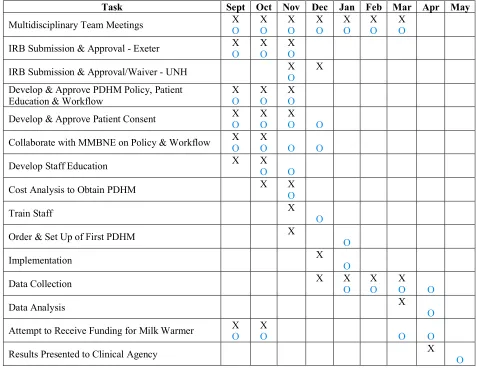
The steps involved in establishing a PDHM Program are outlined in Table 2. While some
portions of the project were completed in the expected timeline, most were completed 1 month
behind schedule. This was mainly due to lagging response times of individuals outside of the
Team from whom approvals were required. Despite the minor delays, the project was planned,
implemented, studied, and initial improvement actions were taken (i.e., PDSA cycle) within the
established timeframe of September 2017 to May 2018. PDSA cycles will continue for quality
Table 2
Intervention Timeline
Task Sept Oct Nov Dec Jan Feb Mar Apr May
Multidisciplinary Team Meetings X O X O X O X O X O X O X O
IRB Submission & Approval - Exeter X O X O X O
IRB Submission & Approval/Waiver - UNH X O X Develop & Approve PDHM Policy, Patient
Education & Workflow X O X O X O
Develop & Approve Patient Consent X O X O X O O
Collaborate with MMBNE on Policy & Workflow X O X O O O
Develop Staff Education X X O O
Cost Analysis to Obtain PDHM X X O
Train Staff X O
Order & Set Up of First PDHM X O
Implementation X O
Data Collection X X O X O X O O
Data Analysis X O
Attempt to Receive Funding for Milk Warmer X O X O O O
Results Presented to Clinical Agency X O
Note: X – Projected Timeline
O – Actual Timeline
Primary Measures
Exclusive Breast Milk Feeding According to PC-05 & PC-05a.
Over the 6 month pre- and post-implementation period, a total of 325 births
(pre-implementation N=169, post-(pre-implementation N=156) occurred at the study agency. Of those,
287 newborns (88%) met inclusion criteria (pre- n=154, post- n=133) based on the JC’s PC-05
breast milk fed. Comparatively, 95 out of 133 newborns (71%) were exclusively breast milk fed
in post-implementation. Pearson’s chi-square analysis of the PC-05 metric, and resulting 3%
rate increase, was not statistically significant (p = 0.47). Of the families who chose breastfeeding
on admission, 77% (n = 104/135) of the pre-implementation and 88% (n = 95/108) of the
post-implementation cohorts were considered exclusively breast milk fed using the JC’s retired metric
PC-05a. Pearson’s chi-square analysis revealed a statistically significant increase in exclusive
breast milk feeding (p = 0.03).
Two likely explanations exist for the modest improvement in the PC-05 and PC-05a
outcomes. First, the short timeframe for data collection and analysis resulted in small sample
sizes thus potentially skewing results. Second, the 3 month timeframe for post-implementation
data collection also coincided with the staff acclimating to the new PDHM processes. As staff
were learning the PDHM processes, there was the potential that patient eligibility for PDHM was
mistaken thus potentially impacting the number of families who were offered or used PDHM.
Longer pre- and post-implementation timelines for data collection would increase the sample
sizes, and the inclusion of a washout period for staff acclimation, together may have further
improved the results.
Variables of Interest
Hours of Age at First Supplementation.
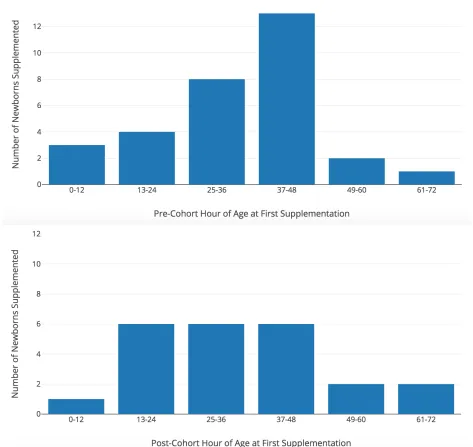
The hours of newborn age at the time the first supplementation was received was
calculated for each supplemented breastfed newborn (pre- n = 31, post n = 23). Supplementation
with both formula and PDHM were included in the calculation. Figure 1 shows a comparison of
the number of supplemented newborns between 0 – 72 hours of age, grouped into 12-hour
are unknown though this warrants further investigation to better understand when
mother-newborn couplets are most vulnerable to the need or request for supplementation.
Figure 1. Newborn age at the time the first supplement was received in the pre- and post-implementation
Indications for Supplementation.
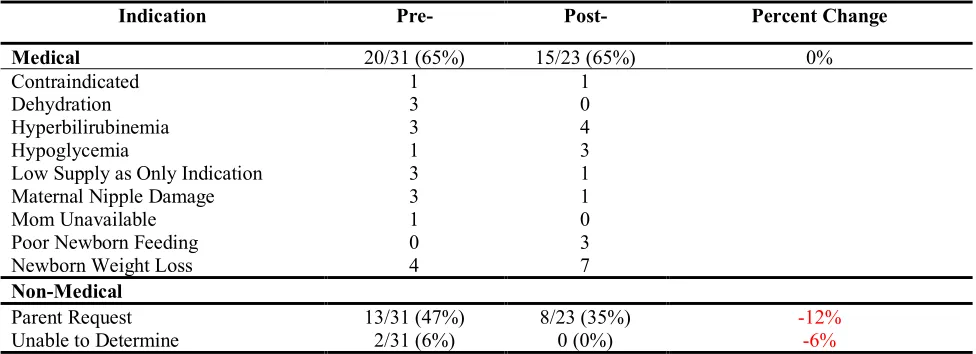
Table 3 captures the indications for supplementation data. During pre-implementation
there was a 65% medical indication rate, a 47% rate of parent request for supplementation, and
6% were unable to be determined. Outcomes do not total 100% as several newborns had
multiple indications for supplementation documented. Four newborns of the pre-implementation
cohort had both parent request and medical indications documented. Ideally, newborn
documentation would indicate supplementation based on either medical indications or
non-medical indications (i.e. parent request) but not both. The post-implementation cohort had 65%,
35%, and 0% rates respectively. While the percent of medical indications for supplementation
didn’t change, the results represent a relative decrease in parent requests (-12%) between the pre-
and post- cohorts. These outcomes could potentially be the result of targeted and repeated staff
education regarding indications for supplementation which improved accuracy of documentation
or potential evidence of a workaround.
Table 3
Indications for Supplementation
Indication Pre- Post- Percent Change
Medical 20/31 (65%) 15/23 (65%) 0%
Contraindicated 1 1
Dehydration 3 0
Hyperbilirubinemia 3 4
Hypoglycemia 1 3
Low Supply as Only Indication 3 1 Maternal Nipple Damage 3 1
Mom Unavailable 1 0
Poor Newborn Feeding 0 3 Newborn Weight Loss 4 7 Non-Medical
Parent Request 13/31 (47%) 8/23 (35%) -12%
Unable to Determine 2/31 (6%) 0 (0%) -6%
Formula Supplementation of Breastfed Newborns in the First Two Days of Life.
The pre- and post-implementation cohorts were compared on the breastfed newborns’ use
of formula in the first two days of life. These outcomes are based on HealthyPeople2020
benchmarks which include the total population who was ever breastfed or fed breastmilk without
exclusions. For this project, all mothers who were undecided or chose breast or mixed feeding
on admission without a contraindication to breastfeeding were included. Newborns who were
transferred were excluded from the calculation based on limited feeding data for this population.
The pre-implementation cohort had a 23.2% rate of formula use in the first 2 days of life (n =
33/142). The post-implementation cohort had a 16.9% (n = 21/124) rate of formula use among
breastfed newborns in the first two days of life. The CDC’s Breastfeeding Report Card for 2016
presented data on this metric, which was obtained from mPINC survey data, and reported a rate
of formula use with breastfed newborns in the first two days of life of 17.1% nationally and 6.6%
in the state of NH. The HealthyPeople 2020 goal for this metric is 14.2% (HealthyPeople 2020,
2017). Although the change in the rate of formula use from pre- to post-implementation was not
statistically significant (p = 0.20), the agency’s post-implementation rate of 16.9% nearly
reached the HealthyPeople2020 goal for 2020 of 14.2% and surpassed the national rate of 17.1%
(CDC, 2016; HealthyPeople 2020, 2017). However, the agency has more work to do to reach the
2020 goal and approach the average rate of formula use in the state of 6.6% which has
implications in patient satisfaction and in remaining competitive in the marketplace.
Contextual Elements and Unexpected Consequences
Figure 2 shows the proportion of feedings by supplement type. Nine patients received
PDHM in the post-implementation cohort and one patient received both PDHM and formula.
exclusive breast milk feeding until discharge which would not have been possible before PDHM
implementation.
Pre-Implementation Post-Implementation
Figure 2. Proportion of newborns supplemented by type in each cohort. Graphs were produced in Plot.ly (2017).
Feeding choices on admission of families in the pre- and post-cohorts are displayed in
Table 4. Historically, the agency experienced a near 90% breastfeeding initiation rate, therefore
the drop in rate for the PDHM group (pre- = 88%, post- = 81%) is unexpected and of interest.
The reason families chose each feeding type was not collected; however, there is an increasing
rate of maternal substance use which may be influencing this rate. This is an area for future
investigation in subsequent PDSA cycles.
Table 4
Feeding Choices on Admission in Pre- and Post- Cohorts
Feeding Choice Pre-Implementation Post-Implementation
Breast
Formula
Mixed
Undecided
88%
8%
4%
0%
81%
13%
5%
Of the JC defined breastfed newborn population, 23% in the pre-implementation cohort
(n = 31/135) and 21% of the post-implementation cohort (n = 23/108) received supplementation
of any type representing an interesting clinical trend. Despite staff education regarding the risks
of providing any supplement to breastfed newborns, such as negative impacts to maternal milk
supply and the newborn’s latch at breast, a minimal change in the rate of supplementation was
observed. This highlights the need to assess staff and patients’ understanding, practices, and
potential biases regarding supplementation of any type.
Missing Data
Despite attempts to retrieve missing data, there were a few occasions when the data were
unavailable from any source. These were labeled “Unable to Determine” (UTD) per JC
guidelines. UTD data were calculated separately. The missing data did not impact the
calculation of PC-05 or PC-05a, however they are addressed in the section on indications for
supplementation.
Discussion
Summary
The primary aim of this quality improvement project was to implement a PDHM
Program in a Level I nursery between September 2017 and May 2018 which was achieved. The
measured goal was to have an absolute increase of 10% in exclusive breastmilk feeding
according to the JC’s Perinatal Core Measure for that outcome (PC-05). With an absolute
increase of 3%, this goal was not achieved. However, when the data were measured according to
the JC’s retired metric on exclusive breast milk feeding among the breastfeeding population
Interpretation
The desired outcome of increasing exclusive breast milk feeding by 10% according to the
JC’s PC-05 was not realized; although, a modest yet positive increase of 3% was observed.
However, the post-implementation exclusive breast milk feeding rate of 71%, not only meets the
JC’s suggested target for hospitals to strive to achieve but far exceeds the JC’s national average
of 52.9% (JC, 2015). Another successful outcome was the achievement of a statistically
significant, 11% increase in exclusive breast milk feeding rates among breastfed newborns
(PC-05a). The PC-05a measure allows for assessment of exclusive breast milk feeding while
considering the feeding choices of the population. Results of both PC-05 and PC-05a at the
agency represent a positive trend that will continue to be monitored. Increases in exclusive
breast milk feeding in a well-baby population after implementation of PDHM were also reported
by Belfort (2018) and Kair (2014).
The tight project timeline included the immediate post-implementation period which was
a time of continued and significant learning for the staff. These post-implementation data may
not be representative of the longer-term success of the program. Marinelli et al (2014) and
Utrera-Torres et al (2010) both completed before and after studies using PDHM in a NICU; and
used data from 6 months pre-implementation and 6 months post-implementation with a washout
period between (6 months and 8 months respectively) for implementation, education, and
acclimation. A prolonged data collection period may have resulted in different reporting
outcomes.
Staff reported that PDHM was well received by the patients; however, this is anecdotal
and collecting data on staff and patient perceptions regarding PDHM is a recommendation for
temporary when compared to formula. PDHM was also seen as unfamiliar, costly and
logistically challenging (Kair & Flaherman, 2017). When used before discharge, PDHM is
covered 100% for patients by the agency thus removing the cost barrier in this setting. The
agency’s cost coverage also aligns with current regional practice as 95% of hospitals in the
Northeast that provide PDHM to healthy newborns pay for it through the hospital budget (Belfort
et al, 2018).
Table 5 reflects the financial impact of the program; costs for implementation and the
first 3 months of PDHM purchases are reflected. The calculation does not account for the cost of
time for project related work from the remainder of the Team or for staff to become educated.
The Team experienced a greater than anticipated usage of PDHM in the 3 months following
implementation. Actual usage costs for PDHM in 3 months of $1,396.25 equates to an estimated
annual expense of $5,585. While these costs may not be offset directly, indirect savings to the
hospital will likely be realized through increased patient satisfaction and decreased maternal and
child morbidity and mortality. At the end of 3 months post-implementation, the agency had a
positive net balance of approximately $6,000 which is in excess of the estimated cost to purchase
PDHM for 1 year. Usage, costs to purchase milk and maintain the milk warmer, and outcomes
Table 5
Approximate Costs of PDHM Implementation
Item/Service Projected
Cost/Savings
Actual Cost/Savings
Comment
Professional Time for DNP
QI Project Management $10,500.00 $10,500.00 Financial savings based on 300 hours of unpaid service
Equipment & Supply Cost:
Commercial Grade Freezer -$3,000.00 -$2,478.60 This was obtained and paid for in a prior budget cycle
Equipment & Supply Cost: Commercial Grade Milk Warmer
-$1,300.00 $0 Charitable funding
obtained through Community Relations Department
Cost of PDHM + Shipping
for First 3 Months -$650.00 -$1,396.25 This does not include milk sent and received via Replacement Agreements
TOTAL SAVINGS $5,650 $6,103.75
National economic cost analyses of suboptimal breastfeeding can be found in the
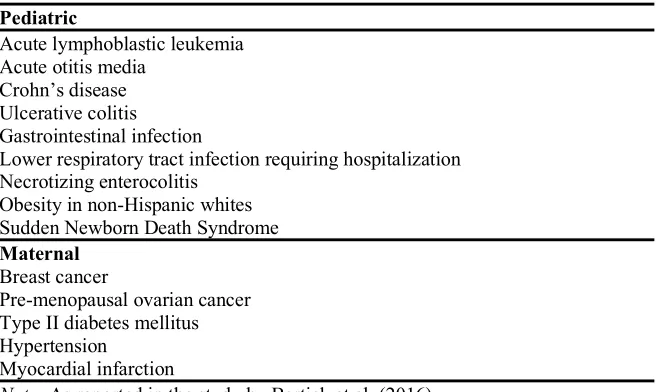
literature. Bartick et al (2017) modeled lifetime costs of suboptimal breastfeeding (i.e. for
maternal ages 15 to 70 and from birth to 20 years of age for children) for a cohort of 1.9 million
women and 3.75 million children including direct and indirect medical costs, non-medical costs,
and premature death in 2014 U.S. dollars for the top 5 maternal and 9 childhood diseases
impacted by breastfeeding which are listed in Table 6. In this 2017 study, Bartick et al reported
maternal and child costs totaling $18.5 billion. It was also estimated that the number of women
needed to breastfeed optimally to prevent 1 incidence of disease were 0.8 for gastrointestinal
illness, 3 for acute otitis media, 95 for lower respiratory tract infection hospitalization, 55 for
Table 6
Top Diseases Impacted by Breastfeeding Reported by Bartick et al.
Pediatric
Acute lymphoblastic leukemia Acute otitis media
Crohn’s disease Ulcerative colitis Gastrointestinal infection
Lower respiratory tract infection requiring hospitalization Necrotizing enterocolitis
Obesity in non-Hispanic whites Sudden Newborn Death Syndrome Maternal
Breast cancer
Pre-menopausal ovarian cancer Type II diabetes mellitus Hypertension
Myocardial infarction
Note: As reported in the study by Bartick et al. (2016)
Based on the same simulation reported by Bartick et al. (2017), Stube et al (2017) go on
to estimate that an absolute increase of 5% in any and exclusive breastfeeding would result in a
$44 million lifetime savings for the medical costs of childhood otitis media and gastrointestinal
illness alone. A 5% absolute increase in breastfeeding rates would result in a total savings of
$1.9 billion when considering direct and indirect medical, non-medical, and premature death
costs for mothers and children (Stube et al, 2017). Therefore, investing in effective practices
supporting breastfeeding, such as the BFHI and the Ten Steps, is considered a cost-effective
strategy (Stube et al, 2017).
Limitations
Strong leadership support for PDHM was in place before the Team Leader assumed
responsibility for this project. Barriers to PDHM implementation were primarily the lack of staff
and provider knowledge about the benefits of, and workflow for, PDHM. Through impromptu
conversations with staff, there appears to be a small cluster of staff who are not supportive of
Additionally, there is a culture of nonchalance in formula supplementation of breastfed newborns
among a portion of both nurses and physicians despite the evidence against this practice unless
medically necessary. Both of these barriers will need to be addressed to better understand the
culture related to formula supplementation of breastfed newborns and any barriers to the use of
PDHM.
Based on new reporting requirements at the study agency that coincided with this project
implementation, PC-05 data abstraction will be ongoing. This will continue to inform practices
related to exclusive breast milk feeding and the success or failure of the PDHM Program.
Anecdotally, patients and staff have shared primarily positive feedback on the availability and
use of PDHM. Surveying staff and patients about feelings and experiences regarding
supplementation and the use of PDHM would provide data to establish a more global
understanding of the success or failure of the program and areas for future quality improvement
efforts. Additionally, patient satisfaction measured through Press Ganey data may begin to
reflect patients’ experience with PDHM.
Quality improvement data is not intended to be generalizable outside of the study agency.
The generalizability of this report to the agency is limited by the small sample size, specific
population of interest, and limited statistical analysis. Potential threats to internal validity were
also identified. The short timeline of post-implementation data collection meant that staff were
still learning how and when to use PDHM. Other studies of PDHM and exclusivity use a total of
12 months of data, rather than 6 months, and a washout period to staff acclimation to the new
process. Increasing the length of pre- and post-implementation with a washout period may
It is also possible that the staff education about PDHM and supplementation prior to
implementation may have skewed the pre-implementation data as staff became more
knowledgeable and conscientious about the risks of supplementing breastfed newborns.
Additionally, human manipulation of data, the necessity of using multiple data sources and
system limitations all present the possibility of errors. Efforts to minimize errors involved spot
checks in redundant systems, and comparison of data with the Quality department for accuracy.
Confounding variables were not adjusted for and may include primiparity, use of glucose-gel in
hypoglycemic newborns, staff attitudes, and patient attitudes. Time constraints limited the
ability to collect associated data and adjust for these variables.
Conclusions
Despite overwhelming evidence on the benefits of exclusive breastfeeding, national rates
of exclusivity and those within the agency, require improvement to meet benchmarks. The “Ten
Steps to Successful Breastfeeding”, promoted through The Baby-Friendly Hospital Initiative
(BFHI), are evidence-based maternity care practices that support breastfeeding. Step 6 of the
Ten Steps is to “give newborns no food or drink other than breast-milk unless medically
indicated,” (BFHI, n.d.; WHO/UNICEF, 2009). Likewise, HealthyPeople 2020 (2017)
established a goal to reduce formula use in the first two days of life to 14.2% in 2020. Based on
improved health outcomes for mothers and newborns who breastfeed, among other rationales,
the agency aimed to increase exclusive breastfeeding rates by 10%, as calculated by the JC
reporting requirements of PC-05 (2017), within 3 months after implementation of a PDHM
program. Based on PC-05 metrics, the agency experienced a 3% increase in exclusive breast
milk feeding which was modest and not statistically significant; however, indicates a positive
experienced a statistically significant 11% increase in exclusive breast milk feeding and the
overall exclusive breast milk feeding rate of 71% which exceeds the JC’s recommended goal.
When birthing facilities support exclusive breastfeeding in the inpatient setting; they are
also promoting breastfeeding success for patients beyond their hospitalization. In the face of
medically necessary supplementation and an insufficient maternal milk supply, families now
have an option to meet their newborn’s nutritional needs while maintaining exclusive breast milk
feeding at the agency. This practice has the potential for long-term, positive outcomes for both
mothers and newborns.
Funding
No funding was obtained to implement this quality improvement project; however,
several avenues were explored to obtain funding for the purchase of a milk warmer to improve
the nursing workflow in the preparation of PDHM. Initial efforts to obtain grant funding were
unsuccessful; however, charitable funding was secured in April 2018 through the agency’s
Community Relations Department which covered the exact purchase price of a milk warmer and
References
Academy of Breastfeeding Medicine. (2017). Supplementary feedings in the healthy term
breastfed neonate, revised 2017. (ABM Protocol No. 3). doi: 10.1089/bfm.2017.29038.ajk.
Retrieved from http://www.bfmed.org/Media/Files/Protocols/Protocol%203%20
Supplementation%20English%20Version.pdf
American Academy of Pediatrics. (2012). Breastfeeding and the use of human milk. Retrieved
from
http://pediatrics.aappublications.org/content/pediatrics/early/2012/02/22/peds.2011-3552.full.pdf
Association of Women's Health, Obstetrics and Neonatal Nurses. (2015). Breastfeeding [Position
statement]. Journal of Obstetric, Gynecologic & Neonatal Nursing. 44(1), 145-150.
Retrieved from https://secure.jbs.elsevierhealth.com/action/showPreferences?
menuTab=Journals&type=favorite&code=jogn-site
Azad, M. B., Konya, T., Maughan, H., Guttman, D. S., Field, C. J., Chari, R. S., & Sears, M. R.
(2013).Gut microbiota of healthy Canadian newborns: Profiles by mode of delivery and
newborn diet at 4 months. Canadian Medical Association Journal, 185(5), 385-394.
Baby-Friendly USA. (2016). Guidelines and Evaluation Criteria for Facilities Seeking
Baby-Friendly Designation. Albany, NY: Baby-Friendly USA. Retrieved from
https://www.babyfriendlyusa.org/get-started/the-guidelines-evaluation-criteria
Baby-Friendly USA. (n.d.) Ten steps and international code. Retrieved from
https://www.babyfriendlyusa.org/about-us/10-steps-and-international-code
Bartick, M., & Reinhold, A. (2010). The burden of suboptimal breastfeeding in the United States: