Significance of Open Source Software in Current
Educational System: Review Report based on Saudi
Educational System
Mohammed Abdullah Mohammed Aysan
Public Relationship & Processing Freewill, Abha, KSA.
Abstract - Open source software (OSS) offers one approach to addressing the technical problems in providing optimal delivery of educational system. It refers to both the concept and practice of making program source code openly available. Education system have rushed to put their academic resources and services online, bringing the global community onto a common platform and awakening the interest of student community. Users and developers have access to the core designing functionalities that enable them to modify or add features to the source code and reorganize it. Open source today comprises more products such as open-source software, operating systems, application system, utility services, cooperation systems and special systems. It is one of the least expensive and most effective solutions for technology and knowledge transfer to the entire field. In addition, the transaction costs of communication, licensing and negotiations are minimized, freeing up funds for real development. This concept has diffused to several fields such as software, hardware and content. Main problem is commercial software are more expensive and not easy to access by the current educational system. The aim of this research article is to identify the available open resources to the current educational system to get more knowledge. Future lies on well establish software to enhance good infrastructure in communication at all level globally.
Keywords - Open Source Software, Educational System, Resources, Communication and Application Software.
1.
Introduction
Educational institutions have rushed to put their academic resources and services online, bringing the global community onto a common platform and awakening the interest of investors. Despite continuing technical challenges, online education shows great promise. Open source software offers one approach to addressing the technical problems in providing optimal delivery of online
learning. Open source software is free and open; this generates questions about its impact on domestic digital divides, the third-world digital-disadvantaged, the OSS influence on innovation, and national and corporate security from cyber-terrorism. For example, while free software may help reduce the digital divide, it will raise the several question such as may be weakening the software industry, trying to close the development of software sources etc.,
The role of software in today’s technical world is evitable. Technology has taken over even the very basic tasks that where to be done manually by humans to control the behavior and to make the best use of technical tools software was required. As with the passage of time with the transformation of hardware the concurrent development in software domain was also required but due to critical role of software the transformation of technological development its cost was boosted. These financial restrictions narrowed the domain of technological progress. As a net effect the pace of development was immensely reduced any it became the royalty restricted to the one’s having no financial restriction. Such scenario need to thought that the financially suppressed user’s shell also be making use of software enhance the performance [1, 7].
Open Source software is community driven and community serving; a large number of bright, and generous developers work openly and with the whole community. For example when an open source program crashes it provides useful information to find the source of the error or to report a possible bug. Open source software has lower monetary costs as development, support and license costs are fairly minimal when compared to proprietary software. This does tempt many organizations to use open source software in their business model [2].
Figure1. OSS used in major field
Some of the major sector such as Education, Science and engineering, Fashion technology, Food and beverages, Digital technology, Electronic communication and medicines are taking advantage of open source mentioned in the Figure1. The above sectors getting benefit from open source in different ways. Some could certainly use the cost-effectiveness, whereas others could use the reliability. Open source software is software like any other. However it is distinguished by its license, or terms of use, which guarantees certain freedoms, in contrast to closed proprietary software which restricts these rights. Open source software guarantees the right to access and modify the source code, and to reuses and redistribute the software, all with no royalty or other costs. In some cases, there can be an obligation to share improvements with the wider community, thus guaranteeing global benefit.
These, apparently simple guarantees, have powerful implications such as encourage to reuse, enabling innovative method, flexibility, easy to integrate, avoiding
software vendor monopoly, wide and global usage of software etc., The Open Software Source meets the following criteria
Unrestricted distribution
Source code distribution
Modification
Author’s source code integrity
No personal discrimination
No restriction on application
License distribution
License must not be product specific
No restriction on other software
Technology neutrality
2.
Literature Review
Umer Farooq, M. Aqeel Iqbal, Usman Shabbir, Sohail Nazir discussed software has gained immense importance in our everyday life and is handling each and every aspect of today ’s technological world. The idea of software at initial phase was implemented by a very precise minority of individual and now it’s everywhere whether one’s personal life or an organization. In this research paper an analysis of open source software has been presented by providing a brief comparison of Ubuntu as an emerging high quality open source modern operating system with well-known Microsoft windows operating system [1].
Greg Madey, Vincent Freeh, Renee Tynan elaborated of software programmers are spending tremendous amounts of time and effort writing and debugging software, most often with no direct monetary compensation. The programs, some of which are extremely large and complex, are written without the benefit of traditional project management, change tracking, or error checking techniques. We find evidence to support our hypothesis, primarily in the presence of power-law relationships on project sizes, project membership, and cluster sizes. Potential implications for IT researchers, IT managers, and governmental policy makers are discussed [3].
and industrial organization literatures provide lenses through which the structure of open source projects, the role of contributors and the movement’s ongoing evolution can be viewed [4].
Jamil Alkhatib, Mohab anis, Hamid Noori Free Open Source should be one of the least expensive and most effective solutions for technology and knowledge transfer to developing nations. This concept has diffused to several fields such as software, hardware, and content. It offers not only a low cost alternative for technology acquisition, but also for networking based on cooperation. In addition, the transaction costs of communication, licensing and negotiations are minimized, freeing up funds for real development. In this paper, FOS incentives, indicators, and measures are explained and the advantages of FOS as a viable technology and knowledge transfer tool for developing countries are highlighted [5].
Mario Silic, Andrea Back Open source software (OSS) has reshaped and remodeled various layers of the organizational ecosystem, becoming an important strategic asset for enterprises. Still, many enterprises are reluctant to adopt OSS. Knowledge about technological risks and their importance for IT executives is still under researched. We aim to identify the technological risks and their importance for OSS adoption during the risk identification phase in the enterprise context. Our results will be very valuable for practitioners to use when evaluating, assessing and calculating the risks related to OSS product adoption. Also, researchers can use it as a base for future studies to expand current theoretical understanding of the OSS phenomenon related to IT risk management [6].
3.
Problems in Current Educational System
with OSS
The weakness of open source projects for education becomes evident during their implementation of learning process. Using the open source software to its full potential may prove challenging for learners, and the availability of the source code is inappropriate for end users if they do not find the product suitable. Similarly, open source software is not always compatible with existing software components.
Open source development has other potential disadvantages. There are no assurances that a project will reach completion and bring the desired results. Progress depends on the interest and time of the combined workforce and lack of resources or funding can derail a project. Maximum available commercial open source
products, however, are self-sufficient. Intellectual property rights can make it difficult to determine whether a particular software solution has been patented or not. If a process used in an open source project has already been patented, the group can be charged with patent violation. Although the availability of source code makes it difficult for patent holders to prove violation, these issues often face the development of open source software.
4.
Need of OSS in Current Educational
System
Current education system involves applying the concepts of open source to instruction using a shared web space as a platform to improve upon learning, educating structural and management challenges. At the university level, the use of open-source-appropriate technology classroom activities has been shown to be successful in copying the connection between science/engineering and social benefit. This approach has the potential to use university students' access to resources and testing equipment in promoting the development of appropriate technology. The present education system has been at the forefront in imagining and abstracting infrastructures intended for utilizing and sharing digital resources or content. Still, this student community has faced challenges in making these visions a reality in a single environment. Online resources or open resources that teach beginners to advanced level courses in computer science, mathematics, business and technology. Most of the open source developers offer classes free of charge, generating revenue by connecting top performers with prospective employers. It isn’t the only one creating a free education marketplace. OSS provides the connectivity of many professionals with classes in business, finance, math and technology at top educational institution.
Many Educational institutions have chosen for open source learning management systems to improve the advanced knowledge for their students. Educational institutions annually pay large sums to software companies to use their magazine, journal and resources, but open source licenses are free for the use and modification. It is flexible, customizable and can share with global community. Advance and updated features and tools can be imported from the open source community. The enormous shared network of the open source community minimizes, although it does not eliminate, the risk of unavailability of further support. Volunteer help is available through open source support systems such as discussion, feedback forums.
presentation slides, podcasts, animation, images, lesson plans, lecture videos, maps, worksheets, textbooks and web seminar. At present, on growing digital medium it is necessary to implement open source learning material need for elementary, middle, high school students, vocational education, special needs and gifted students, parents, teachers and administrators.
5.
Methodology
The open source model actively promotes open source software by educating developers, course developer and users about the advantages of open source software and association techniques. Open source developing focuses on the use and teaching of open source software in the educational environment, from high school through graduate and post graduate levels. The open source is responsible for developing, arranging and conducting educational conferences, programs courses of instruction and other online educational activities.
This open and collaborative approach to creating knowledge has produced significance outcomes, such as the online application, online shopping and the web-based encyclopedia. The deficient of the conventional knowledge of modern business, open source methods have led the main underlying innovations around the Internet. Other organization have much to learn from open source methods they bring principles and working methods which can help to produce better knowledge, services or make them available on more widely beneficial terms. The formation of public policy to more open forms of academic peer review, setting up mutual support groups for people facing social and cultural problems to collaborative forms of social innovation, the principles of open source gives assurance to fundamental alter the way we approach complex social problems.
The future potential of these methods is such that they will soon become common place in our everyday life. It is now impossible to think about getting things done without considering the role of the Internet and web environment, so will it soon be impossible to reflect how to resolve a large social problem without considering the role of open sources.
Figure 2. OSS Learning application structure
Open source computing, open source application or web application is a client-server software application in which the client runs open source application using web browser. Open source applications are popular due to the ubiquity of easy and free usage, the convenience of using an open source as a client to update and maintain web applications without distributing and connecting software on potentially thousands of user computers is a key reason for their popularity, as is the inherent support for educational open source compatibility.
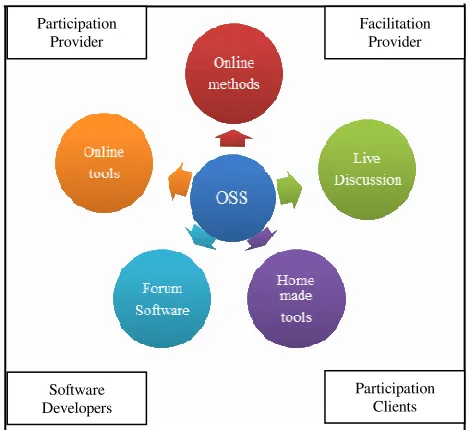
Figure 3. Open source in educational system
OSS Authoring Tool enables content experts to easily combine video, audio, images and texts into one synchronized learning object. The methods are configured to be played back in a sequence order. Learners do not need to perform any programming tasks in advance, but rather going through a graphical user interface to make the learning object.
Participation Provider
Facilitation Provider
Participation Clients Software
Developers User/ Student
Requirement
Web application software
OSS authoring tools
OSS learning methods
Development
Basically there are three main types of learning methods such as auditory, visual, kinesthetic. Most people learn best through a combination of the three types of learning styles, but everybody is different. Auditory Learners: Hear. Auditory learners would rather listen to things being explained than read about them and various teaching methodology here as follows:-
Virtual Environment
Lecture Capture/Podcasting
Online Lectures/Webinars/Remote Participation
Video Streaming
Interactive Content Creation
Ebook Authoring
E-book management
Collaborative Authoring
Mobile Apps for Students
6.
Implementing OSS Learning Strategy
The Open source development model of education is a relatively new phenomenon that has transformed the education sector. Businesses and academic institutions have merged together to further explore the significance for Open source education through
Virtual universities
Online Education
Educational portal
Online Courseware
Virtual universities are the well-known form of online education. At present virtual universities are needed new technologies to increase the study plan to adopt new digital medium device with suitable support for open source software. Online courses are offered in a variety of methods by various sources. Special courses are offered by businesses of renowned universities and it has been delivered through online. Therefore it is essential to use open source software for the further reference to the social and student’s community. Courses are also offered by open source organizations that create digital collections of study material culled from different academic sources.
Online portals, although not directly connected to the specific curriculum, have become an integral part of education. At present learning system need outsourced e-mail and other web services, site administrative functions, courseware, and other computer administrative services to software development and application companies to create new open source software. Online courseware is used in both the academic and corporate sectors, with development open outsourced to companies that provide
study material for both online and offline purposes. Many corporate institution use sophisticated computerized courses in their employee training programs to upgrade company’s strategy.
The Internet provides opportunities to combine educational and economic goals on a common, globally accessible policy. This requires wide range of technical support to create and sustain the software infrastructure on which digital education primarily depends. Many virtual universities rely on software vendors to support, for instance, virtual learning environments and learning management systems that deliver open source learning method. Another option is to adopt the combined model of open source software development, which enables educational institutions to pool their financial and technical resources. Besides, a huge user community provides a variety of testing environments for the new software.
Open source software products are more reliable and benefit from continuous development of current educational system. This is one reason to invest liberally in developing open source application software to work out a more cost-effective way of meeting e-learning software challenges.
7.
Benefits
Open sources are providing many benefits in present learning system for several reasons.
• The use of open source software has enabled universities to create courses easily available to the global education community. The concept of open access and the spread of academic blogs have broken down many barriers in the educational system.
• Teachers and students are more involved in the direct channel of learning program with open source software.
• The role of the digital medium in intermediation with various roles as content designer, reviewer, technical designer and administrator.
• The proposed methodology may include components that are not part of the university, such as agents representing companies with an economic interest in learning projects.
access is an initiative to give worldwide access to peer-created and reviewed learning content.
• Increasing research, enrich education, share the learning of the rich with the poor and the poor with the rich, make this content as useful as it can be, and lay the foundation for uniting educational society in a common intellectual conversation.
• A wide range of digital education is guided by e-commerce goals, however. Some online courses cost as much as on-campus courses, making higher education financially isolated to many students.
• The marketable type of education has made education more learner oriented, with courses structured according to the learner’s requirement.
• The Internet is allowing commercial companies and innovative colleges to unbundle learning and credentialing services from the whole campus-based industry with its high cost of research and residential services and to deliver these services to a growing market.
• Open source will increase to a highly flexible learning process, with a greater scope for global customization.
8.
Research Findings & Discussion
The majority of the use of open source material is self-oriented, informal learning: namely, to improve or enhance personal knowledge or to explore areas outside professional field. In other words, the majority of course materials use follows outside of institutional setup. This helps to explain a inconsistency apparent in the open source initiative program, it is educationally valuable but does not reduce from the educational value of the face-to-face activities on which the collected content based system. The informal users of this source, generally located outside of origination, would not be potential campus students or learners of the institution generating the material of open source.
A second finding is connected to the affiliation of the project to open source itself as an institution. It provides clear evidence of multiple areas of significant benefit accruing to open source from the open source developer, and provides the strongest motivating factor for long-term local support. Majorities of students and faculty at MIT use the site to support their study and teaching, and faculty say that putting materials online has improved their teaching.
9.
Conclusion
Open source products have gained considerable market in the domain of higher education. The future of open source software in higher education from a commercial aspect, open source projects are taking their first tentative steps into the marketplace. This might be good news for educational institution and universities because it would remove the threat of market monopoly, but to measure up to industry standards, open source projects need more complexity to use. If shared contributions continue at their current step, this might not be difficult to achieve. The nature of collaborative contribution could cause some concern. Although the community-based model agrees with the culture and values of higher education, enthusiasm cannot be the sole incentive. Probably only a few large communities with considerable commercial backing will survive after a few years. Open source learning method involve both academic and corporate concerns, have more chance of lasting than small, isolated, open source software projects.
References
[1] Umer Farooq, M. Aqeel Iqbal, Usman Shabbir, Sohail Nazir, “Critical Aspects of Modern Open Source Software Technology to Support Emerging Demands”, International Journal of Computer Applications (0975 – 8887), Volume 27– No.9, August 2011.
[2] Rachna Kapur, Mario Briggs, Tapas Saha, Ulisses Costa, Pedro Carvalho, Raul F. Chong, Peter Kohlmann, “Getting started with Open source development”, First Edition (July 2010), Copyright IBM Corporation 2010.
[3] Greg Madey, Vincent Freeh, Renee Tynan, The Open source software development phenomenon: An analysis based on social network theory”, Eighth Americas Conference on Information Systems pp 1806-1813, 2002 .
[4] Josh Lerner, Jean Tirole, “The Economics of Technology Sharing: Open Source and Beyond”, Journal of Economic Perspectives—Volume 19, Number 2—Pages 99–120, Spring 2005.
[5] Jamil Alkhatib, Mohab Anis, Hamid Noori, “Open source: The next big thing in technology transfer to developing nations”, International Association for Management of Technology IAMOT Proceedings, 2008.
[6] Mario Silic, Andrea Back, “Identification and Importance of the Technological Risks of Open Source Software in the Enterprise Adoption Context”, (IWI), University of St Gallen, 12th International Conference, Germany, March 4-6 2015.
[8] Saint-Paul, Gilles. “Growth Effects of Non-Proprietary Innovation”, Journal of the European Economic Association: Papers and Proceedings. 1:2-3, pp. 429– 39, 2003.
[9] Schmidt, Klaus and Monika Schnitzer, “Public Subsidies for Open Source? Some Economic Policy Issues of the Software Market”, Discussion Paper No. 3793, Centre for Economic Policy Research, 2003.