S T U D Y P R O T O C O L
Open Access
“
Push
”
versus
“
Pull
”
for mobilizing pain evidence
into practice across different health professions: A
protocol for a randomized trial
Joy C MacDermid
1,2*, Mary Law
1, Norman Buckley
3and Robert Brian Haynes
4Abstract
Background:Optimizing pain care requires ready access and use of best evidence within and across different disciplines and settings. The purpose of this randomized trial is to determine whether a technology-based“push”of new, high-quality pain research to physicians, nurses, and rehabilitation and psychology professionals results in better knowledge and clinical decision making around pain, when offered in addition to traditional“pull”evidence technology. A secondary objective is to identify disciplinary variations in response to evidence and differences in the patterns of accessing research evidence.
Methods:Physicians, nurses, occupational/physical therapists, and psychologists (n = 670) will be randomly allocated in a crossover design to receive a pain evidence resource in one of two different ways. Evidence is extracted from medical, nursing, psychology, and rehabilitation journals; appraised for quality/relevance; and sent out (PUSHed) to clinicians by email alerts or available for searches of the accumulated database (PULL). Participants are allocated to either PULL or PUSH + PULL in a randomized crossover design. The PULL intervention has a similar interface but does not send alerts; clinicians can only go to the site and enter search terms to retrieve evidence from the cumulative and continuously updated online database. Upon entry to the trial, there is three months of access to PULL, then random allocation. After six months, crossover takes place. The study ends with a final three months of access to PUSH + PULL. The primary outcomes are uptake and application of evidence. Uptake will be determined by embedded tracking of what research is accessed during use of the intervention. A random subset of 30 participants/ discipline will undergo chart-stimulated recall to assess the nature and depth of evidence utilization in actual case management at baseline and 9 months. A different random subset of 30 participants/ discipline will be tested for their skills in accessing evidence using a standardized simulation test (final 3 months). Secondary outcomes include usage and self-reported evidence-based practice attitudes and behaviors measured at baseline, 3, 9, 15 and 18 months.
Discussion:The trial will inform our understanding of information preferences and behaviors across disciplines/ practice settings. If this intervention is effective, sustained support will be sought from professional/health system initiatives with an interest in optimizing pain management.
Trial registration:Registered as NCT01348802 on clinicaltrials.gov.
Keywords:Knowledge translation, Evidence-based healthcare, Implementation science, Health informatics, Pain, Physician, Rehabilitation, Nursing, Psychology
* Correspondence:[email protected]
1
School of Rehabilitation Science, McMaster University, Hamilton, Ontario, Canada
2
Hand and Upper Limb Centre Clinical Research Laboratory, St. Joseph’s Health Centre, London, Ontario, Canada
Full list of author information is available at the end of the article
Background
Acute and chronic pain affects a large number of Cana-dians. The prevalence of chronic pain in Canadian adults has been estimated to range from 18–29% [1-4], with 60% experiencing major losses of occupation or function [5]. The 2005 Canadian Community Health Survey found that chronic pain affected 27% of community seniors [2]. In Canada, current healthcare spending to address this problem is $6 billion/year [5] and, with an aging population, is expected to rise to $10 billion/year by 2025.
There is considerable variation in practice and wide-spread patient dissatisfaction with the way pain is mana-ged across the spectrum, from relatively benign conditions to terminal illness. For example, in low back pain [6], unresolved pain is a common reason for repeat visits. Inadequately managed pain in serious illness is the most common reason for requesting assisted suicide [7]. Conversely, there are societal concerns about the use of narcotic medications for pain management and the po-tential societal impacts of misuse [8].
Many clinicians are not aware of recent pain research, and misconceptions are common [9,10]. In fact, health professionals may begin clinical practice with insufficient knowledge about pain, as illustrated by an entry-level curriculum for physicians, nurses, and rehab profes-sionals. The majority (68%) of programs did not specify designated hours for pain education (only 32.5% of the respondents could identify specific hours allotted for pain course content), and the total amount of time allo-cated to pain varied from 13 to 41 hours. Of interest, veterinarians spent twice as much time studying pain [11]. Studies that cross different types of pain and health professions indicate a large gap between evidence and practice—this is reflected by a high prevalence of low competence/confidence in pain management [12-19].
Pain management is central to health disciplines. Phy-sicians, nurses, and rehabilitation professionals are com-monly involved in managing acute and chronic pain [20]. Pain is one of the most common reasons for patients to consult these professions [21]. While scope of practice and focus may vary across professions, pain management provides an important context to study professional differences in use of evidence since pain is a high priority to all and an area where interprofessional practice is supported by evidence [22-26].
Evidence-based practice (EBP) can narrow the gap be-tween research knowledge and practice [27]. Studies suggest that an EBP approach is used in nursing [28], medical [29], and rehabilitation practice [30-32] with variable success. Increased use of evidence-based approaches [33] or supports such as guidelines or deci-sion aids is linked to improved clinical decideci-sion making and patient care [34,35], but the effects are not
consistent [36,37] and, thus, cannot be assumed to work in all contexts.
Professional associations and individual clinicians in rehabilitation are highly supportive of EBP [30,32,38-45]. Despite positive attitudes and motivations about EBP, many studies have reported barriers to effective imple-mentation of evidence from research in clinical practice [46]. Several studies indicate that clinicians experience time as an obstacle to searching for research evidence [47,48]. Clinicians also admit that they lack the skills required to navigate literature databases and to appraise medical literature effectively [32,49,50]. A lack of time [40-42] combined with inadequate searching and ap-praisal skills [20,21,43-45] are the primary barriers reported. It has been determined that it requires 53 min-utes on average—divided between database searches (39 minutes) and obtaining the articles (25 minutes)—to an-swer a clinical question using a traditional EBP approach [51].
Traditional approaches to knowledge translation (KT) in EBP have focused on providing knowledge and tech-nical EBP “skills” to practitioners, leaving them with the burden of searching and appraising evidence [40,52-56]. Studies suggest these interventions change knowledge about EBP, but not behavior [57,58]. Practi-tioners have limited success “pulling out” relevant qual-ity evidence because they lack the required searching, filtering, and appraisal skills [40-43,51,54,59,60]. Even with training, the time demands are substantial [51,56]. Current tools provide primitive alerting services that do not target specific practitioners, but send informa-tion by“dumping” procedures. As a result, practitioners are overwhelmed with a large volume of information, most of which does not pertain to their practice area. Thus, either these services are not used or alerts are ignored. A basic flaw in both the training or dumping-out KT approaches is that they fail to resolve the es-sential barriers of time pressures and lack of appraisal/ filtering skills.
Evidence-based decision making originated within medicine and evolved to other professions. Limited stud-ies, mostly in the United Kingdom, have addressed dif-ferences in attitude or awareness across professions [61,62]. Familiarity with evidence resources is less than might be expected. In 2009, only 44% of urologists were unaware of the PubMed search engine, and only 14% used it regularly [63].
appraising research evidence, as technical experts per-form basic critical appraisal, and then filters the high-quality studies and systematic reviews with ratings of relevance and interest from expert clinicians from the field to send only what is clinically relevant and new to the individual clinician. We know this approach increases uptake in physicians [66] and is valued by nurses [28] and rehabilitation users (pilot data). In a cluster randomized trial funded by the Canadian Insti-tutes of Health Research, with physicians in Northern Ontario, PLUS was shown to increase the use of medical literature by 57% and substantially increase the depth of use of evidence-based resources [57]. One of the limita-tions in KT research on this topic to date has been the use of surrogate outcome measures of knowledge utilization. It can be challenging to measure how new knowledge is integrated into clinical decision making, particularly in areas where complex reasoning is required. This study is designed to address some of those deficiencies.
The primary objective of this randomized crossover trial is to evaluate the incremental effect of a PUSH evidence resource (Pain PLUS) across professions (physicians, nursing, rehabilitation, psychologists) as compared to a standard (PULL) approach. The pri-mary outcomes are uptake and application of evi-dence, and they will be assessed at baseline, 3, 9, 15 and 18 months.
Methods/design
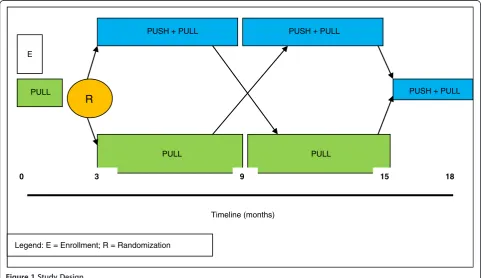
The trial is a crossover randomized controlled trial (RCT) with repeated baseline and follow-up measure-ments (Figure 1). The interventions are two different types of access to pain research evidence for four differ-ent types of professionals involved in pain managemdiffer-ent. The trial will begin with a three-month (repeated) base-line, during which average participant use of the stand-ard PULL resource will be monitored. Participants will then be randomly allocated to either receive PUSH + PULL or continue to use the PULL resource. After six months, participants will cross over to the alternate intervention for an additional six months. To complete the trial, both groups will finish with three months of PUSH + PULL access. The repeated baseline period pro-vides more stable estimates of participants’access prior to randomization. The rationale for the crossover design is that it will maximize our statistical efficiency, increas-ing the precision of effect estimates. This is particularly important for our subgroup (profession) estimates; it will also provide better control of unknown potential con-founders. The main potential drawback of a crossover design occurs if the “wash-out”is incomplete. While we will have control of the intervention delivery, the expos-ure to email alerts may affect use of the pull resources; therefore, we will test for order effects. The study received Ethics Approval from the McMaster University Research Ethics Board.
PUSH + PULL PUSH + PULL
PULL PULL
PULL E
R
0 3 9 15 18
PUSH + PULL
Timeline (months)
Legend: E = Enrollment; R = Randomization
Traditional RCT methodology supports a single pri-mary outcome measure, but a theoretical framework for outcome evaluation was based on the conceptual frame-work of technology-based KT [68,69]. Therefore, indica-tors of intervention effectiveness for this study are as follows:
1. Use of technology (structural evaluation): Embedded tracking will record the retrieval behavior (frequency of access; number of pain studies retrieved).
2. Perceived usefulness (subjective evaluation): Users will respond to randomly embedded judgments about the usefulness of their session experience.
3. Skills/behaviors in accessing information: An observational test of information-searching behaviors measuring how different professions access evidence for specific clinical questions and the type, quality, and usefulness of evidence retrieved.
4. Application: Evidence-based decision making
a. Participants’EBP behaviors and decision making will be measured by a standardized self-report scale.
b. Chart-stimulated recall will measure competency for using an evidence-based approach to address problems within participants’own clinical practice.
Our secondary objective is to evaluate professional dif-ferences in access/use of research. Therefore, we will evaluate whether the primary outcome measures—either at baseline or in response to the intervention—are modi-fied by professional group. Further, we will perform a structured classification of the types of studies accessed by different professions to look at variations in the type of evidence valued.
We expect that (1) retrieval and application of pain evidence and satisfaction with evidence resources will improve more with push-out intervention and (2) there will be differences between professions in attitudes to-wards EBP, response to evidence tools/resources, and types of evidence most accessed.
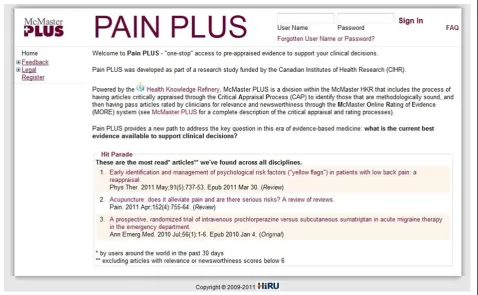
Interventions
All participants will receive unique IDs and passwords and will be able to log into an evidence resource, Pain PLUS (Figure 2), to search for recent studies and sys-tematic reviews of pain management (PULL). Once signed up, all practitioners will receive more specific instructions on using the evidence repository. This evi-dence repository has a cumulative collection of research evidence that has evolved over time—first for medicine, then for nursing, and then rehabilitation and psychology.
It contains a searchable database with links to PubMed abstracts and direct links to any free full-text articles.
PUSH + PULL intervention
Pain PLUS is a customized, personalized, evidence-based, alerting and look-up service that links clinicians to new research findings most relevant to their clinical practice. This service is based on ongoing hand searches of over 120 clinical journals. Trained, experienced re-search staff determine scientific merit/quality rating. Discipline-specific clinical ratings of relevance and news-worthiness are obtained from volunteer raters who agree to screen abstracts. Raters are in active clinical practice
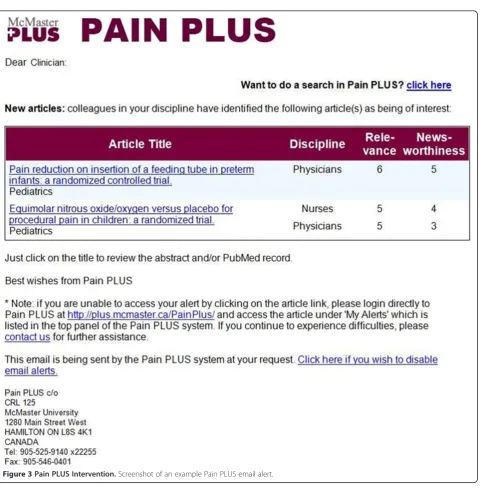
and are recruited from the intervention target group communities (“educational influential”). All study parti-cipants will be signed into the pain content of the ser-vice but can also select email frequency and the cut-off for relevance and quality to control the degree of rele-vance and frequency of evidence they receive. Their ex-perience will be a customized notification of new research (Figure 3).
PULL intervention
Users will “see” a similar format when they access the pull intervention, but this “placebo control”website will not include any individualized information, nor will they
receive alert emails. This group can access new research but must search for it.
Randomization
Computerized randomization will allocate individuals to intervention group at three months; crossover is auto-matic at nine months.
Study population and recruitment
Eligible practitioners must (1) be physicians, nurses, oc-cupational therapists (OTs), physical therapists (PTs), or psychologists who are currently working in clinical prac-tice at least one day/week; (2) be fluent in English; (3) have access to a computer at home or at work that has unrestricted access to the World Wide Web; and (4) have an active email account. Clinicians who meet the eligibility criteria are enrolled in the study by the re-search assistant.
Outcome measures
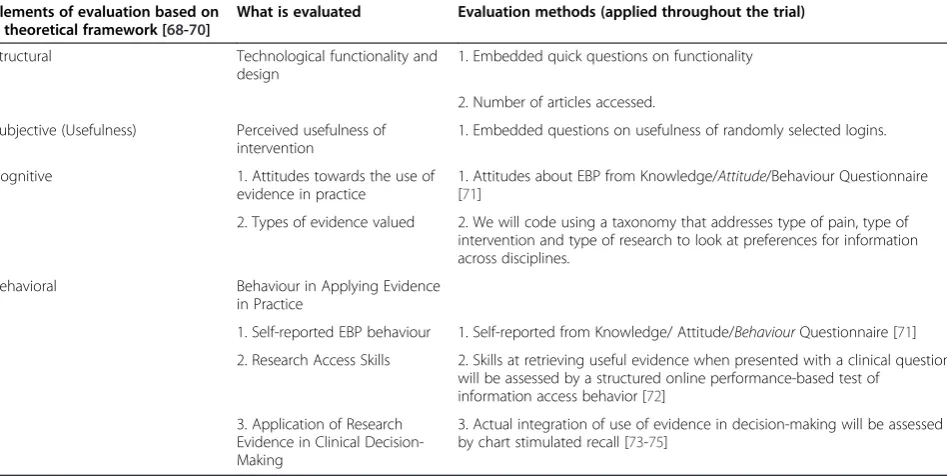
We will use an evaluation framework developed specif-ically for technology-enabled knowledge translation [68-70] to evaluate our primary research question on KT effectiveness as outlined below and in Table 1. It is important when evaluating technology to determine whether the technology performs as expected (struc-tural) and in a way that users find useful (subjective) to understand impacts on higher-level outcomes (cognitive and behavioral).
Structural
Structural usability analysis will have some embedded questions on functionality but will primarily be based on tracking of how the technology is used. We will have data on the number of logins and number of pain and other (specialty) research studies in the database that are accessed. These data will be summarized by the average frequency of use per month and mean number of studies accessed. Other utilization outcomes that will be tracked by the PLUS software include the change in the average frequency of use, average number of keystrokes per month, and the average number of times practitioners use certain specific electronic resources. Collection of these outcomes will be software regulated and, thus, not require any participant burden.
Subjective
The subjective elements will focus on perceived useful-ness of individual sessions. Participants will be asked at the end of each use to answer a single question with a 7-point scale, indicating the extent to which the service provided useful information. If some users fail to log off the system and invoke the final question, we will send them a query by email.
Cognitive
Attitudes
There are few well-validated outcomes assessments of EBP, knowledge acquisition, or attitude/behavior change. In this study, cognitive elements will be assessed using a previously validated scale containing cognitive and be-havioral questions specifically related to EBP [71]. This
Table 1 Overview of Study Assessments
Elements of evaluation based on a theoretical framework [68-70]
What is evaluated Evaluation methods (applied throughout the trial)
Structural Technological functionality and
design
1. Embedded quick questions on functionality
2. Number of articles accessed.
Subjective (Usefulness) Perceived usefulness of intervention
1. Embedded questions on usefulness of randomly selected logins.
Cognitive 1. Attitudes towards the use of
evidence in practice
1. Attitudes about EBP from Knowledge/Attitude/Behaviour Questionnaire [71]
2. Types of evidence valued 2. We will code using a taxonomy that addresses type of pain, type of intervention and type of research to look at preferences for information across disciplines.
Behavioral Behaviour in Applying Evidence
in Practice
1. Self-reported EBP behaviour 1. Self-reported from Knowledge/ Attitude/BehaviourQuestionnaire [71]
2. Research Access Skills 2. Skills at retrieving useful evidence when presented with a clinical question will be assessed by a structured online performance-based test of
information access behavior [72]
3. Application of Research Evidence in Clinical Decision-Making
questionnaire has validated factor structure and con-struct validity and demonstrated responsiveness to EBP interventions [71]. We have added supplemental ques-tions tailored specifically to Pain PLUS, adapted from the Evidence Updates trial [66] follow-up evaluations, for comparison purposes.
Behavioral
Behavior change is the ultimate goal of KT. It will be assessed through self-report, performance tests, and observer-based competency assessments. EBP behaviors will be self-reported using the Behavior Subscale of the Knowledge Attitudes and Behaviour Questionnaire (KABQ) validated in different professions [71]. Similar questions have demonstrated reliability and validity in nurses [76].
Skill at accessing research evidence
We will directly measure respondents’skill in accessing information by providing a clinical scenario where a clinical question needs to be addressed and asking parti-cipants to search for research information to address that request. We will monitor their approach to search-ing and their satisfaction and intention to act upon the information acquired. This test will replicate previous methods used to compare information retrieval by physi-cians on Clinical Queries versus PubMed [72]. A subset of volunteers (30/profession) will search for information to address two posed clinical questions: one scenario will be a uniform multidisciplinary question (provided to all participants) and the other will be profession specific. Using our tracking software within Pain PLUS, we will be able to identify what search terms are used, what studies are located, the efficiency of their search strat-egies (e.g., percent of relevant articles, time to find), and effectiveness of their search (quality of the relevant arti-cles located). Volunteers will rate the usefulness of the research located. Our previous study determined that Clinical Queries was more efficient for physicians [72]. In this substudy, we will randomly allocate half of the participants to access through PubMed traditional search versus Clinical Queries, so we can assess whether Clinical Queries is more useful across professions. This subanalysis will provide more detailed and direct data on professional differences in accessing information.
Application of research evidence
We will obtain scores and a more detailed description of actual application of pain research evidence use before and after the intervention by performing chart-stimulated recall (CSR). This approach yields a rich and deep understanding of how evidence is used in practice based on semistructured interviews that probe how/why clinicians make choices about cases retrieved from their
own records. A predetermined set of competencies are probed during the interview, and the performance is rated on a 7-point Likert scale. The score provides a quantitative estimate of competency (to use evidence in management of pain in their individual practice). We have successfully coded previous CSR interviews using content-analysis techniques. We have successfully used CSR in a KT study [73] to evaluate competency in clin-ician decision making, and others have indicated CSR is reliable and valid to assess different types of practice competency in physicians, nurses, and rehabilitation practitioners [73-75,77,78].
Timing of measures
The KABQ will be administered at baseline, 3, 9, 15, and 18 months. Other measures are embedded and distribu-ted over time. CSR will be performed in a subset of 30/ group during the first randomization cycle (at baseline and nine months). The skill assessment will be con-ducted in the final three months of the trial to allow maximum skill development to occur so that our com-parisons of professional differences will be less affected by learning curves.
Mediators of use of evidence/intervention response
It is important to monitor and potentially adjust for im-portant covariates that influence study outcomes. We will measure the following variables for each clinician: baseline knowledge/attitudes towards EBP, years of prac-tice, highest degree, and comfort with technology. Organizational variables will also be collected at base-line, including rural/urban location, clinic size, access to online journals, peer support, administrative support, and management support. These variables will be entered into an analysis of covariance examining pre-and post-intervention effects. Our sample size is suffi-ciently large that we will be able to assess the primary effects of these variables, as well as interactions between organizational variables and participant variables.
Sample-size calculations
0.05 (two-tailed), Type II error = 0.80, and the effect size = 0.40, the sample size required per group is 80. The sample size required for two comparison groups across four professions = 80 × 2 × 4 = 640. To account for our dropout rate (8/431), we have conservatively added 30 to recruit a sample of 670 practitioners. For analysis of response mediators, an R2 of 30% corre-sponds to an effect size of 0.42; 600 practitioners pro-vides more than 99% power to detect this effect size with 12 predictors [79].
This study is organized locally but recruits participants internationally to inform practitioners of the study and the potential for free access to evidence resources. Our multimodal recruitment strategy will use professional associations, websites/conferences, and social media to inform practitioners of the study and the potential for free access to evidence resources.
Proposed methods for protecting against other sources of bias
Control over eligibility violations
Participants will complete a baseline screen with the study research assistant, which will be independently reviewed by a trainee for violations. These will be reported (as a protocol diligence indicator), but no parti-cipants will be removed. No further rechecks of eligibil-ity or exclusions will be included after this screening.
Control of biases through blinding
We have attempted to create a blinded control by cre-ating a similar front-face to the website and blinding participants to the nature of the difference in the two resources (push versus pull), although we acknowledge differences will become apparent to users. Since usage data are embedded and automated, they are not influ-enced by data collectors or social bias. Research assis-tants and data analysts will be blinded to group allocation for the duration of the study and data ana-lysis. After crossover, subjects will be aware of the dif-ference and, therefore, no longer be blinded. Thus, the overall potential for bias due to lack of blinding has been minimized.
Control of contamination and co-intervention
Inside the study, participant crossovers are impossible since we control access to the intervention. Contamin-ation that happens by participants accessing open ac-cess content for physicians by signing up under an alias for service is possible, but not probable. As part of enrollment, we will ask participants to refrain from using any new evidence access tools/services or EBP training during the study trial and will re-evaluate their reports of services used at the end of each intervention cycle. Co-intervention will be discouraged, including
attendance at intensive EBP training (although we ex-pect that routine exposure in settings is neither con-trollable nor a concern since these pre-existing efforts have not been effective).
Ensuring reproducibility and reliability of measurements of outcome
We will use reliable and valid measures of attitudes to EBP that have been used with the studied clinical disci-plines [44,76,80,81]. CSR will be performed by two inde-pendent raters and checked for initial reliability.
Control of biases relating to (loss to) follow-up
We will use the following measures to ensure minimal loss to follow-up: (1) enrollment/consent will emphasize committing to the entire trial period and will exclude clinicians who cannot commit to the study for 18 months, (2) contact information will be updated at each study interval, and (3) response burden has been kept low. Burden is reduced since brief measures are embed-ded in the intervention; the total time required for extra questionnaires is relatively low and will be time distribu-ted. The system will initiate regular reminders until the data collection is complete (or the participant withdraws consent).
Compliance
Compliance is one of our monitored variables. When participants fail to use an intervention, they are classified in some studies as noncompliant. We view lack of use as a failure of the intervention to meet participant needs. Thus, participants who do not use this service will not be classified as noncompliant or dropouts. Dropouts will be defined as participants who inform us that they no longer wish to participate in the study follow-up process. These participants will not be denied access to the inter-vention, and we will request permission to continue to use data from the embedded tracking of usage. Each par-ticipant will receive a $45 gift card upon completion of at least three survey assessments: baseline, one follow-up (at 3, 9, or 15 months), final assessment. Participants who complete the CSR or the search skills assessment will receive an additional $20 gift card as honorarium for time volunteered.
Planned data analyses
use parametric statistics. Transformations may be con-sidered if necessary to meet test assumptions. To test our main research question, we will use general, linear mixed-effects models [82] for repeated measurements over time to explore the relationship among the use/be-havior scores, comparing the effects between profes-sional groups and intervention types. The models will be fitted for the outcome scores over time as a function of the between-participant (profession/intervention) and within-participant (time) variables. Utilizing a mixed-model approach allows us to account for the dependence between outcome measurements taken over time from the same participant. The structure of the variance-covariance matrix, which dictates the dependence be-tween measurements in the fitting of the model, will be chosen based on standard criteria in statistics. Post hoc pairwise comparisons of the two treatment arms at dif-ferent time points will be done using multiple compari-sons with adjustment to the Type I error rate. Type I error will be set to 5% (i.e., α= 0.05) for all the calcula-tion of the confidence intervals and performing the vari-ous hypothesis-testing procedures. Type I error will be adjusted accordingly for multiple comparisons. Standard diagnostic tools will be used to assess any of the model fittings. An intent-to-treat analysis will be employed— those who do not participate will be included in the ana-lysis in their original group. No interim analyses are planned since there are no safety issues and we wish to ensure full power for both primary and secondary analyses.
We also plan to analyze difference in professional attitudes, evidence access, and use. We have powered our study to allow this analysis. Our subgroup analyses will also describe differences in types of evidence accessed. Our group previously determined that physi-cians prefer systematic reviews to primacy studies and that access was better through peer-reviewed journals than through Cochrane Collaboration [83]; we will now extend this type of analysis to look at evidence accessed across professions by comparing the types of primary studies (clinical, basic science; quantitative/ qualitative), content (prognosis, diagnosis, clinical meas-urement, treatment effectiveness/outcomes, economic, etiology), and journals (disciplinary/interdisciplinary/ other discipline).
Steering committee
The Steering Committee will consist of the four investi-gators. The study coordinator will prepare a monthly re-port, detailing the accrual rate, loss to follow-up, withdrawals, and compliance with study protocols. Since this trial does not directly involve patients, there is no need for a Data Safety Monitoring Committee.
Trial status
We have enrolled more than 70% of the sample target. More than 60% of the participants have reached the nine-month milestone (crossover).
Discussion
This trial should provide unique information on evidence-access skills and professional differences in use of evidence. We expect to demonstrate the effectiveness of push-out targeted evidence (Pain PLUS) and to move the intervention into open access upon trial completion. We expect that some differences in evidence access and application will occur across professional groups, both in terms of types of pain interventions and types of re-search that are accessed.
It is our intent to ensure this intervention becomes open access to have ongoing impact. We believe this trial will inform our understanding on how to best de-liver evidence to clinicians across a variety of professions dealing with pain. Sustainability of KT interventions is a critical issue area. As our findings emerge, we will deal with sustainability issues. Since evidence updates have been created for specific disciplines, including physi-cians, nurses, and rehabilitation professionals, it may be that folding in a pain resource into these existing resources would be the optimal method to ensure sus-tainability. Conversely, pain stakeholders may prefer a customized resource. A variety of pain resources are being developed, and strategies to share these across sta-keholders are just emerging in stakeholder discussions. This may form an opportunity to tailor the knowledge from this study to emerging resources. Using the know-ledge about what pain evidence exists, is accessed, and valued across professions will allow us to develop a pain knowledge strategy. The sustainability plan will be designed to maximize uptake of pain knowledge in a sustainable manner.
more challenging than are such decisions in quantitative research.
We also acknowledge that the information resources that are available to knowledge users are rapidly expanding. Resources vary in their delivery, quality, customization, source content, and format of informa-tion. Knowledge users may become overwhelmed with information resources or stick with ones they have be-come comfortable with, irrespective of the quality of the information. It may not be clear to end users that the evidence-filtering process used in Pain PLUS protects them against low-quality information. Further, as clini-cians often value advice about clinical decision making in actual cases, or implementation issues, they may be drawn to information resources that focus on these ra-ther than the primary or synthesized research available. Since information is always in competition with other information, we cannot be certain that Pain PLUS will win in this competition.
Competing interests
JCM, ML, and RBH were involved in the development of the Pain PLUS service. NB has no competing interests to declare.
Authors’contributions
JCM drafted the protocol. All authors participated in the study design and provided feedback on the protocol. All authors read and approved the final manuscript.
Acknowledgments
This study is funded by the Canadian Institutes of Health Research (CIHR). The authors thank Margaret Lomotan for assistance with the manuscript preparation and study coordination.
Author details 1
School of Rehabilitation Science, McMaster University, Hamilton, Ontario, Canada.2Hand and Upper Limb Centre Clinical Research Laboratory, St. Joseph’s Health Centre, London, Ontario, Canada.3Department of
Anaesthesia, McMaster University, Hamilton, Ontario, Canada.4Department of Clinical Epidemiology and Biostatistics and Department of Medicine, McMaster University, Hamilton, Ontario, Canada.
Received: 21 August 2012 Accepted: 15 October 2012 Published: 24 November 2012
References
1. Gummesson C, Atroshi I, Ekdahl C, Johnsson R, Ornstein E:Chronic upper extremity pain and co-occurring symptoms in a general population.
Arthritis Rheum2003,49:697–702.
2. Ramage-Morin PL:Chronic pain in Canadian seniors.Health Rep2008,
19:37–52.
3. Verhaak PF, Kerssens JJ, Dekker J, Sorbi MJ, Bensing JM:Prevalence of chronic benign pain disorder among adults: a review of the literature.
Pain1998,77:231–239.
4. Von Korff M, Crane P, Lane M, Miglioretti DL, Simon G, Saunders K,et al:
Chronic spinal pain and physical-mental comorbidity in the United States: results from the national comorbidity survey replication.Pain 2005,113:331–339.
5. Phillips CJ, Schopflocher D:The economics of Chronic Pain. InChronic Pain: A Health Policy Perspective. Edited by. Weinham: Wiley-Blackwell; 2008. 6. McPhillips-Tangum CA, Cherkin DC, Rhodes LA, Markham C:Reasons for
repeated medical visits among patients with chronic back pain.J Gen Intern Med1998,13:289–295.
7. Fischer S, Huber CA, Furter M, Imhof L, Mahrer IR, Schwarzenegger C,et al:
Reasons why people in Switzerland seek assisted suicide: the view of patients and physicians.Swiss Med Wkly2009,139:333–338. 8. Webster LR, Bath B, Medve RA:Opioid formulations in development
designed to curtail abuse: who is the target?Expert Opin Investig Drugs 2009,18:255–263.
9. Wolfert MZ, Gilson AM, Dahl JL, Cleary JF:Opioid analgesics for pain control: Wisconsin physicians’knowledge, beliefs, attitudes, and prescribing practices.Pain Med2010,11:425–434.
10. Veale DJ, Woolf AD, Carr AJ:Chronic musculoskeletal pain and arthritis: impact, attitudes and perceptions.Ir Med J2008,101:208–210. 11. Watt-Watson J, McGillion M, Hunter J, Choiniere M, Clark AJ, Dewar A,et al:
A survey of prelicensure pain curricula in health science faculties in Canadian universities.Pain Res Manag2009,14:439–444.
12. Douglass MA, Sanchez GM, Alford DP, Wilkes G, Greenwald JL:Physicians’ pain management confidence versus competence.J Opioid Manag2009,
5:169–174.
13. Finestone AS, Raveh A, Mirovsky Y, Lahad A, Milgrom C:Orthopaedists’and family practitioners’knowledge of simple low back pain management.
Spine (Phila Pa 1976)2009,34:1600–1603.
14. Bishop A, Foster NE, Thomas E, Hay EM:How does the self-reported clinical management of patients with low back pain relate to the attitudes and beliefs of health care practitioners? A survey of UK general practitioners and physiotherapists.Pain2008,135:187–195.
15. Todd KH, Sloan EP, Chen C, Eder S, Wamstad K:Survey of pain etiology, management practices and patient satisfaction in two urban emergency departments.CJEM2002,4:252–256.
16. Zenz M, Zenz T, Tryba M, Strumpf M:Severe undertreatment of cancer pain: a 3-year survey of the German situation.J Pain Symptom Manage 1995,10:187–191.
17. Plaisance L, Logan C:Nursing students’knowledge and attitudes regarding pain.Pain Manag Nurs2006,7:167–175.
18. Byrd PJ, Gonzales I, Parsons V:Exploring barriers to pain management in newborn intensive care units: a pilot survey of NICU nurses.Adv Neonatal Care2009,9:299–306.
19. Valente SM:Research dissemination and utilization improving care at the bedside.J Nurs Care Qual2003,18:114–121.
20. Peng P, Stinson JN, Choiniere M, Dion D, Intrater H, LeFort S,et al:Role of health care professionals in multidisciplinary pain treatment facilities in Canada.Pain Res Manag2008,13:484–488.
21. Zailinawati AH, Teng CL, Kamil MA, Achike FI, Koh CN:Pain morbidity in primary care - preliminary observations from two different primary care settings.Med J Malaysia2006,61:162–167.
22. Scascighini L, Toma V, Dober-Spielmann S, Sprott H:Multidisciplinary treatment for chronic pain: a systematic review of interventions and outcomes.Rheumatology (Oxford)2008,47:670–678.
23. Thomsen AB, Sorensen J, Sjogren P, Eriksen J:Economic evaluation of multidisciplinary pain management in chronic pain patients: a qualitative systematic review.J Pain Symptom Manage2001,22:688–698. 24. Karjalainen K, Malmivaara A, van Tulder M, Roine R, Jauhiainen M, Hurri H,
et al:Multidisciplinary biopsychosocial rehabilitation for subacute low back pain among working age adults.Cochrane Database Syst Rev2003, (2):CD002193.
25. Karjalainen K, Malmivaara A, van Tulder M, Roine R, Jauhiainen M, Hurri H,et al:Multidisciplinary biopsychosocial rehabilitation for neck and shoulder pain among working age adults.Cochrane Database of Systematic Reviews 2003, :CD002194. update of Cochrane Database Syst Rev. 2000;(3):CD002194; PMID: 10908529]. [Review] [23 refs.
26. Guzman J, Esmail R, Karjalainen K, Malmivaara A, Irvin E, Bombardier C:
Multidisciplinary rehabilitation for chronic low back pain: systematic review.BMJ2001,322:1511–1516.
27. MacDermid JC, Graham ID:Knowledge translation: putting the“practice” in evidence-based practice.Hand Clin2009,25:125–143.
28. Doran DM, Haynes RB, Kushniruk A, Straus S, Grimshaw J, Hall LM,et al:
Supporting Evidence-Based Practice for Nurses through Information Technologies.Worldviews Evid Based Nurs2010,7:4–15.
29. Dorsch JL, Aiyer MK, Meyer LE:Impact of an evidence-based medicine curriculum on medical students’attitudes and skills.J Med Libr Assoc 2004,92:397–406.
30. Bennett S, Hoffmann T, McCluskey A, McKenna K, Strong J, Tooth L:
therapy systematic evaluation of evidence): a new evidence database for occupational therapists.Am J Occup Ther2003,57:635–638.
31. Dysart AM, Tomlin GS:Factors related to evidence-based practice among U.S. occupational therapy clinicians.Am J Occup Ther2002,56:275–284. 32. Jette DU, Bacon K, Batty C, Carlson M, Ferland A, Hemingway RD,et al:
Evidence-based practice: beliefs, attitudes, knowledge, and behaviors of physical therapists.Phys Ther2003,83:786–805.
33. Denmark D:The evidence-based advantage. The proper use of EBM in CPOE can enhance physician decision-making and improve patient outcomes.Health Manag Technol2008,29:22. 24–22, 25.
34. Garg AX, Adhikari NK, McDonald H, Rosas-Arellano MP, Devereaux PJ, Beyene J,et al:Effects of computerized clinical decision support systems on practitioner performance and patient outcomes: a systematic review.
JAMA2005,293:1223–1238.
35. Gilmore AS, Zhao Y, Kang N, Ryskina KL, Legorreta AP, Taira DA,et al:
Patient outcomes and evidence-based medicine in a preferred provider organization setting: a six-year evaluation of a physician pay-for-performance program.Health Serv Res2007,42:2140–2159. 36. Heselmans A, Van de Velde S, Donceel P, Aertgeerts B, Ramaekers D:
Effectiveness of electronic guideline-based implementation systems in ambulatory care settings - a systematic review.Implement Sci2009,4:82. 37. Lugtenberg M, Zegers-van Schaick JM, Westert GP, Burgers JS:Why don’t
physicians adhere to guideline recommendations in practice? An analysis of barriers among Dutch general practitioners.Implement Sci 2009,4:54.
38. Dubouloz CJ, Egan M, Vallerand J, von Zweck C:Occupational therapists’ perceptions of evidence-based practice.Am J Occup Ther1999,
53:445–453.
39. Goldhahn S, Audige L, Helfet DL, Hanson B:Pathways to evidence-based knowledge in orthopaedic surgery: an international survey of AO course participants.Int Orthop2005,29:59–64.
40. Judd MGP:Examining the use of evidence-based practice resources among physiotherapists in Canada. Ottawa, Ontario: University of Ottawa; 2004. MSc.
41. Kamwendo K:What do Swedish physiotherapists feel about research? A survey of perceptions, attitudes, intentions and engagement.Physiother Res Int2002,7:23–34.
42. Palfreyman S, Tod A, Doyle J:Comparing evidence-based practice of nurses and physiotherapists.Br J Nurs2003,12:246–253.
43. Schaafsma F, Hulshof C, van Dijk F, Verbeek J:Information demands of occupational health physicians and their attitude towards evidence-based medicine.Scand J Work Environ Health2004,30:327–330. 44. Thiel L, Ghosh Y:Determining registered nurses’readiness for
evidence-based practice.Worldviews Evid Based Nurs2008,5:182–192.
45. Ulvenes LV, Aasland O, Nylenna M, Kristiansen IS:Norwegian physicians’ knowledge of and opinions about evidence-based medicine: cross-sectional study.PLoS One2009,4:e7828.
46. O’Donnell CA:Attitudes and knowledge of primary care professionals towards evidence-based practice: a postal survey.J Eval Clin Pract2004,
10:197–205.
47. Ely JW, Osheroff JA, Chambliss ML, Ebell MH, Rosenbaum ME:Answering physicians’clinical questions: obstacles and potential solutions.J Am Med Inform Assoc2005,12:217–224.
48. Ely JW, Osheroff JA, Ebell MH, Chambliss ML, Vinson DC, Stevermer JJ,et al:
Obstacles to answering doctors’questions about patient care with evidence: qualitative study.BMJ2002,324:710.
49. Griffiths JM, Bryar RM, Closs SJ, Cooke J, Hostick T, Kelly S,et al:Barriers to research implementation.Br J Community Nurs2001,6:501–510. 50. Verbeek JH, van Dijk FJ, Malmivaara A, Hulshof CT, Rasanen K, Kankaanpaa
EE,et al:Evidence-based medicine for occupational health.Scand J Work Environ Health2002,28:197–204.
51. Krahn J, Sauerland S, Rixen D, Gregor S, Bouillon B, Neugebauer EA:
Applying evidence-based surgery in daily clinical routine: a feasibility study.Arch Orthop Trauma Surg2006,126:88–92.
52. Dirschl DR, Tornetta P III, Bhandari M:Designing, conducting, and evaluating journal clubs in orthopaedic surgery.Clin Orthop Relat Res 2003,413:146–157.
53. Fliegel JE, Frohna JG, Mangrulkar RS:A computer-based OSCE station to measure competence in evidence-based medicine skills in medical students.Acad Med2002,77:1157–1158.
54. Maher CG, Sherrington C, Elkins M, Herbert RD, Moseley AM:Challenges for evidence-based physical therapy: accessing and interpreting high-quality evidence on therapy.Phys Ther2004,84:644–654.
55. McCluskey A:Occupational therapists report on low level of knowledge, skill and involvement in evidence-based practice.Aust Occ Ther J2003,
50:3–12.
56. Ely JW, Osheroff JA, Ebell MH, Chambliss ML, Vinson DC, Stevermer JJ,et al:
Obstacles to answering doctors’questions about patient care with evidence: qualitative study.BMJ (Clinical research ed )2002,324:710. 57. Coomarasamy A, Taylor R, Khan KS:A systematic review of postgraduate
teaching in evidence-based medicine and critical appraisal.Med Teach 2003,25:77–81.
58. Taylor RS, Reeves BC, Ewings PE, Taylor RJ:Critical appraisal skills training for health care professionals: a randomized controlled trial
[ISRCTN46272378].BMC Med Educ2004,4:30.
59. Newman M, Papadopoulos I, Sigsworth J:Barriers to evidence-based practice.Intensive Crit Care Nurs1998,14:231–238.
60. Stevenson K, Lewis M, Hay E:Do physiotherapists’attitudes towards evidence-based practice change as a result of an evidence-based educational programme?J Eval Clin Pract2004,10:207–217.
61. Upton D, Upton P:Knowledge and use of evidence-based practice by allied health and health science professionals in the United Kingdom.
J Allied Health2006,35:127–133.
62. Upton D, Upton P:Knowledge and use of evidence-based practice of GPs and hospital doctors.J Eval Clin Pract2006,12:376–384.
63. Dahm P, Poolman RW, Bhandari M, Fesperman SF, Baum J, Kosiak B,et al:
Perceptions and competence in evidence-based medicine: a survey of the American urological association membership.J Urol2009,
181:767–777.
64. Chaudhry B, Wang J, Wu S, Maglione M, Mojica W, Roth E,et al:Systematic review: impact of health information technology on quality, efficiency, and costs of medical care.Ann Intern Med2006,144:742–752.
65. Hunt DL, Haynes RB, Hanna SE, Smith K:Effects of computer-based clinical decision support systems on physician performance and patient outcomes: a systematic review.JAMA1998,280:1339–1346.
66. Haynes RB, Holland J, Cotoi C, McKinlay RJ, Wilczynski NL, Walters LA,et al:
McMaster PLUS: a cluster randomized clinical trial of an intervention to accelerate clinical use of evidence-based information from digital libraries.J Am Med Inform Assoc2006,13:593–600.
67. Holland J, Haynes RB:McMaster Premium Literature Service (PLUS): an evidence-based medicine information service delivered on the Web.
AMIA Annu Symp Proc2005,2005:340–344.
68. Ho K, Chockalingam A, Best A, Walsh G:Technology-enabled knowledge translation: building a framework for collaboration.CMAJ2003,
168:710–711.
69. Ho K, Bloch R, Gondocz T, Laprise R, Perrier L, Ryan D,et al: Technology-enabled knowledge translation: frameworks to promote research and practice.J Contin Educ Health Prof2004,24:90–99.
70. Ho K, Lauscher HN, Best A, Walsh G, Jarvis-Selinger S, Fedeles M,et al:
Dissecting technology-enabled knowledge translation: essential challenges, unprecedented opportunities.Clin Invest Med2004,27:70–78. 71. Johnston JM, Leung GM, Fielding R, Tin KY, Ho LM:The development and
validation of a knowledge, attitude and behaviour questionnaire to assess undergraduate evidence-based practice teaching and learning.
Med Educ2003,37:992–1000.
72. Lokker C, Haynes RB, Wilczynski NL, McKibbon KA, Walter SD:Retrieval of diagnostic and treaWilcz; Wtment studies for clinical use through PubMed and PubMed’s Clinical Queries filters.Journal of the American Medical Informatics Association2012,18:652–659.
73. MacDermid JC, Solomon P, Law M, Russell D, Stratford P:Defining the effect and mediators of two knowledge translation strategies designed to alter knowledge, intent and clinical utilization of rehabilitation outcome measures: a study protocol [NCT00298727].Implement Sci2006,
1:14.
74. Norman GR, Davis DA, Lamb S, Hanna E, Caulford P, Kaigas T:Competency assessment of primary care physicians as part of a peer review program.
JAMA1993,270:1046–1051.
76. Upton D, Upton P:Development of an evidence-based practice questionnaire for nurses.J Adv Nurs2006,53:454–458.
77. Cunnington JP, Hanna E, Turnhbull J, Kaigas TB, Norman GR:Defensible assessment of the competency of the practicing physician.Acad Med 1997,72:9–12.
78. Goulet F, Jacques A, Gagnon R, Bourbeau D, Laberge D, Melanson J,et al:
Performance assessment. Family physicians in Montreal meet the mark!
Can Fam Physician2002,48:1337–1344.
79. Soper D:The Free Statistics Calculators Website-Online Software. 2010. http://www.danielsoper.com/statcalc/.
80. Gomez E:Tap the Internet to strengthen evidence-based oncology nursing practice.ONS News2000,15:7.
81. Leach MJ, Gillham D:Evaluation of the evidence-based practice attitude and utilization SurvEy for complementary and alternative medicine practitioners.J Eval Clin Pract2008,14:792–798.
82. Verbeke G, Molengerghs GS:Linear Mixed Models for Longitudinal Data. Berlin: Springer-Verlag; 2001.
83. McKinlay RJ, Cotoi C, Wilczynski NL, Haynes RB:Systematic reviews and original articles differ in relevance, novelty, and use in an evidence-based service for physicians: PLUS project.J Clin Epidemiol2008,
61:449–454.
doi:10.1186/1748-5908-7-115
Cite this article as:MacDermidet al.:“Push”versus“Pull”for mobilizing pain evidence into practice across different health professions: A protocol for a randomized trial.Implementation Science20127:115.
Submit your next manuscript to BioMed Central and take full advantage of:
• Convenient online submission
• Thorough peer review
• No space constraints or color figure charges
• Immediate publication on acceptance
• Inclusion in PubMed, CAS, Scopus and Google Scholar
• Research which is freely available for redistribution