Address for correspondence Dr. Amina Afzal
Senior Registrar
Dermatology Unit-I, KEMU/ Mayo Hospital, Lahore
E-mail: [email protected]
Original Article
Frequency of positive patch tests to nickel in
patients suspected of metal contact dermatitis
Introduction
Allergic contact dermatitis is the type of contact dermatitis induced by sensitivity to specific allergens with a delayed-type hypersensitivity response to exogenous agents.1 Langerhans cells take up the antigens or haptens and present them to T helper lymphocytes, which become sensitized, multiply and circulate in blood vessels as
memory cells.1 When these memory cells encounter the antigens again, they sensitize the skin to these antigens.1
Nickel is one of the most common causes of allergic contact dermatitis, particularly in women.2 All age groups are affected but the incidence of nickel sensitivity amongst women tends to rise from the age of ten years onwards.2
In men, nickel dermatitis is predominantly an occupational disease.2 In women, the most common cause of nickel dermatitis is direct contact primarily from jewelry, garments, spectacles, wrist watches and household environment.1,3-5 Nickel dermatitis is a global Amina Afzal, Shehla Shaukat, Mahwish Zahoor, Maryam Rafat, Danish Abbas Kazmi, Muhammad Nadeem*
Department of dermatology, King Edward Medical University/Mayo Hospital, Lahore
* Department of dermatology, Fatima Jinnah Medical University/Sir Ganga Ram Hospital, Lahore
Abstract Objective To determine the frequency of positive patch tests for nickel in patients suspected of
household and occupational metal contact dermatitis.
Methods This was a cross-sectional analytical study carried out in the outpatient department of dermatology unit-II, Mayo Hospital, Lahore. A total of 50 patients were inducted in the study with ages 12 and above and either sex, who were suspected of metal contact dermatitis. The patients were patch tested with the allergen nickel sulphate hexahydrate 5% in petrolatum base from the European standard series.
Results In this study, out of 50 patients, 62% of the patients positively tested for nickel sulphate out of which 38% of the patients showed a strong positive reaction. Only 12% showed a weak positive reaction whereas 12% patients exhibited an extreme positive reaction. Most patients were females i.e. 46 out of 50. The most commonly affected age group was 21 to 30 years. Most patients belonged to middle class. Housewives and students were most commonly affected. Most frequent symptoms encountered were itching 84%, burning 48%, redness 42% and oozing 36%. The dermatitis aggravated in most patients’ due to hyperhidrosis and wet work.
Conclusion Nickel sulphate is a common allergen in patients suspected of metal contact dermatitis. Nickel contact dermatitis is a very common problem prevalent in our community and the cultural trend towards artificial jewelry predisposes our community to risk.
Keywords
problem.4 It may present as primary or secondary eruptions.5
Primary eruption appears in the areas of contact only. It may manifest as nummular eczema, or present as papular eruption, either diffuse or consisting only of scratched papules on almost normal looking skin. Nickel dermatitis may start simultaneously in several regions for example under jean studs, brassiere fasteners and earrings.5
Secondary eruptions normally start shortly after primary eruptions.5 The elbow flexures and flexor surfaces of the arms are the most often affected sites. The eruption is papular but the papules may coalesce and form weeping dermatitis, partly discoid in type. Secondary eruption may manifest occasionally as erythema multiforme, urticaria, prurigo or pompholyx.5
Patch testing is a definitive tool for diagnosing the cases of allergic contact dermatitis including nickel dermatitis.6 Allergens are supplied in syringes with petrolatum as a vehicle and are put into IQ chambers (about 1-25 micro liter of the substance). For water-based allergen, a filter paper strip is kept in the chamber on which a small amount of allergen is placed before application. Up to ten test chambers are present on one hypoallergenic adhesive paper patch. The completed patch is fixed to the skin, usually on the upper back. Excessive sweating and bathing should be avoided during this time. Patient education regarding patch test process should be done by giving written and verbal instructions.7
Reading is taken after 48, 72, 120 hours and on the 7th day. The results are interpreted according to the criteria set by the International Contact Dermatitis Research Group (ICDRG).1
This study not only determined the frequency of nickel contact dermatitis but also helped identify the occupational and household culprit
articles in patients suspected of metal contact dermatitis. The industries manufacturing these articles can be held responsible and the need to eradicate the use of harmful raw material can be established.
Methods
This study was conducted in the outpatient department of dermatology unit II, Mayo Hospital, Lahore. It was a cross-sectional analytical study. This study spanned over a period of one year. A sample size of 50 patients was calculated by using 90% confidence level, 10% margin of error and by taking expected sensitivity in patients with contact dermatitis as 23%.
Patients taking treatment with ultraviolet rays were also excluded from this study.
Data were collected on a pre-designed proforma. A second observer, the doctor in charge of the outdoor department assessed the patient to exclude observer bias. Nickel sulphate 5% in petrolatum was used as allergen. The procedure of patch test was as follows: IQ chamber which is made of inert polyethylene plastic was taken. The tape on the chamber was stripped off and the allergen nickel sulphate 5% was applied to the test chamber. Patient’s upper arm was cleaned with ethanol. The IQ chamber was applied to the upper arm of the patient. The patient was instructed to avoid showering, performing hard work, exercising, going out in sun and rubbing the arm. He/ she was instructed not to lay on the arm. The patch was removed after 48 hours. The result was recorded after 48, 72, 120 hours and subsequently on the 7th day. Patch test reactions were recorded according to the International Contact Dermatitis Research Group (ICDRG) criteria: - negative; ?+ doubtful reaction, faint erythema only; + weak positive reaction; palpable erythema, infiltration, possibly papules; ++ strong positive reaction; erythema, infiltration, papules, vesicles; +++ extreme positive reaction; intense erythema and infiltration and coalescing vesicles; IR irritant reaction of different types; and NT not tested.
The data entry and analysis were done by using SPSS 15. Quantitative variables were presented by using mean ± standard deviation. Qualitative variables were presented by using frequency table and percentage. Chi- square test was applied to see association between qualitative variables. A p value ≤0.05 was taken as significant.
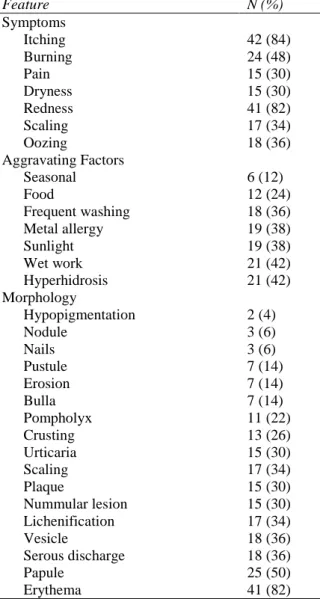
Table 1 Clinical data of study population (n=50).
Feature N (%)
Symptoms
Itching 42 (84)
Burning 24 (48)
Pain 15 (30)
Dryness 15 (30)
Redness 41 (82)
Scaling 17 (34)
Oozing 18 (36)
Aggravating Factors
Seasonal 6 (12)
Food 12 (24)
Frequent washing 18 (36)
Metal allergy 19 (38)
Sunlight 19 (38)
Wet work 21 (42)
Hyperhidrosis 21 (42)
Morphology
Hypopigmentation 2 (4)
Nodule 3 (6)
Nails 3 (6)
Pustule 7 (14)
Erosion 7 (14)
Bulla 7 (14)
Pompholyx 11 (22)
Crusting 13 (26)
Urticaria 15 (30)
Scaling 17 (34)
Plaque 15 (30)
Nummular lesion 15 (30)
Lichenification 17 (34)
Vesicle 18 (36)
Serous discharge 18 (36)
Papule 25 (50)
Erythema 41 (82)
Table 2 Frequency of positive patch test with 5% nickel sulphate (n=50).
N (%)
Positive 31 (62)
Negative 19 (38)
Reaction grades
Weak positive reaction 6 (12) Strong positive reaction 19 (38) Extreme positive reaction 6 (12)
Table 3 Reaction grades of allergen nickel sulphate 5% at different time intervals.
Intervals Positive Negative
48 hours 31 (62%) 19 (38%)
72 hours 31 (62%) 19 (38%)
120 hours 29 (58%) 21 (42%)
7th day 25 (50%) 25 (50%)
Results
Table 1 describes the different clinical
fifty patients suspected of metal contact dermatitis, there were 4 (8%) male and 46 (92%) female patients. The mean age was 30.04±10.89 years. The youngest of the patients was 12 years while the oldest was 55 years.
Out of a total of 50 patients, 23 were housewives, 7 were from the medical profession either doctors or nurses. 10 patients were students and the remaining 10 were from a variety of other professions.
20% patients reported the primary site to be hands, 16% arms while 10% reported both arms and hands. 8% patients reported face, 16% neck, 12% ears, 10% feet and the remaining 8% reported sites other than these.
The commonest complaint was itching reported in 84% of the patients followed by burning (48%) and pain (30%). Redness was seen in 82% and oozing in 36% of the patients. The other signs included fissuring (16%), dryness (30%), blisters (24%) and scaling (34%).
The aggravating factors were also recorded and results showed hyperhidrosis, wet work and use of metallic articles to be the commonest.
Different morphologies of the presenting complaints were also observed and recorded (Table 1).
Of a total of fifty patients suspected of metal contact dermatitis, 62% i.e. 31 patients tested positively for nickel sulphate. 12% patients had weak positive reaction while 38% showed a strong positive reaction. Extreme positive reaction was seen in 12% and 38% did not show any reaction to the allergen (Table 2 and
3).
Relevance of results was also noted and 38% were positive for nickel sensitivity with history of metal contact and 24% with food intake.
Discussion
Many studies have been carried out in different parts of the world about nickel dermatitis, however, the studies carried out in Indo-Pak subcontinent are relatively few.8,9 This study aimed to determine the frequency of positive patch tests to nickel sulphate in patients suspected of metal contact dermatitis.
The study revealed that most of the patients affected with the disease were females; out of a total of 50 patients 46 i.e. 92%. A similar ratio has been noted in different studies.10-15
The most commonly affected age group was 21 to 30 years. Similar age groups have been seen to be affected in some other studies.8,10,12,13,16 The possible explanation may be that this is the most active phase of life, which exposes the people to the allergen to the maximum.
Majority of the patients included housewives i.e. 46%; this may be due to the high exposure to nickel containing objects used in daily chores. Many students were affected which shows a high trend towards the use of artificial jewelry amongst the youth.
The most common aggravating factors included seasonal factors such as hot and humid weather, hyperhidrosis, wet work, frequent washing and metal contact. Basketter et al.3 also reported similar aggravating factors in his work while observing the consumer products containing nickel, chromium and cobalt use leading to contact dermatitis.
The most frequent symptoms and signs reported were itching, burning, redness and oozing, which caused much discomfort to the patient and hampered the daily activities of the patients and caused psychological upsets.
patients. Vesicles and serous discharge was seen in 36% of the patients. Other common morphologies were urticaria, scaling, nummular eczema, lichenification, plaques, pustules, erosions, hypo- and hyperpigmentation. This observation was similar to various other studies conducted earlier.8,17 The diverse presentation of nickel dermatitis among the patients might be due to the difference in the route of exposure to nickel as was confirmed in a study where pompholyx was elicited by systemic ingestion of nickel.17
Out of a total of 50 patients with suspicion of metal contact dermatitis, 31 i.e. 62% tested positively for the allergen nickel sulphate hexahydrate 5% in petrolatum base and 38% (19 patients) showed no sensitivity to nickel. This supports the fact that nickel is the most common allergen amongst metals. The high frequency of nickel sensitivity may be attributed to the uncontrolled use of the metal in alloys in our country and the release of nickel due to corrosive action of sweat on the metallic articles especially in hot humid weather of our region.8
Thirty-eight percent patients showed no reaction, which strengthens the need of patch testing in case of a strong history of metal allergy. Swartz and Sheretz also confirmed this in their study.18
The clinical relevance of nickel sensitivity was found with food and metal sensitivity 24% and 38% respectively. Clinical relevance of nickel with metal allergy was also reported by Singh et al.19 in their study.
Nickel is the most common allergen causing contact dermatitis among metals. The uncontrolled extensive use of Nickel containing articles especially in hot environment is very common in our society among young housewives and students. The identification of these culprit articles and jewelry is essential for the eradication of this
problem. Manufacturing of these articles needs to be stopped by enforcement of legislation against the manufacturers and awareness programs need to be made to stop the excessive use of nickel containing jewelry, household metallic utilities and occupationally exposed goods and chemicals. The weather of the Subcontinent further increases the chances of release of nickel from the nickel containing substances hence public needs to be fully aware of the consequences of using substances containing high amounts of nickel.
Conclusion
Our study concluded that 62% of patients suspected of metal contact dermatitis tested positively for patch test with nickel. Most of these patients were female housewives. Young patients showed a high trend towards the usage of cheap metallic jewelry. The disease was prevalent among people with a variety of occupations.
References
1. Mark W, David O. Allergic Contact Dermatitis. In: Griffiths C, Creamer D, Barker J, Chalmers R, & Bleeker T.Eds., Rook's Textbook of Dermatology. 9th edn. Oxford: Wiley Blackwell; 2010. P. 128.1-128.81.
2. Fischer AA. Nickel. The ubiquitous contact allergen. In: Fishers Contact Dermatitis. 5th edn. Philadelphia: Lippincott Williams & Wilkins; 2001. p. 636-49.
3. Basketter DA, Angelini G, Ingber A, Kern PS, Menné T. Nickel, chromium and cobalt in consumer products: revisiting safe levels in the new millennium. Contact Dermatitis. 2003;49:1-7.
4. Thyssen JP, Linneberg A, Menné T, Johansen JD. The epidemiology of contact allergens in general population; prevalence and main findings. Contact Dermatitis 2007;57:287-99.
5. Rycroft RJG, Menne T, Frosch PJ, Lepoittevin JP, eds. Contact Dermatitis 3rd edn. Berlin: Springer; 2001.
7. Smith MC. Patient education to enhance contact dermatitis evaluation and testing. Dermatol Clin. 2009;27:323-7.
8. Khan MS. Evaluation and pattern of nickel dermatitis in patients with allergic contact dermatitis (dissertation for fellowship). Karachi: CPSP;1998. p. 4-5. 9. Akbar TM. Allergic Hand Eczema: A
Clinico Aetiologic Study (dissertation for fellowship). Karachi: CPSP; 1998. P. 73-8.
10. Castiglioni G, Carosso A, Manzoni S, Nebiolo F, Bugiani M. Results of routine Patch testing of 834 patients in Turin. Contact Dermatitis. 1992;27:182-5. 11. Groot AC. The frequency of contact
allergy in atopic patients with dermatitis. Contact Dermatitis. 1990;22:273-7. 12. Christophersen J, Menné T, Tanghøj P,
Andersen KE, Brandrup F, Kaaber K et al. Clinical Patch Test Data Evaluation by Multivariate Analysis. Contact Dermatitis. 1989;21:291-9.
13. Koh CK, Walton S. Patch test audit: Are we doing more than we need to? Contact Dermatitis. 1994;31:263-4.
14. Perrenoud D, Bircher A, Hunziker T, Sutter H, Bruckner‐ Tuderman L, Stäger
J, et al. Frequency of Sensitization to 13 Common Preservatives in Switzerland. Contact Dermatitis. 1994;30:276-9. 15. Serra-Baldrich E, Lluch M, Valero A,
Malet A, Gimenez CJ. Contact Dermatitis: Clinical Review of 800 Patients Tested Using the Standard European Series. Allergol Immunopathol. 1994;23:67-72. 16. Leok JT, Goh CL, Ng SK, Wong WK.
Changing Trends in Epidemiology in Contact Dermatitis in Singapore. Contact Dermatitis. 1992;26:321-6.
17. Guillet MH, Wierzbicka E, Guillet S,
Dagregorio G, Guillet G. A 3-Year Causative Study of Pompholyx in 120 Patients. Arch Dermatol. 2007;143:1504-8.
18. Sheretz EF, Swartz SM. Is the Screening Patch Test Tray Still Worth Using? J Am Acad Dermatol. 1993;29:1057-8.