SOLO JOURNALISM AND NEWS ROUTINES: USING THE HIERARCHICAL INFLUENCES MODEL TO STUDY THE ORGANIZATIONAL AND INDIVIDUAL
INFLUENCES OF SOLO JOURNALISM IN LOCAL TELEVISION NEWS
Justin C. Blankenship
A dissertation submitted to the faculty at the University of North Carolina at Chapel Hill in partial fulfillment of the requirements for the degree of Doctor of Philosophy in the School of
Media and Journalism.
Chapel Hill 2016
Approved by: Daniel Riffe
Michael Christian
Rhonda Gibson
©2016
ABSTRACT
Justin C. Blankenship: Solo Journalism and News Routines: Using the Hierarchical Influences Model to Study the Organizational and Individual Influences of Solo Journalism in Local
Television News
(Under the direction of Daniel Riffe)
The findings of the interviews indicated that several news directors, particularly those in medium- and small-sized markets, felt some form of pressure from their superiors to hire more solo journalists, but this pressure did not meet the traditional definition of coercive isomorphic pressure. Findings regarding possible mimetic and normative pressures were also mixed. Additionally, there was some evidence that news directors have different expectations of solo journalists compared to news crews, but it is unclear if this leads to a decoupling of nominal and actual practice in the traditional sense. The findings of the quantitative survey show few
ACKNOWLEDGMENTS
I would like to start by thanking the news directors and reporters who participated in this project. Even though I cannot name you specifically, without your participation, this project would literally not be possible.
I also want to thank the members of my committee whose expertise and support were vital to the success of this dissertation. Specifically, I want to thank Dr. Mike Christian for being the one “non-journalist” on the committee and bringing a fresh perspective to the process, Dr. C. A. Tuggle, for always making sure I kept the practical implications of my research in mind, Dr. Rhonda Gibson (Roll Tide), for bringing enthusiasm, the eye of a copy editor, and dealing with us “TV people”, and Dr. Wilson Lowrey, for taking time out a tremendously busy schedule to add his expertise. And I want to sincerely thank my committee chair, advisor, and mentor Dr. Daniel Riffe, for helping me develop this project from the beginning and sticking with me through all the various theories, methods, and typos.
Finally, I want to thank the members of my family and, specifically my wife Kelly, for all their support. Kelly, you dealt with more proofreads, all-night writing sessions, and gave more pep talks than I can remember. This dissertation and this entire academic journey wouldn’t be possible without you. Thank you.
TABLE OF CONTENTS
LIST OF TABLES………...viii
LIST OF FIGURES………ix
LIST OF ABBREVIATIONS………..x
CHAPTER I: INTRODUCTION……….1
Introduction: The Growth of Solo Journalism……….1
The Hierarchical Influences Model: A Framework for Analysis………....4
Outline of Dissertation……….6
CHAPTER 2: LITERATURE REVIEW……….7
Television News Production………7
Solo Journalism and News Production………..11
The Routine Level: Routines in Organizational Studies………14
Routines in News Organizations………16
The Organizational Level New Institutional Theory……….19
New Institutional Theory in News Organizations……….21
The Individual Level: Job Characteristics Theory, Role Theory, and Burnout…………22
Job Characteristics Theory and Task Variety………23
Role Theory and Role Overload………24
Burnout in Organizational Behavior and Journalism………26
Solo Journalism and Routines………28
New Institutionalism and Solo Journalism………31
Organizational Behavior and Solo Journalism………..33
CHAPTER 4: METHODS……….37
Sampling………38
Measures………41
CHAPTER 5: FINDINGS……….47
Demographics………47
News Director Interviews………..47
Journalist Survey………48
Attitudes Toward Solo Journalism……….51
Variables of Interest………...52
Preliminary Relationships………..53
Research Questions and Hypotheses……….54
CHAPTER 6: DISCUSSION AND CONCLUSIONS………..80
Discussion of Findings………...80
Conclusions………..……..92
Limitations……….96
APPENDIX 1: THEORETICAL MODEL………99
APPENDIX 2: TABLES……….100
APPENDIX 3: NEWS DIRECTOR INTERVIEW SCRIPT………...106
APPENDIX 4: JOURNALIST SURVEY………...107
LIST OF TABLES
Table 1 - Demographic Information for News Director Interviews………..………..100
Table 2 - Descriptive Statistics for Journalist Survey Respondents………...………...100
Table 3 - Attitudes Toward Solo Journalism………...101
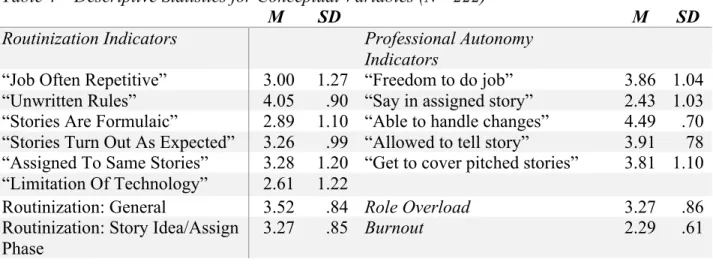
Table 4 - Descriptive Statistics for Conceptual Variables………...102
Table 5 - Bivariate Correlation Matrix of Demographics and Variables of Interest…………...102
Table 6 - Linear Regression Analysis of Routinization Measures for Solo Journalists………..103
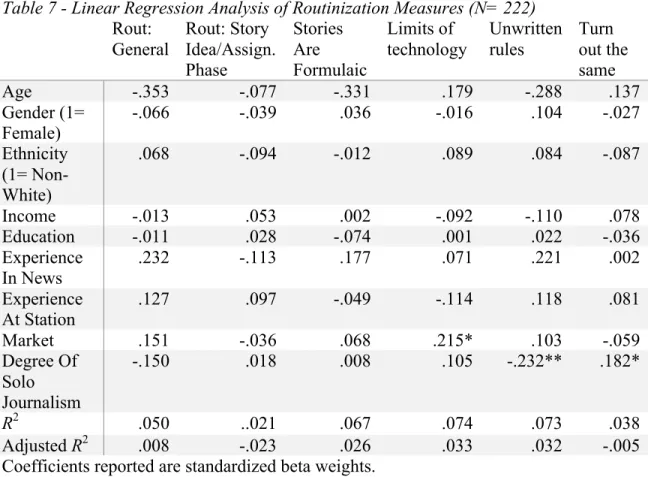
Table 7 - Linear Regression Analysis of Routinization Measures………..103
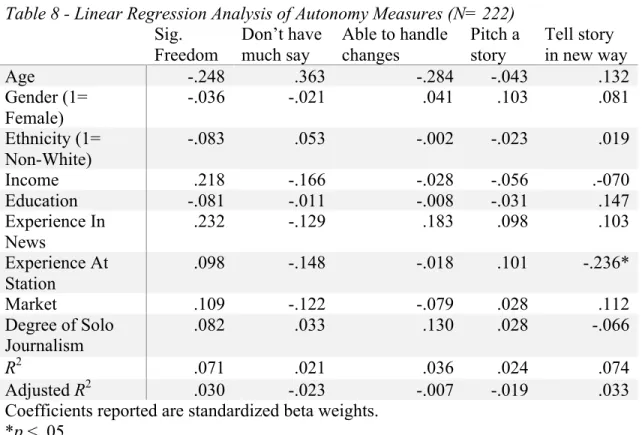
Table 8 - Linear Regression Analysis of Autonomy Measures………...104
Table 9 - Linear Regression Analysis to test Mediated Relationship………..104
Table 10 - Multiple Regression Analyses to Test for Moderation of Solo Journalism - Role Overload………...104
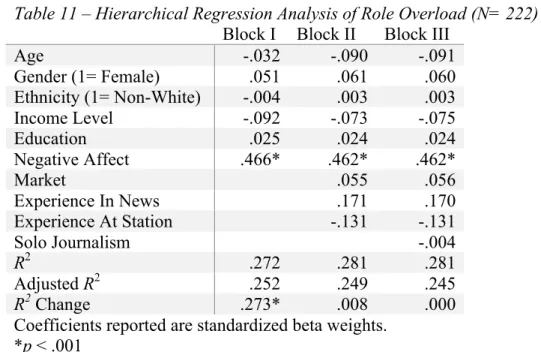
Table 11 - Hierarchical Regression Analysis of Role Overload………..105
LIST OF FIGURES
LIST OF ABBREVIATIONS AND SYMBOLS
DMA Designated Market Area- The geographic area where the population generally receives the same television and/or radio broadcasts. The DMAs used in this dissertation were based on the Nielson Company’s list of ranked television markets in 2015.
H Hypothesis- for efficiency, when making reference to one of the proposed hypotheses in the main text of the dissertation (ex: H1a).
ND News Director- this abbreviation is used to denote the specific news directors interviewed for the dissertation. These abbreviations is used to ensure
confidentiality.
RQ Research Questions- (same as above) for efficiency, when making reference to one of the proposed research questions in the main text of the dissertation (ex: RQ1a).
VO/SOT Voice Over/Sound on Tape- a story format in television new which generally consists of a short video montage and a segment from a recorded interview. The accompanying script is read by the anchor. This story form is generally
considered less time consuming than the standard reporter news package.
α Alpha value- in this instance, a measure of reliability that several indicators are measuring a single concept and/or construct (Cronbach’s alpha).
ß Beta score- in this dissertation, standardized beta coefficients are reported in the main text to indicate an individual variable’s predictive ability within a linear regression model.
p p-value (significance level)- represents the probability that an observed result of a statistical test is an outlier. A smaller p-value indicates a more statistically
Chapter 1: Introduction
Introduction: The Growth of Solo Journalism
Every year, Bob Papper of Hofstra University has conducted a survey of local television stations for the Radio Television and Digital News Association (RTDNA). While several factors like revenue and the number of stations producing news have fluctuated over the last few years, one trend has remained consistent: the hiring of “solo journalists” (Papper, 2015; 2014; 2013; 2012). In his latest survey, solo journalists were the second most common new hire, tied with reporters and behind only producers (Papper, 2015). Additionally, according to data from the Pew Research Center’s State of the Media reports in 2011 and 2012, over two-thirds of stations use solo journalists and over 30% of news directors in medium-to-large markets said they
“mostly used” solo journalists to cover the news (Potter, Matsa, & Mitchell, 2011; 2012).1 These data, along with the RTDNA staffing survey results, appear to confirm what many in local television news already suspect: solo journalists are the future of local television news.
There have been several terms in the trade and academic literature that have been used to describe what this dissertation refers to as “solo journalism.” In this analysis, solo journalists are news professionals who are expected to gather information, write stories, record the audio and video elements necessary for those stories, and edit everything together by themselves. Within the specific work design of local television newsgathering, this is contrasted with the traditional “news crew” that consists of a reporter who gathers information and writes a script, a
videographer who records the audio and video elements of a story, and sometimes a separate video editor (Tuggle, Carr, & Huffman, 2014). These “solo journalists” have been called multimedia journalists (or MMJs), video journalists, mobile journalists, backpack journalists, and, more colloquially, “one-man bands.” The term “solo journalist/journalism” was chosen for this dissertation because it best encapsulates what is unique about this work design: the singular nature of this form of news work (Bock, 2013). Solo journalism is not new in local television news. It has been a staple of small market television news work for decades. However, Potter, Matsa and Mitchell (2012) reported that over 15 % of stations in the top 25 television markets rely mostly on solo journalists to gather news, a marked increase from just a few years before.
Solo journalism is not limited to local television news. The larger trend of media “convergence” has and continues to change the way journalism is done at at newspapers, radio stations, national television networks, and online news organizations (Bardoel, & Deuze, 2001; Deuze, 2005; Erdal, 2011; Huang, Rademakers, Fayemiwo, & Dunlap, 2004; Jacobson, 2011; Singer, 2004). Additionally, the growth of solo journalism is a global phenomenon, with many news organizations in Europe and other regions embracing the trend (Erdal, 2011; Ursel, 2001; Wallace, 2013; 2009). However, this dissertation specifically analyzed solo journalism among local television news organizations in the United States for several reasons: a lack of in-depth quantitative research on the subject, the increasing utilization of solo journalists in local
journalists often taking multiple jobs across the country throughout their career, but rarely internationally (Berkowitz, 1990; Tuggle, Carr, & Huffman, 2014).
Solo journalism has been discussed in the trade and industry press. Some in the industry have lauded organizations implementing solo journalism as forward-thinking pioneers looking beyond traditional ways of doing things (Drew, 2010; Grant, 2008; M. Malone, 2009;
Rosenblum, 2008; “Reporter in a backpack,” 2006; Strauss, 2008; Whitney, 2005). However, others have viewed the trend as detrimental to quality journalism. They argue that if you ask a person to “do it all,” inevitably, reporting and/or production quality will suffer (Hickey, 2002; Kumar, 2010; Kurtz, 2011; R. Malone, 2008; Stone, 2002). Specifically, Penniman (2009) argued in Nieman Reports that it is difficult for one person to “embody all that is necessary for [solo journalism],” which includes an eye for visual aesthetics, the ability to write and narrate a compelling story, and the meticulous attention to detail required of all news reporters (p. 26).
have pointed to a lack of control and autonomy among solo journalists (Bock, 2011; Dickinson & Bigi, 2009; Martyn, 2009). Conversely, Cummings (2014) argued that, in theory, solo journalism should create more autonomy by giving journalists more direct control over every aspect of news production.
The argument by Cummings (2014) raises an interesting issue. In a profession like journalism that values independence, why are the findings related to solo journalism so dire? Why do trade publication writers and academic researchers typically find an increased reliance on solo journalism resulted in negative outcomes both for content and reporters? The existing literature, while valuable, provides few definitive answers. Though many of the studies listed above are descriptive in nature, with little theoretical backing to explain their findings, one common theme is that multi-skilling and solo journalism have an impact on the routines of news production (Avilés et al., 2004; Blankenship, 2015; Bock, 2013; Higgins-Dobney & Sussman, 2013). Routines are the everyday practices that workers, in this case, journalists, use to do their jobs as efficiently as they can (Becker, 2004; Shoemaker & Reese, 2014). These routines do not exist or originate in a vacuum. Therefore, the purpose of this dissertation was to conduct a multilevel analysis of solo journalism in local television news production that further explored the routines associated with solo journalism, their antecedents and their consequences.
The Hierarchical Influences Model: A Framework for Analysis
Shoemaker and Reese (2014) have proposed a theoretical framework that facilitates multi-level research on media production with their Hierarchical Influences Model. This model posits five levels of influence on media content: social systems, social institutions, media
worker, and his or her specific characteristics, has the most direct impact on content. But that worker often must work with certain routine practices based on professionalized norms, practical constraints, and structural patterns. Those patterns or practical constraints are often determined by the media organizations that journalists work within. Those organizations are often subject to regulation or influence by social institutions like governmental bodies or market forces. Finally, those regulating institutions work within a larger social system, the broad, sometime taken-for-granted assumptions situated within a particular culture or cultures.
If one assumes that solo journalism necessitates a unique set of routines and practices in news production, this model suggests two additional avenues of analysis, the organizational influence on these routines and the routine’s influence on the individual. However, the
Hierarchical Model only provides a framework for studying media production. It helps explain how various aspects of media production work together, but it does not provide more
Outline of Dissertation
The next chapter of this dissertation will review relevant academic research relating to television news production in general, routines in both organizational studies and news
production, job characteristics theory, role theory, and burnout. Then, Chapter 3 will outline the proposed theoretical argument about the relationships among various organizational, routine, and individual level concepts and solo journalism and propose several research questions and
hypotheses related to those theoretical arguments. Chapter 4 will explain the various methods used to answer the research questions and test the hypotheses. The organizational-level questions were explored using several in-depth qualitative interviews of local television news directors. The routine-level and individual-level research questions and hypotheses were tested using a quantitative survey of individual television reporters. Chapter 5 will review the findings based on data gathered from both the interviews and survey and relate them to the proposed research questions and hypotheses. Finally, Chapter 6 will discuss the findings as they relate to the proposed theoretical model and attempt to draw several conclusions about solo journalism. A visual representation of the theoretical model can be found in Appendix 1. Tables of the
Chapter 2: Literature Review
Before analyzing a concept, it is important to have an understanding of the previous research that may be relevant. To that end, the following chapter will review previous literature on television news production. It will also review the research on routinization, both in
organizational studies and news production. Next, it will review literature on isomorphism and decoupling from sociology and literature on job characteristics, role theory, and burnout from the organizational behavior field.
Television News Production
Most of the scholars cited above looked at news production at newspaper and network television news. Research that specifically examined production of local television news concentrated on a few topics: the role of technology in decision making, the importance of market considerations, and increased routinization of the production process. Looking at the role of technology, Kanis (1991) noted that the visual nature of television news has an impact on decisions made in newsrooms. Reporters were encouraged to cover stories that had compelling visual elements (i.e., fire or crime scene) over others (city council meetings, political issues, etc.). In addition, the impact of Electronic News Gathering (ENG) and Satellite News Gathering (SNG) technologies was studied. Researchers found that news managers felt they needed to “get their money’s worth” out of new technologies and were likely to cover stories that would allow them to “show off” these new tools (Kanis, 1991, p. 72). Stations with access to national and international satellite feeds were more likely to include these non-local stories in their newscast (Cleland & Ostroff, 1988; Jacobs, 1990). While Jacobs (1990) believed that eventually the “novelty” of these new tools would wear off, Tuggle and Huffman (1999) surveyed local television reporters and found that many believed that live reporting and other technological factors had an undue impact on news decisions.
Another research stream in television news production involved its relationship with the market. Arguing that the priorities of the market (e.g., making a substantial profit, producing content that appeals to the widest possible audience) are generally incompatible with the
made money solely by selling advertising, unlike newspapers, which could offset some of those costs with subscription fees, thus strengthening the ties between television stations and
advertisers. And finally, television news, with its complicated and often expensive equipment, was a resource-intensive proposition that required a significant capital investment. Additionally, McManus described local television markets as oligopolistic in structure, meaning that there were only a few competitors in each market and the cost of entering the market was very high. This structure did not allow the open competition that would lead to high-quality production driven by strong competition, according to market theory.
However, there was still a significant amount of competition within television news markets and some scholars were not as dire in their analysis of its impact on news quality as McManus. Research by Lacy, Atwater, and Quin (1988) found that levels of competition in television markets actually led to an increase in news budgets. Because the news departments, and specifically news anchors, were often seen as the “face” of a television station, it was important to ownership that their news departments be sufficiently funded. However, they identified some possible negative consequences. The importance placed on the anchors, and the increase in salary, often came at the expense of salaries for front-line news workers such as reporters, producers, and photographers (Busterna, 1988). Additionally, Powers (1993) noted that because producing newscasts was cheaper than carrying network programing, local stations were increasing their “news hole,” or the amount of time dedicated to local news. Often, though, they did not add the necessary staff to produce content for that additional time, increasing the demands on current news workers.
These findings on the role of technology and the market also inform research on
discussed how technological and time constraints in television news made crews more likely to “typify” a story, so that journalists and managers knew what equipment would be needed and how much time would be needed to report on it. Looking specifically at time constraints, Kanis (1991) argued that because TV news reporters had less time to complete their stories, there was not as much time to research or vet claims made by sources. They were therefore less likely to question them. More recent research noted that having less time to report, referred to as a “time-famine,” means TV journalists must focus on efficiency over depth, and this usually results in lower-quality reporting (Barnhurst, 2011; Reinardy & Bacon, 2014).
Though it precedes much of the research cited above, Bantz, McCorkle, and Baade’s “The News Factory” (1980) provided what may be the most thorough examination of how television news work is shaped by technology, market forces, and routines. As suggested by the title, these researchers argued that local TV news work was more like a highly routinized assembly-line factory rather than a more “professionalized” craft model in which educated journalists rely on specialized knowledge and work with a high degree of independence. Bantz and his co-authors broke down the local television news process into five distinct stages. The first stage was story ideation, in which management and reporters gathered and pitched possible story ideas. The second stage was task assignment, in which news crews (the reporter and videographer) were assigned to a specific story or stories, often even if the reporter had not proposed that particular idea. The third stage involved assembling/structuring materials. During this stage the news crew left the station to gather the necessary elements (information,
story with recorded audio and images. Finally, that story and the other assigned news items were presented during a live broadcast.
Bantz et al. (1980) believed that this routinized method of news production resulted in three problematic consequences. First, there was a lack of flexibility in their workflow. For example, if a story was not easily categorized using existing news values during the ideation phase, it was unlikely to be assigned. Or, if sources were not available to the crew during the “assembling/structuring materials” phase, it was unlikely they would be included in the piece at all. Second, there was a lack of personal connection to news stories. Because crews were often assigned to stories they did not originate, and often did not work on stories over a longer period of time (often no longer than a single day), reporters had a difficult time forming relationships with sources or gaining expertise on specific issues. Finally, this “industrialized” model of news work put an emphasis on productivity over quality. The authors found a culture in TV
newsrooms of “never missing slot.” Crews were held in high regard if they could “turn” a story quickly, regardless of the depth of reporting involved.
Solo journalism and news production.
journalists who resented being asked to incorporate new skills into their repertoire (Cottle & Ashton, 1999; Wallace, 2009), while others welcomed the perceived autonomy of having a hand in every aspect of creating their news stories (Avilés et al., 2004; Dickinson & Bigi, 2009).
More recent work on solo journalism has tended to find similar mixed results. In one of the few research articles to survey a larger number of solo journalists, Perez and Cremedas (2014) found that solo journalists in larger television markets accepted the inevitability of solo journalism as a primary form of news gathering. Still, these reporters believed they were
producing lower quality news stories because they were solo journalists. They also reported less job satisfaction, and many were considering leaving the news business all together. Other research has been similarly pessimistic. Higgins-Dobney and Sussman (2013) argued that hiring solo journalists could have a positive impact if it meant an increase in the number of reporters in the field. However, they believed that because solo journalism was seen as a cost-reducing measure by ownership, solo journalism meant simply replacing two news workers with one. Higgins-Dobney and Sussman (2013) and Blankenship (2015) noted that solo journalists felt that the quality of their work was suffering. News managers also felt the increase in solo journalism meant that they had to hire younger and less experienced reporters because older reporters did not have the technological skills needed or refused to accept additional work responsibilities and left the station (Blankenship, 2015).
In one of the most comprehensive explorations of solo journalism to date, Bock (2012) argued that the “body,” a reporter’s physical presence and the limitations that entails, makes solo journalism distinct from other forms of news work. Her analysis focused on “the sweaty,
process of reporting, she argued, but even here the results were mixed. “The singularity of practice is considered a travesty in some organizations and a form of liberation in others,” according to Bock (p. 198). Bock proposed a model for studying the process of solo journalism similar to the one detailed by Bantz et al. (1980). The five steps in her model were "1)
preconceptualization of the story and its elements, 2) locating and gaining access to elements, 3) decontextualizing elements: recording them for future use, 4) narrativising elements, and 5) presenting the story” (p. 70). The second step, locating and gaining access to elements, she felt was particularly difficult for solo journalists. Gaining physical access to a location, and
sometimes simply having to drive oneself to a location, could be more difficult because of the physical limitations unique to solo journalism.
Another specific aspect of reporting that Bock (2012) and others noted may be strongly impacted by solo journalism is story selection. Some have argued that increased time pressure and physical constraints make solo journalists more likely to utilize “information subsidies” provided by sources (Blankenship, 2015; Bock, 2012; Martyn, 2009). The concept of the
However, not all research on solo journalism has been critical. Referring specifically to the assembly-line conception of television news production of Bantz et al. (1980), Cummings (2014) argued that solo journalism could help news workers move beyond those constraints and into a “post-Fordist” state of news production. By freeing reporters from the technological and organizational constraints of typical news production, solo journalists could be more like craftsmen/craftswomen, with a hand in all aspects of producing their stories. Admittedly, Cummings’ arguments were more speculative about the future of television news, rather than based on current data.
The Routine Level: Routines in Organizational Studies
Though their overall findings are mixed, one common thread in many of the studies on solo journalism is the impact on the everyday practices of television reporters (Avilés et al., 2004; Blankenship, 2015; Bock, 2012; Higgins-Dobney & Sussman, 2013). As the research by Bantz et al. (1980) and others have demonstrated, television news work may be more routinized than that of other journalistic media. What follows is a survey of literature from the field of organizational studies that examines the origination and utilization of work routines and literature specifically regarding routines in news production.
The study of routines in organizational studies originated with March and Simon’s (1958) book Organizations. In this work, March and Simon began to move away from the “rational-actor” traditions that conceptualized behavior within and between organizations, which assumed complete knowledge of a situation and of potential consequences of every possible alternative. March and Simon instead noted that all actors within organizations act with “bounded
organizations to achieve satisfactory results instead of optimal results. That is, people will do what is good enough to satisfy whatever their goal is even though it may not be the “best” option. Almost 25 years later, Nelson and Winter (1982) made routines the theoretical centerpiece of their analysis of organizations. They believed that routines served the same
purpose in organizations that genes served in an organism: namely, they were the building blocks of an organization. Both March and Simon (1958) and Nelson and Winter (1982) believed that routines are the result of uncertainty, both in markets and within organizations.
Scholars argued that routines designed to reduce uncertainty within organizations generally do so through two ways: control and coordination. Routines that develop within a specific part of the organization are often based on control. These routines help ensure that work processes stayed consistent and that products are delivered in a timely and reliable fashion, thus reducing the uncertainty and variability in accomplishing the overall goal of the organization (Grant, 1996; March and Olsen, 1989; Nelson and Winter, 1982). Additionally, routines that develop between different parts of an organization are often associated with coordination. These routines normalize the relations between various parts of an organization. That way a worker knows when to apply his or her particular skill or knowledge to the product, thus reducing uncertainty, preventing conflicts between different parts of an organization, and expediting work (Becker & Knudsen, 2004; Bourdieu, 1992; Heiner, 1982; Nelson & Winter, 1982).
an organization may change, the personnel within the organization may change, but the organizational memory is often what stays consistent.
Other research has examined the characteristics of routines within organizations and how they develop. According to these scholars, routines are more likely to develop in situations when there is high frequency, regularity, and time pressure associated with a task (Betsch, Fielder, & Brinkmann, 1998; Narduzzo, Rocco, & Warglien, 2000; Weick, 90; Zellmer-Bruhn, 1999, 2003). Additionally, routines are incomplete when they are communicated among workers because there must be some contextual component that will vary by situation (Suchman, 1987). Routines also vary because they are situated in specific times and locations (Barney, 1991; Hodgson, 2001; Simon, 1976). Finally, routines can develop among different groups or “communities.” They can develop among horizontally organized hierarchical communities (between managers and subordinates) or among horizontally organized epistemic communities (workers with a common task or function). Routines developed in these different communities can differ in terms of replication and inertia (Cohendet & Llerena, 2003).
Routines in news organizations.
When considering the work on routines described above, news organizations do not immediately spring to mind as prime examples. When March and Simon (1955) and Nelson and Winter (1982) both provided examples of their theories in practice, they often discussed
the real world, as the professional norms of journalism would imply. Today, routines are seen as an important aspect of news production. Routines warrant a specified “layer” in the Hierarchical Influences Model (Shoemaker & Reese, 2014). In fact, Shoemaker and Reese (2014) note that routines are so integral to news production that “news is therefore what an organization’s routines lead it to define as news” (p. 182).
One of the first to bring the sociological study of routines into the newsroom was Gaye Tuchman (1972, 1973, 1978). She understood that news workers face a great deal of uncertainty in their work and that news professionals, like any other person, are limited by a bounded
rationality. She was also one of the first to conceptualize news as a “product,” one that needed to be “made” every day by news organization. (Tuchman, 1972, p. 662). This meant that
organizations and workers could, and often did, develop routine work practices to help them streamline the production of news. Specifically, she argued that we should not categorize news based on topic (hard, soft, spot news, developing stories, etc.) but by how it happens (scheduled or unscheduled) and the material requirements needed to cover it. Thinking about news as a construction also further diminished the notion that news was, overall, an accurate reflection of society. Molotoch and Lester (1973, 1974, 1975) argued that news workers are instead an active part of “creating” the news. Additionally, there has been substantial research on routine practices involving objectivity (Schudson, 1978; 2011), news judgment/values (Stephens, 1980), and gatekeeping (Shoemaker & Vos, 2003).
in television news, with reporters only staying for a year or two, especially in smaller markets. This high turnover creates an increased need for organizational memory. For example, if the reporter who often covers the local police department leaves the station for another position, it is important that the new reporter assigned to that beat be able to maintain a relationship with sources in the department. The reporter may do this by following routines similar to the previous reporter. Also, the smaller staff size at television stations may increase demand on news workers to produce more content (Shoemaker & Cohen, 2006).
Television news work is also more prone to routinization because of its reliance on complicated technology (Bantz et al., 1980, Tuchman, 1973). Compared to newspaper reporters, who may not utilize anything more complex than a telephone or word processor, television news workers rely on the skillful and efficient use of video cameras, editing equipment, live broadcast equipment, and more. Each of these has a set of limitations within which the reporter must work. Knowledge of these limitations and developing routines that ensure news stories are consistently produced despite those limitations are essential to successful television news work (Tuchman, 1978). The technological complexity of television news production also makes editorial supervision more difficult. Changing a video news story is more arduous than changing newspaper copy, which leads to an emphasis on “turning a story” quickly and on simplicity rather than depth (Ismach & Dennis, 1978). Technology can also impact story selection.
The Organizational Level: New Institutional Theory
As posited by Shoemaker and Reese’s (2014) Hierarchical Influences model and the foundational work of March and Simon (1958) and Simon and Winter (1982), routines are unique to specific organizations. Therefore, to understand how certain news gathering routines are developed by news organizations, it is important to have a deeper understanding of how these organizations “behave.” Similar to the history of organizational routines, many early scholars of how organizations behave based their predictions on rational-actor and market-based
assumptions. These traditions assumed that organizations act based on knowledge, sometimes limited, of their markets and with financial success as their overall goal. However, this did not seem to explain why certain organizations might behave in ways counterintuitive to simple economics. Weber (1947) provided a possible explanation when he argued that for some organizations, legitimacy is just as important as profitability. These organizations were seen as more “institutionalized.” Expanding on that premise, DiMaggio and Powel (1983), developed New Institutional Theory which argues that certain organizations look for, and may require, legitimacy from the social realm. This includes social institutions like the government, peer institutions, and cultural institutions. There are two main premises of this theory. First,
organizations will adapt to social expectations from various sources and become more similar. Second, if there is some conflict among those sources or with internal efficiency, organizations will make only nominal, or “surface level” changes and maintain an internal status quo.
corporate ownership. Second, there is mimetic pressure, which arises from conditions of uncertainty for organizations, often economic in nature. Organizations may no longer
“understand” the markets in which they must operate. They may look to peers that are having more success and imitate their actions. Third, there is normative pressure, which originates from a widely held belief that a certain course of action or way or doing things is “proper” or perhaps morally superior (Suchman, 1995). Normative pressure is often found within more professionally oriented organizations because of their similar education and training, which leads to consistency in normative values (Galaskiewiscz & Burt, 1991; Mezias, 1990).
The second central premise of new institutional theory involves conflict between various isomorphic or social pressures. Meyer and Rowan (1977) argued that when this situation occurs, organizations will “decouple” their nominal structure from their actual practice. In other words, managers in organizations may changing their formal policies to respond to some form of pressure (i.e., economic, normative), but the actual organizational practice remains the same, thus eliminating the exterior pressure to change and maintaining their status quo. This premise is predicated on the belief that organizations are “loosely coupled” systems, with parts that are at least partially independent from others (March & Olsen, 1976; Weick, 1979). What is also key to Meyer and Rowan’s theory is a loose coupling between structure and practice in organizations. Organizations that decouple structure and practice run the risk of losing legitimacy and trust from regulators or the public if that decoupling is revealed. They therefore avoid complete transparency.
There are several additional complexities associated with both isomorphism and
influence. Scott and Meyers (1983) argued that institutional environments are based on technical and goal-oriented features. This would mean these organizations have little control over who their peer organizations are. Others have argued that organizations have more agency and create institutional fields that are socially constructed (DiMaggio & Powell, 1983). There are also questions regarding which facets of organizations are more susceptible to isomorphic pressures. Some have looked at isomorphism in the structure of organizations (Meyer, Scott, & Strang, 1987), whereas other have examined its impact on practice (Kraatz & Zajas, 1996; Levitt & Nass, 1989).
Regarding decoupling, researchers have mostly looked at explanations for why organizations engage in the practice. Kostova and Roth (2002) argued that if the organization does not trust the source of the coercive pressure (for example, government regulators) they may be more likely to decouple policy from practice. Some have argued that homogeneity in an institutional field leads to decoupling (Westphal & Zajac, 1994; 1997) whereas others believe heterogeneity in a field makes it more likely (Aurini, 2006; Brunsson, 2002). Essentially, this is related to whether early adopters or late adopters of new practices are more likely to decouple. Other research has explored the mechanisms of decoupling. Westphal and Zajac (1998) argued that decoupling is a pragmatic response to financial threats. The idea that decoupling is a strategic response has also been found in branding research (Beverland & Luxton, 2005).
New institutional theory in news organizations.
organizations when faced with uncertainty (Boczkowski, 2007; Lowrey, 2005, 2009). News organizations are also linked by their need to work with other institutions (Cook, 1998; Ryfe, 1996) and the adoption and adherence of similar routine practices (Tuchman, 1972; 1973).
Research has also found that news organizations engage in decoupling. Lowrey and Woo (2010) used institutional theory to explain the adoption of certain online and audience research practices by newspapers during times of economic uncertainty. These newspapers displayed classic “decoupling” in their application of new practices. For example, news editors were being pressured to monitor audience input. Though they adopted audience research practices
nominally, they decoupled that portion of their work from the actual news decisions being made, thus maintaining the status quo (Lowrey, 2011; Lowrey & Woo, 2010). Additionally, research has found news organizations decoupling their practices regarding newsroom personnel practices (Gade, 2004) and cross-media partnerships (Lowrey, 2005).
The Individual Level: Job Characteristics Theory, Role Theory, and Burnout
As suggested by Shoemaker and Reese’s (2014) Hierarchical Influences Model and other research from organizational studies (Barney, 1991; Hodgson, 2001; Simon, 1976), routines have strong contextual aspects that depend on the individuals who carry them out. Therefore, while it is important to understand the organizational origins of routines, it would seem just as vital to examine how those routines impact the individual worker. According to Shoemaker and Reese (2014), much of the research at the individual level has examined the impact of individual differences (gender, nationality, political affiliation, professional orientation, etc.) on media content. However, this analysis looks at the impact of specific news work routines on the
organizational behavior field is concerned with how individuals work within organizations and how certain variables (both organizational and individual) influence their attitudes, emotions, and perceptions of their work. Specifically, this analysis draws on three areas of organizational behavior research that have the closest bearing on solo journalism: job design, role theory, and burnout.
Job characteristics theory and task variety.
Hackman and Oldham (1976) developed job characteristics theory (JCT), a foundational work in the field of work design, which examines the relationship between the characteristics of a job and the characteristics of an individual. According to JCT, there are five key job
characteristics that influence motivation: skill variety, task identity, task significance, autonomy, and feedback. According to JCT, a job that is higher is these characteristics will create a “self-motivation cycle” in which employee “self-motivation is self-sustaining because employees
experience meaningfulness from their work, take responsibility for the outcomes of their work, and have a clear knowledge of the results of their work (Hackman & Lawler, 1971; Hackman & Oldham, 1976).
According to Hackman & Oldham (1975), skill variety is related to the number of specific skills required to complete one’s job and task variety simply refers to the number of different tasks a person is required to perform for his or her job. They are often used
interchangeably in the literature. This may not be surprising, as both have been shown to be positively related to job satisfaction and motivation (Humphrey, Nahrgang, & Morgeson, 2007).
strain. Using those two variables, he created a job strain model with four dimensions: passive jobs (low demand, low decision latitude), low strain jobs (low demand, high decision latitude), high strain jobs (high demand, low decision latitude), and active jobs (high demand, high decision latitude). Active jobs are often the most fulfilling while high strain jobs are the most stressful (Karasek, 1979).
As stated above, task variety, skill variety, and autonomy should be associated with high job satisfaction and motivation. However, a meta-analysis of work design research by
Humphrey, Nahrgang, and Morgeson (2007) found that task variety was related to role overload, itself a form of role conflict. Role overload and role conflict are a part of another, sometimes separate, research stream in the organization behavior literature called role theory. Katz and Kahn (1978) described roles as the social dimension of work. Rarely does a formal job description encompass all that is required of someone. The informal job description, often the more relevant description, is a socially negotiated role. According to this theory, roles are a negotiated concept, communicated to the focal person by both superiors and peers, and accepted, or not, by that focal person. That negotiation can by cyclical, with the behavior and acceptance of the focal person impacting the role expectations of superiors and peers. Additionally, roles can become more complex through the addition of activities, expectations, or other parties within the role negotiation. While many prefer great complexity in their roles, Katz and Kahn (1978) noted that when “the simultaneous occurrence of two or more role expectations such that compliance with one would make compliance with the other more difficult” role conflict may occur (p. 204).
Role theory and role overload.
have too many responsibilities or activities to accomplish and do not have the time, skill, or resources to complete them (Rizzo, House, & Litzman, 1970). Role overload is sometimes conceptualized as a form of role conflict, and sometimes as a distinct concept (Brown, Jones, & Leigh, 2005; Coverman, 1989; Hecht, 2001; Singh, Goolsby, & Rhoads, 1994). However, there has been significant research that found role overload to be a cause of stress and inefficacy in work situations (Brown, Jones, & Leigh, 2005; Jones, Chonko, Rangarajan, & Roberts, 2007; Peterson et al, 1995; Sales, 1970).
Some role overload research has examined the concept from a broader perspective, studying the effects of having multiple work and domestic roles, particularly for single mothers (Joag & Gentry, 1991; Robinson & Milkie, 1998; Etaugh & Moss, 2001; Erdwins, 2001). Others have limited them to expanding job responsibilities solely in one’s professional life (Jones et al., 2007; Peiró, González-Romá, Tordera, & Mañas, 2001; Veloutsou & Panigyrakis, 2004; Boles & Babin, 1996; Bartuner & Reynolds, 1983; Fogarty, Singh, & Moore, 2000). Regardless of their scope, most of the studies on role overload found it to have negative consequences on a number of factors, including stress, job satisfaction, motivation, and even illness (Brown, Jones, & Leigh, 2005; Jones, Chonko, Jones, & Stevens, 2012; Mulki, Jarmillo, & Locander, 2006).
One interesting corollary to the conceptualization of role overload suggested by Jones et al (2007) is its relationship to work experience. According to conventional wisdom, less
logic, Jones et al (2007) argued that more experienced employees may be more susceptible to the negative consequences of role overload.
Burnout in organizational behavior and journalism.
The findings of JCT and role overload have not been applied to news work specifically. However, one possible outcome of both role overload (Fogerty et al., 2000) and what JCT theorists call “person-job incongruity” (Hackman & Oldham, 1975) has been applied to journalism: burnout. Burnout as an area of study has been dominated in the organizational
behavior field by the work of Maslach (1976). She and others have identified three dimensions of burnout; exhaustion, cynicism, and inefficacy (Maslach, Schaufeli, & Leiter, 2001). Exhaustion is the stress dimension of burnout and is the result of depleted mental, emotional, and physical resources. Cynicism is the social dimension of burnout, and leads workers to become more detached and excessively negative. Finally, inefficacy is the self-evaluative dimension, and is related to feelings of inadequacy and lack of achievement. Leiter and Maslach (1988) argued that burnout developed progressively among these three dimensions, starting with exhaustion, then cynicism, then inefficacy.
Research has shown that journalists, in general, are susceptible to burnout. Cook and Banks (1993) used survey measures specifically designed to study burnout and found among newspaper journalists that increased workload and multiple role assignment were related to increased burnout indicators. Additionally, they found that a disparity between what they
Chapter 3: Hypotheses and Research Questions
The goal of this research was to examine the antecedents and consequences of solo journalism in local television news. This required a multilevel approach that utilized theories from organizational studies, sociology, organizational behavior, and news production as outlined in Chapter 2. This chapter will attempt to synthesize the concepts from those traditions, as well as the extant literature on solo journalism into a predictive and testable model and present several hypotheses and research questions associated with this model. First, this chapter will detail how and why solo journalism necessitates increased routinization among news workers. Then it will describe why organizational factors may influence how these routines are implemented by management and how successfully these routines are utilized by journalists. Finally, this chapter will detail how those routines may impact the journalists themselves and lead to increased burnout.
Solo Journalism and Routines
different tasks could lead to the stricter adherence to routines (Nelson & Winter, 1982; Winter 1987).
As mentioned before, there are three factors that lead to the establishment of routines: frequency of application, regularity of application, and increased time constraints (Betch et al, 1998; Narduzzo et al. 2000; Zellmer-Bruhn, 1999, 2003). While the first two may not change, solo journalists may be under increased time constraints because of the design of their work. They cannot rely on the videographer to shoot video or begin editing while they gather additional information or communicate with sources. Also the simple task of allowing one person to drive to a story location while the other completed some form of news work creates added time pressure (Bock, 2012; Blankenship, 2015, R. Malone, 2008).
Based on this research on routines, solo journalists should be more susceptible to routinization and the following hypothesis is proposed:
H1a: Solo journalists will experience greater routinization of their work practices than reporters who regularly work within news crews.
Additionally, the research on the specific stages of television news production (Bantz et al., 1980; Bock, 2012) provides more specific hypotheses related to solo journalism and
solo journalists may lead them to limit the time spent gathering materials (Bock, 2012; 2011). Therefore, the following supporting hypotheses are proposed:
H1b: Solo journalists will rely on increased routinization during the story
ideation/assignment phase of news production compared to reporters who regularly work within news crews.
H1c: Solo journalists will rely on increased routinization during the “assembling and construction materials” phase of news production compared to reporters who regularly work within news crews.
Inherent in the arguments of Bantz et al. (1980), Bock (2013), and others regarding routinization in the news production process is a concern about a lack of autonomy for reporters. Autonomy from external influence has been a hallmark of journalistic professionalism and ethics, particularly in the U.S. since the early twentieth century (Schudson, 1978, Society of Professional Journalists, 2014). That autonomy has traditionally been viewed as freedom from government regulation or interference from corporate ownership, but it has also been
H2: Solo journalists will experience decreased feelings of autonomy in their work compared to reporters who regularly work within news crews.
New Institutionalism and Solo Journalism
Conversely, Cummings (2014) argued that solo journalism should move television news production into a post-Fordist stage, away from the routinized, assembly-line method of Bantz et al. (1980) and Bock (2012) by giving reporters full control over almost every aspect of their news story. But as observations and interviews with many solo journalists demonstrate, that has not been the case so far (Avilés et al., 2004; Blankenship, 2015; Perez & Cremedas, 2014). Using the theoretical lens of new institutionalism, we may be able to understand why solo journalism is creating the change predicted by some. New institutional theory posits that certain organizations may not behave based on market logic but rather, from a need to maintain
legitimacy (DiMaggio & Powell, 1983; Weber, 1947). They do this through two mechanisms; isomorphism and decoupling.
If they see other news organizations, especially those held in high regard, utilizing solo journalism, they may be inclined to do the same, an example of mimetic isomorphism.
Additionally, news directors may embrace solo journalism for more idealistic reasons, believing that it is the way television news should be done. This is an example of normative isomorphism.
The other mechanism of new institution theory is decoupling. It assumes that when pressures from outside the organization clash with traditional ways of doing things, organizations may separate, or decouple, their nominal structure from actual practice (Meyer & Rowan, 1977). In other words, their formal policies may change, but the way things are really done remain the same. From a decoupling perspective, television news managers may respond to the pressure to adopt solo journalism in their newsroom only nominally. Instead of a substantive evaluation of how solo journalism may necessitate a change in news work practices, they simply assume that a solo journalist will or should be able to do the exact same job that a news crew can do. This may lead to the increased routinization that was hypothesized earlier as opposed to the craft-person approach to news production as envisioned by Cummings (2014).
Because there is no previous research on the connection between institutionalism and solo journalism and the arguments made above are more speculative in nature, the following research questions are proposed:
RQ1a: To what extent are news managers feeling pressure from stations or corporate management to hire solo journalists (coercive isomorphism)?
RQ1b: To what extent are news managers adopting solo journalism because they see it as a trend among their peers in the industry? (mimetic isomorphism)
RQ1c: To what extent are news managers adopting solo journalism because of a
RQ2a: To what extent do news managers expect solo journalists to contribute to their news operation in the same way as news crews (decoupling)?
RQ2b: To what extent do news managers report different expectations for solo journalists than traditional news crews regarding reporting ability (decoupling)?
RQ2c: To what extent do news managers report different expectations for solo journalists than traditional news crews regarding production skills (decoupling)??
RQ2d: To what extent do news managers report different expectations for solo journalists than traditional news crews regarding story assignment (decoupling)??
RQ3: To what extent do the attitude of news managers toward solo journalist’s ability and/or skills impact the feelings of routinization among the solo journalists who work for that news manager?
Organizational Behavior and Solo Journalism
At the individual level, it is important to understand how a new work design like solo journalism may impact the actual reporters tasked with adapting to the new routines it necessitates. As noted earlier, several studies of solo journalists demonstrate that they feel overburdened, are not happy with the quality of work they produce, and have a higher intention to leave the business (Avilés et al., 2004; Higgins-Dobney & Sussman, 2013; Perez & Cremedas, 2014). These findings are consistent with three concepts from the organization behavior field: role overload, burnout, and “person-job incongruity” from Job Characteristics Theory.
2004; Higgins-Dobney & Sussman, 2013; Perez & Cremedas, 2014). However, research has also indicated that solo journalists are more stressed and more likely to leave the profession early (Avilés et al., 2004; Bock, 2013; Cottle & Ashton, 1999; Higgins-Dobney & Sussman, 2013; Perez & Cremedas, 2014; Wallace, 2009). This points to a more serious problem with the work design of solo journalism, burnout. Maslach (1976) and other scholars have identified three facets of burnout: exhaustion, cynicism, and inefficacy. Workers who experience burnout also have less job satisfaction and become less productive over time (Maslach, Schaufeli, & Leiter, 2001). Previous research has demonstrated that journalists, and particularly journalists
responsible for multiple tasks, are susceptible to burnout, thus strengthening the possible relationship between role overload among journalists and burnout (Cook & Banks, 1993; Cook, Banks, & Turner, 1996; Reinardy, 2011; 2006).
be described as an “active job,” an ideal according to Karasek (1979) that involves a high level of demand and decision latitude (autonomy). However, surveys and interviews of solo
journalists, both in the United States and Europe, have demonstrated that they do not feel that they are producing quality work and are more likely to believe they will leave the journalism field altogether (Aviles et al., 2004; Higgins-Dobney & Sussman, 2013; Perez & Cremedas, 2015). According to these findings, solo journalists do not appear to be self-motivated or satisfied with their jobs.
This suggests that one important concept impacting the relationship between solo journalism and role overload is perceived autonomy. Workers who experience less autonomy may be more likely to experience greater role overload as a result of the increased task variety inherent in solo journalism. Another possible factor impacting the relationship between solo journalism and role overload is professional experience. As noted in Chapter 2, research regarding role overload has suggested that those with less professional experience are less likely to experience role overload because their roles conceptions are not as “settled” (Jones et al, 2007).
Based on the research on job design, role conceptions, autonomy, and burnout, the following hypotheses are proposed:
H3: Television journalists who experience greater task variety (solo journalists) will experience increased role overload than those who do not (news crew reporters). H4: Television journalists who experience greater role overload will experience increased burnout than those who do not.
H5: Role overload will mediate the relationship between task variety (degree of solo journalism) and burnout among television reporters.
H6a: Reporters who experience less autonomy will also experience greater role overload as a result of increased task variety.
H6b: Reporters with more professional experience will also experience greater role overload as a result of increased task variety.
Chapter 4: Methods
The bulk of the research on solo journalism thus far has been based on qualitative case studies (Avilés, Léon, Sanders, & Harrison, 2004; Blankenship, 2015; Bock, 2011; 2013; Dickinson & Bigi, 2009; Higgins-Dobney & Sussman, 2013; Smith, Tanner, & Duhé, 2007; Wallace, 2009). This is not surprising, given that studies of news production in general lend themselves to the richer data available through in-depth interviews and observation (Altheide, 1976; Breed, 1952; 1955; Epstein, 1974; Fishman, 1982; Gans, 1979; Gitlin, 1980; Sigal, 1973; Tuchman, 1972; 1973; 1978). However, it is difficult to draw substantive conclusions about the widespread impact of solo journalism based solely on case studies. Therefore, this dissertation used a multi-method approach that included both quantitative survey data and qualitative data from several in-depth interviews with local television news professionals from across the United States. Additionally, the multi-level analytical design of this study necessitates two survey instruments that target two separate, but related, populations: television news directors (to explore the organizational level research questions) and television news reporters (to explore the routine and individual level hypotheses and questions).
The following chapter will describe the sampling procedures used to ensure a random representative sample from the population of television news directors and journalists. Then it will explain the operationalization of the variables of interest, how the survey
Sampling
Anyone surveying journalists is faced with several challenges. There is no comprehensive sampling frame of individual journalists from which to draw. Certain companies can provide researchers with lists of journalists, but high cost and the frequent mobility of local television news workers call the utility of these lists into question. Fortunately, with broadcast news organizations, there is in fact a sampling frame to utilize. All broadcast entities must be licensed and registered with the Federal Communications Commission. That list of registered broadcast stations is available through the Complete Television, Radio, & Cable Industry Directory (2015). Using the directory as a starting point, this dissertation utilized data collected from a separate research project surveying local television news directors to build separate samples of news directors and reporters.
In this earlier project, a multi-stage stratified sampling process was used to identify a random sample of television news stations (N = 397). Then, based on responses from news directors (N = 141) at those stations, a sample of news directors who employed solo journalists and were willing to participate in telephone interviews was selected. Additionally, in order to allow multi-level analysis among news directors and reporters, the response sample of news directors form the previous study was used to build the sampling frame for the journalist survey. Because the sampling methods of news organizations utilized in the previous study have a direct bearing on the sampling of news managers and journalists for this dissertation, they are discussed in further detail below.
research firm (Nielson, 2013). Because these markets are based on geography, and the U.S. population tends to be concentrated in a few large areas, some markets have substantially more viewers than others. In fact, over 43% of the U.S. population lives in the 20 largest (out of 210) television markets. Therefore, to ensure that the news organization sample was representative of all market sizes, two news-producing stations were randomly selected from each of the 210 US television markets. This created a sample of 396 television stations out of the 717 that produce an original newscast (Papper, 2015). The sample did not reach 420 because some very small markets only had one station that produced a newscast and the smallest market (Glendive, Montana) did not have a news-producing television station.
Once the sample of television stations was created, the names and, when available, email addresses of the current news directors at each station were compiled using various sources including the Complete Television, Radio, & Cable Industry Directory, the websites
newsblues.com, and tvspy.com (a division of AD Week).
The sample was surveyed using the mixed-modal approach suggested by Dillman, Smyth, and Christian (2008), though mail surveys are the primary mode for this phase of data collection. Pre-notice letters, paper questionnaires, and follow-up post cards were sent to all news directors notifying them of the purpose of this research and inviting them to participate. Additionally, an initial email and two additional email reminders were sent to those news
to increase response rate (Cook, Heath, Thompson, 2000; Dillman, Smyth, & Christian, 2008; Eastin & LaRose, 2000; Kaplowitz, Hadlock, & Levine, 2004).
Obtaining a significant response rate for this first survey was especially important because responses were used to create the sample for the reporter survey and the news director interviews used in this dissertation. Using the randomly selected news organizations (N= 141) as a sampling frame, the names and email addresses of each reporter listed on the station website were gathered and used as the sample for the reporter survey. A sample of 1,856 journalists was collected. For this large a sample, the resource-intensive mail implementation of the original news manager survey was not feasible. An email mode that included multiple contacts and a token incentive were used to gather as large a response rate as possible.
The survey was distributed through the Qualtrics survey software package. The first email was sent February 25, 2016, to the 1,856 email addresses gathered from the websites of 141 news organizations. Forty-eight of those email addresses were invalid, reducing the total valid sample to 1,808. Reminder emails were sent five and eight days after the initial contact. Responses continued to come in for the next several days and on March 14, 2016, the survey was closed and results were downloaded. According to Qualtrics, 30% of those who received an email opened it (N= 564). Of that 30% who opened the survey, 46% started the survey (N= 265). Of those that started the survey, 222 (84%) completed the survey. This resulted in an overall response rate of 12.28%.
information through online or mail surveys (Cooke, Watkinds, & Moy, 2009). Additionally, the concepts of isomorphism and decoupling are complex and may not be easily measured by mail/online survey questions that must be brief and easy to understand because there is no opportunity for further explanation (Dillman, Smyth, & Christian, 2008).
At the end of the news director survey, respondents were asked if they would be willing to participate in a follow up phone interview to expand on certain topics. Of the 141 news directors who completed the survey, 51 news managers (36%) indicated that they would be willing to participate in these interviews. Using email addresses provided by those news
directors, messages (one initial email on February 25, 2016 and two follow up emails) were sent explaining the purpose of the follow-up interviews and asking to schedule a time for the
interview. Of the 51 news managers emailed, 12 responded and were interviewed over a two-week period. The interviews were approximately 20 to 40 minutes in length. With the permission of the subjects, the interviews were recorded and transcribed to ensure proper quotation and attribution.
Measures
describe how and why solo journalists were integrated into their news organizations. Next, respondents were asked about three specific isomorphic pressures. They were asked if corporate owners or upper management strongly encouraged the hiring of solo journalists (coercive pressure), if they were influenced by other news organizations to hire solo journalists (mimetic pressure) and if they learned about solo journalism from professional conferences, publications or other sources (normative pressure). The responses to these questions above were used to answer RQ1a-c.
Additionally, news managers were asked if they believe solo journalism is a significantly different practice than traditional television newsgathering and if they have different
expectations of solo journalists than traditional news crews. They were also asked if they had different expectations of solo journalists specifically regarding reporting quality, production quality, and story assignment. These questions were used to measure the degree of “decoupling” that exists between their nominal structure and their actual practice. These responses and the answers to the questions on isomorphic pressure were used to answer RQ2a-d. See Appendix 3 for the complete news director interview script (see page 106).
previous news director survey and the journalists survey designed for this dissertation are the same, this allowed for a data of journalists and the news directors to be matched, and facilitated that comparative analysis called for in RQ3.
The remaining variables were measured using the survey sent to reporters. With solo journalism being the key concept of this study, it was important to measure it with accuracy and nuance. After gathering demographic data, respondents were provided with a definition of solo journalism that stated “let’s define solo journalists as reporters who report, shoot, and edit their own news stories.” In addition, other terms used throughout the industry (multimedia journalist, backpack journalists, and one-man bands) were mentioned. Because it is common that reporters may be solo journalists some days and work with a crew on others, “degree of solo journalism” was operationalized by asked the reporters “How often during a typical work week do you work as a solo journalist?” with five possible options: none of the time, some but not a majority of the time, about half of the time, most of the time, and all of the time. This allowed for a greater range of variability with this concept and more sophisticated data analysis. General attitudes toward solo journalism were also measured by asking all reporters how strongly they agree or disagree on a five-point Likert-type scale with these statements: solo journalism is the future of television news, the growth of solo journalism is due to mostly economic reasons, the growth of solo journalism is a good thing for TV news, and in general solo journalists are capable of producing the same quality work as traditional news crews. In addition, those who reported working as solo journalists at least some of the time were given two additional statements: as a solo journalist I am able to produce my best work and as a solo journalist, I am assigned only to certain stories.