SERUM FATTY ACIDS AND RISK OF ISCHEMIC STROKE IN POSTMENOPAUSAL WOMEN
Sirin Yaemsiri
A dissertation submitted to the faculty of the University of North Carolina at Chapel Hill in partial fulfillment of the requirements for the degree of Doctor of Philosophy in the School of
Public Health (Epidemiology).
Chapel Hill 2012
Approved by: Ka He
ABSTRACT
SIRIN YAEMSIRI: Serum Fatty Acids and Risk of Ischemic Stroke in Postmenopausal Women
(Under the direction of Ka He)
Ischemic stroke is a major cause of death and disability among postmenopausal women. One of the risk factors of ischemic stroke is diet, including dietary fat intake.
It has been established that intake of trans and saturated fatty acids are positively associated with coronary heart disease, whereas monounsaturated and polyunsaturated fatty acids are inversely associated. Despite the expectation that these associations would be consistent for ischemic stroke, this has not been the case in studies using participant reported measures of fatty acid intake. Rather, studies using biomarkers of fatty acid intake, such as serum, have had more success in finding the expected associations. This
dissertation attempts to explain these inconsistent results through two aims.
The first aim was to estimate the correlations between individual serum fatty acids and fatty acid intakes, which may partially explain previous inconsistent results from studies using different fatty acid assessment methods. The participants were 925 women from the Women’s Health Initiative Observational Study (WHI-OS) of postmenopausal US women. Serum fatty acid composition was determined from a fasting serum sample collected at enrollment. Fatty acid intakes were measured using a 122-item food frequency
questionnaire also at enrollment. Individual fatty acids with the highest Spearman rank correlations between serum and dietary intake were docosapentaenoic (DHA),
This work highlights the need for further research to find suitable biomarkers for intakes of individual fatty acids.
The second aim was to estimate the association between individual serum fatty acids and incidence of ischemic stroke and ischemic stroke subtypes. We conducted a case-control study nested in the WHI-OS. Incident ischemic stroke cases were centrally
adjudicated, classified by etiologic subtype, and matched (1:1) to controls for a total of 964 case-control pairs. Serum linelaidic, palmitic, and oleic acids were associated with higher incidence of ischemic stroke, while serum EPA, docosapentaenoic (DPA), DHA, and
arachidonic acids were associated with lower incidence. These associations were generally consistent for atherothrombotic and lacunar, but not cardioembolic, stroke. This work highlights the importance of individual fatty acids in the development of particular subtypes of ischemic stroke.
ACKNOWLEDGEMENTS
I am grateful to the following people and institutions that helped my research:
Dissertation committee members: Dr. Ka He (chair), Dr. Whitney Robinson, Dr. Wayne Rosamond, Dr. Souvik Sen, Dr. Lesley Tinker
Women’s Health Initiative Observational Study participants, staff, and investigators Grant to Dr. He: National Institute of Neurological Disorders and Stroke (R21NS056445) Funded Women’s Health Initiative programs: National Heart, Lung, and Blood Institute, National Institutes of Health, US Department of Health and Human Services
Colleagues: Dr. Jeannette Beasley, Ms. Rona de la Vega, Ms. Brandi Duffy, Dr. Rhobert Evans, Dr. Cynthia J. Girman, Dr. Rebecca Jackson, Dr. Bonnie D. Kerker, Dr. Pia
MacDonald, Dr. Annie McNeill, Dr. William C. Miller, Ms. E. Carolyn (Cari) Olson, Dr. Tonya Orchard, Dr. Robert Wallace, Dr. Sylvia Wassertheil-Smoller
Funding sources: American Heart Association Mid-Atlantic Affiliate Pre-doctoral Fellowship, NRSA/NHLBI Cardiovascular Disease Pre-doctoral Fellowship, Marilyn and Al Tyroler Endowed Scholarship in Epidemiology, UNC School of Public Health, UNC Graduate School
Friends: Sunil K. Agarwal, Aadra P. Bhatt, Deborah Bujnowski, Nancy Colvin, Randi Foraker, Tiana A. Garrett, Benita N. Jones, Allison George, Grey Hubbard, Virginia (Ginny) S. Lewis, Christina M. Ludema, Jennifer L. Ma, Lauren E. McCullough, Meredith E. Miller, Sarah Rhea, Marc S. Weinberg, and Elizabeth (Bess) White
TABLE OF CONTENTS
List of Tables ... viii
List of Figures... x
List of Abbreviations ... xi
Chapter I. Introduction ... 1
II. Specific Aims and Hypotheses ... 3
III. Significance ... 4
IV. Innovation ... 12
V. Methods ... 26
VI. Correlations between serum fatty acids and fatty acid intakes among postmenopausal women in the Women’s Health Initiative Observational Study ... 36
VII. Serum fatty acids and the risk of ischemic stroke among postmenopausal women ... 49
VIII. Conclusions ... 63
Appendix I: Tables ... 76
Appendix II: Figures ... 94
LIST OF TABLES
Table
1. Trial of ORG 10172 in Acute Stroke (TOAST) classification of
subtypes of acute ischemic stroke. ... 76 2. Characteristics of Women’s Health Initiative Observational Study
(WHI-OS) women (1993-1998) and US women age 50-79
(1999-2000). ... 77 3. Women’s Health Initiative (WHI) baseline data collection
procedures... 78 4. Serum fatty acids and their common names. ... 79 5. Fatty acid intakes and selected food groups rich in fat derived
from the Women’s Health Initiative Food Frequency Questionnaire
(WHI FFQ). ... 80 6. Conditional logistic regression models of the odds of ischemic
stroke according to a 1-standard deviation increment in serum
fatty acid concentration. ... 81 7. Characteristics of the correlations paper study population. ... 82 8. Correlations between serum DHA, EPA, and 18:1t and their
corresponding fatty acid intakes by subgroups. ... 83 9. Agreement between quintiles of serum fatty acids and fatty acid
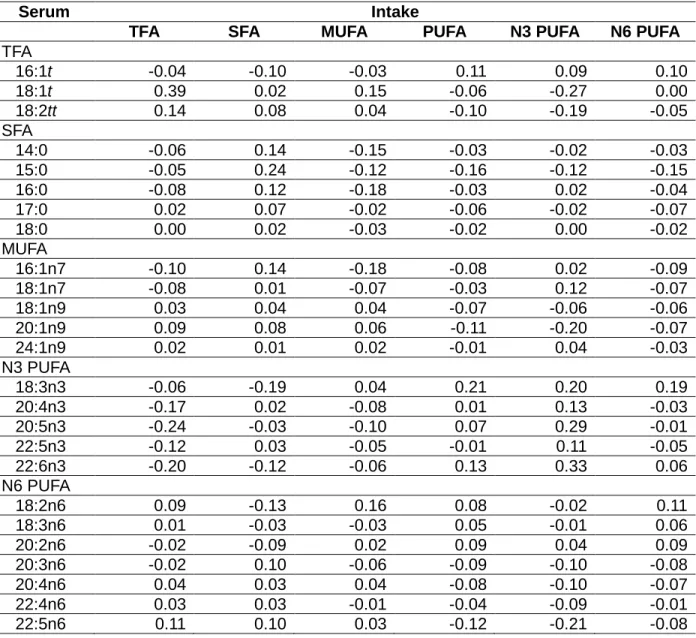
intakes. ... 84 10. Spearman rank correlation coefficients between serum fatty acids
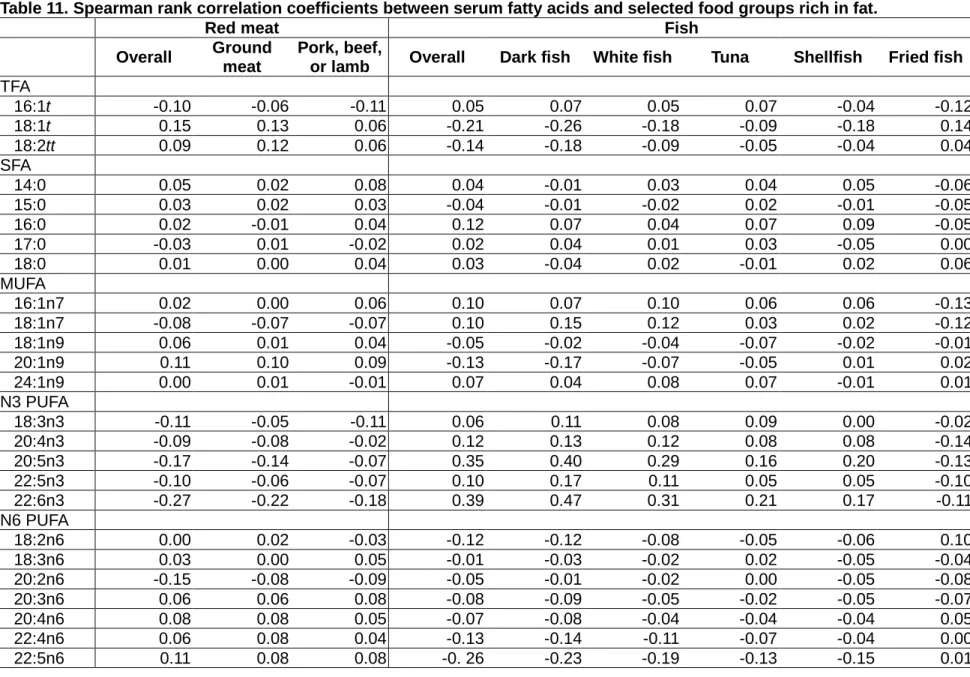
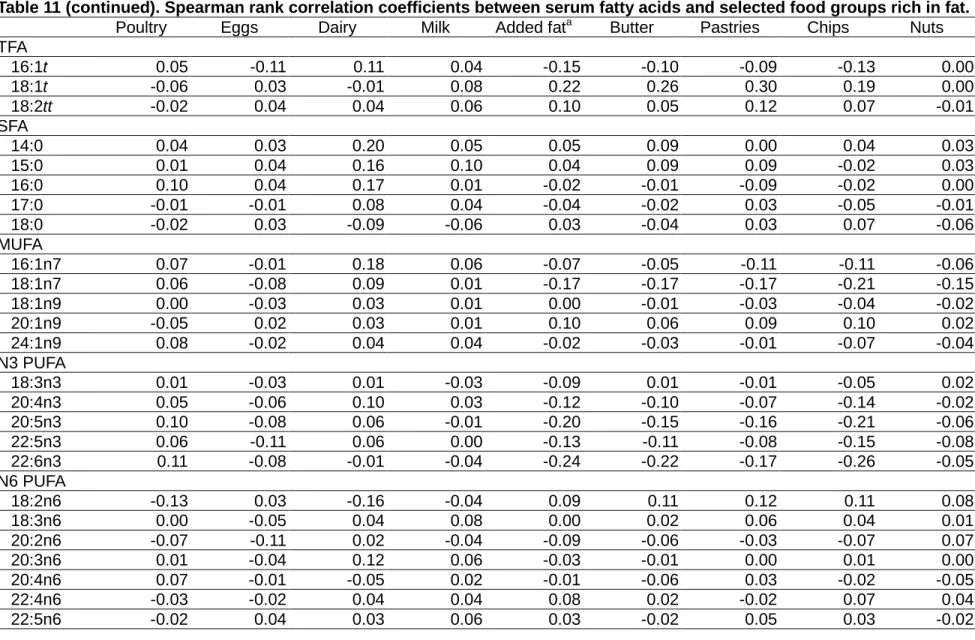
and fatty acid intake groups. ... 85 11. Spearman rank correlation coefficients between serum fatty acids
and selected food groups rich in fat. ... 86 12. Baseline characteristics of the ischemic stroke paper study
14. Odds ratios and 95% confidence intervals for total ischemic stroke associated with a 1-standard deviation increase in individual serum
fatty acids. ... 91 15. Odds ratios and 95% confidence intervals for ischemic stroke
subtypes associated with a 1-standard deviation increase in
LIST OF FIGURES
Figure
1. Mortality rates for Japanese men aged 55-64 years in California,
Hawaii, and Japan, 1950. ... 94 2. Coronary heart disease (CHD mortality (A, r=0.66, p<0.001) and
cerebrovascular mortality (B, r=-0.56, p<0.01) per 100,000 men and
women from 21 countries, 1990. ... 95 3. Distribution of ischemic stroke subtypes among 438 patients
enrolled in the Northern Manhattan Stroke Study, 1993-1997. ... 96 4. Conceptual model of the association between serum fatty acids
and ischemic stroke. ... 97 5. Composition of serum fatty acids and fatty acid intakes. ... 98 6. Unadjusted and partial Spearman rank correlation coefficients
between serum fatty acid concentrations and fatty acid intakes. ... 99 7. Odds ratios and 95% confidence intervals for total ischemic stroke
associated with a 1-standard deviation increment in individual
serum fatty acids... 100 8. Odds ratios and 95% confidence intervals for ischemic stroke
subtypes associated with a 1-standard deviation increment in
x
LIST OF ABBREVIATIONS
95% CI 95% confidence interval AHA American Heart Association ANOVA analysis of variance
BMI body mass index CHD coronary heart disease CVD cardiovascular disease DHA docosahexaenoic acid DPA docosapentaenoic acid EPA eicosapentaenoic acid FFQ food frequency questionnaire
N omega
OR odds ratio US United States
I. INTRODUCTION
Ischemic stroke and coronary heart disease (CHD) are both atherosclerotic disorders and share many of the same risk factors, but surprisingly limited epidemiologic data indicate that dietary fat intake may have different associations with ischemic stroke than with CHD. It has been well established that trans and saturated fats are positively associated with
coronary heart disease, whereas monounsaturated and polyunsaturated fats are inversely associated with CHD. Despite the expectation that these associations would be consistent for ischemic stroke, several large cohort studies using participant reported measures of fatty acid intake reported null or inverse associations between saturated fat intake and ischemic stroke. Rather, case-control studies using biomarkers of fatty acid intake, such as serum, have had more success in finding the expected associations with ischemic stroke. In this dissertation, we investigated possible explanations for the inconsistencies across (i) cohort studies of dietary fat intake and CHD versus ischemic stroke and (ii) studies measuring dietary fat intake through participant report versus fatty acid biomarkers.
these motivations, data on ischemic stroke subtypes were available in few studies. Statistical power was limited for the studies where such data were available.
The inconsistencies between studies measuring dietary fat intake through participant report versus fatty acid biomarkers could be due to their respective methods of measuring dietary fat intake. The cohort studies estimated fatty acid intake through participant report and food frequency questionnaires (FFQ), a measure that is subject to substantial error. Participants may be reluctant or unable to report their habitual food intake accurately. Further, nutritional databases that convert foods to nutrients may not be updated to reflect the continuously changing fatty acid content of food items. Measurement of the composition of fatty acids in serum in case-control studies has been proposed as an alternative to the FFQ. However, serum fatty acids reflect metabolic processes and endogenous synthesis of fatty acids after intake. Therefore, it is unclear which serum fatty acids correlate with long-term fat intake as measured by the FFQ among postmenopausal US women. Few studies have examined the correlations between serum fatty acids and fatty acid intakes in this population.
Another difference between the cohort and case-control studies is that the cohort studies focused on fat intake groups. However, individual fatty acids within the same group may have different, and sometimes opposing, effects on cardiovascular diseases. The effect of grouping these fatty acids may dilute possible associations for individual fatty acids and ischemic stroke. Previous studies that were able to examine individual fatty acids were limited by statistical power, with less than 150 cases of ischemic stroke.
To address these concerns, the aims of the proposed study were (1) to examine the correlations between serum fatty acids and fatty acid intakes and (2) to estimate the
associations between individual serum fatty acids and ischemic stroke and its subtypes. We used data from the Women’s Health Initiative Observational Study (WHI-OS) of
II. SPECIFIC AIMS
We hypothesized that serum fatty acids that are not endogenously synthesized in large amounts (polyunsaturated fatty acids, trans fatty acids, and odd-numbered saturated fatty acids) would have higher correlations with fatty acid intakes than other serum fatty acids.
To test this hypothesis, we estimated the correlations between serum fatty acids and
fatty acid intakes (Aim 1).
We hypothesized that higher levels of serum saturated (myristic, 14:0; and palmitic, 16:0) and trans fatty acids (18:1t; and linelaidic, 18:2tt) were associated with increased incidence of ischemic stroke.
We hypothesized that higher levels of n3 (alpha-linolenic acid, 18:3n3; EPA, 20:5n3; DPA, 22:5n3; and DHA, 22:6n3) and n6 (linoleic acid, 18:2n6; and arachidonic acid, 20:4n6) polyunsaturated fatty acids were associated with decreased incidence of ischemic stroke.
We hypothesized that associations for total ischemic stroke would be consistent for atherothrombotic stroke, but not other types of ischemic stroke.
To test these hypotheses, we estimated the associations between individual serum
III. SIGNIFICANCE
Ischemic stroke is a major cause of death and disability among postmenopausal women. There are no reliable warning signs and treatment is difficult and time-limited emphasizing the importance of the primary prevention of ischemic stroke. In contrast to CHD, which is directly associated with dietary fat intake through its effect on blood cholesterol, there is no clear association between types of dietary fat intake and ischemic stroke. Cohort studies that have examined this association may be limited by their dietary fat intake assessment, their examination of types of fat as a composite exposure, and total ischemic stroke as a composite outcome. Case-control studies of biomarkers of dietary fat intake were limited by the small number of ischemic stroke events. There is an opportunity to examine the
association between the composition of serum fatty acids and ischemic stroke subtypes among postmenopausal women to address these concerns.
A. High burden of stroke among postmenopausal women
In the US, stroke is the fourth leading cause of death, behind heart disease, cancer, and chronic lower respiratory disease, and is responsible for over 134 thousand deaths
annually (Roger et al., 2012). One in five middle-aged individuals who experience a first stroke will die within one year. Of those who survive, a quarter will require institutional care and 20% to 50% will be permanently disabled. Therefore, the key to reducing stroke
mortality and morbidity is not treatment, but primary prevention. This dissertation focuses on ischemic strokes, which make up 87% of incident strokes in the US.
Although age-specific stroke incidence and mortality rates are higher in men than women, stroke affects a greater number of women, a trend that is expected to
stroke, and women make up 60% of annual stroke mortality (Roger et al., 2012). Over the past half century, the 30-day stroke mortality rate has not improved in women (Carandang et al., 2006). After a stroke, a greater proportion of women than men have moderate to severe disability at discharge and women have a lower probability of achieving independence.
The primary reason that the burden of stroke is higher in women is that they live about 7 years longer than men. Stroke typically occurs at a later age, the majority occurring after menopause in women (Roger et al., 2012), its risk doubling every decade of life after age 55. However, even comparing women and men in the same age group, women still have higher risk of stroke than men. In a nationally representative survey, women age 45 to 54 years of age were more than twice as likely as men in the same age group to have suffered a stroke (Towfighi et al., 2007). In addition, factors other than age have been linked with increased risk of stroke in women, such as use of hormone replacement therapy (Viscoli et al., 2001; Rossouw et al., 2002; Wassertheil-Smoller et al., 2003; Hendrix et al., 2006), experiencing early menopause (Lisabeth et al., 2009), pregnancy (Kittner et al., 1996), and atrial fibrillation (a stronger stroke risk factor in women than men) (Wolf et al., 1991). Women and older women specifically are underrepresented in stroke studies. These statistics point to a need to study the etiology of stroke in older women, who share a disproportional burden of stroke risk.
B. Opposite trends in CHD and stroke mortality
Ischemic stroke and CHD are both atherosclerotic disorders and share many of the same risk factors, but they seem to differ in their associations with dietary fat intake. Trans and saturated fat intakes are positively associated with CHD and monounsaturated and polyunsaturated fat intakes are inversely associated with CHD through their respective effects on serum cholesterol and atherosclerosis. The associations between dietary fat intake and ischemic stroke are not as clear.
the 1950s when Tavia Gordon observed that CHD mortality rates were higher and vascular lesions affecting the central nervous system were lower among US whites than
Japanese (Gordon, 1957). Reducing the possibility that these trends were due to genetic makeup, a similar gradient was found where Japanese living in the US had higher CHD mortality than those living in Japan, and again the inverse was true for vascular lesions (Figure 1). Japanese living in Hawaii occupied the intermediate position in both cases. Concluding that the opposite trends were due to environmental or cultural differences, Gordon wrote, “We are faced with a serious medical puzzle…What mechanism would diminish the effect of atherosclerosis of the coronary artery while increasing its effect on the cerebrovascular system?”
Saturated fat intake was proposed to explain the opposite trends of CHD and stroke mortality found in Japan and the US. The Ni-Hon-San study confirmed Gordon’s findings using standardized criteria to classify causes of death and noted that CHD mortality rates increased dramatically with higher saturated fat intake, while stroke rates followed the opposite pattern (Kato et al., 1973; Worth et al., 1975). Using data from 21 industrialized countries, Renaud summarized that dairy fat, which is rich in saturated fat, was positively related to CHD mortality. In the same countries, an inverse association between intake of dairy products and stroke mortality in men and women was observed (Figure 2) (Renaud, 2001). Nevertheless, a positive correlation between saturated fat intake and stroke mortality was reported in a survey performed in 17 countries (Sasaki et al., 1995). While ecologic studies can explore broad geographic and temporal differences in dietary habits and generate hypotheses, ecologic data are prone to be confounded by various factors. C. Dietary fat intake and ischemic stroke
not find the expected associations between saturated, monounsaturated, polyunsaturated fat intake and ischemic stroke. In addition, few studies examined trans fat intake.
Kagan and colleagues observed an inverse relation between total fat intake and incident ischemic stroke in 7,895 male Japanese or Japanese Americans living in Hawaii (154
thromboembolic strokes) over 10 years of follow-up (Kagan et al., 1985). In addition, Gillman and colleagues followed 832 middle-aged men (61 ischemic strokes) in the Framingham Heart Study for 20 years and found that intakes of total, saturated, and monounsaturated fat, but not polyunsaturated fat, were inversely associated with risk of ischemic stroke.
Subsequent cohort studies included a greater number of ischemic strokes, but did not detect significant associations. A 15-year follow-up study of 954 male and 1,329 female Japanese patients (75 cerebral infarctions) reported statistically nonsignificant associations for total fat and types of fat (Seino et al., 1997). However, the direction of the associations suggested that they were inverse for total, saturated, and monounsaturated fat and positive for polyunsaturated fat. Another cohort study of Japanese men and women (60 fatal cerebral infarction) observed that animal fat intake, mostly saturated fat, was inversely associated with cerebral infarction death, but found no significant associations for total,
monounsaturated, or polyunsaturated fat intake (Sauvaget et al., 2004). Two large cohort studies of male and female healthcare professionals, the Health Professionals Follow-up Study and the Nurses’ Health Study with 455 and 385 cases of ischemic stroke,
respectively, did not find significant associations for total fat, cholesterol, or specific types of fat and ischemic stroke after adjustment for potential confounders and major lifestyle
variables (Iso, Stampfer, et al., 2001; He et al., 2003). A large cohort study of
strokes that occur in the smaller intracerebral arteries of the brain and are primarly caused by high blood pressure. A detailed description of lacunar strokes may be found in Section IV. D. 3.
The results of the cohort studies described here were generally not consistent with the expected associations based on CHD studies. We suspected that the inconsistent results were due to not examining ischemic stroke subtypes and not examining fatty acids individually. Assuming that serum cholesterol and development of atherosclerosis are the likely mediators of the association between dietary fat intake and ischemic stroke, then combining strokes with and without an atherogenic basis would not be appropriate. There is evidence that the associations between dietary fat intake and ischemic stroke are not
consistent across ischemic stroke subtypes (Iso et al., 2002; Yaemsiri et al., 2012 [in press]). However, most of these cohort studies only examined ischemic stroke as a composite outcome. In addition, there is evidence that individual fatty acids, even within the same group, may have different effects on the risk of cardiovascular disease. However, these cohort studies only examined types of fat, not individual fatty acid intakes.
D. Biomarkers of Fatty Acid Intake and Ischemic Stroke
Case-control studies using biomarkers of fatty acid intake were able to examine fatty acids individually. These studies reported associations between fatty acid biomarkers and ischemic stroke that were generally consistent with CHD studies. However, these case-control studies were limited by statistical power. None included more than 125 cases of ischemic stroke. The low statistical power increased the chance that an association between a fatty acid and ischemic stroke would not be detected. In addition, none of these case-control studies examined trans fatty acids.
polyunsaturated fatty acids, especially dihomo-gamma-linolenic acid (DGLA, 20:3n6), were lower in stroke patients than controls. DGLA This study included only 9 cases of cerebral artery thrombosis in males. To maximize statistical power, investigators did not control for confounding in multivariable models, but matched cases to controls on several factors: age, body weight, serum cholesterol and triglyceride concentrations, blood pressure, smoking, and glucose tolerance at baseline. Most, but not all, of subsequent case-control studies supported the inverse association between n6 polyunsaturated fatty acids and ischemic stroke.
In two studies (with 56 and 89 cases of ischemic stroke) that measured the fatty acid composition of red blood cell membranes, researchers found that linoleic acid,
docosapenaenoic acid (DPA) and docosahexaenoic acid (DHA), and oleic acids were inversely associated with ischemic stroke (Ricci et al., 1987; Ricci et al., 1997). However, in another study of 18 cases of cerebral thrombosis, Bucalossi and Mori did not report a significant association for adipose tissue linoleic acid and cerebral thrombosis (Bucalossi & Mori, 1972). They did find significant positive associations for palmitic and stearic acids and an inverse association for 7-hexadecenoic acid.
Tilvis and colleagues found that age and the type of biomarker can modify the
associations between fatty acids and ischemic stroke. Twenty-six middle-aged male cases of ischemic stroke were associated with higher concentrations of serum saturated,
monounsaturated, and n3 polyunsaturated fatty acids and lower concentrations of n6 polyunsaturated fatty acids compared with controls. However, platelet fatty acid
consider in studying the association between fatty acids and ischemic stroke. None of the biomarker studies described here included more than 90 cases of ischemic stroke.
The largest study of serum fatty acids and ischemic strokes to date included 122 cases of ischemic stroke and 366 matched controls nested in a Japanese population-based cohort (Iso et al., 2002). To our knowledge, this is the only study of biomarkers of fatty acids that examined ischemic stroke subtypes. Iso and colleagues reported that serum saturated fatty acids were positively associated with incidence of ischemic stroke, while serum linoleic acid was associated with decreased incidence of ischemic stroke. These associations were largely driven by lacunar stroke, this subtype comprising 95 of the 122 ischemic strokes. Investigators did not find significant associations for marine n3 polyunsaturated fatty acids. However, they note that the Japanese have quite high levels of these fatty acids. Those with the lowest concentrations of marine n3 polyunsaturated fatty acids in this population may have already reached the level that provides cardioprotective effects, so that a significant association was not observed (Iso, Rexrode, et al., 2001; He et al., 2002). Investigators did not examine serum trans fat and acknowledged the uncertainty of the associations for other ischemic stroke subtypes. Further exploration is needed on the association between types of fat and ischemic stroke subtypes.
E. Gaps in the Literature
IV. INNOVATION
A. Introduction
Four changes in the approach of studying the associations between dietary fat intake and ischemic stroke may shed new light on these associations. First, previous studies using FFQs to measure dietary fat intake were subject to error in the self-report, underreporting, and changing fat content of foods. We proposed to use serum fatty acids as an objective biomarker for dietary fat intake. Second, previous studies reported null associations between dietary fat groups and ischemic stroke. It is possible that the grouping the fatty acids diluted the associations between individual fatty acids and ischemic stroke. We proposed to examine the associations for individual fatty acids, including individual trans fatty acids. Third, ischemic stroke is a heterogeneous condition; examining ischemic stroke as a composite outcome may not be appropriate and would attenuate expected
associations. Previous studies did not have information on ischemic stroke subtypes or were underpowered to examine subtype specific associations. We proposed to examine ischemic stroke subtypes. Fourth, risk of stroke in women dramatically increases after menopause. Postmenopausal women have been underrepresented in ischemic stroke studies, even though stroke is a major health issue for older women. We proposed to examine these associations among a cohort of postmenopausal women.
B. Serum Fatty Acids
1. Limitations of self-reported measures of dietary intake
Fatty acid intake and metabolism play important roles in the development of
acid intake is measurement (Arab, 2003). There are two primary methods of measuring fatty acid intake: directly through food chemistry or participant self-report (e.g., food frequency questionnaire [FFQ]) and indirectly through the use of a biological marker (Willett, 1998).
The food frequency questionnaire (FFQ) dietary assessment tool is widely used in large cohort studies for ease of administration and affordability, but has some limitations. The FFQ requires identification of detailed information, such as the frequency and portion size of intake of a particular food over a several months. Participants may be unable to accurately report their intake or likely to underreport intake of certain foods. Americans are large consumers of processed foods, but are not usually aware of the nutrient content of these foods (e.g. “hidden fats”). In addition, the fat content of food items has changed considerably over time (e.g. margarine). Databases used to derive nutrient information from foods may not reflect the actual nutrient content. Therefore, measurement of fatty acid concentrations in tissues (serum, adipose, and red blood cells) have been proposed as an objective method of indirectly measuring fatty acid intake (Freedman et al., 2010).
2. Biomarkers of dietary fat intake
3. Serum Fatty Acids and CVD Risk Factors and Outcomes
Studies examining the correlation between serum fatty acids and cardiovascular risk factors and outcomes support the utility of serum fatty acids. Serum cholesteryl ester fatty acid concentrations are correlated with serum lipid levels (Knuiman et al., 1980; Sandker et al., 1993; Rosseneu et al., 1994; Mensink et al., 2003). Serum fatty acids have successfully predicted common health outcomes in observational studies, such as diabetes (Lovejoy et al., 2001; Wang et al., 2003; Lindgarde et al., 2006), cardiovascular disease (Miettinen et al., 1982; Simon et al., 1995; Laaksonen et al., 2005), premature death from cancer (Zureik et al., 1995), and Alzheimer’s disease (Tully et al., 2003).
4. Correlations depend on the population under study
Correlations between serum fatty acid concentrations and fatty acid intakes may differ by the population under study (Baylin et al., 2002; Giltay et al., 2004; Kawabata et al., 2011). For example, one correlation study of adipose tissue conducted in Costa Rica reported high correlations for 18:1t and linelaidic acid due to the high intake of partially hydrogenated soybean oil in that population (Baylin et al., 2002). However, only a few studies have examined the correlations of fatty acids specifically among postmenopausal women. One study of serum fatty acids included a wide age range of both pre- and postmenpausal women (range: 43 to 69 years) (Sun et al., 2007). Another study of postmenopausal women examined adipose tissue fatty acids, but not serum (London et al., 1991). We can contribute to this literature by exploring the correlations between the serum fatty acids and dietary fat intakes among postmenopausal women.
5. Correlation between serum fatty acids and fatty acid intakes
Serum fatty acids differ from the direct measurement of fatty acid intake due to
correlations, although the fatty acids that cannot be endogenously synthesized are expected to yield higher correlations. They include polyunsaturated fatty acids (e.g., DHA and EPA), trans fatty acids, and odd-numbered saturated fatty acids (Willett, 1998).
a) Polyunsaturated Fatty Acids
Previous studies comparing serum fatty acids and fatty acid intakes focused on polyunsaturated fatty acids (e.g., DHA and EPA) (Ma et al., 1995; Andersen et al., 1996; Hjartaker et al., 1997; Andersen et al., 1999; Hodge et al., 2007). Among the
polyunsaturated fatty acids, DHA and EPA generally have the highest correlations. Their correlations range from 0.29 to 0.78 and from 0.21 to 0.51, respectively. The correlations for DHA and EPA are generally good because they derive from a specific dietary source – fish or fish oil supplements – and are not endogenously synthesized in large amounts. Cold water oily fish (salmon, mackerel, and herring) have the most EPA and DHA (Kris-Etherton et al., 2002). A fatty acid precursor can be converted to DHA and EPA, but the extent of this conversion is modest (Kris-Etherton et al., 2002). Serum DPA, the intermediate fatty acid between EPA and DHA, and linoleic acids also have moderate correlations with intake. b) Trans Fatty Acids
c) Odd-numbered Saturated Fatty Acids
The dietary source of odd-numbered saturated fatty acids is dairy fat. These serum fatty acids cannot be endogenously synthesized and are therefore hypothesized to have a higher correlation with fatty acid intake. However, with the exception of two studies, the correlations for odd-numbered saturated fatty acids have been uniformly low. Wolk and colleagues reported that the correlations between intake of dairy fat assessed by food records and dietary recalls for adipose tissue and serum 15:0 were 0.64 and 0.45, respectively (Wolk et al., 2001). Kroger and colleagues reported that the correlations for red blood cell 15:0 and 17:0 were 0.32 and 0.28, respectively (Kroger et al., 2011). Another study of adipose tissue fatty acids reported low correlations for both 15:0 and 17:0 fatty acids (Baylin et al., 2002). The authors attributed these low correlations to their nutrient database, which did not include complete data on these two fatty acids. However, authors did report a moderate correlation between dairy fat intake and adipose 15:0 and 17:0 (r=0.31 and 0.31,
respectively).
Aim 1 of this dissertation addressed the lack of studies examining serum trans fatty acid correlations with fatty acid intakes and lack of correlation studies among postmenopausal women. To determine the serum fatty acids that correlate the best with intake, we have conducted a cross-sectional study to examine the correlations between individual serum fatty acids – including trans fatty acids – and (1) individual fatty acid intakes, (2) fatty acid intake groups, and (3) food groups rich in fat derived from a FFQ among a cohort of postmenopausal women.
C. Individual fatty acids
studies of dietary fat intake tend to be highly correlated. This makes distinguishing the associations between individual fatty acids and ischemic stroke difficult. Tissue biomarkers of fatty acid intake provide a less correlated measure so that individual fatty acids can be examined.
1. Trans fatty acids
No studies have examined the association between individual serum trans fatty acids and ischemic stroke. There is evidence that trans isomers 18:1t and 18:2tt have a stronger effect on cardiovascular disease than 16:1t (Mozaffarian et al., 2009). The risk of CHD death and nonfatal myocardial infarction were consistently associated with higher concentrations of biomarker 18:1t and 18:2tt fatty acids. These associations were less consistent for 16:1t. 2. Saturated fatty acids
Individual serum saturated fatty acids are of interest because they have heterogeneous effects on serum cholesterol. Compared with the oleic monounsaturated fatty acid, myristic and palmitic acids tend to increase serum total and LDL cholesterol concentrations, whereas stearic acid does not have a cholesterol-raising effect (Hu et al., 2001). These associations were reflected in one case-control study of serum fatty acids and ischemic stroke among Japanese (Iso et al., 2002). In this study, in unadjusted analyses, serum myristic and palmitic acids were positively associated with ischemic stroke, while no significant
association was found for stearic acid. Despite the different associations found, investigators grouped myristic, palmitic, and stearic acids together in subsequent analyses that adjust for potential confounders.
hemorrhagic) (Warensjo et al., 2009). These associations have not been confirmed in studies examining ischemic stroke specifically.
3. Polyunsaturated fatty acids
Most telling of the importance of examining fatty acids individually are the associations between DHA and EPA intake versus total polyunsaturated fatty acids and ischemic stroke. Studies that examined total polyunsaturated fat intake reported null associations with ischemic stroke (Gillman et al., 1997; Seino et al., 1997; He et al., 2003; Sauvaget et al., 2004), while studies that examined DHA and EPA specifically reported significant inverse associations (Iso, Rexrode, et al., 2001; He et al., 2002). These results could be due to other fatty acids diluting the inverse association between DHA and EPA intake and ischemic stroke. The implication for future studies is that even longitudinal studies that measure fat intake through self-report should examine the associations between individual fatty acid intakes and disease, not fat intake groups. Combining fatty acid into groups, in particular combining n3 and n6 polyunsaturated fatty acids, could mask any potential association of individual fatty acids, depending on their relative contribution. However, few studies of fatty acid intakes were able to examine fatty acids individually.
D. Ischemic Stroke Subtypes
Previous studies of dietary fat intake and ischemic stroke were inconsistent with CHD studies, despite the fact that CHD and ischemic stroke share some major risk factors and are both thought to be atherosclerotic disorders. One possible explanation of the
inconsistent findings is that ischemic stroke is a heterogeneous condition. Atherosclerosis may be a more proximate cause of some ischemic stroke subtypes, but not others. Given that fatty acid intakes have a strong effect on the effect of atherosclerosis development through serum cholesterol, fatty acid intakes could have a stronger effect on the
examine the association between fatty acids and ischemic stroke subtypes, rather than ischemic stroke as a composite outcome. This section describes the ischemic stroke
subtypes, including atherothrombotic (large artery), lacunar (small artery), and cardioembolic strokes.
1. Classification of ischemic stroke
Usually strokes are classified into two groups: ischemic and hemorrhagic. The etiologies of these two types of stroke are entirely different. Ischemic stroke is caused by obstruction within a blood vessel supplying blood to the brain. Hemorrhagic stroke, on the other hand, is caused by bleeding into the brain when a weakened blood vessel ruptures. In the US, approximately 87% of strokes are ischemic (Roger et al., 2012). The focus of this dissertation is ischemic strokes.
Ischemic strokes may be further classified by their etiology, or the origin of the
obstruction, as thrombotic or embolic. A thrombotic stroke occurs when an obstructing blood clot (thrombus) forms locally within an artery of the brain. Atherosclerosis is the most
prevalent cause of thrombotic strokes occurring in the large arteries of the brain.
Mechanisms related to hypertension are common causes of thrombotic stroke occurring in the small vessels of the intracerebral arterial system. Embolic strokes are the result of a traveling blood clot to the brain, usually from a cardiac, aortic, or arterial source. Each of these subtypes has distinguishing prognosis, outcomes, and treatment, emphasizing the need to examine ischemic stroke subtypes separately.
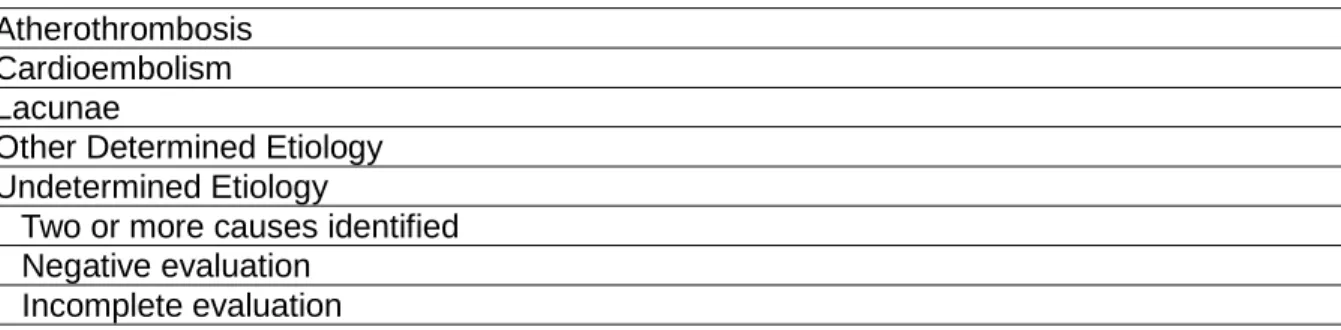
The Trial of Org 10172 in Acute Stroke Treatment (TOAST) formalized this etiologic classification scheme for use in clinical trials and population studies, striving for a uniformity in diagnoses and greater interphysician consistency (Adams et al., 1993). Ischemic strokes may be classified according to five TOAST categories (Table 1).
often nonspecific (Madden et al., 1995). The classification showed moderate to good interphysician reliability, which improved with the use of standardized medical abstraction procedures and a computerized algorithm (Lindley et al., 1993; Madden et al., 1995; Goldstein et al., 2001). One limitation of the TOAST classification scheme is the large proportion of strokes classified as having undetermined etiology (Kolominsky-Rabas et al., 2001; Wassertheil-Smoller et al., 2003). Advances in stroke imaging and evaluation
diagnostics have led to an increasing proportion of stroke to be classified as “undetermined” (e.g. two or more causes identified). The strict TOAST guidelines improve the specificity of the first 3 categories, but they also limit statistical power to examine those categories. Another limitation is that the TOAST classification uses a history of diabetes mellitus and hypertension in its lacunar stroke definition (Adams et al., 1993). Some studies suggest that blood pressure causes lacunar stroke more than other ischemic stroke subtypes, but this may be due to the TOAST classification. One study using “risk factor-free classification” found that the population attributable fraction for hypertension was approximately 35% for all ischemic stroke subtypes (Ohira et al., 2006). This study advocated the use of a “risk factor-free classification” to avoid classification bias. Still, the TOAST classification is the best available for etiologic studies of ischemic stroke (Wassertheil-Smoller et al., 2003). 2. Atherothrombotic stroke (large artery)
basilar arteries, which supply blood to the brainstem and the back of the brain causes weakness or numbness on either side of the body, vertigo, nausea, vomiting, unsteadiness, or coma. Atherosclerotic infarcts block arteries that supply blood to large portions of the brain and may result in a large amount of brain damage. Angiography, a relatively invasive procedure with inherent risks, is the gold standard for diagnosing atherothrombotic
stroke (Madden et al., 1995). Treatment options for atherosclerotic strokes include antiplatelet therapy, revascularization, and anticoagulation.
In the US, atherothrombotic strokes occur less frequently than lacunar or cardioembolic stroke making these types of strokes particularly difficult to accumulate in epidemiologic studies (Figure 3). Still, intracranial stenosis causes approximately 50,000 ischemic strokes each year. Approximately 5% to 10% of ischemic strokes among whites are caused by atherothrombotic stroke, a proportion that is higher among blacks (14%), Hispanics (20%), Japanese (21%), and South Asians (27%) (R. L. Sacco et al., 1995; Syed et al., 2003; Turin et al., 2010). These racial differences are due to the proportions of intracranial, rather than extracranial, atherothrombotic strokes. Of all the ischemic strokes in the Northern Manhattan Stroke Study, 8% and 8% (52 and 50 of 661 ischemic strokes, respectively) were caused by intracranial and extracranial atherothrombotic strokes, respectively. In combination, this study had a higher proportion of atherothrombotic stroke than US whites because of the racial diversity among study participants (Rincon et al., 2009). The higher prevalence of diabetes and hypercholesterolemia among blacks and Hispanics accounted for much of the increased frequency of intracranial atherosclerotic stroke (R. L. Sacco et al., 1995; Ohira et al., 2006). Individuals with both type I and type II diabetes are associated with substantially increased risks of thrombotic stroke, including atherothrombotic stroke (Janghorbani et al., 2007).
These investigators examined the incidence of ischemic stroke subtypes in populations with high and low serum cholesterol levels (Kuller & Reisler, 1971). They found the ischemic strokes that occurred among populations with high serum cholesterol levels were mainly intracranial and extracranial. Intracranial and extracranial ischemic strokes define
atherothrombotic stroke. Based on this observation, high serum cholesterol levels seemed to be related to atherothrombotic stroke, but not other subtypes of ischemic stroke. Given the strong effect of fatty acid intakes on serum cholesterol, we hypothesized that fatty acid intakes would have an effect on atherothrombotic stroke, but not other subtypes of ischemic stroke. The Honolulu Heart Program reported evidence for the effect of dietary fat on
subtypes of ischemic stroke (D. M. Reed, 1990). In 198 men, the levels of atherosclerosis were greater in the large arteries in the Circle of Willis than in the small arteries in those who reported low intake of fat and animal protein. These studies suggest that dietary fat intake and atherosclerosis may only be involved in atherothrombotic stroke. However, there have been no confirmatory reports on the associations of types of fat (both dietary or fatty acid biomarkers) and types of ischemic stroke. Studies that have attempted to examine the associations between fatty acids and atherothrombotic stroke have been limited by low statistical power (Iso et al., 2002; Yaemsiri et al., 2012 [in press]).
3. Lacunar stroke (Small vessel)
Lacunar infarcts are occlusions that are 0.2-15mm in diameter occurring in the arteries that branch off from large cerebral arteries and supply blood to deep in the brain. Occlusion of these smaller arteries is most often caused by lipohyalinosis (small vessel disease) or microatheroma (atherosclerosis), both consequences of systemic hypertension (Fisher, 1982). A lacunar infarct can cause any of the symptoms of ischemic stroke, notably
et al., 1991; The Publications Committee for the Trial of ORG 10172 in Acute Stroke Treatment (TOAST) Investigators, 1998).
In the US, the annual incidence of lacunar infarcts is 25/100,000 overall and 52/100,000 among blacks (Petty et al., 1999; Woo et al., 1999). Lacunar stroke incidence is higher among US blacks than whites, probably due to having a higher prevalence of hypertension and diabetes. Lacunar infarcts make up 16-22% of all ischemic strokes in the US, but comprise a much larger proportion of all ischemic strokes among the Japanese;
approximately 80% of ischemic strokes in Japanese are lacunar (D. Reed et al., 1994; Iso et al., 2002). Over the last 40 years, the incidence of lacunar stroke, but not other types of ischemic stroke, has steadily declined in Japan probably due to better hypertension control and decrease of other risk factors, namely diabetes and smoking (Kubo et al., 2006). In fact, treatment of systolic hypertension reduced risk of lacunar and possibly embolic strokes, but not atherosclerotic strokes (Perry et al., 2000). Results of this study contrast with others that suggest lacunar infarcts are not more likely to occur from hypertension (Lodder et al., 1990; Petty et al., 1999).
Serum fatty acids and fatty acid intakes have been shown to be associated with lacunar stroke. Investigators of a case control study of serum fatty acids and ischemic stroke subtypes reported a positive association between serum saturated fatty acids and ischemic stroke, and an inverse association for serum linoleic acid (Iso et al., 2002). These
through inflammatory mechanisms (Mozaffarian et al., 2009). However, we hypothesize that the main mechanism by which fatty acid intakes increase risk of ischemic stroke is through serum cholesterol’s effect on increasing risk of atherothrombotic stroke.
4. Cardioembolic stroke
Cardioembolic stroke is caused by a blood clot (embolism) that forms in the heart, travels through the bloodstream, and blocks an artery supplying blood to the brain. Common sources of embolism include arrhythmias, especially atrial fibrillation, valve disorder, and heart failure. These diseases may cause normally flowing blood to pool, increasing the possibility of clot formation. Atrial fibrillation may develop following cardiac surgery, increasing concern for cardioembolic stroke. Compared with thrombotic strokes, the
neurologic deficit associated with cardioembolic stroke is large. Onset of the deficit, as well as recovery after clearing the embolus, occurs quickly.
Treatment for cardioembolic stroke differs from other ischemic strokes in that treatment of both the local infarct and the cardiac source of the thrombus are important to prevent recurrence. Further distinguishing this subtype of ischemic stroke, long-term prevention of cardioembolic stroke includes anticoagulants therapy (warfarin); antiplatelets alone are not sufficient to prevent recurrence (R. L. Sacco et al., 2006). To prevent recurrence with proper treatment, all patients with possible stroke must undergo a thorough cardiac evaluation.
Cardiac surgery is also a major risk factor for cardioembolic strokes. Adverse cerebral outcomes occur in 6.1% of patients who undergo a coronary bypass surgery (Roach et al., 1996). Approximately half of patients who experience a cerebral outcome have focal neurologic damage and the other half experience a deterioration of intellectual function or seizures.
V. METHODS
The aims of this dissertation were (1) to examine the correlations between serum fatty acids and fatty acid intakes and (2) to examine the associations between individual fatty acids and ischemic stroke and its subtypes. We increased statistical power to meet these objectives by using data from the WHI-OS, a large cohort of postmenopausal women. We will address the first aim using a cross-sectional study design and calculating Spearman rank correlation coefficients between serum fatty acids and fatty acid intakes. We will address the second aim using a matched case-control study design. Given this study design, we will use conditional logistic regression, conditioning on the matched factors, to examine the associations between fatty acids and ischemic stroke. This dissertation involves the analysis of extant data. Data from this dissertation were derived from two Women’s Health Initiative Observational Study ancillary studies: (1) Stroke risk factors and molecular markers in postmenopausal women (AS126, PI: Dr. Sylvia Wassertheil-Smoller) and (2) Serum fatty acids and incidence of ischemic stroke in women (AS187, PI: Dr. Ka He). This section provides a description of the data and the analytic procedures.
A. The Women’s Health Initiative Observational Study
The WHI-OS is a long-term prospective cohort study to identify and assess the impact of biological, lifestyle, biochemical, and genetic factors on the risk of heart disease, cancer, osteoporosis, and other major health events. Between 1993 and 1998, the WHI-OS
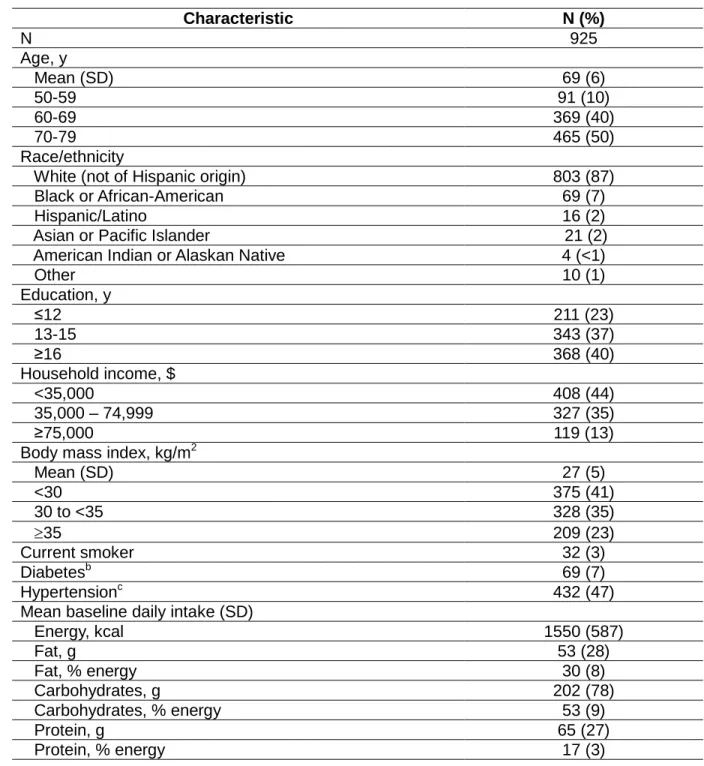
The baseline characteristics of the participants have been published (Langer et al., 2003). The WHI-OS cohort is somewhat healthier than a probability sample of US women age 55-74 in the NHANES III cohort (1988-1994). Among women aged 50 to 79 in the NHANES III, 48% were hypertensive, 7% reported a history of physician-diagnosed heart attack, and 5% reported a physician-diagnosed stroke. The prevalence of these conditions in the WHI-OS at baseline was 33.5%, 2.5%, and 1.5%, respectively. Table 2 compares other characteristics of WHI-OS women to that of US women ages 50-79 from the NHANES 1999-2000 (the NHANES was not conducted during WHI enrollment between 1993 and 1998). Compared with US women, WHI women were more likely to have higher levels of formal education and have higher household incomes. WHI women were less likely to be obese or be a current smoker. While the WHI cohort is not representative of
postmenopausal US women, much less adults worldwide in the sense of a probability sample, its nonrepresentativeness is assumed to be unrelated to the biologic mechanism linking serum fatty acids and the development of ischemic stroke. In fact, limiting the study population to postmenopausal US women without safety or retention concerns maximizes the internal validity and aids generalizability to unstudied groups (Rothman et al., 2008). B. Case identification and classification
Of the 93,676 participants in the WHI-OS, we excluded 9,831 women for not meeting study eligibility criteria (having no previous history of myocardial infarction or stroke and adequate blood sample available for the biomarker assays) and 627 women with a locally adjudicated ischemic stroke that was not confirmed by central adjudication (Wassertheil-Smoller et al., 2008). These exclusions left a remaining cohort of 82,591 women from among whom the stroke case and control subjects were selected.
potential outcomes were subject to local adjudication by physicians, then central
adjudication by trained neurologists, according to standard criteria. Over 95% of participant-reported stroke cases were classified based on brain imaging (Chen et al., 2008). There were 972 confirmed incident ischemic stroke cases between 1993 and 2003.
Central adjudicators further classified ischemic strokes by subtypes according to the Trial of ORG 10172 Acute Stroke Trial (TOAST) Classification, based on the presumed underlying stroke etiology (Table 1) (Goldstein et al., 2001). The TOAST classification system includes five categories: atherothrombotic stroke, lacunar stroke, cardioembolic stroke, stroke of other determined etiology, and stroke of undetermined etiology. The classification is based on clinical features, brain imaging (CT/MRI), cardiac imaging (echocardiography, etc.), duplex imaging of extracranial arteries, arteriography, and laboratory assessments for a pro-thrombotic state. Probable and possible subtypes
determinations were combined in this report. Transient ischemic attack, hemorrhagic stroke, strokes not requiring hospitalization, and strokes not confirmed by central adjudication were not included as a stroke outcome.
C. Control selection
D. Baseline data collection
Baseline data were collected by trained and certified clinical center staff using self-administered forms and interviews and making clinical measurements (Table 3) (Anderson et al., 2003).
1. Blood specimen and serum fatty acid assessment
Fasting blood samples were collected from women at study baseline by clinic staff members following a standardized protocol for venipuncture (Anderson et al., 2003). Samples were centrifuged, separated by layers, frozen onsite at -70°C, and shipped to the central WHI repository for long-term storage. Blood samples from the selected cases and controls were sent to Dr. Rhobert Evans’ laboratory at the University of Pittsburgh for serum fatty acid assessment.
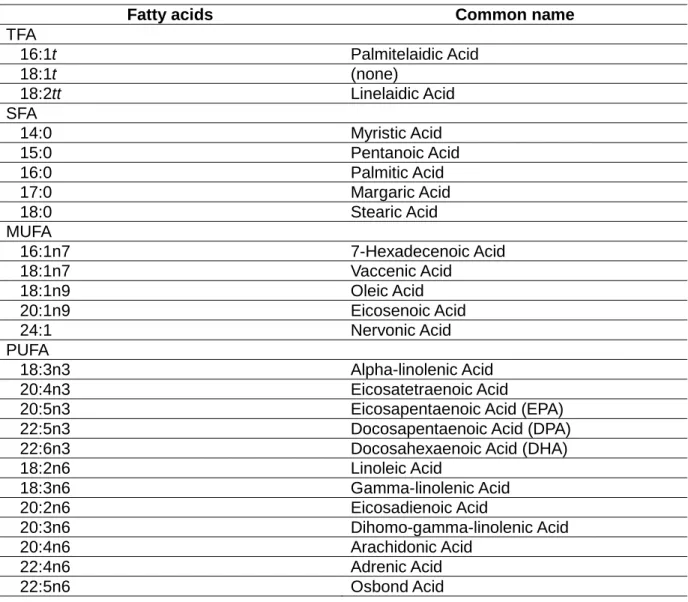
Fatty acids (Table 4) were extracted according to the general technique of Bligh and Dyer (Bligh & Dyer, 1959) using 1, 2-dinonadecanoyl-sn-glycero-3-phosphocholine (Avanti Polar Lipids, Inc. Alabaster, AL) (50 µg of 19:0) as an internal standard. The lipid extracts were resuspended in 1.5 ml 14% boron trifluoride methanol and derivatized according to the procedure of Morrison and Smith (Morrison & Smith, 1964). The extracts were analyzed by capillary GC:column (SP-2380, 105 m x 53 mm ID, 0.20 um film thickness). The gas chromatograph was a Perkin Elmer Clarus 500 equipped with a flame ionization detector. Operating conditions: the oven temperature was 140°C for 35 min, then ramped at 8°C/min to 220°C, and held for 12 min. Injector and detecto r temperatures were both at 260°C and helium, the carrier gas, was at 15 psi. Identification of components was by comparison of retention times with those of authentic standards (Sigma). Duplicate samples and control pools were analyzed with each batch of samples.
triglyceride value <400 mg/dL using the Friedewald equation (National Cholesterol
Education Program Expert Panel on Detection, 2002). LDL cholesterol values were set to missing for those women whose triglyceride value was >400 mg/dL (n=35) or who were missing HDL cholesterol, total cholesterol, or triglyceride values (n=7).
Fasting glucose was assayed by the hexokinase method (Anderson et al., 2003). 2. Demographics
Participants reported their age, race, level of formal education, and household income. Participants could report their race/ethnicity as American Indian or Alaskan Native, Asian or Pacific Islander, Black or African-American, Hispanic/Latino, White (not of Hispanic origin), or other. Because of the relatively low number of non-white participants, we dichotomized race/ethnicity as white and non-white for Aim 1. All six categories of race/ethnicity were used as matching factors in Aim 2. Levels of formal education were collapsed into three
categories (completed high school or obtained General Equivalency Diploma or less, some college or training, and college graduate). Levels of household income were collapsed into three categories, as well (<$35,000, $35,000 to $74,999, and ≥$75,000).
3. Medical history
Participants reported their history of treatment for diabetes, atrial fibrillation, angina, and revascularization. Using additional information from blood biomarkers, diabetes (yes, no) was defined as being on treatment for diabetes by self-report or having a fasting glucose level ≥126 mg/dL.
4. Physical activity, alcohol consumption, smoking
metabolic equivalent task (MET)-hours per week and categorized by episodes per week of moderate or strenuous activity of 20 minutes or more duration (as defined by a metabolic equivalent score of at least 4.0) (Ainsworth et al., 1993). Participants were queried about their past and current alcohol consumption and were categorized as past drinker, current drinker, <7 drinks/wk, or ≥7 drinks/wk. Smoking status was dichotomized as current smoker (yes, no).
5. Food frequency questionnaire
The WHI used a self-administered food frequency questionnaire (FFQ) to assess diet (Patterson et al., 1999). The FFQ asked about usual frequency of intake and portion size for 122 foods and food groups over the previous 3-month period, including questions about fats in meat and dairy and reduced-fat foods. It also included 19 adjustment questions that permitted a more refined analysis of fat intake by asking about food preparation
practices and types of added fats. In addition, 4 summary questions asked about usual intake of fruits, vegetables, and fats added to foods and used in cooking. Participants
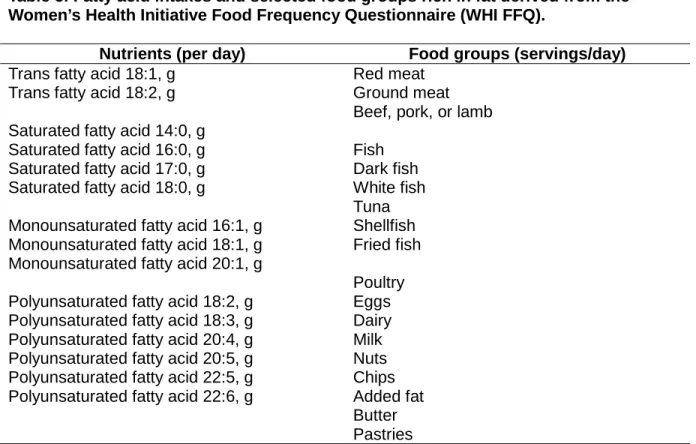
received a sheet with portion size pictures to standardize portion size. The nutrient database was derived from the University of Minnesota Nutrition Coding Center nutrient database (2005 version, Nutrition Coordinating Center, Minneapolis, MN). We compared food groups that are rich in fat and nutrient variables derived from the WHI FFQ with serum fatty acid concentrations for Aim 1 (Table 5).
levels of trans fat and saturated fat intakes, as measured by the WHI FFQ (Howard et al., 2006). These results demonstrate that the WHI FFQ dietary trans fat intake assessment is appropriate and can successfully predict health endpoints including ischemic stroke by ranking participants according to intake.
6. Hormone replacement therapy use
To capture hormone use prior to WHI enrollment, an in-person interview was conducted with each woman to determine her entire history of postmenopausal hormone
use (Anderson et al., 2003). We categorized women as being current, past, or never users of hormone replacement therapy (estrogen plus progesterone or unopposed estrogen). 7. Current medications
Use of medications and dietary supplements was captured directly from pill bottles that participants were asked to bring to the clinic. The medications were recorded by an
interviewer and matched to a Medication Therapeutic Class. Participants who reported taking pills for hypertension or medication in the antihypertensive or diuretic therapeutic classes were classified as antihypertension medication users. Those who reported having high cholesterol requiring pills or taking medication in the antihyperlipidemic therapeutic classes were classified as cholesterol-lowering medication users. Participants who reported taking medications that contained aspirin as an ingredient for at least 14 days were
classified aspirin users. 8. Blood pressure
Blood pressure was measured at a baseline clinic visit by certified staff using standardized procedures after a 5-minute seated rest. Two systolic and diastolic blood pressure measurements were taken with a 30-second rest in between. The average of the first and second systolic and diastolic blood pressure readings were averaged. Since
9. Height and weight
Certified clinic staff measured participant height, weight, and blood pressure. Height and weight were measured without shoes or heavy clothing and with pocket contents removed. Body mass index (BMI) was calculated by dividing weight in kilograms by the square of height in meters. Participants were categorized as having BMI <25.0, 25.0 to 29.9, or ≥ 30.0 kg/m2.
Following standardized procedures, blood pressure was measured twice after a 5-minute seated rest with a 30-second rest in between. The average of two blood pressure measurements was used in analysis. Hypertension was defined as self-report of
antihypertensive medication use or systolic blood pressure ≥ 140 mm Hg or a diastolic blood pressure ≥ 90 mm Hg.
E. Statistical analysis
All analyses were performed using SAS statistical software (version 9.2, SAS Institute Inc., Cary, NC, USA).
1. Aim 1 analyses
The objective of aim 1 was to calculate the correlation coefficients between individual serum fatty acids and fatty acid intakes. In addition, we calculated the correlation coefficients for intakes of fatty acid groups and selected food groups rich in fat. Aim 1 analyses excluded women who developed ischemic stroke during follow-up and women who reported
We calculated Spearman, rather than Pearson, correlation coefficients to account for the highly skewed serum fatty acid and fatty acid intake variables. Unlike Pearson correlation coefficients, Spearman rank correlation coefficients do not need to be normally distributed since they convert the values to ranks. We considered correlations r≥0.20 with P≤0.001 to be statistically significant to account for multiple comparisons. P≤0.001 is more conservative than the Bonferroni correction for P≤0.05 for 25 comparisons.
Our primary analysis was unadjusted, rather than adjusted or partial, correlation coefficients between serum fatty acids and fatty acid intakes and food groups. Since our objective was to estimate the correlations in this population of postmenopausal US women, adjustment for other variables would decrease the correlations’ relevance to this study population. We adjusted the correlation coefficients for age (continuous), race (white, non-white), BMI group (<25, 25 to <30, ≥30 kg/m2), and current smoking status (no, yes) in secondary analyses. These variables are markers of major lifestyle factors and biological processes that can influence fatty acid intakes and serum fatty acid concentration. 2. Aim 2 analyses
The objective of Aim 2 was to examine the associations between individual serum fatty acids and ischemic stroke and its subtypes. Aim 2 analyses included 964 matched ischemic stroke case and control pairs with sufficient serum samples.
generally linear, unadjusted ORs were calculated per 1-standard deviation (SD) increment in each serum fatty acid (Model 1, Table 6).
Potential confounders were identified by determining which variables were related both to serum fatty acids and to ischemic stroke (Figure 4). In a matched case-control study where the inclusion of a case-control pair depends on both having complete covariate data, we were careful to add only variables that are justified and necessary to maximize statistical power. Cases and controls were already matched on age and race/ethnicity. Therefore, we considered other comorbidities and lifestyle factors that would affect serum fatty acid concentrations and ischemic stroke incidence: BMI, smoking status, diabetes, and aspirin use. The model controlling for these variables was our primary model (Model 2, Table 6). These variables were associated with ischemic stroke in our study and are markers of comorbidities and lifestyle that could affect serum fatty acid concentrations and ischemic stroke incidence. We additionally adjusted for two potential mediators, blood pressure and serum cholesterol, in secondary analyses (Models 3 and 4, Table 6). Associations with two-sided P ≤ 0.001 was considered significant to account for multiple comparisons. This is a more conservative P than the Bonferroni correction of P ≤ 0.05 for 25 comparisons. F. IRB/Human subjects
Approval for this project was obtained through the Institutional Review Board of the University of North Carolina Gillings School of Global Public Health on 6/29/2011 for Aim 1 and 7/8/2008 for Aim 2. No additional contact was made with study participants, as all analyses were of secondary data. The WHI study coordinators at each clinic site obtained approval for data collection.
G. WHI Publications and Presentations (P&P) Committee
VI. Correlations Between Serum Fatty Acids and Fatty Acid Intakes Among Postmenopausal Women
This manuscript presents the results and discusses the implications of Aim 1. This manuscript addresses the correlations between individual serum fatty acids with (1) fatty acid intakes, (2) fatty acid groups, and (3) food groups. We examined correlations for individual trans fatty acids, which few studies have examined previously.
A. SUMMARY
Background: Serum fatty acid concentrations have been proposed as a useful method
of indirectly measuring fatty acid intake. It is unclear which serum fatty acids are valid biomarkers of fatty acid intake among postmenopausal US women.
Objective: We examined the correlations between serum fatty acids and intakes of fatty
acids and food groups rich in fat among postmenopausal women in the Women’s Health Initiative Observational Study.
Design: Participants were 925 women aged 50 to 79 years. Serum fatty acids were
assessed using gas chromatography from a fasting serum sample. Intakes of fatty acids and food groups were derived from a 122-item food frequency questionnaire. Spearman
correlation coefficients and measures of agreement were calculated.
Results: The major components of total serum fatty acids were linoleic (18:2n6, 27%),
palmitic (16:0, 24%), oleic (18:1n9, 18%), stearic (18:0, 9%), and arachidonic (20:4n6, 8%) acids. Serum docosahexaenoic acid (DHA, 22:6n3, r=0.53), eicosapentaenoic acid (EPA, 20:5n3, r=0.42), and 18:1t (r=0.39) had the strongest correlations with corresponding
correlated with fish intake (r=0.39 and 0.35, respectively). Serum 18:1t was correlated with intakes of added fats, butter, and pastries (r=0.22, 0.26, and 0.30, respectively).
Conclusions: Serum DHA, EPA, and 18:1t concentrations are suitable biomarkers of
their corresponding fatty acid intakes as assessed by an FFQ in this cohort of postmenopausal US women.
B. INTRODUCTION
Fatty acid intake and metabolism play important roles in the development of
cardiovascular disease (Hu et al., 2001). One of the challenges in studying fatty acid intake is measurement (Arab, 2003). There are two primary methods of measuring fatty acid intake: directly through food chemistry or participant report (e.g., food frequency
questionnaire [FFQ]) and indirectly through the use of a biological marker (Willett, 1998). Most large-scale observational studies use the FFQ, a tool that aims to measure usual food intake in relation to chronic disease. Its usefulness is limited by participants who may be reluctant or unable to report food intake accurately (Willett, 1998). Further, nutritional databases that convert foods to fatty acids may not be updated to reflect the continuously changing fatty acid content of food items. Therefore, measurement of fatty acid
concentrations in tissues (serum, adipose, and red blood cells) have been proposed as an objective method of indirectly measuring intake of foods rich in fat and fatty acid intake. Whereas foods and fatty acids derived from the FFQ reflect intake but not metabolic processes, serum fatty acids reflect intake after absorption, transport, uptake, metabolism, and excretion of dietary fatty acids and endogenous synthesis of fatty acids (Arab & Akbar, 2002).
acids (Willett, 1998). These fatty acids include n3 polyunsaturated fatty acids, trans fatty acids, and odd-numbered fatty acids. While previous studies comparing fatty acid
biomarkers have focused on n3 polyunsaturated fatty acids (e.g., DHA and EPA) (Ma et al., 1995; Andersen et al., 1996; Hjartaker et al., 1997; Andersen et al., 1999; Hodge et al., 2007; Sun et al., 2007; Patel et al., 2010), few studies have examined correlations for serum trans (Sun et al., 2007) or odd-numbered fatty acids. These three classes of fatty acids are also of interest because of their effects on a host of issues that affect the health of older women: ischemic stroke, osteoporosis, cognition, cancer, and autoimmune disease. However, few studies have examined the correlations among postmenopausal women (London et al., 1991; Sun et al., 2007).
To determine the serum fatty acids that best correlate with intake among
postmenopausal women, we have conducted a cross-sectional study to examine the correlations between individual serum fatty acids and FFQ-derived i) individual fatty acid intakes, ii) fatty acid intake groups, and iii) food groups rich in fat.
C. SUBJECTS AND METHODS
1. Study Population
The present analysis used controls from a nested case-control study of ischemic stroke. Controls were matched to 972 ischemic stroke cases based on age and
race/ethnicity (Wassertheil-Smoller et al., 2008). We excluded controls whose blood quantity was not sufficient to analyze fatty acid content (n=4) or reported implausible daily energy intake (<600 or >5000 kcal, n=43), leaving 925 women in this analysis.
2. Data collection
Participants completed sociodemographic and lifestyle questionnaires during baseline visits (Anderson et al., 2003). Anthropometric measurements were measured by certified clinic staff. Height and weight were measured without shoes or heavy clothing and pocket contents removed. Body mass index (BMI) was calculated by dividing weight in kilograms by the square of height in meters (National Cholesterol Education Program Expert Panel on Detection, 2002). Blood pressure was measured using standardized procedures after a 5-minute seated rest. The average of two blood pressure measurements taken with a 30-second rest in between was used in the analysis. Hypertension was defined as having a systolic or diastolic blood pressure equal to or greater than 140 and 90 mm Hg, respectively, or report of use of antihypertensive medication (National Cholesterol Education Program Expert Panel on Detection, 2002).
Fasting blood samples were collected from women at study baseline by clinic staff members following a standardized protocol for venipuncture (Anderson et al., 2003). Samples were centrifuged, separated by layers, frozen onsite at -70°C, and shipped to the central WHI repository for long-term storage.
3. Serum fatty acid analysis
Fatty acids were extracted according to the general technique of Bligh and Dyer (Bligh & Dyer, 1959) using 1, 2-dinonadecanoyl-sn-glycero-3-phosphocholine (Avanti Polar Lipids, Inc. Alabaster, AL) (50 µg of 19:0) as an internal standard. The lipid extracts were