HIV AND STATIN USE IN THE WOMEN’S INTERAGENCY HIV STUDY
Jonathan V. Todd
A dissertation submitted to the faculty at the University of North Carolina at Chapel Hill in partial fulfillment of the requirements for the degree of Doctor of Philosophy in the
Department of Epidemiology.
Chapel Hill 2016
© 2016 Jonathan V. Todd ALL RIGHTS RESERVED
ABSTRACT
Jonathan V. Todd: HIV and Statin Use in the Women’s Interagency HIV Study (Under the direction of Stephen R. Cole)
With the provision of effective antiretroviral therapy (ART) for HIV, increasingly the interactions between HIV, ART, and chronic diseases of aging, such as cardiovascular disease, are of interest. Dyslipidemia is a common condition found in HIV-infected patients. Reflecting changing national guidelines, treatment of dyslipidemia with statins has
increased in the US, both in the general population and the HIV-infected population. It is unknown if HIV-infected patients are as likely to initiate statins when indicated, in
comparison to HIV-uninfected patients. Regarding the efficacy of statins, previous work has shown a benefit to statin use for LDL cholesterol lowering, but with a slightly reduced benefit among HIV-infected patients. However, this question has not been examined extensively in women. We examined the effect of HIV serostatus on the use and efficacy of statins in the Women’s Interagency HIV Study (WIHS), a prospective multicenter cohort of HIV-infected women and matched HIV-uninfected controls in the US.
Among 4607 women in the WIHS, 473 had an indication by Adult Treatment Panel (ATP) III guidelines and did not have prior statin use. Compared to HIV-uninfected women, the weighted hazard ratio for initiation of a statin for HIV-infected women was 0.95 (95% confidence interval (CI): 0.63, 1.44), and the two-year risk ratio was 0.82 (95% CI: 0.39, 1.24). We found little evidence of a difference by HIV serostatus, in the uptake of statins in our cohort. Among both HIV-infected and uninfected women, the prevalence of statin
indication increased nearly three-fold when applying the 2013 American College of
Cardiology/American Heart Association guidelines instead of the 2001 ATP III guidelines.
We estimated the effect of HIV on the efficacy of statins, as measured by changes in
LDL cholesterol from baseline (prior to statin initiation) to approximately one year of
follow-up. Out of 659 statin initiators, 481 (73%) were HIV-infected. LDL cholesterol was
reduced after approximately one year in both exposure groups. After adjustment the
change in LDL cholesterol for HIV-infected women was -15.1 mg/dL, and in HIV-uninfected
women it was -17.4 mg/dL. The difference in mean change was 2.3 mg/dL (95% CI: -5.4,
10.1).
To Katy, Drew, and Pat, the best siblings a guy could ever ask for, and who put up with me for years and years.
To Madelyn and Kinsley, who are the embodiment of joy.
To Mom and Dad, words are insufficient. My parents, my heroes, my friends.
ACKNOWLEDGEMENTS
I have so many people to thank. Let me begin by acknowledging a wonderful dissertation committee. Adaora Adimora, Michele Jonsson Funk, Alan Brookhart, Ross Simpson, and my chair and advisor, Stephen Cole, have given invaluable scientific advice, mentorship, and moral support throughout this entire process. Their expertise is fantastic, and their knowledge of my topic and methods was comprehensive throughout. They truly were more than the sum of their individual skills, and I cannot thank them enough. I do wish to specifically thank Dr. Cole for the collaboration and mentorship these past two years. I would not be here without the opportunity he gave me, and I will always be grateful.
I would also like to thank those in the department who gave me special support throughout the years. Tim Carey, Bill Miller, Sonia Napravnik, and Joanne Garrett gave me opportunities for research fellowships and research positions, and the benefit of their expertise and skills. I learned much from all of them. Nancy Colvin, Carmen Woody, and Valerie Hudock always gave excellent advice and support, and most importantly, a friendly ear when needed. I’d also like to thank Catalina Ramirez and Andrew Edmonds, who also work with the Women’s Interagency HIV Study, for their guidance through the research process with the WIHS. Their knowledge is invaluable to all the research that we do. And most importantly (and often most overlooked), nothing that follows would be possible without the support of the women in the Women’s Interagency HIV Study. I thank all of these courageous women for their time, and their determination to end this epidemic.
To my friends, colleagues, and fellow students in the Department of Epidemiology, my eternal gratitude for walking this path with me. You consistently inspire me with your diverse array of skills and talents, and your genuine compassion. Thank you all.
Finally, nothing I have ever done has been without the constant and unwavering support of my family. My parents, my sister and brothers, my nieces, and my entire
extended family: you picked me up a thousand times when I was down, and you rarely even knew it. And I thank you.
TABLE OF CONTENTS
LIST OF TABLES……….………..x
LIST OF FIGURES………xi
LIST OF ABBREVIATIONS………...xii
CHAPTER 1: CRITICAL REVIEW OF THE LITERATURE………..1
1.1 HIV and Dyslipidemia………..1
1.2 Prevalence and Incidence of Dyslipidemia in HIV Patients………..1
1.3 Antiretroviral Therapy and Lipid Lowering Therapy………..4
1.4 Risk Factors for Dyslipidemia……….4
1.5 Changing US Guidelines for Lipid Lowering Therapy………..5
1.6 Statin Use in HIV Patients………..6
CHAPTER 2: STATEMENT OF SPECIFIC AIMS………12
2.1 Statement of Specific Aims and Hypotheses………...12
2.2 Significance………..13
2.3 Innovation………15
CHAPTER 3: METHODS………18
3.1 Study Population………..18
3.2 Notation……….20
3.3 Statistical Methods for Chapter 4 (Aim 1)………20
3.4 Statistical Methods for Chapter 5 (Aim 2)………22
CHAPTER 4: SIMILAR USE OF STATINS IN HIV-INFECTED AND UNINFECTED
WOMEN IN THE WOMEN’S INTERAGENCY HIV STUDY………26
4.1 Introduction………26
4.2 Methods……….27
4.3 Results………30
4.4 Discussion………31
CHAPTER 5: MODIFICATION OF CHANGES IN LIPIDS BY HIV STATUS AMONG PATIENTS TAKING STATINS IN THE WOMEN’S INTERAGENCY HIV STUDY………40
5.1 Introduction………40
5.2 Methods……….41
5.3 Results………44
5.4 Discussion………46
CHAPTER 6: DISCUSSION………...52
6.1 Summary………...52
6.2 Limitations………...53
6.3 Strengths………...56
6.4 Future Directions for Research and Policy………..57
6.5 Conclusion………58
REFERENCES………..59
LIST OF TABLES
Table 1.1 Markers of dyslipidemia among HIV-infected patients in the
USA, Europe, and Australia………...8
Table 1.2 Drug-drug interactions with antihyperlipidemic agents……….9
Table 1.3 Major risk factors that modify LDL goals………10
Table 1.4 Studies involving statin use in HIV-infected patients………..11
Table 3.1 General WIHS Population Characteristics………..19
Table 4.1 Characteristics of women at the indication for a statin……….35
Table 4.2 Effects of HIV on statin initiation among women with an indication for statin use………...36
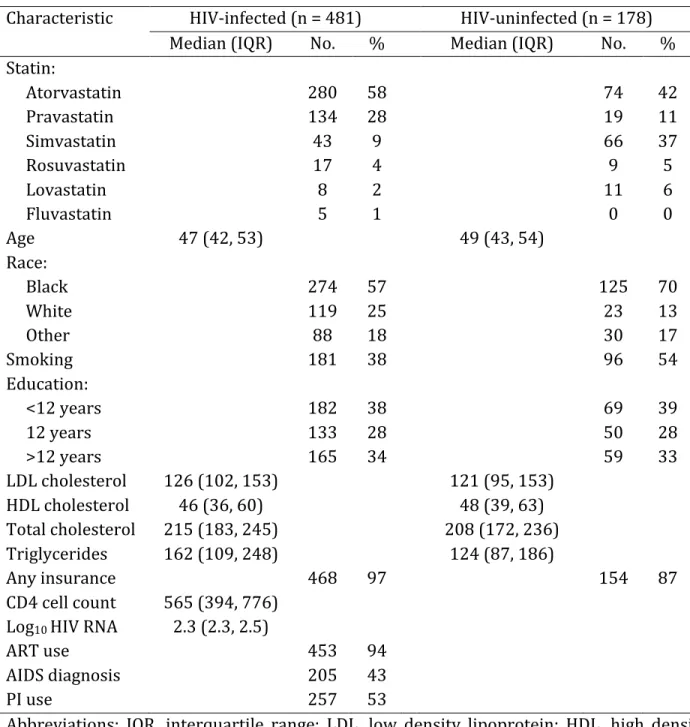
Table 5.1 Characteristics of new statin users at first statin initiation……….48
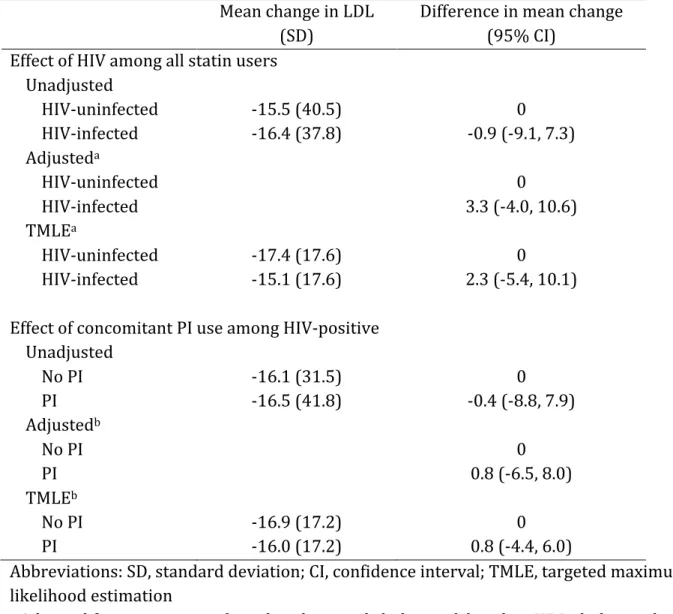
Table 5.2 Effects of HIV and PI use on LDL cholesterol changes among women who initiate a statin………..49
Table 5.3 Unadjusted and weighted effects of HIV on other lipid changes among women who initiate a statin………...50
LIST OF FIGURES
Figure 4.1 Unadjusted cumulative incidence of statin initiation
after an indication for statin use………...37
Figure 4.2 Weighted cumulative incidence of statin initiation
after an indication for statin use………38
Figure 4.3 Statin indication by age and changing guidelines………39
Figure 5.1 Lipid changes by HIV serostatus one year after statin initiation………51
LIST OF ABBREVIATIONS 3TC lamivudine
ABC abacavir
ACC American College of Cardiology ACTG AIDS Clinical Trials Group AHA American Heart Association
AIDS acquired immune deficiency syndrome ASCVD atherosclerotic cardiovascular disease ART antiretroviral therapy
ATP Adult Treatment Panel CHD coronary heart disease CVD cardiovascular disease CI confidence interval
CNICS Center for AIDS Research Network of Integrated Clinical Systems d4T stavudine
ddI didanosine DRV darunavir FTC emtricitabine
HDL high density lipoprotein
HIV human immunodeficiency virus IP inverse probability
LDL low density lipoprotein
NNRTI non-nucleoside reverse transcriptase inhibitor
NRTI nucleoside reverse transcriptase inhibitor PI protease inhibitor
RAL raltegravir
RCT randomized controlled trial RD risk difference
RR risk ratio
TC total cholesterol
TDF tenofovir disoproxil fumarate
TMLE targeted maximum likelihood estimation WIHS Women’s Interagency HIV Study
CHAPTER 1: CRITICAL REVIEW OF THE LITERATURE
1.1 HIV and Dyslipidemia
Patients living with HIV today experience a dramatically reduced risk of HIV-related morbidity and mortality, in large part due to the administration of combination
antiretroviral therapy (ART) (1). ART has been shown to control viremia in patients (2), as well as helping reverse the immunological decline previously associated with the disease (3). HIV-positive patients are living longer, and HIV clinicians have increasingly been confronted with the metabolic consequences of ART decisions and their effect on the risk for cardiovascular outcomes (4-5). In particular, dyslipidemia is a condition that may result from the effects of both HIV disease itself and ART.
1.2 Prevalence and Incidence of Dyslipidemia in HIV Patients
Total cholesterol (TC), low-density lipoprotein cholesterol (LDL-C), high-density lipoprotein cholesterol (HDL-C), and triglycerides are some of the most commonly
measured lipid values, and when taken together in context, provide a picture of a patient’s lipid health. Guidelines for the management of dyslipidemias have been provided by the National Cholesterol Education Program; these guidelines have been applied to HIV-positive populations (4,6). More recently in 2013, new guidelines were published by the American Heart Association and the American College of Cardiology (7). These new
guidelines dramatically increased the indication for lipid lowering therapy in many patients.
Table 1.1 includes studies that have measured markers of dyslipidemia in HIV-positive patients (8-17). There are a wide variety of study designs, including randomized clinical trials, prospective cohorts, retrospective cohorts, and cross-sectional designs. In most cases studies reported a change in lipid level from baseline, or in the case of cross-sectional studies, the actual lipid value. Prevalence was reported in two studies, while incidence was not found. Overall, the use of ART was associated with an increase in all serum lipid values other than HDL cholesterol. Stavudine, a thymidine analogue nucleoside reverse transcriptase inhibitor (NRTI), was particularly associated with poor lipid
outcomes. Llibre (2006) demonstrated that switching from stavudine to tenofovir was associated with lower triglycerides, LDL, and total cholesterol (12). Tenofovir disoproxil fumarate, currently a preferred NRTI for use in ART, was associated with lower lipid levels after switching from both stavudine (12), and the combination of abacavir/lamivudine (8). Among the different antiretroviral classes, protease inhibitor-based regimens resulted in the worst lipid profiles.
Three studies merit specific attention; two due to their large sample size and a third because of its design. Friis-Möller et al. reported in 2003 on 17,852 patients from the Data Collection on Adverse Events of Anti-HIV Drugs (D:A:D) cohort, a large European
prospective cohort. They found baseline total cholesterol and triglyceride values were highest in PI-containing regimens; in particular, those with both a PI and a non-nucleoside reverse transcriptase inhibitor (NNRTI). The major strength of this study was its large sample size, which dwarfed most of the other studies in this review (14). Crane et al.
reported in 2011 on a large cohort from the USA, the Center for AIDS Research Network of Integrated Clinical Systems (CNICS) cohort (13). Rapid increases in lipid values were found within one year of therapy initiation which began to attenuate after the first year.
Tenofovir showed the best lipid profile among NRTIs in this study. The AIDS Clinical Trials Group Study A5152s was a randomized clinical trial comparing the lipoprotein profiles of three different ARV regimens (NRTI, NNRTI, and PI-sparing regimens) after 24 weeks in six centers in the USA (10). Total cholesterol was significantly higher from baseline in all three study arms, with the greatest increase in the efavirenz + lopinavir/ritonavir NRTI-sparing arm (Median increase: 65 mg/dL). Increases in triglycerides, direct LDL cholesterol, and HDL cholesterol were also found. This study provided additional evidence that
PI-containing regimens can be associated with poorer lipid profiles.
Research on dyslipidemia in the developing world has been limited, but in general, trends in lipid markers are similar to those in the USA and Europe (18-22). Several African studies demonstrated that dyslipidemia is occurring as a result of ART scale-up. One in particular, Armstrong et al. was a Tanzanian cross-sectional study notable for its large size (N=12,513) that found relatively high levels for HIV-positive patients at diagnosis (HDL cholesterol <40mg/dL: 67%; triglycerides >150mg/dL: 28%) (18). A smaller prospective cohort study in Uganda (N=374) found increases in several lipid parameters after two years of ART (HDL: 19 mg/dL; LDL: 26 mg/dL; total cholesterol: 31 mg/dL) (19). Overall, similar trends were found in African studies of dyslipidemia.
1.3 Antiretroviral Therapy and Lipid Lowering Therapy
Treatment of dyslipidemia in the general population includes dietary changes, increased moderate exercise, increased intake of soluble fiber, and lipid lowering drugs such as statins (4). Unfortunately for the HIV-positive population, there exist significant interactions between ART and many statins, particularly with protease inhibitors. Table 1.2, adapted from Nachega’s comprehensive review on drug-drug interactions with HIV ART, notes the major interactions between antiretrovirals and statin drugs (23). Many such interactions result from competitive inhibition of the isoenzyme CYP450 3A4. Simvastatin, considered a primary treatment option for many patients in the general population, is contraindicated for use with PIs due to dangerously high bioavailability of simvastatin due to competitive inhibition by the PI. Such high levels of simvastatin can result in muscle damage, including possible rhabdomyolysis. Typically HIV-positive patients receive pravastatin, pitavastatin, or low dose atorvastatin or rosuvastatin, with careful clinical monitoring. Additionally clinicians may choose other types of ART, such as NNRTI-based therapy, to avoid potential interactions with statin therapy.
1.4 Risk Factors for Dyslipidemia
LDL cholesterol is considered the most atherogenic lipid protein and is the most frequent target for intervention (6). Table 1.3 shows general risk factors for LDL
dyslipidemia, adapted from the ATP III guidelines. In addition to those risk factors specific to the general population, as detailed in Table 1.1, there remain ART specific risks. ART in general has been shown to increase lipid levels, while specific drugs and classes have increased propensities for raising lipid levels. Protease inhibitors, as a class, tend to result
in increased lipid values (10,14-15). The NRTI stavudine has been associated in multiple studies with an increased risk of dyslipidemia (12,16). Fortunately clinicians have
alternatives, such as NNRTIs and tenofovir disoproxil fumarate, to these particular drugs and classes and have successfully switched therapy while maintaining virologic
suppression (8). A recent review by Dube et al. outlined the particular drugs within each class whose use has been shown to result in a higher risk of dyslipidemia; among the protease inhibitors, fosamprenavir-ritonavir, lopinavir-ritonavir, and tipranavir-ritonavir (4). Of note, lopinavir-ritonavir is now considered an “alternative regimen” rather than a “preferred regimen” in ART guidelines partially because of this higher risk of lipid
complications (24-25).
1.5 Changing US Guidelines for Lipid Lowering Therapy
In 2001 the National Cholesterol Education Program released the Adult Treatment Panel (ATP) III guidelines, which expanded the indication for lipid lowering therapy in the general population (6). These recommendations focused on the use of intensive lipid lowering therapy for patients with multiple risk factors for coronary heart disease. ATP III informed clinical practice throughout our study period. In 2013 the American College of Cardiology (ACC) and the American Heart Association (AHA) provided a revision of guidelines for lipid lowering therapy (7). As with ATP III before, the 2013 ACC/AHA guidelines increased the aggressiveness of lipid lowering therapy, and provided new sex- and race-specific pooled cohort equations for the assessment of ten-year atherosclerotic cardiovascular disease (ASCVD) risk. These guidelines have provoked controversy, as some clinicians have been resistant to more aggressive therapy with statins and other lipid
lowering drugs (26). To date, research has been limited on how the changing guidelines affect the proportions of HIV populations who would now be indicated for statin use.
1.6 Statin Use in HIV Patients
As guidelines have recommended statin therapy be expanded, use in the US has increased. A recent National Health and Nutrition Examination Survey (NHANES) study from 2005-2010 found that the 2013 ACC/AHA guidelines increased the proportion of adults with an indication for statin use to 49%, from 37.5% with the ATP III guidelines (27). Statin use in a US Medicare population rose from 4% in 1992 to 41% in 2008 (28). The prevalence of therapy for atherosclerotic cardiovascular disease in a study in a New York City HIV clinic was extremely high, with 90% of patients taking at least one drug for dyslipidemia, and 75% receiving therapy for hypertension (29).
A recent paper by Silverberg et al. looked at the effectiveness of statins for HIV infected patients, in comparison to HIV uninfected patients, in a Kaiser Permanente cohort in California (30). For HIV infected patients, LDL cholesterol decreased by 26%, in
comparison to a 28% reduction in HIV uninfected patients. The study was primarily in men, however, and could not generalize their findings to women.
Notable studies of statin use and efficacy in HIV patients are listed in Table 1.4 (30-34). Most studies compared the effects of different statins on lipid changes (31-33), while one trial examined markers of vascular inflammation (34). Two studies found greater LDL cholesterol reductions among rosuvasatin and atorvastatin users in comparison to
pravastatin users (31-32). A small randomized controlled trial of rosuvastatin vs. placebo found no difference in markers of vascular inflammation; however, the authors did report
that rosuvastatin therapy did reduce levels of Lp-PLA2, an enzyme that is a marker of vascular inflammation (34).
TABLE 1.1: Markers of dyslipidemia among HIV-positive patients in the USA, Europe, and Australia
Study, Year Study Type Study Population N Total Cholesterola LDL Cholesterola Triglyceridesa Remarks Behrens, 2012 Open-label RCTb Patients with elevated total
cholesterol, switching from ABC/3TC to TDF/FTCb
85 TDF/FTC: -28 --- --- Lower median cholesterol in TDF/FTC group after switch
Taiwo, 2011 Prospective cohort ART-naïve, beginning DRV/ritonavir + RALb
112 30 17 Increases in TC, LDL-C, and triglycerides on NRTI-sparing regimenb
Stein, 2008 RCT ART-naive 82 NRTI-sparing: 65 NNRTI-sparing: 21 PI-sparing: 18 NRTI-sparing: 26 NNRTI-sparing: 7 PI-sparing: 6 NRTI-sparing: 83 NNRTI-sparing: 72 PI-sparing: 22
Highest lipid increases in NRTI-sparing group
Riddler, 2007 Retrospective
cohort Homosexual/bisexual men, ART-naïve 304 42 22 --- Maximum lipid increases 2-3 years after ART initiation
Llibre, 2006 Prospective cohort Patients on stable ART, switching from d4Tb to TDF
352 -17.5 -8.1 -35 Lower median lipid values after switch from d4T to TDF Crane, 2011 Prospective cohort PI/NNRTI-naive 2,267 Baseline: 128
12 months: 153 36 months: 153
Baseline: 88 12 months: 98 36 months: 97
Baseline: 120 12 months: 145 36 months: 149
Rapid increases in lipid values within one year of therapy; levels off after a year. Tenofovir had best lipid profile
Friis-Moller,
2003 Cross-sectional General HIV+ 17,852 ART-naïve: 170 NNRTI: 205 PI: 205 PI/NNRTI: 228
--- ARV-naïve: 115 NNRTI: 142 PI: 168 PI/NNRTI: 221
Baseline TC and triglyceride levels were highest in the PI/NNRTI group
Saint-Marc,
2000 Cross-sectional Men 154 ART-naïve: 184 NRTI: 188 PI: 230 ART-naïve: 114 NRTI: 111 PI: 137 ART-naïve: 115 NRTI: 173 PI: 273
Lipid profile much worse for patients on PI therapy
Galli, 2002 Prospective cohort NOT ART-naïve; no prior
lipodystrophy 335 11 --- 23 Risk of hypertriglyceridemia higher in d4T-treated patients
Chêne, 2002 RCTc ART-naive 120 40 --- 25 Relatively high levels of dyslipidemia at baseline a Median values in mg/dL
b Acronyms: RCT – randomized clinical trial; ABC – abacavir; 3TC – lamivudine; TDF – tenofovir disoproxil fumarate; FTC – emtricitabine; ACTG – AIDS Clinical Trials Group (22 sites in USA); ART – antiretroviral therapy; DRV – darunavir; RAL – raltegravir; TC – total cholesterol; LDL – low density lipoprotein; CNICS – Center for AIDS Research Network of Integrated Clinical Systems; d4T – stavudine; ddI - didanosine
c RCT for 6 months, followed by 24 months of prospective follow-up
TABLE 1.2: Drug–drug interactions with antihyperlipidemic agentsa,b
Drug interaction with antiretrovirals Management recommendations Atorvastatin Atorvastatin AUC ↑ 2.5, 5.8, and 9.4-fold with FPV/r, LPV/r,
and TPV/r coadministration. Atorvastatin AUC ↓ 43% with EFV co-administration.
Avoid TPV/r with atorvastatin coadministration. Other PI/r: start with atorvastatin 10mg once daily, and then titrate to effect. Do not exceed atorvastatin 20mg with DRV/r, FPV/r, SQV/r. EFV, NVP, ETR: higher atorvastatin dose may be needed.
Lovastatin Strong CYP3A4 inhibitor (e.g. itraconazole) significantly increases lovastatin concentrations 20-fold. PI/r may also significantly increase lovastatin concentrations.
PI/r: contraindicated
Pitavastatin DRV/r and LPV/r decrease pitavastatin AUC 26 and 20%, respectively. ATV increases pitavastatin AUC 31%.
PI/r: use standard dose
Pravastatin SQV/r and EFV decrease pravastatin AUC 50 and 40%, respectively. LPV/r and DRV/r increase pravastatin AUC 33% and 81%, respectively.
Higher pravastatin dose may be needed with SQV/r and EFV co-administration. With DRV/r coadministration, use with close monitoring for adverse events.
Rosuvastatin TPV/r, LPV/r, ATV/r increase rosuvastatin AUC 37, 110,
and 213%, respectively. PI/r: start with rosuvastatin 5mg once daily, then titrate to effect. Maximum recommended rosuvastatin dose 10mg/day with LPV/r and ATV/r co-administration.
Simvastatin SQV/r increases simvastatin AUC 31-fold. EFV decreases simvastatin AUC 58%.
PI/r: contraindicated; EFV, NVP, ETR: higher simvastatin dose may be needed.
a NOTE: Table adapted from Nachega et al., “Antiretroviral therapy adherence and drug-drug interactions in the aging HIV population.”19 b Abbreviations: ATV, atazanavir; ATV/r, atazanavir/ritonavir; AUC, area under the plasma concentration time curve; DRV/r, darunavir/ ritonavir; EFV, efavirenz; ETR, etravirine; FPV/r, fosamprenavir/ritonavir; LPV/r, lopinavir/ritonavir; NVP, nevirapine; PI/r, protease inhibitor /ritonavir; TPV/r, tipranavir/ ritonavir; SQV/r, saquinavir/ritonavir.
TABLE 1.3: Major risk factors that modify LDL goals*
Cigarette smoking
Hypertension (Blood pressure ≥140/90 mmHg or on antihypertensive medication Low HDL cholesterol (<40 mg/dL)
Family history of premature coronary heart disease (CHD in male first degree relative <55 years; CHD in female first degree relative <65 years)
Age (men ≥ 45 years; women ≥ 55 years)
*Table adapted from the Executive Summary of the Third Report of the National Cholesterol Education Program (NCEP) Expert Panel on Detection, Evaluation, and Treatment of High Blood Cholesterol in Adults3
TABLE 1.4: Studies involving statin use in HIV infected patients
Study, Year Location Study Type Study Population N Comparison LDL Cholesterol or
total cholesterola
Remarks Silverberg, 2009 USA, Kaiser Permanente Retrospective cohort
New users of statins 829 HIV+, 6941 HIV-
HIV serostatus LDL cholesterol
HIV+: -25.6% HIV-: -28.3%
LDL/triglycerides
reduction smaller in HIV+ group. Limited number of women.
Lo, 2015 USA RCT HIV+ with
subclinical coronary atherosclerosis
40 Atorvastatin vs.
placebo
LDL cholesterol (mean) Atorvastatin: -39mg/dL Placebo: 12mg/dL
No difference between statin arm and placebo on aterial inflammation of the aorta
Eckard,
2014 USA RCT HIV+ w/fasting LDL ≤130 mg/dL 147 Rosuvastatin vs. placebo LDL cholesterol Rosuvastatin: -28%
Placebo: 4%
Trial was designed to look at markers of vascular inflammation, no difference between groups.
Singh, 2011
USA, CNICS Retrospective
cohort
New users of statins 700 Pravastatin vs.
atorvastatin vs. rosuvastatin LDL cholesterol Pravastatin: -12mg/dL Atorvastatin: -26mg/dL Rosuvastatin: -23mg/dL Atorvastatin and rosuvastatin more effective for lipid
lowering than pravastatin
Aslangul, 2010
France Open-label
RCTb
HIV+, ritonavir-boosted PI users
83 Rosuvastatin 10mg
vs. pravastatin 40mg LDL cholesterol Rosuvastatin: -37% Pravastatin: -19% LDL/triglycerides reduction greater in rosuvastatin arm
Bonnet,
2004 France Prospective cohort HIV+, PI or NNRTI-based ART, elevated lipids
245 Statins vs. fibrates Total cholesterol
Statins: -13% Fibrates: - 7%
Results reflect the indications for each type of drug
a Median values in mg/dL
b Acronyms: RCT – randomized clinical trial; ART – antiretroviral therapy; LDL – low density lipoprotein; CNICS – Center for AIDS Research Network of Integrated Clinical Systems; HIV – human immunodeficiency virus; NNRTI – non-nucleoside reverse transcriptase inhibitor; PI – protease inhibitor;
CHAPTER 2: STATEMENT OF SPECIFIC AIMS
2.1 Statement of Specific Aims and Hypotheses
The overall goal of this study is to explore statin use in the understudied population
of HIV+ women. The aims are:
2.1.1 Specific Aim 1
Our first specific aim is to describe the effect of HIV serostatus on disparities in lipid
management, as measured by indicated and realized statin use among women in the WIHS.
New use of statins will be examined by HIV serostatus, age, calendar year, and (among
HIV+) ART regimen.
We hypothesize that HIV+ women will be less likely to receive statins when
indicated, in comparison to HIV- women and that new statin use will be more likely for
HIV- women, older women, and women receiving protease inhibitors (PI) (for HIV+), and
will increase over calendar time.
2.1.2 Specific Aim 2
Among new users of statins, our second specific aim is to estimate the effect of HIV
serostatus and ART regimen (among HIV+) on 1 and 2 year lipid values changes (i.e. LDL
cholesterol, triglycerides, HDL cholesterol, and total cholesterol).
We hypothesize that HIV+ new users of statins will have smaller decreases in LDL
cholesterol than HIV- new users, due to effects of the virus and ART. Among HIV+ patients,
we hypothesize that new users of statins concurrently on PI-based therapy will have
smaller decreases in LDL cholesterol compared to new users of statins concurrently on
other types of ART, due to PI-mediated increases in cholesterol.
2.2 Significance
With HIV+ patients living longer the management of HIV has shifted in part from the
prevention and treatment of opportunistic conditions to the prevention and treatment of
non-HIV-associated diseases associated with aging (4-5, 8-17, 35-36). Such non-HIV
associated conditions are emerging as the leading causes of mortality among persons living
with HIV, and among these, cardiovascular disease (CVD) has become a major health threat.
In cohort studies of persons living with HIV CVD has been found to be responsible for
10-15% of deaths (37-40). In a population-based cohort analysis of deaths among HIV+
persons in New York City between 1999 and 2004, CVD was the leading non-HIV-related
and non-substance abuse-related cause of death, accounting for 23% of these deaths (37).
Importantly, the relative risk of CVD was higher for women compared to men. The
age-adjusted mortality rate for acute myocardial infarction was 5.0/100,000 for women
compared to 3.8/100,000 for men. Among women in the high-risk heterosexual category,
CVD accounted for 36% of all non–HIV-related deaths, primarily due to chronic ischemic
heart disease.
CVD is often preventable with modification of lifestyle and medical interventions. A
cornerstone of CVD prevention is the reduction in atherogenic lipids, chiefly LDL
cholesterol, and the most efficacious and potent LDL-reducing therapies are
HMG-reductase inhibitors (i.e., statins). Guidelines for the treatment of dyslipidemia for the
general population apply to HIV+ patients. While use of statins by HIV+ patients has been
documented to be increasing, it remains unclear if these medications are being prescribed
equally to those with and without HIV infection, particularly women, when indicated.
Disparities in care for women are well documented (41-49), and have been shown to
extend to treatment of CVD (50-55). Further, Blacks and Hispanics may be less likely to
receive treatment for dyslipidemia in comparison to whites (56-57). That such disparities
in CVD treatment and prevention extend to HIV management are supported by a number of
recently reported studies that find HIV+ patients are under-prescribed preventative care
including statin therapy and aspirin for CVD prevention. Unfortunately, these studies
include relative few women and have not examined outcomes by gender. It remains
unclear to what extent HIV+ women experience barriers to access to preventative care for
CVD.
In addition to the potential for disparities in access to statins, there are limited data
regarding the comparative efficacy of these agents between HIV+ and HIV- individuals.
Responses to lipid lowering therapy for medication- or viral-associated increases in
cholesterol and triglycerides may not be as robust as those seen in more endogenous
dyslipidemia. Further, drug-drug interactions and differential adverse effect patterns could
lead to differential responses to statin therapy.
Given the risk of CVD among HIV+ women and the documented disparities in health
care, including CVD prevention, for women, minorities, and those living with HIV, it is
imperative that assessments of differential access to statin therapy be examined. The
proposed analyses will compare use of and response to statin therapy among women with
and without HIV.
2.3 Innovation
2.3.1 Importance of Research Questions
Disparities in health care for HIV+ women, particularly regarding cardiovascular
treatment, are well documented. Similar gaps in the literature for HIV+ women exist. We
will examine two novel research questions related to statin treatment for HIV+, comparing
seropositive women to HIV- women: differential access to statins, and the effectiveness of
those statins in lowering lipid values. While some of these questions have been addressed
for HIV+ men, they have not been addressed in women.
To compare statin use in women by HIV serostatus, we need a HIV longitudinal
cohort with HIV- controls and extensive information on medication use, laboratory results,
and behaviors. The Women’s Interagency HIV Study (WIHS) is a longitudinal cohort that
contains data needed to address questions of statin use within HIV+ women (58). Based in
multiple urban sites across the USA, the WIHS began recruitment of subjects in 1994. WIHS
participants complete biannual study visits, including an extensive interview for
medication history, behavioral risk factors, and HIV-related outcomes. Blood is drawn for
HIV and non-HIV related lab values. As of September 2012, the WIHS contains longitudinal
information on 4124 patients, with three distinct recruitment periods (1994/1995,
2001/2002, and 2011/2012). Lipid values were regularly recorded beginning in 1999.
Because it contains detailed longitudinal information on behavioral characteristics such as
smoking and alcohol abuse, laboratory and medication history information, and a group of
HIV- controls, the WIHS is ideally suited to study questions related to the effect of HIV on
statin use.
2.3.2 Targeted Maximum Likelihood Estimation
To answer our study questions, we will use two methods to estimate changes in
biomarkers between the beginning of statin use and a range of subsequent follow-up times:
linear regression, and targeted maximum likelihood estimation (TMLE). TMLE is an
innovative data-adaptive estimation technique that incorporates machine-learning
algorithms with standard parametric regression models (59-60). The first step implements
the SuperLearner procedure to generate an initial estimate of the probability of the
outcome, conditional on treatment and measured covariates (61). Cross validation is used
to create the best weighted combination of algorithms, as measured by mean square error,
of the specified machine learning and parametric regression equations. The SuperLearner
estimate is guaranteed to be as least as efficient as any single candidate estimator or
combination of estimators (60-61). This initial estimate is then altered by use of a so-called
“clever covariate”, developed by a second model for the probability of treatment,
conditional of measured covariates. Under an appropriate set of identification assumptions
(i.e., consistency, exchangeability, positivity) the TMLE produces an asymptotically
consistent estimate of the causal parameter (62).
The TMLE procedure has several advantages over standard methods: it is double
robust, provides a marginal effect estimate, allows the incorporation of an expanding
library of machine-learning algorithms and multiple candidate parametric models, and
increases estimation efficiency by targeting the parameter of interest. Gains in efficiency
are realized by maximizing the bias/variance tradeoff solely for the target parameter,
rather than nuisance parameters such as confounders. Simulation studies have
demonstrated TMLE’s efficiency in comparison to standard regression techniques (59-60,
63). Despite theoretical advantages, TMLE has yet to be used extensively in public health
studies. Our study will increase the visibility of these methods, which allow for causal effect
estimation under a series of assumptions.
CHAPTER 3: METHODS
3.1 Study Population
The Women’s Interagency HIV Study (WIHS) is a prospective observational cohort
of HIV+ women and HIV- controls, designed to follow the natural history of HIV disease
within women (58). With a rich variety of behavioral, medication, and laboratory data, as
well as HIV- controls, the WIHS is an excellent data source for longitudinal research
questions involving HIV+ women. Recruitment of study patients began in 1994, and
continues today. Over 4000 women have participated in the WIHS, with approximately
75% HIV+. Patients are followed at six-month intervals, and contribute a structured
interview and laboratory samples. HIV- controls are tested at each visit for changes in
seropositivity. Antiretroviral regimen history and concomitant medications, including
statins, are recorded at each visit. We will construct a longitudinal exposure history for
patients based upon their response to a question about statin use within the previous six
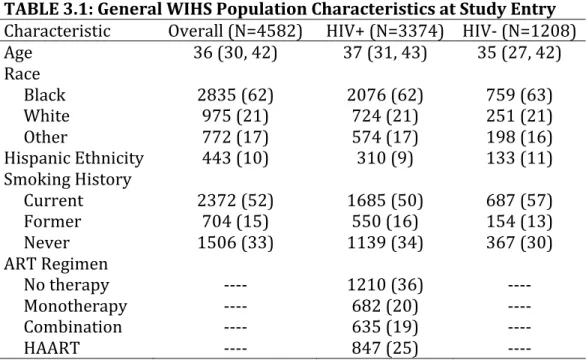
months. Table 3.1 contains characteristics about the general WIHS population.
TABLE 3.1: General WIHS Population Characteristics at Study Entry Characteristic Overall (N=4582) HIV+ (N=3374) HIV- (N=1208) Age 36 (30, 42) 37 (31, 43) 35 (27, 42) Race
Black 2835 (62) 2076 (62) 759 (63) White 975 (21) 724 (21) 251 (21) Other 772 (17) 574 (17) 198 (16) Hispanic Ethnicity 443 (10) 310 (9) 133 (11) Smoking History
Current 2372 (52) 1685 (50) 687 (57) Former 704 (15) 550 (16) 154 (13) Never 1506 (33) 1139 (34) 367 (30) ART Regimen
No therapy ---- 1210 (36) ---- Monotherapy ---- 682 (20) ---- Combination ---- 635 (19) ----
HAART ---- 847 (25) ----
*25 patients seroconverted from HIV- to HIV+ and were excluded
3.2 Notation
Let our observed data be represented as the random variable 𝑂! = 𝑍,𝐴,𝑌 !, where
Zc, c = 1 to p, are the p components of the covariate vector Z, A represents the exposure of
interest (in both aims, HIV serostatus) with possible values a = 1 for HIV infected women
and a = 0 for HIV uninfected women, and Y represents an outcome variable. For Aim 1, Y
represents the time from indication to initiation of a statin. In Aim 2, Y represents a
continuous outcome variable, change in LDL cholesterol, measured in mg/dL. In the
following equations, uppercase letters denote random variables, while lowercase letters
denote possible realizations of variables, or constants.
3.3 Statistical Methods for Chapter 4 (Aim 1)
Here I address in greater detail statistical analysis methods for Aim 1. The focus in
the following section is the technical details and assumptions underlying the statistical
models used in Aim 1.
3.3.1 Methods for Survival Analysis
We used the complement of the Kaplan-Meier estimator to construct cumulative
incidence curves for statin initiation after an indication for their use (64). The
Kaplan-Meier estimator of the survivor function 𝑆 𝑡 is below, where dj is the number of events at
time j, and nj is the risk set at time j:
𝑆 𝑡! = 1−
𝑑!
𝑛! !
!!!
To control for confounding and loss to follow up, we applied inverse probability weights
(described in the following section). From the weighted cumulative incidence curves, we
estimated one year, two year, and five year weighted risk differences and risk ratios. We
used the non-parametric bootstrap, with 200 resamples with replacement, to build 95%
confidence intervals for both risk difference and risk ratios. (65). We estimated hazard
ratios and 95% confidence intervals using Cox proportional hazards regression, weighted
by the inverse probability weights.
3.3.2 Inverse Probability Weights
Our IP weighted Cox proportional hazards model is fit by maximizing the following
weighted partial likelihood:
𝐿 𝛽 = 𝑌! 𝑡 exp 𝛽𝐴!
𝑌! 𝑡 exp 𝛽𝐴!
!∈! !
!!!
!
!!!
We used inverse probability weights to control for confounding and loss to follow up. The
stabilized weights 𝑊!" 𝑡 can be expressed as the product of a time-fixed weight for
exposure WA, and a time-varying weight for drop out 𝑊! 𝑡 . The denominator for the
exposure weights 𝑊! are estimated from a logistic regression model
𝑃 𝐴 =1 = expit 𝛽!+ !!!!𝛽!𝑍!!! , and the numerator for the exposure weights can be
estimated from an intercept-only logistic regression model. We estimate drop out weights
using quintiles of the observed drop out time distribution. The denominator for the drop
out weights 𝑊! is estimated via a pooled logistic regression model:
𝑃 𝐷 𝑡 = 1 =expit 𝛽! 𝑡 + ! 𝛽! !!! 𝑍! 𝑡
We used restricted cubic splines, with knots at the 5th, 35th, 65th, and 95th percentiles, in
order to maintain flexibility in modeling continuous variables (66). Efron’s method was
used for handling event ties (67).
3.4 Statistical Methods for Chapter 5 (Aim 2)
3.4.1 Estimate of Interest
In Aim 2 we estimated changes in lipids from the first reported use of a statin to one
year after. Our exposure of interest was HIV serostatus, a binary exposure, and the primary
outcome was the change in LDL cholesterol. We also looked at the one year change in other
lipids, such as HDL cholesterol, total cholesterol, and triglycerides. All lipids were
measured in mg/dL. We transformed triglycerides on the log10 scale to account for
non-normality of that particular lipid.
3.4.2 Linear Regression
We estimated the change in LDL cholesterol by HIV serostatus using a linear
regression model estimated via maximum likelihood, with a normal distribution and an
identity link:
𝐸 𝑌 = 𝛽!+𝛽!𝐴+ 𝛽!
!
!!! 𝑍!!!
3.4.3 Targeted Maximum Likelihood Estimation
Our implemention of the TMLE can be split into two distinct steps: initial estimation
of the outcome using the SuperLearner algorithm, and a targeting step to reduce mean
squared error from the initial estimate. Note that SuperLearner is not required to
implement TMLE; the initial estimation of the outcome can be done using a parametric
regression estimator, for example. Under assumptions of treatment variation irrelevance
(68), no interference (69), positivity, and exchangeability (62,70), the TMLE produces
causal estimates that are targeted to the parameter of interest (59-60).
Suppose we have a dataset with n observations, with complete data on Y, A, and Z.
We wish to estimate the marginal risk of the exposure A on the outcome Y, controlling for
the covariates Z1, Z2, and Z3. Specifically, we will estimate the following risk ratio Ψ:
Ψ=𝐸!,! 𝐸! 𝑌|𝐴 =1,𝑍 /𝐸! 𝑌|𝐴 =0,𝑍
The SuperLearner produces an initial (untargeted) estimate of Q0, or the probability of the
outcome given exposure and covariates, using cross-validation of several different
algorithms. The steps involved in the SuperLearner are as follows:
1. Split the sample into V separate blocks.
2. Fit each algorithm to V-1 of the blocks (the “training set”).
3. Using the coefficients generated from the training set fit and the remaining block
(the “validation set”), output predicted probabilities for each algorithm. The vector
D contains the set of predicted probabilities for each algorithm.
4. Repeat Steps 2 and 3 with each fold as the validation set.
5. Calculate the cross-validated mean squared error for each algorithm:
𝐶𝑉𝑀𝑆𝐸 = !!!! 𝑌! −𝐷! ! 𝑛
6. Fit a logistic regression of the outcome Y on the set of predicted probabilities D. The
coefficients generated from the maximum likelihood estimate of this regression are
included in the SuperLearner prediction function.
7. Iterate this procedure for both levels of exposure (A=1 and A=0).
From the SuperLearner prediction function, we generate an initial estimate of the
probability of the outcome, given the exposure and covariates. The second step targets this
initial estimate to reduce bias and variance for the targeted parameter of interest. It does
this through the use of a “clever covariate”, which includes information from a model for
the probability of exposure, given a set of covariates. This step includes the following:
1. Fit a model for the probability of the exposure A, given covariates Z. As with the
initial estimate of the outcome, SuperLearner may be used to fit this exposure
model.
2. From the results of this exposure regression, create a covariate designed to fluctuate
the initial outcome estimate Q0 to minimize bias and variance for the targeted
parameter. This covariate is often called a “clever covariate” and is indexed by the
following equation, with I(·) an indicator function of exposure and g(·) the
probability of exposure:
𝐻 𝐴,𝑍 ≡ 𝐼(𝐴 =1)
𝑔 1 𝑍) −
𝐼(𝐴 =0) 𝑔 0 𝑍)
3. Run a logistic regression of the outcome Y on the clever covariate, with the logit of
the Q0 estimate used as an offset, to obtain an estimate of the coefficient ε (the
regression coefficient for the clever covariate).
4. Use this coefficient ε to update the initial estimate of Q0 to an updated estimate, Q1.
Iterate this process until the coefficient ε converges to 0, resulting in the targeted
estimate QTMLE. Note that QTMLE is calculated for each observation in the data set.
5. Repeat Steps 3 and 4 for A=1 and A=0, resulting in values of QTMLE for both exposure
levels. Risk differences and ratios, denoted by 𝜓!"#$, can be calculated from these
values.
6. To generate estimates of precision, calculate the influence curve (IC):
𝐼𝐶= 𝐼 𝐴! =1 𝑔 1|𝑊! −
𝐼 𝐴!= 0
𝑔 0|𝑊! 𝑌− 𝑄!"#$ 𝐴!,𝑊! + 𝑄!"#$ 1,𝑊! −𝑄!"#$ 0,𝑊!
− 𝜓!"#$
7. From the influence curve, a sample variance can be calculated, allowing
construction of confidence intervals and p-values:
𝑉𝑎𝑟 𝐼𝐶 = 1
𝑛 𝐼𝐶!− 𝐼𝐶 ! !
!!!
CHAPTER 4: SIMILAR USE OF STATINS IN HIV-INFECTED AND UNINFECTED WOMEN IN THE WOMEN’S INTERAGENCY HIV STUDY
4.1 Introduction
The management of HIV has shifted in part from the prevention and treatment of
opportunistic illnesses, to establishing and maintaining effective antiretroviral therapy
(ART), and to the prevention and treatment of non-HIV-associated diseases associated with
aging (4-5, 8-17, 35-36, 71-74). Such non-HIV associated conditions are emerging as the
leading causes of mortality among persons living with HIV, and among these,
cardiovascular disease (CVD) has become a major health threat (4-5, 35-40, 71-74). A
cornerstone of CVD prevention is the reduction in atherogenic lipids, chiefly LDL
cholesterol, and the most efficacious and potent LDL-reducing therapies are
HMG-reductase inhibitors (i.e., statins) (6).
While use of statins by HIV-infected patients has increased (75-78), it remains
unclear if these medications are prescribed equally to those with and without HIV infection,
particularly women, when indicated. It has been reported that HIV-infected patients are
under-prescribed preventive care including statin therapy and aspirin for CVD prevention
(79-80), but published studies have included relatively few women. To what extent
HIV-infected women experience barriers to preventative care for CVD is not well understood.
Using data on 4607 women followed with semiannual visits for up to 14 years in the
Women’s Interagency HIV Study (WIHS), we evaluated the effect of HIV infection on the
uptake of statins among women with a statin indication. We also explored the impact of the
recent changes in national guidelines for statin initiation among HIV infected women in this
population (6).
4.2 Methods
4.2.1 Women’s Interagency HIV Study
The Women’s Interagency HIV Study is a multicenter, prospective cohort of women
with HIV infection, and HIV-uninfected controls (58). Based in multiple urban sites across
the United States, the WIHS began recruitment of women in 1994. WIHS women complete
semiannual study visits, including an extensive interview for medication history,
behavioral risk factors, and HIV-related outcomes. As part of a detailed medication history,
WIHS women are asked to bring in all their prescribed medications, including concomitant
medications such as statins, as well as report on all medications used since their last
semiannual study visit. Blood is drawn for HIV and non-HIV related lab values, including
LDL cholesterol beginning in 2000. Our study period includes WIHS participants between
2000 and 2014.
4.2.2 Statin Guidelines
The population of interest comprised women without prior statin use who were
followed for at least one year between October 2000 and December 2014, and who had an
indication for the use of statin therapy. Our primary study sample included WIHS women
with an indication for statins using the National Cholesterol Education Program’s Adult
Treatment Panel (ATP) III guidelines, and who had no prior reported history of statin use.
Published in 2001 and last updated in 2004, the ATP III guidelines focused on risk factors
for coronary heart disease, and expanded the indication for statin initiation to lower LDL
cholesterol values. The ATP III guidelines for statin initiation vary based upon the presence
of coronary heart disease or other atherosclerotic disease, diabetes, the Framingham
10-year risk score, and the current LDL cholesterol value. In 2013 a new set of guidelines for
statin initiation was proposed by the American College of Cardiology and the American
Heart Association (ACC/AHA) (7). These new guidelines, which further expand the
indication for statin initiation from ATP III, have met with controversy (26). We used the
ATP III guidelines to identify WIHS women with an indication for statin initiation, as they
were the guidelines in use for the majority of the study period. However, we also used the
2013 ACC/AHA guidelines to estimate the number of women who would have had an
indication for statins if the 2013 guidelines had been in place during the study period.
4.2.3 Exposure, Outcome, and Cohort
Our outcome of interest was the time to initiation of a statin after an indication
according to ATP III guidelines. The exposure was HIV serostatus, measured at each WIHS
visit for HIV-uninfected participants. From 4607 women in the WIHS cohort, we excluded
885 women who died or were lost to follow up prior to the start of the follow up period in
October 2000. 269 women were missing information on total cholesterol, HDL cholesterol,
LDL cholesterol, diabetes status, or insurance status and were excluded, leaving 3,453
women. We then determined the number of women who had an indication for statin
initiation using the ATP III guidelines; 581 had at least one indication. We excluded 26
women without a full year of follow-up, 2 women who seroconverted during the study, and
80 women who used a statin prior to their indication. The final cohort for analysis included
473 women with an indication for a statin.
4.2.4 Statistical Methods
Among women for whom statin therapy is indicated, we estimated the effect of HIV
serostatus on the risk of statin initiation. We adjusted for confounding and loss to follow up
through the use of inverse probability weights, including weights for the probability of
exposure and the probability of drop out (81). The final weights are a product of the
exposure and drop out weights. We included age, race, education, smoking, hypertension,
baseline total cholesterol, baseline LDL cholesterol, baseline HDL cholesterol, Framingham
10-year risk score, and insurance status as covariates. Cumulative incidence estimates
were computed over the time since the statin indication (82). We used Cox proportional
hazards regression to estimate hazard ratios and 95% confidence intervals. We report
unadjusted models and models using inverse probability weights to account for baseline
(measured at the indication) covariates and drop out from the cohort (82). We report one
year, two year, and five year risk differences and risk ratios using the inverse-probability
weighted cumulative mortality curves, and generated confidence intervals using 200
bootstrapped resamples. To maintain flexibility in modeling non-linear effects of
continuous variables, we used restricted quadratic splines, with knots at the 5th, 35th, 65th,
and 95th percentiles of the distribution (83-84). Treatment effect heterogeneity by the
Framingham risk score was explored through stratification of main effects. Analyses used
SAS Version 9.3 (Cary, NC).
4.3 Results
Characteristics for 473 women with an indication for a statin are shown in Table 1.
323 (68%) of the women in our cohort were HIV-infected. Seropositive women were older
on average and more likely to be white. Educational attainment was similar between the
groups. LDL and HDL cholesterol were also relatively similar between the two groups. The
median LDL cholesterol among infected women was 165 mg/dL; among
HIV-uninfected women, it was 160 mg/dL. Most (86%) HIV-infected women used ART, the
median CD4 cell count was 488, and the median log10 HIV RNA viral load was 2.3,
corresponding to an undetectable viral load.
Five years after an indication, 38% of HIV-infected women reported statin use,
while 30% of HIV-uninfected women reported use. The unadjusted and inverse
probability-weighted results for the effect of HIV status on time to statin initiation after an
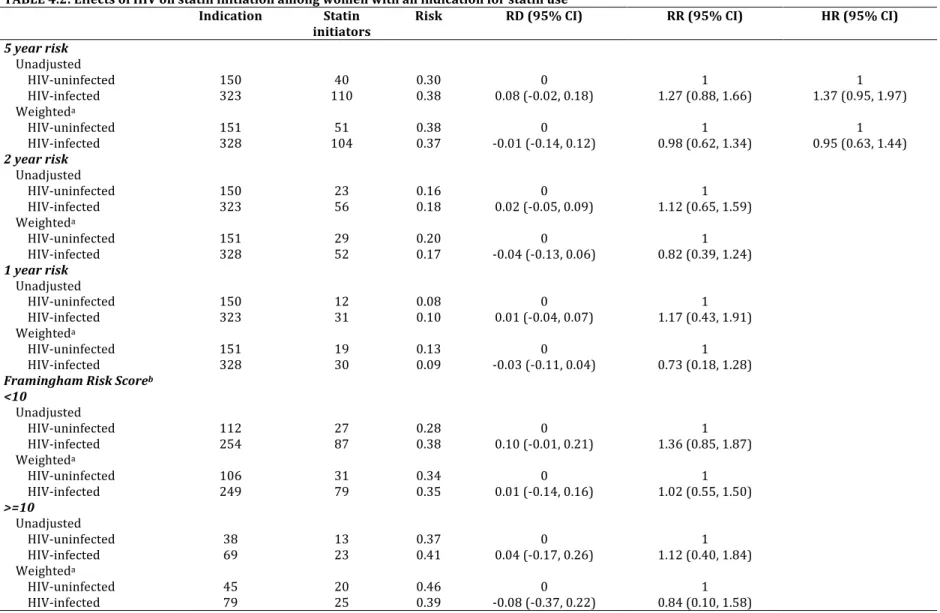
indication for statins are presented in Table 2. The unadjusted hazard ratio for
HIV-infected women compared to HIV-unHIV-infected women was 1.37 (95% CI: 0.95, 1.97). After
accounting for imbalances in baseline covariates and loss to follow up, we observed no
difference in the uptake of statins, with a weighted hazard ratio of 0.95 (95% CI: 0.63,
1.44). The weighted one-year risk ratio was 0.73 (0.18, 1.28), and the two-year risk ratio
was 0.82 (0.39, 1.24). We also stratified by categories of the Framingham risk score (<10,
>=10 units) to examine heterogeneity in the effect of HIV on receipt of a statin. We again
found little difference in the uptake of statins among HIV-infected women when stratified
by high and low baseline Framingham risk score, although our results were limited by the
small numbers of women with a Framingham score of at least 10 at baseline. We report
unadjusted and inverse probability-weighted cumulative incidence of statin initiation
curves in Figures 1 and 2. While in the unadjusted curves there is an indication of an
increase in statin initiation for HIV-infected women, in comparison to HIV-uninfected
women, the weighted curves showed no difference between the two groups.
Applying the 2013 ACC/AHA guidelines for statin initiation to our population more
than doubled the number of women with an indication for a statin. While 582 women had
an indication with the ATP III guidelines (including women with less than a year of
follow-up for actually initiating a statin), 1508 women had an indication with the ACC/AHA
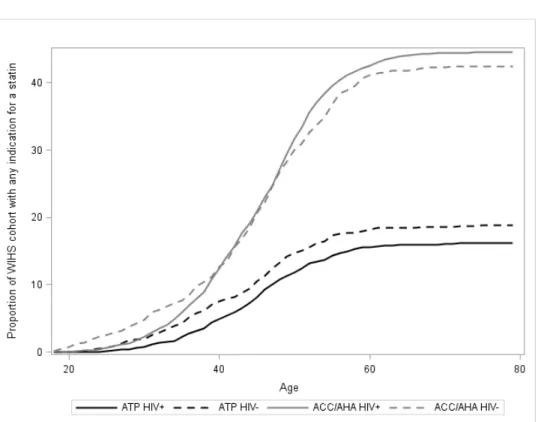
guidelines. The prevalence of HIV infected women indicated for statin use by the ATP III
guidelines was 16%, and increased to 45% with the ACC/AHA guidelines. Similar trends
were seen among HIV uninfected women. Figure 4.3 displays the proportion of women
with an indication, as a function of age, when applying each set of guidelines. For both
HIV-infected and negative women, the ACC/AHA guidelines dramatically increased the number
of women with a statin indication.
4.4 Discussion
Among women with an indication for statin use, we observed no difference in the
uptake of statins among HIV-infected women compared to HIV-uninfected women. We also
report a substantial increase in the proportion of women with a statin indication when
applying the recent 2013 ACC/AHA guidelines, in comparison to the 2001 ATP III
guidelines, with both HIV-infected (16% ATP III to 45% ACC/AHA) and HIV-uninfected
(19% to 42%) women in our cohort. With nearly half of HIV infected women in our cohort
now having an indication for a statin, the potential consequences of greatly expanding
statin therapy in this population must be carefully examined.
A recent report by Zanni et al. highlighted the potential for the 2013 ACC/AHA
guidelines to underestimate atherosclerotic cardiovascular disease risk in HIV infected
patients (85). Indeed, while they found a 2.5 fold increase in the proportion of patients
indicated for a statin when applying the ACC/AHA guidelines versus the ATP III guidelines,
they also reported that 74% of patients with high risk morphology coronary plaque would
not be indicated for statin use in their cohort. We found similar results in a national
multicenter cohort; the increase was even higher (approximately 2.8 fold increase) in HIV
infected women in our cohort. Further research to target HIV infected groups that may
benefit from statin therapy, despite the lack of an indication by current guidelines, is
needed.
Statin use has continued to increase in the general US population, consistent with
revised guidelines expanding their indications. Using data from the National Health and
Nutrition Examination Survey from 2005-2010, the proportion of US adults eligible for
statin treatment rose from 38%, using the ATP III guidelines, to 49% with the ACC/AHA
guidelines (27). In the US Medicare population, statin use rose from 4% in 1992, to 41% in
2008 (28). In HIV infected populations in the US, statin use is also increasing. A recent
cross-sectional study in a single New York City HIV clinic found relatively high proportions
of therapy for dyslipidemia (including alternative options such as fibrates, fish oil,
intestinal inhibitors, niacin, and bile acid sequestrants) (90%) and hypertension (75%)
among HIV infected individuals (29). While the use of statins in our population is lower
than in these other reports, our population is generally younger and exposed to extensive
pharmacotherapy for their HIV.
Risk assessment for cardiovascular disease drives much of the use of statins, but in
the setting of HIV, there is also increasing interest in the use of these agents for their
potential anti-inflammatory properties given emerging data describing heightened immune
activation, inflammation (86), and rates of CVD in those living with HIV (4-5, 35-40, 71-74).
As additional evidence for their benefits accumulate, it can be expected that use of statins
in HIV-infected persons will grow. While the potential for these benefits will likely continue
to drive increased statin use in HIV infected women, treatment decisions must also take
into account the possibility of reduced adherence to ART and polypharmacy in an aging
HIV infected population (87-89). Balancing these competing considerations will be
essential for clinicians deciding on treatment plans for their patients. Our finding that
statin indications nearly tripled in this cohort, while expected based upon the guidelines,
reinforces the idea that future studies will need to assess the uptake, benefits, and potential
unintended consequences of increased statin use in HIV infected women.
Our study has limitations. Statin use was self-reported; we did not have access to
claims data to verify prescriptions, or biomarkers to verify use. It is likely that with access
to electronic medical records or prescription claims data, our incidence of new statin use
would have been higher. Additionally, the determination of an indication for a statin
requires information on many different conditions, including smoking, diabetes, the
presence of coronary heart disease, and several other factors. Misclassification of any of
these conditions may affect the construction of our indication, and thus our analysis cohort.
However, because any one condition only has a small effect on determining the indication,
we expect this issue to be of limited importance. Finally, we did have limited precision in
our estimates of the effect of HIV status on statin use among those with an indication.
A physician’s choice to prescribe a statin for a patient is, of course, informed by
more factors than a simple algorithm provided by a set of guidelines (26). In many cases,
the ATP III guidelines recommend initiating therapeutic lifestyle changes prior to initiating
drug therapy (6). Additionally, physicians may be reticent to add additional drugs to
patients who may already be taking many other medications, and preferences may vary
widely with regards to how aggressive dyslipidemia should be treated.
We used a cohort with extensive longitudinal information on the individual
conditions and lab values necessary to construct an indication for statin initiation. We
report no difference in the uptake of statins among HIV-infected women in comparison to
HIV-uninfected women. We also report a substantial increase in the number of patients
with an indication for statin initiation as a result of the 2013 ACC/AHA guidelines,
consistent with the increases found in the general US population (28). As the HIV
population continues to age and experiences increased cardiovascular disease risk, further
research on the use of pharmacotherapy for the treatment of these diseases, and the
consequences of their interactions, will continue to be of importance.
TABLE 4.1: Characteristics of women at the indication for a statin
Characteristic HIV-infected (n = 323) HIV-uninfected (n = 150) Median (IQR) No. % Median (IQR) No. %
Age 45 (39, 50) 43 (35, 48)
Race Black White Other 188 83 52 58 26 16 92 23 35 61 15 23 Education <12 years 12 years >12 years 111 96 116 34 30 36 55 47 48 37 31 32 LDL cholesterol 165 (143, 190) 160 (142, 178)
HDL cholesterol 45 (36, 55) 46 (39, 55) CD4 cell count 488 (326, 682)
Log10 HIV RNA 2.3 (2.3, 3.2)
ART use 277 86
AIDS diagnosis 141 44
Abbreviations: HIV, human immunodeficiency virus; IQR, interquartile range; No., number; LDL, low density lipoprotein; HDL, high density lipoprotein; RNA, ribonucleic acid; IQR, interquartile range; ART, antiretroviral therapy; AIDS, acquired immune deficiency syndrome
36
TABLE 4.2: Effects of HIV on statin initiation among women with an indication for statin use Indication Statin
initiators Risk RD (95% CI) RR (95% CI) HR (95% CI)
5 year risk
Unadjusted HIV-uninfected
HIV-infected 150 323 110 40 0.30 0.38 0.08 (-0.02, 0.18) 0 1.27 (0.88, 1.66) 1 1.37 (0.95, 1.97) 1
Weighteda HIV-uninfected
HIV-infected 151 328 104 51 0.38 0.37 -0.01 (-0.14, 0.12)0 0.98 (0.62, 1.34) 1 0.95 (0.63, 1.44) 1
2 year risk
Unadjusted HIV-uninfected
HIV-infected 150 323 23 56 0.16 0.18 0.02 (-0.05, 0.09) 0 1.12 (0.65, 1.59) 1
Weighteda HIV-uninfected
HIV-infected 151 328 29 52 0.20 0.17 -0.04 (-0.13, 0.06)0 0.82 (0.39, 1.24) 1
1 year risk
Unadjusted HIV-uninfected
HIV-infected 150 323 12 31 0.08 0.10 0.01 (-0.04, 0.07) 0 1.17 (0.43, 1.91) 1
Weighteda HIV-uninfected
HIV-infected 151 328 19 30 0.13 0.09 -0.03 (-0.11, 0.04)0 0.73 (0.18, 1.28) 1
Framingham Risk Scoreb
<10
Unadjusted HIV-uninfected
HIV-infected 112 254 27 87 0.28 0.38 0.10 (-0.01, 0.21) 0 1.36 (0.85, 1.87) 1
Weighteda HIV-uninfected
HIV-infected 106 249 31 79 0.34 0.35 0.01 (-0.14, 0.16) 0 1.02 (0.55, 1.50) 1
>=10 Unadjusted HIV-uninfected HIV-infected Weighteda HIV-uninfected HIV-infected 38 69 45 79 13 23 20 25 0.37 0.41 0.46 0.39 0 0.04 (-0.17, 0.26)
0 -0.08 (-0.37, 0.22)
1 1.12 (0.40, 1.84)
1 0.84 (0.10, 1.58) Abbreviations: HIV, human immunodeficiency virus; RD, risk difference; CI, confidence interval; RR, risk ratio; HR, hazard ratio
a Weighted results are adjusted for baseline variables recorded at the first visit with an indication for a statin, and include age, race, smoking, hypertension, Framingham Risk Score category (<10 vs. >=10), insurance status, total cholesterol, HDL cholesterol, LDL cholesterol, and education
FIGURE 4.1: Unadjusted cumulative incidence of statin initiation after an indication for statin use
FIGURE 4.2: Weighted cumulative incidence of statin initiation after an indication for statin use
FIGURE 4.3: Statin indication by age and changing guidelines
CHAPTER 5: MODIFICATION OF CHANGES IN LIPIDS BY HIV STATUS AMONG PATIENTS TAKING STATINS IN THE WOMEN’S INTERAGENCY HIV STUDY
5.1 Introduction
HIV clinicians are increasingly confronted with metabolic consequences and
cardiovascular sequelae among aging HIV patients treated with antiretroviral therapy
(ART) (4-5, 35). Hyperlipidemia is a condition that might result from the effects of both HIV
disease and ART and is a risk factor for myocardial infarction, coronary heart disease, and
other cardiovascular diseases (8-17, 36). Lipid increases, possibly modified by ART, may
require the addition of statins to a comprehensive treatment plan for HIV patients. It is
unclear whether HIV affects the efficacy of statin therapy in general, and specifically the
drug’s effects on lipid levels. Responses to statin therapy for medication- or
viral-associated increases in cholesterol and triglycerides may not be as robust as those seen in
dyslipidemia among HIV uninfected persons. A recent analysis found that HIV infected
patients had a smaller reduction (25.6% vs. 28.3%) in LDL cholesterol than patients
without HIV over a 1 year period (30). The study, however, included relatively few women
and did not examine outcomes by sex.
Interactions between ART and statins have been well characterized (23). Because of
the potential for dangerous elevations in statin concentrations due to competitive
inhibition of the enzyme CYP3A4, simvastatin and lovastatin are contraindicated for use
concomitantly with protease inhibitors (PI) (23). Additionally, PI have been associated