1287
©IJRASET: All Rights are Reserved
Seismic Analysis of Multistorey (G+7) Building
using Staad-Pro and Manually
Samiksha Kumbhare
1, Riya Badole
2, Vikas Mate
3, Sahil Pathan
4, Runal Pawar
5, Umesh Shende
*6, Prof. Komal
Meshram
71, 2, 3, 4, 5, 6 B.E., 7Asst. Professors, Department of Civil Engineering, M.I.E.T. Shahapur, Bhandara, India
Abstract: The earthquake is a nature phenomenon which can generate the most destructive forces on structure. Therefore, building should be safe for lives by proper design and detailing of structural members in order to have a ductile form a failure, so structure in wellbeing against seismic power of multistoried working. There is need of seismic examination study and planning to earthquake protection structure. The goal of seismic resistance construction is to erect structures that fare better during seismic activity than their conventional counterparts. The project report comprises of seismic analysis and design of G+7 RCC building.
A G+7 storied structure for the seismic investigation and it is situated in zone-II district in India. The present project deals with seismic analysis of multistoried residential building G+7. The dead load and live load applied and design for beam, column, slab and footing are obtained.
Total structure was analyzed by computer by using STAAD-PRO software. Various software now-a-day are available & STAAD-PRO is most common used for analysis and designing of a building by considering the earthquake forces and to review & study the behavior of multistoried building by Equivalent Static Lateral Force Method.
Keywords: Seismic Analysis, STAAD-Pro, Base Shear, Equivalent, Static Force, Seismic Resistance, Load assignment, Earthquake Behaviour.
I. INTRODUCTION
Day-by-day increase in population growth in cities of India for several acceptable reasons and deficiency of land area so that there is a requirement of design and seismic analysis of multi-storied building before construction work starts. Multi-storied buildings are designed for the basic need of people.
These buildings are the shelter for all the human beings and help grown up the infrastructure to the city. So, we need a residential building to serve the people. The main object of the project is to modify the general design of multi storied building with seismic effect. Seismology is the study of vibration of earth mainly caused by earthquakes and seismic waves that move through and around the earth.
A seismic wave causes the sudden breaking of rock within the earth or an explosion. They are the energy in the form of waves that travels through the beneath of earth and is recorded on seismographs. The study of these waves by various techniques, understanding there nature and various physical processes that generate there from the major part of the seismology. A seismic design of high-rise building has assumed considerable important in recent times. In traditional method, it is selected based on fundamental mode of the structure and distribution of earthquake and seismic forces as static forces at various stories may be adequate for structure of small height subjected to earthquake of very low intensity but as the number of the stories increases the seismic design demand more rigorous.
A. Stages in Structural Design
Each components of building follows their own specific path from its initiation to ultimate design as follows:
1) Structural Planning of building
2) Applied load calculations
3) Structural analysis of building
4) As per analysis design of building
5) Detailing and drawing of structural members
1288
©IJRASET: All Rights are Reserved
B. Introduction to STAAD-Pro
Our paper involves analysis and design of multi-storied (7-story) using a worldwide most common used designing software STAAD-Pro.
1) Advantages of STAAD-Pro:
a) Confirmation with Indian standard Codes,
b) Solving any type of problem so that versatile in nature,
c) Easy to use interface,
d) Accuracy of the solution.
2) Features
a) STAAD-Pro features a user interface, visualization tools, powerful analysis and design appliance with advanced limited
element and dynamic analysis efficiency.
b) From model generation, seismic/STAAD analysis and design to output visualization and result verification, STAAD-Pro is the
specialist’s best choice for concrete, steel, aluminium, timber and cold-formed steel design of low and high-raised multi-storied buildings, culverts, petrochemical plants, piles, tunnels, bridge and much more.
C. Getting Started
In this paper, methodology of structural analysis and design on STAAD-Pro and step by step procedure of has been explained with the help of diagrams. Further, load calculations have been explained in depth/thickness and manual seismic load calculations have also been included in this paper.
II. LITERATUREREVIEW
A. Analysis And Design Of An Earthquake Resistant Structure Using STADD- Pro. Akshay R. Kohli1, Prof. N. G. Gore2
With the advent of advanced technology, civil structures such as high-rise buildings and long span bridges are designed with increased flexibility, increasing their susceptibility to external excitation. Therefore, these structures are vulnerable to excessive modes of vibration under the effect of a strong wind and earthquake. To protect such civil structures from significant structural damage, the seismic response of these structures is analysed along with wind force calculation and forces such as support reactions and joint displacement are calculated and included in the structural design for a vibration resistant structure. The primary objective of this paper is to create an earthquake and seismic force resistant structure by undertaking seismic forces study of the structure by static equivalent method of analysis and carry out the analysis and design of the building using STADD-Pro software. For this purpose, a G+11 residential building plan in Mumbai is considered. Seismic calculations are conducted for earthquake zone 3, Response reduction factor 3, for ordinary moment resistant frame and Importance factor 1. The structural safety of the building is ensured by calculating all acting loads on the structure, including the lateral loads caused due to wind and seismic excitation.
B. Comparison between Manual Calculation And Software Calculation Of G+5 Building Using Staad-Pro. M.A. Qureshi1, Nidhi Bhavsar2, Pratiksha Chaudhari3, Parth Panchal4, Siddharth Mistry5, Ankit Makadia6
Earthquakes are known to produce one of the most destructive forces on earth. It has been seen that during past earthquakes many of the building were collapsed. Therefore, realistic and acceptable method for analysis and design are required. Performance analysis Based Design is the modern approach for earthquake resistant design. It is an attempt to predict the performance of buildings under expected earthquake activity. In this present study a G+5 multi-storeyed hospital building is analysed by seismic action situated at different zone. It involves the load calculations and total Seismic weight of building from that the base shear is calculated in different zone.
III.OBJECTIVES
A. The main objective is to estimate and check seismic response of building and analyse & design it on that basis using
STAAD-Pro software.
B. Design and seismic analysis of multi-storied building before construction work using STAAD-Pro Software using.
C. Modelling of 7-storey building and application of different loads on STAAD-Pro, load calculations due to different loading
combinations, analysis and design of structure on STAAD-Pro.
D. Study of reactions, shear forces, bending moment, seismic forces and node displacement during assigning process and
1289
©IJRASET: All Rights are Reserved
IV.METHODOLOGY
A. Modelling
With respect to the consideration of type of structure modelling has been done using Geometry and Structural Wizard tool.
B. Generation of Nodal Point
As per the planning with respect to the positioning of column in building, their respective nodal point has been created on that model.
C. Property Definition
Using General-Property command define the property as per size requirement to the respective building on STAAD-Pro. So, beam and columns have been generated after assigning to selected beam and columns.
D. Create and Assign Support & Member Property
After column definition at supports have been provided as fixed below each column by selecting columns using Node Curser and its cross-section assigning based on load calculations and property definition.
E. 3-D Rendering
After assigning the member property to structure the 3-D view of the structure can be shown using 3-D Rendering command.
F. Load Assignment
1) Dead load: The dead load contains of the weight of walls, partitions floor finishes, false ceilings, floors and the other permanent standing construction in the buildings. The dead load loads are estimated from the dimensions of various members of building and
their unit weights. The unit weights of plain concrete and reinforced concrete taken as 25kN/m3. The unit weight of masonry taken
as 19kN/m3. As per IS:1893 (Part 1)-2016, the dead load has been assigned on the basis of member load, floor load, self-weight of
the beam’s definition.
2) Live Load: As per IS:875 (part 2)-1987, live load 2kN/m has been assigned to the members.
3) Seismic Load: After defining the seismic load as per requirement of IS: 1893 (Part 1): 2016, the seismic load has been assigned with respect to +X, -X, +Z, and –Z directions with their respective appropriate seismic factor.
4) Load combination: Required load combinations cases for seismic analysis have been assigned to the model based on specified loading combinations provided in the Indian standard CODES that are also available in STADD-Pro.
G. Structural Analysis on STAAD-Pro.
After adding Analysis/Print, using Run Analysis Command, the structure is analysed and detailed study of forces and bending moment is undertaken through the Post processing mode to recognize their shear forces, bending moment diagrams to it check is safe or not.
H. Design of Structure on STADD-Pro
The design is undertaken as per IS 456:2000 for RCC. M25 concrete and Fe415 is used as design parameters. Percentage steel of 3% has been specified as per IS Code standards and the design parameters have been assigned to respective every beam and column to get the final design.
I. Output Generation.
After that output file is generated which containing the structural design of each individual beam and column member of structure.
V. MANUALSEISMICANALYSISOFG+7MUILTY-BUILDING(ASPERIS1893(PART1):2016
1290
©IJRASET: All Rights are Reserved
A. Equivalent Static Lateral Force Method
1) Seismic Weight of Building (Manual Calculations):
a) Load Calculation: Dead load, Live load, Seismic load and Wind load are calculated and applied into STADD-Pro model as giv e below:
b) Deal Load
i) Dead load due to self wt. of slab
Reinforced concrete unit weight =25kN/m3
Two-way Slab Thickness =165mm calculated by manual designing Deal load due to Slab = 25xBxD = 25 x 20 x 0.165x25
= 2062.5kN
ii) Dead Load due to wall
Unit weight of brick masonry = 19KN/m3 Thickness of wall = 230 mm
Height of wall = 3m
Dead load of wall = (3x5x.23 x 30 x 19) + (3x4x0.23x30x19) = 3540kN Wall load on top floor = 1770kN
iii) Dead Load due to Beam
Reinforced concrete unit weight = 25KN/m3 Depth of the beam = 350mm
Width of the beam =300mm Slab depth = 165mm
Dead Load of Beam = 6 x (25x0.35x0.3x20) + 6 x (25x0.35x0.3x25) = 708.75KN/m
iv) Dead Load due to Column
Size of Columns:
Column Group 1: 750 X 750 mm Column Group 2: 600 X 600 mm Column Group 3: 700 X 650 mm
Dead Load due to column = 3x(0.75x0.75x25)x16 +3x(0.6x0.6x25)x 4 + 3x(0.7x0.65x25)x16 = 1329kN
v) Imposed Load (Live Load)
Live Load = 25% of (7xBxD) = 0.25x(7x20x25) = 875kN
vi) Total Dead Load on each story
Total DL on 1 to 6 story =2062.5+3540+708.75+1329+875 = 8515.25kN Total DL on Roof = 2062.5+3540+708.75+664.5+1770
=5205.75kN
Seismic weight of building (W) = Sum of DL of each story
1291
©IJRASET: All Rights are Reserved
2) Time Period: The fundamental natural Time period of a vibration (Ta), in seconds, of a moment resisting frame building without bricks infill panels may be calculated by the empirical expression as given below:
Ta= = = 0.422 sec.
Where h is the height of the building, in meters.
3) Determination of Design Base Shear:
Design seismic base shear, VB =Ah W and
For Ta=0.422, , as per Clause-6.4; IS 1893(Part 1):2016
Where,
Ah= Design horizontal seismic coefficient
Z=0.1; seismic zone factor given in Table-3 for zone II.
I=1; Importance factor given in IS 1893 (part1-5) for the corresponding structures; when not specified, the minimum value of I shall
be,
a) 1.5 for critical and lifeline structure,
b) 1.2 for business continuity structures,
c) 1.0 for the rest.
R=3; response reduction factor given in IS 1893 (Table-9) for the corresponding structures.
= The design acceleration coefficient considered as per Indian Standards for design, as per IS 1893(Part 1): 2016.
Fig: design acceleration coefficient as per IS 1893(Part 1): 2016
Design seismic base shear,
1292
©IJRASET: All Rights are Reserved
4) Vertical Distribution of Base Shear: The design base shear (VB) computed shall be distributed along the height of the building as per the expression,
Qi= VB
Where,
Qi= Design lateral forces at floor i,
Wi = Seismic weights of the floor i,
hi = height of the floor, measured from base, and
n = Number of stories.
Fig: Shear Force Diagram
Floor Wi
(in kN) hi
(in m)
Wi hi2 Qi Shear
Force (in kN)
7 5205.75 21 2295.73 580.93 580.93
6 8515.25 18 2758.94 698.15 1279.08
5 8515.25 15 1915.93 484.82 1763.9
4 8515.25 12 1226.19 310.28 2074.18
3 8515.25 9 689.73 174.53 2248.71
2 8515.25 6 306.55 77.57 2326.28
1 8515.25 3 76.637 19.39 2345.67
1293
©IJRASET: All Rights are Reserved
B. Project Statement
The building is designed for the following parameters:
1) Seismic Zone – II
2) Type of the soil: Medium soil.
3) Response Reduction factor(R) = 3 for OMRC.
4) Floor Height = 3m
5) No. Of storey = 7 nos.
6) External thickness of wall = 230mm
7) Internal thickness of wall = 230mm
8) Beam Size: 350x300 mm
9) Column Size
a) Group-1= 750x750mm; (Total Nos. = 16)
b) Group-2= 600x600 mm; (Total Nos. = 4)
c) Group-3= 700x650 mm; (Total Nos. = 16)
10) Slab Thickness: 165mm
11) Live Load= 2KN/m2
12) Earthquake Load = IS: 1893-2016
13) Grade of Concrete: M25
14) Grade of Steel: FE415
The STADD-Pro plan and model for the considered G+7 building is shown below:
a) The building plan is of size 20m x 25m.
b) Height of the building (h) = 21 m Width of the building (dx) = 25 m
c) Width of the building (dz) = 20 m
1294
©IJRASET: All Rights are Reserved
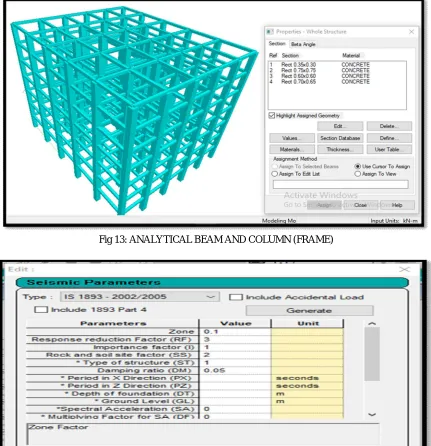
[image:8.595.84.510.131.370.2]VI.SEISMICANALYSISANDDESIGNRESULTONSTAAD-PRO
Fig 13: ANALYTICAL BEAM AND COLUMN (FRAME)
Fig: Seismic Parameters
Ta = 0.73574 sec.,
.
Load Factor =1,
Ah=0.0308,
Total Weight=53052.25kN,
[image:8.595.82.513.140.586.2]1295
©IJRASET: All Rights are Reserved
Fig: Axial Force
Fig: Bending
1296
©IJRASET: All Rights are Reserved
STAAD-Pro model Load to make the structure seismic force resistant, the fundamental period of the building while vibration should be calculated and procure as input to STADD-Pro for seismic analysis. The considered building is in zone II.
These values are derived as input to the seismic definition in STADD-Pro and seismic forces are calculated. The earthquake force ac ting on the structure is represented below.
Fig: Reactions Fig: Shear-Z
1297
©IJRASET: All Rights are Reserved
VII. CONCLUSION
A. Design Base Shear (Manually) = 2345.71 KN
B. Design Base Shear (STAAD-Pro) = 1634.43 KNandwe concluded that the base shear value on STAAD-Pro is correct value be
cause we assign the required data using references on it and it gives us result without any manual defect STAAD-Pro
C. The G+7 residential building has been analyzed and deigned using STADD. Pro.
D. Seismic forces have been considered and the structure is designed as an earthquake resistant structure.
E. To conclude, STADD. Pro is versatile software having the ability to determine the reinforcement required for any concrete secti
on based on its loading and determine the nodal deflections against lateral forces.
F. It experiences static as well as dynamic analysis of the structure and gives accurate results which are required. The following po
ints have been obtained at the end of the design.
G. The values of bending moment and shear force for every individual member have been studied.
H. The short-term deflection for all horizontal members is within safe limits.
I. The final output for beams and columns has been generated and reinforcement details have been studied.
REFERENCES
[1] IS-875(PART-1) : 1987 Indian Std. Code Of Practice For Design Loads [2] IS-1893(Part 1): “Earthquake Resisting Design of Structures”. [3] IS: 875 (Part 2): 1987 “Imposed Loads”.
[4] IS 456 -2000 BUREAU OF INDIAN STANDARDS (RCC Structure) [5] “STAAD-Pro 2016 –Tutorials”.
[6] Pankaj Agrawal, “Earthquake Resistant Design of Structures” by, Eastern Economy Edition.
[7] Dr. V. L. Shah and Dr. S. R. Karve, (2010). “Illustrated design of Reinforced Concrete Buildings”. 4th ed. [8] Murthy C.V.R, Learning earthquake design.
[9] D.R. Deshmukh, Yadav, A.K., Supekar, S.N., Thakur, A.B., Sonawane, H.P., Jain, I.M., (2016). “Analysis and Design of G+19 Storey Building Using Staad-Pr o”. Int. journal of engineering research and application (IJERA), ISSN: 22489622, Vol 6, Issue 7.