A Thesis Submitted for the Degree of PhD at the University of Warwick
Permanent WRAP URL:
http://wrap.warwick.ac.uk/90850
Copyright and reuse:
This thesis is made available online and is protected by original copyright. Please scroll down to view the document itself.
Please refer to the repository record for this item for information to help you to cite it. Our policy information is available from the repository home page.
HR Differentiation: A Double Edged Sword?
by Yasin Rofcanin
A thesis submitted in partial fulfilment of the degree of PhD
University of Warwick
Warwick Business School
Organization & HRM Division
Table of Contents
Acknowledgments ... ii
Declaration on Inclusion of Material from a Prior Thesis ... iv
Abstract ... v
List of Abbreviations ... vi
Chapter 1: Introduction ... 1
Chapter 2: Literature Review ... 7
2.1 Research Approaches to the Implementation and Effects of HR Practices ... 7
2.1.1 Universalistic approach to HRM ... 7
2.1.2 Configurational approach ... 8
2.1.3 Contingency approach ... 9
2.1.4 Beyond the contingency approach: Differentiation of HR practices ... 9
2.2 Differentiated HR Practices ... 10
2.2.1 Concept of idiosyncratic deals... 10
2.2.2 Related constructs ... 11
2.2.3 Measurement issues ... 12
2.2.4 Theoretical frameworks ... 13
2.2.5 Disentangling negotiation and attainment of i-deals ... 15
2.2.6 Theoretical framework of Study 1 ... 16
2.2.7 Theoretical framework of Study 2 ... 17
2.3 Role of Fairness Perceptions and Social Context in Differentiated HR Practices ... 18
2.3.1 Concept of flexitime ... 18
2.3.2 Effects of flexitime from a fairness perspective ... 19
2.3.4 Theoretical framework of Study 3 ... 22
2.4 Summary ... 23
Chapter 3: What Seals the I-Deal? Exploring the Role of Employees’ Behaviours and Managers’ Emotions ... 25
3.1 Introduction ... 25
3.2 Theory and Hypotheses ... 27
3.2.1 Enacting negotiated i-deals: The role of managers’ emotions ... 27
3.2.2 Employees’ socially connecting and disconnecting behaviours and managers’ emotions ... 29
3.3 Method ... 31
3.3.1 Procedure and sample ... 31
3.3.2 Measures ... 32
3.3.3 Negotiation of i-deals ... 33
3.3.4 Attainment of i-deals ... 33
3.3.5 Socially connecting and disconnecting behaviours following i-deal negotiations ... 33
3.3.6 Managers’ emotions about the negotiation process ... 34
3.3.7 Control variables ... 35
3.3.8 Analytical strategy ... 36
3.4 Results ... 37
3.5 Discussion ... 42
3.5.1 Theoretical contributions ... 42
3.5.2 Practical implications ... 45
3.5.3 Limitations and future research directions ... 46
3.6 Conclusion ... 49
4.1 I-Deal Negotiations and Employees’ Work Performance in the Long
Term: Two Sequential Mechanisms ... 52
4.1.1 The role of positive emotions in linking i-deal negotiations and attainment ... 52
4.1.2 Attainment of i-deals and employees’ work performance ... 53
4.2 Method ... 55
4.2.1 Procedure and sample ... 55
4.2.2 Measures ... 57
4.2.3 Analytical strategy ... 59
4.3 Results ... 60
4.4 Discussion ... 64
4.4.1 Theoretical contributions ... 65
4.4.2 Practical implications ... 69
4.5 Limitations and Directions for Future Research ... 69
Chapter 5: The Downside of HR Differentiation: Exploring the Effects of Employee Non-Entitlement to Flexitime ... 72
5.1 Theoretical Overview and Development of Hypotheses ... 74
5.1.1 Non-entitlement to flexitime and affective commitment ... 74
5.1.2 A closer look at the overall fairness perception ... 75
5.1.3 The moderating role of normativeness of flexitime ... 76
5.2 Method ... 78
5.2.1 Research context and sample... 78
5.2.2 Measures ... 79
5.2.3 Analysis strategy ... 80
5.3 Results ... 81
5.3.1 Preliminary analyses ... 81
5.4 Discussion ... 85
5.5 Limitations and Future Suggestions ... 88
5.6 Practical Implications ... 89
5.7 Conclusion ... 90
Chapter 6: General Discussion ... 91
6.1 Theoretical Contributions ... 91
6.1.1 Exploring the effects of HR differentiation from recipients’ perspectives ... 91
6.1.2 Exploring the effects of HR differentiation from non-recipients’ perspectives ... 97
6.2 General Limitations and Suggestions for Future Research ... 98
6.3 Methodological Strengths and Weaknesses ... 101
6.4 Practical Implications ... 103
6.5 Summary and Conclusion ... 104
Bibliography ... 105
Publications and Presentations Arising out of this Thesis ... 138
Journal Papers ... 138
Conference Presentations ... 138
List of Figures
Figure 1: Conceptual model ... 27
Figure 2: Conceptual model ... 52
Figure 3: Conceptual framework of the study ... 74
Figure 4: Moderation of normativeness of flexitime on association between non-entitlement to flexitime and overall fairness ... 84
List of Tables
Table 1: Summary of the research focus and design adopted in each study ... 5
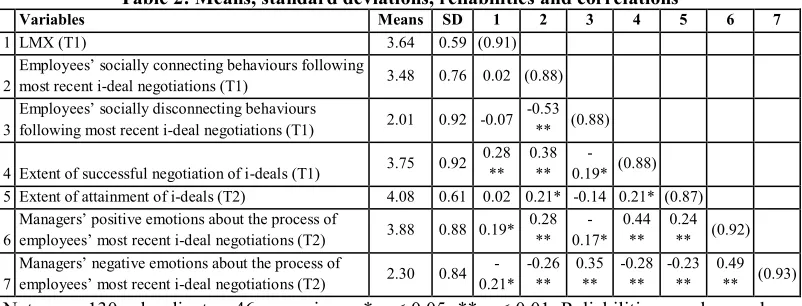
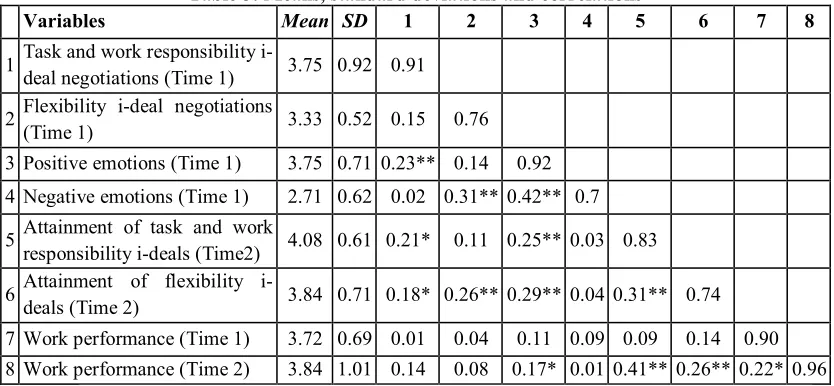
Table 2: Means, standard deviations, reliabilities and correlations ... 38
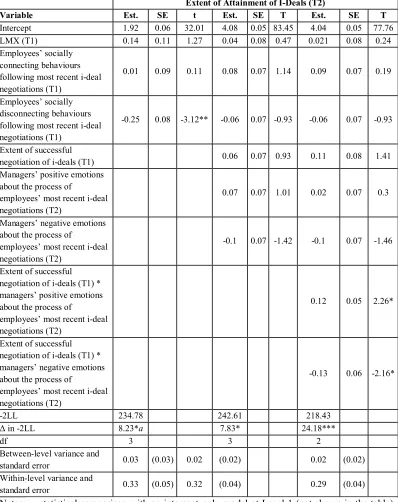
Table 3: Multilevel estimates for the interaction between managers’ emotions
about the process and the extent of successful negotiation predicting the extent of attainment of i-deals ... 39
Table 4: Multilevel regression analyses for employees’ socially connecting and disconnecting behaviours and managers’ emotions about recent i-deal negotiations ... 41
Table 5: Means, standard deviations and correlations... 60
Table 6: Multi-level regression results for the effects of i-deal negotiations on
employees’ emotions, attainment of i-deals and work performance ... 64
Table 7: Means, standard deviations and correlations... 81
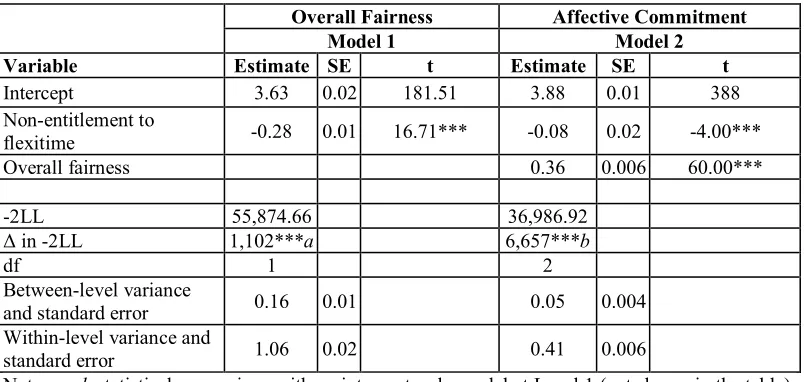
Table 8: Associations between non-entitlement to flexitime, overall fairness and affective commitment ... 83
Acknowledgments
Undertaking a PhD is a unique, challenging and arduous process. First and foremost, I would like to express my gratitude and thanks to Tina Kiefer, who from the first day offered her expertise willingly throughout my dissertation process and never stopped challenging me. I felt very comfortable talking to her during the ups and downs of my PhD progress. Her vision and perspective on the broader scope of my thesis always ensured that I was on the right track. Most importantly, she has been friendly, caring and always supportive, and has always had time to spare for our endless discussions on the progress of my studies and personal aspects relating to life.
I am also grateful to Karoline Strauss, whom I have seen as a steady voice of reason, criticism and rigorous supervision throughout this PhD process. Her integrity and openness to development have always inspired me, and I take her academic approach as a role model for my future career. I cannot be thankful enough for the time she has spared for my PhD studies and for her dedication to the production of consistent and interesting studies. I am also grateful for the support she gave me when I was preoccupied with personal issues.
Clearly, this PhD would not have been possible without their critical evaluations and their constructive support. Thank you for always showing me the light at the end of the tunnel and for believing in me.
In the last year of my PhD, Kim Hoque joined our team and made important contributions to my progress. I am grateful for the numerous chats we had on data analysis and theory, and most importantly for the insights and help he provided during this process. In our fruitful discussions, I felt like I was talking to a colleague, which I believe is important for the PhD process. His presence has enlightened me.
felt down. On a technical note, without Moti’s genius, the coding, and hence Paper 3 of my dissertation, would not have come to realisation. His presence enlightens me always and his friendship to me will always last.
I extend my special thanks to all participants in the Applied Organizational Psychology (AOP) meetings held at Warwick Business School. I benefited from the feedback and suggestions when I presented my studies and found it fruitful to listen to the research ideas of other participants.
I am grateful to my parents (especially my lovely mom and dad), who have never stopped supporting me. Thanks for always being there. I love you all.
I would also like to express my gratitude to the University of Warwick for the
International Chancellor’s Scholarship I was awarded during my studies.
I am grateful for having Georgious Voulgaris (Yorgo) in my life as a true friend. I cannot be more thankful for all the things he has done for me during the last three years. I will always remember the endless chats we had about life, academics and journals. More importantly, I am thankful that I gained a true friend who, I know, will be there forever whenever I need him.
Declaration on Inclusion of Material from a Prior Thesis
Abstract
This thesis presents three studies which explore the effects of individualized human resource management (HRM) practices from recipients’ and non
-recipients’ perspectives. The first two studies, focusing on the concept of
idiosyncratic deals (i-deals), investigate the role of managers’ emotions and employees’ behaviours in translating negotiated i-deals into attainment (Study 1), and how obtained i-deals influence recipients’ work performance positively in the long term (Study 2). In delineating how individualized HRM practices unfold for their recipients, the concept of i-deals is challenged.
The third study explores the effects of non-entitlement to flexitime on employees’
List of Abbreviations
CFA Confirmatory factor analysis
CFI Comparative fit index
CMB Common method bias
df Degrees of freedom
FWP Flexible work practice
HPHR High performance human resource
HPWP High-performance work practice
HPWS High-performance work system
HRM Human resource management
I-deal Idiosyncratic deal
ICC Intraclass correlation
IPO Initial public offering
LMX Leader–member exchange
MCMAM Monte Carlo Method for Assessing Mediation
RMSEA Root mean square error of approximation
SD Standard deviation
SRMR Standardised root mean square residual
HR DIFFERENTIATION: A DOUBLE EDGED
SWORD?
Chapter 1: Introduction
Human resource (HR) practices are increasingly being differentiated by organizations, partly because of global developments such as the information economy and workplace democratization (Bal, van Kleef & Jansen, 2015; Taskin & Devos, 2005), and partly to meet the career preferences of employees who are seeking to be treated as individuals (Bal & Dorenbosch, 2015; Lawler & Finegold, 2000). The differentiation approach differs from the standardization approach of traditional HRM (Kinnie et al., 2005), and the goal of this thesis is to understand its effects from the perspectives of both recipients and non-recipients.
One way in which HR differentiation may be enacted in organizations is by providing employees with idiosyncratic deals (i-deals): individually negotiated work arrangements between employee and manager (Rousseau, 2005). I-deals are
individualized to address employees’ unique work needs and preferences, hence
differentiating them from co-workers’ existing working conditions (Bal &
Rousseau, 2015). I-deals involve providing employees with training and development opportunities at work, known as task and work responsibility i-deals, as well as flexibility regarding where and when work can be completed and in
employees’ financial packages, referred to as flexibility i-deals (Rosen et al., 2013). A growing body of research has sought to understand the effects of i-deal
negotiations on focal employees’ work-related behaviours and attitudes (Liao, Wayne & Rousseau, 2016). These studies reveal that i-deal negotiations tend to benefit focal employees in terms of increasing their commitment and job satisfaction (Anand et al., 2010), as well as enhancing their work performance (Ng & Feldman, 2012). However, how and why i-deal negotiations tend to benefit employees is still unclear, and theory on i-deals has been challenged.
conceptual and empirical distinction between the negotiation and aftermath of i-deals, and hence fails to account for whether the negotiation or acquisition of i-deals really leads to employees’ positive behaviours and attitudes.
A second major challenge facing the i-deals literature is that studies have exclusively emphasized the focal employee (e.g. Ng & Feldman, 2012), without paying attention to the social context surrounding i-deals, namely managers responsible for providing i-deals to focal employees. Furthermore, the basis on which managers facilitate the provision of i-deals to employees is still unclear (e.g. Hornung, Rousseau & Glaser, 2009). With the exception of a few recent
studies that discuss the role of motives and intentions in employees’ requests for
i-deals (Bal & Lub, 2015; Bal & Rousseau, 2016), there is as yet a lack of
research delineating the kind of employee behaviours influencing managers’
decisions to facilitate the provision of i-deals to employees.
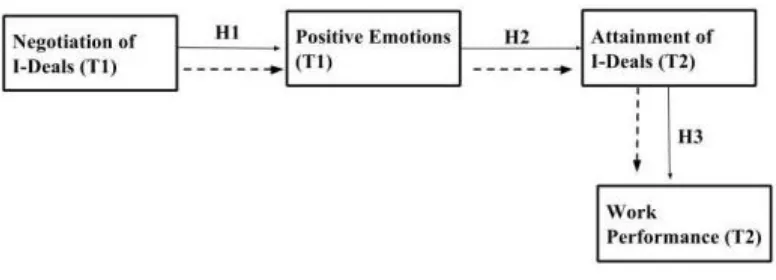
In order to address these challenges and to understand how a particular type of HR differentiation affects its recipients, two studies have been carried out. With regard to differentiating between the negotiation and implementation of i-deals, Study 1 focuses on the aftermath of i-deal negotiations and explores the role of managers in facilitating negotiated i-deals for focal employees. The main argument of this study is that managers are likely to react positively to the i-deal negotiation process of employees who engage in socially-connecting behaviours following their most recent i-deal negotiations. Conversely, managers are likely to react negatively to the i-deal negotiation process of employees who engage in socially-disconnecting behaviours following i-deal negotiations. How managers feel about employees’ behaviours may determine the extent to which successfully
negotiated i-deals are implemented. Goal congruence theory (Kristof-Brown & Stevens, 2001) and the affective-consistency perspective of emotions (Yu, 2009) are used as overarching frameworks.
namely employees’ positive emotions and the attainment of i-deals. The main argument of Study 2 is that it is not the negotiation of i-deals per se, but their attainment that is positively associated with the work performance of employees in the long term. Furthermore, in order to examine how negotiated i-deals are
obtained, this study explores the role of employees’ positive emotions as lynchpins between negotiated and obtained i-deals. Signaling theory (Spence, 1973) is used as an overarching theoretical framework for this study.
Studies 1 and 2 focus on the effects of HR differentiation from the recipient’s
perspective. In order to explore the reverse of the coin, Study 3 explores how non-entitlement to a particular type of HR differentiation practice influences
employees’ overall fairness perceptions and their affective commitment toward
the organization. By definition, HR differentiation involves implementing existing HR practices differentially for a select group of employees. This differentiation has potentially important implications for co-workers who are not given access to the same practices in a workplace, especially where there is differentiation. Despite this acknowledgment, studies to date have focused mainly on the effects of HR differentiation from the perspective of recipients, revealing only their benefits for those who are entitled to such practices (Marescaux, De Winne & Sels, 2013). Since HR differentiation involves the distribution of valuable resources to a certain group of employees (Clinton & Guest, 2013), it may create perceptions of unfairness among employees who are not entitled to the same practices. Despite its relevance, non-entitlement to certain HR practices and the potential effects of such differentiation on non-entitled employees’ fairness
perceptions and outcomes have not previously been examined in this research stream. Addressing this gap is important because HR differentiation may be a double-edged sword, and fairness is likely to be an important mechanism in understanding why employees who are excluded from certain HR practices are likely to react negatively, for example with lower loyalty to the organization (e.g. Golden, 2007).
perceive their own treatment as unfair (Gajendran & Joshi, 2012; Golden & Veiga, 2006). It is possible that in workplaces where HR differentiation prevails, non-entitled employees will feel singled out and, as a result, react more negatively to their lack of entitlement than in workplaces where HR differentiation is less prevalent.
To tackle this limitation, Study 3 focuses on the effects of non-entitlement to flexitime (a particular form of HR practice), and explores the role of employees’
overall fairness perceptions to understand why non-entitlement to flexitime may
negatively influence these employees’ affective commitment toward the
organization. This study also introduces the concept of the normativeness of flexitime in a given workplace as a boundary condition influencing the proposed associations. Normativeness of flexitime refers to the degree to which flexitime is a prevalent practice in a workplace. Gajendran, Harrison and Delaney-Klinger’s
(2015) study uses the same concept. Where flexitime is a norm (the percentage of employees who are entitled to it is high), non-entitled employees may perceive their own treatment as more unfair, leading to stronger negative reactions in the form of reduced affective commitment. Study 3 draws on fairness theory (Folger & Cropanzano, 1998, 2001) as an overarching framework. See Table 1 for an overview of the focus and design of each study.
Taking the three studies together, this thesis contributes to research on HR differentiation by exploring how the potential benefits of a form of differentiated HR practice (i-deals) unfolds for its recipients, the role of managers in materializing these deals and the kind of employee behaviours that influence
managers’ decisions in facilitating the implementation of negotiated i-deals. In
viewing the effects through recipients’ eyes, the concepts and underlying
assumptions of i-deals are examined in greater depth.
Turning to the effects of HR differentiation from a non-recipient’s perspective,
The prevalence of HR differentiation is conceptualized and analyzed rigorously to explore this argument in depth.
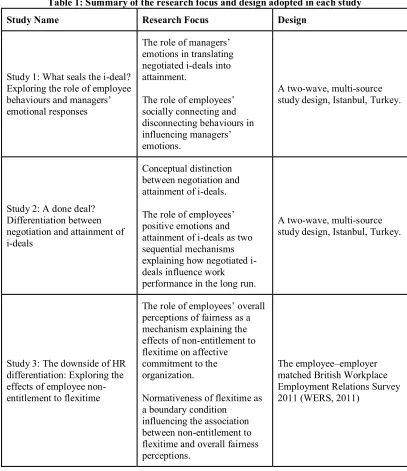
Table 1: Summary of the research focus and design adopted in each study
Study Name Research Focus Design
Study 1: What seals the i-deal? Exploring the role of employee
behaviours and managers’
emotional responses
The role of managers’
emotions in translating negotiated i-deals into attainment.
The role of employees’
socially connecting and disconnecting behaviours in
influencing managers’
emotions.
A two-wave, multi-source study design, Istanbul, Turkey.
Study 2: A done deal? Differentiation between negotiation and attainment of i-deals
Conceptual distinction between negotiation and attainment of i-deals.
The role of employees’
positive emotions and attainment of i-deals as two sequential mechanisms explaining how negotiated i-deals influence work performance in the long run.
A two-wave, multi-source study design, Istanbul, Turkey.
Study 3: The downside of HR differentiation: Exploring the effects of employee non-entitlement to flexitime
The role of employees’ overall
perceptions of fairness as a mechanism explaining the effects of non-entitlement to flexitime on affective commitment to the organization.
Normativeness of flexitime as a boundary condition
influencing the association between non-entitlement to flexitime and overall fairness perceptions.
The employee–employer matched British Workplace Employment Relations Survey 2011 (WERS, 2011)
This thesis has six chapters. Chapter 2 presents a literature review. First, research on widely-accepted approaches to the effects and implementation of HRM is discussed. The dynamic nature of business environments and recent research indicate a tendency toward HR differentiation, which is also discussed. The second part of the literature review examines differentiated HR practices. Rather than providing a detailed review, aspects of i-deals research that remain unresolved and that have informed Studies 1 and 2 are presented and evaluated. The third part of Chapter 2 introduces and discusses the fairness perspective on differentiated HR practices in relation to flexitime, which forms the basis of Study 3. The role of social context, namely the normativeness of flexitime and its implications, are also briefly discussed. This chapter also includes a brief discussion of the theoretical framework of each of the three studies.
Chapter 3 presents Study 1, which explores the aftermath of i-deal negotiations
and investigates the relationship between employees’ behaviours following i-deal
negotiations, and managers’ emotions in facilitating their implementation.
Chapter 4 presents Study 2, which explores the mechanisms through which the negotiation (rather than implementation) of i-deals influences employees’ work performance. This study introduces employees’ positive emotions and attainment
of i-deals as two sequential mechanisms to explain how and why negotiated i-deals are positively related to employees’ work performance in the long term.
Chapter 5 presents Study 3, which focuses on the effects of non-entitlement to flexitime in workplaces where there is differentiation, and explores how it
influences employees’ overall fairness perceptions and affective commitment.
This study also investigates the role of normativeness of flexitime as a boundary condition that influences the effects of non-entitlement on employees’ overall
fairness perceptions, as well as on their affective commitment.
Chapter 2: Literature Review
This chapter introduces and examines previous research on which the three studies in this dissertation are based. In the next section, commonly observed approaches to the implementation of HR practices are discussed, providing an overview of the transition from a universalistic to an individualized approach to the implementation of HR practices. The second section describes the individualization of HR practices, with a focus on idiosyncratic deals (i-deals). The current state of knowledge on i-deals is critically evaluated in relation to the content of Studies 1 and 2. Next, differentiation of HR practices is discussed from a fairness perspective, and the concept of flexitime, which is the central theme of Study 3, is elaborated on in relation to fairness and the social context of workplaces where flexitime differentiation is observed.
2.1 Research Approaches to the Implementation and Effects of HR Practices
Researchers in the field of strategic HR management have adopted three dominant perspectives: universalistic, contingency and configurational approaches.
2.1.1 Universalistic approach to HRM
The universalistic approach is built on the assumption that standardized HR practices within an organization or across groups of employees have universal effects on organizational performance, irrespective of the context (Boxall &
Purcell, 2008; Kinnie et al., 2005). Often referred to as the “best practice” or “high commitment” approach, the universalistic approach has long been held to
2.1.2 Configurational approach
The central tenet of the configurational approach is that, for an HR practice to be effective, it must be combined with other HR practices to yield best performance
at the organizational level. Terms such as “horizontal fit”, “internal fit”, “complementarity” and “bundling” are used by researchers who take this
approach (Baird & Meshoulam 1988; Wright & McMahan 1992). As employees are exposed to more than one HR practice in an organization, the effectiveness of any practice depends on its fit or misfit with other practices in the HR system or architecture (Delery, 1998). Two defining elements of the configurational approach are synergy and alignment. Synergy suggests that the result of the HR bundle as a whole is greater and more beneficial than the sum of the separate HR
practices. This occurs when the practices of the bundle have “horizontal fit”,
designed in such a way that they are complement each other (Delery, 1998; Jiang et al., 2012). Alignment is the extent to which the HR bundle relates to the strategic goals of the organization, or vertical fit (Gerhart, 2007). The concept of alignment may lead to differentiation of HR practices within organizations, since organizations may consist of sub-units with different strategic goals.
Previous research has identified the benefits of aligning HR practices. For example, Pil and MacDuffie (1996) show that organizations that have complementary HR practices, such as selective hiring and use of incentives, are more likely to use high-involvement work practices. Along the same lines, Ichniowski, Shaw and Prennushi (1997) and MacDuffie (1995) show that HR practices introduced as a system have a greater impact on company productivity than single practices. In one of the most well-known studies of the configurational approach, Huselid (1995) shows that a system of HR practices, which he labels
“high performance work systems” (HPWS), is positively and significantly
2.1.3 Contingency approach
In contrast to the above approaches, recent studies have acknowledged that universalistic HR practices or configurations will be effective only under certain conditions. The core argument of the contingency approach is that organizations should design HR systems and implement HR practices that encourage behaviours aligned with organizational contingencies (Jackson, Schuler & Rivero, 1989). Studies adopting this approach have identified, among many other factors, industry (Osterman, 1994; Lepak & Snell, 1999, 2002), structure (Toh, Morgeson & Campion, 2008), business strategy (Hoque, 1999) and technology (Datta, Guthrie & Wright 2005) as important contingency conditions influencing the effects of single or bundled HR practices on organizational performance.
2.1.4 Beyond the contingency approach: Differentiation of HR practices
The approaches to strategic HR management discussed above focus on associations between HR practices (either in isolation or in bundles) and performance at the organizational level. However, recent trends in HRM have shifted the focus to the individual (Oyserman, Coon & Kemmelmeier, 2002) and have introduced a perspective based on individual rather than organizational needs and preferences (Kinnie et al., 2005). Going beyond the focus on organizational level performance, a few recent studies have started to explore the macro effects of HR practices on employees’ attitudes and work outcomes. A
study by Takeuchi et al. (2009) reveals that establishment-level, high-performance work practices (HPWPs) are positively associated with employees’ job
satisfaction and affective commitment through establishment-level concern for a supportive climate. Kehoe and Wright (2013) explore whether group-level high performance human resource (HPHR) practices are positively related to
employees’ citizenship behaviours and intentions to stay in the organization through affective commitment. Snape and Redman (2010) demonstrate that HRM practices conceptualized at the workplace level are positively related to
employees’ attitudes and behaviours through perceived organizational support and
job influence. Bal, Kooij and De Jong (2013) reveal that accommodative HR
practices measured at group level are positively related to employees’ affective
commitment for those with high selection and compensation needs, and
and compensation needs. Finally, a study by Korff, Biemann and Voelpel (2016) reveals positive effects of growth-enhancing and maintenance-enhancing HR
practices on employees’ affective commitment and in-role performance.
These studies adopt a multi-level approach to HRM and propose that the effects of HR practices are intended to be similar across all employees, at least at the level of job group or department. However, this approach to the implementation of HR practices overlooks the unique work needs and preferences of employees. Addressing this gap is important because, in order for HR practices to be effective, they must be consistent not only with certain aspects of the organization at macro level such as its strategy, or at meso level such as the value of human capital at team or department level, but also with micro elements such as
employees’ preferences and needs (Arthur & Boyles, 2007; Bal, Kooij & De Jong,
2013; Delery & Doty, 1996).
Developments such as the transition to an information economy, the democratization of workplaces and the declining trend for collective bargaining all point to the rise of individualism within and across organizations (Kaufman & Miller, 2011). Coupled with a changing workforce who (a) are diverse in terms of age, gender and ethnicity, resulting in different needs and preferences in the workplace, (b) seek to be treated as individuals, and (c) care about their individual needs and preferences (Gubler, Arnold & Coombs, 2014), individualizing and differentiating HR practices is becoming a strategic priority for organizations (Bal & Dorenbosch, 2015). These developments and trends culminate in differentiation in the implementation of certain HR practices, which is referred to as HR differentiation (Marescaux, De Winne & Sels, 2013) or variation in HR practices (Clinton & Guest, 2013). One way of differentiating HR practices is to provide employees with individually negotiated work arrangements that fit their unique work needs and preferences and are different from what co-workers already have.
This practice has been termed “idiosyncratic deals”, or i-deals (Rousseau, 2005).
2.2 Differentiated HR Practices
2.2.1 Concept of idiosyncratic deals
everyone in standard ways, individualization of work practices is a trend in which employees seek to secure working arrangements that meet their unique work needs and preferences (Call, Nyberg & Thatcher, 2015). Inspired by this trend, a growing body of research has explored the concept of i-deals (Rousseau, 2005,
p.23), which refers to “voluntary, personalized agreements of a non-standard nature negotiated between individual employees and their employers regarding
terms that benefit each party”. I-deals may take the form of providing training, development and career growth opportunities (task and work responsibility i-deals), flexibility regarding when and where work is carried out (schedule flexibilities) or personalized financial package deals (Rosen et al., 2013). They may be negotiated before recruitment (ex ante i-deals) or following recruitment (ex post i-deals).
2.2.2 Related constructs
I-deals are similar to psychological contracts, in that both focus on employment relationships between employee and employer (Rousseau, 2005). However, there is an important distinction between the two: psychological contracts refer to
employees’ informal beliefs regarding their mutual obligations with their employers (Rousseau, 1995) and are implicit in nature, whereas i-deals involve explicit negotiations on employment conditions (Ng & Feldman, 2010). In light of this distinction, it is argued that i-deals may lead employees to develop distinct
psychological contracts, or that employees’ pursuit of i-deals may be influenced by their existing psychological contracts (Bal & Rousseau, 2015). Therefore, it may be argued that psychological contracts and i-deals are distinct, yet influence each other.
2004). The explicit nature of i-deals is suggested to differentiate them from preferential agreements.
2.2.3 Measurement issues
Measurement of i-deals has been problematic and confounded in the research to date. Studies have measured the negotiation of i-deals, but appear to have assumed that what is negotiated is automatically obtained. There are many reasons why negotiation may not lead smoothly to attainment of i-deals (for example, changes in HR policy, restrictions in HR resources or the inability of the manager to provide the negotiated i-deals to the focal employee) and, indeed, they may fail to be implemented at all. Therefore, empirical and conceptual differentiation between negotiation and attainment remains unresolved (Conway & Coyle-Shapiro, 2015).
In i-deals research, the most commonly used scale is that developed by Rousseau, Ho and Greenberg (2006). A major limitation of this scale is that it asks respondents to indicate the extent to which “they have asked for and successfully negotiated individual arrangements different from their peers” (Hornung,
Rousseau & Glaser, 2008, p.659; Ng & Feldman, 2016, p.13; Rousseau & Kim, 2006, p.13). This measurement approach may be problematic, because both employees who have not asked for anything and employees who have asked unsuccessfully are likely to score 1 on a 5-point Likert scale ranging from 1 (not at all) to 5 (to a very great extent). One way to address this limitation is to differentiate between groups of respondents who “negotiated”, who “did not ask for” and who “asked for and successfully obtained” i-deals, as these three groups of people are likely to have different characteristics.
i-deals. Second, employees are asked to state the extent to which they successfully asked for i-deals that are different from what their co-workers already had, which is challenging to answer. In order to show that negotiation and attainment of i-deals are empirically different from each other, the current study separates negotiation from attainment of i-deals and measures their effects on employees’
work performance with a time lag of six months.
2.2.4 Theoretical frameworks
Since the concept of i-deals was first introduced in the literature (Rousseau, 2005), researchers have shown a steady interest in this topic. The dominant theoretical framework for i-deals research has been social exchange theory, namely the norm of reciprocity. Initial studies have built on the norm of reciprocity (Gouldner, 1960) to explain that i-deals constitute the basis for exchange relationships between employees and employers. The core assumption has been that, through granting i-deals to employees, organizations expect to strengthen their relationships with employees, which leads employees to feel indebted to the organization and willing to pay back the favourable treatment with desirable behaviours and attitudes (Hornung, Rousseau & Glaser, 2008). Accordingly, studies based on the norm of reciprocity reveal that i-deal negotiations are positively associated with organizational commitment (Rosen et al., 2013), constructive voice (Ng & Feldman, 2012) and organizational citizenship behaviours (Anand et al., 2010).
A second theoretical perspective is the self-enhancement role of i-deals, which is proposed and empirically tested by Liu et al. (2013). Going beyond the effects of reciprocity, their study shows that i-deals may contribute to employees’ self -enhancement at work by providing them with training, development and career growth opportunities. Self-enhancement, in turn, is found to relate to proactive behaviours. No other study has explored the concept of i-deals from a self-enhancement perspective.
Another theoretical framework is signalling theory (Spence, 1973), which proposes that granting i-deals to employees signals organizations’ good
i-deals satisfy employees’ competence needs, leading to discretionary or
organizational citizenship behaviours. Building on the signalling functions of i-deals, Bal and Dorenbosch (2015) reveal that individualized HR practices, conceptualized as i-deals, relate positively to companies’ performance growth and negatively to employees’ leaving intentions.
The fourth theoretical perspective is work adjustment theory (Baltes et al., 1999), which proposes that by obtaining i-deals, employees are able to achieve a fit between their personalized work needs and what their jobs offer. Hence, i-deals may serve to balance the demands of work and non-work lives, enabling employees to achieve a better work-life balance (Bal & Rousseau, 2015). In support of this, studies have shown that i-deals relate to greater motivation to work beyond retirement (Bal et al., 2012) and reduced work-family conflict (Hornung, Rousseau & Glaser, 2008). In adopting these various theoretical perspectives, research has started to show that i-deals are potentially beneficial for employee performance and attitudes.
Finally, studies have started to integrate i-deals with the psychological contract literature. For example, Ng & Feldman (2008) refer to the uniqueness of psychological contracts in discussing the concept of i-deals. They argue that i-deals create contract idiosyncrasy and constitute a specific element of psychological contracts. Furthermore, they emphasize that psychological contract uniqueness is important in understanding how a focal employee obtains i-deals (Ng & Feldman, 2012). The idea that employees form unique psychological contracts in the process of i-deal making is also emphasized in more recent studies (Guerrero, Bentein & Lapalme, 2014; Guerrero and Bentein, 2015; Kroon, Freese & Schalk, 2015).
However, as delineated in a recent meta-analysis (Liao, Wayne & Rousseau, 2016), some results relating to the effects of i-deal negotiations are inconsistent.
For instance, Rosen et al.’s (2013) study, in which four different i-deal dimensions are developed (task and work responsibilities, and financial, location and schedule flexibility), finds that only task and work responsibility i-deals are
work outcomes. Moreover, Bal et al. (2012) reveal that relationships between developmental i-deals and work motivation depend on unit climate, indicating a contingent nature of i-deals in predicting work outcomes. In the research to date, it has been assumed that what is negotiated is automatically obtained. The measurement issues in previous research, as well as inconsistent or weak findings regarding the effects of i-deal negotiations on employees’ work outcomes,
underline that i-deals do not end with negotiation, and that there is a need to focus on what happens thereafter.
2.2.5 Disentangling negotiation and attainment of i-deals
I-deals are explicitly negotiated between an employee and a manager (Liao, Wayne & Rousseau, 2016). Negotiation refers to bargaining over work demands which are subsequently worked out into a solution (Reif & Brodbeck, 2014). In this sense, i-deals may be considered as comprising at least two steps: negotiation followed by attainment.
I-deal negotiations are typically initiated by employees, and decisions to grant them are made by their managers (Rousseau, 2006). Employees take the first step to modify their current working arrangements by approaching their managers to ask for i-deals. Employees may negotiate i-deals before being recruited, during
the process of being hired. Employees’ ex ante i-deal negotiations may depend largely on their market value, whereas ex post i-deal negotiations are heavily
shaped by employers’ willingness to modify existing employment relationships.
As discussed in previous sections, research to date has focused predominantly on i-deal negotiations, and has paid little attention to the aftermath.
managers, who are the primarily targeted parties in i-deal negotiations and who have the power to materialize the negotiated i-deals of their subordinates.
In summary, i-deals may be considered as a process consisting of at least two stages: negotiation and attainment. The literature has focused predominantly on the former, whereas the latter is crucial in exploring the intended benefits of i-deals for employees and other stakeholders. Studies 1 and 2 deal with this gap by differentiating conceptually and empirically between negotiation and attainment of i-deals.
2.2.6 Theoretical framework of Study 1
Study 1 integrates the affective-consistency perspective of emotions (Yu, 2009)
with goal congruence theory to explain the role of managers’ emotions in facilitating the provision of negotiated i-deals to employees. According to this perspective, individuals are motivated to maintain consistency between various attributes of the self, including their emotions, behaviours and attitudes (Seong & Choi, 2014). From this angle, emotions can be considered as cognitive-filters, leading to affect-consistent behaviours and attitudes (Yu, 2009). Adopting this perspective, if managers feel positive about the process of employees’ most recent i-deal negotiations, they are likely to facilitate the implementation of negotiated i-deals, whereas if they feel negative about the most recent i-deal negotiation process, they may be unlikely to facilitate the attainment of i-deals.
To explore what influences how managers feel about the most recent i-deal negotiation process of employees, Study 1 integrates goal-congruence theory (Kristof-Brown & Stevens, 2001). This theory argues that correspondence
between one’s own goals and those of others influences one’s subsequent
behaviours, such as avoiding interactions with co-workers, following their most recent i-deal negotiations.
Study 1 focuses on the aftermath of successful i-deal negotiations and explores the role of managers in translating negotiated i-deals into attainment. In particular, it provides a complete picture of i-deals by examining the interplay between
employees’ behaviours following their most recent i-deal negotiation and
managers’ emotions about the process of employees’ most recent i-deal negotiation processes. The approach in Study 1 complements i-deals research by including both the employee and the manager in this process, and hence goes beyond previous research which has overlooked the social context in which i-deals unfold.
2.2.7 Theoretical framework of Study 2
Study 2 builds on signalling theory (Spence, 1973) to delineate two mechanisms – employees’ positive emotions and the attainment of i-deals – relevant to understanding how and why negotiated i-deals may or may not relate to
employees’ work performance in the long term. The signalling function of i-deals has been emphasized in recent research (Ho & Kong, 2015), which has argued that i-deals signal the benevolent intentions of the employer to the employee (Rousseau, Ho & Greenberg, 2006). According to signalling theory, the signaller (employer) conveys certain messages to the receiver (employee) in the hope of eliciting positive behaviours favourable to both parties (Belogolovsky & Bamberger, 2014). The effectiveness of signalling depends on the extent to which the intentions of the signaller are interpreted accurately by the receiver (Ho & Kong, 2015) and the extent to which the signaller is consistent in his or her actions in the long term (Connelly et al., 2011).
Negotiation of an i-deal acts as an intent signal for the focal employee, suggesting that the employer is willing to grant the i-deal. Employees’ positive emotions following i-deal negotiations signal that they have interpreted the intentions of employers accurately, and they are likely to remain positive until the negotiated i-deals are obtained. However, it is the actual attainment of i-deals, beyond
This literature review sheds light on the weak and inconsistent findings of previous research regarding the effects of i-deal negotiations on employees’ work performance, and emphasizes the overlooked role of employees’ affective states
as a lynchpin to explain how and why negotiated i-deals are obtained in the long term.
Overall, Studies 1 and 2 explore the effects of i-deals on their recipients and, in so
doing, delineate the role of employee behaviours, managers’ emotions (Study 1), employees’ positive emotions and the attainment of i-deals (Study 2) to understand how negotiated i-deals are materialized in the long term. Unlike these two studies, Study 3 focuses on the effects of flexitime, a form of HR practice, through the eyes of non-recipients.
2.3 Role of Fairness Perceptions and Social Context in Differentiated HR Practices
2.3.1 Concept of flexitime
In exploring the effects of a differentiated HR practice from the perspective of employees who are not entitled to them, this study focuses on flexitime. Flexitime refers to variations in the timing of work conducted during a day (Kossek & Lee, 2008). While standard work hours have previously been the norm in organizations, a growing number are implementing flexitime schedules (Thompson, Payne & Taylor, 2015). The increasing prevalence of flexitime is observed across the globe, including in the USA and the UK: national country studies in the USA, UK and Australia show that fewer than half of employees work to a standard work schedule (Golden, 2008; Watson et al., 2003). Therefore, it is a prevalent HR practice that aims to increase efficiency, motivation and productivity by providing employees with the discretion to self-manage their work (Kossek & Lee, 2008).
market shifts that explain the growth in demand for flexitime. There is also growing evidence showing that a new generation of employees who have just entered the workforce also value work-life balance, and hence value flexible work schedules (Kossek & Michel, 2016).
In support of the effects of flexitime, an increasing number of studies has shown its positive effects for employees who benefit from it. Greater satisfaction with work schedules (Baltes et al., 1999), lower absenteeism (Dalton & Mesch, 1990), decreased turnover (Stavrou, 2005), lower work-family conflict (Byron, 2005), perceptions of greater organizational support for families and job satisfaction (Allen, 2001), and decreases in negative affect for women caregivers (Chesley & Moen, 2006) are among the reported impacts on employees. A recent meta-analysis of flexible work practices also shows that flexitime has a significant
impact on employees’ work- and non-work-related lives (Allen et al., 2013), and the same study has called for future research treating flexibilities of time and location separately. A study by Thompson, Payne and Taylor (2015) reveals similar results and shows that flexitime has a more significant effect than
flexi-location on employees’ perceptions of organizational support. This study also
calls for flexitime and flexi-location practices to be distinguished both empirically and theoretically.
2.3.2 Effects of flexitime from a fairness perspective
For the reasons discussed above, differentiation of HR practices is suggested to be a rational strategy for organizations. However, differentiation automatically promotes inequality among employees, making it a very sensitive issue. Since differentiation of HR practices involves the distribution of valuable resources to certain employees, those who are deprived of such resources may react negatively (Paauwe, 2009). Fairness is therefore part and parcel of differentiated HR practices. Research on HR has emphasized the key role of fairness perceptions
and has shown that employees’ fairness perceptions play a key role in career
practices sustainable and effective in a team setting. In order to address calls for research to focus on certain types of flexible work practices and to explore their effects from the perspective of employees who are not entitled to them, this study focuses on the fairness perceptions of unentitled employees in order to understand why this may influence employee outcomes negatively.
The focus on flexitime is relevant in considering the implications from the perspective of non-recipients. For example, flexibility regarding the amount of work, such as reduced workload or work hours, is associated with reduced salaries and inferior compensation packages for employees entitled to it (van Rijswijk et al., 2004). Employees not entitled to it may therefore not consider the alternative to be better than their current situation. Another type of flexibility relates to continuity of work, such as short-term breaks in employment or time off. Studies have shown that these types of flexibility are not significantly related to
employees’ job satisfaction (Lee & Johnson, 1991; McGinnis & Morrow, 1990),
and indeed are positively associated with turnover intentions (Feldman & Doerpinghaus, 1992) and reduced continuity in work (Olmsted & Smith, 1989).
With regard to the effects of flexibility regarding location, such as telecommuting, studies have produced equivocal results. Although flexi-location arrangements may have positive effects on the organizational commitment and job satisfaction of employees (Allen, 2001) and on organizational performance (Stavrou, 2005), some studies reveal that they are not always positive. For example, Golden, Veiga and Simsek (2006) show that, while flexible location is associated with lower work-to-family conflict, it may give rise to higher family-to-work conflict. Lapierre and Allen (2006) demonstrate that flexible location is associated with higher time-based family-to-work conflict. It may therefore be difficult to interpret whether the absence of flexibility regarding the amount, continuity and location of work will be regarded as better by employees who are not entitled to them. Given the prevalence of flexitime in organizations across the globe and its
employees who are not entitled to flexitime in workplaces where it is differentially implemented.
Research has revealed three categories of fairness: fairness regarding the distribution of outcomes, otherwise known as distributive justice (Adams, 1965), fairness regarding the procedures used to determine outcomes, known as procedural justice (Thibaut & Walker, 1975), and fairness regarding the quality of interpersonal treatment related to outcomes, known as interactional justice (Bies & Moag, 1986). Research has further distinguished two dimensions of interactional justice: interpersonal justice, meaning treatment reflecting respect and dignity (Bies & Moag, 1986) and informational justice, referring to the provision of adequate explanations (Greenberg, 2001). Meta-analyses have confirmed that each justice dimension is associated with a broad range of employee attitudes and behaviours (Cohen-Charash & Spector, 2001; Colquitt et al., 2001).
However, a growing body of research is finding that individuals may not focus on the different dimensions of justice, but may instead use available information and form global impressions of fairness (Greenberg, 2001; Shapiro, 2001), suggesting an integrative trend in evaluating global fairness perceptions (Ambrose & Arnaud, 2005; Ambrose & Schminke, 2009; Folger & Cropanzano, 1998, 2001). Some researchers have suggested focusing on overall fairness for several reasons. First, overall fairness may offer a more parsimonious and accurate depiction of
individuals’ justice experiences than individual justice dimensions (Ambrose &
Schminke, 2009). Second, overall fairness is a more proximal driver of employee attitudes and behaviours (Kim & Leung, 2007). Finally, overall fairness enables researchers to match the level of specificity between overall fairness and
employees’ global attitudes such as affective commitment and behaviours such as
helping (Barclay & Kiefer, 2014). Accordingly, Study 3 focuses on the overall fairness perceptions of employees who are not entitled to flexitime.
2.3.3 Role of social context: Concept of normativeness of flexitime
actions. Accordingly, in workplaces where flexitime is implemented differentially across groups of employees, the extent to which flexitime prevails in a workplace provides relevant social information. Employees may use this information as a reference point, and evaluate whether or not an alternative course of action might have been taken by decision makers (e.g. their line managers). Employees who are part of a small workgroup that does not have access to flexitime may feel singled out. In contrast, when the proportion of employees entitled to flexitime is low in a workplace, non-entitled employees are unlikely to feel singled out. These employees are likely to interpret their lack of entitlement as the norm, and it is unlikely to influence their fairness perceptions and affective commitment negatively. To evaluate the effects of normativeness of flexitime as a social context, in this study an objective index is calculated, reflecting the prevalence of flexitime across all workplaces.
2.3.4 Theoretical framework of Study 3
Study 3 builds on fairness theory to explore how and when non-entitlement to
flexitime is likely to influence employees’ overall fairness perceptions and affective commitment. As an extension of referent cognition theory (Folger, 1986), fairness theory aims to explain how individuals form overall fairness perceptions (Folger & Cropanzano, 1998). In particular, by integrating distinct components of justice into a global fairness perception, fairness theory focuses on the cognitive processes through which individuals hold others responsible for certain work experiences that have negative effects on their well-being (Folger & Cropanzano, 2001). The concept of accountable blame constitutes the core tenet of fairness theory, according to which (1) a negative consequence or harm needs to have occurred as a result of certain work experiences, (2) a violation to standards must have occurred, and (3) blame is attributable to the discretionary behaviours of other person(s). The combination of these conditions means that
other person(s) can be held accountable for the outcome, shaping individuals’
overall fairness perceptions.
fairness theory: would, could and should. The would counterfactual is about comparing the current outcome with an alternative outcome. If the alternative
appears more desirable, harm is experienced, shaping the focal individual’s
perceptions of overall fairness. The could counterfactual is about whether an alternative course of action was feasible and the decision maker had control to change the current outcome. If the decision maker could have undertaken some action to prevent the negative outcome and did not do so, the harmed individual is likely to attribute blame to the other person, perceiving him or her to be unfair (Folger & Cropanzano, 2001). The should counterfactual addresses the formation of overall fairness by assessing whether an ethical norm has been violated by the decision maker. If the actions of the decision maker do not follow conventionally accepted norms and standards, the outcome will be seen as unfair. Overall, individuals see certain outcomes as unfair when they feel that they would have received better outcomes if the decision maker(s) could and should have acted differently. Fairness theory suggests that it is possible for different types of counterfactual thinking to occur simultaneously in no given order.
2.4 Summary
In this chapter, aspects of the literature on HR practices as they relate to the concepts of i-deals and flexitime have been described and discussed. The three studies of this thesis are rooted in the gaps in the literature discussed in this chapter. All research activities of this thesis followed the Code of Ethics of the University of Warwick, which emphasises respect, integrity, competence and research integrity.
The next three chapters present the three studies of this thesis. Chapter 3 presents
Study 1, which explores the role of employees’ behaviours and managers’
Chapter 3: What Seals the I-Deal? Exploring the Role of
Employees’ Behaviours and Managers’ Em
otions
1 3.1 IntroductionAs a result of rising competition (Benko & Weisberg, 2007), dynamism in labour
markets (Greenhaus, Callanan & Godshalk, 2010) and changes in employees’
work preferences (Glassner & Keune, 2012; Guest & Rodrigues, 2015), organizations can no longer rely on a one-size-fits-all approach to human resource management (HRM) practices. With a decline in collective agreements for employees (De Leede, Looise & Van Riemsdijk, 2004), organizations are increasingly stressing the importance of employees taking charge of their own careers (Greenhaus, Callanan & Godshalk, 2010). Negotiating idiosyncratic deals (i-deals) is one way in which individuals can shape their careers (Anand et al., 2010; Rousseau, Ho & Greenberg, 2006).
I-deals are defined as individually negotiated agreements between a subordinate and a manager. Such deals provide benefits such as skills and capability development (task and work responsibility i-deals), and flexible location, scheduling and financial packages (flexibility i-deals) to their recipients (Rosen et al., 2013; Rousseau, Hornung & Kim, 2009). Although i-deals are negotiated between an employee and a manager, they are intended to be beneficial for the entire team (Bal & Rousseau, 2015).
Organizations use i-deals as individualized HRM practices to improve employee performance and motivation (Bal et al., 2012; Rousseau, Hornung & Kim, 2009). In line with this notion, studies have begun to demonstrate that employees who have successfully negotiated i-deals engage in positive behaviours, such as helping their colleagues (Anand et al., 2010), and experience greater affective commitment (Ng & Feldman, 2012) and job satisfaction (Hornung et al., 2010).
1 An earlier version of this paper was presented at the following conferences: Rofcanin, Y., Kiefer,
In the growing field of research on i-deals, studies to date have focused predominantly on the negotiation of i-deals (Hornung, Rousseau & Glaser, 2009; Ng & Feldman, 2012), overlooking the possibility that negotiated i-deals may not always be enacted (Conway & Coyle-Shapiro, 2015). With the exception of a recent study by Rofcanin, Kiefer and Strauss (2014), previous i-deals research has paid little attention to whether what is negotiated is ultimately obtained. This raises the question of “what seals the deal?” In other words, what factors shape
the process of moving from successful i-deal negotiations to obtaining the negotiated i-deal?
Managers play a critical role in this process, as they often hold the power to implement the negotiated deal (Rousseau, Ho & Greenberg, 2006). Beyond addressing employees’ specific work needs, the goal of managers in honouring i-deals is to drive team effectiveness by ensuring that focal employees share the benefits of their i-deals with their co-workers (Bal & Rousseau, 2015). In line with previous research on individualized HRM practices (e.g. Farndale & Kelliher, 2013), this study argues that, in deciding whether or not to facilitate the enactment of a negotiated i-deal, managers tend to consider whether it will contribute to the functionality and cohesion of the team. From the perspective of the affective-consistency of emotions (Yu, 2009), it argues that how managers feel about their most recent i-deal negotiation process with an employee may determine the extent to which successfully negotiated i-deals will be enacted Furthermore, in incorporating goal congruence theory (Kristof-Brown & Stevens, 2001), it argues that managers’ emotions are shaped by the extent to which
employees engage in socially connecting or disconnecting behaviours following their most recent successful i-deals negotiation. Socially connecting behaviours include helping co-workers and initiating interactions with them, while socially disconnecting behaviours involve withdrawing from co-workers and avoiding interactions with others (Kiefer & Barclay, 2012).
of successfully negotiated i-deals. This is in line with Rousseau’s (2005)
argument that a theoretical understanding of i-deals must encompass both recipients and granters. This exploration of the role of employees’ behaviours and
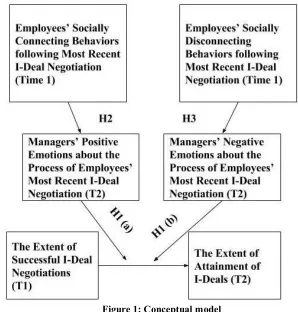
[image:39.595.182.480.241.553.2]managers’ emotions following recent i-deal negotiations also highlights whether, on receipt of i-deals, employees are likely to share the benefits with co-workers (Ng & Feldman, 2012). Figure 1 depicts the proposed conceptual model. The next section develops the hypotheses of this study.
Figure 1: Conceptual model
3.2 Theory and Hypotheses
3.2.1 Enacting negotiated i-deals: The role of managers’ emotions
Managers are principal agents of their organizations, communicating the willingness of organizations to support the implementation of individualized work arrangements (Bal, van Kleef & Jansen, 2015). As a result of increasing decentralization in organizations, managers play a particularly crucial role in deciding on, modifying and implementing HR practices (e.g. Purcell & Hutchinson, 2007), such as i-deals (Farndale & Kelliher, 2013). Managers are important parties in i-deals because they are the primary targeted parties in this dyadic relationship and are likely to know about the unique work needs of employees in their team (Farndale & Kelliher, 2013); thus, they are able to ensure that negotiated deals are ultimately enacted (Rousseau, 2005). In facilitating the enactment of negotiated i-deals, managers aim to ensure that focal employees share their benefits with co-workers (Rousseau, 2005), so that such deals contribute to team efficiency and performance (Bal & Dorenbosch, 2015). When managers are convinced that their goals will be met through the provision of an i-deal to a focal employee who is likely to share its benefits with co-workers, they are more likely to support that employee in obtaining the negotiated i-deal. In focusing on managers’ emotions as an indication of their support for the attainment of i-deals, this study examines the role of managers’ emotions in
determining the extent to which successfully negotiated i-deals are enacted.
This study posits that when managers feel positive about the process of
employees’ most recent i-deal negotiations, the chances of successfully negotiated i-deals being put into place increase. Research on the affective-consistency of emotions supports this argument (Yu, 2009). A key tenet of this perspective is that individuals are motivated to maintain consistency between various attributes of the self, including feelings, attitudes and behaviours. In this respect, managers’
emotions may operate as cognitive filters, facilitating the development of affect-consistent behaviours and decisions (Seong & Choi, 2014; Yu, 2009). In the context of i-deals, it is expected that, if managers feel positive about the process of employees’ most recent i-deal negotiations, they will facilitate the enactment of those deals. On the other hand, if managers feel negative about the process of
Hypothesis 1: Managers’ emotions about the process of employees’
most recent i-deal negotiations moderate the association between successful i-deal negotiation and attainment. This relationship is stronger when managers feel positive (H1a) and weaker when managers feel negative (H1b) about the process of employees’ most recent i-deal negotiations.
3.2.2 Employees’ socially connecting and disconnecting behaviours and
managers’ emotions
As argued above, managers’ emotions about the process of employees’ i-deal negotiations are likely to determine the extent to which negotiated i-deals are enacted, raising the question of what influences how managers feel. This study argues that employees’ socially connecting and disconnecting behaviours following their most recent i-deal negotiations are likely to influence how managers feel about the negotiation process.
A key tenet of goal congruence theory (Kristof-Brown & Stevens, 2001) is that mutuality between one’s own goals and those of others positively influences one’s
subsequent attitudes, behaviours and emotional reactions (Seong & Choi, 2014). In the context of i-deals, a manager’s goal in facilitating the provision of an i-deal to a focal employee is to ensure that the deal is beneficial to the entire team (Bal & Rousseau, 2015). For this reason, managers will try to understand how, having negotiated i-deals, employees will use them: they may either use them for their own benefit, or share the benefits with co-workers, in line with managers’
ultimate goals (Mathieu et al., 2008).
One way for managers to understand employees’ goals and determine whether focal employees are likely to share the benefits of i-deals with co-workers is to observe their behaviours following recent i-deal negotiations. In this regard, Hornung, Rousseau and Glaser (2009) find that managers’ provision of i-deals is positively associated with their observation of employees’ proactive behaviours, such as initiative taking. This is because employees who take initiatives are expected to share the benefits of i-deals with co-workers and contribute to team efficiency (Rousseau, Ho & Greenberg, 2006). Collins, Cartwright and Hislop’s