Web-based self-care for acute non-specific
low back pain: An exploratory study of
user experience and acceptability
Weixi Yuan
Student: Weixi Yuan
Internal supervisor:
Dr. P. M. Carrera
External supervisors:
Prof.dr.ir. H.J. Hermens
W. O. N. d’Hollosy, Msc
Acknowledgements
This thesis is the final assignment of completing my master program of Health Science at the University of Twente. This research study was performed at Biomedical Signals and Systems, University of Twente. Looking back at this research study, I had a great opportunity to work with, and to learn from, experts in different fields.
I would like to express a special appreciation to my daily supervisor Wendy, for the patient guidance and inspirational advice in all the time of my research and writing thesis. Besides, I would like to express my gratitude to my internal supervisor Dr. Pricivel, who gave me insightful suggestions and guided me to perform a rigorous research study. I also would like to express my appreciation to Prof. Hermie for the constructive and informative comments for the revision of my thesis.
To conduct and complete the research study, I also want to thank researcher Marit from Roessingh Research and Development who provided a portal of an available website, helped to film and upload exercises. Physiotherapist Jan Herman offered his practice and supervision for performing those exercises. I also want to thank all the participants for my research with their enthusiasm.
Lastly, I want to thank my family and friends for supporting me to complete this research.
I hope you will enjoy reading it.
Weixi
Table of Contents
Acknowledgements 3
Abbreviations 5
List of figures 6
List of tables 6
Abstract 7
1 Introduction 8
1.1 Low back pain 8
1.2 Treatment 9
1.3 Web-based intervention 10
1.4 Objectives 11
2 Methods 13
2.1 First Study phase: Literature study 13
2.1.1 Interviews 14
2.2 Second Study Phase 15
2.2.1 Participants 15
2.2.2 Ethics considerations 15
2.2.3 Data collection instrument 16
2.2.4 Procedure of evaluation on participants 17
2.3 Reliability and validity 18
3 Results 19
3.1 Resulting classifications of and exercises to treating NSLBP 19
3.2 Interviews 21
3.3 Synthesis of literature and interviews 26
3.4 Evaluation 28
4 Discussion 33
5 Conclusion 35
Bibliography 36
Appendix 39
A: Questionnaire for interviews 39
B: TAM Questionnaire 42
C: Characteristics of included articles 46
D: Advice for self-care on mijntelerevalidatie.nl (In Dutch) 48
Abbreviations
CDSS Clinical Decision Support System GP General Practitioner
KNGF Koninklijk Nederlands Genootschap voor Fysiotherapie
LBP Low Back Pain
METC Medisch Ethische Toetsingscommissie NSLBP Non-Specific Low Back Pain
PEU Perceived Ease of Use
PT Physiotherapist
PU Perceived Usefulness RCT Randomized Controlled Trial
RNT RugNetwerk Twente
RRD Roessingh Research and Development TAM Technology Acceptance Model
List of figures
Figure 1 Location of low back pain 8
Figure 2 Classification of low back pain 9
Figure 3 Illustrative screenshots of portal of mijntelerevalidatie.nl (in Dutch) 10
Figure 4 Overview of the three pathways for care seeking based on the CDSS concept 11
Figure 5 Research process 13
Figure 6 Composed theoretical model on TAM 17
Figure 7 Frequency of subgroups of acute NSLBP as reported in interviews 25
Figure 8 Frequency of exericses of acute NSLBP as reported in interviews 25
Figure 9 Results of the three “Most liked” and “Least liked” exercises rated by participants 29
List of tables
Table 1 Pre-determined themes of the questionnaire 15
Table 2 Different classification systems of NSLBP 20
Table 3 Characteristics of physiotherapist participants 22
Table 4 Results of partially retrieved exercises from interviews with PTs 24
Table 5 Categories on mijntelerevalidatie.nl (in English) 26
Table 6 Results of retrieved exercises (in English) and advice with their original information source 27
Table 7 General characteristics of evaluation participants 28
Table 8 Descriptive statistics of participants’ responses to TAM questionnaire 29
Table 9 “Most liked” and “Least liked” exercises selected by participants 30
Table 10 Main positive points of self-care on mijntelerelidatie.nl and its frequency 32
Abstract
Background
This study is an initial attempt to gain insight into the experiences and acceptance of people with acute non-specific low back pain receiving web-based self-care prior to visiting health care providers in Twente. The self-care was performed on mijntelerevalidatie.nl, which is an online intervention providing healthcare service to chronic ill patients at home.
Method
Literature study and semi-structured interviews were conducted to identify available effective exercises in physiotherapy. Existing exercises on mijntelerevalidatie.nl were then categorized for the web-based self-care of patients with acute non-specific low back pain. A mixed-methods approach was applied to elicit participants’ perception and experience in using the web-based self-care. The data were analyzed using qualitative analysis methods.
Results
Ten physiotherapists were interviewed. Combined with findings from literature study, exercises were categorized into four groups: range of motion (mobilization), stabilization, relaxation and pregnancy-related low back pain exercises. The advice was added by strong support from physiotherapists. Fifteen participants who reported with acute non-specific low back pain used the web-based self-care for one time, as lab study. Participants expressed the self-self-care was easy to understand and perform. They also showed interest and inclination to continue using it in real life. The key barrier in using web-based self-care was the lack of supervision from health care providers.
Conclusions
1
Introduction
This chapter introduces the main problems that are solved in this thesis. Background information and context of this research are presented to give readers an overview: definition of low back pain, its treatment, web-based intervention, objective of this research and research question.
1.1
Low back pain
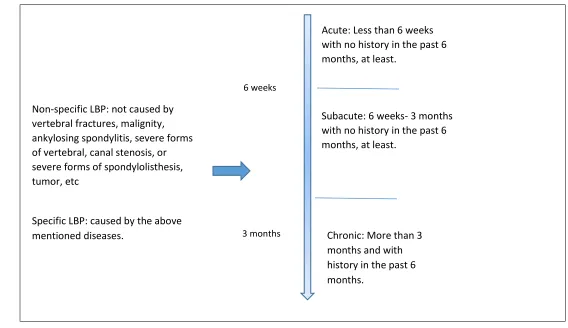
[image:8.720.269.430.469.707.2]Low back pain (LBP) is a problem that most people have experienced to some extent. It continues to be the leading cause of activity-limiting or disability for patients visiting primary care (van Tulder, et al., 2006; Suman et al., 2015; Koes, et al., 2010). The pain is below the costal margin, above the inferior gluteal folds (see Figure 1), and with or without leg pain. There are several types of LBP categorized. Acute LBP is defined as having LBP less than 6 weeks and it can develop to sub-acute and chronic LBP with a time period of more than 6 weeks and 3 months,respectively. Figure 2shows different types of LBP regarding their own clinical picture and etiology. The causes of LBP in primary care are hard to identify, but most are due to a mechanical factor related to a certain body musculoskeletal structure (Ladeira, 2011). It is reported that about 90% of all LBP is diagnosed as non-specific low back pain (NSLBP) and occurring in all age groups (Krismer &van Tulder., 2007; Staal et al., 2013). It is defined as not attributable to underlying pathological problems, such as vertebral fractures, malignity, ankylosing spondylitis, severe forms of vertebral, canal stenosis, or severe forms of spondylolisthesis, tumor, etc. NSLBP holds a risk of chronicity when left untreated. Among most of the acute LBP cases, patients can recover within 6 weeks without specific treatment, but the recurrent rate within one year is high (Krismer &van Tulder, 2007). Chronic LBP is an activity-limiting condition, thus this has resulted in calls for proper care education and relevant intervention in the acute phase. Only 50 percent of patients with LBP will seek care. A part of this group will stop consulting after getting better, although the chance for recurrence is high (Wand & O'Connell, 2008). LBP also brings enormous socioeconomic burden to individuals and society, through a high number of visits to health care providers, disability, sick leave, and lower productivity (Suman, et al., 2015). The chronic group of patients is the main source of the high costs (Burton et al., 2006). Therefore, preventing chronicity in the acute phase of LBP in primary care draws necessary attention. To avoid chronicity proper early intervention is essential.
Figure 1 Location of low back pain
Figure 2 Classification of low back pain
1.2
Treatment
Treatment of NSLBP in primary care to prevent recurrence, or chronic LBP, is conservative. European guidelines recommend patient education, spinal manipulation, physical modalities and medications (Koes et al., 2010). Modalities such as massage, ultrasound and traction have limited evidence support as treatments (Staal et al., 2013). Although European guidelines have little support for specific exercise programs as an early treatment, more recent studies demonstrated positive results of exercise on pain and disability functions (Fritz et al., 2003; van Middelkoop et al., 2010). Some of the common exercises generally known are stretching exercise, strengthen exercise, stabilization exercise (core stability), aerobic exercise, and back school (Smith et al., 2014). Although the systematic reviews have indicated the effectiveness of exercise for chronic NSLBP in some clinical outcomes, there is no clear evidence showing a particular type of exercise with priorities than other exercises (van Tuldar et al., 2000; van Middelkoop et al., 2010; Hayden et al., 2005; Lizier et al., 2012).
To make treatment effective, taking into account of the nature of NSLBP, the role of patients themselves is a crucial component as well. Self-care as an alternative way of seeking health care has been advocated in NSLBP, which could avoid barriers of unnecessary visits to health care professionals, time and access. A meta-analysis study of the effectiveness of self-care has shown decreased pain and disability (Oliveira et al., 2012).
Acute: Less than 6 weeks with no history in the past 6 months, at least.
6 weeks
Non-specific LBP: not caused by vertebral fractures, malignity, ankylosing spondylitis, severe forms of vertebral, canal stenosis, or severe forms of spondylolisthesis, tumor, etc
Specific LBP: caused by the above mentioned diseases.
Subacute: 6 weeks- 3 months with no history in the past 6 months, at least.
3 months Chronic: More than 3
1.3
Web-based intervention
Self-care can be applied with the implementation of available eHealth technology. E-Health is defined by Eysenbach (2001) as “an emerging field in the intersection of medical informatics, public health and business, referring to health services and information delivered or enhanced through the Internet and related technologies”. Nowadays, people have easy access to the internet for searching health-related information as an alternative way to gain knowledge. It leads to patient empowerment and reduces barriers of face meeting with health care providers (Zufferey et al., 2009).There has been increasing studies which investigate the usage of websites as a channel to deliver interventions to patients with LBP with mixed results (Weymann et al., 2015; Del Pozo-Cruz et al., 2013). One recent systematic review reported the effectiveness of web-based interventions to chronic LBP but with limited data (Garg et al., 2016). However, the diverse web-based interventions have been questioned regarding its quality. Meanwhile, the need of accurate online information is increasing. An evaluation study conducted by Hendrick et al., (2012) found out the online information of managing NSLBP was lacking evidence and the content was elusive for people to understand.
[image:10.720.54.646.373.608.2]Mijntelerevalidatie.nl is an online intervention, designed by Roessingh Research and Development (RRD) center. 1 It mainly has seen use in the elderly rehabilitation centers for chronic patients in the Netherlands. It contains patients’ health status monitoring, online exercises, lifestyle monitoring and online interaction with health care professionals. Patients become more independent through use of this website, being able to take care of themselves. As shown in Figure 3, screenshots of the portal of mijntelerevalidatie.nl, the top screenshot shows different categories of exercises, which are also highlighted. The bottom screenshot shows a particular exercise including video instruction.
Figure 3 Illustrative screenshots of portal of mijntelerevalidatie.nl (in Dutch)
1.4
Objectives
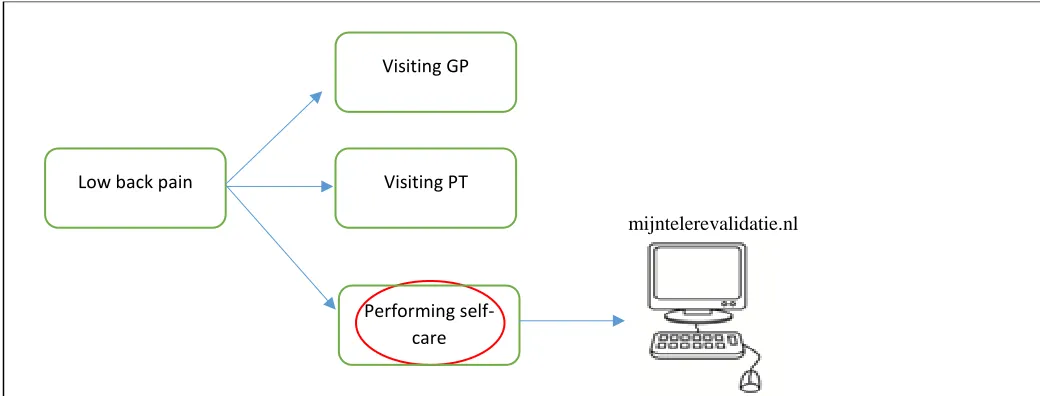
[image:11.720.89.609.224.422.2]In the Netherlands, patients can self-refer themselves to physiotherapists (PTs) for help, aside from only visiting general practitioners (GPs) as primary care (Leemrijse et al., 2008). Mostly PTs will be the main health care providers to give exercise treatment on NSLBP patients. In the UK, GPs have short consultation times due to their busy schedule, and they refer patients to PTs for further treatment (Geraghty, 2015). Based on the existing systems, self-care is added as a future design of a web-based clinical decision support system (CDSS) for managing LBP in primary care: visiting GP, visiting PT and self-care performance (d’hollosy et al., 2015). It helps to identify patients who are likely to have LBP that they can manage themselves without visiting health care providers. Figure 4 illustrates a simple structure of the three pathways. The highlighted self-care will be implemented through a web-based intervention, mijntelerevalidatie.nl.
Figure 4 Overview of the three pathways for care seeking based on the CDSS concept
However, no particular exercises were mentioned, and that could lead to the lack of generalizability of exercises. In terms of exercises treatment, the guidelines of Royal Dutch Physiotherapy (‘Koninklijk Nederlands Genootschap voor Fysiotherapie’ or KNGF) classify three patient profiles for NSLBP (Staal, et al., 2013). Besides, when looking at online exercises, the current ‘one-size fits all’ exercises poorly support individual patients, reducing the potential benefits, which in turn could lead to an ineffective intervention. To find out effective exercises of self-care, criteria to assure exercises regarding their effectiveness have been discussed (van Tuldar et al., 2000; Brennan et al., 2006).
Limited studies were carried out on web-based intervention for acute LBP compared to chronic LBP (van Middelkoop et al., 2010). Treatment of acute patients is as important as of chronic patients, as mentioned earlier. Therefore, this study will target patients who are able to manage their lower back pain independently in the acute phase.
mijntelerevalidatie.nl Low back pain
Visiting GP
Visiting PT
This study aims to provide insight into the issues on how patients experience online self-care prior to visiting health care providers. The objective of this study is to find out the evidence-based exercises for acute NSLBP and evaluate to what extent the potential users perceive the online self-care. For this phase of study, it is essential to receive early feedback on how the patient values the service. The global research question is:
“What is the evidence-base on exercises for acute non-specific lower back pain and the experience of users of self-care via mijntelerevalidatie.nl?”
Sub-questions:
● Is there already some existing classification of NSLBP?
o If yes, what are the subgroups and their corresponding exercises for patients in acute phase? ● What are the available effective exercises for patients with acute NSLBP?
● How do people with acute NSLBP perceive the acceptability and usability of the web-based self-care on mijntelerevalidatie.nl?
2
Methods
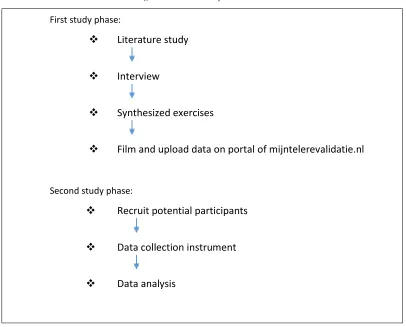
[image:13.720.158.564.170.497.2]This chapter explains how the study objectives will be achieved. Different steps have been followed (see Figure 5). The first phase consisted of a review of literature and interview to identify relevant exercises for acute NSLBP. The second phase was an evaluation of obtaining participants’ opinions and experience.
Figure 5 Research process
2.1
First Study phase: Literature study
To gather the evidence-based self-care exercises, a literature study was performed. The aim of the literature study was to identify: 1) possible subgroups of patients with LBP, 2) effective treatment for acute non-specific low back pain. The parameters of the effectiveness of LBP treatment were pain intensities and physical functioning (Chiarotto, et al., 2015).
First study phase:
Literature study
Interview
Synthesized exercises
Film and upload data on portal of mijntelerevalidatie.nl
Second study phase:
Recruit potential participants
Data collection instrument
The databases that have been used for searching were PubMed 2and Scopus3. Some articles were searched manually through reference lists of searched articles. Guidelines have been searched as well. During searching, the boolean operators “OR” and “AND” have been used for selecting the relevant resource. The search terms were as follows: “subgrouping”, “classification”, “non-specific low back pain” “self-care”, “therapeutic exercises”, “ANLBP”, “acute non-specific low back pain”, “pregnant low back pain”. During searching, results of pregnancy-related LBP were displayed. To get sufficient information, searching term like “pregnant low back pain” has been included as well. Starting from reading titles and abstracts based on exclusion criteria. If the articles or reviews seemed relevant, a full screening of the text was carried out.
Exclusion criteria:
● Not written in English
● Inclusive publication date before 2000 ● No full text available
● Exercises which patients cannot perform independently
● Chronic, subacute low back pain, the time period of low back pain was more than 6 weeks ● Not RCTs or reviews
● No lumbar related back pain mentioned for pregnancy-related low back pain
2.1.1
Interviews
To get the opinions and ideas on relevant exercise treatment attached to physiotherapists’ knowledge and experience, semi-structured interviews were performed. This method is widely used in qualitative research in the field of health care (Gill et al., 2008). Questions were open-ended to elicit enough information from interviewed participants.
Prior to interviews, a questionnaire was prepared (See Appendix A). As shown in Table 1, the questionnaire consisted of four themes which aimed to obtain more depth perspective, experience and opinions in clinical practice from PTs regarding treating patients. During the interview, questions were inserted to the progressed interview automatically to be able to get enough sources to answer the research question (Bryman, 2004). Recruitment criteria for the PTs were as follows: they were able to understand and speak English, had experience with treating LBP patients, and had an official diploma. All participants were informed about the purpose of the interview via emails. The interviews were audio recorded in English with the agreement of participants.
For analysis purposes, thematic analysis was conducted manually and inductively on Microsoft Word. It was considered as a basic method for data analysis of qualitative research (Thomas, 2006; Braun et al., 2015; Braun et al., 2006). It provides a flexible way of extracting concepts and themes from raw data. The whole process consisted of transcription, coding, clustering and interpretation. Recordings of the interviews have been listened iteratively and transcribed into text. After this stage, phrases or key words were made of what was being said in the text. This was also called “open coding” which means extracting participants’ own words from lines (Sparkes & Smith, 2014). For instance, the next stage was analyzing, categorizing coding into new themes with emerging data. Codings
were allocated under each of the themes or categories in a new page. From the obtained data, some overlapping words were deleted and similar concepts could be grouped together. In the end, the reduced data sheet can be interpreted to answer the research question. The final results were read and validated by three physiotherapy participants in order to reduce the element bias and approach a rigorous study (Brink, 1993; Thomas, 2006; Burnard et al., 2008). The procedure of coding and formulating categories were performed by one person.
Table 1 Pre-determined themes of the questionnaire
Subjects Purpose
Professional background To know their specialization and experience Professional experience and
perspective of treating LBP
To know to what extent they have worked with LBP and how they treat it
Exercise-therapy as the main intervention for self-care
To detect the most common exercises for self-care as used in daily practice
Relevant questions with regard to web-based self-care exercises
To get a general idea of issues about patients performance of exercises
2.2
Second Study Phase
The final selected exercises were viewed and verified by three PTs who have been interviewed as well. The obtained data of exercises were arranged and filmed by a researcher from RRD under the supervision of an experienced PT who also has been interviewed. A physiotherapy intern performed those exercises. The language of filming was in Dutch. After uploading exercises online, the evaluation started.
2.2.1
Particip
an
ts
Several approaches of sampling have been used to get eligible representative participants: public notification and emails, snowball sampling or word of mouth by some study participants. The tasks of this experiment were introduced and informed consent was obtained. Participants’ age was set between 18 and 65 years old. They were asked about the agreement to participate the study as a volunteer and self-reported the participating criteria. The inclusion criteria include: (i) LBP within a period of 6 weeks (ii) Have not received exercises from health care professionals (iii) Able to speak and understand Dutch and English (iv) Internet access at home. Exclusion criteria include: (i) Previous treatment received of low back pain in the past 6 months (ii) Traumatic, specific LBP or referred pain to legs.
2.2.2
Ethics considerations
2.2.3
Data collection instrument
Data from the evaluation session was obtained via observation notes during performance, questionnaires and semi-structured interviews.
To have an idea of the participants’ experience, usability and acceptability have been considered. Usability and acceptability evaluation of health information systems was assessed to know: how easily the participants could perform self-care and whether they liked it or not. There are different ways to evaluate usability and acceptability as a whole or separately (De Graaf et al., 2013; Kuhniruk et al., 2004; Albar et al., 2015). Albar et al., (2015) explained usability as “How the user values the system functions in terms of easy to use and learn, efficient to use, easy to remember, few errors and pleasant to use”, and acceptability is “user’s willingness within a special target group to employ the tool for the tasks it is designed to support”.
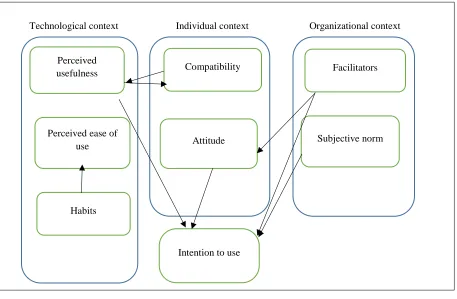
The questionnaire was useful as an extensively used tool to evaluate participant’s experience of self-care (Kushniruk & Patel, 2004). The Technology Acceptance Model (TAM) has been used in research study to assess acceptance, originally designed by Davis (Gagnon et al., 2012; Davis, 1989). The original TAM contained themes of perceived usefulness (PU) and perceived ease of use (PEU), which were defined as “the prospective user’s subjective probability that using a specific application system will increase his or her job performance within an organizational context” and “the degree to which the prospective user expects the target system to be free of effort” respectively (Alharbi & Drew, 2014). It is an intention-based model and aims to explaining the behavior of acceptance of computer technology (Hu et al., 1999). Its reliability and validity were verified with evidence (De Graaf et al., 2013). A modified TAM has been studied by Gagnon et al., (2012) for assessing the behavior intention and possibility of accepting health technology. As shown in Figure 6, the theory is based on three contexts: individual, technical and organizational sides. The theoretical framework also includes dimensions of “attitude”, “habit”, “compatibility”, “subjective norm” and “facilitators”. Concept of attitude gives an idea of perception of using online self-care by participants .Habit is understood as the behavior of using technology automatically. Compatibility is understood as to what extent the online self-care can integrated with current existing values and systems. Subjective norm helps to understand the believes from individual participants regarding using the online self-care. Following facilitators, which gives an idea of the extent to which participants think the technical issues to support the online self-care (Gagnon et al., 2012). Among those dimensions, studies showed that some of them affect each other positively (Alharbi & Drew, 2014; Gagnon et al., 2012). For example, PEU affects attitudes toward using a web-based care and when PU increases in also affects the intention to use positively to a web-based self-care in this study. The questionnaire is a 7 Likert scale and translated into Dutch in this study (See Appendix B).
Figure 6 Composed theoretical model on TAM
Technological context Individual context Organizational context
(Gagnon et al., 2012)
2.2.4
Procedure of evaluation on participants
The evaluation of the web-based self-care performance was arranged as a laboratory study. Prior to collecting data, one participant was conducted to test the time spending, exercise performing session and questionnaire of the evaluation session.
All participants were given verbal and written information about this study, tasks and voluntariness before they start to use the online self-care as well as interviews. They were also instructed to speak out loud about things they liked and disliked during the performance (Kuhniruk et al., 2004). A study evaluator accompanied the participants while performing the self-care. In that case, information of how participant felt and performed of each exercise could be easily collected by taking notes and recordings. A physical place was chosen with enough space, a yoga mattress chair and computer with internet. In following up the self-care part, a pen-and-paper questionnaire with open-ended questions was approached to participants, which contained such questions as i) What are the three positive points of the web-based self-care from your experience? ii) What are the three negative points of the web-based self-care from your experience? iii) What are the three exercises you like most? iv) What are the three exercises you like least? v) Do you feel safe to perform those exercises? Three participants were interviewed via a skype meeting instead of face-to-face due to the fact that they were located remotely.
Perceived
usefulness Compatibility Facilitators
Perceived ease of
use Attitude
Habits
Intention to use
2.3
Reliability and validity
3
Results
This chapter describes the findings of relevant exercises as well as the evaluation of participants’ experience with the assessment.
3.1
Resulting classifications of and exercises to treating NSLBP
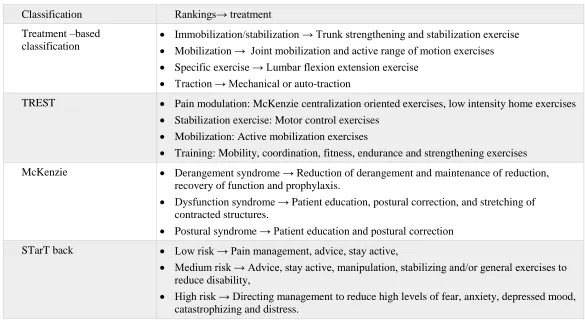
The existing classification systems are categorized based on mechanical, patho-anatomical, and bio-psychosocial domains: treatment-based classification, McKenzie and STarTback screening tool. Table 2 displays the available subgrouping methods with their corresponding treatments. It should be noted that there are some similarities between those classifications and their corresponding treatments.
Treatment-based classification
The treatment-based classifications was initially proposed by Delottie et al., (1995) and was based on the results of diagnosis of symptoms and impairments (George, et al., 2008). Studies have been discussed the effectiveness of this classification (Fritz et al., 2003; Hebert et al., 2011; George et al., 2008). The 4 treatment-based classification subgroups are: immobilization, mobilization, specific exercise and traction. A later feasibility study designed treatment-strategy-based classification (TREST) which was based on the concept of treatment-based classification.in primary care (Widerström et al., 2016). It also has 4 subgroups: pain modulation, stabilization exercise, mobilization and training. In terms of stabilization exercises, Kisner & Colby (2007) recommended a series of progressive exercises for training stability of lower back.
McKenzie
The McKenzie approach was based on biomechanical factors and divided into three subgroups: derangement syndrome, dysfunction syndrome and postural syndrome (Machado et al., 2010). This broadly studied method emphasizes on the treatment approach of postural correction, repeated end-range movements of restricted direction (Machado et al., 2005). It has two concepts namely directional preference and centralization phenomena movement. Directional preference means that movement in one direction, such as flexion, extension or lateral flexion, can relieve symptoms. This was also mentioned in the treatment-based classification. Centralization refers to pain centralized to the spine and it helps to better understand which movement of the lower spine is suitable for individual patient (Machado et al., 2010).
STarTback screening tool
Table 2 Different classification systems of NSLBP
Classification Rankings→ treatment
Treatment –based classification
Immobilization/stabilization → Trunk strengthening and stabilization exercise Mobilization → Joint mobilization and active range of motion exercises Specific exercise → Lumbar flexion extension exercise
Traction → Mechanical or auto-traction
TREST Pain modulation: McKenzie centralization oriented exercises, low intensity home exercises Stabilization exercise: Motor control exercises
Mobilization: Active mobilization exercises
Training: Mobility, coordination, fitness, endurance and strengthening exercises
McKenzie Derangement syndrome → Reduction of derangement and maintenance of reduction, recovery of function and prophylaxis.
Dysfunction syndrome → Patient education, postural correction, and stretching of contracted structures.
Postural syndrome → Patient education and postural correction
STarT back Low risk → Pain management, advice, stay active,
Medium risk → Advice, stay active, manipulation, stabilizing and/or general exercises to reduce disability,
High risk → Directing management to reduce high levels of fear, anxiety, depressed mood, catastrophizing and distress.
Pregnancy-related low back pain exercises
3.2
Interviews
The interview was conducted in English. The interview lasted 30 to 45 minutes. All participants were contacted through email for details of the research and by telephone for further confirmation of the interview. In total ten PTs participated in the interview. They shared their experience and perspectives regarding treating patients with low back pain. Their working experience ranged from 3 to 40 years and the average was 19.5 years. All the PTs are locals except for one that works in a German clinic but received education in the Netherlands. Of the PTs, eight are manual therapists and two are general physiotherapists. The key participants’ characteristics are detailed in Table 3.
The perception of subgrouping
All PTs agreed that it was necessary to have different groups of people with acute NSLBP. Most of them were aware of KNGF guidelines to give treatments “Someone who comes in the first week for the pain, can get back to work and do activities, and that’s patient profile 1. Pretty normal. Delayed curing, you don’t see any improvements within the first a few weeks, then you know there is a yellow flag. Profile 3 is also delayed cure with yellow flags. There are a lot different contributing factors to prevent recovering. Based on those profiles, then I know what my focus on to treat patients is” [P01].
Table 3 Characteristics of physiotherapist participants
Number of participant
Specialty field Years of experience
Gender
P01 Manual therapy 12 Female
P02 Manual therapy 6 Male
P03 Manual therapist/pelvic
therapy, pregnant, breathing therapy
38 Female
P04 Manual therapy 40 Male
P05 General physiotherapy 4 Female
P06 Manual therapy 17 Female
P07 General physiotherapy 3 Female
P08 Manual therapy 41 Male
P09 General physiotherapy/
edema
therapy/oncology therapy
24 Female
P10 Manual therapy 10 Male
19.5 (average)
The way how PTs perceived subgrouping of acute NSLBP was based on their clinical diagnoses. Common cognition of subgroups have been shared by PTs with slight differences due to their practice experience. As participant 05 reported: “When patients come here, I ask their stories to decide whether they have acute low back pain. Some tests of instability or mobilization problems…there are a lot of reasons. Most of the time it is with instability and mobilization problems” [P05]. “If it is stress, overuse, weakness, problems in their
head or not, whether they are pregnant…what are their job ...” [P03]. “Some groups have specific things in their stories, which can be disc or joints problems...Instability as joints blockages, hypomobility of the low back… the mobility is a problem due to joints problems. Overuse as gardening in Saturdays or Sundays, then Monday they got acute pain…" [P10]. Similarly, participant 02 reported “instability, stiffness, and work-related problems”. Besides, PTs also perceived a group of patients that had difficult in performing exercises and it could be due to “For fear of avoidance patients, I just expose them to move on bicycles and walk. Keep them active. If you give specific exercises they will still scare and no use. Currently, we try to make subgroups: flexibility, stability, fear of avoidance” [P01].
The perception of giving exercises
The majority of PTs noted that giving advice was essential in the beginning along with exercises. Advice was aimed at giving suggestions of proper movements to avoid pain provocation “I start with a lot of advice, because patients are scared to move around…I told them
to change your posture a few times a day, don’t do one thing for too long, sit for a few minutes then stand or walk a bit ” [P05]. PTs had a strong favor of walking as a treatment “walking is the most important…walking actually is the most effective one” [P01] and “if walking is a problem, then do smaller steps of walking” [P02].
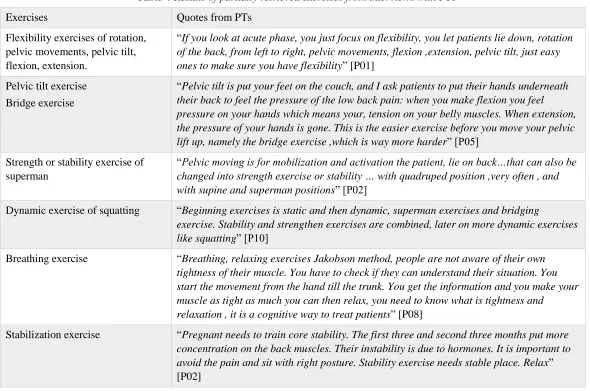
In terms of specific exercises, Table 4 illustrates an overview of partially retrieved exercises based on PTs clinical experience. Along with sharing specific exercises, PTs also expressed some considerations in relation to giving exercises to patients. From clinical experience, PTs reported that exercises were recommended to perform after less pain or under pain tolerance “For every exercise, it is important that patients don’t get pain during the exercises” [P05] and “when pain is decreasing…then you can go further from mobility and strength exercise” [P02].
Although there were various exercises, a certain sequence of performing a specific type of exercise has been pointed out “First you do mobilization let the patient know the right movement…Then you can add stabilization exercises” [P09] and “Mobility exercise, that’s the basic ones and then I will train stability with other exercises” [P10].
PTs gave common examples of exercises applied in practice as well as specific tactics to perform those exercises in a right way. In addition, PTs named the same exercise with slightly different terms. To achieve different treatment goals, adjusting the level of each exercise has been concerned by PTs “Then you build up and you use light exercise for extension, lying down on your tummy when you can stabilize then you do plank with hands, make it heavier” [P09].
PTs acknowledged that some of these exercises were not completely evidence-based “LBP networking is where I learned things, not sure if it is evidence-based but I saw this is effective on my patients” [P10] and “…I am not sure the exercises are studied. Quadruped exercise has been studied, for example, adding arms and legs will be more effective than only arms” [P02]. Besides, practical experience
Table 4 Results of partially retrieved exercises from interviews with PTs
Exercises Quotes from PTs
Flexibility exercises of rotation, pelvic movements, pelvic tilt, flexion, extension.
“If you look at acute phase, you just focus on flexibility, you let patients lie down, rotation of the back, from left to right, pelvic movements, flexion ,extension, pelvic tilt, just easy ones to make sure you have flexibility” [P01]
Pelvic tilt exercise Bridge exercise
“Pelvic tilt is put your feet on the couch, and I ask patients to put their hands underneath their back to feel the pressure of the low back pain: when you make flexion you feel pressure on your hands which means your, tension on your belly muscles. When extension, the pressure of your hands is gone. This is the easier exercise before you move your pelvic lift up, namely the bridge exercise ,which is way more harder” [P05]
Strength or stability exercise of superman
“Pelvic moving is for mobilization and activation the patient, lie on back…that can also be changed into strength exercise or stability … with quadruped position ,very often , and with supine and superman positions” [P02]
Dynamic exercise of squatting “Beginning exercises is static and then dynamic, superman exercises and bridging
exercise. Stability and strengthen exercises are combined, later on more dynamic exercises like squatting” [P10]
Breathing exercise “Breathing, relaxing exercises Jakobson method, people are not aware of their own tightness of their muscle. You have to check if they can understand their situation. You start the movement from the hand till the trunk. You get the information and you make your muscle as tight as much you can then relax, you need to know what is tightness and
relaxation , it is a cognitive way to treat patients” [P08]
Stabilization exercise “Pregnant needs to train core stability. The first three and second three months put more concentration on the back muscles. Their instability is due to hormones. It is important to avoid the pain and sit with right posture. Stability exercise needs stable place. Relax”
[P02]
Summary
Figure 7 Frequency of subgroups of acute NSLBP as reported in interviews
[image:25.720.155.548.368.680.2]
3.3
Synthesis of literature and interviews
[image:26.720.114.590.250.437.2]Self-care consisted of five parts, as illustrated in Table 5. The self-care advice recommended proper movements of daily physical activities to protect and relieve the pain of their lower back. For example, how to sit down, standing up from chair and car and laying down. Appendix D displays the online content of the advice part. The exercises consisted of mobility/range of motion, stability, relaxation and pregnancy-related exercise. Mobility exercises were designed to increase the range of motion of low back which also involved large movements of joints. Stability exercise aimed at improving and strengthening postural stability and deep core stability of abdominal muscles followed by global muscle. Relaxation exercises were performed to feel the sensation of a particular muscle group by contracting and releasing, in order to relax other parts of the body. The exercises for pregnancy-related exercises were focused on stabilization and strengthening deep and global muscles. The videos of each exercise last around one and half minutes, which included verbal guidance in Dutch. Appendix E shows the screenshots of mijntelerevalidatie.nl.
Table 5 Categories on mijntelerevalidatie.nl (in English)
Content Description
Mobility / Range of motion Improve mobility in the lower back for better performance of daily activities.
Stability Improve control and an increase in strength of the muscles in the lower back.
Pregnancy-related exercises Strengthen and support lower back. This category displayed exercise to improve control and an increase in strength of the muscles in the lower back.
Relaxation Reduce the muscle tension
Advice, education This category displayed exercise that focusing on strengthening and support lower back.
Table 6 represents a detailed illustration elements included on mijntelerevalidatie.nl as well as their source of information: Exercise 1-7: Mobility/range of motion exercise
Exercise 8-25: Stabilization exercise Exercise 26-27: Relaxation exercise
Exercise 10-13 and 28-31: Pregnancy-related stabilization exercise Elements 32-34: Advice
[image:26.720.115.588.253.436.2]Table 6 Results of retrieved exercises (in English) and advice with their original information source
Elements on mijntelerevalidatie.nl Type of Source Categories on mijntelerevalidatie.nl Literature Book Interview Advice Mobility / range
of motion exercise Stability exercise Relaxation exercise Pregnancy-related stabilization exercise
1. Rotation (standing) X X
2. Rotation (supine) X X X
3. Lateral flexion (standing) X X X
4. Extension (standing) X X X
5. Flexion (supine) X X X
6. Extension (prone) X X X
7. Lateral flexion (supine) X X
8. Draw-in /pelvic tilt (prone) X X X
9. Draw-in /pelvic tilt (supine) X X X
10.Superman X X X
11.Bridge X X X
12.Squat X X X X
13.Squat (progressive) X X X X
14.Lunge X X
15.Plank (knee on the ground) X X
16.Plank (progressive) X X
17.Prone, lift up one leg X X
18.Prone, lift up both legs X X
19.Prone, lift up upper back X X
20.Prone, lift up both legs and arms (upper back) X X
21.Supine, lift up one leg X X
22.Supine, progressive lifting up one leg X X
23.Supine, progressive lifting up one leg X X
24.Supine, lifting up both legs X X X
25.Supine, lifting up both legs X X
26.Relaxation (lying) X X X
27.Relaxation (sitting) X X X
28.Squat ( pregnant)
29.Pelvic floor (with chair) X X X X
30.Pelvic floor (supine) X X X
31.Leaning forward against wall X X
3.4
Evaluation
In total, 15 eligible participants were recruited and their characteristics are presented in Table 7. The average age of participants was 36.1 years old (SD=14.35). All the 15 participants performed the web-based self-care as well as filled in the questionnaire and joined the interviews. Five of them went through the whole process via skype. The average performance time was around 45 minutes for performing self-care and 25 minutes for interview and questionnaire. Participants had different knowledge of these exercises which influenced the time and the amount of exercises they tried. For example, participant 08 was playing hockey and used to do some similar exercises which made her know what exercises or movements she could get help with. Participants 06 tried almost all the exercises since she had little knowledge of which exercises were best for her.
TAM questionnaires displayed participants rating results. The perceived attitude, PEU and PU were rated relatively higher among other dimensions which can be seen in Table 8. PEU was scored at a mean value of 1.87, followed by attitude and PEU with a mean value of 1.71 and 1.70, respectively. A score of 2 implies that participants “zeer mee eens (strongly agree)” with the statements on the questionnaire. While a score of 1 implies that participants “Mee eens (agree)” in terms of intention (μ=1.29), compatibility (μ=0.77), facilitators (μ=1.58) and subjective norms (μ=1.16).
[image:28.720.203.501.422.516.2]Figure 9 illustrates the number of each exercise “liked most or least” by participants. It shows a wide variation among those exercises. There were four exercises with “like least” and two exercises didn’t have any comments. The “like least” exercises which were shown in grey, were relatively heavier and recommended for sportive person. When it comes to the relaxation exercise, the lying position (Exercise 26) gained significant preference from participants, compared to sitting position (Exercise 27). The reason for this could be that there were only two types of exercises under the category of relaxation. The rotation exercise (Exercise 1) and superman (Exercise10) have gained interests among participants.
Table 7 General characteristics of evaluation participants
Variables
Number of participants n = 15 (Pregnant n= 3)
Age 36.1 (SD=14.35)
Gender Female 11
Table 8 Descriptive statistics of participants’ responses to TAM questionnaire
Dimensions Minimum maximum Sum Mean Std. Deviation
Intention 0.00 3.00 19.33 1.2889 .88072
Attitude .67 2.67 25.67 1.7111 .54724
PEU .17 3.00 28.17 1.8778 .80046
PU .83 2.50 25.50 1.7000 .53154
Compatibility -1.00 1.67 11.33 .7556 .77117
Habits 0.00 2.00 16.33 1.0889 .62319
Facilitators 1.00 3.00 23.67 1.5778 .55587
Subjective norm
-.67 3.00 17.33 1.1556 1.11175
Figure 9 Results of the three “Most liked” and “Least liked” exercises rated by participants
0 2 4 6 8 10 12 14 16
1 2 3 4 5 6 7 8 9 10 11 12 13 14 15 16 17 18 19 20 21 22 23 24 25 26 27 28 29 30 31
N
u
m
b
er
o
f p
ar
ticiap
n
ts
Exercises
[image:29.720.88.615.325.628.2]Table 9 “Most liked” and “Least liked” exercises selected by participants
P1 P2 P3 P4 P5 P6 P7 P8 P9 P10 P11 P12 P13 P14 P15 E1
E2 E3 E4 E5 E6 E7 E8 E9 E10 E11 E12 E13 E14 E15 E16 E17 E18 E19 E20 E21 E22 E23 E24 E25 E26 E27 E28 E29 E30 E31
*P1-P15 means the 15 participants who join the web-based self-care evaluation session. E1-E31means the 31 exercises.
From an individual participant point of view, Table 9 elaborates the underlying reasons for rated exercises from Table 7. The four colors represent participants’ main concerns in relation to specific exercises. The space in white means those exercises did not have any comments from participants. For instance, exercise 26 has been chosen by 15 participants which can be read from Figure 9 as well. The cell of participant 12 is in blue which indicated that the main reason for choosing exercise 26 is due to its easiness. The rest of participants considered exercise 26 which is relaxing and comfortable.
The orange color indicates the Physical sensation The green color indicates the Cognitive thinking The blue color indicates the Level of exercise
Physical sensation
The majority of participants expressed the preference of exercise has a strong relation to their own physical sensation since that was a reaction they can tell immediately. All participants showed high preference of exercises which can help in decreasing pain. For example,
“…helping me to relieve my pain, more comfortable...” [P02], “I can control and feel less pain...” [P01], and “...feel relaxing...” [P11].
In other words, exercises with pain provocation had little support or were avoided by participants, which was consistent with the recommendation of doing exercise within pain-free range given by the PTs. For example, most participants had least favor of exercises “causing pain” [P02, P03, P06, P07, P08,].
Cognitive thinking
As shared by several participants, it was not only their sensation but also the way they value the utility of exercises that dominated their preference. For example, pain was not a definite barrier to decrease participants’ interests “I like it but just I am not able to do it right now with my knee problems” [P07]. Participants expressed the effectiveness of exercise as another frequently mentioned concern. The
perceived effectiveness was either due to their previous experience or the current perception “I know it that can do well on myself in a long term” [P09] and “I know I will get benefits from it” [P15]. Besides, based on different background and knowledge, participants held
open or closed attitudes while performing exercises within tolerant pain to get better or avoid the exercise. Additionally, participants tended to select exercises which were familiar to them as well. With limited knowledge of exercise, participants used common sense to select “that’s also not a normal position I will like” [P12].
Level of exercise
Most participants expressed their concern that difficult exercises prevent them from getting any help which can lower their interests of practice. Participants showed strong support towards “easy to do” exercises. Subsequently, participants expressed less interests to “its heavy” [P01, P07, P08] and “hard to perform” [P03] exercises. However, individual participants perceived different utility regarding
the level of exercises “it is heavy but good for my lower back” [P11].
Accessibility of receiving exercise
It is not only about the level of the exercise perceived by participants, but the basic environment that support the ability to perform the exercise. Half of the participants acknowledged that convenience in terms of place, material and timing of performing those exercises influenced their preference. Especially for those who had full-time work, they preferred exercises which could be integrated into their daily pattern. Awareness of practicing exercise in daily life stays low, which makes the timing of the exercise an essential factor that cannot be ignored. As three participants noted, “I can do it when I just get up, still in bed...it doesn’t fit my daily schedule, this one I really have to think about...” [P05], and “I can do it...before going to bed ” [P09,P10]. Exercises that can not only be performed at home
but also working place. As two participants expressed “I can use it during my work” [P12] and “can do it with a chair and a table, it is good to do exercise during the day” [P06]. The duration of performing exercise can be a barrier despite its benefits, as expressed by one
participant “the exercise is comfortable but it takes too long to perform” [P08].
made five participants think they have another choice to receive care. Participant 05 expressed “don’t need to go to family doctors”. However, three participants mentioned that they preferred to use this platform after visiting GPs. The content has been favored by nearly half of the participants “a video which makes me understand the exercises…not complicated to perform and easy to understand” [P14].
However, relatively older participants needed repeated times of watching the video and reading the texts to do the exercise. Four participants emphasized that the self-care was good for them and they believed that it brought benefit to them. Three participants requested the real usage of this self-care.
Table 10 Main positive points of self-care on mijntelerelidatie.nl and its frequency
Summarized words Number of participants (n=15) No location and time boundaries 9
Videos 6
No need for appointment 5
Personal choice 4
Useful/effective 4
Layout 2
[image:32.720.186.522.190.347.2]Compatibility 1
Table 11 Main negative points of self-care on c and its frequency
Summarized words Number of participants (n=15)
Lack of supervision 10
Instructions/content ( consistency, sequence)
5
Adherence 3
Layout 2
On the other hand, ten out of 15 participants expressed the uncertainty of lacking of supervision from the beginning and during the performance. For example, one participant reported “I can make a wrong decision…nobody checks if you do the exercise in the right
way” [P05]. Although the idea of online self-care was supported, the adherence of following the web-based self-care was doubtful by
4
Discussion
This chapter presents the current findings and justifies the approach to answering the research question and limitations of this research study.
Following a review of the literature on exercises for NSLBP, interviews with PTs and evaluations by participants using mijntelerevalidie.nl, the current study recommends general exercises for participants with acute non-specific LBP as well as found the acceptability among users of self-care via Teleravalidatie.nl before visiting health care professionals. To our knowledge, the present study is the first to focus and explore participants’ experience of the web-based self-care at the acute phase of NSLBP prior to visiting GPs or PTs.
No specific studies of subgrouping non-specific LBP at the acute phase were revealed by literature study, but were mixed with chronic and acute phases. Overall, a large amount of articles were excluded. Classification systems were presented in order to match patients with appropriate treatments. Although it has been drawn attention to the importance of classifications, the quality of those existing ones are conflicting and there is no priority among them (Mistry et al., 2014). The findings of this study reveals that PTs preferred categorizing problems based on the mechanism of body functions rather than age groups. The role of PTs is giving physical exercise treatment regarding musculoskeletal problems, and it might influence their point of view to classify subgroups in the way of treatment-based management. In addition, the slightly different perception of subgroupings and exercises treatment might be due to individual physiotherapist’s knowledge and clinical experience. As some of the interviewed PTs mentioned that the exercise treatment was learned from their previous education, work experience, colleagues and extra courses. Similarly, exercise programs in previous studies were designed by fitness instructors or PTs, which might lead to different exercises and impacts due to individual knowledge and preferences (Sparkes & Smith, 2014).
Besides, two PTs mentioned their subgroupings of ANSLBP also includes: work-related posture, body structure, overuse and unknown causes, which were not mentioned in the categories found in the literature. These subgroups are more likely related to problems from lifestyle. It may be a topic for future research to classify subgroups of patients in the acute phase, which aligns closer to clinical practice. In terms of specific exercises, limited studies supported and mentioned a particular type of effective exercise for acute non-specific LBP, although more studies have been studied in a chronic phase.
During interviewing, from the physiotherapists’ perspective it was hard to summarize common exercises, since treatment was based on the individual diagnosis. They emphasized various reasons: other problematic body structure, psychological problems, or the patients’ capability of performing exercises. All of these could make it hard to have a list of common exercises that PTs could give to their own patients. Another reason for the limited availability of information on these exercises can be found in the fact that sharing treatment plans with a third party isn’t encouraged. Sparkes & Smith (2014) reported that limitation of retrieving information can come up during interviews.
Suman et al.,(2015).
It appeared (although not significantly) that the PEU, attitude and PU had the better influence on the acceptance of this web-based self-care. However, the low perceived compatibility on TAM might indicate that most of the participants had little agreement on the web-based self-care could bring extra benefits to the current healthcare system. In terms of this online intervention, its easy access without physical and time limitations were profoundly supported by participants, as well as videos which helped them remember exercises clearly. Everyone could find exercises they preferred within a pain threshold they perceived. The layout of this site was clear for viewing, but the sequence of progressive stabilization exercises should be rearranged from a technical aspect. Plus, participants appeared to have no doubts about its convenience but were more likely to use it under supervision or guidance. This is especially true for those who did not have much experience with physical exercises and preferred confirming with their GP or PT beforehand. Therefore, on one side, web-based self-care offers participants’ more choices on selecting exercises, but on the other hand, participants were also not confident of their own choices. The findings of this study also raise concerns on who makes the decision, on which exercises to pick up, and to what extent participants can be sure that exercises are performed correctly. These doubts bring uncertainties to participants using online self-care prior to visiting health care providers. A study from Zufferey & Schulz (2009) had similar results, that the way people use web-based care had strong relation with the individual’s previous experience and their ability of self-management.
5
Conclusion
The current study explored the experience and views of participants with acute NSLBP performing self-care via mijntelerevalidatie.nl. The findings of the evaluation phase pointed out that participants held a positive attitude of using this online self-care. All participants showed their preference of exercises and were able to perform them with the online instructions independently. Exercises which were easy and comfortable to perform have been favored mostly by participants. With the free and easy access, participants’ expressed strong interest in using the web-based self-care over time. However, the weak aspects of the self-care revealed it was lacking of supervision or guidance, unclear content and low perceived compatibility from participants. The exercises and advice of the self-care were mainly obtained from physiotherapy clinical practice. The shared exercises were categorized into subgroups due to their function on patients’ lower back.
Bibliography
Alharbi, S., & Drew, S. (2014).Using the Technology Acceptance Model in Understanding Academics’ Behavioural Intention to Use Learning Management Systems. International Journal of Advanced Computer Science and Applications(IJACSA), 5(1): 143-155.
Albar, S. A., Carter, M. C., Alwan, N. A., & Evans, C. E. (2015). Formative evaluation of the usability and acceptability of myfood24 among adolesents: a UK online dietary assessments tool. BMC Nutrition, 1: 29.
Anderson, C. (2010). Presenting and Evaluating Qualitative Research. American Journal of pharmaceutical Education, 74(8): 141.
Brennan , G. P., Fritz , J. M., Hunter , S. J., Thackeray , A., Delitto , A., & Erhard , R. E. (2006). Identifying subgroups of patients with acute/subacute "nonspecific" low back pain: results of a randomized clinical trial. Spine, 31(6): 623-31.
Braun V, Clarke V., & Terry G. ( 2015). Thematic analysis. Qualitative research in clinical and health psychology, 95: 113.
Braun V., & Clarke V. (2006). Using thematic analysis in psychology. Qualitative research in psychology, (2): 77-101.
Brink, H. I. (1993). Validity and reliability in qualitative research. SA Society of Nurse Researchers Workshop, 16(2).
Bryman,A. (2004). Social Research Methods. (2nd Ed.). New York; Oxford: oxford University Press.
Burnard,P., Gill,P., Stewart,K.,Treasure, E., & Chadwick, B. (2008). Analyzing and presenting qualitative data. British Dental Journal , 204, 429 – 432.
Burton, A. K., Balagué, F., Cardon, G., Eriksen, H. R., Henrotin, Y., Lahad, A., & On behalf of the COST B13 Working Group on Guidelines for Prevention in Low Back Pain. (2006). Chapter 2 European guidelines for prevention in low back pain. 2: S136-68.
Chiarotto, A., Deyo, R. A., Terwee, B. C., Boers, M., Buchbinder, R., Corbin, T. P., et al. (2015). Core outcome domains for clinical trials in non-specific low back pain. Eur Spine J, 1127-1142.
Davis,F. (1989). Perceived usefulness, Perceived ease of use, and user acceptance of information technology.MIS Quarterly, 13(3): 319-339.
De Graaf, M., Totte, J., Breugem, C., van Os-Medendorp, H., & Pasmans, S. (2013). Evaluation of the Compliance, Acceptance, and Usability of a Web-Based eHealth Intervention for Parents of Children With Infantile Hemangiomas: Usability Study. JMIR Research protacal, 2(2): e54.
del Pozo-Cruz , B., Gusi , N., del Pozo-Cruz, J., Adsuar, J., & Hernandez-Mocholí , M. (2013). Clinical effects of a nine-month web-based intervention in subacute non-specific low back pain patients: a randomized controlled trial. Clin Rehabil, 28-39.
Delitto, A., Erhard, R.E., & Bowling, R.W. (1995). A treatment-based classification approach to low back syndrome: identifying and staging patients for conservative treatment. Physical Therapy,75: 470–485.
Depledge , J., McNair , P. J., Keal-Smith , C., & Williams , M. (2005). Management of symphysis pubis dysfunction during pregnancy using exercise and pelvic support belts. Phys Ther, 1290-300.
d’Hollosy, O. W., Velsen, L. v., Groothuis-Oudshoorn, K. G., Soer, R., & Hermens, H. (2016). hould I see a Healthcare Professional or can I perform Self-care: Self-Referral Decision Support for Patients with Low Back Pain. 495-503.
Eggen, M. H., Stuge, B., Mowinckel, P., Jensen, K. S., & Hagen, K. B. (2012). Can supervised group exercises including ergonomic advice reduce the prevalence and severity of low back pain and pelvic girdle pain in pregnancy? A randomized controlled trial. Phys Ther. 92(6): 781-90.
Eysenbach, G. (2001). What is e-health? Journal of Medical Internet Research, 3(2),e20.
Fritz, J. M., Delitto, A., & Erhard, R. E. (2003). Comparison of classification-based physical therapy with therapy based on clinical practice guidelines for patients with acute low back pain: a randomized clinical trial. Spine, 28, 1363–1371.
Garg, S., Garg, D., Turin, T. C., & Chowdhury, M. F. U. (2016). Web-Based Interventions for Chronic Back Pain: A Systematic Review. Journal of Medical Internet Research, 18(7): e139.
George, S. Z., Zeppieri Jr, G., Cere, A. L., Cere, M. R., Borut, M. S., & Hodges, M. J., et al. (2008). A randomized trial of behavioral physical therapy interventions. Pain , 145–157.
Geraghty, A.W.A.,Stanford, R., & Little, P.,et al. (2015) Using an internet intervention to support self-management of low back pain in primary care: protocol for a randomised controlled feasibility trial (SupportBack). BMJ, 5: e0009524.
Gill, P., Stewart , K., Treasure , E., & Chadwick, B. (2008). Methods of data collection in qualitative research: interviews and focus groups. British dental journal, 204(6): 291-295.
Hayden J, van Tulder MW, Malmivaara A, & Koes BW. (2005).Exercise therapy for treatment of non-specific low back pain. Cochrane Database Syst Rev. 20(3).
Hebert, J. J., Koppenhaver, S. L., & Walker, B. F. (2011). Subgrouping Patients With Low Back Pain: A Treatment-Based Approach to Classification. Sports Health, 3(6): 534–542.
Hendrick, P. A., Ahmed, O. H., Bankier, S. S., Chan, T. J., Crawford, S. A., Ryder, C. R., et al. (2012). Acute low back pain information online: An evaluation of quality, content accuracy and readability of related websites. Manual Therapy , 17(4): 318 - 324.
Hu, P., Chau, P., Sheng, O., & Tam, K. (1999). Examing the technology aceptance model using physician acceptance of telemedicine technology.
Journal of Management Information Systems. 16(2): 91-112.
Kashanian, M., Akbari, Z., & Alizadeh, M. H.(2009). The effect of exercise on back pain and lordosis in pregnant women. Internaltioanl Jounral of Gynecology & Obstetrics. 107(2): 160-161.
Koes, B. W., van Tulder, M., Lin, C.-W. C., Macedo, L. G., McAuley, J., & Maher, C. (2010). An updated overview of clinical guidelines for the management of non-specific low back pain in primary care. European Spine Journal. 2075–2094.
Krismer, M., & van Tulder, M. (2007). Low back pain ( non-specific). Best Practice & Research Clinical Rheumatology.77-91.
Kinser, C., & Colby, L. A. (2007).Therapeutic exercise :foundations and techniques. 460-463. Philadelphia: Margaret Biblis.
Kushniruk , A. W., & Patel, V. L. (2004). Cognitive and usability engineering methods for the evaluation of clinical information systems.
Biomedical informatics, 56-76.
Ladeira, C.E. (2011). Evidence based practice guidelines for management of low back pain: physical therapy implication. Brazilian Journal of Physical Therapy.15(3): 190-9.
Leemrijse, C.J.,Swinkels,I.C.,&Veenhof,C. (2008). Direct access to physical therapy in the Netherlands: results from the first year in community-based physical therapy. Phys Ther. 88(8): 936-46.
Machado, L. A., Maher, C. G., & Herbert, R. D. (2010). The effectiveness of the McKenzie method in addition to first-line care for acute low back pain: a randomized controlled trial. BMC Medicine, 8(10).
Machado, L. A., Maher, C. G., Herbert1, R. D., Clare, H., & McAuley, J. (2005). The McKenzie method for the management of acute non-specificlow back pain: design of a randomised controlled trial. BMC Musculoskeletal Disorders, 6:50.
Martins, R. F., & Silva, J. L. (2014). Treatment of pregnancy-related lumbar and pelvic girdle pain by the yoga method: A randomized controlled study. The Journal of Alternative and Complementary Medicine, 24-31.
Mistry , D., Patel, S., Psychol, H. C., Hee, S. W., Stallard, N., & Underwood, M. (2014). Evaluating the Quality of Subgroup Analyses in Randomized Controlled Trials of Therapist-Delivered Interventions for Nonspecifi c Low Back Pain. Spine, 618-629.
Oliveira, V. C., Ferreira, P. H., Maher, C. G., Pinto, R. Z., Refshauge, K. M.,& Ferreira, M. L. (2012), Effectiveness of self-management of low back pain: Systematic review with meta-analysis. Arthritis Care Res, 64: 1739–1748.
O’sullivan,P., & Lin I. (2014). Acute low back pain Beyond drug therapies. Pain Management Today. 1(1): 8-13.
Staal, J. B., Hendrinks, E. J., Kiers, H., Lutgers-BoomsmaV, A. M., RuttenVI, G., van Tulder, M. V., et al. (2013). KNGF Clinical Practice Guideline for Physical Therapy in patients with low back pain. Royal Dutch Society for Physical Therapy.
Suman, A., Schaafsma, F. G., Elders, P. J., van Tulder, M. v., & Anema, J. R. (2015). Cost-effectiveness of a multifaceted implementation strategy for the Dutch multidisciplinary guideline for nonspecific low back pain: design of a stepped-wedge cluster randomised controlled trial.
BMC Public Health, 15: 522.
Thomas, D. (2006). A General Inductive Approach for Analyzing Qualitative Evaluation Data. American Journal of Evaluation, 237-246.
van Middelkoop,M., Rubinstein,S.M.,Verhagen, A.P.,Ostelo,R.W.,Koes,B.W.,van Tulder,M.W. (2010). Exercise therapy for chronic nonspecific low-back pain. Best Practice & Research Clinical Rheumatology. 24(2): 193 – 204.
van Tulder, M. v., Becker, A., Bekkering, T., Breen, A., Real, M. T., Hutchinson, A. (2006). European guidelines for the management of acute nonspecific low back pain in primary care. Eur Spine, 15: 169-191.Chapter 3.
van Tulder M.W., Malmivaara A, Esmail R, & Koes B.W. Exercise therapy for low-back pain. (2000). The Cochrane Database of Systematic Reviews, (2): CD000335.
Wand, B. M., & O'Connell, N. E. (2008). Chronic non-specific low back pain – sub-groups or a single mechanism? BMC Musculoskeletal Disorders, 9:11.
Weymann, N., Dirmaier, J., von Wolff, A., Kriston, L., & Härter, M. (2015). Effectiveness of a Web-Based Tailored Interactive Health Communication Application for Patients With Type 2 Diabetes or Chronic Low Back Pain: Randomized Controlled Trial. Journal of Medical Internet Research, 17(3): e53.
Widerström, B., Olofsson, N., Boström, C., & Rasmussen-Barr, E. (2016). Feasibility of the subgroup criteria included in the treatment-strategy-based (TREST) classification system (CS) for patients with non-specific low back pain (NSLBP). Manual Therapy, 23: 90–97.
Yan, C. F., Huang, Y. C., Gau, M. L., & Lin, K. C. (2014). Effects of a stability ball exercise programme on low back pain and daily life interference during pregnancy. Midwifery, 412-419.
Zufferey M.C., & Schulz,P.J. (2009). Self-management of chronic low back pain: An exploration of the impact of a patient-centered website.