Accepted Manuscript
Novel Layered Perovskite SmBaMn2O5+δ for SOFCs Anode Material Abdalla M. Abdalla, Shahzad Hossain, Pg Mohd Iskandar Petra, Cristian D. Savaniu, John T.S. Irvine, Abul K. Azad
PII: S0167-577X(17)30911-4
DOI: http://dx.doi.org/10.1016/j.matlet.2017.06.029
Reference: MLBLUE 22741
To appear in: Materials Letters Received Date: 11 March 2017 Revised Date: 20 May 2017 Accepted Date: 6 June 2017
Please cite this article as: A.M. Abdalla, S. Hossain, P.M.I. Petra, C.D. Savaniu, J.T.S. Irvine, A.K. Azad, Novel Layered Perovskite SmBaMn2O5+δ for SOFCs Anode Material, Materials Letters (2017), doi: http://dx.doi.org/ 10.1016/j.matlet.2017.06.029
Novel Layered PerovskiteSmBaMn2O5+δ for SOFCs Anode Material
Abdalla M. Abdalla1,2*, Shahzad Hossain1,3, Pg Mohd. Iskandar Petra1, Cristian D. Savaniu4, John T. S. Irvine4, Abul K. Azad1,*
1
Faculty of Integrated Technologies, Universiti Brunei Darussalam, Jalan Tungku Link, Gadong BE 1410, Brunei
Darussalam
2
Mechanical Engineering Department, Faculty of Engineering, Suez Canal University, Ismailia 41522, Egypt
3
Institute of Nuclear Science and Technology, Bangladesh Atomic Energy Commission, GPO Box No 3787, Dhaka 1000,
Bangladesh
4
Center for Advanced Material, School of Chemistry, University of St Andrews, Fife KY169ST, Scotland, UK
*Corresponding author: [email protected] /[email protected] and [email protected] Abstract
SmBaMn2O5+δ (SBMO), a novel layered perovskite compound with samarium based material (Sm+3) as
rare earth doped in A-site was synthesized and processed by using dry chemistry method (solid state
solution). Structural characterization of SBMO has been investigated by X-ray diffraction (XRD) and
scanning electron microscopy (SEM). While, thermal and electrochemical testing were done by using
thermogravimetric analysis (TGA) and current voltage measurements. The Rietveld analysis of XRD
data shows that SBMO was crystallized in the orthorhombic structure with the Pmmm space group.
The surface morphology images showed a porous structure which indicates that this material can be
used as a potential electrode in solid oxide fuel cells (SOFCs). TGA result showed the mass loss of
0.022% for SmBaMn2O5+δ which is very small and indicates that the material is very stable. DC
conductivity and performance test were done at RT in air atmosphere. The performance tests have
done at 800 °C and 750 °C and the maximum power density was found to be 0.4 W/cm2 at 800 oC.
Keywords: Layered pervoskite; structural analysis; power density measurements, SOFCs anode.
1. Introduction
Nowadays, SOFCs are considered the most promising energy conversion devices and its efficiency
is to get the highest performance through electrochemical reactions [1-2]. SOFCs have versatile
applications in energy sector like; transportation, remote power sources, military use, remote villages,
involvement with the fuel. Therefore, anode supported fuel cell depletes huge percetage of the total
utilized materials (around 95% or more) as anode and essentially required a good ohmic resistance in
the cell [3-5]. The cell fabrication methods are mainly depend on: firstly, easy processing and secondly,
minimization of the interfacial reactions between the dense electrolyte and the porous electrode
materials [6,7]. The state-of-the-art anode material is Ni/YSZ cermet which are usually made of the
commercial NiO and YSZ powders. They are homogenized by sonication method, ball milling and
mechanical mixing. Therefore, their electrochemical properties are critically rely on both allocations of
Ni and YSZ phases inside the microstructure [8]. However, Ni particles aggregate and reduce the
porosity percentage of the anode through the elimination of triple-phase boundary (TPB) required for
cell operation. But its effects on cell performance is negative and always decreases the value of the
performance. Most well-known types of perovskite materials ABO3-δ and A2B2O5+δ are aimed to use in
SOFC anodes, and are essentially needed to overcome high temperature sintering and to exhibit high
electrical conductivity at elevated temperature. Hence, this achievements requires different types of
elements either A or B sites with acceptor-or donor-type cations [9]. Samarium oxide Sm2O3 has been
reported as a good catalyst with low activation energies [10,11]. Accordingly, samarium doped
materials [12] has also showed that the conversion of the Sm+3 to Sm+2 species can occurs at same time
with the oxidation of the other doped materials. Hence, the possibility of this enhancement through
research can results in the use of samarium based material doped with other elements as an electrode in
SOFCs.
2. Experimental
The materail SmBaMn2O5+δ (SBMO) was prepared by solid state reaction method.
Stoichiometric amount of Sm2O3, BaCO3 and Mn2O3 were mixed together with ethanol and in a roller
type ball mill for 24 hours. The formed powder was dried and calcined at 800 °C for 8 hours. The
collected powder was then mixed in an agate mortar pestle, pelletised and fired at 1200 °C and finally
sintered at 1400 °C for 12 hours. The heating and cooling rate was 5 °C/min. Afterwards the structural
SIEMENS Diffraktometer (D5000 Kristalloflex, λ = 1.5406 Å) in the range of 10º ≤ 2θ≤ 80° with the
step size of 0.01. The SEM images were collected on the pellet surface using a JSM-7610F (SEM) and
the TGA analysis were made using the ASTM E1131. A dc conductivity jig of 4-terminals (Van der
Pauw, an in house built dc conductivity jig) was used to measure the dc conductivity of the material and
was done in air at 850 °C. Cell performance tests were measured at 800 °C and 750 °C.
3. Results and Discussion
3.1Structural analysis
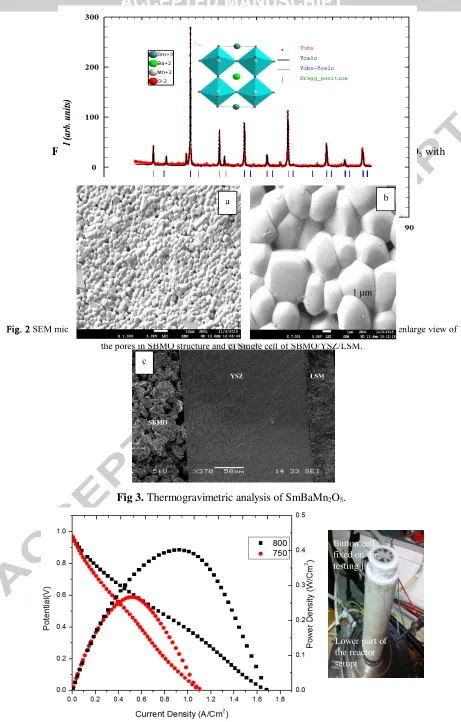
Figure 1 shows the Rietveld refinment analysis of the XRD data of SmBaMn2O5+ δ by using
Fullprof software [13] and the schematic 3D crystal structure has been shown in the insert. The XRD
pattern was indexed by using the TREOR90 [14] and SPUDS software [15] was used to obtain the
atomic positions. The main phase of SBMO exhibits an orthorhombic crystal structure with the Pmmm
space group; while a tiny hexagonal phase (less than 5% of the main phase) of Sm2O3 was observed in
the R-3c space group. Rietveld refinement converged in a very good χ2 (= 1.25). The cell parameters
and cell volume are shown in Table 1. The structure was confirmed as layered perovskite-type. A
substantial reflection broadening was observed in the XRD pattern which reflects micro-strain
broadening because of compositional non-uniformity, which can be observed clearly from the
G-Fourier analysis. Williamson - Hall calculations also showed high strain broadening effect in this
material. It is interesting to see that the unit cell dimension and volume differs from simple perovskite,
while the composition was made in the layered perovskite form. This difference is mainly due to the
oxygen occupancy in the cell [5,17].
3.2Microstructural analysis
The morophological images indicate that this material have an accepted porosity percentage and
crystallinity which makes it an appropriate selection as electrode for SOFCs applications. The
percentage of porosity could be increased further through addition of pore-formers. This morphology
gives an excellent stability and reversibility of oxygen storage-related process. Figure 2(a-c) shows the
3.3TGA measurement
TGA of SBMO was done in air with a portion of coulometric titrated in order to evaluate the
absolute oxygen content. There was a very small percentage of mass loss started from room
temperature to 200 oC. The initial mass loss might be related to the evaporation of moisture from the
sample. After 200 °C the mass gradually losses and continued until 1000 °C because of the formation of
oxygen vacancies as shown in Fig 3. The total mass loss is about 0.022%. The total mass loss is mainly
due to the oxygen loss from the structure.
3.4Performance test
3.4.1 Electrical conductivity
The DC conductivity of the sample was calculated according to Uhilr equation (1) [18]:
(1)
Where d is the spacing between the attached wires, t is the bar thickness and Lavis the effective length
during the measurements. SBMO exhibits good electrical conductivity of 8 S/cm at 850 °C in air. The
obtained high value of electrical conductivity is due to the rapid reactions of the doped elements
especially of Mn+3which have high stability with oxygen species.
3.4.2 Power density
Single cell of SmBaMn2O5/YSZ/La0.75Sr0.25MnO3 was prepared with an attachment of Pt current
collector and fixed on the testing jig (see fig 4) with aremco ceramic paste. Then the whole setup was
placed in a dual chamber SOFC. The measurements were done at 800 °C and 750 °C using air in the
cathode side and 5% H2/Ar in the anode side with the flow rate of 100 ml/S. The obtained results is
shown in Fig 4 represents a high power density of 0.4 W/cm2 at 800 °C under the testing atmosphere
and it decreases with the decrease in temperature.
The SBMO layered perovskite was successfully synthesized by solid state reaction method.
According to our characterizations, this material shows high conductivity in air (about 8 S/cm at 850
°C). The power density was also very promising (0.40 W/cm2). The structural analyses were done for
investigating the space group and cell parameters. Careful analysis of the peak splitting, we have found
the correct space group and accurate structural parameters. In the performance test, this material
showed promising results to be used as SOFC anode which is electrochemically very stable.
Acknowledgment
The authors Abdalla M. Abdalla and Shahzad Hossain are tahnkful to the Graduate Research Office of Universiti Brunei Darussalam for Graduate Research Scholarship (GRS) for funding this research work done.
References
[1]N. Q. Minh, J. Am. Ceram. Soc. 76, (1993) 563–588 . [2]S. M. Haile, Acta Mater. 51, (2003) 5981–6000 .
[3]A. Ghosh, A. K. Azad, and J. T. S. Irvine, ECS Transac. 35, ( 2011) 1337-1343.
[4]N. P. Brandon, S. Skinner, & B. C. H. Steele, Annu. Rev. Mater. Res. 33, (2003)183–213. [5]A. Atkinson, S. Barnett, R. J. Gorte, J. T. S. Irvine, A. J. McEvoy, M. Mogensen, S. C.
Singhal & J. Vohs Nature Mater. 3, (2004)17–27 .
[6]S. Sengodan, S. Choi, A. Jun, T. H. Shin, Y. Ju, H. Y. Jeong, J. Shin, J. T. S. Irvine, and G. Kim, Nat Mater, (2014)1–5.
[7]A. K. Azad, J. H. Kim, J. T. S. Irvine, J of Power Sources, 196, (2011)7333-7337. [8]A. K. Azad, J. T. S. Irvine, Solid State Ionics, 192, (2011) 225-228.
[9]K. Hirota, H. Hatta, M. Io, M. Yoshinaka, and O. Yamaguchi, Mater. Sci. Eng. B, 8, (2003)3431–3435.
[10] A. A. Tolstopyatova, YIJ Ch'i-chan, and L. S. Gorshkova, J. Russian Chemical Bulletin, 13, no 1, (1964) 6-9.
[11] G. A. M. Hussein, D. J. Buttrey, P. DeSanto Jr, A. A. Abd-Elgaber, H. Roshdy and A. Y. Z. Myhoub, J of Thermochimica Acta, 402, (2003)pp. 27–36.
[12] F. Meng, T. Xia, J. Wang, Z. Shi, H. Zhao, J. Power Sources, 293, (2015)741-750. [13] J. Rodríguez-Carvajal, Phys. B Condens. Matter, vol. 192, pp. 55–69, 1993.
[14] P. E. Werner, L. Eriksson, and M. Westdahl, J. Appl. Crystallogr., 18, no. 5, (1985) 367–370. [15] M .W.Lufaso and P . M. Edward, J Acta Crystal., B57, (1998)725-738.
[16] I. O Troyanchuka, S. V Trukhanova, D. D Khalyavina, H. Szymczakb, J. Magnetism and Magnetic Materials, 208, no3(2000) 217–220.
[17] A. Klimkowicz, K. Swierczek, A. Takasaki, and J. Molenda , J. Material Research Bulletin, 65, (2015) 116-122.
Fig. 1 Rietveld refinement of the X-ray diffraction (XRD) patterns of SmBaMn2O5 with insertion of 3D crystal structure.
Fig. Fig. Fig.
Fig. 2222 SEM micrographs showing the different particle sizes and morphologies of (a) SmBaMn2O5, (b) enlarge view of
the pores in SBMO structure and c) Single cell of SBMO/YSZ/LSM.
Fig 3. Thermogravimetric analysis of SmBaMn2O5.
LSM
SBMO
YSZ
a b
a
c a
1 µm
Table 1. Cell parameters of the tested materials.
Chemical composition
Phase structure Space group
a (Å)
α(º)=β(º=γ(º)=90
b (Å)
γ(º)=120
c (Å) V (Å3)
SmBaMn2O5 Orthorhombic
Hexagonal
Pmmm R-3c
3.877(9) 5.6589(7)
3.8704(3) 7.7556(5)
4.6685(1)
116.405(6) 149.504(1) BaSmMn2O5* Tetragonal P4/nmm 5.5963(1) 7.7105(1) 241.48(1)
Highlights
SmBaMn2O5+d layered Perovskite for SOFCs anode materials.
SBMO crystallize in the orthorhombic symmetry in the (Pmmm S.G).
High DC electrical conductivity of 8 Scm-1 at 850 °C.