ABSTRACT
HILL, KEVIN ANTHONY. The Sensitivity of Tropical Cyclone Simulations in the WRF
Model to Surface Layer and Planetary Boundary Layer Parameterization. (Under the
direction of Dr. Gary M. Lackmann).
The high wind speeds found in tropical cyclones fundamentally change the
physical processes by which heat, moisture and momentum are transferred between the
ocean and the lower atmosphere. Despite this fact, surface and boundary layer
parameterization schemes in many numerical models that are frequently used for tropical
cyclone simulations are based on assumptions made in more tranquil atmospheric
conditions. Limited observations in the high wind speed conditions found in strong
tropical cyclones suggest that spray and foam can enhance the transfer of heat and
moisture from the ocean to the atmosphere, while reducing drag. Inclusion of the effects
due to sea spray in a numerical model leads to stronger tropical cyclones (Wang et al.
2001, Perrie et al. 2005).
Based upon the absence of sea spray effects and the values of the exchange
coefficients in the WRF model, it was anticipated that simulations using an idealized
vortex and ambient environment would not reach the thermodynamically estimated
theoretical maximum intensity (MPI) limit of Emanuel (1986). In addition, it was
parameterization choice. Grid spacing was also hypothesized to impact the simulated TC
intensity, with the expectation that simulations with smaller grid spacing would produce
more intense TCs, based on the results of previous studies.
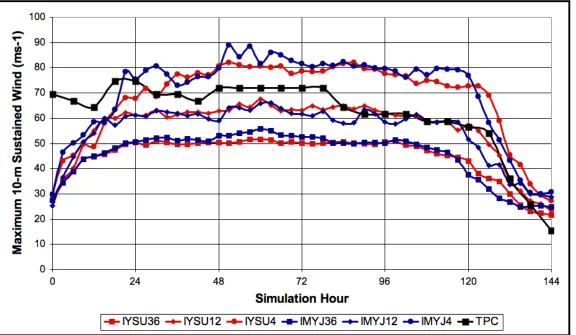
Simulated TC intensity is found to be highly sensitive to model grid spacing in
experiments with Hurricane Ivan or with an idealized initial vortex. Simulations using
4-km grid spacing were able to produce TCs that exceeded the MPI of the idealized
environment (determined by minimum sea level pressure), while simulations using
coarser (12 or 36-km) grid spacing were not. Simulations of Hurricane Ivan using 4-km
grid spacing, initialized with a vortex that was ~60 hPa weaker than observations reached
the maximum intensity of the observed system, and exceeded the observed intensity
during the latter stages of the simulation. These results suggest that the WRF model, in
its current configuration, overestimates TC intensity, especially with small values of
horizontal grid spacing. If the exchange of moisture, heat and momentum were adjusted
to more accurately portray the conditions found in high wind speed conditions, the
idealized tropical cyclone would likely exceed the theoretical MPI by an even larger
amount. Therefore, it is concluded that some other aspect of the model formulation may
lead to an overestimation of tropical cyclone intensity, or that there are deficiencies in
MPI theory.
The Sensitivity of Tropical Cyclone Simulations in the WRF Model to Surface Layer
and Planetary Boundary Layer Parameterization.
By
Kevin Anthony Hill
A thesis submitted to the Graduate Faculty of
North Carolina State University
in partial fulfillment of the requirements for the Degree of
Master of Science
MARINE, EARTH, AND ATMOSPHERIC SCIENCES
Raleigh
2006
APPROVED BY:
Dr. Gary M. Lackmann
(Chair of Advisory Committee)
BIOGRAPHY
Kevin was born in Buffalo, NY on 11 November 1982, and graduated from
Clarence High School in 2000. Kevin’s first fascination with meteorology was with lake
effect snowstorms, which dump large amounts of snow in very isolated areas. Living
north of the typically hard hit locations, Kevin would often wonder why his hometown
would often be spared the heaviest snow, while young men in other towns would be
blessed with copious amounts snow (and, more importantly, days off of school). The
first meteorology lesson that Kevin learned was that wind circulated in a
counter-clockwise direction around low-pressure systems. Often, the location of the low pressure
systems passing to the north of WNY would dictate precisely how the winds lined up
across Lake Erie, and whether or not Kevin would have to go to school. On the other
extreme of meteorological phenomenon, Kevin became interested in tropical cyclones as
well. In the days before vast amounts of data were available to the public on the internet,
Kevin would make sitting in front of the television at 50 past the hour to watch the
Weather Channel’s tropical update a priority during times of tropical activity.
During high school, Kevin learned that he had an aptitude for math and science,
and upon arriving at The State University of New York at Brockport, he chose to major
in meteorology and minor in math and statistics, while taking additional courses in
physics and computer science in order to prepare for graduate school. During his senior
year, Kevin got his first taste of research by performing a senior seminar project
mathematics and statistics, Kevin began graduate school in Atmospheric Science at
NCSU under the advisement of Dr. Gary. M. Lackmann in the fall of 2004. Kevin
benefited from a flexible research topic and an advisor willing to tailor the project to his
interests, allowing the research to remain intriguing and fresh throughout its course of
development. Kevin presented his preliminary research results on “Steady-state
ACKNOWLEDGEMENTS
I would like to thank the members of my advisory committee, Drs. Gary
Lackmann, Lian Xie, and Sethu Raman, for their insights and helpful suggestions. I
would especially like to thank Dr. Gary Lackmann for allowing me the opportunity to
choose a research topic that was of particular interest to me. It has truly been a pleasure
working on this project under his advisement, and I feel incredibly lucky to have been
accepted into his research group. I hope he is happy with his decision!
My friends are also acknowledged for providing activities that got my mind off of
the large amount of work that lay before me! I have truly enjoyed my graduate
TABLE OF CONTENTS
Page
LIST OF TABLES
xi
LIST OF FIGURES
xii
1) INTRODUCTION
1
1.1) Motivation
1
1.2) Literature Review
4
1.2.1) TC Energetics: Initial Theory, and Oceanic Influence
4
1.2.2) The Surface Layer in a Hurricane: Theory, Modeling, and Observations 6
1.2.3) The PBL in a Hurricane: Theory, Modeling, and Observations 12
1.2.4) Maximum Potential Intensity (MPI) Theory
14
1.2.5) Literature Review Summary
20
1.3) Hypotheses
21
1.4) Thesis Outline
23
2) METHODOLOGY
27
2.1) Weather Research and Forecasting Model Version 2.1.2
27
2.1.1) Model Description
27
2.1.2) Initial and Boundary Conditions
27
2.1.3) Physics Options in All Simulations
28
2.1.4) Planetary Boundary Layer Schemes
30
2.1.4.1) Yonsei-University (YSU)
30
2.1.5.1) Scheme Used with YSU PBL
32
2.1.5.2) Scheme Used with MYJ PBL
33
2.2) Initial and Boundary Conditions
35
2.2.1) Idealized Model Experiments
35
2.2.1.1) Lateral Boundary Conditions
36
2.2.1.2) Initial Vortex
37
2.2.1.2.1) Blending the Eye and Ambient Temperature Profiles 38
2.2.1.2.2) Calculation of Sea Level Pressure and Height
39
2.2.1.2.3) Calculating Wind Speed
42
2.2.1.3) Model Configuration of Idealized Simulations
43
2.2.2) Hurricane Ivan Experiments
44
2.3) Model Simulation Analysis
45
2.3.1) TC Intensity
45
2.3.2) TC Track
46
2.3.3) Area Averaged Values
46
2.3.4) Azimuthal Averaging
46
2.3.5) RMW, Radius of TS and Hurricane Force Wind
47
2.3.6) Surface Layer Exchange Coefficients
47
2.3.7) Fluxes and Exchange Coefficients as a Function of Wind Speed
49
2.3.8) Time Averaging
49
3) HURRICANE IVAN (2004)
61
3.1) Storm Information
61
3.2) Does WRF Produce a Realistic TC Structure 62
3.3) Time-series of Model Parameters
64
3.3.1) Track
64
3.3.2) Intensity
64
3.3.2.1) Minimum Sea Level Pressure (MSLP)
64
3.3.3) Values of Fluxes Produced by Surface Layer Parameterization
68
3.3.3.1) Latent Heat Flux (LHFLX)
68
3.3.3.2) Sensible Heat Flux (HFLX)
69
3.3.4) Precipitation Amount
70
3.4) Sensitivity of MYJ Simulations to Vertical Resolution
71
3.4.1) Track
71
3.4.2) Intensity
72
3.4.3) Difference in Area-Averaged LHFLX and HFLX
73
3.4.4) Sensitivity to Vertical Resolution Summary
74
3.5) Wind Speed Dependence of Surface Layer Parameters
75
3.5.1) Latent Heat Flux (LHFLX)
76
3.5.2) Exchange Coefficient for Moisture (Cq)
77
3.5.3) Sensible Heat Flux (HFLX)
79
3.5.4) Exchange Coefficient for Sensible Heat (Ck)
79
3.5.5) Roughness Length
81
3.5.6) Exchange Coefficient for Momentum (Cd)
81
3.5.7) Ratio Ck/Cd .
81
3.6) Time-Averaged Structure
82
3.6.1) Storm Structure During Averaging Period
83
3.6.1.1) Maximum 10-m Wind and MSLP
83
3.6.1.2) Simulated Radar Structure
83
3.6.1.3) Precipitation Structure
84
3.6.2) Time and Azimuthally-Averaged 2-D Horizontal Structure
84
3.6.2.1) Sea Level Pressure (SLP)
85
3.6.2.2) 10-m Wind Speed
85
3.6.2.3) Latent Heat Flux (LHFLX)
86
3.6.2.4) Sensible Heat Flux (HFLX)
86
3.6.3) Time and Azimuthally-Averaged 3-D Structure
87
3.6.3.1) Vertical Motion
88
3.6.3.2) Specific Humidity
89
3.6.3.3) Wind Speed
90
3.6.3.3.1) Normalized Profiles and Comparison with
90
Observations
3.6.3.3.2) Cross Sections of Tangential Velocity
91
3.6.3.3.3) Velocity Tendency due to PBL parameterization 91
3.6.3.4) Potential Temperature
92
3.6.3.4.1) Potential Temperature Tendency due to PBL
Parameterization
93
3.7) General Conclusions Regarding Ivan Simulations
93
4) IDEALIZED EXPERIMENTS
159
4.1) WRF Model Simulation Overview
160
4.1.1) Intensity
161
4.1.1.1) Minimum SLP
161
4.1.1.2) Maximum 10-m Wind Speed
161
4.1.2) Values of Fluxes Produced by Surface Layer Parameterization
163
4.1.2.1) Latent Heat Flux
163
4.1.2.2) Sensible Heat Flux
164
4.1.3) Precipitation Amount
165
4.2) Storm Structure Change
165
4.2.1) Sea Level Pressure Distribution
166
4.2.2) 10-m Wind Distribution
167
4.2.3) Radius of Maximum, Tropical Storm, and Hurricane Force Wind Radii
167
4.2.4) Comparison of Size with Observed TCs
168
4.2.5) Pressure and Wind Relationship
169
4.2.6) Summary of Structure Change
170
4.3.1) Latent Heat Flux
171
4.3.2) Exchange Coefficient for Moisture
172
4.3.3) Sensible Heat Flux
173
4.3.4) Exchange Coefficient for Sensible Heat
173
4.3.5) Roughness Length
174
4.3.6) Exchange Coefficient for Momentum
174
4.3.7) Ratio Ck/Cd
174
4.4) Time-Averaged Structure
175
4.4.1) Storm Structure during Averaging Period
176
4.4.1.1) SLP and 10-m Wind Distribution
176
4.4.1.2) Simulated Radar Structure
177
4.4.1.3) Precipitation Structure
178
4.4.2) Time and Azimuthally-Averaged 2-D Horizontal Structure
179
4.4.2.1) Sea Level Pressure
179
4.4.2.2) 10-m Wind Speed
179
4.4.2.3) Latent Heat Flux
180
4.4.2.4) Sensible Heat Flux
181
4.4.3) Time and Azimuthally-Averaged 3-D Structure
181
4.4.3.1) Vertical Motion
182
4.4.3.1.1) Downward Vertical Motion Cross Sections
182
4.4.3.1.2) Upward Vertical Motion Cross Sections
182
4.4.3.2) Specific Humidity
183
4.4.3.3) Wind Speed
184
4.4.3.3.1) Normalized Profiles and Comparison with
184
Observations
5) CONCLUSIONS AND FUTURE RESEARCH
242
5.1) Overview
242
5.2) Review of Hypotheses
243
5.3) Comparison of Simulated and Theoretical Maximum Intensity
243
5.4) Comparison of Simulated and Observed Intensity for Hurricane Ivan
244
5.5) Sensitivity to Grid Spacing
244
5.6) Sensitivity to Surface Layer Parameterization
245
5.7) Sensitivity to PBL Parameterization
246
5.8) Summary and Future Work
247
LIST OF TABLES
Page
TABLE 3.1 List of simulation names for Ivan simulations
98
TABLE 3.2 Average track-forecast error (km) for many different forecast models
and the NHC official forecast. Error listed in km, with the number of
cases in parentheses
98
TABLE 3.3 Track errors (in km) for Ivan simulations
99
TABLE 3.4 492-km area-averaged values from time averaged TCs
95
TABLE 4.1 List of simulation names for idealized simulations
190
TABLE 4.2 Simulation hours of maximum 10-m wind speed and minimum sea
level pressure (MSLP). MSLP values exceeding theoretical MPI
in bold
190
LIST OF FIGURES
Page
FIG. 1.1. Official National Hurricane Center intensity forecast error, for the
period 1990 – 1997. From Avila, 1998
25
FIG. 1.2. Exchange coefficients for drag (CD, in blue) and heat (CK, in green).
From Large and Pond (1982)
25
FIG. 1.3. Schematic of the PBL structure in a mature hurricane.
From Anthes, 1982
26
FIG. 2.1. Mean hurricane season temperature profile as calculated by Jordan
(1958) (red curve) and best-fit logarithmic regression equation
(black curve). Equation based on temperature values below the
tropopause (below ~ 110 hPa)
51
FIG. 2.2. Mean hurricane season temperature profile as calculated by Jordan
(1958) (red curve) and best-fit logarithmic regression equation
(black curve). Equation based on temperature values above the
tropopause (above ~ 110 hPa)
51
FIG. 2.3. Mean hurricane season temperature profile as calculated by Jordan
(1958) (red curve) and best-fit curve using regression equation
from FIG 2.1 below 100 hPa and regression equation from FIG 2.2
above 100 hPa (black curve)
52
FIG. 2.4. Mean temperature profile for hurricane eye from hurricanes with
central pressure less than 995 hPa, as calculated by Sheets (1958)
(blue curve), and best-fit logarithmic regression equation (black curve).
Equation based on temperature values below the tropopause
(below ~ 110 hPa)
53
FIG. 2.5. Mean temperature profile for hurricane eye from hurricanes with
central pressure less than 995 hPa, as calculated by Sheets (1958)
(blue curve), and best-fit logarithmic regression equation (black curve).
Equation based on temperature values above the tropopause
FIG. 2.6. Mean temperature profile for hurricane eye from hurricanes with
central pressure less than 995 hPa, as calculated by Sheets (1958)
(blue curve), and best-fit curve using regression equation from FIG 2.4
below 110 hPa and regression equation from FIG 2.5 above 110 hPa
(black curve)
54
FIG. 2.7. Comparison of the temperature sounding in the eye (blue curve) and in
the ambient environment (red curve)
55
FIG. 2.8. Value of the scaling parameter for the temperature anomalies (y-axis)
plotted versus the radial distance from the storm center (x-axis) in km 56
FIG. 2.9. Cross section of temperature (in Kelvin, represented by colors) and
radial distance from center plotted in dashed lines (in kilometers). Note
that this plot was created before the calculation of surface pressure, and
values near the center that are higher than the central pressure would thus be
invalid. Cross-section taken from west to east (8 degrees total width) through
center of idealized vortex
56
FIG. 2.10. Column averaged virtual temperature (colors) in Kelvin and distance from
storm center (contours) in km
57
FIG. 2.11. Height anomaly (colors) in meters defined as the 20 hPa height minus the
height of the 20 hPa surface in the Jordan mean sounding. Positive values
indicate a higher 20 hPa height than in the Jordan mean
atmosphere sounding
57
FIG. 2.12. Sea level pressure in hPa (shaded) and distance from vortex center in km
(contoured)
58
FIG. 2.13. Height (in meters) of the following pressure surfaces: 1000 hPa (upper left),
850 hPa (upper right), 750 hPa (lower left) and 500 hPa (lower right) 58
FIG. 2.14. Tangential component of the wind in mph on a west-east cross section made
From the vortex center extending eastward. Shading represents wind speed,
contours the distance from the storm center in km
59
FIG. 2.15. Initial location of domains in idealized simulations
60
FIG. 2.16. Initial location of domains in simulations of Ivan
60
FIG. 3.1. TPC best track for Hurricane Ivan (2004)
100
FIG. 3.3. Model simulated radar reflectivity from IMYJ4 simulation, hour 72, valid
at 00 UTC 14 September 2004
102
FIG. 3.4. Radar reflectivity image of Hurricane Ivan from the Mobile, AL National
Weather Service Forecast Office WSR-88D Doppler radar at 0702 UTC 16
September 2004
103
FIG. 3.5. Model simulated radar reflectivity from IMYJ4 simulation, hour 126,
valid at 06 UTC 16 September 2004
104
FIG. 3.6. The track of Ivan 1) as analyzed by the NHC (in black), 2) produced using
the IMYJ36 simulation (in blue) and 3) produced using the IYSU36 simulation
(in red). Track is shown from 00 UTC 11 September 2004 – 00 UTC 17
September 2004, and begins at the lower-right corner of the figure 105
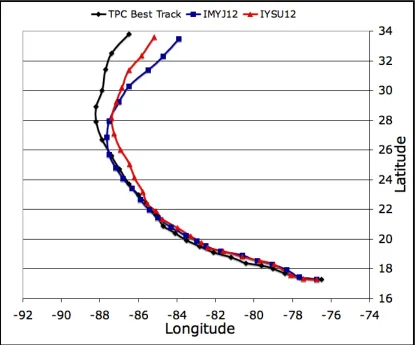
FIG. 3.7. Same as in fig. 3.6, except for IMYJ12 (blue) and IYSU12 (red) 106
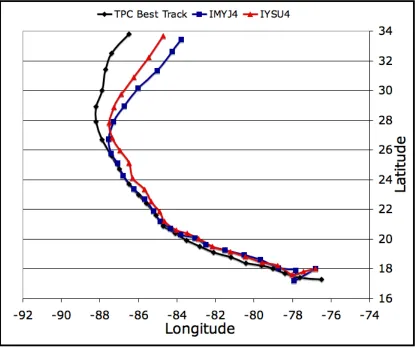
FIG. 3.8. Same as in fig 3.6 except for IMYJ4 (blue) and IYSU4 (red)
107
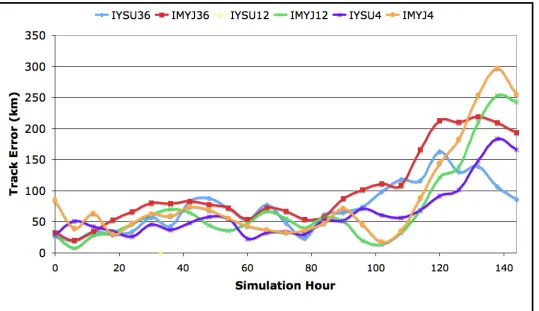
FIG. 3.9. Time-series of track error for Ivan simulations (km)
108
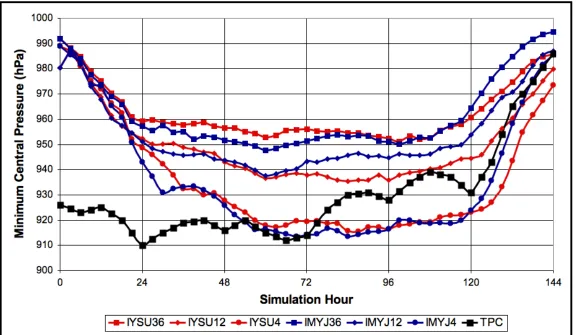
FIG. 3.10. Time-series of 1) the model simulated central pressure from WRF (3-hourly)
and 2) the analyzed central pressure from NHC (6-hourly) for Ivan
simulations
109
FIG. 3.11. Time-series of the minimum sea level pressure departure, calculated as
actual minimum central pressure subtracted from the simulated minimum
central pressure for Ivan simulations
110
FIG. 3.12. Time-series of 1) the model simulated maximum 10-m winds (3-hourly)
and 2) the analyzed maximum 10-m winds from NHC (6-hourly) for Ivan
simulations
111
FIG. 3.13. Time-series of the maximum value of latent heat flux (y-axis, in Wm
-2)
for Ivan simulations
112
FIG. 3.14. Time-series of the storm-centered 100-km area-averaged value of latent heat
flux (y-axis, in Wm
-2) for Ivan simulations
113
FIG. 3.16. Time-series of the storm-centered 100-km area-averaged value of sensible
heat flux (y-axis, in Wm
-2) for Ivan simulations
115
FIG. 3.17. Time-series of the storm-centered 400-km area-averaged hourly precipitation
for IYSU36 (in red) and IMYJ36 (blue) and the normalized value (MYJ/YSU)
in green
116
FIG. 3.18. Same as in fig. 3.17, except for domain 2
117
FIG. 3.19. Same as in fig. 3.17, except for domain 3
118
FIG. 3.20. The track of Ivan 1) as analyzed by the NHC (in black), 2) produced using
the IMYJ36 simulation (in blue) and 3) produced using the IMYJM36
simulation (in red). Track is shown from 00 UTC 11 September 2004 –
00 UTC 17 September 2004, and begins at the lower-right corner of the
figure 119
FIG. 3.21. Same as in figure 3.20, but for IMYJ12 (blue) and IMYJM12 (red) 120
FIG. 3.22. Same as in figure 3.20, but for IMYJ4 (blue) and IMYJM4 (red) 121
FIG. 3.23. Time-series of the difference in minimum central pressure (blue, in hPa) and
and maximum 10-m wind (red, in ms
-1) between the IMYJ36 and
IMYJM36 simulations
122
FIG. 3.24. Same as in fig. 3.23, but for the IMYJ12 and IMYJM12 simulations 123
FIG. 3.25. Same as in fig. 3.23 except for the IMYJ4 and IMYJM4 simulations 124
FIG. 3.26. Time-series of the difference in the 100-km area-averaged LHFLX
Between the IMYJM and IMYJ simulations (Wm
-2). Domain indicated
in legend
125
FIG. 3.27. Percent difference in the 100-km area-averaged LHFLX between the
IMYJM and IMYJ simulations. Domain indicated in legend 126
FIG. 3.28. Time-series of the difference in the 100-km area-averaged HFLX between
the IMYJM and IMYJ simulations (Wm
-2). Domain indicated in legend 127
FIG. 3.29. Percent difference in the 100-km area-averaged HFLX between the
IMYJM and IMYJ simulations. Domain indicated in legend 128
FIG. 3.30. Model latent heat flux (Wm
-2) as a function of wind speed (ms
-1). IYSU4
FIG. 3.31. Same as in fig. 3.30, except for the 1
stderivative of LHFLX with respect to
10-m wind speed
130
FIG. 3.32. Same as in fig. 3.30, except for the moisture exchange coefficient 131
FIG. 3.33. Normalized air density at the 10-m level (value from MYJ divided by value
from YSU)
132
FIG. 3.34. Normalized values (value from MYJ divided by value from YSU) of
LHFLX (red) and the difference in mixing ratio between the surface and
the 10-m level (blue)
133
FIG. 3.35. Same as in fig. 3.30, except for sensible heat flux (Wm
-2)
134
FIG. 3.36. Same as in fig. 3.30, except for the sensible heat exchange coefficient 135
FIG. 3.37. Normalized values (value from MYJ divided by value from YSU) of
HFLX (red) and the difference in potential temperature between the surface
and the 10-m level (blue)
136
FIG. 3.38. Same as in fig. 3.30 except for the roughness length (cm)
137
FIG. 3.39. Same as in fig. 3.30, except for the momentum exchange coefficient 137
FIG. 3.40. Normalized friction velocity at the 10-m level (value from MYJ divided by
value from YSU)
139
FIG. 3.41. Same as in fig. 3.30 except for the ratio of the exchange coefficient for heat
to the exchange coefficient for momentum (Ck / Cd)
140
FIG. 3.42. Time-series of minimum central pressure in hPa (blue line, black marker)
and maximum 10-m wind speed in ms
-1(blue line, blue marker) during the
time-averaging period for IMYJ4 simulation
141
FIG. 3.43. Same as in fig. 3.38, except for the IYSU4 simulation
142
FIG. 3.44. Simulated radar reflectivity (shaded, as in color bar) and sea level pressure
field (hPa, contoured) for the IMYJ4 simulation: (upper left) simulation
hour 84, valid at 12 UTC 14 September, (upper right) simulation hour 88,
valid at 16 UTC 14 September, (lower left) simulation hour 92, valid at 20
UTC 14 September, and (lower right) simulation hour 96, valid at 00 UTC
15 September
143
FIG. 3.47. Same as in fig. 3.45, except for hourly-accumulated precipitation (in) 146
FIG. 3.48. 1.) Time averaged, azimuthally averaged SLP (hPa, IMYJ4 in blue,
IYSU4 in red, y-axis), as a function of increasing distance from storm
Center (x-axis, in km) and 2.) Difference in pressure (IMYJ4 – IYSU4)
in green 147
FIG. 3.49. 1.) Time averaged, azimuthally averaged 10-m wind speed (ms
-1, IMYJ4
in blue, IYSU4 in red, y-axis), as a function of increasing distance from center
(x-axis, in km), 2.) Tropical storm force wind speed (gray) and 3.) Hurricane
force wind speed (black)
148
FIG 3.50. Same as in fig. 3.44, except for latent heat flux (Wm
-2) 149
FIG 3.51. Same as in figure 3.44, except for sensible heat flux (Wm
-2)
150
FIG. 3.52. Time and azimuthally averaged downward vertical motion (color fill, ms
-1)
and distance from storm center (contoured, km) for IYSU4 (left) and IMYJ4
(right). The difference between the two (value from IMYJ4 minus the value
from IYSU4 on the bottom panel
151
FIG. 3.53. Same as in fig. 3.52, except for upward vertical motion 152
FIG. 3.54. Same as in Fig. 3.52, except for specific humidity (g kg
-1)
153
FIG 3.55. Mean wind speed profile (normalized by 700-hPa wind speed) for eyewall
(red) and outer vortex (blue) soundings. From Franklin et al. 2000 154
FIG. 3.56. Vertical profile of 700-hPa normalized speed for IMYJ4 (blue) and
IYSU4 (red)
154
FIG. 3.57. Same as in Fig. 3.52, except for wind speed (ms
-1).
155
FIG. 3.58. Same as in Fig. 3.52, except for velocity tendency due to PBL
Parameterization (ms
-1h
-1)
156
FIG. 3.59. Same as in Fig. 3.52, except for potential temperature (K)
157
FIG. 3.60. Same as in Fig. 3.52, except for potential temperature tendency due to PBL
Parameterization (Kh
-1)
158
FIG. 4.2. Time-series of 1) the model simulated maximum 10-m winds (3-hourly) and
2) the EMPI (black) for the idealized simulations
192
FIG. 4.3. Time-series of the maximum value of latent heat flux (y-axis, in Wm
-2) for
the idealized simulations
193
FIG. 4.4. Time-series of the storm-centered 200-km area-averaged latent heat flux
(y-axis, in Wm
-2) for the idealized simulations with 4-km grid spacing 194
FIG. 4.5. Time-series of the maximum value of sensible heat flux (y-axis, in Wm
-2)
for the idealized simulations
195
FIG. 4.6. Time-series of the storm-centered 200-km area-averaged sensible heat flux
(y-axis, in Wm
-2) for the idealized simulations with 4-km grid spacing 196
FIG. 4.7. Time-series of the storm-centered 400-km area-averaged hourly
precipitation (inches) for IDYSU36 (in red) and IDMYJ36 (blue) and the
normalized value (MYJ/YSU) in green
197
FIG. 4.8. Same as in Fig. 4.7, except for idealized simulations with 12-km grid
spacing 163
198
FIG. 4.9. Same as in Fig. 4.7, except for idealized simulations with 4-km grid
spacing
199
FIG. 4.10. Time (y-axis, time increasing towards top of page) versus radius (x-axis,
increasing radius to the right) plot of sea level pressure (hPa, shaded) for the
IDMYJ4 simulation
200
FIG. 4.11. Same as in Fig. 4.10, except for IYSU4 simulation
201
FIG. 4.12. Same as in Fig. 4.10, except 10-m wind speed (ms
-1, shaded)
202
FIG. 4.13. Same as in Fig. 4.11, except 10-m wind speed (ms
-1, shaded)
203
FIG. 4.14. Time series of the radius of maximum wind (km) in the idealized simulations
with 4-km grid spacing
204
FIG. 4.15. Time series of the radius of hurricane force wind (km) in the idealized
simulations with 4-km grid spacing
205
FIG. 4.17. Maximum 10-m wind speed (y-axis, in ms
-1) for a given minimum central
pressure (hPa) based on 1.) Brown et al. 2006 (blue), and 2.) Atkinson et
al. 1977 (red)
207
FIG. 4.18. Time series of the maximum 10-m wind speed from the IDMYJ4 simulation
minus the maximum 10-m wind using the pressure-wind relationship from
1.)
Brown et al. 2006 (blue), and 2.) Atkinson and Holliday 1977 (blue, with
black marker)
208
FIG. 4.19. Time series of the maximum 10-m wind speed from the IDMYJ4 simulation
minus the maximum 10-m wind using the pressure-wind relationship from
1.)
Brown et al. 2006 (blue), and 2.) Atkinson and Holliday 1977
(blue, with black marker)
209
FIG. 4.20. Model latent heat flux (Wm
-2) as a function of wind speed (ms
-1). IDYSU
in red, IDMYJ in blue, normalized value (IDMYJ/IDYSU) in green 210
FIG. 4.21. Same as in fig. 4.20, except for the moisture exchange coefficient
211
FIG. 4.22. Normalized values (value from MYJ divided by value from YSU) of
LHFLX (red) and the difference in mixing ratio between the surface and
the 10-m level (blue)
212
FIG. 4.23. Normalized air density at the 10-m level (value from MYJ divided by value
from YSU)
213
FIG. 4.24. Same as in fig. 4.20, except for sensible heat flux (Wm
-2)
214
FIG. 4.25. Same as in fig. 4.20, except for the sensible heat exchange coefficient 215
FIG. 4.26. Normalized values (value from MYJ divided by value from YSU) of
HFLX (red) and the difference in potential temperature between the surface
and the 10-m level (blue)
216
FIG. 4.27. Same as in fig. 4.20, except for the roughness length (cm)
217
FIG. 4.28. Same as in fig. 4.20, except for the momentum exchange coefficient 218
FIG. 4.29. Normalized friction velocity at the 10-m level (value from MYJ divided by
value from YSU)
219
FIG. 4.31. Time (y-axis, time increasing towards top of page) versus radius (x-axis,
increasing radius to the right) plot of sea level pressure (in hPa) for the
IDMYJ4 simulation
221
FIG. 4.32. Same as in Fig. 4.27, but for the IDYSU4 simulation
222
FIG. 4.33. Same as in Fig. 4.31, but for 10-m wind speed (ms
-1)
223
FIG. 4.34. Same as in Fig. 4.32, but for 10-m wind speed (ms
-1)
224
FIG. 4.35. Simulated radar reflectivity (shaded, as in color bar) and sea level pressure
field (hPa, contoured) for the IDMYJ4 simulation: (upper left) simulation
hour 69, (upper right) simulation hour 72, (lower left) simulation hour 75,
and (lower right) simulation hour 78
225
FIG. 4.36. Simulated radar reflectivity (shaded, as in color bar) and sea level pressure
field (hPa, contoured) for the IDYSU4 simulation: (upper left) simulation
hour 90, (upper right) simulation hour 93, (lower left) simulation hour 96,
and (lower right) simulation hour 99
226
FIG. 4.37. Same as in Fig. 4.35, except hourly-accumulated precipitation (in)
227
FIG. 4.38. Same as in Fig. 4.36, except hourly-accumulated precipitation (in)
228
FIG. 4.39. Percentage occurrence of hourly-accumulated precipitation ranges
during the time averaging period
229
FIG. 4.40. 1.) Time averaged, azimuthally averaged SLP (hPa, IDMYJ in blue,
IDYSU in red, y-axis), as a function of increasing distance from storm center
(x-axis, in km) and 2.) Difference in pressure (MYJ – YSU) in green 230
FIG. 4.41. 1.) Time averaged, azimuthally averaged 10-m wind speed (ms
-1, IDMYJ
in blue, IDYSU in red, y-axis), as a function of increasing distance from
storm center (x-axis, in km), 2.) Tropical storm force wind speed (gray) and
3.) Hurricane force wind speed (black)
231
FIG 4.42. Same as in fig. 4.40, except for latent heat flux (Wm
-2)
232
FIG 4.43. Same as in Fig. 4.40, except for sensible heat flux (Wm
-2)
233
FIG. 4.44. Time and azimuthally averaged downward vertical motion (color fill, ms
-1)
and distance from storm center (contoured, km) for IDYSU4 (left) and
FIG. 4.46. Same as in fig. 4.44, except for specific humidity (g kg
-1)
236
FIG 4.47. Mean wind speed profile (normalized by 700-hPa wind speed) for
eyewall (red) and outer vortex (blue) soundings. From Franklin et al.
2000
237
FIG. 4.48. Vertical profile of 700-hPa normalized speed for IDMYJ (blue) and
IDYSU (red)
237
FIG. 4.49. Same as in fig. 4.44, except for wind speed (ms
-1)
238
FIG. 4.50. Same as in fig. 4.44, except for velocity tendency due to PBL
Parameterization (ms
-1h
-1)
239
FIG. 4.51. Same as in fig. 4.44, except for potential temperature (K)
240
FIG. 4.52. Same as in fig. 4.44, except for PBL potential temperature tendency
(K h
-1)
241
FIG. 5.1. Value of the exchange coefficient for momentum (Cd) from the CBLAST
(2006) observational study. Average values are shown in black
249
FIG. 5.2. Value of the exchange coefficient for momentum (Cd) from the YSU PBL
scheme (red) and MYJ PBL scheme (blue)
249
FIG. 5.3. Value of ratio of the exchange coefficient for heat to the exchange coefficient
for momentum (Ce / Cd) from the CBLAST (2006) observational study.
Observations shown in red circles, results of budget residual method at a
wind speed of 70 ms
-1shown in maroon. Black curve represents a best fit to
the data
250
FIG. 5.4. The ratio of the exchange coefficient for heat to the exchange coefficient
for momentum (Ck / Cd) from the IYSU4 simulation (red) and IMYJ4
1. Introduction
1.1 Motivation
According to recent studies on hurricane damage, tropical cyclones (TCs) are the
costliest natural disasters in the United States (Pielke and Landsea, 1998). The cost
associated damage from TCs has been enhanced in the last few decades by a significant
increase in population growth in coastal and near coastal regions (Sheets 1990). As a result,
the United States is now more vulnerable to TCs than ever before (Marks et al. 1998). The
2004 and 2005 Atlantic hurricane seasons illustrate these trends, with both seasons setting
numerous records for TC damage. The 2004 Atlantic hurricane season was among the most
devastating on record, claiming 3100 lives overall, and 60 in the United States. The United
States suffered a record $45 billion in property damage, enduring landfalls from five
hurricanes. The 2005 season broke many of the records set during 2004. Property damage
associated with one storm alone (Katrina, with a preliminary estimate of the total damage at
$81 billion) was almost double that of the 2004 season. Although deaths attributable to TCs
have shown a decreasing trend (Sheets 1990), 2005 was the deadliest hurricane season in the
United States since 1928, almost entirely due to Katrina. The total number of fatalities,
either directly or indirectly related to Katrina, is estimated at 1833. Katrina ranks fourth or
fifth (the uncertainty in ranking is due to difficulty in estimating fatalities associated with
early TCs) on the list of the deadliest hurricanes on record in the United States. In addition
to Katrina, the 2005 Atlantic season was the most prolific on record, with 27 named TCs, and
Overall, the 2004 and 2005 seasons combined have set records for the two-year
consecutive total of tropical storms, hurricanes, major hurricanes, and major hurricane
landfalls. Seasonal predictions of the 2006 season indicate the likelihood of another busy
season, with NOAA forecasters estimating an 80% chance of an above-normal season, a 15%
chance of a near-normal season, and only a 5% chance of a below normal-season. Although
marred with uncertainty, many experts suggest that TC activity in the Atlantic basin appears
to be entering an active period, mainly attributable to the ongoing multi-decadal signal. The
increase in activity in the last few years and the potential for the above normal activity to
continue for years to come, coupled with rapidly increasing coastal populations magnifies the
need for improved forecasts and warnings of TCs.
With the exception of Katrina, improved forecasts and warnings have helped to
reduce the loss of life associated with TCs. Forecasting a TC involves forecasting the track
and intensity. Track forecasts have improved significantly in recent years, while intensity
forecasts have shown little-to-no improvement. Avila (1998) studied the National Hurricane
Center (NHC) 24 and 72-hour official forecast intensity errors for the Atlantic basic during
the period 1990 – 1997 (Fig 1.1). The figure clearly shows that no significant improvement
has been made during that period. In addition, Demaria (1997) showed that intensity
forecasts are about half as skillful as track forecasts, and TC intensity forecasts of more than
36 hours lead time show little improvement over climatology and persistence. This lack of
skill is in part attributable to the lack of skillful intensity forecast models. To address the
need for improved dynamical TC intensity guidance, a three-dimensional dynamical TC
model has been developed at the Geophysical Fluid Dynamics Laboratory (GFDL) to provide
operationally in 1995. Since its introduction, the GFDL model has become one of the more
heavily utilized intensity forecasting tools available operationally to the Tropical Prediction
Center (TPC).
The Weather Research and Forecasting model (WRF) is currently under development
by the U.S. research and operational modeling communities. A special version of the WRF
model designed for accuracy in hurricane forecasts (HWRF) will replace the GFDL hurricane
prediction system at NWS/NCEP in 2007 (Evans and Surgi, 2003; Surgi et al. 2006). The
HWRF will serve as the nations’ next generation operational hurricane prediction system,
and serve as the primary hurricane research model. HWRF will be a fully coupled
land/sea/air model, while the current version of WRF is not coupled to the ocean. Many
questions still need to be addressed concerning the configuration of the model. Previous
studies have illustrated that dynamical model simulations of TCs are extremely sensitive to
many model parameters, including grid spacing and model physics (Braun and Tao 2000;
Davis and Bosart 2002). The selection of grid spacing and model physics (especially surface
layer and surface layer parameterization) will have a large impact on the relative success of
the HWRF model, and therefore also on the operational forecasting of TC intensity.
Although the current version of WRF is not a coupled air/sea model, there are many
research objectives that can be addressed with the current model that could aid in the
configuration of the operational HWRF. In this study, we will investigate the ability of the
WRF model, using a variety of different configurations, to produce TCs of realistic intensity.
Numerous model configurations will be tested, and the sensitivity of the simulations to
surface layer parameterization, horizontal grid spacing, and planetary boundary layer (PBL)
sets of model experiments: 1) simulations of Hurricane Ivan (2004), and 2) simulations using
an idealized TC vortex inserted into a quiescent ambient tropical environment. In both cases,
the sensitivity to model grid spacing as well as PBL and surface layer parameterization will
be investigated.
In order to first understand these model-related sensitivities, a literature review of
pertinent research studies has been performed. This paper begins with a review of research
studies addressing the energetics associated with TC development and maintenance. Next,
information regarding the surface layer and PBL and the parameterization of processes in
these layers in a numerical model is discussed. Next, a review of research studies addressing
the sensitivity of TC simulations to model grid spacing and surface layer and PBL
parameterization is presented. To conclude the literature review, an overview of maximum
potential intensity (MPI) theory is presented.
1.2 Literature Review
1.2.1 TC Energetics: Initial Theory, and Oceanic Influence
The main source of energy for a TC is the ocean, which, in the presence of strong
near-surface wind speeds, provides fluxes of latent and sensible heat to the atmosphere. As
air cyclonically converges to the center of a TC, it experiences a decrease in pressure that
causes expansion. This expansion causes cooling, due to the parcel exerting work on the
ambient environment in order for it to expand. However, in the presence of warm sea surface
temperatures (SSTs), sensible heat flux from the ocean warms the parcel, causing it to remain
remaining at the same temperature leads to an increase in the equivalent potential
temperature of the parcel. As the surface parcel nears the TC center, it rises in an area of
strong updrafts known as the eyewall. As the parcel travels upward, it transports the heat and
moisture gained from the ocean high into the atmosphere. Large amounts of latent heating
occur when water vapor in the parcel condenses. This warming of the upper levels causes a
hydrostatic drop in the surface pressure, which in turn leads to stronger surface convergence,
stronger fluxes from the ocean, and should conditions be favorable, a chain reaction of
physical processes that allow the TC to intensify and ultimately maintain its strength until
some external mechanism disrupts this delicate balance.
Byers (1944) first drew attention to the ocean being a heat source for TCs using
surface observations. Byers explained that in a TC, it would be expected that adiabatic
cooling in horizontal motion as air moves spirally inward toward the center would be
appreciable. Specifically, he states that a reduction of pressure from the normal value of the
tropics to 975 hPa, for example, should account for an adiabatic cooling of 2 or 3
oC. By
looking at observations, however, he saw that temperatures throughout TCs are about the
same as the normal temperatures of the undisturbed tropics, and in many cases the
temperature near the center is actually higher than in the surrounding areas. Therefore, he
concluded that the heat supplied by the warm tropical ocean prevents the cooling due to
adiabatic expansion that should occur.
Palmen (1948) was one of the first to recognize that the previously described chain of
events leading to TC intensification can only occur when SSTs are warm. He noted that the
critical threshold of SST for TC development was approximately 26.5
oC, with SSTs below
isothermal inflow, parcels spiraling in towards the center of the TC cause a cooling of the
core, inhibiting development.
Riehl (1954), based on many published records, suggested that the surface
temperature outside the eye is constant or decreases very slightly towards the center. As an
example given, air entering a cyclone with the average properties of the mean tropical
atmosphere should reach the 930-hPa contour with a temperature of 20.5 Celsius and a
specific humidity of 17 g/kg. Because of condensation, a dense fog should occur at the
ground everywhere inward from the 970-hPa contour. This situation is never observed, and
therefore Riehl concluded that the potential temperature of the surface air increases along the
inward trajectories.
Palmen and Riehl (1957) aimed to use an increasing amount of upper-air information
in tropical storms to perform estimates of heat and momentum balances to study the energy
transformations that occur in TCs, and specifically determine how a TC acquires a warm
core. The authors describe two mechanisms; the first being moist adiabatic ascent, and the
second being a local surface heat source. In the average tropical atmosphere, the potential
wet-bulb temperature decreases with height to about 400 hPa. Therefore, moist adiabatic
ascent of air with the properties of the sub-cloud layer entering the periphery of the cyclone
would cause a warm core. This mechanism, however, is shown to only account for a drop of
surface pressure to about 1000 hPa. Therefore, the authors suggest that a local surface
heat-source within the circulation must be present to explain the observed thermal structure, and
this local source is the warm tropical ocean.
1.2.2 The Surface Layer in a Hurricane: Theory, Modeling, and Observations
Early studies based on observational data reached the very important conclusion that
the ultimate energy source for a TC is the warm tropical ocean. Shortly thereafter, the
development of numerical models allowed for the initial conclusions to be tested. Since the
transfer of heat and moisture from the ocean to the atmosphere was already deemed as the
energy source for a TC, scientists using numerical models to study TCs recognized the
importance of accurately estimating fluxes between the ocean and atmosphere, and the
sensitivity of the simulations to these fluxes was a frequent topic of investigation. Before
numerical simulations of TCs are reviewed, it is first necessary to understand the
composition of the lower atmosphere in a TC, and how the atmospheric conditions in this
part of the atmosphere are estimated in a numerical model.
The layer of atmosphere directly next to the ocean surface in a hurricane is called the
surface layer, and is defined as the layer over which turbulent fluxes and stress vary by less
than 10% of their magnitude. In a numerical model, expressions for surface layer turbulent
fluxes of momentum, sensible heat, and moisture are often given in terms of bulk
aerodynamic formulae and Monin-Obukhov similarity theory. The estimation of the
turbulent fluxes at extreme wind speeds is of critical importance in the simulation of TCs, but
the accuracy of model parameterizations is difficult to assess due to a lack of measurements
in hurricane conditions. Early numerical models typically calculated surface fluxes using
bulk aerodynamic formulae. Using bulk formulae, the flux of water vapor from the ocean to
the atmosphere can be related (Jacobs, 1951; Sverdrup, 1951) to the near-surface wind speed
Va, and the difference between saturation specific humidity (qsea) at the SST and the specific
)
(
sea air aq
vapor
C
V
q
q
F
=
"
!
,
(1.1)
where Cq is the exchange coefficient for moisture, representing the efficiency of the transfer
of water vapor between the ocean surface and the lower atmosphere. Similarly, the flux of
sensible heat between the ocean and atmosphere can be related to the air-sea temperature
difference:
)
(
sea air ak p
heat
C
C
V
T
T
F
=
"
!
,
(1.2)
where Ck is the exchange coefficient for sensible heat, representing the efficiency of the
transfer of sensible heat between the ocean surface and the lower atmosphere.
At the sea surface, momentum is transferred from the atmosphere to the sea, resulting
in strong wind shear in the surface layer. This wind shear results in turbulent eddy stresses,
and the vertical gradients in these stresses produces frictional forces. The surface eddy stress
(
!
s) can be estimated using a bulk aerodynamic formula such as:2 a d s