Design & Analysis of Advanced Adaptive Neuro Fuzzy Interface systems
for Nonlinear Networked Control Systems
A.Parthavi & Dr.N. Ramesh Raju
1PG Student, Dept of EEE,
Siddhartha Institute of Engineering & Technology
, Puttur.2HOD & Professor, Dept of EEE,
Siddhartha Institute of Engineering & Technology
, Puttur. 1[email protected],2nandi_rameshraju
@yahoo.com
Abstract—This paper studies the problem of adaptive fuzzy control for a category of single-input single-output
nonlinear networked control systems with network-induced
delay and data loss based on adaptive backstepping control
approach. Fuzzy logic systems are used to approximate the
unknown nonlinear characteristics existing in the system,
while Pade approximation is introduced to handle
network-induced delay. Data loss occurs intermittently and
stochastically in the data transmitting process,which is
regarded as the delay in the controller design. In the
framework of adaptive fuzzy back stepping technique, a
novel state-feedback adaptive controller is constructed to
ensure all signals in the resulting closed-loop system to be
bounded and the state variables can be regulated to the
origin. Finally, two examples are given to show the validity
of the proposed results.
Index Terms—Adaptive fuzzy control, networked
control systems (NCSs), network-induced delay.
I. INTRODUCTION
NONLINEAR characteristics often occur in
modernindustries. Some advanced control methods have
been provided to cope with nonlinear systems [1]–[5]. Via
using adaptive control scheme, the authors in [6]–[8]
studied the problem of adaptive control for a class of
nonlinear systems. A category of nonlinear systems were
investigated through using fuzzy control in [9]–[14].
Sliding mode control was employed to stabilize nonlinear
systems in [15]–[18]. Different from the above strategies,
combining frequency-domain analysis and
volterra-series-expansion-based control, Jing [19] studied the problem of
nonlinear analysis and design. Manuscript received August
31, 2016; revised December 19, 2016; accepted February
19, 2017. This work was supported in part by the National
Natural Science Foundation of China under Grant
61525303, Grant 61503099, Grant 61622302, and Grant
61573070, in part by the China Postdoctoral With these
advantages, NCSs have been widely applied to industrial
processes. Though NCSs boost the improvement of
industrial processes, researchers and engineers have to face
some challenges caused by communication networks, such
as data packet dropouts, network-induced delay, and
quantization. To overcome these obligations, considerable
attention has been paid [21], [22].
For random data loss, Bernoulli stochastic
distribution process and Markov chain were introduced to
describe such a phenomenon in [23]. As an modification,
Qiuet al. [24] proposed
novel approaches to describe imperfect communication
links, and designed corresponding controllers to stabilize
the NCSs. To address random delay, Liu et al. [25]
transformed the linear
NCSs into a Markovian jump linear system, and then
studied the stabilization problem. As to systems with data
quantization, an event-triggered control strategy was
developed in [26].
In a uniformed framework, data loss,
consideration simultaneously in [27]. The existing results
on linear NCSs cannot be applied to
nonlinear ones directly due to complex nonlinearities. Some
of the above advanced control methods have been applied
to modeling, analysis, and synthesis for nonlinear NCSs.
For example, based on fuzzy Takagi–Sugeno (T–S) model,
a statefeedbackcontrol strategy was proposed for nonlinear
NCSs in presence of data loss and network-induced delay,
and applied to a flexible-joint robot system in [28]. To
address the unmeasurable states problem, Qiuet al. [29]
provided a piecewiseoutput-based control scheme for NCSs
in the framework offuzzy T–S model. In addition,
considerable remarkable nonlinear NCSs results based on
fuzzy T–S model have been published in literature,
including filter [30], fault detection and isolation [31],
fault-tolerant control [32], and model predictive control
[33]. It should be noticed that existing schemes in the
framework of T–S fuzzy model involve computing a group
of linear matrix inequalities, which may lead to complex
computation.
In addition to the computational complexity, the
coupling variables is also an obstacle to obtain the
sufficient conditions to synthesize systems. Combining
adaptivecontrol with sliding mode control approaches, a
novel adaptivesliding mode controller was designed for
single-input single-output (SISO) nonlinear NCSs in [34].
The control strategy in [34] can be implemented easily due
to its simple and structural steps, in which only some
adaptive parameters and the designed controller require
computing. Despite some improvements have been
achieved in [34], the proposed control algorithm is limited
to a category of simple strict-feedback systems, which do
not comprise mismatched unknown uncertain nonlinear
functions. As a structured control method, backstepping
approach can be utilized to tackle mismatched uncertain
items through designing a virtual control signal stepby-
step, which has received considerable attention [35]–[37].
An output-based adaptive fuzzy control method
was provided for multi-input and multi-output systems in
[38]. Considering input constraints in discrete nonlinear
systems, an observerbased adaptive fuzzy control scheme
was developed . To address the problem of fault-tolerant
control, Tong et al. combined adaptive backstepping with
fuzzy logic systems (FLSs), and proposed a novel
fault-tolerant controller for large-scale nonlinear systems in the
strict-feedback form. However, the adaptive backstepping
control problem for nonlinear NCSs has not been
adequately researched yet, and this is the motivation for this
paper.The adaptive fuzzy control problem for a category of
SISO nonlinear NCSs in presence of network-induced
delay and data loss is investigated through employing
adaptive backsteppingcontrol technique. FLSs are
employed to recognize unknown nonlinear characteristics
in the system. The main contributions of this paper can be
summarized as follows.
1) The adaptive backstepping control approach is utilized to
account for the controller design for NCSs, and only some
adaptive parameters, designed virtual control signals and
controller need computing. Compared with existing results
involving linear matrix inequalities, the computational
complexity can be decreased to some degree.
2) Both random data loss and network-induced delay
aretaken into consideration, therein Pade approximation is
introduced to handle network-induced delay. In order to
overcome the difficulty resulting from delay, a novel
change of coordinates method is inspired by recalling the
scheme concerning input saturation. Finally, illustrative
examples are presented to demonstrate the validity and the
applicability of the proposed method. The remaining paper
is organized as follows. Section II provides problem
presented in Section III. Section IV provides the simulation
results and Section V concludes this paper.
II. PROBLEM FORMULATION
Some main preliminaries are provided in this
section. First, we describe the considered nonlinear NCSs,
which are transformed from traditional systems due to the
use of communication
networks. Pade approximation method is followed to
demonstrate how to separate network-induced delay from
controller. At the end of this section, a clear description for
FLSs is given.
A. System Description
The SISO nonlinear system considered in this paper is as
follows:
wherex =  ̄xn= [x1, x2, . . . , xn]T ∈Rnand y ∈R stand for
state and output, respectively.  ̄xi = [x1, x2, . . . ,xi]T ,
fi( ̄xi)stands for unknown nonlinear function. fi(0, 0, . . . ,
0) = 0.δi(x, t) denotes the bounded disturbance and satisfies
|δi(x, t)| ≤ Di. System in (1) stands for a class of traditional
nonlinear SISO strict-feedback systems. Due to the
insertion of the communication network, network-induced
delay needs to be considered. In this paper, the input delay
isconsidered and the followingform is introduced for NCSs:
whereτ stands for network-induced delay. In order to handle
delay, Pade approximation technique is introduced as
follows:
whereL{u(t)} means the Laplace transform of u(t). sis the
Laplace variable. Then, the following variable xn+1 is
defined:
According to Z transform, we can get
which yields
B. Fuzzy Logic Systems
The nonlinear terms existing in the system are
approximated via using FLSs, which are described as
follows.
Fuzzy Rule j: IF x1 is Mj1, and x2 is Mj2 and, . . . , and xnis
Mjn, THEN
yis Nj, j = 1,2, . . .,^
wherex = [x1, x2, . . . , xn]T is the system input, y stands for
the system output. Mjl, Nj, uMjl(xl) and uNj(y) are the
fuzzysets and membership functions, respectively. _
represents the number of fuzzy rules.Then, the fuzzy
where˜yj= maxy∈RuNj(y). The membership functions are defined as
Lemma 1 [42]: For any smooth function f (x) defined on the
compact set _, there exists a sufficient small scalar ε
>0such that the following inequality holds:
whereε is the estimation error.
III. ADAPTIVE CONTROL DESIGN
The main results are provided in this section. Before
deriving immediate control signals, adaptive laws, and the
desired controller, the change of coordinates should be
considered as follows:
whereαi (i = 1, 2, . . . , n − 1) will be given in the following
part.
Remark 5: It can be seen from the above change of
coordinates, en is different from the definition of existing
control systems. In order to eliminate the variable xn+1, we
introduce the item (1/  ̄τ)xn+1 in the last step, which is
similar to the design of coping with input saturation. The
first immediate control signal α1 as well as the adaptive
lawθ1 are as follows:
whereki>0, ρi>0, ηi>0, and σi>0 are constants to be
designed. ˆ θiis the estimation of θiand ˆ θi= θi− ˜ θi. The
following desired controller u and the adaptive law θnare
designed:
wherekn>0, ρn>0, ηn>0, and σn>0 are constants to be
determined. ˆ θnrepresents the estimation of θnand ˆ θn=
θn−˜ θn. Based on the aforementioned design concluding
equationsin (6)–(10), the variables in system (2) can be
ensured to bebounded, and can be also driven to the origin.
In the followingpart, the detailed proof will be provided.
Theorem 1: Under the immediate control signals αi (6) as
well as (8), the adaptive law˙ˆθi(7), (9) as well as (11)
andthe desired controller u (10), the variables of system (2)
can be ensured to be bounded and system state variables
can be driven to the origin.
Proof: The proof is divided into the following n steps.
Step 1: The derivative of e1 can be calculated as follows:
The derivative of V1 can be computed as
According to Young’s inequality, one can obtain
Substituting (14) into (13), we can get
Define  ̄f1(x1) = f1(x1) + (e1D21/2a21). According to
Lemma 1, we can obtain ̄f1(x1) = χT1 φ1(x1) +
ε1(x1)where|ε1(x1)| ≤ ε1 with ε1 being a known scalar.
By using Young’s inequality, we can have
Substituting (17) and (18) into (16), we can get
In order to stabilize the first order subsystem, choose the following virtual control signal:
Substituting virtual control signal α1 into (19), we can get
Step 2: The derivative of e2 can be obtained as follows:
The Lyapunov function is defined as follows:
The derivative of V2 can be computed as
Based on Young’s inequality, we obtain
Define  ̄f2( ̄x2) = f2( ̄x2) + (e2D22 /2a22 )− ˙α1 + e1.
According to Lemma 1, we can obtain
where|ε2( ̄x2)| ≤ ε2 with ε2 being a known scalar.
Then, inequality (23) can be rewritten as
Based on Young’s inequality, we can have
Substituting (25) and (26) into (24), we can get
Defining θ2 = _χ2_2, we have
In order to stabilize the second order subsystem, choose the
following virtual control signal:
Substituting virtual control signal α2 into (27), we can get
Similar to the steps 1 and 2, one can obtain
whereθi= _χi_2. Following the virtual control signal αi
defined in (8), (28)can be computed as
Similarly, we can obtain
Submitting predefined adaptive laws ˙ˆθi(i = 1, 2 . . . n)into
(29) yields
Through regulating the parameters in a0 and b0, the desired
performance can be guaranteed. However, due to the
existence of unknown parameters θl, it is impossible to
eliminate the negative effect of those unknown parameters
absolutely. By designing approximate parameters, the
stability of the resulting closed-loop system can be
guaranteed. This completes the proof.
IV. SIMULATION RESULTS
Two examples are presented to illustrate the
validity of the control scheme proposed in this paper. First,
a numerical one is given.
Example 1: Consider the following third-order system:
Where
In order to approximate the nonlinear terms in the system, the following membership functions are provided:
The parameters are defined as k1 = 1.1, k2= 3, k3 = 1.5, σ1
= σ2 = σ3 = 0.1, η1 = η2 = η3 = 1, and ρ1 = ρ2 =ρ3 = 2. The
initial condition is x1 = 0.5, x2 = 0.5, x3 = 0.5 x4 = 0, ˆ θ1 =
0, ˆ θ2 = 0, and ˆ θ3 = 0. Next, network-induced delay and
stochastic data loss will be considered in different cases.
Case A—Constant delay: Assuming the network-induced
delay to be a constant, that is, τ = 0.006, simulation results
are provided in Figs. 1–4, where Fig. 1 plots the trajectories
introduced variable x4, Fig. 3 plots the response of the input
u, and the responses of adaptive laws are plotted in Fig. 4.
Case B—Constant Delay With Data Loss:To address the
robustness of the proposed control scheme, the stochastic
data loss is considered. Assume that the data loss satisfies
the following data model:
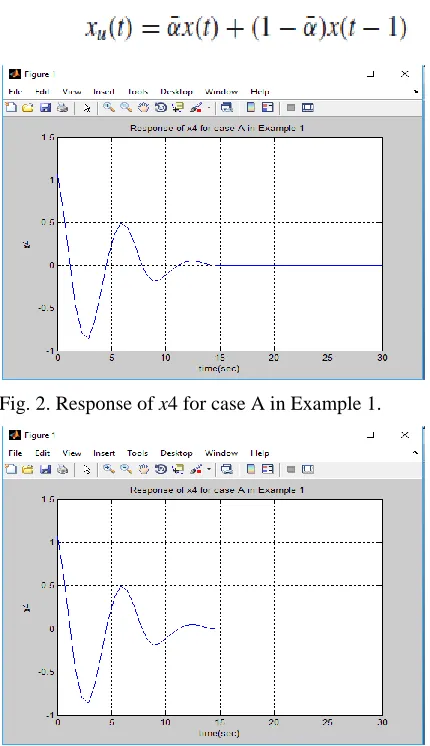
Fig. 2. Response of x4 for case A in Example 1.
Fig. 3. Trajectory of input u for case A in Example 1.
Fig. 4. Trajectories of ˆ θ1, ˆ θ2, and ˆ θ3 for case A in
Example 1.
rand≤ Ploss, in which rand is a random function describing
the stochastic data loss and 0 <Ploss<1 is the data-loss
probability. Here, we define Ploss= 0.8. Other conditions
keepthe same with the above simulation. Figs. 5–8 plot the
trajectories of system states, trajectory of variable x4,
response ofcontrol input, and responses of adaptive
parameters, respectively. Through comparing Figs. 1 and 5,
we can learn that even data loss has some negative effect on
the system stability,our proposed control scheme can still
maintain the desired performance.
Fig. 5.Trajectories of x1, x2, and x3 for case B in Example
1.
Fig. 6.Trajectory of x4 for case B in Example 1.
Example 2: To further illustrate the effectiveness of the
proposed method, a one-link manipulator with the inclusion
of motor dynamics shown in Fig. 9 is used. It is governed
where¨q, ˙q, and q stand for the link acceleration, velocity,
and position, respectively. ϑ means the torque caused by the
electrical subsystem, u represents the input. D = 1 kg m2,B
= 1 Nm s/rad, H = 1 _, M= 0.1H, and L = 0.2 Nm/A is the
mechanical inertia, coefficient of viscous friction at
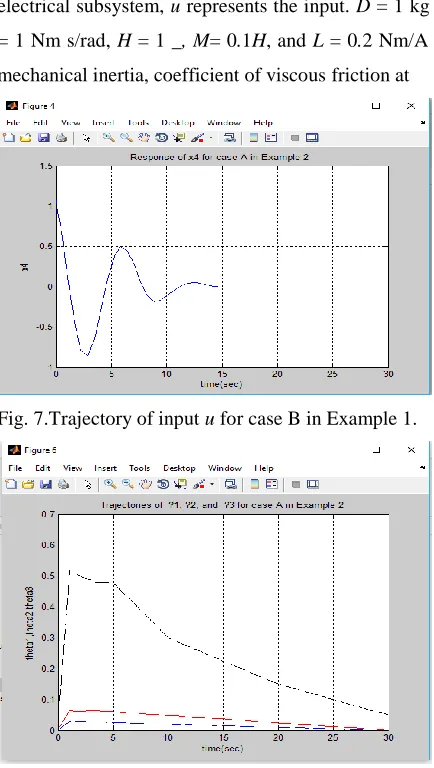
Fig. 7.Trajectory of input u for case B in Example 1.
Fig. 8.Trajectories of ˆ θ1, ˆ θ2, and ˆ θ3 for case B in
Example 1.
.
Fig. 9. One-link manipulator
the joint, armature resistance, armature inductance, and
back electromotive force coefficient, respectively. Defining
x1 = q, x2 = ˙q, and x3 = ϑ and considering
network-induced delay and external disturbance, we can rewrite the
above system as follows:
Fig. 10. Trajectories of x1, x2, and x3 for case A in
Example 2.
Fig. 11. Trajectory of x4 for case A in Example 2.
Where f2( ̄x2) = −x2 − 10 sin(x1)f3( ̄x3) = −2x2 − 10x3
δ1(x, t) = δ2(x, t) = δ3(x, t) = 0.01 sin(x1x2x3) cos(t).To
validate the effectiveness of the proposed scheme,
parameters to be designed are defined as k1 = 3.5, k2= 2.2,
k3 = 1, σ1 = σ2 = σ3 = 0.1, η1 = η2 = η3 = 1, andρ1 = ρ2 =
ρ3 = 2. The initial condition is x1 = 0.5, x2 = 0.8, x3 = 0.6,
x4 = 0, ˆ θ1 = 0, ˆ θ2 = 0, and ˆ θ3 = 0. Membership
functions are defined as those in Example 1.
Case A—Time-Varying Delay: In this example, the
networkinduceddelay is defined as a time-varying random
are shown in Figs. 10–13, from which we can conclude that
the stability of the system are guaranteed.
Case B—Time-Varying Delay With Data Loss:To further
demonstrate the effectiveness and robustness of the
proposed adaptive control scheme, data loss model used in
Example 1 is adopted. Figs. 14–17 provide the simulation
resultsfor the time-varying delay and data loss case. From
the above figures, we know that the proposed control
strategy is
effective.
Fig. 12. Trajectory of input u for case A in Example2.
Fig. 13. Trajectories of ˆθ1, ˆθ2, and ˆθ3 for case A in
Example 2.
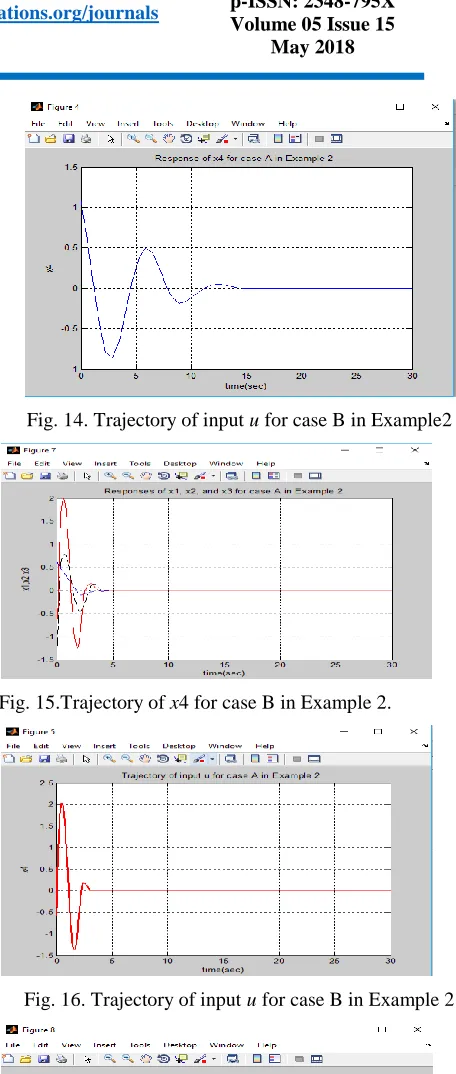
Fig. 14. Trajectory of input u for case B in Example2
Fig. 15.Trajectory of x4 for case B in Example 2.
Fig. 17.Trajectories of ˆθ1, ˆθ2, and ˆθ3 for case B in
Example 2.
Remark 8:Despite data loss is not considered in the
mathematical process, simulation results demonstrate that
theproposed control strategy is robust to the stochastic data
loss phenomenon.
V. CONCLUSION
In this paper, the problem of adaptive fuzzy
control for a class of SISO nonlinear NCSs has been
studied in the framework of adaptivebackstepping control
approach. Network-induced delay and data loss have been
considered simultaneously. By using FLSs, unknown
nonlinear functions in the system have been approximated
to realize the controller design. With Pade approximation,
network-induced delay was separated from the control
input signal, and a novel change of coordinates in the last
step was constructed to eliminate the effect of xn+1.
Moreover, an adaptive fuzzy controller was developed to
ensure all signals of the resulting closedloopsystem are
bounded and state variables can be driven to the origin. In
addition, the impact of stochastic data loss has been
demonstrated in simulation results, showing the robustness
of the proposed control scheme. Finally, two examples have
been presented to validate the effectiveness of the control
methodology proposed in this paper.
REFERENCES
[1] A. Isidori, Nonlinear Control Systems. Heidelberg, Germany: Springer, 2013.
[2] Y.-J. Liu and S. Tong, “Barrier Lyapunov functions for Nussbaum gain adaptive control of full state constrained nonlinear systems,” Automatica, vol. 76, pp. 143–152, Feb. 2017.
[3] C. L. P. Chen, G.-X.Wen, Y.-J. Liu, and Z. Liu, “Observer-based adaptive backstepping consensus tracking control for high-order nonlinear semi-strict-feedbackmultiagent systems,” IEEE Trans. Cybern., vol. 46, no. 7, pp. 1591–1601, Jul. 2016.
[4] C. K. Ahn, L. Wu, and P. Shi, “Stochastic stability analysis for 2-D Roesser systems with multiplicative noise,” Automatica, vol. 69, pp. 356–363, Jul. 2016.
[5] S. Vazquez et al., “Predictive optimal switching sequence direct power control for grid-connected power converters,” IEEE Trans. Ind. Electron., vol. 62, no. 4, pp. 2010–2020, Apr. 2015. [6] C. L. P. Chen, C.-E.Ren, and T. Du, “Fuzzy observed-based adaptive consensus tracking control for second-order multiagent systems with heterogeneous nonlinear dynamics,” IEEE Trans. Fuzzy Syst., vol. 24, no. 4, pp. 906–915, Aug. 2016.
[7] Z. Liu, G. Lai, Y. Zhang, X. Chen, and C. L. P. Chen, “Adaptive neural control for a class of nonlinear time-varying delay systems with unknown hysteresis,” IEEE Trans. Neural Netw. Learn. Syst., vol. 25, no. 12, pp. 2129–2140, Dec. 2014. [8] F. Wang, B. Chen, C. Lin, and X. Li, “Distributed adaptive neural control for stochastic nonlinear multiagent systems,” IEEE Trans. Cybern., to be published, doi: 10.1109/TCYB.2016.2623898.
[9] K. Tanaka, H. Yoshida, H. Ohtake, and H. O. Wang, “A sum-of-squares approach to modeling and control of nonlinear dynamical systems with polynomial fuzzy systems,” IEEE Trans. Fuzzy Syst., vol. 17, no. 4, pp. 911–922, Aug. 2009.
[10] Y. Yi, W. X. Zheng, C. Sun, and L. Guo, “DOB fuzzy controller design for non-Gaussian stochastic distribution systems using two-step fuzzy identification,” IEEE Trans. Fuzzy Syst., vol. 24, no. 2, pp. 401–418, Apr. 2016.
[11] X. Su, H. Zhou, and Y.-D. Song, “An optimal divisioning technique to stabilization synthesis of T–S fuzzy delayed systems,” IEEE Trans. Cybern., to be published, doi: 10.1109/TCYB.2016.2538464.
[12] X. Xie, D. Yue, H. Zhang, and C. Peng, “Control synthesis of discretetime T–S fuzzy systems: Reducing the conservatism whilst alleviating the computational burden,” IEEE Trans. Cybern., to be published, doi: 10.1109/TCYB.2016.2582747.
[13] L. A. Mozelli, R. M. Palhares, F. O. Souza, and E. M. A. M. Mendes, “Reducing conservativeness in recent stability conditions of TS fuzzy systems,” Automatica, vol. 45, no. 6, pp. 1580–1583, 2009.
[14] H. D. Choi, C. K. Ahn, P. Shi, L. Wu, and M. T. Lim, “Dynamic output-feedback dissipative control for T–S fuzzy systems with timevarying input delay and output constraints,” IEEE Trans. Fuzzy Syst., to
be published, doi: 10.1109/TFUZZ.2016.2566800.
[15] L. Wu, W. X. Zheng, and H. Gao, “Dissipativity-based sliding mode control of switched stochastic systems,” IEEE Trans. Autom. Control,
vol. 58, no. 3, pp. 785–791, Mar. 2013.
[16] J. Liu,W. Luo, X. Yang, and L.Wu, “Robust model-based fault diagnosis for PEM fuel cell air-feed system,” IEEE Trans. Ind. Electron., vol. 63,
no. 5, pp. 3261–3270, May 2016.
[18] J. Liu et al., “Extended state observer-based sliding-mode control for three-phase power converters,” IEEE Trans. Ind. Electron., vol. 64, no. 1,pp. 22–31, Jan. 2017.
[19] X. Jing, “Nonlinear characteristic output spectrum for nonlinear analysis and design,” IEEE/ASME Trans. Mechatronics, vol. 19, no. 1,
pp. 171–183, Feb. 2014.
[20] G. C. Walsh, H. Ye, and L. G. Bushnell, “Stability analysis of networked control systems,” IEEE Trans. Control Syst. Technol., vol. 10, no. 3,
pp. 438–446, May 2002.
[21] M. C. F. Donkers, W. P. M. H. Heemels, N. van de Wouw, and L. Hetel,
“Stability analysis of networked control systems using a switched linear systems approach,” IEEE Trans. Autom. Control, vol. 56, no. 9, pp. 2101–2115, Sep. 2011.
[22] J. P. Hespanha, P. Naghshtabrizi, and Y. Xu, “A survey of recent resultsin networked control systems,” Proc. IEEE, vol. 95, no. 1, pp. 138–162,
Jan. 2007.
[23] M. C. F. Donkers, W. P. M. H. Heemels, D. Bernardini, A. Bemporad, and V. Shneer, “Stability analysis of stochastic networked control systems,” Automatica, vol. 48, no. 5, pp. 917– 925, 2012.
[24] J. Qiu, G. Feng, and H. Gao, “Asynchronous output-feedback control of networked nonlinear systems with multiple packet dropouts: T–S fuzzy
affine model-based approach,” IEEE Trans. Fuzzy Syst., vol. 19, no. 6, pp. 1014–1030, Dec. 2011.
[25] M. Liu, D. W. C. Ho, and Y. Niu, “Stabilization of Markovian jump linear system over networks with random communication delay,” Automatica, vol. 45, no. 2, pp. 416–421, 2009.
[26] E. Garcia and P. J. Antsaklis, “Model-based event-triggered control for systems with quantization and time-varying network delays,” IEEE Trans. Autom. Control, vol. 58, no. 2, pp. 422–434, Feb. 2013.
[27] R. Yang, P. Shi, G.-P. Liu, and H. Gao, “Network-based feedback control for systems with mixed delays based on quantization and dropout compensation,” Automatica, vol. 47, no. 12, pp. 2805–2809, 2011.
[28] X. Jiang and Q.-L. Han, “On designing fuzzy controllers for a class of nonlinear networked control systems,” IEEE Trans. Fuzzy Syst., vol. 16, no. 4, pp. 1050–1060, Aug. 2008.
[29] J. Qiu, G. Feng, and H. Gao, “Fuzzy-model-based piecewise H∞ staticoutput- feedback controller design for networked nonlinear systems,” IEEE Trans. Fuzzy Syst., vol. 18, no. 5, pp. 919–934, Oct. 2010.
[30] B. Jiang, Z. Mao, and P. Shi, “H∞-filter design for a class of networked control systems via T–S fuzzy-model approach,” IEEE Trans. Fuzzy Syst., vol. 18, no. 1, pp. 201–208, Feb. 2010.
[31] D. Zhang, Q.-G. Wang, L. Yu, and H. Song, “Fuzzy-model-based fault detection for a class of nonlinear systems with networked measurements,”
IEEE Trans. Instrum. Meas., vol. 62, no. 12, pp. 3148–3159,Dec. 2013.
[32] F. Yang, H. Zhang, G. Hui, and S. Wang, “Mode-independent fuzzy fault-tolerant variable sampling stabilization of nonlinear networked systems with both time-varying and random delays,” Fuzzy Sets Syst., vol. 207, pp. 45–63, Nov. 2012. [33] H. Zhang, Y. Shi, and M. Liu, “H∞ step tracking control for networked discrete-time nonlinear systems with integral and predictive actions,” IEEE Trans. Ind. Informat., vol. 9, no. 1, pp. 337–345, Feb. 2013.
[34] M. A. Khanesar, O. Kaynak, S. Yin, and H. Gao, “Adaptive indirect fuzzy sliding mode controller for networked control systems subject to time-varying network-induced time delay,” IEEE Trans. Fuzzy Syst., vol. 23, no. 1, pp. 205–214, Feb. 2015. [35] C. Kwan and F. L. Lewis, “Robust backstepping control of nonlinear systems using neural networks,” IEEE Trans. Syst., Man, Cybern. A, Syst., Humans, vol. 30, no. 6, pp. 753–766, Nov. 2000.
[36] J. Kalkkuhl, T. A. Johansen, and J. Ludemann, “Improved transient performance of nonlinear adaptive backstepping using estimator resetting based on multiple models,” IEEE Trans. Autom. Control, vol. 47, no. 1, pp. 136–140, Jan. 2002.
[37] Q. Zhou, H. Li, C. Wu, L. Wang, and C. K. Ahn, “Adaptive fuzzy control Of nonstrict-feedback nonlinear systems with unmodeled dynamics and
input saturation using small-gain approach,” IEEE Trans. Syst., Man, Cybern., Syst., to be published, doi: 10.1109/TSMC.2016.2557222.
[38] Y. Li and S. Tong, “Adaptive fuzzy output constrained control design for multi-input multioutput stochastic nonstrict-feedback nonlinear systems,” IEEE Trans. Cybern., to be published,
doi: 10.1109/TCYB.2016.2600263.
[39] Y.-J. Liu, S. Tong, D.-J. Li, and Y. Gao, “Fuzzy adaptive control with state observer for a class of nonlinear discrete-time systems with input constraint,” IEEE Trans. Fuzzy Syst., vol. 24, no. 5, pp. 1147–1158, Oct. 2016.
A.Parthavi pursuing M.Tech degree in the stream of Control Systems from Siddhartha Institute of Engineering & Technology ,Puttur,Chittoor, Andhra Pradesh.