University of South Carolina
Scholar Commons
Theses and Dissertations
2017
Feasibility of Introducing Investor-Owned
Hospitals in Korea
HongSeok Seo
University of South Carolina
Follow this and additional works at:https://scholarcommons.sc.edu/etd
Part of theHealth Policy Commons
This Open Access Dissertation is brought to you by Scholar Commons. It has been accepted for inclusion in Theses and Dissertations by an authorized administrator of Scholar Commons. For more information, please [email protected].
Recommended Citation
Seo, H.(2017).Feasibility of Introducing Investor-Owned Hospitals in Korea.(Doctoral dissertation). Retrieved from
F
EASIBILITY OFI
NTRODUCINGI
NVESTOR-
OWNED HOSPITALS INK
OREAby
HongSeok Seo
Bachelor of Dentistry
De Ocampo Memorial College, 1989
Master of Science
University College London, 1996
Submitted in Partial Fulfillment of the Requirements
For the Degree of Doctor of Public Health in
Health Services Policy and Management
The Norman J. Arnold School of Public Health
University of South Carolina
2017
Accepted by:
M. Mahmud Khan, Major Professor
Whiejong Han, Committee Member
Jan M. Eberth, Committee Member
Haeho Lee, Committee Member
ABSTRACT
Since 2002, there has been active debate regarding the introduction of for-profit
hospitals in South Korea: the advocates highlight the multiplication of economic value
after the introduction of for-profit hospitals, whereas the opponents voice their concern
about the possible negative consequences for-profit entities can create within the health
care system. Various stakeholders including doctors’ associations, hospital associations,
and civic groups have been for or against the introduction of for-profit hospitals,
according to their interests. The government has tried to develop the national health and
medicine system based on the positive and negative impacts of their introduction. In
December, 2015, the government gave permission to establish Greenland International
Hospital, the nation’s first for-profit hospital, on Jeju Island. This suggests that the
government has decided that private for-profit hospitals will do more good than harm
mainly because of the presence of private hospitals in the market on improved quality of
medical services, development of medical industry, and creation of jobs rather than
emphasizing the negative effects like rising medical expenditures and weakened access to
medical services for low income populations. In South Korea, the medical system has
largely developed around the private sector which are sanctioned as not-for profit
hospitals. There are many different types of governmental regulations in place which
assumes that medical care is not a market commodity and medical service providers are
of regulatory reasons. To prepare for the introduction of advanced foreign medical
services, to increase the demand for advanced medical services, and to strengthen the
competitiveness of the medical industry as a new industry sector, the Korean government
has tried to introduce for-profit hospitals as a means of policy. The survey conducted in
this study shows that 90% of survey respondents had a positive opinion about the
introduction of for-profit hospitals in South Korea, with the remaining 10% foreseeing
that their introduction would be impossible. The survey results also show that
respondents believed the introduction of for-profit hospitals should come after the
revision of Medical Service Act and the abolishment of obligatory insurance
authorization systems. A high percentage of respondents mentioned the positive effects of
introducing for-profit hospitals: creation of jobs, improved quality of medical service, and
active investment of private capital. The biggest reported negative effect was differences
in access to medical services between the rich and the poor. In addition, the present study
conducted meta-analysis of previous studies on patient satisfaction, financial performance,
and social contribution (community benefits, charitable contribution, or commitment to
the public interest) of for-profit and not-for-profit hospitals. The meta-analysis results
showed that patient satisfaction in for-profit hospitals was lower in comparison with
not-for-profit hospitals. Financial performance was better in not-for-profit hospitals in
comparison with not-for-profit hospitals. Moreover, social contribution in for-profit
TABLE OF CONTENTS
ABSTRACT ... iii
LIST OF TABLES ... vi
LIST OF FIGURES ... viii
LIST OF ABBREVIATIONS ... ix
CHAPTER 1INTRODUCTION ... 1
CHAPTER 2LITERATURE REVIEW ... 5
2.1HEALTH CARE SYSTEM IN SOUTH KOREA ... 5
2.2THE STRUCTURE OF HEALTH CARE SYSTEM ... 9
2.3FOR PROFIT HOSPITAL, AN INVESTOR-OWNED HOSPITAL SYSTEM ... 20
2.4INTRODUCTION OF INVESTOR-OWNED HOSPITAL ... 31
CHAPTER 3RESEARCH METHODS ... 34
3.1QUESTIONNAIRE ... 34
3.2META-ANALYSIS ... 35
CHAPTER 4RESULTS ... 38
4.1QUESTIONNAIRE ... 38
4.2META-ANALYSIS ... 58
CHAPTER 5DISCUSSION ... 75
REFERENCES ... 80
LIST OF TABLES
TABLE 2.1POPULATION BY INSURANCE COVERAGE TYPE IN KOREA (2015.06) ... 5
TABLE 2.2POPULATION AND DEMOGRAPHIC INDICATORS (SELECTED YEARS) ... 6
TABLE 2.3BIRTH/DEATH RATE OF LIFE EXPECTANCY BY GENDER AT BIRTH IN SOUTH KOREA AND WORLD AVERAGE,1970-2013 ... 8
TABLE 2.4INFANT MORTALITY RATE (PER 1000 LIVE BIRTH) IN SOUTH KOREA AND SELECTED COUNTRIES,1985-2013 ... 9
TABLE 2.5KEY HEALTH LEGISLATIONS OF SOUTH KOREA ... 11
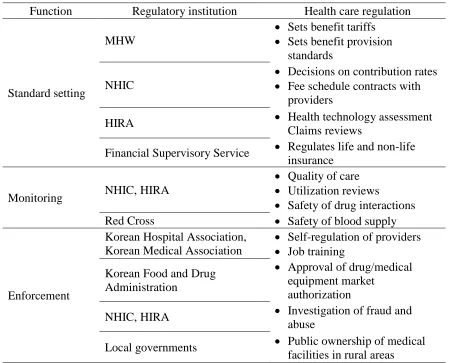
TABLE 2.6FUNCTIONS AND ROLES OF REGULATORY ORGANIZATIONS ... 13
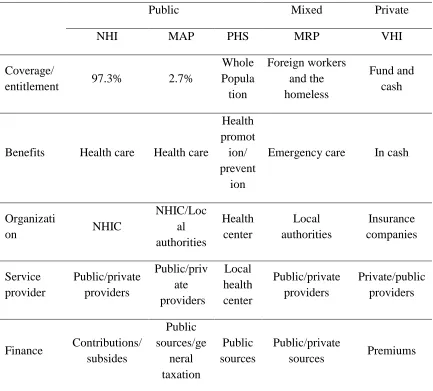
TABLE 2.7HEALTH CARE COVERAGE PROGRAM IN SOUTH KOREA ... 17
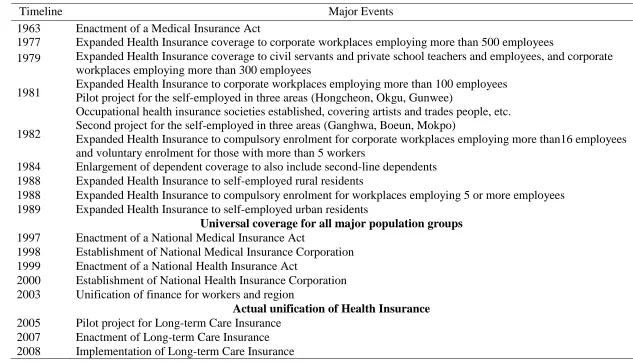
TABLE 2.8MAJOR EVENTS IN DEVELOPMENT OF NATIONAL HEALTH INSURANCE PROGRAM ... 21
TABLE 4.1QUESTIONNAIRE RESPONDENT CHARACTERISTICS ... 38
TABLE 4.2PROS AND CONS OF INTRODUCTION OF FOR-PROFIT HOSPITAL ... 39
TABLE 4.3REQUIRED CHANGES IN POLICY FOR INTRODUCING FOR-PROFIT HOSPITAL ... 41
TABLE 4.4EXPECTED IMPACT OF INTRODUCING FOR-PROFIT HOSPITAL ON THE HEALTH CARE INDUSTRY AND SOCIETY ... 42
TABLE 4.5ASSIGNMENT IN THE MANAGEMENT FOR FOR-PROFIT HOSPITAL ... 43
TABLE 4.6GENERAL CHARACTERISTICS OF RESEARCHES USED IN META-ANALYSIS OF PATIENT SATISFACTION ... 59
TABLE 4.7GENERAL CHARACTERISTICS OF RESEARCHES USED IN META-ANALYSIS OF FINANCIAL PERFORMANCES ... 65
LIST OF FIGURES
FIGURE 2.1STRUCTURE OF NATIONAL HEALTH INSURANCE PROGRAM ...10
FIGURE 2.2FINANCIAL FLOW OF THE HEALTH CARE SYSTEM IN SOUTH KOREA ...16
FIGURE 4.1EFFECT SIZE FOR PATIENT SATISFACTION OF FOR-PROFIT VERSUS NOT-FOR PROFIT HOSPITAL ...60
FIGURE 4.2EFFECT SIZE FOR FINANCIAL PERFORMANCE OF FOR-PROFIT VERSUS NOT-FOR PROFIT HOSPITAL ...66
LIST OF ABBREVIATIONS
DRG ... Diagnosis-related Group
FFS ...Fee for Services
GDP... Gross Domestic Product
HIRA ... Health Insurance Review and Assessment Service
IDN ... Integrated delivery networks
KHA ... Korean Hospital Association
KMA ... Korean Medical Association
KNA ... Korean Nurses Association
KOMA ... Korean Oriental Medicine Association
LCI ... Long-term Case Insurance
MHW ... Ministry of Health and Welfare
MSF...Ministry of Strategic Finance
MRP ... Medical Relief Program
NGO ...Non-Governmental Organization
NHI ... National Health Insurance
NHIC ... National Health Insurance Corporation
CHAPTER
1
INTRODUCTION
Health care systems are dependent on the norms and values prevailing in their
respective societies (White, 2015) and vary around the world. Each country has
developed its own distinctive health care system based on its history, traditions, and
political system (Lameire et al., 1999). Therefore, no two health systems are identical
and each system represents its own specific characteristics and peculiarities based on the
social contracts between citizens and their respective governments (Lameire et al., 1999).
Health care systems worldwide can be classified using a number of dimensions
and criteria. In general, four different basic health care models are defined based on the
source of funding of the system (Reid, 2015). These four models are: the Beveridge
model, the Bismarck model, the National Health Insurance, and the out-of-pocket model.
In the Beveridge model, health care services are provided to all citizens funded through
the governmental budget or tax revenue. This model has been adopted by countries like
United Kingdom, Finland, Sweden, Norway, Italy, Canada and New Zealand.
The Bismarck model is funded mainly by premium-financed social/mandatory
insurance and is found in countries such as Germany, France, Austria and Switzerland.
Later, a number of countries(e.g.,Japan,Taiwan) also adopted similar social insurance
based systems. This model results in a mix of private and public providers, and allows
In the insurance model, funding of the system is based on premiums, paid into
private insurance companies, and in its pure form actually exists only in the US among
the developed countries of the world. In this system, the funding is predominantly private,
with the exception of social programs targeting selected demographic and social groups.
In the USA, government funds a large proportion of health care expenses of elderly
(through Medicare), disabled, and households in poverty satisfying a number of other
criteria(for Medicaid, the criteria for enrollment depends on state policy). Because the
emphasis of the system is on private provision and funding of health care services, a
majority of health care providers in this model belong to the private sector.
The out-of-pocket model is what is found in the majority of countries of the world,
mainly in developing nations. This system is in place in countries that are too poor or
disorganized to provide any kind of national health care system. In these countries, those
who have money can pay for health care services they get and those who are not able
and/or willing to pay for health care remain outside the health care market. In rural
regions of South America, Africa, and Asia, hundreds of millions of people spend their
lives without ever seeing a doctor.(Mbeki Moeletsi, 2009; Gudwani at al., 2012; Barber
& Yao, 2010)
A variety of factors like the financial system, health care delivery system, medical
fee system and compulsory social insurance are tightly connected to each other and the
macro performance of the health care system (e.g., health care expenditures, quality of
medical services, equity) appears to vary widely depending upon the combination of
system is needed before deciding whether the health care delivery system should
encourage development of for-profit providers.
In recent years discussions on the necessity and advantages/disadvantages of
introducing domestic commercial hospitals have been discussed (Lee, 2002; Jung,2003;
Gam,2004; Woo,2004).The administration of President Lee Myung-bak (2008-2013)
officially investigated whether reforming the Korean health system by allowing investor
owned hospitals would help strengthen the existing National Health System. In South
Korea, all private hospitals are sanctioned as not-for profit hospitals by law. The
regulation denies the commercial activity of a medical institution and competition
mechanism. Public hospitals in Korea are under strict price control, and even if a deficit
occurs, they are subsidized. Therefore, there is lack of consciousness of management
crisis. Private hospitals which are not-for profit are not able to raise money from the
market. Under the law, a private company that wants to operate a hospital is required to
set up a nonprofit corporation, which must reinvest any gains it earns in the operation of
the hospital. The government has tried to introduce for-profit hospitals open to private
investment as a means to promote medical tourism. Still, investor-owned hospitals are not
allowed in South Korea, except on Jeju Island, which is designated as a free economic
trade zone. Incheon Free Economic Zone should be included in this category as well. In
spite of this first step to open health care market for investors, debates on pros and cons
of this movement are still continuing.
The purpose of this study is to review the advantages and disadvantages of the
health care industry. To address this issue, this study will explore the following aspects
related to the development of private for-profit hospitals:
1. Advantages and disadvantages of allowing investor-owned hospitals, from the
point of view of health care providers/administrators and consumers,
2. Case studies of this type of hospital in other countries,
3. Barriers in introducing investor-owned hospitals in Korea,
CHAPTER
2
LITERATURE REVIEW
2.1. Health Care System in South Korea
Currently, South Korea has universal health insurance coverage (100% of
population) through programs for the employed population (self or employer-based) and
their dependents, and those covered through Medic Aid Program (low-income citizens).
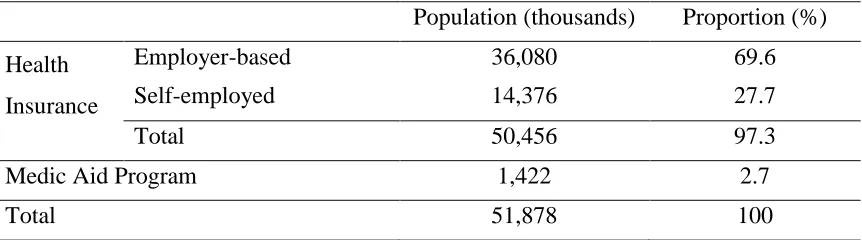
Medic Aid Program is a public program funded by the government. As is shown in Table
2.1, Medic Aid Program covers a relatively small proportion of population in South
Korea.
Private insurance is allowed if individuals and households perceive the need for
getting additional supplemental coverage, but private insurance must be purchased
individually.
Table 2.1 Population by Insurance Coverage Type in Korea (2015.06)
Population (thousands) Proportion (%)
Health
Insurance
Employer-based 36,080 69.6
Self-employed 14,376 27.7
Total 50,456 97.3
Medic Aid Program 1,422 2.7
Total 51,878 100
2.1.1. Demography and Health Status
Demography
In 2015, the population of Korea was approximately 51 million (NHIC, 2015).
After rapid population growth during the industrialization phase of 60s and 70s, growth
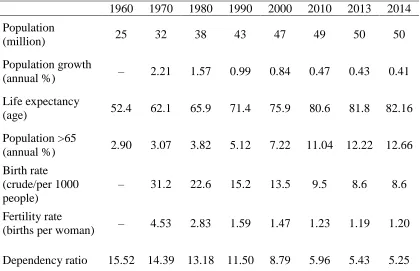
rate has slowed considerably and has stabilized around 50 million since 2000 (Table2.2).
The increasing elderly population and decreasing birth rate now characterizes the
demographic changes happening in South Korea (Table 2.2). The demographic changes
will have significant impact on the health system and health system organization.
Table 2.2 Population and Demographic Indicators (Selected Years)
1960 1970 1980 1990 2000 2010 2013 2014
Population
(million) 25 32 38 43 47 49 50 50
Population growth
(annual %) – 2.21 1.57 0.99 0.84 0.47 0.43 0.41
Life expectancy
(age) 52.4 62.1 65.9 71.4 75.9 80.6 81.8 82.16
Population >65
(annual %) 2.90 3.07 3.82 5.12 7.22 11.04 12.22 12.66
Birth rate (crude/per 1000 people)
– 31.2 22.6 15.2 13.5 9.5 8.6 8.6
Fertility rate
(births per woman) – 4.53 2.83 1.59 1.47 1.23 1.19 1.20
Dependency ratio 15.52 14.39 13.18 11.50 8.79 5.96 5.43 5.25
Countries are classified into three groups based on the proportion of their
population in the elderly age bracket. For example, countries with ≥7%of the population
aged 65 or older are categorized as an “ageing society”. If the percentage of elderly
exceeds 14% or 20%, the countries are called “aged society” and “super-aged society”,
respectively (Lee, 2009; Tahara, 2016). South Korea became an “ageing society” in 2000
based on the data obtained from the Organization of Economic Cooperation and
Development(OECD)(Korean Statistical Information Service, 2015). The percentage is
expected to rise to 14.4% in 2018, implying that it will become an “aged society” in 2018.
Population projections indicate that Korea will become a “super-aged society” after 2026
(OECD, 2015). The rate of increase in the number of elderly persons in South Korea is
faster than the growth of elderly persons in many other OECD countries (Park, 2015).
The challenge of increasingly elderly populations is increased demands for health care
and associated medical expenses. With low fertility, the ratio of pension age persons(>65)
to working age persons (20~64) is also likely to decrease over the years, implying that
working group persons will have to support an increasingly higher number of
non-working persons with the increasing number of elderly. This could be a burden in
maintaining the macroeconomic sustainability of the financing of health care.
Health Status
The health status of the population of South Korea has improved steadily since
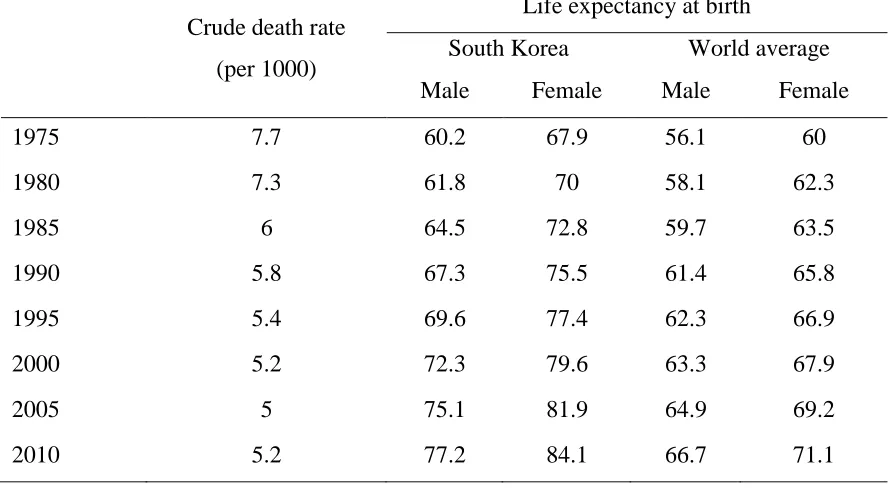
1975 (Table 2.3). The crude death rate decreased from 8 persons per 1000 in 1970 to 5.3
in 2013. Meanwhile, life expectancy at birth increased quite rapidly to become one of the
to 84.1 in 2010, much higher than the world average (Table 2.3). For males, life
expectancy grew from 60.2 years in 1975 to 85.1 years in 2013.
Table 2.3 Birth/Death Rate and Life Expectancy by Gender at Birth in South Korea and World Average, 1970-2013
Crude death rate
(per 1000)
Life expectancy at birth
South Korea World average
Male Female Male Female
1975 7.7 60.2 67.9 56.1 60
1980 7.3 61.8 70 58.1 62.3
1985 6 64.5 72.8 59.7 63.5
1990 5.8 67.3 75.5 61.4 65.8
1995 5.4 69.6 77.4 62.3 66.9
2000 5.2 72.3 79.6 63.3 67.9
2005 5 75.1 81.9 64.9 69.2
2010 5.2 77.2 84.1 66.7 71.1
Source: KOSIS(2015), OECD(2016)
These improvements in the crude death rate and life expectancy are largely attributable to
improved nutrition, hygiene and sanitation, increasing health knowledge, better access to
health services, development of medical technologies and equipment, and advancement
of the health care system.
The infant mortality rate (IMR) is frequently quoted as an index of health status of
the population. Although the IMR was 13 per 1000 live births in 1985, which is higher
than other advanced countries, it dramatically decreased to 3 in 2013, comparable to the
Table 2.4 Infant Mortality Rate (Per 1000 Live Birth) in South Korea and Selected Countries, 1985-2013
South
Korea France Japan Germany Sweden US
Average
(except for South
Korea)
1985 13 8.3 5.5 9.1 6.8 10.6 8.06
1990 14.3* 7.3 4.6 7 6 9.2 6.82
1995 14.1* 5 4.3 5.3 4.1 7.6 5.26
2000 8.3* 4.5 3.2 4.4 3.4 6.9 4.48
2005 4.7 3.8 2.8 3.9 2.4 6.9 3.96
2010 3.2 3.6 2.3 3.4 2.5 6.1 3.58
2013 3 3.6 2.1 3.3 2.7 . 2.925
Source: OECD(2016), KOSIS(2016)
2.2.The Structure of Health Care System
2.2.1.Administrative Structure
The major organizations involved in the health care system in South Korea
include stakeholders such as the Ministry of Health and Welfare (MHW), the Ministry of
strategic Finance (MOSF), the National Health Insurance Corporation (NHIC) and the
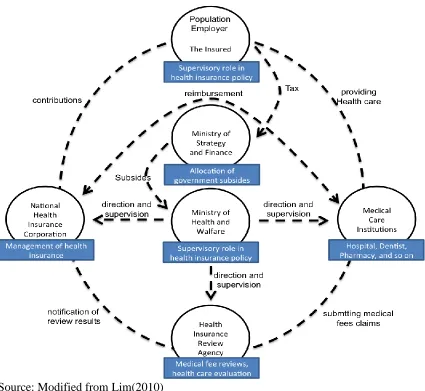
Health Insurance Review and Assessment Services (HIRA) (Figure 2.1). These
organizations were established with distinctive roles and responsibilities based on the
Source: Modified from Lim(2010)
Figure 2.1 The Structure of National Health Insurance Program
Ministry of Health and Welfare
The Ministry of Health and Welfare (MHW)manages and supervises the operation
of the NHI program through formulation and implementation of policies. Universal
coverage through national health insurance has broad political support(Kwon, 2009). The
health-related regulation including insurance and basic living assurance, protection of
low-income population, health industry, maternity and child care, and dental health (Korean
code 2016).Key health legislations are listed in Table 2.5.
Table 2.5 Key Health Legislations of South Korea
Name of Act Year
The Constitution of the Republic of Korea Act 1948
Pharmaceutical Affairs Act 1953
Medical Technicians Act 1995
Communicable Disease Control and Prevention Act 1954
Regional Public Health Act 1956
Medical Service Act 1962
Blood Management Act 1970
Prevention of Acquired Immunodeficiency Syndrome Act 1987
Emergency Medical Service Act 1994
National Health Promotion Act 1995
Mental Health Act 1995
National Health Insurance Act 1999
Internal Organs Transplant Act 1999
Framework Act on Health and Medical Services 2000
Medical Care Assistance Act 2001
Medical Devices Act 2003
Act on Long-Term Care Insurance for the Aged 2007
In addition to health service delivery policy, planning, regulatory frameworks, and
social and public health safety nets, the MHW is responsible for fostering an environment
National Health Insurance Corporation (NHIC)
In 2000, the administrative structure of the health care system was changed from a
multiple health insurer model to a single insurer model. The National Health Insurance
Corporation (NHIC) was established by the National Health Insurance Act in 1999, and
plays a major role as the single insurer: managing qualification of the insured (employee,
self-employed or dependent), imposing and collecting premiums, making payments to
medical institutions, negotiation with providers associations to set the price of medical
services and setting of medical fee schedules.
Ministry of Strategic Finance (MOSF)
MOSF is involved in running the health care system through the allocation of
government subsidies. In 2013, government subsidy was 17.3% of financial revenue of
the National Health Insurance. Contributions by insured were from the employer-based
(67.5%) and the self-employed (15.2%). In addition to health insurance subsidies, MOSF
also transfers funds from general revenue for the NHIC management budget, which
includes all administrative costs. MOSF can also influence health insurance policy
through its involvement in the NHIC’s highest level decision-making body, the Board of
Directors. In fact, under the National Health Insurance Act, representatives from MOSF
are entitled to be included in the Board of Directors in a non-permanent role. The Board
plays an important role in making decisions related to the insurer’s functions and
responsibilities: for instance, setting the annual budget and determining which benefits
NHIC include. MOSF’s role is to comprehensively evaluate the NHIC’s affairs to
increase the efficiency and transparency of all public programs. In these terms, the
Agency Management Act (2005), which monitors performance of all public agencies’.
Based on the government Public Agency Management Act, the Ministry can control
budget spending, personnel management and major projects, as well as assess the
performance of NHIC operations.
Table 2.6 Functions and Roles of Regulatory Organizations
Function Regulatory institution Health care regulation
Standard setting
MHW
• Sets benefit tariffs
• Sets benefit provision standards
NHIC
• Decisions on contribution rates
• Fee schedule contracts with providers
HIRA • Health technology assessment
Claims reviews
Financial Supervisory Service • Regulates life and non-life insurance
Monitoring NHIC, HIRA
• Quality of care
• Utilization reviews
• Safety of drug interactions
Red Cross • Safety of blood supply
Enforcement
Korean Hospital Association, Korean Medical Association
• Self-regulation of providers
• Job training
Korean Food and Drug Administration
• Approval of drug/medical equipment market
authorization
NHIC, HIRA • Investigation of fraud and
abuse
Local governments • Public ownership of medical
Health Insurance Review and Assessment Services (HIRA)
HIRA is responsible for reviewing medical fees as well as assessing quality of
health care services provided to health insurance beneficiaries. HIRA reviews claims to
evaluates the reasonableness of health care benefits. HIRA works to ensure the
appropriate provision of health care through the fair and objective review and assessment
of claims in the partnership with NHIS. In addition, HIRA develops statistics and
information concerning clinical, social and economic implications of health care as
policy-making resources for the government.
Provider Associations
Provider associations in South Korea are involved in health insurance policies like
those in other countries. Most providers associated with the Korean Medical Association
(KMA), the Korean Hospital Association (KHA), the Korean Dentist Association (KDA),
and the Korean Oriental Medicine Association (KOMA) accept the National Health
Insurance and make a reimbursement claim for treatment costs. Providers accept new
patients and there is no restrict which patients they accept.
2.2.2. Health Care Financing
The South Korean health care system is a mix of public and private financing.
Funds for health care are raised mainly from: mandatory health insurance contributions
and out of pocket (OOP) payments.
OOP payment for outpatient service is 30% (clinics, pharmacy), 40% (hospitals),
50% (general hospitals), or 60% (tertiary care hospital). OOP payment for inpatient
As the government is responsible for health care services, it subsidizes a
substantial portion of health care funding. In 2013, government subsidy was 17.3% of
financial revenue of the National Health Insurance. Contributions by insured were from
the employer-based (67.5%) and the self-employed (15.2%). The contribution of the
employer-based insured is calculated based on gross salary of employees, and equally
shared by both employees and employers. Additional contribution has been collected
from high-income population. The contribution of the self-employed is determined by
annual average income, properties, vehicles, age, and gender.
The NHI program, which provides universal coverage, is predominantly funded
through contributions by employees, employers and the self-employed (including
contributions by the state for civil servants) (Kim, 2008)
In addition, there is the Medic Aid Program (MAP), which guarantees health care
services to the poor with low-income and is financed by the central and local
governments. The Public Health Service provides the whole population with health care
services for prevention and health promotion. There is also the Medical Relief Program
(MRP) that provides emergency medical services to foreign workers and homeless people.
Note: OOP: Out of Pocket; FFS: Fee for Services; DRG: Diagnosis-related group; NHIC: National Health Insurance Corporation;
Table 2.7 Health Care Coverage Program in South Korea
Public Mixed Private
NHI MAP PHS MRP VHI
Coverage/
entitlement 97.3% 2.7%
Whole Popula tion Foreign workers and the homeless Fund and cash
Benefits Health care Health care
Health promot ion/ prevent
ion
Emergency care In cash
Organizati
on NHIC
NHIC/Loc al authorities Health center Local authorities Insurance companies Service provider Public/private providers Public/priv ate providers Local health center Public/private providers Private/public providers
Finance Contributions/
subsides Public sources/ge neral taxation Public sources Public/private
sources Premiums
Note: NHI: National Health Insurance; MAP: Medic aid Program; PHS: Public Health Service; MRP: Medical Relief Program; VHI: Voluntary Health Insurance; NHIC: National Health Insurance Corporation.
2.2.3. Health Care Delivery
Health Care Delivery Service
The health care service delivery system consists of tertiary hospitals, general
(secondary) hospitals, clinics, and public health centers, which are corporate and
operated to for-profit private ownership. The private sector which are sanctioned as
not-for profit hospitals has been growing rapidly, and currently is the major provider of care
in South Korean. More than 90% of hospitals (and 92% of beds) are private, as well as
almost all outpatient clinics. Korean health care policies and financing encourage the
development of the hospital sector, particularly inpatient beds which increased private
payments for hospitalizing. The number of acute beds has been growing over the last
decade of the twentieth century and continues to grow (OECD,2016) (see also Table2.1,
OECD, 2016). While in most of the OECD countries the trend is reversed towards the
dehospitalization of delivery systems (OECD, 2015). Still, there is need in more hospital
beds, since the number of beds is below the average for OECD countries.
Resource Allocation and Contracting
The dominant method of reimbursement of hospital and outpatient services is
fee-for-service (FFS). Diagnosis Related Group system-based payments to hospitals are being
piloted, although there is resistance from the hospital side. The FFS method of payment is
often favored by providers, but is potentially inflationary for the health care system since
it offers opportunities for induced demand and overprovision. The fees are subject to
regular reviews by the Health Insurance Review Agency (HIRA), who analyzes health
insurance claims.
In August 2004, the health insurance reform committee in the National Health
Insurance Corporation (NHIC) proposed the use of global budgets. The health market is
regulated, which controls over-use and miss-use of services. The agencies that review
fees are the National Federation of Medical Insurance (NFMI), which dissolved in 2003
care performance and costs of health care services provided to beneficiaries. Being
autonomous, HIRA works closely with the National Health Insurance Corporation
(NHIC). On the demand side, co-payments are applied to contain the use of hospital
inpatient services and outpatient services. These co-payments constitute the out-of-pocket
(OOP) component of health care financing. The result is free choice of providers with a
loose system of referrals.
2.2.4. History
Several years before universal health insurance was initiated in South Korea,
legislation was passed that allowed businesses to offer health insurance to employees
through medical insurance societies (Anderson, 1989). These societies were formed as
subsidiaries of large firms or were incorporated by a number of small firms and existed to
collect revenues, set benefits, and develop reserves (Anderson, 1989). Claim reviews and
payments to providers were centralized (Kwon, 2009). For the next ten years, there was
debate about whether these administrative societies should be further unified under the
central government or remain decentralized (Lee, 2003). The structure of administration
and its relationship to both the country’s goals for efficiency and its political philosophies
were at the heart of the debate.
In 2000, South Korea’s new president Kim Dae-Jung fulfilled promises to merge
all of the medical societies into one single payer (Kwon, 2009). Now the insured are
divided into two groups, the employer-insured and the self-employed (Song, 2009), and
the health care system comprises three branches; the National Health Insurance Program
(NHIP), the Medic Aid Program (MAP), and the Long-term Care Insurance (LCI)
while LCI covers disabled older adults.
The move to a single-payer system was partially driven by inequities in financing,
whereby the self-employed in poor regions were paying a higher proportion of
contributions than those in wealthy regions, even though the benefits themselves were
identical (Kwon, 2009). This was due to differences in the administrative societies, which
were often too small to pool risk efficiently. Consequently, administrative costs varied
substantially (Kwon, 2009). With the introduction of the single-payer system,
administrative costs were equalized across different segments of the population and
dropped substantially overall. Before the move to a single-payer system, administrative
costs ranged from 4.8% for government workers to 9.5% for the self-employed. By 2006,
the rate was 4% for all workers (Kwon, 2009). A mixed system of tax-based financing
and health insurance was established (Kwon, 2009), avoiding problems in assessing the
income of the self-employed.
2.3. For-Profit Hospitals, an Investor-Owned Hospital System
2.3.1. For-Profit Hospitals, Investor-Owned Hospital
Definition
‘For-profit’ is defined in dictionary as ‘seeking for profit in property’ (National
Korean Institution,2007) and is often used as indicating the management aim or property
21
Table 2.8 Major Events in Development of the National Health Insurance Program
Timeline Major Events
1963 Enactment of a Medical Insurance Act
1977 Expanded Health Insurance coverage to corporate workplaces employing more than 500 employees
1979 Expanded Health Insurance coverage to civil servants and private school teachers and employees, and corporate workplaces employing more than 300 employees
1981 Expanded Health Insurance to corporate workplaces employing more than 100 employees Pilot project for the self-employed in three areas (Hongcheon, Okgu, Gunwee)
Occupational health insurance societies established, covering artists and trades people, etc.
1982 Second project for the self-employed in three areas (Ganghwa, Boeun, Mokpo) Expanded Health Insurance to compulsory enrolment for corporate workplaces employing more than16 employees
and voluntary enrolment for those with more than 5 workers
1984 Enlargement of dependent coverage to also include second-line dependents 1988 Expanded Health Insurance to self-employed rural residents
1988 Expanded Health Insurance to compulsory enrolment for workplaces employing 5 or more employees 1989 Expanded Health Insurance to self-employed urban residents
Universal coverage for all major population groups
1997 Enactment of a National Medical Insurance Act
1998 Establishment of National Medical Insurance Corporation
Unification of Regional Medical Insurance Unions (227 unions) and National Medical Insurance Corporation 1999 Enactment of a National Health Insurance Act
2000 Establishment of National Health Insurance Corporation 2003 Unification of finance for workers and region
Actual unification of Health Insurance
Hospitals can be classified as ‘for profit’ or ‘nonprofit’, with for-profit referring to
a ‘system that permits establishment and management of hospital as profitable
corporation’ or a ‘system that acknowledges commercialization of corporate hospital.’
(Hwang, 1988). The most defining characteristic of for-profit hospitals is their ability to
accept and deliver capital (Paek, 2007). For-profit hospitals accept capital from investors
to manage the hospital, and profits that have occurred can be given back to investors in
return. In this perspective, for-profit hospitals are defined as “hospital owned by investor
or confederation of such”, and this type of hospital corporation is also referred as
‘investment open hospital’. Often in Korea, the term ‘for-profit hospital’ is used to refer
to ‘investment open hospital’, ‘investment open medical corporate body’, ‘for-profit
corporate medical institution’, and ‘for-profit medical corporate body’ (Korea
Development Research Institute & Korea Health Industry Promotion Institute, 2009). For
example, when the dispute over introduction of a for-profit hospital to Jeju Island was
ongoing, the governor used the term ‘Investment open hospital’ instead of ‘for-profit
hospital’ to Jeju Island-citizens. In this research, the term ‘for profit hospital’ was mainly
used to refer to all types of profit-seeking hospitals which kinds of owned, investment
and operations.
2.3.2. Comparison between For-Profit and Not-For-Profit Hospitals
Quality of Care
McCellan and Staiger (1999) compared mortality rates for all U.S. elderly patients
by hospital ownership status using longitudinal data from 1984 to 1994. They showed
that for-profit hospitals had a higher mortality among elderly patients with cardiac
of the for-profit hospital and influenced by market and hospital-specific factors rather
than the ownership of the hospital.
Devereaux et al. (2002) compared mortality in private for-profit and private
non-profit hospitals in the US from 1982-1995, reviewing 15 observational studies that
included 26,000 hospitals and 38 million patients. They found that patients treated at
for-profit hospitals had a 2% increase in the risk of death. The authors attribute the higher
death rate at for-profit hospitals to two potential causes: i) shareholders expect a 10% to
15% return and the hospitals have to pay taxes, and ii) funding (payment rate per case) is
fixed from national health insurance (Canada) or Medicare (US), so they may have the
opportunity to cut corners to reduce costs.
The decrease in the quality of services provided in for-profit hospitals is attributed
to the reduction in service provision, skilled staff and fewer health-care workers per bed
(Lee, 2014). Another study analyzed data from state inspections of 13,693 nursing
facilities (1998). They found controlling for case mix and facility characteristics, nurse
staffing was lower at investor-owned nursing homes and investor-owned nursing homes
are more frequently cited for quality deficiencies and provide less nursing care
(Harrington et al., 2001). A meta-analysis involving over 500,000 patients receiving
hemodialysis revealed higher risk-adjusted mortality rates at private for-profit dialysis
facilities (Devereaux et al 2002).
Eggleston et al. (2008) performed a systematic review to find the factors
explaining the relationship between hospital ownership and quality. Analysis using 31
studies revealed that there was no significant difference by ownership status in quality of
could be changed depending on the institutional context, including differences across
regions and markets.
Song (2013) analyzed the correlation between the ownership and performance of
hospitals in South Korea. Insurance benefit data of 2010 were collected from the National
Health Insurance Corporation and National Statistical Office. The analysis of variance
analysis and multiple regression analysis revealed that there was no significant difference
on major achievements such as "hospital mortality rate within 30 days after admission",
and "average hospitalization days" between the ownership types of hospitals. This result
suggests that the outcome of medical services is related to the structural and
environmental contexts of medical institutions such as the size, type, and market
competition of the hospital. The author presumed that the difference in performance is
attributable to an endogenous context rather than the ownership status.
Rosenau and Linder (2003) conducted a systematic review of evidence-based
peer-reviewed assessments of differences in performance between private for-profit and
private non-profit US hospitals. They compared data for for-profit providers with data for
concurrently existing non-profits from the same geographical area and a few studies
compared each provider’s pre- and post-conversion performance. The authors found that
in the studies on quality, the non-profits were judged superior in 59% (41 articles) of the
cases, the for-profits were superior in only 12% (8 articles), and for the rest, 29%, there
was no difference or results were mixed. They conclude that overall, the past 22 years of
research have judged the non-profit providers more favorably than their for-profit
Cost of Care
In principle, profits for non-profit hospitals should be zero, but, in general, data
collected from financial analysis is used to determine the real profitability of the
operation (Jung and Ko, 2005). In addition, Sloan (2000) and Shen et al. (2005) showed
that the costs of providing care was almost the same in for-profit and not-for profit
hospitals.
Effectiveness
Efficiency refers to financial performance, using a similar approach used for
understanding the relationship between inputs used and outputs obtained (Kim K, 2011).
Hospitals are a capital and labor-intensive industry. Considerable investment is required
to manage a hospital, but market conditions like a high supply of health care services at
relatively low prices imply that the profitability is low compared with other industries.
For the maintenance and development of hospitals, hospitals should be effectively
managed to make an appropriate profit regardless of the type of ownership.
Toren (1996) using the stochastic frontier regression analysis showed that
cost-effectiveness is not influenced by the hospital ownership. However, Zucherman et al.
(1994) using the same method of Toren (1996) with a large sample of hospitals revealed
that for-profit hospitals were less cost-efficient.
Patient Satisfaction
Westbrock (1996) defined client satisfaction as ‘Subjective evaluation of the
personal preferences for various computation’. William (1990) stated that patient
satisfaction reflects treatment process, results of treatment, the medical cost, and ease of
service-related stimuli before, during, and after use of health care services. Woodside et al. (1989)
and Reidenbach & Sandifer (1990) have shown that the equality of medical services
affects the patient’s satisfaction and intention to reuse medical services. Regression
analysis showed that the patient’s satisfaction is associated with the equality of medical
services and intention to reuse medical services. Zeithmal (2000) argue that increased
profitability through patient satisfaction allows hospitals to maintain and give better
rewards to the staff, which motivate hospitals to provide better service to their patients.
The number of health care provider and medical institution has been rapidly
increased in South Korea. Therefor competition in the healthcare industry is intensifying.
To increase competitiveness of medical services, it is needed to improve the quality of
medical service for patient. Eventually, in order to survive in a competitive market, it is
critical to seek an optimization plan to provide quality service at minimum cost, which
also include efforts to improve patient satisfaction.
2.3.3. Legal Issues in Hospital System
Profitability of Medical Institution according to Medical Law
For discussion according to juridical interpretation, we first look at the
characteristics of profitability in Korean hospitals according to current medical law.
According to medical law Article 33 Amendment 2(Korean code, 2016), medical
institutions are defined as “where medical personnel hold occupations of medicine or
childbirth for public or specific individuals’. Therefore, entitles that do not meet one of
following cannot currently establish a medical institution under law:
2. Nation
3. Corporate body established for purpose of medical occupation (mentioned as
“medical corporate” below)
4. Nonprofit Organization (NGO) established according to 「civil law」 or
special law
5. Quasi-governmental organization according to 「Law concerning management
of public institution」, Provincial medical center according to 「Law of
establishment and management of provincial medical center」, Korea Veterans
Welfare Medical Corp according to 「Law of Korea Veterans Welfare Medical
Corp」
Therefore, according to current medical law(Korean code, 2016), the
establishment of a medical institution is restricted to medical personnel and nonprofit
corporate bodies (medical corporate body, social welfare corporate body, educational
institution). Separate establishment of non-profit corporate body is needed for
commercial corporate body to establish medical institution. A medical corporate body is
under national administration from the establishment and dissolution of the corporation
and has to follow the regulations of foundation corporate bodies in civil law (Lee, 2004)
Therefore, the Korea Medical Corporation is classified as a ‘nonprofit foundation
corporate body’. Moreover, medical enforcement ordinance clarifies the prohibition on
seeking profit of medical corp. or non-profit corp. (Attachment 18-mission of medical
corporate) Therefore, Korean medical law takes a countering attitude towards
establishment of medical institution for purpose of profit seeking, but rather as a place for
Concept of ‘For-Profit’ according to Juridical Judgment
Precedent in the Supreme Court of Korea concerning Medical Law Article 33
Amendment 2 (Supreme Court 2003 Da 2390, 2003 Da 2406 ruling) act of establishing
and running of medical institution by non-medical or medical corporate is considered
asocial that could threat national health and hygiene, and has decided that relevant clause
belongs to ‘compulsory law'. Therefore, it was decided that 'contract based on violation
of inhibiting regulation for-profit medical institution is nullified'. Restricting
qualifications for the establishment of medical facilities is directly related to the Korean
obligation of protecting national health (Jeon and Kim, 2005), and the legal concept of
theory of profit distribution in which ownership status is judged. The Constitutional Court
(Constitutional court sentenced 2005. 5.31, decided 2001. 87) established that obligating
only those regulated by medical law to establish medical institutions does not violate the
freedom of choosing occupation. Therefore, restrictions on the establishment of medical
institutions by non-medical personnel is valid to prevent the commission of medical acts
without license or lowering the quality of health medicine. On the other hand, the
minority opinion is that they violate the 'principle of superfluous law'. Moreover, the
Korean juridical department restricts the right to establish medical institutions, and judges
the establishment and management of medical institution/corporations.
Establishment of Medical Institutions and Profit Seeking Activity in Management
The concern regarding the right to establish medical institution can be narrowed
down to two points: fortifying the function of market that makes introduction of capital
easy and continuous regulation for procuring publicity of health care medicine. As it was
Court does not permit profit-making corp. establishing medical facility for the protection
of health care quality and procurement of publicity. However, running a hospital or
management of a medical facility by a doctor (him/herself) inevitably seeks to make a
profit (Kwon, 2010). According to Korean National Hospital Association, the percent of
individually- run hospitals is about 54.7%. To reflect this reality, Korean medical law
does not specify the legal characteristics of individuals or non-profit hospitals, and puts
medical profession as same category with other profit-seeking commercial industries in
terms of collecting corporate taxes (Jeon and Kim, 2005). Therefore, in discussion of
profit seeking medical corporate bodies, not only the profitability of the business, but the
distribution of profit and property are equally important problems.
For-Profit Hospital in Perspective of Capital Delivery and Profit Distribution
Non-profit hospitals also can be considered as a profit-seeking activity; however,
the profit cannot be distributed to the investors or members. In the case of for-profit
hospitals, the institution permits conducting of medical business and profit-seeking (i.e.,
'maximization of profit' is the main aim of management). As the principle of normal
market economy is applied, civil investment of capital is actively performed; investors
can join the allocation of profit or remainder properties, however not in non-profit
hospitals (Paek, 2007). Also, this return of profit can elicit continuous investment of
capital. Hospitals are just another business corporation that manage capital strategically;
for-profit hospitals reduce the cost of management and actively promote stabilization of
profit structure (Jung, 2013). At this moment, direct restriction of capital delivery through
hospitals. As constant profitability should be procured in order to continuously manage
the non-profit hospital, investment of finance that can generate profits is presented as an
alternative.
Publicity of for-profit hospitals
As the objective of for-profit hospital is to seek profit, social regulation that is
against market economy principle is not necessary for-profit hospitals. Social regulation
does not need to control the range and price of healthcare services because for-profit
hospitals adjust the price of medical services to be popular with people (Lee, 2012).
Individual hospitals or non-profit hospitals can also seek facility upgrades, high-price
medical treatment, treatments which is not covered by National Health Insurance
therefore they can charge high cost to patients, and change into profit-seeking corporate
body, so low income groups could face barriers in getting access to high quality treatment.
In the same context, treatment, research, and education of service departments such as
cardiothoracic surgery and general surgery diminish (Paek, 2007). In South Korea, the
income of the people is increasing and aged population is rapidly increasing. Thus, in the
past, medical services to treat illnesses have been emphasized, while recently there has
been a growing demand for nonmedical healthcare services tailored to individual
consumers 'commercial service' (Kang, 2011). Commercial services include
comparatively high-priced services (e.g., plastic surgery and health screening for disease
prevention). Even though the medical law allows medical commercial services to be
popular with patients, doctors are prohibited from pursuing excessive profits through
According to Jung (2003), in terms of the medical profession, the stipulation that
pursuit of 'appropriate profit' is acknowledged for 'continuing of survival and
development' but pursuit of 'excessive profit' is not acknowledged can be interpreted in
many ways and ambiguous in determining 'what is appropriate', so questions and disputes
follow. Therefore, concerning the problem of for-profit hospitals, seeking publicity and
profit can be a contentious issue. Likewise, as for-profit hospitals are legally and
financially distinct, it is hard to avoid the discussion regarding publicity, inequality, and
polarization.
2.4. The Introduction of Investor-Owned Hospitals
2.4.1. The Roles of Government in Health Care Services
The World Health Organization defined that “Equity in health implies that ideally
everyone should have a fair opportunity to attain their full health potential and, more
pragmatically, that no one should be disadvantaged from achieving this potential, if it can
be avoided” (WHO, 1986). Egalitarians have a resistance to external factors such as
income or assets that could impact the allocation of medical resources, and support the
ideal that medical resources be distributed according to patient’s needs. Many countries
advocate on the principle that “equal treatment in accordance with the same needs and the
burden on the ability to pay” (Van Doorslaer and Wagstaff, 1992; Wagstaff and Van
Doorslaer, 1993). Libertarians believe that health care is one of reward systems as well,
thus the merit of patients and the abilities of providers should be considered. The state
intervention should be limited to ensure the appropriate level for the poor (Maynard and
as education and health care in the public choice theory should be distributed more
equally than the economic power. Eventually, government power should intervene in the
management of health care services as merit goods.
Cutler (2002) classified the role of government in the health care system with
three parts:
1) Foundation of the health care system - the scope of medical insurance guaranteed to
protect more people under the government’s responsibility was formulated widely. There
were almost no constraints regarding use of medical insurance.
2) Corresponding period of negative effects - the medical cost in OECD countries was
increased from 3.8% of GDP at 1960s to 7.2% of GDP at 1980s since the former system
did not considered cost at all. In addition, the problem of inefficiency was raised that does
not take into account the preferences of various individuals under the equity-oriented
system.
3) Market mechanisms introduced after the 1980s – system innovation by the
introduction of market mechanisms and competition was magnified to improve the health
care system.
2.4.2. Innovation of Health Care System by Consumer-Oriented Model of Health Care
Delivery
In the 1990s, innovative strategies to provide overall products and services in
retail environments began in the US (Herzlinger, 2004a,b)
Networks (IDNs) were strategically built for the vertical and horizontal integration with
various entities (Burns and Pauly 2002): Primary Care Physicians (PCPs),
Physician-Hospital Organization (PHOs), Management Services Organizations (MSOs) Health
Maintenance Organizations (HMOs), Multi-Hospital systems, and strategic alliances with
neighboring hospitals to form local networks. However, IDN innovations failed because
they were centered on provider interests rather than patient needs (Burn and Pauly, 2002).
Business diversification and integration efforts conducted in the in Europe or the
United States are difficult to replicate in South Korea since mergers among medical
institutions and establishment of medical-related companies are not allowed due to
restrictions of non-profit corporations in the claim of remaining property and the right of
establishment. However, the attempts to form medical networks like IDNs in the US have
seen some progress under such a rigid environment. If Korea allows to establishment of
for-profit hospitals, it is expected to be able to form medical networks in Korea as the US
has accomplished (Lee, 2006)
Personalized and integrated patient service as a novel trend in consumer-oriented
service. Integrated multidisciplinary care units are required to cover the changing disease
patterns as a surge in demand for multiple symptoms (WHO, 2009). These movements
were influenced by the topic for the consumer-oriented services to overcome the
fragmentation of care and consumer discomfort in health care system (Herzlinger, 1994a).
Frank and Salkever (2000) estimated the fusion and breakup of existing hospitals in this
transition phase. For example, in-store clinics in Wal-Mart or CVS could reduce costs
and promote consumer convenience by streamlining the supply chain without the need
CHAPTER
3
RESEARCH METHODS
The purpose of this study is to investigate the appropriateness of investor-owned
hospital systems in Korea. To answer this research question, questionnaires and in-depth
written investigation were performed on a sample of policymakers, senior managers of
network hospital, professors in School of Medicine, and experts on hospital management.
In addition, meta-analysis was performed for quantitative review based on the
aforementioned research on patient satisfaction, financial performance, and social
contribution.
3.1. Questionnaire
Health related experts were asked for their opinions on allowing investor-owned
hospitals in South Korea. These questionnaires were mailed once to ten policymakers, ten
senior managers of network hospital in South Korea, five professors in School of
Medicine in various universities, and five experts who had been working in hospital
management. Total ten questionnaires (response rate: 33%) were returned from three
policymakers, four senior managers of hospitals (response rate: 40%), and three other
experts (response rate: 30%). This survey was performed from October 2010 to
The questionnaire used in this study was composed of six questions (Appendix A).
Several experts replied with their opinions without direct reference to the questions.
3.2. Meta-analysis
3.2.1. Identifying Studies and Extracting Summary Data
For the literature search, an extensive database query was conducted to identify all
relevant studies published between 2000 and March 2017. Databases were used to collect
literatures for meta-analysis including Korean Studies Information
(http://kiss.kstudy.com), Research Information Sharing Service (http://www.riss.kr), and
EBSCOhost Online Research Databases (http://ebscohost.com). The literatures included
Master’s theses or Doctoral dissertations and peer reviewed articles comparing patient
satisfaction, profit creation, employment creation, and social contribution between
investor-owned hospital and not-for-profit hospital. Studies in any country were subjected
to be searched if they were written in English or Korean. written in Korean or English. In
addition, studies without the values to calculate an effect size such as average, standard
deviation and p-value were excluded. As keywords for collecting references for
meta-analysis, in the Korean database, it was collected by the words that were ‘영리병원’,
‘민간병원’, ‘비영리병원’, ‘환자만족도’, ‘ 재무성과’, and ‘사회공헌도’. In the
English database, it was the same with the words used in Korean database, but translated
into ‘for-profit hospital’, ‘not-for-profit hospital’, ‘investor-owned hospital’, ‘patient
satisfaction’, ‘financial performance’, and/or ‘social contribution’. Abstracts of returned
articles were reviewed to evaluate the relevance to patient satisfaction, profit creation,
The data were collected through their consensus after independently conducting
the literature search, and the relevant studies were reviewed until an agreement was
reached. In total, 1,549 total articles were returned, of which 709 were removed due to
duplication, leaving 840 articles for final review in accordance with the standards for data
selection and exclusion focusing on the title and abstract. From this process, 832 articles
that were not in accordance with the standards were excluded, leaving the 22 articles of
both domestic and overseas nature for inclusion. The quality of the literature was tested
using Cochrane’s Risk of Bias (RoB) (Higgins et al., 2011).
3.2.2. Statistical Methods
Before testing the aggregated effect sizes, the study’s homogeneity was tested
using the Chi squared test with Q statistics to confirm if the effect sizes of study results
belong to same parent population. (Zintzaras and Ioannidis, 2005). The test result with
the value of Q=29.0332 (p<0.001) confirmed the heterogeneous distribution of the
studies. Thus, this study calculated the whole effect size using the random effect model.
3.2.3. Calculation and Statistical Analysis of the Effect Size
Review Manager 5.3. was used to calculate the effect size along with the effect
size determination program and the Chi square test for homogeneity. Outcome variables
(patient satisfaction, finance performance, and social contribution of hospitals) were
compared in terms of mean differences with 95% confidence intervals. Pooled estimates
significant heterogeneity was found to be over 50%. P values less than 0.05 were
CHAPTER 4
RESULTS
4.1. Questionnaire
Table 4.1 Questionnaire Respondent Characteristics
RESPOND -ENT NO.
POSITION AT THE TIME OF SURVEY (2010)
A question about whether they approve of introduction of
for-profit hospitals
1 Policymaker Yes
2 Policymaker Yes
3 Policymaker Impossible
4 Senior manager of network hospital Yes
5 Senior manager of network hospital Yes
6 Senior manager of network hospital Yes
7 Senior manager of network hospital Yes
8 Professor in School of Medicine Yes
9 Healthcare manager Yes
Experts in various medical fields, including policy makers, hospital senior
managers, professors, and lawyers, responded for the survey (Table 4.1). Except for the
one person who answered negatively on introducing for-profit hospitals, all respondents
answered positively. The most respondents answered the survey focusing on the merits
that would be brought by the introduction of for-profit hospitals, and focusing relatively
less on the demerits.
Table 4.2 Pros and cons of introducing for-profit hospitals
Pros of introduction of for-profit hospital Response rates (%)
Improvement of quality in the medical services 60%
Expansion in the options of medical consumer 30%
Investment stimulation of private capital 60%
Attraction of foreign patients 50%
Creation of employment 70%
Contribution to the economy of the country 40%
Establishment of health care system with competitiveness 40%
Cons of introduction of for-profit hospital Response rates (%)
Social conflict creation by socio-economic gap 40%
Collapse in medical delivery system 20%
Abnormal development in health care system 10%
Increase in competition among hospitals 30%
Increase in the closure rate of small clinic 30%
Decline of quality in the medical services 20%
The majority mentioned creating jobs (70%), health care service quality
foreign patients (50%) for the merits, and some mentioned contribution to national
economy (40%), competitive medical system establishment (40%), and alternative
expansion to the medical consumers (30%). Regarding the demerits, no answer was given
consistently by the majority, and the biggest concern was the causing of social conflicts
due to economical discrepancy (40%). Also discussed were collapses in the medical
delivery system, abnormal medical development, aggravation in hospital competition,
increases in the shut-down rate of poorly run hospitals, and declines in the quality of
medical services (Table 4.2).
Many respondents mentioned that the revision of medical law (50%) and the
exemption of medical insurance from being designated under statutory health-insurance
obligations (40%) were necessary changes to accompany any introduction of for-profit
hospitals (Table 4.3). According to Respondent 2, there has been disagreement between
the Ministry of Health and Welfare (MHW) and Ministry of Strategy and Finance (MSF),
authorities within the government regarding for-profit hospital introduction, on the issues
of (1) the medical law revision regarding for-profit hospital introduction and (2) if the
health-insurance assignment policy would be exempted for for-profit hospitals. The
MHW opposed both the law revision and health-insurance assignment policy exemption,
whereas MSF proposed both. Two parties agreed on keeping health insurance designated
under statutory health insurance obligations, while allowing for for-profit hospital
introduction. Respondent 1 was concerned that if health insurance remained under
statutory health insurance obligations, corporations would hesitate to establish for-profit
hospitals even if they are approved. Furthermore, preparation of countermeasures in
need for the private insurance introduction (20%) were mentioned. Respondent 3 was
concerned that because of the limitations in the insurance expansion of existing
large-scale medical-insurance companies, the development of new insurance markets was being
promoted in a self-centered manner. These self-centered endeavors are seen in large-scale
domestic hospitals’ investments of huge amounts of money to increase their numbers of
beds. In addition, their health care services were being concentrated on high-end
treatments to be provided for the wealthy when private insurance was allowed, thereby
creating medical inequality. Other opinions included whether or not to allowing foreign
medical licenses and modifying the regulations that impeded market principles (10%
respectively).
Table 4.3 Required changes in policy for introducing for-profit hospital
Required changes in policy for introducing for-profit hospital Response rates (%)
Medical law revision for allowing for-profit corporation to open
a hospital 50%
Exception of health insurance assignment policy 40%
Preparing supplement policies to prevent side-effects from
introducing for-profit hospital 20%
Introduction of private insurance 20%
Approval of foreign medical license 10%
Many of the points made on the possible effects of for-profit hospital introduction
on the medical industry or the society were the same as the pros and cons of general
for-profit hospital introduction (Table 4.4). Many respondents said affirmatively on the
quality increase in the medical services (40%) and the clustering effect in the related
health care industry (40%). Respondent 6 asserted that industrialization of medicine
would be a new growth engine of the 21st century in Korea as IT was a main growth
engine of the late 20th century in Korea. Job creation (30%), increase in medical tourism
(20%), increase in social conflicts caused by economical discrepancy (20%),
improvement in public medicine (20%), and enhancing clarity in hospital operation (20%)
followed afterward. Respondent 5 mentioned the job-creation effect of 500,000 to one
million people, but did not provide the supporting argument.
Table 4.4 Expected impact of introducing for-profit hospital on the health care industry and society
Expected impact of introducing for-profit hospital on the health care
industry and society
Response rates
(%)
Increased demand in medical tour 20%
Increased related effect to the medical related industry 40%
Increased medical expenses 10%
Stabilized medical fee with downward 10%
Improved transparency in hospital management 20%
Improved quality in medical services by increased competition among
hospitals 40%
Creation of employment 30%
Increased social conflict by socio-economic gap 20%