The development of a tournament preparation framework for competitive golf: A Delphi study
Running head: The tournament preparation framework for golf
Jarred Pilgrima, Peter Kremerb, and Sam Robertsona
a Institute of Sport, Exercise, and Active Living (ISEAL), Victoria University, Footscray,
Australia
Abstract
Tournament preparation in golf is used by players to increase course knowledge, develop strategy, optimise playing conditions and facilitate self-regulation. It is not known whether specific behaviours in tournament preparation should be given priority in education and practice at different stages of competition. This study aimed to achieve consensus on the importance of specific tournament preparation behaviours or “items” to players of five
competitive levels. A two-round Delphi study was used, including an expert panel of 36 coaches, high-performance staff, players and academics. Participants were asked to score the relative importance of 48 items to players using a 5-point Likert-type scale. For an item to achieve consensus, 67% agreement was required in two adjacent score categories. Consensus was reached for 46 items and these were used to develop a ranked framework for each competitive level. The developed framework provides consensus-based guidelines of the behaviours that are perceived as important in tournament preparation. This framework could be used by national sport organisations to guide the development of more comprehensive learning environments for players and coaches. It could also direct future studies examining the critical behaviours for golfers across different competitive levels.
Introduction
There is considerable research on factors important for elite performance in golf. Recent studies have focused on the technical and physical components of the swing (Hellström, 2009a; Hume, Keogh, & Reid, 2005; Smith, 2010), the psychological qualities and processes associated with optimal performance (Bois, Sarrazin, Southon, & Boiché, 2009; Cotterill, Sanders, & Collins, 2010; Hellström, 2009b; Hill, Hanton, Matthews, & Fleming, 2011), as well as the
There is substantial inter-trial variability of regulatory conditions in golf when compared to many other sports (Haibach, Reid, & Collier, 2011). For example, a regulation court in the National Basketball Association is always 28.7 m in length and the hoop 3 m off the ground. But with golf, courses are appreciably different in design and present novel conditions based on their geographic setting. In the UK, courses in coastal regions or “Links” courses are common, and include wide, undulating fairways with few trees, but gusting winds and thick areas of rough. “Parkland” courses are more often found in North America and
continental Europe, and feature narrow, verdant fairways with fast greens and many wooded areas (Crowell, 2014). In some cases, courses are difficult to categorise into a specific group; rather they incorporate style elements from both Parkland and Links. There are also several, less distinct course types such as “Heathland” – interior courses that feature the undulation and
sandy soils of Links, but are usually well-manicured, with tree-lined fairways. Consequently, suitable preparation is important to ensure that shot practice and course strategy is relevant to the specific constraints of the performance environment. Amateur and professional golfers use practice rounds before competition to examine the course layout, plan approach paths and develop course strategies (Aitken & Weigand, 2007; Pilgrim, Robertson, & Kremer, 2016). Many amateur and professional tournaments are played on the same courses each year, therefore course mapping and anticipatory planning would appear to be just as relevant for less experienced players that are yet to develop their own course strategy or guide books.
O’Connor, Naughton, & Gifford, 2008). Dehydration can affect performance by reducing shot
distance, accuracy and distance judgement in hot and humid climates (Smith, Newell, & Baker, 2012). To deal with such challenges, players should approach nutrition proactively by planning
and preparing their own food and fluid intake for the tournament (Pilgrim et al., 2018). Specific strategies for nutrition may be particularly relevant for younger players that are less experienced with new food cultures and customs.
International or domestic travel across multiple time zones can result in jet lag (Reilly et al., 2007). Symptoms, such as sleep disruption, decreased mental and physical performance, as well as gastrointestinal disturbances are caused by a mismatch between “body clock time”
and new local time (Manfredini, Manfredini, Fersini, & Conconi, 1998; Reilly et al., 2007). Behavioural approaches to reduce the symptoms of jet lag can include the appropriate timing and composition of meals (Manfredini et al., 1998), exposure or avoidance of bright light and the use of caffeine to maintain daytime alertness (Reilly et al., 2007). Most important is to allow sufficient time for an athlete’s body clock to adapt to local time in the new environment before competitive play begins (Reilly et al., 2007). However, sufficient time for adaptation may be difficult to organise for some players, such as amateurs, due to their limited finances and dependence on organisational funding.
guide the education of players because of the potential lack of consistency and gradual delivery of content throughout a player’s development.
To achieve widespread acceptance of any developed framework, broad agreement on critical content is required from key stakeholder groups (Mokkink et al., 2010). Previous research in disciplines such as medicine (Meijer, Ihnenfeldt, Vermeulen, De Haan, & Van Limbeek, 2003), exercise and sport science (Robertson, Kremer, Aisbett, Tran, & Cerin, 2017) and quality of life research (Mokkink et al., 2010) has used the Delphi technique to seek consensus and develop standardised guidelines or protocols for professional practice. The Delphi approach uses a panel of experts, responding to a series of questionnaires with aggregate feedback provided to help facilitate consensus from the panel (Hasson, Keeney, & McKenna, 2000). This approach is useful in areas where there is a lack of empirical evidence and
established knowledge (Mokkink et al., 2010). Recent work has successfully used this technique to develop a hierarchy of attributes important for talent identification in youth soccer (Larkin & O’Connor, 2017) and officiating in rugby (Morris & O’Connor, 2017). The primary
aim of this study was to achieve expert consensus on the relative importance of golf-specific tournament preparation items for players of different competitive levels. A secondary aim was to develop a framework to score and subsequently rank the importance of these behaviours to players of five competitive levels that can be used to inform and guide coaching practice.
Method
Participants
groups were formed: (1) Australian golf coaches and high-performance staff from the Professional Golf Association (PGA) and GA; (2) Australian elite amateur and professional players; (3) international academics. Inclusion criteria for the coaches was >10 years of coaching experience as well as a current or previous working relationship with elite amateur or professional players. For the high-performance staff, individuals in senior roles were targeted, for example, the GA high-performance director and manager. Players were required to be either: (1) a member of the GA Amateur National Squad, (2) a member of the GA rookie squad (professional golfers) or (3) an Olympic representative. Academics required a back- ground of scientific publications relating to the field of golf or coaching science (≥3
publications) (Robertson et al., 2017). Golf coaches, high-performance staff and players were recruited via liaison with the first author’s personal industry contacts. Recruitment for the international academics involved “cold contacting” using publicly available email addresses
and contact details provided by the third author. All participants were provided with a document explaining the aims, procedures and requirements of the study. Informed consent was obtained from all participants prior to undertaking the first questionnaire. Ethical approval for the study was provided by the relevant Institutional Human Research Ethics Committee.
Procedure
score the relative importance of each item to players of different competitive levels, with 1 indicating “not at all important” and 5 “extremely important”.
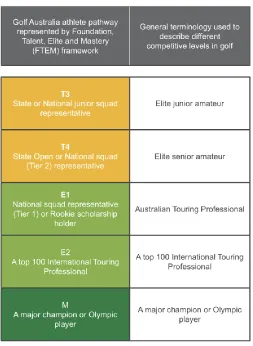
Figure 1. The two groups of definitions for the player competitive levels provided to participants as part of the first Delphi round.
Round one. The first round of the Delphi remained open for seven weeks (September to November 2016). Following this period, participants’ responses were exported to Microsoft
levels, it was included in the next round (Mokkink et al., 2010). Items that were adjusted or changed based on participant feedback were also included in the next round.
Round two. Prior to round two, participants were provided with a report explaining the results of round one. This included: (1) a series of graphs showing the participant’s score for
each item versus the median score of the panel and (2) a document indicating the specific revisions to each item. Participants were asked to consider the response from the panel, and the results of the preceding round when scoring items in round two.
Results
Participants
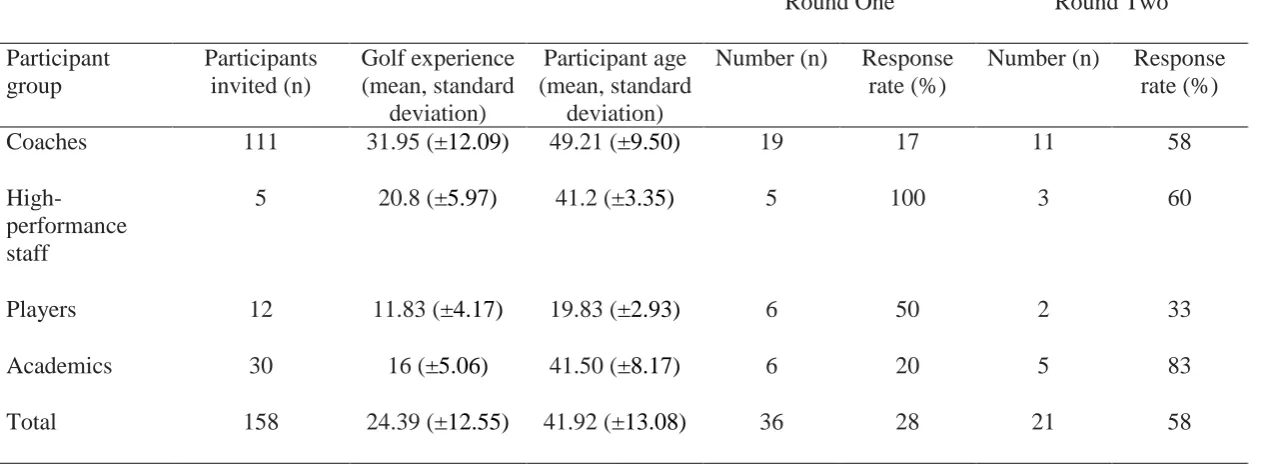
Table I describes the details of the participants in both rounds of the Delphi. A total of
Table I. Delphi participants’ characteristics and responses by group
Round One Round Two
Participant group
Participants invited (n)
Golf experience (mean, standard
deviation)
Participant age (mean, standard
deviation)
Number (n) Response
rate (%)
Number (n) Response
rate (%)
Coaches 111 31.95 (±12.09) 49.21 (±9.50) 19 17 11 58
High-performance staff
5 20.8 (±5.97) 41.2 (±3.35) 5 100 3 60
Players 12 11.83 (±4.17) 19.83 (±2.93) 6 50 2 33
Academics 30 16 (±5.06) 41.50 (±8.17) 6 20 5 83
Analysis
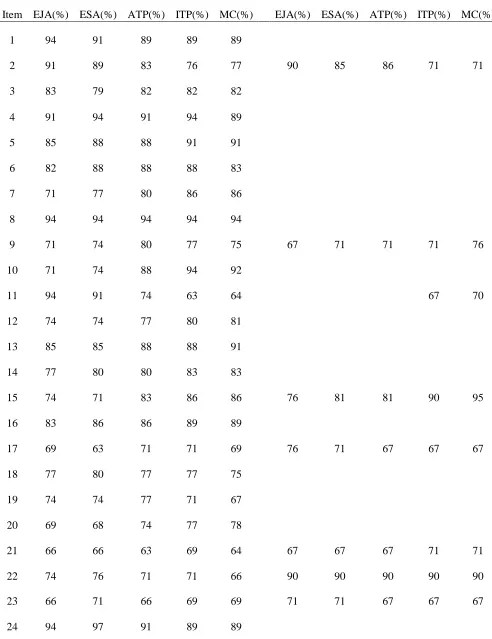
Round one. A summary of the results of round one and two is shown in Figure 2 and Table II. Of the 48 items included in the first round, 28/48 (58%) items achieved consensus
with respect to importance to players of different competitive levels. Nineteen changes were proposed by the first author and confirmed by the steering committee based on the feedback provided by the panel. Most of these related to changes in the terminology used. For example, the item “structuring pre-round technical practice to match the requirements of the course and hitting a variety of distances (partial and full), clubs, and shot types” was changed to include the term “shot practice”. In some cases, more detailed changes were required, and several lines
of text were added. For example, seven participants suggested the item “performing an evaluation or debrief with the coach after each round” needed more information to clarify the
focus of the player-coach evaluation. Consequently, this item was altered to include “the debrief should focus on the positive aspects of the player’s game, and on-course decision-making, while avoiding technical evaluation and over-analysis”.
Table II. Percentage of agreement for each Delphi round
Round One Round Two
Item EJA(%) ESA(%) ATP(%) ITP(%) MC(%) EJA(%) ESA(%) ATP(%) ITP(%) MC(%)
1 94 91 89 89 89
2 91 89 83 76 77 90 85 86 71 71
3 83 79 82 82 82
4 91 94 91 94 89
5 85 88 88 91 91
6 82 88 88 88 83
7 71 77 80 86 86
8 94 94 94 94 94
9 71 74 80 77 75 67 71 71 71 76
10 71 74 88 94 92
11 94 91 74 63 64 67 70
12 74 74 77 80 81
13 85 85 88 88 91
14 77 80 80 83 83
15 74 71 83 86 86 76 81 81 90 95
16 83 86 86 89 89
17 69 63 71 71 69 76 71 67 67 67
18 77 80 77 77 75
19 74 74 77 71 67
20 69 68 74 77 78
21 66 66 63 69 64 67 67 67 71 71
22 74 76 71 71 66 90 90 90 90 90
23 66 71 66 69 69 71 71 67 67 67
25 77 80 74 71 72
26 76 85 82 82 83
27 68 68 68 74 71
28 65 68 65 65 65 76 81 90 90 90
29 71 59 68 62 60 67 71 76 71 71
30 68 74 76 76 77
31 71 74 76 76 77
32 94 91 94 94 94
33 79 74 76 82 82
34 56 56 53 53 54 81 76 71 67 67
35 71 76 79 74 69
36 68 71 65 67 63 86 81 71 81 67
37 63 63 57 66 64 67 76 76 86 90
38 69 69 77 49 44 67 70
39 60 55 53 49 44 76 76 67 67 67
40 46 46 54 53 50 71 71 76 67 71
41 53 59 59 59 60 57 48 58 62 57
42 57 60 66 66 61 71 76 71 71 71
43 67 70 64 67 67 76 71 76 71 71
44 76 74 79 71 71
45 59 56 56 56 57 71 67 67 67 67
46 57 63 49 46 44 57 57 48 48 52
47 68 65 59 53 51 81 71 67 67
48 63 60 54 57 58 81 76 76 67 67
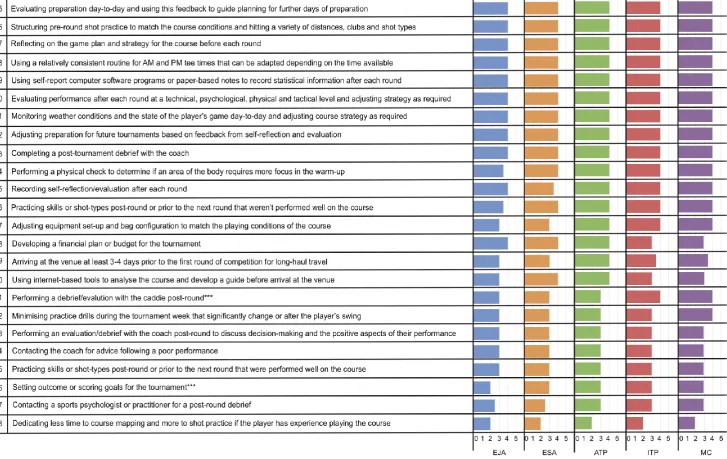
Figure
Framework development
A framework developed from the findings of the Delphi has been included as Appendix 1. This framework is composed of a ranked list of items that display perceived importance relative to different competitive levels.
Discussion
In the present study, a two-round Delphi was used to achieve consensus on the importance of specific tournament preparation items to players of different competitive levels in golf. Consensus was achieved for 46 of the 48 items included in the questionnaire. These findings were used to develop a ranked framework of items for tournament preparation. Results from the Delphi showed that overall a greater number of items were considered “extremely important” for more elite players, when compared with those of a lower competitive level,
The item considered most important in preparation was “mapping the course to identify the important features and details including the speed and slope of the greens, location of hazards, types of grasses, key yardages, approach paths to the green, prevailing wind, essential shot types and skills, and using this information to develop a strategy or game plan for shot making.” Previous research has recognised the critical role of information-gathering activities
performed prior to competition. For example, Eccles, Ward, and Woodman (2009) observed how expert orienteers study existing maps of terrain to gather information about the constraints of an upcoming competition. Furthermore, orienteers use this information to design practice tasks and activities to represent these constraints (Eccles et al., 2009). In order to have a meaningful contribution on performance, practice must simulate the ecological constraints of a specific performance environment (Araújo, Davids, Bennett, Button, & Chapman, 2004; Davids, Araújo, Seifert, & Orth, 2015). Therefore, while course mapping can assist players to identify the constraints present at a tournament course, it could also function as a prerequisite for the implementation of other tournament preparation items. That is, knowledge of competition constraints allows players to complete items relating to practice design, such as “structuring technical or shot practice to the playing conditions of the tournament course”. It
should be noted that the importance of information-gathering activities and other pre-tournament items is also related to the amount of time between pre-tournaments. Smaller periods of time – common for professional and elite players – provide less time for players to engage in information-gathering activities and less opportunity to benefit from structured representative practice. However, as more time becomes available, so does the opportunity to engage in pre-tournament behaviours (Eccles et al., 2009).
The second highest scoring item in the framework was “organising a mode of transport
panel. While these items appear to have a less direct influence on performance, it is likely that they were viewed as foundational and necessary for the implementation of other items. For example, the failure to organise a dependable method of transport and allow sufficient travel time to the course could disrupt preparation by providing reduced time for pre-round activities (e.g. physical or mental preparation). Previous studies have identified aspects of planning and time management as critical factors for success in golf (McCaffrey & Orlick, 1989) and Olympic sports (Orlick & Partington, 1988).
The third and fourth items perceived as most important by participants were related to physical and mental preparation. Physical preparation was concerned with players “implementing an individualised system of pre-round preparation that can be adapted
depending on the availability of practice facilities, arrival time to the course, the weather or climatic conditions, and may include (1) pre-round physical warm-up (e.g. dynamic stretching, self- massage, mobility work) and (2) pre-round technical routine (e.g. putting, chipping, range work).” Warm-up activities are typically used by competitive athletes to enhance physical
performance and prevent sports-related injuries (Shellock & Prentice, 1985). Studies in golf have provided support for this notion by reporting significant increases in club head speed (Fradkin, Sherman, & Finch, 2004) and decreases in injury occurrence (Fradkin, Cameron, & Gabbe, 2007) when players participated in a pre-round warm-up. Significant decreases in club head speed, ball displacement and accuracy have been observed when players followed a passive stretching routine, indicating this type of exercise should be avoided in preference to the dynamic and golf-specific movements described in the present study (Gergley, 2009).
Mental preparation was associated with players “developing a ‘Tool kit’ of mental
important for the outcome of golf competition (Hellström, 2009b). For example, research examining the influence of mental strategy use before a round indicates positive associations between pre-competition imagery and golf performance (Beauchamp, Bray, & Albinson, 2002). Mental preparation strategies have also been found to be positively associated with
performance in triathlon (Houston, Dolan, & Martin, 2011) and Olympic wrestling (Gould, Eklund, & Jackson, 1992).
The development of a framework of tournament preparation items represents the main practical application of this work. The framework consists of 46 items from the Delphi questionnaire and provides consensus-based guidelines for effective practice in tournament preparation. The developed framework could be used by national sport organisations to guide the development of more comprehensive learning environments for players and trainee coaches. Further, it presents easily applicable content for players to help structure their own preparation routines. Based on the participation of many experts and industry professionals, the framework is well-placed for uptake by relevant stakeholders in the sport. While the framework does appear to provide guidelines for priority-based coaching, it is not intended to be used as a prescriptive or rigid coaching tool. The authors acknowledge that players have different individual preferences and requirements for preparation. Therefore, the framework could be used as a reference for coaches and players to select items and develop routines based on the individual needs of the athlete.
perceived importance of preparation items, it does not establish at a behavioural level how these activities relate to performance. For example, it is not known as to whether completing a greater number of items or specific items from the framework translates to concomitant performance benefits.
Future studies may wish to consider a cross-cultural or region-specific analysis when undertaking research in this area. In addition, because this was the first study to categorise and score preparatory behaviours in the literature, it could provide procedural guidelines for building curriculums in other sports. It could also be beneficial to compare the applied use of items in the framework with performance data to validate and assess the relationship between specific items and scoring success. Given that this framework and the way it has been derived is novel to the sport, qualitative research may also be valuable to assess the uptake and user acceptability of the framework for coaches and players. For example, the framework could be distributed to a representative group of players/coaches and following a period of familiarisation, qualitative interviews could then be performed to examine the participants’ perceptions of the framework.
Conclusion
highest score; conversely, less emphasis could be applied to items that scored poorly and were considered of limited significance. For coaches and practitioners, the findings could be used to inform a screening process to identify the strengths and deficiencies of player’s preparation
References
Aitken, V., & Weigand, D. (2007). Caddy-talk: Psychology of being a great golf caddy. Milton Keynes: Dawvija Publishing.
Araújo, D., Davids, K., Bennett, S. J., Button, C., & Chapman, G. (2004). Emergence of sport skills under constraints. In M. Williams, & N. Hodges (Eds.), Skill acquisition in sport: Research, theory and practice (pp. 409–433). New York, NY: Routledge.
Beauchamp, M. R., Bray, S. R., & Albinson, J. G. (2002). Pre-competition imagery, self-efficacy and performance in collegiate golfers. Journal of Sports Sciences, 20, 697– 705.
Bois, J. E., Sarrazin, P. G., Southon, J., & Boiché, J. C. (2009). Psychological characteristics and their relation to performance in professional golfers. The Sport Psychologist, 23, 252– 270.
Cotterill, S. T., Sanders, R., & Collins, D. (2010). Developing effective pre-performance routines in golf: Why don’t we ask the golfer? Journal of Applied Sport Psychology,
22, 51–64.
Crowell, B. (2014). Golf. New York, NY: Penguin Group Inc.
Douglas, K., & Fox, K. R. (2002). Competition in women professional golfers. In E. Thain (Ed.), Science and Golf IV: Proceedings of the World Scientific Congress of Golf (pp. 157–267). New York, NY: Routledge.
Eccles, D. W., Ward, P., & Woodman, T. (2009). Competition-specific preparation and expert performance. Psychology of Sport and Exercise, 10, 96–107.
Fradkin, A. J., Cameron, P. A., & Gabbe, B. J. (2007). Is there an association between self-reported warm-up behaviour and golf related injury in female golfers? Journal of Science and Medicine in Sport, 10, 66–71.
Fradkin, A. J., Sherman, C. A., & Finch, C. F. (2004). Improving golf performance with a warm up conditioning programme. British Journal of Sports Medicine, 38, 762–765.
Gergley, J. C. (2009). Acute effects of passive static stretching during warm-up on driver clubhead speed, distance, accuracy, and consistent ball contact in young male competitive golfers. The Journal of Strength and Conditioning Research, 23, 863–867.
Gould, D., Eklund, R. C., & Jackson, S. A. (1992). 1988 US Olympic wrestling excellence: I. Mental preparation, precompetitive cognition, and affect. The Sport Psychologist, 6, 358–382.
Gulbin, J. P., Croser, M. J., Morley, E. J., & Weissensteiner, J. (2013). An integrated framework for the optimisation of sport and athlete development: A practitioner approach. Journal of Sports Sciences, 31, 1319–1331.
Hasson, F., Keeney, S., & McKenna, H. (2000). Research guidelines for the Delphi survey technique. Journal of Advanced Nursing, 32, 1008–1015.
Hayman, R., Polman, R., Taylor, J., Hemmings, B., & Borkoles, E. (2011). Development of elite adolescent golfers. Talent Development & Excellence, 3, 249–261.
Heaney, S., O’Connor, H., Naughton, G., & Gifford, J. (2008). Towards an understanding of
the barriers to good nutrition for elite athletes. International Journal of Sports Science and Coaching, 3, 391–401.
Hellström, J. (2009a). Competitive elite golf. Sports Medicine, 39, 723–741.
Hellström, J. (2009b). Psychological hallmarks of skilled golfers. Sports Medicine, 39, 845– 855.
Hill, D. M., Hanton, S., Matthews, N., & Fleming, S. (2011). Alleviation of choking under pressure in elite golf: An action research study. The Sport Psychologist, 25, 465–488.
Houston, M., Dolan, S., & Martin, S. (2011). The impact of physical, nutritional, and mental preparation on triathlon performance. The Journal of Sports Medicine and Physical Fitness, 51, 583–594.
Hume, P. A., Keogh, J., & Reid, D. (2005). The role of biomechanics in maximising distance and accuracy of golf shots. Sports Medicine, 35, 429–449.
Larkin, P., & O’Connor, D. (2017). Talent identification and recruitment in youth soccer: Recruiter’s perceptions of the key attributes for player recruitment. PLoS ONE, 12,
Mallet, C. J. (2005). Self-determination theory: A case study of evidence-based coaching. The Sport Psychologist, 19, 417–429.
Manfredini, R., Manfredini, F., Fersini, C., & Conconi, F. (1998). Circadian rhythms, athletic performance, and jet lag. British Journal of Sports Medicine, 32, 101–106.
McCaffrey, N., & Orlick, T. (1989). Mental factors related to excellence among top professional golfers. International Journal of Sport Psychology, 20, 256–278.
Meijer, R., Ihnenfeldt, D., Vermeulen, M., De Haan, R., & Van Limbeek, J. (2003). The use of a modified Delphi procedure for the determination of 26 prognostic factors in the sub-acute stage of stroke. International Journal of Rehabilitation Research, 26, 265– 270.
Mokkink, L. B., Terwee, C. B., Patrick, D. L., Alonso, J., Stratford, P. W., Knol, D. L., ... de Vet, H. C. (2010). The COSMIN checklist for assessing the methodological quality of studies on measurement properties of health status measurement instruments: An international Delphi study. Quality of Life Research, 19, 539–549.
Morris, G., & O’Connor, D. (2017). Key attributes of expert NRL referees. Journal of Sports
Sciences, 35, 852–857.
Orlick, T., & Partington, J. (1988). Mental links to excellence. The Sport Psychologist, 2, 105– 130.
Pilgrim, J., Robertson, S., & Kremer, P. (2016). A qualitative investigation into the role of the caddie in elite-level golf. International Journal of Sports Science and Coaching, 11, 599–609.
Powell, C. (2003). The Delphi technique: Myths and realities. Journal of Advanced Nursing, 41, 376–382.
Reilly, T., Atkinson, G., Edwards, B., Waterhouse, J., Åkerstedt, T., Davenne, D., ... Wirz-Justice, A. (2007). Coping with jetlag: A position statement for the European college of sport science. European Journal of Sport Science, 7, 1–7.
Reilly, T., Waterhouse, J., Burke, L. M., & Alonso, J. M. (2007). Nutrition for travel. Journal of Sports Sciences, 25, S125–S134.
Robertson, S. (2014). National athlete pathway framework. Melbourne: Golf Australia.
Robertson, S., Kremer, P., Aisbett, B., Tran, J., & Cerin, E. (2017). Consensus on measurement properties and feasibility of performance tests for the exercise and sport sciences: A Delphi study. Sports Medicine Open, 3, 2.
Shellock, F. G., & Prentice, W. E. (1985). Warming-up and stretching for improved physical performance and prevention of sports-related injuries. Sports Medicine, 2, 267–278.
Smith, M. F. (2010). The role of physiology in the development of golf performance. Sports Medicine, 40, 635–655.