Scholarship@Western
Scholarship@Western
Electronic Thesis and Dissertation Repository
4-22-2014 12:00 AM
Deep Learning via Stacked Sparse Autoencoders for Automated
Deep Learning via Stacked Sparse Autoencoders for Automated
Voxel-Wise Brain Parcellation Based on Functional Connectivity
Voxel-Wise Brain Parcellation Based on Functional Connectivity
Céline Gravelines
The University of Western Ontario
Supervisor Mark Daley
The University of Western Ontario Graduate Program in Computer Science
A thesis submitted in partial fulfillment of the requirements for the degree in Master of Science © Céline Gravelines 2014
Follow this and additional works at: https://ir.lib.uwo.ca/etd
Part of the Artificial Intelligence and Robotics Commons, and the Neurosciences Commons
Recommended Citation Recommended Citation
Gravelines, Céline, "Deep Learning via Stacked Sparse Autoencoders for Automated Voxel-Wise Brain Parcellation Based on Functional Connectivity" (2014). Electronic Thesis and Dissertation Repository. 1991.
https://ir.lib.uwo.ca/etd/1991
This Dissertation/Thesis is brought to you for free and open access by Scholarship@Western. It has been accepted for inclusion in Electronic Thesis and Dissertation Repository by an authorized administrator of
(Thesis format: Monograph)
by
Céline Gravelines
Graduate Program in Computer Science
A thesis submitted in partial fulfillment of the requirements for the degree of
Master of Science
The School of Graduate and Postdoctoral Studies The University of Western Ontario
London, Ontario, Canada
ii
Abstract
Functional brain parcellation – the delineation of brain regions based on functional connectivity – is an active research area lacking an ideal subject-specific solution independent of anatomical composition, manual feature engineering, or heavily labelled examples. Deep learning is a cutting-edge area of machine learning on the forefront of current artificial intelligence developments. Specifically, autoencoders are artificial neural networks which can be stacked to form hierarchical sparse deep models from which high-level features are compressed, organized, and extracted, without labelled training data, allowing for unsupervised learning. This thesis presents a novel application of stacked sparse autoencoders to the problem of parcellating the brain based on its components’ (voxels’) functional connectivity, focusing on the medial parietal cortex. Various depths of
autoencoders are investigated, yielding results of up to (68 ± 3)% accuracy compared with ground truth parcellations using Dice’s coefficient. This data-driven functional parcellation technique offers promising growth to both the neuroimaging and machine learning
communities.
Keywords
Deep Learning, Machine Learning, Unsupervised, Sparse, Stacked, Autoencoders, Brain
iii
Acknowledgments
I wish to express my sincere thanks to my supervisor Mark Daley for encouraging me to
iv
Table of Contents
Abstract ... ii
Acknowledgments... iii
Table of Contents ... iv
List of Tables ... vi
List of Figures ... vii
List of Appendices ... ix
Chapter 1 ... 1
1 Introduction and Literature Review ... 1
1.1 History of Artificial Neural Networks ... 1
1.2 Modern Artificial Neural Networks ... 3
1.3 Deep Learning ... 4
1.4 Restricted Boltzmann Machines and Deep Belief Networks ... 9
1.5 Training a Deep Model ... 12
1.6 Autoencoders ... 13
1.7 Brain Parcellation... 18
Chapter 2 ... 25
2 Methodology ... 25
2.1 Prepare the Data ... 25
2.2 Pre-train the autoencoder ... 28
2.2.1 Initialize parameters ... 29
2.2.2 Optimize parameters ... 29
2.2.3 Compute the activation vector ... 35
2.3 Train the softmax classifier ... 36
v
2.6 Visualize the parcellation ... 40
Chapter 3 ... 42
3 Implementation and Results ... 42
3.1 Preprocessing ... 42
3.2 Implementation Details ... 43
3.3 Results ... 44
4 Discussion and Conclusion ... 50
4.1 Discussion ... 51
4.2 Contributions... 51
4.3 Threats to Validity ... 53
4.4 Future Work ... 54
References ... 56
Appendices ... 61
vi
List of Tables
Table 1: The hyperparameters used for training the autoencoders of various depths. ... 44
Table 2: The minimum, maximum, mean, and standard deviation of the Dice coefficients for
vii
List of Figures
Figure 1: A single neuron with 3 input values, a bias term, and 1 output hypothesis value
(Ng, Ngiam, Foo, Mai, & Suen, 2013) ... 3
Figure 2: A neural network organized into 3 layers. L1 represents the input layer, L2 is a
hidden layer, and L3 is the output layer. (Ng, Ngiam, Foo, Mai, & Suen, 2013) ... 4
Figure 3: Facial recognition using a deep neural network, demonstrating the multiple levels
of abstraction of the task, from low dimensional pixels to complex shapes and objects
defining a human face. (Jones, 2014) ... 6
Figure 4: A restricted Boltzmann Machine with weighted connections between a layer of 4
visible input units, x, and a layer of 3 latent hidden units, h. ... 10
Figure 5: A single layer autoencoder which will be the first in the stack. The weighted
connections from the input layer, , join to the hidden layer, , represented by a matrix, ,
and the weights from the hidden layer, , to the output units, , (the representation of the
input) are stored in the matrix (Ng, Ngiam, Foo, Mai, & Suen, 2013). ... 16
Figure 6: The second autoencoder in the stack. The output from the first autoencoder’s
hidden feature layer (Figure 5) is used as input to the second autoencoder (Ng, Ngiam, Foo,
Mai, & Suen, 2013). ... 17
Figure 7: A 442 442 matrix depicting the global patterns of functional connectivity
among the 442 voxels from the fMRI data. One row of the matrix represents one voxel’s
connectivity with each of the 442 voxels representing in the columns. The closer is to 1
(red/darker), the stronger the association. ... 27
Figure 8: Continuing to build the stacked autoencoder from Figures 5 and 6, the activation
vector resulting from the last hidden layer in the network is used as input to the softmax
classifier which determines the probability of each possible label (Ng, Ngiam, Foo, Mai, &
viii
capable of classification. The output activations of the second (and final) hidden layer are
input into the softmax classifier (Ng, Ngiam, Foo, Mai, & Suen, 2013). ... 39
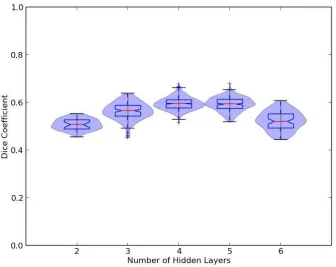
Figure 10: Violin and box plots depicting the distribution of Dice coefficients from
parcellations trained and tested on autoencoders with 2 – 6 hidden layers. ... 46
Figure 11: Each row depicts 3 dimensions of a single parcellation of the medial parietal
cortex: (a) displays the ground truth parcellation verified by anatomists; autoencoders trained
and tested with (b) 3 hidden layers, = 0.638 ± 0.037, (c) 4 hidden layers = 0.676 ±
0.026, (d) 5 hidden layers, = 0.679 ± 0.029. ... 48
Figure 12: Zoomed-in parcellations of the medial parietal cortex where (a) shows the ground
truth parcellation based on expert verified labels of functional regions in 3 dimensions and
(b) shows a parcellation acquired from a deep autoencoder with 5 hidden layers. The spatial
ix
List of Appendices
Appendix A: Dice coefficients comparing parcellations acquired from autoencoders trained
and tested with 2 hidden layers versus the ground truth parcellation provided by anatomists.
The bolded row represents the parcellation with the maximum accuracy. ... 61
Appendix B: Dice coefficients comparing parcellations acquired from autoencoders trained
and tested with 3 hidden layers versus the ground truth parcellation provided by anatomists.
The bolded row represents the parcellation with the maximum accuracy. ... 62
Appendix C: Dice coefficients comparing parcellations acquired from autoencoders trained
and tested with 4 hidden layers versus the ground truth parcellation provided by anatomists.
The bolded row represents the parcellation with the maximum accuracy. ... 64
Appendix D: Dice coefficients comparing parcellations acquired from autoencoders trained
and tested with 5 hidden layers versus the ground truth parcellation provided by anatomists.
Chapter 1
1
Introduction and Literature Review
Artificial intelligence has developed significantly in recent years as machine learning and
classification algorithms have become more sophisticated and powerful. Currently, one of
the most popular and promising approaches to machine learning is deep learning (Ng,
Ngiam, Foo, Mai, & Suen, 2013). Deep learning involves learning the hierarchical
structure of data by initially learning simple low-level features which are in turn used to
successively build up more complex representations, capturing the underlying regularities
of the data. Stacked sparse autoencoders are a type of deep network capable of achieving
unsupervised learning – a type of machine learning algorithm which draws inferences
from the input data and does not use labelled training examples. Sections 1.1 – 1.6
discuss the history and theory behind deep learning.
Functional brain parcellation is the task of delineating the brain based on functional
connectivity. This active area of neuroscientific research lacks an ideal standard protocol
as the current techniques assume unrealistic similarity of anatomic composition among
subjects, depend on manual feature engineering, or heavily labelled examples (further
discussed in section 1.7). Therefore, the motivation of this thesis will be to develop a
solution for unsupervised brain parcellation using a deep network to automatically
delineate brain regions based on functional connectivity.
1.1
History of Artificial Neural Networks
Research of artificial neural networks was developed for two distinct areas of study: to
model biological processes in the brain, and to investigate the application of neural
networks to artificial intelligence (AI). While there are parallels between the two
domains, neural networks used in AI are generally simplified models of biological neural
processing and the degree to which artificial neural networks imitate actual brain function
Artificial neural networks were initially developed by McCulloch and Pitts in 1943. A
neuron is used to represent a computational unit that takes some input values and
produces an output, based on an activation function (McCulloch & Pitts, 1943). For
example, a binary threshold activation function (commonly known as the Heaviside step
function) is an all-or-nothing approach which will result in the neuron “firing”
(outputting results) if the output value is 1, while it will not fire if the output value is 0.
McCulloch and Pitts developed this neural model using electric circuits and proposed that
modelling neurons using this binary threshold activation function mimics first order logic
sentences. That is, providing a neuron with different combinations of 0 (false) and 1
(true) inputs can accurate represent AND, OR, NOT, NAND, and NOR statements at the
output. However, it was later shown that the single model (one neuron) could solve
neither the exclusive-or (XOR) nor exclusive-nor (XNOR) (Minsky & Papert, 1969).
In the late 1940s, Donald Hebb improved the neural network by proposing that neural
pathways are strengthened the more they are used, pointing out that this concept is
fundamental to the process of human learning and memory (Hebb, 1949). Thus,
McCulloch and Pitts's neuron model was altered to account for this learning process. The
solution involved assigning non-identicalweights to each input. Consequently, an input
of 1 may possess more or less weight, relative to the total threshold. Based on these new
developments, Frank Rosenblatt introduced the perceptron, a neural model took input
values ( to ) and corresponding weights ( to ) (Rosenblatt, 1962). Each of the
input values is weighted and summed at the node which only “fires” (outputs) if the
threshold value is reached. While the perceptron model offered hope for artificial neural
networks, it was later shown that the perceptron could not be trained to recognize many
classes of patterns as this single layer network was only capable of learning linearly
separable patterns. Added the fact that XOR and XNOR statements could not be
represented, the 1960s to 1990s saw a drastic decline of the use neural networks for
practical machine learning (Larochelle, Bengio, Louradour, & Lamblin, 2009) as large
single layer neural networks were inefficient and ineffective at learning tasks (Minsky &
1.2
Modern Artificial Neural Networks
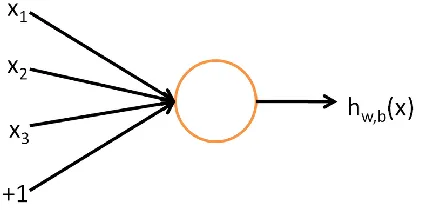
Based on the perceptron, Figure 1 shows the simplest neural network consisting of just a
single neuron (computational unit) that takes input values, , and a bias
intercept term which is a constant term (not included in the input) used to shift the
activation function to the left or right.
Figure 1: A single neuron with 3 input values, a bias term, and 1 output hypothesis value
(Ng, Ngiam, Foo, Mai, & Suen, 2013)
Given an input, , the network outputs a hypothesis ( ) where and are weight
and bias parameters which can be learned from the input data (Ng, Ngiam, Foo, Mai, &
Suen, 2013). Thus, this input data acts as a training set to train the network to learn these
parameters. This neuron’s hypothesized output is defined as
( ) (∑
) Equation 1
where and represent the weight connection and input to the -th of units,
respectively. In addition, is equal to the activation function, , which will
correspond to the sigmoid function used to scale the outputs to a range of [0,1]:
( )
Equation 2
A more complex neural network is formed by joining many neurons together, so that the
output of one neuron can be the input to any another neuron in the network. These
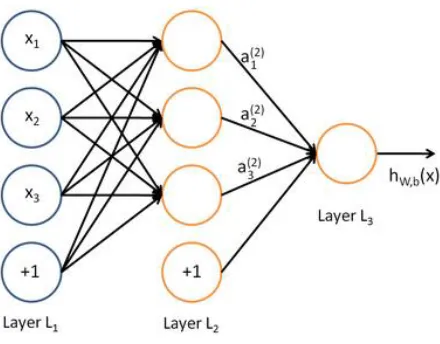
neurons can be organized into layers, as shown in Figure 2.
Figure 2: A neural network organized into 3 layers. L1 represents the input layer, L2 is a
hidden layer, and L3 is the output layer. (Ng, Ngiam, Foo, Mai, & Suen, 2013)
In Figure 2, the input values are also denoted as neuron-like units. The leftmost layer of
the network is the input layer. The +1 bias unit corresponds to the intercept term. This
network has 3 input units (not counting the bias). The rightmost layer is the output layer
which happens to only have 1 output unit. Meanwhile, the middle layer is referred to as a
hidden layer, as its values are not visible in the input or output data. There are 3 hidden
units in this network. The connections between each unit (excluding the bias units) each
represent a weight connection. A matrix, , can be composed of all the weighted
connections between units of the adjacent layers, and . Therefore the parameters of
the network are ( ) where ( ) ( ) for the 3 layer model. The
output of each unit in layer is represented by an activation vector, , which represents
learned features from that layer, analogous to the hypothesis ( ).
1.3
Deep Learning
When tasked with a problem to solve, humans often decompose the problem into smaller,
inadvertently exploit intuition and describe concepts in hierarchical ways, based on
multiple levels of abstraction. For example, an individual seeks to identity an image.
Taking the entire image into account, the individual looks specifically at the important
features of the image. The individual sees a human form in the image, notices facial hair,
body structure, and clothing and determines that the image is a man. That is, the
individual has identified the image by breaking it down into smaller features, such as
“has beard”, “has broad shoulders”, “is wearing a suit” and then determined a
classification for the image. The problem is broken down on many levels. Without much
conscious thought, humans look at much smaller features of images, such as lines,
curves, and edges to determine the higher-level features. These numerous highly-varying,
non-linear features organized into layers are what constitute a deep network (Bengio,
Lamblin, Popovici, & Larochelle, 2007).
Deep learning generally refers to learning models which use feature hierarchies with
many layers. Thus, a deep artificial neural network is a multi-layer network composed of
input and output layers, in addition to numerous hidden layers between the input and
output. Those hidden layers are composed of hidden (or “latent”) units that can be used to
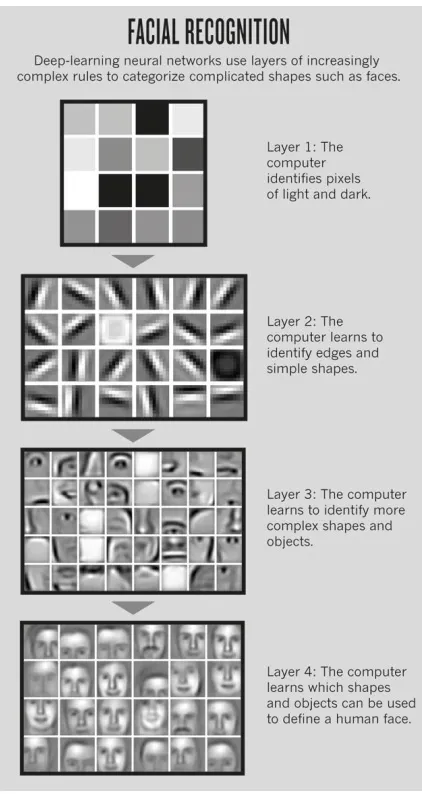
describe underlying features of the data. Figure 3 depicts a common facial recognition
task, in which the input layer represents the pixels of the image while the output is the
corresponding identity (or classification) of the face, while the hidden layers can
represent low-level features, such as edges and shapes, to high-level features, such as
“big eyes” or “small nose”. Learning the structure of a deep architecture aims to
automatically discover these abstractions, from the lowest to highest levels. Favourable
learning algorithms would be unsupervised, depending on minimal human effort, while
allowing the network to discover these latent variables on its own, rather than requiring a
pre-defined set of all possible abstractions. The ability to achieve this task while requiring
little human input is particularly important for higher-level abstractions as humans are
often unable to explicitly identify potential hidden, underlying factors of the raw input
(Bengio, 2009). Thus, the power to automatically learn important underlying features
fuels the popularity of deep architectures as the wide applications of deep machine
Figure 3: Facial recognition using a deep neural network, demonstrating the multiple
levels of abstraction of the task, from low dimensional pixels to complex shapes and
objects defining a human face. (Jones, 2014)
Deep networks were introduced in the 1980s in Fukushima's Neocognitron (Fukushima,
1980) which presented a hierarchical multi-layered neural network used for pattern
recognition, such as the recognition and classification of handwritten characters.
However, early deep multilayer networks were often believed to be too difficult to train
and they were empirically found to be less effective than networks with only one or two
hidden layers (Tesauro, 1992). Consequently, deep learning was not investigated much in
Sepp Hochreiter’s 1991 thesis identified the issue as “the vanishing gradient problem”
which had led to this major failure of deep artificial neural network (Hochreiter, 1991).
The problem stemmed from the fact that as a layer of neural network eventually learned a
task reasonably well, the learned features were not successfully propagated to successive
layers in the network. The deeper layers did not receive information in order to account
for these new learned features. Backpropagation via gradient descent had become a
crucial step of training deep networks (Werbos, 1974). However, due to the lack of
computing power available at the time, it was thought to be too slow of an algorithm for
practical training of neural networks, resulting in simple methods such as Support Vector
Machines (SVMs) monopolizing the field (Mourão-Miranda, Bokde, Born, Hampel, &
Stetter, 2005). SVMs are sufficient models for basic, linearly separable data, but lacked
the capability of neural networks to learn for complex, non-linear data.
In 1992, Hochreiter’s mentor, Jürgen Schmidhuber, attempted to solve the problem
associated with deep networks by organizing a multi-level deep hierarchy which could be
effectively pre-trained one level at a time via random initialization and unsupervised
learning, followed by a supervised backpropagation pass for fine-tuning (Schmidhuber,
1992). This method allows each level of the hierarchy to learn a compressed
representation of the input observation which is in turn fed into the next level as the
successive input. The “vanishing gradient problem” was solved, but it was not until 2006
that deep learning regained and surpassed its original popularity.
By the mid-1990s to early 2000s, the standard learning strategy for deep neural networks
often involved randomly initializing the weights of the network (pre-training), followed
by backpropagation via gradient descent. However, this method has been empirically
shown to find poor solutions for networks with multiple hidden layers (Larochelle,
Bengio, Louradour, & Lamblin, 2009). The computational power to arrive at satisfactory
results was still out of reach. As a result, shallow architectures continued to be the
predominant structure for machine learning algorithms. These shallow architectures
consist of only two-to-three levels of data-dependent computational elements. For
example, kernel machines, such as Support Vector Machines (SVMs), and single-layer
However, it has been shown that deep architectures can be significantly more efficient
(sometimes exponentially) than shallow architectures with respect to computational
elements and parameters needed to fully represent some functions (Bengio, Lamblin,
Popovici, & Larochelle, 2007). Shallow architectures are seriously flawed in their
inefficiency regarding the number of computational units (hidden units), and
consequently require a large supply of training examples (Bengio & LeCun, 2007). On
the contrary, the non-linearity of deep architectures allows highly-varying functions to be
represented compactly, requiring fewer parameters (Bengio, Lamblin, Popovici, &
Larochelle, 2007). While it is not the case that deep architectures are always optimal over
shallow architectures (Salakhutdinov & Murray, 2008), complex high-dimensional
problems with sufficient data to capture the complexity are solved more efficiently and
accurately when adopting a deep architecture for learning (Larochelle, Bengio,
Louradour, & Lamblin, 2009; Lee, Laine, & Klein, 2011). Thus, determining efficient
learning algorithms for deep architectures became a popular area of interest in the
machine learning field.
While deep architectures were promising, the issue remained that many negative
experimental results were suggesting that gradient-based training of randomly initialized
supervised deep neural networks easily got stuck in local minima or plateaus (Bengio,
Lamblin, Popovici, & Larochelle, 2007) and that it becomes increasingly difficult to find
a good generalization as the architecture got deeper (more layers) (Larochelle, Bengio,
Louradour, & Lamblin, 2009).
The algorithm popularized by Geoff Hinton in 2006 revolutionized deep learning as it
employs a deep architecture and introduces a fast, greedy learning method used to
construct multilayer directed networks, layer-by-layer (Hinton, Osindero, & Teh, 2006).
As a result, this algorithm offers a solution to the issue of poor optimization which
originally stemmed from random initialization of the network’s parameters. The
algorithm can quickly find a good set of parameters for the network, even in models with
millions of parameters and many hidden layers. The training method also involves a
fine-tuning component which is capable of learning a very successful generative model,
classification of hand-written digits (Hinton, Osindero, & Teh, 2006). A major
breakthrough of this generative model is that it can easily interpret the distributed
representations in the hidden layers of the deep network.
1.4
Restricted Boltzmann Machines and Deep Belief
Networks
The network used by Hinton is composed of several stacked restricted Boltzmann
machines (RBMs). RBMs (originally named “Harmoniums”) were first introduced in 1986 by Paul Smolensky. A single RBM consists of a layer of unconnected “visible”
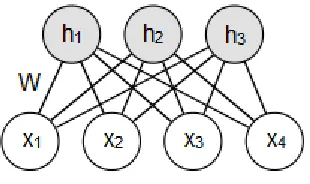
input units, , that have undirected, symmetrical connections with another single layer of
hidden units, . The network is fully connected between the two layers, yet no units
within the same layer are connected to one another, forming a bipartite graph
(Smolensky, 1986). Each connection between units of the two layers has an associated
weight that must be learned, represented by a weight matrix, (Figure 4). Data can be
generated from an RBM by initializing a random state in one of the layers and then
performing alternating Gibbs sampling, a Markov Chain Monte Carlo algorithm which
approximates the distribution based solely on previous states. Given the current states of
the units in one layer, all the units of the other layer are then updated simultaneously.
This process is repeated until the entire system is sampling from its equilibrium
distribution (Hinton, Osindero, & Teh, 2006). RBMs are generative models, meaning that
the training period results in a probability distribution of the training data being learned.
When the model is later used for testing, it may encounter new, unfamiliar data, but the
probability distribution can account for these previously unseen occurrences, yielding a
Figure 4: A restricted Boltzmann Machine with weighted connections between a layer of
4 visible input units, x, and a layer of 3 latent hidden units, h.
Hinton’s proposed learning algorithm acts on several RBMs stacked on top of one
another to form a generative model called a Deep Belief Network (DBN). The leftmost
layers (or “lower layers” in some graphical representations) of the network are able to
extract low-level features from the input, . These lower level features are fed into the
rightmost layers (or “upper” levels) which represent more abstract features and concepts
which can explain the input observation. That is, the model initially learns simple
concepts which it uses to build more abstract, higher-order concepts (Hinton, Osindero,
& Teh, 2006; Larochelle, Bengio, Louradour, & Lamblin, 2009). To achieve this
learning, the algorithm involves greedily pre-training one layer at a time, using
unsupervised learning at each level in order to preserve information from the input,
followed by a supervised fine-tuning pass through the entire network (Bengio, Lamblin,
Popovici, & Larochelle, 2007) Once the stack of RBMs has been learned, the entire
stacked DBN can be viewed as a single probabilistic model.
This algorithm is particularly interesting as it provides a method for high-level
representations to be learned from low-level data, depending mostly on a large supply of
unlabelled input and limited labelled data which is used to slightly fine-tune the model
for the current task. This revolutionary learning algorithm for deep architectures
eliminates the problem caused by random initialization leading to poor optimization
solutions. This greedy layer-wise training strategy is a crucial tool for improved
optimizations as it initializes the weights in a region near a good local minimum
(greedily), resulting in internal representations that are high-level abstractions of the
The learning strategy is greedy in that optimization occurs by initializing the parameters
of each layer near a good local minimum, independent of the other layers. Adjustments to
the strength each neuron-like unit depends only on the states of the pre-synaptic and
post-synaptic neurons (Hinton, Osindero, & Teh, 2006). The greedy layer-wise algorithm
involves first learning the parameters between the first 2 layers, while assuming all the
other parameters in the remainder of the network are frozen (tied; unchanging). Once the
first set of parametersis learned, the algorithm freezes all layers except the parameters
between the next 2 layers. This process continues until the parameters between every
layer in the network are optimized.
There is no exact solution to the number of hidden layers required to create an optimal
deep network, nor for the number of hidden units per layer. The most common approach
is to validate the model by training and testing on various numbers of hidden layers and
units. The optimal number of hidden layers in the network tends to depend on the nature
of the input data, specifically how it is organized hierarchically in various levels of
abstraction (Heaton, 2008). The decision of units used is crucial to the success of the
model as it greatly influences the outcome. Too few hidden units results in underfitting,
where the model is unable to adequately detect the structure in complex datasets.
Meanwhile, too many hidden units increase the amount of training time and cause
overfitting, where the information contained in the training set is not enough to train all
the neurons (Heaton, 2008). Various pieces of literature provide different “rules of
thumb” regarding the number of hidden units per layer where each layer should have 2/3
the number of input units (Heaton, 2008), between the number of input and output units
(Blum & Rivest, 1992), twice the number of input units (Berry & Linoff, 1997), or 1/30
of the number of training cases (Heaton, 2008). However, there is no generally accepted
support for these suggestions, so validation with test cases is frequently used to crudely
determine the optimal number for the particular dataset.
Deep networks have developed as tools for a wide variety of applications including
classification tasks (Bengio, Lamblin, Popovici, & Larochelle, 2007; Larochelle, Bengio,
Louradour, & Lamblin, 2009), regression (Salakhutdinov & Hinton, 2008),
Sermanet, Scoffier, Muller, & LeCun, 2008), and natural language processing (Collobert
& J. Weston, 2008).
Thus, the original idea of deep learning was not wrong. The earlier setbacks associated
with deep architectures were results of not using enough data and being limited in
computational power. Previous deep neural networks did not successfully learn because
they were not given enough time. However, pre-training allows the network to build a
model that is likely to succeed (rather than starting from randomly initialized
parameters), resulting in less time required by the network to learn.
1.5
Training a Deep Model
Hinton, et al. (2006) provide an algorithm to pre-train each layer of the DBN using an
unsupervised approach. This greedy layer-wise unsupervised learning algorithm first
involves training the lower layer of the model with an unsupervised learning algorithm
which yields some initial set of parameters for that first layer of the network. That output
from the first layer is a reduced representation of the input. This output then acts as the
input for the following layer which is similarly trained, resulting in initial parameters for
that layer. Again, the output from this second layer is used as the input for the next layer
until the parameters for each layer are initialized. The overall output of the network is
delivered as the final activation vector.
Following this unsupervised pre-training phase of stacked layers, the entire network can
then be fine-tuned in the opposite direction using backpropagation in this supervised
learning phase. Backpropagation works by continually readjusting the weights of the
connections between units of the network. The readjustment maintains the goal of
minimizing the difference between the actual output vector of the network (the network’s
activation) and the desired output vector (the true target value). As the weights are
adjusted, the internal hidden units better represent important features of the task domain
which are not explicitly part of the input or output values. This ability to capture useful
earlier, simpler techniques such as the perceptron’s convergence procedure (Rumelhart,
Hinton, & Williams, 1986).
1.6
Autoencoders
In artificial neural networks, backpropagation was developed for improved representation
learning. The process of backpropagation involves readjusting the weights, depending the
on the existence of some expected output. In the 1980s, autoencoders (also called “auto-associators”) were introduced in order to perform backpropagation without a teacher
(Bourlard & Kamp, 1988). That is, autoencoders offer a method of automatically learning
features from unlabelled data, allowing for unsupervised learning.
An autoencoder is an artificial neural network that is able to be trained in a fully
unsupervised way. In previous neural networks, labelled data were required to act as
training examples essential to the backpropagation fine-tuning pass as those labels were
used to readjust the parameters. However, autoencoders provide the opportunity to learn
without this dependence on labelled data. An autoencoder neural network performs
backpropagation by setting the target output values equal to the input values, and thus the
autoencoder is trained to minimize the discrepancy between the data and its
reconstruction (that is, the difference between the actual output vector and the expected
output vector where that expected output is the same as the input vector). As a result,
autoencoders are able to learn without a teacher.
An autoencoder consists of three or more layers: an input layer; some number of hidden
layers which forms the encoding; and an output layer whose units correspond to the input
layer. Hinton et al. defined an autoencoder as a nonlinear generalization of principal
components analysis (PCA) which uses an adaptive, multilayer “encoder” network to
transform the high-dimensional input data into a low-dimensional code, while a similar
“decoder” network is able to recover the data from the code (Hinton & Salakhutdinov,
2006). That is, an autoencoder network with the same number of hidden units as input
Since the outputs of the network are equal to the input, the autoencoder’s goal is to learn
an approximation of the identity function (Ng, Ngiam, Foo, Mai, & Suen, 2013). While
this may seem like a trivial learning task, placing constraints on the network can reveal
interesting structure of the data. An example of a constraint on the network is a limitation
to the number of hidden units in the hidden layer, thus forcing the network to learn a
compressed representation of the input. This method allows for the discovery of internal
representations of the data that rely on fewer intermediate features. For example, for a
facial recognition task, each pixel of the image may be represented at the input layer.
That data is compressed in the hidden layer into features such as “small mouth” or “wide eyes.” That is, the input data of the face can be described using less data than is actually
given in the image. That compressed data can then be uncompressed in order to
re-represent the input data at the output layer, allowing the facial image to be reconstructed
entirely from the learned features.
Rather than limiting the number of hidden units, an alternative constraint to the network
could be the sparsity of hidden units that are activated. Sparsity is a useful constraint
when the number of hidden units is large (even larger than the number of input values)
that can allow for the discovery of interesting structure of the data (Ng, Ngiam, Foo, Mai,
& Suen, 2013). A sparse autoencoder has very few neurons that are active. A neuron in
an artificial neural network is informally considered “active” (or “firing”) if its output
value is close to 1, while it is considered “inactive” if its output value is close to 0. The
concept of creating a sparse autoencoder involves constraining the neurons to be inactive
most of the time (Ng, Ngiam, Foo, Mai, & Suen, 2013). As a result, even with many
hidden units, the data is constrained, forcing the network to learn the important features
of the data in order to reconstruct it.
With deep architectures, learning-feature hierarchies are formed when lower-level
features are learned and used to compose higher levels of the hierarchy. Similar to how
RBMs are stacked to form DBNs, this deep approach can be extended to non-linear
autoencoders to form a stacked autoencoder network (Bengio, Lamblin, Popovici, &
Larochelle, 2007; Larochelle, Bengio, Louradour, & Lamblin, 2009). A stacked sparse
which the outputs of each layer is fed into the inputs of the successive layer (Ng, Ngiam,
Foo, Mai, & Suen, 2013). However, optimizing the weights of autoencoders is a
challenging task. Large initial weights cause autoencoders to find poor local minima,
while small initial weights result in tiny gradients in the early layers, proving it infeasible
to train many-layered autoencoders in this condition (Hinton & Salakhutdinov, 2006).
However, if the initial weights are already close to a good solution, optimization
techniques, such as gradient descent, work well. It follows that employing a similar
“greedy layer-wise” learning algorithm (which was used for DBNs) to stacked
autoencoders is an effective method of pre-training the network of a deep autoencoder
(Hinton & Salakhutdinov, 2006).
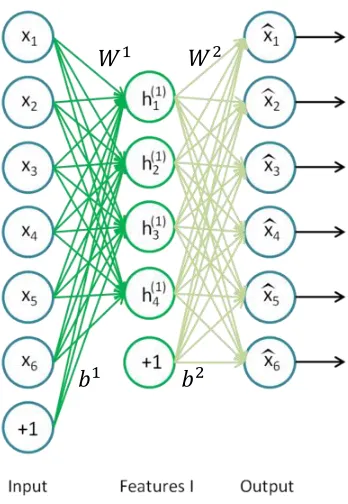
To see the structural composition of this stacked autoencoder, first consider the single
layer autoencoder network in Figure 5. Let represents the weighted connection
between the unit of layer , and unit of layer , while is the bias associated with
unit i in the layer . These values ( ) are organized in the matrices for each
unit and layer of the network. Considering a single independent layer model (i.e.: a single
autoencoder of the stack, composed of an input, output, and hidden layer), the matrix
is composed of the weighted connection between the input data and the hidden units,
while contains the weighted connection between the hidden units and the output.
Similarly, represents the biases from the bias unit in the input layer to each hidden
unit, while represents the bias from the bias unit in the hidden layer to the output
layer. That is, each single layer module has a set of parameters ( )
representing the weights and biases from the input units to the hidden units, and from the
Figure 5: A single layer autoencoder which will be the first in the stack. The weighted
connections from the input layer, , join to the hidden layer, , represented by a matrix,
, and the weights from the hidden layer, , to the output units, ̂, (the representation
of the input) are stored in the matrix (Ng, Ngiam, Foo, Mai, & Suen, 2013).
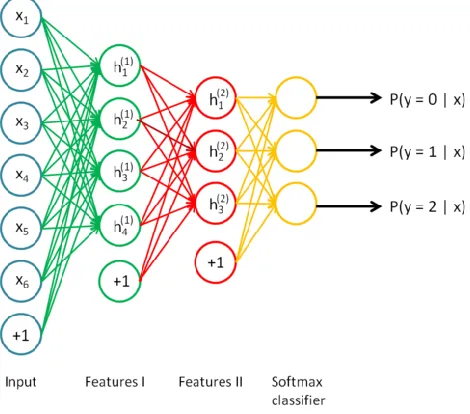
Note that the output units of the single autoencoder in Figure 5 will not actually present
in the stacked autoencoder. They are simply used for the training of the single layer.
Rather, the activation vector which represents the features detected from the hidden layer
are used as input to the following autoencoder which is added to the stack, as seen in
Figure 6. That is, the hidden units of the first autoencoder can be considered the visible
input units to the next autoencoder. As expected, the output units of the second
autoencoder in the stack are a representation of the hidden units of the first autoencoder
(i.e.: the current autoencoder’s input units). Recalling that each single autoencoder has a
set of parameters ( ) representing the weights and biases from the
input units to the hidden units, and from the hidden units to the output units, let
represent the parameters for the -th autoencoder.
𝑊 𝑊
𝑏 𝑏
𝑊 𝑊
Figure 6: The second autoencoder in the stack. The output from the first autoencoder’s
hidden feature layer (Figure 5) is used as input to the second autoencoder (Ng, Ngiam,
Foo, Mai, & Suen, 2013).
To perform this greedy layer-wise pre-training, consider a stacked autoencoder composed
to layers. The stacked autoencoder can be greedily pre-trained in order to initialize the
parameters of this deep network, in a similar way as the DBN was trained: train the first
layer using the raw input to obtain parameters for the first
autoencoder in the stack, while the rest of the parameters in the remainder of the network
remain fixed. With these initialized parameters, the raw input can be transformed into a
vector, , consisting of the activations (learned features) of the hidden units. The
autoencoder is able to map the input directly to the hidden layer using a parameterized
closed-form equation called an encoder (Ng, Ngiam, Foo, Mai, & Suen, 2013): Noting
that represents the initial input to the network, x, the activation vector of a layer, l, is
given as
( ) Equation 3
𝑊 𝑊
where ( )is the sigmoid function, while the step is run forward to acquire the following
variable such that
Equation 4
In other words, denotes the total input to the layer , including the bias, which is
calculated based on the previous activation vector. This encoding step is thus able to
transform the high-dimensional input data into a lower-dimensional code.
The decoding steps are similarly used to map from these learned features from the hidden
space back to the reconstruction of that input. The decoder is a parameterized
closed-form equation used to “undo” the encoding function where
( ) Equation 5
Equation 6
Thus the decoder recovers the high-dimensional data from the code in order to create the
reconstruction of the input (Ng, Ngiam, Foo, Mai, & Suen, 2013).
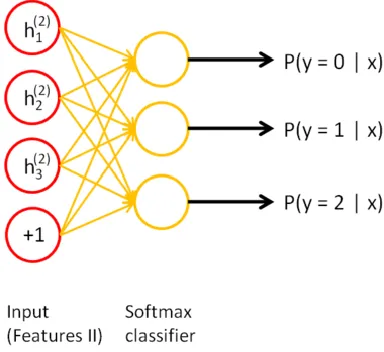
This output activation vector, , can then be used as input to train the second layer,
yielding the parameters , and thus a new set of features given by the
activation vector is provided. This procedure is repeated for all subsequent layers of the
network, as the output of each new layer serves as input into the next layer, while the
remaining layers are frozen. Finally, the output activation vector from the final layer
gives the activation of the deepest layer of hidden units which, for the autoencoder, is
the reconstruction of the input vector.
1.7
Brain Parcellation
While the fixed anatomical structure of the brain has been thoroughly studied and
documented, the functional connectivity of the brain is a dynamic, elusive, and
with well-defined functions, the brain's static structural networks gives rise to dynamic
functional connectivity which performs a vast array of tasks, facilitating perception,
cognition, and actions (Park & Friston, 2013). The mapping of functional connectivity
through the analysis of resting-state fMRI was first demonstrated in 1995 (Biswal, Zerrin
Yetkin, Haughton, & Hyde, 1995), leading neuroscientists to examine the relationship
between resting-state connectivity and the functional organization of the brain, associated
with processes such as language, motor skills, and memory. To better understand how
such diverse, complex function can arise from the brain's static neuronal architecture,
researchers aim to accurately parcellate individual brains based on its functional
connectivity.
Brain parcellation refers to the delineation of structural and functional regions of the
brain (Lee, Laine, & Klein, 2011). It is an important and challenging task to establish
these correspondences across structural and functional brain images. The ability to parcel
out functional brain regions non-invasively would enhance the quality of various
experimental investigations, leading to more accurate across-subject comparisons of
independent functional regions (Cohen, et al., 2008). Successful brain parcellation
provides great benefits to clinical neuroscience and cognitive psychology as the relations
between structure and function become better defined.
Parcellation can be performed by analyzing functional images of the brain. Functional
neuroimaging allows researchers to study the brain's dynamic functional relationships in
real-time, based on the current state of the brain's activity, rather than simply the fixed
anatomical structure of the brain. Current modes of acquiring functional neuroimaging
include fMRI, PET (invasive), fNIRS, EEG and MEG (poor spatial resolution).
Functional magnetic resonance imaging (fMRI) permits researchers to associate
functional activity with specific neuroanatomical regions of the brain with a high degree
of spatial resolution. This non-invasive tool detects changes in blood oxygenation levels
and changes in blood flow resulting from neural activity. When a brain region is more
active, it consumes more oxygen, resulting in increased blood flow to the active area
a particular mental process. The 3-dimensional brain image is composed of units called
voxels, each representing a cube of brain tissue. A voxel is a 3-dimensional building
block of a 3-dimensional fMRI volume, analogous to a pixel being a 2-dimensional
building block of a 2-dimensional image on a screen. Advances in fMRI analysis have
led to the discovery of biomarkers and diagnostic indicators for a variety of psychological
and neurodegenerative disorders (Henley, Bates, & Tabriz, 2005). The ability to
accurately label various brain regions based on function is imperative to understanding
the relationships between brain function and structural appearance. A full understanding
of these correspondences can be applied to understanding the underlying causes of
various metabolic diseases and fine-scale lesions in the brain, potentially leading to major
advancements in treating and curing diseases such as Alzheimer's disease (Henley, Bates,
& Tabriz, 2005).
Many experiments have been developed which use functional neuroimaging to identify
brain regions associated with various cognitive processes. Oftentimes, these
investigations study which brain areas are activated while some task is being performed
(relative to other tasks). However, these experiments are based on a priori hypotheses
since those experiments are designed for the purpose of acquiring this knowledge
(Mourão-Miranda, Bokde, Born, Hampel, & Stetter, 2005). Ideally, a natural, a posteriori
method of searching for functional localization can be developed and implemented for
general use.
There currently exists no standard protocol for such parcellation of the brain into discrete
regions (Bohland, Bokil, Allen, & Mitra, 2009). A variety of software parcellation
packages are available, many of which depend on a labelled brain atlas which associate
physical structure with function. However, each atlas is often developed using a
parcellation protocol which has only been applied to a single individual or it is simply an
amalgamation of various brains (Lee, Laine, & Klein, 2011), thus these software
packages are often inconsistent as they offer different descriptions of neuroanatomical
organization. An alternate approach to parcellation involves researchers co-registering
brain images to each other, using a template or labelled brain atlas of the same imaging
anatomical similarly which is often not the case (Lee, Laine, & Klein, 2011). Recent
large-scale efforts have been established to manually apply standard brain parcellation
techniques to many different brain images (www.braincolor.org/protocols), but manual
parcellation is tedious, time-consuming, and heavily dependent on expertise the area
(Lee, Laine, & Klein, 2011). Automatic brain parcellation is a significantly more
reasonable approach than manual, yet the intrinsic variability of the human brain makes
the task of defining consistent correspondences across brains a challenging one for both
humans and computers (Lee, Laine, & Klein, 2011).
The ability to parcellate functional regions of the brain without relying on standard
mappings allows for subject-specific parcellation, providing better diagnoses and
understanding of unhealthy or abnormal brains. For example, stroke patients suffer
permanent damage resulting in lesions in the brain and they subsequently lose the ability
to perform corresponding functions which were originally attributed to the now-damaged
area. However, some patients are able to recover the lost function over months or years.
While the irreversible damage is still present, this re-learning of the function indicates
that another area of the brain has learned to compensate and provide the functionally lost
(Schmah, Hinton, Zemel, Small, & Strother, 2008). Therefore, a subject-specific
functional parcellation technique which relies only on the functional connectivity (and
not anatomic structure) would allow specialists to see the area of the brain providing the
recovering function.
To help alleviate the challenges stemming from subject specific parcellations, automated
parcellation schemes have been developed which do not depend on the use of a brain
atlas. Automatic learning techniques such as Support Vector Machines
(Mourão-Miranda, Bokde, Born, Hampel, & Stetter, 2005), Principal Component Analysis (Zhong,
Wang, Lu, Zhang, Jiao, & Liu, 2009), independent component analysis (McKeown &
Sejnowski, 1998) or single-layer neural networks are used to learn the appropriate
neuroanatomical categorization of fMRI image data. However, a major drawback of
current automatic brain parcellation strategies is that they typically depend on algorithms
learning complex high-dimensional features (Bengio & LeCun, 2007). In addition, these
techniques heavily rely on labelled training examples data for supervised learning.
Data-driven clustering algorithms offer another approach to partition the brain into
distinct functional regions. Kelly et al. (2012) present a voxel-wise classification of brain
imaging data into natural subsets (clusters) based on intrinsic functional connectivity
using clustering algorithms. The algorithm used assigns each unit of data (each voxel) to
the same cluster, given that the voxel is more similar to voxels assigned to that particular
cluster than any other cluster (Kelly, et al., 2012). The similarity between all pairs of
voxels of intrinsic functional connectivity patterns used for this partition can be
quantified using . The metric is used to measure effect size, which represents the
strength of the relationship between two variables. When used to evaluate the similarity
(as a ratio of variance) of each voxel against every other voxel, the value for each pair
ranges between 0 (no agreement) and 1 (identical). Cohen et al. (2008) introduced the
statistic for the purpose of delineation based on functional connectivity, suggesting that it
provides a better measure of similarity between two images than spatial correlation
because it accounts for differences in scaling and offset between images, while
correlation does not take these factors into account (Cohen, et al., 2008). The matrix
can be calculated as
∑∑ ( ) ( )
( ) ( )
Equation 7
where and are the values of the voxel at location in the maps and (i.e.: a
correlation matrix), is the mean value of and (i.e.: ( ) ), and is the
grand total mean of across all voxels. The k-means clustering algorithm uses this
statistic to measure similarity in order to partition each voxel into a cluster which
represents a functional brain region. The algorithm was used to delineate the functional
areas of the brain's insula – a component of the brain used for tasks including sensory,
Most current automatic partitioning techniques continue to depend on heuristic manual
feature engineering (Lee, Laine, & Klein, 2011) which is costly, error-prone, and
impractically dependent on human expertise in the problem domain, thus compromising
the generalizability of the model. For example, while k-means clustering is relatively
effective approach to partitioning, it depends on human expertise and interpretation of the
problem domain in order to select a k-value to represent the number of clusters a priori.
K-means clustering discriminates and is biased towards the training data set. For
example, consider a k-means algorithm set to organize the data into 5 clusters. If an input
that should (ideally) be partitioned into some 6th cluster is encountered, it will be
classified incorrectly. K-means clustering can be biased in this way and it often does not
generalize well, especially for more complex data sets. Additionally, k-means clustering
is very sensitive to initial conditions, thus with different starting conditions, the same
k-means algorithm may result in different partitions of the same data set. Furthermore,
while deep learning can be regarded as high-level feature-extraction, k-means clusters
can be a feature-extractor as well. However, k-means is conceptually equivalent to a
single layer of a deep network and thus suffers the disadvantages associated with shallow
architectures.
In general, the drawbacks of current automated brain parcellation are that they 1) employ
algorithms with shallow architectures, 2) they are based on heuristic manual feature
engineering, or 3) they assume the validity of the underlying feature model (Lee, Laine,
& Klein, 2011). Lee et al. (2011) have attempted to account for these shortcomings by
approaching the task of brain parcellation via deep learning. Specifically, convolutional
deep neural networks are used: Training of the deep network is initiated by performing a
forward propagation pass. Two-dimensional fMRI images were broken up into 28 by 28
image sites where context-aware feature learning is used to obtain the parcellation labels
with the greatest probability, composing the convolutional layers of the network. The
output of these convolutional layers are fed into simple subsampling (pooling) layers in
order to reduce the computational expense of the model, while introducing scale
invariance of the learned features. The output nodes of the network are then compared
through the network to iteratively fine-tune the parameters. The parcellation is validated
by the Dice coefficient, , which is used to measure the agreement between the expected
output (provided by experts) and the learned brain parcels. The score ranges from 0 to 1
where 1 indicates a perfect agreement. In general, was low for small brain parcels
when compared to larger brain structures, indicating less accurate parcellation of finer
functional areas. The low parcellation performance and the high inter-subject variability
were attributed to the limited training set used for the study (Lee, Laine, & Klein, 2011).
Regardless, the architecture, learning process, and consequent results indicate that deep
learning is a viable tool for successful two-dimensional brain parcellation.
The method presented in Chapter 2 proposes a promising approach for automated
voxel-wise brain parcellation using stacked sparse autoencoders for unsupervised learning of
three-dimensional fMRI data. Semi-supervised softmax regression will be used for voxel
classification based on ground-truth labels of brain regions. This technique is
implemented under the hypothesis that the patterns of connectivity underlying the fMRI
data are of high dimension with features organized complexly in multiple levels of
abstraction which can be extracted most effectively by a nonlinear deep autoencoder. The
implementation details and parcellation results will be presented in Chapter 3, while
Chapter 4 will serve as a final discussion and conclusion of the thesis’s findings,
Chapter 2
2
Methodology
The design and methodology of developing the presented solution to automated brain
parcellation via deep learning will be outlined in this chapter. Beginning with raw
resting-state fMRI data, a sparse deep autoencoder will be implemented in the Python
programming language, learning to classify neural voxels based only on their functional
connectivity with one another, without regard for their anatomic relations. A general
summary of the algorithm for brain parcellation is outlined in the following 6 steps which
will be further investigated in this chapter: 2.1) Prepare the data, 2.2) Pre-train the
autoencoder, 2.3) Train the softmax classifier, 2.4) Fine-tune the entire network, 2.5)
Parcellate new data, and 2.6) Visualize the parcellation.
2.1
Prepare the Data
The fMRI data of 10 different subjects were used for the training of the autoencoder. The
size of this dataset allows for feasible runtime, but further investigation of this approach
would benefit from a larger sample size. For each subject, the raw preprocessed data is
first loaded into a xifti file format – a format developed for storing neuroimaging data
with metadata for use with Python and C programs. The subject's functional and
anatomical brain images are also loaded into the program to provide reference for the
xifti file. From that file, a correlation matrix is produced using Python’s NumPy library,
associating the time course of each brain voxel against every other voxel. Thus a single
row represents the similarity between a single voxel and every other voxel. Consider the
case with voxels, . An matrix can be formed, composed of Pearson
product-moment correlation coefficients, , such that the coefficient of is at position
in the matrix. The coefficient is defined as the covariance of two variables (i.e.:
), divided by the product of their standard deviations. That is,
where is the covariance, is the standard deviation of , is the mean of , and
is the expectation (the expected outcome given the probability of each potential
outcome). The coefficients range from [-1,1] such that 0 indicates no correlation, 1
indicates perfect positive correlation, and -1 indicates negative correlation between the
voxels. The matrix is symmetric since the correlation between voxels equals the
correlation between voxels . Additionally, the diagonal of the matrix is always 1
since there is perfect correlation between a voxel’s time-series and itself.
From a row-wise comparison of the matrix, similarities among rows indicate stronger
global associations of connectivity. To measure these associations, this correlation matrix
of voxels will be converted to an matrix, as seen in Figure 7. (Note that “ ”
is the alphabetical character referring to the number of voxels, while “ ” is the Greek character “eta” described as follows) while The statistic (Equation 4) describes the
strength of the similarity between the voxels, as it represents the ratio of variance
between each voxel and all the other voxels. Like the correlation matrix, the matrix
will be symmetric where a single row represents the strength of the connectivity between
Figure 7: A 442 442 matrix depicting the global patterns of functional connectivity
among the 442 voxels from the fMRI data. One row of the matrix represents one voxel’s
connectivity with each of the 442 voxels representing in the columns. The closer is to
1 (red/darker), the stronger the association.
Using such a matrix allows for the analysis of global correlation patterns among voxels.
Rather than just investigating the interaction between each two voxels, the matrix allows
for the investigation of how each voxel relates to the rest of the voxels as a whole.
Therefore, it is the entire normalized matrix that serves as the initial low-level features
of input fed into the stacked autoencoder. Each row of the matrix is a vector acting as a
single input (visible) unit into the network from which the inherent latent factors will be
extracted, activating the hidden layers of the network.
The whole brain can be investigated using the data or, if a particular area is of interest, a
mask can be applied to the data, allowing the learning procedure to only act on that
brain area. While less information is learned if an area is masked out, the problem
becomes much smaller and easier to manage, resulting in a faster runtime. For this
reason, this thesis will be focusing on the functional connectivity of the medial parietal
relationship between the sensory and motor systems for tasks such as hand-eye
coordination. Therefore, only the data associated with this region is considered as the
remainder of the data is masked out and ignored.
Once the fMRI data is in the suitable form of input data (a normalized matrix), the
deep sparse autoencoder and softmax classifier will be trained and used for parcellation
of the brain region’s voxels. The final program is dynamic, allowing the user to input
new fMRI data while specifying the desired number of hidden layers and hidden units per
layer in the autoencoder. The remainder of this chapter outlines the procedure followed to
achieve this goal.
2.2
Pre-train the autoencoder
Previous deep learning approaches used random initialization of parameters before
training a network. This was a major downfall of previous deep neural networks as a vast
amount of time was required for the networks to learn, making the technique infeasible
for practical learning. However, Hinton's more recent method involved greedy layer-wise
pre-training of each layer by initializing the parameters near a local minimum (Hinton &
Salakhutdinov, Reducing the dimensionality of data with neural networks, 2006). By
pre-training each layer, less time is required to learn the optimal parameters and the model
becomes significantly more computationally powerful. Recall that with a stacked
autoencoder, each subset of adjacent layers can be viewed as a single-layer autoencoder.
Therefore the output activation vector from the first autoencoder in the stack is then used
as input to the second autoencoder in the stack. Pre-training involves setting the
parameters between adjacent single-layer autoencoders independent of the other
autoencoders in the network. As one set of parameters is being determined (e.g.: the
parameters between layers 1 and 2), the remaining parameters of the network (between
layers 2 and 3, layers 3 and 4, etc.) remained fixed. Recall that the parameters of the
network are ( ) where and are matrices representing the weighted connections
The following process outlines the method for pre-training each set of parameters
between layers of the network, while also computing the activation features extracted
from each unit of that hidden layer. This activation vector output of each layer is in turn
used as input for the pre-training of the following layer in the stacked autoencoder. This
process demonstrates that the greedy layer-wise pre-training makes use of the same
algorithm applied multiple times, once to each layer of the network, until the entire
network has been pre-trained with optimized parameters.
Given a network of layers, the pre-training will be performed on each layer
independently. Thus, for each layer, , in the network:
2.2.1) Initialize the parameters ( ) to small near-zero values
2.2.2) Optimize the parameters by minimizing the cost function, ( )
2.2.3) Calculate the output activation vector, , and set it as the input for layer
. If (i.e.: the last layer), , is stored for input to the softmax model
The following subsections elaborate of these pre-training steps for a single layer of the
autoencoder.
2.2.1
Initialize parameters
The goal of the pre-training is to minimize the cost, ( ), as a function of and
in order to set the parameters in a good neighbourhood for further training. In order to
do so, these parameters at each layer must be initialized to some small, random, near-zero
value. It is crucial that these parameters are not simply originating at values of 0 as such
an initialization would result in all the hidden layer units learning the same function of
the input (Ng, Ngiam, Foo, Mai, & Suen, 2013).
2.2.2
Optimize parameters
2.2.2.1
Optimization Method
The cost function is minimized using the Limited memory BFGS (L-BFGS) optimization
algorithm provided in SciPy's optimization package. BFGS is a quasi-Newton
derivatives of the function, as well as the inverse Hessian matrix (matrix of second order
partial derivatives) – a large, costly, and complex factor to store and compute, making it
infeasible for large optimization tasks. However, quasi-Newton techniques overcome this
obstacle by instead using an approximation of the inverse Hessian matrix, which the
method can extract from the first partial derivatives. Regardless, even the quasi-Newton
BFGS method’s approximation of dense inverse Hessian requires significant memory
resources. Therefore, the Limited memory BFGS method offers a solution to this
limitation by only using minimal vectors to represent the matrix implicitly, rather than
fully calculating and storing the full inverse Hessian in memory (Galen & Jianfeng,
2007).
Stochastic gradient descent (SGD) is a simple alternative optimization technique
commonly used in training. However, it not only requires addition fine-tuning of
parameters (a learning rate), but it has been shown to be outperformed by L-BFGS when
training large datasets. In particular, when comparing the two approaches for sparse
autoencoder optimization, L-BFGS has demonstrated faster and more stable training (Le,
Ngiam, Coates, Lahiri, Prochnow, & Ng, 2011). L-BFGS is a sophisticated, yet
easy-to-use off-the-shelf optimization method that offers fast, reliable results, while requiring
only the function to optimize and its gradient. For these reasons, L-BFGS is used
throughout the project for optimization.
2.2.2.2
Cost Function
Starting with randomly assigned, near-zero values for the parameters, pre-training is done
by training each layer individually. Thus as the first layer is pre-trained to find some
optimal parameters, the remaining layers remain fixed. The input data of the entire model
is used as the input data to the first layer. This data is used to determine the parameters
which minimize the cost function of the sparse autoencoder, ( ), and the
corresponding derivatives of ( ) with respect to the parameters ( ).
The ( ) cost function is the sum of three components: a) the average
sum-of-squares error term, b) the weight decay term, and c) the sparsity penalty. The following